Theranos founder Elizabeth Holmes has been convicted of defrauding investors after a months-long landmark trial in California.
Prosecutors said Holmes knowingly lied about technology she said could detect diseases with a few drops of blood.
Jurors found Holmes guilty of four charges, including conspiracy to commit fraud against investors and three counts of wire fraud.
She denied the charges, which carry a maximum prison term of 20 years each.
Holmes was not taken into custody, with no date confirmed yet for sentencing and a further hearing scheduled next week.
She faced 11 charges in total and was found not guilty of four charges relating to defrauding the public.
The split verdict came after the judge said the jury, having deliberated for seven days, could deliver a partial verdict after being unable to reach consensus on another three counts.
Theranos, at one point valued at $9bn (£6.5bn), was once the darling of Silicon Valley.
The firm promised it would revolutionise the healthcare industry, but its claims began to unravel in 2015 after a Wall Street Journal investigation reported that its core blood-testing technology did not work.
For nearly four months at trial, the jury of eight men and four women were presented with two starkly different accounts of the former self-made billionaire, whose downfall shook Silicon Valley.
Calling some 30 witnesses, the prosecution sought to prove that Ms Holmes knew the product she was selling to investors was a sham but remained hell-bent on the firm’s success.
At trial, multiple lab directors testified they told Holmes about the flaws in Theranos’ technology but were instructed to downplay their concerns. At the same time, they said, Holmes told investors the technology was operating as planned.
Holmes “chose fraud over business failure. She chose to be dishonest with investors and patients”, said prosecutor Jeff Schenk in closing arguments. “That choice was not only callous, it was criminal.”
The defence countered with descriptions of a dedicated and driven businesswoman, making waves in a male-dominated industry.
Testifying in her own defence, Holmes acknowledged mistakes in Theranos’ operation but maintained she never knowingly defrauded patients or investors.
The defence also laid blame on Ramesh “Sunny” Balwani, Holmes’ former business partner and long-term boyfriend.
Holmes has accused Mr Balwani, 19 years her senior, of emotional and sexual abuse – allegations he denies. Their decade-long relationship came to an end around the same time he stepped down as CEO in May 2016. He faces a separate trial next month.
Holmes founded Theranos as a teenager, shortly after dropping out of chemical engineering at Stanford University.
She was able to raise more than $900m from billionaires such as media magnate Rupert Murdoch and tech mogul Larry Ellison.
The firm officially ceased operations in 2018 following the scandal.
(Reuters) – Two men convicted of killing Black activist and civil rights advocate Malcolm X in 1965 will be exonerated, the Manhattan district attorney’s office said on Wednesday, saying it will move to “vacate the wrongful convictions.”
It would be an official acknowledgement of errors made in the case.
Malcolm X rose to prominence as the national spokesman of the Nation of Islam, an African-American Muslim group that espoused Black separatism. He spent over a decade with the group before becoming disillusioned, publicly breaking with it in 1964 and moderating some of his earlier views on racial separation.
He was shot dead at New York City’s Audubon Ballroom while preparing to deliver a speech. Three members of the Nation of Islam were convicted in the shooting. In 1966, the three defendants were found guilty and sentenced to life in prison.
The conviction of the third man, who had confessed to the murder at the time of his trial, still stands.
The district attorney’s move was first reported by the New York Times and confirmed to Reuters by a spokesperson for the Manhattan D.A.’s office.
The 1966 convictions of Muhammad A. Aziz and Khalil Islam are expected to be thrown out after an investigation found that prosecutors, the FBI, and the New York Police Department withheld key evidence that would likely have led to the men’s acquittal in the murder of Malcolm X.
In an interview with the Times, Manhattan District Attorney Cyrus Vance Jr. apologized on behalf of law enforcement, which he said had failed the families of the two men – Muhammad Aziz and Khalil Islam.
Both men spent decades in prison. Aziz, 83, was released in 1985. Islam was released in 1987 and died in 2009 at age 74.
“This points to the truth that law enforcement over history has often failed to live up to its responsibilities,” Vance said. “These men did not get the justice that they deserved.”
“D.A. Vance, @innocence, and Shanies Law Office will move to vacate the wrongful convictions of two men for the murder of Malcolm X. More to come tomorrow,” Vance said in a tweet, referring to the Innocence Project and the law firm representing the men.
A nearly two-year investigation conducted jointly by the Manhattan D.A. and lawyers for the two men found that prosecutors and law enforcement agencies withheld key evidence that, had it been turned over, would likely have led to the pair’s acquittal, according to the Times.
“This wasn’t a mere oversight,” said Deborah Francois, a lawyer with Shanies Law Office. “This was a product of extreme and gross official misconduct.”
Some historians and scholars have contended that the wrong men were convicted. Vance’s office said last year it would review the convictions in the case.
The show’s creator, Hwang Dong-hyuk, confirmed the plans for a second season of the South Korean survival drama in a recent interview with the Associated Press.
“So there’s been so much pressure, so much demand and so much love for a second season,” he told the AP in Korean, per a translation from Forbes. “So I almost feel like you leave us no choice! But I will say there will indeed be a second season. It’s in my head right now. I’m in the planning process currently. But I do think it’s too early to say when and how that’s going to happen.”
“So I will promise you this…,” the writer and director continued, before switching to English and referencing his main character, Seong Gi-hun, played by Lee Jung-jae.
“Gi-hun will come back, and he will do something for the world,” Hwang said.
Squid Game S1
Squid Game follows a group of 456 people facing massive debts who willingly compete in a series of seemingly simple children’s games in an attempt to win a $40 million cash prize. The only catch is that if they lose, they die.
Within 17 days of being released, the gory thriller became Netflix’s biggest ever series at launch — beating even Bridgerton — and the first to surpass 100 million viewers when it premiered, the streaming service revealed last month.
Hwang previously opened up to Variety about the difficult process of writing the show, and whether or not he would make a second season given the first one’s success.
“I wanted to write a story that was an allegory or fable about modern capitalist society, something that depicts an extreme competition, somewhat like the extreme competition of life. But I wanted it to use the kind of characters we’ve all met in real life,” he said. “As a survival game, it is entertainment and human drama. The games portrayed are extremely simple and easy to understand. That allows viewers to focus on the characters, rather than being distracted by trying to interpret the rules.”
Hwang added that writing Squid Game “was harder than normal” for him because it is a TV series rather than a film.
“It took me six months to write and rewrite the first two episodes,” he said. “Then I consulted verbally with friends, and picked up clues for improvements through my own pitching and from their responses.”
He also said that he would approach a second season differently from the first.
“I don’t have well-developed plans for Squid Game 2,” Hwang said in September. “It is quite tiring just thinking about it. But if I were to do it, I would certainly not do it alone. I’d consider using a writers’ room and would want multiple experienced directors.”
Season 1 of Squid Game is available to stream on Netflix.
Lawsuits have been filed against Travis Scott, as well as Drake who joined Scott’s headline set, after a crowd surge killed eight people at an Astroworld concert on Friday.
A criminal investigation has been opened into the tragedy, with both homicide and narcotics detectives.
One victim who managed to survive, 21-year-old concertgoer Noah Gutierrez, described “a scene of chaos and desperation”.
(AFP)-Rappers Travis Scott and Drake have been sued for having “incited mayhem” after eight people were killed and dozens injured in a crush during a Texas concert, a law firm confirmed on Sunday.
Texas firm Thomas J. Henry Law on Sunday tweeted a story published by the Daily Mail on the suit, confirming it had filed “one of the first lawsuits in Travis Scott Astroworld Festival tragedy”.
The plaintiff is 23-year-old concertgoer Kristian Paredes, who was one of those “severely injured” at the concert on the night of 5 November.
Around 50 000 people were in the audience at Houston’s NRG Park when the crowd started pushing toward the stage as Scott was performing, triggering chaotic scenes.
Texas-resident Paredes, who is also suing concert organisers Live Nation and the venue, “felt an immediate push” at the front of the general admission section as Travis Scott got on stage, the complaint said.
“The crowd became chaotic and a stampede began,” it went on.
“Many begged security guards hired by Live Nation Entertainment for help, but were ignored.”
The suit, filed in Houston’s Harris County court, claims Scott “had incited mayhem and chaos at prior events” and that “defendants knew or should have known of (Scott’s) prior conduct”.
The suit also accuses Canadian rap superstar Drake, who joined Scott’s headline set, of contributing to causing the surge toward the stage.
Travis Scott ‘absolutely devastated’ by deaths at Astroworld festival
Travis Scott has said he is “absolutely devastated” after at least eight people died and others were injured at his Astroworld music festival. The rapper was on stage at the event in Houston, Texas on Friday when the crowd surged forward in what …
“As Drake came onstage alongside of Travis Scott he helped incite the crowd even though he knew of Travis Scott’s prior conduct,” the complaint charges.
He continued to perform even as the “crowd became out of control” and the “crowd mayhem continued,” it added.
Struggle to breathe
High-profile attorney Ben Crump announced Sunday he had also filed suit against Scott and Astroworld.
Crump specialises in civil rights and personal injury, and has represented clients including the families of victims of police violence George Floyd and Breonna Taylor.
He and co-counsel Bob Hilliard filed suit Sunday on behalf of 21-year-old concertgoer Noah Gutierrez, who described “a scene of chaos and desperation”.
The lawyers said they expected to file suit on behalf of other concertgoers during the week.
“We are hearing horrific accounts of the terror and helplessness people experienced – the horror of a crushing crowd and the awful trauma of watching people die while trying unsuccessfully to save them,” Crump and Hilliard said in the statement.
“We urge others who suffered physical or emotional injury or witnessed the events of that day to contact us.”
Survivors of the incident described chaotic scenes of people squeezed up against one another, with many struggling to breathe.
Scott, who launched the Astroworld music festival in 2018, reportedly halted his act several times when he saw fans in distress near the stage.
Authorities in Texas have opened a criminal investigation into the tragedy, involving both homicide and narcotics detectives, Houston Police Chief Troy Finner told reporters on Saturday.
Houston Mayor Sylvester Turner said authorities were looking at video footage and talking to witnesses, concert organisers and people who were hospitalised.
He told reporters on Saturday that the eight people killed were aged from 14 to 27, with one person’s age unknown.
The chaos also resulted in 25 people being transported to the hospital and more than 300 people being treated on the scene for minor injuries.
(Reuters) – Britain’s 95-year-old Queen Elizabeth spent a night in hospital for the first time in years for what Buckingham Palace termed ‘preliminary investigations’ but returned to Windsor Castle on Thursday where she was in good spirits.
The world’s oldest and longest-reigning monarch cancelled an official trip to Northern Ireland on Wednesday. The palace said the queen had been told to rest by her medical staff, and that her ailment was not related to COVID-19.
“Following medical advice to rest for a few days, the queen attended hospital on Wednesday afternoon for some preliminary investigations, returning to Windsor Castle at lunchtime today, and remains in good spirits,” the palace said in a statement.
A royal source said the queen had stayed in hospital for practical reasons and that her medical team had taken a cautious approach.
She returned to her desk for work on Thursday afternoon and was undertaking some light duties, the source said.
Elizabeth had spent Tuesday night hosting a drinks reception at Windsor for billionaire business leaders such as Bill Gates after Prime Minister Boris Johnson convened a green investment conference ahead of the COP26 climate summit.
The queen had appeared in good health then, smiling happily as she met the guests.
The head of state, who next year celebrates 70 years on the throne, is known for her robust health and the last time she is thought to have spent a night in hospital was in 2013 when she was suffering from symptoms of gastroenteritis.
She had a successful surgery to treat an eye cataract in 2018, and also had a knee operation in 2003. However, royal officials are loathe to discuss health issues in general, saying medical matters are private.
Earlier this year, Prince Philip, her 99-year-old husband of more than seven decades, died at Windsor Castle.
But that has not stopped her from carrying out her official engagements, although her age has meant she has handed more duties to her son and heir Prince Charles and other members of the royal family.
Earlier this month, she was seen using a walking stick for support in public for the first time, apart from after her knee operation, when she arrived at a service at London’s Westminster Abbey.
Elizabeth, who acceded to the throne in 1952 as Britain was shedding its imperial power, has symbolised stability for generations of British people, maintaining the popularity of the monarchy despite seismic political, social and cultural change which threatened to make it an anachronism.
A quiet and uncomplaining dedication to the duty of queenship, even in old age, has earned her widespread respect both in Britain and abroad, even from republicans who are eager to abolish the institution.
(AP) — Authorities are investigating after confirming that a prop firearm discharged by actor Alec Baldwin, while producing and starring in a Western movie, killed the cinematographer and wounded the director.
Santa Fe County Sheriff’s officials said Halyna Hutchins, cinematographer on the movie “Rust,” and director Joel Souza were shot Thursday on the rustic film set in the desert on the southern outskirts of Santa Fe.
Hutchins, 42, was airlifted to the University of New Mexico Hospital, where she was pronounced dead by medical personnel, the sheriff’s department said.
Souza, 48, was taken by ambulance to Christus St. Vincent Regional Medical Center, where he is undergoing treatment for his injuries.
Production was halted on the film.
The cinematographer Halyna Hutchins who lost her life.
A spokesperson for Baldwin said there was an accident on the set involving the misfire of a prop gun with blanks, though a charge without a metal projectile is unlikely to kill at a moderate distance.
The Santa Fe New Mexican reported the 63-year-old Baldwin was seen Thursday outside the sheriff’s office in tears, but attempts to get comment from him were unsuccessful.
The International Cinematographers Guild confirmed that the woman fatally shot was Hutchins, a cinematographer.
“The details are unclear at this moment, but we are working to learn more, and we support a full investigation into this tragic event,” guild president John Lindley and executive director Rebecca Rhine said in a statement.
Alec Baldwin fired a prop firearm while filming the movie “Rust” in New Mexico, killing a crew member and injuring the film’s director, the authorities said.
Hutchins, a 2015 graduate of the American Film Institute, worked as director of photography on the 2020 action film “Archenemy,” starring Joe Manganiello. She was named a “rising star” by American Cinematographer in 2019.
“I’m so sad about losing Halyna. And so infuriated that this could happen on a set,” said “Archenemy” director Adam Egypt Mortimer on Twitter. “She was a brilliant talent who was absolutely committed to art and to film.”
Film colleague Manganiello called her “an incredible talent” and “a great person” on his Instagram account. He said he was lucky to have worked with Hutchins.
Baldwin teamed up as a producer previously with Souza on the 2019 film, “Crown Vic,” which starred Thomas Jane as a veteran Los Angeles police officer on a manhunt for two violent bank robbers. His first credited film, 2010’s “Hanna’s Gold,” was a treasure hunt adventure featuring Luke Perry.
Deputies responded about 2 p.m. to the movie set at the Bonanza Creek Ranch after 911 calls described a person being shot on set, sheriff’s spokesman Juan Rios said. The ranch has been used in dozens of films, including the recent Tom Hanks Western “News of the World.”
Rios said detectives were investigating how and what type of projectile was discharged.
“This investigation remains open and active,” Rios said in a statement. “No charges have been filed in regard to this incident. Witnesses continue to be interviewed by detectives.”
Producer Alec Baldwin fired the prop gun on the movie set of the Western “Rust” that killed photography chief and injured director.
Filming for “Rust” was set to continue into early November, according to a news release from the New Mexico Film Office.
The movie is about a 13-year-old boy who is left to fend for himself and his younger brother following the death of their parents in 1880s’ Kansas, according to the Internet Movie Database website. The teen goes on the run with his long-estranged grandfather (played by Baldwin) after the boy is sentenced to hang for the accidental killing of a local rancher.
In 1993, Brandon Lee, 28, son of the late martial-arts star Bruce Lee, died after being hit by a .44-caliber slug while filming a death scene for the movie “The Crow.″ The gun was supposed to have fired a blank, but an autopsy turned up a bullet lodged near his spine.
A Twitter account run by Lee’s sister Shannon said: “Our hearts go out to the family of Halyna Hutchins and to Joel Souza and all involved in the incident on ‘Rust.’ No one should ever be killed by a gun on a film set. Period.”
In 1984, actor Jon-Erik Hexum died after shooting himself in the head with a prop gun blank while pretending to play Russian roulette with a .44 Magnum on the set of the television series ″Cover Up.″
Former US President Bill Clinton was discharged from a California hospital on Sunday after being treated for an infection, his spokesman said.
Angel Urena said that after being admitted to the University of California Irvine Medical Center, Clinton’s fever and white blood cell count were normalized and that he would return home to New York to finish his course of antibiotics.
Bill Clinton was released from a California hospital on Sunday after treatment for a urological infection that developed into sepsis, officials said. Sepsis, a life-threatening response to infection, is a common cause of death in hospitals. https://t.co/lElRhEQ8WJpic.twitter.com/eCMQpY52gY
“President Clinton was discharged from UC Irvine Medical Center today,” said Dr. Alpesh N. Amin of the University of California Irvine Health Department of Medicine, who had been overseeing Clinton’s medical team.
“On behalf of everyone at UC Irvine Medical Center, we were honored to have treated him and will continue to monitor his progress.”
According to media reports, Clinton had been admitted to the hospital on Tuesday for a urinary tract infection that spread to his bloodstream.
Clinton, 75, is a former Arkansas governor who served as US president from 1993 to 2001. He took office at the end of the Cold War, and presided over the US’ longest peacetime economic expansion.
His wife former first lady Hillary Clinton, 73, served as senator for New York and secretary of state under President Barack Obama and was also the Democratic candidate for president in 2016.
North Korea’s leader has vowed to build an “invincible military” in the face of hostile policies from the United States, according to state media.
Kim Jong-un added that weapons development was for self-defence, and not to start a war.
Kim made the comments at a rare defence exhibition while flanked by a variety of large missiles.
North Korea has recently tested what it claims to be new hypersonic and anti-aircraft missiles.
The South meanwhile has tested its own submarine-launched weapon.
In his speech at the Self-Defence 2021 exhibition held in Pyongyang, which featured an array of military hardware including tanks, Kim addressed the military build-up in the South and said that North Korea did not want to fight its neighbour.
“We are not discussing war with anyone, but rather to prevent war itself and to literally increase war deterrence for the protection of national sovereignty,” he said.
Kim also accused the US of stoking tensions between North and South Korea.
He added that there was “no behavioural basis” to make North Korea believe that the US was not hostile.
North Korea leader Kim Jong-un attends the Self-Defence 2021 exhibition to mark the 76th birthday of the ruling Worker’s Party.
The US under President Joe Biden has repeatedly said it is willing to talk to North Korea, but has demanded Pyongyang give up nuclear weapons before sanctions can be eased. North Korea has so far refused.
North Korea is banned from testing ballistic missiles and nuclear weapons by the UN. It has repeatedly flouted these bans and has been heavily sanctioned as a result.
Last month, the UN atomic agency said North Korea appeared to have restarted a reactor which could produce plutonium for nuclear weapons, calling it a “deeply troubling” development.
North Korea has always maintained that it needs to continue developing weapons for defence.
But observers say it is also being used as a way to rally the impoverished country. North Korea is thought to be in dire economic straits after authorities shut borders to stop the spread of Covid-19.
Crucial supplies like food and fuel have been cut off from China, North Korea’s main political and economic ally.
Elon Musk became the third person to ever be worth $200 billion on Monday, riding a surging Tesla stock that in turn made him the richest person in the world.
His milestone feat follows Amazon founder and space rival Jeff Bezos, who first reached the $200 billion mark in August 2020, and luxury magnate Bernard Arnault, who did so for a short time last month. Shares of Musk’s electric vehicle company Tesla continued a four-month rally, closing up 2.2% at $791.36, the highest they’ve been since February this year. Musk became $3.8 billion richer on Monday and was worth $203.4 billion at the close of markets. He surpasses Bezos, whose fortune fell by $1 billion Monday to $197.7 billion due to a 0.6% decline in Amazon stock.
Musk is even richer now than he was at Tesla’s peak in January—when he briefly became the world’s richest tycoon for the first time—because he’s received additional stock option grants that have increased his stake in Tesla; he has about 73.5 million Tesla options worth about $53 billion. Musk owns more than one-fifth of Tesla; Forbes discounts a portion of this stake to account for shares he has pledged as collateral for loans.
Musk’s fortune is heavily tied to his ownership of Tesla, which ended the day Monday with a market cap of more than $792 billion, and SpaceX, which was valued at $74 billion after a funding round in February. After promising last year that he would ditch almost all his personal possessions, including six mansions, he now owns one house and counts his primary residence to be a 400-square foot rental unit.
Shares in Tesla rocketed up more than 720% in 2020, helping to increase Musk’s net worth by more than $125 billion in a year. After trading places with Bezos as the world’s richest person for several days in January, Tesla stock began to decline. By April, Musk was surpassed by Arnault as well. The unusually frequent shuffling atop the billionaire leaderboard continued last month, when Musk became second richest again, trailing only Bezos.
The two, who head competing rocket companies—SpaceX for Musk, Blue Origin for Bezos—have also traded banter over their billionaire space race. Last month, tensions spilled over into a lawsuit by Blue Origin against the federal government to dispute a $2.9 billion NASA contract that was awarded to SpaceX.
UPDATE: At least 12 U.S. service members killed in Kabul attacks, including 11 Marines and 1 Navy medic – AP, citing 2 U.S. officials. Details soon.
Two suicide bombers have blown themselves up near one of the gates at Kabul International Airport, killing at least 60 people and injuring more than 150 others, officials say. Twelve American service members are among those killed.
The attack began at about 5:11 p.m. local time on Thursday while thousands of people, including many Afghan families with children, were trying to access the airport in the hopes of getting onto flights to leave Afghanistan, where the Taliban has taken control.
It began when a suicide car bomber blew himself up at a sewage canal in the vicinity of Abbey Gate, which has been used by British and American forces. Gunfire was heard and a second bombing was later reported in the same area, but closer to the Baron Hotel.
A third explosion was heard at around 10:30 p.m.
The exact number of casualties remains unclear, but the Wall Street Journal reported that at least 60 people were killed and more than 150 injured. Video from one of the scenes showed injured people and what appeared to be a pile of bodies.
Two U.S. officials told AP that at least 12 U.S. service members were among those killed, making them the first American combat casualties in Afghanistan since February 2020. Those killed include 11 U.S. Marines and 1 Navy medic. Dozens more are believed to be injured.
“We can confirm that a number of U.S. service members were killed in today’s complex attack at Kabul airport,” Pentagon spokesman John Kirby said. “A number of others are being treated for wounds. We also know that a number of Afghans fell victim to this heinous attack.”
Kirby added: “Our thoughts and prayers go out to the loved ones and teammates of all thsoe killed and injured.”
There was no immediate claim of responsibility for Thursday’s deadly attack, but a U.S. official told the Associated Press that it was “definitely believed” to have been carried out by the Islamic State group (ISIS).
“The Islamic Emirate strongly condemns the bombing of civilians at Kabul Airport, which took place in an area where security is in the hands of U.S. forces,” Taliban spokesman Zabihullah Mujahid said in a statement.
Thursday’s attack came less than a day after the U.S. Embassy in Kabul warned of security threats outside the gates of Kabul’s international airport. Specifically, it said Americans at Abbey Gate, East Gate, and North Gate “should leave immediately.”
The director of the CIA met with the Taliban’s top political leader in Kabul, an official said Tuesday, as more reports emerged of abuses in areas held by the fighters, fueling concerns about Afghanistan’s future and the fate of those racing to leave the country before the looming U.S. withdrawal.
A Taliban spokesman dashed hopes that an American-led evacuation could continue beyond an Aug. 31 deadline to allow more time for Western powers to get their citizens and vulnerable Afghans out of the country. Recent days have seen a flurry of efforts to speed the chaotic operation at Kabul’s airport, where scenes of desperation have highlighted both the disarray of the American pullout and fears that the Taliban will again impose a brutal rule.
While details of William Burns’ discussion with Mullah Abdul Ghani Baradar on Monday were not released, the meeting represents an extraordinary moment for a CIA that for two decades targeted the Taliban in paramilitary operations. And it gives a sense of the extent of the wrangling happening ahead of the end of America’s two-decade war in the country.
The CIA partnered with Pakistani forces to arrest Baradar in 2010, and he spent eight years in a Pakistani prison before the Trump administration persuaded Pakistan to release him in 2018 ahead of peace talks.
The Washington Post first reported Burns’ meeting with Baradar. A U.S. official confirmed the report on condition of anonymity because they were not authorized to speak publicly. A Taliban spokesman said he was not aware of any such meeting but did not deny that it took place.
In the wake of their stunning takeover of Afghanistan, Taliban leaders have promised to restore security and tried to project an image of moderation, but many Afghans are skeptical — and thousands have raced to the airport to flee the country. U.N. human rights chief Michelle Bachelet added to those concerns Tuesday, warning she had credible reports of “summary executions” and restrictions on women in areas under Taliban control. She urged the Human Rights Council to take “bold and vigorous action” to monitor the rights situation.
Bachelet did not specify what time timeframe she was referring to or the source of her reports. It has been difficult to determine how widespread abuses might be and whether they reflect that Taliban leaders are saying one thing and doing another, or if fighters on the ground are taking matters into their own hands.
When the Taliban last ruled Afghanistan in the late 1990s, the group largely confined women to their homes, banned television and music, chopped off the hands of suspected thieves and held public executions.
Later Tuesday, G-7 leaders will discuss the crisis in Afghanistan, as European leaders press the U.S. to consider delaying its withdrawal to allow more time to evacuate those desperate to leave.
U.S. administration officials have refused to be pinned down about whether an extension is likely or even possible given that the Taliban spokesman have warned that Aug. 31 is a “red line” and that extending the American presence would “provoke a reaction.”
On Tuesday, Taliban spokesman Zabihullah Mujahid said again that his group would accept “no extensions” to the deadline.
He said Taliban forces would take over airport security after Aug. 31, adding that there was no need for even the planned deployment of Turkish troops there.
German Foreign Minister Heiko Maas said the majority of local staff who worked for his country in Afghanistan haven’t yet gotten out and called Tuesday’s meeting “very important” for discussing international access to the Kabul airport beyond the end of August. Britain’s defense minister separately has called the deadline a “mistake.”
Tragic scenes at the airport have transfixed the world. Afghans poured onto the tarmac last week and some clung to a U.S. military transport plane as it took off, later plunging to their deaths. At least seven people died that day, and another seven died Sunday in a panicked stampede. An Afghan solider was killed Monday in a gunfight.
Underscoring the fears of those seeking to flee, Bachelet cited reports Tuesday of “summary executions” of civilians and former security forces who were no longer fighting, the recruitment of child soldiers, and restrictions on the rights of women to move around freely and of girls to go to school. She cited repression of peaceful protests and expressions of dissent.
She called for strong action to investigate reports of rights abuses.
“At this critical moment, the people of Afghanistan look to the Human Rights Council to defend and protect their rights,” she said. “I urge this council to take bold and vigorous action, commensurate with the gravity of this crisis, by establishing a dedicated mechanism to closely monitor the evolving human rights situation in Afghanistan.”
By “mechanism,” Bachelet was referring to the possibility that the council might appoint a commission of inquiry, special rapporteur or fact-finding mission on the situation in Afghanistan.
While advocacy groups like Human Rights Watch echoed such calls, a draft resolution at the council stopped far short of intensified scrutiny — and appeared to push back any deeper look at the rights situation until next year.
The United Arab Emirates (UAE) on Wednesday confirmed receiving former Afghan President Ashraf Ghani and his family.
In a Foreign Ministry statement, it said the country welcomed Ghani on “humanitarian grounds.”
Earlier, Afghan media outlets reported that the UAE offered Ghani a residence after his “escape.”
The capital Kabul fell to the Taliban after the Afghan government collapsed amid the Taliban’s dizzying advances that prompted Ghani to flee the country.
There were scenes of panic and chaos at the Kabul airport on Monday as desperate residents tried to flee the war-torn country. Deaths were reported as some clung to planes flying out of the capital.
This spring, the war between the Taliban and Afghan forces intensified as foreign troops announced their withdrawal from the country by Sept. 11, the 20th anniversary of the terrorist attacks that led to the US invasion.
With the collapse of the Afghan government, attention is turning to ensure the safety of civilians and evacuees and an orderly transfer of power.
The Taliban have declared the war in Afghanistan is over and said efforts to form an inclusive government are underway.
Ashraf Ghani said he left on Sunday night because he wanted to avoid bloodshed, as the Taliban closed in on the capital Kabul.
Ghani tried to fit as much as possible in the helicopter but had to leave some behind on the tarmac as there wasn’t enough space.
Its also emerging that before the former president fled the country, he stuffed $169M cash in bags before leaving the country in a helicopter. He also took with him four cars stuffed , according to a Russian embassy spokesperson.
Ghani reportedly flew to Tajikistan, but was diverted to Oman after officials refused permission to land, before travelling on to Dubai.
At the time Russia said it would maintain a diplomatic presence in Kabul and develop ties with the Taliban, even if it hasn’t yet recognised the militant group as Afghanistan’s rulers.
Nikita Ishchenko, a spokesman for the embassy, said: ‘As for the collapse of the regime, it is most eloquently characterised by the way Ghani fled Afghanistan.
‘Four cars were full of money, they tried to stuff another part of the money into a helicopter, but not all of it fit. And some of the money was left lying on the tarmac’.
NEW YORK (AP) — Most people know him for “I Believe I Can Fly,” the 1996 sing-along hit that became an inspirational anthem played at school graduations, weddings and in advertisements. Or possibly for a stinging parody by comedian Dave Chappelle.
The federal trial comes after years of frustration among women who say they were sexually abused by the 54-year old singer, who vehemently denies any wrongdoing.
If the trial brings some satisfaction to women who say they were victims of Kelly’s alleged depravity “there’s also a feeling of ‘too little too late,’” said Jim DeRogatis, a music writer and college professor who authored a book on Kelly called “Soulless: The Case Against R. Kelly.”
“Thousands of people,” he said, “knew about his behavior for decades.”
The question is “why didn’t anyone notice?” writer Mikki Kendall said in the documentary series “Surviving R. Kelly.” “The answer is that we all noticed. No one cared because we were Black girls.”
Even before Kelly beat a narrowly constructed child pornography case in Chicago in 2008 with one alleged victim and a home video that a jury found unpersuasive, his alleged perversions were part of pop culture. In 2003, the “Chappelle’s Show” aired a mock music video which starred Chappelle as R. Kelly performing a song about an allegation that he urinated on an underage girl.
But after the acquittal, Kelly’s life went on as before. He continued touring and recording, including a 2013 duet with Lady Gaga titled “Do What U Want.”
With the dawn of the #MeToo era, Kelly came under renewed media scrutiny fueled by the widely watched “Surviving R. Kelly.” The work in part delves into how a cadre of supporters protected Kelly and silenced his victims for decades, foreshadowing a federal racketeering conspiracy case that landed in Kelly in jail in 2019. He was initially behind bars in Chicago before being transferred to New York City in June.
The New York case is only part of the legal peril facing the singer, born Robert Sylvester Kelly. He also has pleaded not guilty to sex-related charges in Illinois and Minnesota.
Kelly was already feeling a cultural-shift backlash in 2018, when The Women of Color branch of Time’s Up publicly supported the #MuteRKelly movement, a social media campaign meant to turn up the heat for his record label to drop him. His camp responded with statement describing his treatment as a “lynching” of a Black man who respected women.
“Soon it will become clear Mr. Kelly is the target of a greedy, conscious and malicious conspiracy to demean him, his family and the women with whom he spends his time,” the statement said .
It was a reaction that could become the crux of the defense at the trial of the Grammy-winning, multiplatinum-selling singer. Some of his lawyers have said Kelly’s alleged victims were “groupies” who only started accusing him of abuse years later because of the #MeToo movement.
Prosecutors paint a different picture, detailing how an enterprise of managers, bodyguards and other employees helped Kelly recruit and transport women and girls for sex. The travel violated the Mann Act, the 1910 law that made it illegal to “transport any woman or girl” across state lines “for any immoral purpose” — the same law that sent rock legend Chuck Berry to prison in 1959.
Prosecutors in Brooklyn have lined up multiple female accusers — mostly identified in court papers as “Jane Does” — and cooperating former associates who have never spoken publicly before about their experiences with Kelly.
When the women and girls arrived at the lodging, a member of Kelly’s entourage would provide them with instructions prohibiting them from interacting with each other, prosecutors said in court papers. At the concerts, they were positioned so that Kelly could see them from stage.
Kelly had rules barring the girls from leaving their room to eat or to go to the bathroom without receiving his permission. He discouraged them from looking at other men. He told them how they should dress, and required them to call him “Daddy.”
The breadth of the latest investigation also brings a new twist that sets it apart from other signature #MeToo era cases like those of Jeffrey Epstein and Harvey Weinstein: Prosecutors say there will be new evidence about at least two underage “John Doe” victims.
“Thereafter, Kelly invited John Doe #1 into his studio under the guise of helping and mentoring John Doe #1 with his musical aspirations,” the papers say. “Kelly also asked John Doe #1 what he was willing to do to succeed in the music business and clarified that he wanted John Doe #1 to engage in sexual contact with Kelly.”
Kelly developed a sexual relationship with another boy he met as a teen, the papers say. He later paid for the victim to have sex with some of his girlfriends, sometimes filming the encounters, they say.
“I believe some of what’s going to come out will shock people,” DeRogatis said.
The Taliban were removed from power in Afghanistan by US-led forces in 2001, but the group has been on the offensive in recent months and is now on the brink of seizing power again.
As the US prepared to complete its withdrawal by September 11, after two decades of war, the militants took major cities and have now reached the outskirts of the capital Kabul.
The group entered direct talks with the US back in 2018, and in February 2020 the two sides struck a peace deal in Doha that committed the US to withdrawal and the Taliban to prevent attacks on US forces.
Other promises included not allowing al-Qaeda or other militants to operate in areas it controlled and proceeding with national peace talks.
But in the year that followed, the Taliban continued to target Afghan security forces and civilians and advanced rapidly across the country.
Rise to power
The Taliban, or “students” in the Pashto language, emerged in the early 1990s in northern Pakistan following the withdrawal of Soviet troops from Afghanistan. It is believed that the predominantly Pashtun movement first appeared in religious seminaries – mostly paid for by money from Saudi Arabia – which preached a hardline form of Sunni Islam.
The promise made by the Taliban – in Pashtun areas straddling Pakistan and Afghanistan – was to restore peace and security and enforce their own austere version of Sharia, or Islamic law, once in power.
From south-western Afghanistan, the Taliban quickly extended their influence. In September 1995 they captured the province of Herat, bordering Iran, and exactly one year later they captured the Afghan capital, Kabul, overthrowing the regime of President Burhanuddin Rabbani – one of the founding fathers of the Afghan mujahideen that resisted the Soviet occupation. By 1998, the Taliban were in control of almost 90% of Afghanistan.
Afghans, weary of the mujahideen’s excesses and infighting after the Soviets were driven out, generally welcomed the Taliban when they first appeared on the scene. Their early popularity was largely due to their success in stamping out corruption, curbing lawlessness and making the roads and the areas under their control safe for commerce to flourish.
But the Taliban also introduced or supported punishments in line with their strict interpretation of Sharia law – such as public executions of convicted murderers and adulterers, and amputations for those found guilty of theft. Men were required to grow beards and women had to wear the all-covering burka.
The Taliban also banned television, music and cinema, and disapproved of girls aged 10 and over going to school. They were accused of various human rights and cultural abuses. One notorious example was in 2001, when the Taliban went ahead with the destruction of the famous Bamiyan Buddha statues in central Afghanistan, despite international outrage.
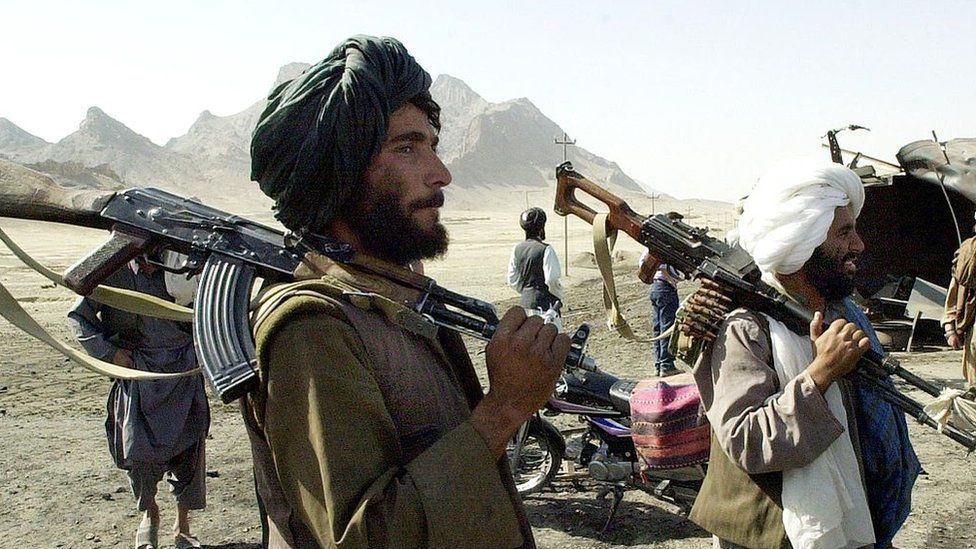
Taliban gunmen control the Kandahar-Herat highway, near Kandahar city, 31 October 2001
Pakistan has repeatedly denied that it was the architect of the Taliban enterprise, but there is little doubt that many Afghans who initially joined the movement were educated in madrassas (religious schools) in Pakistan.
Pakistan was also one of only three countries, along with Saudi Arabia and the United Arab Emirates (UAE), which recognised the Taliban when they were in power in Afghanistan. It was also the last country to break diplomatic ties with the group.
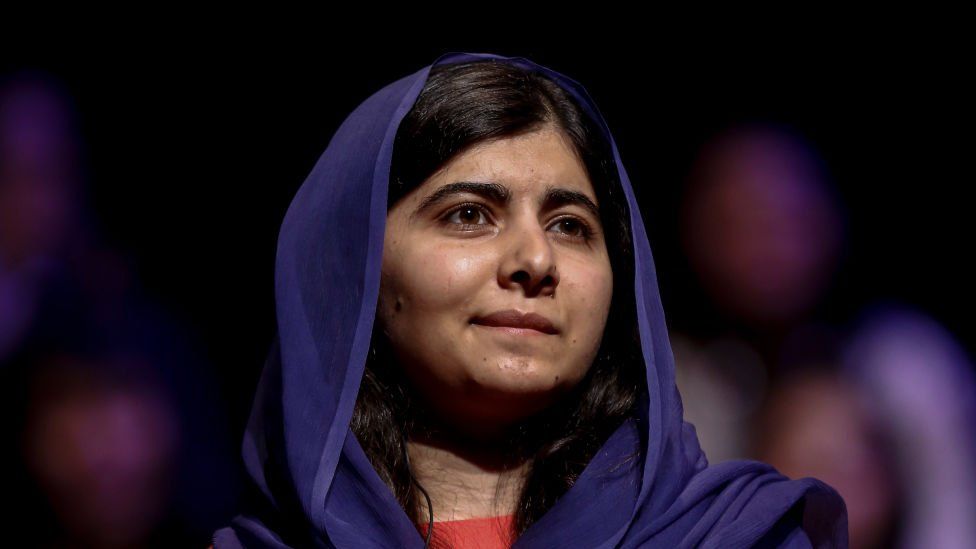
At one point, the Taliban threatened to destabilise Pakistan from areas they controlled in the northwest. One of the most high-profile and internationally condemned all Pakistani Taliban attacks took place in October 2012, when schoolgirl Malala Yousafzai was shot on her way home in the town of Mingora.
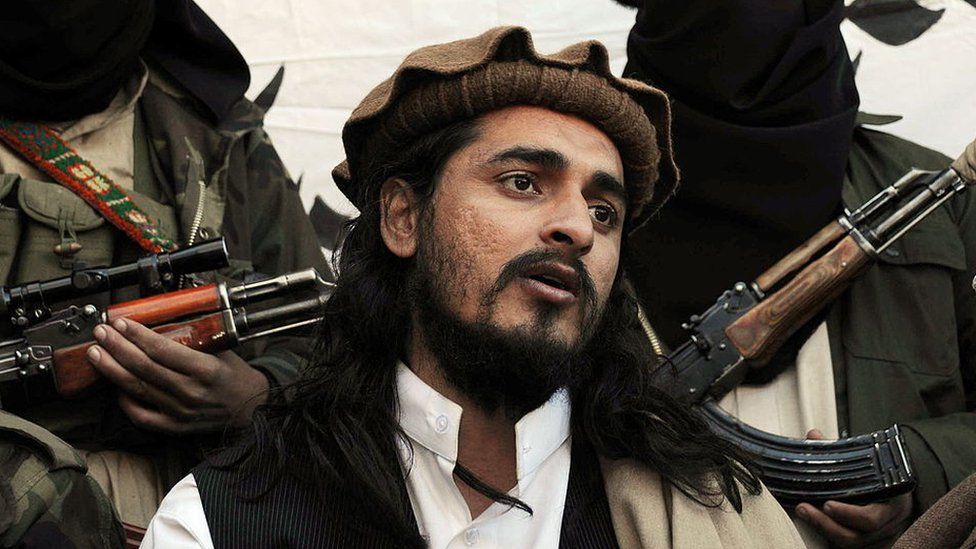
A major military offensive two years later following the Peshawar school massacre greatly reduced the group’s influence in Pakistan though. At least three key figures of the Pakistani Taliban had been killed in US drone strikes in 2013, including the group’s leader, Hakimullah Mehsud.
image captionSchoolgirl and rights activist Malala Yousafzai was shot by Taliban gunmen in October 2012
Al-Qaeda ‘sanctuary’
The attention of the world was drawn to the Taliban in Afghanistan in the wake of the 11 September 2001 World Trade Center attacks in New York. The Taliban were accused of providing a sanctuary for the prime suspects – Osama Bin Laden and his al-Qaeda movement.
On October 7, 2001, a US-led military coalition launched attacks in Afghanistan, and by the first week of December the Taliban regime had collapsed. The group’s then-leader, Mullah Mohammad Omar, and other senior figures, including Bin Laden, evaded capture despite one of the largest manhunts in the world.
Many senior Taliban leaders reportedly took refuge in the Pakistani city of Quetta, from where they guided the Taliban. But the existence of what was dubbed the “Quetta Shura” was denied by Islamabad.
Despite ever higher numbers of foreign troops, the Taliban gradually regained and then extended their influence in Afghanistan, rendering vast tracts of the country insecure, and violence in the country returned to levels not seen since 2001.
Pakistani Taliban leader Hakimullah Mehsud was killed in a US drone strike in 2013
Hopes of a negotiated peace were raised in 2013, when the Taliban announced plans to open an office in Qatar. But mistrust on all sides remained high and the violence went on.
In August 2015, the Taliban admitted they had covered up Mullah Omar’s death – reportedly of health problems at a hospital in Pakistan – for more than two years. The following month, the group said it had put aside weeks of infighting and rallied around a new leader in the form of Mullah Mansour, who had been the deputy of Mullah Omar.
At around the same time, the Taliban seized control of a provincial capital for the first time since their defeat in 2001, taking control of the strategically important city of Kunduz.
Mullah Mansour was killed in a US drone strike in May 2016 and replaced by his deputy Mawlawi Hibatullah Akhundzada, who remains in control of the group.
Countdown to withdrawal
In the year following the US-Taliban peace deal of February 2020 – which was the culmination of a long spell of direct talks – the Taliban appeared to shift its tactics from complex attacks in cities and on military outposts to a wave of targeted assassinations that terrorised Afghan civilians.
The targets – journalists, judges, peace activists, women in positions of power – appeared to suggest that the Taliban had not changed their extremist ideology, only their strategy.
Despite grave concerns from Afghan officials over the government’s vulnerability to the Taliban without international support, the new US president, Joe Biden, announced in April 2021 that all American forces would leave the country by 11 September – two decades to the day since the felling of the World Trade Center. media captionHibatullah Akhundzada is a religious scholar and he is the former head of the Taliban courts
Having outlasted a superpower through two decades of war, the Taliban began seizing vast swathes of territory, threatening to once again topple a government in Kabul in the wake of a foreign power withdrawing.
The group is thought to now be stronger in numbers than at any point since they were ousted in 2001 – with up to 85,000 full-time fighters, according to recent Nato estimates.
The advance has been more rapid than many had feared. General Austin Miller, the commander of the US-led mission in Afghanistan, warned in June that the country could be on a path towards a chaotic civil war, which he called a “concern for the world”.
However, in many cases, the Taliban have been able to take over major cities without a fight, as government forces surrendered to avoid civilian casualties.
A US intelligence assessment the same month reportedly concluded that the Afghan government could fall within six months of the American military departure.
After a year and a half of staying home, everyone is excited to whip out their passports, head to the airport and enjoy a holiday abroad, or a reunion with family and friends.
But not all passports are created equal. The world’s strongest passports allow their holders access to more countries without extra requirements—like added visas—therefore giving them more travel freedom.
The Henley Passport Index (HPI), compiled by Henley & Partners, has ranked the strongest passports for travel freedom based on how many countries they can access by passport alone. According to the ranking’s data from Q3 2021, here are the top 25 passports for travel freedom.
1. Japan
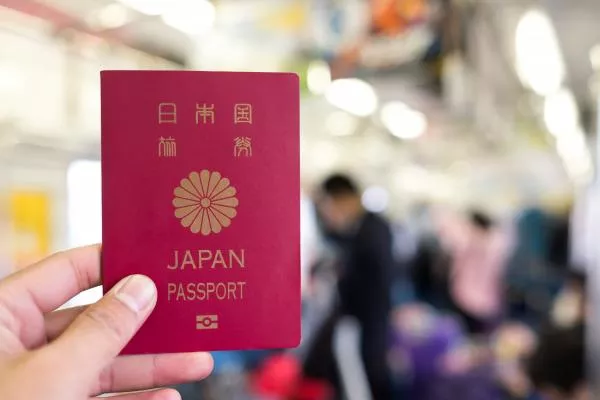
The Japanese passport is rated the most powerful in the world, with this passport allowing the holder to enter 193 different countries and territories without having to get a visa in advance.
A Japanese passport being held up in an airport. Getty Images
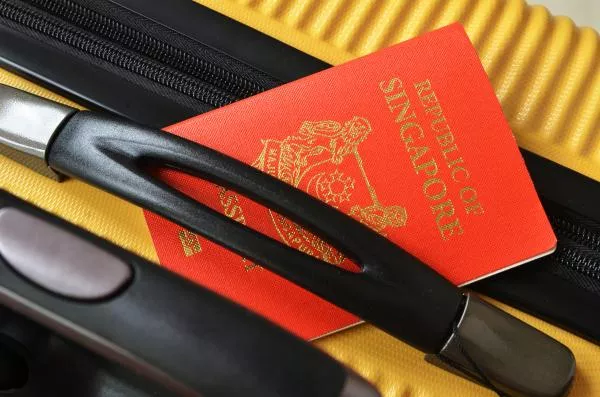
2. Singapore
The Singaporean passport is close behind, allowing its holder to enter 192 countries.
Passport from the Republic of Singapore. Getty Images
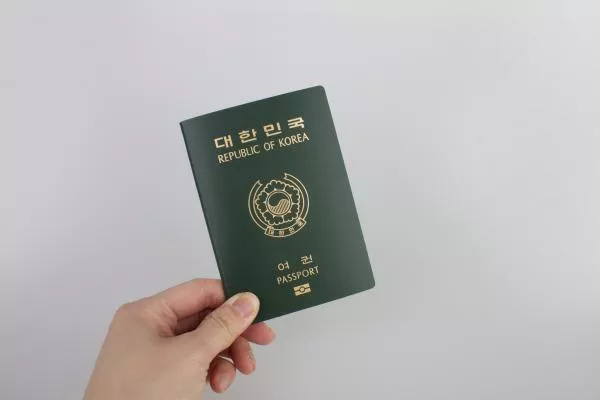
=3. Germany/ South Korea
Germany and South Korea are tied in third, with 191 countries available.
An example of a South Korean passport. Getty Images
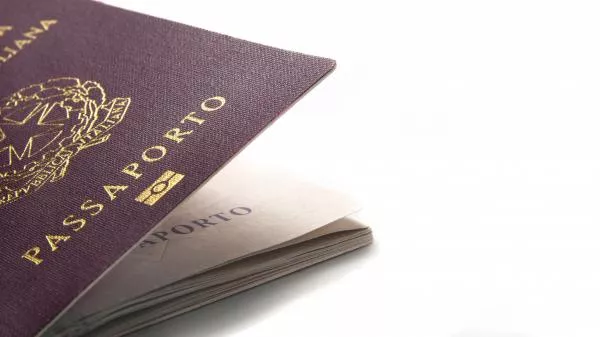
=5. Finland/ Italy/ Luxembourg/ Spain
European Union countries make up the bulk of the HPI ranking. Finnish, Italian, Luxembourgish and Spanish passports allowing visa-free entry into 190 countries.
An Italian passport, slightly open. Getty Images
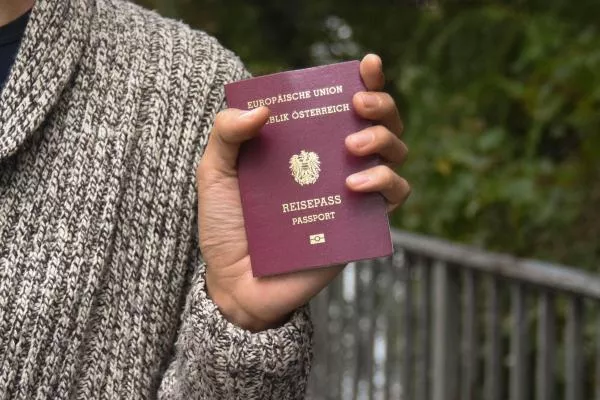
=9. Austria/ Denmark
Austria and Denmark citizens can enjoy visa-free entrance to 189 countries.
Person holding up Austrian passport. Getty Images
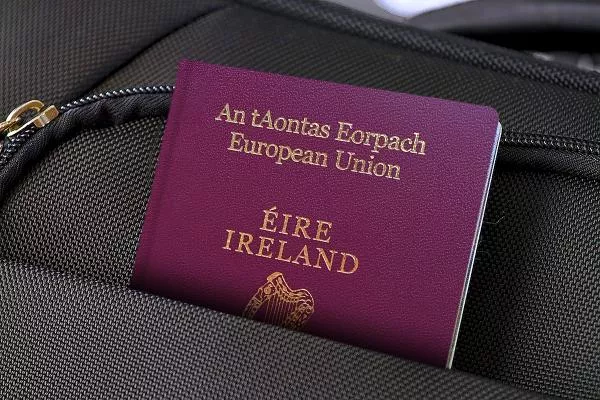
=11. France/ Ireland/ The Netherlands/ Portugal/ Sweden
More EU countries near the top of this rundown, with visa-free access to 188 countries.
An Irish passport sticking out of a suitcase. Getty Images
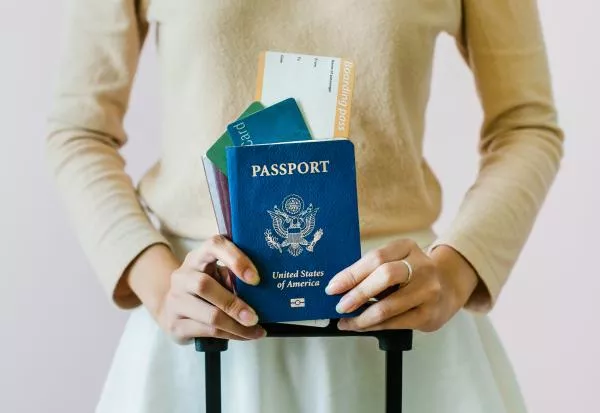
=16. Belgium/ New Zealand/ Switzerland/ United Kingdom/ United States
Squeaking inside the top 20, those from the U.S. and the U.K. rarely have to deal with visa requirements, and their passports—along with passports from Belgium, New Zealand and Switzerland—allow entry into 187 countries.
Woman holding American passport and boarding pass. Getty Images
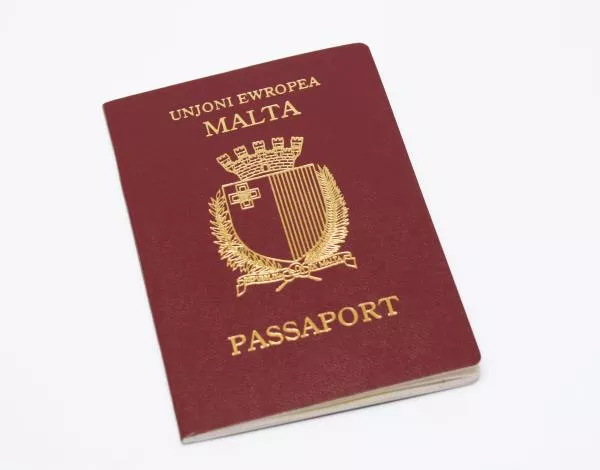
=21. Czech Republic/ Greece/ Malta/ Norway
Czech, Greek, Maltese and Norwegian passports can gain access to 186 countries visa-free.
An example of a Maltese passport. Getty Images
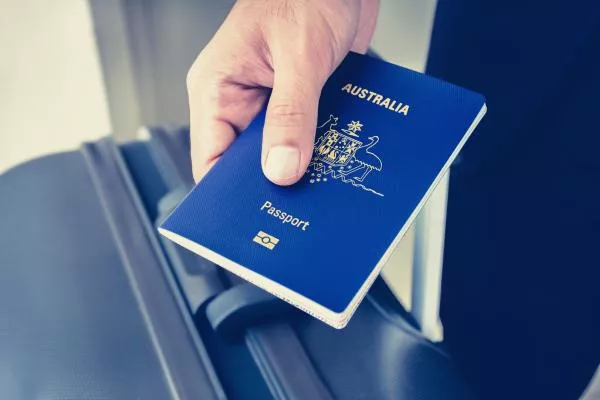
=25. Australia/ Canada
Both the Australian and Canadian passport are accepted visa-free by 185 countries.
An Australian passport held over a suitcase. Getty Images
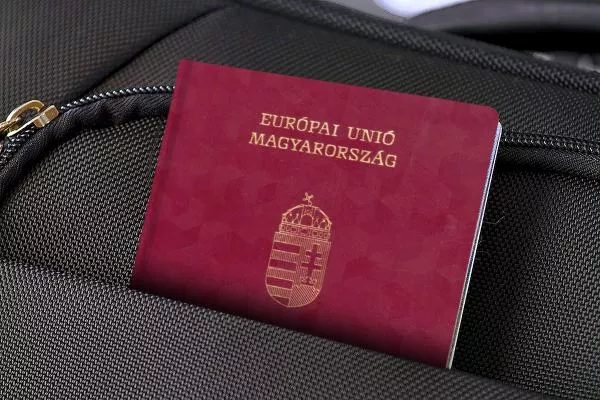
27. Hungary
A Hungarian passport breaks the top 30 strongest passports, with 184.
A Hungarian passport in a suitcase pocket. Getty Images
=30. Slovakia/ Lithuania/ Poland
These three passports follow on 183.
A woman handing over her Polish passport. Getty Images
=33. Slovenia/Latvia/ Iceland/ Estonia
Close behind are Slovenian, Latvian, Icelandic and Estonian passports, with access to 182 countries, visa-free.
An example of a Slovenian passport.Getty Images
=37. Malaysia/ Liechtenstein
Some 179 countries accept passports from Malaysia or Liechtenstein without a visa.
A pile of Malaysian passports. Getty Images
39. Cyprus
Cyprus citizens can enjoy 176 countries, visa-free.
The Cyprus flag. Getty Images
=40. Monaco/ United Arab Emirates
Both much-loved luxury holiday destinations, passports from the UAE and Monaco can visit 175 countries without a visa.
A view of Dubai in United Arab Emirates. Getty Images
42. Chile/ Romania/ Bulgaria
Chilean, Romanian and Bulgarian passports are accepted without other entry requirements by 174 countries.
A Chilean passport sticking out of a bag pocket. Getty Images
45. Croatia
A Croatian passport is close behind, with access to 173 countries visa free.
A stone street in Split in Croatia. Getty Images
46. Hong Kong
While a Chinese passport is poorly ranked, at 74th in the world list, Hong Kong, Special Administrative Region of the People’s Republic of China, is 18th, with access to 171 countries visa-free.
An arrivals sign at Hong Kong International Airport. Getty Images
=47. Brazil/ Argentina
Brazilians and Argentinians can get into 170 countries without a visa with their passports.
An example of a Brazilian passport. Getty Images
=49. San Marino/ Andorra
San Marino, a microstate that is also one of the world’s wealthiest countries by GDP, boasts a passport that can enter 169 countries visa-free, the same as Andorra.
The flag for San Marino. Getty Images
50. Brunei
Brunei’s passport can gain access to 166 countries without a prior visa.
Omar Ali Saifuddien Mosque in Brunei. Getty Images
51. Barbados
Barbados is one of the world’s most loved holiday destinations, but should someone choose to leave, they can go to 161 countries without a visa.
Barbados’s Bottom Bay. Getty Images
=52. Israel/ Mexico
Israel and Mexico’s passports are ranked at 159.
An example of an Israeli passport. Getty Images
54. St. Kitts and Nevis
The passport for these Caribbean islands gains access to 157 countries without other entry requirements.
A view of Basseterre in St Kitts and Nevis.Getty Images
55. Bahamas
And finally, Bahamas’ passports are accepted without a visa by 155 countries.
At least $2.3 billion has been laundered via U.S. real estate transactions in the last five years, according to a new report by a Washington, D.C.-based think tank.
By using a database of over 100 publicly reported real estate money laundering cases in the U.S., United Kingdom and Canada, Global Financial Integrity says the U.S. has become a preferred destination for those looking to use real estate to stash illicit funds — making it a “Kleptocrat’s dream.”
Public officials and their associates, known as politically exposed persons, were involved in more than half of the U.S. cases that GFI reviewed. Those PEPs include Genaro García Luna, a former Mexican security minister who bought millions of dollars of U.S. property while accused of taking bribes from the Sinaloa cartel, and the stepson of former Malaysian Prime Minister Najib Razak, who was arrested in 2019for his alleged role in the 1MDB scandal.
“[Real estate] provides a really easy way to hide ill-gotten gains with little oversight and few questions asked,” GFI policy director Lakshmi Kumar told the International Consortium of Investigative Journalists. “If you’re a criminal, why would you not choose a method that allows you to flaunt your wealth openly, but also hide its illicit nature?”
The U.S. was once considered at the regulatory forefront when it came to preventing money laundering through real estate, adding “persons involved in real estate closings and settlements” to the Bank Secrecy Act’s definition of financial institutions in 1988. But over time, Kumar says, the country lost ground to its peers in the U.K. and Europe.
“This is clearly a systemic issue globally,” Kumar said. “Everyone’s discovering how easy it is to use and abuse the real estate sector. The difference is that everyone else seems to have charted a path forward. They have put in legislation they’re trying to figure it out. In the U.S., we’re still held back.”
One of the biggest issues that the report cites is the use of geographic targeting orders as the U.S.’s primary tool to identify potential money laundering events. GTOs impose reporting requirements on real estate purchases, but only in narrowly targeted scenarios — large cash purchases by legal entities in specific geographic areas.
More than 60% of the U.S. cases examined in the report involved properties in at least one county not covered by a targeting order, which GFI says highlights the inadequacy of the system.
“A lot of the money laundering cases we saw reported in the U.K. and Canada were really concentrated in what you’d call real estate hubs in the country,” Kumar said. “In the U.S., that was not the case. It was spread far and wide.”
Another concern the report outlines is that the U.S. anti-money laundering regime is focused on residential purchases, when a significant portion of the cases GFI reviewed involve commercial real estate transactions.
The FinCEN Files, an investigation on global dirty money flows by ICIJ and BuzzFeed News, examined the impact of large-scale money laundering on middle America.
ICIJ found that Ukrainian oligarch Ihor Kolomoisky, whose case is cited in GFI’s report, amassed a Midwest real estate empire with his associates, at one time becoming Cleveland’s largest commercial landlords, and leaving behind a trail of unpaid property taxes, unemployed workers and dangerous factory conditions. Kolomoisky has since been sanctioned by the U.S. State Department.
Kumar said that because commercial deals often involve several parties and complex financing arrangements, they are an easy way to stash illicit money.
“When you talk about residential real estate, the heart of it is identifying who is the beneficial owner, [because] if you find out who the beneficial owner is, it also tells you who the criminal is,” Kumar told ICIJ. “In a commercial real estate investment, you don’t have to own the majority stake to be a criminal. You can own 2% of a $500 million property, and you are [still] laundering millions through it.”
The report also delves into the involvement of “gatekeepers” in real estate transactions and the direct role of real estate agents, lawyers and accountants in facilitating illicit transactions. But GFI also points to regulating private investment advisers as a more under-the-radar way of tackling real estate money laundering.
“Investment vehicles are one of the key methods in which to invest in commercial real estate in this country,” Kumar said. “And private equity, venture capital [and] hedge funds have no [anti-money laundering] requirements — so that becomes a black box, because you don’t know who is bringing what money into this country and how.”
The report proposes major overhauls to the U.S.’s anti-money laundering program to fill these gaps, including replacing GTOs with more stringent reporting requirements on real estate transactions across the country, robust implementation of the beneficial ownership registry passed this year as part of the Corporate Transparency Act, and urging the U.S. Treasury to issue specific regulations regarding purchases by foreign PEPs.
A Chinese businessman laundered tens of millions of dollars in drug money through a Guatemalan casino, a US seafood export company, Miami banks, and Chinese bank accounts, in a case that reveals the wide reach of such money laundering networks.
Xizhi Li, a Chinese national with US citizenship, pleaded guilty to conspiracy to launder money in early August, according to a news release from the US Department of Justice (DOJ). Between 2008 and 2019, Li laundered some $30 million in drug proceeds for traffickers in Mexico, Colombia, and Guatemala.
Prosecutors said Li “forged close ties” with these groups while living in Mexico, obtaining contracts to conduct financial transactions with their US-based proceeds, according to an indictment against him and other conspirators. He used fake identities such as “Francisco Ley Tan” to open Miami bank accounts and purchase a casino in Guatemala used in the scheme.
The scheme used “a foreign casino, foreign and domestic front companies, foreign and domestic bank accounts, false passports and other false identification documents” to launder the drug money, the Justice Department said in its news release.
According to prosecutors, bulk cash made from US cocaine sales was moved among different states to cover up its origins. It was later sent to Chinese bank accounts to purchase Chinese goods. Goods were also bought in the United States and sent to China. Merchants in Latin America looking to import these goods then used their local currency to pay Li and others for the items.
One of Li’s co-conspirators Tao Liu, of Hong Kong, was sentenced to seven years in prison on August 3rd for his role in the network. Prosecutors said Liu accepted drug money on behalf of Li, which he later deposited into bank accounts.
Between April and June of this year, three other conspirators pleaded guilty, according to the Justice Department. Another suspect was charged and is pending extraditionafter he was arrested in Peru.
InSight Crime Analysis
Drug money is not only increasingly being laundered through Chinese bank accounts but brokers are setting up throughout the Americas and beyond to serve trafficking clientele and move cash.
Prosecutors said nodes of the money laundering group were based in the United States, Mexico, Guatemala, Belize, China and elsewhere. One suspect made trips to New York and Los Angeles, as well as to the Mexican city of Cancún and Guatemala City to facilitate the network’s activities. The Guatemalan casino owned by Li served as a meeting point for the network.
The group also used a US seafood import and export business to purchase seafood products using cocaine money. The products were later exported for sale in China and Hong Kong.
Messaging platforms, including WhatsApp and WeChat, were used by associates to communicate.
Li and his co-conspirators sought to obtain as many “contracts” as possible from drug trafficking organizations. They then received commissions on the transactions, or a percentage of the funds involved, prosecutors said.
What’s more, Chinese players in the money laundering trade have a wide range of schemes open to them. In one, the US and Mexican financial systems were bypassed altogether. Chinese-owned businesses simply received drug cash and then transferred a corresponding amount through a Chinese banking application.
NEW YORK (AP) — The Associated Press appointed Daisy Veerasingham, its executive vice president and chief operating officer, as the news cooperative’s president and CEO on Tuesday, setting her up to replace the retiring Gary Pruitt at the beginning of next year.
She will become the first woman, first person of color and first person from outside of the United States to lead the AP in its 175-year history.
Veerasingham, 51, is a first-generation Briton of Sri Lankan descent. Her appointment speaks to the changing portrait of the AP, where 40% of the company’s revenue, double what it was 15 years ago, is now generated outside of the United States.
She’ll be tasked with continuing to diversify income sources. The AP, caught in the same financial vise as most of the media industry, saw its revenue drop to $467 million in 2020, down more than 25% in a decade.
Veerasingham said she’s determined to maintain the AP as a source of fact-based, nonpartisan journalism, and to fight for freedom of the press and access to information. The AP produces roughly 2,000 news stories, 3,000 photos and 200 videos every day, reaching more than half the world’s population.
“These are values that are core to the AP since its founding 175 years ago,” she said in an interview. “I think that they are actually more important today.”
Pruitt, 64, has led AP since 2012. The company has won six Pulitzer Prizes under his leadership, two of them this year, and had three other finalists for journalism’s top award in 2021.
He’s currently working with Veerasingham to find a successor to Sally Buzbee as the AP’s executive editor, an appointment expected in a month or two. Buzbee was named executive editor of The Washington Post this spring.
“I’m most proud of the fact that the journalism at the AP excelled as we met the challenges of the marketplace,” Pruitt said. “AP is is in a strong financial position to look forward to the future with confidence and continue to provide a foundational news report to the world.”
The AP’s board of directors appointed Veerasingham in a meeting last week. She was named AP’s executive vice president and chief operating officer earlier this year after two years as chief revenue officer. Steven R. Swartz, board chairman and president and CEO of Hearst, called her a proven leader with a deep understanding of how AP operates and a clear vision for the future.
Veerasingham joined AP in 2004 as a sales director for AP Television News in London. She eventually became responsible for content licensing and marketing in Europe, the Middle East, Africa, Asia and Australia, leading the company’s expansion efforts.
She has also led the expansion of AP’s video business into a fully digital operation that can provide live video on a multichannel basis.
As its core business of selling news to newspapers and broadcasters began shrinking, the AP has broadened its licensing efforts to other areas, like business and academia. It has also built a business licensing old photos and video, the latter through the purchase of a company that owned old movie newsreels.
AP also makes money by providing studio space and news equipment to organizations, selling news software and election vote-counting and surveys. Further diversification efforts are underway, including offering customized news reports and managing video for auctions held by companies like Sotheby’s, Veerasingham said.
“The AP is probably on the most solid footing it’s been on for a very long time,” she said. “I don’t think the world needs to worry about the future of The Associated Press. Do we have challenges ahead? Yeah, we’ve got to diversify our revenue and we’ve got to stabilize revenue in our core. But I think that is something we can actually do in the next three years because of the financial strength we’ve built.”
Like many other companies, AP is expected to head back to offices in the next few months, although a hybrid approach that includes working from home will be in place at the start.
One of the things working through the pandemic taught her about AP “is that we are capable of much more than we thought we were,” she said.
Veerasingham worked in marketing jobs at LexisNexis and the Financial Times before joining AP. A trained lawyer, she has not worked as a journalist.
Upon retirement, Pruitt said he planned to split time between California and New York, and looks forward to taking classes at the University of California-San Diego.
The divorce of Bill Gates and Melinda French Gates has been finalized.
The Microsoft co-founder and his wife announced in May they were ending their 27-year marriage and on Monday a King County Superior Court judge signed the dissolution decree. The New York Times reports the court documents didn’t detail how they would divide their assets.
Bill Gates was formerly the world’s richest person and his fortune is estimated at about $150 billion.
They met after she began working at Microsoft as a product manager in 1987. The two were married in 1994 in Hawaii.
The Seattle-based Bill and Melinda Gates Foundation is the most influential private foundation in the world, with an endowment worth about $50 billion. It has focused on global health and development and U.S. education issues since incorporating in 2000.
The two have said they will continue to work together as co-chairs of their foundation. However, if after two years Gates and French Gates decide they cannot continue in their roles, French Gates will resign her positions as co-chair and trustee, The Bill and Melinda Gates Foundation announced earlier this month.
If French Gates resigns, Gates would essentially buy her out of the foundation, one of the world’s largest private charitable organizations, and she would receive resources from him to do her own philanthropic work. The resources received would be separate from the foundation’s endowment, according to foundation.
NEW YORK (AP) — An investigation into New York Gov. Andrew Cuomo found that he sexually harassed multiple current and former state government employees, state Attorney General Letitia James announced Tuesday.
The nearly five-month investigation, conducted by two outside lawyers who spoke to 179 people, found that the Cuomo administration was a “hostile work environment” and that it was “rife with fear and intimidation.”
“Specifically, the investigation found that Gov. Andrew Cuomo sexually harassed current and former New York State employees by engaging in unwelcome and nonconsensual touching and making numerous offensive comments of a suggestive sexual nature, that created a hostile work environment for women,” James said at a press conference on Tuesday.
On at least one occasion, the investigation found, Cuomo and his senior staff worked to retaliate against a former employee who accused him of wrongdoing. Cuomo was also found to have harassed women outside of government, the investigation found.
Cuomo faced multiple allegations last winter that he inappropriately touched and sexually harassed women who worked with him or who he met at public events. One aide in his office said he groped her breast.
Another, Lindsey Boylan, said Cuomo kissed her on the lips after a meeting in his office and “would go out of his way to touch me on my lower back, arms and legs.”
After Boylan first made her allegations public in December, the Cuomo administration undercut her story by releasing personnel memos to media outlets revealing that Boylan resigned after she was confronted about complaints she belittled and yelled at her staff.
Boylan has said those records “were leaked to the media in an effort to smear me.”
Other aides have said that the Democratic governor asked them unwelcome personal questions about sex and dating. One former aide, Charlotte Bennett, said Cuomo asked if she was open to sex with an older man.
Last winter there was a chorus of calls for Cuomo’s resignation from many top elected Democrats in New York, including two U.S. senators, Chuck Schumer and Kirsten Gillibrand. But Cuomo refused to quit and has been raising money for a fourth term in office.
His position on the allegations has also hardened into one of defiance. Cuomo has always denied touching anyone inappropriately, but he initially said he was sorry if his behavior with women was “misinterpreted as unwanted flirtation.” In recent months, he’s taken a more combative tack, saying he did nothing wrong and questioning the motives of accusers and critics.
He has also questioned the neutrality of the lawyers hired by the attorney general to investigate the allegations. One of the attorneys, Joon Kim, was involved in previous investigations of corruption by people in Cuomo’s administration when he was a federal prosecutor in Manhattan. Cuomo hasn’t expressly said why he believes that would make Kim biased.
The attorney general’s report is expected to play an important role in an ongoing inquiry in the state Assembly into whether there are grounds for Cuomo to be impeached.
The Assembly hired its own legal team to investigate Cuomo’s conduct, plus other allegations of wrongdoing. The legislature is looking into the help Cuomo got from senior aides to write a book about the pandemic, special access that Cuomo relatives got to COVID-19 testing last year, and the administration’s decision to withhold some data on nursing home deaths from the public for several months.
Some members of the judiciary committee have said they expect James’ report to be “critical” for the impeachment investigation.
New York state regulations say sexual harassment includes unwelcome conduct of a sexual nature — from unwanted flirtation to sexual jokes — that creates an offensive work environment, regardless of a perpetrator’s intent.
The governor, in contrast, has repeatedly argued that he did not intend to harass anyone. His office has said he took the state’s mandated sexual harassment training, but has not provided any documentation proving he did.
Cuomo championed a landmark 2019 state law that made it easier for sexual harassment victims to prove their case in court. Alleged victims no longer have to meet the high bar of proving sexual harassment is “severe and pervasive.”