Category: World

  • AfCFTA: A Lesson To Learn From ASEAN FTA

    AfCFTA: A Lesson To Learn From ASEAN FTA

    In November 1992, 6 countries (Brunei, Singapore, Indonesia, Malaysia, the Philippines, and Thailand) at that time as members of the Association of South East Asian Nations (ASEAN) met in Singapore and set a resolution for the establishment of a free trade area commonly known as ASEAN Free Trade Agreement (AFTA). It should be noted that the Association (ASEAN) was founded in 1967 where its main goal was political and economic cooperation, but due to the instability of the political and security situation in many of the member states, the cooperation resolution failed to be fulfilled in time concerned and remained as a political community that had little impact on the economy. The countries of Laos, Cambodia, Vietnam, and Myanmar joined later.

    The agreement (AFTA) aimed to facilitate production and trade in Small and Medium-sized Enterprises (SMEs), it was expected that it will bring a boost from the grassroots level (farmers, traders, and factory owners) thus the intended economic growth would reflect these communities directly. To begin with, the Common Effective Preferential Tariff (CEPT) Scheme was established to reduce tariffs on products in phases for member countries to 0-5% till the year 2003. The issue of eliminating tariffs stepwise was done purposely to not affect the economy of these countries, considering the economic contribution of products (that should be duty tax-free) to the economy of those countries. For example, Cambodia should have reached a 0-5% tariff charge in 2010, Laos, and Myanmar in 2008.

    In 2010, CEPT was improved and a new advanced agreement was signed that would speed up the performance of this economic integration as well as provide an open room for the inclusion of other countries as peripheral commercial partners. This agreement was ASEAN Trade in Goods Agreement (ATiGA).

    What can AfFCTA learn?

    The publication Taking Advantage of ASEAN’s Free Trade Agreements: A guide for Small and Medium-Sized Enterprises, has explained in detail that 90% of all businesses in the ASEAN region are categorized into small and medium enterprises (SMEs) and that hitting the target of USD 10 Trillion by 2030 and making it the fourth largest economic zone in the world, the SMEs must be emphasized.


    The implementation guide of ATiGA led to the establishment of Industrial Cooperation between the ASEAN partner countries (ASEAN Industrial Cooperation Scheme) where the member countries, they would be allowed to join and invest as Joint Ventures projects in industries, and their products will be qualified to be charged 0-5% tariff rate but importantly the raw materials must originate from among the AFTA member states. This step led to the existence of 98 factories built by Joint Ventures projects and it had led to more than 150 factories applications by July 2002 and led to the growth of industries, especially in the sector of Technology and communication, electricity and agriculture mostly in food crops.

    AFTA has also developed a mechanism to involve other countries from outside the geography of South East Asia in investment and trade. For example, in July 2005, an Agreement was signed between the Chinese Government and AFTA, where 90% of the products involved in the bilateral market will be reduced or exempted from customs duties. This exercise will occur after the analysis of “Important Products” and “Not Very Important Products”. Thus, the important ones will be given priority for tax exemption. This process has been seen to benefit both parties considering the size of the market in China and China’s production capacity.

    This step has made it possible to select products that AFTA member countries may not be able to produce on time while the demand for the product is high in their countries, so getting the product without customs duty helps to reduce the cost of importing the product at high costs. This cooperation process with countries outside of AFTA has also involved countries such as Japan (ASEA-Japan Comprehensive Economic Partnership (AJCEP), South Korea (AKFTA), Australia and New Zealand Together (AANZFTA), and India (AIFTA).

    The global economic recession of 2008, significantly affected the ASEAN countries by weakening commercial cooperation and investment. The crisis made AFTA members state along with China, South Korea, and Japan (ASEAN+3) sign an agreement known as the Chiang Mai Initiative (CMI) in 2000 which was an improvement of the previous agreement known as the ASEAN Swap Agreement (ASA) which aimed to facilitate member states going during the recession. ASEAN+3 came up with a program that enabled the registration of bonds that will be used to improve access and market infrastructure. The plan was known as the Asia Bond Market Initiative (ABMI) and it was signed in 2003.

    This step enables these countries to be sure of the improvement and expansion of markets according to needs, especially in the area of production and markets whenever there will be a recession or price fluctuation of the products.


    It is estimated that the implementation of these strategies will enable 65% of AFTA member states of population approximately 600 million to be categorized as a middle-class economy. The boost will arise from the stimulation of science and technology from China and Japan, while Singapore is in finance and Vietnam, Indonesia, and Malaysia are in the industrial sector.

    According to Kenya’s policy guide on the AfCFTA agreement, The Kenya AfCFTA Implementation Strategy 2022-2027, it has been explained in detail that the production of goods that will be sent to AfCFTA, should have a prior market inside the country, so AfCFTA member countries should also consider it that on the development of the market because that step will be the catalyst of the economic chain that will affect all groups, especially in the area of SMEs.


    About Author

    Ezra Nnko is a Geopolitical and International Policy Analyst based in Dar es salaam, Tanzania. He is available through [email protected] and through Phone Number:

    +255 765 571917 (Call + WhatsApp)

    +255 784 527018  (Call)

  • US Investigations Finds Credit Suisse Helped Wealthy American Evade Tax

    US Investigations Finds Credit Suisse Helped Wealthy American Evade Tax

    A US investigation has found Credit Suisse complicit in ongoing tax evasion by ultra-wealthy Americans, the Senate Finance Committee said Wednesday.

    Committee Chairman Ron Wyden, a Democrat from Oregon, released the findings of a two-year investigation into the Swiss-based global investment firm’s compliance with its 2014 plea agreement with the US Justice Department for enabling tax evasion by thousands of wealthy Americans.

    “The committee’s investigation uncovered major violations of that plea agreement, including a previously unknown, ongoing and potentially criminal conspiracy involving the failure to disclose nearly $100 million in secret offshore accounts belonging to a single family of American taxpayers,” it said in a statement.

    “The investigation also shed new light on the extent to which Credit Suisse bankers aided and abetted offshore tax evasion by U.S. businessman Dan Horsky, who pleaded guilty in 2016 to one of the largest criminal tax evasion cases in American history,” it added.

    The committee said it requested information from Credit Suisse on other large and undeclared accounts belonging to ultra-wealthy Americans with more than $20 million at their bank.

    Credit Suisse said it identified 23 accounts, with more reviews underway, by the time of the conclusion of the investigation.

    The amount concealed in violation of Credit Suisse’s 2014 plea agreement is more than $700 million, according to the committee’s findings.

    “At the center of this investigation are greedy Swiss bankers and catnapping government regulators, and the result appears to be a massive, ongoing conspiracy to help ultra-wealthy U.S. citizens to evade taxes and rip off their fellow Americans,” Wyden said in the statement. “Credit Suisse got a discount on the penalty it faced in 2014 for enabling tax evasion because bank executives swore up and down they’d get out of the business of defrauding the United States. This investigation shows Credit Suisse did not make good on that promise, and the bank’s pending acquisition does not wipe the slate clean.”

    Credit Suisse pleaded guilty in May 2014 to conspiracy to aid and assist US taxpayers in filing false income tax returns with the Internal Revenue Service (IRS), to help taxpayers hide offshore accounts from the tax agency and agreed to pay a $2.6 billion fine — the highest by then in a criminal tax case investigation.

    After its biggest investor, Saudi National Bank said it could no longer financially assist Credit Suisse, and despite the bank taking a 50 billion Swiss francs ($54.4 billion) loan from the Swiss National Bank, depositors quickly pulled their money out – leading to the bank’s collapse.

    Its rival, UBS, reached an agreement on March 19 to buy Credit Suisse for 3 billion Swiss francs.

  • Pope Francis Hospitalized With A Respiratory Infection

    Pope Francis Hospitalized With A Respiratory Infection

    VATICAN CITY (AP) — Pope Francis was hospitalized with a respiratory infection Wednesday after experiencing difficulty breathing in recent days and will remain in the Rome hospital for several days of treatment, the Vatican said.

    The 86-year-old pope, who had part of one lung removed as a young man, doesn’t have COVID-19, spokesman Matteo Bruni said in a statement late Wednesday.

    The hospitalization was the first since Francis spent 10 days at the Gemelli hospital in July 2021 to have 33 centimeters (13 inches) of his colon removed.

    It immediately raised questions about Francis’ overall health, and his ability to celebrate the busy Holy Week events that are due to begin this weekend with Palm Sunday.

    Bruni said Francis had had trouble breathing in recent days and went to the Gemelli hospital Wednesday for tests.

    “The tests showed a respiratory infection (COVID-19 infection excluded) that will require some days of medical treatment in the hospital,” Bruni’s statement said.

    Francis appeared in relatively good form during his regularly scheduled general audience earlier Wednesday, though he grimaced strongly while getting in and out of the “popemobile.” He nevertheless rode around the square as usual, kissing babies and greeting the faithful.

    Bruni said Francis, an Argentine Jesuit, was grateful for the prayers and messages wishing him a speedy recovery, including from the Italian bishops conference.

    President Joe Biden, at the start of an Oval Office meeting with President Alberto Fernández of Argentina, told reporters he had just learned of Francis’s health problems and said he was concerned about his dear “friend.”

    Francis had part of one lung removed when he was a young man due to a respiratory infection, and he often speaks in a whisper. But he got through the worst phases of the COVID-19 pandemic without at least any public word of ever testing positive.

    Francis was scheduled to celebrate Palm Sunday this weekend, kicking off the Vatican’s Holy Week observances: Holy Thursday, Good Friday, the Easter Vigil and finally Easter Sunday on April 9. He has canceled all audiences through Friday, but it wasn’t clear whether he could keep the Holy Week plans.

    Francis has used a wheelchair for over a year due to strained ligaments in his right knee and a small knee fracture. He has said the injury was healing and been walking more with a cane of late.

    Francis also has said he resisted having surgery for the knee problems because he didn’t respond well to general anesthesia during the 2021 intestinal surgery.

    He said soon after the surgery that he had recovered fully and could eat normally. But in a Jan. 24 interview with The Associated Press, Francis said his diverticulosis, or bulges in the intestinal wall, had “returned.”

  • Will Russia Use Nuclear Weapons? Putin’s Warnings Explained

    Will Russia Use Nuclear Weapons? Putin’s Warnings Explained

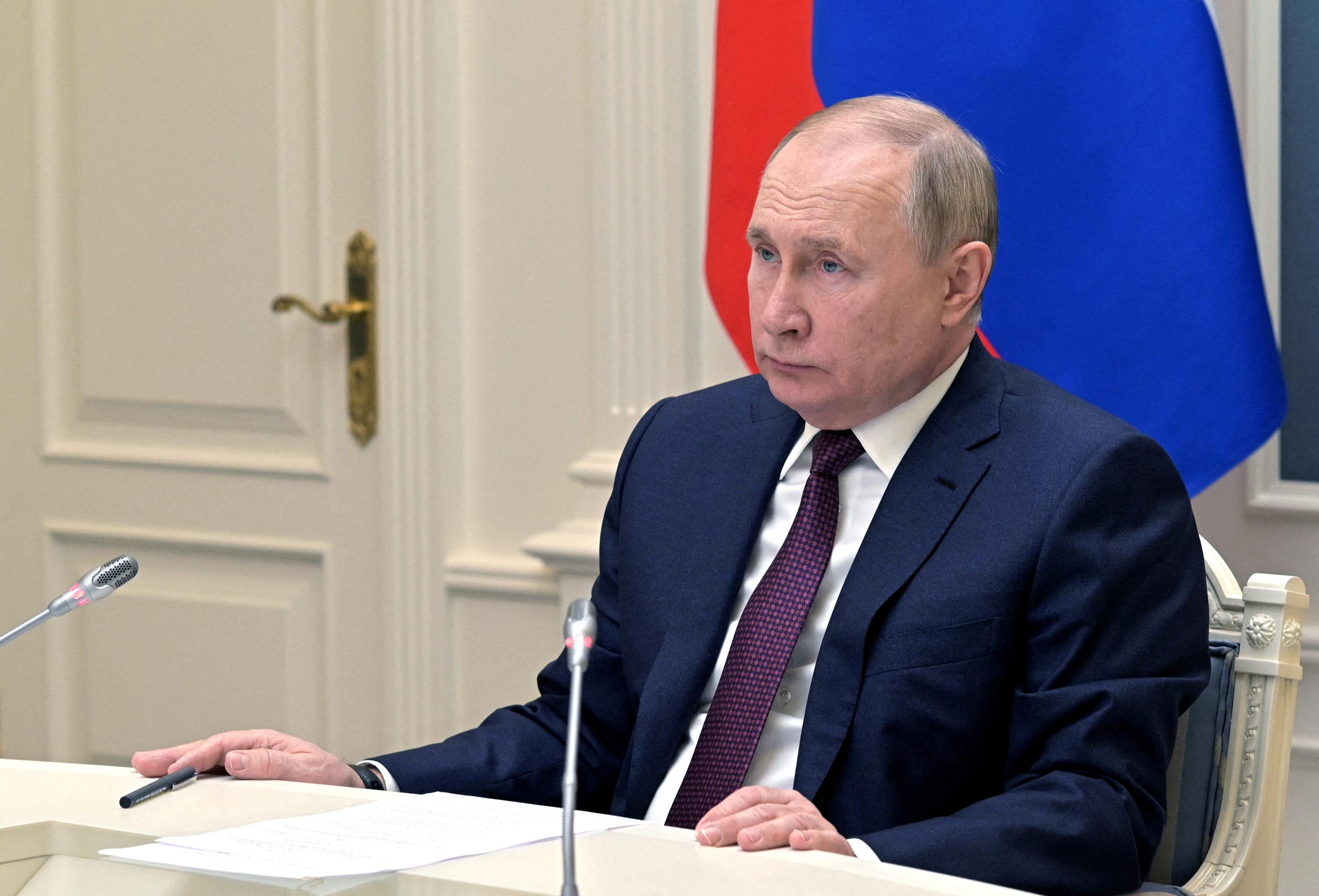
    (Reuters) – President Vladimir Putin, who rules the world’s biggest nuclear power, has repeatedly cautioned the West that any attack on Russia could provoke a nuclear response.

    Will Putin use nuclear weapons, how many such weapons does he command and how might the United States and the U.S.-led NATO military alliance respond?

    WILL PUTIN GO NUCLEAR?

    Much depends on how Putin perceives the threat to the Russian state and his rule.

    Putin casts the war in Ukraine as an existential battle between Russia and the West, which he says wants to destroy Russia and grab control its vast natural resources.

    Putin warned the West he was not bluffingwhen he said he’d be ready to use nuclear weapons to defend Russia. Some analysts say Putin is bluffing but Washington is taking Putin seriously.

    By claiming 18% of Ukraine as part of Russia, the room for nuclear threats increases as Putin could cast any attack on these territories as an attack on Russia itself.

    Russia’s nuclear doctrine allows for a nuclear strike after “aggression against the Russian Federation with conventional weapons when the very existence of the state is threatened”.

    Many Russians live in Ukrainian territory that Putin has proclaimed as Russian, and breaking the post-World War Two nuclear taboo would not necessarily change the tactical situation on the ground.

    “He is bluffing right now,” said Yuri Fyodorov, a military analyst based in Prague. “But what will happen in a week or a month from now is difficult to say – when he understands the war is lost.”

    Asked if Putin was moving towards a nuclear attack, CIA Director William Burns told CBS: “We have to take very seriously his kind of threats given everything that’s at stake.”

    Burns, though, said U.S. intelligence had no “practical evidence” that Putin was moving towards using tactical nuclear weapons imminently.

    WHAT NUCLEAR WEAPONS COULD BE USED?

    No Russian official has called for a strategic nuclear weapons strike with the weapons that were designed to destroy cities in the United States, Russia, Europe and Asia.

    Ramzan Kadyrov, head of Russia’s Chechnya region, said Moscow should consider using a low-yield tactical nuclear weapon in Ukraine.

    Russian President Putin declares the start of training launches of ballistic missiles as part of a strategic deterrence force exercise, in Moscow
    Russian President Vladimir Putin declares the start of training launches of ballistic missiles as part of a strategic deterrence force exercise, in Moscow, Russia February 19, 2022. Sputnik/Aleksey Nikolskyi/Kremlin via REUTERS

    Tactical nuclear weapons are essentially nuclear weapons used on the battlefield for a “tactical” purpose and which are much less powerful than the big bombs that would be needed to destroy large cities such as Moscow, Washington or London.

    Such weapons can be dropped from planes, fired on missiles from the ground, ships or submarines, or detonated by ground forces.

    Although Russia has specialised nuclear forces trained to fight in such an apocalyptic battlefield, it is unclear how its army of regular troops, mercenaries, drafted reservists and local militias would cope.

    WHAT WOULD THE UNITED STATES DO?

    As the dominant global superpower, the United States would in effect decide the response to any Russian nuclear strike.

    Russia and the United States control 90% of the world’s nuclear warheads. Their arsenals were built up during the Cold War, and the Soviet Union bequeathed its nuclear assets to modern Russia.

    U.S. President Joe Biden’s option would include a non-military response, responding with another nuclear strike that would risk escalation, and responding with a conventional attack that could involve Washington in a direct war with Moscow.

    U.S. National Security Adviser Jake Sullivan said Washington had warned Moscow of specific “catastrophic consequences” if it used nuclear arms.

    Retired General and former CIA chief David Petraeus said that if Moscow used nuclear weapons, then the United States and its NATO allies would destroy Russian troops and equipment in Ukraine – and sink its entire Black Sea fleet.

    Putin reminded Washington that only the United States had so far used nuclear weapons in battle – in the 1945 attacks on the Japanese cities of Hiroshima and Nagasaki.

    WHO HAS THE MOST NUCLEAR WEAPONS?

    Russia is the world’s biggest nuclear power based on the number of nuclear warheads: it has 5,977 warheads while the United States has 5,428, according to the Federation of American Scientists.

    Those figures include stockpiled and retired warheads, but both Moscow and Washington have enough firepower to destroy the world many times over.

    Russia has 1,458 strategic nuclear warheads deployed – or ready to fire – and the United States has 1,389 deployed, according to the latest publicly declared data. These warheads are on intercontinental ballistic missiles, ballistic missiles on submarines and strategic bombers.

    When it comes to tactical nuclear weapons, Russia has about 10 times the number the United States has. Around half of the 200 U.S. tactical nuclear weapons are deployed at bases in Europe.

    The U.S. tactical nuclear weapons have adjustable yields of 0.3 to 170 kilotons (the atomic bomb dropped on Hiroshima was equivalent to about 15 kilotons of dynamite).

  • Documents That Led To FBI Search Of Trump’s Home Released

    Documents That Led To FBI Search Of Trump’s Home Released

    The US Department of Justice on Friday unsealed a heavily redacted version of the document that led to the FBI search of former President Donald Trump’s Mar-a-Lago residence earlier this month.

    The search warrant affidavit offers new glances into the ongoing federal investigation, while blacking out large swathes of information that federal prosecutors maintain could jeopardize the life and safety of relevant individuals and the investigation itself.

    An FBI agent whose identity was not disclosed said the federal government was “conducting a criminal investigation concerning the improper removal and storage of classified information in unauthorized spaces, as well as the unlawful concealment or removal of government records.”

    The affidavit notes that the inquiry began upon a Feb. 9 referral from the US National Archives and Records Administration (NARA).

    The NARA informed the Justice Department that it had retrieved 15 boxes of classified documents mixed in with other official records from Mar-a-Lago in January. After the Justice Department was notified, the FBI opened a probe into how the records were removed from the White House and stored at the ex-presidential estate and beach club.

    In all, 184 classified documents were included in the January tranche, including some that appeared to include Trump’s handwritten notes on them, with 25 documents marked “top secret,” 92 “secret,” and 67 “confidential.”

    Some of the documents included markings that indicate they included information on clandestine human sources, special intelligence and information covered by the Foreign Intelligence Surveillance Act. Other documents bore markings indicating they are not to be seen by foreign nationals.

    “Based upon this investigation, I do not believe that any spaces within the PREMISES have been authorized for the storage of classified information at least since the end of FPOTUS ‘s Presidential Administration on January 20, 2021,” the agent wrote, using an acronym to refer to the former president of the United States.

    The 32-page affidavit stated there was “probable cause” to believe that other classified information, including on national defense, remained at Mar-a-Lago, as well as evidence of obstruction of justice.

    The FBI seized 11 sets of classified information during its Aug. 8 raid, as well as other official government records, according to court documents.

    The affidavit in its complete form convinced Magistrate Judge Bruce Reinhart to authorize the FBI’s search.

    It includes a letter from Trump attorney Evan Corcoran to the Justice Department that asked the department to consider certain “principles” it said applied to the case, including their claim that the president “has absolute authority to declassify documents.”

    US Attorney for the Southern District of Florida Juan Antonio Gonzalez said in a supporting document that the redactions to the search warrant affidavit were “narrowly tailored” to protect the identities of witnesses and law enforcement personnel, the integrity of the ongoing investigation, and ensure compliance with federal law.

    Gonzalez further said there are a “significant number of civilian witnesses” involved in the investigation.

    Reinhart, the judge overseeing the case, gave the Justice Department until noon on Friday to unseal the redacted affidavit, overriding the department’s efforts to keep the entire document under wraps while the investigation continues.

    [pdf-embedder url=”https://cms.kenyainsights.com/wp-content/uploads/2022/08/govuscourtsflsd6178541021.pdf”]

  • TotalEnergies Accused Of Fueling Russian Jets Bombing Ukraine

    TotalEnergies Accused Of Fueling Russian Jets Bombing Ukraine

    A Russian gas field partly owned by France’s TotalEnergies is being used to produce fuel for bombers striking targets in Ukraine, Le Monde daily reported Wednesday.

    “Le Monde was able to track the supply chain from the Termokarstovoye gas field in Siberia to two military airbases, each hosting a squadron of multirole aircraft,” the journalists wrote.

    They added that “these squadrons are accused… of having struck Ukraine’s civilian population, including the bombing of the theatre in Mariupol” on March 16, where hundreds of people are believed to have died in what Amnesty International has described as a “war crime”.

    TotalEnergies — formerly Total — owns 49 percent of Terneftegaz, the company that extracts gas from the Termokarstovoye field, according to its 2021 annual report.

    The other 51 percent is held by Russian company Novatek, in which the French firm also holds a 19.4 percent stake.

    Le Monde wrote that natural gas condensates — a liquid hydrocarbon recovered when extracting the gas itself — are sent by pipeline for processing at a Novatek plant in Purovsky.

    They are then sent by rail for further refining into jet fuel in the southern Siberian city of Omsk.

    Since early 2022 shipments from there have reached airbases near the Ukrainian border, the newspaper reported, citing data from financial information firm Refinitiv — the first such deliveries since 2017.

    SAINT PETERSBURG, RUSSIA – JUNE 7: (RUSSIA OUT) Russian billionaire and businessman Gennady Timchenko (L) listens to CEO of Total Patrick Pouyanne (R) during a meeting with foreign businessmen at the SPIEF 2019 Saint Petersburg International Economic Forum on June 7, 2019 in Saint Petersburg, Russia. (Photo by Mikhail Svetlov/Getty Images)

    Beginning days before the war started in late February and through July, 42,700 tonnes of fuel were sent to the airbases at Morozovsk and Malshevo, the data showed.

    “That’s enough to fill 3,400 Sukhoi Su-34 fuel tanks,” the investigative nonprofit Global Witness told Le Monde, referring to a particular model of Russian fighter-bomber.

    While most global energy giants have quit operating in Russia since its invasion of Ukraine — often at great cost — TotalEnergies has said it will stop purchases of Russian oil by the end of 2022, but has proved reluctant to abandon its gas business there.

    Chief executive Patrick Pouyanne said in March that gas fields exploited by the company’s joint ventures “are going to operate whether I leave or not” and remain vital for supplying energy to Europe.

    The company told Le Monde that it “does not operate the Terneftegaz facilities” and “has no role in decisions about how the natural gas condensates are used”.

    But it did acknowledge that “depending on the type of decision” its 49 percent stake in the company did give it a say in some choices.-(AFP)

  • Russia’s FSB Says Ukrainian Intelligence Agency Behind Moscow Attack

    Russia’s FSB Says Ukrainian Intelligence Agency Behind Moscow Attack

    Russia’s top counterintelligence agency on Monday blamed Ukrainian spy agencies have organized the killing of the daughter of a Russian nationalist ideologue.

    Russia’s Federal Security Service (FSB), the main KGB successor agency, said that the killing of Darya Dugina has been “prepared and perpetrated by the Ukrainian special services.”

    Dugina was the daughter of Alexander Dugin, a Russian nationalist ideologist who was described by some in the West as “Putin’s brain.”

    It charged that the killing was perpetrated by a Ukrainian citizen, who left Russia for Estonia after the killing.

    The FSB said that the suspect, Natalya Vovk, rented an apartment in the building where Dugina lived and shadowed her. Vovk and her daughter were at a nationalist festival, which Alexander Dugin and his daughter attended just before the killing.

    Ukraine has previously denied any involvement in the killing.

  • Details Emerge Of How CIA Identified And Killed Al-Qaeda Leader Zawahiri

    Details Emerge Of How CIA Identified And Killed Al-Qaeda Leader Zawahiri

    (Reuters) – Al Qaeda leader Ayman al-Zawahiri was killed in a U.S. strike in Afghanistan over the weekend, the biggest blow to the militant group since its founder Osama bin Laden was killed in 2011.

    Zawahiri had been in hiding for years and the operation to locate and kill him was the result of “careful patient and persistent” work by the counter-terrorism and intelligence community, a senior administration official told reporters.

    Until the U.S. announcement, Zawahiri had been rumored variously to be in Pakistan’s tribal area or inside Afghanistan.

    Speaking on the condition of anonymity, the official provided the following details on the operation:

    * For several years, the U.S. government had been aware of a network that it assessed supported Zawahiri, and over the past year, following the United States’ withdrawal from Afghanistan, officials had been watching for indications of Al Qaeda’s presence in the country.

    This year, officials identified that Zawahiri’s family – his wife, his daughter and her children – had relocated to a safe house in Kabul and subsequently identified Zawahiri at the same location.

    * Over several months, intelligence officials grew more confident that they had correctly identified Zawahiri at the Kabul safe house and in early April started briefing senior administration officials. Jake Sullivan, National Security Advisor, subsequently briefed President Joe Biden.

    “We were able to build a pattern of life through multiple independent sources of information to inform the operation,” the official said.

    Once Zawahiri arrived at the Kabul safe house, officials were not aware of him leaving it and they identified him on its balcony – where he was ultimately struck – on multiple occasions, the official said.

    * Officials investigated the construction and nature of the safe house and scrutinized its occupants to ensure the United States could confidently conduct an operation to kill Zawahiri without threatening the structural integrity of the building and minimizing the risk to civilians and Zawahiri’s family, the official said.

    * In recent weeks, the president convened meetings with key advisors and Cabinet members to scrutinize the intelligence and evaluate the best course of action. On July 1, Biden was briefed on a proposed operation in the White House Situation Room by members of his cabinet including CIA Director William Burns

    Biden “asked detailed questions about what we knew and how we knew it” and closely examined a model of the safe house the intelligence community had built and brought to the meeting.

    He asked about lighting, weather, construction materials, and other factors that could affect the success of the operation, the official said. The president also requested analysis of the potential ramifications of a strike in Kabul.

    * A tight circle of senior inter-agency lawyers examined the intelligence reporting and confirmed that Zawahiri was a lawful target based on his continuing leadership of Al Qaeda.

    On July 25, the president convened his key Cabinet members and advisors to receive a final briefing and discuss how killing Zawahiri would affect America’s relationship with the Taliban, among other issues, the official said. After soliciting views from others in the room, Biden authorized “a precise tailored air strike” on the condition that it minimize the risk of civilian casualties.

    * The strike was ultimately carried out at 9:48 p.m. ET (0148 GMT) on July 30 by a drone firing so-called “hellfire” missiles.

  • EXPLAINER: What You Need To Know About Monkeypox The Virus Sending Panic

    EXPLAINER: What You Need To Know About Monkeypox The Virus Sending Panic

    Reuters-A handful of cases of monkeypox have now been reported or are suspected in Britain, Portugal, Spain and the United States.

    The outbreaks are raising alarm because the viral disease, which spreads through close contact and was first found in monkeys, mostly occurs in west and central Africa, and only very occasionally spreads elsewhere.

    Here is what scientists know so far.

    ‘HIGHLY UNUSUAL’

    Monkeypox is a virus that causes fever symptoms as well as a distinctive bumpy rash. It is usually mild, although there are two main strains: the Congo strain, which is more severe – with up to 10% mortality – and the West African strain, which has a fatality rate in about 1% of cases. The UK cases have been reported as the West African strain.

    “Historically, there have been very few cases exported. It has only happened eight times in the past before this year,” said Jimmy Whitworth, a professor of international public health at the London School of Hygiene and Tropical Medicine, who said it was “highly unusual”.

    Portugal has logged five confirmed cases, and Spain is testing 23 potential cases. Neither country has reported cases before. read more

    The United States has also reported one case. read more

    TRANSMISSION

    The virus spreads through close contact, both in spillovers from animals and, less commonly, between humans. It was first found in monkeys in 1958, hence the name, although rodents are now seen as the probable main animal host.

    Transmission this time is puzzling experts, because a number of the cases in the United Kingdom – nine as of May 18 – have no known connection with each other. Only the first case reported on May 6 had recently traveled to Nigeria.

    As such, experts have warned of wider transmission if cases have gone unreported.

    The UK Health Security Agency’s alert also highlighted that the recent cases were predominantly among men who self-identified as gay, bisexual or men who have sex with men, and advised those groups to be aware. read more

    Scientists are now carrying out genomic sequencing to see if the viruses are linked, the World Health Organization (WHO) said this week.

    WHY NOW?

    One possible scenario behind the rise in cases is increased travel as COVID-19 restrictions are lifted.

    “My working theory would be that there’s a lot of it about in west and central Africa, travel has resumed, and that’s why we are seeing more cases,” said Whitworth.

    Monkeypox puts virologists on the alert because it is in the smallpox family, although it causes less serious illness.

    Smallpox was eradicated by vaccination in 1980, and the shot has since been phased out. But it also protects against monkeypox, and so the winding down of vaccination campaigns has led to a jump in monkeypox cases in areas where the disease is endemic, according to Anne Rimoin, an epidemiology professor at UCLA in California.

    She said urgent investigation of the new cases was important as “they could suggest a novel means of spread or a change in the virus, but this is all to be determined”.

    Experts urged people not to panic.

    “This isn’t going to cause a nationwide epidemic like COVID did, but it’s a serious outbreak of a serious disease – and we should take it seriously,” said Whitworth.

  • Al Jazeera Journalist Killed By Israeli Forces In West Bank

    Al Jazeera Journalist Killed By Israeli Forces In West Bank

    Veteran Al Jazeera journalist Shireen Abu Aqleh was shot dead by Israeli troops Wednesday as she covered a raid on Jenin refugee camp in the occupied West Bank, an AFP photographer reported.

    Al Jazeera and the Palestinian health ministry confirmed the death of Abu Aqleh, 51, a prominent figure in the channel’s Arabic news service.

    The Israeli army confirmed that it had conducted an operation early Wednesday in Jenin refugee camp, a stronghold of Palestinian armed groups in the northern West Bank.

    It added that there was an exchange of fire between suspects and security forces and that it is investigating whether “journalists were wounded, possibly by Palestinian gunfire.”

    Tensions have risen in recent months as Israel has grappled with a wave of attacks which killed at least 18 people since March 22, including an Arab-Israeli police officer and two Ukrainians.

    The Israeli army has blamed some of the attacks on residents of Jenin and has stepped up operations in the area in recent weeks.

    A total of 30 Palestinians and three Israeli Arabs have died during the same period, according to an AFP tally, among them perpetrators of attacks and those killed by Israeli security forces in West Bank operations.-AFP.

  • S. Korea Says N.Korea Staged The ‘Biggest Missile’ Launch To Recover From A Previous Failed Test

    S. Korea Says N.Korea Staged The ‘Biggest Missile’ Launch To Recover From A Previous Failed Test

    (Reuters) – South Korea’s military has said North Korea’s largest missile test yet used an older, smaller intercontinental ballistic missile, and not the massive new Hwasong-17 ICBM, in part to try to head off negative domestic reaction to a failed launch.

    South Korean and U.S. officials have concluded that the March 24 launch appears to have been a Hwasong-15 ICBM, a defence ministry official said, speaking on condition of anonymity because of the sensitivity of the matter.

    Washington has not yet publicly weighed in, with Pentagon spokesman John Kirby telling reporters on Tuesday that the test was still being analysed.

    North Korea fist test-fired the Hwasong-15 in Nov. 2017, before imposing a moratorium on ICBM testing that ended with last week’s launch.

    Open-source analysts noted discrepancies in video and photos released by North Korean state media after that launch, saying shadows, weather, and other factors suggested it was from an earlier test, possibly a failed launch on March 16.

    “The choice of the Hwasong-15, which is more reliable with the successful test in 2017, could be intended to block rumours and ensure regime stability by delivering a message of success within the shortest time possible, after residents of Pyongyang witnessed the failure of the March 16 liftoff,” the defence ministry said in a report provided to parliament and obtained by Reuters.

    The test could additionally have been aimed at boosting its status as a military powerhouse and improving bargaining power against South Korea, the United States and the international community, the report concluded.

    U.S. and South Korean officials had said that tests on Feb. 27 and March 5 involved the Hwasong-17 system, likely in preparation for a full-range launch. North Korea never acknowledged the March 16 launch or its reported failure.

    Debris from that failed test rained down over Pyongyang, Ha Tae-keung, a South Korean lawmaker briefed by the military told reporters on Tuesday.

    That failure prompted North Korea to tell a “big lie” and say the March 24 Hwasong-15 launch was a Hwasong-17 to avoid negative domestic public opinion, Ha said.

    Thursday’s missile flew for 67.5 minutes to a range of 1,090 km (681 miles) and a maximum altitude of 6,248.5 km (3,905 miles) state media reported. Those numbers are similar to data reported by Japan and South Korea and are further and longer than the first Hwasong-15 test, which flew for 53 minutes to an altitude of about 4,475 km and range of 950 km.

    Thursday’s missile’s characteristics, such as ascending acceleration, combustion, and stage separation times were similar to those of Hwasong-15 even thought the flight flew farther and reached higher altitudes, the report said.

    South Korean officials had suggested North Korea may have modified a Hwasong-15 or launched it without a significant test payload to increase its range.

    Analysts say the March 16 explosion may have been caused by a problem in the engines. The ministry report noted that the Hwasong-17 requires a more sophisticated cluster of four Paektusan-class engines compared with the Hwasong-15’s two, and that eight days between launches was not enough to analyse the cause of the failure.

    “If March 16 was a Hwasong-17 failure and March 24 was a Hwasong-15, it obviously shows the Hwasong-17 still has teething problems,” said Vann Van Diepen, a former U.S. government official involved in weapons of mass destruction and nonproliferation.

    A second successful test of the Hwasong-15 would have confirmed its reliability, but if its improved performance was only because of reduced payload, then the significance would be limited, he said.

  • WikiLeaks Founder Julian Assange Weds Fiancée  In London Prison Ceremony

    WikiLeaks Founder Julian Assange Weds Fiancée In London Prison Ceremony

    (AP)-WikiLeaks founder Julian Assange has wed his fiancée at a small ceremony in the London prison where he is held.

    Assange, 50, has been held in the high security Belmarsh prison in southeast London since 2019 on a series of charges related to WikiLeaks’ publication of a huge trove of classified documents more than a decade ago.

    Supporters said Assange and Stella Moris were allowed four guests and two witnesses in attendance for Wednesday’s ceremony.

    Moris posed for photos with her and Assange’s two young sons as they arrived outside the prison. She wore a wedding dress and veil embroidered with messages from friends and family. The dress was designed by British designer Vivienne Westwood, who is among Assange’s more vocal and high-profile supporters.

    Stella Moris poses for the media and for supporters as she arrives to marry her partner the WikiLeaks founder Julian Assange in a small wedding service to be held inside the high-security Belmarsh Prison, in south east London, Wednesday,March 23, 2022. Assange, who is in a legal battle over a decision to extradite him to the U.S. to face spying charges, has been held at Belmarsh Prison since 2019, when he was arrested for skipping bail during a separate legal battle. Before that, he spent seven years inside the Ecuadorian Embassy in London to avoid extradition to Sweden to face allegations of rape and sexual assault. (AP Photo/Matt Dunham)

    Westwood also designed a tartan kilt for Assange, who was not pictured.

    “Every part of this private event is being intensely policed, from our guest list to the wedding picture,” Moris wrote in the Guardian newspaper on Wednesday ahead of the wedding.

    “This is not a prison wedding, it is a declaration of love and resilience in spite of the prison walls, in spite of the political persecution, in spite of the arbitrary detention, in spite of the harm and harassment inflicted on Julian and our family,” she wrote.

    Last week Britain’s Supreme Court refused Assange’s appeal against a High Court decision to extradite him to the U.S. to face spying charges.

    That development narrows Assange’s options, but his defense team may still seek to take his case to the European Court of Human Rights or challenge the original judge’s other findings. They could write to the British Home Secretary in the coming weeks before she makes a decision on his extradition.

    Stella Moris poses with her sons Gabriel, and Max, left, for the media and supporters as she arrives to marry her partner the WikiLeaks founder Julian Assange in a small wedding service to be held inside the high-security Belmarsh Prison, in south east London, Wednesday,March 23, 2022. Assange, who is in a legal battle over a decision to extradite him to the U.S. to face spying charges, has been held at Belmarsh Prison since 2019, when he was arrested for skipping bail during a separate legal battle. Before that, he spent seven years inside the Ecuadorian Embassy in London to avoid extradition to Sweden to face allegations of rape and sexual assault. (AP Photo/Matt Dunham)

    Assange denies wrongdoing and his supporters, including Amnesty International, argue that his extradition is politically motivated. They maintain he was entitled to First Amendment protections of freedom of speech for publishing documents that exposed U.S. military wrongdoing in Iraq and Afghanistan.

  • No Survivors Found In China Eastern Plane Crash, State Media Says

    No Survivors Found In China Eastern Plane Crash, State Media Says

    (AP) — No survivors have been found as the search continued Tuesday of the scattered wreckage of a China Eastern plane carrying 132 people that crashed a day earlier in a forested mountainous area in China’s worst air disaster in a decade.

    “Wreckage of the plane was found at the scene, but up until now, none of those aboard the plane with whom contact was lost have been found,” state broadcaster CCTV said Tuesday morning, more than 18 hours after the crash.

    The Boeing 737-800 crashed near the city of Wuzhou in the Guangxi region while flying from Kunming in the southwestern province of Yunnan to the industrial center of Guangzhou along the east coast. It ignited a fire big enough to be seen on NASA satellite images.

    The crash created a deep pit in the mountainside, Xinhua news agency reported, citing rescuers. The report said drones and a manual search would be used to try to find the black boxes, which hold the flight data and cockpit voice recorders essential to crash investigations.

    China Eastern Flight 5735 was traveling 455 knots (523 mph, 842 kph) at around 29,000 feet when it entered a steep and fast dive around 2:20 p.m. local time, according to data from flight-tracking website FlightRadar24.com. The plane plunged to 7,400 feet before briefly regaining about 1,200 feel in altitude, then dove again. The plane stopped transmitting data 96 seconds after starting to fall.

    The plane was carrying 123 passengers and nine crew members, the Civil Aviation Administration of China said. It was about an hour into the flight, and nearing the point at which it would begin descending into Guangzhou, when it pitched downward.

    Chinese President Xi Jinping called for an “all-out” rescue operation, as well as for an investigation into the crash and to ensure complete civil aviation safety.

    At a hotel near the Kunming airport where the plane took off, about a dozen people, some in jackets identifying them as members of China’s aviation agency, huddled around tables and read documents. Police and security guards at an airline office near the airport ordered journalists to leave.

    State media reported all 737-800s in China Eastern’s fleet were ordered grounded. Aviation experts said it is unusual to ground an entire fleet of planes unless there is evidence of a problem with the model. China has more 737-800s than any other country — nearly 1,200 — and if identical planes at other Chinese airlines are grounded, it “could have a significant impact on domestic travel,” said aviation consultant IBA.

    Boeing 737-800s have been flying since 1998, and Boeing has sold more than 5,100 of them. They have been involved in 22 accidents that damaged the planes beyond repair and killed 612 people, according to data compiled by the Aviation Safety Network, an arm of the Flight Safety Foundation.

    “There are thousands of them around the world. It’s certainly had an excellent safety record,” the foundation’s president, Hassan Shahidi, said of the 737-800.

    The plane was not a Boeing 737 Max, the planes that were grounded worldwide for nearly two years after deadly crashes in 2018 and 2019.

    China’s air-safety record has improved since the 1990s as air travel has grown dramatically with the rise of a burgeoning middle class. Before Monday, the last fatal crash of a Chinese airliner occurred in August 2010, when an Embraer ERJ 190-100 operated by Henan Airlines hit the ground short of the runway in the northeastern city of Yichun and caught fire. It carried 96 people and 44 of them died. Investigators blamed pilot error.

    The U.S. National Transportation Safety Board said a senior investigator was chosen to help with the crash investigation. The U.S. Federal Aviation Administration, which certified the 737-800 in the 1990s, said it was ready to help in the investigation if asked.

    Chicago-based Boeing Co. said it was in contact with the U.S. safety board “and our technical experts are prepared to assist with the investigation led by the Civil Aviation Administration of China.” The safety board said engine maker CFM, a joint venture between General Electric and France’s Safran, would provide technical help on engine issues.

    Crash investigations are usually led by officials in the country where the crash occurred, but they typically include the airplane’s manufacturer and the investigator or regulator in the manufacturer’s home country.

    Shahidi said he expects investigators to comb through the maintenance history of the plane and its engines, the training and records of the pilots, air traffic control discussions and other topics.

    Headquartered in Shanghai, China Eastern is one of the country’s top three airlines, serving 248 domestic and foreign destinations.

    The aircraft was delivered to the airliner from Boeing in June 2015 and had been flying for more than six years. China Eastern Airlines uses the Boeing 737-800 as a workhorse of its fleet — the airline has more than 600 planes, and 109 are Boeing 737-800s.

    The CAAC and China Eastern both said they had sent officials to the crash site in accordance with emergency measures.

    China Eastern’s website switched to a black-and-white homepage after the crash.

    The twin-engine, single-aisle Boeing 737 in various versions has been flying for more than 50 years and is one of the world’s most popular planes for short and medium-haul flights.

    The 737 Max, a later version, was grounded for about 20 months after two crashes in Indonesia and Ethiopia killed 346 people. China in December became the last major market to clear the Max to return to service, although Chinese airlines have not yet resumed flying the Max.

    The deadliest crash involving a Boeing 737-800 came in January 2020, when Iran’s paramilitary Revolutionary Guard accidentally shot down a Ukraine International Airlines flight, killing all 176 people on board.

  • Zelensky Says WWIII Is Assured If Talks With Putin Fail

    Zelensky Says WWIII Is Assured If Talks With Putin Fail

    Ukrainian President Volodymyr Zelensky said on Sunday that he’s “ready for negotiations” with Russian President Vladimir Putin, but that if they break down, it will lead to World War III.

    “I’m ready for negotiations with him. I was ready for the last two years. And I think that without negotiations we cannot end this war,” Zelensky told CNN‘s Fareed Zakaria.

    “I think that we have to use any format, any chance in order to have a possibility of negotiating, possibility of talking to Putin. But if these attempts fail, that would mean that this is a third World War.

    “You cannot reverse this situation anymore. You cannot demand from Ukraine to recognize some territories as intended for conflicts, and these compromises are simply wrong.”

    Zelensky’s comments come as Turkey claims Moscow and Kiev are close to an agreement on key points – despite the Kremlin turning to “more destructive artillery” after revealing it used hypersonic “Kinzhal” missiles at least twice on Ukrainian targets.

    In a Saturday video message, Zelensky called for talks “without delay,” warning that Russia would suffer “huge” losses if they don’t come to the table.

    “We have always insisted on negotiations. We have always offered dialogue, offered solutions for peace,” he said. “And I want everyone to hear me now, especially in Moscow. It’s time to meet. Time to talk. It is time to restore territorial integrity and justice for Ukraine.

    Ukraine’s priorities are: “The end of the war, security guarantees, sovereignty, restoration of territorial integrity, real guarantees for our country, real protection for our country.”

    Russia’s priorities – laid out in a call with Turkey last week – consist of two categories of demands; Ukraine must remain neutral and not apply to join Nato, a point Zelensky has already conceded. Ukraine would also need to undergo a disarmament process to ensure it isn’t a threat to Russia, as well as ‘de-Nazify’ its armed forces.

    The second category of Russian demands is where more difficulty will lie, according to top Turkish government adviser Ibrahim Kalin, and will require face-to-face negotiations between Putin and Zelensky.

    Mr Kalin was much less specific about these issues, saying simply that they involved the status of Donbas, in eastern Ukraine, parts of which have already broken away from Ukraine and stressed their Russianness, and the status of Crimea.

    Although Mr Kalin didn’t go into detail, the assumption is that Russia will demand that the Ukrainian government should give up territory in eastern Ukraine. That will be deeply contentious. -BBC

    On Sunday, Zelensky told CNN that if Ukraine “were a NATO member, a war wouldn’t have started.”

    “I’d like to receive security guarantees for my country, for my people. If NATO members are ready to see us in the alliance, then do it immediately. Because people are dying on a daily basis,” he continued, adding that he’s been grateful for NATO’s aid since the invasion began.

  • EXPLAINER: Why Putin Uses WWII To Justify War With Ukraine

    EXPLAINER: Why Putin Uses WWII To Justify War With Ukraine

    TEL AVIV, Israel (AP) — Vladimir Putin on Friday again painted his enemies in Ukraine as “neo-Nazis,” even though the country has a Jewish president who lost relatives in the Holocaust and who heads a Western-backed, democratically elected government.

    The Holocaust, World War II and Nazism have been important tools for Putin in his bid to legitimize Russia’s war in Ukraine, but historians see their use as disinformation and a cynical ploy to further the Russian leader’s aims.

    Israel has proceeded cautiously, seeking not to jeopardize its security ties with the Kremlin, despite what it considers the sacred memory of the 6 million Jews who were murdered by the Nazis in the Holocaust.

    Here’s a closer look at how the ghosts of the past are shaping today’s conflict:

    RUSSIA-UKRAINE WAR

    • Russia-Ukraine war: Key things to know about the conflict

    • Putin likens opponents to ‘gnats,’ signaling new repression

    • Young Ukrainian cancer patients get medical help in Poland

    • NASA head: We have cooperation with our Russian colleagues

    THE WAR THAT DEFINES RUSSIA

    World War II, in which the Soviet Union lost an estimated 27 million people, is a linchpin of Russia’s national identity. In today’s Russia, officials bristle at any questioning of the USSR’s role.

    Some historians say this has been coupled with an attempt by Russia to retool certain historical truths from the war. They say Russia has tried to magnify the Soviet role in defeating the Nazis while playing down any collaboration by Soviet citizens in the persecution of Jews.

    On Ukraine, Russia has tried to link the country to Nazism, particularly those who have led it since a pro-Russian leadership was toppled in 2014.

    This goes back to 1941 when Ukraine, at the time part of the Soviet Union, was occupied by Nazi Germany. Some Ukrainian nationalists welcomed the Nazi occupiers, in part as a way to challenge their Soviet opponents, according to Yad Vashem, Israel’s Holocaust memorial. Historians say that, like in other countries, there was also collaboration.

    Some of Ukraine’s politicians since 2014 have sought to glorify nationalist fighters from the era, focusing on their opposition to Soviet rule rather than their collaboration and documented crimes against Jews, as well as Poles living in Ukraine.

    But making the leap from that to claiming Ukraine’s current government is a Nazi state does not reflect the reality of its politics, including the landslide election of a Jewish president and the aim of many Ukrainians to strengthen the country’s democracy, reduce corruption and move closer to the West.

    “In terms of all of the sort of constituent parts of Nazism, none of that is in play in Ukraine. Territorial ambitions. State-sponsored terrorism. Rampant antisemitism. Bigotry. A dictatorship. None of those are in play. So this is just total fiction,” said Jonathan Dekel-Chen, a history professor at Jerusalem’s Hebrew University.

    What’s more, Ukrainian President Volodymyr Zelenskyy is Jewish and has said that three of his grandfather’s brothers were killed by German occupiers while his grandfather survived the war. That hasn’t stopped Russian officials from comparing Zelenskyy to Jews who were forced to collaborate with the Nazis during the Holocaust.

    HOLOCAUST DISTORTION

    Putin’s attempts to stretch history for political motives is part of a trend seen in other countries as well. Most prominently is Poland, where authorities are advancing a nationalist narrative at odds with mainstream scholarship, including through a 2018 law that regulates Holocaust speech.

    The legislation sought to fight back against claims that Poland, a victim of Nazi Germany, bore responsibility for the Holocaust. The law angered Israel, where many felt it was an attempt to whitewash the fact that some Poles did kill Jews during the German occupation during World War II. Yad Vashem also came out against the legislation.

    Havi Dreifuss, a historian at Tel Aviv University and Yad Vashem, said the world was now dealing with both Holocaust denial and Holocaust distortion, where countries or institutions were bringing forth their own interpretations of history that were damaging to the commemoration of the Holocaust.

    “Whoever deals with the period of the Holocaust must first and foremost be committed to the complex reality that occurred then and not with wars over memory that exist today,” she said.

    ISRAELI INTERESTS

    The Holocaust is central to Israel’s national identity. The country comes to a two-minute standstill on its Holocaust remembrance day. Schoolchildren, trade groups and soldiers make regular trips to Yad Vashem’s museum. Stories of the last cohort of Holocaust survivors constantly make the news.

    Israel has butted heads with certain countries, including Poland, over the memory of the Holocaust. But Israel has appeared more reticent to challenge Putin and his narrative, according to some observers, because of its current security interests. Israel relies on coordination with Russia to allow it to strike targets in Syria, which it says are often weapons caches destined for Israel’s enemies.

    Israel came under fire from historians in 2020 after a speech by Putin and a separate video presentation at a meeting of world leaders in Jerusalem to commemorate the liberation of the Auschwitz-Birkenau death camp, which they said skewed toward his narrative and away from the historical facts.

    Israel was conspicuously muted in its criticism of Russia in the lead-up to the war on Ukraine. Commentator Raviv Drucker wrote in the daily Haaretz that Israel was “on the wrong side of history” with its response, which initially sought to support Ukraine while not rattling Russia.

    Israeli Foreign Minister Yair Lapid has repeatedly condemned Russia’s invasion. But Prime Minister Naftali Bennett has stopped short of issuing a public condemnation of Russia. Through that neutral stance, he has emerged as an unlikely mediator between Kyiv and Moscow.

    Vera Michlin-Shapir, a former official at Israel’s National Security Council and the author of “Fluid Russia,” a book about the country’s national identity, said that Israel’s regional security concerns were of greater interest than challenging Russia on its narrative.

    “Russia can provide weapons systems to our worst enemies and therefore Israel is proceeding very cautiously — you could say too cautiously — because there is an issue here that is at the heart of Israel’s security,” she said.

  • ‘Tinder Swindler’ Simon Leviev Breaks His Silence On Fraud Claims In First TV Interview

    ‘Tinder Swindler’ Simon Leviev Breaks His Silence On Fraud Claims In First TV Interview

    Shimon Hayut – more widely known under the alias of Simon Leviev – insisted that he is not a fraud or a fake in an interview with Inside Edition television show after the viral Netflix documentary ‘The Tinder Swindler’ exposed him for defrauding multiple women out of hundreds of thousands of dollars.

    Leviev, the subject of the documentary, told Inside Edition, that he was “just a single guy that wanted to meet some girls on Tinder,” denying the fact that he posed as the son of Israeli diamond mogul Lev Leviev.

    “I want to clear my name. I want to say to the world: this is not true,” he said in the interview that aired in the US on Monday. “I’m not this monster that everybody has created.”

    According to the documentary, he had scammed various women using the same tactic, by developing an emotional connection with them and then asking them to establish lines of credit and loans in their names to ensure that he does not get caught and to carry on living an ultra-luxurious life without the responsibility to pay it back to the banks.

    When asked about how he still manages to afford a lavish lifestyle, he said that he was a “legit businessman” who made his fortune when he “bought Bitcoin in 2011 when it was nothing. I don’t need to say how much it’s worth now.”

    Online news media The Times of Israel estimates that Leviev is believed to have stolen around $10 million over the years from scamming numerous women across Europe in a Ponzi scheme.

    The documentary debuted on Netflix on February 2 and quickly rose to the top 10 most-watched movies of the week on the streaming service in several countries.

    Leviev was sentenced to two years in prison for fraud in Finland in 2015. In 2019, he was also sentenced to 15 months in prison in Israel and is wanted in several countries for fraud.

    According to online news media Variety, Leviev also spent five months of a 15-month sentence in an Israeli prison in 2019.

    He was also charged with theft, forgery and fraud for cashing stolen checks in 2011. It was reported in the documentary that he stole checkbooks belonging to a family which he was babysitting for and while working as a handyman in other peoples’ homes while in Israel. He never showed up to court; instead, he fled the country.

  • Biden, Macron Prepared To Sound Out Putin Urge Citizens Not To Panic, Warns Of Ukraine Way ‘Any Day’

    Biden, Macron Prepared To Sound Out Putin Urge Citizens Not To Panic, Warns Of Ukraine Way ‘Any Day’

    (AFP)-US President Joe Biden and France’s Emmanuel Macron prepared to sound out Russia’s Vladimir Putin on Saturday and Ukraine urged its citizens not to panic after Washington warned that an all-out invasion could begin “any day”.

    Weeks of tensions that have seen Russia surround its western neighbour with more than 100,000 troops revved up another notch when the Kremlin launched its biggest naval drills in years across the Black Sea.

    The exercises off the coast of Ukraine’s Odessa added urgency to a hastily arranged call Saturday between Biden and Putin aimed at defusing one of the gravest crises in East-West relations since the Cold War.

    The Russian leader is also due to speak later Saturday with Macron. The talks come after a week of frantic shuttle diplomacy by the French leader and European officials did little to ease fears of war breaking out in eastern Europe.

    Russia on Saturday added to the ominous tone by pulling some of its diplomatic staff out of Ukraine.

    The foreign ministry in Moscow said its decision was prompted by fears of “possible provocations from the Kyiv regime”.

    But Washington and a host of European countries cited the growing threat of a Russian invasion as they called on their citizens to leave Ukraine as soon possible.

    Germany became the latest European country to advise its citizens to leave Ukraine while the US embassy in Kyiv ordered non-emergency staff to leave Ukraine.

    The prospect of frightened Westerners fleeing their country prompted Ukraine’s foreign ministry to issue an appeal to its citizens to keep calm.

    “At the moment, it is critically important to remain calm, to consolidate inside the country, to avoid destabilising actions and those that sow panic,” the ministry said.

    “Ukrainian diplomats are in constant contact with all its key partners, swiftly receiving the information needed to prepare a well-timed response.”

    – ‘Any day now’ –

    Washington on Friday issued its most dire warning yet that Russia had assembled enough forces to launch a serious assault at any moment.

    “Our view that military action could occur any day now, and could occur before the end of the Olympics, is only growing in terms of its robustness,” US National Security Advisor Jake Sullivan warned.

    US military assessments had earlier said the Kremlin may want to wait for the Beijing Winter Olympic Games to end on February 20 before launching an offensive so as not to offend Russia’s ally China.

    Sullivan stopped short of saying that the United States has concluded that Putin has made the decision to attack.

    But some US media cited intelligence sources and officials as saying that Washington believes that a war could begin at some point after Putin concludes talks with German Chancellor Olaf Scholz in Moscow on Tuesday.

    The German leader is due to travel to Kyiv on Monday and then visit Putin as part of Europe’s efforts to keep the lines of communication open with Moscow.

    Russia is demanding binding security guarantees from the West that includes a pledge to roll NATO forces out of eastern Europe and to never expand into Ukraine.

    Washington has flatly rejected the demands while offering to discuss a new European disarmament agreement with Moscow.

    Russia has called the US proposal woefully insufficient.

    – ‘Pivotal moment’ –

    The diplomatic push will continue on Saturday with talks between US Secretary of State Antony Blinken and Russian Foreign Minister Sergei Lavrov.

    Blinken told a press conference in Fiji that the crisis had entered “a pivotal moment”.

    “If Russia is genuinely interested in resolving this crisis of its own making through diplomacy and dialogue, we’re prepared to do that,” Blinken said.

    He added that dialogue would only be possible if accompanied by “de-escalation.”

    “So far, we’ve only seen escalation from Moscow,” he said.

    Blinken said the United States was also still waiting for a response to “some of the ideas” floated by Washington.

    Macron’s talks with Putin came after a visit to Moscow last Monday during which he said he had secured a pledge “that there will be no degradation nor escalation” from the Kremlin.

    – Western, NATO unity –

    Sullivan repeated warnings that Russia risks severe Western sanctions and said that NATO is now “more cohesive, more purposeful, more dynamic than any time in recent memory.”

    The Pentagon announced it was sending 3,000 more troops to bolster ally Poland.

    European leaders also resolved to punish Russia with severe economic sanctions if it attacks.

    “The aim is to prevent a war in Europe,” Scholz’s spokesman said after a call between US and European leaders.

    EU chief Ursula von der Leyen said the sanctions would target the financial and energy sectors.

    Sullivan spoke to von der Leyen’s chief of staff by video call to coordinate “the details of a potential transatlantic response, including both financial sanctions and export controls,” the White House said.

  • Iranian Ambassador Was Conned By ‘State Officials’ For Release Of Terrorists In Kamiti

    Iranian Ambassador Was Conned By ‘State Officials’ For Release Of Terrorists In Kamiti

    By GABE TOOLE

    The atypical nature of Iranian diplomacy can be seen in a story from June 2012, when two Iranian terrorists were arrested in Kenya and charged with possession of explosives.

    As nuclear negotiations between Iran and the West continue in Vienna, many are beginning to voice their concern over the lack of progress. For many in the Middle East, this comes as no surprise. The past is riddled with anecdotal stories of the dangers of engaging with the Iranian regime. One such story took place in Kenya and provides a perfect window into the true nature of Iranian diplomacy. The saga would play out sporadically over seven years and read like a bad script for an even worse movie. On the surface, this story is bizarre and almost comical, on a deeper level, it illuminates the atypical nature of Iranian diplomacy.

    On June 19, 2012, news broke that two terrorists had been arrested in Kenya and charged with possession of explosives. The fact that terrorists were arrested in Kenya was not surprising, as terrorist activity has spilled over from the Somali border in recent years. What was unique about these arrests was the two suspects were not Kenyan or Somali, but Iranian tourists who had recently flown into the country.

    What exactly transpired was a mystery at first. Kenya-Iran relations were seemingly positive at the time, with the two countries concluding negotiations earlier that month over the purchase of 30 m. barrels of Iranian oil. Iran’s ambassador to Kenya denied any connection to the two Iranians and the lawyer for the two Iranians expressed outrage, claiming they were investors whose arrests have threatened Kenya-Iran relations.

    However, based on local news reports and court records, the initial arrests and subsequent saga unfolded as follows: On June 12, 2012, two suspected Islamic Revolutionary Guard Corps (IRGC) operatives, Ahmad Mohammad and Sayed Mousavi, were dispatched by Iran to carry out attacks in Kenya against Western targets. The pair flew into Nairobi, Kenya on tourist visas and traveled to the port city of Mombasa. While there they met with an accomplice and acquired a large quantity of RDX, an explosive material used in bomb making. They stashed the explosives near a golf resort and departed.

    UNBEKNOWNST TO the two Iranians, Western intelligence had tracked the pair and tipped off local security services. Mohammad and Mousavi were arrested, interrogated and led investigators to the stash of the explosives they had hidden earlier. A judge quickly denied bail, in part because an additional 85 kg. of RDX had been smuggled into the country and remained unaccounted for. Upon conclusion of their trial, Mohammad and Mousavi were sentenced to life in prison and the story quickly faded out of sight. A few years would go by with little to no media coverage of the matter, except for a series of appeals by their lawyer.

    In 2016, the story reappeared under eerily similar circumstances. In November 2016, two lawyers from Iran’s Ministry of Justice, Nasrollah Ebrahimi and Abdolhosein Ghola Safafe, traveled to Kenya on behalf of the jailed Iranians for a legal follow up. After visiting their clients at the Kamiti Maximum Security Prison in Nairobi, Kenya, the news broke that the two lawyers had been arrested on terrorism charges. After their meeting at Kamiti prison, the lawyers had apparently been caught secretly filming the Israeli Embassy in Nairobi. The two lawyers were released from custody later that day, rearrested two days later and ultimately deported back to Iran.

    As interesting and bizarre as these events are, the story takes another turn a few years later. In February 2019, news broke that the Iranian ambassador to Kenya, Hadi Farajvand, was under criminal investigation following a failed plot to secure the release of the two jailed Iranians. Reportedly, he bribed two Kenyan officials in an attempt to secure the release of the Iranians. The ambassador had even gone as far as purchasing plane tickets for the two Iranians in anticipation of their release.

    HOWEVER, IN a comical twist of fate, the two Kenyan officials he paid were not associated with the government at all, but were con artists who had swindled the ambassador out of his money. As it stands today, Mohammad and Mousavi are still behind bars and the Iranians continue their malevolent activity in the country.

    There are contemporary lessons to be drawn from Kenya’s experience with the Iranian regime. Iran’s initial overtures of negotiation and diplomacy were not only disingenuous, but quickly gave way to hostility. While on the surface Iran worked within Kenya’s legal system, at the same time they continued to circumvent the entire process itself, dispatching hostile operatives into the country to carry out Iran’s true objectives. At no point did Iran ever cease its malevolent activity in Kenya, not after the initial arrests of the two Iranians, not after the arrests of their lawyers and not after the exposure of criminal activity by its ambassador. As recently as November 2021, another Iranian was arrested in Kenya under similar terrorism charges.

    Within the context of the current nuclear negotiations in Vienna, stories like these are important to remember. Western diplomats continue to proclaim that an agreement with Iran is right around the corner. In the meantime, Iran continues its expansionist agenda and shows no signs of rapprochement. Their nuclear program is unabatedly continuing, four American citizens remain imprisoned in Iran and Iranian proxies continue to launch attacks across the region.

    Even if some form of agreement is reached, Iran’s long-term strategic objectives will remain unchanged. Iran is happy to come to the negotiating table, but only as a means to its own end: Acquiring nuclear weapons. Diplomacy is not Iran’s true face and as these negotiations continue, we would all do well to remember this.

    The writer is the legislative fellow at the Endowment for Middle East Truth (EMET) in Washington.

  • World’s 10 Richest Men’s Fortune More Than Doubled In Pandemic: Oxfam

    World’s 10 Richest Men’s Fortune More Than Doubled In Pandemic: Oxfam

    The world’s 10 richest men have more than doubled their collective fortunes – from $700 billion to $1.5 trillion – in the first two years of the COVID-19 pandemic, UK-based charity Oxfam said on Monday.

    Incomes of the 99% of the world population have dropped in the same period, and over 160 million people slipped into poverty, according to Oxfam, which released a report titled Inequality Kills.

    “If these ten men were to lose 99.999 percent of their wealth tomorrow, they would still be richer than 99 percent of all the people on this planet,” said Gabriela Bucher, the charity’s executive director, adding, “They now have six times more wealth than the poorest 3.1 billion people.”

    According to Oxfam, inequality caused the death of one person every four seconds, or at least 21,000 people every day.

    “This is a conservative finding based on deaths globally from lack of access to healthcare, gender-based violence, hunger, and climate breakdown,” the statement said.

    According to the report, the pandemic has set gender parity back from 99 years to 135 years.

    “Women collectively lost $800 billion in earnings in 2020, with 13 million fewer women in work now than there were in 2019. 252 men have more wealth than all 1 billion women and girls in Africa and Latin America and the Caribbean combined,” it added.

    The charity also stated that the inequality amongst ethnic minorities soared during the pandemic, adding that people of Bangladeshi origin are five times more likely to die of COVID-19 than the White British population in the second wave of the pandemic in England.

    “Black people in Brazil are 1.5 times more likely to die from COVID-19 than White people. In the US, 3.4 million Black Americans would be alive today if their life expectancy was the same as White people — this is directly linked to historical racism and colonialism,” it added.

    Bucher said, as quoted in the statement, “Inequality at such pace and scale is happening by choice, not chance.”

    “Not only have our economic structures made all of us less safe against this pandemic, they are actively enabling those who are already extremely rich and powerful to exploit this crisis for their own profit,” she added.

    According to Forbes figures as of Nov. 30, 2021, cited by the charity, the world’s 10 richest people are Elon Musk, Jeff Bezos, Bernard Arnault and family, Bill Gates, Larry Ellison, Larry Page, Sergey Brin, Mark Zuckerberg, Steve Ballmer, and Warren Buffet.

  • In 1st, US Surgeons Transplant Pig Heart Into Human Patient

    In 1st, US Surgeons Transplant Pig Heart Into Human Patient

    (AP)-In a medical first, doctors transplanted a pig heart into a patient in a last-ditch effort to save his life and a Maryland hospital said Monday that he’s doing well three days after the highly experimental surgery.

    While it’s too soon to know if the operation really will work, it marks a step in the decades-long quest to one day use animal organs for life-saving transplants. Doctors at the University of Maryland Medical Center say the transplant showed that a heart from a genetically modified animal can function in the human body without immediate rejection.

    The patient, David Bennett, a 57-year-old Maryland handyman, knew there was no guarantee the experiment would work but he was dying, ineligible for a human heart transplant and had no other option, his son told The Associated Press.

    “It was either die or do this transplant. I want to live. I know it’s a shot in the dark, but it’s my last choice,” Bennett said a day before the surgery, according to a statement provided by the University of Maryland School of Medicine.

    On Monday, Bennett was breathing on his own while still connected to a heart-lung machine to help his new heart. The next few weeks will be critical as Bennett recovers from the surgery and doctors carefully monitor how his heart is faring.

    There’s a huge shortage of human organs donated for transplant, driving scientists to try to figure out how to use animal organs instead. Last year, there were just over 3,800 heart transplants in the U.S., a record number, according to the United Network for Organ Sharing, which oversees the nation’s transplant system.

    “If this works, there will be an endless supply of these organs for patients who are suffering,” said Dr. Muhammad Mohiuddin, scientific director of the Maryland university’s animal-to-human transplant program.

    But prior attempts at such transplants — or xenotransplantation — have failed, largely because patients’ bodies rapidly rejected the animal organ. Notably, in 1984, Baby Fae, a dying infant, lived 21 days with a baboon heart.

    The difference this time: The Maryland surgeons used a heart from a pig that had undergone gene-editing to remove a sugar in its cells that’s responsible for that hyper-fast organ rejection. Several biotech companies are developing pig organs for human transplant; the one used for Friday’s operation came from Revivicor, a subsidiary of United Therapeutics.

    “I think you can characterize it as a watershed event,” Dr. David Klassen, UNOS’ chief medical officer, said of the Maryland transplant.

    Still, Klassen cautioned that it’s only a first tentative step into exploring whether this time around, xenotransplantation might finally work.

    The Food and Drug Administration, which oversees such experiments, allowed the surgery under what’s called a “compassionate use” emergency authorization, available when a patient with a life-threatening condition has no other options.

    In this photo provided by the University of Maryland School of Medicine, Dr. Bartley Griffith takes a selfie photo with patient David Bennett in Baltimore in January 2022. In a medical first, doctors transplanted a pig heart into Bennett in a last-ditch effort to save his life and the hospital said Monday, Jan. 10, 2022 that he’s doing well three days after the highly experimental surgery. (Dr. Bartley Griffith/University of Maryland School of Medicine via AP)

    It will be crucial to share the data gathered from this transplant before extending it to more patients, said Karen Maschke, a research scholar at the Hastings Center, who is helping develop ethics and policy recommendations for the first clinical trials under a grant from the National Institutes of Health.

    “Rushing into animal-to-human transplants without this information would not be advisable,” Maschke said.

    Over the years, scientists have turned from primates to pigs, tinkering with their genes.

    Just last September, researchers in New York performed an experiment suggesting these kinds of pigs might offer promise for animal-to-human transplants. Doctors temporarily attached a pig’s kidney to a deceased human body and watched it begin to work.

    The Maryland transplant takes their experiment to the next level, said Dr. Robert Montgomery, who led that work at NYU Langone Health.

    “This is a truly remarkable breakthrough,” he said in a statement. “As a heart transplant recipient, myself with a genetic heart disorder, I am thrilled by this news and the hope it gives to my family and other patients who will eventually be saved by this breakthrough.”

    The surgery last Friday took seven hours at the Baltimore hospital. Dr. Bartley Griffith, who performed the surgery, said the patient’s condition — heart failure and an irregular heartbeat — made him ineligible for a human heart transplant or a heart pump.

    Griffith had transplanted pig hearts into about 50 baboons over five years, before offering the option to Bennett.

    “We’re learning a lot every day with this gentleman,” Griffith said. “And so far, we’re happy with our decision to move forward. And he is as well: Big smile on his face today.”

    Pig heart valves also have been used successfully for decades in humans, and Bennett’s son said his father had received one about a decade ago.

    As for the heart transplant, “He realizes the magnitude of what was done and he really realizes the importance of it,” David Bennett Jr. said. “He could not live, or he could last a day, or he could last a couple of days. I mean, we’re in the unknown at this point.”