Category: World

  • Ukraine’s War Is Wearing Down Putin’s Power, CIA Director Burns

    Ukraine’s War Is Wearing Down Putin’s Power, CIA Director Burns

    Russia’s ongoing war with Ukraine is wearing down President Vladimir Putin’s power, and while he’s not likely to end his hold on the country soon, the “disaffection with the war” being seen in the Russian leadership and people will allow the CIA to attract more spies, Director William Burns said in an essay published Tuesday.

    “That undercurrent of disaffection is creating a once-in-a-generation recruiting opportunity for the CIA,” Burns said in the article, published in Foreign Affairs.

    His comments come as the CIA has released a series of videos aimed at attracting Russians to provide information to the United States, reports The New York Times.

    Last week, one of the videos, appealing to their anger about government corruption, urged Russians to use a secure browser on the dark web to provide information securely to the CIA.

    The U.S. government isn’t saying if its recruitment efforts have been successful, but Burns said in his article that the CIA now has an opportunity to attract Russians to spy, and that the agency is “not letting it go to waste.”

    Burns wrote that Putin’s perceived weakness, in part, stems from last year’s mutiny by the Wagner mercenary group, led by Yevgeny Prigozhin.

    But, Burns said, Putin “eventually settled his score” with Prigozhin, referring to the Wagner leader’s suspicious death in a plane crash.

    Burns added that Russia has been rebuilding its military production, but the war has wounded its economy. Further, Russia is “sealing its fate” with its growing dependence on Beijing.

    Both Russia and Ukraine have had severe losses in the war, but Burns said Russia’s military has been “hollowed out,” with 315,000 Russians either killed or wounded.

    Meanwhile, Ukraine can “puncture Putin’s arrogance” by striking deeper behind the front lines of the war, said Burns.

    There have been fears that Ukraine attacks could turn to nuclear escalation, and while Burns said that should be considered valid, it is a concern that should also not be exaggerated.

    “Putin might engage again in nuclear saber-rattling, and it would be foolish to dismiss escalatory risks entirely, but it would be equally foolish to be unnecessarily intimidated by them,” he wrote.

    Burns also added that it would be a serious mistake for the United States to cut off aid at this point to Ukraine.

    “Keeping the arms flowing will put Ukraine in a stronger position if an opportunity for serious negotiations emerges,” Mr. Burns said. “It offers a chance to ensure a long-term win for Ukraine and a strategic loss for Russia; Ukraine could safeguard its sovereignty and rebuild, while Russia would be left to deal with the enduring costs of Putin’s folly.”

  • Pope Confident Of His Critics Eventually Accepting His Decision To Bless LGBTQ Unions Except ‘Special Case’ Africa

    Pope Confident Of His Critics Eventually Accepting His Decision To Bless LGBTQ Unions Except ‘Special Case’ Africa

    Pope Francis said in an interview published on Monday that Africans were a “special case” in the opposition of homosexuality by bishops and many other people on the continent.

    Speaking in the interview Francis said he was confident that, except for Africans, critics of his decision to allow blessings for same-sex couples would eventually understand it.

    Blessings were allowed last month in a document titled Fiducia Supplicans (Supplicating Trust), which has caused widespread debate in the Catholic Church.

    Strong resistance came from African bishops.

    “Those who protest vehemently belong to small ideological groups,” Francis told Italian newspaper La Stampa, adding, “a special case are Africans: for them homosexuality is something ‘bad’ from a cultural point of view, they don’t tolerate it.”

    “But in general, I trust that gradually everyone will be reassured by the spirit of the ‘Fiducia Supplicans’ declaration by the Dicastery for the Doctrine of the Faith: it aims to include, not divide,” he said.

    Last week, Francis appeared to acknowledge the pushback the document received, especially in Africa where bishops have effectively rejected it and in some countries where same-sex relations can lead to prison or even the death penalty.

    Francis said that when the blessings are given, priests should “naturally take into account the context, the sensitivities, the places where one lives and the most appropriate ways to do it.”

    In the interview with La Stampa, the pope said he was not concerned about the risk of conservatives breaking away from the Catholic Church due to his reforms, saying that talk of a schism is always led by “small groups.”

    “We must leave them to it and move on…and look forward,” he said.

    Turning to Israel and the Palestinians, he said “true peace” between them will not materialize until a two-state solution is implemented and lamented that their conflict was widening.

    Francis confirmed he is scheduled to meet the president of his native Argentina, Javier Milei, on February 11, and that finally visiting the country – where he has not returned since becoming pope in 2013 – is a possibility.

    He said his agenda for 2024 currently includes trips to Belgium, East Timor, Papua New Guinea and Indonesia.

    Speaking about his health, which has taken some knocks in recent years with hospitalizations, mobility problems and cancelled trips or events, the 87-year-old said, “there are some aches and pains but it’s better now, I’m fine.”

  • Explainer: Who are the Houthis? And Why Did The US And UK Retaliate For Their Attacks On Ships In The Red Sea?

    Explainer: Who are the Houthis? And Why Did The US And UK Retaliate For Their Attacks On Ships In The Red Sea?

    WASHINGTON (AP) — When U.S. and U.K. warships and aircraft launched waves of missiles at Iranian-backed Houthi rebels in Yemen early Friday in Sanaa, it capped weeks of warnings to the group to cease their drone and missile attacks against commercial vessels in the Red Sea or face severe consequences.

    Previously the U.S. had withheld striking back, reflecting larger U.S. concerns about upending the shaky truce in Yemen and triggering a wider conflict in the region. But on Tuesday the Houthis launched their largest-ever barrage of 18 one-way attack drones, anti-ship cruise missiles and an anti-ship ballistic missile at a host of international commercial vessels and warships in the Red Sea.

    While the U.S. and partner military ships and aircraft now protecting the waterways were able to deflect Tuesday’s attack, the scope and severity of the launch drew international condemnation and left few options other than to carry through with international warnings that any further attacks would draw a substantial response.

    In response, the U.S. and U.K. struck Houthi missile, radar and drone capabilities to degrade the group’s ability to conduct more attacks like Tuesday’s barrage.

    In response to the strikes, which occurred in Yemen just before Friday 3 a.m. local time, the rebel group has already pledged to retaliate. Later in the day, the Houthis said the strikes killed five of their forces and wounded six.

    Here’s a look at the Houthis and their increasing attacks, and why the U.S. believes it is more acceptable to bomb some Iranian-linked targets than others.

    WHO ARE THE HOUTHIS?

    Houthi rebels swept down from their northern stronghold in Yemen and seized the capital, Sanaa, in 2014, launching a grinding war. A Saudi-led coalition intervened in 2015 to try to restore Yemen’s exiled, internationally recognized government to power.

    Years of bloody, inconclusive fighting against the Saudi-led coalition settled into a stalemated proxy war between Saudi Arabia and Iran, causing widespread hunger and misery in Yemen, the Arab world’s poorest country. The war has killed more than 150,000 people, including fighters and civilians, and created one of the world’s worst humanitarian disasters, killing tens of thousands more.

    A cease-fire that technically ended more than a year ago is still largely being honored. Saudi Arabia and the rebels have done some prisoner swaps, and a Houthi delegation was invited to high-level peace talks in Riyadh in September as part of a wider détente the kingdom has reached with Iran. While they reported “positive results,” there is still no permanent peace.

    ATTACKS ON SHIPS

    The Houthis have sporadically targeted ships in the region over time, but the attacks have increased since the start of the war between Israel and Hamas and spiked after an explosion Oct. 17 at a hospital in Gaza killed and injured many. That hospital blast marked the beginning of an intense militant campaign against U.S. bases in Iraq and Syria, and on many commercial vessels transiting the Red Sea. The attacks have damaged commercial ships and forced international shipping companies to divert their vessels around the Cape of Good Hope.

    As of Thursday the Houthis had launched 27 different attacks on vessels transiting the Southern Red Sea, Pentagon spokesman Maj. Gen. Pat Ryder said at a Pentagon press conference.

    Houthi military spokesman Brig. Gen. Yahya Saree has said the group wants to “prevent Israeli ships from navigating the Red Sea (and Gulf of Aden) until the Israeli aggression against our steadfast brothers in the Gaza Strip stops.”

    But few of the ships targeted have had direct links to Israel. In a recent attack, one of the commercial ships hit — the Unity Explorer — had a tenuous Israeli link. It is owned by a British firm that includes Dan David Ungar, who lives in Israel, as one of its officers. Israeli media identified Ungar as being the son of Israeli shipping billionaire Abraham “Rami” Ungar. But any Israel connections to other ships are unclear.

    In this photo provided by the United Kingdom Ministry of Defence on Wednesday, Jan. 10, 2024, taken from the bridge of HMS Diamond, Sea Viper missiles are fired in the Red Sea. U.S. and British militaries are bombing more than a dozen sites used by the Iranian-backed Houthis in Yemen, in a massive retaliatory strike using warship-launched Tomahawk missiles. (UK Ministry of Defence via AP)

    U.S. officials have argued that the Houthis haven’t technically targeted U.S. military vessels or forces — a subtlety that Navy ship captains watching the incoming drones may question.

    In response to the attacks, last month Defense Secretary Lloyd Austin announced Operation Prosperity Guardian, where the U.S. and more than 20 other countries have created a protective umbrella for the commercial vessels that are not re-routing and decide to transit the Red Sea.

    If that operation had not provided escort the commercial vessels and intercepted the incoming fire, “we have no doubt that ships would have been struck, perhaps even sunk, including in one case a commercial ship full of jet fuel,” a senior administration official told reporters late Thursday, speaking on the condition of anonymity to discuss the strikes. “We’ve had extremely close calls.”

    To date Operation Prosperity Guardian has helped more than 1,500 commercial vessels safely transit the Red Sea.

    THE U.S. CALCULUS

    While the U.S. has carried out airstrikes on Iranian-backed militias in Iraq and Syria that have targeted American troops in 130 different attacks since Oct. 17, until Thursday the military had not yet retaliated against the Houthis.

    That reluctance reflects political sensitivities and stems largely from broader Biden administration concerns about upending the shaky truce in Yemen and triggering a wider conflict in the region. The White House wants to preserve the truce and is wary of taking action that could open up another war front.

    Iran-backed militias have launched one-way attack drones, rockets or close-range ballistic missiles at bases in Iraq 53 times and in Syria 77 times. Dozens of troops have suffered injuries as a result of the attacks, in many cases traumatic brain injuries.

    In response, the U.S. has retaliated with airstrikes multiple times in Syria since Oct. 17, targeting weapons depots and other facilities linked directly to Iran’s Revolutionary Guard Corps and the militias. And it struck multiple sites in Iraq late last month after a militia group for the first time fired short-range ballistic missiles at U.S. forces at Al-Asad air base.

    But until Thursday, striking the Houthis had been a different calculus.

    In one breath, Pentagon officials had said Navy ships shot down Houthi drones heading toward them because they were deemed “a threat.” But in the next breath officials said the U.S. had assessed that the ships were not the target. That determination often comes later after intelligence assessments review telemetry and other data.

    That, however, is certainly no comfort to sailors on the ships who watch the radar track of incoming drones and must make rapid decisions about whether they represent threats to the ship.

    At the same time, the U.S. has consistently said it wants to protect free navigation of the seas. But the Houthi actions have prompted the International Maritime Security Construct to issue a warning for ships transiting the Red Sea and Bab el-Mandeb. It says ships should choose routes as far from Yemeni waters as possible, travel at night and not stop, because that makes them an easier target.

    The Biden administration has talked persistently about the need to avoid escalating the Israel-Hamas war into a broader regional conflict. So far, strikes on the Iranian-backed groups in Iraq and Syria have not broadened the conflict, said Ryder.

    It’s not clear if targeted strikes against Houthi weapons depots or similar sites — which also have Iranian support — would cross a line and trigger a wider war.

    “We will continue to consult with international allies and partners on an appropriate way to protect commercial shipping going through that region, and at the same time ensuring we do what we need to do to protect our forces,” said Ryder.

  • Details Of How A Senior Kenyan Banker Committed To Killing His Wife Followed Her To The US And Plotted Murder With A Uber Driver

    Details Of How A Senior Kenyan Banker Committed To Killing His Wife Followed Her To The US And Plotted Murder With A Uber Driver

    Leonard Thuo Mwithiga allegedly spent multiple cab rides telling the driver he wanted to harm his wife

    The Kenyan man in Connecticut reportedly once had his wife locked up in a mental institution after she tried to escape him has now been accused of trying to hire a hitman to have her killed.

    Connecticut State Police charged Leonard Thuo Mwithiga, 52, on Tuesday after he spent multiple Uber rides between Sept. 9 and Dec. 1 talking to the driver about his wife, who he called “evil.”

    The driver, who is referred to as a confidential informant (CI), began recording conversations with the suspect, originally from Kenya, after he started booking rides via text instead of the Uber app and talked about wanting to harm his wife.

    On one trip in Putnam on Nov. 3, he asked the driver to take him to a residence to look for his wife and kids.

    “During this trip, Mwithiga asked [the witness] if he knew anyone who could ‘hit’ his wife, that he wanted someone to ‘finish her,’” according to court documents.

    Mwithiga then told the driver on Dec. 1 that he wanted to find a hitman who could inject his wife “with something to make her very sick, ‘like a cancer.’”

    The CI then went to the police, who set up a State Trooper as the “hitman.” He allegedly told the undercover trooper that he wanted the hit carried out in January when he would be in Kenya and wouldn’t be seen as a suspect.

    The plan was for the hitman to take the victim out on a date and do drugs with her, ensuring she took pure fentanyl.

    An undercover state trooper posed as the “hitman,” who was supposed to take the victim on a date and drug her, court documents state.

    Mwithiga said he wanted the death to happen between Jan. 28, 2024 and Feb. 3, 2024, when he would be in Kenya and would not be a suspect, according to court records.

    Mwithiga was arrested and charged with criminal attempt/intimidation of a witness, conspiracy to commit murder and criminal attempt, murder with special circumstances.

    Mwithiga, who has been staying at a Putnam hotel for the last month while he addresses legal matters, left his job in June and was planning to return to Kenya on Thursday, according to statements made in court.

    Officers then arrested Mwithiga, and he appeared in court on Tuesday. His bond was set at $5 million, as he is seen as a flight risk.

    The victim told investigators that she had been in a relationship with the suspect for 22 years in Kenya and had fled to the United States with her children in September 2022. She said the man had threatened to kill her and their children at least once and was abusive.

    “Victim #1 attempted to leave the country with her children but was stopped by police at the airport because Mwithiga had filed a police report. Victim #1 was then committed to a mental health facility by the police at the direction of her husband for being ‘mentally disturbed,’” documents said.

    “Once Victim #1 was released from the hospital, Mwithiga apologized for sending her to the hospital, and they reconciled.”

    The abuse did not stop, however, with the victim saying she had to hide knives from Mwithig after he threatened her and their daughter with a knife.

    In September 2023, she reportedly discovered that he had filed a court case to send the children back to Kenya.

    Mwithiga is charged with criminal attempt murder with special circumstances, conspiracy, and witness intimidation.

  • Details: Israel, Hamas Reaches A Ceasefire-Swap Deal

    Details: Israel, Hamas Reaches A Ceasefire-Swap Deal

    (Anadolu Agency)- The Israeli government and the Palestinian group Hamas agreed to a prisoner exchange deal early Wednesday.

    After around six hours of debating, a deal was approved by the Israeli Cabinet under which 50 hostages consisting of children, mothers and elderly women held by Hamas in Gaza will be released in exchange for a cease-fire lasting for four days, the Israeli Broadcasting Authority reported.

    The pause in fighting would extend an extra day for every 10 additional hostages released by Hamas.

    During the Cabinet meeting, the ministers were informed that the first group of captives would be released on Thursday.

    The government said this is the plan for the first phase, to return the captives to their homes. It said the war will continue until all of the goals are achieved: returning all Israeli hostages and the elimination of Hamas.

    While the Israeli Broadcasting Authority did not indicate the number of Palestinian prisoners to be released in return, the Hebrew Channel 12 said earlier that as part of the agreement, 150 Palestinian prisoners will be released and 300 trucks of humanitarian supplies including fuel will enter daily.

    Hamas announced reaching a humanitarian de-escalation for four days with Israel after “difficult and complex negotiations for long days…with diligent and appreciated Qatari and Egyptian efforts.”

    “According to the agreement, there will be a cease-fire by both parties, a cessation of all military actions by the occupation army in all areas of the Gaza Strip and a halt to the movement of its military vehicles penetrating into the Gaza Strip,” it said.

    Hundreds of trucks carrying humanitarian, relief, medical and fuel aid will be allowed into all areas of the Gaza Strip, without exception, in the north and south, according to Hamas.

    The agreement includes “the release of 50 women and children of the occupation detainees under the age of 19 years in exchange for the release of 150 women and children of our people from the occupation prisons under the age of 19 years, all according to seniority.”

    The de-escalation also includes “stopping air traffic in the south of the Gaza Strip for four days and stopping air traffic in the north for 6 hours a day from 10 a.m. until 4 p.m.”

    Hamas stressed that “during the truce period, the occupation is committed not to attack or arrest anyone in all areas of the Gaza Strip” in addition to “ensuring the freedom of movement of people from north to south along Salah al-Din Street.”

    “While we announce reaching a de-escalation agreement, we affirm that our hands will remain on the trigger and we promise our people that we will remain loyal to their blood, their sacrifices and their aspirations for liberation, freedom and the establishment of an independent Palestinian state with Jerusalem as its capital,” it added.

    Israel estimates that at least 239 Israelis are being held by Hamas following its cross-border attack on Oct. 7.

    Israel has launched relentless air and ground attacks in the Gaza Strip following the attack by Hamas.

    The Palestinian death toll from Israeli attacks on the Gaza Strip has soared to 14,128, the Health Ministry in the blockaded enclave said Tuesday.

    “The victims include over 5,840 children and 3,920 women,” the ministry added in a statement.

    The Israeli death toll, meanwhile, is around 1,200, according to official figures.

    Thousands of buildings, including hospitals, mosques and churches, have also been damaged or destroyed in Israel’s air and ground attacks on the besieged enclave.

  • How Dubai Police Busted And Stopped $1B Worth Of Drugs From Being Smuggled In

    How Dubai Police Busted And Stopped $1B Worth Of Drugs From Being Smuggled In

    Abu Dhabi — The United Arab Emirates foiled an attempt to smuggle 13 tonnes of the addictive amphetamine captagon – worth more than $1 billion – hidden in a shipment of doors and decorative building panels, the country’s Ministry of Interior said in a statement on Thursday.

    The Dubai Police said it arrested six people who were part of an “international criminal cartel,” in what it said was “one of the largest smuggling operations of captagon tablets in the world.”

    The pills were hidden using “innovative smuggling methods,” concealed within 432 pieces of high-end furniture panels and 651 professionally crafted doors made from iron and wood, the interior ministry said, adding that extracting the tablets took “days.”

    The UAE “stands as an impenetrable fortress against any threat aimed at jeopardizing the security and well-being of the Emirati society,” Interior Minister Sheikh Saif bin Zayed Al Nahyan said in a statement on Twitter on Thursday.

    A surveillance video shared by the interior ministry on Thursday shows the suspects attempting to bring the captagon tablets through Dubai’s Jebel Ali Port.

    UAE authorities have seized hundreds of thousands of captagon pills since 2019. In June of this year, the Abu Dhabi Customs said it had seized nearly 175,000 pills between the start of 2019 and May this year.

    Captagon was originally the brand name for a medicinal product containing the synthetic stimulant fenethylline. Though it is no longer produced legally, counterfeit drugs carrying the captagon name are regularly seized in the Middle East, according to the European Monitoring Centre for Drugs and Drug Addiction.

    Experts say the vast majority of global captagon production occurs in Syria, with the Gulf region being its primary destination.

    The growth of the industry has raised alarms in the international community. Last year, the US introduced the 2022 US Captagon Act, which linked the trade to the Syrian regime and called it a “transnational security threat.”

  • UK Officially Proscribes Russia’s Wagner As Terrorist Organization

    UK Officially Proscribes Russia’s Wagner As Terrorist Organization

    BBC: The UK has officially banned Russia’s Wagner paramilitary group as a terrorist organisation, weeks after the death of its founder Yevgeny Prigozhin.

    The order was approved on Friday, making it illegal to be a member of, or to support, Wagner.

    Those found guilty of aiding the paramilitary could face steep fines and penalties of up to 14 years in prison.

    Proposing the order last week, Home Secretary Suella Braverman called Wagner a “threat to global security”.

    “Wagner’s continuing destabilising activities only continue to serve the Kremlin’s political goals,” Ms Braverman said.

    “They are terrorists, plain and simple – and this proscription order makes that clear in UK law.”

    Under the order, it is a criminal offence to support the group. This includes arranging meetings to further its activities, expressing support for its aims and also displaying Wagner’s flag or logo.

    Those found guilty of supporting Wagner could be sentences to up to 14 years in prison, or face a fine.

    Wagner will now be added to a list of 78 other proscribed organisations in the UK, including as Hamas and Boko Haram.

    The Wager paramilitary group, founded in around 2014 by Yevgeny Prigozhin, quickly became a key tool of Russian state power under President Vladimir Putin.

    The group has helped to support allies of Mr Putin in countries such as Syria, Libya, Mali and the Central African Republic.

    Since the invasion of Ukraine, its fighters have been at the forefront of the conflict in the east of the country. It was responsible for some of Russia’s rare victories in cities such as Soledar and Bakhmut.

    But Wagner’s future was thrown into uncertainty earlier this year when Prigozhin led a failed mutiny against Russia’s military leaders. He later died in a suspicious plane crash along with other Wagner figures on 23 August and was buried in St Petersburg.

    On Friday, Kremlin spokesperson Dmitry Peskov denied that an investigation into the causes of the crash had been too slow, claiming that it was “not a simple investigation, not a simple incident”.

    “The investigation is ongoing, that is why giving some kind of commentary would be absolutely premature,” he told reporters.

    Senior MPs in the UK have been calling on the government to proscribe Wagner for months.

    Earlier this year parliament’s foreign affairs select committee produced a report condemning the government’s “remarkably complacent” approach to the group and criticised its “dismal lack of understanding of Wagner’s hold beyond Europe, in particular their grip on African states”.

    But the new ban could have come too late to have a real impact.

    Last month, experts told the BBC that rival private military companies were seeking to take over Wagner, in the absence of Prigozhin’s dominating leadership.

    On Thursday, Alicia Kearns – chair of the UK parliament’s foreign affairs select committee – urged the government to take “a more strategic approach towards [private military companies] operating across all conflict zones”.

    And the UK Labour Party’s shadow Foreign Secretary David Lammy accused the government of being too slow to act and of “failing to keep up with changing threats to our national security”.

    Russia is said to have established dozens of new private military companies, all of which have varying loyalties.

    Anton Mardasov, a non-resident scholar at the Middle East Institute’s Syria Program, told the BBC last month that one group, PMC Redut, was already seeking to rival Wagner in Syria.

  • Benjamin Mendy Returns to Court for Retrial on Sexual Offence Charges

    Benjamin Mendy Returns to Court for Retrial on Sexual Offence Charges

    French footballer Benjamin Mendy, 28, arrived at Chester Crown Court in northwest England on June 26, 2023, to face a retrial for two alleged sexual offenses. This comes five months after he was cleared of multiple other counts by a previous jury.

    Mendy, a player for Manchester City, was photographed entering and leaving the courtroom as he prepared to face one count of rape and one count of attempted rape. The proceedings for his retrial are set to commence on Tuesday (today), once a new jury is selected.

    Benjamin Mendy

    During his previous trial, which concluded in January, the jury was unable to reach verdicts on the two charges related to two different women. However, the defender was acquitted of six other counts of rape and one count of sexual assault against four women following a six-month trial.

    After the not guilty verdicts were announced in January, Mendy expressed his relief by covering his face with both hands and gently rocking back and forth. His lawyer, Jenny Wiltshire, stated that he was delighted to be acquitted of most charges and looked forward to clearing his name regarding the remaining two charges.

    Mendy’s co-accused, Louis Saha Matturie, 41, who was described as an alleged “fixer,” was found not guilty by the jury of three counts of rape involving two teenagers. However, the jury also failed to reach verdicts on three counts of rape and three counts of sexual assault against Matturie, filed by five other women. He will face a separate retrial later this year.

    The prosecution had alleged that Mendy was a sexual “predator” who engaged in non-consensual acts with young women provided by Matturie during parties at his residence in the south of Manchester. Both Mendy and Matturie denied any non-consensual sexual activity, asserting that their interactions with women were consensual.

    Benjamin Mendy joined Manchester City from French club Monaco in 2017. Although he has played 75 times for the team, injuries and a decline in form limited his playing time. He last played on August 15, 2021, shortly before he faced initial charges of four counts of rape and one count of sexual assault.

    Having won the World Cup in 2018, Mendy earned his last international cap for France in November 2019. His contract with Manchester City is set to expire at the end of the month and is reportedly not expected to be renewed.

  • Russia’s Putin Speaks After Botched Coup Attempt

    Russia’s Putin Speaks After Botched Coup Attempt

    (AP)-Russian President Vladimir Putin thanked the nation on Monday for unity after an armed rebellion over the weekend was aborted less than 24 hours after it began. Earlier in the day, the mercenary chief defended his short-lived insurrection in a boastful statement.

    In his first appearance since the rebellion ended, Putin also thanked most of the mercenaries for not letting the situation deteriorate into “bloodshed.” He said all necessary measures have been taken to protect the country and the people from the rebellion.

    He blamed “Russia’s enemies” and said they “miscalculated.”

    The Kremlin also tried to project stability on Monday when authorities released a video of Russia’s defense minister reviewing troops in Ukraine.

    Yevgeny Prigozhin, the head of the mercenary group, said he wasn’t seeking to stage a coup but was acting to prevent the destruction of Wagner, his private military company. “We started our march because of an injustice,” he said in an 11-minute statement, giving no details about where he was or what his plans were.

    The feud between the Wagner Group leader and Russia’s military brass has festered throughout the war, erupting into a mutiny over the weekend when mercenaries left Ukraine to seize a military headquarters in a southern Russian city. They rolled seemingly unopposed for hundreds of miles toward Moscow before turning around after less than 24 hours on Saturday.

    The Kremlin said it had made a deal for Prigozhin to move to Belarus and receive amnesty, along with his soldiers. There was no confirmation of his whereabouts Monday, although a popular Russian news channel on Telegram reported he was at a hotel in the Belarusian capital, Minsk.

    Prigozhin taunted Russia’s military on Monday, calling his march a “master class” on how it should have carried out the February 2022 invasion of Ukraine. He also mocked the military for failing to protect Russia, pointing out security breaches that allowed Wagner to march 780 kilometers (500 miles) toward Moscow without facing resistance.

    The bullish statement made no clearer what would ultimately happen to Prigozhin and his forces under the deal purportedly brokered by Belarusian President Alexander Lukashenko.

    Prigozhin said only that Lukashenko “proposed finding solutions for the Wagner private military company to continue its work in a lawful jurisdiction.” That suggested Prigozhin might keep his military force, although it wasn’t immediately clear which jurisdiction he was referring to.

    The independent Russian news outlet Vyorstka claimed that construction of a field camp for up to 8,000 Wagner troops was underway in an area of Belarus about 200 kilometers (320 miles) north of the border with Ukraine.

    The report couldn’t be independently verified. The Belarusian military monitoring group Belaruski Hajun said Monday on Telegram that it had seen no activity in that district consistent with construction of a facility, and had no indications of Wagner convoys in or moving towards Belarus.

    Though the mutiny was brief, it was not bloodless. Russian media reported that several military helicopters and a communications plane were shot down by Wagner forces, killing at least 15. Prigozhin expressed regret for attacking the aircraft but said they were bombing his convoys.

    Russian media reported that a criminal case against Prigozhin hasn’t been closed, despite earlier Kremlin statements, and some Russian lawmakers called for his head.

    Andrei Gurulev, a retired general and current lawmaker who has had rows with the mercenary leader, said Prigozhin and his right-hand man Dmitry Utkin deserve “a bullet in the head.”

    And Nikita Yurefev, a city council member in St. Petersburg, said he filed an official request with Russia’s Prosecutor General’s Office and the Federal Security Service, or FSB, asking who would be punished for the rebellion, given that Russian President Vladimir Putin vowed in a Saturday morning address to punish those behind it.

    It was unclear what resources Prigozhin can draw on, and how much of his substantial wealth he can access. Police searching his St. Petersburg office amid the rebellion found 4 billion rubles ($48 million) in trucks outside the building, according to Russian media reports confirmed by the Wagner boss. He said the money was intended to pay his soldiers’ families.

    Russian media reported that Wagner offices in several Russian cities had reopened on Monday and the company had resumed enlisting recruits.

    In a return to at least superficial normality, Moscow’s mayor announced an end to the “counterterrorism regime” imposed on the capital Saturday, when troops and armored vehicles set up checkpoints on the outskirts and authorities tore up roads leading into the city.

    The Defense Ministry published video of defense chief Sergei Shoigu in a helicopter and then meeting with officers at a military headquarters in Ukraine. It was unclear when the video was shot. It came as Russian media speculated that Shoigu and other military leaders have lost Putin’s confidence and could be replaced.

    Before the uprising, Prigozhin had blasted Shoigu and General Staff chief Gen. Valery Gerasimov with expletive-ridden insults for months, accusing them of failing to provide his troops with enough ammunition during the fight for the Ukrainian town of Bakhmut, the war’s longest and bloodiest battle.

    Prigozhin’s statement appeared to confirm analysts’ view that the revolt was a desperate move to save Wagner from being dismantled after an order that all private military companies sign contracts with the Defense Ministry by July 1.

    Prigozhin said most of his fighters refused to come under the Defense Ministry’s command, and the force planned to hand over the military equipment it was using in Ukraine on June 30 after pulling out of Ukraine and gathering in the southern Russian city of Rostov-on-Don. He accused the Defense Ministry of attacking Wagner’s camp, prompting them to move sooner.

    Russian political analyst Tatiana Stanovaya said on Twitter that Prigozhin’s mutiny “wasn’t a bid for power or an attempt to overtake the Kremlin,” but a desperate move amid his escalating rift with the military leadership.

    While Prigozhin could get out of the crisis alive, he doesn’t have a political future in Russia under Putin, Stanovaya said.

    It was unclear what the fissures opened by the 24-hour rebellion would mean for the war in Ukraine, where Western officials say Russia’s troops suffer low morale. Wagner’s forces were key to Russia’s only land victory in months, in Bakhmut.

    The U.K. Ministry of Defense said Monday that Ukraine had “gained impetus” in its push around Bakhmut, making progress north and south of the town. Ukrainian forces claimed to have retaken Rivnopil, a village in southeast Ukraine that has seen heavy fighting.

    U.S. President Joe Biden and leaders of several of Ukraine’s European allies discussed the events in Russia over the weekend, but Western officials have been muted in their public comments.

    Biden said Monday that the U.S. and NATO were not involved in the short-lived insurrection. Speaking at the White House, Biden explained that he was cautious about speaking publicly because he wanted to give “Putin no excuse to blame this on the West and blame this on NATO.”

    “We made clear that we were not involved, we had nothing to do with it,” he said.

    Biden said the U.S. was coordinating with allies to monitor the situation and maintain support for Ukraine.

    NATO Secretary-General Jens Stoltenberg concurred Monday that “the events over the weekend are an internal Russian matter.”

    And Russian Foreign Minister Sergey Lavrov said U.S. Ambassador Lynne Tracy had contacted Russian representatives Saturday to stress that the U.S. was not involved in the mutiny.

    The events show the war is “cracking Russia’s political system,” said EU foreign policy chief Josep Borrell.

    “The monster that Putin created with Wagner, the monster is biting him now,” Borrell said. “The monster is acting against his creator.”

  • Global Cocaine Demand and Methamphetamine Trafficking on the Rise, Says UN Report

    Global Cocaine Demand and Methamphetamine Trafficking on the Rise, Says UN Report

    Cocaine demand and supply are booming worldwide, while methamphetamine trafficking is expanding into new markets, including Afghanistan, according to a United Nations report released on Sunday.

    The report, titled The World Drug Report, revealed that coca bush cultivation and cocaine production reached record highs in 2021.

    The global number of cocaine users, estimated to be around 22 million, is also steadily increasing.

    Cocaine demand
    Image courtesy of Sky News

    Although cocaine production has been on the rise, seizures have outpaced production, thereby containing the total supply to some extent. The report noted that the upper band of the estimated total supply was higher in the mid-2000s than it is now.

    The UN Office on Drugs and Crime (UNODC) stated that the surge in cocaine supply and demand is being felt globally, and it is likely to lead to the development of new markets beyond the traditional ones.

    While the Americas and Western and Central Europe remain the primary regions for the global cocaine market, the report highlighted that the fastest growth is occurring in developing markets in Africa, Asia, and South-Eastern Europe.

    Regarding methamphetamine, the report revealed that nearly 90% of worldwide seizures occurred in East and Southeast Asia and North America. However, while these regions have stabilized at a high level, trafficking has increased in other areas such as the Middle East and West Africa.

    The report also highlighted indications of a changing drug economy in Afghanistan, with reports and seizures involving locally-produced methamphetamine. Afghanistan is known for being the source of 80% of the world’s illicit opium poppy, which is primarily used for heroin production.

    The UNODC report paints a concerning picture of the global drug landscape, with cocaine demand and supply showing no signs of slowing down and methamphetamine trafficking expanding into new territories.

    Efforts to combat drug trafficking and address drug addiction will require international collaboration and targeted interventions to tackle this growing problem.

  • The Unintended Rival: Yevgeny Prigozhin Challenge to Putin’s Presidency

    The Unintended Rival: Yevgeny Prigozhin Challenge to Putin’s Presidency

    Vladimir Putin, the long-standing ruler of Russia, has faced numerous challenges throughout his political career. However, perhaps one of his most unexpected adversaries has emerged in the form of Yevgeny Prigozhin, the enigmatic owner of the Wagner Group, a notorious private military contractor.

    Prigozhin’s trajectory from a loyal supporter to a potential presidential contender showcases a remarkable turn of events, with Putin unknowingly playing a pivotal role in creating his own enemy.

    Yevgeny Prighozin

    The Rise of Yevgeny Prigozhin

    Yevgeny Prigozhin, often dubbed “Putin’s Chef,” initially gained prominence through his catering business, which became a favorite of Russia’s political elite.

    His proximity to power allowed him to establish connections with influential figures within Putin’s inner circle.

    However, it was his foray into the private military contracting industry that set the stage for his transformation into a formidable opponent.

    The Wagner Group and Military Expertise

    Prigozhin’s ownership of the Wagner Group, a paramilitary organization known for its involvement in conflicts such as Ukraine and Syria, provided him with invaluable military expertise. The group’s operatives, often former Russian soldiers, demonstrated considerable tactical acumen, causing concern both domestically and internationally.

    Prigozhin’s close association with the Wagner Group allowed him to accumulate a wealth of knowledge in military affairs and covert operations, further solidifying his position as a potential threat to Putin’s regime.

    Dropping of Treason Charges and Exile

    In a surprising turn of events, the Russian government dropped all treason charges against Prigozhin, effectively granting him a reprieve. The decision to abandon these charges, whether influenced by political calculations or other factors, inadvertently provided Prigozhin with a sense of invincibility.

    Capitalizing on the opportunity, Prigozhin made the strategic move to seek exile in Belarus, a country known for its close ties with Russia, but one that maintains a certain level of independence.

    Yevgeny Prigozhin: Presidential Ambitions and Military Tactics

    Given Prigozhin’s intimate knowledge of military tactics acquired through his involvement with the Wagner Group, his potential return to challenge Putin in the 2024 presidential elections poses a credible threat.

    Prigozhin’s experience in managing covert operations, combined with his shrewd understanding of the Russian political landscape, could position him as a formidable candidate.

    The prospect of a self-made adversary, who has honed his skills on the battlefield, presents a unique challenge for Putin’s regime.

    Yevgeny Prigozhin

    Yevgeny Prigozhin and Implications for Putin’s Presidency

    Should Yevgeny Prigozhin decide to return to Russia and vie for the presidency, it would undoubtedly present a pivotal moment in the country’s political history.

    Prigozhin’s military background and connections within the power corridors could attract disgruntled factions within the Russian elite who have grown disillusioned with Putin’s regime.

    Furthermore, his populist rhetoric and promises of change could resonate with a significant portion of the Russian population dissatisfied with the status quo.

    Conclusion

    Vladimir Putin, unwittingly, played a crucial role in shaping Yevgeny Prigozhin into a potential rival for the presidency. Prigozhin’s ownership of the Wagner Group and subsequent exile in Belarus, coupled with his understanding of military tactics, have set the stage for a potentially dramatic showdown in the 2024 elections.

    Whether Prigozhin will indeed challenge Putin or if Putin’s regime will take preventive measures to neutralize this threat remains to be seen.

    However, one thing is certain: the emergence of Yevgeny Prigozhin as a political contender exemplifies the unpredictability and complexity of Russian politics.


  • Influencer Andrew Tate Charged with Rape, Human Trafficking, and Organized Crime

    Influencer Andrew Tate Charged with Rape, Human Trafficking, and Organized Crime

    Controversial influencer Andrew Tate, along with his brother Tristan and two associates, has been charged in Romania with rape, human trafficking, and forming an organized crime group to sexually exploit women. All defendants have denied the allegations.

    The Tate brothers were initially arrested in December at their Bucharest residence. In March, they were granted house arrest following a ruling by a Romanian judge.

    According to the indictment filed with the Bucharest court, the four defendants allegedly established an organized criminal group in 2021 to carry out human trafficking in Romania, as well as other countries including the US and the UK.

    Andrew Tate


    The indictment identifies seven purported victims who were allegedly recruited by the Tate brothers using false promises of love and marriage.

    As part of the legal proceedings, the accused individuals have had their assets seized, including properties, cars, and over $300 million (£235 million) in cryptocurrency.

    The trial is not expected to commence immediately and is anticipated to span several years. A Romanian judge now has 60 days to review the case files before sending it to trial.

    A spokesperson representing Andrew Tate and the other defendants stated, “We welcome the opportunity to demonstrate their innocence.”

    Separate charges, including money laundering and trafficking of minors, are still under investigation and could result in a separate indictment.

    In 2016, Andrew Tate, a British-American former kickboxer, was removed from the British TV show Big Brother due to a video showing him apparently assaulting a woman.

    Subsequently, he gained notoriety online, with Twitter temporarily banning him for making controversial statements implying that women should “bear some responsibility” for sexual assault. He has since been reinstated.

    Despite being banned from various social media platforms, he amassed a following, particularly among young men, by promoting what he presented as a hyper-masculine and ultra-luxurious lifestyle.

  • Spotify Ends Podcast Deal with Prince Harry and Meghan: A Shift in the Audio Landscape

    Spotify Ends Podcast Deal with Prince Harry and Meghan: A Shift in the Audio Landscape

    Spotify has announced the termination of its highly-publicized podcast deal with Prince Harry and Meghan Markle, formerly known as the Duke and Duchess of Sussex.

    The partnership, which was seen as a significant move in the podcasting industry, aimed to provide a platform for the couple to share their experiences, perspectives, and insights.

    This unexpected development raises questions about the dynamics of celebrity-driven podcasts and the challenges faced by streaming platforms in navigating complex content partnerships.

    Prince Harry and Meghan Markle

    Prince Harry and The Rise of Celebrity Podcasts

    Over the past few years, podcasts have become a powerful medium for individuals, including celebrities, to share their stories, passions, and expertise directly with their audience.

    With their ability to connect on a personal level and create intimate audio experiences, podcasts have offered celebrities an opportunity to engage with fans in an authentic and unfiltered manner.

    Recognizing this trend, streaming platforms like Spotify have actively sought out exclusive partnerships with high-profile figures to attract listeners and drive subscription growth.

    The Spotify-Podcasting Era

    Spotify, one of the world’s leading audio streaming platforms, has been at the forefront of the podcasting revolution.

    In recent years, the company has invested heavily in the podcasting space, acquiring popular podcast networks, signing exclusive deals with renowned hosts, and developing innovative podcasting technologies.

    The move to partner with Prince Harry and Meghan was seen as a major coup for Spotify, as it represented the streaming giant’s foray into the world of royalty and celebrity.

    The Prince Harry and Meghan Podcast

    In December 2020, Prince Harry and Meghan Markle unveiled their podcast series, “Archewell Audio,” through their production company, Archewell.

    The couple aimed to leverage the podcast platform to amplify diverse voices and share inspiring stories.

    The multi-year partnership with Spotify included a significant financial investment, promising a range of exclusive content from the couple, including interviews, panel discussions, and thought-provoking conversations.

    Unforeseen Challenges and the Termination

    Despite the initial excitement surrounding the Prince Harry and Meghan podcast, the partnership faced its fair share of challenges.

    The couple’s decision to step back from their royal duties, coupled with their candid interviews and public statements, had already made them a subject of intense scrutiny and controversy.

    Some critics accused the couple of exploiting their celebrity status and monetizing their position within the royal family.

    https://www.youtube.com/watch?v=x_xvemO3ql8&ab_channel=TimeLens

    These factors may have contributed to a decline in public interest and a potential disconnect between the audience and the content provided by the couple.

    Spotify’s decision to end the partnership can be seen as a strategic move to align its podcasting portfolio with changing market demands and audience preferences.

    As the podcasting landscape becomes increasingly competitive, streaming platforms like Spotify need to continually assess the value and relevance of their content offerings.

    While specific details about the termination remain undisclosed, it is evident that Spotify is recalibrating its podcasting strategy to focus on new opportunities and emerging voices.

    https://www.youtube.com/watch?v=me5uieg3ruw&ab_channel=CandaceOwensPodcast

    Implications for the Podcasting Industry

    The end of the Prince Harry and Meghan podcast deal serves as a reminder that the success of a podcasting venture cannot solely rely on the celebrity status of its hosts. It underscores the importance of content quality, relatability, and an authentic connection with the audience. The podcasting industry is evolving, and listeners are seeking engaging, diverse, and original content that resonates with their interests and values.

    Conclusion

    The termination of Spotify’s podcast deal with Prince Harry and Meghan Markle marks a significant shift in the audio landscape.

    It highlights the need for streaming platforms and content creators to continually assess their partnerships and adapt to evolving audience expectations.

    While the couple’s podcasting journey with Spotify has come to an unexpected end, it remains to be seen how they will explore other avenues to share.

  • The End of an Era: Italy’s Scandal-Hit Former PM Silvio Berlusconi Dies at 86

    The End of an Era: Italy’s Scandal-Hit Former PM Silvio Berlusconi Dies at 86

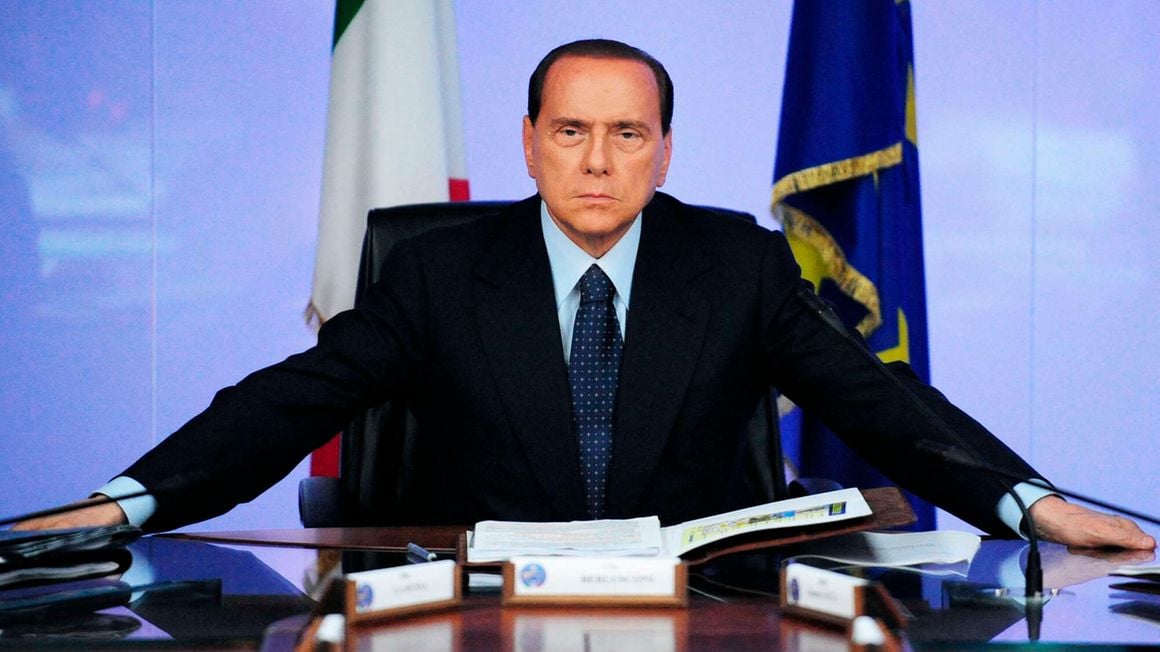
    Silvio Berlusconi, the charismatic and controversial former Prime Minister of Italy, passed away at the age of 86, marking the end of a political era.

    Known for his flamboyant personality, media empire, and scandal-ridden tenure, Berlusconi was one of the most polarizing figures in modern Italian politics.

    Despite his numerous legal troubles and divisive policies, he left an indelible mark on the country’s political landscape and shaped the dynamics of Italian governance for over two decades.

    Silvio Berlusconi
    Former Italian PM Silvio Berlusconi died on June 12, 2023 aged 86. PHOTO | AFP

    Silvio Berlusconi’s Legacy Is Marred by Scandals

    Berlusconi’s political career was characterized by a series of scandals that often overshadowed his policy initiatives. From tax fraud to bribery and sex scandals, the former prime minister was no stranger to controversy.

    Despite multiple trials and legal battles, he managed to maintain a significant support base among the Italian electorate, often attributing the charges against him to political witch-hunts.

    Media Empire and Populist Appeal

    Berlusconi’s rise to power was fueled by his vast media empire, which included television channels, newspapers, and publishing houses.

    Through his media outlets, he was able to shape public opinion and effectively control the narrative surrounding his political career.

    Berlusconi’s populist appeal and ability to connect with the Italian public made him a formidable force in Italian politics.

    His communication skills and promises of economic prosperity resonated with many voters, despite allegations of corruption and conflicts of interest.

    Economic Reforms and Mixed Results

    During his time in office, Berlusconi implemented several economic reforms aimed at boosting Italy’s stagnant economy. His policies focused on reducing taxes, cutting bureaucracy, and promoting business-friendly measures.

    While these initiatives initially garnered support and contributed to short-term economic growth, critics argued that they did not address deeper structural issues, such as unemployment and income inequality.

    Moreover, his handling of the global financial crisis in 2008 drew criticism for being insufficient and reactive.

    Political Instability and Coalition Governments

    Berlusconi’s tenure was marked by political instability and frequent changes in government. His coalition governments often faced internal divisions and infighting, leading to a lack of policy coherence and hindered progress on critical issues.

    Berlusconi’s personal dominance within his political party, Forza Italia, sometimes overshadowed collective decision-making, exacerbating tensions within the coalitions he led.

    Berlusconi’s Impact on Italian Politics

    Despite the controversies and shortcomings, Berlusconi’s impact on Italian politics cannot be underestimated. He transformed the political landscape by introducing a unique blend of populism, media manipulation, and entrepreneurial flair.

    His enduring presence challenged traditional political parties and established a new era of personality-driven politics in Italy.

    Berlusconi’s populist approach also laid the groundwork for the rise of other populist leaders in the country and contributed to the fragmentation of the Italian political spectrum.

    His tenure left a lasting legacy on the dynamics of Italian governance, raising questions about the country’s political institutions and the relationship between media and politics.

    Conclusion

    The death of Silvio Berlusconi marks the end of a chapter in Italian politics that was as divisive as it was influential. While his scandals and legal battles tarnished his reputation, his populist appeal and media empire ensured his longevity in politics.

    Berlusconi’s economic reforms and political style have left a lasting impact on the country, shaping the future of Italian governance.

    As Italy moves forward, it will be essential to reflect on the lessons learned from Berlusconi’s era and strive for a more transparent and accountable political system.

  • George Soros Passes the Torch: $25 Billion Wealth Transitioned to Son Alex

    George Soros Passes the Torch: $25 Billion Wealth Transitioned to Son Alex

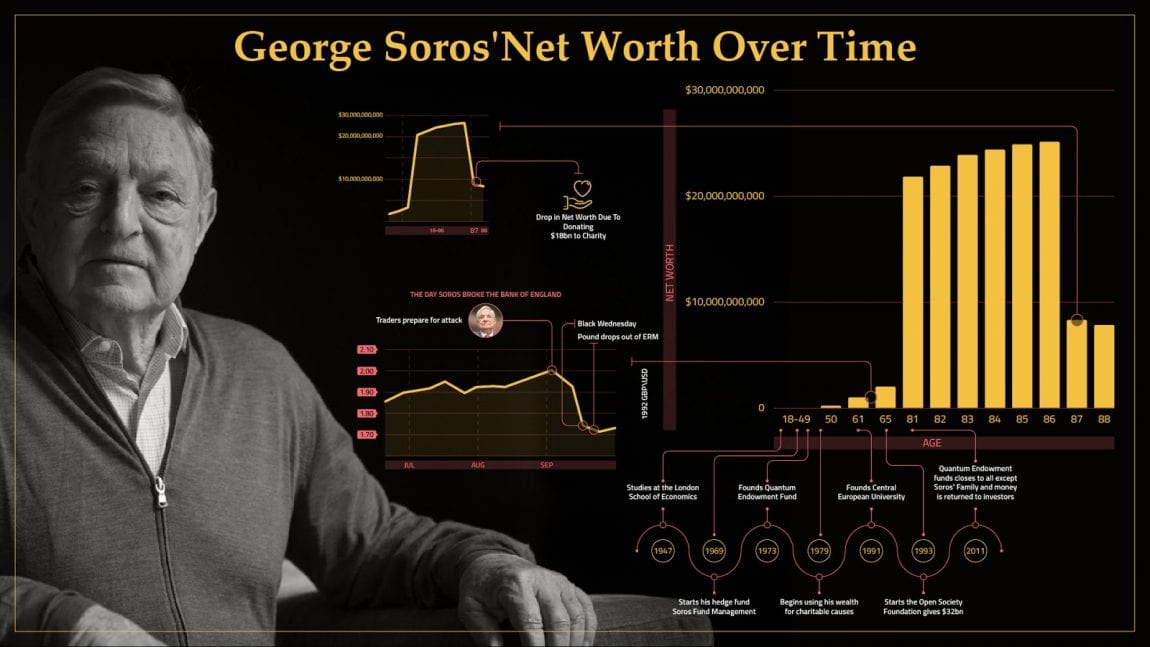
    George Soros, a renowned billionaire investor and philanthropist with a net worth of $6.7 billion, has announced his decision to pass on a substantial portion of his wealth to his son, Alex Soros.

    This monumental transition involves a transfer of $25 billion, an inheritance that will undoubtedly have significant implications for both the Soros family and the causes they champion.

    As one of the top 400 richest people in the world, George Soros has made a profound impact on global finance, politics, and social justice.

    This article explores the implications of this wealth transition and the potential influence of Alex Soros in continuing his father’s legacy.

    George Soros
    Billionaire George Soros

    George Soros: A Legacy of Influence

    At the age of 92, George Soros has amassed an extraordinary fortune throughout his career as a hedge fund manager, investor, and philanthropist.

    Born in Hungary, Soros survived Nazi occupation during World War II and later emigrated to the United Kingdom.

    He built his wealth through astute investments, most notably with his Quantum Fund, and gained global recognition for his financial prowess.

    However, Soros is not only known for his financial success; his philanthropic efforts have earned him admiration and controversy in equal measure.

    Through his Open Society Foundations, Soros has supported democracy, human rights, and social justice causes worldwide.

    His contributions have been particularly significant in Eastern Europe, where he has played an instrumental role in promoting democratic values and supporting civil society organizations.

    Alex Soros: Continuing the Legacy

    George Soros
    Philanthropist Alexander Soros

    With George Soros passing on a considerable sum of his wealth to his son, Alex Soros is poised to play a pivotal role in shaping the family’s philanthropic endeavors and continuing his father’s legacy.

    While Alex’s exact plans for the inheritance remain unknown, it is anticipated that he will follow in his father’s footsteps by championing social justice causes and supporting organizations that strive to bring about positive change.

    Alex Soros, an accomplished philanthropist in his own right, has been actively involved in the Open Society Foundations for years.

    As the founder of the Alexander Soros Foundation, he has demonstrated a commitment to fostering social justice, promoting civil rights, and combating inequality.

    With his father’s wealth now at his disposal, Alex has the potential to magnify the impact of his philanthropic initiatives and address pressing global challenges.

    Implications of the Wealth Transition

    George Soros' Net Worth Over Time - AskTraders.com
    Image: AskTraders.Com

    The transfer of $25 billion from George Soros to Alex Soros raises pertinent questions about the concentration of wealth and the responsibilities of the ultra-wealthy.

    Some may argue that such large transfers perpetuate wealth inequality, emphasizing the need for systemic change to address the root causes of economic disparity.

    On the other hand, supporters of philanthropy see this transition as an opportunity for Alex Soros to carry on his father’s philanthropic legacy and make a significant difference in the world.

    It is worth noting that philanthropy has the power to effect positive change in society when applied thoughtfully and strategically.

    The Soros family’s longstanding dedication to supporting social justice causes indicates a genuine commitment to creating a more equitable world.

    As Alex Soros takes the reins, his influence and decisions will shape the future impact of the family’s wealth.

    Conclusion

    George Soros’ decision to pass on a substantial portion of his $25 billion fortune to his son, Alex Soros, marks a significant transition in the family’s philanthropic efforts. George Soros has left an indelible mark on the world through his financial success and commitment to social justice causes.

    As Alex Soros inherits this immense wealth, he carries the responsibility of continuing his father’s legacy and making a positive impact on society.

    Whether he chooses to uphold and expand upon the family’s philanthropic endeavors or charts his own path, the world will keenly observe the influence of the Soros family in shaping a more equitable future.


  • Biden Trips, Tumbles On Air Force Stage

    Biden Trips, Tumbles On Air Force Stage

    US President Joe Biden took a face-first tumble on Thursday after tripping over an obstacle on stage at the Air Force Academy in Colorado, but he appeared unhurt.

    Biden, 80, who had delivered the commencement address to graduates of the military academy, had just shaken hands with a cadet and begun walking back to his seat when he fell.

    Air Force personnel helped him back up and he did not appear to require further help.

    As he rose, Biden pointed to the object that had apparently caught his foot. It resembled a small black sandbag on the stage.

    White House Communications Director Ben LaBolt tweeted shortly afterward that “he’s fine. There was a sandbag on stage while he was shaking hands.”

    https://twitter.com/jacobkschneider/status/1664343681321541636?s=46&t=KazQmrLjpJYvkoNP81WxiA

    Biden is the oldest person ever in the presidency and is seeking a second term in the 2024 election. His official doctor’s report this year declared him physically fit and he exercises regularly.

    In November 2020, shortly after winning his election against the incumbent Donald Trump, Biden broke his foot while playing with a pet dog.

  • Indian Official Who Drained Dam To Retrieve Phone Fined Sh89K

    Indian Official Who Drained Dam To Retrieve Phone Fined Sh89K

    An Indian official in the central state of Chhattisgarh was fined Rs 53,092 (Sh88,727.125) for allegedly draining out the entire dam to retrieve his mobile phone.

    Rajesh Vishwas, a food inspector who was posted in Pakhanjore area of Kanker district, had gone to the reservoir for an outing with his friends when his mobile phone fell into waste weir of the reservoir while he was taking a selfie.

    Later, he then allegedly roped in villagers and got diesel pumps to empty the dam till the phone was finally fished out.

    On Tuesday, the Water Resources Department of Chhattisgarh said in a letter that Vishwas drained out water from the cistern of a waste weir without seeking permission from the competent authority after his mobile phone fell into it and announced the fine for him.

    The Indian official was suspended after the incident. The department said that the act was illegal under the Chhattisgarh Irrigation Act.

    Vishwas reportedly wasted around 4,104 cubic meters (4.1 million liters) of water. He was asked to pay Rs 43,092 (Ksh.72,089.883) at the rate of Rs 10.50 per cubic meter, according to the letter. Another penalty of Rs 10,000 (Sh16,636.338) was for evacuating water without permission. The amount has to be paid within 10 days.

    Priyanka Shukla, the most senior official of Kanker district, ordered an inquiry after the incident.

  • Jeffrey Eipstein Blackmailed Billionaire Bill Gates Over An Affair With A Russian Girl

    Jeffrey Eipstein Blackmailed Billionaire Bill Gates Over An Affair With A Russian Girl

    Jeffrey Epsten discovered that Microsoft co-founder Bill Gates had an affair with a Russian bridge player and paid for the woman’s education before asking for reimbursement from Gates in exchange for his silence, the Wall Street Journal reported on Sunday.

    Gates met Mila Antonova around 2010, when he was in his mid-50s and she was in her 20s. Epstein met her three years later and paid for her to attend a software coding school, before emailing Gates in 2017 and asking for the cost of her tuition, the newspaper claimed, citing “people familiar with the matter.”

    At the time of the email, Epstein had been trying unsuccessfully to convince Gates to invest in “a multibillion dollar charitable fund”with JPMorgan Chase, the paper continued, explaining that “the implication behind the message…was that Epstein could reveal the affair if Gates didn’t keep up an association between the two men.”

    A spokeswoman for Gates confirmed the exchange, stating that “Epstein tried unsuccessfully to leverage a past relationship to threaten Mr. Gates.”

    Gates’ relationship with Epstein would eventually be the undoing of his 27-year marriage to Melinda French Gates. A year after divorcing the software magnate, French Gates told CBS News in 2022 that her ex-husband’s relationship with Epstein was “one of many things” that led to the split.

    Epstein and Gates first met in 2011, after Epstein had already been convicted for soliciting a child for prostitution. The pair met “many times,” according to a 2019 New York Times report, with Gates telling colleagues that he found Epstein’s lifestyle “very different and kind of intriguing, although it would not work for me.”

    Gates now describes his relationship with Epstein as “a mistake,” and told CBS News that he should have taken his ex-wife’s advice and cut ties with the child molester “sooner than I did.”

    The cost of Antonova’s coding classes was “immaterial for the two men,” and Gates did not pay, the Wall Street Journal’s sources said. They described Epstein’s email as a means of telling Gates that he “knew about the affair and could expose it.”

    Epstein was arrested in 2019 and charged with the sex trafficking of dozens of underage girls, but was found dead in his Manhattan jail cell before he could be brought to trial. His death was ruled a suicide, although this official explanation was met with widespread skepticism, due to his close ties to wealthy and powerful figures, including former US President Bill Clinton, current CIA Director William Burns, and Britain’s Prince Andrew.

  • Lavrov: US Is Trying To Sabotage The Planned Russia-Africa Summit

    Lavrov: US Is Trying To Sabotage The Planned Russia-Africa Summit

    The US is trying to wreck Russia’s planned summit with African countries as part of efforts to isolate Moscow, Foreign Minister Sergei Lavrov claimed in an interview published on Tuesday.

    Lavrov told the news site Argumenty i Fakty that Moscow is different from Western countries in its relations with Africa in that “we never tell our foreign partners how they are supposed to live. We have no secret agenda”.

    Moscow is preparing for its second summit with African countries, scheduled for the end of July in St. Petersburg, including work on infrastructure, technology and energy projects.

    International isolation

    “It is true that the United States and its vassals are doing everything possible to achieve Russia’s international isolation,” Lavrov told the website.

    “In particular, they are trying to torpedo the planned second Russia-Africa summit … to persuade our African friends not to take part.”

    In any case, Lavrov said, the chances of damaging the conference were diminishing as “fewer and fewer people are now willing to pull out all the stops for former colonial powers.

    “Attempts to interfere in our cooperation with countries for the global South and East will therefore continue, but success is far from guaranteed.”

    Focus on Asia, Africa

    Shunned by most Western countries since its invasion of Ukraine just over a year ago, Moscow has turned its efforts to countries in Asia and Africa.

    Lavrov has been particularly eager to nurture ties with Africa, visiting the continent twice this year as well as making a tour in mid-2022.

    South Africa this year held 10 days of military exercises with the Russian and Chinese militaries.

    And the Wagner Group of Russian mercenaries, active in what Moscow described as its “special military operation” in Ukraine, has been deployed against insurgents in Mali and the Central African Republic.

    US President Joe Biden hosted a US-Africa leaders’ summit in 2022 in Washington, seeking to bolster alliances amid the growing Russian and Chinese presence on the continent.

  • How The US Made Tough Talking Kagame To Free The ‘Hotel Rwanda’ Hero

    How The US Made Tough Talking Kagame To Free The ‘Hotel Rwanda’ Hero

    Rwanda’s leader was in combative form last December when, on a visit to Washington, he was asked about his country’s most famous political prisoner, and his personal foe.

    No amount of U.S. pressure could “bully” Rwanda, President Paul Kagame said, into releasing Paul Rusesabagina, the hotelier whose heroism during the 1994 genocide inspired the movie “Hotel Rwanda.”

    “Maybe make an invasion and overrun the country — you can do that,” he added tartly, at an event during the Biden administration’s U.S.-Africa Summit for leaders from around the continent.

    Nevertheless, early the next morning, one of Mr. Kagame’s top aides met quietly with President Biden’s national security adviser, Jake Sullivan, to discuss the terms of a potential release.

    It was a key step in a complex, secretive effort to free Mr. Rusesabagina, which culminated on Wednesday in his return to the United States, where he was reunited with his tearful family at a U.S. Army base in Texas.

    “All of us crumbled when we saw him,” his daughter, Anaïse Kanimba, 31, said in an interview.

    The freeing of Mr. Rusesabagina, a 68-year-old dissident and permanent U.S. resident, was not only a triumph for quiet, patient diplomacy. It resolved a growing burden in Washington’s relationship with a small yet important African ally that punches above its weight on the continent, and is accused of stoking a conflict in eastern Democratic Republic of Congo that could explode into a regional war.

    Mr. Rusesabagina’s plight also presented a delicate challenge for the United States as it seeks to reset its relations with African countries to counter surging Chinese and Russian influence on the continent.

    That has meant shoring up ties with leaders like Mr. Kagame, a prickly authoritarian whose achievements in rebuilding Rwanda after the genocide have been overshadowed by a repressive rule that brooks no dissent — a trend that Mr. Rusesabagina’s case has come to symbolize.

    Josh Geltzer, the deputy homeland security adviser to Mr. Biden, described the monthslong talks over Mr. Rusesabagina as an effort to overcome a “real bilateral irritant” and an “unacceptable state of affairs.”

    Still, some American officials were not always convinced they should rescue the Rwandan prisoner.

    Mr. Rusesabagina was lionized globally after the 2004 release of “Hotel Rwanda,” which depicted him as savior of more than 1,200 people at the luxury hotel he managed during the genocide.

    But in Rwanda, Mr. Rusesabagina’s vocal criticism of Mr. Kagame led him into exile in Belgium, then the United States.

    He vanished in August 2020, days after leaving his Texas home on what he thought was a trip to Burundi. Rwandan agents tricked him into boarding a private jet that flew him to the Rwandan capital, Kigali, where he was detained, charged with terrorism and, after what legal experts called a deeply flawed trial, sentenced to 25 years imprisonment.

    His family campaigned vigorously for his release with the help of celebrities like Don Cheadle, the actor who portrayed Mr. Rusesabagina in “Hotel Rwanda,” and Scarlett Johansson. But the State Department was slow to embrace his cause — partly because of his status as a non-American citizen, and also because of the murky nature of Rwandan accusations that he had financed an armed group that had killed civilians, a U.S. official said on the condition of anonymity to discuss internal deliberations.

    Still, powerful U.S. senators took up Mr. Rusesabagina’s case on both sides of the aisle, including Patrick Leahy, Democrat of Vermont, and Jim Risch, Republican of Idaho and the ranking member on the Senate Foreign Relations Committee. Writing letters and, at one point, withholding $90 million in aid to Rwanda, the senators pressed the government to help.

    They got results in May 2022, six weeks after the court appeal process ended, when the State Department formally declared Mr. Rusesabagina as “unlawfully detained” — a status that shot his case up the administration’s list of priorities. But the effort immediately ran into difficulties.

    That same day, Gen. Stephen J. Townsend, the commander of U.S. forces in Africa, flew into Kigali where he was pictured alongside a smiling Mr. Kagame. Mr. Rusesabagina’s supporters were infuriated to learn that General Townsend hadn’t even raised the case with the Rwandan president — a sign, some senators said, of conflicting American priorities in Rwanda.

    Mr. Rusesabagina’s family turned up the heat on Rwanda by filing a $400 million lawsuit in a U.S. court that named Mr. Kagame. The Rwandan leader was also coming under Western scrutiny for his country’s ties to M23, a rebel group in eastern Congo that was pitching the region into chaos. He denied any links, but relations with the United States were growing strained — a crisis that formed the backdrop of a visit to Rwanda by Secretary of State Antony J. Blinken in August.

    Mr. Blinken pressed Mr. Kagame about Mr. Rusesabagina, an unmistakable signal that the case had become an American priority. Four days later, John Tomaszewski, an aide to Mr. Risch, visited Mr. Rusesabagina in prison. He showed Mr. Rusesabagina the proposed text of a letter from the prisoner requesting a pardon from Mr. Kagame.

    Mr. Rusesabagina said he was willing to give it a shot.

    “Paul’s family had doubted he would go ahead with the letter,” Mr. Tomaszewski said. “But Paul was being pragmatic.”

    Things began to move quickly. State Department officials worked quietly with Mr. Rusesabagina’s family to include language in the letter that would placate Mr. Kagame as well as a suggestion that, if released, Mr. Rusesabagina would cease his vociferous criticism of Rwanda’s government.

    Family members said they disliked those concessions, but went along with them.

    In November, the White House, led by Mr. Sullivan, took over the secret negotiations. The Rwandan side was led by Mauro De Lorenzo — an American-born, onetime Africa researcher at the American Enterprise Institute in Washington who had taken Rwandan citizenship and become a staunch defender of Mr. Kagame’s policies.

    It was Mr. De Lorenzo who arrived at 8 a.m. at Mr. Sullivan’s office the day after Mr. Kagame’s bellicose outburst, in the first face-to-face talks over the possibility of freeing Mr. Rusesabagina.

    After that, the discussion shifted to how a release might happen, American officials said. While the Rwandans did not demand money or a prisoner exchange, they wanted the family to drop the lawsuit. They insisted on retaining Mr. Rusesabagina’s criminal conviction. And they wanted the United States to issue a statement opposing “political violence” — the kind of violence that Rwanda had accused Mr. Rusesabagina of leading.

    The United States agreed to those demands, leading to Mr. Kagame’s first public hint of a possible release on March 13.

    Still, the Rwandans were highly sensitive about the optics of releasing a prisoner they had long insisted was a terrorist mastermind. Mr. Kagame didn’t want to be seen as caving to American pressure.

    So he turned to Qatar, an investor in Rwanda that has often used its vast gas wealth to help resolve international crises.

    When Mr. Rusesabagina was released from prison on the night of March 24, American diplomats drove him straight to the home of Qatar’s ambassador to Rwanda, where he spent three nights.

    When Mr. Rusesabagina flew out of Kigali on March 27, it was aboard a Qatar government jet.

    U.S. officials flew with Mr. Rusesabagina to the Qatari capital, Doha, where he was welcomed by his American lawyer, Ryan Fayhee. The two men checked into the luxury St. Regis hotel, where the former prisoner enjoyed his first glass of wine in several years.

    On Wednesday, they arrived in Houston, where Mr. Rusesabagina was transferred to a military medical facility near his home in San Antonio that specializes in treating survivors of trauma. (The basketball star Brittney Griner was treated at the same facility after her release from Russia in December.)

    Two days later, Mr. Rusesabagina was back home, surrounded by his wife, six children and supporters who had campaigned for his release. They popped champagne, shared a barbecue and sang “God Bless America.”

    That same day, his lawyers formally dropped the lawsuit against Mr. Kagame. But Rwanda still faces several lawsuits in Africa, Europe and the United States related to Mr. Rusesabagina’s arrest, Kate Gibson, his lead attorney, said.

    Another issue is also outstanding: whether Mr. Rusesabagina, now safe on American soil and arguably more famous than ever, will stick to his commitment of cutting back on criticism of his old enemy, Mr. Kagame.

    (New York Times)