Category: Sci & Tech

  • Apple Has Released iOS13.2 Upgrades

    Apple Has Released iOS13.2 Upgrades

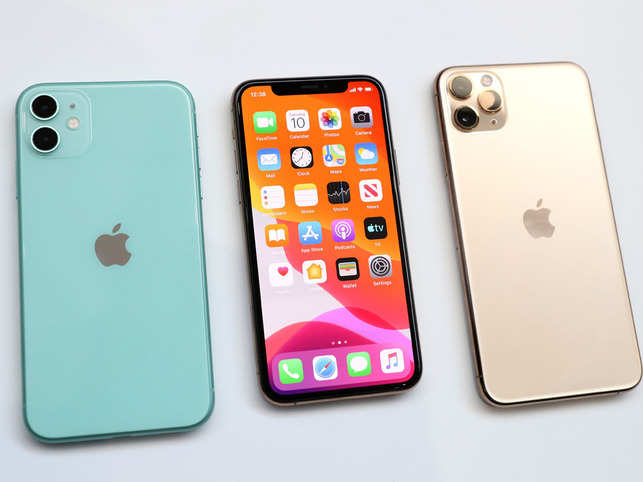
    Tech giant Apple Inc has released a new iPhone upgrade after bugs in the recently released iOS 13 caused charging malfunctions in their recent released products iPhone11, iPhone Pro and iPhone Pro Max.

    Image result for ios 13.2"

    Apple was forced to roll out iOS 13.1 just days after iOS 13 released due to a variety of bugs and issues that plagued the early software, and although it was certainly an improvement, even iOS 13.1 wasn’t up to Apple’s usual standards.

    The iPhone maker was forced to work on iOS 13.2 immediately, and after four developers and public betas, the final version of the update has been seeded.

    Aside from the bug fixes, the number one reason to download iOS 13.2 is to gain access to the Deep Fusion camera tech that should make all of your photos especially in low and medium light look way better. There are also new emojis, new privacy controls for Siri, and some other subtle upgrades iPhone owners will appreciate.

    The new update is available on

    • iPhone 11 Pro
    • iPhone 11 Pro Max
    • iPhone 11
    • iPhone XS
    • iPhone XS Max
    • iPhone XR
    • iPhone X
    • iPhone 8
    • iPhone 8 Plus
    • iPhone 7
    • iPhone 7 Plus
    • iPhone 6s
    • iPhone 6s Plus
    • iPhone SE
    • 12.9-inch iPad Pro 3rd generation
    • 12.9-inch iPad Pro 2nd generation
    • 12.9-inch iPad Pro 1st generation
    • 10.5-inch iPad Pro
    • 9.7-inch iPad Pro
    • iPad Air 3rd generation
    • iPad Air 2
    • iPad 6th generation
    • iPad 5th generation
    • iPad mini 5th generation
    • iPad mini 4
    • iPod touch 7th generation


  • Apple iPhone Users Reporting Serious Battery Drains After Update

    Apple iPhone Users Reporting Serious Battery Drains After Update

    Apple has received a ton of praise this year over good battery life, but it seems that the company has broken it with the new update 13.1.3 which was officially pushed out. Apple has yet to release an official statement, but the issue appears to be affecting a variety of models –from the iPhone 6 to the iPhone 11 Pro Max.

    iOS 13 software update was rolled out last month and with it came new cool features such as picture editing, menstrual tracking and improved privacy features, it has also come along with a few bugs. Countless users are reporting major battery depletion after downloading the update with some claiming their phones which were 100% full drained to 35% in 30 mins on slow use with the devices heating up while charging. here are some tweets from users to Apple support.

    https://twitter.com/MoD989/status/1188384283582484480?s=20

    https://twitter.com/dvnielvm/status/1188253626126524416?s=20

    https://twitter.com/NaomiMonty123/status/1188492525641830401?s=20

    If you are still on iOS 12, stay away from that upgrade button. If you’ve already updated your iPhone, you may want to switch to Dark Mode until a solution is found – a YouTuber found the feature increase battery life by 30 percent.

  • Audio Update: Safaricom To Recover All Data Acquired In The Heist

    Audio Update: Safaricom To Recover All Data Acquired In The Heist

    An audio confirmation that one concerned Kenyan on Twitter has since shared on Twitter  account of Mnur Ferruz has recorded a safaricom call center customer service personell stating that all remaining data bundles will be recovered.

    The audio also states that already used data will be recorvered from the individual accounts involved. It however, did not state if the recovery will be via airtime or deducted from MPesa accounts.

    Here’s is the audio recording courtesy of Mnur Feruz.

    The audio was on the responding to the dawn news that Kenya’s leading telco safaricom had experienced another glitch that saw Kenyans heist data bundles from the Micheal Joseph led company.

    Safaricom Care had also confirmed earlier that they were aware of the glitch that led to the heist and were working on its resolution as soon as possible.


  • Kenyans On Twitter Celebrate Safaricom Data Heist

    Kenyans On Twitter Celebrate Safaricom Data Heist

    Kenya’s largest telco Safaricom suffered a major glitch in their systems yesternight that allowed customers to acquire data bundles with no expiry date and airtime for free.

    A similar glitch happened in June 2019 that saw Michael Joseph’s telco lose millions of shillings in data and bundles. This has started to raise a redflag on how the administration of the Safaricom is being driven since the death of late CEO Bob Collymore.

    Is Safaricom almost collapsing? Is the government part of the blanketed storm that is for sure brewing at Safaricom?

    Here is the reaction of those who benefited from the data Heist.

    https://twitter.com/nestah_mkawale/status/1186817490304880640?s=19

    Those who missed the oopportunity in the Heist had also their say on the now trending hashtag, #Safaricom.

    https://twitter.com/MeNzaihKE/status/1186869660244951040?s=19

  • Safaricom Introduces A Data Plan With No Expiry Date After Lawsuit

    Safaricom Introduces A Data Plan With No Expiry Date After Lawsuit

    Safaricom Limited has introduced a data plan with no expiry dates hours after a lawyer Moved to court to sue the Telcos over the expiry of data and loss of unused internet bundles.

    Lawyer and ICT practitioner Adrian Kamotho had sued all the major telcos and the industry regulator at the Communications and Multimedia Appeals Tribunal.

    In an update released  in the Google Playstore the new My Safaricom app offers data plans that do not have expiry dates. Customers can choose any amount they wish to spend and the app will calculate the data bundle it is worth.

    According to calculations the data value is not constant with data getting cheaper the more you spend 2.00MBs on this new data plan will cost Sh1 while for Sh1000 you get 5GB.

    A user can buy upto Ksh70,000 worth of data without an expiry date with the option to buy data directly from M-Pesa wallet.

    While Safaricom has not done away completely with data bundles that expire, it is the only telco that has reacted after the suit.

    Mr. Kamotho had filed the suit in hopes of getting orders issued to stop the loss of unused data bundles after the expiry date. “That an order directing the respondents to enable active subscribers to roll over used data at all times,” the court petition read.

    He also asked the tribunal to issue orders barring the application of differing prices for in-bundle and out-of-bundle costs.


  • Netflix Vows Crackdown On Customers Who Share Login Details With Friends and Family

    Netflix Vows Crackdown On Customers Who Share Login Details With Friends and Family

    Towards every end of the month, tweets like “I hate when the owner of the Netflix account doesn’t pay the bill” pop up ever so often on my timeline. If you pay for a Netflix account, chances are that at least one other person in your life has access to your account, whether that be a sibling, a best friend, a significant other, or maybe even an ex. Who knows you might even be the person making those tweets. well, bad news. Netflix has revealed plans to crackdown on users who share their passwords. 

    Speaking at Netflix’s Q3 2019 earnings interview last week, chief product officer Greg Peters said the firm was going to address password-sharing without ‘alienating a certain portion of [its] user base.’ “We continue to monitor it so we’re looking at the situation. We’ll see those consumer-friendly ways to push on the edges of that.” He stated.

    Netflix offers account-sharing features which are only designed to let people in a single household use one login, The streaming service now worries that some users are sharing their logins among different households, with distant friends and even strangers.

    Netflix did not disclose how it would monitor password sharing yet, but as the Daily Dot suggests, the firm may look to limit IP addresses, which could become a problem for families who live apart. News that tech firm Synamedia revealed a new AI system designed to crack down on account sharing have also been floating around and Netflix could use the system.

    Synamedia claims that the number of users who share their account details with friends and families on regular basis have cost the paid streaming industry billions of dollars, the firm says it will recognize the accounts being illegally shared among multiple users and require the owner pay an additional fee to have access to a premium shared account service that will allow a limited level of password sharing.

    The last time Netflix promised a crackdown was when the streaming service vowed to block those using VPNs to access programming not available in their own geographical region. This was pretty well implemented so users can start saving up money for their own accounts as early as now.

    More updates to follow


  • Why You Should Be Wary Buying Electronics From Luthuli Avenue

    Why You Should Be Wary Buying Electronics From Luthuli Avenue

    Nairobi’s Luthuli Avenue, this is the first name that comes to mind when you mention electronics, cheap electronics. It is a renowned one-stop centre for electronics. But just how safe is buying electronics here? Tales of people who bought electronics which malfunctioned the day after or branded contrabands fill the internet.

    Just this weekend, talking about the holidays and the rate the economy is deteriorating, a friend narrates how they need help to go buy a smart TV in town. They don’t want to go alone because of a bad experience the week before so I ask for the full story. My friend tells me how they visited stalls inquiring about prices of the TV they wanted, all ranging at the same price, they then come upon a stall selling the same TV for a below average price, way below average that it is suspect.

    This is suspicious, but maybe this lady selling the TV is ‘blonde’, she looks new to the job, she may have made the error. My friend decides to ask again but no error has been made, the TV is actually that price in this store, they decide to buy the TV, suspiciously they have not seen the product yet up to this point. Money paid, receipt written everything sorted, this is when matters get interesting, a man who apparently works here emerges, he explains how the TV they just bought does not work standalone, they have to dish out about half the price they bought the TV for ‘connectors’, they also have to pay monthly for the TV to work.

    My friend does not have that kind of money, they ask for a refund. The man refuses to refund the cash, reason being a receipt was already written. The man now offers the only solution, my friend has to pick another TV that goes for the same price that doesn’t need connectors, these are readily available. My friend has had enough of this and decides to go file a complaint with the police at central police station. They are accompanied back to the stall and after a few “where’d you go, we were going to refund your money anyways” they have their money returned.

    This is not a new trend, just a single search on popular forums will show you how many have suffered under the same circumstances, many stories on the internet however end up with customers taking home electronics that are offered as alternatives.

    Before you buy any product, try to do some background check to find out more about its specifications, and the features that distinguish it from contraband. Most importantly, consult a friend or colleague who is familiar with the workings of a product you want to buy. When you venture out to Luthuli Avenue or any other electronics’ hub, make sure you know what you want, and also understand issues such as warranty and terms and conditions.

    Alternatively, Tag a Tech-savvy friend along.

  • Roma Launch Swahili Twitter Account Following Eliud Kipchoge’s Win

    Roma Launch Swahili Twitter Account Following Eliud Kipchoge’s Win

    Italian football club, Associazione Sportiva Roma, commonly referred to as Roma has today announced a Swahili Twitter account after promising to launch one the eve World Marathon record holder Eliud Kipchoge ran the first sub-two hours marathon.

    Announcing on their website Roma showed delight going on to be the major European football club to be able to communicate directly on the social media platform with millions of its fans who speak Swahili.

    The new Twitter account can be followed at @ASRomaSwahili

    https://twitter.com/ASRomaSwahili/status/1184490214804381696?s=19

    The new Roma account was launched four days after AS Roma used its English-language account to congratulate Eliud Kipchoge on his historic achievement in the INEOS challenge. Fans took the opportunity to ask for a swahili account to which Roma quickly obliged.


    We’re delighted to launch AS Roma Swahili on Twitter today,” revealed Paul Rogers, Head of Strategy at AS Roma. Paul says after Roma launched a Pidgin account in March, they’d been inundated with requests from fans in Kenya, Tanzania, Uganda and from other Eastern and South Eastern African countries asking for an official Swahili account.

    “The new Twitter account will allow us to directly engage with these fans in a way that suits them and is consistent with our strategy of breaking down the communication barriers between the club and our global fan base.”

  • Most Unsafe Gadget Huawei Suffers 1Million Cyber-attacks Daily

    Most Unsafe Gadget Huawei Suffers 1Million Cyber-attacks Daily

    You remember when the late Jacob Juma was murdered and investigations into his gruesome death led by the former CID now DCI boss Ndegwa Muhoro launched that never clearly yielded something? Nairobi’s CCTV cameras apparently failed to capture the most important video details of the murder that has remained a blame game to this very date. Huawei CCTV that costed Kenyans billions of shillings and almost zero benefits, to say the least, was at the center of all that.

    Away from that, the Chinese tech giant Huawei stomachs more than a million cyberattacks per day on its computers and networks.  China’s under fire Huawei security chief, John Suffolk has confirmed this.

    According to Suffolk most of the attacks are focused on IP-theft, and Huawei, which leads the world for 5G network innovation and files more patents than any other company, has accused the U.S. government of mounting cyberattacks as part of its concerted campaign against them.

    Last month, Huawei alleged in the media that; “The U.S. law enforcement has threatened, coerced and enticed existing and former employees, and has executed cyberattacks to infiltrate Huawei’s intranet and internal information systems.”

    Suffolk, however, did not attribute the attacks to any country or particular threat actor and did not confirm whether they were from nation-states or competitors. He, however, acknowledged that although almost all attacks are defended, some attacks on older systems get through.

    “Cyberattacks have included a type of theft of confidential information by sending a computer virus by email.” Reads Huawei’s report

    Such phishing or business email often rely on social engineering to trick employees into installing malware disguised as attachments, or visiting fake sites or viewing social media clips that are laced with harmful code.

    Suffolk used the media to confirm his claims that although Huawei is battling its own allegations around cybersecurity, vulnerable to intelligence tasking by Beijing within overseas markets—either to steal or disrupt. Suffolk told the media that if the company’s CEO Ren Zhengfei was ever asked to compromise the company, he would blankly refuse to do that if he was pressurized to do that, he would close the company down.

    Last week, the EU report warned that the combination of new technologies and 5G networks risks hostile state control of critical infrastructure, logistics, transportation even law enforcement. Even though the report failed to openly mention China or Huawei, but did reference sole 5G suppliers from countries with poor democratic standards, which clearly means Huawei and China was the reference.


  • I Want To Meet My Idol, Jimmy Wanjigi Parody Account Says

    I Want To Meet My Idol, Jimmy Wanjigi Parody Account Says

    Kenyans on Twitter have been running multiple accounts and the most viral of them, are those with the names of most prominent Kenyan, mostly who are off twitter streets and one of them being @JimmyWanjigi.

    Jimmy Wanjigi is the man who brought together Uhuru Kenyatta and William Ruto for them to form a government. By bringing together Ruto and Mr Kenyatta, the billionaire was hoping that he would be allowed to continue with the project that he had mooted during the Grand Coalition government — the Sh320 billion standard gauge railway project, which was his brainchild but later on slapped by the Uhuru’s close ties with the Chinese.

    Mr Wanjigi had cut a lucrative deal with Chinese companies that had lined up for the project and he was to get close to Sh32 billion from the 10 per cent agency fee that he normally charges via his Tyl Limited Company.

    Away from that, Jimmy Wanjigi speaking to RMS owned Citizen has said that he wants to meet the person who runs the twitter account under his name. The account that makes so many viral tweets, like the latest on where the account alleged that the tycoon has ordered a private jet for the superman Eliud Kipchoge.

    https://twitter.com/Jimmywanjigi1/status/1181965874720366598

    https://twitter.com/Jimmywanjigi1/status/1182938232369176576

    However the Tycoon through his Lawyer Willis Otieno confirmed that the Jimmy Wanjigi does not communicate on social media accounts meaning that both Twitter pages —@Jimmywanjigi1 and @JimiWanjigi—are parody accounts.

    “It is a fake account, it has nothing to do with me but we are proud of Eliud Kipchoge for what he has done for the human race and for Kenya in particular. I actually want to meet the person behind the tweet over a cup of tea because his creativity has shaped conversations of Kenyans online,” he told Citizen Digital yesterday.

    The parody account has since accepted the opportunity to have a sit down with one of the most genius political minds Kenya ever produced and his Business muscle can be heeded Nationally.

    https://twitter.com/Jimmywanjigi1/status/1183134032747552770

    Kenyans On Twitter have, However, warned the person behind the account that if s/he makes that mistake they will be arrested and charged for impersonation. Here are sampled reactions on the tweet.

    https://twitter.com/Nzioka_Austins/status/1183302847145926657

    https://twitter.com/GamechangerKe/status/1183302862811664387

    Last year, the businessman sued the Nation Media Group over the publication of a fake obituary on February 7, 2018. The High Court awarded him Ksh. 8million after ruling that the publication violated Wanjigi’s privacy and forced them to apologize publicly.

    “We regret the pain and anguish this may have caused Mr Wanjigi and his family and sincerely apologise for this. Nation Media Group does not condone such publication, which clearly goes against our editorial policy. We have taken immediate action against those responsible for the placement of the announcement, including reporting the matter to the police for further investigations,” the apology read.

  • Forget iPhone 11: Apple’s 2020 iPhone Will Have A Never Seen Before Technology

    Forget iPhone 11: Apple’s 2020 iPhone Will Have A Never Seen Before Technology

    Apple recently unveiled their latest iPhone releases last month, the iPhone 11, iPhone 11 Pro, and and iPhone 11 Pro Max and while these flagships offered a noticeable upgrade in camera quality and performance, it’s next year’s iPhone that will have new technology never seen before.

    Apple’s 2020 flagship is expected to include a more sophisticated three-dimensional camera, The camera system will include a laser scanner to create 3D replicas of the real world, boosting the iPhone’s Augmented Reality (AR) capabilities. This means the iPhone would work better at placing virtual objects in AR and would therefore offer better and enhanced depth perception, according to Bloomberg.

    Apple’s iPhones have supported AR applications over the years. The company launched its ARKit SDK in the summer of 2017 – a set of tools to help mobile developers build high-quality AR apps- getting the jump on Google in offering a platform-specific AR tool. Google brought its ARCore system out of beta in february 2018.

    As much as there has been software developments, the iPhone’s augmented reality performance that is somewhat dictated by the hardware it runs on and this new camera technology will prove to be a major performance boost when it comes to AR.

    The iPhone franchise is heavily invested in AR technology. Apple CEO Tim Cook has repeatedly voiced his interest in AR over the past several years, saying that he “views it as being more important in the long term than virtual reality”. If the rumours prove to be true, Apple’s next iPhone could also lead to the company finally releasing an AR headset.

    Apple’s 2020 iPhone is also expected offer 5G support. While 5G compatibility is a hustle, seeing as Safaricom have said they will not invest in the technology yet, it’s only going to become more important over the next two to three years.


  • Rwanda Opens The First African Smartphone Manufacturing Factory

    Rwanda Opens The First African Smartphone Manufacturing Factory

    While Kenyans are seriously hoping that our government gets back to it’s sense and help  common mwanachi and make Kenyans proud again, Paul Kagame, even though an open dictator and killer of his opponents, he has launched the first of its kind African smartphone manufacturing plant in Kigali.

    Pan-African conglomerate Mara Group, has opened its first factory in Rwanda as the company hopes to pioneer a brand of African-made smartphones with their official first product, Mara Phone.

    Located in Kigali’s special economic zone, the factory employees over 200 people to manufacture high-tech smartphones for the local market and further afield. Right now, Paul Kagame has issued an order that the company employs 90% Rwandese and the rest of Africans can share the remaining percentage of the employment opportunities.

    With two models on sale for Sh15, 900 and Sh22, 900, the Mara Android phones are hoping to compete with Asian manufacturers like Tecno and Samsung who currently dominate Africa’s markets and not forgetting Apples iPhone that is also huge for prominent Africans.

    “We realised a few years ago that to create positive social impact on our continent and in emerging markets we need to have high quality and affordable smartphones. That’s when we came up with Mara Phones.” CEO Ashish Thakkar, said during it’s launch

    Smartphone penetration in Africa currently stands at around 66% which beats the global set bar of 60%. Africa is indeed the next face of smartphone world and market.

    At a considerably higher price, critics are skeptical the Mara Phone will make a dent in the local market.

    Yet thanks to partnerships with local banks and telecommunications firms, the Mara Group have created a finance model which allows users to pay for their phones over a period of two years. Yes, this is a genius move to say the least that every Kenyan would wish to have.

    Rwandan President Paul Kagame commended the drive towards affordable smartphones and underlined the need to boost the adoption of high-tech products in his country.

    “The smartphone is no longer a luxury item, it is rapidly becoming a requirement of everyday life,” he said.

    “That trend is bound to increase in the years to come as more and more services migrate to digital platforms. We want to enable many more Rwandans to use smartphones. The cost and quality is very important and the introduction of Mara Phones will put smartphone ownership within reach of more Rwandans.” Kagame added.

    The Mara Group has a long history in Rwanda as they enjoy a 20% stake in the pan-African banking group Atlas Mara, which was co-founded in 2013 by Thakkar and the former CEO of Barclays Bob Diamond.

    In 2015, the group acquired a majority share in the Banque Populaire du Rwanda. Atlas Mara is now scaling back its pan-African ambitions through a share swap with the rapidly expanding Kenyan lender, Equity Bank.

    Equity, the Nairobi-based  bank acquired 100% of Atlas Mara’s operations in Zambia, Mozambique and Tanzania along with 62% of the Banque Populaire du Rwanda.

    Thakkar described his new factory as “historic” due to its position as the first smartphone manufacturing plant on the continent.

    “In Africa, we don’t manufacture anything. We assemble in a few countries, but we don’t manufacture anything. We are the consumers but not the producers. When we first told people about Mara Phone they told us we were crazy and that it wasn’t possible. Our true belief in Africa, particularly Rwanda, is a dream come true. This is a historic moment which will help shift the narrative for Rwanda, Africa and the rest of the world.” said Thakkar.

    The Mara Group are set to launch their next Mara Phone factory in South Africa on the 17thof October.

    Where is Kenya? Where is our damn government? JKUAT tried launching laptops that flopped before even hitting the market. Kids laptops deals has also flopped on our nose. I mean my fellow Kenyans, is this what you people call a digital government?!

  • DCI Goes After Second-hand Laptops, Phones Dealers And Buyers

    DCI Goes After Second-hand Laptops, Phones Dealers And Buyers

    The DCI has stated that they are now  targeting civilians who buy electronics from unauthorized vendors who mainly deal with quick sell of contrabands and stolen properties.
    In a statement on yester evening, the Directorate of Criminal Investigations warned Kenyans against purchasing laptops, mobile phones and TV sets from traders who lack requisite trade documents, including licenses, permits and other local and national approvals.
    According to DCI, the stolen electronic gadgets get rebranded and repackaged using polythene bags before reselling them as new devices.

    In August, police officers in Nairobi recovered 254 laptops believed to have been stolen from a house in Kilimani, Nairobi.

    Last week, a local company published in the dailies serial numbers of more than 1000 laptops it claimed had been stolen from the Inland Container Depot (ICD) in Nairobi, urging Kenyans not to buy the said gadgets.

    According to the DCI, traders without proper premises usually buy the devices from ‘‘armed gangsters who have violently robbed innocent citizens’’ and maimed or killed them.

     According to DCI, stoneheaded Kenyans who defy these orders will face serious consequences.

    ‘Being found with suspected stolen property, you suffer immediate consequences of the actual criminal, which may escalate to a death sentence,’’ the DCI warned in the strong statement.

    ‘When [we] investigate (forensically) and find you in possession of such said devices, by the time it is established that you were not involved in the crime, you may have suffered immensely,’’ the statement said.

    Take for instance, in August last year, detectives discovered in Nairobi a cache of 700 laptops that were reportedly stolen from the Office of the Deputy President William Ruto. Seven suspects were arrested in the dawn raid.

    The laptops, valued at Sh320 million, had fraudulently been obtained from businessman Stephen Musyoka.

  • Next Series Of iPhone To Have Touchscreen Keyboards You Can Feel

    Next Series Of iPhone To Have Touchscreen Keyboards You Can Feel

    Apple Inc, an American multinational technology company headquartered that designs, develops, and sells consumer electronics, computer software, and online services has already started making its fanatics to admire the next series of its unreleased products. iPhone 11 Pro was released just a few weeks ago!

    Image result for iphone 11

    According to an exciting new patent application from Apple, the company is looking to replicate the familiar feeling of typing on a keyboard to touchscreens. The patent, uncovered by Patently Apple, explains how haptic motors and electrostatic charges would make the virtual keys feel more like physical ones.

    “Electrostatics may use an electrical field to attract and/or repel conductive objects, such as a user’s finger. Changing the normal force between a surface and a conductive object directly affects the friction between the two, and the resulting forces may be perceived as texture when the object moves,” the patent reads.

    Basically, what Apple is saying is that this is something that looks like a keyboard on-screen that ‘feels’ like keys thanks to the imagined ‘texture’ and it should feel just like you’re typing on a regular keyboard. I don’t know if the theory FEELs from your end, me thinks this looks like a modernized past, and yes, I mean this feels good from my side. Or you are waiting to see it to believe it!

    Still, it’s a fascinating idea and could prove a viable alternative for iPad keyboard cases and the like for people who only occasionally use their tablets for long-form writing.

    But as ever, patents should come with a health warning: very few of them actually get made into products you can buy, especially with Apple which has over 80,000 of them. Whether we’ll see this particular one in a product likely depends on how well it works in practice.

  • How To Hide Your Personal Activity From Google And Surveillance

    How To Hide Your Personal Activity From Google And Surveillance

    Tape your webcam? That’s the first thing that comes to mind when you think about your smart gadgets spying on you. In recent days, reports of Google listening in on your microphone to display ads that are ‘Personalized’ for you have been on the rise. If you use the internet you probably figured that out yourself anyway. So what are some ways you can hide your personal activity from google?

    Here are three new ways Google has introduced to hide your personal activity from Google. The company is now rolling out new tools that will give customers better control over their privacy when using Google Maps, YouTube, and Google Assistant.

    The company has announced incognito mode for Maps, which will debut on Android this month before expanding to iOS. A blog post by Google’s Eric Miraglia explains that when turned on, incognito mode in Maps will not save activity on that device to your Google account and won’t be used to personalize your Maps experience.

    On Youtube, Google is introducing a rolling auto-delete feature that will automatically clear out your location history and web data at an interval of your choosing. “Set the time period to keep your data — 3 months, 18 months, or until you delete it, just like Location History and Web & App Activity — and we’ll take care of the rest,” the blog reads.

    In a blog post published by David Monsees, Google’s product manager for search, the company admitted that every time you talk to your Google Assistant, there’s a chance someone might listen to the audio from that conversation, Google records, saves, and transmits your voice data in a way that can be accessed by actual people. So much for privacy.

    “These language experts review and transcribe a small set of queries to help us better understand those languages. This is a critical part of the process of building speech technology, and is necessary to creating products like the Google Assistant.” read the blog as the reason why they are violating your privacy.

    Well, Google will now let you wipe recent voice commands or questions to Google Assistant without having to open an app on your phone. Just say “Hey Google, delete the last thing I said to you” or “delete everything I said to you last week” and that data will be erased. To delete more than a week’s worth of Google Assistant history you’ll still  need to go manual and dig into the Assistant’s settings menu.

    You can also visit My activity if you want to delete your entire search history on google

    Google is also building a password checkup feature in Google Smart lock, This will let users quickly check if their password is compromised in a third-party breach, find any passwords they are using in multiple places, or replace weak, easy-to-guess passwords they might have in place for some accounts.

  • SECURITY: Apple iOS 13 Leaves Millions Of iPhones At Risk

    SECURITY: Apple iOS 13 Leaves Millions Of iPhones At Risk

    Apple recently released iOS 13 along the new set of iPhones earlier last month and it might not all be good news for Apple’s 1 billion plus iPhone users. iOS 13, unlike iOS 12 -which was particularly good in supporting older hardware- dropped support for older iPhones, this means for any iPhone older than the iPhone 6s, the new update will not work.

    Any past generation device with 1GB of RAM will no longer be supported and will not receive the iOS 13 update. This means that iOS 13 will only be compatible with the following devices:

      • iPhone XS
      • iPhone XS Max
      • iPhone XR
      • iPhone X
      • iPhone 8
      • iPhone 8 Plus
      • iPhone 7
      • iPhone 7 Plus
      • iPhone 6s
      • iPhone 6s Plus
      • iPhone SE
      • iPod touch (7th generation)

    Apple which reportedly shipped around 200 million iPhone 6 and 6 Plus units, for example. And all of those phones will be dumped into OS-limbo with this release. With waves of technology attacks getting better each day and with the iPhones having a bounty on their head, iPhone users will be left vulnerable to attacks with this drop unless they upgrade.

    Apple claim the reason for the obsolescence is performance improvements drive that required better hardware.

    iOS 13 not safe

    iOS 13 may also not be the safest yet, Picked up by Engadget, Apple has published a support document called ‘Get ready for the new Reminders app’ which warns every user who has upgraded their iPhone to iOS 13 that they risk data loss across their devices if they use the app right now.

  • WhatsApp To Restrict Forwarded Messages To 5 Users Or Groups

    WhatsApp To Restrict Forwarded Messages To 5 Users Or Groups

    In what the company term as a move to curb widespread of fake news or extremist content, WhatsApp has announced that they are going to block users from forwarding messages to more than five individuals or groups.

    “We settled on five because we believe this is a reasonable number to reach close friends while helping prevent abuse,” Carl Woog, Head of Communications at WhatsApp said in a press meeting at Jakarta on Monday.

    The decision to limit recipients of forwards to five was made in India last July as the country has one of the highest forwarding rates in the world. According to the Guardian, India is WhatsApp’s largest market with more than 200 million users.

    The action comes after a spate of mob killings across the country that were linked to inflammatory messages forwarded using WhatsApp. Critics noted concerns over WhatsApp’s message-forwarding feature that has also been largely blamed for helping for spreading information without authentication.

    According to the company, a forwarded text message to a new recipient is marked as forwarded in the light grey text but otherwise appears indistinguishable from an original message sent by a contact.

    “(This) strips away the identity of the sender and allows messages to spread virally with little accountability,” the WhatsApp report reads.

    In Kenya, a social media consumption report revealed that WhatsApp and Facebook are the most widely used platforms at over 88%. And WhatsApp remains the worlds most popular messaging app, the company has over 1.5 billion active users globally.

  • Little Cabs E-Shuttle To Halt Operations From 1st October

    Little Cabs E-Shuttle To Halt Operations From 1st October

    Taxi hailing app Little has announced in an email to customers that the shuttle service has been temporarily halted with effect from October 1st 2019 following a directive from transport authorities who claimed the company does not have the right licenses to operate.

    Below is the full email from Little CEO

    “Normally I put email to my riders with good news. Today I have an exception.

    I would like to share some sad news with all of you. Few days before we got a communication from the authorities that we are not allowed to Hail a shuttle on Little. The Shuttles we hail are from our partners who are properly licensed, but we were told that it is not the right kind of license.

    We run point to point shuttle services on our Little App. We have thousands of Shuttle riders who ride on our platform every single day, many of them several times a day. I have met many of them personally. Most of them have been very happy with the service. Its efficient, it can be tracked, It’s on time, it’s clean and safe and off all, it’s not chaotic. Our shuttles service is so popular that most of the times they are fully booked.

    I have no quarrel with the authorities. They are doing their job as per what is listed in their bible. However, I would have appreciated that they open a dialog with technology companies like us on how to work togeather and change the face of public transportation in our country. We have been running this services for last three quarters, and we have proved that public transport can be operated in efficient and profitable manner. A manner that can bring sanity in the chaotic public transport in our city. Over several months, we have learnt a lot. We have made changes to our technology so that it works as expected. We have been able to come up with the right ingredients to address the problem at hand. And I just hope that these efforts do not go in vain.

    If this information is wrong, I do apologize, but I was told that when Safaricom launched MPESA, there was no proper regulation on mobile money. However, as it started helping Kenyans, Central Bank did not stop Safaricom, but they worked together to formulate a legal model. I would have appreciated a similar approach on this matter. And I pray that happens.

    I Love Kenya. Kenya is my country. We are a unique nation. We are innovative and entrepreneurial. We like trying out new things, some fail some succeed. So challenges like these are not going to shake our dreams. At Little, we have big dreams. We want to be pan African mobility provider, and it would happen with time and I am glad that our riders are supporting me.

    I am not sure if the decision to stop us was from the authorities or they were under pressure from the public transport cartels. Whatever the case, I would like to apologize to our riders that we would not be running this service from 1 October 2019, till we get a clearance from the relevant authorities.

    Do share this with your friends and on social media, so that our riders are aware of this news and do make other arrangements for their daily commute.

    Thank you,

    Kamal Budhabhatti,

    Chief Executive, Little”


  • How Mobile Money Credit Apps Are Used For Mass Surveillance On Kenyans

    How Mobile Money Credit Apps Are Used For Mass Surveillance On Kenyans

    Keren Weitzberg, a researcher and educator based at University College London, and who’s currently working on a project on ID cards and biometrics in Kenya has opined that the growing mobile credit apps in Kenya are used for surveillance. According to her report “Mobile credit expands mass surveillance of ordinary Kenyans”, governments and corporations are using the digital credit services to expand their reach into people’s everyday lives. Financial technology, or fintech, is selling  Kenyans data, their routine and habits and transforming their behavior into data that can be monitored and assessed.

    The report names Safaricom – a partly government-owned multinational telecom that controls the lion’s share of the Kenyan market – in partnership with Uhuru’s partially owned CBA bank as huge contributors to this huge breach of Kenyan citizens data. Safaricom has a lending service itself  (M-Shwari) and as both tax collector and shareholder, the Kenyan government has a direct financial stake in Safaricoms digital lending. Through mandatory SIM registration laws in the country, Safaricom is also collecting a great deal of data on their customers and consumer habits in what the watchdog group Privacy International called “a more pervasive system of mass surveillance” throughout Africa.

    These digital lending companies ask for access into the lives of ordinary Kenyans before giving out loans which Kenyans readily agree to. They use everything from GPS data to how often people call their parents to social media feeds to assess customers’ creditworthiness. The companies collect M-Pesa transaction SMS, call behavior and handset information and due to lack of sufficient protection laws in the country the  mobile apps make profit by disclosing users’ information to third parties.

    Most Kenyans are already struggling to make ends meet and digital lending apps are not the solution, Infact they are more likely to worsen poverty by contributing to cycles of indebtedness, but in a country led by a man who has glorified borrowing with absolutely no regard for it’s citizens data, The Mpigs would rather use their time to come up with useless bills to tax bloggers and group admins rather than regulate this Digital-Fueled lending craze.

  • Facebook Facing Another Probe

    Facebook Facing Another Probe

    On Wednesday, the US Justice Department stated that they have launched investigations on Facebook to determine whether the social media giant violated Federal antitrust laws.

    The investigation, reportedly begun at the urging of US Attorney General William Barr, come as the Federal Trade Commission conducts its own investigation into whether the social media giant illegally harmed competition.

    While the FTC’s probe focuses on whether Facebook’s acquisitions were intended to stifle competition, the Justice Department’s probe will focus on separate behavior, citing an unidentified person familiar with the matter. Attorneys general from several states and Washington DC are also investigating Facebook over potential antitrust violations.

    As the largest social network in the world, Facebook has become an integral part of people’s lives online, and critics charge that the social network has gained its prominence by simply buying up its competition. The double investigations come after months of lawmakers arguing that tech giants like Facebook need to be broken up. The Justice Department and the House antitrust subcommittee are also looking at antitrust concerns regarding Facebook, as well as Apple, Google, and Amazon.

    In July this year, Facebook revealed that FTC had launched an antitrust investigation into the company, but the social network didn’t provide many details. The FTC’s investigation reportedly focuses on whether Facebook’s purchases of companies such as Instagram and WhatsApp were part of the social media giant’s strategy to hobble competition.

    The FTC and Justice Department share antitrust enforcement responsibilities but typically reach jurisdiction agreements to avoid overlap. The two agencies divided the investigations of the four tech giants between the two, with Facebook and Amazon going to the Justice Department, while Apple and Google probes went to the FTC.

    But the agreement between the two agencies didn’t cover all conduct by the companies, and Barr pressed for the Justice Department to retain jurisdiction over Facebook. Facebook and the Justice Department didn’t immediately respond to a request for comment from the Bloomberg.