Category: Sci & Tech

  • Gmail, Other Google Services Are Down Globally

    Gmail, Other Google Services Are Down Globally

    Gmail, Google Drive, Google Docs, and other popular services offered by Google are facing some serious glitches around the world including in India. Users on social media are reporting their inability to send emails and uploading files with all features available. Additionally, users are also facing compatibility issues while using Docs and Google Meet, apps that are widely used by users for official purposes. Google is looking into the issue(s) and is yet to divulge any details about the outage of these services.

    “We are continuing to investigate this issue. We will provide an update by 8/20/20, 1.30 pm detailing when we expect to resolve the problem,” Google said in its response.

    Some users have also mentioned having issues when adding attachments to their emails. The issue in Google’s services led to #Gmail is trending on Twitter in some parts of the world.

    In addition to Gmail, as per the G Suite Status Dashboard, Google services including Google Drive, Google Docs, and Google Meet are down globally. Since morning several users uploading files to Google Drive, writing content to Google Docs or making video calls using Google Meet report problems.

    Google has been making active efforts to ramp up its services for users across the world amid the coronavirus pandemic and the rise in the number of people doing work from home. It is yet to be seen what caused the new issue.

  • Here’s everything Apple announced: iOS 14 will give iPhones a new home screen, ditching Intel chips and more

    Here’s everything Apple announced: iOS 14 will give iPhones a new home screen, ditching Intel chips and more

    Apple announced new software for its iPhones, iPads, Macs, Apple TV and Apple Watch on Monday. It also said future Macs — including one that will launch later this year — will use chips made by Apple instead of Intel.

    Apple said the transition from Intel will enable the company to offer faster performance on its laptops and desktops.

    Apple also introduced iOS 14, the latest version of the iPhone software, which includes updates such as the ability to set a default mail app or browser app, a redesigned home screen, and new lightweight software programs called “App Clips.”

    The new software was announced in a prerecorded video filmed at Apple’s campus. Apple CEO Tim Cook acted as a master of ceremonies, briefly introducing Apple employees to present new features. Apple’s WWDC conference is being held remotely this year due to the Covid-19 pandemic. In recent years, Apple has gathered 6,000 developers in San Jose, California, but this year, it is distributing videos and setting up calls instead of an in-person conference.

    Before the presentation started, Cook addressed the current protests against racism including a mention of Apple’s $100 million program to fight racial injustice.

    Here’s everything Apple announced during its WWDC 2020 keynote.

    The latest version of the iPhone operating system includes a big change to the iOS home screen, including the ability to set default email and browser apps for the first time.
    In iOS 14, users can pin widgets with updating information on the home screen, Apple said on Monday, including calendar and maps mini-programs. Previously, users could only include apps on an iPhone’s home screen. Users can drag a widget onto the iPhone home screen, where it will persist. Users can add new widgets from a gallery that shows the ones they have installed. Apple also introduced a widget that uses artificial intelligence to predict which data the user wants to see.

    iOS 14 includes a new feature called “App Library” that automatically organizes apps. Users can also delete entire pages of apps in one tap, or see similar apps, like all of the games from Apple Arcade, using App Library.

    iOS 14 adds several new features to the Messages app, including mentions, new Memoji features including an avatar wearing a face mask, and a new interface for group texts that enables threads to be pinned to the top of the app.

    Here’s what else is new:

    • iOS introduces a picture-in-picture feature that lets the user pop up a small screen that floats on top of other apps while the user is watching video. It’s similar to what Apple already offers on the iPad.
    • The update also includes a redesign of the Siri interface. Siri has 20 times more facts than a few years ago, Apple said.
    • Guides from partners, including Zagat, will be included inside Apple’s Maps app, which adds content about restaurants or attractions into the app. Apple will also add cycling maps in certain cities including New York and San Francisco.
    • Incoming calls can also be displayed as a banner notification for the first time, Apple said.
    • If an app is using an iPhone’s camera or microphone, Apple has introduced a new notification to inform the user.

    Developers can download the new iOS this week, and a public beta will be released in July, Apple said.

  • Breakthrough as 3 Kenyans develop contact tracing app.

    Breakthrough as 3 Kenyans develop contact tracing app.

    Three local researchers — biochemist Donatus Njoroge, IT expert Gideon Kamau, and medical doctor Jesse Gitaki —  have developed a Covid-19 tracing system dubbed ‘KoviTrace’ that provides access to all the persons that a patient came into contact with in the last 14 days.

    MKU lecturer, Biochemist Donatus Njoroge winner of The Global Innovation prize 2019 by GIST Nework in Bahrain.

    The technology has a back end system (a web-controlled portal for use by the administrator (Ministry of Health) and a front end system (an application that can be installed on Android phones or accessed via a USSD code by those without smart phones).

    It also provides users with an updated access to WHO’s frequently asked questions about the disease and a self-screening test that gauges the user’s vulnerability to the disease based on his or her previous interactions, behaviour and movements.

    The technology can be used by the Ministry of Health in tracing all persons that Covid-19 patients came into contact with, and by Kenyans in establishing if they have been in contact with persons who tested positive.

    “Once an individual has tested positive, a Ministry of Health official will only be required to key in his phone number onto the web portal and command it to trace all his contacts within the last 14 days instead of relying on his word of mouth,” explained Mr Njoroge, the researcher behind the idea.

    The system also sends an alert to all the persons that the patient came into contact with. The alert, received in the form of a text message, also contains information on preventive measures, contacts of the nearest hospital and the emergency toll-free numbers of the respective county Covid-19 coordinator.

    “This system works for those who have installed the app in their phones or registered with the USSD code,” added Mr Njoroge, who is also the head of innovations, intellectual property and community engagements at Mt Kenya University.

    Mr Njoroge said the system can trace every person that the individual has been in contact with virtually, thus minimising the risk of persons going into hiding.

    “It uses a geo-sensing technology that tracks the user’s location and time. The data is saved under a unique ID that is encrypted and cannot be accessed by other parties,” Mr Njoroge adds.

    The government is conducting contract tracing with the help of NIS through accessing patients’ phone data to trace their last movements, a procedure that is not feasible at large scale, besides being expensive.

    If ‘KoviTrace’ is approved and adopted for use by the government, Kenya will rank among global economies that have established similar apps for use in taming the virus before reopening the economies.

    One such country is Australia, which developed COVIDSafe, an App that is tracing contacts of patients within the last 21 days.

  • Facebook fires employee advocating for Black Lives Matter campaign.

    Facebook fires employee advocating for Black Lives Matter campaign.

    Facebook fired an employee who publicly criticized a coworker on Twitter for not adding a statement of support for Black Lives Matter to documentation on an open-source project they were working on.

    Brandon Dail, a user interface engineer in Seattle, Washington, announced on Friday in a tweet that he was let go for calling out a colleague on Twitter.

    Dail had been among a group of Facebook employees who have been tweeting criticism of Facebook since the company’s CEO Mark Zuckerberg decided to take no action against President Donald Trump’s posts on the platform.

    Dail had been with the company for more than two years, according to his LinkedIn profile.

    “In the interest of transparency, I was let go for calling out an employee’s inaction here on Twitter. I stand by what I said. They didn’t give me a chance to quit,” he tweeted on Friday.

    The former Facebook employee stated on Twitter that he asked a coworker, a front-end engineer who supervises Recoil, an open-source project by Facebook, to “add a #BlackLivesMatter banner” as React, another Facebook open-source project, is said to have done. He then called out the coworker for messaging him privately on the matter rather than replying publicly — leading to his termination from Facebook. 

    “I’m not claiming I was unjustly terminated. I was fed up with Facebook, the harm it’s doing, and the silence of those complicit (including myself),” Dail tweeted Friday.

    Dail did not immediately respond to requests for comment. However, a Facebook spokesperson confirmed Dail’s version of events that he was fired for calling out a fellow employee in a tweet.

    This incident follows a number of incidents in which employees at Facebook have publicly spoken out against CEO Mark Zuckerberg’s inaction regarding controversial remarks posted by President Donald Trump. 

    One of Trump’s posts contained the racially charged phrase “when the looting starts, the shooting starts”, in reference to demonstrations taking place in Minneapolis, following George Floyd’s killing on May 25. Although, Trump later confirmed knowing the history of the phrase, he opted to keep the original remarks up on both Twitter and Facebook.

    Twitter affixed a warning label, or what it calls a “public interest notice,” on the tweet, stating that the account had violated its rule against glorifying violence. Facebook, however, has left the post on its platform as is.

    In a company-wide town hall on June 2, Zuckerberg attempted to explain his positioning on why Facebook wouldn’t take action on Trump’s post, citing free speech. Zuckerberg’s stance has led to public outcry, with some employees even resigning from the company as a result.

  • MultiChoice Signs Deal To Stream Netflix And Amazon On DSTV

    MultiChoice Signs Deal To Stream Netflix And Amazon On DSTV

    Following a partnership that Multichoice has signed with Netflix and Amazon allowing users to access the services through their decoders you’ll soon be able to stream Netflix on your DSTV decoder.

    The deal will see Multichoice retain most of its DSTV clientele who have been enticed by the popularity of the newest streaming services.

    They will be able to keep their subscribers and also earn commissions from the Netflix and Amazon subscriptions. This is in line with MultiChoice’s strategic plan to grow streaming services in Africa, currently at only 4 percent.

    The streaming services will be available to subscribers using the DSTV Explora decoder.

    “What would typically happen is we would get commission on whatever revenue gets generated by Customers coming from our platform,” Said MultiChoice Chief Executive Officer, Tim Jacobs.

    MultiChoice is making strides to grow its linear business as they also try to capture the streaming media audience.

    The agreement is “set to position the business for the future, leverage on the group’s scale and enhance the product ecosystem by providing access to a variety of content.”

    MultiChoice currently runs streaming services via Showmax and DSTV Now. The streaming services user base has increased by 39 percent year over year. With the addition of Netflix and Amazon, the company will be able to diversify its local content on Showmax.

    “There is little overlap between content on Showmax, that is now 50 percent local,and a service like Netflix at the moment, hence we find deals with other video-on-demand services complimentary.” Jacobs said.

    The news of the partnership was well received, growing the Company’s share price by 8.5 percent, the highest in 4 months.

  • KRA To Tax You For Downloading Mobile Apps – In The New VAT(Digital Market Place Supply) Proposals

    KRA To Tax You For Downloading Mobile Apps – In The New VAT(Digital Market Place Supply) Proposals

    In the  regulations contained in the Value Added Tax (Digital Market Place Supply) regulations, 2020.

    The Kenya Revenue Authority (KRA)plans to tax every Kenyan downloading e-books, movies, and mobile apps.

    In the new proposals, KRA wants to tax news, magazines, journals, streaming of TV shows and music, podcasts, and online gaming.

    “A digital market place supply shall be deemed to have been made in Kenya where the recipient of the supply is in Kenya, the payment proxy including credit card information and bank account details of the recipient of the digital supplies is in Kenya; or the residence proxy including the billing or home address or access proxy including Internet Proxy address, mobile country code of SIM card of the recipient is in Kenya,” says KRA in the proposals.

    If the proposals, which are in the public participation stage, sail through, you will also be taxed for downloading software, drivers, website filters and firewalls.

    Other targeted services include website hosting, online data warehousing, file-sharing, and cloud storage services.

    Supply of music, films, games, tickets bought for live events, theaters and restaurants purchased through the internet will also be taxed.

    Online learners will also bear the brunt as all materials for online learning supplied through the internet will be taxed.

  • Apple Confirms Serious New Problem For iPhone Users

    Apple Confirms Serious New Problem For iPhone Users

    Apple recently confirmed some serious problems for iPhones and iPads, and now there are more. 

    Picked up by Macrumors, a growing number of iPhone owners are taking to Reddit, tech forumsand social media to report a flaw with their iPhone displays. For some, the issue appears to be triggered by a recent iOS update, but for others it has been accepted by Apple as a hardware fault which has required a new display.

    The flaw is a bizarre green tint which colors the whole display with a swampy hue (see image below). For some it occurs only in low light, for others it’s momentary when unlocking their phones and for others it is there permanently. iPhone 11 Pro and Pro Max phones seem to be worst affected, though there are reports going back to the iPhone X – the common thread being OLED displays. Moreover, some iPhone owners report the problem first arrived for a minority of owners with iOS 13.4 and was made worse with the iOS 13.5 and iOS 13.5.1 software updates, while some recent buyers report the problem was there straight out the box. 

    Consequently, there is confusion about how this will be fixed. Given the reports of problems following iOS updates, it would appear Apple could fix this with software. That said, this is complicated by the fact most affected users find that taking a screenshot and viewing it on another display shows no tint, suggesting it is not at a software level. Apple has also acknowledged the problem in some cases and approved official resellers to replace the displaysunder warranty.

    Of course, the reality could be that this is a combination of software and hardware issues with a bad batch of OLED displays being impacted by an underlying change in recent iOS updates. Affected iPhone owners say the problem remains in Apple’s new iOS 13.5.5 beta, so the timeline for a fix is unknown either through software or a hardware recall.

    On the plus side, iOS 14’s inclusivity will buy Apple time but pressure is now on the company to explain what is going on.


  • Past Three Months, Banking Malware Have Sharp-Shooted. According to JS/Spy.Banker

    Past Three Months, Banking Malware Have Sharp-Shooted. According to JS/Spy.Banker

    The global banking sector witnessed an increase in malware attacks in quarter one of 2020 amid adoption of online banking following the outbreak of the coronavirus.

    The attacks were dominated by ‘JS/Spy.Banker’, which accounted for more than a third of all banking malware detections.

    They target sensitive banking and credit card information from victims’ browsers.

    “Win/Spy.Ursnif saw the most significant change — a jump from 5.9 percent of banking malware detections in quarter four 2019 to 13 percent in quarter one 2020,” latest Threat Report shows.

    Ursnif, a variant of the Gozi malware, is a high-profile and active banking malware that specialises in credential and data theft. It is spread via email through malicious links and attachments as well as exploit kits.

    The uptick in detections is attributed to malicious spam attachments that were observed at the beginning of the year.

    “These spam messages claimed to be about legislative changes for 2020, while the executable attachments were disguised as PowerPoint Presentation (PPT) or Poryable Docjment Format (PDF) files,” it says.

    However, the reports states quarter one recorded an overall drop in ransomware with January 2020, seeing the most action despite a slow start after New Year’s Eve.

    “The uptick in January was caused by two major campaigns: one by the Crysis family (12.9 percent of all Filecoder1 detections in January) and another targeting South African users by the Sodinokibi family (13.4 percent of all Filecoder detections in January),” it adds.

    WannaCryptor dominated the top 10 ransomware family ranking throughout the first quarter of 2020, even though it is almost three years since its largest outbreak in May 2017.

  • Netflix To Start Automatically Cancelling Inactive Accounts

    Netflix To Start Automatically Cancelling Inactive Accounts

    Netflix will start to cancel your subscription if you have been inactive on your account for over a year, the company has revealed.

    The streaming service will email everyone who has not used their Netflix account in the last 12 months, and if they hear nothing back, the account’s membership will be cancelled.

    For all those people who forgot their passwords and have been charged monthly, that may be a blessing.

  • Government-Backed Hackers Are Attempting To Hack Healthcare And Medical Research Bodies To Steal Coronavirus Intelligences

    Government-Backed Hackers Are Attempting To Hack Healthcare And Medical Research Bodies To Steal Coronavirus Intelligences

    The UK and US warned on Tuesday that government-backed hackers were trying to hack healthcare and medical research bodies amid the novel coronavirus pandemic.

    The joint statement was released by the UK’s National Cyber Security Centre (NCSC) and the US Cybersecurity and Infrastructure Security Agency (CISA).

    The statement said hacking attempts had been made “actively targeting organisations involved in both national and international COVID-19 responses” in order to “obtain intelligence on national and international healthcare policy or acquire sensitive data” on research related to the virus.

    The two agencies said they had seen large-scale “password spraying” campaigns to collect personal information, intellectual property and other intelligence.

    Password spraying is a form of cyberattack in which a large number of accounts are hacked using common passwords.

    The hackers are attempting to harvest information on the coronavirus outbreak from national and international healthcare institutions, pharmaceutical companies, research organizations and local governments.

    “Protecting the healthcare sector is the NCSC’s first and foremost priority at this time, and we’re working closely with the NHS to keep their systems safe,” said NCSC Director of Operations Paul Chichester.

    “By prioritising any requests for support from health organisations and remaining in close contact with industries involved in the coronavirus response, we can inform them of any malicious activity and take the necessary steps to help them defend against it,” he added, according to a press release on the NCSC website.

    Also quoted in the press release was CISA Assistant Director Bryan Ware who said: “CISA has prioritized our cybersecurity services to healthcare and private organizations that provide medical support services and supplies in a concerted effort to prevent incidents and enable them to focus on their response to COVID-19,

    “The trusted and continuous cybersecurity collaboration CISA has with NCSC and industry partners plays a critical role in protecting the public and organizations, specifically during this time as healthcare organizations are working at maximum capacity.”

    Last week, local media reported that British universities and scientific institutions had been targeted by hackers traced back to Russia, Iran and likely China, as well.

    The cyberattacks were allegedly attempting to steal coronavirus research, including on vaccines. There have been no successful attacks to date.

    The NCSC said at the time: “Any attack against efforts to combat the coronavirus crisis is utterly reprehensible. We have seen an increased proportion of cyber-attacks related to coronavirus and our experts work around the clock to help organisations targeted.

    “However, the overall level of cyber-attacks from both criminals and states against the UK has remained stable during the pandemic.”

    Since first appearing in Wuhan, China last December, the novel coronavirus, officially known as COVID-19, has spread to at least 187 countries and regions, with the US and Europe the hardest-hit areas.

    More than 3.6 million cases have been reported worldwide, with the death toll nearing 253,000 and more than 1.17 million recoveries, according to data compiled by Johns Hopkins University in the US.

  • ‪Israeli Security Firm Finds Flaw In iPhone, iPads That May Have Allowed Hackers To Steal Data For Years‬

    ‪Israeli Security Firm Finds Flaw In iPhone, iPads That May Have Allowed Hackers To Steal Data For Years‬

    (Reuters) – Apple Inc (AAPL.O) is planning to fix a flaw that a security firm said may have left more than half a billion iPhones vulnerable to hackers.

    The bug, which also exists on iPads, was discovered by ZecOps, a San Francisco-based mobile security forensics company, while it was investigating a sophisticated cyberattack against a client that took place in late 2019. Zuk Avraham, ZecOps’ chief executive, said he found evidence the vulnerability was exploited in at least six cybersecurity break-ins.

    An Apple spokesman acknowledged that a vulnerability exists in Apple’s software for email on iPhones and iPads, known as the Mail app, and that the company had developed a fix, which will be rolled out in a forthcoming update on millions of devices it has sold globally.

    Apple declined to comment on Avraham’s research, which was published on Wednesday, that suggests the flaw could be triggered from afar and that it had already been exploited by hackers against high-profile users.

    Avraham said he found evidence that a malicious program was taking advantage of the vulnerability in Apple’s iOS mobile operating system as far back as January 2018. He could not determine who the hackers were and Reuters was unable to independently verify his claim.

    To execute the hack, Avraham said victims would be sent an apparently blank email message through the Mail app forcing a crash and reset. The crash opened the door for hackers to steal other data on the device, such as photos and contact details.

    ZecOps claims the vulnerability allowed hackers to remotely steal data off iPhones even if they were running recent versions of iOS. By itself, the flaw could have given access to whatever the Mail app had access to, including confidential messages.

    Avraham, a former Israeli Defense Force security researcher, said he suspected that the hacking technique was part of a chain of malicious programs, the rest undiscovered, which could have given an attacker full remote access. Apple declined to comment on that prospect.

    ZecOps found the Mail app hacking technique was used against a client last year. Avraham described the targeted client as a “Fortune 500 North American technology company,” but declined to name it. They also found evidence of related attacks against employees of five other companies in Japan, Germany, Saudi Arabia, and Israel.

    Avraham based most of his conclusions on data from “crash reports,” which are generated when programs fail in mid-task on a device. He was then able to recreate a technique that caused the controlled crashes.

    Two independent security researchers who reviewed ZecOps’ discovery found the evidence credible, but said they had not yet fully recreated its findings.

    Patrick Wardle, an Apple security expert and former researcher for the U.S. National Security Agency, said the discovery “confirms what has always been somewhat of a rather badly kept secret: that well-resourced adversaries can remotely and silently infect fully patched iOS devices.”

    Because Apple was not aware of the software bug until recently, it could have been very valuable to governments and contractors offering hacking services. Exploit programs that work without warning against an up-to-date phone can be worth more than $1 million.

    While Apple is largely viewed within the cybersecurity industry as having a high standard for digital security, any successful hacking technique against the iPhone could affect millions due to the device’s global popularity. In 2019, Apple said there were about 900 million iPhones in active use.

    Bill Marczak, a security researcher with Citizen Lab, a Canada-based academic security research group, called the vulnerability discovery “scary.”

    “A lot of times, you can take comfort from the fact that hacking is preventable,” said Marczak. “With this bug, it doesn’t matter if you’ve got a PhD in cybersecurity, this will eat your lunch.”

  • Owning And Flying A Drone Is Finally Legal In Kenya

    Owning And Flying A Drone Is Finally Legal In Kenya

    Kenya has finally legalized the ownership and flying of drones in the country. With the new Civil Aviation (Unmanned Aircraft Systems) Regulations Act of 2019, Kenyans can now buy drones and use them for both commercial and recreational purposes. Previously, it was ‘technically’ illegal for anyone but the military to have a drone in the country.

    I say technically because as I had established in an earlier article , owning a drone in the country was not illegal, it was a privilege, only the elite had been given the rights to own drones in the country, paying hefty prices to get permits while upcoming creatives faced jail time for even thinking about owning drones. Until late 2019, flying a drone was punishable by a prison sentence of up to 12 months in the country.

    The new act has now made it possible for any Kenyan citizen who is above the age of eighteen a UAS. A Kenyan resident or a locally registered company is also legible to own a drone in the country.

    To own a drone, Kenyans will still need a permit, which is to be issued by the Authority. same as importation. The Authority shall issue a certificate of registration and establish a database that’ll be used for the identification of drones and their respective owners.

    It is still illegal for civilians to own, register, or operate a drone with military specifications.

    This is a good beginning to loosening the tight squeeze on young creatives’ necks. In a country riddled with unemployment and redundancies, an act such as this one will go a long way in the battle to secure the bag, young people will have a place to seek refuge by creating their own jobs in this already growing ‘smart’ era.

  • Covid-19: Video Chat App Zoom Now Has 200M Daily Users As World Shifts To Working From Home

    Covid-19: Video Chat App Zoom Now Has 200M Daily Users As World Shifts To Working From Home

    The number of people using Video-conferencing app Zoom has ballooned as the coronavirus pandemic has prompted lockdowns across the globe.

    At the end of December last year, the maximum number of daily meetings conducted on Zoom was approximately 10 million, according to the company. In March this year, they recorded more than 200 million daily users.

    Zoom is now ranked as the number two app in the UK and number one in the US, after its surge in popularity.

    The huge increase can be put down to coronavirus prevention measures as governments around the world ordered people to practice social distancing to combat the spread of coronavirus, leading to a huge increase in the number of people working, studying, and socialising from home.

    However, Zoom has come under fire as its ability to cope with the huge increase in user numbers while also ensuring platform safety, privacy, and security has been questioned.

    Zoom has been hit by security issues in the past, including a vulnerability which allowed a cyber-attacker to remove attendees from meetings, spoof messages from users, and hijack shared screens. Another problem forced Mac users into calls without their knowledge.

    Zoom is now ranked as the number two app in the UK and number one in the US, after its surge in popularity amid the coronavirus pandemic. (PA)
    Zoom is now ranked as the number two app in the UK and number one in the US, after its surge in popularity amid the coronavirus pandemic. (PA)

    Recent security concerns include reports of strangers gaining access to meetings and displaying explicit material if proper security measures are not taken, such as locking a meeting once all expected attendees have joined, in a process which has become known as “Zoombombing.”

    In a statement on their website, Zoom founder and CEO Eric S Yuan acknowledged that the surge in users was “presenting us with challenges we did not anticipate when the platform was conceived”.

    “We appreciate the scrutiny and questions we have been getting ⁠— about how the service works, about our infrastructure and capacity, and about our privacy and security policies. These are the questions that will make Zoom better, both as a company and for all its users,” he said.

    Zoom has taken several steps to ensure security and transparency on the platform, according to the company.

    These include clarifying the protective features that can help prevent “Zoombombing”, such as waiting rooms, passwords, muting controls, and limiting screen sharing, updating their privacy policy, setting up guidelines for education users, and releasing fixes for several issues that had been previously found.

    The company said over the next 90 days they plan to focus on creating the resources needed to better identify, address, and fix issues proactively by shifting all engineering resources to prioritise trust, safety, and privacy issues rather than working on new features, preparing a transparency report, and enhancing programmes to identify bugs in the app.

  • Coronavirus: 10 Cybersecurity Safety Tips While Working from Home

    Coronavirus: 10 Cybersecurity Safety Tips While Working from Home

    Amid the Covid-19 (Coronavirus) pandemic, there has been a disruption in normal business operations across all industries. As a result, employees are working from home to avoid spreading or catching the virus.

    Some employees are working from home for the first time and other businesses are opting for this kind of arrangement to enable business continuity while meeting their employees’ safety as well. However, it is a prime time for cyber-attackers to target businesses as more employees work from home. The attacks can be in the form of malicious software (malware) targeting their personal computers (PC) or phishing emails to intercept sensitive communication such as authorization of payments.

    @iLabAfrica- Strathmore University CybersecurityOperations Center (SOC), is continuously helping their clients to minimize all forms of cyberattacks during this Covid-19 pandemic. With commitments to protecting their digital assets and network from cyberattacks. They draw insights from own daily operations to help clients protect their own network and PC while working from home during this Covid-19 pandemic.

    Seated Left to right : Mr. Patrick Muthui-CEO BCK, Dr. Joseph Sevilla-Director @iLabAfrica Strathmore University and Mr Marton Miklos- CEO ACPM IT.
    Standing : Dr. Vincent Ogutu- VC Strathmore University Designate, Sam Kairu- BCK Chairman Dr. Joseph Sevilla-Director @iLabAfrica Strathmore University, Hungary Ambassador to Kenya Amb. László Máthé
    and Mr. Denise Simon of ACPM IT

    Below are ten safety tips you can employ while working from home.

    1. Change Your Default Wi-Fi Passwords

    Both portable and home Wi-Fi routers come with a default Wi-Fi passwords. Most of the default passwords are easily predictable and can put you at risk when you have other unwanted users (Attackers) using your network. When attackers have access to your private network, they can steal your personal information or misdirect your traffic through an attack known as Man-in-the-middle (MitM) in networks.

    Choosing a good password involves something that is easier to remember and hard for an attacker to guess. For instance, DX^&AJ(A_+2020 is an example of a bad password because it seems hard to guess but not easy to remember. A good password is something like, YouShouldRemberThisPassword_2020, easy to remember and hard to guess.

    2. Do Regular Backups

    Ensure to make a copy of any critical projects you are working on. In any case, of hardware failure, device loss or a ransomware attack, you can be confident that all your critical data is safe. Failure to do this can lead to the disruption of your daily operations.

    If you are using a backup service like Google Drive, OneDriveor Dropbox, make sure you have file synchronizing off. Save your data manually using these services every noon and evening. This is to protect your backup from corruption in case your PC gets a malware infection.

    3. Update your Software and Operating System

    Using old outdated software or an unpatched Operating System (OS) opens the door for attackers into your PC. Attackers exploit these kinds of weaknesses in your PC to gain access to your PC. Ensure you have installed all critical updates available for your PC and all the software that you are using.

    Do not install pirated software or OS on your PC. If you cannot afford the Software or OS you wish to install, consider checking for an Open-Source alternative (you can make use of Alternativeto) as Pirated software and OS are usually bundled with malware.

    4. Use a Password Manager

    Now you know how a good password looks like. However, maintaining all the passwords you create for each website you visit can be a daunting task. This is why you will be tempted to reuse a good password, which is a bad idea.

    To avoid password reuse, you can utilize a password manager, which will generate and maintain all the passwords you require. You will only need to remember a single master password to access the password wallet or vault. Most of the current password managers can also integrate with your browser to make website authentication easy. You can have a look at 1Password, LastPass, Dashlane, and Keeper.

    5.  Enforce 2FA on your Accounts

    2FA stands for Two Factor Authentication. This is a security measure that ensures authentication to your personal accounts like email and online banking are not only relying on passwords but also another layer of authentication that tries to prove the owner is accessing the account.

    Most commonly used online services have an option to add your phone number or email address for a One Time Password (OTP). You receive the OTP as a text message or an email each time you successfully login to your account. You will have to enter the OTP just after the password to access features in your personal account.

    6. Watch out for Phishing Attacks

    A phishing attack involves an attacker who tries to trick a victim into doing things that will help in achieving a cyberattack. Working from home involves the use of collaborative technologies and heavy reliance on communication tools like email and phone. Cyber attackers are aware of the current shift in business operations. They are taking advantage of unsuspecting users.

    The attack is usually in the form of emails, SMS or phone calls that seem to be from a reputable source. To be safe, do not click links in what seems to be a malicious email or providinginformation to random people (or someone you have just known via email). Your employer should define the Standard Operating Procedures (SOPs) during this period of the Covid-91 pandemic.

    You should have a way to verify your workmates and most importantly, remember to restrict critical operations like payments and authorization of funds to only a few persons in the company. This is not the time for your customers to change their bank accounts.

    7. Avoid Using Public Network for Critical Operations

    When working from home you might find yourself exposed to free Wi-Fi networks, hotels, and other similar public networks. You can never be sure who else is using the same network; you might have a malicious user connected or even as the provider of the network. This can lead to a Man-in-the-Middle (MitM) attack.

    To be safe, restrict all critical operations like business transactions and email access to your own private network that you can control. For instance, create a mobile phone hotspot while in the public for your critical operations. Ensure you do not use a default password on your hotspot.

    The same applies when you need to print confidential documents like pay-slips, business agreements, tender documents, etc. Please do not carry out such activities in a Cyber Cafe. Buy a cheap printer for home use or talk to your organization to facilitate one during this period of the pandemic.

    8. Don’t Leave Sensitive Data on USB Disks

    While in the office, you have file-sharing services that are available at a click of a button. You can move a file from your office network to your PC in an organized way. This is not the same when you are working from home. You will need to print a file that is on your laptop by physically copying it on a removable drive then plugging it in on your home PC.

    Moving sensitive files from one PC to another using a removable drive like a USB puts you in a vulnerable position whenever you lose the USB. Minimize this activity to one special USB that you can wipe now and then after using it or make use of trusted services like Dropbox, Google Drive, and OneDrive.

    If there is a dire need to have offline copies of the sensitive files on your USB, make sure you encrypt the files whenever you store them on your disk. I recommend using a tool like VeraCrypt or EncryptStick.

    9. Don’t Leave your Digital Device Unattended while in Public

    Whenever you are working while in a public place or facility, make sure to secure your digital devices like phones, tablets, and laptops. If any of these devices get lost, it puts you and your organization at risk. Minimizing the impact in such cases involves you having passwords enabled in all your devices and enabling remote wipe options on the devices.

    Digital products from Apple and Samsung have features that enable the device to wipe off any data on the disk after a number of failed login attempts. In addition, they provide remote device control, which can help you find your lost device. I recommend Cerberus Phone Security (Antitheft) service for such operations.

    Always enable full disk encryption on your laptops and phones. This helps minimize data exposure in an event of device theft. More so, this will limit an attacker accessing your organization if the VPN is in use or reading sensitive emails.

    10. Keep your work separate from your personal activities

    Working from home means more freedom on your hands. It requires being ethical, highly committed to your work and creating a manageable work routine with breaks in between. You will be using your work PC or your home PC if your organization does not provide one. Avoid mixing your personal activities with official activities.

    Treat your online workspace as the way you would work in your office. Do not have inappropriate music playing in the background, accessing inappropriate content, and multiple email Gmail account tabs, etc. These kinds of activities can open doors for attackers to infiltrate your organization or simply cause you embarrassment when you use the wrong email for sensitive business communication.

    These are the basic measures to protect you and your company while working from home.

    Written By @iLabAfrica Center.

  • Here Is How Hackers Are Using Coronavirus Pandemic To Harvest Your Data

    Here Is How Hackers Are Using Coronavirus Pandemic To Harvest Your Data

    Hackers are taking advantage of the lockdown by using schemes to harvest private data from users who use the internet to find out the latest information about the novel Coronavirus (COVID-19) outbreak.

    Cybercriminals have devised Covid-19 themed phishing schemes and computer malware attacks by providing sweet enticing deals that will persuade users to sign up using their details, circulating on Whatsapp is one such scheme that promises users who sign up a gigabyte of data for free every day while in lockdown. “Get aware of the coronavirus using free Internet provided by the WHO. Get 1GB of data every day till April 30,” it reads.

    When clicked on these links contain apps that have code that is designed to maliciously mine users’ private data including passwords.

    “They are launching using e-mail-based attacks such as Phishing and ransomware attacks, purporting to be from official organizations such as the World Health Organisation,” Mr. Antony Muiyuro, senior manager and cybersecurity lead at Ernst and Young East Africa, told journalists.

    Users should also be careful of other websites that require you to link your social media or Google accounts in order to receive these rewards.

    If you get an email that is offering any of these sweet deals – ‘little measures that can save you’, ‘click here to donate’, or ‘here is how you can get a tax refund’, you are advised to not click on any of them and report them as spam.

    Another way hackers are stealing your data is by building coronavirus live maps that when clicked, infect computers and phones with malware meant compromise data and steal user credentials.

    Other petty hackers are setting up pop up ads that claim users’ phones are infected and offering app downloads to scan the malware, this then infects the users’ computers or phones.

    Dr. Bright Mawudor, head of cybersecurity services at Internet Solutions has also warned Kenyans from sharing messages with links that claim to reward you with cryptocurrencies like Bitcoin when the link is shared several times.

  • When Will It End? Experts Warns That Coronavirus Is Here To Stay With Us

    When Will It End? Experts Warns That Coronavirus Is Here To Stay With Us

    As the world braces itself for a surge in coronavirus infections and governments put countries into lockdown to slow its wrath, one expert has issued a stark warning – coronavirus is here to stay.

    Because COVID-19 is highly contagious and even those without symptoms can transmit the virus, social distancing and lockdown procedures are only a stop-gap measure and not a long-term solution.

    “There’s no way to get rid of the virus at this stage. Then the question is how long it will stay with us – 10, 30, maybe 300 years. I don’t know. It could go away, but I’d find it very, very unlikely,” Francois Balloux, director of the University College London Genetics Institute, told Al Arabiya English.

    Experts have various guesses as to how many could be killed in the UK and the US by coronavirus if mitigation is minimal.

    An Imperial College report found even with non-pharmaceutical interventions – like suppression measures currently being taken – there could still be 250,000 deaths in Great Britain and 1.1-1.2 million in the US.

    “Mitigation is unlikely to be feasible without emergency surge capacity limits of the UK and US healthcare systems being exceeded many times over,” the report read.

    In the US, the CDC has predicted between 200,000 and 1.7 million Americans could die from COVID-19 if efforts to contain the virus are minimal, the New York Times reported.

    Countries can’t afford to shut down indefinitely, as many have temporarily done to stem the spread. The economic recession caused by closing infrastructure can have significant public health repercussions, leaving authorities in a paradox where they must choose between short-term measures to control the virus’s spread or long-term economic and health concerns.

    As coronavirus continues its sweep across the globe claiming lives and infecting thousands, experts warn the peak – when most people will contract COVID-19 – is yet to arrive in America and some European countries.

    When that peak arrives depends on governments implementing precautionary measures – and populations following them strictly.

    Without social distancing, or making an active effort to avoid large crowds, coronavirus would be due to peak in the West in two weeks, Balloux said. With measures in place, the peak could be delayed by up to two months, which gives governments more time to prepare.

    Anne Marie Darling@amdar1ing

    Lots of science-y folks are posting this graph. But if there is one thing I have learned from being on the internet, it is this:

    Data/graphs: Not compelling to many.

    Kitties: Compelling to many.

    So I present: .

    View image on Twitter
    26.8K people are talking about this

    But these measures are simply a way to ensure hospitals are not inundated within the next two months, Balloux said. Without a vaccine to protect the population “we just have to accept it’s here.”

    Vaccines two years off

    For a population to see a pandemic slow down, the majority need to develop protection against the virus – either by being vaccinated, or through “herd immunity,” where enough people become exposed to the virus that they are no longer susceptible to catching it again.

    “Given that this is a new virus, everyone is susceptible since our bodies have not developed an immune response to it,” explained Dr. Kaveh Khoshnood, professor of epidemiology at Yale University’s School of Public Health.

    “The outbreak will end when there are not enough susceptible people for this virus to infect,” he added.

    However, Khoshnood said that it will likely be one to two years before a vaccine is available on the market.

    Although lab testing is underway in the US, and the World Health Organization has said that more than 20 potential vaccines are in development, none are near completion.

    This means that people will have to contract the virus naturally, rather than through a controlled vaccination process, and survive it if they are to develop immunity.

    The UK government has considered the idea of letting this process happen with the aim of reaching herd immunity. However, there are significant risks attached to the strategy, and even at low mortality rates a significant part of the population can be expected to die.

    Whether governments pursue containment or try to achieve herd immunity, more people are likely to die until a vaccine is developed and rolled out.

    Winter is coming

    Rather than being over by summer, as many hope, the coronavirus might be back in winter – more deadly than before.

    One model suggests the virus could be the most damaging this winter in the northern hemisphere, infecting 100 times more people than now.

    Balloux said he was most concerned about a coronavirus outbreak in winter as hospitals in areas with bad flu seasons are already under seasonal stress.

    “Say we face something like we do face now, but in December, there will be carnage,” Balloux said.

    He also warned that if coronavirus behaves like the 1918 influenza outbreak, which some models suggest, it could return not just in winter 2020 – but every winter from now on.

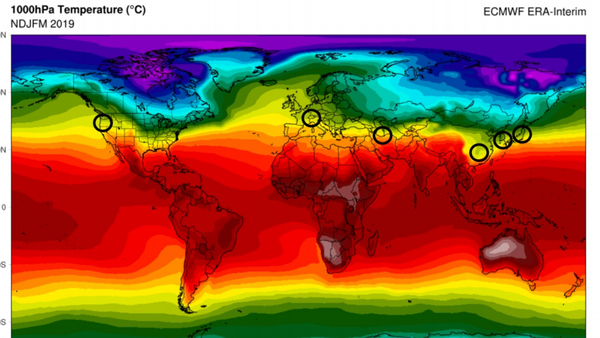
    Potential effect of climate on coronavirus

    A screenshot from the University of Maryland study shows coronavirus hotspots along the same climate band. (Screengrab)A screenshot from the University of Maryland study shows coronavirus hotspots along the same climate band. (Screengrab)

    Impossible to stop

    Social distancing measures only work if borders remain shut, and in a globalized world, that’s not possible. Had the world simultaneously shut borders during the early days of the outbreak, it may have been more effective, said Balloux.

    “Had they said ‘It’ll be costly, but let’s deal with that and get rid of that,’ that would’ve been good, but only two countries managed to keep it under control and it’s spreading everywhere,” Balloux said.

    In China and South Korea, new daily case counts are lowering – signaling that these countries have passed the peak. But now, China has seen more than 60 imported cases of the virus, and Balloux said that a second round of community transmission could work its way through China.

    “There’s no long-term plan,” Balloux said. “If everyone were completely isolated and no one had any contact, then obviously the virus would stop spreading. Now that’s not technically possible,” Balloux said.

    More than 204,000 people have been infected with coronavirus and more than 8,700 have died as of Thursday.

    “Economic death spiral”

    Over the last two and a half months, the world has watched as the virus has wreaked havoc on economies and destroyed jobs. Markets have nosedived, with the US S&P 500 ending a historic 11-year bull run last week and entering a bear market.

    Entire countries such as Italy have gone into lockdown, causing both short- and long-term economic consequences. In the US, nearly one in five American households have experienced a layoff or reduction in work because of the pandemic, according to a new NPR/PBS NewsHour/Marist poll.

    And economic downturns have effects on long-term public health.

    “Any hit to the economy means long-term loss of health and life expectancy,” Balloux said. “Look at places with high per-capita GDP, people live long healthy lives. If it’s low, people don’t live long healthy lives.”

    But with the coronavirus outbreak, governments must now assess how they can limit the impact on the most vulnerable, who are often the first to lose their jobs.

    Omar al-Ubaydli, researcher at Derasat, a think tank in Bahrain, told Al Arabiya English that coronavirus has not yet reached a stage where it’s likely to cause disruptions to international trade and global supply chain networks, but the massive social distancing efforts will cause distress for those without enough cash on hand to survive the crisis.

    “Lay-offs will affect those people most,” al-Ubaydli said. “Social security is the most important thing right now.”

    He said that now is not the time to worry about debt, and that countries must consider implementing large-scale social security programs – such as handing out cash. The US is currently considering such an option, and could begin sending checks to Americans as part of a $1 trillion stimulus package.

    “Liquidity is the biggest issue, and ensuring money circulates is key to avoid an economic death spiral,” al-Ubaydli said.

    Systems overstrained, stress high

    Other experts have warned that the coronavirus could push key economic sectors into collapse – which will have an immense knock-on effect for society.

    Societies tend to outgrow their resource base, Ugo Bardi, Professor in Physical Chemistry at the University of Florence (IT) and a theorist of societal collapse told Al Arabiya English.

    “Once a society overshoots, the mechanism of returning is not linear. It has ups and downs,” he said.

    Globally, the economic system is overstressed and overstrained because it overuses the resources it has, said Bardi.

    “It takes just one shock to send the whole thing down,” he added.

    Health systems not prepared

    The strain on infrastructure is most evident in healthcare, with hospitals struggling to cope with the influx of patients in places reaching their peak infections. Experts have called to “flatten the curve” and slow down the number of new infections to give healthcare systems a chance to cope with the crisis.

    In Italy, which has the highest death toll and death rate outside China, hospitals were poorly equipped for the outbreak. The country has an aging population, but hospitals don’t have enough ventilators, and there are simply not enough doctors, according to local media.

    The Italian College of Anesthesia, Analgesia, Resuscitation, and Intensive Care published guidelines outlining criteria doctors and nurses should follow, forcing healthcare professionals to make moral choices about who lives, and who dies. The guidelines liken these modern moral choices to wartime triage.

    They rule out a first-come, first-served policy; doctors should assess who is most likely to survive, based on criteria such as age and overall health, and allocate resources accordingly.
    Modern medicine may have advanced, but crisis medicine isn’t much different than it was in 1918, Balloux said.

    “The type of medicine we can give to patients when everything goes well, when there’s no stress, there’s no pressure, and everyone has an ICU bed and enough respirators [is different], but now the medics are essentially falling from exhaustion – I don’t think we should be complacent,” he said. “In terms of crisis, the health care we have hasn’t changed that much.”

    It is not just Italy which is underprepared.

    Yesterday, Tedros Adhanom, director-general of the WHO called for more testing to help break the trains of transmission. But globally, hospitals are under-prepared to ramp up testing. In the UAE, hospitals asked patients seeking testing to call ahead. In the US, the director of the National Institutes of Allergy and Infectious Diseases said last week there were not enough tests available for those who need them.

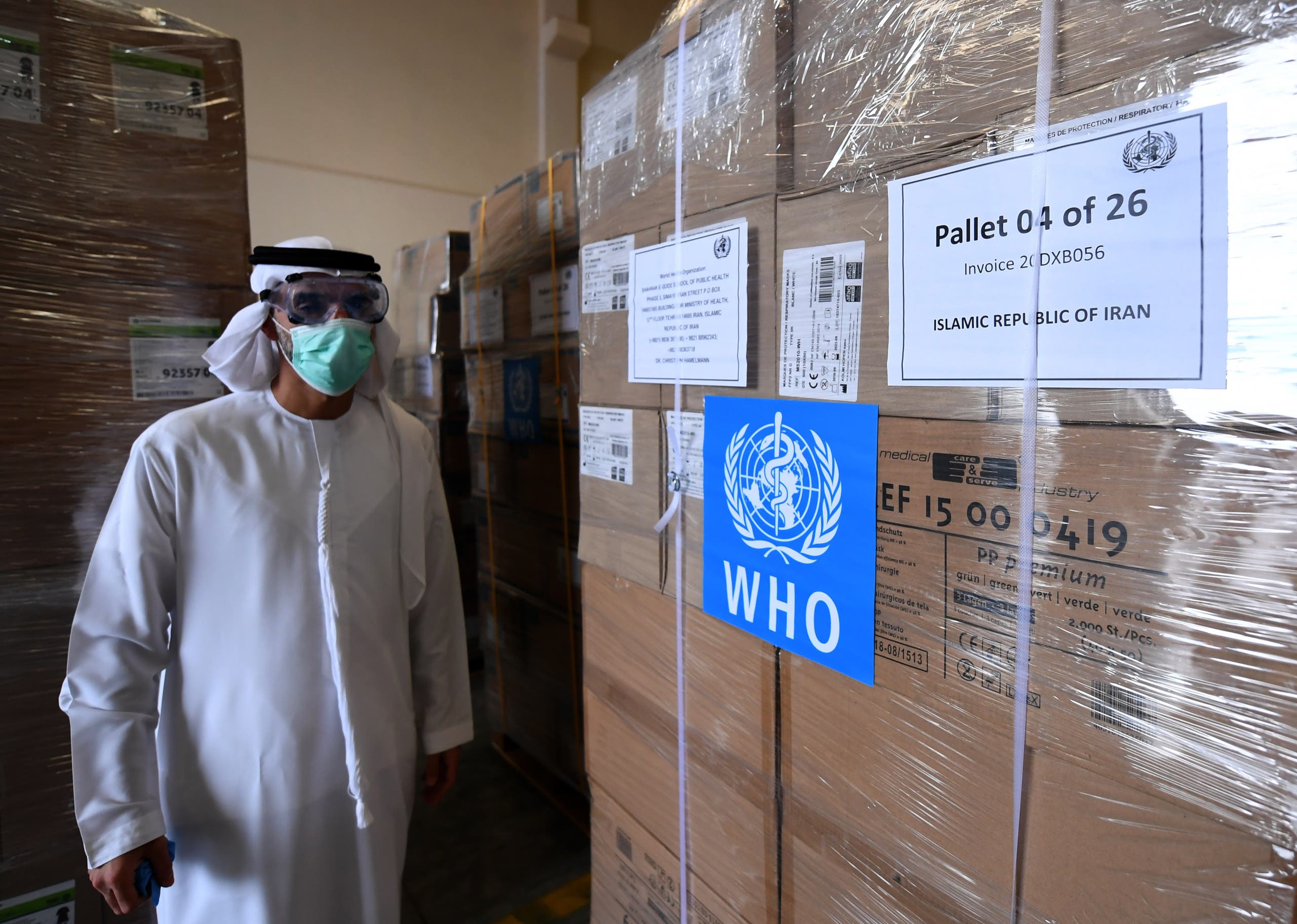
    Tons of medical equipment and coronavirus testing kits provided by the World Health Organization are pictured at the al-Maktum International airport in Dubai on March 2, 2020 as it is prepared to be delivered to Iran. (AFP)Tons of medical equipment and coronavirus testing kits provided by the World Health Organization are pictured at the al-Maktum International airport in Dubai on March 2, 2020 as it is prepared to be delivered to Iran. (AFP)

    “There is a global shortage of supplies when it comes to laboratories and prevention and control,” World Health Organization Emergency Preparedness Manager Dr. Dalia Samhouri told Al Arabiya English.

    Countries are now trying to ramp up their hospitals’ capacities and putting in emergency plans before the virus peaks. The ventilator industry is getting an onslaught of orders from Germany, Italy, and China. In the UK, the country’s health secretary called on manufacturers to build more ventilators. But lockdowns mean some companies are suspending operations, threatening future preparation.

    “The other problem is that all this is more difficult with a sluggish economy. Where do you get the money from? Where do you train the doctors if the universities are closed?” Balloux said.

    Life under lockdown

    In countries that are still waiting for the peak, everyday life has changed drastically – and the new measures are likely to last months, according to health experts – perhaps causing long-term changes in human behavior.

    Governments are enacting more severe social distancing measures, with some countries halting all flights, companies enacting work-from-home policies, bars and restaurants issuing new guidelines on how to serve food, and some individuals taking greater measures to avoid contact with those around them.

    But in some countries, like the US, some are yet to fully comprehend the gravity of the situation.

    In New Orleans, police cleared out the popular bar district, Bourbon Street, and can be heard over speakers saying “Your actions are jeopardizing public health.” In Spain, drones now monitor the streets.

    11.2K people are talking about this

    For many, this new reality is unprecedented. Humans in 2020 are unaccustomed to having to take such draconian measures to protect themselves from an invisible enemy.

    “This is a change because we’re not used to this way of life in this century. There are major and sudden changes, and people did not have the time to adapt to it properly,” Mario Aoun, Clinical Psychologist, Healthpoint, a UAE healthcare provider, told Al Arabiya English.

    Now, coping with the psychological impact of the lockdown orders and social distancing is the next challenge. Experts have already warned of the toll social isolation may take on individuals’ mental health.

    “This might create some kind of trauma for vulnerable individuals, not for everyone, but for certain people who are predisposed or those who are already anxious,” Aoun said. “In certain cases, it might be hard to get over.”

    However, Aoun said that human beings have great capabilities to adapt and manage.

    “We see chaos, that’s also true, but human beings have proven so far that they are of great faith and they’ll manage to get over it,” he said.

    Source.

  • Experts Warn Of Looming Crisis With Internal Spread Of Coronavirus In Africa

    Experts Warn Of Looming Crisis With Internal Spread Of Coronavirus In Africa

    (AP) — The coronavirus has now been confirmed in at least 30 of Africa’s 54 countries, officials said Monday, and regional power South Africa warned of a new crisis once the virus begins to spread at home and into crowded low-income communities.

    The most alarming confirmation of a first case came from Somalia, the Horn of Africa nation with one of the continent’s weakest health systems after nearly three decades of conflict. Tanzania, Liberia and Benin also announced their first cases.

    African nations have begun imposing travel restrictions as many confirmed cases come from abroad. Algeria cut off all air and sea contact with Europe, effective Thursday, and Botswana barred travelers from 18 high-risk countries.

    South Africa announced it will revoke nearly 10,000 visas issued to people from China and Iran, two of the hardest-hit countries, in January and February. It also will require visas from several hard-hit countries that had been visa-free, including the United States and Italy.

    Both are dramatic steps that target important business partners at a time when South Africa’s economy has again slid into recession. In response, France’s embassy urged French citizens visiting South Africa to leave as soon as possible.

    “The internal transmission risk is now setting in,” South Africa’s health minister, Zweli Mkhize, told reporters a day after the country declared an unprecedented national disaster. It has 62 cases, all from abroad. Health officials are investigating two cases of possible local transmission.

    “The reality is this: For now, individuals that have been infected thus far are people who can afford going on holiday abroad or they travel for business. Those individuals also have accommodation for self-quarantine,” the minister said. “However, when this outbreak starts affecting our poor communities where families do not have enough rooms or spaces to quarantine those affected, we will experience a crisis.”

    South Africa might have to impose a “lockdown” if these and other new measures including travel restrictions and school closures don’t work within two weeks, the health minister said: “It’s going to be very hard.”

    South Africa has one of the most developed health systems in Africa, and global health experts have openly worried for weeks that the virus could quickly overwhelm countries on the continent with weak health systems.

    Somalia is one of them. Health Minister Fawziya Abikar said the country’s first confirmed case was in a Somali national who had recently arrived from abroad. Somalia’s government quickly announced that international flights to the country would no longer be allowed as of Wednesday.

    Large parts of Somalia remain under the control of the al-Qaida-linked al-Shabab extremist group, which has been hostile to aid groups and often carries out deadly attacks in the capital, Mogadishu. The insecurity will hurt efforts to contain the virus.

    In Liberia, the executive director of the country’s environmental protection agency tested positive after arriving last week from Switzerland.

    Liberia, along with neighbors Sierra Leone and Guinea, was devastated by an Ebola outbreak from 2014 to 2016 that killed more than 11,300 people.

    “There is no cause for panic,” Information Minister Eugene Nagbe said.

    Tanzania’s health ministry said the country’s first confirmed case was a a 46-year-old Tanzanian woman who recently traveled from Belgium. Tanzania came under unusual criticism from some global health officials last year after the East African nation was accused of not sharing information about a possible Ebola virus case.

    For most people, the coronavirus causes only mild or moderate symptoms, such as fever and cough. But severe illness can occur, especially in the elderly and people with existing health problems. Worldwide, over 169,000 people have been infected, 6,500 have died and over 77,000 have recovered, most of them in China.

    Across Africa, some health experts worried that other virus cases were going undetected.

    “We have to ask the question: How strong are our monitoring systems, especially those in rural areas or with limited technology? That is a reality on the continent and perhaps why we have not yet seen a surge in cases,” public health researcher Dr. Shakira Choonara told The Associated Press.

    Professor Cheryl Cohen with South Africa’s National Institute for Communicable Diseases expressed concern that the current numbers could rise rapidly.

    “The major area for the virus is now Europe, and we are connected more to Europe and U.S. than we are with China,” she said.

  • Russian Mafia Outsourcing To Africa To Spark US Racial Tensions

    Social media platforms Facebook and Twitter have deleted accounts being run out of Africa that were allegedly running disinformation campaigns sponsored by individuals with links to Russia’s Internet Research Agency (IRA) focused against the United States.

    The Russia-backed online troll campaigns were posed as accounts belonging to white people and posted targeting African Americans. Most of the accounts were created in the second half of 2019 and the content they generated addressed issues around race, particularly tensions between black and white Americans

    The campaign was based out of Ghana and Nigeria, marking Russia’s latest attempt to obfuscate how it’s working to sow discord on U.S. soil by propping up volunteers and workers from foreign nations.

    Facebook detected 49 Facebook accounts, 69 Facebook Pages with about 13,500 followers and 85 Instagram accounts with 265,000 followers that were participating in the campaign.

    On Twitter,  71 accounts linked to the Russian-run operations in Ghana and Nigeria spread similar messages in an effort to “sow discord by engaging in conversations about social issues, like race and civil rights.”

    https://twitter.com/TwitterSafety/status/1238208547596447744?s=20

    Since 2016, when Russian trolls successfully manipulated the world’s largest social media networks to interfere in the U.S. presidential election, the tech industry has been on high alert to defend against foreign interference from Russia and other hostile foreign actors. Twitter, Facebook and Google have poured enormous resources and energy into detecting and removing influence campaigns, which often involve posts about divisive topics and bunk news stories. – the hill

  • Coronavirus: Faced With Too Many Patients Italian Doctors Forced To Make Extraordinary Decisions

    Coronavirus: Faced With Too Many Patients Italian Doctors Forced To Make Extraordinary Decisions

    Two weeks ago, Italy had 322 confirmed cases of the coronavirus. At that point, doctors in the country’s hospitals could lavish significant attention on each stricken patient.

    One week ago, Italy had 2,502 cases of the virus, which causes the disease known as COVID-19. At that point, doctors in the country’s hospitals could still perform the most lifesaving functions by artificially ventilating patients who experienced acute breathing difficulties.

    Today, Italy has 10,149 cases of the coronavirus. There are now simply too many patients for each one of them to receive adequate care. Doctors and nurses are unable to tend to everybody. They lack machines to ventilate all those gasping for air.

    Now the Italian College of Anesthesia, Analgesia, Resuscitation and Intensive Care (SIAARTI) has published guidelines for the criteria that doctors and nurses should follow in these extraordinary circumstances. The document begins by likening the moral choices facing Italian doctors to the forms of wartime triage that are required in the field of “catastrophe medicine.” Instead of providing intensive care to all patients who need it, its authors suggest, it may become necessary to follow “the most widely shared criteria regarding distributive justice and the appropriate allocation of limited health resources.”

    The principle they settle upon is utilitarian. “Informed by the principle of maximizing benefits for the largest number,” they suggest that “the allocation criteria need to guarantee that those patients with the highest chance of therapeutic success will retain access to intensive care.”

    The authors, who are medical doctors, then deduce a set of concrete recommendations for how to manage these impossible choices, including this: “It may become necessary to establish an age limit for access to intensive care.”

    Those who are too old to have a high likelihood of recovery, or who have too low a number of “life-years” left even if they should survive, will be left to die. This sounds cruel, but the alternative, the document argues, is no better. “In case of a total saturation of resources, maintaining the criterion of ‘first come, first served’ would amount to a decision to exclude late-arriving patients from access to intensive care.”

    In addition to age, doctors and nurses are also advised to take a patient’s overall state of health into account: “The presence of comorbidities needs to be carefully evaluated.” This is in part because early studies of the virus seem to suggest that patients with serious preexisting health conditions are significantly more likely to die. But it is also because patients in a worse state of overall health could require a greater share of scarce resources to survive: “What might be a relatively short treatment course in healthier people could be longer and more resource-consuming in the case of older or more fragile patients.”

    These guidelines apply even to patients who require intensive care for reasons other than the coronavirus, because they too make demands on the same scarce medical resources. As the document clarifies, “These criteria apply to all patients in intensive care, not just those infected with CoVid-19.”

    Source

  • The WHO Just Declared The Coronavirus A Global Pandemic And What This Means

    The WHO Just Declared The Coronavirus A Global Pandemic And What This Means

    (CNN) — The World Health Organization on Wednesday declared the novel coronavirus outbreak to be a pandemic.

    There are 118,000 cases, more than 4,000 deaths, the agency said, and the virus has found a foothold on every continent except for Antarctica.

    “We have never before seen a pandemic sparked by a coronavirus. And we have never before seen a pandemic that can be controlled at the same time,” WHO Director-General Tedros Adhanom Ghebreyesus said Wednesday.

    “Describing the situation as a pandemic does not change WHO’s assessment of the threat posed by this coronavirus. It doesn’t change what WHO is doing, and it doesn’t change what countries should do.”

    If countries detect, test, treat, isolate, trace and mobilize their people in the response, those with a handful of novel coronavirus cases can prevent those cases becoming clusters, and those clusters becoming community transmission, Ghebreyesus said.

    “Several countries have demonstrated that this virus can be suppressed and controlled,” Ghebreyesus said.

    Why CNN is calling the novel coronavirus outbreak a pandemic
    A pandemic is defined as the “worldwide spread” of a new disease. Whereas, an outbreak is the occurrence of disease cases in excess of what’s normally expected and an epidemic is more than a normal number cases of an illness, specific health-related behavior or other health-related events in a community or region, according to the World Health Organization.

    In January, the WHO declared the novel coronavirus outbreak a public health emergency of international concern. CNN announced on Monday that it is using the term pandemic to describe the current coronavirus outbreak.

    The last pandemic reported in the world was the H1N1 flu pandemic in 2009, which killed hundreds of thousands globally.

    Coronavirus outbreak has pandemic potential but its not there yet, WHO says
    “WHO has been assessing this outbreak around the clock and we are deeply concerned both by the alarming levels of spread and severity, and by the alarming levels of inaction,” Ghebreyesus said.

    “We cannot say this loudly enough, or clearly enough, or often enough: All countries can still change the course of this pandemic”

    Pandemics of the past

    Pandemics have been a part of human history for centuries, with one of the earliest ever reported dating back to 1580. Since then, at least four pandemics of influenza occurred in the 19th century and three occurred in the 20th century, according to the CDC.

    What we can learn 100 years later from the 1918 Spanish flu pandemic

    The most severe pandemic in recent history was the 1918 influenza pandemic, sometimes referred to as the “Spanish flu.” The pandemic was estimated to have infected about 500 million people or one-third of the world’s population and killed some 50 million worldwide.

    There remains some debate about where this H1N1 flu virus originated, but scientists have found that the virus had genes of avian origin. In other words, it had a connection to birds.

    More American soldiers died from the 1918 flu pandemic than were killed in battle during World War I in 1918, according to the CDC. In 1919, the pandemic subsided but the H1N1 virus continued to circulate seasonally for 38 years.

    Your flu risk may be linked to the year you were born

    Then in 1957, a novel influenza A H2N2 virus emerged in East Asia, triggering a pandemic that is estimated to have killed 1.1 million worldwide and 116,000 in the United States. The virus was comprised of genes that could be linked to an avian influenza A virus, suggesting it had a connection to birds.

    The virus was first reported in Singapore in February 1957, Hong Kong in April 1957, and in coastal cities in the United States in the summer of that same year. Yet its survival in the human population was short and the virus disappeared about a decade after its arrival. Some scientists suggest that it was supplanted by a H3N2 subtype.
    In 1968, a pandemic caused by an influenza A H3N2 virus that originated in China swept the world. That virus was comprised of two genes from an avian influenza A virus, according to the CDC.

    The virus was first noted in the United States in September 1968 and led to about 100,000 deaths nationwide and 1 million worldwide. Most excess deaths were in adults 65 and older, according to the CDC.

    The H3N2 virus continues to circulate globally as a seasonal flu virus.

    Everything you need to know about the H1N1 influenza virus pandemic

    In the spring of 2009, a novel influenza A H1N1 virus emerged. It was detected first in the United States and then spread quickly across the world.
    The virus contained “a unique combination of influenza genes not previously identified in animals or people,” according to the CDC. It was found to be of swine origin.

    During that H1N1 pandemic, the CDC estimated that somewhere between 151,700 and 575,400 people died worldwide during the first year the virus circulated. Globally, 80% of the deaths were estimated to have occurred in people younger than 65.

    The World Health Organization declared the global H1N1 pandemic over in August 2010, but the H1N1 virus continues to circulate as a seasonal flu virus every year.

    Now in early 2020, the world has been waiting to see whether the novel coronavirus would become a pandemic.

    “This is unprecedented,” Dr. Tom Frieden, former director of the CDC, wrote in an article published on CNN.com in February.
    “Other than influenza, no other respiratory virus has been tracked from emergence to continuous global spread. The last moderately severe influenza pandemics were in 1957 and 1968; each killed more than a million people around the world,” Frieden wrote. “Although we are far more prepared than in the past, we are also far more interconnected, and many more people today have chronic health problems that make viral infections particularly dangerous.”