Adapting to the fatal errors of covid-19 has made me utilize my unemployed mind by articulating workable strategies that will lower the heat during forthcoming harsh economic times. Am pissed by how we approach the pandemic by copy pasting method.
Copying in an exam room didn’t do well neither will it work for Kenya, the world is sitting for this very exams and Africa is advantaged by the window period before wide spread. If you are copying, then paste everything.
They have huge statutory reserves, we have debts, stable food stability, we import food, best health system with 1:1000 ICU facility we have 1:100000, not to mention the copied joke of self quarantine in uncontrolled jobless population.
I do appreciate the shreds of tenderness and concerns by the government to its taxed citizens, but treating this article like our previous public cry for proactive approach at the airport as hullabaloo will be the gist of Kenyatta’s legacy.
Dear President Kenyatta, an experienced finance minister. You have a number of analysts and advisors on payroll but take mine 4 free, copy pasting will fail us at 1000 infections figure. If we accept the facts, then we will stand strong to the occasion in the spirit of Harambee.
We are playing myopic, putting 90 days projection to corona errors will leave us in a financial, social, economical and even spiritual quagmire (corona might overstay much longer and overwork our efforts).
1st world countries are rolling strategies to rescue economy and social welfare. Curfews and lockdown are not exceptions even animals can testify to hibernation but it will attract high eating habits, low purchasing power with low production. Appling wrong strategies is playing zero sum game with the hungry population, the outcome is left for a pamper mind to explain.
At 200 infections we have red indicators from the strategic food reserve SFR, what of the worst days to come. Solutions; short term viable option buy plenty of food before food price volatility index unfriend you, long run invest in water supply and agriculture like never before.
Financial approach
You need funds about half a trillion to manage the virus and rescue the economy for about 6-9 months. First (a) budget reallocation:cut costs and expenditure budget across the board up to counties,push for 30% salary cut in all civil servants apart from those active in corona errors (operate from non comfort resources zone).
Second go for what we are good at (borrowing), external finance. Our GDP has leverage on lenders, eg IMF and World Bank. Debt management reviewed intrusively, possibly debt restructuring and sovereign default being viable options in line with United Nations article 2(4).
Economic approach
Private sector needs help during this financial distress that is leading to high layoffs. Being victims of the fundamental risks I expect proactive risk management to avoid moral hazard because main point isn’t the economic recession heat but the businesses we retain to propel recovery process.
Giving affected sectors soft loans with reasonable tenure based on their recurrent expenditure minus salaries.
Working out leasing contracts across the board with the landlords based on their latest tax file. e.g landlords reduce rents by 20%, collecting 50% from tenants then 30% will be claimed in tax relief after the period of distress.
Take the entire employees and small scale business liabilities by approving 60% of their incomes as monthly soft loans based on their tax file. This will trigger multiplier effect and cash flow. With support of your fiscal policy, we have longtime immune the economy opposed to buying maize to feed people or issuing money, the government just can’t feed people for 6months it has small window for borrow and spend fiscal stimulus. During payments of the loans great capital will be realized.
Is the strategy corrupt free?
Yes, The process is corruption free as the bank and Kenya Revenue Authority are purely accountable. Huduma number could have worked well but let me not go there but use options at hand, have mention KRA PIN everywhere. KRA pin being main collateral becomes the new work permit in Kenya. The loan will follow the KRA pin at the convenience of the borrower getting another income.
Loan risk management
The Kenya Revenue Authority and bank being accountable will manage the lending process and risks. 10% interest can be realized to manage long term risks.
NOTE: Based on Keynes theories approach, I have airtime to further discuss the known unknown, holistic thinking for the interest of the social welfare. Do Kenyans trust and have hope in the government?
The long-awaited tea reforms in the tea industry have started taking shape with the government outlining the various regulatory and administrative reforms it intends to undertake in the sector. They include the audit and tracing of deductions of money belong to smallholder tea growers over the last 10 years, evaluation of the management of the KTDA holding and reserve accounts, evaluate and document losses occasioned by the pooled management of farmers’ earning by KTDA including cash held banks and monies held and/or lost to banks in distress, assess the application and use of public and farmers assets by KTDA.
Peter Munya the Cabinet Secretary Ministry of Agriculture, Livestock, Fisheries and Cooperatives outlined the proposed reforms when he launched the revised draft of tea regulations. The CS says the regulations are submitted for public consultations for a period of fourteen (14) days from today. The regulations shall be available on the websites of both the Ministry of Agriculture, Livestock, Fisheries and Cooperatives and the Agriculture and Food Authority (AFA). A hotline has also been provided at AFA for purposes of providing any clarifications. The Ministry shall only be receiving written Memorandums from members of the public due to inability to hold any public gatherings in the wake of Ministry of Health guidelines on social distancing among other measures in the management of COVID-19 pandemic.
Munya says the good performance of the tea sector is a central public policy issue because approximately 70% of tea production in the country is undertaken by small scale tea farmers. The challenges facing the tea sector, if not addressed he says have the potential to recreate the problems faced by the coffee sector over two decades ago that led to neglect and/or abandonment of coffee bushes by farmers and the prevailing low coffee production in the country. He adds that the real threats to smallholder tea farming and the macro-economy have therefore created an urgent need for proportionate Government intervention in the sector in the manner more particularly advocated in the Presidential Directive issued on 14th January 2020 to overhaul the sector.
During the launch, CS Munya identified the problems that need to be addressed in the sector some which he says need urgent intervention once the regulations come into effect. “The Government has therefore contextualized the challenges facing the tea sector and more particularly the tea farmers into three broad categories namely a dysfunctional tea auction system; control and predatory behaviour of Kenya Tea Development Authority (KTDA) and its subsidiaries in the tea value chain; and low and unstable tea prices,” says Munya. “Moreover, the tea sector is undermined by the manipulation and predatory behaviour of KTDA and its subsidiaries on the value chain. KTDA which supplies over 60% of the tea traded at the auction has consistently used its market power, dominance and influence to undermine the auction, curtail price discovery and exploit the vulnerabilities of smallholder tea growers,” he adds.
On the tea auction, Munya says it is “a dysfunctional and inefficient tea auction system characterized by lack of transparency, accountability and competition; and prone to manipulation, capture, insider trading and cartelization by value chain players leading to ineffective price discovery, low prices and poor earnings to tea farmers. The structural character of the tea auction in Mombasa in terms management, governance and decision making processes is that it is a club where all value chain players, that have a direct commercial interest in the outcome of the auction process run the auction. This is a serious conflict of interest that predisposes the auction process to capture by vested interests, insider trading, price-fixing and other malpractices.
On the issue of prices, the CS says tea farmers have been plagued by a twin problem of low prices and price volatility. He says while the low prices have eroded direct earnings by tea growers, tea price volatility has led to unstable cash flow for tea farmers.
Regulatory Interventions
To address these challenges, Munya says the following regulatory remedies have been proposed for implementation immediately these regulations come into effect:
All teas produced in Kenya for the export market in shall within two (2) months after coming into effect of these regulations be sold exclusively through the auction process.
Henceforth, sale by private treaty commonly known as Direct Sales Overseas is outlawed
Any teas that are not sold during a particular auction shall be re-listed for sale during the subsequent auction;
All registered tea auction organizers shall establish an electronic trading platform for tea auction. However, a tea auction organizer existing before the commencement of these regulations shall establish and migrate tea trading to an electronic trading platform within two (2) months from the commencement date of the regulations;
All tea buyers shall henceforth submit to the Regulatory Authority (AFA) a performance bond in the form of a bank guarantee equivalent to 10% of the estimated value of the tea they intend to buy to underwrite commercial risks associated with buyers who fail and/or refuse to pay in full for the tea bids they win at the auction;
All buyers shall pay in full for all teas they win at the auction before they take custody and lift the tea for export
All factory Limited Companies (Tea Factories) shall henceforth register and enlist with the Authority and auction organizer to participate at the tea auction directly;
A registered tea broker shall offer brokerage services to a maximum of fifteen (15) factory limited companies. Brokers that are already in operation shall continue with their business uninterrupted until the tenure of their registration is due for renewal;
All monies from the sale of tea at the auction shall be remitted directly to Factory Limited Accounts within fourteen (14) days from the auction date less only the agreed commission for tea brokers;
Factory Limited Companies shall within thirty (30) days from receipt of proceeds from sale of tea pay tea growers at least 50% of the payment for green leaf delivered every month;
The balance due to tea growers shall be paid by the factory limited companies within the financial or calendar year as shall be agreed with the growers
In order to address the challenges associated with the lopsided nature of the existing management agreement framework with Factory Limited Companies, the following regulatory interventions are proposed:
Any management agency agreement with a factory limited company shall be for a tenure not exceeding 5 years;
The remuneration for any management service shall not exceed two per cent 2% of the value of tea sold per year;
Company secretary services shall be excluded from the services offered by management service providers;
Factory Limited Companies shall either recruit in-house company secretaries or outsource the service
A director or affiliate of a management service provider shall not serve as a director or have a direct commercial relationship with a factory limited company they serve
Short to Medium Term Policy and Administrative Interventions
To address other systemic challenges facing the tea sector, the Government proposes to engage professional consultants with the necessary experience in the tea industry to provide technical advice on further necessary policy and administrative reforms to improve efficiency and productivity in the value chain. In particular, the following interventions are proposed in this respect:
Undertake a technical study to define a clear migration path and governance framework from the current tea auction structure to an efficient, competitive and responsive Commodities Exchange for tea. In particular, the study will provide technical advice on the governance framework to deal the inherent weakness of the current auction system that includes predisposition to conflict of interest, capture by vested interests, insider trading, dominance in the auction market and ineffective price discovery system.
Undertake a study to evaluate the impact of KTDA commercial behaviour on the entire value including and more particularly the earnings to smallholder tea growers. In particular, the study would undertake a historic audit and tracing of deductions of money belong to smallholder tea growers over the last 10 years, evaluate the management of the KTDA holding and reserve accounts, evaluate and document losses occasioned by the pooled management of farmers’ earning by KTDA including cash held banks and monies held and/or lost to banks in distress, assess the application and use of public and farmers assets by KTDA, evaluate the risks associated with the sale of tea by private treaty by KTDA and losses that farmers have incurred due to this arrangement; evaluate the extent of application of farmers’ resources in the initial and on-going capitalization of KTDA subsidiaries and value of these subsidiaries to the tea growers among other considerations.
Undertake a study on the setup, resourcing and management of a price stabilization fund for tea growers and develop a framework for implementation of a sustainable Minimum Guaranteed Return (MGR) for tea farmers; and
Establishment of a steering committee to oversee, monitor and evaluate implement these policy, regulatory and administrative reforms and report to the cabinet secretary.
Washington, DC – Ms. Kristalina Georgieva, Managing Director of the International Monetary Fund (IMF) issued the following statement:
“Today, I am pleased to say that our Executive Board approved immediate debt service relief to 25 of the IMF’s member countries under the IMF’s revamped Catastrophe Containment and Relief Trust (CCRT) as part of the Fund’s response to help address the impact of the COVID-19 pandemic.
“This provides grants to our poorest and most vulnerable members to cover their IMF debt obligations for an initial phase over the next six months and will help them channel more of their scarce financial resources towards vital emergency medical and other relief efforts.
“The CCRT can currently provide about US$500 million in grant-based debt service relief, including the recent US$185 million pledge by the U.K. and US$100 million provided by Japan as immediately available resources. Others, including China and the Netherlands, are also stepping forward with important contributions. I urge other donors to help us replenish the Trust’s resources and boost further our ability to provide additional debt service relief for a full two years to our poorest member countries.”
The countries that will receive debt service relief today are: Afghanistan, Benin, Burkina Faso, Central African Republic, Chad, Comoros, Congo, D.R., The Gambia, Guinea, Guinea-Bissau, Haiti, Liberia, Madagascar, Malawi, Mali, Mozambique, Nepal, Niger, Rwanda, São Tomé and Príncipe, Sierra Leone, Solomon Islands, Tajikistan, Togo, and Yemen.
Since 1980, an estimated $1.3 trillion has left sub-Saharan Africa in the form of illicit financial flows (per Global Financial Integrity methodology), posing a central challenge to development financing.
While the international development community often focuses on the amount of aid and investment that enters the African continent, the other part of the balance sheet—the funds exiting the continent—has often been overlooked. Between 1980 and 2018, sub-Saharan Africa received nearly $2 trillion in foreign direct investment (FDI) and official development assistance (ODA), but emitted over $1 trillion in illicit financial flows. These flows, illicitly acquired and channelled out of the continent, continue to pose a development challenge to the region, as they remove domestic resources which could have been crucial for the continent’s economic development.
There is no widely agreed-upon definition of which specific forms of capital movement constitute illicit financial flows. Global Financial Integrity, a non-profit, Washington, DC-based research and advisory organization, defines illicit financial flows as “the illegal movement of money or capital from one country to another.” This narrow definition of illicit financial flows covers activities including hiding the proceeds of crime, channelling funds towards criminal destinations, and evading tariffs and taxes through misreporting of transactions. Wider definitions generally focus on actions that are not strictly illegal, but which are undesirable because they result in reduced tax revenues, including tax avoidance actions such as strategic transfer pricing.
Trade mis-invoicing is one method of laundering money for illegal transfer to another country. It occurs when exporters or importers deliberately misreport the value, quantity, or nature of goods and services in order to evade taxes, take advantage of tax incentives, avoid capital controls, or launder money. Multinational companies regularly evade taxes in countries where they operate, especially in developing countries, through trade mis-invoicing, among other schemes.
As expected, larger economies have higher levels of illicit financial flows. As well, higher taxes and higher inflation lead to higher illicit financial outflows, suggesting that firms seek out relatively more stable or favourable fiscal environments for their funds. Furthermore, emerging and developing economies in Asia and the Middle East have become major destinations for illicit financial flows from Africa. While part of this shift can be explained by the reduction in trade levels with developed economies, the large upsurge of illicit flows to these economies cannot solely be explained by increased trade values.
Impact of illicit financial flows
Illicit financial outflows from Africa are concentrated in a few countries and a few sectors—in particular, the extractive and mining industries. In fact, fuel exporters were responsible for nearly half of the illicit financial flows from Africa between 1970 and 2008. Notably, oil price increases are associated with increases in illicit flows. Moreover, there is a statistically significant relationship between oil exports and illicit financial flows: studies show that for every extra dollar in oil exports, an additional 11 to 26 cents leaves the country in the form of illicit financial flows. In addition, oil is not the sole resource conducive to illicit outflows of capital. In South Africa, the vast majority of illicit capital flows arise out of transfer pricing from the mining sector.
Resource-exporting countries are more prone to exporting large amounts of illicit financial flows due to several factors. First, large exports of oil provide more opportunities for trade mis-invoicing. Second, in oil industries, the line between private and public interests is often blurred, as government officials often own stakes in state-owned companies. Moreover, the funds created from extractive industries provide political leaders with a certain level of independence, then removing the need for accountability from politicians involved in those industries. Third, extractive industries require a high level of expertise, which leads to relatively low levels of competition, creating oligopolies who may collaborate with governments and competitors for contract negotiations, joint ventures, and other arrangements. The low levels of competition can also lead to companies working together to export illicit capital outflows. Finally, resource-rich countries tend to have higher rates of corruption, further compounding challenges associated with illicit financial flows.
Illicit financial flows drain resources that could be used for the continent’s development, meaning that a reduction in illicit financial flows could potentially lead to a corresponding reduction in aid dependence by increasing the availability of domestic resources. While illicit financial flows are a constraint to development financing in Africa, it remains difficult to assess the link between illicit financial flows and poverty reduction, as the channel through which this link materializes is through reduced government funding for poverty reduction programs such as in health and education, or through indirect channels such the negative effect of low investment on incomes.
Illicit financial outflows have been found to have a strong and negative effect on investment rates, notably private investment. In addition to foregone investment, illicit financial flows are presently curtailing Africa’s savings rate. While increased savings can open the door for increased investments in human development, the relationship may be circuitous. A 2015 paper on financing investment in sub-Saharan Africa, for example, finds that human development—coupled with good governance—has a positive impact on savings rates. The paper claims that investments in education and health can lead to a more prosperous economy, which generates larger tax revenues and can increase domestic savings. It is possible that if decreasing illicit financial flows leads to increased savings, then these funds can be reinvested in activities that improve human development, which will in turn improve the savings rate.
Destinations of illicit financial flows from Africa
While good domestic policies are necessary for reducing illicit flows, destination countries also carry part of the responsibility to fight illicit financial flows: tax evasion, for example, though not by definition illegal, can be a key component of illicit financial flows, and is often done by multinationals from advanced economies. Identifying major destination countries can encourage them to take the precautions necessary to reduce the share of illicit financial flows they host.
China hosts the greatest extent of illicit flows, almost twice as much as the second-position United States. Between 1980 and 2018, China hosted 16.6 percent of all estimated illicit flows from sub-Saharan African countries, while the United States hosted 9.1 percent, the United Kingdom 5.4 percent, and India 5.0 percent. Reflecting the drastic increase in China-Africa trade in the past two decades, the majority of China’s illicit financial flows from Africa have occurred in recent years: Our analysis finds that 85 percent of total illicit flows to China have taken place between 2010 and 2018.
Mexico has the highest extent of illicit flows as a percent of trade, at over 50 percent of all trade, followed by Bahrain. Two sub-Saharan African countries—Benin and Niger—are among the top 10 hosts of illicit flows as a percent of trade total illicit financial flows to China have increased commensurately with trade since 2000, while total illicit flows to the US remained fairly constant, increasing slightly in correspondence with an increase in total trade from 2008 to 2011. As a percent of trade, illicit flows to the United States followed a decreasing trend from 2000 to 2018. In contrast, in China, the evolution of illicit financial flows has followed a more complex pattern: As a percent of trade, illicit flows remained below 15 percent from 2006 and 2010, increased dramatically between 2011 and 2014 to a peak of 26 percent in 2014, and then declined to an average of 14 percent from 2015 to 2018.
The change in illicit financial flows as a percent of trade to China during the 2008-2010 period provides insight into the pattern of illicit flows to China over the past two decades. After dropping to their lowest levels in a decade in 2008, coinciding with the global financial crisis, illicit financial flows as a percent of trade toward China increased noticeably after 2010. In the post-crisis era, the Chinese government created a $586 billion stimulus package to minimize the impact of the financial crisis and boost the country’s economy. The package led to a 3.2 percentage point increase in China’s GDP growth and to increased investment, consumption, and trade. Notably, studies have found that, in the period following the adoption of the stimulus package, both experiences and perceptions of corruption in China increased
The stimulus package and the subsequent increase in both trade and corruption could be factors behind the surge in illicit financial flows witnessed in the post-crisis era. At the end of 2012, Chinese President Xi Jinping launched an anti-corruption campaign. To date, the campaign has resulted in the investigation and disciplining of thousands of government officials. Anti-corruption mechanisms in China could have contributed to the decline in illicit financial flows from Africa from their peak in 2014.
Combating illicit financial flows
As the case of China demonstrates, curbing illicit financial flows requires cooperation at the global level. Indeed, the past decade has seen increased effort from the global community toward reducing illicit financial flows. Such efforts range from creating initiatives to curb money laundering to improving the sharing of tax information across countries. One of the first legal instruments created to combat illicit outflows of capital was the United Nations Convention against Illicit Traffic in Narcotic Drugs and Psychotropic Substances of 1988, also known as the Vienna Convention.
This instrument includes rules against money laundering and urges parties to work together to allow for the identification, tracing, and seizure of illicitly acquired financial proceeds. Other notable initiatives include the Financial Action Task Force (created 1998), the Global Forum on Transparency and Exchange of Information for Tax Purposes (created 2009), and the Inclusive Framework on Base Erosion and Profit Shifting (created 2016).
Repatriation efforts
While stopping illicit outflows of capital before they happen is important, repatriating funds that have been smuggled out can also be an important tool to solidify the domestic resource base of African countries. Challenges to repatriation efforts are numerous. For instance, many developing countries lack the judicial capacity necessary to produce legitimate requests for asset recovery. Moreover, differences in legislation between the place where money is laundered and the place where the theft occurs is a hindrance to asset recovery. In addition, there can be a lack of cooperation from developed economies when asked for funds recovery.
One example of successful repatriation of illicit financial outflows comes from Nigeria. In 1998, the country launched the Special Police Investigation to investigate former Nigerian leader General Abacha’s alleged theft of more than $3 billion. Recovering the funds, which were mainly housed in Switzerland, was a tedious five-year process. In 1999, the Nigerian government, then led by President Olusegun Obasanjo, hired the Swiss legal firm Monfrini and Partners to assist in tracing the looted funds. That same year, Swiss authorities issued an asset freezing order, upon receiving a request for mutual legal assistance. Still, repatriating the funds did not happen until 2004 as Swiss authorities were requesting a final forfeiture judgement from the Nigerian courts. Monfrini and Partners argued that Abacha’s funds were obtained illegally, and the final forfeiture requirement was waived.
While this example shows the difficulties that arise in trying to repatriate looted funds, it also shows that African countries can successfully relocate and repatriate illicit outflows from their countries. Then again, this initiative required significant resources from the Nigerian government which smaller African economies may not be able to afford. In September 1999, Obasanjo gave an address to the United Nations General Assembly where he called for the creation of an international convention that will facilitate the repatriation of wealth that was illicitly acquired and kept abroad.
In 2007, the U.N. Office on Drugs and Crime (UNODC) and the World Bank launched the Stolen Asset Recovery (StAR) Initiative. The initiative’s action plans include the creation of a pilot program to help countries recover stolen assets through the provision of legal and technical assistance. This assistance could include helping countries draft requests for mutual assistance, such as the document that led to the freezing of Abacha’s asset in the Nigerian example cited above. Nevertheless, the funds that have been repatriated using some assistance from the initiative stand well below total looted funds. This outcome shows that countries still have difficulty acquiring the funds and support necessary to attempt repatriation requests and other efforts.
Furthermore, between 2006 and mid-2012, OECD members returned only $423.5 million of stolen funds to developing countries, barely affecting the gap of $20 billion – 40 billion smuggled out of said countries annually. In the Nigerian case cited above, only $504 million of the stolen $3 billion was repatriated to Nigeria. In another example, in 2012, Switzerland repatriated $64 million in looted funds to Angola that were allegedly stolen between 2004 and 2012, but, over that period, illicit outflows from Angola to the world amounted to $23 billion. Thus, while repatriation efforts are important, present actions must be scaled up and improved within and across countries to repatriate a more substantial amount of illicit financial outflows.
Recommendations
Over the years, illicit financial flows from Africa have moved away from advanced economies toward emerging economies. Part of this shift can be explained by the reduction in trade levels with developed economies. However, the large upsurge of illicit flows to certain emerging and developing economies in Asia and the Middle East cannot solely be explained by increased trade levels.
While there are initiatives in place to curtail illicit financial flows, many of them stem from advanced economies, including G-20 and OECD countries, and may fail to address the upsurge in illicit flows toward emerging and developing economies. Where emerging economy countries have difficulty launching efforts against illicit financial outflows from their countries, so too will these emerging host countries face enormous challenges in stopping illicit flows or repatriating funds. African policymakers should make more efforts to work with their counterparts in the Middle East and Asia to create policies that address the drain on Africa’s development resources.
While African countries work to halt financial flows before they exit the continent, the global community must also increase and improve repatriation efforts. Well-executed repatriation efforts do bring back stolen financial funds to African countries; such efforts should also be accompanied by additional initiatives or mechanisms designed to deter illicit financial outflows in the first place.
(Reuters) – The World Health Organization has warned of the risk that COVID-19 could overwhelm strained public health systems in sub-Saharan Africa. Here is a selection of measures countries are taking to prepare for the virus and limit its spread.
SOUTH AFRICA
With more cases than any other country in sub-Saharan Africa, South Africa is barring entry to foreign travellers coming from or transiting through high-risk countries including Italy, Iran, South Korea, Spain, Germany, France, Switzerland, the United States, the United Kingdom and China, according to an advisory issue by the foreign ministry on Tuesday.
Travellers who arrived from these countries since mid-February must report for testing. Those arriving from medium-risk countries – Portugal, Hong Kong and Singapore – will undergo high intensity screening.
South Africans are advised to cancel or postpone all non-essential foreign travel. The government has also ordered schools to close early for the Easter break and will prohibit gatherings of more than 100 people.
NIGERIA
Africa’s most populous nation is from Friday banning entry to arrivals from 13 of the countries worst affected by the coronavirus, including the United States, Britain, Germany and China.
It has also stepped up surveillance and is preparing for the possibility of an influx of patients.
Lagos, the biggest city with some 20 million people, could handle 2,000 cases, said Bamidele Mutiu, who heads a regional biosafety team. To do this, they would need to use two camps previously housing people displaced by violence, he said.
Authorities are checking the temperature of anyone who arrives at Nigeria’s airports, ports and land borders.
Those coming from high-risk countries such as China, Iran, Italy and Spain are asked to self-isolate for 14 days, said Tarik Mohammed, a technical advisor at the Niger Centre for Disease Control. If they develop symptoms, a laboratory team will visit them and collect a sample for testing.
KENYA
The East African country is suspending travel from any nation with reported COVID-19 cases.
Only Kenyan citizens, foreigners with residence permits and United Nations workers will be allowed to come in, provided they proceed on self-quarantine, the government said this week.
Schools and universities are closing, and public minibuses are providing hand sanitizer.
ETHIOPIA
Ethiopian Airlines said on its website that medics stationed at Addis Ababa Bole International Airport, a key regional transit hub, carry out continuous health screenings 24/7.
The government in the Horn of Africa country has closed schools nationwide and offered to transport people on government buses to ease congestion on public transport.
RWANDA
The East African country is flooding its capital, Kigali, with portable sinks for hand-washing at bus stops, restaurants, banks and shops. Schools, universities, churches and courts are closed nationwide. Some flights are suspended.
CAMEROON
From Wednesday, Cameroon, in central Africa, will close land, air and sea borders indefinitely, the government said in statement on Tuesday. International flights will be grounded, with the exception of cargo planes. Schools and restaurants will shut, and gatherings of more than 50 people are banned.
LIBERIA
The West African country is applying lessons learned fighting a devastating Ebola outbreak in 2014-15.
“We were one of the first countries to start enhanced screening at the airport on Jan. 25,” said Mosoka P. Fallah, acting director general of the National Public Health Institute of Liberia.
More than 200 people have been trained as field epidemiologists and check for diseases in all 90 districts, said Tolbert Nyenswah, senior research associate at the Johns Hopkins Bloomberg School of Public Health in the United States and former incident manager for Liberia’s Ebola response.
“If there is a case of a suspected disease, a sample is sent to a lab and tested.”
There are hand-washing stations at public places including stores, shops, schools, hospitals, restaurant and government offices.
SENEGAL
Has been taking all passengers’ temperatures since Jan. 28 and asks for contact details, so officials can reach them if someone else on the plane tests positive, a spokesman for Dakar airport said.
GHANA
Has implemented some of the most stringent measures in West Africa with a mandatory 14 days of quarantine for all people arriving from abroad. Travelers from countries with over 200 cases of coronavirus are barred from entering the country unless they are Ghanaian citizens or residents.
MAURITANIA
After confirming its first case on March 13, the West African country closed the international airport, suspended teaching in schools and universities, and banned weekly markets.
MADAGASCAR
One of the world’s poorest countries, the island nation has suspended all flights for 30 days, a blow to its tourism industry.
The planned elevation of Nakuru Town to city status has entered the home stretch after Senate Committee on Devolution declared that the county had put in place necessary infrastructure for the upgrade.
The Committee Chairman, Senator John Kinyua of Laikipia said his team was satisfied that the cosmopolitan municipality has met the minimum criteria for elevation to city status as provided for in section five of the Urban Areas and Cities Act 2011 and Amendment Act of 2019.
The Senate’s endorsement comes as a big relief to Governor Lee Kinyanjui as some of the local politicians led by Senator Susan Kihika, Nakuru Town East MP, David Gikaria and Bahati law maker, Kimani Ngunjiri had wanted the elevation deferred for another ten years.
Other entities that were opposed to the city status include Nakuru Business Association, Kenya Association of Manufacturers, Matatu Owners Association and Nakuru Informal Traders.
Kinyua who led members of his committee on an inspection tour of various infrastructural facilities within the county including the upcoming Central Business District Fire Station, Giotto waste disposal site and Nakuru Teaching and Referral hospital noted city status will lead to economic growth through establishment of new business and increased revenue streams.
Senator Kinyua noted that the elevation would also translate into effective planning of transport systems, education and waste management and result in increased revenue collection.
The city will also be able to access loans, donations and grants.
President Kenyatta has in the past assured Governor Kinyanjui that he will support the elevation of Nakuru into city status once the legal procedures have been passed.
Members of the Committee on Devolution who accompanied Kinyua, included senators, Boniface Mutinda and Rose Ogendo.
In September 2017, a Cabinet sitting approved the elevation of Nakuru and Eldoret municipalities to cities, bringing the number of Cities in Kenya to five.
Some of the infrastructural projects that the County government has been undertaking include expanding the sewerage system which was installed in the 1960’s when the town population was barely 10,000 people, improving the drainage system and procuring a new dumping site.
Governor Kinyanjui revealed that his administration has awarded a Sh.4.2 billion sanitization project to expand the sewerage system.
“Development is a deliberate effort by the people to improve an area and we are getting there, even Nairobi and Mombasa and Kisumu cities have challenges and the respective county governments are working around them,” said the governor.
Other projects that the county has taken up in preparation for the new status is the construction of an international airport at Lanet and the refurbishment of Afraha Stadium into an international sports complex.
Early last year the County administration embarked on the rehabilitation of the 30-acre dumpsite and an earth embankment and buffer greenery foliage was put up to prevent spillage of garbage into the Nakuru-Kabarak road during the rainy seasons.
The Environment department has also demarcated the dumpsite into portions where recyclable and bio-degradable garbage is discarded separately.
Senator Kinyua said the move besides conserving the environment will offer youth employment opportunities in recycling solid waste.
Though he lauded the county for upgrading the Teaching and Referral Hospital, the Committee Chair called for employment of more health workers at the facility to cope with increased number of patients seeking specialised services.
The Nakuru County Executive Committee Member for Health, Dr. Zachary Kariuki said a further Sh.600 million will be allocated in the next financial year to carry out more upgrades and procure equipment for the hospital.
A second patient has been cured of HIV after undergoing stem cell transplant treatment, doctors said on Tuesday, after finding no trace of infection 30 months after he stopped traditional treatment.
The so-called “London Patient”, a cancer sufferer originally from Venezuela, made headlines last year when researchers at the University of Cambridge reported they had found no trace of the AIDS-causing virus in his blood for 18 months.
Ravindra Gupta, lead author of the study published in The Lancet HIV, said the new test results were “even more remarkable” and likely demonstrated the patient was cured.
“We’ve tested a sizeable set of sites that HIV likes to hide in and they are all pretty much negative for an active virus,” Gupta told AFP.
The patient, who revealed his identity this week as Adam Castillejo, 40, was diagnosed with HIV in 2003 and had been on medication to keep the disease in check since 2012.
Later that year, he was diagnosed with advanced Hodgkin’s Lymphoma, a deadly cancer.
In 2016 he underwent a bone marrow transplant to treat blood cancer, receiving stem cells from donors with a genetic mutation present in less than one percent of Europeans that prevents HIV from taking hold.
He becomes only the second person to be cured of HIV after American Timothy Brown, known as the “Berlin Patient”, recovered from HIV in 2011 following similar treatment.
Viral tests of Castillejo’s cerebral fluid, intestinal tissue and lymphoid tissue more than two years after stopping antiretroviral treatment showed no active infection.
Gupta said the tests uncovered HIV “fossils” – fragments of the virus that were now incapable of reproducing, and were therefore safe.
“We’d expect that,” he said.
“It’s quite hard to imagine that all trace of a virus that infects billions of cells was eliminated from the body.”
Ethical dilemma
Researchers cautioned that the breakthrough did not constitute a generalised cure for HIV, which leads to nearly one million deaths every year.
Castillejo’s treatment was a “last resort” as his blood cancer would likely have killed him without intervention, according to Gupta.
The Cambridge doctor said that there were “several other” patients who had undergone similar treatment but who were less far along in their remission.
“There will probably be more but they will take time,” he said.
Researchers are currently weighing up whether or not patients suffering from drug-resistant forms of HIV might be eligible for stem cell transplants in future, something Gupta said would require careful ethical consideration.
“You’d have to weigh up the fact that there’s a 10-percent mortality rate from doing a stem-cell transplant against what the risk of death would be if we did nothing,” he said.
Commenting on The Lancet study, Sharon Lewin, an infectious disease expert at the University of Melbourne, said the findings could provide comfort to patients.
But she advised caution.
“Given the large number of cells sampled here and the absence of any intact virus, is the London patient cured?” she said.
The Rwanda Government and Qatar Airways has signed an investment partnership for Rwanda’s new international airport. The partnership features three agreements to build, own, and operate the state-of-the-art facility.
Qatar has agreed to take a 60% stake in the project, which as a whole is valued at around US$1.3 billion. The new airport is being redesigned to accommodate 7 million passengers per year, with a 2nd phase for 14 million passengers a year expected to start by 2032.
The agreements signed mark a key milestone in the development of Rwanda’s vibrant aviation sector, in the context of the excellent bilateral relationship between Qatar and Rwanda.
Below is an opinion by Dan Okwiri, an Aviation expert in the rise of the new development.
The next aviation hub in the region will be Kigali after Addis without a shadow of a doubt. They are pulling the rug under JKIA feet as we watch helplessly. JKIA airport expansion was a cropper because of corruption & permanently shelved. The Qataris are injecting usd billions of Petro dollars into Rwanda cause of the excellent business environment & visionary leadership of Paul Kagame.
Qatar Airways has officially acquired a 60% stake in Rwanda’s new International Airport project. The deal was has been signed. Qatar Airways will build, own 60%, and operate the new Bugesera International Airport near Kigali. The new $1.3 billion airport is being redesigned to handle 7 million passengers a year at the start of operations.
It is expected to handle 14 million passengers a year when completed in 2032.
They are also buying a huge stake in Rwanda Air to make it their African hubbing airline. Rwanda (a country the same size as Kitui County, Kenya) is destined for even more exciting times.
David has come of age, whilst Goliath is mired in nostalgia of its past & strewn by ethnicity politics amongst its kin. It’s difficult for us to choose competence as we are all straddle in our tribal prism.
I gave many of years working in a team and we made JKIA the premier airport in the region. Today it is not where it should be. KQ is tottering in incompetence & has no direction, it’s leadership no clue of the business there are in. The Board Directors can only think of hiking their allowances as the airline further sinks.
Many years ago I consulted for Rwandair Cargo & the dream was actually actualized. My departmental cargo revenue budget in KQ was way bigger than the whole of Rwandair. There are many Kenyans now in Rwanda & turning it to the wonder of Africa. Everything boils down to leadership.
I ask my fellow Kenyans, we are great country drowned in mediocrity, what is wrong with us? We spend our lives politicking in our ethnic ghettos yet the world is going global.
I cry for my country??????????
Cytonn Real Estate has been recognised by the International Finance Magazine as the most innovative community developer (mixed use) in Kenya during the International Finance Awards that took place on November 18.
The category is won by companies that demonstrate excellence in the residential and commercial property space in emerging markets.
Questworks Limited, another Kenyan company, was named the best real estate contractor by the magazine at the awards ceremony.
Questworks’ customers include Siginon Group, Dyer & Blair and Strathmore University.
Its completed and ongoing projects include Nairobi West Hospital expansion, Avana Apartments, Pacis Centre and Strathmore University Law School.
“The entire award process is strictly supervised by expert panelists comprising key subject matter experts taking extensive care in providing true in-depth analysis and review based on performance,” said a representative from the magazine.
Cytonn’s The Alma project in Kiambu County is one such mixed use property that helped it win the award.
The property comprises a retail centre, gym, swimming pool, nursery school and gardens, among other amenities.
The company is set to embark on the second phase of the The Alma. “Mixed-use developments are meant to be self-sufficient meaning residents do not have to go outside the development to get certain goods or services to make their living experience complete,” Daniel Mainye, a manager at Cytonn, said in a statement on the award.
“We took this into account and decided to bring everything closer to our residents. This award recognises The Alma for what it is —a comprehensive well-designed development.”
Besides The Alma, Cytonn has other real estate projects including Amara Ridge in Karen, The Ridge, RiverRun, Taraji Heights, Applewood and NewTown. The company says it is running property developments worth a total of Sh82 billion.
Kinoti led DCI detectives yesterday questioned the corrupt senior Kenya Ports Authority (KPA) officials. Manduku lead management differed with junior KPA board members on the approval of multimillion tenders that have seen coffers lose billions setting a stage where arrests of KPA officials are eminent.
“The file was handed over to me. We are looking at it and if satisfied as ODPP we will proceed,” Mr Haji said.
Yesterday, Monday, all KPA Board members were summoned at the DCI Headquarters for questioning in a probe of flawed tenders worth sh2.7 billion. Board chair Joseph Kibwana was the only one absent.
The DCI probe revealed differences between the board and corrupt managing director and DP Ruto’s alleged ally Daniel Manduku emerged after he claimed that his signatures were forged.
Kenya Railways Corporation MD Philip Mainga was also quizzed over the Makongeni yard, which KPA had intended to buy but the deal never materialised yet KPA went ahead used Sh500 million—from ICDN funds—for the development of the same yard.
Those on the DCI’s radar are Dr Daniel Manduku, operations general manager William Rutto, senior works officer Anthony Muhanji, principal civil engineer Bernard Nyobange and works officer Juma Chigulu.
In May this year, EACC and DCI launched inquiries over the fraudulent awarding of a Sh40 billion Kipevu Oil Terminal project. According to the investigative agencies, the tender was awarded to a blacklisted Chinese firm in October 2018.
The government is in dire need of cash, the new measures are meant to help it address the cash shortage that is threatening to cripple the President’s Big Four projects.
Parastatals are required by law to remit surplus funds to the Consolidated Fund every year, instead of keeping the cash in commercial banks. Mr. Yatani further wants them to make full disclosures of internally generated revenues.
Days after President Kenyatta summoned the heads of State corporations and reinforced acting Treasury Cabinet Secretary Ukur Yatani’s orders to remit excess cash in new austerity measures, the treasury has received about half of the sh78 billion target.
However, Global Economist David Ndii is sending a warning over this latest move by the State as it comes with severe consequences. In sex points, Ndii deconstructs the directive and translating what it means.
Below are his pointers;
So State House has ordered parastatals to hand over all their cash reserves, treasury bills/bonds and even A-in-A revenue (i.e what they earn in service fees) to the Treasury. What are the implications? A thread.
This is going to impair the cash flow of these corporations and in effect, operations and service delivery. The state corporations which have had their own resources will now have to depend on the notoriously unreliable and unpredictable exchequer releases.
While the memo suggests that some of this money will settle pending bills, far from solving the problem, it has now transferred it to parastatals whose suppliers will now be at the mercy of the exchequer. Expect some parastatals to default on their suppliers in coming days.
Because the key driver of the government’s financial crisis is foreign debt, part of the money confiscated from parastatals is going to pay the foreign debt. Instead of circulating in the economy it is going to China. Another body blow to an already battered economy.
The confiscation of t-bills/bonds is for all intents of purposes, a default action. It does not matter that these are state corporations, these debt instruments backed by law, and the government/debtor has suspended law. It’s a case of might is right, impunity.
The confiscation of t-bills/bonds is for all intents of purposes, a default action. It does not matter that these are state corporations, these debt instruments backed by law, and the government/debtor has suspended law. It’s a case of might is right, impunity.
When it gets more desperate as it will, what will stop it doing the same to other vulnerable investors eg. public pension funds? By resorting to such a draconian action, it has exposed that its more distressed than its been letting on. Expect investors to take note.
Mohamed Wehliye, Advisor, Banker and Economist:
Mohamed Wehliye.
1. GoK has instructed parastatals to transfer ownership of all the t-bonds they hold to GoK. Debtor asking Creditor to transfer all debt to it. This effectively = forced debt cancellation.
2. Some would ask – what is the problem? government borrowed from itself in the first place & that is now being reversed. Well, it is complicated.
3. You see, when parastatals bought these t-bonds, they paid GoK. So GoK has already spent this money. Kwisha, that money has been spent!
4. In the absence of a 3rd re discounter (market is illiquid), these t-bonds can only be rediscounted at CBK (the guarantor & lender of last resort of GoK)- meaning CBK (a GoK agent) will pay GoK for these t-bonds! This is akin to printing money – backdoor overdraft to GoK!
CBK would then have to go out & mop up all that liquidity from the market later. Fiscal patient spreading its disease to its monetary brother. Selling t-bonds not once but twice! Would like to see how this instruction would be implemented
For starters, over seven years ago, the government announced that they have discovered aquifer water in Turkana County. The county has now partnered with Almar Water— a Saudi Arabia-based firm— to erect a desalination plant.
The UK-based Guardian newspaper quoted Tito Ochieng, the director of water services in Turkana, stating that the county has contracted Almar Water to put up the desalination plant.
According to the Guardian, Alma Water will construct the plant at a cost of between Sh10 billion. The PPA is expected to be finalized in a few months.
“The national government is not aware as that could be the arrangement between the county and the investor as water is under devolved units,” Water Secretary Simon Chelugui said.
Tito Ochieng was quoted saying that the plant will be erected on top of the Lotikipi aquifer in Nanam village. A relief to Turkana household who have been slitting each other’s throats over the years or had to walk long distances in search of water.
“We want to see if Tullow can help us to build a line from Turkwel to Lodwar so that the residents can benefit from this important resource,” Chelugui said.
n 2013, contained in an aquifer, which is believed to be the largest in the world, was discovered
In 2013, Hydrologists revealed that Mt Mogila in Lotikipi in the larger Lokichoggio along the Kenya-South Sudan border is sitting on a 250 billion cubic meters of water aquifer. The aquifer was projected that it could meet Kenya’s water needs for 70 years.
The Lotikipi aquifer is located between Lokichogio and Lokitaung. The other aquifer is 16 kilometres from Lodwar and is partly fed by the Turkwel River. Waters in this aquifers has, however, not been of use since then because of high levels of salinity which makes it unsuitable for humans and animals.
The National Government had earned 5,000 acres of land in Lodwar for irrigation using water from the aquifer which covers a surface area of 4,164 square kilometres. A move that has since been criticized by scientists who led the discovery of the large aquifers. The hydrologists cautioned the drilling of water wells stating that overexploitation could lead to depletion.
This comes at a time when the same Saudi-owned Almar Water had signed a contract with Mombasa County to put up a similar facility—which they dubbed as the largest water desalination plant in Africa.
Ethics and Anti-Corruption Commission (EACC) is investigating West Pokot County’s Water Department for embezzlement of Sh300 million meant to construct boreholes that had already been set up by Pokot Outreach Ministries, a non-governmental organisation operating in the large Pokot area.
EACC sleuths drawn from Eldoret and Nairobi offices stormed and seized assorted documents from the Kapenguria offices. Some staffs at the Water Department who are implicated in the payment of the dubious projects have recorded their statements.
“I want to confirm to you that we shall be summoning several senior staff from the water section including the immediate water chief executive officer Milka Psiwa to shed light on how they spent the money,” the official told Citizen Weekly journos in Kapenguria shortly after visiting the officers in focus.
Governor Lonyangapuo
“For sure, nobody will be spared once we are through with the investigations that will see several personnel facing the wrath of the law,” the official from the EACC said, adding that the investigations were at an advanced stage.
According to EACC reports, Officials from the Water Department spent funds from West Pokot County funds with documents stating that they had drilled boreholes at Kacheliba, Kapenguria, Sigor and some parts of Chepareria. Each borehole is said to have swallowed over Sh15 million.
“We want the West Pokot governor John Lonyangapou to tell us on which criteria did the county government use to pay money on projects that had already been funded by his organisation,” Rev Julius Murgor, the director of the non-governmental organisation that has been involved in the drilling of boreholes
Murgor stated that EACC officials had written to him requesting that his NGO, Pokot Outreach Ministries confirm how many boreholes they had drilled boreholes in the entire West Pokot County.
“How can the County Government pay Sh 300 million that is supposed to be public fund to projects that we have already been completed with our own funds?” Rev Murgor asked.
In his defense, Governor Lonyangapou, after jetting in from America where he had gone on an official trip while accompanying Milka Psiwa who then was heading the department in question before being moved to the health docket, said that he was not aware that funds from his County had been used to pay the said projects. The talkative governor added that those involved should prepare to carry their own cross.
Kapenguria MP Samuel Moroto, Kacheliba MP Mark Lomolokol and his Sigor counterpart Peter Lochakapong have while commenting on the issue, stated that those implicated in the loot should be prosecuted.
West Pokot county Speaker Catherine Mukenyang also urged that those involved in the looting of public funds should not be spared by the law. Her statement was seconded by Senator Samuel Poghisio who challenged Lonyangapou to come out clean over the fraud.
Rev John Lodinyo of Kiwawa parish said it is time those involved were made to face the law with immediate effect. With former-immediate, West Pokot governor Simon Kachapin said that those involved should be in jail.
The United States government has denied claims that the Nairobi-Mombasa expressway will cripple Kenya with debt. In a statement released yesterday, the U.S ambassador to Kenya said the American Government remains fully committed to fulfilling President Donald Trump’s shared pledge with Kenya to make the road a reality.
“Contrary to recent press reports, the highway is an investment that won’t saddle Kenya with unsustainable debt.” the U.S envoy Kyle McCarter said.
“This project by a world-class U.S. company will provide the best engineered solutions for Kenya’s infrastructure needs at a lower price than competitors and for far better value.”
A section of Kenyans had questioned whether the country could afford to add more debt to finance the Ksh. 300billion project seeing as the country’s total public debt hit Ksh5.7 trillion by June this year.
The ambassador further assured Kenyans the investment was safe as the U.S government would make sure there was no corruption in the construction process “Furthermore, doing business with a U.S. company helps combat corruption through the anti-bribery provisions of the Foreign Corrupt Practices Act.”
Kenyans had also faulted the government over plans to hive off land from Uhuru Park for the expressway leading to a redesign. “We all recognise that Uhuru Park is an important public park and is one of the remaining parcels of green areas within Nairobi CBD that needs to be preserved for posterity, and further to ensure the environment is maintained in pristine condition,” Transport CS James Macharia later said.
Kenyans suffering from Cancer from eight counties will now get Radiotherapy services at the Nakuru- Level 6- A Hospital once a Sh.500 million state-of-the-art unit becomes operational next year in February.
Governor Lee Kinyanjui of Nakuru county has said the key objective of the project funded by the national government and implemented by the county government under the Universal Health Coverage initiative will be to provide quality, medically accurate and up-to-date advanced radiotherapy services to cancer patients from Bomet, Kericho, Nakuru, Baringo, Nyandarua, Laikipia and Samburu counties.
“We want to reduce the health risks related to traveling long distances to access radiotherapy services elsewhere, including the cost of transport and time taken before one is attended to due to unavailability of the facility locally,” he stated. “Currently, the only public health institutions where cancer patients seek radiotherapy treatment are Kenyatta National Hospital (KNH) in Nairobi and the Moi Teaching and Referral Hospital (MTRH) in Eldoret. The costs are very high in a few private hospitals in Nairobi that offer the cancer curative sessions.”
The proposed radiotherapy centre sits on a 4-acre piece of land hived off from the Kenya Medical Training Centre (KMTC).
Kinyanjui says lack of a cancer database has made it hard to establish the exact figures of those suffering from the condition saying the country relied on statistics mainly picked from Nairobi, Kijabe and Moi Teaching Referral Hospital registries.
According to World Health Organization’s cancer research agency Globocan, Oesophagus cancer remains the top killer in Kenya.
The governor also said that timely dissemination of cancer surveillance data to the policy makers and scientists responsible for designing, implementing, and evaluating cancer prevention and control activities is vital.
“Africa needs accurate cancer data for planning and prioritizing resources, exploring trends in cancer care, creating regional and state benchmarks for participating hospitals, and to serve as the basis for quality improvement,” he said.
The County Executive Committee Member for Health, Dr. Zachary Gichuki says the Radiotherapy centre will act as a backup for the oncology complex that has been screening and treating cancer cases since last year.
“We are already offering cancer patients chemotherapy services at the now fully operational oncology unit. Those requiring chemotherapy treatment no longer travel to Kenyatta National Hospital (KNH) and the Moi Teaching and Referral Hospital (MTRH) Eldoret,” says Gichuki.
“The unit has 10 chemotherapy seats and is manned by an oncologist, a medical officer, a pharmacist, four nurses and a physiotherapist. It has a capacity to serve at least 30 patients. In the past four months 2,156 patients have been received at the unit,” explains Dr Gichuki.
The proposed Radiotherapy centre will be used for training medical students from KMTC, Egerton University and Kabarak University.
“This is a public project being conducted by the County and National governments. Last year’s launch of the oncology unit and the ongoing construction of the radiotherapy centre is meant to decongest Kenyatta National Hospital and the Moi Teaching and Referral Hospital of the long queues of cancer patients,” says the CEC.
“Completion of this unit will make Nakuru the third town to offer this service in Kenya after Nairobi and Eldoret counties,” says Dr. Gichuki
Kenya has the highest number of cancer-related deaths across East Africa, according to new data by the World Health Organization (WHO).
Cancer kills 32,987 Kenyans a year, an estimated 40 per cent of the 83,426 deaths reported in the three East Africa countries of Kenya, Uganda and Tanzania, according to the World Health Organization’s Globocan report that analyses new cases among men and women.
The Globocan 2018 findings show that 47,887 Kenyans get cancer every year as 32,987 die from the disease. The most common remains breast cancer with 5,985 women and men diagnosed every year compared to 2,864 prostate cases.
According to the National Cancer Control Strategy 2017-2022, launched by the Ministry of Health two years ago there is urgent need to develop standardized data collection tools so as to increase access to evidence based information on cancer prevention, screening and early diagnosis.
President Uhuru through DP Ruto has said that the government has set aside sh80 billion to rehabilitate and expand sewarage infrastructures in the country.
The President has also directed the Ministry of Water, Sanitation and Irrigation to follow inducements intended for increasing use of recycled water to expand irrigation.
DP Ruto while reading the Head of States speech during the official opening of Water and Sanitation Conference at KICC, the President said that there was need to reduce water wastage in the country.
“Industries are required to include pre-treatment facilities in their premises to ensure acceptable standard of waste water is discharged into the sewerage system and to the environment and the rivers,” said President Kenyatta.
President Kenyatta advised the Water Services Providers through the Council of Governors to curb spillage of raw sewerage into water ways. He also noted that major pollution emanates from improper disposal of solid waste, especially in the cities and towns.
“The provision of quality and sustainable water and sanitation plays a focal role in ensuring a healthy nation; if sustained, it breaks the disease-poverty cycle, contributing significantly to poverty alleviation and wealth creation agenda. Dumping of domestic and other solid waste on the river banks is not a solution and must be discouraged,” said President Kenyatta.
“In this regard, I am directing the Ministry of Education to introduce a compulsory curriculum on water and sanitation in all schools,” the President added.
Currently, the access to clean safe water stands at 62 percent while average national sewerage coverage lurch at 25 percent.
“Hence, we are investing over Sh80 billion for rehabilitation and expansion of sewerage infrastructure in the country; this will increase access to sewerage services to about 40%.” DP said.
The Head of State noted that the country requires an annual budgetary allocation of Sh 100 billion for the maintenance and rehabilitation of Water and Sanitation infrastructure.
Other leaders present at the conference were Water, Sanitation and Irrigation Cabinet Secretaries Simon Chelugui, East African Community and Regional Development counterpart Adan Mohammed, Senate and National Assembly chairpersons of Committees on Lands, Environment and Natural Resources Paul Githiomo and Kareke Mbiuki and Principal Secretary Joseph Irungu.
So many local farmers in the country right now are opting for alternative farm produce since the country is flooded with cheap exports. Kenya’s main source of rice ngurubani town, Mwea is also feeling the heat, sooner or later, we shall be talking about Mwea farmers uprooting or doing away with rice farming.
According to the Kenya Economic Survey, 2019, Mwea region produces about 100,000 tonnes of rice, which is 80 per cent of what Kenya produces. Currently, Kenya requires 400,000 tonnes of rice every year, this implies that the country has to import about 300,000 tonnes to back up what is produced locally.
A recent visit by Mt Kenya star to Mwea town revealed that milling factories are collapsing with most of them operating at half capacity. The biggest hurdle is unscrupulous traders who use devious means to pass off the imported varieties as pure pishori. Low-quality rice smuggled through the Somali-Kenya border and weaker surveillance at the Port of Mombasa is the reason why Mwea’s growth is dangling.
“Our sales have been on a decline compared to previous years. When I started trading rice here seven years ago, the business was booming, but nowadays has slumped down as customers opt for a cheaper varieties sold elsewhere. Other consumers unknowingly buy cheaper rice blended with pishori out there unknowing believing that is pure pishori. Those of us who deal with genuine pishori area suffering,” said Jane Njagi, a trader at Nice Rice Millers.
“That tells you the farm inputs, that is fertilizer, chemical sprays and labour here is high and adds up to the cost of production. This makes our produce expense and unable to compete with imported varieties,” Peris Wawira commented on Mwea-pishori prices
The government doesn’t seem to be interested in making sure that locally produced rice prices go down to what citizens can afford.
“Mwea has the capacity to multiply rice production several times and feed the nation only if adequate water is provided, inputs subsidized and the government helps us to find more market,” Wawira said.
Stakeholders say many factors like insufficient water supply and high cost of production are contributing to lower rice production whereas Mwea irrigation scheme has the the produce more.
Top Graders Rice Millers MD Loise Njoki told the Mt Kenya star that they have a rice milling capacity of 1000 bags per day, but they were doing only 200 bags per day. According to Njoki, the miller that started operating since 2015 with a workforce of almost 100 traders and farmers is almost collapsing due to unfair competition.
“Truck drivers have been buying our rice in large quantities but they now prefer cheaper rice. We are left with consumers who buy smaller quantities,” Ms Njoki said.
“Cheaper inputs such as fertilizer and controlling of the destructive quelea birds, which force us to hire even 10 people to fight them can lower production expenses and make our rice competitive,” Ms Njoki added.
Peninah Kamunde the Head of Operation At Nice Rice Millers told the source that they mill 60 tonnes of rice per day, which is way below its capacity.
“We go the extra mile to ensure only pure pishori comes from our mills and is traded here. It is now upon the relevant government agencies to shield farmers from other faked rice out there,” said Kamunde.
In May, the source had an interview with the owner of Tai Rice Millers proprietor Edwin Kagombe who criticized unfair rice importation. According to Kagombe, rice cartels flood Mwea rice stores with Cheap Pakistan grains after every harvesting season. The cartels then mix the imported grains with Mwea pishori rice they sell it to unsuspecting customers at a cheaper price.
Local farmers are incurring losses and the government rather seems to not bother at all. Coffee farmers uprooting their plants. Cane farmers crippled with debts and sugar cartels incapacitating sugar milling companies, Mumias crippled, SONY bankrupted, Nzoia functionally incapacitated etc. Maize farmers incurring losses from aflatoxin and poor sales due to flooded cheap Brazilian imports. Tea farmers uprooting their crops because KTDA is filled with cartels… Now its rice and who knows what, sooner or later, Kenya will be importing GMO crops if this scheme to kill local factories, millers and farmers is let to float for more few years.
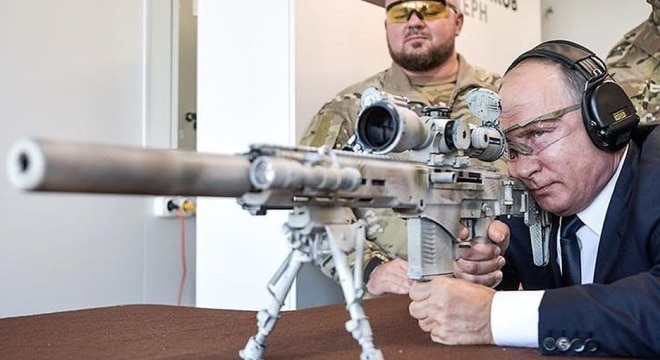
Russian President Vladimir Putin has today held a conference with all African leaders in what is dubbed as Russia-Africa summit. Putin and AU’s Chair, Egypt President Abdel Fattah el-Sisi are the brains behind the event held in the coastal resort city of Sochi, Russia.
“This is the first event of this level in the history of Russian-African relations, with the heads of all states of the African continent invited, as well as leaders of major sub-regional associations and organizations”, the statement said.
Kenyan President Uhuru Kenyatta is also in Russia for the same meeting as according to the State House, He will have a bilateral talk with Russian President Putin.
Putin led Moscow government is implementing the debt-for-development initiative, which is said to ease Africa’s liability burden. Moreover, Russia has written off well over Sh2 Trillion debt post the Soviet Union.
Speaking before the Russia-Africa Forum that all African leaders have attended in Sochi, Putin elucidated that it is fundamental that Russia- Africa co-operations start on a clean page.
“Let me point out that in the post-Soviet period, Russia canceled $20 billion of African countries’ debts to the Soviet Union. This was both an act of generosity and a pragmatic step because many of the African states were struggling to service those debts,” Putin said.
The debts write-offs is linked to Russia’s arms deals with African Countries. For instance, all the debt written-off relates closely to Moscow’s plan to expand Russian Military tech co-operation.
https://youtu.be/0VrMmfaxd6U
Ethiopia, Madagascar, South Africa, Tanzania, Egypt, Nigeria are said to have already signed and benefited from Russian Kremlin arms deal and military technology.
Picture courtesy.
Here are sampled courtesy of Tass pictures of the types of arms and military tech power African countries are said to benefit from.
Last week, President Uhuru Kenyatta inaugurated the Nairobi – Naivasha second phase of the Standard Gauge Railway, which honestly goes to nowhere, forget Jubilee’s promises. And not just that, but also, the Chinese government has since cut funds for the SGR project after the government failured to prove project viability.
In a bizarre report that appeared in the Sunday Standard last week revealed the racism, blatant abuse, bad treatment, wildlife deaths, and lack of skills transfer that characterizes the SGR trains. This happens under the nose of Jubilee government that choke out Sh1 billion monthly from taxpayers to repay the SGR.
“Beneath this shiny veneer is a tale of pain, anguish and broken dreams for a multitude of Kenyans who feel trapped on the train that ably fits the moniker Orient Express, because on it, Chinese nationals have created a small kingdom in which they run roughshod over Kenyan workers who say they are experiencing neo-colonialism, racism and blatant discrimination as the taxpayer foots the Sh. 30 million a day bill for the train, which losely translates to Sh. 1 billion at the end of every month.” Reads part of the Standard report.
The investigation report by the Standard revealed that Chinese workers were running a racist little kingdom at the trains and they had systematically excluded Kenyan workers from the core duties such as trotting the trains.
“Our investigation has revealed that Kenyan drivers have taken charge of the 472 kilometre ride just once, on the project launch with President Uhuru Kenyatta as a passenger, when two female drivers, Alice Gitau and Concilia Owire made the trip. When the cameras and VIPs exited the scene, the Chinese drivers took back control. They have never again been allowed to navigate the passengers from either end of the train track. Those who were trained two years ago in anticipation, have remained assistant shunting drivers, since the launch of Madaraka express, and only sit and watch as the Chinese drivers cruise to the coast and back,” the Standard reported.
The investigation also revealed that Kenyan workers at the SGR were not allowed to travel in the same vehicles with the Chinese, even if it’s carrying one Chinese or eat at the same tables with them.
“More excesses are allowed on the freight trains where there is little visibility. Chinese staff are allowed excesses such as smoking while in the locomotive and use of mobile phones, crimes that will get their Kenyan counterparts fired,” the report said.
The government response, however, points the blame finger on Kenyans, including those facing maltreatment. The States spokesman said that Kenyans should comprehend the work the Chinese are doing rather than focussing on the racial insults they are receiving from the Chinese. Aren’t we re-colonised already!?
The Chinese developer and operator of the SGR, China Road and Bridge Corporation, stands accused of discriminating Kenyan workers, who according to the government are expected to take over the running of the rail service in 10 years.
Baseless firing leading to unemployment, racial assignments, impoverished salaries, racial sitting arrangement, catering and personal hygiene services among others injustices the government wants Kenyans to ‘enjoy and celebrate.’
According to the government, they have set up a “systems” to resolve issues surrounding the operations of Madaraka Express passenger service and the cargo train. Efforts to get to understand the said systems always turn futile as there is nor recorded or existing system!
The State through Colonel Cyrus Oguna, the official government spokesman, keep on blaming Kenyans for not seeing the ‘good sides of the’ white elephant project.
One thing Kenyans have to honestly know is that SGR is an expensive irrelevant project. Kenya pays China 1 Billion monthly, which roughly transilates to over Sh33 Million daily.
In short, for SGR to be fully proffitable for both the contractor and Kenya, the successor of the white elephant after a whole damn decade, the Trains are supposed to ferry more than 35,000 Kenyans to and fro Mombasa daily, that leaves freight trains as side profits. Now, you get the joke Jubilee bluffed the whole Nation with.
And today according to MPs’ report, the Chinese firm awarded the Governments tender to develop Sh37 billion Thwake Dam project had been blacklisted by the World Bank.
Water Ministry transferred Sh37 billion for the Thwake Dam project in Makueni to a Chinese firm-China Gezhouba Group Limited. However the report by National Assembly Environment Committee revealed that the Chinese firm had been blacklisted by the World Bank over procurement irregularity. How did this pass the PS and CS secretaries who are directly involved in the proccurement process?
Patrick Mwangi, the then Water Principal Secretary had disapproved the deal but was repealed after Public Procurement Oversight Authority cleared the firm.
“China Gezhouba had been contracted to undertake the Thwake Dam project after being cleared by the Public Procurement Oversight Authority (PPOA) despite reservations by then Principal Secretary,” states the report tabled in Parliament.
In what seems to be a proccurement to take this country deep in the real dam, the same blacklisted CGG firm was, apparently, also awarded Sh6.8 billion Northern Water Collector Tunnel tender in Murang’a by the Water ministry.
But going with the history, Jubilee government has been dashing out multi-billion tenders to non existing firms or blacklisted ones.
Take for instance, the Parliament blacklisted French firm Idemia, formerly IT Morpho after irregular procurement of election equipment in the 2017 General Election. The same firm was awarded by the same IEBC to provide Huduma Namba technology worth Sh6 billion.
In July last year, another firm that had been blacklisted back in 2013, Hydery (P) Limited was allowed to import 35,000 tonnes of sugar.
This is a clear picture of how Jubilee administration is fighting corruption. Development bite and corruption spank to a country that is slowly rather openly being auctioned to foreign States in massive borrowings flowing in.