Category: Coronavirus

  • IMF, WHO Urge Caution On Trade Restrictions

    IMF, WHO Urge Caution On Trade Restrictions

    The International Monetary Fund (IMF) and the World Trade Organization (WTO) urged governments to exercise caution when implementing trade restrictions during the coronavirus pandemic.

    Countries can implement temporary export limits to prevent domestic shortages of critical goods but “taken collectively, export restrictions can be dangerously counterproductive,” the IMF and the WTO said in a joint statement on Friday.

    “In particular, we are concerned by supply disruptions from the growing use of export restrictions and other actions that limit trade of key medical supplies and food,” the statement said.

    In 2019, exports of crucial goods, such as personal protective equipment, cleaners and ventilators, which are critical to fight against the novel coronavirus, were $300 billion, it recalled.

    Noting that governments have taken several measures, including cutting import duties or curbing customs-clearance processes, the statement said: “We welcome these actions. Accelerating imports of critical medical supplies translates into saving lives and livelihoods.”

    “Similar attention should be paid to facilitating exports of key items like drugs, protective gear, and ventilators,” it added.

    The joint statement also warned regarding the supply of trade finance, saying: “Adequate trade finance is important to ensure that imports of food and essential medical equipment reach the economies where they are most needed.”

    In addition, it said, critical workers for agricultural production are not able to move while new cropping seasons are starting.

    “We urge governments to address these challenges in a safe and proportionate manner,” it underlined.

    After originating in China last December, the novel coronavirus has spread to at least 185 countries and regions, with Europe and the US currently the worst-hit regions.

    The pandemic has killed over 192,000 people, with total infections exceeding 2.73 million, while more than 752,100 have recovered, according to U.S.-based Johns Hopkins University.

  • UK Scientists Trying Covid-19 Vaccine In Kenya

    UK Scientists Trying Covid-19 Vaccine In Kenya

    By BBC.

    The first human trial in Europe of a coronavirus vaccine has begun in Oxford.

    Two volunteers were injected, the first of more than 800 people recruited for the study.

    Half will receive the Covid-19 vaccine, and half a control vaccine which protects against meningitis but not coronavirus.

    The design of the trial means volunteers will not know which vaccine they are getting, though doctors will.

    Elisa Granato, one of the two who received the jab, told the BBC: “I’m a scientist, so I wanted to try to support the scientific process wherever I can.”

    The vaccine was developed in under three months by a team at Oxford University. Sarah Gilbert, professor of vaccinology at the Jenner Institute, led the pre-clinical research.

    “Personally I have a high degree of confidence in this vaccine,” she said.

    “Of course, we have to test it and get data from humans. We have to demonstrate it actually works and stops people getting infected with coronavirus before using the vaccine in the wider population.”

    Prof Gilbert previously said she was “80% confident” the vaccine would work, but now prefers not to put a figure on it, saying simply she is “very optimistic” about its chances.

    So how does the vaccine work?

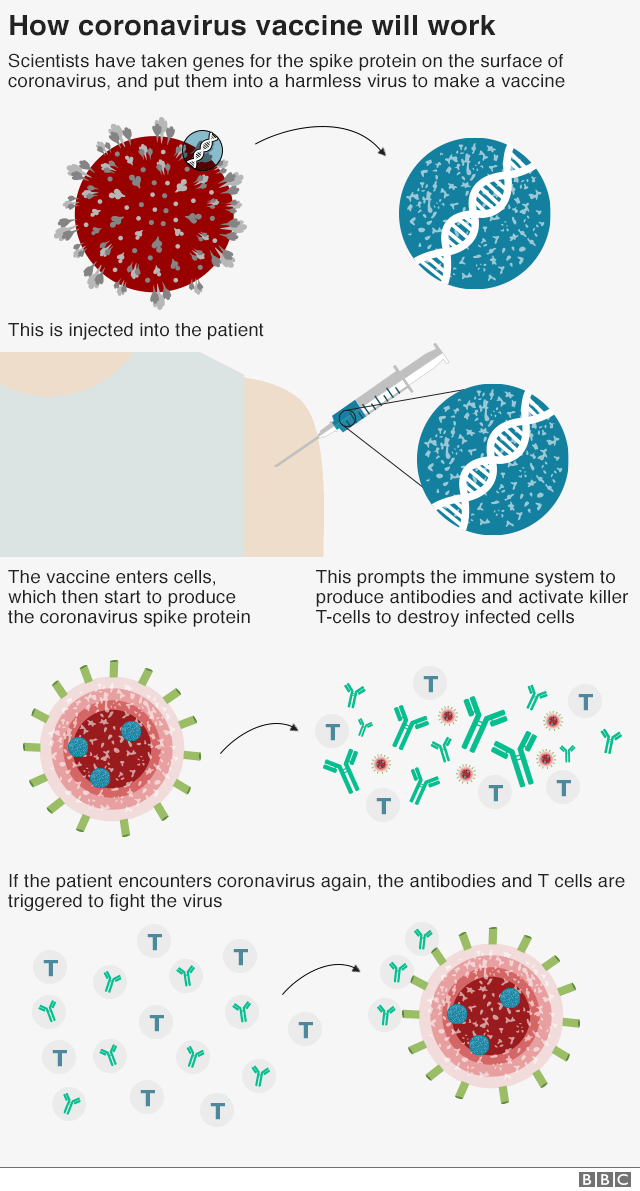
    The vaccine is made from a weakened version of a common cold virus (known as an adenovirus) from chimpanzees that has been modified so it cannot grow in humans.

    How the coronavirus vaccine works: The vaccine is made from a weakened version of a common cold virus (known as an adenovirus) from chimpanzees that has been modified so it cannot grow in humans. Scientists then added genes for the spike surface protein of the coronavirus. This should prompt the immune system to produce neutralising antibodies, which would recognise and prevent any future coronavirus infection.
    white space

    The Oxford team has already developed a vaccine against Mers, another type of coronavirus, using the same approach – and that had promising results in clinical trials.

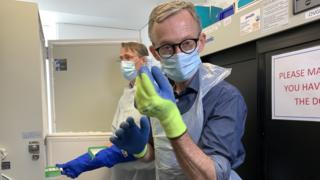
    The BBC's Fergus Walsh with a vial of the vaccine
    Fergus holding a vial of the vaccine developed by the Oxford team

    How will they know if it works?

    The only way the team will know if the Covid-19 vaccine works is by comparing the number of people who get infected with coronavirus in the months ahead from the two arms of the trial.

    That could be a problem if cases fall rapidly in the UK, because there may not be enough data.

    Prof Andrew Pollard, director of the Oxford Vaccine Group, who is leading the trial, said: “We’re chasing the end of this current epidemic wave. If we don’t catch that, we won’t be able to tell whether the vaccine works in the next few months. But we do expect that there will be more cases in the future because this virus hasn’t gone away.”

    The vaccine researchers are prioritising the recruitment of local healthcare workers into the trial as they are more likely than others to be exposed to the virus.

    A larger trial, of about 5,000 volunteers, will start in the coming months and will have no age limit.

    Older people tend to have weaker immune responses to vaccines. Researchers are evaluating whether they might need two doses of the jab.

    The Oxford team is also working with researchers in Kenya about a possible vaccine trial there, where the rates of transmission are growing from a lower base.

    If the numbers could be a problem, why not deliberately infect volunteers with coronavirus?

    That would be a quick and certain way to find out if the vaccine was effective, but it would be ethically questionable because there are no proven treatments for Covid-19.

    But that might be possible in the future. Prof Pollard said: “If we reach the point where we had some treatments for the disease and we could guarantee the safety of volunteers, that would be a very good way of testing a vaccine.”

    Is it safe?

    The trial volunteers will be carefully monitored in the coming months. They have been told that some may get a sore arm, headaches or fevers in the first couple of days after vaccination.

    They are also told there is a theoretical risk that the virus could induce a serious reaction to coronavirus, which arose in some early Sars animal vaccine studies.

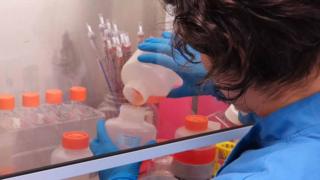
    Vaccine researcherSean Elias – Oxford Vaccine trial
    Work began on a vaccine in January

    But the Oxford team says its data suggests the risk of the vaccine producing an enhanced disease is minimal, and data from animal studies has been positive.

    Scientists there hope to have one million doses ready by September, and to dramatically scale up manufacturing after that, should the vaccine prove effective.

    So who would get it first?

    Prof Gilbert says that has not been decided yet: “It’s not really our role to dictate what will happen, we just have to try to get a vaccine that works and have enough of it and then it will be for others to decide.”

    Prof Pollard added: “We’ve got to ensure we have enough doses to provide for those in greatest need, not just in the UK but also in developing countries.”

    Coronavirus: What is a vaccine and how is one made?

    Another team at Imperial College London hopes to begin human trials of its coronavirus vaccine in June.

    The Oxford and Imperial teams have received more than £40m of government funding.

    Health Secretary Matt Hancock has praised both teams and said the UK will “throw everything we’ve got” at developing a vaccine.

    UK chief medical adviser Prof Chris Whitty has said neither a vaccine, nor a drug to treat Covid-19, is likely to be available within the next year.

  • Trump Suggests Injecting Sanitizers As Treatment For Covid-19

    Trump Suggests Injecting Sanitizers As Treatment For Covid-19

    US President Donald Trump proposed unusual methods for treating the novel coronavirus at a White House briefing Thursday, including ultraviolet light and injecting disinfectants.

    “So supposing we hit the body with a tremendous — whether it’s ultraviolet or very powerful light. And I think you said that hasn’t been checked, but you’re going test it. Supposing you brought the light inside the body, which you can do either through the skin or in some other way.

    “Sounds interesting,” Trump told reporters.

    His remarks came minutes after William Bryan, acting head of the US Department of Homeland Security’s Science and Technology Directorate, said solar light appears to kill the virus both on surfaces and in the air.

    “We’ve seen a similar effect with temperature and humidity as well, where increasing the temperature and humidity — or both — is generally less favorable to the virus,” said Bryan.

    Later, Trump came up with another treatment, this time suggesting the use of disinfectants.

    “And then I see the disinfectant where it knocks it out in a minute. One minute. And is there a way we can do something like that by injection inside or almost a cleaning? As you see, it gets in the lungs, and it does a tremendous number on the lungs, so it would be interesting to check that. You’re going to have to use medical doctors with that, but it sounds interesting to me.

    “And so we’ll see. But the whole concept of the light, the way it kills it in one minute, that’s pretty powerful,” he added.

    Trump asked the doctor leading the White House’s coronavirus response team, Deborah Birx, whether she had heard of using solar light in treating the disease.

    “Not as a treatment. I’ve not seen heat or light,” she replied.

    “Please don’t inject or consume disinfectants,” tweeted Chris Hayes, the host of a news and opinion show on American cable television channel MSNBC.

    As of Thursday evening, the US had more than 867,000 cases and over 49,000 deaths. Nearly 80,000 have recovered.

    The virus has spread to 185 countries and regions, infecting over 2.7 million and killing more than 190,000 since emerging in the Chinese city of Wuhan late last year.

  • Photos: Governor Joho Opens Second Coronavirus Hospital In Mombasa

    Photos: Governor Joho Opens Second Coronavirus Hospital In Mombasa

    As numbers of coronavirus continues to surge mapping out Nairobi and Mombasa as the epicenters with most numbers, disaster preparedness and mitigation measures continues to be taken, at least in the case of Mombasa.

    With a fully operational Covid-19 hospital in Coast General, the need for expansion is undeniably a top priority. Today Governor Joho unveiled The Mombasa County the second COVID19 Treatment Centre domiciled at the Technical University of Mombasa.

    “The centre will be handling mild & moderate COVID-19 cases while the critical cases will be handled at the Coast General Teaching and Refferal Hospital. We also launched four ambulances with critical care capacity that will be dedicated for transfer of Covid19 patients only.” The Governor said.

  • Okiya Omtatah Wants The Government To Stop Charging People Put In Mandatory Quarantine

    Okiya Omtatah Wants The Government To Stop Charging People Put In Mandatory Quarantine

    Seasoned activist, Okiya Omtatah is once again back in the limelight to save Kenyans just as he’s been playing Robin Hood. He has now filed a petition in High Court challenging the constitutionality of the mandatory self quarantine put by the government.

    In his view, Omtatah argues that its only a court magistrate who should issue quarantine orders and not the CS whom he accuses of overstepping his mandate.

    He now wants the government to refund all the money to each and everyone that they’ve quarantined in the past 40 days. In his argument, Okiya states that its the government who should meet the bills of quarantine. Currently, if you’re quarantined at a government facility, you’re charged Sh2,000 and it goes for 14 dats and some even more days.

    He has also challenged to stop the government from holding people beyond the set 14 days. In a nutshell, he wants the whole process stopped until it’s constitutionality is determined.

    Kenya continues to our strict measures to curb the spread of the virus that has of today reached 320 after 17 more cases were confirmed in the last 24 hours.

    With an active community transmissions, the country has been put on high surveillance and curfew observed. The president issued a warning that anyone who contravenes the set standards will be sent to quarantine which is now more of the new detention.

  • Generous Kenyan Donates Respirators to The US Police

    Generous Kenyan Donates Respirators to The US Police

    If there’s one thing that the coronavirus pandemic has exposed then its the illusion of the developed countries. Just like the third world, they’re struggling with challenges of a strained healthcare system. It was shocking when a photo of nurses at a US hospital using bin bags as their protective gears went viral.

    US which now is the worlds Covid19 epicenter with numbers of infected persons almost touching the 1 million mark and over 48,000 deaths has become one of the many western countries to be questioned about their assumed supremacy.

    Other than testing, we’ve seen problems similar to African countries emerge in America. Nurses have gone on strike over lack of PPEs which is the Personal Protective Equipments. A number of healthcare workers, security officers and other first in line workers, have been exposed, contracted and some even died of coronavirus. This shows how ravaging it has become.

    A Kenyan man and his daughter, residents of Paxton, Massachusetts, have joined the long list of philanthropists now coming in to save in whichever way they can. Wilson Kiriungi and her daughter Alyna, donated respirators to the Paxton Police Department.

    “A big thank you to Paxton resident Wilson Kiriungi and his daughter Alayna Kiriungi who generously donated one hundred 3M particulate respirators (and a pretty terrific note from Alayna too) this afternoon. We appreciate your generosity and support!” The department posted on their Facebook page.

    “Thank you for being heroes in our community all the time, but especially now during the coronavirus pandemic. My da and I want you to stay safe and healthy. We hope these masks come in handy and keep you safe through the pandemic.” Her note read.

  • Amidst The Coronavirus Pandemic, There’s A Silver Lining For Africa

    Amidst The Coronavirus Pandemic, There’s A Silver Lining For Africa

    By Aidan Hartley

    Red roses are hardly a priority for people in a virus-wrecked global economy, and one day recently the world’s flower market pretty much collapsed. At the vast Aalsmeer auction in Holland, there were scented mountains of unsold roses, gerberas and tulips. Some last stems still find their way into bouquets across a world that has cancelled all gatherings except funerals. But in the coming months, cut flowers might become a sight as rare as bananas were for children in the Blitz.

    This story is a disaster for Kenya, my home country, which was until last month a top flower exporter. While western states repurpose their economies towards becoming vast hospitals, Africa is too poor to cope with the medical emergency, and virus deaths will probably not be the greatest challenge ahead. Even in a good year, multitudes go hungry, while respiratory diseases, diarrhoea, Aids, malaria, tuberculosis and measles scythe down 3.5 million people. In Kenya, some wags have pointed out that police enforcing a dusk-to-dawn curfew have already killed more people than the virus has locally — but later, accurately calculating total deaths from Covid-19 in Africa will involve greater guesswork even than elsewhere, since mathematical modelling tends to get lost in the Congo’s rainforests or the shifting sands of Somalia.

    If the virus spares the young, Africa is better off than Europe. Our median age is less than 20; three quarters are under 35. Most ordinary folk are fit, slim, non-smoking and healthy. Few live beyond 60, since misrule has so impoverished many hospitals that they lack even aspirins. The local joke in Kenya is that we have more parliamentarians (350) than ICU beds (130). ‘Underlying health issues’ affect mainly the tiny urban class of richer, often politically connected folk, who pick up westerners’ bad habits. In other words, the pandemic’s main victims might be ageing politicians and their hangers–on, who find themselves unable to fly their private jets to Europe for treatment — a cull of sugar-fed, obese oligarchs.

    Starkest of all will be Africa’s economic collapse, wiping out jobs for many of the continent’s 1.2 billion people. Tourism, vital to the conservation of wildlife, forests and monuments, has fallen apart. Mining, oil and gas are close behind. Exports of tea, coffee and cocoa are also being hit hard. Until recently Africa served as a giant nursery, raising migrants to supply cheap labour for rich countries. Every month these workers send money home to their families, and remittances are now the largest source of foreign exchange in many countries. As diaspora Africans fall out of work, these funds are evaporating. In the high-density slums, each breadwinner might feed ten mouths. Nairobi city governor Mike Sonko promised mass distributions of Hennessy cognac because ‘alcohol plays a major role in killing the coronavirus’ — but such clowning aside, slum-dwellers have no cash reserves, nor a welfare state to rescue them. As global supply chains collapse, it becomes horribly clear that out of 54 African states, only Zambia is a net food exporter. Many Africans routinely rely on food aid. For oil-dependent Nigeria’s nearly 200 million people, life is about to get tough.

    Even before the pandemic, debt-laden Africa was gazing into an economic abyss deepened by spendthrift policies and crashing commodity prices. South Africa’s junk status is now at the optimistic end of the spectrum. ‘Sub-Saharan countries with no exception that I can think of have gorged on borrowing and balance sheets are maxed out,’ according to Kenya’s most prominent economic analyst, Aly-Khan Satchu. ‘It’s biblical.’ Without restructuring, central banks will default, especially on their vast loans from China, which has built so much sub-standard, bribe-soaked belt and road infrastructure. The recent mistreatment of black people in Guangzhou has horrified Africans, who know where the virus came from. China has flooded the continent with its citizens, who along the way have set out to poach and eat every African wild species imaginable — sea slugs, elephants, rhinos, big cats, aardvarks, tortoises, donkeys, pangolins. Naturally, Africa’s leaders have taken their begging bowls to the IMF and World Bank, asking for a mega-bailout. ‘This time hopefully those institutions will be more intelligent about how the money is spent, rather than just shovelling it out to leaders who all round trip it offshore,’ says Satchu.

    Britain’s approach to this is upsetting. Boris’s government says ‘all our resources’ must focus on beating the virus. The FCO urges thousands of Brits to come home, fleeing the Commonwealth and foreign investments that until March were such a key part of post-Brexit policy. Masks and ventilators are the language of diplomacy now. Until this month the British Army had its largest overseas training operation near my house in Kenya, but due to fears of civil unrest the mission has been mothballed. There are more jihadi terrorists in Africa than anywhere else these days, and al Qaeda and Isis affiliates have exploited recent disarray to escalate violence and seize territory. As the UK moves gazillions in private debt to the government’s balance sheet and tax revenue disappears, one wonders how DfID’s aid budget of £14 billion can be justified. Since the same will go for other newly poor western donors, Africa will be left on its own.

    Yet there is a silver lining. Some years ago, the Arab rulers of Sudan shut down the pipeline that traverses its territory towards the Red Sea, pumping crude oil production from its southern neighbour, South Sudan. When the embargo hit I predicted social collapse. Yet nothing changed, because South Sudan’s rulers had always stolen all the oil money. The ministers’ fat sons had to cut back on spare parts for their gold-plated Hummers, whereas most local people simply woke up in the morning to dig their fields and grow sorghum, manioc and vegetables.

    In the same way now, people across Africa will struggle by on the land, relying on extended family relationships. Unless there is a dramatic reordering of the system, some states will fail, swept away in urban uprisings and fresh civil conflicts. Surely it’s time to abolish or reform the edifice of international aid that has propped up this kleptocracy for decades — the racket run by UN agencies and leftist charities like Oxfam. Covid-19 is the Chernobyl moment for bad regimes and badly managed aid programmes in Africa. Pestilence heralds a time of change more dramatic perhaps than any since the colonial scramble for Africa. It’s the end of an epoch and an opportunity for ordinary Africans to build a better future for themselves.

    Author is a writer with UK magazine The Spectator.

  • Three Negatives And A Positive: There’s A Problem With China’s Coronavirus Testing

    Three Negatives And A Positive: There’s A Problem With China’s Coronavirus Testing

    (Reuters) – Trader He Ximing in the Chinese city of Wuhan says he has no idea how or where he caught the coronavirus or why repeated nucleic acid tests showed he didn’t have it.

    He was not a coronavirus patient, doctors told him, even though he had been having difficulty breathing with what he described as smothering chest congestion from early February.

    FILE PHOTO: Trader He Ximing, 52, a recovered COVID-19 patient who tested positive for the virus’ antibodies after a number of negative tests, line up in a hospital after the lockdown was lifted in Wuhan, capital of Hubei province and China’s epicentre of the novel coronavirus disease (COVID-19) outbreak, April 13, 2020. REUTERS/Aly Song

    But his condition worried the authorities enough to get him sent to a quarantine center.

    Still, he did not challenge the three negative tests at the time. After all, his wife did not fall sick.

    But he could not shake off the nagging suspicion that he had the coronavirus and in late March went to a hospital in Wuhan for more tests, including one for antibodies.

    This time he tested positive.

    “I didn’t expect it,” the 52-year-old vegetable seller said as he showed Reuters a copy of his test results – positive for antibodies showing exposure to the coronavirus.

    Finally, at least, he had an explanation for why he felt so terrible. “I felt like I was dying. You can’t imagine how it feels.”

    His case is not unique. Similar instances in China and elsewhere have compounded concern over the accuracy of coronavirus testing, even as authorities push for testing as key to handling the crisis.

    Unreliable testing could undermine strategies not just for stopping the virus but for opening up locked-down economies, as pressure grows on governments around the world to ease restrictions.

    More than 2.5 million people have been infected with the coronavirus globally and about 177,000 have died, according to a Reuters tally.

    Wuhan, where the new coronavirus emerged late last year, has recorded 50,333 cases and 3,869 deaths as of April 21, accounting for the majority of China’s cases.

    Nucleic acid testing, on samples swabbed from the back of a patient’s throat or respiratory tract, for the virus’ genome, is the main way cases are detected.

    The test is not easy to administer and, experts say, and mistakes do happen, such as if too small a sample is taken or if the swab misses a virus-hit spot.

    “The limitations of these tests need to be recognized, and the need to run regular tests if we want assurance that someone is truly negative, and that they remain so over a period of time,” said Andrew Preston, a lecturer in microbial pathogenesis at the University of Bath.

    TESTING TIMES

    There is little consensus on what proportion of nucleic acid tests yield false negatives.

    A survey by Chinese doctors in February looking at samples from 213 patients suggested a false-negative rate of about 30%.

    Media has also reported cases of people testing negative repeatedly before finally getting a positive result.

    In February, the People’s Daily newspaper reported on a woman who had fallen ill with pneumonia but tested negative for the coronavirus four times. A fifth test was positive.

    Wuhan authorities have started testing residents for antibodies. China is conducting an epidemiological survey in nine regions in an effort to determine the full extent of asymptomatic infections and immunity levels.

    He said he first got tested on March 1 when his chest congestion worsened though he had no fever or cough.

    X-rays showed his lungs had white blotches, similar to those found in coronavirus patients, but his nucleic acid test was not positive so a hospital declined to admit him.

    As a precaution, a committee that manages his housing compound put him in quarantine for 14 days.

    Later, two more hospital tests came back negative so he turned to traditional Chinese medicine and other drugs.

    Finally, on March 28, he took a fourth nucleic acid test, which was again negative, but he was also tested for antibodies and got confirmation.

    “I told my story to a doctor and he said ‘you’re so lucky you didn’t die’,” he said in his apartment, where boxes of various medicines were scattered about.

    His wife, who he lives alone with, has shown no coronavirus symptoms though she has not been tested.

    He said he believed he was immune and not infectious, though he’s taking no chances and wears an N95 mask and a face shield when going out.

    “If there’s any possibility that I’ll infect others, I’ll harm them,” he said. “That’s why I’m taking these precautions.”

  • Covid-19 Will Be With Us For A Longtime, WHO Boss Says

    Covid-19 Will Be With Us For A Longtime, WHO Boss Says

    The World Health Organization (WHO) said on Wednesday that there were “worrying upward trends” in early epidemics in parts of Africa and central and South America, while also warning that opening up global travel needed to be managed carefully.

    “Most countries are still in the early stages of their epidemics and some that were affected early in the pandemic are starting to see a resurgence in cases,” WHO director-general Tedros Adhanom Ghebreyesus told Geneva journalists in a virtual briefing.

    “Make no mistake we have a long way to go. This virus will be with us for a long time,” he added, while noting progress in Western Europe.

    The WHO’s top emergencies expert Dr. Mike Ryan warned against opening up global travel too quickly, saying it would require “careful risk management”.

  • Fake Covid-19 Medical Product Trafficking On The Rise, EU And Interpol Warns

    Fake Covid-19 Medical Product Trafficking On The Rise, EU And Interpol Warns

    Recent seizures of fake medical supplies being marketed as protection against the novel coronavirus underscore the need to address a growing international trade in counterfeit pharmaceuticals costing billions a year and putting lives at risk, the EU and OECD have warned.

    The trafficking and sale of fake or defective medicines enrich criminal groups and endangers health while draining away vital industry and tax revenues, according to a joint report by the OECD and Intellectual Property Office (EUIPO) of the EU released on Tuesday.

    “The sale of counterfeit and defective pharmaceuticals is a despicable crime, and the discovery of fake medical supplies related to coronavirus just as the world pulls together to fight this pandemic makes this global challenge all the more acute and urgent,” said OECD Secretary-General Angel Gurria.

    “We hope the evidence we have gathered on the value, scope and trends of this illicit trade will help lead to rapid solutions to combat this scourge,” he added.

    The OECD-EUIPO report indicated that the counterfeit pharmaceuticals trade was worth €4 billion ($4.3 billion) in 2016, excluding fake medicines produced and consumed domestically and shipments of pharmaceuticals stolen in transit and rerouted for sale in a different market or country.

    Most counterfeit drugs seized in 2014-2016 were fake antibiotics, male impotence pills, painkillers and medications for malaria, diabetes, epilepsy, heart disease, HIV/AIDS, cancer, high blood pressure and allergies.

    The vast majority contain incorrect proportions of active ingredients, meaning they are unlikely to work.

    Many contain undeclared substances that can pose serious health risks. Forensic tests of suspect samples show that in 90% of cases, counterfeit medicines can harm patients.

    Interpol recently reported a rise in fake medical products related to COVID-19.

    Seizures of fake COVID-19 tests, face masks and hand sanitizers have been reported by customs authorities including the U.S. Customs and Border Protection and the World Customs Organization.

    More than half of the fake medicines seized in recent years originated in India and nearly a third came from China with their main destinations being Africa, Europe and the U.S.

    Singapore and Hong Kong are key transit points in the supply chain, with other routes running through the UAE, Egypt and Cameroon.

    Kenya is getting bulk of its supplies from China in which billionaire Jack Ma sent donation. There has be no known media report on the standard check on either of the supplies.

    The novel coronavirus has spread to 185 countries and regions since emerging in China last December, with the U.S. and Europe being the hardest-hit areas in the world.

    More than 2.58 million cases have been reported worldwide. The death toll has neared 179,000 while the recoveries are around 696,000 recoveries, according to data compiled by the U.S.’ Johns Hopkins University.

  • Covid-19 Survivors Speaks Out On What It Feels Like Being Sick, In Isolation And Coming Out

    Covid-19 Survivors Speaks Out On What It Feels Like Being Sick, In Isolation And Coming Out

    Medical experts in Nakuru have warned that stigmatisation of people who have either recovered from Covid-19 or are suspected to have contracted the disease is becoming one of the major challenges in managing spread of the pandemic.

    Nakuru Teaching and Referral Hospital Medical Superintendent Dr Joseph Mburu said rejection of Covid-19 victims by their communities is hindering provision of medical care and preventing disclosure of potential Coronavirus infections, factors he cautioned could increase infection rates in the country.

    Dr Mburu who spoke moments after authorising discharge of two confirmed Covid-19 victims who have fully recovered noted that public awareness campaigns and the mass media have ‘strongly’ focused on social distancing and isolation creating an impression that those infected are social outcasts or criminals.

    “As we fully embrace guidelines issued by the Ministry of Health towards combating spread of Covid-19, public awareness campaigns on the pandemic need also to stress psychological support for patients.

    The biggest threat to overcoming the spread of Covid-19 is the social stigma associated with its patients and doctors treating this illness. This is mainly due to misinformation that has circulated in the media and a lack of public awareness. The citizens need to realise that the disease is not a disgrace,” he added.

    Governor Lee Kinyanjui offered that he was aware of cases where persons who had been released from Covid-19 quarantine and isolation centres were being subjected to stigma even after they have been confirmed not to be a risk in spreading the virus.

    “Stopping stigma is important for us to create a society that is resilient to the pandemic. Some of the recovering Covid-19 patients and those cleared to leave isolation centres have been subjected to social rejection among others.

    We have incorporated counseling for both those held at Isolation facilities and their families towards ensuring that they are successfully reintegrated into the society after their quarantine or treatment. To enhance recovery and make this war against Covid-19 a success, Kenyans must stop discrimination,” asserted Mr. Kinyanjui.

    One of the recovered Covid-19 people, a 23 year old man we shall call JN to protect his identity said he was very happy with how health workers at the Nakuru Teaching and Referral Hospital ensured his movement was limited to avoid any infection.

    “I am happy that the health officers monitored my progress and accorded me very elaborate medical care. Their selfless efforts have ensured that the two of us are now fully recovered. This is for the good of Kenyans.

    Once out there we are yearning to be reintegrated into the society as we have been through a harrowing and lonely 24 hours a day schedule where you are supposed to spend time alone, without any physical contact with the outside world.

    That is the life that Kenyans in isolation or quarantine are living. And after many days in solitude which changed our lifestyles in a major way, it will be great disservice to survivors of Covid-19 to be subjected to stigmatisation and discrimination,” offered JN.

    The 23 year old says his quick recovery was largely due to moral encouragement that he received from medical practitioners and support staff at the facility, who encouraged him to stick to doctors’ instructions and always reminded him that there was hope for a great future.

    The second Covid-19 survivor who has been given a clean bill of health by doctors recounted that due to the isolation during her treatment, she found herself with a lot of time in her hands and her schedule had to entirely change. We shall refer to her as PL.
    What are the lessons learned as she underwent treatment and medical observation? She sighed, took a deep breath and declared,“I had a very casual attitude towards the disease and never thought that I could be a victim. I now know as President Uhuru Kenyatta has repeatedly declared that we are all equal and that this disease cannot spare anybody and all of us are vulnerable no matter who you are. The virus is an equalizer.”

    In a rare and bold show of remorse PL says that she regrets that she boarded a Public Service Vehicle all the way from Mombasa to Nakuru before she was intercepted in Nakuru on March 31 after exhibiting symptoms consistent with Covid-19 disease.

    “It is a decision that still haunts me. I feel guilty that I may have exposed innocent and unsuspecting citizens to this dangerous pestilence. I have already undergone counseling, all I ask is for my relatives and friends to welcome me back to the society,” she petitioned.

    PL said the treatment and isolation period were the most stressful part of her life since she was confined to one place without interacting with people she equated the normal eight hours at home to a month in an Isolation or quarantine facility.

    According to the John Hopkins University’s Centre for Communications, misconceptions, rumors and misinformation are major contributors to stigma and discrimination which in turn hamper response efforts in combating the disease.

    The Center warns that this can result in more severe health problems and difficulties controlling the disease outbreak since the stigma drives people to hide illness to avoid discrimination, prevents them from seeking health care immediately and ultimately discourages them from adopting healthy behaviors.

    Dr Mburu said the slowly but steadily creeping Coronavirus related stigma has the possibility of complicating and slowing down the implementation of intervention strategies being put in place by the government to both treat Covid-19 patients and stem the increase in infections.

    “As experts we have noted that Corona related stigma is slowly creeping in and has the potential to complicate response against the highly infectious disease,” the Medical Superintendent.

    Dr Mburu says deliberate efforts designed to fight stigma and discrimination directed against Covid-19 patients and those suspected to have come into contact with them should be amplified if the fight against the disease that mainly targets respiratory organs is to be brought under control.

    Covid-19 associated stigma in the country is mainly being fueled by insufficient knowledge about the new disease, how it is transmitted and treated and how to effectively prevent infection.

    Experts are now calling on the Ministry of Health to prioritise the collection, consolidation and dissemination of accurate country and community specific information about affected regions, individuals and vulnerable groups.

  • Homa Bay Nurses Issues Strike Notice Over Salary Delay

    Homa Bay Nurses Issues Strike Notice Over Salary Delay

    More than 800 nurses in Homa Bay County have issued a two days strike notice because of delayed salary payment and shortage of Personal Protective Equipment (PPE).

    The nurses threatened to down their tools from Thursday should the Homa Bay government fail to address their grievances.

    The Homa Bay branch National Nurses Association of Kenya (NNAK), said the two issues are important in their lives especially as they fight
    covid-19 pandemic.

    Through their secretary Omondi Nyonje and chairperson Dina Pinya, they argued that the employer has not abided by their terms of contract on salary remittances.

    “We agreed we would get paid before fifth of every month but our employer hasn’t complied. We’ll not go to work from Thursday if they don’t pay us,” Nyonje said.

    In their letter to Homa Bay health department headed by Professor Richard Muga and copied to the Finance office andthat of the county secretary Isaiah, the nurses said they have not yet received the salary for March.

    Nyonje said delayed payment of health workers demoralises them from battling the covid-19 pandemic.

    “You cannot work when you’re hungry. Let Homa Bay government pay nurses to avoid squabbles which may result to strike,” he added.

    According to Pinya, nurses at a number of health facilities and their staff do not receive adequate PPEs as required to protect them from coronavirus.
    She said they agreed that each sub county was to get at least 400 masks for staff in their respective health facilities but the employer has not complied.

    Pinya said the county government distributes only 150 masks daily to the health staff.

    “Shortage of masks, other personal protective equipment and lack of money make working environment demoralising,” Pinya said.

    They argued that the county government has adequate PPEs but they do not know why they are not distributed to medics to use.

    “The demand for masks has increased especially in hospitals. Nurses are on frontline in the fight against covid-19 hence they should get
    protected,” she added.

    However, the county health Chief Officer Gerald Akeche said they are planning to engage the medical workers in talks to address the issues.

    Akeche said the delayed salary remittance is due to prevailing economic situation.

    “We’re communicating with all health workers and I hope they will soon get paid. It’s important to note that this is the time we need to fight the covid-19 pandemic collectively,” Akeche said.

    Absence of nurses from hospitals will paralyse health care services in Homa Bay especially the fight against coronavirus.

    Homa Bay has registered a case of covid-19 after a driver tested positive for the virus. About 60 doctors in the county had also complained of lack of money after the government failed to pay them.

  • COVID-19- Kenya To Start Mass Testing Of Truck Drivers

    COVID-19- Kenya To Start Mass Testing Of Truck Drivers

    The Kenya government will start mass testingof long distance truck drivers who are among the high risk groups for COVID-19.

    Health Chief Administrative Secretary Health Rashid Aman made the revelation on Tuesday during a meeting with National and County government officials at Malaba One-Stop-Border-Post (OSBP).

    Aman told the meeting that the mass testing will be pivotal in combating the spread of Coronavirus in high risk border counties.

    He said, “Uganda is already undertaking mass testing of truck drivers which is appropriate. There is need for Kenya to also expand its testing to include truck drivers and other high risk groups like frontline workers and all health workers.”

    Aman who was accompanied by Chief Administrative Secretaries Hussein Dhado (Interior) and Chris Obure (Transport and Infrastructure) said KEMRI Alupe, KEMRI Kisumu and Moi Teaching and Referral Hospital will be made testing centres in the region to expand the testing capacity.

    To ease the truck pile up that has hit Malaba and Busia, the health CAS told the meeting that the Government will negotiate with Uganda to have Kenya take samples of truck drivers up to 30 kilometers inside Uganda with Uganda doing the same inside Kenya in order for the tests to be readily available before they cross.

    Obure said the Malaba truck jam that currently stands at 30 kilometers is not acceptable owing to the dangers posed to the communities living along the Bungoma-Malaba Highway and economic implications to truck owners in terms of lost revenue.

    “Covid-19 should not be a reason to defeat the objective of the East African Community. We must find an urgent solution to the pandemic,” he stated.

    Dhado on his part urged Kenyans of all walk to observe the measures the government has put in place to stem the spread of the Coronavirus.

    “The measures are not meant to punish anybody but rather to protect all of us against contracting the virus,” he said.

    Busia Deputy Governor Moses Mulomi urged the National Government to speed up infrastructural development in Busia and Malaba towns especially making the Busia-Korinda highway dual carriage and construction of trailer parks in Busia and Malaba which will curtail the perpetual truck jams in the two border towns.

  • Covid-19: Indian Council of Medical Research Suspends Use Of Chinese Test Kits

    Covid-19: Indian Council of Medical Research Suspends Use Of Chinese Test Kits

    India’s main medical research council has suspended the use of rapid testing kits imported from China after complaints of inaccurate results from various states.

    “We are learning that the positive samples of RT-PCR are showing too much variation [when tested by rapid kits] in the range of 6 to 71%,” said Dr. Raman Gangakhedkar, a top scientist at the Indian Council of Medical Research, during his daily briefing on Tuesday.

    He further added that eight ICMR institutes will test the kits in different states, in the next two days, to validate and check if a batch of the imported kits is faulty.

    India became the world’s 17th country to record 20,000 COVID-19 cases after 1,493 cases were reported on Tuesday, the second-highest single-day spike after Sunday’s 1,553. India’s COVID-19 cases continue to surge despite the nationwide lockdown.

    As per the John Hopkins Coronavirus Resource Centre, India has so far reported 20,178 cases and 645 deaths.

    The faulty kits have led to a pause in the antibody testing, thus causing a dip in the testing rates. India’s testing rate dropped from 35,000 on Monday to 27,500 on Tuesday. This is the first batch of 300,000 of the testing kits, and a total of 650,000 kits were to be delivered by China.

    “I had earlier suggested to GOI [government of India] that a centralized mechanism with proper guidelines of the quality check may be developed for the procurements of Medical equipment. Unfortunately, this was not accepted. Had this suggestion been accepted, failure of Rapid Test kits could have been avoided,” Ashok Gehlot, chief minister of the western state of Rajasthan, said on Twitter.

  • Germany Approves First Human Trials Of Covid-19 Vaccine

    Germany Approves First Human Trials Of Covid-19 Vaccine

    Germany has approved first clinical trials of a COVID-19 vaccine on humans.

    Biotechnology company BioNTech’s vaccine program was authorized for human clinical trials after a careful assessment of potential risks and benefits, the Paul-Ehrlich-Institut, German regulatory authority, said in a press release.

    “This is the fourth authorized clinical trial worldwide in which a preventive specific COVID-19 vaccine candidate is tested in humans,” the institute stressed, and added:

    “Considering the serious consequences of the COVID-19 pandemic, this is a significant step toward developing an efficacious and safe COVID-19 vaccine available in Germany and making it available worldwide as soon as possible.”

    Turkish professor Ugur Sahin’s BioNTech company and pharma giant Pfizer are jointly developing vaccine candidates, as part of a global development program.

    “We are pleased to have completed pre-clinical studies in Germany and will soon initiate this first-in-human trial ahead of our expectations. The speed with which we were able to move from the start of the program to trial initiation speaks to the high level of engagement from everyone involved,” Sahin said in a statement.

    In the authorized first part of the clinical trial in Germany, 200 healthy volunteers aged between 18 and 55 years will be vaccinated, according to the Paul-Ehrlich-Institut.

    Further trials involving people with increased infection risk planned for the second part of the clinical trial, on condition that additional study data submitted in advance.

    Scientists and researchers across the world are scrambling to find a vaccine for the novel coronavirus which has infected over 2.58 million people worldwide and killed more than 178,000.

    Until such a discovery, health experts are treating patients with anti-malaria drugs, including hydroxychloroquine and chloroquine, which have shown positive results for coronavirus-related lung infection.

    So far nearly 693,000 coronavirus patients worldwide have recovered from the disease.

  • OPINION – Boris Johnson’s COVID-19 mismanagement: What went wrong?

    The UK has seen its deadliest week in the fight against coronavirus so far. It is heading towards a situation that may turn out even worse than Italy’s or Spain’s. Although Prime Minister Boris Johnson has been discharged from hospital, the total death toll continues to rise across the country.

    A report by the University of Washington‘s Institute for Health Metrics and Evaluation estimates that the UK will have the highest number of fatalities out of any European country with over 60 thousand deaths. [1]

    Since the UK is on a trajectory towards eventually having the worst death rate in Europe, Boris Johnson’s crisis management of the pandemic should be questioned and examined in terms of this projected outcome.

    Lack of clear strategy and delayed actions

    The British government, like almost every government, has been caught unprepared in the handling of the pandemic. However, the problem, particularly in the early stages, significantly stemmed from the government’s underestimation of the threat of pandemic while Italy and Spain already constituted alarming examples.

    Although the government had its first cases as early as the beginning of February, the risk level set by the government’s top scientific advisers remained at “moderate” until March 12.

    As late as March 22, when the number of deaths in Italy exceeded the threshold of one thousand, Boris Johnson was still persistent about not declaring a national lockdown.

    Unlike many other countries where the lockdown measures were in place, Britain had a different approach to deal with the pandemic, the so-called‘herd immunity’ [2] that would allow the spread of the virus and supposedly build up immunity in the society.

    Even though the idea was not implemented and abandoned shortly thereafter, it still distracted and prevented the government from taking the necessary measures in a timely manner.

    Notwithstanding the fact that the ‘herd immunity’ strategy was proposed by the government’s scientific team, and the prime minister simply followed suit, Boris Johnson still cannot be excused for the delay of action and cannot blame it on the inadequate advice of his scientific advisors.

    Hundreds of scientists warned the government that its herd immunity response to the coronavirus outbreak was wrong and risking many more lives [3].

    Any responsible leader should have asked for a full set of scenarios, ranging from a full shutdown to keeping the economy fully open. As such, the prime minister should not have limited himself to one course of action.

    Although the following day the prime minister finally imposed a lockdown calling on restrictions on businesses and people’s lives, the government’s delayed decision has already put the people on the wrong part of an exponential curve. Even so, Boris Johnson still lacked seriousness in his language, which caused the nation not to take the threat as seriously as they should.

    Instead, Boris Johnson, during his hospital visits, was shaking hands with people infected with coronavirus, sending people mixed messages.

    Consequently, Johnson, who acted somewhat complacently against the pandemic, became the first leader of a major country to be hospitalized with COVID-19.

    While anyone may contract the virus, it is inexcusable for Boris Johnson to contract the virus because of his earlier actions underestimating the power of the virus.

    The prime minister needs to be doubly cautious than an ordinary British person since his fall would not only leave the government without a leader but also lead the nation into panic and despair.

    Although Boris Johnson has thankfully been discharged from the hospital, he will not immediately return to work until he fully recovers. His absence may create a crisis of authority.

    The government is left without a leader during one of its toughest times for decades.

    Government’s NHS predicament

    With the total number of deaths exceeding 16 thousand, including 27 NHS workers, the government faces increasing criticism over its delayed response to the crisis, its failure to ramp up testing and persistent shortages of personal protection equipment (PPE) for health care workers.

    Although the National Health Service (NHS) has long been known to be underfunded [4], when Health Secretary Matt Hancock was asked on Jan. 23 whether the NHS would be able to respond to COVID-19, he assured the public that the NHS was prepared and well equipped to fight the pandemic.

    The NHS, however, has denied it and warned the government about the lack of sufficient resources within the NHS and called the government to take action to address the needs [5].

    There has already been anger over the lack of personal protective equipment (PPE) for frontline hospital workers dealing with people suspected to have the coronavirus.

    The government announced that 27 NHS workers have died from coronavirus. Infection and death among medical workers have clearly been results of lack of PPE and testing. COVID-19 testing for NHS staff is restricted due to insufficient equipment. Shortages of swabs, reagents, and testing kits have prevented staff from being tested.

    As of the first week of April, only 2,000 out of 500,000 frontline NHS staff [6] had been tested for coronavirus, and only around 15,000 tests are carried out daily.

    Unlike Germany or South Korea, where the widespread coronavirus tests played a crucial role in combating the pandemic, the UK has been too slow to implement widespread coronavirus testing as only a small number of UK laboratories have been enabled to conduct these tests.

    The government has pledged to increase the UK’s capacity for coronavirus testing to 100,000 a day by the end of April. However, it will still be insufficient compared to other European countries such as Germany, which is already able to carry out 500,000 tests a week.

    During crises, what matters most is effective management, which strictly rests on the ability to take the necessary actions on time. Unfortunately, Prime Minister Boris Johnson’s government has failed to respond to the coronavirus threat fast enough and is now heading towards the highest death rates in Europe.

    Nearly 2,000 people died in the last two days of last week, the highest on record in Europe, making the UK the worst impacted country in the continent.

    The government is full of aspirations and are “planning” or “intending” or “trying” to do many things -PPE, ventilators, testing, etc.- but its performance still falls rather short of delivering on those pledges.

    Boris Johnson won the election with significant public support. However, given the disastrous management of the coronavirus pandemic, this support may soon wane and leave an unfortunate legacy with regards to his tenure.

    The writer is a deputy researcher at the TRT World Research Centre. Enes is currently a Ph.D. student at Istanbul University on Political Science and international relations. Enes’s expertise is on European and UK Politics.

  • Experts On What Could Save Africa From Coronavirus

    Experts On What Could Save Africa From Coronavirus

    Experts have warned against any complacency in Africa, although the coronavirus pandemic has so far produced relatively few reported deaths on the continent.

    Speaking to Anadolu Agency, Deputy Director of the Africa Centers for Disease Control and Prevention Ahmed Ogwell Ouma said the quick response by different countries and less mobility of people in the continent has so far saved the continent.

    “Africa is different because we started acting quickly. When we saw the pandemic spreading, we began to prepare. And governments began to put in place mechanisms to identify those who may have the disease, to test them and to follow up those who may have been exposed,” he said.

    Ouma said due to past experiences that have devoured many lives in African countries, they started early, unlike much privileged European and American counterparts.

    He said the less mobility of people and the absence of a rapid transport system also made a difference.

    “The second difference is that in Africa the modes of travel as not the same as the rest of the world. Someone in Addis Ababa is unlikely to go outside the city frequently. And the modes of transport are poor. In other parts of the world, air travel is the most common means. And people travel quite frequently, which also made the virus to travel fast,” said Ouma.

    He, however, cautioned that it was not time to celebrate as the continent is not completely out of danger.

    “We must remain vigilant to make sure we do not have many infected people. It will be a disaster in the continent, “he said.

    The top expert also complained that lockdown across the continent has also affected medical and other supplies. He said there was a need to start solidarity flights to transport supplies.

    Of the five regions in Africa, northern Africa has taken over southern Africa as the most affected both in terms of cases and deaths. According to U.S.-based John Hopkins Coronavirus Resource Centre, Egypt has so far reported 3,490 infected cases with 264 deaths, while South Africa registered 3,465 cases and 58 deaths.

    East Africa least affected

    East Africa has been least affected so far. Djibouti, with a population of 958,920 has registered 945 cases, while its neighbor Ethiopia with 110 million population has so far 114 confirmed cases.

    Like all over the world, Africa is also likely to witness a sharp decline in productivity, loss of jobs and revenues to the pandemic.

    “As engines and drivers of economic growth, cities face considerable risks in light of COVID-19 with implications for the continent’s resilience to the pandemic,” said Thokozile Ruzvidzo director of the Gender, Poverty and Social Policy Division of the United Nations Economic Commission for Africa.

    “The effects are likely to be severe in urban areas. The urban economy [manufacturing and services] currently account for 64% of GDP in Africa,” said Ruzvidzo.

    Firms and businesses in African cities are highly vulnerable to COVID-19 related effects, especially SMEs which account for 80% of employment in Africa.

    “Additionally, urban consumption and expenditure [on food, manufactured goods, utilities, transport, energy, and services] are likely to experience a sharp fall in light of COVID-related lockdowns and reduced restrictions,” he said.

  • Turkana County To Spend Sh667 Million To Combat Covid 19 Pandemic

    Turkana County To Spend Sh667 Million To Combat Covid 19 Pandemic

    Speaker Erastus Lokaale on Monday told journalists that the county assembly had approved the supplementary budget 2 which allocated shs 667,570,600 towards covid 19 emergency response.

    Lokaale said he has forwarded the appropriation Bill to the Govenor for assent.

    He said the funds had been allocated to the ministries of water, health and public service and disaster management.

    The ministry of public service and disaster management would receive the lion’s share of shs 441, 231,000 to provide relief food to the vulnerable people.

    “We made this decision because the majority of our people are poor so we needed to cushion them during this crisis,” said Lokaale.

    Speaker of the county assembly Erastus Lokaale addressing the media on Monday April 20,2020
    Photo captions by Peter Gitonga

    The ministry of health was allocated shs 159,335,600 while the ministry of water was allocated shs 67 million.

    The speaker said funds for health docket would be used to purchase essential commodities like facemasks, and completion of the Lodwar county referral hospital intensive care unit as well as the purchase of ventilators and other equipment.

    Water was also identified as a key component and the funds would be used to enhance hygiene standards by ensuring boreholes are working and for water tankering in areas without water.

    To ensure accountability, the county assembly of Turkana has formed an adhoc Committee to oversight the utilisation of funds meant to address the covid 19 pandemic.

    Lokaale said hat the committee is keen to ensure that funds meant to fight the pandemic are not embezzled.

    “We understand that in times of crisis like these people can use the opportunity to do funny things that is why we are very keen to ensure funds are utilised to help the wananchi as intended,” said Lokaale.

    The ad-hoc committee which he leads includes deputy speaker Mike Ewoi, leader of majority Bethwel Kobongin, leader of minority Benedict Lokamar, Katilu MCA James Abei.

    The assembly Committee on finance will soon be meeting to discuss proposals from the executive including reducing cess for small scale traders during the crisis.
    Govenor Josphat Nanok last week said his government has come up with a raft of measures to protect the most affected by the corona virus crisis.

    He said that the County Treasury will waive a total of Sh40.7m from agricultural produce cess, water distribution and drill services, health sector fees, educational institutions, liquor licensing, market fees and single business permits for salons, barber shops and restaurant and entertainment facilities that is contained in the Turkana County Finance Amendment Bill 2020 as an additional measure to address COVID-19.

    The Governor has also directed a tax exemption on market collection fees in the months of April, May and June to cushion the citizens, both traders and household water users from the loss arising from COVID-19.

    Governor Nanok who was addressing the media with other County leaders at the new County HQ complex said that the County will clear eligible pending bills worth Sh90 Million within one month to “improve liquidity and ensure businesses remain operational.”

  • Netflix Subscribers Surge By 16 Million

    Netflix Subscribers Surge By 16 Million

    (AFP) – Netflix on Tuesday reported soaring profits as subscriptions surged by almost 16 million at the streaming television service during lockdowns to slow the spread of the coronavirus pandemic.

    “After record subscriber additions, Netflix is and will continue to be the media company least impacted by COVID-19,” said eMarketer forecasting analyst Eric Haggstrom.

    “Their business is a near perfect fit to a population that is suddenly housebound.”

    Netflix made a profit of $709 million on revenue of $5.8 billion in the first three months of this year, while the number of paid subscribers grew by 15.7 million from the previous quarter to total nearly 183 million, according to earnings figures.

    Strict confinement rules are keeping billions of people at home in a bid to curtail the outbreak, effectively providing an enormous captive audience to entertainment giants competing in the streaming market.

    “We’re acutely aware that we are fortunate to have a service that is even more meaningful to people confined at home, and which we can operate remotely with minimal disruption in the short to medium term,” Netflix executives said in a letter to investors.

    “Like other home entertainment services, we’re seeing temporarily higher viewing and increased membership growth.”

    Netflix expects viewing and membership growth to decline as coronavirus concerns abate and people can move about more freely.

    The streaming firm expects a net increase of 7.5 million paid subscriptions in the current quarter to June but said: “Given the uncertainty on home confinement timing, this is mostly guesswork.”

    – Turbulent times –

    The California-based company said that the long-term effects of job losses due to the coronavirus crisis on Netflix’s revenue remain unclear. The US alone has lost 22 million jobs since mid-March.

    “In our 20+ year history, we have never seen a future more uncertain or unsettling,” Netflix executives said.

    The company’s shares danced fractionally around their closing price in after-market trades that followed the release of the earnings report.

    While the coronavirus crisis revved up membership growth, it has also strengthened the US dollar, offsetting revenue gains.

    “Netflix faces some headwinds moving forward from a poor economic environment,” Haggstrom said.

    “But a significant chunk of consumer entertainment budgets have been opened up from the closures of movie theaters, sporting events, restaurants and bars.”

    – Sidelined shows –

    Another effect has been the shutdown of show production that has postponed expenses.

    “We’ve paused most of our productions across the world in response to government lockdowns and guidance from local public health officials,” Netflix said.

    “No one knows how long it will be until we can safely restart physical production in various countries, and, once we can, what international travel will be possible.”

    Streaming television service competitors are in the same situation, but Netflix has a library with thousands of titles and an array of show launches ready for release, its executives noted.

    “Our member satisfaction may be less impacted than our peers’ by a shortage of new content, but it will take time to tell,” Netflix said.

    The Walt Disney Company in early April said its television streaming service had already won 50 million paid subscribers just five months after its launch in the US.

    Disney+ subsequently rolled out in India and eight western European countries as well.

    “I have been so impressed with Disney+ execution; my hat is off to them,” Netflix chief executive Reed Hastings said in an earnings presentation.

    “Are we kicking up our kids and family animation? You bet. We are both going to do good work.”

    The major challenge for Netflix and other leading streaming subscription services, in particular Disney+, will be “not just attracting new subscribers after lockdown, but perhaps more importantly, retaining existing ones,” said Futuresource analyst David Sidebottom.

  • Covid19-19: Hackers Strike and Leak Bill Gates, WHO, and Wuhan Lab Emails

    Covid19-19: Hackers Strike and Leak Bill Gates, WHO, and Wuhan Lab Emails

    Anonymous hackers successfully hacked accounts belonging to Bill Gates, the WHO, and a lab in Wuhan believed to be the location researching coronavirus that received funding from Dr. Fauci.

    The event appears to have taken place on or about April 20th.

    Netizens have taken to activism and people are logging in via SSH and downloading the contents of these hacks. This means that many people will be combing through the hacked documents with a fine-toothed comb.

    Hackers apparently looking for the truth behind the coronavirus outbreak have allegedly hacked the World Health Organization, the Wuhan biolab and the Bill and Melinda Gates Foundation. A set of huge databases containing usernames and passwords has been leaked.

    What are hackers looking for?

    Many are speculating that the Gates Foundation is linked to the research of “gain of function”. This describes a function where scientists add deadly features to a virus. It was outlawed in the US back in 2015 by a moratorium and research was all migrated to Wuhan, Dr. Fauci funneled nearly $4 million USD to complete his research.

    COVID-19 was ostensibly made in a lab. French Nobel prize winning scientist Luc Montagnier are publicly alleging that this is the case. According to him, there’s no possibility of this virus occurring naturally. It has the “insertion points” of 3 different viruses. That means it is a chimera of 3 separate diseases combined into 1 coronavirus.

    In an interview given to French CNews channel and during a podcast by Pourquoi Docteur, professor Montagnier who co-discovered HIV (Human Immunodeficiency Virus) claimed the presence of elements of HIV in the genome of the coronavirus and even elements of the “germ of malaria” are highly suspect, according to a report in Asia Times.

    https://www.livemint.com/news/world/nobel-winning-scientist-claims-covid-19-virus-was-man-made-in-wuhan-lab-11587303649821.html

    Thousands of emails, passwords, & documents have been said to have been leaked online. Screenshots of documents, emails, and their credentials are currently on the open web, even on Twitter.

    A Christian hacker group known as Katehon is said to have had hacked Gates Foundation data and relayed this to another hacker group, USA Hackers. USA Hackers used the data to hack WHO, Wuhan Lab and the CDC, and promises more leaks.

    https://twitter.com/usahackers/status/1252654398888644609?s=21

    Unconfirmed reports include that satanic witch Marina Abramovic’s email was also hacked.

    There is a history of Microsoft/Gates accounts being hacked, so this would not be unprecedented, nor impossible.


    The Atlantic Council controlled publication of the Deep State – Vice Magazine – seems also to have confirmed the story. 

    For reasons only understandable to those following the broader establishment narrative, Vice has made this about the ‘far right’ and ‘neo-nazis’, terrorism, and so-called accelerationism.

    A data dump of what appears to be the email addresses and passwords of members of the Gates Foundation, World Health Organziation (WHO), Center for Disease Control and Prevention (CDC), and a virology center based in Wuhan, China, is circulating within a network of neo-Nazi extremists.

    The data dump and circulation appears to be an attempt at intimidating several of the leading government and non-governmental groups currently leading the fight against the worldwide coronavirus pandemic, though it’s likely many of the emails and passwords are outdated.

    Judging specifically from a list of the data obtained by Motherboard, it appears like this may be an aggregation of previously-hacked usernames and passwords that was compiled from a previous data breach, though Motherboard cannot say for sure at the moment where the list comes from and how it was compiled. Motherboard ran a series of the email addresses through the website haveibeenpwned.com, which compiles data breaches, and found that each of the addresses we tested have previously been part of known data breaches. Many of them were also confirmed by the site to have been circulated in large aggregated lists of usernames and passwords tracked by the site.

    In recent weeks, far-right extremists have become particularly enamoured with sowing disinformation about the COVID-19 pandemic, stoking protests and anti government sentiment in hopes of creating social chaos. Many experts have openly warned that “accelerationists”—followers of violent political doctrine calling for terrorist actions to hasten the collapse of society—have seen an opportunity in the current pandemic to test already weakened governments that are struggling to contain the virus.