Tag: Raila Odinga

  • Raila Set To Debate Live On TV With Other Candidates To Outline His AUC Agenda

    Raila Set To Debate Live On TV With Other Candidates To Outline His AUC Agenda

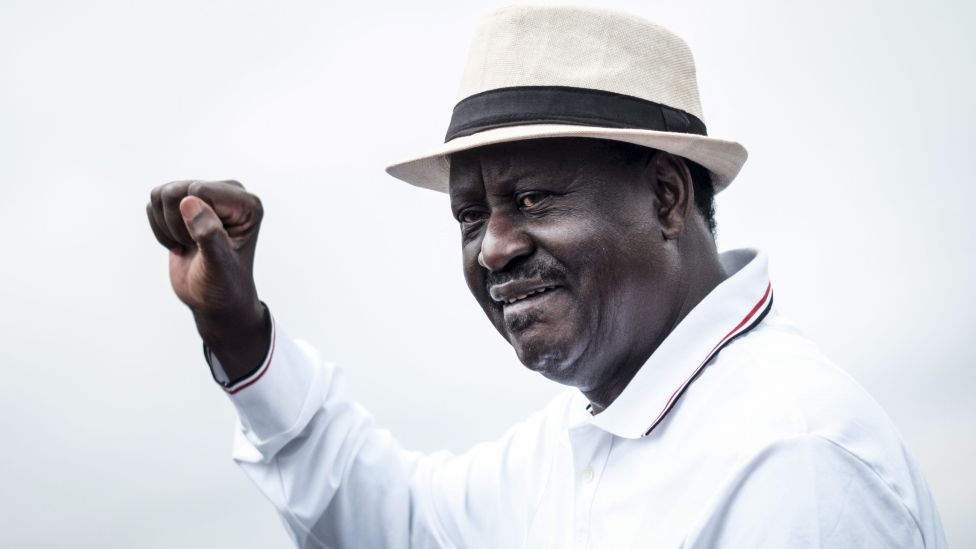
    Former Prime Minister Raila Odinga is ready to face off with his competitors for the African Union Commission chairmanship to explain his agenda for the continent, according to the government of Kenya.

    Prime Cabinet Secretary Musalia Mudavadi says the debate, dubbed “Mjadala Africa,” will give Raila a chance to outline his vision and how he intends to lead the transformation of Africa through the implementation of the AU Mandate and Africa’s Agenda 2063. Mudavadi says African citizens and other stakeholders will also have time to engage Raila and the other three candidates on the issues they want addressed.

    He believes the former prime minister will put his best foot forward and give a reason for all and sundry on the continent to back his bid to become the next AUC chair.

    “Our candidate is undoubtedly experienced and well-prepared to participate in the live debate to engage the African people on how to propel the continent’s growth and ensure Africa achieves its goals of African integration and sustainable development, thus making our continent a major player in the Global Arena,” he said in a joint press briefing with the former Prime Minister.

    Mudavadi, also the country’s Foreign Affairs Minister, confirmed that Kenya has submitted the requisite documentation of Raila in the manner and form required by the African Union Secretariat.

    He rallied Kenyans to support Raila and disclosed that President William Ruto will formally launch Raila Odinga’s candidacy in the continent next Tuesday.

    “As Kenyans, we have always come together behind our own, whether on the track, the field, or the stage. Just as we cheered our athletes in the recent Olympics, let us lend our full support to Raila as he carries the Kenyan flag high in the race for the Chairmanship of the African Union Commission,” he said.

    “This is more than a candidacy. It is a national mission. Hon Raila Odinga represents Kenya’s voice, values, and aspirations on the continent. As he steps forward, let us stand with him, not just as a government but as a united people,” he said at a media briefing in his office.

    Raila, appreciating the government for mobilizing support for his bid, said his engagements so far give him optimism regarding his chances of clinching the seat.

    “I am happy that the Kenyan government has come forward to make me a candidate. We have submitted our candidacy as required by the AU. From now on, it is all systems go,” he said.

    “I have had the occasion to travel across the continent, meeting with different African leaders. I have been very pleased and impressed with the optimism that these leaders are expressing regarding the African Union,” said Raila.

    Even as he awaits the debate, the former PM addressed issues he believes ought to be addressed toward the prosperity of the continent. He said the African Union needs to be strengthened in order to enable African people to realize the dreams of the founding fathers of the continent for a united, peaceful, and prosperous Africa, “where the citizens themselves feel that they are free as a people and can work productively for the continent.”

    “There are several areas where Africa has problems, such as issues of health, education, and wealth creation. Employment is a major issue. Many young Africans drown in the Mediterranean as they try to run away from poverty and challenges in the continent, seeking greener pastures in Europe. This does not have to happen,” he said.

  • How Raila Odinga Ended Up in the Pockets of President Ruto’s Dubai Friends

    How Raila Odinga Ended Up in the Pockets of President Ruto’s Dubai Friends

    Fresh details reveal that former Prime Minister Raila Odinga received Sh2 billion from President William Ruto’s allies in Dubai to help scuttle the Gen Z protests.

    This exposé delves into the financial and political maneuverings that led Raila to betray his supporters and align with Ruto’s interests.

    We uncover the role of Dubai’s Arab sheikhs in this intricate deal, Raila’s influence over the Independent Electoral and Boundaries Commission (IEBC) reforms, and the far-reaching implications for Kenya’s political landscape and future governance.

    Raila Odinga

    Raila Odinga’s Financial Ambitions and the Gen Z Protests

    Raila’s love for money is no secret. In Luo Nyanza politics, the highest bidder always lands the ODM party ticket.

    For instance, in the 2022 Suba South MP seat, Caroli Omondi paid Raila millions to secure the ODM ticket, sidelining party chairman John Mbadi, who ended up with a nominated slot in parliament.

    When the Gen Z demonstrations began, Raila, like Ruto, underestimated their potential impact. However, after the storming of parliament, it became evident that the youth’s fight for democratic principles was gaining momentum.

    As the protests grew, Ruto reached out to Raila for support, fearing for his presidency and safety.

    Raila capitalized on Ruto’s desperation, engaging key players from his inner circle. He convinced them that protecting Ruto’s presidency was crucial.

    The narrative was that if Ruto resigned, Deputy President Rigathi Gachagua would take over, which was seen as a less favorable outcome.

    The Role of Dubai’s Arab Sheikhs

    Ruto enlisted the support of Arab oil sheikhs to convince Raila. They were told that if the Gen Z revolution consumed Kenya, their multi-billion-dollar investments would be at risk.

    Consequently, they agreed to fund Raila, leading to a Sh67 billion investment deal between Kenya and the United Arab Emirates.

    Raila’s Betrayal of Gen Z and Azimio

    After securing the deal, Raila moved swiftly to make it an ODM affair, betraying Gen Z, his supporters, and Azimio heavyweights. Raila’s primary goal was to influence the formation of the Independent Electoral and Boundaries Commission (IEBC) and reform the judiciary.

    The Dubai Money Transfer

    Raila received the money without informing his Azimio la Umoja One Kenya Coalition Party partners.

    Once he received the wired money in his Dubai bank account, Raila approved the nomination of ODM allies to the cabinet.

    Public Deception and Future Plans

    To divert attention from his betrayal of Gen Z, Raila’s team spun the narrative that he was meeting former President Uhuru Kenyatta in Dubai. This was a strategic move to raise stakes and shift public focus.

    Siaya Governor James Orengo and other Azimio hardliners favored forming an interim government (IG) instead of a government of National Unity (GNU).

    They believed the IG could oversee free and fair elections. However, Raila disregarded their stance and moved forward with ODM’s integration into Ruto’s administration.

    Ruto’s friends in Dubai are now eyeing lucrative carbon credit projects in Kenya to recover their money. They also pushed for the nomination of Aden Duale for the Defense docket before he was moved to the environment ministry.

    Gen Z has vowed to collect one million signatures to petition the African Union Commission (AUC) to disqualify Raila from the chairperson race.

    They plan to highlight the state’s brutal killings during the protests and Raila’s betrayal. Despite Ruto’s apparent success in crushing the Gen Z rebellion, the movement plans to continue their psychological warfare against the government.

    This ongoing conflict underscores the deep political and financial entanglements between Raila Odinga and President Ruto’s Dubai allies.

  • Kalonzo Rules Out Joining Ruto Govt, Declares 2027 Presidential Bid

    Kalonzo Rules Out Joining Ruto Govt, Declares 2027 Presidential Bid

    Wiper party leader and Azimio la Umoja One Kenya principal, Kalonzo Musyoka, has announced his intention to challenge President William Ruto in the 2027 general election.

    Kalonzo reiterated his commitment to remain in opposition, asserting that his conscience would not allow him to join  government.

    “My conscience will not allow me. For the love of this nation, we will stand firm. Even William Ruto knows that Kalonzo will be his opponent; he knows this clearly,” Kalonzo stated.

    Kalonzo spoke on Friday during a visit to the African Independent Pentecostal Church of Africa in Kihome, Othaya Constituency, Nyeri County, where he attended a symbolic priesthood ceremony for Prophetess Leah Overflow.

    Leaders accompanying the wiper leader including Jeremiah Kioni and Eugene Wamalwa declared Kalonzo as their leader saying they have released Azimio leader Raila Odinga to contest for African Union Commission Chairmanship.

    “We have released Raila to contest for the AU Commission Chair, but we will continue working with Kalonzo Musyoka in the opposition to keep the government in check,” Wamalwa said.

    Kalonzo’s resolute stance comes in the wake of President Ruto’s reconstitution of Cabinet to include four members from the ODM party.

    Raila has however maintained that neither the ODM Party not has entered into a coalition agreement with Ruto’s UDA party.

    “Neither the ODM Party nor Azimio la Umoja One Kenya Coalition Party has entered into any coalition agreement with President Ruto’s UDA party. We had anticipated the crafting of clear terms of engagement based on issues we raised in our various communiques,” Raila stated.

    The four ODM nominees include MP and ODM Chairman John Mbadi (Treasury), Hassan Joho (Mining), Wycliffe Oparanya (Cooperatives), and Opiyo Wandayi (Energy).

  • Finance Bill 2024 Will Hurt Already Overburdened Kenyans, Raila Calls On MPs To Reject Outrageous Proposals

    Finance Bill 2024 Will Hurt Already Overburdened Kenyans, Raila Calls On MPs To Reject Outrageous Proposals

    Azimio la Umoja One Kenya Alliance leader Raila Odinga has expressed his vehement opposition to Finance Bill 2024. The Opposition chief termed the Bill a regressive taxation proposal that goes ruthlessly after the poor.

    Should it be ratified, Raila warns that low-income citizens will be hit with taxes on multiple fronts and will end up paying more than people with higher incomes. He insists that taxes on basic necessities such as food, cooking oil, and money transfers will disproportionately hurt the poorest of the poor.

    “The Finance Bill 2024 fails the taxation dictums of predictability, simplicity, transparency, equity, administrative ease and fairness. It is worse than the one of 2023, an investment killer and a huge millstone around the necks of millions of poor Kenyans who must have hoped that the tears they shed over taxes last year would see the government lessen the tax burden in 2024,” added Raila

    In Raila’s view, the country’s economy might suffer major breakdown given the proposals contained in the Bill.

    “The tax proposals for 2024 will make an already bad situation worse. They could usher the collapse of an economy that is already severely suffocated, and the poor will be the hardest hit,” he warned

    In a statement to newsrooms Friday evening, the Former Prime Minister further described most of the tax proposals in the Finance Bill 2024 as insensitive as they are callous.

    “We see no positive result that the country which is a net importer of nearly everything can derive from the proposal to raise Import Declaration Fees from 2 percent to 3 percent. The impact is that the cost of goods will go up,” he charged

    Raila argued that the tax measures put in place last year (Finance Act 2023) have subjected Kenyans to a great deal of trauma but bore no fruit. He says the intended purpose of the 2023 tax measures was to help the government raise more revenue but, instead, the Kenya Revenue Authority has consistently failed to meet targets.

    “The high taxes on petroleum products occasioned a fall on the fuel levy raised. They led to closure and relocation of businesses,” he said

    Odinga insists that if the government expects businesses to invest in Kenya, then it cannot afford a tax policy that “keeps swinging like a pendulum.” He says Kenya cannot afford taxation measures whose result is to inflict more pain on the poor who expect relief.

    “Parliament must inject very radical surgery on the outrageous proposals in the Finance Bill 2024. We will not accept the mistakes and pains inflicted on Kenyans by the Finance Act 2023 to be continued into 2025 through Finance Bill 2024,” he said

  • Why Raila Skipped Gen Ogolla’s Burial In Siaya

    Why Raila Skipped Gen Ogolla’s Burial In Siaya

    Raila Odinga’s absence at the burial ceremony of CDF General Francis Ogolla at his home did not only catch everyone by surprise but also sparked a wave of speculations.

    Raila, who comes from Nyanza region, just like Ogolla, was a relative as revealed by Siaya Senator Oburu Oginga during the burial. Raila’s mother hailed from Alego, same as Ogolla, making the General his ‘uncle’.

    Raila being the defacto leader of the Luo, was expected to headline the funeral which was also attended by President William Ruto.

    Mr. Odinga was however seen attending a football match between local teams in Nairobi. His brother Oburu Odinga who represented him in the ceremony said the former prime minister was disposed to attend.

    However, sources speaking to Kenya Insights allude to a strategic scheme by Odinga to avert a possible fallout and generally to preserve his image as a candidate for the up coming African Union election.

    Odinga is also keen not to fracture his newly formed relationship with Ruto, “Raila is keen not to antagonise Ruto due to his bid for the AU seat. He didn’t want to be forced into pushing the theory of an assassination of Gen. Ogolla in front of Ruto.” The source said.

    From the inception of the crash, majority of Azimio leaders have subtly advanced their view that there was a foul play in the fatal accident.

    We learn from our insider source that Raila’s absence was an internal agreement in Azimio. “They knew that if Raila attends, then the organizers will give him a chance to address mourners, hence blocking the other Azimio luminaries. So, the agreement was that Kalonzo or Martha Karua was to be chosen to speak on behalf of Azimio. This is the reason why Kalonzo broke the protocol to invite Martha, and he was forced to come and recognize the presence of Wajackoyah and Mwangi wa Iria after the duo complained that Kalonzo ignored them.”

    Also as part of their strategy, Dr. Oburu and Alego Usonga MP Sam Atandi tried so hard to push the assassination theory, and even it is said they have tried to push the family to demand an investigation, and the family has refused to play along.

    Oburu in his speech said the Luo community has in the past lost high-ranking leaders under unclear circumstances hence need to probe for the truth.

    “Even though it was an accident; in this region we’ve had many such accidents and we’ve also had assassinations of leaders from this region. So when such things happen we are a bit suspicious not because of anything, but we want to know the truth,” Oburu said.

    Oburu differed sharply with Joel Rabuku Omondi, the general’s son who had ruled out foul play in his father’s death, “I want to ask our Uncle, the General’s son, young man, don’t be impatient with us allow investigators to do their work! It’s not because of anything it is because once bitten twice shy. We asking for no stones to be left unturned and let us know the truth on who killed General Ogolla.” Oburu said.

    Family rules out foul play

    The general’s family differed. Joel was very close to the father and is said to know a lot of things about the father and that he went with the father to some of the most sensitive places and meetings hence he took charge of the funeral on behalf of the family.

    Speaking during the funeral service at Senator Obama Primary school in Ng’iya area Siaya County yesterday, Joel said that his father had disclosed to him how he enjoyed a cordial relationship with President William Ruto, Deputy President Rigathi Gachagua and Defence Cabinet Secretary Aden Duale.

    Joel said that his death was a big blow to the three with whom he had great plans to turn around the security situation in the country.

    “He would tell me, I have had a very good meeting with the boss. And not with the President alone but also with the Deputy President as well. He really enjoyed his company and formed very serious rela- tionship of securing the country. And the cabinet secretary (Duale), these people become like brothers,” Joel said.

    The Ogolla’s family during the burial.

    He said that the President was equally devastated by the untimely death of General Ogolla calling on the pub- lic to stop speculating about what could have caused the death of his father. “Even yesterday (Saturday) people were still speculating, ooh President appointed him because of this. I want to clear the air about the conversations I had with my fa- ther about his time with the President. He didn’t divulge any national security issues but generally, I feel it is important to clear the air.

    “The President didn’t have to appoint him first of all. And nitially, he saw his competencies and decided that this was the man for the job. Very quickly they started becoming friends and they formed a serious chemistry,” he said.

    The refusal of the family to advance the assassination narrative didn’t ogre go well with most regional leaders. Hence Oburu’s call that the death of Gen. Ogola was beyond the family. It is was made to appear as more of a tribe issue, hence the luonization of Ogolla’s death and Raila eyeing the continental position could not risk to be the headline of that theory.

    Raila, however, attended the memorial service at Ulinzi Sports Complex on Saturday.

    Another unnamed politician cited by a local daily said the Bomas controversy and the ‘mood on the ground’ could have led to Raila skipping the event because he would not be in a position to talk about some of the issues that his supporters could have wanted him to address.

    “The way the people applauded Senator Oburu and Governor Orengo signals what they wanted to hear and Raila may have avoided going that route due to his working relationship with the Kenya Kwanza regime,” noted the politician.

    Analysts also view the move by Raila to issue a separate press release away from his Azimio co-principals could be a pointer that he did not want to issue a hard-hitting statement to the government that is backing his African Union Commission chairmanship bid.

    While Raila in his statement urged the government to expedite the probe into the cause of the accident that claimed Ogolla’s life, his co-principals Martha Karua, Kalonzo Musyoka, Mwangi Wa Iria, Eugene Wamalwa and George Wajackhoya raised concerns on the accident they want the Ruto-led administration to respond to.

    Raila raised concerns about the state of helicopters and other equipment being used by the security officers.

    “Many near-death encounters have occurred with the security aircraft. We may never know what exactly brought down the helicopter in which the general died.

    “It is our prayer that this tragedy may mark the beginning of a serious relook into our security equipment, especially aircrafts with a view to undertaking a complete overhaul and modernization of the equipment. That was the General’s vision,” he said.

  • Raila’s Firm Faces Liquidation

    Raila’s Firm Faces Liquidation

    The Commercial and Tax Division of the Milimani High Court has received a notice of liquidation of Spectre International Company Ltd Staff Provident Fund.

    The notice was presented through a petition prepared by Miller and Company Advocates, initiated its hearing yesterday.

    It cites the Specter International Company Limited Staff Provident Fund, the minimum funding level set by the Retirement Benefits Authority (RBA), the winding up of schemes according to the Regulations of 2000, and the RBA Act, No. 3 of 1997.

    Additionally, the provisions of the Company Act, No. 17 of 2015, and stipulations from the Insolvency Act of 2015 are also listed in the petition.

    The Specter Staff Provident Fund was established under an irrevocable trust dated 26 May 2006 and registered by the Retirement Benefits Authority, (RBA).The litigation could see the Fund declared either technically insolvent or otherwise see the Court uphold earlier ruling that it remits Sh18,965,797 deduction from 166 employees in Sacco contributions.

    The firm, based in Kisumu and associated with Opposition leader Raila Odinga’s family, allegedly failed to remit the dues promptly, sparking the legal tussle in the courts.

    The Spectre Staff Provident Fund was established under an irrevocable trust dated 26 May 2006 and registered by the Retirement Benefits Authority, (RBA).

    In a judgment dated December 6, 2023, Justice Stephen Radido, ruled: “In settlement of the sums due under the judgment delivered on May 31, 2023, the Court endorses and adopts the computations filed by the Claimants in Court on September 22, 2023, in the sum of Sh18,965,797/72.”

    The extremity of the case was on May 31, 2023, where the Court issued a declaration that Spectre International is liable to refund the employees’ contributions deducted towards Sacco’s contributions but not remitted to Sacco in good time as the law dictates.

    Judge Radido of the Labour and Industrial Relations Court in Kisumu said despite making deductions from the employee’s salary for 60 months, the company failed to timely remit the funds to Equity Bank, where the employee, Frederick Otieno Oswe, secured the loan.

    “The bank statements placed before the court show deductions were regularly made from Oswe’s pay but were not regularly remitted to Equity. Radido observed: “As the employer, Spectre was expected to keep records, but it did not present any records to the court to demonstrate that it paid out to Equity all the monthly instalments as they fell due.’’

    “The court has no hesitation in finding that Spectre was in breach of contract as contemplated by section 19 (g) and (h) of the Employment Act, 2007. The missteps by Spectre led to the loan not being cleared on schedule.

    Consequently, he said, “Spectre must bear the liability for the same. A declaration is hereby issued that Spectre is liable to settle the outstanding loan arrears together with interest and penalties due to Equity Bank from Oswe.”

    The petition was redirected to be heard for directions before the High Court sitting in Nairobi’s Mlimani Law Courts Commercial and Tax Division Insolvency under petition EQ14 of 2019.

    Oswe had sued the firm on November 15, 2017, alleging that Spectre had not remitted the loan deductions to Equity despite making deductions from his salary leading to loan arrears of Sh624,579 as of 14 March 2018.

    However, Spectre in its defence cited the Limitation Act that bars disputes of over three years from being brought to court, saying the action advanced by the claimant was caught up by the limitation.

    Now, a fresh litigation has been filed seeking to declare the employees provident fund technically insolvent, which may further dim their hopes of being paid as they posit or alternatively raise their hopes if the ruling decides either way by adjudication of the acts cited.

  • Omtatah Dossier: Behind The Scenes Of Sh17B Oil Scandal

    Omtatah Dossier: Behind The Scenes Of Sh17B Oil Scandal

    The raging multi-billion-shilling oil saga that has sucked in the Ministry of Energy and Petroleum, some marketers and a little-known importer took a dramatic twist after a senator sensationally claimed that Sh17 billion was withdrawn from government coffers.

    The self-proclaimed people’s watchman, Busia Senator Okiya Omtatah alleged that the Sh17 billion used to finance the purchase of the controversial oil had been sneaked into the 2022/23 budget by the Ministry of Energy and Petroleum and later withdrawn.

    He said the genesis of the controversy started in the 2022/2023 financial year when Parliament approved Sh5.9 billion for the ministry out of which Sh5.2 billion was to be raised through the ministry’s operations.

    The balance of Sh732 million was to be sourced from the Consolidated Fund as provided for in 2022/2023 estimates of recurrent expenditure for the year ending 30th June 2023.

    “However, in total, some Sh42,965,290,402 instead of the Sh732 million was unconstitutionally withdrawn from the Consolidated Fund without the authority of Parliament and spent on subsidies to private financial enterprises. The beneficiary enterprises are not named.”

    Omtatah further claimed that Parliament then passed an inflated budget of over Sh43 billion, which was an increase of 5,836pc contrary to Article 223 of the Constitution which limits such deviation to a maximum of 10 per cent of the sum appropriated per programme.

    “The money was on unnamed and mysterious subsidies to private financial enterprises as per the statement of actual revenue gazetted on October 6, 2022, by the then Treasury CS Ukur Yattani through Gazette Notice No. 12580,” he added.

    The ministry withdrew Sh16.6 billion in September 2022 for the unnamed subsidies to private financial enterprises.

    “As per the statement of actual revenue and net exchequer Issues gazetted by Prof Njuguna Ndungu, the CS Treasury, vide Gazette Notice No. 9734 of July 13, 2023, the ministry withdrew from Consolidated Fund some Sh17, 224,718,632 at the closure of the 2022/2023 financial year for subsidies to private financial enterprises,” the senator alleged.

    In a signed press statement backed with extracts from various gazette notices and supplementary estimates for the recurrent expenditure, Omtatah claimed this is the money that was used to buy the contested oil which is now being purified.

    He challenged Energy and Petroleum CS Davis Chirchir to make full disclosure about how the Sh17 billion withdrawn by his ministry from from consolidated fund had been used.

    The senator claimed that an oil importer involved in the Sh17 billion oil saga was a private financial enterprise that was funded by the ministry.

    The matter came to the fore when a little-known businesswoman, Anne Njeri claimed she had been abducted and her life threatened when she went to the Directorate of Criminal Investigations to report that the cargo had been hijacked.

    Critics have since fingers at her, saying she had been used as a front in the deal and insisting that although she had been in the oil import business for many years, she had no business dealings with the ministry.

    According to her handlers, Njeri first met Chirchir last week so as to secure the 100,000 metric tonnes of diesel.

    Njeri claimed the CS told her the oil belonged to Galana Energies, one of the firms involved in the controversial Government-to-government oil importation deal, and advised her to go to the DCI headquarters.

    It is then she claims was seized by unknown people and held for 120 hours only to be released at night in Nyayo Embakasi estate in Nairobi.

    She is now expected to appear before the National Assembly Committee on Energy on November 22 to shed more light on the deal. Njeri says she will attend and promised to expose the people who allegedly seized her shipload of oil.

    When the saga erupted, Chirchir admitted that he had met the businesswoman but disputed her claim to the oil, explaining that her company was not among the oil marketers licensed by the government.

    On Thursday evening, Chirchir had explained how the government had to resort to drastic measures to save the country from an existential threat to its security on account of lack of dollars and outstanding subsidies owed to oil marketers.

    According to the CS, the situation then was so bad that there had been incidences of petroleum shortages at retail stations in some parts of the country.

    At one time Chirchir had warned that “the country teetered on the brink of shutdown due to a national-wide petroleum shortage.”

    This is what drove the government into putting out a tender on March 1 this year inviting international oil marketers to bid for the supply of petroleum products on a 180-day deferred payment.

    He explained that the G to G oil deal had saved the country from the crisis that was initially created by 130 oil marketing companies as they moved from bank to bank in search of dollars to finance their purchases.

    Following allegations by Opposition leader Raila Odinga that the deal was a sham, the oil marketers involved put up a paid-up newspaper advert to state that before the deal with Saudi Arabia and United Arab Emirates-state-owned companies, there had been an artificial shortage of dollars.

    This scarcity has since been cured because oil marketers no longer need to look for the foreign currency since they paid for all their products using the shilling.

    “Given the requirement for prompt payment for fuel in dollars, a situation emerged where all the (oil marketing companies were chasing very scarce dollars, creating a speculative bubble in the forex markets.”

    President William Ruto also waded into the saga, defending the G-to-G deal as aboveboard, transparent and innovative, adding it made a great difference.

    “If we hadn’t been innovative, we would have driven the country to more subsidies and confusion,” he said.

    Below is Okiya Omtatah’s dossier of the controversial oil deal to the press.

    [pdf-embedder url=”https://cms.kenyainsights.com/wp-content/uploads/2023/11/Sen.-Omtatahs-take-on-the-Kshs.-17-Billion-Fuel-Import.pdf” title=”Sen. Omtatah’s take on the Kshs. 17 Billion Fuel Import”]

  • Martha Karua Denies Imminent Split with Raila Odinga

    Martha Karua Denies Imminent Split with Raila Odinga

    Azimio Principal Martha Karua refuted claims of an impending separation between herself and coalition leader Raila Odinga.

    Speculations about a strained relationship arose when Karua was conspicuously absent from the Kamukunji Rally on Friday, July 7, and the subsequent march to Central Park in Nairobi’s CBD.

    In her place, Raila Odinga was accompanied by former Murang’a Governor Mwangi wa Iria, suggesting trouble between the 2022 presidential candidate and his running mate.

    Martha Karua and Raila Odinga

    Karua addressed these reports, stating that her absence from the capital was due to her simultaneous rally in Kirinyaga. She reiterated that she had initiated the process of collecting signatures to repeal the Finance Act 2023, aligning with Odinga’s expectations.

    This clarification put to rest allegations that Raila intended to replace his former running mate with Mwangi wa Iria.

    During the mass rally on July 7, the Azimio Coalition adopted a new strategy to exert pressure on President William Ruto’s administration to reduce the cost of living.

    Unlike previous practices of hosting a single large rally in Nairobi, coalition leaders held simultaneous rallies nationwide.

    While Karua led anti-government protests in Kirinyaga, Wiper Party Leader Kalonzo Musyoka initiated a signature collection drive in Kathiani, Machakos County. Similarly, Eugene Wamalwa, leader of the Democratic Action Party – Kenya (DAP-K), and George Wajackoya, leader of the Roots party, led demonstrations in the Western region.

    Odinga announced that similar protests would be organized throughout the country on Wednesday, July 12.

    On Saturday, July 8, Deputy President Rigathi Gachagua dismissed the signature collection drive, deeming it a futile endeavor without constitutional support. Gachagua stated that the constitution only permits the removal of a sitting president through an election victory, not through signatures.

    Martha Karua vs Mwangi wa Iria?

    There is no evidence to suggest that Mwangi wa Iria is intentionally overshadowing Martha Karua in the Azimio camp. While Karua’s absence from a recent rally and Mwangi wa Iria’s presence alongside Raila Odinga sparked speculation, it is important to note that political dynamics can be complex and multifaceted.

    It is not uncommon for political leaders to engage with various individuals and groups to build alliances and support. Any assumptions about one individual intentionally blocking another’s shine would be speculative and unsubstantiated.

  • Raila Odinga Launches Signature Collection as Kenyans Protest Skyrocketing Commodity Prices

    Raila Odinga Launches Signature Collection as Kenyans Protest Skyrocketing Commodity Prices

    Opposition leader Raila Odinga has initiated the collection of 10 million signatures, expressing that Kenyans are exhausted after the approval of the Finance Bill, which has caused a significant increase in commodity prices.

    Odinga is determined to restore power to the people through constitutional means.

    Speaking at a Saba Saba rally in Kamukunji on Friday, Odinga emphasized, “The Constitution states that power belongs to the people. Today, we are commencing the collection of ten million signatures, and we will have them by the end of next week.”

    Following his speech in Kamukunji, Odinga called upon his supporters to join him in a march towards Central Park. However, the crowd was met with teargas, and the police attempted to disrupt Odinga’s convoy, resulting in chaotic scenes.

    Undeterred, Odinga stated, “The time for talks is over, and we must take action now. We will act within the bounds of the law by collecting 10 million signatures to reclaim power for the people.”

  • Raila Urges Government and Mungiki Militia to Seek Common Ground

    Raila Urges Government and Mungiki Militia to Seek Common Ground

    Opposition leader Raila Odinga believes that the government should engage in negotiations with members of the Mungiki sect rather than resorting to violent means.

    Raila asserts that the Kenya Kwanza administration is leveling accusations without presenting concrete evidence to support their claims.

    Raila Odinga
    Raila Odinga. Image / BBC News

    Kenya has a long history of political tensions and conflicts that have often exacerbated the divide between the government and various opposition groups. One such group is the Mungiki sect, a secretive and controversial movement that has been involved in criminal activities and sporadic violence.

    However, in a surprising turn of events, Kenya’s opposition parties are now urging the government to engage in dialogue with the Mungiki militia, seeking a peaceful resolution to long-standing grievances.

    This article explores the significance of this unprecedented move and its potential implications for Kenya’s political landscape.

    Understanding The Mungiki Sect

    The Mungiki sect emerged in the 1980s as a religious and political movement among the Kikuyu people, Kenya’s largest ethnic group.

    Initially, the group aimed to promote traditional Kikuyu values, address social and economic inequalities, and challenge political elites.

    However, over time, the Mungiki sect transformed into a notorious criminal organization, engaging in activities such as extortion, drug trafficking, and even acts of violence.

    Government Crackdown and Raila’s Perspective

    Due to their criminal activities, the Mungiki sect has been subjected to a series of government crackdowns.

    Security forces have carried out operations to dismantle the group, leading to arrests, prosecutions, and occasional violent confrontations.

    Critics argue that the heavy-handed approach by the government has often resulted in human rights abuses and further radicalization of Mungiki members.

    In a surprising move, Kenya’s opposition parties, recognizing the need for a peaceful and inclusive society, have called for dialogue between the government and the members of Mungiki sect.

    They argue that sustained engagement and understanding of the underlying causes of the Mungiki movement are essential for finding lasting solutions.

    Raila Odinga’s standpoint is based on the belief that addressing the root socio-economic issues that drive individuals to join the Mungiki sect is paramount to fostering reconciliation and societal cohesion.

    https://www.youtube.com/watch?v=lUOgvVpMLZ0&ab_channel=Baringotvke

    Reasons for Raila’s Engagement

    1. Addressing Socio-Economic Inequalities: Kenya is grappling with significant socio-economic disparities, including unequal access to resources, land, and opportunities. The opposition argues that by addressing these disparities and ensuring inclusive development, the government can effectively curb the recruitment of disenchanted individuals into the Mungiki militia.
    2. Promoting Restorative Justice: The opposition’s approach emphasizes the need to shift from punitive measures to restorative justice, focusing on reconciliation, rehabilitation, and reintegration. By adopting this approach, the government can help Mungiki members to renounce violence and contribute positively to society.
    3. Building Trust and Reconciliation: Meaningful dialogue between the government and the Mungiki sect can help build trust and understanding. By creating platforms for open discussions and listening to the concerns of Mungiki members, the government can potentially deescalate tensions and foster a sense of belonging among marginalized communities.

    Challenges and Potential Implications

    Engaging with the Mungiki sect poses several challenges and risks. The militia has been involved in serious crimes, and any negotiations must be conducted carefully to ensure accountability and justice for victims.

    There is a delicate balance between addressing the root causes of the movement and avoiding the legitimization of criminal behavior.

    However, if successful, the engagement between the government and the Mungiki sect could have profound implications.

    It could potentially contribute to the rehabilitation and reintegration of former militia members into mainstream society.

    Moreover, by addressing the socio-economic grievances of marginalized communities, Kenya may witness a reduction in radicalization and a more inclusive political landscape.

    https://www.youtube.com/watch?v=8PZN-n2Ur_4&ab_channel=DailyNews

    Conclusion

    The opposition’s call for the government to engage in dialogue with the Mungiki sect marks a significant shift in Kenya’s political dynamics.

    By focusing on the root causes of the Mungiki movement and advocating for restorative justice, the opposition parties aim to bring about reconciliation, trust-building, and lasting peace.

    However, it is crucial for any negotiations to prioritize accountability and ensure that justice is served for victims of the Mungiki militia.

    Ultimately, the success of this dialogue will depend on the willingness of all stakeholders to engage in genuine and inclusive discussions, keeping the best interests of the nation at the forefront.

  • Raila Defends Junet Over Azimio Agents Cash Saga

    Raila Defends Junet Over Azimio Agents Cash Saga

    Raila Odinga has come to the rescue of his close confidant Suna East Member of Parliament (MP) and the coalition’s Secretary-General Junet Mohammed  over allegations that he misappropriated funds meant for agents during the just-concluded August 9 election terming the accusations as malicious and baseless.

    In a statement shared by Raila Odinga Campaign Secretariat spokesperson Makau Mutua, the Azimio la Umoja – One Kenya coalition desisted the allegations reiterating that the Suna East MP never handled funds meant for agents.

    “We have seen shameful and disgusting attacks on some members of our campaign on the question of agents. Defamatory and obviously false allegations of the misappropriation of campaign funds are flying on social media.

    ‘Let me state without equivocation that Hon Mohammed was a campaign lad in the field supporting the Rt Hon Raila Odinga. He at no time-even once-handled funds meant for agents. Nor did Mr Mohamed have anything whatsoever to do with the management of agents,” the statement reads in parts.

    While maintaining that the August 9 elections were bungled, the coalition further stated that the claims circulating are merely false propaganda that members of the public must detest.

    “We acknowledge there is disappointment about how the IEBC conducted the election and with the decision of the Supreme Court, but malicious allegations against Hon Mohamed and any of the secretariat staff should be beneath the dignity of every person,” the statement added.

    “Importantly, let me state clearly that the issue of agents was not the cause of a bungled election. We must appreciate that it is not the responsibility of candidates to protect the vote, or conduct a free and fair election. That constitutional duty lies squarely with the Independent Electoral and Boundaries Commission (IEBC) working in concert with relevant institutions. No one should blame Azimio or our candidates for stolen votes or a fatally flawed election,” said Prof Mutua in a statement.

    Following the former Prime Minister’s defeat by President-elect Dr William Ruto during the August General Election, bitter exchanges have dominated his camp with his lieutenants pointing fingers at each other for the loss.

    Some of the key figures who have suffered attacks majorly on social media are Suna East MP Junet Mohammed, who is also the Azimio Secretary General, former Mombasa Governor Hassan Joho and Azimio Secretariat chief executive officer Elizabeth Meyo.

    The trio have been accused accused of bungling the election by failing to deploy enough agents across the country, in what the Raila Campaign secretariat says is lies and borders on defamation.


  • Mike Sonko, A Spent Cartridge Bulldozed By Kalonzo In His Proxy Fight With Raila

    Mike Sonko, A Spent Cartridge Bulldozed By Kalonzo In His Proxy Fight With Raila

    Mike Sonko’s glory days are over, let’s start with that. In an afterthought move, Wiper Movement leader and presumed Ukambani leader Kalonzo Musyoka pulled Mike Sonko out of the court corridors to contest for Mombasa gubernatorial position in his sinister way to derail, blackmail and fight Azimio’s candidate Raila Odinga.

    Sonko of today is not that of 2018 who wowed the Nairobian electorates and got more votes than any other candidate in the same position in the country.

    At the time, many perceived him as incorruptible, a clean template politician who couldn’t touch a coin against the will and to the advantage of the wananchi and as wisemen said, give a man power, money and know his characters, Mike Sonko turned out to be the devil who was hiding in plain sight.

    The embattled former Nairobi Governor has not only had to face serious fraud, corruption accusations still in court, he was also faced with terrorism charges that saw him being put under custody of the dreaded anti terror police unit.

    At one point, Sonko had President Uhuru on speed dial, but they’d later break up as the president kept a safe distance from the ex-governor after intelligence sources singled him out as spiked and disastrous. Sonko would at one point launch personal attacks on the president eventually leading to his arrest and ouster. Sonko willingly gave up the functions of the county government to NMS after it became imminent that he was incompetent and not up to the task.

    After he was eventually impeached by both the Nairobi County assembly and the Senate over corruption allegations, Sonko claimed that he was forced to transfer power under duress in Statehouse, sensationally saying that he was drunk while doing so. Investigations by both EACC, County Government and Senate found the ex-governor incompetent to hold public office.

    Sonko and his puppet master Kalonzo.

    Kalonzo Musyoka who has been subtly blackmailing Raila Odinga to appoint him as his running mate with the aim of taking over from him in 2027 as Mr Odinga wants to go for one term, decided to frustrate Odinga’s consolidation of his support base.

    In Nairobi, Kalonzo against the Azimio’s MoU of having a Jubilee candidate for the governor and ODM for DG, fronted his own candidate a Prof Kaloki whom again he used to blackmail ODM by fronting him to deputize Jubilee’s Richard Ngatia.

    After negotiations, leading contender Tim Wanyonyi of ODM stepped aside in favor of Polycarp Igathe the candidate that Jubilee fronted. Again, Kalonzo went ahead with his push and insisted a Kamba in this case Prof Kaloki was to deputize, he had his way.

    In Mombasa, Kalonzo a supposed reformist has brought a ‘garbage’ to lead the county as the preferred Wiper candidate, Sonko who’s marred with all manner of scandals has been given a direct ticket by Wiper in a cunning move that has been read by many experts as yet another blackmail move by Mr Kalonzo staging a proxy war against Mr Odinga.

    Mombasa is seen as an ODM stronghold with its candidate Abdulswamad Nassir seen to be a leading candidate according to latest opinion polls. Kalonzo is banking on the Kamba votes in Mombasa together with the Mijikenda’s Kisauni MP Ali Mbogo votes to spoil the broth for ODM and Raila.

    In March, the US government sanctioned Mike Sonko banning him from visiting the U.S. together with his family due to his involvement in what they term as ‘significant corruption’.

    According to Ned Price, the department’s spokesperson, the US has impeccable information that while in office, Governor Sonko solicited bribes and kickbacks in exchange for awarding government contracts to his associates.  “His actions undermined the rule of law and the public’s faith in Kenya’s democratic institutions and public processes.” The statement says.

    He is alleged to have embezzled more than 300 million shillings partly through the irregular awarding of contracts to friends’ companies that are said to have wired money to his personal accounts after receiving their payments from Nairobi county.

    He was also recently accused of recruiting and arming a militia, procuring military clothing associated with terrorist groups and financing terrorist activities.

    Being a tourist destination for many international guests, many are asking us this the profile for a governor they want for their city? One who’s sanctioned and limited to travels abroad to bring in investors and other investments?

    Why is Kalonzo using Mombasa as a dumping site for rejected leaders as Sonko? It can only mean one thing he thinks and wishes for Mombasa. Why didn’t Kalonzo front Sonko in any of the counties in Ukambani? The answer is open.

    Sonko as I started, is a sober cartridge, his glory days are gone, the once unruly Sonko is no more, he’s been turned into a puppet of Kalonzo, turn left, Sonko turns left.

  • Tuju’s new role in Uhuru’s Azimio

    Tuju’s new role in Uhuru’s Azimio

    Former Jubilee Party Secretary General Raphael Tuju has been unveiled as the Executive Director of the Azimio la Umoja secretariat.

    His appointment was announced on Wednesday, April 6, by the former prime minister Raila Odinga who is Azimio’s Presidential flag bearer.

    Tuju’s new role will be to coordinate Azimo coalition parties and also to lead the strategic and program teams to ensure the coalition led and financed by President Uhuru Kenyatta win the August 9 General Election with Odinga as the president.

    “….Hon Tuju has decades of experience in politics and government, having served as Member of Parliament, Cabinet Minister and Jubilee Party Secretary General,” a statement by Raila Odinga’s team read in part.

    Tuju who is a former Rarieda MP and Cabinet Secretary without portfolio stepped down from his role at Jubilee SG in February to seek an elective position but has ended up as Odinga’s subordinate.

    But he has not declared the exact elective seat he is interest in and where he is going to vie. Tuju had a stunning record in his one term as Rarieda Mp but lost the seat after falling out with Odinga in the run up to 2007 elections.

    The former MP made the declaration during the Jubilee’s National Delegates Convention (NDC) meeting held at the Kenyatta International Convention Centre (KICC), Nairobi, on February 26.

    Tuju was replaced by Ndaragwa MP Jeremiah Kioni in the same meeting where President Uhuru Kenyatta pleaded with Odinga to give the former SG political support to prevail in the coming elections.

    Uhuru is the leader of Jubilee party which is one of the founding members of the Azimio la Umoja coalition that has the settled on Odinga as its presidential candidate.

    Tuju and Odinga have not been seeing eye to eye since they fell out in 2005 when they both served as Cabinet Ministers in President Mwai Kibaki’s government.

    Raila Odinga who served as the Roads minister then claimed that Tuju would not have made it to Parliament without his support.

    They the remained arch-rivals but tensions between them eased when Odinga and President Kenyatta made peace through the infamous handshake in March 2018.

  • The Plan To Impeach Uhuru Was Masterminded By Ruto, Rift Valley Tycoon, Raila’s Confidant Spills The Beans

    The Plan To Impeach Uhuru Was Masterminded By Ruto, Rift Valley Tycoon, Raila’s Confidant Spills The Beans

    Deputy President William Ruto offered ODM leader Raila Odinga and his ODM associates half of all senior government positions in return for helping the DP topple President Kenyatta soon after the 2017 elections, a key confidante of Mr Odinga, Junet Mohammed has revealed.

    In a headline interview on Nation, Junet who was close during the impeachment talks and largely the emissary for the former PM, has come out to spill out the secrets of the details that would’ve seen the President toppled in a scheme he now says was hatched by the DP.

    Junet says that the plot began immediately the President was re-elected in 2017, he attributes it to a meeting convened by the president in Statehouse immediately after the victory where he told the jubilee MPs he didn’t anyone playing second fiddle and he was going to take charge of the government fully.

    Ruto in recent days, has told his supporters that in his second term, the president indeed asked him to let him rule fully.

    According to Junet, it’s this development in the early stages that Ruto felt betrayed and started the impeachment scheme.

    “The President hosted a Jubilee parliamentary group meeting at State House soon after he was declared the winner. In that meeting, it became clear that the honeymoon with his deputy was over. Mr Kenyatta told his party’s rank and file that he would not share power with anyone. The remarks alarmed his deputy as it meant it would not be business as usual,” Mr Mohamed is quoted by the newspaper.

    Meetings at Tycoon Home

    Junet admits that, indeed, had been talks to impeach the President, and that a prominent Rift Valley businessman who had lost out on lucrative government tenders—which he blamed on some people in the President’s inner circle —facilitated the meetings, which took place in a private residence in the Karen neighbourhood of Nairobi.

    He says the first meeting to plot the impeachment took place on January 12, 2018, about a week after the President announced partial Cabinet appointments. It took place at the Karen home of the tycoon from Rift Valley.

    According to the plan placed on the table, Mr Odinga’s ODM was charged with mobilising at least 100 lawmakers in the Senate and National Assembly to boost the numbers the DP would contribute from Jubilee and other fringe parties to make 234, the constitutional threshold to kick out President Kenyatta.

    For the scheme to appear as an opposition agenda, Mr Mohamed says, their party was to move the impeachment motion in Parliament, and that MPs would have been bribed between Sh300,000 and Sh500,000 to vote in favour of the motion.

    “We did not commit to the plan immediately, but retreated to interrogate the proposal first,” Mr Mohamed told the newspaper.

    He admits that the deal was enticing but that Raila after reviewing the plan was not for it as he deemed that it would drag the nation back to the chaos.

    President Uhuru Kenyatta looks on as Deputy President William Ruto and ODM leader Raila Odinga shake hands during a past meeting at the DP’s residence. Photo | Pool Photo credit: Pool

    By then, the intelligence agencies had gotten wind of the secret talks, he claims.

    “A senior and powerful minister from Nyanza called me with a stern warning. He asked why we wanted to take the country down the hill, why we wanted to destroy the country. It got us thinking, because with the government already in the picture, we needed to be careful on our moves. That’s when Raila chose to tell Uhuru the full extent of the plan,” Mr Mohamed says.

    Handshake

    Junet says the pronouncement by Jubilee Party vice-chairman David Murathe that Uhuru in his second was going to be a benevolent dictator didn’t go well with the DP camp. Political insiders say that in the first term the DP was allowed to do things the way he wanted, when Uhuru gave him half of the cabinet to fill in for instance, most of his appointees were from his community.

    The President in several occasions has blamed massive corruption in the first term as a major derailment of his agenda. He has bragged that he accomplished more in his second term without his deputy.

    Junet says that warning from statehouse honchos meant the DP would no longer run business as usual. He’s said to have amassed much of his wealth in that first term.

    On DP’s talks with Raila, Junet says it was meant to stop the new, ruthless Kenyatta in his tracks, especially on his plans to rule by fiat in his second and last term in office. To the Ruto camp, this was a co-presidency, and the President needed to treat it as such.

    Article 145 of the Constitution stipulates that a sitting Head of State can be kicked out on the grounds of gross violation of the supreme laws, or where he or she is suspected to have engaged in criminal activities, among others.

    In this instance, Mr Mohamed said, the plan was to cite Mr Kenyatta for disobeying court of orders, and in other instances, he was accused to have been in violation of the Constitution.

    Kenya’s bicameral Parliament needs at least two-thirds of its membership to support such a motion to sail through. Within seven days after receiving notice of a resolution from the Speaker of the National Assembly, the Speaker of the Senate needs to call a meeting of the Senate to hear the charges, and if at least two-thirds of all the members of the Senate vote to uphold any impeachment charge, the President ceases to hold office.

    Under such circumstances, the Deputy President would assume office as President for the remainder of the term of the President.

    Next

    The latest revelations will definitely spark a fresh debate a topic in political rallies.

    Meanwhile, there seem to be a serious power play behind the curtains as some of the wealthiest men in Kenya are hanging up to finance the men they had previously fell out with.

    Jimi Wanjigi, a tycoon who bankrolled Raila Odinga’s campaigns in last election, is a man in a revenge mission that after he failed to outrun him in ODM, he bought Safina, hinted at working with Ruto and has vowed to block Raila from statehouse.

    David Langat, Rift Valley tycoon fell out with Ruto in the first term of jubilee over tenders. Having bankrolled the party in 2013 elections, Langat expected to be rewarded. He was however kicked out of the laptop and SGR tenders. Langat has now made up with Ruto and said to be bankrolling his campaigns and of many others from the region.

    Excerpts from Nation

  • Kalonzo eying DP position in Azimio camp

    Kalonzo eying DP position in Azimio camp

    Wiper Democratic Party leader Kalonzo Musyoka has revealed that he wants to be handed the Deputy President’s position in Azimio La Umoja coalition which has settled on Orange Democratic Movement (ODM) leader Raila Odinga as it’s presidential flag bearer.

    The former vice-president whose position as the Ukambani political kingpin is under threat also claimed that he is  ready to forfeit that position and settle for a lesser one so longs as his community gets a third of the plum positions in Raila administration but they are still arguing over power sharing.

    “We want to ensure that the Kamba community gets the respect it deserves,” Kalonzo to Musyi FM.

    The Wiper leader also faulted Mr Odinga’s campaign as he clarified that Wiper had joined Azimio la Umoja coalition as a party and not as a member of the defunct One Kenya Alliance.

    He further stated that he is among the top three leaders and a key decision-maker in Azimio coalition, whose other member is President Uhuru Kenyatta of the Jubilee Party.

    “OKA shall be at the ballot because we have created a coalition agreement modelled around the three-legged stool known as Azimio-One Kenya Alliance,” he added.

    Members of Odinga’s party have repeatedly denied that they signed a deal with OKA as a coalition but individual parties from OKA including KANU led by Senator Gideon Moi and Kalonzo’s Wiper despite the former VP insisting on a Azimio -OKA coalition to deal with political betrayal.

    “The three-legged stool arrangement is designed to rule out betrayal. We have left an exit route. Once talks on the Azimio-OKA power-sharing matrix begin, you will hear me insist that nothing is agreed until it is agreed so that no one will betray us again.” Kalonzo said.

    Kalonzo who shelved his presidential ambitions to back Odinga for third straight time also clarified on the intrigues that surrounded the signing of the grand coalition deal on Saturday. He lamented that President Kenyatta and Mr Odinga kept him waiting at State House for more than three hours.

    He also accused Ukambani governors who are supporting Odinga of working on sinister deals to block him from becoming Odinga’s running mate, a position that has also attracted the attention of Mt Kenya region.

    Kalonzo alsomade it clear that he will never hold joint rallies with governors Charity Ngilu (Kitui), Kivutha Kibwana (Makueni) and Alfred Mutua (Machakos) to market Azimio and Odinga’s presidential bid, insisting that he is still Ukambani’s political kingpin.


  • Omogi: How politicians corrupt the role of citizens in elections

    Omogi: How politicians corrupt the role of citizens in elections

    As campaigns hit fever pitch with Kenyans expected to elect new leaders in the August 9 general elections, majority of the aspirants still remain a corruption tainted lot which has been the norm in Kenyan politics.

    Kenyans have been blamed for their love of electing corrupt leaders then expecting anti-graft agencies to clean up their mess. Going by the history of our politics, some of the individual who will sail through in the August polls are characters whose details of corruption have been given out by Ethics and Anti-Corruption Commission (EACC).

    The vice is blamed on the political capital which is quite high for new entrants or individuals from humble backgrounds but tilting in favor of senior government officials who abuse their powers or network contacts for illegitimate private gain.

    Kenyan politicians engage in political corruption through bribery, embezzlement of public funds, influence peddling, cronyism, extortion, patronage, parochialism and nepotism among others.

    Criminals who have looted from public coffers always line up for elective positions in every election cycle and get elected as aspirants with integrity are rejected at the ballot.

    But the voters or citizens who bear the biggest responsibilities in the democratic system have neglected their duties to elect good leaders and keep checks and balances once they ascend to office.

    The role of a citizen in any democratic space goes beyond voting but to also keeping an eye at the national policies being implemented by the people they elect into public offices and raising their voice for or against policies that might hurt national cause.

    Politician have instead learnt the art of corrupting this role by bribing voters with proceeds of corruption to turn a blind eye on their failures, tainted records and zero legacies as they seek or occupy public offices.

    Some politicians also ride on the fact that a majority of voters are totally uninformed on their obligations in electoral process. This lack of information is partly blamed on the lack of proper civic education which favors political elites who are fond of corruption.

    But proper civic education remains one sure method of making citizens understand their need to keep oversight on government policies before, during and after electoral process.

    Lobby groups also need to keep constant pressure on the government and other relevant bodies to act rationally and concentrate on weeding out fundamental evils from the society.

    But most importantly, citizens must understand their duties and responsibilities to fasten the move towards realizing a corrupt free, honest and dedicated leadership that can change the course of Kenyan history.


    Cyprine Omogi is a Kenyan Education Officer who is also passion about good governance and realization of a graft free society.


  • Raila Says Ruto Is To Blame For Kondele Chaos, “You Provoked The Youth”

    Raila Says Ruto Is To Blame For Kondele Chaos, “You Provoked The Youth”

    Orange Democratic Movement (ODM) party leader Raila Odinga has downplayed Wednesday’s incident in Kondele where Deputy President William Ruto’s convoy was stoned by a rowdy crowd, and says he is to blame.

    Speaking to Mbaitu FM on Thursday morning, Odinga said it is Ruto who provoked the youth in his remarks during a roadside rally.

    “If you yourself utter a speech that makes the crowd angry, this may make some people react and take action in unsavoury ways,” Raila said, “I however don’t see a problem here since we have come from a different level of democracy to another. Democracy is continuing to thrive in our country.”

    Police were forced to lob teargas during the incident that left at least seven vehicles, including Ruto’s, stoned.

    No major casualty was reported from the incident in which police lobbed teargas to disperse the rowdy group that had blocked the DP from accessing Kondele.

    His convoy was forced to make a U-turn at Jaramogi Oginga Odinga Teaching and Referral Hospital before rerouting back as police cleared the way using teargas canisters.

    While at Kondele, stones were hurled at Ruto as he explained his bottom-up economic model. He offered youths and women groups Sh2.5 million each to spur their businesses.

    In brief comments over the stone-throwing incident, Ruto condemned political leaders inciting youths saying it was time to liberate Kondele from the culture of hostility.

    Ruto insisted everybody is free to visit any part of the country.

    He later made his way to the airport to take a chopper to Homa Bay County for a meeting with youths in Kabondo Kasipul Constituency.

    “The leader of ODM should stop using innocent youth to throw stones at other leaders because we have matured as a democracy,” he said, “If it is stone-throwing, let them (politicians) be on the frontline with their children.”

    The chaos were condemned by several leaders including Amani National Congress (ANC) party leader Musalia Mudavadi and KANU’s Gideon Moi who has called for investigations and prosecutions of culprits.

  • Pandora Papers: Raila Defends Uhuru Over Sh3.3B Offshore Accounts

    Pandora Papers: Raila Defends Uhuru Over Sh3.3B Offshore Accounts

    ODM Party Leader Raila Odinga says there is nothing wrong with operating accounts in foreign Countries as long as they aren’t used to hide proceeds of corruption.

    Raila defended President Uhuru Kenyatta over the leaked Pandora papers linking his family to 13 offshore companies holding billions of shillings.

    He called for calm saying the President was clear that he would address the matter comprehensively on his return from a State Visit to the US.

    Raila further revealed that he doesn’t operate accounts outside the Country saying everything is in Kenya.

    He encouraged other Kenyans running accounts outside the Country to come out saying he knows there are some hiding money looted from Government coffers.

    “I have been in government and temptations are many, At times people who have won tenders will approach you and promise you things saying they will even hide it for you. I have been approached but I refused,” He said.

    Raila says corruption remains the greatest enemy to development in the Country arguing it thrives through harambees.

    “We must ask questions, where do they get this money from, Everywhere they go they are just dishing out cash to youths, women groups, giving donations to churches, Schools etc. It’s not normal for a person to have such amounts of money,” He said.

    He maintains that the funds donated in harambees are likely to have been stolen from Government.

  • Why Raila is giving in to Kikuyu demands for Nairobi governorship

    Why Raila is giving in to Kikuyu demands for Nairobi governorship

    ODM leader Raila Odinga believes his bid to succeed President Uhuru Kenyatta got a major boost after he was endorsed by a team of Mount Kenya billionaires to protect their businesses.

    The promise to back Odinga comes a midst a grand search for President Uhuru Kenyatta’s successor or kingpin of the vote rich region that has never lacked a proper presidential candidate in the previous polls.

    The GEMA group made it clear that it had been tasked by the President to present a name of a possible candidate who would take care of their business interests when he retires in August next year.

    To make the rare move of backing Odinga, the oligarchs pushed the ODM leader to accept their tough demands which include having their kinsmen occupy the office of the deputy president, top cabinet positions and Nairobi governorship.

    Odinga who has failed to clinch presidency in his four attempts has already surrendered Nairobi top seat to the Kikuyu nation as part of ODM power games with Jubilee.

    Kenya Chamber of Commerce president Richard Ngatia [p/courtesy]
    Kikuyu candidates failed in 2013 and 2017 pushing the president to form the Nairobi Metropolitan Services to run the country’s capital which was first run by ODM’s Evans Kidero and Mike Sonko who comes from the Kamba community.

    Weak aspirants from Mt. Kenya region eyeing the Nairobi governor’s seat in next year’s general elections have opted to take a low profile as they push Odinga to hand them the slot through tribal arithmetic and political realignments at the national level.

    Odinga now reason that most of the city business are in the hands of Kikuyus and so they should control City Hall, the den of corruption and massive looting.

    President Kenyatta’s administration has however been accused of impoverishing Kikuyus in Nairobi where he planted Maj.Gen Mohamed Badi to run the show.

    ODM reason that the Deputy President Dr. William Ruto’s Kalenjin vote bloc is minimal in city politics therefore a combination of Kikuyus, Luos and a section of Luhyas, Kisiis and Somalis will control Nairobi politics.

    Though there are fears that a section of Kikuyus will back UDA for Nairobi governorship, Odinga still believes that a split among them will cost them since all Luos will vote in favour of a Kikuyu governor.

    The GEMAs allied to Kenyatta and Odinga do not have a strong candidate but Odinga plans to lock out Ruto in city politics by sharing of parliamentary seats with ‘Handshake’ friendly parties.

    Raila wants the rumored drug lord Harun Mwau or tycoon Peter Muthoka who comes from the Kamba extract as his target for Nairobi senatorial seat.

    ODM leaders who has shift from his combative tact for presidency now prefers Kenya Chamber of Commerce president Richard Ngatia, Dennis Waweru or Polycarp Igathe.

    Almost every aspirants has adopted a wait-and-see pose hoping to benefit from possible coalitions to boost their chances of clinching Nairobi top seat.

    ANC plans to field Senator Johnson Sakaja for the seat that has also attracted tycoon Jimna Mbaru and Peter Chege

  • Kenya faces year of uncertainty before key polls

    Kenya faces year of uncertainty before key polls

    With major constitutional changes suspended for now, and swirling new alliances taking shape, Kenya’s political scene is shrouded in uncertainty as the country eyes crucial elections due a year from now.

    Here is a look at how Kenya got here and what lies ahead when East Africa’s powerhouse elects a new president and parliament next August.

    – What happened to constitutional change? –

    On Friday, Kenya’s Court of Appeal rejected President Uhuru Kenyatta’s bid to change the constitution, arguing that he had no right to do so. The decision marked the latest twist in a debate that has gripped the country since 2018.

    According to Kenyatta, the so-called Building Bridges Initiative (BBI) would expand the executive and overturn the winner-takes-all electoral system that has been blamed for frequent explosions of poll-related violence in the East African nation.

    But his detractors saw it as little more than a naked grab for power by a two-term president who cannot run a third time, with the BBI potentially allowing him to assume the new position of prime minister.

    In addition to creating new posts, the sweeping changes would also increase the number of parliamentarians from 290 to 360, prompting fresh alliances with a view to dividing the spoils come election time.

    Friday’s judgement has put paid to those hopes.

    Even if Kenyatta approaches the Supreme Court, the verdict will come too late to let his planned transformation take shape before the August 9 vote, throwing the field wide open.

    – Is ‘the handshake’ pact over? –

    The BBI came on the heels of a shock rapprochement between Kenyatta and his long-time foe Raila Odinga, who declared a truce with a headline-grabbing handshake in March 2018, following deadly post-election clashes in 2017.

    The pact stoked speculation that Odinga would succeed Kenyatta, who would in turn become prime minister, with other politicians persuaded to fall in line in exchange for new posts.

    It left Deputy President William Ruto, whom Kenyatta had initially anointed as his 2022 successor, out in the cold.

    The pair’s frosty relationship became evident this week when the president challenged his deputy to resign “if he is not happy”.

    Yet doubts have now emerged about how long the Kenyatta-Odinga coalition will last, with the BBI on its last legs.

    “The big question will be: will the alliance that is being built with Odinga be able to hold in the absence of the BBI?” said Nic Cheeseman, professor at Britain’s University of Birmingham.

    “What positions will have to be offered to people so that they sacrifice their presidential ambitions and line up behind Odinga?”

    For his part, Ruto, who has branded himself as a candidate for the common man, cheered the decision, calling it a victory for “the Hustlers” trying to survive in a country ruled by political dynasts such as Kenyatta and Odinga.

    – What about ethnic issues? –

    The 2022 election may spring yet more surprises, with experts saying that ethnic issues, which have traditionally played an important role in Kenyan politics, may no longer carry the weight they once did in a country with 44 tribes.

    Ethnic affiliations will still matter at the ballot box, but they will not be “the main discussion” topic, said Kenyan political analyst Nerima Wako-Ojiwa.

    “Young people do not necessarily identify with the tribal language used in the past,” she told AFP, pointing out that Kenya will add six million more potential voters in 2022 compared to 2017 as youngsters come of age.

    The battle for the youth vote will play a big part in determining the winner of next year’s race, she said, along with shared concerns such as reviving the Covid-battered economy and improving healthcare.

    That could spell good news for Ruto, who belongs to the Kalenjin ethnic group but has tried to run a campaign that crosses tribal lines in a bid to attract the support of all Kenyans who feel economically marginalised.

    “If it is (successful)… it’s a really big challenge to the established way of doing politics in Kenya,” Cheeseman told AFP.

    – Will a runoff happen? –

    Kenyan presidential elections have always boiled down to a two-horse race — but that may now change.

    At the moment, it “is very plausible in this election… that we actually have three or four viable candidates”, said Cheeseman.

    Such a scenario would generate more debate about likely contenders in the run-up to the election.

    It would also make it difficult for any candidate to score the 50 percent plus one vote required to win, he added, raising the likelihood of a historic second presidential round.-AFP.