Category: Investigations

  • SYSTEM YA MAJAMBAZI: KMTC Board of Directors Under Graft Probe By Inspectorate of State Corporations.

    SYSTEM YA MAJAMBAZI: KMTC Board of Directors Under Graft Probe By Inspectorate of State Corporations.

    Following reports of corruption at the Kenya Medical Training College (KMTC), the Inspectorate of State Corporations has launched investigations which range from reports of abuse of office, misuse of college property, illegal recruitment and corruption in the KMTC Board.

    The inspectorate wants to know how the KMTC Board spent money on events, allowances and the use of vehicles belonging to the institution.

    With more than 41,000 trainees in 65 campuses across the country, KMTC makes the largest contribution to Kenya’s health sector.

    An October 8 letter by the Inspectorate of State Corporations Inspector-General Lawrence Okudo to KMTC chief executive Michael Kiptoo demands the board to account for its expenditure.

    Created by an act of Parliament, KMTC – like other parastatals – generates its revenue but is audited by the government. The Inspectorate of State Corporations carries out management audit in government agencies to ensure they comply with set policies, rules and procedures.

    The inspectorate also provides advisory services to the government and other stakeholders on issues affecting State corporations.

    Mr Okudo said the KMTC management may have flouted procurement processes in the payment of tenders. Additionally, board members are suspected to have paid themselves unwarranted allowances for meetings and events they did not attend. For this reason, the inspectorate has asked the college to furnish it with work tickets for vehicles assigned to the chairman and board members, vouchers for allowances paid to board members from 2016 to 2019 and invitation letters for events attended by the board in the said period.

    Also wanted are memorandums of understanding signed between the college and other entities since 2015, Human Resource Committee minutes since 2016 and invoices plus delivery notes for a number of tenders.

    The Ethics and Anti-Corruption Commission (EACC) has commenced as well a parallel investigations on how the board has been recruiting senior college staff.

    At the centre of the row is more than Sh7 billion the college collects from students as fees and money from donors every year. Sources say that the management feels the board is interfering with the day-to-day running of the institution.

    Also being investigated is the appointment of company secretary on November 13, 2015. “The commission is carrying out an investigation into allegations of irregular appointment of Dr Miriam Ndunge Muthoka,” says an October 15 letter sent by the commission to the KMTC Board.

    The letter that is signed by Mr Patrick Owiny on behalf of the EACC chief executive adds: “To facilitate our investigations, kindly furnish us certified copies of the necessary documents.”

    Some of the documents required by the commission are board minutes approving the appointment of Dr Muthoka, a shortlist of the applicants, application documents of the shortlisted candidates, a list of the interviewing panel, the recruitment report and Dr Muthoka’s personal file.

    Prof Kiptoo was appointed to head the college on March 1, 2018. The KMTC Board is headed by former Kibwezi MP Philip Kaloki.

    This graft probe comes barely a week after I wrote an article about the Institution’s weird management. https://kenyainsights.com/toothless-dog-kmtc-continues-to-shut-down-its-operations-as-3-more-primary-and-secondary-school-classes-phase-reopening-in-3-weeks-time/

    ~~~~~~~~~~~~~~~~~~~~~

    “Many if not all concerned Kenyans have been left tongues wagging over the actions of Kenya Medical Training College continuation to freeze its operations when actually they should be among the frontliners during the 1st schools reopening phase in which Universities resumed their operations and openned their doors for the Final year class to shoot their last bullets as life has to continue and learners need to learn how to acclamatize to new norm.

    Many if not all concerned Kenyans have made memes as a way of expressing their mixed reactions amongst them the very same KMTC students  as to why and how on earth would medical school be shut down when Patients and Covid19 patients need the most their holistic care, while many institutions worldwide are conducting research are striving to find cure vaccine for the virus while our very own institutions are baby sitting their students at home.

    Many if not all concerned Kenyans have been wondering the logistic where Primary school and Secondary school pupils resumed their operations and KMTC believes perhaps their students are more careless than their younger siblings? Smh!

    Many if not all concerned Kenyans are wondering how on earth you would  virtually practise midwifery, how you would virtually practice phlebotomy, how you would virtually perform a surgical operation. Actually how possible to theorise these practical lesson and expect to certify these students to the market as qualified professionals?

    With many Final year students  at home baby-sitting, left frustrated, being confused with heartbreaking Memos every now and then – their dreams and opportunities are now at stake.

    With this year’s graduation plan changed to be conducted virtually, sigh of relief to the graduating class of 2020 for cutting down the usual graduation fees remains a fallacy. The fees has stood still when logically and actually the cost of budget and expenditure will be minimal as compared to normal previous years. Raising eyebrows whether  KMTC is a caring Organization or a Money making organization? An act of wanting to Spend less and Earn more. Act of embezzlement of funds. 

    And being an Independent institution under Ministry of Health which is corrupt to the core, illustrates how arrow points the eater……”

  • Kisumu Residents Raises Alarm Over Popular Club Flouting COVID-19 Rules

    Kisumu Residents Raises Alarm Over Popular Club Flouting COVID-19 Rules

    Kisumu residents are living in fear following several confirmed cases of Coronavirus that have been traced to a popular entertainment joint Da Place Lounge situated in Mamboleo estate along Miwani Road.

    According the concerned residents talking to Kenya Insights, the club has been flounting COVID-19 protocols allowing revelers to encounter without face masks and no social distancing as stipulated by the ministry of health in containing the pandemic which has now hit the country with with deadly second wave.

    Speaking to our writer, a recovering coronavirus patient allege that he possibly contracted the virus from the club in a recent concert held at the club. He says that other three friends that he was in company with are also on treatment after confirming tests results in Aga Khan (we’ve seen copies of the medical results).

    https://www.instagram.com/tv/CHVy44YpCV0/?igshid=12kxb1f14aoli

    The club has been hosting large crowds despite state’s direction of banning large public meetings. We’re told of a popular show called Kikao which is held on Sundays. Popular celebrities from Nairobi like DJs, musicians and socialites are often invited to the club that attracts over 1,000 guests stuffed in the small club.

    Another alarmed resident has questioned why despite the curfew in place the club has been allowed to operate till morning in the full disregard of the law. There are allegations that traffic police officers stationed along Mamboleo-Kakamega-Kisumu road allow intoxicated drivers from the club to pass through undeterred.

    https://www.instagram.com/p/CGMn5CCnVzs/?igshid=1udi5l44bsabj

    Question is just how powerful is the club’s owner that he’s operating with impunity and allowed to go about his business as usual. So brazen that the club advertises their events on huge billboards across the city. Eyes are now set on the senior police boss in Nyanza for not acting on the residents’ cries of being exposed to the deadly virus by allowing the club to operate as normal.

    Residents are now asking the police IG Mutyambai and health CS Kagwe to jump into their rescue after their cries landed on deaf years. The young party paupers are taking the virus home to their vulnerable parents.

    Residents speaking to this site are also asking relevant authorities to look into allegations that the club’s owner Mr. Kennedy Angweng is involved in illicit liquor business. “Ask KRA and KEBS to pay a visit to his establishments and where he supplies his liquor to do a standard check. KRA should also take their time to look into the books and see if there’s any possibilities of tax evasion, believe they’ll find something to interest them.” Says a source.

    https://www.instagram.com/p/CGg811iHnwD/?igshid=1t8tg9nzv3yy4

    So powerful is the club’s manager that at one point he took a flight from Nairobi to Kisumu on the news of his staff and revelers having been arrested in a raid at the establishment by the police, he secured their freedom.

    Residents are now asking the state to shutdown the establishment until they put in place safety measures against COVID-19.

    Kisumu has been seeing a rise in COVID-19 cases lately throwing the authorities into making firm acclamations including, burial ceremonies being restricted to a maximum of 200 mourners and bodies must be buried within six hours after collection from mortuaries. Night vigils remain banned.

    Patients placed on home-based care must strictly comply with regulations. If found flouting such regulations, the offending patient is to be placed under mandatory quarantine at their cost.

    Police and the public health officials are under firm instruction to withdraw business licenses and close down any bar or hotel failing to observe Covid-19 guidelines.

    Residents are now keen to see the actions that will be taken against establishments that are flouting the coronavirus protocols.

  • How Google And Facebook Has Turned Africa Into Their Milking Cow

    How Google And Facebook Has Turned Africa Into Their Milking Cow

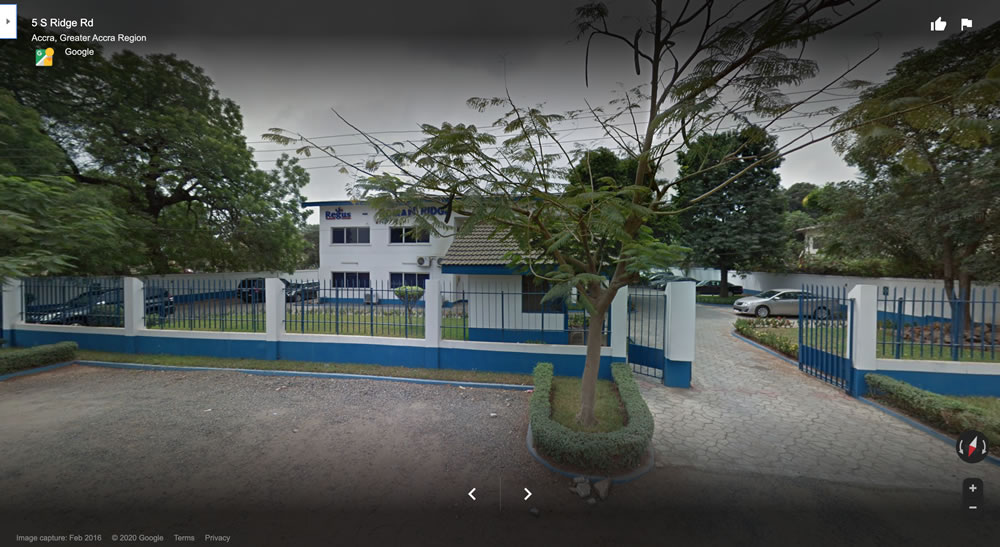
    Google’s office at the airport residential area in Accra, Ghana, sits inside a plain white and blue two-storey building that could do with a coat of paint. Google, which made more than US$ 160 billion in global revenue in 2019, of which an estimated US$ eighteen billion in ‘Africa and the Middle East’, pays no tax in Ghana, nor does it do so in most of the countries on the African continent.

    Google Street View of the building registered as Google's office in Accra

    Google Street View of the building registered as Google’s office in Accra

    It is able to escape tax duties because of an old regulation that says that an individual or entity must have a ‘physical presence’ in the country in order to owe tax.  And Google’s Accra office clearly defines itself as ‘not a physical presence.’ When asked, a front desk employee at the building says it is perfectly alright for Google not to display its logo on the door outside. ‘It is our right to choose if we do that or not’. A visitor to the building, who said she was there for a different company, said she had no idea Google was based inside.

    Facebook is even less visible. Even though practically all 250 million smartphone owners in Africa use Facebook, it only has an office in South Africa, making that country the only one on the continent where it pays tax.

    Brick and mortar

    The physical presence rule in African tax laws is ‘remnant of a situation before the digital economy, where a company could only act in a country if it had a “brick and mortar” building’, says an official of the Nigerian Federal Inland Revenue Service (FIRS), who wants to remain anonymous. ‘Many countries did not foresee the digital economy and its ability to generate income without a physical presence. This is why tax laws didn’t cover them’.

    Tax administrations globally have initiated changes to allow for the taxing of digital entities since at least 2017. African countries still lag behind, which is why the continent continues to provide lucrative gains for the tech giants. A 2018 PriceWaterhouseCoopers report noted that Nigeria, Africa’s largest economy, has seen an average of a thirty percent year-on-year growth in internet advertising in the last five years, and that the same sector in that country is projected, in 2020, to amount to US$ 125 million in the entertainment and media industry alone.

    ‘Their revenue comes from me’.

    William Ansah, Ghana-based CEO of leading West African advertising company Origin 8, pays a significant amount of his budget to online services. He says he is aware that tax on his payments to Facebook and Google escapes his country through what is commonly referred to as ‘transfer pricing’ and feels bad about it. ‘These companies should pay tax here, in Ghana, because their revenue comes from me’, he says, showing us a receipt from Google Ireland for his payments. During this investigation we were also shown an advert receipt from a Nigerian Facebook ad that listed ‘Ireland’ as the destination of the payment.

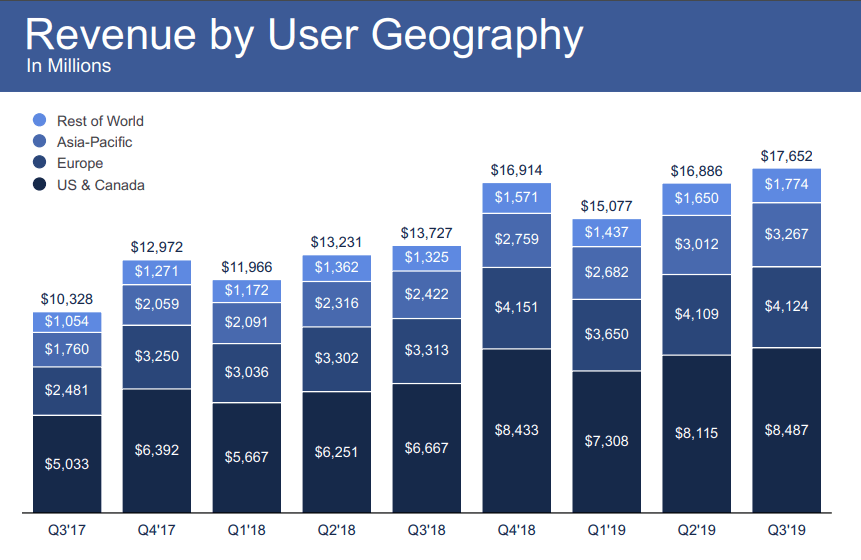
    Like Google, Facebook does not provide country-by-country reports of its revenue from Africa or even from the African continent as a whole, but the tech giant reported general revenue of US$ sixty billion as a whole from ‘Rest of the world’, which is the world minus the USA, Canada, Europe and Asia.

    Facebook revenue by user geography

    Facebook revenue by user geography

    Irish Double

    The specific transfer pricing construction Google and other tech giants such as Facebook use to channel income away from tax obligations is called an ‘Irish Double’ or ‘Dutch Sandwich’, since both countries are used in the scheme. In the construction, the income is declared in Ireland, then routed to the Netherlands, then transferred to Bermuda, where Google Ireland is officially located. Bermuda is a country with no corporation tax. According to documents filed at the Dutch Chamber of Commerce in December 2018, Google moved US$ 22,7 billion through a Dutch shell company to Bermuda in 2017.

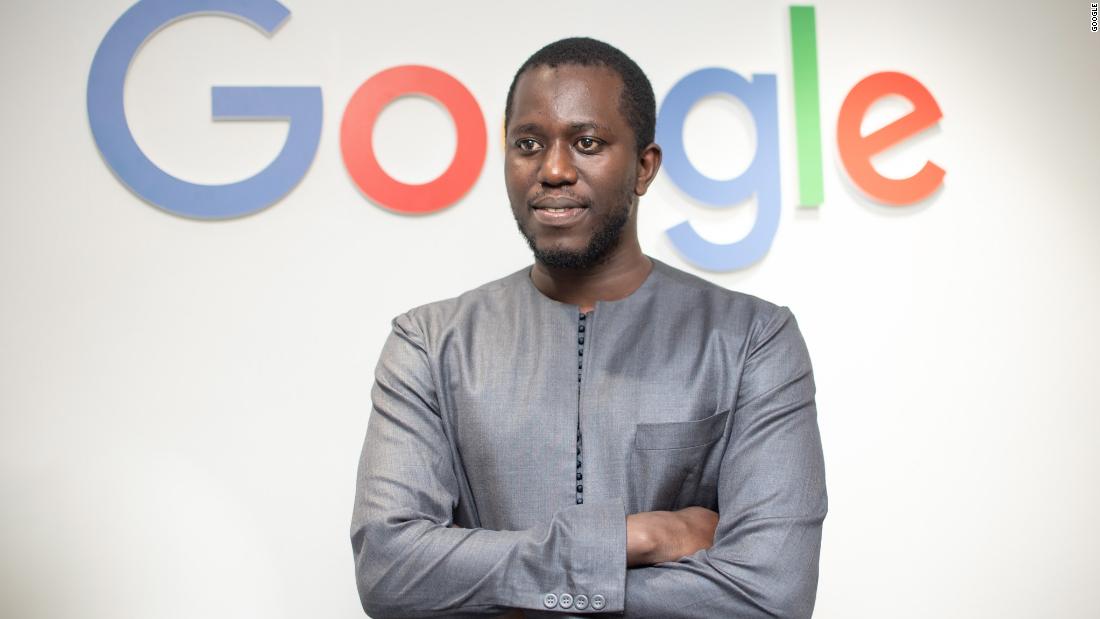
    Moustapha Cisse, Africa team lead at Google AI

    Moustapha Cisse, Africa team lead at Google AI

    An ongoing court case in Ghana — albeit on a different issue — recently highlighted attempts by Google to justify its tax-avoiding practices in that country. The case against Google Ghana and Google Inc, now called Google LLC in the USA, was started by lawyer George Agyemang Sarpong, who held that both entities were responsible for defamatory material against him that had been posted on the Ghana platform. Responding to the charge, Google Ghana contended in court documents that it was not the ‘owner of the search engine www.google.com.gh’; that it did not ‘operate or control the search engine’ and that ‘its business (was) different from Google Inc’.

    Google Ghana is an ‘artificial intelligence research facility’.

    Google Ghana describes itself in company papers as an ‘Artificial Intelligence research facility’. It says that its business is to ‘provide sales and operational support for services provided by other legal entities’, a construction whereby these other legal entities — in this case Google Inc — are responsible for any material on the platform. Google Ghana emphasised during the court case that Ghana’s advertising money was also correctly paid to Google Ireland Ltd, because this company is formally a part of Google Inc.

    Rowland Kissi, law lecturer at the University of Professional Studies in Accra describes Google’s defence in the Sarpong court case as a ‘clever attempt’ by the business to shirk all ‘future liability of the platform’. Kissi is cautiously optimistic about the outcome, though: while the case is ongoing, the court has already asserted that ‘the distinction regarding who is responsible for material appearing on www.google.com.gh, is not so clear as to absolve the first defendant (Google Ghana) from blame before trial’. According to leading tax lawyer and expert Abdallah Ali-Nakyea, if the ‘government can establish that Google Ghana is an agent of Google Inc, the state could compel it to pay all relevant taxes including income taxes and withholding taxes’.

    Cash-strapped countries

    Like most countries, especially in Africa, Nigeria and Ghana have become more cash-strapped than usual as a result of the COVID 19 pandemic. While lockdowns enforced by governments to stop the spread of the virus have caused sharp contractions of the economy worldwide, ‘much worse than during the 2008–09 financial crisis’, according to the International Monetary Fund, Africa has experienced unprecedented shrinking, with sectors such as aviation, tourism and hospitality hardest hit. (Ironically, in the same period, tech giants like Google and Facebook have emerged from the pandemic stronger, due to, among others, the new reality that people work from home.)

    With much needed tax income still absent, many countries have become even more dependent on charitable handouts. Nigeria recently sent out a tweet to ask international tech personality and philanthropist, Elon Musk, for a donation of ventilators to help weather the COVID 19 pandemic: ‘Dear @elonmusk @Tesla, Federal Government of Nigeria needs support with 100-500 ventilators to assist with #Covid19 cases arising every day in Nigeria’, it said. After Nigerians on Twitter accused the government of historically not investing adequately in public health, pointing at neglect leading to a situation where a government ministry was now begging for help on social media, the tweet was deleted. A government spokesperson later commented that the tweet had been ‘unauthorised’.

    Cost to public

    The criticism that governments often mismanage their budgets and that much money is lost to corruption regularly features in public debates in many countries in Africa, including Nigeria. However, executive secretary Logan Wort of the African Tax Administration Forum ATAF has argued that this view should not be used to excuse tax avoidance. In a previous interview with ZAM Wort said that ‘African countries must develop their tax base. It is only in this way that we can become independent from handouts and resource exploitation. Then, if a government does not use the tax money in the way it should, it must be held accountable by the taxpayers. A tax paying people is a questioning people’.

    ‘A tax paying people is a questioning people’

    Commenting on this investigation, Alex Ezenagu, Professor of Taxation and Commercial Law at Hamad Bin Khalifa University in Qatar, adds that in matters of tax avoidance by ‘popular multinationals such as Facebook and Google, it is important to understand the cost to the public. If (large) businesses don’t pay tax, the burden is shifted to either small businesses or low income earners because the revenue deficit would have to be met one way or another’. For example, a Nigerian revenue gap may cause the government to increase other taxes, Ezenagu says, such as value added tax, which increased from five to seven and a half percent in Nigeria in January. ‘When multinationals don’t pay tax, you are taxed more as a person’.

    Nigeria has recently begun to tighten its tax laws, thereby following in the footsteps of Europe, that last year made it more difficult for the digital multinationals to use the ‘Irish Double’ to escape tax in their countries. South Africa, too, in 2019 tailored changes to its tax laws in order to close remaining legal loopholes used by the tech giants. These ‘could raise (tax income) up to US$ 290 million a year’ more from companies like Google and Facebook, a South African finance source said. With US$ 290 million, Ghana’s could fund its flagship free senior high school education; Nigeria could fully fund the annual budget (2016/2017 figures) of Oyo, a state in the south west of the country.

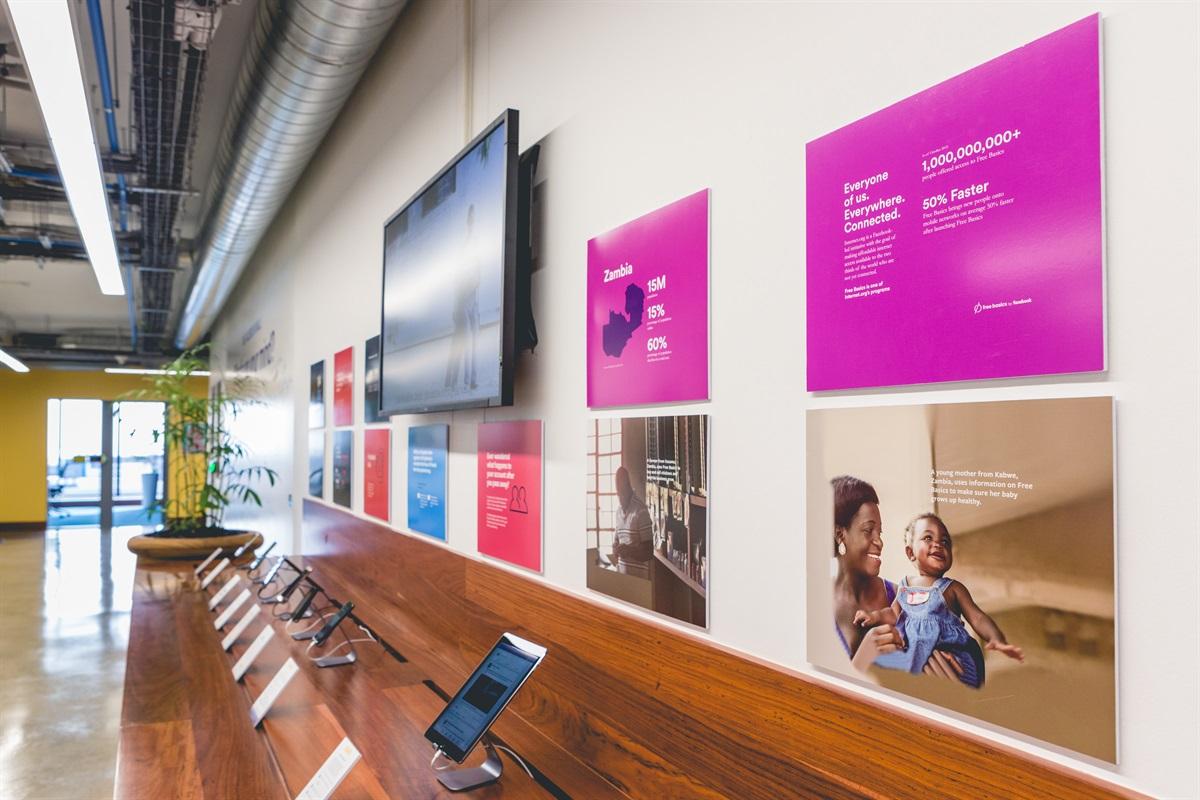
    Interior view of the Facebook office in Johannesburg, South Africa

    Interior view of the Facebook office in Johannesburg, South Africa

    Waiting for the Finance Minister

    Nigeria’s new Finance Act, signed into law in January 2020, has expanded provisions to shift the country’s focus from physical presence to ‘significant economic presence’. The new law leaves the question whether a prospective taxpayer has a ‘significant economic presence’ in Nigeria to the determination of the Finance Minister, whose action with regard to the tech giants is awaited.

    In Ghana, digital taxation discussions are slowly gaining momentum among policy makers. The Deputy Commissioner of that country’s Large Taxpayer Office, Edward Gyamerah, said in a June 2019 presentation that current rules ‘must be revised to cover the digital economy and deal with companies that don’t have traditional brick-and-mortar office presences’. However, a top government official at Ghana’s Ministry of Finance who was not authorised to speak publicly stated that, ‘from the taxation policy point of view, the government has not paid a lot attention to digital taxation’.

    He blamed the ‘complexity of developing robust infrastructure to assess e-commerce activity in the country’ as a major reason for the government’s inaction on this, but hoped that a broad digital tax policy would still be announced in 2020.” Until the authorities get around to this, he said he believed that, ‘Google and Facebook will (continue to) pay close to nothing in Ghana’.

    Comment

    Google Nigeria did not respond to several requests for interviews; Google Ghana did not respond to a request for comment on this investigation. Neither entities responded to a list of questions, which included queries as to what of their activities in the two countries might be liable for tax, and whether they could publish country by country revenues generated in Africa. When reached by phone, Google Nigeria’s Head of Communications, Taiwo Kola Ogunlade, said that he couldn’t speak on the company’s taxation status. Facebook spokesperson Kezia Anim-Addo said in an email: ‘Facebook pays all taxes required by law in the countries in which we operate (where we have offices), and we will continue to comply with our obligations’.

    Note: The figure of eighteen billion US$ as revenue for Google in ‘Africa and the Middle East’ over 2019 was arrived at as follows. Google’s EMEA figures for 2019 indicate US$ 40 billion revenue for ‘Africa, Europe and the Middle East’ all together. According to this German publication, Google’s revenue in Europe was 22 billion in 2019This leaves US$ eighteen billion for Africa and the Middle East.

    This article was first published by  ZAM Magazine.

  • 70-Year Old Retiree Finds Her Sh1.3M Pension Funds Emptied At Standard Chartered Bank

    70-Year Old Retiree Finds Her Sh1.3M Pension Funds Emptied At Standard Chartered Bank

    A 70 year old  Stanchart account older woke up in shock after her account 0100319393600 (Harambee Avenue branch) with Sh1.370,000 was emptied in a suspected internal fraud.

    Taking on his social media to highlight the fraud, the woman’s son on the whistleblower page Buyer Beware, expressed his disgust on the unfortunate event that now threatens the woman who’s been retired for over 15 years in sinking to extreme poverty.

    “My mum who is 70 years, and whose account is account 0100319393600 (Harambee Avenue branch) found her account emptied of her pension funds of Kes. 1,370,000 on 4th September, 2020, through suspected internal collusion. Whenever she has tried to contact Stanchart, they refuse to talk to her. Keep note that this is a 70 year old who retired over 15 year ago and who is now financially destabilized and has to operate by borrowing funds to survive from relatives, while she had organized her finances. Where is the fiduciary responsibility for this pensioner! Does Stanchart have a heart or even care?” Reads the post.

    The screenshot.

    Another user Rube Kei commented, “in my 20yrs banking experience I joined Stanchart after Absa, done almost all banks except Co-op and my two yrs at Stanchart have only had quick salary clearance as the only positive. I missed a business deal because of their delays to process a loan as promised, another time was travelling and was applying for credit card and travel insurance the buggers messed me big time. I regret ever contemplating them after being victim of the September massive fraudulent online banking cases.and they are so non chalant about it. Just PR gimmicks of cases are thoroughly investigated.was waiting for their India based team to call as promised then pwafff they send an email absolving themselves of blame yet nobody called. Been asking for log in trail,they snob ALL forms of communication.

    “Sometime in 2016, I have opened an account from thank bank and the employee made my account kind of shared account and he created second debit card. he made mistake and they have sent the second card to my posta. i have complained to the bank and they did nothing that bank are thieves also equity i heard there is some problem though i cannot proof that or have seen someone.” Hamza Abdirahman also reacted.

    “Personally after they gave my partner my account details…statements..what goes in and out I had to opt out.i went there so manager at harambee avenue wrote letter and emails as advised however invain..since then I closed all accounts….I was really devasted and frustrated.” Wrote Cess Mwowe.

    “So there is a day they woke up n deactivated my account without my consent, have you ever gone to the supermarket to buy stuff, try swiping your card n you are told the acc is invalid?I think that was a red flag but I had not heard anything negative from them but now am more than convinced cz my case is still being looked into 4 months later. It was a whole branch manager who deactivated my account, sameer branch which is not even my branch. I went there to launch my complaint n she was like I was there in February n requested them to deactivate the account, I had not visited any bank since last year September,I requested for CCTV footage but I gauze they are still looking into it. They apologised n I was ok.” Juddie Mossie commented.

    ”I bank with standard chartered and am not considering closing my accounts show me a bank without negativity attached to it, every place has protocols. It’s sad she lost her money but am sure she’ll get sorted.” Wrote Lilian Lewis.

    “Two weeks ago a lady lost money at stanchart after receipt of a phising email about changing passeord or something,let them pay this pensioner because they did not protect customer data, how were the customer emails acquired by third party so that the hackers could send the phising emails? Inside job it is!”Essie Tiko reacted.


    The bank recently laid off over 200 employees as Covid-19 continues to hit hard businesses and livelihood.

    Employees in the management roles and unionisable staff were among the people who were affected in the restructuring exercise in line with the bank’s digitization strategy which began in 2016.

    The lender said that employees sent home represented 14.3 per cent of the bank’s workforce of 1,397.

    The bank also upgraded its internet, video and mobile banking services as well as its Automated Teller Machines (ATMs) in its effort to transition to digital banking services, which have significantly reduced visits to banking halls and gained more prominence with the Covid-19 pandemic.

    “In the circumstance, the bank intends to declare redundant the employees whose roles fall off as a result of the restructuring.

    “The impacted employees who are both in management and unionisable cadre are 200 in the retail banking, corporate banking, operations, technology and support departments,” the statement read in part.

    The bank acted on the layoff exercise after the expiry of a one-year period in which the organization was barred from firing its employees following the merger of NIC and CBA.

    It has already sent notices to affected employees and will take effect at the end of this year.

    The employees have been offered one month’s salary in lieu of notice, pay for accrued leave days at the time of termination and severance pay at the rate of one and a half months per year of service.

    The bank’s net profit has significantly dropped by 31.2 per cent to Sh3.2 billion due to Covid-19 pandemic that has hit hard the economy.

    Standard Chartered Bank Kenya is the second bank in the country to fire employees, after the NCBA Group sent employees a few months back.

  • Police, Immigration Looking For Filipino Woman For Deportation

    Police, Immigration Looking For Filipino Woman For Deportation

    A Filipino woman is hiding after learning she is supposed to be deported over claims of flouting immigration rules in the country.

    Ms Gala Liane Beth is missing since August 29, 2020 when she was to be deported to the Philippines for flouting Immigration rules. Her employer in Japan who she had a contract with in Kenya had reported her to the Directorate of Criminal Investigations claiming she had not remitted their Sh40 million she had obtained after selling their assorted cars.

    Ms Beth had come to Kenya in February 2019 as a purchasing and shipping manager with motor dealer Orange Garage PTE Limited in Nairobi. While in Kenya, she resigned from Orange Garage and formed Mottospot Limited and started to liaise with Japan based World Navi Company Limited in getting vehicles from Japan and selling them in Kenya. She however terminated her contract with World Navi on April 1, 2020.

    “On 1 April 2020 you served our client with one month’s employment termination notice indicating that you would cease being our client’s employee.”
    “This was after you had blatantly breached the oath of confidentiality by stealing and selling our client’s customer database and pricing system to IBC Auto who is our client’s competitor,” said lawyer Paul Mwangi for World Navi.

    The firm also reported the matter to the DCI complaining about her conduct.

    World Navi wrote to the immigration informing them she had resigned from the agency saying she had left on April 30, 2020 saying they were not responsible for her presence in Kenya.

    Director Stanley Makombe said they are still hoping she would be deported to face justice in her country as per the immigration rules.

    “We still hope to see her answer to her case. She defrauded a company of millions of shillings,” he said.

    It was on the strength of the complaint to the immigration that Ms Beth’s work permit was canceled. She was declared a persona non grata. According to immigration officials, was in August detained for deportation and she promised to buy her own ticket and leave after being tested for Covid-19 pandemic.

    “Instead, she bought a ticket and left for Tanzania where she stayed for a month before coming back to Kenya. We understand she is somewhere in Mombasa,” said an official aware of the probe.

    When she arrived back, she had a new Philippine passport showing it would expire in 2030. She is yet to be found. Our efforts to reach her were futile as her mobile phones had been switched off.

    Director General of immigration Alex Muteshi said Ms Beth should not engage in any business in Kenya.

    “She should stay away from kenya because she is a prohibited immigrant,” said Muteshi.
    Officials said she had been listed to the prohibited immigrants’ list.

    Central Bank of Kenya is also investigating how and why she received Sh10 million from Singapore in July. The money is being held at their DTB Bank account as the probe on possible laundering goes on.

  • Geneva-Based Global Initiative Affirms Money Laundering Report Against Somalia Remittance Firm

    Geneva-Based Global Initiative Affirms Money Laundering Report Against Somalia Remittance Firm

    Geneva-based Global Initiative Against Organised Crime (GI-TOC) has refuted allegations that their report on money laundering was inaccurate according to accusations by Somalia remittance firm Amal Express. Published in September, the report claimed a number of Hawala service providers including Amal may have allowed transactions to settle payments to individuals sanctioned by the US Treasury. Those payments, amounting to $40,000 may have been used to pay illegal arms dealers in Yemen.

    The report titled “Following the Money”, authored by former UN Expert panellist for Somalia, Jay Bahadur, analysed transactions for money transfer operators (MTOs) amounting to $3.7 million between 2014 and 2020, sent via MTOs Iftin, Amal and Dahabshiil.

    It detected two payment batches of about $40,000 in total, which the operators should have stopped as per US sanctions on the recipient individuals. And Somalia’s port city of Bossaso in Puntland state was the origin of most of the illegal payments to arms sellers in Yemen.

    No suspicious transactions were found on the part of Dahabshiil while Amal was particularly accused of handling cash sent to Abdulrab Salem al-Hayashi, who was in October 2017 sanctioned by the US Treasury.

    Somali money transfer companies moved more than $3.7 million in cash between suspected weapons traffickers in recent years, including to a Yemeni under U.S. sanctions for alleged militant links, according to the report.

    The findings by the Geneva-based research group further complicated attempts by Somali transfer companies to retain access to international banking services.

    Though they provide a lifeline to millions in the anarchic Horn of Africa nation, few banks will do business with them because of the risk of falling foul of international transparency and anti-money laundering regulations.

    Asked about the report, the Central Bank of Somalia, which regulates money transfer firms, said it was unaware of the transfers but would investigate and was in general making progress in countering terrorism financing.

    Contacted by Reuters, the four companies said they adhered to global “know your customer” norms, although some conceeded it was difficult since Somalia had no national identity card. The firms also said they used specialist third-party databases of internationally-sanctioned individuals.

    The Global Initiative analysed nearly six years of transaction records from the city of Bossasso, matching them with mobile phone records provided by security sources and database searches.

    The report identified 176 transactions from the last six years that it said appeared to be linked to suspected weapons dealers in Somalia and Yemen. Nearly two-thirds were over the $10,000 threshold that should trigger an automatic report to regulatory authorities.

    They include two transfers totalling nearly $40,000 to numbers linked to Sayf Abdulrab Salem al-Hayashi after the U.S. Treasury sanctioned him in 2017 for allegedly providing weapons and financial support to al Qaeda in the Arabian Peninsula and Islamic State in Yemen, the report said.

    Somalia-based Amal Express and Iftin Express handled the transactions, which used different combinations of his name and nickname, the report said.

    The report did not find any instances where the other two companies, Dahabshiil and Taaj, made transfers to any sanctioned individuals. But it noted instances where individuals were able to make transfers with them using multiple names and numbers, a violation of Somali law.

    One man used 24 names between the four companies, the report said.

    All four companies said they did not allow customers to use multiple identities or phone numbers. Dahabshiil also said it has stopped doing transfers between Somalia and Yemen.

    The companies did not say whether the six men named in the report are in their databases.

    Apart from al Hayashi – the only one under U.S. sanctions – three others whose names appear in the suspect transactions were identified as suspected arms dealers in public reports by the United Nations panel of experts on Somalia.

    Two were flagged – one as a proxy for al Hayashi, and one as an arms trafficker – in a confidential annex to a 2018 report by the same panel.

    Few Somalis have bank accounts. Money transfer companies – often known as hawalas – are vital to economic activity and delivering humanitarian aid.

    Cutting companies off from banking is not the answer, said the report’s author, Jay Bahadur, former head of the U.N. panel of experts. “Excluding companies from international banking services will punish families that rely on them and drive financial flows underground,” he said.

    But he said companies must ensure their agents follow anti-money laundering laws and Somali authorities must improve enforcement.

    “Financial regulatory bodies in Somalia are understaffed, under-resourced, and aren’t trusted by domestic financial institutions,” he told Reuters. “They receive limited reporting data and aren’t able to take much action with what they do receive.”

    Abdirahman M. Abdullahi, governor of Somalia’s central bank, said cooperation was improving. Somalia is working with the World Bank on developing a national identity card, he told Reuters.

    He said arrests have been made for breaking anti-money laundering and terrorism financing law, citing the case of a trader convicted in August of running an unregistered bank.

    In rebuttal, Amal rejected claims it transferred money to such an individual and refutes a copy of the receipts published in the report.

    “The document was not authentic. It was a very poor imitation of our real receipts and had several inconsistencies and formatting mistakes. We proved [this] to the author of the report when he sought to establish its authenticity, before the report’s publication,” the CEO said.

    “As we speak, auditors from the Somalia Central Bank are in Bossaso and they have been given adequate access to our systems to verify for themselves that our systems have stringent checks,” Jama told the Nation when asked about the company’s know-your-customer rules.”

    On Monday, GI—TOC said it stands by the accuracy of the report’s findings “and the authenticity of the remittance slip disputed by Amal Express.”

    “The research process involved the years-long collection of hundreds of MTO remittance receipts, including 63 relating to transactions conducted through Amal Express.

    “The remittance receipts were supplied by multiple independent sources who were well-placed to guarantee their authenticity,” the organisation said in a statement.

    GI-TOC said it contacted Amal to comment on specific transactions with question marks but “received no subsequent communication from Amal Express either prior to or following the publication of the report.”

    The organisation said there was no evidence the money transfer operators directly violated UN sanctions on arms embargo, but may have failed to flag questionable payment to an individual sanctioned by the US Treasury.

    Jay Bahadur the organization’s investigator further added on his recital to the Nation’s publication, “I should also add that the neither author of this “article”, @agmutambo, nor anyone else at @NationAfrica, bothered to contact me or GI-TOC for comment prior to publication. Just a two-bit hack job.”

    In affirming his assertion of authenticity of the slips that were refuted by Amal, Jay said.

    Jay further hinted at his hesitance in the welcomed audit by Amal casting huge doubts on the genuineness of the Somalia’s banking authority in investigating the firm.

    The investigator also questioned the firm’s legal department’s grasp of the law in the face of exposed violations.

    Contrary to Amal’s claim that he didn’t contact them, the investigator took it personal by detailing his efforts to reach out to the management of Amal.


    Somalia’s Hawala system has been influential in reaching millions of people who remain largely unbanked. According to local regulations in Somalia, individuals can send or receive up to $300 without undergoing rigorous background checks through mobile payments.

    Many Somalis receive payments sent via MTOs through their mobile phones even though MTOs and mobile money services are run by different entities.

    But Somalia doesn’t have national ID data and the Global Initiative report claimed some senders and receivers may have used variations of their names to dodge scrutiny.

    The organisation did admit that the complex number of networks involved in wiring and final payment of the money may make it difficult for parent companies to detect errant partners.

    “As a result, parent companies may often be unaware of lapses in anti-money laundering/countering the financing of terrorism (AML/CFT) compliance amongst its agents or franchisees.

    “GI-TOC stands ready to meet with representatives of Amal Express and/or Iftin Express to share the details of the report’s findings and its recommendations on addressing AML/CFT compliance gaps.”

    Amal officials said they’re cooperating with authorities and use a system called World-Check to flag transactions involving persons listed as high risk.

    The World Bank estimates that just about 15 per cent of the 15.5 million Somalis have bank accounts, leaving the Hawala system as the main service for transmitting the estimated $1.3 billion sent by the Somali diaspora every year.

    It advised the Somali government to begin developing a robust identification system to eliminate the loopholes.

    “An effective identification system would help narrow the significant financing gap in Somalia and address de-risking issues,” it said in a report titled “Rapid Growth in Mobile Money”.

    “Better mobile money regulation and a robust identification system are closely connected and need to be developed in parallel.”

    HAWALA

    Hawala has been faulted as the invisible financing system of form of money dealing & funds transfer that spans the globe. It is one of the channels for Terrorists funding in.

    Investigations have found that hawala money has reached both terrorists and separatists from abroad. The highest remittances have been from Saudi Arabia, United Kingdom and, of course, Pakistan.

    How It Works

    The racketeers procure foreign exchange abroad from different sources & arrange payments in targeted country through their henchmen or paid employees.

    It happens the other way also, viz, certain persons in the country specialize in arranging payments abroad & either by themselves or through their alias in targeted country arrange payments in currency equivalent to the foreign exchange which had been procured by their men abroad.

    Often a code-word is provided to both parties which the sender conveys to the recipient anywhere in the world and the amount can be collected after disclosing the code-word.

    The terror groups still find hawala to be their best bet since it is safer compared to legal banking. It is very difficult to crack this trail as the persons involved in the transfer change after every two or three transactions.

    Latest investigations by UN Security Council also implicates Amal. The investigations found that Al-Shabaab generated approximately $13 million in  four case studies alone. In only 10 weeks, the zakat account controlled by Al-Shabaab showed deposits of $1.7 million, with the entire balance being transferred onward during that period.

    The investigations found that Al-Shabaab generated approximately $13 million in these four case studies alone. In only 10 weeks, the zakat account controlled by Al-Shabaab showed deposits of $1.7 million, with the entire balance being transferred onward during that period.

    Despite territorial losses and increased aerial strikes targeting the group, Al-Shabaab operates multiple checkpoints across Somalia, extorts businesses in numerous cities and holds multiple bank accounts to facilitate its system of “taxation”. The Panel assessed that the group is in a strong financial position and is generating a significant budgetary surplus, investing these funds in various enterprises, including property purchases and market investments in Mogadishu.

    The Federal Government of Somalia is developing a financial disruption plan to address Al-Shabaab’s systematic use of domestic financial systems. The Panel’s systematic approach to understanding Al-Shabaab’s financial systems may support disruption programming. The current Somali financial sector is limited to eight reporting banks.

    The financial Reporting Centre notes that it receives reports from eight banks (Amal Bank, Amana Bank, Dahabshil Bank, Daryeel Bank, International Bank of Somalia, My Bank, Premier Bank and Salaam Somali Bank) while the Central Bank of Somalia reports that there are currently 11 licensed banks.
    2 Registration fee ranges from $200 t

    As Somalia transitions to formal financial systems, all operators can expect to be exploited by Al-Shabaab, which has consistently operated a flexible business model and is likely institution agnostic. The Panel’s investigations focused on the manner in which Al-Shabaab operates, detailing specific organizational mechanisms that serve to enable a fuller understanding of this exploitation.

    According to a UN Security Council report, Somalia’s Islamist insurgents are moving millions of dollars through the formal bank system and appear to be investing in businesses and real estate offering a rare glimpse into their finances.

    The report included details on two bank accounts held at Salaam Somali Bank, founded in 2009 as part of the Hormuud group of companies, raising questions about Somalia’s capacity to enforce a 2016 law aimed at curbing terrorist financing.

    The bank said the panel had not provided them details, so it was unable to verify. “The Panel’s report makes no allegation of misconduct against Salaam Somali Bank,” it said in a statement. “There has also been no instance where Salaam has opened an account for a sanctioned individual or entity.”

    Somalia’s Financial Reporting Center, which oversees compliance laws against money laundering and terror financing, said it is investigating the allegations against Salaam.

  • Why Kenyan Billionaire Humphrey Kariuki Is Likely To Lose His Cyprus Citizenship This Time

    Why Kenyan Billionaire Humphrey Kariuki Is Likely To Lose His Cyprus Citizenship This Time

    Cyprus has announced the suspension of a “golden passport” scheme to sell citizenship to wealthy investors following a sting by investigative journalists.

    Al Jazeera’s investigative unit filmed high-ranking Cypriot politicians, including the parliamentary speaker Demetris Syllouris, promising to support the sale of a Cypriot passport to representatives of a fictitious Chinese businessman with a money-laundering conviction.

    The citizenship-through-investment scheme, which has been in operation in its current form since 2013, allowed foreign individuals to invest €2.5m (£2.26m) in the country in exchange for citizenship, raising a reported €7bn to sustain the country’s sclerotic economy.

    But it has for years been the target of ferocious criticism by anti-corruption campaigners, who have repeatedly warned that such schemes can be used by criminal individuals and organisations to launder large sums of corrupt funds into property.

    The Twitter account of the presidency of Cyprus announced on Tuesday that the scheme in its current form would be abolished, citing abuse of the scheme’s provisions as well as historic weaknesses.

    Undercover operatives from Al Jazeera posed as representatives of an invented Chinese businessman convicted of money-laundering. Under the rules of the scheme, such a conviction should have disqualified the fake businessman from applying.

    However the reporters were repeatedly told that the rule could simply be circumvented or ignored if sufficient cash were invested.

    One registered service provider claimed to have previously secured a Cypriot golden passport for an individual who had been jailed for two years for corruption, and suggested that the fake businessman alter his name to apply under a new identity.

    “Of course we can change his name,” the service provider was reported to have said. “This is Cyprus.”

    Syllouris, the president of the house of representatives, was filmed saying: “You can tell him that he will have, without mentioning my name or anybody else’s, full support from Cyprus. At any level – political, economic, social, everything – OK?”

    Both men later claimed they had been playing along with the Al Jazeera reporters in order to elicit information that they would later report to the authorities.

    On Tuesday Syllouris said he would withdraw from carrying out his duties pending an investigation by the government, adding that he “would like to publicly apologise for this unpleasant image conveyed to the Cypriot public” and suggesting the report was “staged and fragmented”.

    On Monday a spokesperson for the European commission said the report had been watched “with disbelief” in Brussels and that the organisation was considering infringement proceedings.

    Brussels representatives have regularly expressed disquiet about cash for passport schemes in recent years, both over the risk of their abuse by money launderers and because citizenship from one EU member state grants access to all 27 others.

    “President (Ursula) von der Leyen was clear when saying European values are not for sale,” said the spokesperson.

    Sophie in ’t Veld, a Dutch member of the European parliament, told Al Jazeera the undercover footage “fully exposes the citizenship by investment schemes for what they really are: a cover operation for bringing criminals and criminal money into the EU”.

    In 2017 the Guardian reported on leaked files from the Cypriot golden passport scheme revealing that billionaire Russian oligarchs and Ukrainian businessmen accused of corruption were among those to whom Cyprus had sold citizenship.

    Also in the files was Rami Makhlouf, the businessman and cousin of ther Syrian president Bashar al-Assad, described in leaked US diplomatic cables as a “poster-boy for corruption”. Makhlouf’s Cypriot citizenship was later revoked following the outbreak of the Syrian civil war.

    Last November, Cyprus was forced to announce that 26 individuals would have their golden passports rescinded after an investigation by Reuters discovered that several Cambodian politicians, including the chief of police and finance minister, had used the scheme.

    Other countries to run controversial “golden visa” or “golden passport” schemes include the UK, Portugal and Malta.

    A separate leak to the Guardian identified a Brazilian tycoon convicted of corruption as part of the Lava Jato scandal as one of the investors to have applied for a golden visa from Portugal. In 2018 the British government announced the UK’s “tier 1 investor” visa scheme would be suspended over corruption concerns, only for the suspension to be dropped less than a week later.

    At the same time, Cyprus’ parliamentary speaker has resigned after an undercover news report allegedly caught him on tape promising to help circumvent the country’s rules on granting citizenship to foreign investors.

    Demetris Syllouris had initially decided to stay on as speaker but abstain from his duties until investigations ran their course.

    The scandal erupted after news outlet Al Jazeera’s investigative unit used hidden cameras to show Syllouris and others promising to a man posing as a representative for the Chinese investor to find ways of skirting Cyprus’s rules on buying citizenship.

    Under Cyprus’s “golden passport” program, a foreigner can get citizenship by investing at least 2.5 million euros ($2.93 million) in the country. Such programs, which exist in several small EU countries, have raised broad concern about money laundering and other crimes.

    The program has attracted many foreigner investors because a Cypriot passport automatically grants its holder access to the entire 27-member European Union. Around 4,000 Cypriot passports have been issued to investors under the program, generating more than 7 billion euros ($8.25 billion).

    The European Commission said it is looking into launching infringement proceedings against Cyprus.

    The Cypriot government had defended the program while admitting to “mistakes” it said it rectified. New laws tightened the vetting rules and made it easier to revoke citizenship from investors found to have lied about previous criminal convictions.

    But the investigative report was the coup-de-gras for the program.

    An independent committee is conducting a probe into thousands of applications that were made since 2007. The investment program had gathered pace after 2013 when a financial crisis nearly brought Cyprus to bankruptcy.

    The latest development leaves shrewd billionaires like Kenya’s Humphrey Kariuki exposed and likely to have their citizenship reviewed.

    The Kenyan billionaire whom had been granted a Cypriot passport is under investigation for tax evasion by the authorities.

    Detectives questioning Humphrey Kariuki over tax evasion were surprised to find out he is also a citizen of Cyprus, something he was obliged to disclose under the country’s laws.

    According to investigations, Kariuki’s passport had been issued in May, 2016. At the time of the application, Kariuki had given Larnaca as his place of residence.

    The issue emerged after the businessman was summoned by police following the discovery of smuggled ethanol, 312,000 litres of illicit liquor and 21 million fake Kenya Revenue Authority (KRA) stamps at the Thika-based African Spirits Limited on January 31, 2019.

    Kariuki’s London-based lawyers said he is a “venture investor” at the firm and holds no directorship.

    Mr Kariuki and a number of directors from African Spirits Limited are currently facing a Kenyan court over evasion of tax amounting to Sh41 billion.

    Mr Kariuki, Wow Beverages directors Stuart Gerald Herd and Robert Thinji Muriithi, and Africa Spirits Directors Peter Njenga Kuria and Geoffrey Kaaria Kinoti Mbombua are facing a total of 21 counts of tax evasion and being in possession of counterfeit excise duty stamps.

    His Janus Continental Group (JCG) has business interests in a number of countries on energy, real estate and hospitality.

    In Kenya, Mr Kariuki is the owner of the luxurious Mt Kenya Safari Club in central Kenya and the Hub Mall in Nairobi’s upmarket Karen, and is a shareholder of Dalbit Petroleum, among others.

    While a Cypriot passport enables one to do business throughout the European Union, since Cyrus is a member, its investor citizenship has of late been criticised by other EU members and Transparency International, who fear it could become a “gateway to Europe for corrupt people and money laundering”, according to TI’s report released in August.

    As a result, Cyprus has been under pressure from the EU to tighten entry of foreigners into the scheme.

    Mr. Kariuki and his wife Stella Nasike holds dual citizenship with Cyprus.

    In 2001, his company Crucial Properties Ltd received 2bn Kenyan Shillings (around €17.8m) through Charterhouse Bank.

    The transfer raised the attention of local authorities and the US Federal Bureau of Investigations after it was wired from Liechtenstein.

    The Kenyan Central Bank froze the account, demanding more information on the money’s origin.

    Kariuki claimed at the time the unusually large transfer was legitimate and was part of a $150m (Sh11bn) package the company had negotiated with international lenders to be invested in Kenya.

    On May 10, 2001, judicial authorities lifted the freezing order, allowing Kariuki to withdraw Sh1.6bn before the attorney-general could appeal the order.

    No further investigation was conducted into the withdrawal, citing the attorney-general’s delay in presenting his application to court.

    According to Cyprus media, Kariuki had been listed amongst 26 controversial investors whom had been blacklisted for citizenship revocation in 2019 following an uproar. The decision was announced by Interior Minister Constantinos Petrides.

    Along with Ndegwa and his wife, the list names included Malaysian Jho Taek Low wanted in connection with alleged financial crimes and eight Cambodians closely connected to the country’s authoritarian regime.

    These include Im Paulika and her husband Aun Pornmoniroth who is Cambodia’s finance minister and Choeung Sopheap and her husband Lao Meng Khin, who is an MP. Cambodian leader Hun Sen’s niece Hun Kimleng and her husband who is Cambodia’s national police chief and their two daughters are also on the list.

    Three Russians, their spouses and children are also among the 26.They are: Vladimir Stolyarenco, his wife and daughter, Alexander Bondarenko, his wife and two sons and Oleg Deripaska, his son and daughter.

    Chinese national Zhang Shumin, reportedly linked to a gold scam, his wife and three children are on the same list.

    At the time, Kariuki having been put under government scrutiny for revocation, took to Twitter on to defend himself.

    “I wish to inform you of development regarding my Cypriot passport which has fueled inaccurate speculations in media reports, as well as on social media platforms,” he posted.

    “Recently, the government of Cyprus has made the decision to review all passports under the Cyprus Investment Scheme before 2018.

    “The audit will be led by an internal committee, set up by the government, which will be in charge of reviewing these individual passport awards to ensure they met regulatory requirements for the scheme applicable at the time of approval.

    “While I understand my passport is part of the audit process, having been granted before 2018, I have no doubt that my application is fully compliant with the regulatory requirements.

    “As a law-abiding citizen, I will fully support the mandated process in Cyprus with any requirements or further information needed to undertake the review swiftly.”

    Its only a matter of time before the Cyprus government makes public their crucial decision on the controversial passport nightmare.

  • Equity Bank’s Founder Peter Munga, Rai Family Leads Pool Of Cartels Who Won Kenya Power Poles Tender

    Equity Bank’s Founder Peter Munga, Rai Family Leads Pool Of Cartels Who Won Kenya Power Poles Tender

    Kenya Power in February said in tender documents that it was seeking 76,657 treated wooden poles from local firms to connect more consumers to the national grid.

    This was to complement concrete poles.

    Among targeted areas for further connections are Nairobi, Nyeri, Meru, Embu, Thika, Kericho, Kisumu, Eldoret, Namanga, Malindi, Lamu and Garissa.

    In a U-Turn announcement, the company had announced the search for commercial tree farmers to supply mature logs that will be processed into electricity poles.

    “The Kenya Power & Lighting Company Plc invites bids from eligible tenderers for supply of treated wooden poles. Interested eligible tenderers may obtain further information from the general manager, supply chain,” Kenya Power said.

    Unshockingly, Kenya had put a ban on logging in February 2018 following a public outcry over diminishing water levels in the country’s key rivers. The utility firm restricted the tender to local manufactures of wooden poles with outstanding order balance of less than 50 percent of the contracts with the power monopoly firm.

    Kenya Power is going to spend Sh873.73 million in paying firms that won tenders to supply wooden poles while Sh324.81 million will pay firms to deliver concrete poles.

    While details of the contract is scanty, the budget for this tender, in 2013, it was paying Sh8,000 for a 10 metre pole, Sh10,000 (11 meters) and Sh12,000 (12 metres). In this particular tender, the poles were to be supplied in four lots of 49,566 poles, 6,289 poles, 4,412 poles, 160 poles and 16,230 poles with height ranging between 10 and 18 metres.

    According to new investigations done by The Nation, the winners of the tenders have been unveiled as tycoons and well connected individuals in the country.

    Equity Bank founder Peter Munga leads the pack. His Greystone Industries Ltd, owned by Mr Munga and Kiewa Group Ltd, which is owned by his family, has won a tender worth Sh35 million to supply concrete poles. Mr Munga’s concrete poles plant was established in 2015, through a Sh1 billion investment commissioned by DP William Ruto. It sits on a 30-acre piece of land.

    Munga himself is not new to controversies, over the past few the Bank’s founder has been embroiled in a bitter court battle with his friend turned enemy Joseph Muturi Kamau.

    The battle involves Sh. 150 million which Kamau says Munga has refused to pay him.

    Kamau alleges that since 2011, Munga has refused to pay him and his firm Bethany Vineyards for three million Transcentury shares worth Sh. 150 million that he purchased from the firm. Kamau sold the shares in 2011 at Sh. 50 each to Mr Munga after failing to settle a Sh. 40 million loan he took from Equity Bank. The deal was to see Mr Munga clear Mr Kamau’s loan and remit the balance to him and his firm.

    However, court papers say that Munga only cleared the loan balance then refused to remit to him or Bethany Vineyards the balance.

    At one point during the court fight, Munga is said to have asked to be allowed to settle the case with Kamau outside the court. He offered to pay Kamau Sh. 90 million. However, Kamau declined the offer and returned to court asking for the full amount.

    Also in a different matter, Munga was mentioned in a whistleblower report in what nearly collapsed Housing Finance Bank. Munga was alleged to have liaised with the then bank’s CEO Frank Ireri who’s also his in-law to acquire a dangerous unsecured loan.

    Court filings showed that Mr. Ireri signed off one of three loans worth Sh660 million awarded to firms owned by Munga.

    Apparently, Ireri also extended a Sh133 million loan to his in-laws through a company called Ryan Properties Ltd, Sh10 million, which has never been paid, to his nephew’s Ecomaji Ltd and Sh150 million to Munga’s Equatorial Nuts.

    In signing off these loans, Mr. Ireri overruled his colleagues from the credit department which had found the applicants not fit to be granted loans.

    “The developers are Ireri’s in-laws and despite my indicating to him that he should not be signing this without disclosure, he continued…” HFC’s former Credit Director Kevin Isika said in the court documents. “An unsecured (loan) excess of Sh150 million was approved by Frank alone,” Isika said

    This was the loan given to Munga’s Equatorial Nuts Processors, a 23-year-old firm that processes peanuts, macadamia and cashew nuts.

    He further alleged that another mega loan given to Ireri’s brother-in-law through a company called Shade Systems has also never been repaid. Ireri is also accused of aggressively blocking attempts to recover another loan from a defaulting borrower called Amazing Tours and Travel.

    Munga was also swallowed in a Ponzi scheme in a Sh71B scandal in which Mauritius seized Sh58M shares. Mauritius seized all the assets in the wake of the alleged Sh71 billion fraud and sold the 452.5 million shares in 2016 to a consortium led by businessman Peter Munga.

    On with the Kenya Power poles tender winners, Thika Town MP Patrick Wainaina secured Sh40 million tender for the concrete poles through Jungle Energy (K) Ltd, which he owns with Ms Hellen Wambui Kimani. They share an address. The MP owns 90 per cent of the shares in the company, which according to records at the company registry, was registered in 2013.

    Other big names on the list include Rai Cement Ltd, which has won Sh43 million tender to supply the poles. The Rai family has interests in sugar, cement, paper and farming, among others.

    Timsales Limited which is associated with the Tai will supply wooden poles worth Sh112.87 million while its sister company Rai Cement will deliver concrete poles valued at Sh70.13 million.

    Timsales directors are listed as Jaswant Singh Rai, Onkar Singh Rai and Tejveer Singh Rai. Those of Rai Cement are indicated as Sarbjit Singh Rai, Sarbjit Singh Rai, Rajbir Singh, Chetan Vyas and Ndovu Milling Ltd.

    Timsales tender award is the largest among the 13 firms that have won the tender to supply wooden poles while that of Rai Cement is the second largest among the six companies that have bagged concrete poles tender.

    Rai family has interests in cement production (Rai Cement), edible oils and soaps (Menengai Oil Refineries), sawmilling (Timsales), wheat farming, horticulture and real estate (Tulip Properties).

    Ironicaly and coincidentally in the wake of wooden poles, in 2006, environment CS Keriako Tobiko appointed Jaswant Singh Rai to sit on the board of the Kenya Forest Service. Singh Rai is the Proprietor of Raiply, bought Panpaper Mills LTD and is also one of the biggest illegal sugar importers. No way he will protect forest. Killer of forests in Kenya. And he now gets bigger chunk of the new deal.

    The family has also spread its wings to Uganda, where it owns the second largest sugar mill – the Kanyara Sugar Works. It also owns Mufumbira Paper Mills in Tanzania.

    The other winner is Yash Poles, owned by Mr Darshil Kamal Shah and Mr Savan Kamal Lalji Shah. It got Sh57.4 million tender. AAKI Manufacturing Ltd, owned by Mr Stephen Muraya Kariuki and Mr Francis Gitau Mungai, will supply poles worth Sh45.1 million.

    Then there is CP Power East Africa Ltd, which won a tender worth Sh30.7 million. CP Power is owned by two companies Bluescope Group Ltd and Midan Investments Ltd. Bluescope Group is owned by Ms Salome Gatachew and Mr Dawit Wondwossen Bezuneh, who own 50 per cent stake each in the company. Midan Investments is owned by Ms Makeda Tsegaye Tadeese, an Ethiopian national and Mr Dawit Wondwossen Bezuneh, from the US. Meru Supreme Industries, owned by Mr Justus M Nguu, Mr Wilfred Mwiti Nguu and Mr Kelvin Mwenda Nguu, also walked away with a Sh28.7 million tender, while World Poles Ltd got Sh28.1 million tender.

    World Poles Ltd is owned by Bai Yuehua alongside two companies – Ultimate Outlets Ltd and Keyspan Investments Company Ltd. Our independent search at the company registry shows that Ultimate Outlets is owned by Mr Abraam Keitany and Ms Caroline Chelimo. Keyspan Investments, which is the second shareholding firm in World Poles is owned by Mr Reuben Kirwa Maiyo and Mr Farud Abdulrazak.

    Other firms that won the tender include Regional Royal Transmission Ltd (Sh26.7 million), Africa Energy Group Ltd (Sh20.8million), Line Enterprises co. Ltd (Sh17.7 million), ABM Holdings Ltd (Sh14.4 million), Olive Construction & Suppliers Ltd (Sh10.7 million) and Makuyu Concrete Products Ltd got Sh4 million poles tender.

    Regional Royal Transmission Ltd is owned by three shareholders – Mr Mwaura Njenga George, Mr Leonard Kanari Gitui and Mr John Kungu Kamau. We could not find shareholders of Africa Energy Group Ltd at the company registry in Nairobi.

    Line Enterprises is owned by Ms Wangui Kimathi and Ms Susan Njeri Macharia while ABM Holdings Ltd is owned by Mr Ali Yislam Ali Bashamakh, Ms Manprit Kaur Manku, Mr Mohamed Islam Ali and Pall Mall Holdings Ltd, a firm owned by a maze of companies associated with the Amin Manji empire, that is known for its mini bakeries in Nairobi and Mombasa.

    Olive Construction & Suppliers Ltd is owned by Mr Omar Hussein Aliow, Mr Adan Issak Emoi and Mr Abdirizak Mohamed Shuki while Makuyu Concrete Products is owned by Mr Ashwin Punjalal Kachra Bid, Mr Mitesh Punjalal Shah, Mr Paul Ngugi Mwaura and Mr Dominic Chege Gathu.

    Additional reporting by Nation.

  • Revealed: How Sh2.2B Was Lost At The Nairobi Hospital Within A Year

    Revealed: How Sh2.2B Was Lost At The Nairobi Hospital Within A Year

    An audit has revealed how Sh2.2 billion was lost at the Nairobi Hospital within a year.

    The report by audit firm Grant Thornton has laid the blame for the loss of the money on the former hospital management, which it claims did not follow proper rules in regard to financial management.

    The audit was commissioned by the current hospital board led by its chairperson Irungu Ndirangu. Yesterday, Ndirangu, through an aide, said he was committed to implementing the recommendations of the audit titled Report on Forensic Investigations into Operations of Nairobi Hospital.

    Among the revelations in the audit is unexplained revenue irregularities between two internal billing systems – Kranium and Navision – in billing and receipts.

    “As at December 31, 2019, the total inpatient and outpatient revenue recorded on Kranium for the Financial Year 2019-20 amounted to Sh12.8 billion. The total revenue recorded on Navision amounted to Sh10.6 billion resulting in an unexplained variance of Sh2.2 billion. This is equivalent to two months’ revenue,” reads the report in part.

    It also states that there were projects with price variation orders amounting to Sh2.8 billion. The report says minutes from board meetings showed that orders were never discussed except for one discussion carried out on the fourth finance and investment committee meeting held in the year under review.

    There was also a lack of project records, policies and procedures and payments to projects without contracts, which amounted to Sh1.4 billion.

    According to the report, there were three different project lists from three different sources and they were awarded to one supplier. Further, there were unfair procurement practices of C-arm machine that carries out endoscopy.

    There was missing information on due diligence carried out on suppliers.

    “During the review of suppliers pre-qualification, we noted that some of the service providers did not submit mandatory documents such as completed trade reference forms, latest audited accounts, tax compliance certificates, completed supplier code of ethics and signed affidavit on bidder litigation history for the last three years,” says the report.

    The report further claimed that there was internal interference with the procurement processes and cited a number of messages made between the hospital staff and suppliers.

    There was no vendor pre-qualification in some instances in the supply of services. On this, the report calls for appropriate disciplinary action to be taken against the staff involved.

    According to the report, variance between the trial balance and the ledger was Sh17.1 million.

    As at December last year, the hospital was owed Sh2.8 billion. It says out of 25 debtors contacted, only one responded and disputed the debt as per the hospital books.

    “In our view, there is need to investigate credit balances in depth and reconstruct the debtors account afresh,” reads the report.

    There were allocated receipts worth Sh77.5 million in the year under review. It was also established that some debtors had signed agreements amounting to Sh77.2 million without security.

    “No guarantee was provided for Sh98.4 million, which constituted 31 per cent of entire cash amounts… there was no evidence of proper follow-ups on the outstanding balances,” reads the report.

    “There were cases of repeat admissions, which amounted to Sh29.6 million, which according to the report showed lack of attentive follow-up and screening of patients’ records before admission.”

    The report makes reference to improper staff dismissals which ended up costing the company, conflict of interest in hiring of key staff, unfair and unprocedural pay hikes for select staff and interference with procurement processes.

    One key member of staff had their salary hiked from Sh600,000 to Sh900,000 through direct negotiation with the board while side-stepping management. The said staff, according to the report, is a relation of a former board member.

    In another instance, a key employee was found to be related to a former board member. The report found the hospital lost more than Sh300 million in fallen Imperial Bank.

  • EACC Forwards Names Of State Officials And Businessmen Involved In COVID-19 Theft To Haji

    EACC Forwards Names Of State Officials And Businessmen Involved In COVID-19 Theft To Haji

    At least 15 top Kenyan government officials and businesspeople are to be recommended for prosecution in connection with the alleged theft of tens of millions of dollars meant for purchase of Covid-19 medical supplies.

    Investigators have uncovered how government tenders were handed out to politically connected individuals and businesses, in breach of procurement regulations.

    In a report to a joint Senate Committee on Health and Covid-19 on Wednesday, the Ethics and Anti-Corruption Commission (EACC) said “investigations had established criminal culpability on the part of public officials in the purchase and supply of Covid-19 emergency commodities at Kenya Medical Supplies Authority (Kemsa) that led to irregular expenditure of public funds”.

    The EACC has recommended prosecution of all officials at Kemsa and the ministry of health who it believes were behind the scandal.

    A second phase of investigations will target companies that illegally benefited from the tenders.

    Top officials of Kemsa have defended themselves from the allegations.The chief executive officer and two other Kemsa officials have been suspended as investigations continue.

    President Uhuru Kenyatta has promised to get to the bottom of what happened. On 26 August, he ordered investigatory agencies to finalise the investigations within 21 days, but that deadline was missed.

    The EACC has already forwarded its initial report and recommendations to the director of public prosecutions who is expected to announce the arrest and prosecution of suspects involved.

    Kenya has so far recorded more than 37,000 cases of coronavirus with 659 fatalities. More than 24,000 people have recovered, and the country has over the last few weeks seen a drop in number of Covid-19 cases reported.

    Source.

  • Nairobi MCAs Want Cooperative Bank Mortgage and Car Loan Account Probed Over Alleged Multimillion Fraud

    Nairobi MCAs Want Cooperative Bank Mortgage and Car Loan Account Probed Over Alleged Multimillion Fraud

    Members of Nairobi County Assembly are sensing a foul play in the assembly’s car loan and mortgage scheme accounts that have been non operational for over an year.

    Raising the point ODM’s and Kilimani MCA Moses Ogeto said the accounts have been closed without satisfactory explanation. “I wish to request for a statement from the Chairpersons of the Public Accounts Committee and the Loans and Mortgage Committee regarding the closure of Assembly Mortgage and Car Loan Account.” Said Ogeto.

    Ogeto further went to reveal that he had information that the scheme was being used by certain unmentioned individuals to mint money from the MCAs. “ The assembly passed the Public Finance Management Act, Nairobi City County Car Loan and Mortgage Fund Regulations of 2017. However, there are allegations that this scheme which was intended to improve the general welfare of the Members and staff has been diverted to serve particular interests of some individuals.”

    Under the scheme, every ward representative is entitled to a Sh3 million mortgage and Sh2 million car loan in accordance with a 2014 presidential directive.

    The MCAs now want to know particularly why the initial account for the scheme was closed and a new one opened in the same Co-Op Bank. Key issues raised; The justification that led to the opening of the new Co-operative Bank Account No.0011141232417504 and the signatories thereof; the amount currently in the said account and the  for closure of the Mortgage and Car Loan accounts.

    The MCAs also want to know Whether Cooperative Bank Account has been observing prevailing Treasury bill rate from 4th April 2016 to date.

    Hon. Mary Mwami who’s in the loan’s committee asked for three weeks to report back to the house with the bank’s statement but Mr. Ogeto couldn’t take it, “this statement is about treasury prevailing rates which has never been exercised.” “This account you can just walk to Cooperative Bank and you get the statement and we know how much they have been depositing and how much has not been deposited to this account.” He concluded.

    The investigations they believe is going to unearth and answer underlying questions.

    According to a city hall source talking to Kenya Insights the web goes deep and could shock many. “This thing goes back to the days when Ole Magelo speaker was still the speaker, thorough investigations will reveal the phases of people in this scheme going up to the treasury, CBK and City Hall cartels, bank managers and fund management firms.”

    This is not the first time the car mortgage scandal is coming to the surface.

    In June 2018, journalists were barred from covering a meeting on the car loans for Members of the County Assembly.

    County Assembly Clerk Jacob Ngwele was being grilled by the assembly’s watchdog committee over the irregular transfer of Sh45 million meant for the ward representatives’ car loans.

    This happened as detectives from the Directorate of Criminal Investigations (DCI) raided City Hall in search of documents to shed more light on the matter. The sleuths were also probing double payment of contracts, unexplained expenditures and ‘unscrupulous’ deals.

    Journalists were asked to leave the chambers immediately the clerk arrived for questioning by Public Accounts Committee chairman Wilfred Odalo. Committee clerks were also asked to step outside. The secrecy of the deal had all indications of a lot to hide from the public.

    Nairobi County Assembly Clerk Jacob Ngwele.

    According to a special report by Auditor General Edward Ouko on the Nairobi Assembly’s car loan scheme fund, Sh45 million was irregularly transferred to five other accounts for unexplained purposes

    “A review of the funds cashbook revealed that the money was irregularly transferred in 2016-2017 from the fund account to various accounts without approval of the county executive committee member for finance. Consequently, the county assembly was in breach of law,” read the report in part.

    Ouko went ahead to clarify that the red flag was raised since the activity was contrary to Section 116 of the Public Finance Management Act 2012.

    In response to the queries, Ngwele submitted that the fund started operations in  June 2014 with an initial amount of Sh254 million. A further Sh40 million was received in the period under reporting.

    Cornered Ngwele admitted he irregularly reallocated Sh42 million meant for MCAs car loans.

    His excuse was least satisfactory, Ngwele told the Public Accounts Committee that he used the money to pay MCAs’ salaries and imprests.

    “I breached financial procedures. Treasury delayed releasing cash meant for salaries so I used the cash set aside for car loans to pay MCAs. However, after receiving the money from the Exchequer, I deposited it back to the loans fund account,” said Ngwele.

    Nominated MCA Sylvia Moseiya questioned why the office of the clerk took long to deposit the money back to the loans account.

    “We need measures to ensure the clerk does not do what he did again,” said Moseiya.

    Of interest was the fact that he transferred the money from the loans fund account to the operations account without approval of finance executive as required by law.

    The Auditor General faulted Ngwele for failing to write to the then finance executive Gregory Mwakanongo for approval before he moved the money.

    “We agree that the money was returned but was there approval? You might not have committed an illegality but you definitely committed an irregularity by going against the PFM Act,” the Auditor General noted in his report.

    Our City Hall source also allege that Co-Op bank made Ngwele the mandatory signatory to the account. “These are very serious allegations that the bank must be brought to book for if indeed it can be ascertained because it is illegal.” “Ask yourself why they closed the account and opened this one in question? Let the bank give all the statements back to the original account and see what you’ll find out.” Source talking to Kenya Insights on condition of anonymity continued.

    We’re told Ngwele allegedly traded with a notorious fund management firm to tunes of millions where money in injected to the firm, trades, profits made then initial capital injected back to the holding account but Kenya Insights can’t independently verify this.

    Investigations should therefore be able to reveal who the key players in this scheme are, how much they benefited from, where they invested and possibly recover the money back to the public since that would be clear theft. Authorities should also determine if the bank worked within the recommended guidelines and if any policy was breached then a ruthless punishment should be meted as well.

    Coincidentally, suspended county clerk Ngwele who was appointed under questionable circumstances has since been reinstated by the court.

    The report is set to be tabled in two weeks. Kenya Insights will update you on any development.

  • Vital Files Of 25 Kemsa Suppliers Under Investigations Goes Missing Mysteriously

    Vital Files Of 25 Kemsa Suppliers Under Investigations Goes Missing Mysteriously

    Files of 25 companies that supplied Covid-19 items are missing even as the government targets 80 firms in ongoing investigations into the loss of billions of shillings meant for fighting the pandemic.

    Ethics and Anti-Corruption (EACC) officials told the Joint Senate ad hoc Committee on covid-19 that they are looking into how 13 firms that supplied material valued at Sh300 million were awarded the tenders.

    EACC chairman Eliud Wabukala, Commissioner Mwaniki Gachoka and investigations director Abdi Mohamud told lawmakers that evidence against the 13 companies is being gathered. “Once we are done with the 13, we will go to the others that won tenders for smaller amounts. We want to know if the law was followed,” Mr Mwaniki told the virtual committee meeting Wednesday.

    EACC officials added that investigations are in phases due to the voluminous documentation involved in the supply and payment transactions. Companies are clustered depending on the nature of deliveries and amounts involved.

    Mr Mohamud said EACC detectives would also investigate firms that expressed interest to supply coronavirus-related items to the Kenya Medical Supplies Agency (Kemsa) but did not succeed. Acts violated The commission added that it has established that the 2013 Anti-Corruption and Economic Crimes Act, the 2015 Public Procurement and Assets Disposal Act and the Public Finance Management Act, 2012 were violated by Kemsa managers.

    “The investigation established criminal culpability on the part of public officials in the purchase and supply of Covid-19 emergency commodities that led to the irregular expenditure of funds,” reads an EACC report tabled at the committee and signed by chief executive Twalib Mbarak. Mr Mbarak said the commission is awaiting the decision of Director of Public Prosecutions (DPP) Noordin Haji who is reviewing the inquiry file to inform any action in the first phase of the investigations.

    It also emerged that 25 companies that supplied Kemsa with Covid-19 related items cannot be traced, despite pocketing billions of shillings.

    A report tabled by the Public Procurement Regulatory Authority (PPRA) at the Senate ad hoc Committee indicates that details of the firms are missing from the files submitted to the authority. Kemsa submitted documents showing that out of 141 companies that tendered, only documents for 116 were submitted to PPRA.

    Not clear who was paid The preliminary investigation report says it is not clear who was paid and what the companies supplied to the medical agency. The lawmakers wanted to be told if the 25 companies are faceless and why there are no documents about them.

    “We requested for documents of companies that supplied Kemsa with Covid-19 related items but only received for 116 firms. We are unable to carry 100 per cent investigations to determine the true value of the tenders,” PPRA team leader of the Kemsa inquiry Francis Kissinger said.

    He said his team does not know the owners of the 25 companies as no documents were provided on the bidders. PPRA Director-General Maurice Juma said Kemsa failed to submit the needed files because it favoured some suppliers. The report also indicates that files for another 16 firms could not be traced.

    The senators questioned how and why vital files should disappear when investigations are on. “This is big corruption. How can files vanish from a public office? What is it that Kemsa is attempting to hide about these organisations? Why are the files not tabled?” Wajir Senator Abdullahi Ali asked. Get missing files His Narok counterpart Ledama Olekina told Mr Juma to get in touch with the 16 companies whose files are missing and ask for the needed documents.

    Mr Juma told the Ms Sylvia Kasanga-led panel that PPRA has not received any response from Kemsa despite writing several times requesting files of the missing companies. “In the event that Kemsa does not produce the documents, the accounting officer will be held responsible. The files are supposed to be in the office for six years. It is barely a year,” Mr Juma said.

    The report also shows the procurement proceedings were initiated by letters from companies requesting to supply personal protective equipment, masks and other coronavirus-related items. In response to the suppliers, Kemsa Chief Executive Jonah Manjari issued commitment letters with specific quantities, delivery dates and mode of acceptance. He said supplies “will be accepted using a delivery note as the other documents shall follow to facilitate payment”.

    Reverse procurement Dr Manjari and other top Kemsa officials have since been suspended. “Procurement was in a reverse manner and this should be investigated,” Mr Juma said.

    Nominated Senator Mary Seneta told the authority to ensure Kemsa furnishes it with answers to questions Kenyans are asking. “Was the quality of the items supplied assured if the companies could be given room for deciding what to bring without specification? How sure are we that what they brought was genuine yet they were issued with certificates of acceptance after the goods were delivered?” she asked.

    Items in excess Some tenders were retrospectively prepared after commitment letters had been issued by the CEO to suppliers.

    One such is a May 22 memo to Dr Manjari and commitment letter dated April 17 to M/s Caresha Healthcare Solutions Ltd. In most cases, the invitations to tender were sent to bidders after commitment letters and deliveries were made. The commitment letters did not contain specific requirements, contrary to the law.

    The letters, listed the name of the supplier, expected date of delivery and a statement that the items were to be accepted “using a delivery note as the other documents shall follow to facilitate payment”.

    It also emerged that the commitment letter issued by the CEO did not contain clear specifications despite deliveries being based on the letters. Quality not considered This, means the companies were supplying items they wished without considering quality.

    “We came across companies that supplied items in excess, with others supplying less. This is because the commitment letters did not indicate what to supply and how many items,” Mr Kissinger said.

    The report also shows some deliveries were made a month after the issuing of commitment letters while others have not been delivered. Tender Kemsa/DP83/2019/2020 for the supply of oxygen cylinders was dated May 11 while the bidder was required to supply by August 3, four months from the date of contract signing. “Procurement of the required goods was justified as urgent. However, there was no evidence of deliveries by some suppliers,” the report says. The investigations indicate that some negotiated prices of items were not as per the cost as proposed in the tender forms by suppliers.

    For tender Kemsa/DP61/2019/2020, the price schedule for N95 masks (Packet of 10) was Sh7,000 and the evaluation committee indicated the schedule was Sh8,120 then negotiated to Sh7,000. “No evidence was provided to verify if the negotiation was based on market survey,” the report says.

    Source.

  • PS In The Center Of TARDA Acting CEO Confusion

    PS In The Center Of TARDA Acting CEO Confusion

    Confusion has rocked the Ministry of the East African Community and Regional Government over who takes over the mantle as acting CEO forTana River Development Authority to replace Steven Githaiga who was suspended for being in the office illegally.

    After getting the recommendation letter from EACC CEO, TARDA chairman Jamleck Kamau sent Githaiga on a compulsory leave pending completion of investigations. Githaiga is accused of altering his documents to reduce age for a longer stay in office. He changed his ID from 1953 to 1958.

    Kenya Insights, has for the last years been following and updating on Githaiga’s scandals which extends to accusations of nepotism, corruption and abuse of office. You can revisit our past stories and detailed expose here.

    After his suspension, the decided to nominate Gitonga Mbui a manager at the parastatal to replace Githaiga. This was in compliance with Head of Public Service Joseph Kinyua‘s directive of appointing acting CEOs; the board and the parent ministry of the parastatal are to agree.

    Things however took a drastic turn with Cabinet Secretary Adan Mohammed appointing Emilio Mugo as the acting CEO contrary to the board’s decision.

    Sources at TARDA talking to Kenya Insights, suspect that the PS advised the CS to make the decision to appoint Mugo. Our sources are also raising questions over the details of an alleged meeting that the ousted MD held with the PS on Monday where Githaiga spent a good part of his day.

    The letter to the appointment of Mugo was written from the office. Other media sources that reached out to Adan for comment didn’t bare fruits.

    Some of the TARDA staff talking to Kenya Insights, are now asking for thorough investigations to determine the relationship between the ousted MD, the PS and the proposed CEO, the whole setup doesn’t sit well with them. “We’re reading a lot into this and ask for thorough investigations.”

    Sacked KFS director Emilio Mugo.

    Emilio was in March 2018 sacked by Environment CS Keriako Tobiko, over destruction of forests.

    Some of the staffers fear that Githaiga could be planning to plant his people in the management and slide back in when the fire is down. EACC should use the time he’s out of office to fully investigate the past deals that he’s alleged to have been involved in misappropriation.

    Githaiga was one of the beneficiaries of a failed, compromised judicial system and his close contacts to the owners of power made him get away with a criminal act, that of falsifying his identification data. Stephen Maina Githaiga, which is his name captured on his national ID card he changed to Stephen Ruimuku Githaiga on his passport.

    He altered his birth year from 1953 to 1958 to illegally extend his tenure. In this period, Githaiga earned Sh10 million illegally as salary which is outright criminal that he must be held into account for.

    Githaiga also faced accusations of hiring 37 employees without the board’s approval. In a court petition filed earlier this year in March, they want him to pay Sh13.7 million, the total basic pay earned by the 37 he allegedly hired. Here’s a man who practiced nepotism at the highest grade and employed only his family members and close friends.

    For long, Githaiga ran Tana & Athi River Development Authority(TARDA) as his own household. Stephen Githaiga First off, his initial and actual name on the ID card number 1901968 is Steven Maina Githaiga date of birth 1953, and he fraudulently changed to Steven Githaiga Ruimuku birth date 1958 in his passport no A1593455 acquired on 02/02/2011. By this, he reduced his age by five years as a scheme to allow him to serve more years in the industry.

    The open irregularity was spotted by the Auditor General Ouko in the accounts of financial year 2013/14, and the matter was taken to EACC for investigations but knowing the nature of things in Kenya, the embattled MD compromised the commissioners. Intel reached Kenya Insights then indicating that the parastatal was set to receive about Sh.6B for Athi River conservation and upgrade projects, and it was for that purpose that Githaiga structured ways to buy time and tap into this cash. He used that allocation as the bargaining point with the EACC and anyone who dared raise a voice on his irregularities.

    In his 2013/14 report, the Auditor General noted that TARDA had lost Sh717,088,891. In his 2017 report, the AG said that the authority had received Sh.247,572,911 but couldn’t account for Sh.32.637,973 which in Kenyan terms is looted money. We’ve not even gotten into 2016/17 when the authority had multi billion projects but we will break it down in our subsequent series. Irregularities in tender awards which was also put on Githaiga cost the company huge loses.

    Githaiga was interdicted for misappropriation of Ksh.190M for ESP programme in TANA DELTA which he has never accounted for to date. EACC detectives Eunice Hinga and Ibrahim Lorot who were handling his cases were accused by staff members in their report to the US of having been heavily compromised such that his disobedience to EACC summons went unpunished and his fines left to catch dust, they must therefore be investigated as well.

    Githaiga bucket of lies included him holding a PhD from CUEA, however, our investigations revealed otherwise, he only went to Mosoriot TTC where he went for his P1 course and that’s the furthest he went. In his bio, he claims to be a lecturer at USIU in the business department, Kenya Insights has reached to the university who disowned and certified that he was not a lecturer in the school as claimed.

    Also, an area that should interest the investigators, the 165 square kilometre High Grand Falls Dam, that was to cost Sh150 billion, and expected to hold over 5.6 billion cubic metres of water that to irrigate over 250,000 hectares of land and produce over 700MW of electricity. The devil is in the details.

  • Kenyan Banks Named In The Leaked FinCEN Files Revealing How Banks Helped Criminals Move Over Sh6 Trillion In Dirty Money

    Kenyan Banks Named In The Leaked FinCEN Files Revealing How Banks Helped Criminals Move Over Sh6 Trillion In Dirty Money

    By Purity Mukami and Africa Uncensored

    At least 53 Kenyan companies and individuals appear in a leak of banking records submitted to the US Department of Treasury as suspicious financial activity, according to an analysis of leaked bank documents by Africa Uncensored.

    The documents, submitted by some of the world’s largest banks to the US Department of Treasury’s Financial Crimes Enforcement Network, also known as FinCEN, were obtained by BuzzFeed News. BuzzFeed News shared the documents with the International Consortium of Investigative Journalists (ICIJ) which coordinated 110 media partners around the world.

    The size of the leak, 2,100 suspicious activity reports filed by U.S. banks, or SARs, is unprecedented.  While the documents are not evidence of wrongdoing, they provide a unique, bird’s-eye view of global illicit money flows often obtained through corruption and other crimes.

    Twenty-four Kenyan financial institutions were named in the reports as either beneficiaries’ banks or banks through which companies and individuals made suspicious payments from countries that include the United Arab Emirates, Nigeria, the United Kingdom, British Virgin Islands and China.

    “Banks are at the heart of the finance industry. Both legitimate and illegitimate finance moves through financial institutions. Big money is not carried in suitcases but through very respectable banks and other international financial institutions”, says Alvin Musioma, executive director of Tax Justice Network Africa.

    Additional reporting by Africa Uncensored also linked shareholders of Commercial Bank of Africa — now named NCBA Group — which is co-owned by Kenya’s first family, to a company that received millions of US dollars in potentially suspicious payments for coffee and DVD players.

    The Coffee Case

    The New York branch of Standard Chartered, which acted as an intermediary bank, flagged payments sent to a company called SMS Ltd which the bank identified as having addresses in Kenya, Afghanistan, Uzbekistan, Russia and Bulgaria.

    In the reports, the bank described SMS Ltd as being “in [the] pharmaceutical and medical products” industry. However, the bank noted, the companies sending the payments were in completely different lines of businesses, including commodities trading, vegetable oil production, and coffee exports.

    Of the $14 million that SMS Ltd received between 2005 and 2013, $3.3 million was paid by Kenyan entities. More than $2 million of that was from two coffee Kenyan dealers, East African Gourmet Coffees Ltd and Servicoff Ltd. In fact, the companies are connected to each other and share company officers with companies linked to the Kenyatta family.

    According to company registration documents, East African Gourmet Coffees’ directors include an obscure company with no online presence, New Start Nominee Limited, and two individuals, Kibet Torut and Peter Kimathi Kinyua, who also owns Servicoff Ltd.

    One of the shareholders of Servicoff Ltd is  Ropat Nominees Ltd, the second-largest shareholder of NCBA Group, co-owned by President Kenyatta’s family via their company Enke Investments Limited.

    The two Ropat Nominees’ directors co-own other companies, including one with John Stuart Armitage, who appears in numerous companies owned by Kenya’s first family. The company, Southbrook Holdings, was recently at the centre of a contentious land sale deal involving the president’s mother.

    Contacted by journalists, Peter Kimathi Kinyua said that Servicoff Ltd’s payments to SMS Ltd (registered in Kenya as Sustainable Management Services Limited) have been for the purchase of coffee. He declined to comment on the involvement of Ropat Nominees Ltd except to confirm that the company is part of the nominee shareholders.

    “We normally deal with SMS – Sustainable Management Services, a coffee marketing agent at Nairobi Coffee Exchange,” said Kibet Torut while denying knowledge of SMS Ltd and the transactions quoted from the suspicious activity report, in an email response.

    Kinyua was appointed by President Uhuru Kenyatta as board chairman for Kenya Forest Service in 2018.

    Both Kinyua and Kibet Torut denied having any business ties to the president.

    According to their website, Servicoff Ltd, has been growing, processing roasting and blending coffee since 1969. The company shares an email domain name with East African Gourmet Coffees Ltd, the other coffee dealer named in the bank’s report.

    Import records confirm that Servicoff has been shipping Washed Kenya Arabica AA coffee since 2007, mainly to the U.S.

    The bank report also noted that SMS Ltd had received $1.3 million from Louis Dreyfus Commodities Kenya, listed as a commodity broker in the SAR, the local branch of a global trade firm headquartered in Switzerland that deals in the coffee business too. Africa Uncensored has identified that one of the directors behind the Nairobi branch of Louis Dreyfus is Alexander Mareka Dietz, who is also a director in a company with Udi Mareka Gecaga, a one-time brother-in-law to President Kenyatta.

    Reporters were unable to reach Dietz, and automated replies to emails sent to the company address indicate that only approved senders are able to email the company.

    Company records obtained by Africa Uncensored reveal that Sustainable Management Services (SMS) Limited is wholly owned by East Africa MM Co. LLC, which is registered in the US state of Delaware, a recognised haven for shell companies due to its reputation for corporate secrecy and tax breaks.

    On a US coffee seller’s website, SMS Ltd markets Kenya AAcoffee that is handpicked by many small-holding farmers in central Kenya.

    According to the Kenya Biogas program website, the company is “one of the partners working with coffee farmers through targeted capacity building on climate change through projects.”

    A snapshot of their website in 2016 reveals that SMS Ltd is a group company of Ecom Agro-Industrial Corporation Limited, which is registered in Switzerland with the Esteve family its ultimate beneficial owner. Ecom’s website lists an office at Tatu City coffee park in Ruiru, Kenya where SMS Ltd is located, according to its Facebook page. [3] The Esteve family also runs ECOM Coffee, a leading global coffee miller and coffee trader.

    Screenshot of ECOM’s website
    Screenshot of Sustainable Management Services Ltd’s Facebook page

    However, according to the FinCEN files, of the 201 transactions SMS Ltd received totalling over $14 million, more than half came from a Dubai-based vegetable oils production company for the purchase of television and DVD player.

    When asked by journalists to comment on why a Kenyan company with a Delaware-registered shareholder markets coffee from Kenyan farmers to Kenyan companies exporting to the US, Musioma, the Tax Justice Network Africa executive director, had this to say:

    “The fact that we are talking of companies being registered in tax havens and coming in, speaks of the lax laws we have when it comes to beneficial ownership. You might find that there is a conflict of interest here emanating from the directors of these companies being the ones that are involved in those transactions”.

    Reporters were unable to reach SMS Ltd. Emails to the parent company in Switzerland went unanswered.

    Victoria Commercial Bank and Middle East Bank (MEB) Kenya Ltd did not respond to questions concerning these transactions, some of which were processed by the banks.

    Standard Chartered Bank, whose New York branch filed the suspicious activity report, did not respond in time for publication.

    “No More Bullshit”

    In another set of transactions in a separate suspicious activity report reviewed by Africa Uncensored, a would-be fashionista named Joyce Oweya Anyumba — a 33-year-old with addresses in Buruburu, Nairobi, and Mombasa — held an account with the Barclays Bank of Kenya from 2015.

    Her industry included interior design, curio and African wear, according to Barclays’ report.

    However, between July 2015 and October 2016, the account sent and received about 63 wire transfers totalling to $197,094.51. Anyumba received funds from banks in Qatar, the US, Australia, China, Germany and Sweden; she also wired a total of $1234.45 in small payments to individuals in the US, Australia, Canada, Sweden, China and Singapore that the bank could not verify.

    The transactions were flagged by the bank because of unidentified sources of funds, unclear economic purposes of the transactions, and potentially being third-party payments.

    The justifications for the payments included descriptions such as “bill settlement”, “construction of house” and “consultation fees”, according to the bank’s report.

    Other payment details included “government first payment”, “gift finalization of matters discussed”, and “supplier invoice payment to be forwarded”.

    One sender from Australia made 13 transfers worth almost $12,000 to Anyumba within a year. The payment details included the mysterious notes: “supplier invoice the money better come back” and “supplier invoice make good on your promise no ivor no more bullshit.” The bank noted in its report: “ivor probably meaning ivory.”

    Anyumba denied knowledge of these transactions in an email.

    “Am sorry sir, I don’t know what you’re talking about,” said Anyumba when we asked her to confirm the above transactions. She did not reply to our follow up emails on her age, address and whether she is in the business of selling clothes and interior design materials.

    There is no legal trade in ivory in Kenya, according to Dr Richard Thomas, the head of communications for TRAFFIC, a UK-based wildlife trade monitoring organisation. “It doesn’t come as any surprise to hear you say there’s essentially no record of [the parties]”, Thomas told reporters.

    “Wildlife is like any other commodity that’s traded: there’s buyers and sellers and money changes hands. International commercial ivory trade is banned under CITES, but the trafficking of it takes place, run by largely Asia-based organised criminal syndicates. One effective strategy to targeting such networks is through following the money”, said Thomas.

    Other senders of money to Anyumba include an American man with a history of shoplifting and bankruptcy, according to the bank’s suspicious activity report.

    The account was expected to have an annual turnover of about 16 million Kenya shillings ($160,000), according to Barclays, but the customer received significant transactions whose real economic purposes could not be identified.

    “Barclays Kenya has filed a SAR on Anyumba with their local regulator and is in the process of exiting the relationship,” the report noted.

    The Kenya branch of Barclays Bank — now known as ABSA Bank Kenya PLC — had not answered our questions regarding the specifics of the transactions by the time of publication.

    Musioma listed some general concerns of suspicious trade through Kenya because the country serves as a hub for drug smuggling and illicit trade in all kinds of goods, including ivory and smuggled minerals.

    “All these monies are not carried in suitcases or wheelbarrows. The banking sector is at the centre of it. And I don’t think that both the Central Bank and regulators are doing enough to stretch banks in terms of punitive measures,”  said Musioma.

    Many of the transactions flagged as suspicious by banks in the FinCEN Files involve recipients and originators from Kenya and other high-risk jurisdictions, including Cyprus, Mauritius, Moldova, Latvia, Afghanistan, Russia and Turkey.

    Musioma likened banks to providers of “getaway cars” in crime and corruption in the country — the so-called intermediaries in terms of them providing the oil to enable corruption. “So, the fight against corruption, illicit financial flows and money laundering and all these other crimes can never be won without bringing in the central role banks play”.

    Much more could be done to address the role of Kenyan banks in money laundering and other financial crimes, according to Musioma. For example, increasing the punishment for banks who break regulations designed to prevent illicit flows, improve due diligence in the banks’ compliance procedures, and address the issue of the revolving door.“ We have seen people moving in from the banking sector to become regulators and that will create a conflict of interest in the banking industry,” he said.

    With Kenya working on being a regional financial centre, through the Nairobi International Finance Centre (NIFC) the regulation and enforcement of the financial sector must be tightened, the tax expert concluded.

    Additional reporting by Juliet Atellah, data journalist at The Elephant.

    John-Allan Namu, Martha Mendoza of AP and Kira Zalan of OCCRP contributed to this article.

  • Court Rescues Corrupt Nairobi County Clerk Jacob Ngwele

    Court Rescues Corrupt Nairobi County Clerk Jacob Ngwele

    The court has once again come to the rescue of embattled Nairobi county clerk Jacob Ngwele. He has spent more time in court corridors fighting over his position and on corruption charges than he has spent in office.

    Ngwele served as the clerk from 2013 to 2019 when he was dismissed by the assembly.

    The assembly in 2019 adopted a report by the powers and privileges committee stating that he was irregularly appointed.

    Edward Gichana was appointed clerk in July by the Assembly board, but the Employment and Labour Relations Court annulled it for violating a court order that reinstated Ngwele.

    Justice J Makau of Employment and Labour Relations Court declared that Ngwele’s appointment was above board and reinstated him as cerk.

    The court order also barred appointment of an acting clerk from November 25, 2019. Ngwele was, however, unable to access the office after a section of MCAs hammered wood planks on the door and ordered the sergeant-at-arms not to allow him in the assembly precincts. In July, the assembly advertised the position and appointed Pauline Akuku as interim clerk. This led to the appointment and swearing in of Gichana as the clerk on July 28.

    Ngwele moved to the court to challenge the appointment and sought orders to be reinstated as the substantive clerk.

    On August 5, Lady Justice Onyango nullified Gichana’s appointment and asked Ngwele to step aside pending determination of the case. The judge further ordered the deputy clerk to take over functions of the clerk until the petition is determined.

    Ms Elachi and Mr Ngwele have been involved in protracted dispute that began after their fallout in early 2018. Fights over the tender for the speakers’ residence and claims of corruption fueled the row between the two.

    The feud resurfaced last year following the return of Ms Elachi as the assembly speaker. She was impeached in September 2018 but the court reinstated her in October 2019.

    Immediately after her return, the speaker sent Mr Ngwele on compulsory leave to give room for investigations over alleged sabotage of the assembly despite a court order barring her.

    Ms Monicah Muthami was appointed as acting clerk a week later effectively replacing Mr Ngwele at the board.

    An ad hoc committee of the assembly was later formed which in its report revoked the appointment of Mr Ngwele as the assembly’s clerk on grounds of gross violation of Section 18(2) of the County Assembly Services Act.

    Mr Ngwele was locked out of his office by MCAs allied to Speaker Elachi but he got reprieve from the court after his ouster struck out in November 2019.

    In August 2018, Nairobi County Assembly Clerk Jacob Ngwele, his deputy Adah Onyango & 4 other accused persons were charged for conspiracy to defraud Nairobi City County funds amounting to Sh997,926.

    Ngwele and co-accused in court facing corruption charges.

    Appearing before Milimani Anti-Corruption Magistrate Lawrence Mugambi, the 6 were accused of fraudulently making the said payment to Primara Ventures for books not delivered to the Nairobi County assembly Resource Centre.

    Further investigations by Kenya Insights revealed how big boys fight with blood and tears to have their favorites script slots in the county’s board.

    The County Assembly Board’s constitution board is not only suspicious but legally unbalanced, it’s constituted of the Speaker; Majority Leader, , Minority Leader, Assembly Clerk Jacob Ngwele and an outsider.

    How for instance majority and minority leaders sit on the same board doesn’t make sense even in parliament it doesn’t exist. Being the most powerful board that cuts the deals, it’s constitution and members are carefully considered. Godfathers will want their loyalists to be at the helm.

    Assembly’s Clerk Jacob Ngwele who has been jumping from the DCI offices to the courts defending himself against corruption accusations once again stands out as a controversial figure in the corrupt web. As we found out, his appointment to the county assembly remains questionable; he was handpicked from the National Assembly, and there’s no record showing the clerk’s position was ever advertised, this being a public office, goes the red flag. Mr Ngwele’s name was not tabled before the assembly for approval, making the appointment an “illegality” contrary to the County Assembly Services Act, Article 18 (2), on process of approving the appointment of a clerk.

    A review of the Assembly’s funds cashbook according to audit report by Auditor General Ouko revealed that the money was irregularly transferred in 2016/2017 from the fund account to various other accounts without approval of the county executive committee member for finance. Consequently, the county assembly was in breach of law.

    Ngwele admitted he irregularly reallocated Sh42 million meant for MCAs car loans. He told the Public Accounts Committee that he used the money to pay MCAs’ salaries and imprests. Of interest was the fact that he transferred the money from the loans fund account to the operations account without approval of finance executive as required by law.

    Mr Ngwele’s woes began in 2018 after Speaker Beatrice Elachi called for investigation into multiple cases of alleged financial malpractice.

    Ms Elachi wrote to the DCI headed by Mr George Kinoti that she discovered several instances of malpractice, including illegal procurement done by the Office of the Clerk. But Mr Ngwele swatted the allegations claiming that Ms Elachi had a personal interest in a Sh150 million tender for the acquisition of the Speaker’s residence, claims Ms Elachi denied and challenged him to corroborate which he has never done.

    On the issue of Speaker’s residence, Kenya Insights discovered that the plan was a mastermind of not the speaker but allegedly Ngwele and a Sheriff Mwendwa, who works as an adviser in the legal department of National Assembly. Sheriff’s involvements in the county assembly’s businesses is questionable. How did they get the price before opening the financial which should be fine with the bidder? Details of the planned purchase of the house was leaked to the media when they failed to convince the speaker about it.

    Renovation of the kitchen, double payments and general flawing of procurement procedures within the county assembly prompted the speaker to invite DCI, EACC to investigate the board members and the theft loopholes within the assembly and that’s when hell broke loose. Suspiciously, Ngwele’s sister is also the head of the kitchen department. We’re told nepotism is rife in the assembly, accusations that should concern NCIC and relevant bodies.

    Word on the street is after Ngwele was arrested by Haji after being reported to the DCI by Beatrice Elachi, he decided to take the war to the next level and that’s how the impeachment motion was rushed. According to sources talking to Kenya Insights, Ngwele who also doubles as the Chief Legal Adviser reached out to the majority and minority leader to help in fighting Elachi who by then was a big trouble for the anti corruption purge, her consistency against graft within the assembly placed her in the fire.

    A review of the Assembly’s funds cashbook according to audit report by Auditor General Ouko revealed that the money was irregularly transferred in 2016/2017 from the fund account to various other accounts without approval of the county executive committee member for finance. Consequently, the county assembly was in breach of law.

    Ngwele admitted he irregularly reallocated Sh42 million meant for MCAs car loans. He told the Public Accounts Committee that he used the money to pay MCAs’ salaries and imprests. Of interest was the fact that he transferred the money from the loans fund account to the operations account without approval of finance executive as required by law.

    Mr Ngwele’s woes began in 2018 after Speaker Beatrice Elachi called for investigation into multiple cases of alleged financial malpractice.

    Ms Elachi wrote to the DCI headed by Mr George Kinoti that she discovered several instances of malpractice, including illegal procurement done by the Office of the Clerk. But Mr Ngwele swatted the allegations claiming that Ms Elachi had a personal interest in a Sh150 million tender for the acquisition of the Speaker’s residence, claims Ms Elachi denied and challenged him to corroborate which he has never done.

    On the issue of Speaker’s residence, Kenya Insights has discovered that the plan was a mastermind of not the speaker but allegedly Ngwele and a Sheriff Mwendwa, who works as an adviser in the legal department of National Assembly. Sheriff’s involvements in the county assembly’s businesses is questionable. How did they get the price before opening the financial which should be fine with the bidder? Details of the planned purchase of the house was leaked to the media when they failed to convince the speaker about it.

    Renovation of the kitchen, double payments and general flawing of procurement procedures within the county assembly prompted the speaker to invite DCI, EACC to investigate the board members and the theft loopholes within the assembly and that’s when hell broke loose. Suspiciously, Ngwele’s sister is also the head of the kitchen department. We’re told nepotism is rife in the assembly, accusations that should concern NCIC and relevant bodies.

    Word on the street is after Ngwele was arrested by Haji after being reported to the DCI by Beatrice Elachi, he decided to take the war to the next level and that’s how the impeachment motion was rushed. According to sources talking to Kenya Insights, Ngwele who also doubles as the Chief Legal Adviser reached out to the majority and minority leader to help in fighting speaker who by now is a big trouble for the anti corruption purge, her consistency against graft within the assembly placed her in the fire.

    Ngwele we’re told just like his County boss Sonko, has a reputation of secretly recording all dealings, he has some boardroom recordings implicating Guyo, Otieno and many others which he uses as leverage more of blackmail in my view. So he instructed the minority and majority leaders who were in the middle of all these scandals to ensure the speaker is impeached.

    Since they’re all intertwined, the common enemy became the speaker because if the clerk is to go down, then he won’t alone. As part of Deal, Guyo and Otieno attempted to use their connections at DCI to have charges against Ngwele withdrawn and this allegation can be ascertained by CCTV footage at the Headquarters.

    Ngwele was at one point caught up in a double payment on a tender which again we’re told was to a cousin but on DCI detection, he reversed the extra. Besides, despite his salary, he boasts a Landrover Discovery, there are accusations that he also made a Sh50M investment recently with Cytonn Investment  with his wife.

    How the courts help characters with questionable track record is beyond belief. Once Ngwele had been charged he shouldn’t have been let anywhere near the office but he’s always taking advantage of his good connections in the justice corridors and keeps getting away.

    He’s now back in office with Guyo to continue from where they had left.

  • DCI, EACC To Probe Law Firm’s Executives Over Sh95M ‘Bribe’ From Health Ministry Cartels

    DCI, EACC To Probe Law Firm’s Executives Over Sh95M ‘Bribe’ From Health Ministry Cartels

    Ministry of Health bosses unilaterally abandoned an option for each county to pay Sh31 million annually for medical equipment and chose a procurement method that increased the annual cost to Sh200 million.

    A Senate committee investigation states the Ministry of Health oversaw the conversion from a public private partnership (PPP) to a public procurement process for the Managed Equipment Services (MES) project, which Senators have branded a “criminal enterprise.”

    The committee noted had PPP been pursued, the total project cost would have been Sh43 billion over 10 years, but the country is paying in excess of Sh63 billion — the exact cost can’t be ascertained yet — over seven years.

    “This conversion was not in the public interest because under a PPP, the total cost of the project, including infrastructural support, was Sh43 billion over 10 years. This translated to roughly Sh31 million per county per year,” reads the report by the committee tabled in the Senate this week.

    Based on submissions by the National Treasury and MoH, the annual project cost would have been Sh4.35 billion (Sh1.5billion for the counties), but under the MES arrangement, the equipment was ultimately supplied to counties at an annual cost that peaked at Sh9.5 billion in the 2019/2020 financial year.

    The report explains the tenders awarded in 2015 after the conversion meant each county paid Sh95 million per year from 2015 to 2018 when the figure rose to Sh200 million.

    The amount reduced to Sh131 million last year and this year each county will pay the same amount for the seven-year project.

    Senators said the MES Project was varied from a PPP initiative to a public procurement process under unclear circumstances.

    The committee said there were other actions that gave the impression the project, though noble for its objective to improve healthcare provision in the counties, was a gravy train for officials and businessmen.

    Binding lease

    The committee observed some of the equipment was either overpriced or substandard. In some cases the equipment was delivered late or not delivered at all. In other cases, counties were forced to receive equipment they already had, and which would be taken away to accommodate MES supplies.

    Further, the MES contract was varied under unclear circumstances in 2018, leading to the annual payment rising to Sh9.4 billion from Sh4.5 billion yet the contracts were fixed term.

    Senators also flagged lopsided provisions like binding lease terms that required quarterly payments despite equipment not being functional in many facilities.

    Money was deducted at source and paid to MES contractors by MoH without being deposited to the respective County Revenue Fund as required by law.

    According to the Office of Auditor General & Department of Justice, MoH and MES contractors executed additional contracts “designed to circumvent the Public Procurement and Disposal Act.”

    This facilitated international contractors to tender for the MES project, but subsequently transferred the performance of the ensuing contract obligations to local companies that may not otherwise have qualified for the contracts.

    The committee traced the genesis of the procurement policy shift to an advisory by Iseme, Kamau and Maema (IKM) Advocates — the legal transaction advisors to the MoH.

    Senators noted the legal opinion that had “a consequential impact on the overall project” was given during an ‘informal’ engagement between the ministry and the law firm.

    According to the report, the law firm advised the MoH that the Public Private Partnership Act, 2013 (PPP Act) would not be applicable to the proposed project, and that the project ought to be procured under the Public Procurement and Disposal Act, 2005 (PPDA 2005).

    The committee observed the law firm gave the advice to MoH in May 2014, yet the parties only executed a service level agreement on January 16, 2015.

    Legal opinion

    That the legal opinion had a consequential impact on the overall project, the committee noted, was evident in that one month later, on June 9, 2014, MoH published an invitation to tender under a managed equipment service arrangement.

    And in a letter dated June 22 , MoH terminated its engagement with the National Treasury for equipment lease and health infrastructural development under a PPP.

    The report states IKM Advocates were paid Sh48.8 million (excluding tax) for their services and contrary to the law, according to submissions by the law firm, the payment covered services rendered during its ‘informal’ engagement with MoH between May 2014 and January 16, 2015.

    Thereafter, then Health Cabinet Secretary James Macharia, in a letter dated February 27, 2015, sought the approval of the Attorney-General to extend the mandate of IKM Advocates.

    The letter further sought the AG’s approval for MoH to accept funding in the form of a ‘donation’ from General Electric East Africa, a contractor in the MES Project, for the further engagement of IKM Advocates in the additional scope of services.

    In a letter dated April 23, 2015, the then AG Githu Muigai granted his approval subject to the conclusion of a fresh service level agreement to be approved by his office.

    The AG further approved the ‘donation’ by GE on the understanding that it was to be made gratis, without any expectations of preferential treatment in the MES Project.

    A Special Audit of the MoH Accounts for the FY 2015/2016, the OAG raised queries regarding the unprocedural manner in which the MoH single advisory services from IKM Advocates under the MES Project.

    With regard to the direct procurement of IKM Advocates for MES legal transaction advisory services, the Committee observed that the MoH failed to satisfy the legal requirements set out in section 74 of the PPDA Act 2005 (now repealed) by failing to demonstrate that IKM Advocates were the only persons capable of providing legal transaction advisory services under the MES Project, and that there lacked reasonable alternatives.

    Contrary to the provisions of AGs’ circular dated 3rd May, 2010 (Ref.AG/1/2010) which required all client ministries to consult and seek a pproval of the AG before retaining the services of private advocates, the committee concluded that MoH irregularly engaged the services of IKM Advocates prior to the approval of the AG, or the execution of a service level agreement.

    The Committee observed that IKM Advocates acted unethically by accepting ‘donations’ amounting to USD 945,000.00 (KShs. 95,445,000 at KShs. 101 to the USD) from parties that were supposed to be acting against i.e. the MES Contractors. Further to this, the Committee observed that the aforementioned ‘donations’ collected by IKM Advocates from the five MES contractors was almost double the KShs. 48,881,063.90 it had received from the MoH on whose behalf it was supposed to have been acting.

    IKM Advocates testified that their extended mandate was funded as a ‘donation’ by the five MES contractors on a pro-rata basis, as follows:

    a) Shenzen Mindray Biomedical Electronics Co (China): KShs. 7,575,000

    b) Esteem Industries Inc. (India): KShs. 5,050,000

    c) Bellco SRL(Italy): KShs. 5,050,000

    d) Philips Medical Systems Nederland BV KShs. 17,170,000.

    e) GE East Africa Services Ltd KShs. 60,600,000

    The Committee observed that while IKM Advocates denied having had any relationship or contact with the successful bidders, by their own admission, GE and IKM Advocates had had a existing clientadvocate relationship from 2010 at the time of its engagement as legal transaction advisors to the MES Project. The Committee further observed that according to the testimony of IKM Advocates, at the time of their engagement, the MoH was aware that they were on GEs’ panel of lawyers. However, neither the firm, nor the MoH declared this conflict of interest to the OAG & DOJ.

    The Committee further observed that according to the testimony of IKM Advocates, at the time of their engagement, the MoH was aware that they were on GEs’ panel of lawyers. However, neither the firm, nor the MoH declared this conflict of interest to the OAG & DOJ.

    A conflict of interest between the two entities was subsequently demonstrated by the fact that IKM Advocates sub sequently went on to draft Government Letters of Support for GE East Africa Services Ltd (and Philips Medical Systems Nederland B.V.) that were manifestly different from the other MES contractors.

    IKM Advocates further exhibited bias in favour of GE by pursuing the issuance of an enforceability opinion from the OAG & DOJ in the exclusive interests of the GE contract.

    Further to the above, the Committee found that despite having participated in the preparation and drafting of the tender documents which expressly limited the eligibility of bidders to original equipment manufacturers, IKM Advocates omitted to advise the MoH that GE were not in fact original equipment manufacturers and that they therefore did not qualify to participate in the tender.

    Based on the foregoing, the Committee came to the irresistible conclusion that, in fact, the very coming of IKM Advocates into the MES Project may have been solicited or otherwise influenced by GE.

    Legal transaction advisors

    The committee observed there had been a pre-existing client-advocate relationship between GE and IKM Advocates from 2010 and at the time of its engagement as legal transaction advisors to the MES Project. “However, neither the firm nor the MoH declared this conflict of interest to the OAG & DOJ. To note, GE was the biggest beneficiary in the MES project having been awarded at least 52 per cent of the total MES,” the report says.

    The committee also noted that contrary to the express directive of the AG, it did not find evidence to suggest that MoH and IKM subsequently executed a new agreement for the additional scope of services.

    By overseeing the variation of the project, the committee said MoH contravened article 227 of the Constitution, which provides that when a state organ or any other public entity contracts for goods or services, it shall do so in accordance with a system that is fair, equitable, transparent competitive and cost-effective.

    The committee recommends that all state officers and public officers who presided over the project be investigated and if found culpable, they be barred from holding any state or public office.

    The report says the Office of Auditor General was unable to find any evidence of a written policy to justify the shift from a PPP model to a MES project under public procurement process.

    The committee noted MoH had secured approval from the Public Private Partnership Committee to implement the project as a PPP in October 2014, but the ministry unilaterally changed the mode of implementing the project.

    It also emerged that a needs assessment by the ministry confirmed counties lacked adequate capacity to absorb the equipment, but officials ignored their own report and went on a buying spree for counties.

    The needs assessment report also indicated the availability of various equipment varied from 60 to 90 per cent in the counties.

    For the counties which already had medical equipment installed, it was carted away to make room for the MES supplies.

    For example, Laikipia County reported that functional X-Ray and theatre equipment that had been procured by the national government prior to devolution, was removed to pave way for the new X-Ray and theatre equipment supplied under the MES project.

    Violated Constitution

    In Nyamira, renal equipment was installed and commissioned by MoH although the county had already procured functioning renal dialysis machines that were adequate for its needs.

    “The committee concluded that the procurements were done to advance adverse private commercial interests that were supply driven rather than need driven at the expense of the Kenyan public,” the report observes.

    The committee acknowledged that the MES project was intended to benefit the public by achieving the constitutional right to the highest attainable standard of health. “However, the persons involved in the conceptualisation and the implementation of the project from start to finish carried out the project in an irregular and illegal manner that completely violated the very Constitution and the sacred principles that the project was originally conceived under.”

    “The Committee has established that the MES project was a criminal enterprise shrouded in opaque procurement processes and that the Ministry of Health relied on a faulty tool (public sector comparator) to justify a predetermined outcome in relation to the award of tenders that likely resulted in imprudent use of public finances contrary to Article 201 of the Constitution and section 197 of the Public Finance Management Act that forbids wasteful expenditure.”

    The committee also found that equipment supplied under the MES project is locked to the specific reagents and consumables that are supplied by the contractor.

    The Senate team found that the MES project also created a monopoly by select sub-contractors. For example, Angelica Medical Supplies Limited, which was identified as a subcontractor for Bellco SRL (Lot 5, Renal Equipment), became the sole supplier of consumables and reagents for renal and radiological equipment supplied under the MES project.

    Purchasing consumables

    However, from 2019, counties had started purchasing the consumables from Kemsa. Curiously, Kemsa was buying the consumables from Angelica Medical Supplies Ltd.

    The Senate team said Lands PS Nicholas Muraguri intentionally misled the committee by stating that all the contractors were only supposed to supply starter kits for the consumables.

    Dr Muraguri served as Health PS between 2015 and 2017. Prior he was the Director of Medical Services.

    Dr Khadija Kasachoon who served as Health PS between 2014 and 2015 when the contracts were awarded, submitted that the government was not paying for the equipment per se.

    She explained MES service providers were billing the government for services rendered using MES equipment based on the number of patients who accessed their services.

    The committee said Memoranda of Understanding (MOUs) that were executed with MoH and the County Governments were generic and did not qualify as agreements as required by procurement/contract law.

    Mr Macharia denied claims that governors had signed MoUs for MES equipment under duress. Pressed by Senators that MES equipment was delivered to Bomet County despite the lack of an MoU, the CS responded “..if a patient refuses to take medicine, there are ways of giving the patient medicine by force for the interest of the patient”.

    The committee has recommended that the EACC and other investigatory and prosecution agencies are also urged to investigate the process of procuring the legal consultants entire conceptualization and implementation process.

    Further, the EACC is urged to investigate who advised the MoH in the the circumstances under which contractors to the MES project made donations that went towards legal fees to IKM Advocates and further to investigate how contractors raised money to IKM Advocates who were advocates of MoH in the transaction and against whom was the money billed.

    The EACC is further urged to investigate and established whether the consultancy fees were billed against the counties.

    Additional reporting by Daily Nation.

  • Ketraco CEO Barasa Splashes Millions In His Kakamega Gubernatorial Bid

    Ketraco CEO Barasa Splashes Millions In His Kakamega Gubernatorial Bid

    Scandal ridden KETRACO boss Fernandes Barasa is putting up a super well oiled campaign in Kakamega as he eyes to succeed Oparanya in a race that has other big wigs like Khalwale and Malala salivating.

    According to sources talking to Kenya Insights, the embattled CEO has set aside hundreds of millions to put what he says is going to be a never seen before campaign. He’s currently being referred to as the Mr. Moneybags given his deep pockets and sustained handouts.

    Fernandez recently shocked many with his generous contribution towards building of his village church. Barasa donated a whooping Sh6M in cash according to sources speaking to Kenya Insights. This pointed at his fast changing fortunes.

    He surprised the church with his offer of finishing the roof that had been stalled for years. So prompt he was that suppliers and contractors were paid in  advance and in cash.

    Kenya Electricity Transmission Company (KETRACO) is currently under DCI probe after EACC handed the files over a Sh6.3B alleged theft.

    Ketraco, like many other state corporations, has been involved in the mismanagement of multi-billion shillings’ contracts.

    In the first one, a Sh14 billion 450-kilometre, 1,500-megawatt Mombasa-Nairobi power line, there were fraudulent payments of alleged landowners.

    Kenyans were swindled the money by the management of Ketraco through fraudulent payments disguised as real. On paper, the money was paid to genuine landowners on whose property Ketraco put up electricity transmission lines, but detectives believe a huge percentage of the money was swindled by officials at the State agency.

    Detectives say one case in Kisaju, Kajiado County, where a landowner was paid 10 times more than the value of his land, mirrors hundreds of others during the construction of the Mombasa-Nairobi transmission line.

    Secondly, in February 2018, Ketraco signed a contract worth $240M (Sh24 billion) with China Electric Power Equipment and Technology Company Limited (CET) to electrify the Standard Gauge Railway (SGR).

    The promise was that in 28 months, the works would be complete.

    Ketraco wrote: The project involves the construction of 14 substations between Mombasa and Nairobi. The main purpose of this venture is to ensure that when the SGR switches to clean energy power source, the supply will be reliable and sufficient for not only the train but other facilities along the Mombasa-Nairobi economic belt including train stations, planned industries, factories and businesses near the railway. This will create more major power customers and consumers and bring other opportunities to the locals.  The design of the SGR railway, initially run by diesel-powered locomotives, allows for the addition of a single electric line that will be connected to KETRACO’s 482km 400kV Mombasa-Nairobi Transmission Line (MNTL) that was energized by President Uhuru Kenyatta on the 4th of August, 2017. MNTL, the longest and highest voltage transmission infrastructure in East Africa, has a transfer capacity of 1,500MW which is 200MW shy of the current national demand of 1,700MW. The line was constructed to address the challenges of low voltages, high transmission losses, unreliable supply including strengthening of network security and the national grid system. Its energization therefore debunks as flawed the myth that Kenya does not have a dependable source of electricity, most importantly one that can power the electric train network.

    However, two years down the line, the work of electrifying the SGR has started not yet started.

    In the third project, another one to do with a transmission line. Ketraco misused Sh6.3 billion for no or shoddy works done. It goes something like, Ketraco allowed a contractor to keep 100 per cent of its staff, even when the project had been stopped for 54 months after landowners blocked it, instead of just keeping a skeleton staff until matters had been resolved. There were also additional claims due to the contractor’s overheads during the delay. Auditors also flagged variations of contracts whose prices had been set beyond the 20 per cent variation limit stipulated by procurement law. One of the projects was varied by up to 86 per cent, resulting in additional charges of Sh430 million. The report also found outstanding way-leave compensation amounting to Sh726 million, with another unclear payment of Sh35.6 million made to a landowner in Kajiado. There was also an inflated land compensation payment of Sh72 million to a software firm and the entity had taken a hit from a presidential directive on 20 per cent top up to compensate landowners.

    This last one is particularly hazy as it looks like the whole money was misappropriated and ended up in the pockets of politicians. Sources trace the Sh6.3 billion back to the Deputy President.

    In the power lines scandals, very many billions have been mismanaged and most point to the financing of a campaign to sway western Kenya to the DP.

    The fourth scandal is that of the Loiyangalani-Suswa power line worth 28.9 billion shillings. The project which had varied estimation of costs from the National Treasury (Sh36 billion), Ministry of energy (Sh33 billion and Ketraco (Sh30 billion) stalled at some point. The 435-kilometre double circuit transmission line is also rated at 400kV but currently operates at 220kV.

    Fernandes Barasa is accused of carting away money from Ketraco to fund his and the political ambitions of the DP. The other big question is where did the money to electrify the SGR go to? Where did Fernandes Barasa take Sh25 billion?

    An analysis by renowned economist David Ndii showed that as at last year, Ketraco must have lost over Ksh150 billion.

    “Ketraco is a bigger channel of budget plunder than the National Youth Service (NYS) by far. I estimate KSh 150 billion was stolen through transmission lines budget,” Ndii stated in his article titled, “highway robbery and sex toys: Plunder by the numbers”.

    Sometime in August 2019, a well-built middle aged man in a high-end restaurant runs for dear life panting like a chased antelope, he finds his way into the toilets of the restaurant and hides.

    The man was none other than the Chief Executive Officer of Kenyan Electricity Transmission Company (Ketraco) Mr. Fernandes Barasa. He was running to safety to hide from the, at that time fiery Directorate of Criminal Investigations Boss George Kinoti. The only problem is that the DCI boss wasn’t coming for him. He was at the hotel for another business and as coincidence would have it, Mr Barasa was also in the hotel and happened to spot him. Barasa later flee using the fiver star hotel’s kitchen door.

    Why was he hiding?

    Mr. Barasa was hiding for all the wrong reasons, or good reason, depending on where you sit in the scheme of the political divide.

    Why is the DCI taking long to arrest Barasa who continues to enjoy freedom despite EACC having completed their investigations and found him involved in the heist and more importantly, why is the President allowing tainted characters like Barasa to continue holding office.

    There has been allegations that Barasa uses his foundation fund in Kakamega to launder money. Many have questioned the source of his money that he’s currently piling his campaigns with. This is an area of concern that DCI should focus on to unearth the truth.

    What is the source of income of Fernandez Barasa Foundation? Who are the Foundation’s generosity donors? Who gives the Foundation grants? Does the Foundation have investment returns; for example stocks, shares, incomes from rental properties and interests on funds in savings account?

    It is also a clash of interest for Barasa as a public servant to engage in active politics while still in office, by virtue of his position in government he has state machinery at his disposal to campaign. This is contrary to president’s directive prohibiting public servants from engaging in active politics.

    Barasa a close confidant of DP Ruto and his protectors in the system must hurriedly be brought to book.

  • Where Do The Corrupt Governors Get All The Millions For Cash Bail, Unanswered Question

    Where Do The Corrupt Governors Get All The Millions For Cash Bail, Unanswered Question

    Anyone notice the eye-popping bail figures posted by governors who are charged in the Kenyan courts? Wonder where all that money comes from?

    A call to investigative journalists: follow the money! See where the trail leads you.

    Plenty of cases out there to work with:

    Garissa Governor Ali Korane was the latest to be arraigned at the Milimani Law Courts in Nairobi over alleged embezzlement of Ksh.233 million World Bank grant. He was freed on a Sh3.2M cash bail, which he easily paid.

    Tharaka Nithi Governor Muthomi Njuki was granted a Sh6 million cash bail September 9, after being charged with corruption in a Sh34.7 million scandal in his county, media reported.

    A week before that, Migori Governor Obado, also facing corruption charges in a Sh73 million misappropriation case, was freed on a Sh8.75 million bail or Sh20 million bond, according to media reports.

    Obado’s son Dan Acholla was reportedly freed on Sh2 million bail, daughter Scarlet Susan Sh3 million bail or Sh6 million bond, son Zachary Okoth Sh2 million or Sh4 million bond and daughter Evelyne Adhiambo Sh2 million or Sh4 million bond.

    Are you counting? How many zeroes in the Obado family alone?

    Last December, media reported that Nairobi Governor Mike Sonko, also facing corruption charges, posted a bond of Sh30 million with one surety of a similar amount and cash bail of Sh15 million.

    Sources talking to Kenya Insights however indicate that Njomo Gecaga who’s a close friend and one of the proponents of Sonko’s governorship and Njee Muturi we’re told are amongst those who allegedly quickly contributed towards Sonko’s cash bail. Our source further allege the three have a lengthy business relationship which we will cover later on as we continue with our investigations more so on revenue collection deal after Sonko kicked out Jambopay.

    And in Samburu, Governor Moses Lenolkulal was in April 2019 released on a cash bail of Sh100 million or Sh150 million bond after denying charges of corruption and abuse of office.

    In the big picture, the Nation reported July 29, 2018 that 30 sitting and former governors face corruption charges. None is in prison or jail.

    But let’s stick with these moneys that free governors from jail. Is this money on paper or real money that you can count and stash in a Canter truck? Would it be available to any public servant, say, a Mr Kantai who is toiling away behind a desk in Oloitokitok?

    Here is the what doesn’t add up.

    In 2017 the Kenya Salaries and Remuneration Commission gazetted that a governor’s gross salary is Sh924,000. (Never mind why a governor in a developing country should make more or the same as governors of the US states of Maine, Colorado, Arizona and Alaska!)

    So, where do Kenyan governors get all those cash for bail? Just asking.

  • You’re Too Broke To Get Good Services, NCBA Clashes With Customer Storming Complaints From Frustrated Customers

    You’re Too Broke To Get Good Services, NCBA Clashes With Customer Storming Complaints From Frustrated Customers

    Account holders with NCBA Bank have been in a roll in what appears to be a bottled anger exploded. For some time now, customers have been putting their frustrations on social media but it was the thread of one Macharia the CEO of Abacus Ltd a management firm which opened the entire box of pandora.

    He prides himself as the innovator who led the team that developed Bank-Mpesa transactions and the then NIC Bank was the first client. This relationship would then turn awry on the same system that he developed.

    Macharia in a lengthy story gives a glimpse of his frustrations with the bank that almost saw his business close doors. Below is a compilation of his twitter thread;

    I led the team that designed and developed the first ever automated bank-to-mpesa system back in 2009. 

    The first bank to let us run it in a live environment was NIC. 

    I had also led the team that deployed their *488# USSD code.

    As a result, I have given NIC the benefit of doubt for years, even when they screwed me over. They listed me on CRB over a $9 overdrawn account, notwithstanding that this was not legal. They said ‘Oops!’

    While running Pesatalk in 2012, I developed and deployed content marketing for their rights issue, which coincided with their T24 migration, and I couldn’t bank for almost 2 weeks. My account was either missing, or transactions on it were missing.

    I couldn’t report on that. (Whole story on the limitations of advertising funded media companies for another day)

    When the interest rate caps came into effect, NIC changed an FD account I had with them, to cover a credit card limit, to a joint account with no contact with me. 

    After 5 years of paying that card off, they won’t release the locked cash. My credit history counts for nil.

    I have banked with NIC for 11+ years. 

    I know my money ain’t long, but with my small coins, Chase Bank, even while under receivership, was a more responsive and better bank. 

    SBM, its successor, is still invested in my success, though at magnitudes lower than Chase was.

    As for CBA, my only experience with them was Loop. 

    To this date, I am convinced that I lost money on Loop, and their statements were such shit that I can’t work our how much.

    I just remembered that, after complaining to one of the RMs at NIC, he told me to go build my own bank to do those things I was asking for.

    TBH, the only reason I haven’t killed my relationship with NIC is that I have to update a lot of clients, suppliers, partners on the changes and I have been swamped with other issues for years ( start-up life is a bitch)

    But, now, I am killing off NCBA. 

    I don’t care if I have to pay someone to deal with the comms and updates to my stakeholders.

    Just remembered something: I raised cash from investors into Abacus Wealth, and NIC held the cash for 12 days, doing “investigations”. 

    They contacted neither the sender, nor Abacus, in this period, and only released the cash when I raised hell.

    Imperial Bank went down with our $150K, Chase receivership almost wiped out my entire backend and killed $250K in contracts. 

    I would still pick them over @NCBABankKenya

    And here’s the kicker; the guy that got me interested in Finance as a 12-year-old was a CBA GM and later board member. I just owe my career to him.

    This sparked a storm of tweets from other NCBA account holders who complained equally to having had their own share of frustrations.

    Sone of the sampled tweets below;

    https://twitter.com/x_menge/status/1306524944654835712?s=21

    https://twitter.com/minnief/status/1306860179565301761?s=21


    With the bank taking the heat for the day and their competitors taking advantage of the NCBA’s predicament by selling themselves as the better alternatives, it only got worse with Macharia going further to reveal that he had been receiving endless calls from NCBA representatives throughout the day. At one point, he was told he’s not as rich to deserve the better services he was demanding.

    https://twitter.com/themacharia/status/1306602089590657024?s=21

    This was demeaning and telling of the bank for profiling customers, a client is always king regardless of the stakes they’re bringing to the table.

  • Reuters Report Reveals Somali Money Transfer Firms Used By Arms Dealers To Move Millions

    Reuters Report Reveals Somali Money Transfer Firms Used By Arms Dealers To Move Millions

    NAIROBI (Reuters) – Somali money transfer companies moved more than $3.7 million in cash between suspected weapons traffickers in recent years, including to a Yemeni under U.S. sanctions for alleged militant links, according to a report seen by Reuters.

    The findings by a Geneva-based research group, the Global Initiative Against Transnational Organized Crime, could further complicate attempts by Somali transfer companies to retain access to international banking services.

    Though they provide a lifeline to millions in the anarchic Horn of Africa nation, few banks will do business with them because of the risk of falling foul of international transparency and anti-money laundering regulations.

    Asked about the report, the Central Bank of Somalia, which regulates money transfer firms, said it was unaware of the transfers but would investigate and was in general making progress in countering terrorism financing.

    Contacted by Reuters, the four companies each said they did their best to comply with global “know your customer” norms despite Somalia having no national identity card. The firms also said they maintained databases of internationally-sanctioned individuals.

    The Global Initiative analysed nearly six years of transaction records from the city of Bossasso, matching them with mobile phone records provided by security sources and database searches.

    The report identified 176 transactions from the last six years that it said appeared to be linked to suspected weapons dealers in Somalia and Yemen. Nearly two-thirds were over the $10,000 threshold that should trigger an automatic report to regulatory authorities.

    They include two transfers totalling nearly $40,000 to numbers linked to Sayf Abdulrab Salem al-Hayashi after the U.S. Treasury sanctioned him in 2017 for allegedly providing weapons and financial support to al Qaeda in the Arabian Peninsula and Islamic State in Yemen, the report said.

    Al Hayashi could not be reached for comment.

    Somalia-based Amal Express and Iftin Express handled the transactions, which used different combinations of his name and nickname, the report said.

    FILE PHOTO: Somali Puntland forces display weapons seized in a boat on the shores of the Gulf of Aden in the city of Bosasso, Puntland region, Somalia September 23, 2017.

    Amal Express said a transfer slip shown in the report and allegedly linked to al Hayashi was a forgery. Iftin Express said the transaction slip was a fake and added that it reported all transactions over $10,000 to Somali authorities.

    MULTIPLE IDENTITIES

    The report did not find any instances where the other two companies, Dahabshiil and Taaj, made transfers to any sanctioned individuals. But it noted instances where individuals were able to make transfers with them using multiple names and numbers, a violation of Somali law.

    One man used 24 names between the four companies, the report said.

    All four companies said they did not allow customers to use multiple identities or phone numbers. Dahabshiil also said it has stopped doing transfers between Somalia and Yemen.

    The companies did not say whether the six men named in the report are in their databases.

    Apart from al Hayashi – the only one under U.S. sanctions – three others whose names appear in the suspect transactions were identified as suspected arms dealers in public reports by the United Nations panel of experts on Somalia.

    Two were flagged – one as a proxy for al Hayashi, and one as an arms trafficker – in a confidential annex to a 2018 report by the same panel.

    Few Somalis have bank accounts. Money transfer companies – often known as hawalas – are vital to economic activity and delivering humanitarian aid.

    Cutting companies off from banking is not the answer, said the report’s author, Jay Bahadur, former head of the U.N. panel of experts. “Excluding companies from international banking services will punish families that rely on them and drive financial flows underground,” he said.

    IDENTITY CARD

    But he said companies must ensure their agents follow anti-money laundering laws and Somali authorities must improve enforcement.

    “Financial regulatory bodies in Somalia are understaffed, under-resourced, and aren’t trusted by domestic financial institutions,” he told Reuters. “They receive limited reporting data and aren’t able to take much action with what they do receive.”

    Abdirahman M. Abdullahi, governor of Somalia’s central bank, said cooperation was improving. Somalia is working with the World Bank on developing a national identity card, he told Reuters.

    He said arrests have been made for breaking anti-money laundering and terrorism financing law, citing the case of a trader convicted in August of running an unregistered bank.

    The Financial Reporting Center, a Somali government watchdog, did not respond to requests for comment.