Category: Coronavirus

  • Coronavirus: Sweden Didn’t Lockdown But The Economy Seems To Be Taking A Hard Hit Nonetheless

    Coronavirus: Sweden Didn’t Lockdown But The Economy Seems To Be Taking A Hard Hit Nonetheless

    Stockholm (AFP) – Unlike most countries, Sweden never locked down during the coronavirus pandemic, largely keeping businesses operating, but the economy appears to be taking a hard hit nonetheless.

    Under the Scandinavian country’s controversial approach to the virus, cafes, bars, restaurants and most businesses remained open, as did schools for under-16s, with people urged to follow social distancing and hygiene guidelines.

    Whatever hope there may have been that this policy would soften the economic blow now seems dashed.

    “As in most of the world, there will be a record decline for the Swedish economy in Q2,” SEB bank economist Olle Holmgren said.

    – ‘A long time’ –

    A rebound was likely in the latter part of the year, but “we expect it to take a long time before the situation normalises,” he told AFP.

    To be fair, Swedish officials insist their strategy was always aimed at public health, and never specifically at saving the economy.

    The idea was to make sure hospitals could keep pace with the outbreak and protect the elderly and at-risk groups.

    Sweden has succeeded at the former, but admitted failure at the latter, with more than three-quarters of virus deaths occurring among nursing home residents and those receiving care at home.

    “When we have decided what measures to take to stop the virus from spreading, we have not had any economic considerations. We have followed the advice of our (public health) experts on this issue,” Finance Minister Magdalena Andersson told reporters in late May.

    Still, authorities acknowledge that keeping businesses open was also part of a broader public health consideration, as high unemployment and a weak economy typically lead to poorer public health.

    Sweden, a country of 10.3 million, had reported 4,639 COVID-19 deaths as of Friday.

    That gives it one of the world’s highest virus mortality rates, with 459.3 deaths per million inhabitants — four times more than neighbouring Denmark and 10 times more than Norway, which both imposed stricter confinement measures.

    At first Sweden’s export-heavy economy seemed to be doing okay, with GDP actually growing by 0.1 percent in the first quarter.

    But now the country is expected to follow the same path as most of Europe, with its economy shrinking for the full-year 2020 and unemployment soaring.

    – GDP down, unemployment up –

    In April, the government predicted GDP would contract by four percent in 2020, compared to its January forecast of 1.1 percent growth.

    While the European Commission has forecast a Swedish contraction of 6.1 percent (compared to -6.5 percent for Germany and -7.7 percent for the eurozone), the outlook presented by the Swedish central bank is even more dire — it anticipates a GDP decline of up to 10 percent.

    Some economists see Swedish growth rebounding as early as the second half of 2020, but the finance minister has warned things could get worse before they get better.

    Before the crisis, Sweden’s labour market was in good shape, with strong job creation and a declining unemployment rate.

    Now, the government expects a jobless rate of nine percent for 2020 and 2021, compared to 6.8 percent in 2019.

    It sees growth of 3.5 percent in 2021.

    – Export-based economy –

    Sweden’s sharp downturn is largely explained by its dependence on exports, which account for around 50 percent of GDP.

    “70 percent of Swedish exports go to the EU. Shutdowns in Germany, the UK and so on are expected to hit Swedish exports considerably,” the government said.

    In March, some of the country’s biggest companies, such as automaker Volvo Cars and truckmaker Scania, halted production in Sweden.

    This was not because of local restrictions, but because of problems with supply chains in Europe and the rest of the world. Their activities have since resumed.

    Meanwhile, consumption plunged by 24.8 percent between March 11 and April 5, according to a study conducted by four University of Copenhagen economists.

    “Sweden is paying the same price (as Denmark) for the coronavirus pandemic. The explanation is that when you are in a galloping crisis, consumers pull the emergency brake, whether restaurants are closed or not,” Niels Johannesen, one of the four economists, told Swedish daily Helsingborgs Dagblad.

    The government in mid-March announced measures worth nearly $32 billion to help businesses.

    Since then, more money has been allocated and new measures have been added, including a reduction of employers’ contributions.

    “Given the state of government finances there is room for more expansionary fiscal policy ahead,” Olle Holmgren promised.

  • Lockdown And Curfew Extended For 30 Days: Read Uhuru’s Full COVID-19 Update Speech

    Lockdown And Curfew Extended For 30 Days: Read Uhuru’s Full COVID-19 Update Speech

    Fellow Kenyans,

    As you are aware, the entire world is going through an extraordinary emergency. The last time the world faced a disease of such rapid and dire impact as Coronavirus (Covid -19), was a century ago when an influenza pandemic claimed tens of millions of lives.

    A few decades prior to it, a terrible sleeping sickness epidemic wrought havoc in this Eastern part of Africa. I must and will do everything in my power to ensure that we, as a nation, shall not suffer such terrifying outcomes as a result of COVID-19.
    3. As the pandemic sweeps through the nations of the world, Kenya has not been spared. Never has our national interest been threatened to this extent before.

    Our families, our schools, our way of life, the way we worship, our economy, our businesses, our workers, every single Kenyan stands threatened by this invisible, relentless enemy that is COVID-19.

    My fellow Kenyans.

    As of this morning, we have tested a total of 4,277 persons, with an additional 16 persons turning positive today. In that regard, the total number of all persons who have positive for COVID-19 currently stands at 158.

    We note with gratitude that 4 persons have fully recovered from this disease.

    We as a nation pray for the quick recovery of those undergoing treatment as we condole with the families and friends of the 6 that we have regrettably lost to the pandemic.

    The virus is unforgiving, and its rate of growth if not arrested is exponential. Yet because it cannot be seen or smelt, it is an enemy that can easily convince you that life can continue as normal.

    While the majority of people who get it recover, most without showing severe symptoms, if it spreads to large numbers, it can lead to unprecedented pressure on our medical facilities which will lead to unprecedented loss of life. I will therefore go to any lawful length to respond to this pandemic.

    Governments all over the world, including our own, are taking unprecedented steps to arrest the spread of this pandemic and to flatten the curve.

    Different measures are being taken across the globe depending on every country’s unique circumstances. But what is clear from their experience is that the pandemic is likely to continue spreading with lethal effect without drastic action.

    There is a choice we were asked to make as Government and as a people: to carry on as normal or to treat this like the extraordinary emergency it is and to fundamentally change how we act.

    We chose the latter because even as we pray for the best, we must be ready for the worst.

    It is in moments like this that the character of a people and the destiny of a nation are clarified. Fellow Kenyans, we are being called by our children’s children to show the greatness in us by how we respond to COVID-19.

    If we act like the fingers folded into a fist, we will stop the damage this pandemic would cause.

    Our greatness will not be revealed by soldiers in uniform this time. It will show in the sacrifices we each make to protect one another.

    Wearing your mask and washing your hands will save lives. The bravery and dedication of our medical personnel, should this pandemic continue to escalate, will demonstrate our mettle.

    I have faith in Kenyans, I know how we struggle through pain and tears to be there for our families. Now is our time to turn out, for the duration of this global pandemic, for our country by taking the following measures and sticking with them:

    Wearing a mask when outside the home. Cleaning your hands with soap for at least 20 seconds several times a day.

    Avoiding all areas with people who will be closer to you than 1.5 meters. Heeding and complying with government directives. Taking extra care not to expose those who are over 58 Years and have chronic ailments.

    Having received advice from our medical professionals and experts, Kenyans should wear face masks whilst in public places.

    There will be thousands of tailors all over the country who will also look to make masks. The Ministry of Health, Ministry of Industry & Trade should ensure that these tailors are provided the right information through the National Government Administrative Officers on the materials required and the proper method of piecing the fabrics together to make the face masks.

    The success will need you as individual citizens to comply with the different directives, and we as a people to be united. This virus is in nearly all countries and territories on the Globe. It does not care about your religion, the colour of your skin or the size of your wallet.

    It is not infecting members of one tribe while staying away from another. Defeating it will require us to put aside our usual differences and to face this enemy standing side by side.

    Our unity is demonstrated by each Kenyan going the extra mile to ensure that our personal conduct does not endanger others. It will show in the decisions by business owners to do their utmost to support their employees.

    Fellow Kenyans,
    Make no mistake, we are at war and we must win. I recognise the good work being done by our Ministry of Health and all the other Government Ministries and Departments in this fight. I believe that we must escalate our response even more to safeguard the nation.

    As you are aware, the spread of the covid- 19 disease is through human contact. On the declaration of the global health emergency, in accordance with World Health Organization (WHO) guidelines we enhanced surveillance at all points of entry into our country to avert the contact of the disease. Unfortunately, notwithstanding our interventions that included the closure of the Kenyan air space and mandatory quarantine of all inbound passengers, the few persons who had contracted the virus from abroad transmitted it locally.

    A majority of the persons who have contracted the disease are residents of Nairobi metropolitan area and the Kenyan coastal strip. The few confirmed cases outside Nairobi and Coastal Strip can be traced to persons who have travelled from the nation’s capital or Kenya’s Coastal Strip.

    In that regard, to halt this worrying trend, the Cabinet Secretary for Health issued declarations under the Public Health Act, in which COVID-19 was declared a Notifiable Disease and a Formidable Epidemic Disease.

    Therefore, fully conscious that:
    (a) 82% of Kenya’s reported cases of COVID-19 have been in respect of residents of the Nairobi Metropolitan Area; and
    18

    (b) 14% of Kenya’s reported cases of COVID-19 have been in respect of residents of the counties of Kilifi, Kwale and Mombasa.

    The Cabinet Secretary for Health has further declared the Nairobi Metropolitan Area and the counties of Kilifi, Kwale and Mombasa as COVID-19 infected areas.

    Accordingly, to contain and limit the spread of the disease to other parts of the Country, the National Security Council has sanctioned and caused the issuance of the following additional measures, as follows:

    I. That there shall be cessation of all movement by road, rail or air in and out of:
    (a) the Nairobi Metropolitan Area; and
    (b) the counties of Kilifi, Kwale and Mombasa.

    II. The cessation of movement within Nairobi Metropolitan Area shall be for an initial containment period of 21 days; with effect from 7:00 pm on Monday, 6th April, 2020.

    III. The movement within the Nairobi Metropolitan Area and the Counties of Kilifi, Kwale and Mombasa shall continue subject to the nationwide curfew.

    IV. The cessation of movement within the counties of Kilifi, Kwale and Mombasa shall be for an initial containment period of 21 days; with effect from 7:00 pm on Wednesday, 8th April, 2020. In the intervening period movement in and out of the counties of Kilifi, Kwale and Mombasa shall be restricted and supervised by the Kenya Police.

    V. The Nairobi Metropolitan Area is designated as Nairobi City County, Part of Kiambu County up to Chania River Bridge (Thika), including Rironi, Ndenderu, Kiambu Town; Part of Machakos County up to Athi-River, including Katani; Part of Kajiado County including Kitengela, Kiserian, Ongata Rongai and Ngong Town; and all other areas as set out in the Order.

    VI. Any person, passenger carrying bicycles, motorcycles, scooters, automobiles, vehicles, vessels, railway wagons or aircrafts shall not be allowed in and out of the Nairobi Metropolitan Area and the counties of Kilifi, Kwale and Mombasa.

    VII. The movement of food supplies and other cargo will continue as normal during the declared containment period through road, railway and air.

    VIII. Any cargo-carrying vehicle or vessel shall be charged to a single driver and designated assistants; all of whom shall be designated as such in writing by the owner or operator of the said vehicle or vessel with reference to that vehicle or vessel.

    IX. These additional measures do not in any way vary the existing restrictions and measures, including the daily Nationwide Curfew from 7:00 P.M. to 5:00 A.M., in the entire territory of the Republic of Kenya.

    Fellow Kenyans,
    I issue these enhanced measures, well aware that they will complicate and inconvenience many Kenyans. However, not doing it will lead to even greater suffering for the people of Kenya.

    I thank all Kenyans for their shared understanding and urge our law enforcement officers to be mindful and sensitive as they enforce the Curfew and the additional measures we are taking today. They must however remain firm, fair and strictly abide by the dictates of the law.

    We must make a stand here, before COVID- 19 starts to spread out of control, and we must be ready to go even further if necessary. As we face this deadly enemy, I want every Kenyan to recognize those who are going to be so crucial to our victory.

    Our emergency services providers, medical officers, nurses and doctors, and those who clean and cook in hospitals will face one of the greatest health challenges our country has ever faced.

    Alongside them are all other Providers of Critical or Essential Services, including our security personnel; Administration Officers; our Electricity, Water, Sanitation, Telephony, Banking and Retail Sector Workers; and our farmers and food transporters. On behalf of a grateful nation, we appreciate all that they have done and are doing for Kenya.

    I am deeply appreciative of each and every one of us who is adhering to the laid-down guidelines and protocols, who is abiding with the current nationwide curfew, those practicing physical and social distancing, those that are facilitating our efforts to get ahead of the curve, and those that are making the necessary sacrifices today to ensure that we have a bright tomorrow.

    Fellow Kenyans,

    As we emerge from the peak of the health threat, we will need to be united to rebuild our economy and to face the other major challenges we have as a people.
    39. This extra-ordinary health challenge calls for Kenyans to tap into the creativity of our people. I laud all County Governments for waiving local fees for trade in food items.

    Additionally, I applaud the County Government of Nakuru for offering Afraha Stadium as an open air-market in line with the social distancing guidelines.

    Similarly, I encourage our traders and farmers in fresh produce to continue with their agricultural activities, so as to ensure continued supply of the farm produce to our markets. Such farm produce embody the diversity of Kenya includes; Rice, Beans, Maize, Potatoes, Cabbages, Miraa, Tomatoes, bananas and other food items.

    No one should be denied the ability to carry on with their legal trade within the boundaries of the protocols set out by the Ministry of Health.

    Fellow Kenyans,

    Now more than ever before, I am pleased to see Kenyans stepping up for each other in all our Communities. At the National level, I last week established the Covid-19 Emergency Response Fund. Even as we confront the current health challenge, our war on corruption continues to bear fruit. Indeed, over the last year our state agencies charged with this national endevour were able to make significant recoveries.

    In that regard, as we scale up our interventions against the current health pandemic, I direct the National Treasury to utilize the KSh. 2 Billion of already recovered corruption proceeds to support the most vulnerable members of our society, especially the needy in our urban areas. Our fight in this area continues.

    I acknowledge all the State and Public Officers who have followed my lead and taken voluntary pay-cuts in order to support our fight against the Coronavirus.

    In sharing the heavy burden of the current pandemic which has led to lost opportunities, I applaud the members of our society who have risen to the call for support and shared in the bounty of their blessings with their fellow countrymen, helping many to cope with the fears weighing on their minds to provide a decent living for their families.

    I note with appreciation that some property owners have reduced monthly rent to help provide a roof over the heads of our vulnerable brothers and sisters. In that regard, I urge others to emulate these acts of personal and financial sacrifice. This is a time for compassion and understanding.

    Fellow Kenyans,

    Every shilling we save in salaries and
    allowances is one we shall use towards face masks, medical supplies and specialised equipment, to support the most vulnerable members of our society through provision of water and food items and in support of any other initiatives needed by our Nation in this war against COVID-19. To that end, I direct the Nairobi Metropolitan Service, to not only continue but expand their provision of free water to all our informal settlements. In that regard, I direct The National Treasury to appropriate all domestic and international travel budgets for all State Agencies within the Executive, the Judiciary, the Legislature and the County Governments; and to re-allocate them to combating COVID-19.

    In order to protect jobs for our people and to provide some certainty for both employees and their employers, I reiterate the measures we have undertaken to offer relief and increase disposable income to the people of Kenya, through:

    • 100 % Tax Relief for persons earning gross monthly income of up to Ksh. 24,000;
    • Reduction of Top Income Tax Rate (Pay-As- You-Earn) from 30% to 25%;
    • Reduction of Resident Income Tax (Corporation Tax) from 30% to 25%;
    • Reduction of the VAT from 16% to 14%, effective 1st April,2020;
    • Reduction of the turnover tax rate from the current 3% to 1% for all Micro, Small and Medium Enterprises (MSMEs);
    39

    • Appropriation of an additional Ksh. 10 Billion to the elderly, orphans and other vulnerable members of our society through cash-transfers by the Ministry of Labour and Social Protection, to cushion them from the adverse economic effects of the COVID-19 pandemic;

    Fellow Kenyans,

    53. For the Government to continue to provide critical public services, we must honour and dutifully pay our taxes. I, therefore, encourage all of us to honour our obligations so as to safeguard
    and guarantee the delivery of public good. 40

    Thank you all for being a beacon of hope and for being a steadfast soldier in our Nation’s war against the COVID-19 Pandemic. Even in the circumstances, this fight will not dampen the spirit of the Kenyan people, we will creatively deploy our talents in all fronts to conquer the current challenge even as we collectively fashion the destiny of our nation.

    As a Government, we will continue to take the necessary measures to cushion Kenyans against the impact of the current pandemic. In that regard, I am pleased to note that the interventions we had committed to undertake in my inaugural address to the nation in the beginning of the year 2020 are paying dividends. As a beginning of many firsts, our agenda to empower our youth and foster sustainable livelihoods is gaining momentum. Today, our local Artists have begun drawing higher royalties.

    I am pleased to announce that the Ministry of ICT, Innovation and Youth Affairs, in collaboration with Kenya Copyright Board, Collective Management Organizations (CMOs) have established a framework to ensure full transparency for artist’s earnings. My Administration has projected that a total of Ksh. 200m every month will be paid to musicians through the system and other platforms. This translates to over Ksh. 2 billion going into the pockets of Kenyan artists. These payments will begin this week in line with the pledge I made in January.

    I further direct the Ministry of Sports, Culture, & Heritage to avail an additional support of Ksh. 100 M from the Sports Fund to our artists, actors and musicians, during the period of the covid-19 pandemic.

    Thank you and May God Bless You All.

  • Kenya: Police 15 Since Start Of Coronavirus Curfew

    Kenya: Police 15 Since Start Of Coronavirus Curfew

    Nairobi (AFP) – Kenyan police have been involved in the killing of 15 people since the country put a nighttime curfew in place in March to combat the coronavirus, the policing oversight body said in a statement seen by AFP Friday.

    The Independent Policing Oversight Body (IPOA) said it had received 87 complaints against police since the dusk to dawn curfew and heightened security measures were imposed on March 27.

    “After preliminary investigations, 15 deaths and 31 incidents where victims sustained injuries have directly been linked to actions of police officers during the curfew enforcement,” it said.

    According to the statement, the complaints include deaths, shootings, harassment, assaults, robbery, inhumane treatment and sexual assault.

    The IPOA statement was released earlier this week as the United States was gripped by anger over racism and police brutality that has prompted protests in the country and around the world.

    The killing of George Floyd has not led to major protests in Kenya, with a solidarity march on Tuesday drawing only around 20 people.

    However activists on social media have drawn parallels with Kenya’s scourge of police brutality, which often goes unpunished.

    Kenya’s police force is often accused by rights groups of using excessive force and carrying out unlawful killings, especially in poor neighbourhoods.

    In April Human Right Watch accused the police of imposing the coronavirus curfew in a “chaotic and violent manner from the start”, sometimes whipping, kicking and teargassing people to force them off the streets.

    It described the case of 13-year-old 13-year-old Yassin Hussein Moyo who died in the capital Nairobi on March 31 after being shot while standing on his balcony as police forced people into their homes on the street below.

    In others, a tomato seller died in western Kakamega after being hit by a teargas canister, while four men were beaten to death in different parts of the country.

    In January, HRW said at least eight young men had been shot in three low-income neighbourhoods since Christmas, and a 2019 report detailed the killings of 21 young men and boys by police “apparently with no justification”.

    “Although many killings by the police have been well documented by both state institutions and rights organisations, the security officers have rarely been held to account, including by the police oversight authority,” said HRW.

    Interior Minister Fred Matiangi on Friday criticised police excesses, but “took exception to painting the entire service with the same brush”, his office said in a statement.

    “We have challenges in our law enforcement, and we must all rise and start dealing with them collectively instead of creating a stigma around the police,” Matiangi said.

    According to the statement, the country’s chief prosecutor Noordin Haji has formed a specialised unit to speedily handle cases of police violence, and is currently working on 171 cases of such brutality, 81 of which are in court.

    On Thursday the IPOA announced six police officers would be arrested and prosecuted, one for the killing of Moyo, another for shooting dead a secondary school teacher while responding to a burglary at a market in western Siaya, and four others for seriously assaulting a man during an arrest.

  • Lamu County On The Spot Over Failure To Utilize Sh157 Million Covid-19 Approved Fund

    Lamu County On The Spot Over Failure To Utilize Sh157 Million Covid-19 Approved Fund

    Questions are being raised over the Lamu County government’s political will to address the current Covid-19 crisis as it emerged that the current administration has failed to utilize the Sh157 million supplementary budget approved by the county assembly two months ago.

    With less than a month to go before the current 2019/2020 financial year closes, a section of Lamu County assembly members have expressed doubts over the governor’s motivation to address the pandemic crisis, though the county is yet to register a single positive Covid-19 case.

    Speaking to KNA Thursday after a county assembly sitting, Witu MCA Jonathan Mketa stated that the county government had failed to address the raging coronavirus crisis due to vested political interests.
    At the heart of the pending crisis is a tussle between the county assembly and the county executive government’s disagreement over how the supplementary funds should be disbursed.

    The county assembly had approved the Sh 157 million budget and made amendments to the Bill as passed two months ago, but Governor Fahim Twaha rejected the amendments and instead opted for a revised budget.

    “The county government needs to rise to the occasion and ensure that the funds are put use to alleviate the crisis that the county is facing,” Mketa stated, expressing concern that with Witu being the gateway ward to Lamu, it would be the most affected in case of an outbreak within Lamu County.
    Similar sentiments were echoed by Hongwe Ward Representative James Komu who is also the assembly’s health committee chairman, who stated that there was a need for the county government to address the current plight of the unused funds.

    “We expect the hospitals to be fully kitted with ventilators, ICU beds and personnel in case of an outbreak and the onus is upon the county executive to rise to the occasion ensure the usage of the funds approved,” he added.

    Nominated MCA Amina Kale who also spoke to KNA stated that the county executive may well be sitting on a time bomb in the face of a pending crisis.

    “In case there is an outbreak in Lamu, residents will suffer due to the executive’s lethargic pace to address the Covid-19 crisis,” she said, adding that the number of vulnerable families was already on the rise due to loss of jobs in the tourism and fishing sectors.

    The current standoff between the county assembly and the county executive means the funds could as well be returned back to the National Treasury for use in the next financial year if the impasse is not resolved.

    The county assembly has insisted in a written memo that the Governor had failed to state his objections to the house within the stipulated 14 days for revision by the house, and as per the law then budget had then passed entirely with the amendments that had been ratified by the house.
    However, in a telephone interview with Governor, he insisted that a new budget had been reworked for the county assembly’s approval this week.

    He further stated that despite the county having exhausted its funds in addressing crisis emanating from COVID-19, his administration has already begun the disbursement of foodstuffs to vulnerable families within Moa and Chalaluma areas which have also been afflicted by heavy floods.

    He also intimated that out of the Sh5 billion that the national government had set aside to address Covid-19 nationwide, Lamu would only receive Sh13 million which will also require the approval of the county assembly before it can be utilized.

    However, he expressed optimism that the current standoff between the county’s two arms of government will be resolved soon in a bid to address the socio-economic crisis that the global pandemic has brought upon the coastal county.

  • How Your Blood Group Predicts Your Susceptibility To Covid19 Respiratory Failure.

    How Your Blood Group Predicts Your Susceptibility To Covid19 Respiratory Failure.

    A group of over 120 researchers from various institutions across Europe has performed the first genome-wide association study to reveal host genetic factors that may contribute to respiratory failure in cases of coronavirus disease 209 (COVID-19).

    The authors say the genetic variants they have identified could help guide further research into the pathophysiology of COVID-19 and aid the clinical risk profiling of patients.

    The rapid spread of the pandemic

    Since the COVID-19 outbreak began in Wuhan, China, late last year, it has rapidly become a pandemic health emergency that has now infected more than 6.39 million people worldwide and killed almost 400,000.

    In Europe, Italy and Spain have been among the most severely affected countries, with epidemics peaking during the second half of February and more than 60,000 fatal cases being reported by May 28th.

    Most people infected with severe acute respiratory syndrome coronavirus 2 (SARS-CoV-2) – the causative agent of COVID-19 – only experience mild or even no symptoms.

    Mortality rates are mainly driven by patients who are more susceptible to respiratory failure after becoming ill with pneumonia or respiratory distress syndrome. However, for reasons that are not properly understood, this is only the case for less than 10 percent of people who become infected with SARS-CoV-2.

    Potential factors involved in respiratory failure

    The development of severe disease has also been associated with the presence of comorbidities such as cardiovascular disease, obesity, diabetes, and hypertension. However, the role these health problems play in determining the severity of disease risk is unclear.

    Some observations of endothelitis and vascular complications have suggested that the disease is systemic and mainly involves the vascular endothelium. Still, these insights into the pathology of severe COVID-19 are only hypothetical.

    Performing a genome-wide analysis

    To investigate, Tom Karlsen (Oslo University Hospital Rikshospitalet, Norway) and colleagues in Spain, Italy, and Germany, recruited 1,980 COVID-19 patients with respiratory failure from five cities in Spain and Italy.

    They conducted a genome-wide association analysis with the aim of identifying any host genetic susceptibility factors that contribute to the development of respiratory failure.

    Using a pragmatic approach with simplified inclusion criteria and a complementary team of clinicians at the European Covid-19 epicenters in Italy and Spain and available German and Norwegian scientists, we were able to perform a complete GWAS for Covid-19 respiratory failure in about two months,” say the researchers.

    After considering quality control and potential outliers, the final study population included 835 patients and 1,255 controls from Italy and 775 patients and 950 controls from Spain.

    A total of 8,582,968 single-nucleotide polymorphisms (SNPs) were analyzed, and a meta-analysis of the Italian and Spanish cohorts was conducted.

    Findings

    The team detected a cross-replicating association between SNPs on chromosome 3 and chromosome 9 that reached genome-wide significance.

    A cluster of genes that could be relevant to the development of severe COVID-19 was identified on chromosome 3p21. One of these genes – SLC6A20 – encodes a transporter protein that interacts with angiotensin-converting enzyme 2 (ACE2), the host cell receptor that SARS-CoV-2 uses to gain viral entry.

    In the lungs, this protein, which is called Sodium/Imino-acid Transporter 1 (SIT1), is mainly expressed in pneumocytes, and the authors think these cells should be investigated for any involvement that SIT1 may have in viral entry.

    A lead SNP was also identified on chromosome 9 at the ABO blood group locus, and further analysis showed that A-positive participants were at a 45% increased for respiratory failure, while individuals with blood group O were at a 35% decreased risk for respiratory failure.

    The authors say that early clinical reports have suggested the ABO blood group system is involved in determining susceptibility to COVID-19 and has also been implicated in susceptibility to SARS-CoV-1.

    [Sally Robertson, B.sc]

  • Kemri researchers release their analysis of coronavirus strains

    Kemri researchers release their analysis of coronavirus strains

    The coronavirus strain that is circulating and causing infection in the country is not different from others circulating elsewhere in the world, the Kenya Medical Research Institute (Kemri) has said.

    In a first of its kind report in the country, a team of scientists at Kemri have analysed a set of 122 strains of the SARS-CoV-2, the virus that causes the coronavirus disease (Covid-19)

    In a first of its kind report in the country, a team of scientists at Kemri have analysed a set of 122 strains of the SARS-CoV-2, the virus that causes the coronavirus disease (Covid-19).

    By analysing the strains, the scientists say they obtained important information about the genetic composition of viral strains in 122 of the confirmed cases in Kenya.

    Genome sequencing is ostensibly the process of determining the fingerprint of an organism which is done in a laboratory.

    VIRUS VARIATIONS

    The scientists from Kemri’s Centre for Virus Research (CVR) and Centre for Geographic Medicine Research-Coast (CGMR-C) in collaboration with the National Public Health Laboratory (NPHL) and County teams analysed 122 samples of the first 399 confirmed Covid-19 cases in the country to gain a comprehensive understanding of the variations of the virus that are present in the country.

    “This successful sequencing for the novel coronavirus SARS-CoV-2 in Kenya is a significant milestone in the response to the pandemic in Kenya and the entire World, as this will strengthen surveillance for tracking mutations of the virus and aid in the tracing of the sources of community infections,” Prof Yeri Kombe, Kemri Director-General said.

    The variation captured in these genomes, when compared to genomes sampled elsewhere, provides a fingerprint that might be associated with a particular virus and a patient with a particular cluster of transmission.

    NINE IMPORTATIONS

    The scientists found at least nine separate importations of the SARS-CoV-2 virus into Kenya before April 30.

    Further, early cases came from multiple importations into the country from Europe and Asia.

    Genome sequencing involves revealing the order of bases present in the entire genome of an organism. One such pool is the GISAID’s SARS-CoV-2 genome sequence database, a German-based public-private partnership that provides public access to the most complete collection of genetic sequence data of influenza viruses and related clinical and epidemiological data through its database.

    These genome sequences which are being pooled into several databases are vital for tracking how the virus mutates over time as it spreads and for the development of diagnostic tests and vaccines.
    The Kenyan team Wednesday deposited the sequence data at GISAID Gene.

    TRANSMISSION CHAINS

    One important aspect of managing emerging infections is identifying chains of transmission and assigned cases to clusters of infection.

    Reports are now emerging of situations where some Kenyans who have tested positive for the virus cannot retrace their footsteps and identify how they might have contracted Covid-19.

    A good share also only realise that they have the virus after taking the test. To ensure that scientists can trace people’s contacts, stronger systems of disease surveillance are needed – ones that draw on genome sequencing.

    Sequence data are essential to design and evaluate diagnostic tests, to track and trace the ongoing outbreak, and to identify potential intervention options.

    GENOME SEQUENCE DATA

    Since the start of the Covid-19 outbreak, laboratories around the world have been generating viral genome sequence data that have been scrutinised by pools of researchers. This has enabled real-time progress in the understanding of the new disease and in the research and development of diagnostic kits, drugs, and vaccines.

    Usually, viruses, like all pathogens, undergo [minor] changes over the course of a pandemic, and sequencing helps keep track of these changes, Prof Sam Kariuki, a microbiologist and the Kemri director of research and development explained.

    “But so far no significant changes on this virus have been observed,” he added.

    This sequencing makes Kenya the fourth African country to post the finger-print of the Covid-19 circulating in the continent.

    [Daily Nation]

  • Wuhan Doctor Who Worked with Whistleblower Has Also Died

    Wuhan Doctor Who Worked with Whistleblower Has Also Died

  • 8 Possible Covid19 Vaccines Enter Final Stage.

    8 Possible Covid19 Vaccines Enter Final Stage.

    There is hope for a Covid-19 vaccine with eight out of 100 worldwide projects going into clinical trial stage this week, with health experts however concerned by whether when finally approved, there will be enough for the whole world.

    James Zhan, director of investment and enterprise at the United Nations Conference on Trade and Development (UNCTAD) said the eight met the required standards and will be evaluated and results announced in the next few months.

    He said this in his opening remarks of a virtual meeting organised by the World Health Organisation on Wednedsay. He added demand for a Covid-19 vaccine is likely to surpass the supply hence the need to invest more in pharmaceutical development to meet the demand.

    Vira celector

    “Once a vaccine for Covid-19 is available, the massive demand is likely to outstrip supply quickly and if the pharmaceutical industry cannot keep up with demand, populations in poor countries will be the ones left behind,” said the director.

    Pharmaceutical companies around the world have been working on developing a Covid-19 vaccine with the latest being US-based giant Merck. On Thursday, the company said it will start making two vaccines and a much-discussed experimental anti-viral compound that is in its early clinical trial.

    Merck’s vaccine will focus on replicating the viral vector.

    There is also a study in Wuhan, China, by Chinese drug maker, CanSino Biologics, which has been found safe and induces rapid immune response.

    The findings were published last week, days after an American biotechnology company, Moderna, announced that it had also developed a vaccine that has been found to be safe and able to stimulate an immune response in the human body against the virus.

    Vaccine production is currently concentrated in a few developed countries, in the hands of a few major players. According to the WHO, nearly one third (32 per cent) of vaccines have fewer than four suppliers, while nearly two thirds (63 per cent) have two or fewer prequalified products.

    “Covid-19 has shown just how vulnerable medical product supply chains are when relying on a small number of manufacturers for raw materials and final products,” said WHO regulation and prequalification director Emer Cooke.

    According to UNCTAD and the WHO, many developing countries need help to build their capacity to produce essential medical products, whether they are vaccines, antibiotics or personal protective equipment.

    Those that have so far succeeded in establishing a local pharmaceutical industry capable of complying with international quality standards are mostly middle-income and low middle-income countries in Asia such as India and Thailand.

    Lagging behind

    Productive capacity has remained largely untapped in Africa, where the majority of the least developed countries are located.

    Of the 40 vaccine manufacturers in 14 nations only one is African; the Biovac Institute based in Cape Town, South Africa, which currently delivers over 25 million doses of vaccines each year for illness such as measles, polio and TB.

    UNCTAD cited East Africa as a region which is lagging behind in production of local pharmaceutical and together with WHO have initiated a three-year project in the region to boost production of basic antibiotics.

    The $490,000 Antimicrobial Resistance (AMR) project launched a month ago to will induce investment policies, including regional medicines procurement, in the region and select countries will ensure the availability of essential antibiotics at national and regional levels.

    The 2020-2013 project being implemented in Kenya, Uganda and Ethiopia is expected to boost investment incentives and public health demands for the production and supply of antimicrobials at the required quality, safety and efficacy.

    EAC-based producers currently use less than 50 per cent of their capacity, due to Covid-19 related restrictions and shortages in essential active pharmaceutical ingredients.

    [The EastAfrican]

  • How China Managed To Test 11 Million For CoronaVirus In Just Two Weeks

    How China Managed To Test 11 Million For CoronaVirus In Just Two Weeks

    WUHAN, CHINA|KENYA INSIGHTS| Wuhan is set to complete the testing of its entire population of 11 million as China pours massive resources into avoiding a resurgence of Covid-19 infections.

    Hitting the goal at a time when the U.S. and other countries are struggling to implement adequate testing has required mobilizing thousands in the city where the pathogen was first identified. All residents and those listed in the identity documents of locals have been contacted for an assessment and local authorities have reported just one new case since the two-week program kicked off on May 13.

    China’s testing efforts are part of a push at all levels of government to shift the public narrative to the future amid accusations the country delayed its response to the virus that has infected almost 6 million and claimed over 360,000 lives globally. Beijing is speeding up development of vaccines, expanding testing across the nation, and maintaining rigid travel restrictions to ensure the drop off of infections stays that way.

    CHINA-HEALTH-VIRUS

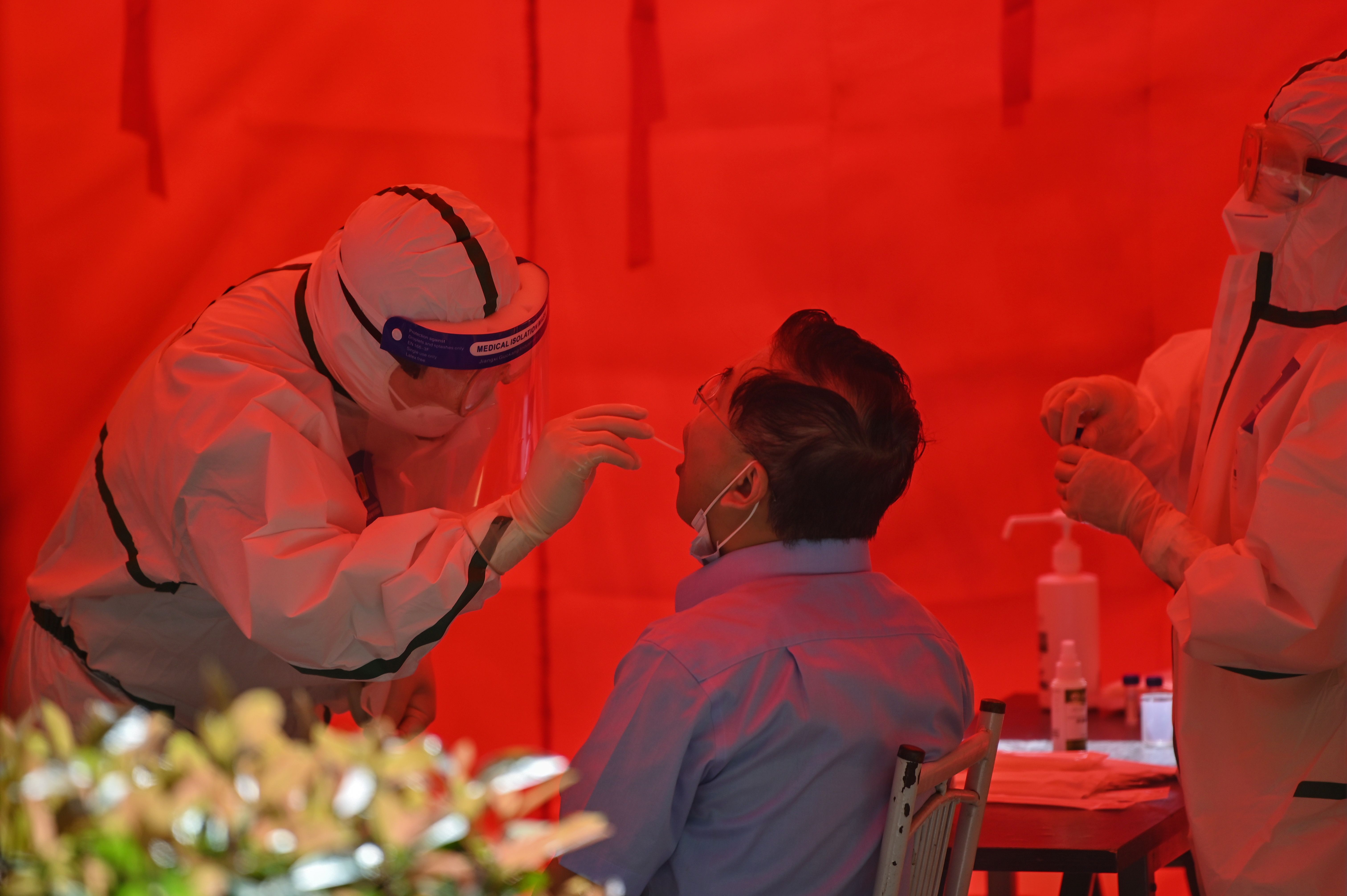
    A medical worker takes a swab sample from a man to test for coronavirus in Wuhan, May 19./AFP via Getty Images

    “China has showed they can mobilize the necessary human resources and equipment to do things quickly and at scale,” said Raina MacIntyre, professor of global biosecurity at the University of New South Wales in Sydney. “It’s a combination of technological capacity and political will.”

    While China has rejected accusations that it covered up the virus in its early days, it has also talked up international cooperation in a post-coronavirus world. Premier Li Keqiang last week called for reform to the system for disease prevention and improved mechanisms for direct and early reporting of outbreaks.

    “Any infection, whenever found, shall be promptly handled,” Li said in a press conference on Thursday for the country’s top political gathering. “No cover-up will ever be allowed.”

    Wuhan, which had only five active cases as of Friday, used a number of different methods to assess everyone, from diagnostics that look for active infections to antibody measurements that detect markers in the blood for exposure to the coronavirus. Makeshift tents were set up in residential compounds across the city to swab throats or noses with the results likely to be closely watched internationally given China’s position as the first major economy to emerge from Covid-19 lockdowns.

    “It’s definitely a miracle if 11 million people have truly been tested in only two weeks,” said Zhou Xiangning, a Wuhan local who said his throat swab test took about 20 minutes.

    Reaching the 11 million target has required adopting a batch testing method that enabled health workers to assess as many as 10 samples simultaneously.

    Pooling samples enables more tests with existing kits while still providing sufficient diagnostic accuracy, according to a paper published in The Lancet medical journal in late April. If a positive result comes from the batch, authorities can then follow up with assessments on each person in the group.

    “It’s not accurate in the sense that if you get positive you won’t know who in the batch is positive,” said MacIntyre. “But it allows rapid screening of different areas, and if you find a positive you can go in and test everyone individually.”

    Still, the technique might not be applicable in other countries that are still reporting tens of thousands of infections. The method is only efficient when the infection rate is below 1%, according to Peng Zhiyong, director of intensive care unit at Wuhan Zhongnan Hospital.

    CHINA-HEALTH-VIRUS

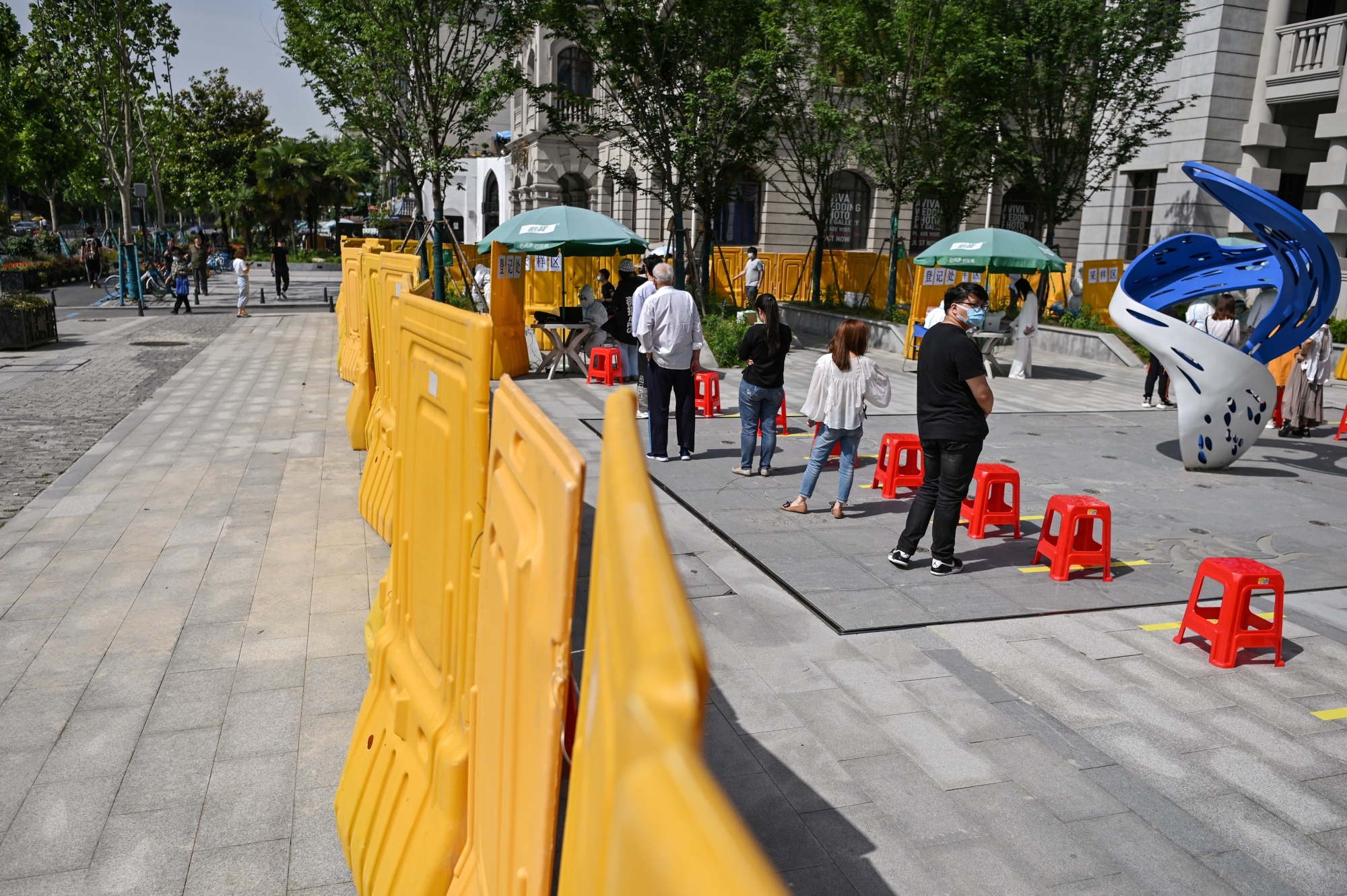
    Residents wearing face masks wait in line to be tested in Wuhan, May 18./AFP via Getty Images

    “If the infection rate among the population is as high as the earlier scenario in Wuhan, this would instead increase the testing cost,” Peng told local media.

    China’s enormous testing capacity has outshined many developed countries including the U.S. and U.K., but it also raised questions on whether the massive efforts are essential or excessive, as the results from Wuhan are only showing cases in the single digits.

    It hasn’t been a smooth process for all those being tested, with some residents taking to social media to complain about waiting times and express concern about a lack of distancing for those lining up.

    With residents unable to leave Wuhan until they were tested, 25-year-old Ariel Min said she went to a hospital so she could get a result that day and be able to travel to Shanghai. The government-backed community locations can take a week for results.

    Pressure from the government and society helped boost the numbers responding. Anyone who isn’t tested faces the prospect of having their color coded health status downgraded. Just moving from green to the lower level of yellow affects a person’s ability to work, travel outside Wuhan and gain access to restaurants, public transport, and other facilities.

    Residents who fail to get tested might also see their names on the public bulletin board, according to Ma Cong, who got his nose swabbed and blood drawn last week.

    “The community is being very strict on this because they will be held accountable if there’s any omission.”

    — source Bloomberg

  • Safaricom Thika Road Mall Closed After Staff Tests Positive Of Coronavirus

    Safaricom Thika Road Mall Closed After Staff Tests Positive Of Coronavirus

    Safaricom becomes one of the latest companies to be hit with the Covid-19.

    According to a statement issued by the Teleco’s CEO, a staff member from the TRM’s outlet had tested positive for the virus prompting its closure.

    “This morning Safaricom PLC was notified that one of our staff members working at the Thika Road Mall shop has tested positive for COVID 19. The employee is currently in isolation and receiving appropriate medical attention.” He said.

    ”The Staff members who were working with the affected employee have been informed and are currently undergoing counseling and screening to ensure their safety and wellbeing. Following this occurrence, our Thika Road Mall shop has been closed temporarily for cleaning and sanitization.”

    “The health, safety and wellbeing of our staff and customers is our top most priority. We are fully supporting our affected colleagues and their families, through the recovery period by providing all necessary medical care and psychosocial support required, ensuring their wellbeing,” said Safaricom Chief Executive Officer Peter Ndegwa.

    Customers are encouraged to access services from other nearby shops, as well as through our self-service channels which include; Zuri Chatbot, MySafaricom App and our Interactive Voice Biometric System.

  • Pathologist: Count for nothing We have no idea how many ‘Covid deaths’ were actually Covid

    Pathologist: Count for nothing We have no idea how many ‘Covid deaths’ were actually Covid

    By Dr. John Lee

    As a pathologist, I’m used to people thinking that my job mainly involves dealing with death. But nothing could be further from the truth. That is why I and many of my colleagues are so dismayed by changes introduced during the coronavirus epidemic which mean that pathology has not been able to play the role that it should have in helping to understand this new disease.

    The word ‘pathology’ tends to conjure up images of body bags, mortuaries and murder investigations. ‘Ho ho,’ people say, ‘your patients can’t answer back.’ They imagine days spent trudging across fields to reach murder scenes, Silent Witness-style, and nights sifting through arcane evidence to catch the perpetrators. And a rare type of pathologist — the forensic pathologist — does indeed do that.

    Most pathologists, though, spend the majority of their careers looking after the living. After all, pathology is the study of disease, and the whole point of knowing about diseases is to inform our approaches to preventing and treating them.

    There are four main types of pathologist. Microbiologists specialise in the study of infectious diseases — a subtype is the virologist, in particular demand at the moment. Chemical pathologists are experts in the liquid parts of the blood; they analyse the endless samples that pour into path labs day and night, looking for changes in chemicals and hormones that indicate disease. Haematologists are experts in diseases of the blood cells, the red cells and white cells that can cause problems such as anaemia or leukaemia.

    And then there is my own speciality of histopathology, or cellular pathology. We are experts in analysing changes in the fabric of our bodies that result from disease. Many diseases affect our tissues in ways that can be seen down the microscope, allowing them to be accurately diagnosed and monitored, particularly tumours and inflammations. Every time a biopsy or surgical sample is taken, it comes to the histopathology lab to be examined. Histopathology is often regarded as a ‘gold standard’ for diagnosis of diseases that change tissue structure. A clinical examination or X-ray may suggest that a tumour or fibrosis of the lung, say, is present, but you need to examine a tissue sample microscopically to be sure that it’s really there, what type it is, and how advanced. Tissue can also be examined genetically to look for the presence of infectious agents or cellular receptors that may determine how deadly it is.

    The other thing that some histopathologists do is autopsies — hence the confusion with forensic pathology. But in this case the autopsies are not typically looking for evidence of foul play. They are usually requested by a coroner to ascertain the cause of death. Relatives, even doctors, are often surprised by the need for this in the world of modern medicine. Surely all the examinations, tests and imaging carried out in life mean that the treating doctors know what was wrong with the patient when they die? But no, it turns out that autopsies often reveal the unexpected. Tests and images can be misleading, and treating doctors may have fixed ideas about what the matter is, based on first impressions or incomplete evidence.

    Autopsy — auto opsis — literally means seeing for oneself. And the person doing the seeing should be clear-eyed — an independent specialist medical practitioner, with no emotional or professional vested interest in what happened to the patient. Autopsy studies typically show major discrepancies between actual findings and clinical diagnosis in a quarter to a third of cases. And in about a sixth of the cases, knowing about these hidden pathologies in life could have made differences to treatment that might have prevented death. In the UK in recent decades about one in six deaths have had an autopsy examination — a deceased person’s last gift to the living.

    The results contribute to maintaining and improving care, verifying and upholding the standards of public health statistics, preventing diagnostic drift, and basically keeping medicine honest. Autopsies also allow sampling of tissues from more organs than is usually possible in life, facilitating molecular and genetic studies.

    And nowhere are autopsy studies more important than in the study of new diseases and new treatments. The best example of this in recent years was acquired immune deficiency syndrome, or Aids. When Aids first appeared in the early 1980s no one knew what it was, how it affected victims, how to treat it, or what effects potential treatments had. Knowledge about all of these aspects was substantially acquired by study of tissue samples taken during life, and by autopsy examinations, with study of samples acquired after death. There was much uncertainty and worry at the time about how the disease was spread, and possible contagion to healthcare workers and to the general population. But work continued, and the results were of immense help in understanding the disease and developing treatments.

    Looking at the current crisis, the response so far has been very different. We are still struggling to understand coronavirus. I can think of no time in my medical career when it has been more important to have accurate diagnosis of a disease, and understanding of precisely why patients have died of it. Yet very early on in the epidemic, rules surrounding death certification were changed — in ways that make the statistics unreliable. Guidance was issued which tends to reduce, rather than increase, referrals for autopsy.

    Normally, two doctors are needed to certify a death, one of whom has been treating the patient or who knows them and has seen them recently. That has changed. For Covid-19 only, the certification can be made by a single doctor, and there is no requirement for them to have examined, or even met, the patient. A video-link consultation in the four weeks prior to death is now felt to be sufficient for death to be attributed to Covid-19. For deaths in care homes the situation is even more extraordinary. Care home providers, most of whom are not medically trained, may make a statement to the effect that a patient has died of Covid-19. In the words of the Office for National Statistics, this ‘may or may not correspond to a medical diagnosis or test result, or be reflected in the death certification’. From 29 March the numbers of ‘Covid deaths’ have included all cases where Covid-19 was simply mentioned on the death certificate — irrespective of positive testing and whether or not it may have been incidental to, or directly responsible for, death. From 29 April the numbers include the care home cases simply considered likely to be Covid-19.

    So at a time when accurate death statistics are more important than ever, the rules have been changed in ways that make them less reliable than ever. In what proportion of Covid-19 ‘mentions’ was the disease actually present? And in how many cases, if actually present, was Covid-19 responsible for death? Despite what you may have understood from the daily briefings, the shocking truth is that we just don’t know. How many of the excess deaths during the epidemic are due to Covid-19, and how many are due to our societal responses of healthcare reorganisation, lockdown and social distancing? Again, we don’t know. Despite claims that they’re all due to Covid-19, there’s strong evidence that many, perhaps even a majority, are the result of our responses rather than the disease itself.

    It might have been possible to check these proportions by examining the deceased. But at a time when autopsies could have played a major role in helping us understanding this disease, advice was given which made such examinations less likely than might otherwise have been the case. The Chief Coroner issued guidance on 26 March which seemed designed to keep Covid-19 cases out of the coronial system: ‘The aim of the system should be that every death from Covid-19 which does not in law require referral to the coroner should be dealt with via the [death certification] process.’ And even guidance produced by the Royal College of Pathologists in February stated: ‘In general, if a death is believed to be due to confirmed Covid-19 infection, there is unlikely to be any need for a post-mortem examination to be conducted and the Medical Certificate of Cause of Death should be issued.’

    We need proper information to inform our responses to the virus, both clinical and societal. Instead, we have no idea how many of the deaths attributed to Covid-19 really were due to the disease. And we have no idea how many of the excess deaths were really due to Covid-19 or to the effects of lockdown. Officials should be releasing, as a matter of urgency, detailed information on the surge in deaths, both apparent Covid and non-Covid — particularly in care homes. How many are dying of Covid acquired in hospitals? Data presumably exists on this too, but is not released.

    The first rule in a pandemic should be to ensure transparency of information. Without it, errors can go undiscovered — and lives can be lost. We will never be able to find out for sure what this disease was like, or what it did in the early stages of the crisis.

    One of the unappreciated tragedies of this epidemic so far is the huge lost opportunity to understand Covid-19 better. We like to beat ourselves up for having the worst Covid death toll in Europe — but we will never know, because we decided not to count properly. In a country that has always prided itself on the quality of its facts and figures, the missing Covid-19 data is a national scandal.

    Dr John Lee is a retired professor of pathology and a former NHS consultant pathologist.

    Article courtesy of Spectator.

  • Russia To Begin Covid19 Vaccine Clinical Trials.

    Russia To Begin Covid19 Vaccine Clinical Trials.

    Russian scientists plan to start clinical trials within two weeks on a vaccine to combat the novel coronavirus, the country’s health minister was quoted as saying on Saturday.

    Russia has the world’s third-highest toll of coronavirus infections after the United States and Brazil, and Kremlin officials have said the nation’s researchers are working on almost 50 different vaccine projects.

    “The tests are under way and we plan to start clinical trials in the next two weeks,” Health Minister Mikhail Murashko was quoted as saying by the TASS news agency. He said volunteers had been selected to take part in the trials.

    Drugmakers worldwide are rushing to develop treatments and vaccines for the virus that has caused 364,000 deaths globally. 

    There are currently about 10 coronavirus vaccines being tested in humans and experts have predicted that a safe and effective vaccine could take 12 to 18 months from the start of development.

    One of the Russian vaccine projects is being undertaken by the state-run Vektor Institute in Siberia, and the institute’s director general, Rinat Maksyutov, said on Saturday he hoped to complete clinical trials in mid-September.

    Maksyutov said vaccine trials on animals had been successful.

    Russia on Saturday reported 181 deaths from the coronavirus in the last 24 hours — down from the record 232 deaths registered the previous day, pushing up the nationwide death toll to 4,555.

  • Smart Face Mask That Detects Infectious Diseases Including Covid19 Now In Development

    Smart Face Mask That Detects Infectious Diseases Including Covid19 Now In Development

    (Business insider) For the last six years, bioengineers at MIT and Harvard have been developing sensors that can detect viruses like Zika and Ebola.

    In 2014, bioengineering laboratory at MIT began developing sensors that could detect the Ebola virus when it was freeze-dried onto a piece of paper. The small team of scientists from MIT and Harvard first published their research in 2016; by then, they’d tailored the technology to address the growing Zika virus threat .

    Now, they’re adjusting their tool again to identify coronavirus cases.

    A face mask that produces a fluorescent signal when a person with the coronavirus breathes, coughs, or sneezes is in development . If the technology proves successful, it could takeover the game.

    “As we open up our transit system, you could envision it being used in airports as we go through security, as we wait to get on a plane,” Said Collins. “You or I could use it on the way to and from work. Hospitals could use it for patients as they come in or wait in the waiting room as a pre-screen of who’s infected.”

    Doctors could even use them to diagnose patients on the spot, without having to send samples to a laboratory. At a time when testing snafus and delays have hampered many countries’ abilities to control outbreaks, tools that quickly identify patients are critical.

    A fluorescent signal could show whether coronavirus is present in saliva or not

    Collins said his lab’s current project is in the “very early stages,” but the results have been promising. For the last few weeks, his team has been testing the sensors’ ability to detect coronavirus in a small saliva sample.

    They’re also experimenting with design: Right now, the lab is debating whether to embed sensors on the inside of a mask or develop a module that can be attached to any over-the-counter mask.

    The team hopes to demonstrate that the concept actually works as soon as possible.

    “Once we’re in that stage, then it would be a matter setting up trials with individuals expected to be infected to see if it would work in a real-world setting,” Collins said.

    The virus-identifying technology more generally, however, has already been proven. By 2018, the lab’s sensors could detect SARS, measles, influenza, hepatitis C, West Nile, and other viruses.

    “We initially did this on paper to create inexpensive paper-based diagnostics,” Collins said. “We’ve shown it can work on plastic, quartz, as well as cloth.”

    Collins’ sensors consist of genetic material DNA and RNA that binds to a virus. That material is freeze-dried onto fabric using a machine called a lyophilizer, which sucks moisture out of the genetic material without killing it. It can remain stable at room temperature for several months, giving the masks a relatively long shelf life.

    The sensors need two things to be activated. The first is moisture, which our bodies give off through respiratory particles like mucus or saliva. Second, they need to detect a virus’ genetic sequence.

    A Shanghai laboratory sequenced the coronavirus genome in January. Collins said his sensors only need to identify a small segment of that sequence to spot the virus. Once they do, they give off a fluorescent signal within one to three hours.

    That signal isn’t visible to the naked eye, so Collins’ lab uses a device called a flourimeter to measure the fluorescent light. Outside the lab, he said, public officials could use handheld flourimeters which Collins said “cost about a dollar” to scan people’s masks.

    His team has also previously developed sensors that change from yellow to purple when a virus is present, so color-changing sensors are a possibility too, he said, though the group has tabled that idea for now.

    A quicker, more accurate way to diagnose patients

    Collins is considered a pioneer of synthetic biology, a field that uses engineering to redesign systems found in nature. He won a MacArthur genius grant in 2003. In 2018, his lab got a $50,000 grant from Johnson & Johnson to develop embeddable virus-detecting sensors for lab coats.

    The sensors might offer a cheaper, quicker, and more sensitive form of detection than traditional diagnostic tests. The lab’s sensors for Zika, for example, can diagnose patients within two to three hours. The team estimated in 2016 that the sensors cost around $20 each, while the test itself was $1 or less to manufacture.

    Coronavirus tests, by contrast, currently take about 24 hours to run, and patients often don’t receive results for several days. That could change, however, now that the FDA has authorized an at-home diagnostic test (it’s currently being distributed to healthcare workers and first responders).

    The test developed by the Centers for Disease Control and Prevention costs around $36, according to a document released by Medicare in March. For commercial labs, the price is $51.

    Because Collins’ sensors are highly specific, they’re even able to detect different strains of a virus. In the case of Zika, the sensors picked up two strains from Africa, one from Asia, and another from America.

    Scientists have traced coronavirus strains back to two main lineages : one that originated in Asia and another that has become more common in Europe, North America, and Australia. Though MIT lab is still testing coronavirus segments, there’s a good chance that its technology will be able to detect these differences: The team previously found that their test had a 48% probability of identifying a single point mutation.

  • Study suggests COVID-19 immunity could last just six months

    Study suggests COVID-19 immunity could last just six months

    In a blow to the push for “immunity passports” as evidence of recovery from the illness in UK, a research evidence of possibility that person could be re-infected with coronavirus in six months came to limelight

    The research was released after the UK Government announced the supply of 10 million antibody tests to show if someone has had Covid19 and potentially developed immunity to the virus.

    According to the research, over 35 years, University of Amsterdam scientists regularly tested 10 men for four types of coronaviruses which cause the common cold.

    Most participants – aged between 27 and 66 – caught the viruses again within three years, with the study concluding “coronavirus protective immunity is short-lasting”. Meaning the antibodies that fight against the foreign antigenic virus vanish out of the system as time goes and when the level and quantity of the antibody in the system lowers, then an individual could easily get re-infected with the virus.

    “We saw frequent reinfection after 12 months post infection and substantial reduction in antibody levels as soon as six months post-infection,” the study stated.

    Between 1985 and 2020, the subjects were tested at either three month or six month intervals. Researchers found that high antibody levels “were never sustained at the next visit”.

    While acknowledging limitations to the study, its conclusion casts doubt on the reliability of so-called “immunity passports”.

    The proposed passports would be issued to people who have already overcome a COVID-19 infection and test positive for antibodies – based on the assumption they are therefore immune.

    The study read: “it was recently suggested that recovered individuals should receive a so-called ‘immunity passport’ which would allow them to relax social distancing measures and provide governments with data on herd immunity levels in the population.

    “However, as protective immunity may be lost by six months post-infection, the prospect of reaching functional herd immunity by natural infection seems very unlikely.”

    But the World Health Organisation warned governments not to use “immunity passports” for easing lockdown simply because they have antibodies for COVID-19.

    ********************

    Beneficial viral infections

    Viral infections at a young age are important to ensure the proper development of our immune systems. In addition, the immune system is continuously stimulated by systemic viruses at low levels sufficient to develop resistance to other infections.

    Some viruses we come across protect humans against infection by other pathogenic viruses.

    For example, latent (non-symptomatic) herpes viruses can help human natural killer cells (a specific type of white blood cell) identify cancer cells and cells infected by other pathogenic viruses. They arm the natural killer cells with antigens (a foreign substance that can cause an immune response in the body) that will enable them to identify tumour cells.

    This is both a survival tactic by the viruses to last longer within their host, and to get rid of competitive viruses to prevent them from damaging the host. In the future, modified versions of viruses like these could potentially be used to target cancer cells.

    Pegivirus C or GBV-C is a virus that does not cause clinical symptoms. Multiple studies have shown HIV patients infected with GBV-C live longer in comparison to patients without it.

    The virus slows disease progression by blocking the host receptors required for viral entry into the cell, and promotes the release of virus-detecting interferons and cytokines (proteins produced by white blood cells that activate inflammation and removal of infected cells or pathogens).

    In another example, noroviruses were shown to protect the gut of mice when they were given antibiotics. The protective gut bacteria that were killed by the antibiotics made the mice susceptible to gut infections. But in the absence of good bacteria, these noroviruses were able to protect their hosts.


  • UNITED NATIONS (UN) Launches a New Digital Initiative T​o Help Curb Fake News and Misinformation.

    UNITED NATIONS (UN) Launches a New Digital Initiative T​o Help Curb Fake News and Misinformation.

    https://player.vimeo.com/video/420695032

    Factually, misinformation spreading via digital channels is impeding pandemic response and stirring unrest. Some misleading information have caused dozen of deaths and infection allover the world. Misinformation have led to negligence which have led to increased infection rate and at the end death.

    On Thursday UN Secretary-General António Guterres launched Verified, which will create a cadre of “digital first responders” to increase the volume and reach of trusted, accurate information surrounding precisely Covid19 crisis.

    “We cannot cede our virtual spaces to those who traffic in lies, fear and hate. Misinformation spreads online, in messaging apps and person to person. Its creators use savvy production and distribution methods. To counter it, scientists and institutions like the United Nations need to reach people with accurate information they can trust.” The UN chief said.

    Under Verified, information will be provided around three themes: science – to save lives; solidarity – to promote local and global cooperation; and solutions – to advocate for support for populations that have been impacted by COVID-19. The initiative will also promote recovery packages that tackle the climate crisis and address the root causes of poverty, inequality and hunger. 

    People across the world are encouraged to sign up as “information volunteers” with Verified, to share trusted content to keep their families and communities safe and connected.

    The volunteers – described as “digital first responders” – will receive a daily feed of verified content that will be optimized for sharing on social media platforms, containing simple yet compelling messaging that either directly counters misinformation with facts, or fills in any gaps.

    Verified will partner with UN agencies and others, including influencers, civil society, business and media organizations, to distribute trusted, accurate content, while also working with social media platforms to root out hate and harmful information about COVID-19.

    Verified will be headed by UN Communication department led by Melissa Fleming. “There are disturbing efforts to exploit the crisis to advance nativism or to target minority groups, which could worsen as the strain on societies grows and the economic and social fallout kicks in”, Melissa Fleming said.

    People can sign up to be “information volunteers” or to read more about the project in nine languages at https://shareverified.com/en.

  • Hold The Fart, Wear A Mask

    Hold The Fart, Wear A Mask

    Here comes the absurd. That let’s test poop to track and contain coronavirus. Yeah, poop. Oh, and stop farting ovyo ovyo. Farting may be spreading the virus.

    This is how one conference call recently went down at the US Centre for Disease Control (CDC), according to a May 1 story in Business Insider, a US financial website owned by the German publisher Axel Springer.

    The story said that according to CDC, the coronavirus has been found in human faeces of infected people, and so the US government was looking at wastewater as a possible means of contracting Covid-19.

    But wait. This science of poop actually sounds genius. Politico, another US online media house, elaborated on the same day that “tracking the spread of the virus through sewage systems [might be] a way to predict where the next hot spot may be.”

    Well, would everyone keep their shirts on, please. Or pants. It turns out that this whole thing is not entirely to be dismissed as One Flew Over the Cuckoo’s Nest — you know, that 1962 novel by Ken Kesey set in a mental asylum.

    It turns out that monitoring poop has actually been done before, to look for re-emergence of polio viruses in some parts of the world.

    Still, if it came to this how would Kenya do it? Media would have a heck of a time selling this to the public.

    On the farting angle, the whisper started at the UK tabloid, The Sun.

    “Doctor says coronavirus could be spreading through farts – but experts aren’t so sure,” said The Sun in a story updated May 17.

    The tabloid quoted Australian doctor Andy Tagg citing tests that revealed the virus was present in the faeces of 55 per cent of patients with Covid-19. And – wait for the logic — medics have previously warned farts contain tiny poo particles that can spread bacteria, The Sun reported.

    However, there are no confirmed cases of anyone contracting Covid-19 this way, all the stories warned.

    So, what should media report? Ok, everyone, hold your farts – just in case. Wear a mask while at it, wash your hands with soap and keep social distance.

  • Scientists In China Have Been Developing A Drug That Will End Coronavirus Without Vaccine

    Scientists In China Have Been Developing A Drug That Will End Coronavirus Without Vaccine

    A Chinese laboratory has been developing a drug it believes has the power to bring the coronavirus pandemic to a halt.

    The outbreak first emerged in China late last year before spreading across the world, prompting an international race to find treatments and vaccines.

    A drug being tested by scientists at China’s prestigious Peking University could not only shorten the recovery time for those infected, but even offer short-term immunity from the virus, researchers say.

    Sunney Xie, director of the university’s Beijing Advanced Innovation Center for Genomics, told AFP that the drug has been successful at the animal testing stage.

    “When we injected neutralising antibodies into infected mice, after five days the viral load was reduced by a factor of 2,500,” said Xie.

    “That means this potential drug has (a) therapeutic effect.”

    The drug uses neutralising antibodies — produced by the human immune system to prevent the virus infecting cells — which Xie’s team isolated from the blood of 60 recovered patients.

    A study on the team’s research, published Sunday in the scientific journal Cell, suggests that using the antibodies provides a potential “cure” for the disease and shortens recovery time.

    Xie said his team had been working “day and night” searching for the antibody.

    “Our expertise is single-cell genomics rather than immunology or virology. When we realised that the single-cell genomic approach can effectively find the neutralising antibody we were thrilled.”

    He added that the drug should be ready for use later this year and in time for any potential winter outbreak of the virus, which has infected 4.8 million people around the world and killed more than 315,000.

    “Planning for the clinical trial is underway,” said Xie, adding it will be carried out in Australia and other countries since cases have dwindled in China, offering fewer human guinea pigs for testing.

    “The hope is these neutralised antibodies can become a specialised drug that would stop the pandemic,” he said.

    China already has five potential coronavirus vaccines at the human trial stage, a health official said last week.

    But the World Health Organization has warned that developing a vaccine could take 12 to 18 months.

    Scientists have also pointed to the potential benefits of plasma — a blood fluid — from recovered individuals who have developed antibodies to the virus enabling the body’s defences to attack it.

    More than 700 patients have received plasma therapy in China, a process which authorities said showed “very good therapeutic effects”.

    “However, it (plasma) is limited in supply,” Xie said, noting that the 14 neutralising antibodies used in their drug could be put into mass production quickly.

    – Prevention and cure –

    Using antibodies in drug treatments is not a new approach, and it has been successful in treating several other viruses such as HIV, Ebola and Middle East Respiratory Syndrome (MERS).

    Xie said his researchers had “an early start” since the outbreak started in China before spreading to other countries.

    Ebola drug Remdesivir was considered a hopeful early treatment for COVID-19 — clinical trials in the US showed it shortened the recovery time in some patients by a third — but the difference in mortality rate was not significant.

    The new drug could even offer short-term protection against the virus.

    The study showed that if the neutralising antibody was injected before the mice were infected with the virus, the mice stayed free of infection and no virus was detected.

    This may offer temporary protection for medical workers for a few weeks, which Xie said they are hoping to “extend to a few months”.

    More than 100 vaccines for COVID-19 are in the works globally, but as the process of vaccine development is more demanding, Xie is hoping that the new drug could be a faster and more efficient way to stop the global march of the coronavirus.

    “We would be able to stop the pandemic with an effective drug, even without a vaccine,” he said.

  • Magufuli To Re-Open Tanzania Economy, Says Lockdowns Doesn’t Work

    Magufuli To Re-Open Tanzania Economy, Says Lockdowns Doesn’t Work

    Tanzania President Magufuli continues to be a man of his own and a rebel to the fear factor that Covid-19 came with. While speaking during a church service on Sunday, the President who recently closed down the national laboratory and called of Covid19 testing citing faulty kits, said things are looking up well.

    Despite alarm from western envoys like the US that recently warned citizens against moving around flagging Dar as a hotspot for the virus, Magufuli in a rare appearance has said the cases are actually declining.

    The President played down the effectiveness of curfews and lockdowns saying the strategies are less effective and why he didn’t lockdown the countries like it’s neighbors.

    Magufuli said, “Tanzania hakuna cha lockdown, wala Baba yake lockdown, wala Ndugu yake lockdown, tunaendelea kuchapa kazi wakimaliza kujilock huko watakuja tutawasaidia chakula, na tusiwabague, kila Mtu ana njia zake za kutatua tatizo.”

    Magufuli attributed the success to God and announced that given the declining trend, he was going to open the schools, allow tourists to come in without restrictions of quarantine, resume football league and generally open up the economy.

    “Huwezi kuwa una mji wako halafu unapangiwa la kufanya, Mzee wetu wetu Kikwete alisema la kuambiwa changanya na lako, haiwezekani ukiambiwa jifungie,unajifungia chumbani wakati hauna chakula, tutaenda tunavyotaka, hili ni Taifa huru, Taifa linalojiamini, tumepambana na mengi.” He said.

    At the same time, Magufuli called out the neighbors like Kenya for closing their borders saying it goes against the good relations they share. In retaliation, Magufuli insists that trucks from Tanzania will not cross the border and all transactions will have to happen at the entry points.

    Magifuli also downplayed the virus saying his child had also contracted coronavirus and only had to self isolate, took lemon water, steam inhalation and is now fully recovered.

    He warned the authorities against treating all deaths as if they’re corona related, he questioned the intentions behind tallying the deaths and postmortems to determine if it was coronavirus. In the same line, the President ordered that people be allowed to mourn their relatives as they’ve been instead of restricting mourners and hurrying the burials.

  • Question Marks Surround Madagascar’s Covid-19 Miracle Cure

    Question Marks Surround Madagascar’s Covid-19 Miracle Cure

    On April 29, 10 African heads of state met via video chat. The meeting was presided over by South African president Cyril Ramaphosa, in his capacity as chair of the African Union. Also present was AU Commission chair Moussa Faki Mahamat and John Nkengasong, the director of the Africa Centres for Disease Control and Prevention (Africa CDC).

    The purpose of the meeting was to assess Africa’s response to the coronavirus pandemic and determine what should happen next. Broadly speaking, they were all on the same page — until Andry Rajoelina began to speak.

    Rajoelina, the 45-year-old president of Madagascar, was the youngest person in attendance. He came bearing what he said was good news: Madagascar had discovered a cure for Covid-19.

    This was not the first time Rajoelina had made such a claim. He has been aggressively touting the benefits of Covid-Organics, a herbal drink invented by the Malagasy Institute of Applied Research. Rajoelina says the bitter drink can both prevent and cure Covid-19, and has distributed it to schoolchildren across Madagascar.

    Rajoelina — a former DJ who first came to power in a military coup in 2009 – has released no evidence to support his claims.

    At the meeting, Rajoelina urged his fellow African heads of state to embrace the herbal remedy. The other presidents did not push back, even though most had deep reservations. “You know how it works at the African Union. Once people say such a thing, his peers are supposed to compliment him,” said one source who was party to the discussions.

    Grand claims 

    The Malagasy Institute of Applied Research occupies a tree-lined plot on the outskirts of Antananarivo, Madagascar’s capital. It was established in 1957 by Albert Rakoto Ratsimamanga, one of the country’s pre-eminent scientists, to research how local plants and traditional practices could be used to treat disease. Among its successes is Madeglucyl, an anti- diabetic drug derived from the Eugenia jambolana plant, widely used in Madagascar and abroad.

    Covid-Organics is its latest formulation. The primary ingredient is artemisia, indigenous to China, imported to Madagascar in the 1970s, and now widely grown on the island.

    Like chloroquine (also controversially touted by a head of state — Donald Trump — as a Covid-19 treatment), the plant’s active compound artemisinin is a recognised antimalarial treatment. But the World Health Organisation (WHO) advises against the use of the artemisinin compound as a preventative, and of the artemisia plant altogether, because the short half-life of the former and its low concentration in the latter accelerate resistance to treatment in active cases, rendering it useless against malaria.

    President Rajoelina has made grand claims about the efficacy of Covid-Organics. It has healed two people who had Covid-19, he said. It has the “potential to change the course of history”. Ata glitzy launch event in April, he said: “All trials and tests have been conducted and its effectiveness in reducing and elimination of symptoms has been proven in the treatment of Covid-19 patients in Madagascar.”

    But this cannot possibly be true, said Shabir Madhi, professor of vaccinology at the University of the Witwatersrand in Johannesburg. Madhi is also a founder and director of the African Leadership Initiative for Vaccinology Expertise. “There is absolutely no evidence that it has cured anything,” he told the Mail & Guardian.

    Madhi noted that Madagascar only has a small number of confirmed coronavirus cases (158 as of 7 May). “That’s definitely not enough for a trial. Citing these sorts of numbers is a meaningless exercise.”

    He dismissed President Rajoelina’s claim that two people had been “cured” by the herbal remedy. “The majority of people who have this virus show no symptoms. Of those who develop symptoms, 85% of them have mild illness. You could treat them with water and it would have the same effect.”

    History repeating itself? 

    This is not the first time Professor Madhi has witnessed politicians make grand claims at odds with established medical evidence. He lived through that dark period in South Africa’s history during which its leaders — principally former president Thabo Mbeki — disputed the science on how to treat HIV/Aids. At one point, cabinet minister Manto Tshabalala Msimang suggested beetroot and garlic were more effective treatments than antiretrovirals — despite all evidence to the contrary. A Harvard University study found in 2009 that this misguided policy may have caused more than 300,000 premature deaths.

    Both Africa CDC and the WHO are concerned about history repeating itself — and that using an untested herbal remedy such as Covid-Organics could have the opposite of the intended impact.

    “We would caution and advise against countries adopting a product that has not been taken through tests to see its efficacy against Covid-19 and its safety in different population groups,” said Matshidiso Moeti, the WHO’s Africa region director. “We are concerned that touting this product as a preventative measure might make people feel safe to do other things [against medical recommendations, such as neglecting social distancing].”

    The WHO and Africa CDC have offered to partner with Madagascar to test Covid-Organics in a proper medical trial. So too has South Africa. John Nkengasong, the director of Africa CDC, told the Mail & Guardian: “I heard the briefing the president of Madagascar made … [we] look forward to seeing the data and the design of the study.”

    So far, Madagascar has not shared the data underpinning its claims. Both the government and the Malagasy Institute of Applied Research declined to be interviewed for this story.

    Clinical trials are critical 

    A lack of evidence has not deterred several leaders from embracing Covid-Organics. Last week, Madagascar dispatched 1.5 tonnes of the herbal drink to Equatorial Guinea. Another shipment went to Guinea-Bissau. President George Weah personally greeted a plane as it delivered samples for Liberia. And Tanzanian President John Magufuli — who has claimed three days of prayer can cure Covid-19 — said he would send a plane to Antananarivo to collect a consignment.

    But sources within the AU suggest most leaders remain unconvinced — even if diplomatic protocol is preventing them from saying so publicly.

    One of the few institutions to speak out is West Africa’s regional bloc Ecowas, which distanced itself from claims it had ordered Covid-Organics. It said although it recognises the importance of traditional and plant-based medicine, “we can only support and endorse products that have been shown to be effective through scientific study”.

    The WHO has taken a similar line. This week, it said: “Many plants and substances are being proposed [as Covid-19 cures] without the minimum requirements and evidence of quality, safety and efficacy. Africans deserve to use medicines tested to the same standards as people in the rest of the world. Even if therapies are derived from traditional practice and natural, establishing their efficacy and safety through rigorous clinical trials is critical.”

    This article was first published in The Continent. Access it here.

  • Coronavirus: How To Create A Safer And Healthier Environment For Everybody

    Coronavirus: How To Create A Safer And Healthier Environment For Everybody

    By SAMUEL M. WAMBUGU

    One of the MAJOR REASONS why coronavirus pandemic/disease is spr eading (despite all the efforts and campaigns about washing of hands with soap and water, use of alcohol-based sanitizers, use of masks, social distancing and other behavioural changes) is MONEY changing hands between/amongst the coronavirus positive people and those that are negative (uninfected)!!! Paper money (notes) is the main agent but coins are also to blame!!! Imagine how many people touch the same UNSANITISED paper money note or coin in a day.

    Just think of the things/devices that you touch or handle in a day: Remote Controls, Tablets & iPads, Laptops & Keyboards, Telephone Handsets, Desktops, Tables & Other Surfaces, Calculators & Mobile Phones and Phone Chargers, Eyeglasses & Pens, etc. Mobile phones in particular are very notorious culprits in spreading diseases! We bring our smart phones with us everywhere. They sit in our pockets, in our handbags, rest on tables, and even get used in the bathroom! Your fingers touch your smartphone constantly. You pull out your phone to take photos all over, like restaurants, bars, and in the street. People even use their phones in public toilets! Simply SPEAKING INTO YOUR PHONE or texting can coat your phone with bacteria and viruses! And OTHER people’s fingers touch them and disaster strikes.

    These huge number of devices, surfaces, and many more that you touch every day of the week have the potential to be disease carriers.

    Our government should MAKE IT MANDATORY for financial institutions (mainly banks and mobile money vendors like Mpesa agents) to USE UV LIGHT TO FIGHT SPREAD OF GERMS AND VIRUSES. These financial institutions should be equipped with UV gadgets to sanitize all moneys passing through them. The government should also immediately make available these UV gadgets to all public service vehicles including buses, matatus, passenger trains and also open up sanitization “shops” in every town and village where people (particularly bodaboda operators) can go and sanitise their money.

    “By attacking the cell walls of bacteria and viruses, the UV light technology renders them unable to reproduce, consequently eliminating them altogether.”

    UV-C light is germicidal – i.e., it deactivates the DNA of bacteria, viruses and other pathogens and thus destroys their ability to multiply and cause disease. Specifically, UV-C light causes damage to the nucleic acid of microorganisms by forming covalent bonds between certain adjacent bases in the DNA. The formation of such bonds prevents the DNA from being unzipped for replication, and the organism is unable to reproduce. In fact, when the organism tries to replicate, it dies.

    This pathogen eliminator gadgets fight bacteria and viruses to improve your transport, household and office hygiene. You need not use any dangerous chemicals, wipes, or harsh detergents. Simply “swipe away pathogens with light” and sanitize all your money and devices!

    These sanitary devices can even eliminate mold and fungus from appliances and surfaces, plus allergy-inducing microorganisms, which can only mean fewer trips to the doctors and most importantly, AVOID CONTRACTING THE DEADLY CORONAVIRUS!!! The UV technology used ensures that the bacteria’s or viruse’s DNA is completely destroyed, which in technical terms, deactivates the bacteria or virus, leaving it dead and unable to cause any health worries to those around it.

    Doctors and nurses who work with contagious diseases know the value of washing their hands. But there is always the risk of infection.

    Hospitals around the world have started using UV light, working to reduce bacterial pathogens on their medical devices, as well as sanitize cell phones and other devices that can cause disease.

    Writer is a Senior Research Scientist.
    MANAGER: Technology Transfer & Business Development Services (TTBDS).