Category: Coronavirus

  • Uhuru Extends Night Curfew

    Uhuru Extends Night Curfew

    The government has extended the night curfew and several other COVID-19 containment measures in efforts to tame the spread of the virus as schools reopen tomorrow.

     School going children in both primary and secondary schools are expected to resume physical learning tomorrow after a nine month break since closure back in March last year when the first case of COVID 19 was reported in the country.

    “The President has issued an Executive Order extending some of the containment measures to ensure that the eco-system within which our children are going to school remains manageable,” said CS Matiang’i.

    Matiang’i made his remarks on Sunday during a multi sectoral briefing on the state of preparedness of the government and the education sector as students go back to school.

     The CS said that the president issued the order this morning to ensure that the health of’ students is safeguarded just as he pledged in his New Year message.

    The measures extended include closure of bars by 9pm as directed by the President on November 4 when he revised the night curfew to start at 10 pm end at 4 am.

     President Kenyatta had also directed all government meetings to be held virtually so as to protect public servants and members of the public visiting their offices. At the time, he also ordered civil servants aged above 50 years and anyone with compromised immunity to work from home.

     Schools were reopened partially in October 2020 for Form 4, Class 8 candidates and Grade 4 with the rest of the grades to join their colleagues as they all report tomorrow.

    The Ministry of Health yesterday recorded 64 new COVID-19 cases, marking a sustained decline as schools prepared to reopen fully for physical learning.The government has extended the night curfew and several other COVID-19 containment measures in efforts to tame the spread of the virus as schools reopen tomorrow.

    School going children in both primary and secondary schools are expected to resume physical learning tomorrow after a nine month break since closure back in March last year when the first case of COVID 19 was reported in the country.

    “The President has issued an Executive Order extending some of the containment measures to ensure that the eco-system within which our children are going to school remains manageable,” said CS Matiang’i.

    Matiang’i made his remarks on Sunday during a multi sectoral briefing on the state of preparedness of the government and the education sector as students go back to school.

    The CS said that the president issued the order this morning to ensure that the health of’ students is safeguarded just as he pledged in his New Year message.

    The measures extended include closure of bars by 9pm as directed by the President on November 4 when he revised the night curfew to start at 10 pm end at 4 am.

     President Kenyatta had also directed all government meetings to be held virtually so as to protect public servants and members of the public visiting their offices. At the time, he also ordered civil servants aged above 50 years and anyone with compromised immunity to work from home.

    Schools were reopened partially in October 2020 for Form 4, Class 8 candidates and Grade 4 with the rest of the grades to join their colleagues as they all report tomorrow.

    The Ministry of Health yesterday recorded 64 new COVID-19 cases, marking a sustained decline as schools prepared to reopen fully for physical learning.

  • Broadcaster Larry King Hospitalized With COVID-19

    Broadcaster Larry King Hospitalized With COVID-19

    Former CNN broadcaster  Larry King, who hosted “Larry King Live” for 25 years, has been hospitalized with COVID-19, a source close to him confirmed to several media outlets.

     Reports further indicate  that King, 87, has been admitted to Cedars-Sinai in Los Angeles.

    King has in the recent past been diagnosed with several health issues , in  May 2019 he suffered a nearly fatal stroke. King was also in a coma for several weeks after undergoing a heart procedure that same year.

    King hosted “Larry King Live” on CNN from 1985 until 2010.

  • We Don’t Know Why COVID-19 Cases, Deaths Are Not High In Africa — Bill Gates

    Co-founder of Microsoft Foundation, Bill Gates, has said he does not know why COVID-19 cases and deaths in Africa are low as against the figures obtainable in developed countries.

    According to Gates, it is possible that the figures provided are not real due to the gaps in health care systems in Africa.

    Bill Gates Harry Graphic

    He said, “It is also possible—though I hope this is not the case—that the true numbers are higher than they look because gaps in poor countries’ health care systems are making it hard to monitor the disease accurately.”

    In a report on his website, GatesNotes titled, ‘These breakthroughs will make 2021 better than 2020’, the billionaire explained that the early lockdown imposed by some African countries could be responsible for the low rate of COVID-19 cases.

    He added, ‘In Africa, another reason may be that the population is young compared with the rest of the world’s, and young people are less susceptible to the virus. Another reason could be that its large rural population spends a lot of time outside, where it’s harder to spread the virus.”

    Read The Article Below:

    These breakthroughs will make 2021 better than 2020

    “This has been a devastating year. More than 1.6 million people have died in the COVID-19 pandemic, with more than 75 million cases and tens of trillions of dollars in economic damages. Millions of people are out of work and struggling to pay their bills, and more than a billion children are missing out on crucial time in school. In the U.S., this year also saw the horrifying killings of George Floyd and Breonna Taylor, ruinous wildfires, and a presidential election unlike any other in modern times.

    But there is good news coming in 2021.

    I spent most of my time this year working with colleagues at the foundation and around the world on ways to test for, treat, and prevent COVID-19. When I think back on the pace of scientific advances in 2020, I am stunned. Humans have never made more progress on any disease in a year than the world did on COVID-19 this year. Under normal circumstances, creating a vaccine can take 10 years. This time, multiple vaccines were created in less than one year.

    Unfortunately, we are not out of the woods quite yet. Computer models suggest that the pandemic could get even worse over the next month or so. We also need to learn more about a new variant of the virus that has appeared, which seems to spread faster but not to be more deadly.

    Still there are two main reasons to be hopeful. One is that masks, social distancing, and other interventions can slow the spread of the virus and save lives while vaccines are being rolled out.

    The other reason to be hopeful is that in the spring of 2021, the vaccines and treatments you’ve been reading about in the news will start reaching the scale where they’ll have a global impact. Although there will still need to be some restrictions (on big public gatherings, for example), the number of cases and deaths will start to go down a lot—at least in wealthy countries—and life will be much closer to normal than it is now.

    In this post, I want to share where things stand on COVID-19 innovations as we wrap up this year and move into the next. I’ll start with vaccines, since they’ve been in the news so much and that’s the area I get asked about the most.

    How COVID-19 vaccines work

    You probably know that two vaccines—one developed by Moderna, the other by Pfizer and BioNTech—have received emergency approval in the U.S. The Pfizer/BioNTech vaccine has also been approved in the U.K. and other countries. And several other companies will probably be announcing results of clinical efficacy trials soon.

    What you might not have read is that the success of the first two vaccines also bodes well for many of the other candidates. Virtually all of the vaccines now undergoing efficacy studies attack the same part of the novel coronavirus as the first two do. (It’s the protein that spikes out of the virus, giving the coronavirus its crown-like shape as well as its name.) Now that researchers know attacking that particular protein can work, they have reason to be optimistic about other vaccines that do the same thing.

    Despite this basic similarity, the various vaccines use different approaches to attacking the virus. The ones developed by Moderna and Pfizer/BioNTech involve what’s called mRNA technology—an approach our foundation is intimately familiar with, because we’ve been funding research on it since 2014 as a way to create vaccines for malaria and HIV. It’s great that the technology is now allowing unprecedented progress on COVID-19.

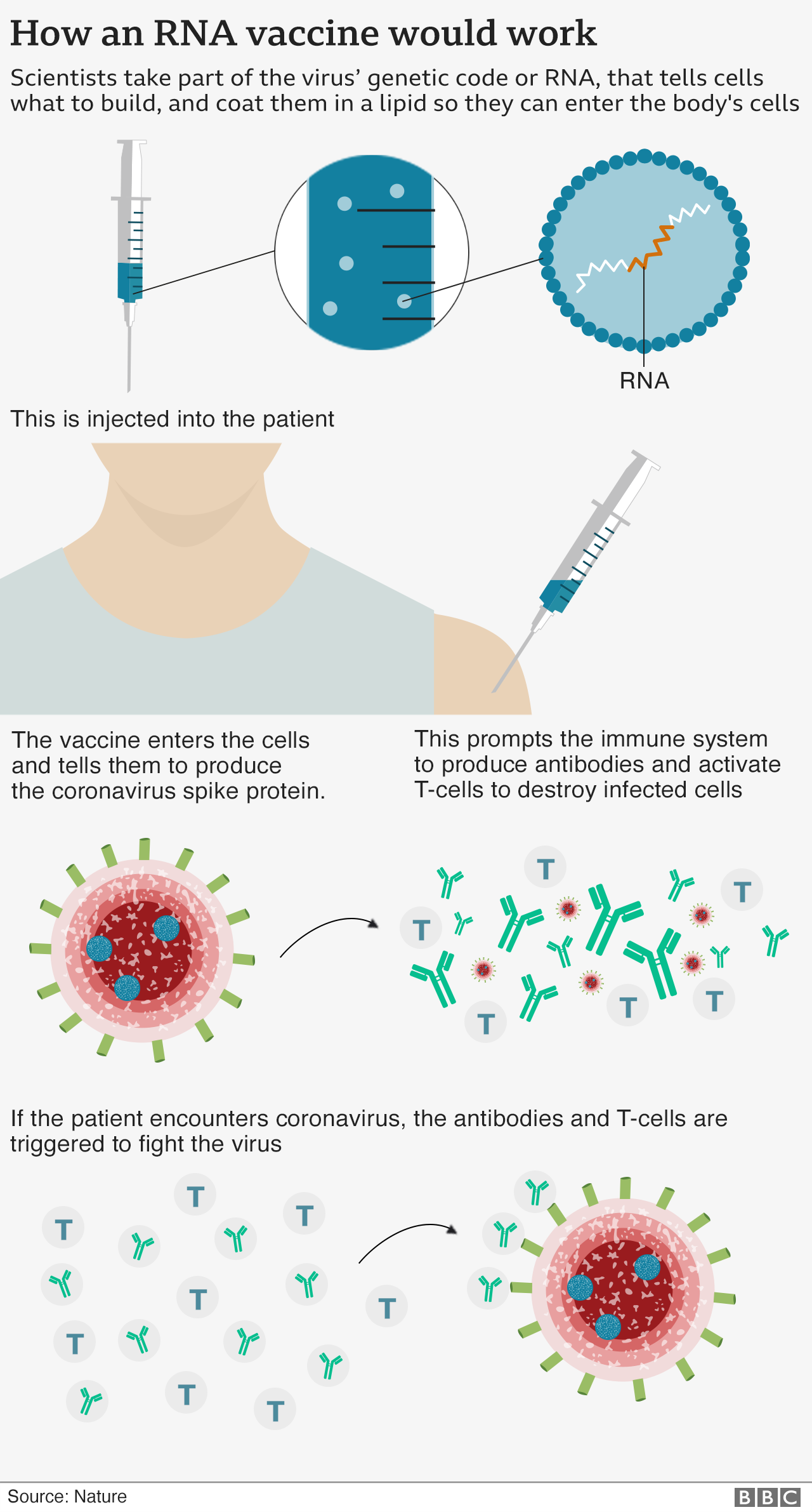
    It’s no accident that mRNA vaccines were the first out of the gate. By design, this type of vaccine can be created faster than conventional ones. It works by using messenger RNA to deliver instructions that cue your body to produce the distinctive spike protein. Then your immune system kicks in and attacks anything with that spike on it, including the COVID-19 virus.

    Making mRNA vaccines is relatively fast because it’s much easier to produce large quantities of an RNA sequence that codes for the spike protein than it is to grow the spike protein itself. And there’s a bonus benefit: Unlike most conventional vaccines, mRNA vaccines don’t contain any virus at all, which means you can’t get COVID-19 from them.

    Unfortunately, there aren’t yet many factories where mRNA products can be made. Some also need to be stored at temperatures as low as –70°C, which makes them particularly difficult to distribute in developing countries, though this is more of an engineering challenge than a scientific barrier.

    An example of a different type of vaccine is the one made by AstraZeneca. Instead of using mRNA, it attaches the spike protein to an otherwise benign virus that causes the common cold in chimpanzees but is harmless for humans. Then your immune system learns to attack that spike, and you’re protected from COVID-19.

    In its clinical efficacy trials, the AstraZeneca vaccine was on average around 70 percent effective, versus 94 to 95 percent for the Pfizer and Moderna vaccines. But 70 percent is still high enough to be effective at stopping the disease. And it’s reason to be hopeful about other vaccines that take a similar approach, such as Johnson & Johnson’s.

    I don’t blame you if you have a hard time keeping track of all the companies working on vaccines. But it’s a nice problem to have! With so many companies pursuing different approaches, there was a much better chance that some would prove to be safe and effective. There are two already and more may be coming.

    It’s unheard of to have so many companies working on vaccines for the same disease, because making a vaccine is inherently risky work. Not only can it take years to get a product to market, but it can cost billions of dollars and involve major scientific challenges—especially when the disease is as new to us as this one is.

    Why were so many companies willing to take the risk this time?

    Judging from the conversations I’ve had with their leading scientists and executives, I think one reason is that they saw a chance to use their expertise to help end the pandemic. It also helped that others stepped up to bear some of the financial risk. In some cases, it was a national government, such as the U.S. or Germany. In others it was the group called CEPI, the Coalition for Epidemic Preparedness Innovation, which is funded by our foundation and several government and philanthropic partners.

    Of course, developing the vaccines themselves is only part of the challenge. And it may not even be the hardest part.

    How do you make 5 to 10 billion doses?

    The world will have to manufacture around 5 billion doses if there’s a vaccine that requires only one dose, or 10 billion in the current scenario of two-dose vaccines. (This is assuming that 70 percent of the global population must be covered in order to break transmission of the disease.)

    Is 5 to 10 billion doses a lot? Well, all the vaccine companies in the world typically produce a total of fewer than 6 billion doses a year. That includes flu shots, routine childhood immunizations, and so on. So to produce all the COVID-19 vaccines needed without cutting back on any others, the manufacturing capacity will at least need to almost double, and more likely almost triple.

    To help ease the manufacturing burden, our foundation helped put together what’s called “second-source agreements.” We paired vaccine companies in rich countries with counterparts in developing countries that specialize in producing safe, high-quality, and affordable doses at a very high volume.

    A second-source agreement is designed to make the most of both skill sets. A company that excels at production agrees to manufacture products designed by another company with a viable vaccine candidate. For example, the biggest vaccine manufacturer in the world, Serum Institute of India, is producing doses of AstraZeneca’s vaccine. They’ve already begun production, so there will be doses available for low- and middle-income countries if AZ’s vaccine is approved for use. And our foundation took on some of the financial risk, so if it doesn’t get approved, Serum won’t have to take a full loss.

    It’s hard to overstate how unusual these second-source agreements are. Imagine Ford offering up one of its factories for Honda to build Accords. But given the scale of the problem and the urgency of solving it, many pharmaceutical companies are seeing the benefit of working together in new ways like this.

    It’s similar to how, during World War II, the U.S. ramped up its manufacturing capacity at a mind-blowing rate by converting auto factories into tank and truck factories—only this time, the government isn’t involved. Companies are responding to the crisis by doing away with business as usual.

    And how do you distribute 5 to 10 billion doses around the world?


    In addition to manufacturing, there’s the challenge of making sure that COVID-19 vaccines will be distributed equitably. That’s both a logistical hurdle and a financial one.

    Sixteen pharmaceutical companies have already committed with our foundation to ensuring that vaccines and other lifesaving tools will be made available in a fair way. The world’s top experts in shipping and delivery will need to figure out how to move all these vaccines around the planet while keeping them at the right temperature every step of the way. National governments will be responsible for in-country distribution of vaccines on a scale and level of complexity unlike any other public health campaign ever.

    And rich countries will need to step up with new funding through organizations like GAVI, which has a phenomenal track record of helping immunize children in poor countries.

    The issue of equity is one that both Melinda and I have been working on, not only as it relates to vaccines, but also the way the recovery needs to encompass everyone, including people of color in the U.S. and people in poor countries around the world. Melinda will cover this in detail in our Annual Letter, which we’ll release next month.

    One other challenge will remain when vaccines are widely available: the sizable percentage of people who will hesitate to take them. Some are afraid of vaccines already. Others may worry that the COVID-19 vaccines were rushed and might be less safe than, say, the flu shot they get every year. And in some communities, people have an understandable historical mistrust of the government’s role in medical studies.

    It doesn’t help that there are false conspiracy theories about vaccines, including some that involve Melinda and me. For our part, we will keep talking about the sole reason we fund vaccines: because we’re passionate about saving lives and making sure all children have a chance to grow into adulthood. We feel a responsibility to give our wealth back to society, and we believe that no outlet for our giving returns more value to the world than helping develop and distribute vaccines. They are a medical miracle that made it possible to cut the childhood death rate in half in the past two decades.

    I hope credible leaders—politicians, community leaders, scientists, and family doctors especially—will help explain the safeguards in the system. The FDA is one of the most respected drug-regulating agencies in the world for a reason. Its approval process is second to none. No safety steps were skipped in approving COVID-19 vaccines. If enough people are willing to join the first wave of recipients, then hopefully others will see the benefits and want to take it too.

    In the search for treatments, failure was a success

    As I often tell the team at the foundation, we can’t be afraid of failing—and when we do fail, we should do it quickly and learn from it. Here’s an example of how we failed quickly with potential COVID-19 treatments, but in the most productive way possible.

    In March, we joined Mastercard and Wellcome in creating the Therapeutics Accelerator. The idea was to use robots developed by the pharmaceutical industry to quickly screen thousands of existing chemical compounds in the hope that one of them might lead to a treatment for COVID-19. We wanted to know: Do any biotech or pharma companies already have something on the shelf that could be the solution to the pandemic?

    The answer was no.

    That was disappointing, but it was a useful disappointment. It spared the medical field millions of dollars and a year or two of laboriously going from one company to another, testing one compound after another. In that sense, it wasn’t a failure at all. Scientists knew within months where the dead ends were, so they didn’t waste time going down them.

    One of the successful treatments you’ve probably heard about is a steroid called dexamethasone. The cool part of the story is how quickly scientists were able to figure out that it works for severe cases of COVID-19.

    The dexamethasone trial was done through a network called RECOVERY, which was set up with various protocols that allowed it to run rapid trials of COVID-19 drugs. It took just four months for RECOVERY to demonstrate that the drug reduced mortality by 30 percent in severe cases—and they did this study amid a lot of confusion and misinformation about other putative therapies that didn’t work out. Dexamethasone has become a standard of care in severe cases, and the speed with which it was studied and approved is a good sign for the future.

    Another approach to treatment you may have read about is called monoclonal antibodies. These are created by taking the antibodies in the blood of COVID-19 survivors and flowing them past a spike protein to see which ones stick the most. (The stickier they are, the better they are at attacking the virus.) Then you figure out the gene sequence that makes that antibody, use a factory to make billions of copies of it, and give them to patients.

    Although you may not have heard about antibody treatments before the pandemic, there’s nothing new about them. Today they’re used in some of the most popular medicines in the world, including arthritis treatments.

    The key question surrounding COVID-19 antibodies is whether manufacturers make enough of them so they can be delivered to the entire world? It depends partly on the size of the required dose. Some treatments have involved doses as large as 8 grams. If something substantially smaller—such as 0.5 grams—works well, then it will be possible to treat far more people. Scientists also need to see if it’s possible to replace the current IV infusion with a two-shot dose.

    If researchers solve the dosage and infusion challenges, then the main limiting factor will be manufacturing capacity. To deal with that, our foundation underwrote a second-source agreement in which Fujifilm Diosynth will produce an antibody developed by Eli Lilly. These doses will be earmarked for low- and middle-income countries and priced accordingly, so that millions of affordable doses will be available within 90 days of regulatory approval.

    That uncomfortable COVID-19 test is becoming obsolete

    There’s a lot of confusion about testing for COVID-19, and it’s important to be clear about what’s working well and what isn’t.

    There are three different instances that involve testing for the virus. One is if you’re severely symptomatic—sick enough to go to a clinic or hospital—and your doctor needs to know how to treat you. Early on, the U.S. health care system had trouble getting enough tests for these cases, but that problem has largely been solved.

    The second instance is if you have only mild symptoms, or none at all but you might have been exposed to the virus. In this case, you need to know if you are infected, so you can isolate yourself and protect others. Even if you don’t have symptoms or haven’t developed them yet, you can still spread COVID-19, so you need to get your test results right away.

    Unfortunately, the U.S. is lagging badly in this area; tests often take several days to deliver results, rendering them essentially useless. We need to invest in better tests and more efficient systems for processing them so people can act quickly to protect their loved ones and their communities. Just last week, there was some good news on this front when the FDA approved the first diagnostic that people can use at home, without sending a sample to a lab. It works a lot like an at-home pregnancy test.

    Then there’s the third use for testing: disease surveillance. Despite what the name seems to imply, this has nothing to do with watching people. Instead, disease surveillance is what allows public health experts to estimate the number of cases in a location and the rate at which new infections are occurring. Armed with this information, government leaders can make informed decisions about the best ways to stop the virus from spreading.

    If you have the first two testing instances covered, you should have the population-level data you need to do disease surveillance. But—as we’re seeing in the U.S.—if you don’t know who might be infected, you can’t do it well.

    We’ve been funding a local effort in Seattle to fill this gap. Thousands of people in the area—some symptomatic, some not—have filled out a brief online survey, conducted a self-test by swabbing the tip of their nose, and sent the results in for processing. A similar effort is under way in the San Francisco area.

    One cool innovation that’s making this work possible is the ability to let people collect their own samples by swabbing the tip of their nose. (A study that we funded was the first to show that this is just as accurate as the standard nasopharyngeal swab.) If you’ve ever had one of the nasopharyngeal tests, you know how uncomfortable they are—and how they can make you cough or sneeze, which is bad news with a respiratory virus like COVID-19 because it increases risks to healthcare workers. With any luck, the days of the jam-a-stick-to-the-back-of-your-throat COVID-19 test will soon be over.

    What’s important about the Seattle and San Francisco projects is that they’re helping researchers see how the virus spreads. And in the future, the system for sending out and processing test kits will be useful for detecting other new pathogens that might arise.

    The testing challenge is especially acute in sub-Saharan Africa. Many countries there can’t afford the most accurate tests. And they don’t have the infrastructure to conduct surveillance studies, so policymakers aren’t working with the most up-to-date information.

    This is the kind of problem that innovation excels at solving. Several companies are working on rapid tests that could be produced by the tens of millions. One is the British company LumiraDx, which has created a device that’s roughly the size of a thick cell phone, with a card reader at one end. A health care worker takes a sample from a patient, inserts it into the machine, and gets results within 15 minutes. After removing any personal information that could identify the patient, the device uploads the results to a central server. Analysts then use the data to follow the disease in real time, giving policymakers up-to-the-minute information on where to focus prevention and treatment efforts.

    Our foundation is part of an effort to deploy an initial supply of 5,000 readers in 55 countries throughout Africa. Although that’s a relatively small number for such a large area, it’s a good start. And the benefits may not be limited to COVID-19: In the future, the same machines could be used to test for HIV, tuberculosis, and other diseases.

    Still other companies are working on ways to make the highly sensitive tests that are in use now faster and cheaper, and to expand the manufacturing of less-sensitive but cheaper tests from tens of thousands a day to many millions a day. The pace of innovation in this field really is impressive and is going to benefit everyone.

    How are developing countries doing?

    One thing I’m happy to have been wrong about—at least, I hope I was wrong—is my fear that COVID-19 would run rampant in low-income countries.

    So far, this hasn’t been true. In most of sub-Saharan Africa, for example, case rates and death rates remain much lower than in the U.S. or Europe and on par with New Zealand, which has received so much attention for its handling of the virus. The hardest-hit country on the continent is South Africa—but even there, the case rate is 40 percent lower than in the U.S., and the death rate is nearly 50 percent lower.

    We don’t have enough data yet to understand why the numbers aren’t as high as I worried they would get. It helped that some countries locked down early. In Africa, another reason may be that the population is young compared with the rest of the world’s, and young people are less susceptible to the virus. Another reason could be that its large rural population spends a lot of time outside, where it’s harder to spread the virus. It is also possible—though I hope this is not the case—that the true numbers are higher than they look because gaps in poor countries’ health care systems are making it hard to monitor the disease accurately.

    One fear of mine has proven to be justified: COVID-19 is having a ripple effect with other diseases. Last month, I was surprised to learn that it was only the 31st most common cause of death in Africa. By comparison, it has ranked number four around the world, and number one in America.

    Why does it rank so low in Africa? It’s not just the relatively low incidence of COVID-19 there. It’s also because shifting health workers to focus on the coronavirus disrupted efforts to detect and treat HIV/AIDS, malaria, tuberculosis, and other diseases. As a result, COVID-19 stayed low on the list of health threats, but other problems came roaring back.

    Another reason is that patients are more reluctant to go to clinics for fear they might become infected—and that means more severe conditions are going undiagnosed. In India, for example, the diagnosis rate for tuberculosis has dropped by roughly a third. With more undetected cases, more people will probably die from the disease.

    This is another reason why the world’s goal should be to make sure that lifesaving tools reach—and are practical for—every country, not just rich ones.

    COVID, climate, and the year ahead

    Last spring, when the extent of the COVID-19 pandemic was becoming clear, I wrote that “this is like a world war, except in this case, we’re all on the same side.”

    I am glad to report that the optimistic view that the world would come together to fight COVID-19 has largely turned out to be right (with some notable exceptions). There’s no way we would be as far along as we are if governments, companies, and scientists around the world weren’t, more often than not, working closely together.

    This global cooperation is one reason why I see promise in the year ahead—and not only the promise of getting the pandemic under control. I believe the world also has a chance to take concrete steps on one of the other great challenges of our time: climate change.

    Next year, leaders from around the globe will meet in Glasgow, Scotland, for the first major United Nations summit on climate change since the Paris meetings in 2015. The U.S. is poised to resume a leading role developing and deploying the clean-energy innovations needed to eliminate greenhouse gases.

    I hope to spend much of my time in 2021 talking with leaders around the world about both climate change and COVID-19. In Melinda’s and my Annual Letter next month, I’ll write about what the world’s experience with COVID-19 means for preparing for the next pandemic. And in February I’ll release my new book, How to Avoid a Climate Disaster, in which I share what I’ve learned from 15 years of studying the problem and investing in solutions for it. I hope the book will help drive the conversation in a productive direction.

    A year from now, I do think we’ll be able to look back and say that 2021 was an improvement on 2020. The improvement may not be enormous, but it will be a noticeable, measurable step forward for people around the world.

    I hope you have a safe and healthy 2021.”

  • COVID-19: Kenyans To Start Getting Vaccinated In February

    COVID-19: Kenyans To Start Getting Vaccinated In February

    Kenya is set to be amongst the first African countries to initiate the COVID-19 vaccination process. According to the Health Ministry, the state has ordered 24M doses of Oxford University-AstraZeneca vaccine, Kenyans will get it for free.

    The first 24 million doses, which will be for free, are from Global Alliance for Vaccines and Immunisation (Gavi) an organization that has supported Kenya with more than Sh25 billion vaccines and injection devices and Sh4 billion in direct cash since 2001.

    Kenya has opted for the AstraZeneca vaccine instead of the now popular Pfizer/BioNTech and Moderna that use more expensive mRNA technology being used in the US and Europe because it’s not only cheaper but easy to store. Kenya is also looking at ordering vaccines from China who has started mass production of the highly needed vaccine.

    A dose of the AstraZeneca vaccine will go for Sh700 and apart from the 24M doses ordered through Gavi, the government has set aside Sh10B to carter for over 10% of the over 50M Kenyan population.

    Kenya has prioritized high risk groups to be the first beneficiaries in the initial batch. Health workers, police officers, the elderly and teachers will be the first to receive the Oxford University-AstraZeneca vaccine. People with pre-existing medical conditions and those exposed to the virus by coming into contact with crowds will be prioritized in the exercise.

    The first batch of the vaccination will cover for over 20% of the Kenyan population. Two doses will be administered in the initial phase.


  • A New Strain Of COVID-19 Emerges In England, WHO Says It’s Aware And Investigating

    A New Strain Of COVID-19 Emerges In England, WHO Says It’s Aware And Investigating

    The World Health Organization is aware of a new variant of COVID-19 that has emerged in Britain, but there is no evidence the strain behaves differently to existing types of the virus, it said on Monday.

    “We are aware of this genetic variant reported in 1,000 individuals in England,” the WHO’s top emergencies expert Mike Ryan told a news briefing in Geneva. “Authorities are looking at its significance. We have seen many variants, this virus evolves and changes over time.”

    UK’s Health Secretary Matt Hancock told MPs in the House of Commons at least 60 different local authorities in London had recorded Covid infections caused by the new variant.

  • U.S. Authorizes Pfizer COVID-19 Vaccine For Emergency Use

    U.S. Authorizes Pfizer COVID-19 Vaccine For Emergency Use

    The U.S. Food and Drug Administration said it authorized the use of Pfizer Inc’s COVID-19 vaccine on Friday, with the first inoculations expected within days, marking a turning point in the United States where the pandemic has killed more than 295,000 people.

    The FDA granted an emergency use authorization for the vaccine, developed with German partner BioNTech, which was shown to be 95% effective in preventing the disease in a late-stage trial. It said the vaccine can be given to people aged 16 and older.

    Healthcare workers and elderly people in long-term care facilities are expected to be the main recipients of a first round of 2.9 million doses.

    Cases are surging in the United States, with thousands of death per day, while hospital intensive care units across the country are nearing capacity, threatening to overwhelm healthcare systems.

    The timing gives the authorization “huge importance”, BioNTech Chief Executive Ugur Sahin said in an interview.

    U.S. health authorities, shipping services and hospitals stood ready to begin a nationwide inoculation campaign. State public health systems have been planning to begin shots as early as Monday.

    Delivery companies United Parcel Service and FedEx Corp plan to ship millions of the Pfizer doses across the country, giving top priority to the vaccines on their airplanes and trucks.

    Millions of Americans could begin getting vaccinated this month, especially if a second vaccine from Moderna Inc is quickly approved.

    “It is one step in a sequence of steps that will bring this pandemic to an end,” said Amesh Adalja, a senior scholar at the Johns Hopkins Center for Health Security.

    He added: “A lot of people will be infected, a lot will be hospitalized and a lot will die before the vaccine is able to have a meaningful impact on spread.”

    The Pfizer/BioNTech vaccine was first approved in Britain earlier this month, and UK residents began receiving the shots on Tuesday. Canada also authorized the vaccine and expects to start inoculations next week.

    Mexico and Bahrain have also approved the Pfizer vaccine.

    U.S. President Donald Trump, in a video posted on Twitter, trumpeted the achievement and blamed China for the pandemic. Critics have said his focus on China was aimed at deflecting attention from his missteps in combating the pandemic.

    “The United States is the first nation in the world to produce a verifiably safe and effective vaccine. Today’s achievement is a reminder of America’s unlimited potential,” Trump said.

    COMPLEX CHALLENGES

    Others with vaccines in advanced development include Moderna, which could win emergency U.S. authorization as soon as next week, AstraZeneca Plc with Oxford University, and Johnson & Johnson.

    BioNTech began developing the vaccine in January, using a technology called synthetic messenger RNA (mRNA) that had yet to produce an approved product. The technology uses a chemical messenger to instruct cells to make proteins that mimic part of the new coronavirus, which the immune system learns to recognize as an invader. BioNTech struck a development deal with Pfizer in March.

    The vaccine comes with complex distribution challenges as it must be shipped and stored at -70 Celsius (-94 F), requiring specialized ultra-cold freezers or supplies of dry ice.

    Moderna’s vaccine employs the same technology but does not need to be stored at sub-Arctic temperatures.

    Pfizer has developed a special shipping container that will be filled with dry ice to keep the vaccine from spoiling. Many states are concerned about whether there is enough dry ice for shipments to rural areas that lack the specialized freezers, but Pfizer believes there should be sufficient supply.

    U.S. health officials have said they will have enough to supply all of the 330 million U.S. residents who wish to be vaccinated by the middle of 2021.

    ‘SOME DEGREE OF NORMALITY’

    The government has ordered 100 million doses of the Pfizer vaccine – enough to inoculate 50 million people – through its Operation Warp Speed virus development program and could negotiate for more. The status of those talks are unclear.

    Pfizer board member and former FDA commissioner Scott Gottlieb said in an interview with CNBC earlier this week that the company had offered to sell the United States more doses as recently as last month but had been turned down.

    The United States has agreed to buy 200 million doses of Moderna’s two-dose vaccine. The government also has supply deals with J&J and AstraZeneca, but authorization of those vaccines are not imminent.

    Top U.S. infectious diseases expert Dr. Anthony Fauci said if distribution goes well and enough Americans agree to get vaccinated, relief for a pandemic weary nation may be on the horizon.

    “As we get to the end of 2021, we could approach very much some degree of normality that is close to where we were before.”

  • UK Starts Mass Vaccination Programme Becoming The First Country To Do It

    UK Starts Mass Vaccination Programme Becoming The First Country To Do It

    Britain on Tuesday hailed a turning point in the fight against the coronavirus pandemic, as it begins the biggest vaccination programme in the country’s history with a new Covid-19 jab.

    The first patients in line on what has been dubbed “V-Day” — the over-80s, care home workers and at-risk frontline health and social care staff — will roll up their sleeves for an initial dose from early morning.

    They will then require a second jab in 21 days’ time.

    Last week Britain became the first country to approve the Pfizer-BioNTech vaccine, raising hopes of a breakthrough in the pandemic, which has killed more than 1.5 million worldwide.

    Britain has been one of the worst-affected countries in the world, with more than 61,000 deaths in the outbreak from 1.6 million cases.

    Prime Minister Boris Johnson, who spent days in intensive care with Covid-19 earlier this year, called it a “huge step forward in the UK’s fight against coronavirus”.

    UK Health Secretary Matt Hancock, who has offered to have the jab on live television to allay public fears, said the roll-out was a “key moment” that would protect the most vulnerable.

    The head of the state-run National Health Service in England, Simon Stevens, said it was a “decisive turning point” against the “greatest health challenge” since the NHS was founded in 1948.

    Regulatory approval for the vaccine was given last Wednesday, sparking a race against time to prepare scores of vaccination centres across the country.

    The UK has ordered 40 million doses of the jab — enough to vaccinate 20 million people — with 800,000 in the first batch.

    Up to four million doses are expected by the end of December.

    Queen could lead way

    The mass vaccination drive is a coordinated response by all four nations of the UK — England, Scotland, Wales and Northern Ireland — which normally set their own health policies.

    The public has been largely favourable to the rapid approval of the vaccine, but ministers and health professionals are aware they still need to combat mistrust.

    The independent Medicines and Healthcare products Regulatory Agency maintains that no corners were cut and its assessment and approval procedures met stringent international norms.

    NHS England said thousands had already been given the jab during trials with no serious side effects.

    Nevertheless, it has been reported Queen Elizabeth II, who at 94 is among those first in the line for the vaccination because of her age, could front a public awareness campaign urging compliance.

    The government said it will hand out vaccine cards to remind people to get the booster after three weeks, but insisted it was not introducing immunity certificates.

    – ‘Marginal impact’ in winter

    The chief medical officers of England, Scotland, Wales and Northern Ireland said the vaccine will as a result only have a “marginal impact” on hospital numbers over the winter months.

    Johnson called for patience and urged the public to stick to strict social distancing guidelines to prevent a spike in cases, particular as rules are relaxed over Christmas.

    Health officials have already run into a logistical headache about how to administer the vaccine to elderly or infirm care home residents.

    The vaccine needs to be stored at -70 degrees Celsius (-94 Fahrenheit), leaving hospitals and other medical hubs as the only places able to deal with such ultra-low temperatures.

    With the Pfizer-BioNTech drug made in Belgium, concerns have also been raised about potential disruption to supply when Britain leaves the European Union’s single market and customs union.

    But the UK government said the military is on stand-by to air-lift the vaccine if there is any border disruption from January 1.

    The bulk of Britain’s vaccine requirements are expected to be met by a jab developed by AstraZeneca and the University of Oxford, which is awaiting regulatory approval.

    The government has ordered an initial 100 million doses of the drug, which is cheaper to manufacture, and easier to store and transport using conventional fridges.

  • Former US Presidents, Biden Ready To Publicly Receive Covid-19 Vaccine

    Former US Presidents, Biden Ready To Publicly Receive Covid-19 Vaccine

    Former US presidents Barack Obama, George W. Bush and Bill Clinton as well as President-elect Joe Biden are volunteering to take a coronavirus vaccine on camera if it will help promote public confidence.

    Obama, in an interview with SiriusXM radio, said he would be inoculated if top US infectious disease expert Anthony Fauci signs off on a Covid-19 vaccine.

    “If Anthony Fauci tells me this vaccine is safe, and can vaccinate, you know, immunize you from getting Covid, absolutely, I’m going to take it,” Obama said.

    “I promise you that when it’s been made for people who are less at risk, I will be taking it,” he said.

    “I may end up taking it on TV or having it filmed, just so that people know that I trust this science, and what I don’t trust is getting Covid,” Obama said.

    Freddy Ford, Bush’s chief of staff, told CNN the former president also wanted to help promote vaccination.

    “First, the vaccines need to be deemed safe and administered to the priority populations,” Ford told CNN.

    “Then, president Bush will get in line for his, and will gladly do so on camera.”

    Advertisement. Scroll to continue reading.

    Angel Urena, Clinton’s press secretary, told CNN the former president would also be up for getting a vaccine in public on television.

    Later in the day, Biden told CNN in an interview that he, too, would be willing to be vaccinated in public after government approval of vaccines, specifically saying he would rely on Fauci to say it was safe.

    “It’s important to communicate to the American people it’s safe,” the 78-year-old said. “It’s safe to do this.”

    He also lauded the three former presidents for their commitment, saying they had “set the model as to what should be done.”

    Vaccines developed by Pfizer-BioNTech and Moderna-NIH are expected to be approved by US authorities shortly.

    A top science official said Wednesday the United States hopes to have immunized 100 million people by the end of February.

  • U.S Classifies Kenya As A COVID-19 Danger Zone Advices Citizens To Avoid All Travels

    U.S Classifies Kenya As A COVID-19 Danger Zone Advices Citizens To Avoid All Travels

    Americans have been cautioned against travelling to Kenya due to “a high prevalence of Covid-19 cases ” even as the United States reported more than 200,000 new infections yesterday.

    The US Centers for Disease Control and Prevention on Wednesday assigned Kenya a Level 4 alert meaning there is a very high level of coronavirus infection.

    CDC uses cumulative new cases over the past 28 days or hospitalisation rates and cumulative testing positivity rate as the criteria to determine the prevalence of the virus in the different countries.

    “Travelers should avoid all travel to Kenya. If you must travel, talk to your doctor ahead of travel, especially if you are at increased risk for severe illness from Covid-19,” CDC said in its latest advisory alert.

    US citizens who must travel were advised to get tested between 1–3 days before their trip, to always wear a mask during travel, stay at least 6 feet from people who are not traveling with them, wash hands often or use hand sanitizer, and watch their health for signs of illness.

    Before traveling back to the United States, they were told to get tested with a viral test 1–3 days before travel.

    “If you had a known exposure to Covid-19 while traveling, delay travel, quarantine from other people, get tested, and monitor your health,” CDC said.

    External Source.

    Kenya is among other East Africa countries, including Uganda, Tanzania and Burundi that have been allocated Level 4 alert.

    Rwanda has a level 1 alert meaning low level of the virus in the country.

    The CDC said travel to these countries could expose the Americans to the risk of contracting Covid-19 that has killed thousands.

    It warned, such trips should be avoided and in case one is infected he/she should follow Covid-19 health protocols.

    “If you get sick with Covid-19 or test positive for the virus that causes Covid-19 while abroad, you might not be permitted to return to the United States until you can end isolation,” it added.

    As of yesterday, Kenya had recorded 85,130 positive cases in the country since March when the first case was reported.

    Additionally, the virus has claimed 1,484 lives since the outbreak.

    The United States has reported more than 13.9 million coronavirus cases and 272,000 fatalities since February.


  • Kemsa Scandal: One-Month-Old Firm Linked To Sakaja Won Sh900M Tender

    Kemsa Scandal: One-Month-Old Firm Linked To Sakaja Won Sh900M Tender

    The Senate committee on health looking into the Kenya Medical Supplies Authority (Kemsa) scandal was left with dropped jaws on learning that a firm that was only formed a month earlier was awarded a lucrative Sh970M tender for COVID-19 supplies in what has remained a debacle.

    Shop N Buy is among 50 companies on the Ethics and Anti-Corruption Commission (EACC) radar, for its role in the questionable deals that have left Kemsa with Sh6.2 billion stock it is unable to dispose of, unless at a loss.

    Shop N Buy whose sole director is James Cheluley was registered in February 14 and under a month it was awarded the hefty sum which is abnormal.

    Cheluley was awarded the tender only a day after dropping the letter of intention to Kemsa going to show deep rooted influence on the tender.

    “The company was registered in February 14, then it is ready to supply goods worth billions of shillings in less than a month, is that legal in Kenya?”Posed Kisumu Senator Fred Outa.

    Shop N Buy is among 50 companies on the Ethics and Anti-Corruption Commission (EACC) radar, for its role in the questionable deals that have left Kemsa with Sh6.2 billion stock it is unable to dispose of, unless at a loss.

    The firm has been associated with Nairobi Senator Sakaja who has conspicuously been less vocal on the scandal.

    Appearing before the National Assembly Public Investments Committee Suspended Kemsa procurement manager, Charles Juma told MPs that the former CEO Jonah Manjari was under pressure from people whom he only termed as “highly placed and influential” persons in government who insisted that certain companies must be awarded tenders even if they were not prequalified.

    He said that the suspended CEO was a man under pressure and at one time confessed to him that there were highly placed people who had warned him against going according to their wish.

    The name of Nairobi Senator Johnson Sakaja was dragged into the scandal after Mr Juma said on the day Mr Manjari ordered that a commitment letter be issued to Shop ‘N’ Buy, he was in the CEOs office.

    Juma told MPs how his secretary, Ms Pamela Kaburu, was summoned to Manjari’s office on June 5 and told to prepare the commitment letter for Shop and Buy and backdate it to April 30 so that it could fall within the required timelines.

    “For this one on Shop and Buy, my office was not aware, neither were my four managers … when I asked my secretary what had happened, she told me that the personal assistant to the CEO had asked her to forward him the format for writing commitment letters and it is when she was taking the sample letter that she found the CEO seated with Hon. Sakaja in his office,” Juma said.

    The testimony by the Procurement director brought to the fore the influence of politicians and high-ranking state officials over government tenders.

    Officials claimed that Sakaja actively lobbied for the award of the tenders, by physically camping in Manjari’s office.

    Sakaja was at the time chairman of the Senate Ad-hoc Committee on Covid-19. He was later forced to resign after he was charged and fined for breaking curfew rules.

  • COVID-19 Vaccine Will Be Available In Kenya By February

    COVID-19 Vaccine Will Be Available In Kenya By February

    Britain approved Pfizer Inc’s COVID-19 vaccine on Wednesday, jumping ahead of the rest of the world in the race to begin the most crucial mass inoculation programme in history.

    Britain’s move raised hopes that the tide could soon turn against a virus that has killed nearly 1.5 million people globally, hammered the world economy and upended normal life for billions since it emerged in Wuhan, China, a year ago.

    Britain’s Medicines and Healthcare products Regulatory Agency (MHRA) granted emergency use approval to the vaccine developed by Pfizer and German biotechnology partner BioNTech, which they say is 95% effective in preventing illness, just 23 days after Pfizer published the first data from its final stage clinical trial.

    Britain said it would start vaccinating those most at risk of dying early next week after it gets 800,000 doses from Pfizer’s manufacturing centre in Belgium.

    Kenya is among the 192 countries in search for a vaccine under the Covax programme overseen by the World Health Organisation.

    Through Kenya Medical Research Institute (Kemri) Wellcome Trust Kilifi, Kenya is taking part in the AstraZeneca and University of Oxford vaccine trial code-named ChAdOx where 40 participants have volunteered.

    However, owing to the dominance of the program by Western countries and America’s refusal to participate in it Kenya is not patient enough to wait as it’s likely for rich countries to have first priorities that would see Kenya wait till 2022 to access affordable vaccine.

    Health Principal Secretary Susan Mochache said away from the ongoing trials, the government is also in talks with other nations to see how Kenya can access the vaccine once it is ready.

    President Uhuru Kenyatta has ordered the Ministry of Health to look towards China for a COVID-19 vaccine.

    She said the vaccine should be available for Kenyans as early as February next year.

    Kenya currently has 85,130 confirmed cases of COVID-19 with 1,484 fatalities registered.

  • UK Becomes First Country In The World To Approve Pfizer/BioNTech Coronavirus Vaccine Set For Rollout Next Week

    UK Becomes First Country In The World To Approve Pfizer/BioNTech Coronavirus Vaccine Set For Rollout Next Week

    The UK has become the first country in the world to approve the Pfizer/BioNTech coronavirus vaccine for widespread use.

    British regulator, the MHRA, says the jab, which offers up to 95% protection against Covid-19 illness, is safe for roll out.

    Immunisations could start within days for people in high priority groups.

    The UK has already ordered 40m doses – enough to vaccinate 20m people, with two shots each.

    Around 10m doses should be available soon, with the first doses arriving in the UK in the coming days.

    It is the fastest ever vaccine to go from concept to reality, taking only 10 months to follow the same developmental steps that normally span a decade.

    Although vaccination can start, people still need to remain vigilant and follow coronavirus rules to stop the spread, say experts.

    That means sticking with the social distancing and face masks, and testing people who may have the virus and asking them to isolate.

    What is the vaccine?

    It is a new type called an mRNA vaccine that uses a tiny fragment of genetic code from the pandemic virus to teach the body how to fight Covid-19 and build immunity.

    An mRNA vaccine has never been approved for use in humans before, although people have received them in clinical trials.

    Graphic

    The vaccine must be stored at around -70C and will be transported in special boxes, packed in dry ice. Once delivered, it can be kept for up to five days in a fridge.

    Who will get it and when?

    Experts have drawn up a provisional priority list, targeting people at highest risk. Top are care home residents and staff, followed by people over 80 and other health and social care workers.

    They will receive the first stocks of the vaccine – some as soon as next week. Mass immunisation of everyone over 50, as well as younger people with pre-existing health conditions, can happen as more stocks become available in 2021. It is given as two injections, 21 days apart, with the second dose being a booster.

    What about other Covid vaccines?

    There are some other promising vaccines that could also be approved soon.

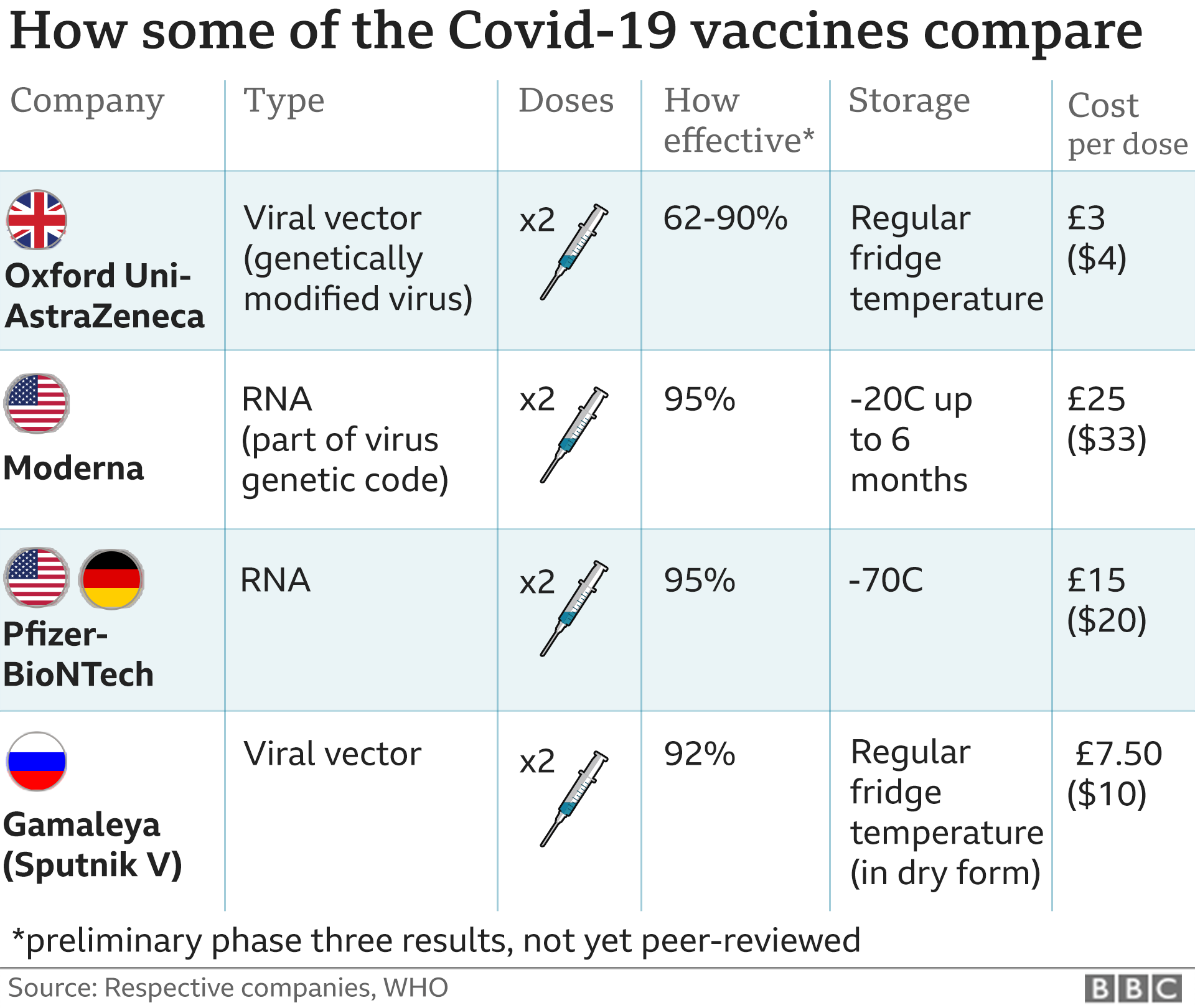
    One from Moderna uses the same mRNA approach as the Pfizer vaccine and offers similar protection. The UK has pre-ordered 7m doses that could be ready by the spring.

    The UK has ordered 100m doses of a different type of Covid vaccine from Oxford University and AstraZeneca. That vaccine uses a harmless virus, altered to look a lot more like the virus that causes Covid-19.

    Vaccine comparison

    Russia has been using another vaccine, called Sputnik, and the Chinese military has approved another one made by CanSino Biologics. Both work in a similar way to the Oxford vaccine.

    External Source.

  • Ngatia’s Megascope Healthcare Schemes For Another Multi-Billion Tender In The Ministry

    Ngatia’s Megascope Healthcare Schemes For Another Multi-Billion Tender In The Ministry

    Megascope Healthcare Ltd, a firm associated with businessman and a close friend of President Uhuru is once again on the table scheming to bag another multibillion  healthcare tender despite having been mentioned in numerous questionable deals in the ministry despite many scandals clouding the firm and still not cleared.

    According to information seen by Kenya Insights, Ngatia is putting his best foot forward and using his deep links in the ministry to bag a tender of building temporary COVID-19 hospitals across the country as the second wave of the virus ravages the nation.

    However, despite having Kenyatta’s backing, businessman Richard Ngatia is facing stiff competition from ISM Africa for a contract with the Ministry of Health to build temporary hospitals to treat Covid-19 patients.

    Just months into the job as ISM Africa managing director, Omri Cohen is already trying to position the company as the lead supplier of President Uhuru Kenyatta’s field hospitals. The Israeli businessman has offered to provide ready-to-assemble hospitals to help Health Cabinet Secretary Mutahi Kagwe fight the Covid-19 pandemic.

    ISM Africa, specialises in the manufacture of these type of temporary clinics made from tents and prefabricated modules.

    While such tenders have been dominated with secrecy and under dealings, many are now interested to see if Uhuru is upto the cores of his values on integrity. Kemsa, MES scams that Megascope has been adversely mentioned in are still carving dust and firm yet to get a clean bill of health of alleged involvement in shady deals something that Ngatia has often and naturally denied.

    Ngatia already bagged tender to build level three hospitals in the Nairobi in informal settlements. NMS plotted to build 24 facilities with each averaged out to cost Sh70M. It’s street clear why despite being under COVID-19 funds theft allegations, Megascope won the tender.

    Megascope is building the three Level 3 hospitals in informal settlements. Seen in this photo is Uhuru with Richard Ngatia (hidden in a reflector jacket) during the launch.

    Ngatia, a businessman who’s now customed in controversies was accused of selling donations made by Chinese Billionaire Jack Ma to help Kenya contain coronavirus. Local news NTV in an investigative story, mentioned Megascope Ltd as having handled the cargo.

    In the report dubbed #COVID-19Millionaires, Okari exposed how the equipment, which included face masks, testing kits, and Personal Protective Equipment (PPE) found its way to neighbouring Tanzania, with a few individuals pocketing millions of shillings from the sale of what was meant to boost Kenya’s fight against the deadly pandemic.

    The consignment arrived at the Jomo Kenyatta International Airport (JKIA) on March 24th from Ethiopia and was received by Health Ministry’s acting Director-General Patrick Amoth who while addressing the press that day noted that the equipment would be immediately deployed to help the Kenyan people tackle the scourge of Coronavirus.

    However, some very powerful people had already hatched a plan to steal the consignment and make a kill from it. The Ministry contracted two companies; Megascope Limited and Crown Healthcare Limited to offload the consignment from the airport.

    NTV reported that the equipment was transferred to a private warehouse in Nairobi and later shipped to Tanzania by road and crossed the Namanga border under tight police protection. The consignment

    Ngatia refuted the claims and sued the TV network.

    Ngatia was also mentioned in the KEMSA scam where his firm Megascope yanked the biggest share. The Kemsa scandal triggered national outrage that has seen EACC summon top dogs close to power as it seeks to uncover the rot.

    Megascope was, for instance, awarded a Sh765 million contract by Kemsa for the supply of personal protective equipment.

    It also got a tender for the supply of SV300 ventilators at Sh165 million and a Sh35 million deal to supply KN95 mask at Sh700 each. Made over a billion.

    Ngatia was also mentioned in the failed Sh63B medical supply scam that has left taxpayers with more burden.

    Richard Ngatia.

    A damming report by the Senate says Megascope Healthcare Ltd a firm associated with Richard Ngatia was part of the rip-off and recommended it be investigated by the Ethics and Anti- Corruption Commission.

    According to the report, the contract for the supply of theatre equipment under Lot 1 of the project was awarded to Shenzen Mindray Biomedical Electronic Co., a company registered in China at Sh5.4 billion

    However, Shenzen Mindray subcontracted Megascope in controversial circumstances that the Senate committee note was a tactic “used to circumvent the procurement process”.

    “The committee finds that the contract and the subcontractor’s deed of warranty were used to circumvent the procurement process by awarding the subject matter of the contract to Megascope, a party that would otherwise not have qualified to be awarded the contract as per the term of the tender that required bidders to be original equipment manufacturers,” the report notes.

    It says the deal officially made Megascope the legal owner of the equipment, putting the government at risk as the new contract made it clear that a claim could only be made against the subcontractor.

    “Due to the foregoing the subcontractor, Megascope, through the transfer of ownership of the equipment, ended up becoming the principal in a contract that it would otherwise not have been qualified to win,” the report states.

    It goes on, “the Ministry of Health was negligent when it signed an amendment and restatement deed that limited its rights under the contract.”

    Senate ad hoc committee said the project was conceived like a criminal enterprise shrouded in opaque procurement processes and aimed at selfish commercial interests.

    The committee established that the change of ownership of equipment from the contractor, Shenzhen Mindray, to the subcontractor, Megascope, indicates that the actual person who supplied the equipment was not the original equipment manufacturer.

    “The committee therefore recommends that the EACC investigates the circumstances surrounding the implementation of the contract relating to Lot 1 and in particular the change of ownership of equipment from the contractor, Shenzhen Mindray, to the subcontractor, Megascope, and the cost of the equipment supplied under Lot 1,” the report states.

    The committee says the change of ownership had implications on the pricing of the equipment which it concludes was grossly exaggerated.

    For instance, the committee observed that the average cost of linen trolleys in the market ranges from Sh5,000 -15,000 depending on quality.

    However, under the MES Project, the cost levied against health facilities for the supply and installation of two linen trolleys was Sh613,272.

    This translated to a cost of Sh 306,637 per linen trolley.

    “Despite the fact that linen trolleys are basic equipment, the computed costs of the linen trolleys as submitted by the contractor included costs of training, maintenance, delivery, transport, insurance…etc,”the committee noted

    Further, the committee established that a number of the equipment supplied under Lot 1 was not functioning, thus clearly indicating there was no value for money.

    According to the initial contract signed on February 2015, two years to the 2017 polls, the the supply, delivery, installation, commissioning, maintenance and repair of the Lot 1 theatre equipment was for Sh4.6 billion.

    Under the contract, a total of 96 hospitals two from each of the 47 counties and two national referral hospitals – were to benefit from theatre equipment that included anaesthetic machines with ventilators.

    However, in October 2017 as the country was locked in the battle for the repeat polls, Health ministry officials initiated a variation of the contract and expanded the project to include 17 additional hospitals spread across the country.

    The variation saw the price jump to Sh5.4 billion.

    The committee also noted contradictory information with regards to the quantities of equipment supplied and delivered to the various hospitals.

    For example, in Garsen Health Centre, Tana River, records obtained from the MoH indicated that two operating theatre lamps and two operating theatre tables were supplied to the facility.

    However, records obtained from the contractor indicated that the facility had received only one of each of the aforementioned equipment.

    “The committee therefore observes that there is a likelihood that the MoH may have overpaid the contractor for equipment supplied under this Lot contrary to Article 201 of the Constitution which obligates public entities to ensure prudent use of public resources,” the committee noted.

    Ngatia who is the CEO of Megascope is the president of the Kenya National Chamber of Commerce and Industry.

  • Richest Countries Already Bought 80% Pfizer COVID-19 Vaccine

    Richest Countries Already Bought 80% Pfizer COVID-19 Vaccine

    More than 80% of the US drugmaker Pfizer’s COVID-19 vaccine has already been sold to the richest governments across the world, according to an analysis by a UK-based campaign group.

    The Global Justice Now analysis shows that over 1 billion doses have been bought by the rich governments, which represent only 14% of the global population.

    Big purchases include the EU with 200 million doses and an option for a further 100 million, the UK with 40 million, and the US with 100 million and an option to buy another 500 million, according to the group.

    Pfizer’s coronavirus vaccine candidate is more than 90% effective in preventing COVID-19, the company announced Monday, raising hopes in fighting the deadly strain.

    The company said it will produce 1.3 billion doses of its vaccine, produced in partnership with the German company BioNTech, by the end of 2021.

    “Pfizer is likely to offer some doses to developing countries in the coming weeks through the global COVAX Facility, but these are likely to represent a small fraction of the vaccines produced,” the campaign group said.

    The analysis also suggested that while promoting a fair distribution of vaccines produced, big countries also undermine these schemes by their vast purchase of them.

    “On the one hand, the British government is helping limit supply of these drugs by insisting on global patent rules that prevent countries producing their own generic vaccines,” Nick Dearden, the director of Global Justice Now, said.

    He added: “On the other, it is buying up as much of that limited supply as it can, so there are no vaccines left for developing countries.

    “You couldn’t get a clearer example of how unequal the pharmaceutical system is – some make billions of pounds, while many others die because they cannot afford treatments or there are no more left for them to buy. It’s got to change.”

    Dearden also said that “unless we break the stranglehold of these massive corporations over our medicines, the injustice will continue.”

    “It is imperative that we end the vaccine nationalism and that sufficient supply is made available to all, on a fair basis, as a matter of urgency. That can be helped by supporting governments like South Africa and India who are trying to suspend intellectual property rules at the WTO [World Trade Organization] during this global emergency.”

  • China Lists Kenya On Prioritized States For COVID-19 Vaccine Rollout

    China Lists Kenya On Prioritized States For COVID-19 Vaccine Rollout

    The Chinese government has undertaken to accord Kenya and her people priority once it avails its own covid-19 vaccine. Chinese ambassador to Kenya H.E. Zhou Pingjian noted that President Xi Jinping’s administration will continue to stand in solidarity with developing countries, especially in Africa, in efforts aimed at defeating the pandemic that has caused untold suffering to humanity as well as disruptions to economic and social activities.

    Speaking after a meeting with Kenya’s opposition leader Raila Odinga, Zhou reiterated his country’s promise to “taking the lead in the search for a safe and effective covid-19 vaccine and making it affordable and available to Africa”, an offer welcomed by the Orange Democratic Movement leader.

    “We want to thank the Chinese government for its commitments to ensure that once the vaccine is available, it will be easily accessible and affordable across Africa,” Raila said.

    Already a potential covid-19 vaccine developed by China National Biotech Group (CNBG) is in the final stages of clinical trials in a number of countries including some in Africa like Morroco.

    Researchers have expressed confidence in the vaccine which they say is safe given that it has already been approved for an emergency inoculation programme in China targeting essential workers and others at high infection risk.

    According to the World Health Organization, out of the ten coronavirus vaccines that have progressed to Phase III trials globally, a record four are being developed by Chinese scientists.

    The promise is a follow up to a pledge made during a recent meeting between Chinese President and African leaders including Kenya’s Uhuru Kenyatta, where Beijing emphasized the importance of collaboration and called for unity, solidarity, and joint efforts to contain the pandemic while paying particular attention to people in vulnerable situations.

    Soon after the first case of coronavirus was reported in Africa, China responded swiftly, leading a massive resource mobilization to aid the fight. Both the government and Chinese private firms like Alibaba delivered the much-needed protective gear to virtually every nation in the continent.

    During the meeting with Odinga, Ambassador Zhou pledged more support for Kenya’s industrial development, in line with Mr. Odinga’s calls for more focus on productivity.

    Also Read  Intensify prosecution of high profile cases, President Kenyatta encourages ODPP

    At the same time, Odinga called for a speedy return to multilateralism and co-operation in managing global affairs, including the covid-19 pandemic and climate change.

    He also welcomed China to scale up its support for infrastructure development in Kenya and Africa.

    The two also discussed other local issues currently shaping public discourse including the Building Bridges Initiative where Odinga gave an update on the progress made so far in seeking to build a more cohesive and united Kenya.

    “Odinga took the opportunity to explain key aspects of the Report of the Steering Committee on the Implementation of the Building Bridges to a United Kenya Taskforce.” A statement from Raila’s spokesman Dennis Onyango read

  • United States Delivers 14 Ventilators to the Coast General Hospital to Support Kenya’s Response to COVID-19

    United States Delivers 14 Ventilators to the Coast General Hospital to Support Kenya’s Response to COVID-19

    On Sunday, the United States Government, through the U.S. Agency for International Development (USAID), is donating 14 new, modern ventilators to Mombasa, Kenya, to assist its fight against COVID-19.

    This is the latest handover of ventilators as part of the United States’ promised donation of 200 ventilators throughout Kenya. The 200 ventilators are all being given directly to hospitals in need of lifesaving equipment. Prior to receiving the ventilators, the United States provided training for medical personnel on how to properly use and store them. When complete, the donation will supply much needed aid to hospitals throughout the country to help Kenyans struggling with COVID-19.

    The donation delivers on President Trump’s commitment to provide critically needed supplies to support Kenya’s response to the COVID-19 pandemic.

    U.S. Ambassador to Kenya, Kyle McCarter, and visiting USAID Acting Administrator John Barsa announced the donation of a total of 200 ventilators at the Ministry of Health on October 5, 2020.

    Regarding the donation, Ambassador McCarter said, “President Trump is delivering on the promise he made to President Kenyatta. This donation is part of the United States’ ongoing commitment to the health and safety of Kenyans and is in addition to the Ksh 7.6 billion already given to fight COVID-19 in Kenya and the Ksh 60 billion given annually to fight HIV/AIDS, tuberculosis, and malaria. Donations such as these ventilators and medicines have saved the lives of millions of Kenyans.”

    The ventilators, produced in the United States, have leading-edge technology. They are compact, deployable, and provide Kenya with flexibility in treating patients affected by the virus, as well as those who require breathing support for other conditions.

    “USAID is delivering the ventilators directly to the facilities selected by the Kenyan government and ensuring that the serial numbers are recorded in the inventory books of the counties receiving them,” said USAID Mission Director Mark Meassick.

    National and county officials signed an implementation letter prohibiting the sale or export of the ventilators. In addition, the United States is providing accompanying equipment, service plans, training, and other technical assistance. As part of the Journey to Self-Reliance, USAID will be training health care workers not only on how to use the ventilators, but also on critical care patient management.

    Through an All-of-America approach, the United States is providing life-saving support by coordinating with the Government of Kenya and other stakeholders to identify priority areas for investment. Because an infectious-disease threat anywhere can become a threat everywhere, the United States calls on other donors to contribute to the global effort to combat COVID-19.

  • WHO Director General Tedros Self-quarantine, After Coming In Contact With COVID-19 Positive Person

    WHO Director General Tedros Self-quarantine, After Coming In Contact With COVID-19 Positive Person

    World Health Organization (WHO) Director-General Tedros Adhanom Ghebreyesus on Sunday (November 1) informed that he was self-quarantining after someone he had been in contact with tested positive for Covid-19 but stressed he had no symptoms. Tedros said that he will remain in quarantine over the next few days.

    “I have been identified as a contact of someone who has tested positive for #COVID19,” Tedros Adhanom Ghebreyesus said in a tweet.

    “I am well and without symptoms but will self-quarantine over the coming days, in line with @WHO protocols, and work from home,” he added.

    Tedros has been at the forefront of the United Nations health agency’s efforts to battle the pandemic.

    Covid-19 has claimed nearly 1.2 million lives and infected over 46 million people worldwide since emerging in China late last year.

    The World Health Organization (WHO) declared the Covid-19 outbreak a pandemic on March 11. The biggest number of cases so far have been registered in the United States, India, and Brazil.

    As per the Ministry of Health data, India coronavirus case hold stands at  81,84,082  on Sunday.

    ‘Suppress the virus’

    Tedros stressed on Twitter that “it is critically important that we all comply with health guidance.”

    “This is how we will break chains of #COVID19 transmission, suppress the virus, and protect health systems.”

    The 55-year-old former Ethiopian minister of health and foreign affairs has for months reiterated that each person has a role to play in halting the spread of the virus.

    The WHO urges all individuals to be careful about hand-washing, wearing masks, and keeping a distance, while it calls on authorities at various levels to work to find, isolate, test, and care for cases, then trace and quarantine their contacts.

    His comments came as there is growing anger and exasperation over new coronavirus curbs as several European nations wound back the clocks to the spring with fresh lockdowns and restrictions aimed at halting galloping infections and deaths.

    European governments are desperate to stem the worrying spike in infections. The continent has registered more than 279,000 deaths since the start of the pandemic.

    Geneva, where WHO is headquartered, declared a fresh state of emergency on Sunday and said it would go beyond Swiss national measures and shut down all bars, restaurants, and non-essential shops.

    Authorities in the region of some 500,000 people said the new measures were needed due to surging cases — with more than 1,000 positive daily tests in recent days — and also ballooning numbers of Covid-19 patients in Geneva hospitals and emergency care units.

    The health situation is also deteriorating in the United States, which under President Donald Trump has become one of the harshest critics of WHO and its leader over the Covid-19 response.

    Trump is pulling the US out of the WHO, accusing it of being a “puppet” of China and of mismanaging its handling of the global pandemic.

    The US is the worst-hit country with the world’s highest number of cases and deaths at 9,199,523 and 230,934, respectively, according to the CSSE.

  • UK PM Announces Month-Long National Lockdown In England As New Cases Surge

    UK PM Announces Month-Long National Lockdown In England As New Cases Surge

    LONDON 

    British Prime Minister Boris Johnson announced on Saturday in a news conference that a month-long national lockdown in England will become effective on Nov. 4 to last until Dec. 2.

    “From Thursday, the basic message is the same — stay at home, protect the NHS and save lives,” Johnson said.

    “If nothing is done, doctors would be forced to choose between COVID patients and non-COVID patients,” he said.

    “Now is the time to take action, because there is no alternative,” he added.

    Non-essential shops, as well as pubs, restaurants, gyms, and hairdressers will close. Household mixing inside homes will be banned, but schools, universities, courts, and the parliament will continue to be open. Construction will also be encouraged to continue.

    England currently operates a three-tier system of coronavirus restrictions.

    Johnson said that an additional, higher tier, called Tier 4, will come into existence and apply for all of England.

    Wales and Northern Ireland are already in short, national circuit-breaker lockdowns, and Scotland operates its own tougher, tiered system.

    Meanwhile, the government announced 21,915 new COVID-19 cases, bringing the total number of infections to over 1 million.

    There were a further 326 fatalities, raising the death total to 46,555.

  • ‪Johnson & Johnson Starts Testing Their One Dose Coronavirus Vaccine‬

    ‪Johnson & Johnson Starts Testing Their One Dose Coronavirus Vaccine‬

    US pharmaceutical firm Johnson & Johnson said Wednesday it has launched Phase 3 trial for its COVID-19 vaccine candidate.

    The trial will enroll up to 60,000 volunteers across three continents to study the safety and efficacy of a single vaccine dose versus placebo in preventing the novel coronavirus.

    Chairman and CEO Alex Gorsky said in a statement the firm will hold “standards of safety” and “transparency” during the trial.

    New Jersey-based company said it aims to provide one billion doses of a successful vaccine each year.

    While delivery of a cure to millions of people around the world remains an issue, the firm said its vaccine, if successful, would not require new infrastructure to get it to the people who need it because it is expected to remain stable for two years at minus 20 degrees Celsius (minus 4 F).

    Johnson & Johnson’s COVID-19 vaccine candidate will get help from a technology platform that was also used to develop and manufacture an approved Ebola vaccine and construct its HIV vaccine candidates.

    The platform has been used to vaccinate more than 100,000 people to date across various vaccine programs.

    While the number of global COVID-19 cases is above 31.6 million as of Wednesday, more than 970,000 people have lost their lives, according to Johns Hopkins University data.

    Johnson & Johnson’s stock price was up by 2.1% at $147.23 per share at the New York Stock Exchange before market opening, after it ended Tuesday at $144.21 per share.

  • Here Are The New Safety Protocols For Reopening The Schools Set By The Government

    Here Are The New Safety Protocols For Reopening The Schools Set By The Government

    The Ministry of Education has published guidelines on health and safety protocols for the reopening of basic education institutions.

    The guidelines spell out measures all basic educational institutions should put in place before they are allowed to reopen schools.

    The regulations demand that all basic educational institutions be involved in ensuring learning continues for all Kenyans despite the interruptions occasioned by the COVID-19 pandemic.

    According to a statement from the Ministry of Health, all educational institutions should have adequate toilets which are properly maintained to prevent spread of diseases.

    Dormitories and halls of residence shall be adapted to ensure there is no congestion and maintain a distance of at least one meter between beds from either side and where possible, boarding will be optional.

    Institution activities, playing, teaching/training and learning will take place outside the classrooms halls.

    Where learners or trainees will be in class, institution management will create physical distance between learners and place working tables at least one meter apart from one another, and one meter apart from all doors to avoid any physical contact or air contamination.

    Institutional food handlers and cleaners will be required to have personal protective
    equipment that including gloves, apron and facemasks, to promote basic health and hygiene.

    Where population is high to avoid crowding in the dining hall, staggered eating shifts by classes or cohorts will be considered. Where possible, lunches and afternoon snacks will take place within each class with no sharing of food and utensils.

    Co-curricular activities

    In terms of co-curricular activities fields, shall be appropriately marked to ensure learners  play different games that avoid touching or holding.

    There shall be no swimming activities in all educational institutions until the COVID-19 risk is at lowest level as shall be guided by the Ministry of Health the statement read.

    There shall be no gymnastics at all institutions level for the time being until advised by MoH.

    Where learners will be engaged in games within the institutions compound,
    teachers should ensure that the learners/trainees;
    a) Always keep a distance of at least 1 meter between themselves as they play,
    b) Wash hands thoroughly well with running water before and after games,
    c) Clean thoroughly all sports equipment and sanitize them,
    d) Always wear a mask every time they are playing outside with others,
    e) Avoid touching eyes, face, nose, ears and mouth using hands,
    f) Are guided to cough or sneeze into their elbows,
    g) Don’t hug or ‘high five’ during games,
    h) Don’t share food or water bottlers in the field,
    i) Don’t play if feeling sick,
    j) Eat and drink healthy.

    The government closed all learning institutions from 15th March 2020 to curb the spread of the virus.

    The pandemic has disrupted learning for over 18 million learners and trainees in Kenya posing a threat to the attainment of Sustainable Development Goal No.4 on access to quality, equitable and inclusive education and training.

    To address the COVID-19 pandemic, the Ministry of Education developed a COVID -19 response and recovery plan whose aim is to guide on modalities of provision of accessible quality, equitable and inclusive education and training to all Kenyans during and after the pandemic.