Kenya’s Economy is suffering , you would have to have been living in a whole the last couple of years to not know this. This is because of the incompetent government elected into office! The country is recording major retrogression into dark ‘second president’ regime times. Kenyans’ financial situation is worse off even after the country made 9 million euros from the sale of 240,000 barrels of oil produced at the Turkana oilfields (KNBS).
The country may well be paying more than it earned to meet the costs of transporting the oil to a terminal in Mombasa County where it is exported. Tullow Oil, Kenya’s partner, is also eager to start recovering the over 1.8 billion euros it invested in exploration operations alone, an indication that Kenyans will have to wait for a while longer before being enjoying ‘oil money’.
Although Kenya has earned its first billion shillings from oil exports, analysts say the milestone has been overshadowed by a cloud of economic gloom. The first billion shillings was deposited into a sovereign fund opened at the treasury from where it will be managed along the lines of Kenya’s normal formula for the sharing of the budget.
Petroleum principal secretary Andrew Kamau breaks it down that 75 pc goes to the national government, 20 pc to county governments and 5 pc to communities.
Despite the sale, Kenya has been pulled down by mounting public debt and reduced savings among its workforce plagued by job cuts, stagnant wages in a business environment where companies have ushered in austerity measures to protect profits. As at September 2019 our public and publicly guaranteed stock of debt amounted to Sh5.96 trillion which is 63.9 percent of GDP weighted on nominal GDP of Sh9.32 trillion as at June 2019.
Moses Ikiara, the executive director of the Kenya investment authority (Keninvest) has however expressed optimism that the windfall accruing from oil sales will strengthen Kenya’s affirmative action in terms of development
A partnership between Diamond Trust Bank and Simba Corporation will see Kenyans in the Small and Medium Enterprises (SMEs) gwt access to new Fuso trucks. The trucks will be made available with 100 pc financing under the bank’s motor vehicle financing scheme dubbed ‘Beba Leo’.
The SMEs will be financed to acquire FUSO trucks with a flexible repayment period that enables customers to gradually pay for them without disrupting their cash flow or working capital. Simba Corporation is the largest and sole representative for the distribution and service for a range of FUSO trucks including the new FUSO FI and the popular Fuso Canter.
The SMEs will then be allowed an agreeable payment plan which will be convenient for both the bank and the SME. The move is said to be a quest to further the sale of the trucks which are trying to catch-up with Isuzu and Ashock Leyland in the market.
Kennedy Nyakomitta, General Manager-In-Charge of Asset Finance at DTB, said the scheme was developed in a way that would allow the customer to cater to their most pressing needs without any capital outlay. “This partnership cements our commitment to grow the SME sector. Our decision to bring on board Simba Corporation was inspired by our aim to empower SMEs by giving them choice. Now they can select from a bigger pool the vehicle that best meets their business needs,” he added.
“With Beba Leo, the customer will not be required to outlay any cash to get these vehicles. They simply need an approval from DTB after which they can collect the desired vehicle from any Simba Corp distributor across the country,” said Mr. Nyakomitta.
Mr. Nyakomitta says the scheme is one of several arrangements that the Bank has laid out to support the SME sector, who are evaluated on the basis of their financial track record, cash flows and their ability to pay.
Speaking during the signing ceremony in Nairobi, Simba Corporation Chief Commercial Officer Established Brands, Ameet Shroff, noted that customers want to grow their business to produce more and will only entertain solutions that will enable them to do what is best for them.
“Our trucks are the best in the market, and we would like all customers to have access to purchase them and have a comfortable payment period,” he said.
Shroff notes that their new FUSO FI is the best in the market in its category with an exceptional fuel consumption and that it comes with a 4-year warranty.
Customers will, in addition, receive one-year free Comprehensive Insurance Cover and enjoy after sales service from the Simba Corporation outlets across the country.
The Executive is now taking drastic measures against parastatal bosses with huge debts as debts owed by public entities to contractors and suppliers skyrocketed to Sh200 billion.
Last week, acting Treasury Secretary Ukur Yatani said that the 47 counties have accumulated debt totalling Sh108.41 billion from the previous financial year, a drastic rise from Sh35.84 billion the year before. The MDAs on the other hand have reported historical pending bills amounting to Sh82.7 billion.
The government is now breathing down heavy on heads of ministries, departments and agencies (MDAs) with huge debts. Just last week, sources say every Cabinet Secretary was summoned and asked to prepare and present a list of all parastatals under their ministries and the pending bills settled so far. The pressure elevated to the Cabinet secretaries is meant to push their parastatals to pay as soon as possible.
The private sector and the Central Bank of Kenya had warned that the huge mountain of pending bills is hurting economic recovery. President Uhuru Kenyatta in his June Madaraka Day address demanded all state agencies make quick settlement of pending bills without audit queries by end of the financial year (June 30), and urged the 47 counties to follow suit.
Mr Yatani says the Treasury had released Sh65 billion to county governments by June 30, 2019 as part of the final disbursement on the understanding that the devolved units would utilise the funds to pay off pending bills. “Fifteen county governments have not made any efforts to clear their pending bills in the 2019/2020 financial year. Their reported eligible pending bills have remained static between July 1 and October 31, 2019 and are sadly holding a huge proportion of the pending bills,” CS Yatani told parliamentarians.
The 15 counties are Machakos, Narok, Tana River, Migori, Tharaka-Nithi, Nandi, Kirinyaga, Bomet, Mombasa, Kiambu, Garissa, Isiolo, Nairobi, Vihiga and Baringo.
The Kenya Revenue Authority (KRA) has won a case that was in the courts to have it awarded a portion of the Ksh4.4 billion insurance payout to Westgate Mall. The insurance was paid out by Kenindia Insurance following a terrorist attack in 2013.
Sony Holdings Limited, the malls owners had moved to court seeking to stop the taxman from demanding Sh221 million in taxes from the terror attack compensation and Sh159 million in tax arrears for 2016.
The owners argued that the KRA had unfairly classified the compensation as revenue to justify the tax demand but the payout was indeed capital. The taxman, however, maintained that Sh600 million of the compensation should have been regarded as income and westgate should pay 30 pc corporation tax.
KRA was seeking a share of the Sh1.2 billion after deduction of operation expenses from Sh3.1 billion paid as compensation for damage to the mall and a further Sh1.2 billion as compensation for loss of rent during the period the shopping complex in Nairobi’s Westlands area remained closed.
High Court judge John Mativo quashed the application by Sony Holdings saying the owners had failed to prove among other allegations that KRA had acted in bad faith and that the tax claim was illegal. “I find and hold that the applicant has failed to present grounds to demonstrate that the impugned conduct of decision is legally frail,” said Justice Mativo.
In a landmark case that will put to test the newly legislated Copyright Act 2019, MultiChoice Kenya, a Pay-TV service provider has sued Safaricom and Jamii Telecom over copyright infringement.
MultiChoice, in the lawsuit filed earlier this month, wants the court to compel Safaricom and Jamii to block access to websites streaming matches. According to the suit, Safaricom and Jamii offer pirated streams from their SuperSport channels.
“Section 35B of the Copyright Act obligates an Internet service provider to take down any infringing content within 48 hours of being served with a takedown notice,” says MultiChoice in court papers.
On October 29, MultiChoice sent a takedown notice to the two firms that they accused Safaricom and Jamii Telecom of ignoring their demand.takedown notice dated October 29.
“The rebroadcasting, retransmitting or replicating the exclusive content of the applicant without their authorization is a breach of their rights, is unlawful and causes irreparable economic loss to the applicant, not to mention other losses and evils that piracy perpetrates,” MultiChoice said.
Two months ago, President Uhuru Kenyatta signed the Copyright (Amendment) Act 2019. The newly enacted law introduced new clauses that placed liability for copyright infringement on Internet service providers (ISPs).
“A person whose rights have been infringed by content to which access is being offered by an Internet service provider may request, by way of a takedown notice, that the ISP removes the infringing content,” says Section 35B of the Act in part.
The amendments have given regulators a wider legal mandate in administrating legislation on copyright and intellectual property.
Copyright Board of Kenya and Communications Authority of Kenya issued a joint notice earlier this month giving broadcasters and ISPs until the end of November to comply with the new law.
This comes at a time when Safaricom and local ISPs have been accused of pursuing to challenge the constitutionality of sections 35B, 35C and 35D. The telcos want to scoot the enforcement of the new law.
Kenya’s third national referral Hospital Jaramogi Oginga Odinga Teaching and Referral based in Kisumu county has toppled into a major financial crisis.
JOOTRH management in fights has seen banks blacklist all of the facilities pending Cheques after two chief officers were sent on compulsory leave.
The acting Finance Executive George Omondi and Accountant Olive Adhiambo were sent on leave and their offices shut down indefinitely. The JOOTRH management hasn’t explained as to why the two were sent on compulsory leave.
The management only notified the Patients in the Kisumu County based facility that services such as renal function tests, LFTs and CBC/FHG will only be available to inpatients. The reason is because the facility’s stock is almost depleted.
“However, salmonella antigen tests TFTs and microbial culture and sensitivity services are still not available due to stockouts,” Apollo Osewe, the Head of Laboratory Services said in a notice.
Former East Africa leading retail shop Nakumatt has closed down one of its only remaining 6 stores. The Mega City Branch in Kisumu was yesterday closed indefinitely and employees who had no prior information about the closure were slapped with the devastating news via a notice had been displayed on the doors.
The closure of Mega City now leaves the once-giant retailer with only five branches in the country.
According to the furious 37 employees who were rendered jobless with immediate effect, the retailer had not paid their three months salary arrears.
Angered former employees said that the management of the. Mega City Branch had earlier this year alleged that Sketchers shoes worth Sh900,000 mysteriously disappeared, a move that saw their salary slashed in half as a way to compensate for the loss.
“There is no single day the store has been broken into, so the news of our salary being cut was absurd,” said a visibly angry employee Julius Ochuka.
Angry Ochuka cussed that they had sacrificed themselves to survive on the peanut payments they were given with hopes that they would be paid in full this month.
This is the razor blade a huge number of Kenyans were bluffed to support carelessly without a second thought of how deep it was going to cut the already bankrupt and debt-ridden economy.
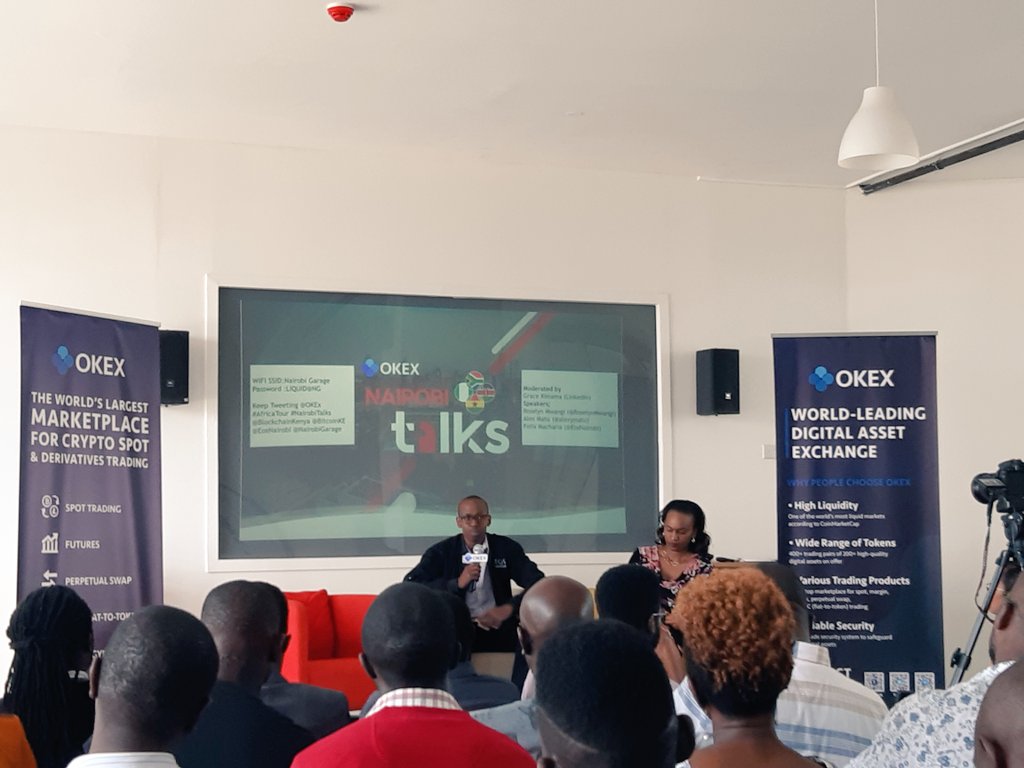
A week after another, especially on weekends, you will find cryptocurrency and blockchain meetups and events hosted at various places in Nairobi. A quick lookup at Meetup and Eventbrite generates several searches about meetups and events aligned to crypto and blockchain interests, as well as trading tutorials, past and those that are yet to be hosted, with a motive of discussing opportunities in cryptocurrencies and blockchain space. They are about a technology and digital money that is poised to take over the world after fiat (national currencies) — and cryptocurrency is nicknamed the “next generation” money.
Photo courtesy of Roselyn Mwangi
During these events, speaker and guest after another will praise this “newly found‘ solution for all things money, finance, and economy in general. Meet the new young and old crypto enthusiasts, traders, investors, leaders, experts, trainers, and CEOs of young companies in this space. And Kenya, like the rest of the world, is preparing to host not just the few local and international groups, experts, companies, and startups that are already positioning themselves ready to the take mantle in the cryptocurrency digital space especially in developing nations but also see “traditional” companies converted to cryptocurrency business with a rebrand.
All have a promise for a digital revolution, making businesses easier and cost-effective by way of reducing middlemen, introducing instant payment for businesses, revolutionizing the way we manage information in almost every sector of our economies, and the possibility for providing new job and business/investment opportunities such as through trading exchanges and crypto careers.
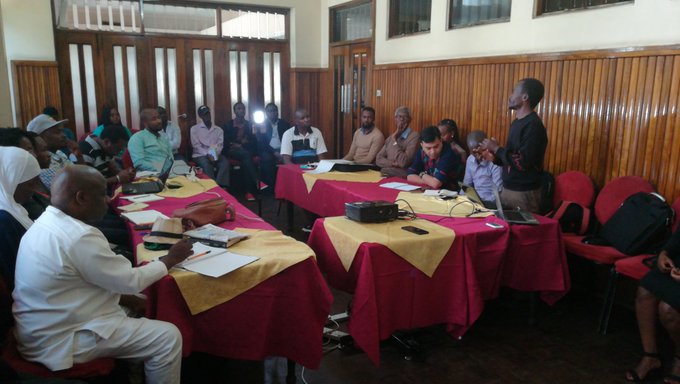
But what exactly is the role and future of cryptocurrencies and blockchain solutions in developing nations like Kenya? Is it a promise we can bank on and in the long run? One of such events was hosted last weekend by Cryptocurrency Academy, an education solution for all things crypto and blockchain, for both the young and old.
Blockchain gaining more acceptance and crypto adoption is real in the country
Unlike five or three years ago, now blockchain technology needs no further introduction within government and private sector circles. In Kenya alone, like the rest of the developed and developing world, blockchain, coupled with Artificial Intelligence and other tech could become the new normal for how we do private and public government business a few years to come if the recommendations by the Kenya Blockchain & Artificial Intelligence (AI) Taskforce andBlockchain Association of Kenya are anything to go by.
These technologies, going by the “hype”, could propel a whole generation, wipe out poverty and unemployment in no time, simply by re-looking at data and information management and information movement, information security and revolutionizing payments platforms. Without hype, implementation of blockchain could help reduce corruption, improve the efficiency of private and public sector processes, reduce the cost of doing business and unlock trillion dollars informational economies in entirely any sector of any economy. But much is to be done to achieve that goal.
According to the Kenya Blockchain & Artificial Intelligence (AI) Taskforce report released earlier this year, Kenya requires to adopt the technology to not only deal with rampant corruption but in order to improve business and government processes. The report is full of recommendations that include the necessity of the country launching a central bank controlled digital currency and which can be traded globally. If there would be anything to pick about blockchain and digital assets from the report, the country is about to further cement the important role blockchain and digital currency can play in bettering financial inclusion, reducing transaction costs within business and non-commercial operations, helping with delivery of affordable housing, improving health and drug safety and medical supply traceability, improving land titling and many other things.
Cryptocurrencies aside, if the report can inform the government’s approach towards blockchain, the findings of the report could help encourage further expansion of the blockchain space in the country for instance by encouraging private and public ventures in the space and creating necessary conditions for their thriving.
More Kenya-born and grown startups
On the ground, although local blockchain and cryptocurrency ventures are hardly mentioned outside of the crypto circles and beyond crypto media channels such as BitcoinKe or even cryptomorrow.com, you will be encouraged to meet startups born and grown in Kenya. And the number is increasing. Ubrica (Ustawi Biomedical Research Innovation and Industrial Centers of Africa) for instance, a crypto project specializing in life science and health production, is using Ubricoin to incentivize biomedical research and facilitate quality healthcare in the country.
During the cryptocurrency education campaign event or class held last weekend at the Ambassador hotel and organized by yet another crypto education-oriented Kenyan-based Cryptocurrency Academy, Ubrica project and Ubricoin President Dr. Macharia Waruingi said that cryptocurrency has potential to bring the required changes in health and other sectors of the economy and that digital assets are the future for the country. That indeed, crypto and blockchain can help end poverty and diseases.
The company aims at solving low-quality health in Kenya, lack of access to health service and the high cost of healthcare services.
“Cryptocurrency is the money of the future and that is precisely where we want to be,” Said Waruinge. “If you don’t have cryptocurrencies in 5 years, you are out of money. The good thing about cryptocurrency is easy to handle. It’s like what we call “Whatsapp.’ It’s on the phone..everybody’s phone.”
The company uses Ethereum blockchain and crypto to facilitate a market (Sokojanja) for and global movement of local produce and healthcare goods and services.
“And because it is money, we create enough money to support healthcare development in our own nation,” He said. The coin is listed on CoinMarketCap.
Still, there will be many international cryptocurrency projects with local presence in Kenya and developing worlds of Africa, among them DIVI Project and DagCoin just to mention a few,
Locally-inspired crypto and blockchain development initiatives
There are a host of limitations and conditions to adhere to when it comes to the utilization and integration of global cryptocurrency payment gateways and fiat payment gateways for platforms and organizations in the local scene. Many are denied linkages at local scenes because local payment methods may be seen and regarded not as competitive enough at the global scene, security-wise.
Thus the presence of a strong local developer community comes in handy. And Kenya’s crypto developer community is becoming larger by day. Represented at the event was KeshoLabs, a Kenyan-based blockchain innovation, and development hub/center, represented by their Chief Marketing Office Roselyne Wanjiru. Like the EOS Nairobi community, KeshoLabs community of blockchain developers and innovators develop in-house solutions as well as nature local and Africa-born blockchain solutions that can be banked on.
Some of their notable innovations include mobile-based Pesabase, a payment, and a remittance solution that allows people to send money and pay for goods and services across East Africa.
They are also into offering training and education, with Cryptocurrency Academy being at the forefront of equipping everyone including cryptocurrency traders, crypto investors, blockchain innovators, and even young generations with practical knowledge about cryptocurrencies and blockchain. They are considering incentivized cryptocurrency education with beginner and detailed training modules targeted at starters and advanced traders and investors in the space. CEO of CCA Joyce Shiphra said blockchain and crypto training offered by the startup would help people to learn the opportunities including job opportunities in the crypto and blockchain space. She said the introductory tutorial was meant to introduce the basics of blockchain and digital money but more was on the way. CCA also offers more: ICO reviews and cryptocurrency project analysis for its audience and is coming back in the space after a few years of dormancy.
Outta scams and into adequate knowledge and information
Brian Adams Kuria, the COO of Cryptocurrency Academy was among the earliest guys to get into crypto in the country when very few hands could get a hold. He said he was motivated by profits and “money” to get into this space, but he later came to realize the potential of the entire space if people would be empowered through knowledge to participate. Himself has earned lots of money trading on crypto exchanges such as OKEx and Binance and investing in ICOs especially in 2017 and 2018 but has fallen to different scams that were popular in 2017 and 2018 in the country when cryptocurrency buzz grew to surmountable levels in the country, especially during the meteoric rise of Bitcoin prices so much that everyone wanted in which made unsuspecting people fall easily to scams from local and global scams that have since vanished with their money.
During the Bitcoin’s meteoric rise in 2017, I was already busy at Crypromorrow writing and advising people regarding trading and discussing all things crypto and blockchain and how to avoid scams and identify genuine crypto projects. Guests at the event agreed that scams are a major impediment to the success of genuine crypto and blockchain projects in the country. Even to new entrants. Our journalist for the event, who is also a motivational speaker, Keith Muoki, himself said had been scammed by a cryptocurrency exchange known as change high and $3000 bit the dust the first month he got into crypto this year. The exchange claims to facilitate quick and easier PayPal crypto purchases. Even in local peer to peer exchanges like Paxful and local bitcoin, stories are live about charge-back based scams. It makes sense for everyone to be equipped with enough knowledge and information about digital currency.
“What we learned when I came into the cryptocurrency space in 2017, even before OKEx, is that there are many scams in cryptocurrency in Kenya.” David Kariuki, Community Manager for OKEx, a global cryptocurrency exchange said. “That is why OKEx is partnering with Cryptocurrency Academy to provide people who want to trade and invest in cryptocurrency with the right knowledge and information on genuine platforms they can use and how to do it.”
Echoing the statement that blockchain and crypto are the future of economic, financial and business systems of the world given their potential to cut down lengthy and costly processes and eliminate middlemen, he said the partners are trying to raise a serious debate around crypto and blockchain topics to help people discover the many opportunities abound in this industry and each to find their place in it.
“Each has a place in the crypto world including the middlemen,” he said.
OKEx is partnering with local trainers in order to host local events and training month after another, about crypto trading and investing and all matters cryptocurrency, to equip people interested in trading and investing and the blockchain space in general. Kariuki said given scams in the space, people needed exchanges and platforms to assure them the security of their money when trading and investing whenever they deposit, to ensure the money doesn’t just disappear.
Nevertheless, cryptocurrency, like in any field, success won’t come by giving up or burying your head into the sand and stopping once you are scammed. It is not a field for the faint-hearted and will require persistence and trying out new things.
“Whenever I got scammed, I came across something new that got my attention, so I wanted to dig more and find more information about what is this what is this blockchain, what is this Ethereum what is this whole thing Cryptocurrency Academy?” Said Adams. “And each and every day you find that the whole market cap was rising in terms of value so that really kept me going, but what I really wanted most is to learn and you find that this industry keeps evolving at a very fast rate. Every time you find something new. We had ICOs Initial Coin Offerings now we have other things like staking, lending and mining and all that. And you find they are very nice ways of positioning yourself for the future.”
Still, even as cryptocurrency offers such as margin trading on OKEx, Binance and other cryptocurrency exchanges get too tempting, buyers and sellers willing to earn profits from trading and investing need to be more careful. Comes back to the need to gain more information about crypto trading and investing.
“I would really advise for anyone before you get into margin trading, please understand how to trade because margin trading is basically borrowing money,” Said Adams. “Let’s say you have $1000 and you can borrow 2 times what you are holding, but it means whenever you are making losses the OKEx platform never incurs any losses so if you borrow $2000 it means you are making a 2% loss. You have incurred a 2% loss of $2000 on your $1000. So you really need to understand how to trade. You really need to understand how to mitigate risks. How to control emotions and that’s the psychology part of it.”
It’s what they will be teaching to those willing to look at this investing and trading opportunity. Himself started trading in 2017, said it took a couple of years to learn the art and has tried margin trading at OKEx and other platforms. He said people need to be careful with such things as fear of missing out because price decrease when one has taken leverage or margins can mean a huge loss.
George Mwakisha Africa’s Business and Investment Manager for KubitX said cryptocurrency trading and investing is very lucrative right now but advised traders and investors to first gain adequate information, start by learning to trade and invest in crypto before they can get in. They should do own research for any cryptocurrency they want to invest in, check the legitimacy of the project, start small according to their estimation, consult where possible.
How to identify genuine and scammy project? check background thoroughly, take time to dig details of owners and rely on informed analysis.
The entry of global exchanges and companies will boost space
Remitano, Bitpesa, Belfrics, Localbitcoins, and Paxful are all popular names among local Kenyan crypto traders, being cryptocurrency exchanges and crypto purchase platforms that are based and developed out of the country or have good coverage if not developed in the country (for the likes of localbitcoins and paxful). They facilitate the direct exchange of local currency (fiat such as Kenya Shillings) with cryptocurrencies such as Bitcoin. The bad side is that they are not only too expensive but also they do not support as much crypto pairs beyond bitcoin or Ethereum. Not much.
Right now, there isn’t as much demand for local crypto-to-crypto exchanging services which is what most global exchanges with a physical local presence are both offering currently with possibilities of extending local fiat linkages. But as the cryptocurrency space expands, and as more dApps keep developing on top of popular platforms such as Ethereum and Tron, more demand for crypto-crypto exchanging on OKEx and other exchanges is going to arise.
That would create more demand for tokens other than Bitcoin. Branding has never been so important like now at such a time when many people are looking for not just heavyweight but genuine non-scam exchanges to call home. Its time to get things right.
Pan-African exchange KubitX is working on supporting local currency (fiat) purchases of cryptocurrency and is developing the solution through Interswitch banking gateway in order to allow customers to buy crypto with money in their bank accounts; said George Mwakisha Africa’s Business and Investment Manager for KubitX. For now, many will need to be comfortable with buying Bitcoin and crypto from the local peer to peer exchanges and depositing that into exchanges that do not offer fiat linkages or solutions (buying and selling cryptocurrencies with local currency) except likes of OKEx where a customer to customer transaction is set to be enabled.
When it comes to direct payment gateways where an exchange integrates fiat or local currency payment method to allow customers buy directly from cryptocurrency exchange through methods such as MPESA, PayPal and banks, regulation and politics around crypto could take a tighter grip to protect fiat methods unless where innovations such as Customer to customer (c2c) payments can be used where a customer would send local currency directly to another customer say to their bank, PayPal accounts, or mobile phone when using mobile payment methods. But those have their challenges as well when it comes to implementation.
Nevertheless, Mwakisha said local exchanges are short of options such as margin trading offered at OKEx, which is set to hold another event on November 30 to train people on cryptocurrency margin trading. He said OKEx is now focusing on Africa and is starting to offer such new services in Africa which local exchanges are missing on.
OKEx offers other services such as mining, staking, and piggybank where customers can deposit cryptocurrency and earn from their spare tokens and Bitcoin. It offers more than 100 token pairs for trading and different customers who love buying into ICOs and IEOs to hold (hodl) coins hoping to sell them at high prices later have reported profits. Still, although buying at local exchanges is more costly, one can deposit Bitcoin to trade margins, hold, save, or to swing/day trade on this and other exchange.
David is the Community Manager for OKEx in Kenya. Telegram: @DavidKariukiN
Join us on Telegram @okexofficial_ky for more as well as for local events
The government is in dire need of cash, the new measures are meant to help it address the cash shortage that is threatening to cripple the President’s Big Four projects.
Parastatals are required by law to remit surplus funds to the Consolidated Fund every year, instead of keeping the cash in commercial banks. Mr. Yatani further wants them to make full disclosures of internally generated revenues.
Days after President Kenyatta summoned the heads of State corporations and reinforced acting Treasury Cabinet Secretary Ukur Yatani’s orders to remit excess cash in new austerity measures, the treasury has received about half of the sh78 billion target.
However, Global Economist David Ndii is sending a warning over this latest move by the State as it comes with severe consequences. In sex points, Ndii deconstructs the directive and translating what it means.
Below are his pointers;
So State House has ordered parastatals to hand over all their cash reserves, treasury bills/bonds and even A-in-A revenue (i.e what they earn in service fees) to the Treasury. What are the implications? A thread.
This is going to impair the cash flow of these corporations and in effect, operations and service delivery. The state corporations which have had their own resources will now have to depend on the notoriously unreliable and unpredictable exchequer releases.
While the memo suggests that some of this money will settle pending bills, far from solving the problem, it has now transferred it to parastatals whose suppliers will now be at the mercy of the exchequer. Expect some parastatals to default on their suppliers in coming days.
Because the key driver of the government’s financial crisis is foreign debt, part of the money confiscated from parastatals is going to pay the foreign debt. Instead of circulating in the economy it is going to China. Another body blow to an already battered economy.
The confiscation of t-bills/bonds is for all intents of purposes, a default action. It does not matter that these are state corporations, these debt instruments backed by law, and the government/debtor has suspended law. It’s a case of might is right, impunity.
The confiscation of t-bills/bonds is for all intents of purposes, a default action. It does not matter that these are state corporations, these debt instruments backed by law, and the government/debtor has suspended law. It’s a case of might is right, impunity.
When it gets more desperate as it will, what will stop it doing the same to other vulnerable investors eg. public pension funds? By resorting to such a draconian action, it has exposed that its more distressed than its been letting on. Expect investors to take note.
Mohamed Wehliye, Advisor, Banker and Economist:
Mohamed Wehliye.
1. GoK has instructed parastatals to transfer ownership of all the t-bonds they hold to GoK. Debtor asking Creditor to transfer all debt to it. This effectively = forced debt cancellation.
2. Some would ask – what is the problem? government borrowed from itself in the first place & that is now being reversed. Well, it is complicated.
3. You see, when parastatals bought these t-bonds, they paid GoK. So GoK has already spent this money. Kwisha, that money has been spent!
4. In the absence of a 3rd re discounter (market is illiquid), these t-bonds can only be rediscounted at CBK (the guarantor & lender of last resort of GoK)- meaning CBK (a GoK agent) will pay GoK for these t-bonds! This is akin to printing money – backdoor overdraft to GoK!
CBK would then have to go out & mop up all that liquidity from the market later. Fiscal patient spreading its disease to its monetary brother. Selling t-bonds not once but twice! Would like to see how this instruction would be implemented
Businessman Kamlesh Pattni is set to receive millions of shillings from the Ethics and Anti-Corruption Commission (EACC) after the agency lost a Court of Appeal suit challenging the payment.
Three Court of Appeal judges dismissed an appeal by the anti-graft agency saying the compensation fee of Sh20.5 million to the two companies associated with Mr Pattni was valid.
EACC will now pay Mr Pattni the Sh20.5 million plus interest for the more than 15 years that the dispute has been in court.
Mr Pattni had been tried but never convicted despite multiple investigations into the suspected loss of some $1 billion (Sh103 billion) of public funds over bogus diamond and gold exports, in the infamous Goldenberg scandal.
The Goldenberg scandal nearly ruined the Kenyan economy, spurred inflation, devaluation of the shilling and prompted international donors to cut funding to then President Daniel arap Moi’s regime.
The anti-graft agency had sought to place Marshalls East Africa Ltd and Delphis Bank as well as seven other companies under receivership, arguing that they were acquired using Goldenberg.
Marshalls East Africa Ltd and Delphis Bank Ltd sought Sh60, 470,778 and Sh80, 573,021, respectively, but the court’s deputy registrar reduced the fee to Sh10,266,320 for each of the firms.
Simba Corporation, a company that has been in Kenya for over 50 years offering motor vehicles sales, hospitality, power systems, and vehicle financing is going to lay off more than 1,500 staffs from an estimated workforce of 30,000.
Simba Corp Group executive chairman Adil Popat (left) and group chief executive officer Dinesh Kotecha. Photo courtesy
Simba Corp CEO announced that they will be restructuring the company’s operations citing need to reduce costs and improve service delivery in this hard times for any running business in Kenya.
“We are restructuring our business processes to enhance efficiency in our operations, reducing costs and improving service delivery to our customers.” Simba Corp CEO Dinesh Kotecha said in a statement.
After the announcements hit the media, CEO Dinesh Kotecha released another statement further revealing that the restructuring process will affect less than 5% of its workforce.
“We would like to state that we anticipate less than five per cent of our group workforce will be affected by this restructuring process. The restructuring stems from prevailing economic market conditions in our market and industry than any other factors.”
Since Jubilee took power in 2013, Several companies have retrenched citing hard economic times and difficult operating environment with majority of local firms halting their operation.
In September, Kenya’s biggest sports betting firms Sportpesa and Betin Kenya halted their operations after lengthy tax standoff with the Jubilee administration.
Again, in September this year, cash strapped East Africa Portland Cement Company (EAPCC) sent packing 136 supervisors and managers in a restructuring move.
In October, Uhuru and Ruto’s owned Mediamax Networks Limited fired at least 160 employees redundant, in a bid to cut costs. The list is soo huge— literally, the country is collapsing and unmangeable foreign debts are an additional insult to the dangling economy.
Kenya’s current economic model, of course under Uhuru Kenyatta and William Ruto, is the actual study of INEQUALITY BY DESIGN.
Days after President Kenyatta summoned the heads of State corporations and reinforced acting Treasury Cabinet Secretary Ukur Yatani’s orders to remit excess cash in new austerity measures, the treasury has received about half of the sh78 billion target.
“We are happy with the progress and we expect to hit the target,” Mr Yatani told Journalists. “A few days after making the announcement, we have received Sh33 billion. These funds will be injected into development projects in line with the Big Four agenda.”
The government is in dire need of cash, the new measures are meant to help it address the cash shortage that is threatening to cripple the President’s Big Four projects.
Parastatals are required by law to remit surplus funds to the Consolidated Fund every year, instead of keeping the cash in commercial banks. Mr. Yatani further wants them to make full disclosures of internally generated revenues.
Dr Daniel Manduku, the Kenya Ports Authority managing director, said the agency had handed in Sh18.7 billion to the Treasury as a special dividend on Saturday.
“KPA was able to pay its main shareholder, the Government of Kenya, a return on investment and was the highest contributor among parastatals,” Mr Manduku said.
The Kenya Revenue Authority handed in a cheque for Sh6 billion on Friday while Kenya Pipeline Company handed over Sh5 billion. Sources say the Kenya Airports Authority plans to wire Sh12bn to the treasury.
The Treasury in the last financial year collected Sh24.6 billion from State agencies and regulators against a target of Sh36.7 billion.
The Treasury had blamed much of the shortfall on lower remittance by the Central Bank of Kenya (CBK), one of its largest contributors, which was expected to deliver Sh5.8 billion but only managed Sh800 million.
Scandal ridden and loss making Kenya Airways continues to attract headlines. Currently, the airline is in loggerheads with Kenya Airline Pilots Association (KALPA) over failure in the Collective Bargaining Agreement (CBA) talks and its adoption of contract hiring as the reason for the latest clash with its pilots.
KALPA accused the airline of breaching aviation industry laws that guide airlines on aircraft maintenance.
According to the association, pilots have been left to conduct routine tasks meant for engineers, under the “Crew Concept”, which has not been approved by the Kenya Civil Aviation Authority.
KALPA said its members will no longer conduct any tasks meant for the technical crew.
“The operation involves defects being rectified by maintenance, after which the aircraft is still released without the flight certification release sign off by the concerned engineer,” said KALPA General Secretary Murithi Nyagah.
A while back, the association pulled out of CBA talks and filed a trade dispute at the Labour Ministry, citing among others, shortchanging by the airline in the hiring of additional pilots.
While KALPA wanted KQ to hire pilots for its wider but smaller Embraer planes, management opted to hire expatriate pilots on contract for its Boeing 787 aircrafts.
“It is worth noting that prior to this new move, there was no official communication regarding hiring contract pilots on the Boeing 737,” Nyaga said.
Currently, Kenya Airways operates a flight schedule that requires 600 pilots against a capacity of 430 creating a deficit that has resulted in flight delays or cancellations.
Kenya Airways this year reported a Sh7.5 billion loss for the full year to December 2018 even as its board mulls making a proposal to the Government to nationalise the airline as an alternative to the controversial Jomo Kenyatta International Airport (JKIA) takeover plan that has been met with resistance.
The national flag carrier reported a Sh6.3 billion loss in the nine months to December 2017. KQ last year changed its financial reporting period from April 1 to March 31 which now covers January 1 to December 31 in line with the rest of the industry.It is still in transition and the 2018 financial statements cover a 12-month period from 1 January 2018 to 31 December while the financial statements for 2017 cover a nine-month period from 1 April to 31 December 2017.
Faced with collapse, the unnecessarily overpaid CEO Sebastian Mikosz during an interview suggested that all Kenyans should be compelled to use KQ as an alternative to save the airline he was hired to revive. “If we were given a law which obliges all Kenyans to fly Kenya Airways, I could predict profitability within weeks.” Said Mikosz.
The slogan of Kenya Airways (KQ) is “The Pride of Africa”. Therefore KQ is an important entity for this country. In the past, KQ has been an envy of the continent. It carries our national flag and identity globally. With that in mind, the national carrier must be saved from Ksh25.7 billion loss which signals imminent collapse of the airline.
In order to save the “Pride of Africa”, the challenges which contributed to the huge loss must be known. Currently, some challenges have been pointed out. The slump in tourism did affect many sectors of the economy and Kenya Airways was not immune. It is also true that the Ebola outbreak in West Africa affected KQ business.
Senate preliminary investigations have pointed out that poor management and investment have indeed affected the airline’s operations. For example, un-strategic business decisions have dogged the operations of the airline leading to a model that is consuming more than it is generating.
Poor business decisions such as the buying and leasing of planes has left the airline highly indebted. The financial results released show that KQ loans were no longer sustainable. This calls for a thorough audit to establish the huge jump in the losses.
Looking at KQ’s statement of financial position, its long term debt increased from 31.4 billion to Sh50 billion from 2013 to 2015. In the same period, its debt-to-equity ratio rose from the theoretical optimal of 1.01 in 2013 to the watch-list level of 1.78 in 2014 before signaling red at (17.47) in 2015. Such a major increase in the level of debt, without corresponding increase in equity carried significant risks and financial instability.
To make a capital call on the shareholders might be appropriate, partly because the capital structure, holding other factors constant, is less than optimal and more significantly immediate. The two major shareholders, the National Treasury that owns 29.8 per cent and KLM that owns 26.7 per cent, will need to consider major capital injections to rescue the airline.
A debt restructuring would also be an amiable alternative, perhaps lengthening the maturity of debt and leases to reduce the level of financing costs. This will give the firm the flexibility to re-strategise on how to recover business operations. Often times shareholder rescue packages and creditor restructuring plans come with stringent terms and conditions, and rightly so.
The prospects for recovery are not positive going forward. KQ has been awarded the best business class and best cargo airline in Africa three years in a row. Besides, the management’s determination to achieve better altitude is however still not promising, and the skill set both in management and board leaves much doubt on the ability to turn around the firm.
Mobile money lenders are looking to take advantage of Kenyans taking out short-term loans for the festive season, the digital lenders expect a spike in the coming weeks up to early 2020.
The need for quick loans to pay for holidays ahead of Christmas and New Year festivities and school fee is expected to fuel demand.
Nearly 17 million digital loans have already been disbursed as Kenyans increasing turn to their mobile phone to access credit.
“Across Kenya, 16.4 million loans have been disbursed digitally since the launch of the first digital credit offering seven years ago. In the past two years alone, the number of digital loans issued has approximately doubled,” a survey conducted last month shows.
Mobile lenders have however been asked to perform thorough background checks before giving out loans in order to cushion themselves from those already saddled with unpaid loans.
Requests by banks for loan repayment reports from credit reference bureaus (CRBs) jumped nearly three-fold to 12.40 million. Central Bank of Kenya (CBK) data shows that requests for loan reports from the CRBs rose by 181.1 percent last year.
The Kenya Commercial Bank (KCB) and Cooperative Bank of Kenya have agreed in principle to let go of a combined Ksh.655.5 million in outstanding credit to debt-strapped Uchumi Supermarket.
Uchumi Supermarket had written a company voluntary agreement (CVA) to the lenders, the CVA seeks to restructure the company’s debt into the medium term in a means to relieve pressure off Uchumi’s hard pressing repayment obligations.
Acting on the CVA, KCB was first to write off all accrued interests and penalties an which equal Ksh.365.6 million while offering a 44 pc discount on its lease facility which represents a further Ksh.180.9 million.
Cooperative bank has offered the retailer a 40 pc waiver of its total outstanding loan facility including both principal and accrued interest which amounts to a Ksh.109.1 million write off.
This, however, is on condition that the retailer pays up 10 percent of the outstanding Ksh.163.6 million after write-off immediately.
Uchumi has had a hard time selling it’s CVA to lenders with banks like the United Bank of Africa (UBA) not having any of it. UBA has now objected twice to the retailers debt restructuring proposal.
UBA wants the retailer to pay up an upfront settlement of 70 pc of its outstanding loan totaling Ksh.180.5 million including accrued interest and the clear demonstration of the source of the pre-payment before the approval of the CVA.
Despite the tough business environment, the retailer remains optimistic of sealing the CVA and taking back the company to making profits. “At the present moment, the business environment is harsh and challenges meeting all obligations. However, acceptance of the CVA will eventually enable the company to get back to normalcy,” Uchumi Chief Executive Officer Mohamed Mohamed told journalists.
Kenya has now joined the global community in terms of data protection standards. On Friday, President Uhuru Kenyatta approved a data protection law, which complies with European Union legal standards.
The new law will see the country attracted foreign firms with innovations such as Safaricom’s M-Pesa mobile money services. Earlier, the lack of safeguards in handling personal data had held it back from its full potential.
The new law will set out to lay down restrictions on how personally identifiable data obtained by firms and government entities will be handled, stored and shared, the government said, as it looks to bolster investment in the IT sector.
Joe Mucheru, the minister for information, technology and communication, Says the new law complies with the EU’s General Data Protection Regulation, which came into effect in May 2018 and said an independent office will investigate data infringements.
Companies such Safaricom, Kenya Airways and tourist hotels will have to comply when handling personal data from clients, Mucheru said, as will phone-based lenders such as Mshwari.
Huge companies that had shied away from investing in the company have now shown willingness to set up shop. Amazon Web Services, part of the Amazon group, said on Friday it will set up part of its cloud infrastructure in Kenya, adding it was encouraged by the new law.
Those violating the law face a maximum fine of Sh3 million or two years in jail, a copy of the law seen by Reuters states.
State-owned National Oil Corporation of Kenya which has been revealed to be operating at the mercy of bank overdrafts and facilities from commercial lenders has now put up property worth Sh.566 million up for sale.
The oil marketer offered the retail stations and prime land in a listing tender notice on its website. “National Oil Corporation of Kenya invites sealed tenders from eligible candidates to purchase National Oil assets and parcel of land… The assets are sold on “as is, where is” basis.”
The listing delivers a huge blow on the marketer who had announced plans to open 185 new retail stations across the country over the next three years as part of its turnaround strategy.
The properties up for sale which the firm has valued at Sh566 million include two houses — Kunde Road Residential House and Thompson Estate in Lavington Nairobi —and land in Embakasi, Nakuru and Nyahururu.
The petrol stations include Tigoni Service Station along Limuru Road in Kiambu, Hunters Service Station in Makueni County, Londiani Service Station in Londiani Town Kericho County, Sagana Service Station in Sagana Town Kirinyaga County and Bondeni Service Station in Nakuru Town.
This comes as the firm has become a circus for competing political interests and corporate intrigues after earning the dubious distinction of having three CEOs in one month.
India’s Bharti Airtel owned Airtel Uganda has rolled out Airtel Broadband, a product that will see its Ugandan consumers buy 1GB of data bundle at UGX1500 equivalent of Ksh41.
The Airtel broadband that is now on shelves in Airtel authorized vendors and stores goes for UGX280,000 (Ksh7,800) with free 51GB valid for a month. Customers can recharge with Ksh41 per 1GB data.
“Early this year, we made Uganda 100% 4G. We went on to introduce new and transformed technologies like the 4×4 multiple input, multiple output (MIMO).Today we decided to go a step further to introduce fixed data or for homes and businesses,” said Airtel Uganda managing director VG Somasekhar.
“The product comes with an outdoor unit that ensures you have strong wifi signals and an indoor unit to to ensure that your devices receive strong, uninterrupted signals.” Brenden Kachenje, the General Manager Airtel Broadband said
“Many countries are now using e-commerce to do business. Consumers can purchase anything 24/7 from wherever they are. This innovation by Airtel is not only a great push towards economic development, but what’s happening with the rest of the world is so fast that if we don’t take this approach we shall be left behind. Airtel Broadband is a start in that direction,” State Minister for Trade Werikhe Kafabusa.
Issa Sekitto the spokesperson of KACITA says, "I can tell you that as Airtel you have won the hearts of my members. Whether you are in a garage, office or downtown, the first thing a small holder businessman will ask is whether you have an Airtel facility. " pic.twitter.com/G6aIKtJd4m
"The implication of this new product is that I am saving at least UGX 2200 on every GB. Whoever brings a service that helps people save is delivering relevance. As KACITA we would like to pledge our support for this and all the other services you've provided," he said
Cheap data in Uganda comes as a song to deaf ears to Ugandans who still have to pay a daily tax of Ugh200, an equivalent of Ksh6, to use online platforms including Facebook, WhatsApp and Twitter as introduced by President Museveni in July this year.
Competition Authority Of Kenya has rubbished off KRA orders prohibiting local distillers to sell alcoholic spirits in 250-millilitre containers below Sh150.
According to KRA, the retailers selling spirits at or below Sh150 are tax cheats and illicit brewers who flood the market with deadly drinks. KRA stated that production expenses and duty cost don’t permit alcohol to be sold at that price. A statement that has forced CAK to seek constitutional clarity over the KRA order, pointing out that KRA could have breached sections of the antitrust law.
“We are aware of it (price-setting order) and we have written to KRA to set up a meeting so as to appreciate where they are coming from,” CAK Director-General Wangómbe Kariuki told the Business Daily in an interview.
KRA orders also warned distillers who sell products below Sh150 that their products would be impounded or/and withdraw their operating licenses. This whacks a large generation of consumers of upsurging cheaper spirits like Moonwalker, Jambo Extra, Dallas, meakins just to name but a few…
“Based on our review, products in the market with a selling price below Sh150 per bottle of 250ml at 40 per cent v/v are considered non-compliant in tax based on the minimum cost structure. We request companies to adjust the prices in the current and subsequent tax returns to reflect the correct price benchmark for the alcoholic beverage sector for tax purposes.” KRA says in a letter addressed to distillers.
In the letter, KRA issued a seven-day notice for compliance with the minimum price order.
“KRA intends to commence mop-up of all products sold below the benchmark prices and sanctions imposed on the affected excise manufactures. The mop-up will start after seven days from the date of this letter,” added KRA in reference to the order sent in late October.
Kenya has the highest rates of tax on alcohol as compared to other African States. Here, Spirits are taxed at Sh221.24 per litre or Sh55.31 for the 250-millilitre product.
Tusker lager has a recommended retail price of Sh180 per bottle and Sh55.31 goes to the taxman directly as excise duty. Tax on beer has increased from Sh32.50 per bottle in 2014.
Beer and Spirit heads in Kenya have been thrown once again under the bus. High taxes have pushed almost bankrupt Kenyans to cheap alcohol majority who are illicit drinks.
KRA Commissioner for Domestic Taxes Elizabeth Meyo said the move to set the minimum price would boost tax revenues and help the taxman to clamp down tax cheats.
“As part of compliance monitoring, KRA monitors the prices in the market and any persons putting products in the market that fall below the minimum cost structure are normally targeted for compliance checks. We derive the minimum cost structure from the analysis of the cost of inputs required for the production of a unit of alcohol,” said Ms Meyo.
However, the competition watchdog, CAK, has protested KRA’s orders setting a binding minimum price of Sh150 and the threat to impound products selling below the price.
“Restrictive trade practice which directly or indirectly fixes purchase or selling prices or any other trading conditions in Kenya, or a part of Kenya, are prohibited, unless they are exempt in accordance with the provisions of Section D of this Part,” reads Section 21(1((a) of the law. Part D allows manufacturers to recommend non-binding retail prices.
CAK in 2016 fined British multinational SABMiller Sh2.4 million for engaging in restrictive trade practices by setting minimum prices for its products.
In 2016, Crown Beverages, British SABMiller owned company that sells Redds, Castle, Nile Special, Keringet mineral water, Peroni and Miller was fined Sh2.4 million by CAK for setting the minimum prices for its products.
While KRA focuses more on imposing taxes on Kenyan products, Kenyans who have nothing in their pockets will still go for as cheap as Ksh20 illicit drinks from Uganda and Tanzania flooded on porous Kenyan markets. We are a country that is under the leadership that is focused on taxing more than creating a conduce business environment more fillings of tax returns.
Kenyans living in Nairobi are moving out of the cities rented spaces and moving to satellites towns out of the city as rent continues to soar unabated.
Realtor HassConsult while releasing its first quarter residential and land price indices, showed that asking rents in the city have surged nearly threefold since 2007, pushing many Kenyans working in the city out. More movement can be seen in satellite towns like Ngong, Kitengela, Rongai, Ruai and Ruiru. The influx of tenants has also seen rents in these town rise, Thika, Ruiru, Ongata Rongai, Ruaka and Kitengela, saw an average rental increase of 2.1 percent on the lower side and up to 26.5 percent on higher side, between quarter three of 2018 and same quarter in 2019.
In Kitengela and Thika, the monthly median rental price for a one-bedroomed house stood at Sh15, 000, In Ongata Rongai, the monthly mean price of a one-bedroom rental stood at Kshs9,500. In Ruiru, the monthly mean rental price for a one-bedroom house stood at Sh12,000 while Ruaka’s monthly mean price of a one-bedroom rental stood at Sh24,000. “Asking rents for a modern apartment here may cost as little as Sh23,400 and this bodes well for many tenants who are now preferring affordable units as they take caution to save in the wake of job losses across all sectors,” Hass Consult head of development, consulting and research Sakina Hassanali said.
Ms. Hassanali notes that Kenyans would now rather pay more in transport and spend more time in traffic and pay cheaper rent. “As the cost of living soars, the lower middle class is opting to pay slightly more in transport but less in rents.”
Land prices within the city have increased 638% since 2017 with Kiambu and Kajiado have witnessing a 894% price jump over the same period. The report says apartments in Thika recorded the highest annual growth in rents at 13.3 percent while Tigoni had the highest quarterly rate increase at 3.5 percent
The production of housing units is currently at less than 50,000 units, well below the estimated two million units Kenya’s housing deficit target. Jubilee committed itself in the 2017 campaigns to construct one million houses by 2022. More recently that figure has been revised down to 500,000.
The government should provide incentives to developers to create affordable housing as stipulated in the Constitution of Kenya and the National Development Plan, Vision 2030 Strategy according to the World Bank.