Category: Business

  • Billionaire Alibaba founder Jack Ma reappears in Hong Kong – sources

    Billionaire Alibaba founder Jack Ma reappears in Hong Kong – sources

    HONG KONG, (Reuters) – Alibaba Group founder Jack Ma, largely out of public view since a regulatory clampdown started on his business empire late last year, is currently in Hong Kong and has met business associates in recent days, two sources told Reuters.

    The Chinese billionaire has been keeping a low profile since delivering a speech in October last year in Shanghai criticising China’s financial regulators. That triggered a chain of events that resulted in the shelving of his Ant Group’s mega IPO.

    While Ma made a limited number of public appearances in mainland China after that, as speculation swirled about his whereabouts, one of the sources said the visit marked his first trip to the Asian financial hub since last October.

    Alibaba did not immediately respond to requests for comment outside of its regular business hours. Comments from Ma typically come via the company.

    Advertisement

    Scroll to continue with content

    The sources declined to be identified due to confidentiality constraints.

    Ma, once China’s most famous and outspoken entrepreneur, met at least “a few” business associates over meals last week, said the people.

    Ma, who is mostly based in the eastern Chinese city of Hangzhou, where his business empire is headquartered, owns at least one luxury house in the former British colony that also houses some of his companies’ offshore business operations.

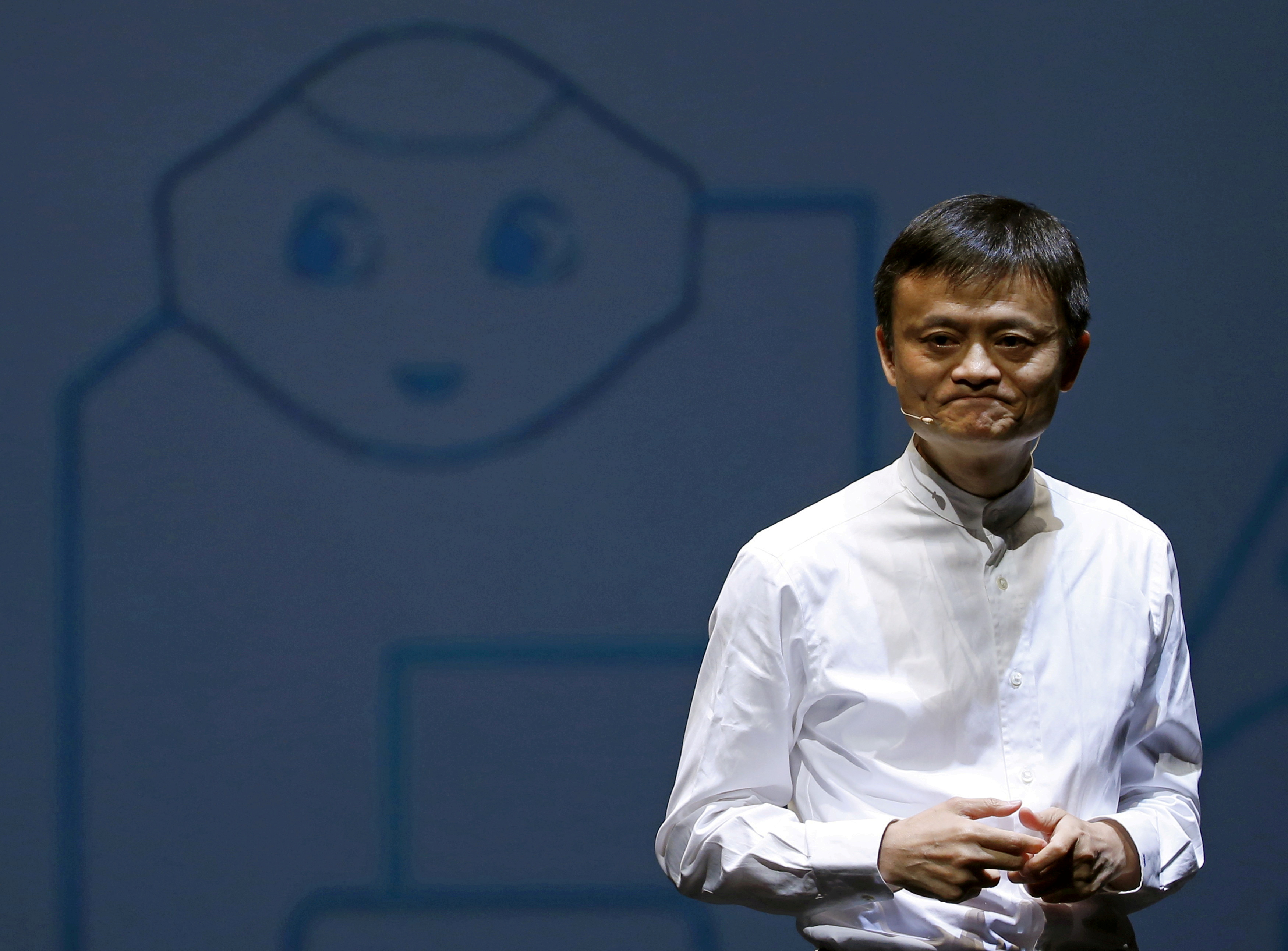
    Jack Ma, founder and executive chairman of China's Alibaba Group, speaks in front of a picture of SoftBank's human-like robot named 'pepper' during a news conference in Chiba, Japan, June 18, 2015. REUTERS/Yuya Shino
    Jack Ma, founder and executive chairman of China’s Alibaba Group, speaks in front of a picture of SoftBank’s human-like robot named ‘pepper’ during a news conference in Chiba, Japan, June 18, 2015. REUTERS/Yuya Shino

    Alibaba is also listed in Hong Kong, besides New York.

    The former English teacher disappeared from public view for three months before surfacing in January, speaking to a group of teachers by video. That eased concern about his unusual absence from the limelight and sent Alibaba shares surging.

    In May, Ma made a rare visit to Alibaba’s Hangzhou campus during the firm’s annual “Ali Day” staff and family event, company sources have said. read more

    On Sept. 1, photographs of Ma visiting several agricultural greenhouses in the eastern Zhejiang province, home to both Alibaba and its fintech affiliate Ant, went viral on Chinese social media.

    The next day, Alibaba said it would invest 100 billion yuan ($15.5 billion) by 2025 in support of “common prosperity”, becoming the latest corporate giant to pledge support for the wealth sharing initiative driven by President Xi Jinping. read more

    Alibaba and its tech rivals have been the target of a wide-ranging regulatory crackdown on issues ranging from monopolistic behaviour to consumer rights. The e-commerce behemoth was fined a record $2.75 billion in April over monopoly violations.

    Earlier this year, regulators also imposed a sweeping restructuring on Ant, whose botched $37 billion initial public offering in Hong Kong and on Shanghai’s Nasdaq-style STAR Market would have been the world’s largest.

    ($1 = 7.7812 Hong Kong dollars)

  • Waititu Risks Losing Sh52M Deposit In Botched Property Buying Deal

    Waititu Risks Losing Sh52M Deposit In Botched Property Buying Deal

    Former Kiambu governor Ferdinand Waititu risks losing Sh52 million deposit he paid to acquire an office block in Nairobi’s city centre after he failed to complete purchase of the Sh520 million property.

    The seller of the property, General Properties Limited, wants the High Court to endorse its decision to withhold Waititu’s money and to terminate the sale agreement dated May 30, 2018.

    The company received the money as 10 percent deposit for the purchase of as Solar House.

    But Mr Waititu was unable to conclude payment of the balance of Sh468 million within 90 days as stated in the sale agreement.

    Mr Waititu transacted using his company, Saika Two Estate Developers Limited, where he is a director and he was also furnished with the actual rent receivable from the office block.

    “It was a term of the agreement that upon default by Saika, the General Properties Ltd had the right to rescind the agreement and forfeit the 10 percent deposit as liquated damages for breach,” says the real estate firm’s director Charles Muhia.

    However, the seller’s decision to rescind the deal and retain the Sh52 million was contested by Mr Waititu’s company that threatened legal action.

    According to court papers, Saika also lodged a caution against the property in an attempt to compel the seller to refund the Sh52 million. General Properties says the sale agreement was approved by Mr Waititu’s advocates who also advised him to execute it.

    “It was a condition of the agreement that time was of essence and that the balance of Sh468 million was to be paid to the vendor advocates within 90 days from May 30, 2018. The defendant (Saika) has blatantly breached the conditions in the agreement,” says the real estate firm.

    It adds that Saika breached the contract by entering into a sale agreement without sufficient funds to complete the transaction and failing to complete the payment even after extension of the completion period.

    “Saika proceeded to execute the sale agreement and paid the deposit without first securing bank financing,” says the seller.

  • Prof Mohamed Abdille discovers herbal medicine to fight Covid-19

    Prof Mohamed Abdille discovers herbal medicine to fight Covid-19

    When the Covid-19 crisis hit the country last year, President Uhuru Kenyatta challenged Kenyan scientists, doctors, pharmacists and researchers to come up with an alternative way of dealing with the pandemic.

    One scientist and researcher who heeded the President’s call is Prof Mohamed Hussein Abdille, a clinical virologist, a professor of preventive medicine and an expert in the emergence of infectious diseases and a former lecturer at Egerton University School of Medicine.

    “I have come up with herbal medicine that could be the remedy to tame the spread of the deadly disease,” says Prof Abdille.

    The herbal remedy dubbed Cr7 formula has been listed by the drug Regulatory Authority, Pharmacy and Poisons Board under borderline product certificate No 1755.

    “The first listing was in July 2020 and it expired in December last year. I renewed it and it will now expire in December 2021. I have all the necessary papers and documentation,” explained Prof Abdille.

    He said since he was listed by the regulatory body he has produced nearly 500kg of the herbal medicine.

    Covid-19 virus

    In an interview in Nakuru Prof Abdille said he developed a formula to help fight Covid-19.

    “I have come up with an alternative way of dealing with the Covid-19 virus. I have decided to compliment the government efforts to battle this deadly virus,” he said.

    He continued: “The reputation of a scientist or a researcher worth his or her salt is to come up with a solution at a time most needed. This is the best time local scientists and researchers are needed by millions of Kenyans to offer a solution instead of waiting for the foreign-based solution which might come too little and too late.”

    He said the herbal medicine is in use in Kenya and to avoid counterfeit, it is available in his store alone.

    “I released it in the market last year but a retired senior military officer from the North Eastern region produced counterfeit and after that I decided to be the sole producer and distributor to maintain quality.” said Prof Abdille.

    He added: “This is a natural herb that does not require any prescription and that is why the listing certification is under the borderline product category. The users only need to follow instructions indicated in the container.”

    Prof Mohamed Hussein Abdille displays a herbal medicine called Cr7 at his home in Nakuru Town.

    Mr Peter Kiama, a resident of Nairobi confirmed that he developed mild Covid-19 symptoms of fever, dry cough and tiredness and recovered without hospitalisation after using the herbal medicine.

    “After using the herbal medicine I recovered and I believe the Cr7 formula is a solution that can tame the spread of Covid-19,” he said.

    The chair of Covid-19 vaccine task force Dr Willis Akhwale said he was not aware of the Cr7 herbal medicine but said such a move is welcome.

    Herbal medicine

    “I’m not aware of any herbal medicine for fighting coronavirus I know but we welcome people who would develop local solutions as long as the clinical trials confirm it is working,” said Dr Akhwale.

    He said some herbal medicine could just reduce the fever “and are not treating the virus. We will see what it will be able to do.”

    The Ministry of Health Acting Director General for Health Patrick Amoth said he was not aware of the herbal medicine.

    “There are many herbal medicines that are being circulated,” said Dr Amoth who is also the Chairperson of the World Health Organisation (WHO) Executive Board.

    Dr Victor Achoka, a pharmacist said that anybody producing herbal medicines must have an innate understanding of the chemical composition of those products.

    “This will rule out any guess work and avoid scenarios like the Pearl Omega drug for ‘treating’ HIV/Aids patients by Prof Arthur Obel which never saw the light of the day,” said Dr Achoka.

    He said creating a drug requires certain protocols and basics things like the ability on how the human body works.

    “The creators of herbal medicine must understand how the disease affects the human body to be able to treat the disease like covid-19. The herbal medicine may have pharmacological effect on the fight against Covid-19 but for one to prove its efficacy, there must be proof of trials. There are many herbal medicines that work. To claim it is a cure that is possible but the drug must be validated because that is how science works,” added Dr Achoka.

    Scientifically approved ingredients

    He said to validate the herbal medicine requires millions of shillings to separate the ingredients found in the plants.

    Prof Abdille said the herbal medicine is made up of scientifically isolated researched materials that took many years of hard work.

    “I have come up with scientifically approved ingredients. For instance, one of them is called thymoquinone, a promising natural compound with potential benefits for Covid-19 prevention and cure. Thymoquinone remains the major bioactive principle due to its range of therapeutic benefits including antioxidant, anti-inflammatory, anti-cancer, antibacterial, antifungal activity, and anticonvulsant activity and an immune booster. This formula mixture is helpful.”

    Prof Abdille, who is a former Kenya Medical Research Institute (Kemri) senior research scientist said it took six months to come up with this solution.

    He said herbal medicine is based on indigenous knowledge and medicinal plants found in Kenya.

    “Africa is known for its rich resources and I believe we have got herbs that can combat this virus and other viruses,” said Prof Abdille who is also a visiting Professor at Beijing Medical School and Wuhan Institute of Virology.

    He said part of his research was conducted for nearly 20 years while he was at Kemri and gained a deep understanding of herbal medicine while working in China.

    “The research has greatly been aided by my studies in China and I thank the collaboration between Kenya and China which played a key role in the invention of this drug,” he added.

    Traditional medicine

    He said he was ready to defend the herbal medicine at any forum on how it works. “Cr7 is not fictitious or anything associated with purely traditional medicine.”

    He said herbal medicine played an important role in managing infectious disease, and a range of herbal medicinal studies on the treatment of a previous SARS coronavirus (SARS-CoV), have provided clinical evidence that herbal medicines have some advantageous effects on the treatment and prevention of epidemics, with several significant results.

    However, he urged Kenyans that there is no shortcut to protection against pandemics in future.

    The best way is to learn from the current experience and countries that have successfully handled the virus like China and New Zealand.

    “Kenyans should continue to observe all the protocols to combat this pandemic. Cr7 is about prevention and boosting body immunity. Vaccines and Cr7 complement each other.”       BY DAILY NATION

  • Laico Regency Is Broke, Terminating Contracts

    Laico Regency Is Broke, Terminating Contracts

    Laico Regency is flat broke and has started terminating contracts with workers who have been on unpaid leave since March 6, 2020 — just one week before Kenya confirmed her first case of coronavirus.

    The establishment initially sent workers on 30 days’ unpaid leave, which was to end in April. But the workers were told to return at the end of June.

    On September 6, 2020, caretaker manager Jamal Ahmed sent a memo to all workers stating that Laico Regency was being shut down indefinitely.

    Through Laico, Libya acquired what was the Grand Regency Hotel from the Kenya government after paying Sh2.9 billion.

    Kenya’s government had taken ownership of the hotel from Goldenberg scandal architect Kamlesh Pattni, who surrendered some of his prime properties as part of a plea bargain in graft cases that the controversial businessman was facing in court.

    Mr Pattni later sued Kenya, claiming that he was tricked into believing that surrendering the properties would earn him amnesty from criminal trial.

    The sale to Laico was done by the Finance ministry, which was at the time under Mr Kimunya, a trusted lieutenant of President Mwai Kibaki.

    There was no procurement, and information on the deal was a preserve of very few high ranking government officials.

    On July 8, 2008, Mr Kimunya succumbed to public pressure and left the Finance ministry to pave way for investigations, just days after his famous “I would rather die than resign” statement.

    But 13 years later, the shoe is on the other foot.

    Following the hotel’s indefinite closure, the Kenya Union of Domestic, Hotels, Education Institutions, Hospitals and Allied Workers (Kudheiha) tried to negotiate some sort of pay for Laico Regency workers, many of whom are members of the trade union.

    On April 7, 2021, Kudheiha and Laico Regency finally reached a deal— all employees would be paid an exit package upon handing in their resignation letters.

    The hotel was getting rid of all its workforce, an indication that it was speeding towards the grave.

    A group of 11 workers were unhappy with the separation agreement signed between Kudheiha and Laico Regency, and they sued the hotel seeking a hefty exit package.

    Beatrice Ondieki, Maria Njoroge, Rachel Lagat, James Mwaniki, Silvester Okeno, Josephine Kinyali, Harriet Ngonyo, Victory Mutegi, Sally Cheboi, Jemima Muema, and Joshua Ndambuki argued that Kudheiha did not seek their consent before agreeing a separation agreement with Laico Regency.

    The workers asked for orders compelling Laico Regency to deposit Sh51 million in court as security for their terminal benefits, as they insisted that the separation agreement would see them lose a lot of money in pre-set salary increments.

    In seeking the Sh51 million deposit for security, the workers claimed that Laico Regency is unlikely to come back to life owing to the financial troubles arising from the United Nations sanctions on Libya, and the Covid-19 pandemic.

    The UN slapped Libya with sanctions in 2011 following a civil war in which the Tripoli government deployed security authorities to attack civilians, leading to several deaths.

    The UN sanctions have seen several countries give Libya a cold shoulder, opting not to do business or give loans and aid to the North African country.

    Financial trouble

    Governments and big-spending corporates have also avoided businesses associated with the Libya, denying its companies much needed revenue.

    The Nairobi hotel is owned by the Libyan African Investment Company, which is in turn owned by the Tripoli government. Several other establishments under the Laico brand across Africa have suffered a similar fate, as there is little capital to be injected for operations.

    While responding to the suit filed by 11 workers, Laico Regency’s caretaker manager admitted that the Covid-19 pandemic only piled more financial misery on the hotel, which was already struggling from the effects of UN sanctions imposed on several Libyan institutions in 2011.

    While Mr Ahmed admits in court papers that Laico Regency closed its doors over financial trouble, he does not expressly say if there are plans to return to operation. But he is adamant that Laico Regency is staying in Nairobi.

    He told Justice Mathews Nduma Nderi that the closure is beyond Laico’s control, but that the hotel will try its best to pay all workers fairly.

    Under the separation agreement, employees with 10 years or more working at Laico will get 4.75 months’ pay as a golden handshake. Those with nine years under their belt will get 3 months’ salary.

    Employees that had worked for two years or less will get one month’s salary.

    Hotel’s dwindling fortunes

    Justice Nderi dismissed the request to have Laico Regency deposit Sh51 million in court, as he held there is no evidence that the hotel has started exiting Kenya before settling debts.

    The judge added that the hotel showed goodwill by entering into negotiations with Kudheiha, which is authorised to represent Laico Regency workers.

    “There is no evidence before court that the respondent (Laico Regency) intends to dispose its property and/or is in the process of removing its fixed assets from the jurisdiction of Kenya. The applicant has failed to discharge this onus. Indeed, the respondent is paying all the agreed terminal benefits upon separation with employees. The prayer for attachment before judgment therefore fails,” Justice Nderi ruled.

    Had the hotel’s fortunes not hit rock bottom, Laico Regency workers would have received an 8.5 per cent pay rise last year, and would be in the process of negotiating future pay.

    In 2019, the Kenyan government froze Sh200 million that Laico Regency received in its KCB Bank account, from the Libyan Embassy in Rwanda pending investigations into money laundering.

    The money was intended for an urgent bailout as it was to pay salaries, suppliers, taxes and other debts.

    Libya had just sold its Laico Regency Kigali establishment to the Rwanda government, and the funds were intended to bail out the Nairobi operations.-DN.

  • AfDB Debars Kenyan Firm Express Automation Limited Over Fraud

    AfDB Debars Kenyan Firm Express Automation Limited Over Fraud

    The African Development Bank Group, on 7 October 2021, announced the 36-month debarment of Express Automation Limited with effect from 18 August 2021. Express Automation Limited is a limited liability company registered under the laws of the Republic of Kenya.

    An investigation conducted by the Bank’s Office of Integrity and Anti-Corruption established that Express Automation Limited engaged in fraudulent practices during a tender for the Technical Security Upgrade to the Bank’s Eastern Africa Regional Centre.

    During the debarment period, Express Automation Limited and its affiliates will be ineligible to participate in Bank Group-financed projects. Additionally, the debarment qualifies for cross-debarment by other multilateral development banks under the Agreement for Mutual Enforcement of Debarment Decisions, including the Asian Development Bank, the European Bank for Reconstruction and Development, the Inter-American Development Bank and the World Bank Group.

    At the expiry of the debarment period, Express Automation Limited will only be eligible to resume participation in African Development Bank Group-financed projects after it implements an integrity compliance program consistent with the Bank’s guidelines.

    The Technical Security Upgrade was aimed at upgrading the existing security system in the Bank’s Eastern Africa Regional Centre in Nairobi, Kenya.

    Express Automation said in an earlier interview its main clients are not only multinationals but also small and medium enterprises across the EAC region.

    AfDB recently banned another Kenyan firm Rockey Africa Limited and its affiliates including Aerospace Aviation, Eva-Top Agencies, Sony Commercial Agencies, Beta Trading Company, and Madujey Global Services over fraud.

  • Parliament Puts WPP Scangroup On The Spot Over Racial Discrimination

    Parliament Puts WPP Scangroup On The Spot Over Racial Discrimination

    The ill feted communications firm WPP-SCANGROUP continues to wallow in problems even when the previous region’s giant struggles to rise from the shambles.

    Just after posting bad records on their financial accounts, the firm found itself in the middle of the house. Dagoretti South Member of Parliament  John Kiarie had put the Cabinet Secretary for Labour Simon Chelugui to task over findings at the firm that needed to be addressed. Obviously coming from the insiders from the Nairobi Securities Exchange-listed firm, the MP had sought for the following;

    1. Could the Cabinet Secretary confirm whether M/s. WPP Scan group Company PLC, which is a full-service creative transformation company engaged in marketing, communication, brand stewardship, media investment management and consumer research complies with labour laws and regulations in its operations?
    2. Could the Cabinet Secretary explain why the Company has been replacing majority of Kenya’s top creative staff and replacing them with foreign personnel from an Indian-based firm known as Mystic Monks since the onset of the COVID-19 Pandemic?
    3. What measures is the Ministry taking against the leadership of the firm for the injustices against the affected Kenyan personnel?
    4. Could the Cabinet Secretary explain why the said publicly listed company has been allowed to fraudulently engage and retain foreigners for decades to undertake work that can effectively be handled by Kenyan professionals, while at the same time placing its local staff under strenuous and inhumane working conditions including working overnight without compensation?

    Scangroup reported a net profit of Sh469.2 million in the year ended December 2020, an 8.6 percent rise from Sh431.9 million the year before. The performance was largely derived from a Sh2.2 billion net gain from the disposal of the subsidiary Kantar Africa.

    Excluding that transaction, Scangroup would have made a loss as indicated by a Sh1.7 billion loss from continuing operations. The company did not declare a dividend. It had made a record payout of Sh8 per share for the previous year.

    In February, WPP-Scangroup Plc board of directors suspended the Chief Executive Officer, Mr Bharat Thakrar and the Chief Finance Officer, Mr Satyabrata to allow for an investigation into allegations of gross misconduct and possible offences in their capacity as senior executives and employees of the Company.

    WPP Group investigations revealed that the CEO Bharat Thakrar was in the habit of luring female staff with treats through expensive business trips, but forces them to sleep with him and pays them for their silence.

    The investigations had alleged that Thakrar has also created numerous dummy PR agencies that he uses to steal funds from WPP ScanGroup by invoicing for non-existent works.

    However, in September, WPP Scangroup closed an investigation against its former chief executive, Bharat Thakrar, without finding incriminating evidence, raising questions about the reliability of the information it used to push out the company’s founder.

    The Nairobi Securities Exchange-listed firm now says that nothing substantial was uncovered in the probe.

    “The investigation did not identify items of a material nature that required adjustment to the results of the company or the group for the year ended December 31, 2020 or to the balance sheet at that date,” the company said in a statement.

    Meanwhile, the pertinent questions raised raised by the MP above, clearly have violated the corporate governance guidelines for issuers of securities and listed companies by CMA.

  • Bamburi Cement Risks Losing Mbaraki Wharf Facility Over Row With KPA

    Bamburi Cement Risks Losing Mbaraki Wharf Facility Over Row With KPA

    The makers of Bamburi Cement are hanging on a straw as the firm gets embroiled in a turf war with Kenya Ports Authority(KPA) over their storage facility in Mbaraki Warf.

    According to sources privy to the silent war yet a big issue, the storage facility that Bamburi uses to store its cement for exporting as well as clinker imports, has its lease set for renewal and powerful cartels working in cohorts with compromised KPA board members are working around the clock to frustrate and stop the renewal of the lease.

    The port’s conventional facility at the Mbaraki Wharf handles bulk cargo including cement, fluorspar, soda ash, grain and clinker.

    The Bamburi Cement Company operates its dedicated facility at Mbaraki Wharf for loading bulk cement for export and clinker and has been operational since the 70s.

    Its now emerging that the country’s oldest cement manufacturing company and regional’s second biggest is fighting for its survival following spirited fight by known port cartels dedicated to take over complete operations of the port. With the firm’s storage lease agreement for the Mbaraki warf nearing an end hence need for renewal, there are credible fears amongst industry players that powerful cartels are out to stop the renewal.

    While Bamburi Cement officials are yet to come out publicly to air their frustrations, those in the know are telling Kenya Insights of the silent battle. We’re told the port’s board is infiltrated and section of board compromised and in pockets of Mombasa tycoons who have vast interest in the freight business. We’re told all efforts are being put by the monied cartels to ensure the lease is not renewed to throw away Bamburi from the wharf.

    Should such efforts materialize and Bamburi Cement fail to cut a deal and have their lease on storage facility renewed, it would be a quick death for the cement maker and a kicker to competitors. It would in effect have hundreds left unemployed and the already dented Mombasa economy even more damaged.

    Meanwhile, the firm has kick-started the building of a Sh536 million clinker plant at the Kenyan coast, which it expects to enable it move away from reliance on costly imported clinker.

    Clinker is the key raw material for the manufacture of cement.

    Clinker wars in Kenya has seen one ‘Guru’ Narendra Raval of National Cement branded as ‘conman’ by industry players following his spirited efforts to have the import tax raised from current 10% to 25% in a bid to discourage importation for local market.

    Devki Group that runs National Cement has already established numerous clinker making plants in Kenya and Raval had hoped that his pressure on the state to increase duty on imports with hopes of stopping imports would send local manufacturers trooping to his plants has hit a snag.

    A section of cement manufacturers has reacted sharply to plans by National Cement to lay off workers at its clinker production plant, claiming the firm was playing politics in a bid to get the government to increase import duty on clinker.

    National Cement, a subsidiary of Devki Group, announced on Saturday that it was laying off workers at its factory in Kajiado County, citing poor demand for the essential raw material in cement production.

    Devki Chairman Narendra Raval said the company would send home at least 860 employees working at its Emali-based clinker production plant as demand had failed to pick, with local cement firms preferring to import clinker.

    This would come after 300 employees were laid off after the firm shut its clinker facility in Mombasa.

    Mr Raval has in the past pushed for a hike of import duty on clinker to 25 per cent from the current 10 per cent, saying the country has adequate production capacity.

    However, major competitors Bamburi, Rai, Savannah and Ndovu Cement faulted the firm, saying the clinker issue was being addressed through a “collaborative initiative” that National Cement is part of.

    They said the firm was being “disingenuous” on an industry-wide issue that key stakeholders have engaged on.

    As Bamburi fights for its life with the cartels and KPA, the economy of Mombasa that has been squeezed of life from the ripple effects of SGR that took away many jobs, is staring at yet another crisis of losing more jobs should more firms like Bamburi get frustrated to the point of closing doors. Does the region have leaders to speak up?

  • Top 12 Resorts in Kenya: Readers’ Choice Awards 2021

    Top 12 Resorts in Kenya: Readers’ Choice Awards 2021


    1/10
    Angama Mara
    Where is it? On the edge of the Great Rift Valley, overlooking the Masai Mara.Noted. When’s it open? Year-round.

    What’s the vibe? Angama Mara, which opened in 2016 and sits on top of the Oloololo escarpment overlooking the Mara Triangle, comprises two camps. Each one contains 15 suites with canvas sides and tented roofs, but they also have glass fronts, giving you gobsmacking, 180-views of the savannah, whether you’re lying in bed or taking a shower. This is no traditional safari set-up: the sleek, Italian-inflected design gives the place a bit of cosmopolitan flair, as does a pavilion with a library, shop, fitness room, and infinity pool—all while embracing the wild surroundings.

    How about the safaris? Breaking from the two-a-day game drive model, Angama structures your wildlife doses around whatever you’re feeling up for—full day, two hours, bird-focused, driving, walking…whatever you’re feeling. The action—where you’ll see plenty of the Mara Triangle’s Big 5—is ten minutes down the private road. From your suite, you’ll also be able to watch elephant, buffalo, and giraffe milling about, not to mention the raptors dipping above your head. If you’re physically antsy, there are plenty of opportunities for Maasai-led walking safaris, too.

    And the food situation? The restaurant, a mashup of modern and traditional Maasai aesthetics, does a kind of international à la carte menu that you can eat in the restaurant or on your suite’s deck, or have as a picnic on a nearby kopje where scenes from Out of Africa were filmed.

    2/10
    andBeyond Bateleur Camp
    Set the scene: Where is this place, and what does it look like?The luscious fantasy of smart East African safaris—drifty curtains, squishy director’s chairs, vintage Burgundy, well-chilled cocktails and Mozart arias on the gramophone—may be just that; and yet here it all comes true, in a decadent tented camp in the Masai Mara, beneath the looming stars and in between the roars of cranky lions and the growls of jealous leopards.Wow—it sounds divine. What’s the story behind it?AndBeyond is a top safari outfit, run on core principles of care of the land, the animals and the people—conservation and community go hand in hand. This Masai Mara camp is one of its flagships and has been recently renovated.

    Got it. What can we expect from the bedrooms? The tented suites are much bigger, lighter and more extravagantly kitted out than before, and have dreamy glasshouse bathrooms with a Victorian tub and courtyard shower. Private decks with sunken lounges take in the quintessential Mara view. Vintage silver, crystal decanters, leather armchairs, and extravagantly deep sofas were reused, recycled or reupholstered, while historic, old-world maps and brass fittings were added.

    Perfect. How about the food and drink? The chef is a local Kenyan named Michael Jackson. He listens, and remembers what you express an interest in—on a picnic lunch out in the reserve, the guide produced ice cream for dessert, because he knew we’d loved it at the lodge. There’s plenty of fresh fish, salads, lamb, soups and homemade bread.

    That’s lovely. On that note, anything else to say about the service? It’s warm, genuine, kind and thoughtful; you even get your own private butler. If you enjoy the feeling of being taken care of, you will love it.

    Oh, we do. What type of person stays here? A mix of first-timers to Africa and experienced safari-goers. There are families, couples, and small groups on a safari circuit around East Africa. Guests are affluent and sophisticated travelers of all nationalities. The soundtrack is running water, birds, monkeys and, at night, the roar of lions in the distance, or the cry of a hyena pack.

    Who wouldn’t want to hear that? Can you tell us a little more about the setting, the environs? You’re hidden in a magical, forested setting. The access to the next-door camp makes the property feel that much bigger—and they have a vegetable garden, where you can walk around and talk to the gardeners. You can also walk between your tented suite and the gin bar, gym, boutique, and spa. Each of the two small camps has its own pool overlooking the Mara plains, where you can eat lunch.

    A gin bar! We’ll happily try that. So, is it worth it—why? On any given day, the open plains are alive with memorable sightings: a 40-strong herd of elephant, a week-old giraffe galloping clumsily after its mother, hundreds of zebra and antelope, a pair of black-backed jackals trotting through the long grass, or lions snoozing on a little-used track.

    3/10
    Cottar’s 1920s Safari Camp
    What’s the vibe? “On arrival at Cottar’s Camp in your open-air Land Rover, you immediately feel you’ve stepped back into an almost forgotten colonial time, when the great explorers were still searching for the source of the Nile,” says Cherri Briggs, founder of travel specialist Explore, Inc. Cottar’s is almost 100 years old, having been established by the grandfather of the current owner, Calvin Cottar.Tell me about the rooms. The camp has great traditional interiors, full of campaign and colonial antiques and lined with kilims, cotton dhurries, and paraphernalia from decades of African safari. There are nine tents in total (one honeymoon tent, four double tents and four family suites), all with bathrooms; some have living rooms with fireplaces. There are two main mess tent areas, a pool, and spa. Cottars also has a newly redone, 10,000-square-foot Bush Villa, designed by Louise Cottar, with a viewing deck overlooking the savanna. This five-bedroom villa is perfect for a family takeover, and comes with a staff of eight (plus satellite TV, if you have to plug into the real world).

    How about the safari? Some of the largely Maasai staff and guides have been with Cottar’s for decades, and have become leaders in their industry and role models to their tribal members. Three are Gold Level KPPA guides, the highest level Kenya offers. Calvin Cottar is a spectacular guide himself, and has won the award for Best Guide in Africa three times. (If you’re lucky, he may even take you out to explore; you may also book him on a private basis.) The huge private concession borders the Masaai Mara, which is one of Africa’s great wildlife refuges and seasonal home to the Great Migration, when 1.5 million wildebeest and zebra cross its massive plains. All the iconic species of Africa live in great numbers in the Mara, and as a result, frequent the private concession of Cottar’s Camp as well.

    Any other outings? Given its longstanding relationships in the region, Cottar’s also does some unique cultural excursions, like Maasai wedding blessings and visiting the Maasai Warrior School.

    4/10
    Richard’s River Camp
    Where is it? On the banks of the Niageteck River in Kenya’s private Mara North Conservancy, at the heart of the Masai Mara.What’s the vibe? This casually luxurious eight-tent getaway is great for gatherings of up to 16 (and slightly larger groups upon request), replete with rounds of sundowners and festive bush dinners under the stars. A nearby spring attracts a resident lion pride also looking for a cool drink. The family of owners, Richard Roberts and Liz Fusco, have been in Kenya for decades (Richard is a third-generation safari expert and conservationist); the couple built Richard’s Camp as a home away from home in 2006, which gives it the feeling of a private getaway.

    Now tell me about the tents. Each tent is furnished with pieces and fabrics collected by Liz (who also co-owns the stylishly eclectic One-Forty-Eight boutique hotel in Nairobi) on her travels—think slipcovered chairs, and textiles and rugs from all over Africa—for a Boho-chic castaway feeling.

    And how about the safaris? Choose from day and night game drives looking for the Mara’s Big Five; birding; bush walks; visits to a local Maasai Village; and hot air ballooning (for an additional cost).

    How’s the food? Even though the camp is small, the chefs here have a ton of experience in kitchens around Kenya, and will do traditional African food, if you want, or Western dishes if you prefer. You can eat outdoors at a candlelit table, or even do a bush dinner over an eco-friendly charcoal oven.

    Is there a do-good component? Where’s my money going? In 2011, Richard and Liz founded the Mara Elephant Project, which addresses human-wildlife conflict mitigation and anti-poaching through the collaring, monitoring, and tracking of elephants.

    5/10
    Elewana Sand River Masai Mara

    6/10
    Elewana Elsa’s Kopje Meru
    Meru National Park has it all: lions, cheetahs, leopards, elephants, kudus, and even a sanctuary filled with black and white rhino. One of the best home bases to see it all? Elewana Elsa’s Kopje, named after the real-life orphaned lion cub Elsa, whose rescue and return to the wild was dramatized in the 1966 movie Born Free. Built up on a hill with a full view over Meru’s savannah, the lodge offers game drives, fishing in Meru’s rivers, and bush walks for those looking to explore, as well as an infinity pool, private decks for each suite, and massages by appointment for those who don’t want to stray far from the lodge. You can also set up breakfasts out in the bush—and sundowners, too, before it’s time to turn in.

    7/10
    Ol Jogi
    Why did this hotel catch your attention? What’s the vibe?If 1970s Las Vegas and a classic African safari had a baby, it would be Ol Jogi. This over-the-top private lodging in Kenya’s Laikipia region is heaven for retro design lovers; jungle prints, shag rugs, and dark-wood furniture abound in a time capsule that blends safari-chic with traditional elegance. Nestled into a rocky outcropping that’s teeming with tropical greenery, the main house is home to a dining room, a game room, a lounge, and a bar, outside which are set a handful of quaint cottages and two extravagant master suites. There’s also an enormous pool complex—complete with a waterfall—that’s also home to the spa and fitness center. It’s truly wild (pun intended).

    Of course, it actually is wild—there are no fences between you and the wildlife at the nearby watering hole. Grevy zebras, reticulated giraffes, families of warthogs, and elephants might stroll by during the day, while hippos are known to graze on the lawn at night. Elsewhere on the conservancy, you’ll be able to see rhinos, lions, buffalo and oryx.

    What’s the backstory?

    Beyond the main house—which was originally designed as a private home—Ol Jogi is a 58,000-acre private wildlife conservancy, with projects ranging from animal rescue and rehabilitation to anti-poaching protection (there’s a K-9 unit of bloodhounds to track poachers). Ol Jogi also has community outreach programs, including a primary school.

    Tell us all about the accommodations. Any tips on what to book?

    There are 13 suites at Ol Jogi, named for different animals you might see around. The two master suites, Simba and Mgobo (lion and buffalo in Swahili), are the most ornate. Connected by a central lobby, the two accommodations feature a maze-like arrangement of circular rooms, from dressing rooms to bedrooms to bathrooms, each bedecked in bold patterns and extravagant materials. The rest of the cottages, however, are a little more reserved in their decor, with safari-style color palettes and rattan furniture.

    Is there a charge for Wi-Fi?

    No, but it can be a little slow, especially in some of the farther-out suites.

    Drinking and dining—what are we looking at?

    As Ol Jogi is an exclusive-use property, you’re in control of the menu here. The kitchen staff can whip up pretty much anything your heart desires, whether you’re looking for a formal five-course dinner or a light afternoon snack. The baked goods served with tea are particularly delicious and shouldn’t be missed.

    And the service?

    Under the watchful eye of house manager Fred, who is the epitome of a gentleman, the Ol Jogi staff runs a tight ship, which is impressive given the size of the site. The service is absolutely impeccable. (Pro tip: ask the Fred to show you the owner’s collection of dinnerware, silverware, and glassware. You haven’t lived until you’ve held a vintage Dior cheetah teacup.)

    We’d also like to give a shout out to wildlife manager and conservationist extraordinaire Jamie, whose passion for the animals he works with is unparalleled in Kenya.

    What type of travelers will you find here?

    Ol Jogi can be booked out by a single couple, a multigenerational family, or even a corporate group—there’s plenty of room for everyone.

    Any other hotel features worth noting?

    There’s a James Bond–like wine cellar hidden away somewhere on property—we won’t tell you where so as not to spoil the surprise.

    Bottom line: Worth it? Why?

    There’s nowhere in the world quite like Ol Jogi. Between the maximalist decor, and the abundant wildlife, and the privacy (and philanthropy) of the conservancy, it’s a must-stay when in Kenya.

    8/10
    Governors’ Camp Collection
    This camp, formerly reserved for Kenya’s colonial governors, offers accommodations that include East African-style safari tents with private verandas and Masai interiors with flashes of suede and leather. Spot elephants, hippos, and buffalo on game drives with attentive staff during the day and enjoy candlelit three-course dinners in the evening.

    9/10
    Finch Hattons
    Recently renovated, Finch Hattons’ 17 luxury tented suites embrace the style and spirit of British aristocrat Denys Finch Hatton, a lover of the area in the early twentieth-century.

    10/10
    Mahali Mzuri
    Sir Richard Branson’s modern take on a classic Kenyan safari in the heart of the Maasai Mara.

    Originally Appeared on Condé Nast Traveler

  • Ethiopian Airlines Was Used To Transport Weapons During Tigray War

    Ethiopian Airlines Was Used To Transport Weapons During Tigray War

    (CNN)Ethiopia’s government has used the country’s flagship commercial airline to shuttle weapons to and from neighboring Eritrea during the civil war in Ethiopia’s Tigray region, a CNN investigation has found.

    Cargo documents and manifests seen by CNN, as well as eyewitness accounts and photographic evidence, confirm that arms were transported between Addis Ababa’s international airport and airports in the Eritrean cities of Asmara and Massawa on board multiple Ethiopian Airlines planes in November 2020 during the first few weeks of the Tigray conflict.

    It’s the first time this weapons trade between the former foes has been documented during the war. Experts said the flights would constitute a violation of international aviation law, which forbids the smuggling of arms for military use on civil aircraft.

    Atrocities committed during the conflict also appear to violate the terms of a trade program that provides lucrative access to the United States market and which Ethiopian Airlines has benefited greatly from.

    Ethiopian Airlines is a state-owned economic powerhouse that generates billions of dollars a year carrying passengers to hubs across the African continent and all over the world, and it is also a member of the Star Alliance, a group of some of the world’s top aviation companies.

    The airline previously issued two denials about transporting weapons.

    Responding to CNN’s latest investigation, Ethiopian Airlines said it “strictly complies with all National, regional and International aviation related regulations” and that “to the best of its knowledge and its records, it has not transported any war armament in any of its routes by any of its Aircraft.”

    The governments of Ethiopia and Eritrea did not respond to CNN’s requests for comment.

    Military refills

    Long-simmering tensions between Ethiopia’s government and the ruling party in the Tigray region exploded on November 4, when Ethiopia accused the Tigray People’s Liberation Front of attacking a federal army base.

    Abiy Ahmed, Ethiopia’s Nobel Peace Prize-winning prime minister, ordered a military offensive to oust the TPLF from power. Government forces and regional militias poured into Tigray, joined on the front lines by troops from Eritrea.

    Thousands of people are estimated to have died in the conflict, which by many accounts bears the hallmarks of genocide and ethnic cleansing. While all sides have been accused of committing grave human rights abuses during Tigray’s war, previous CNN investigations established that Eritrean soldiers have been behind some of the worst atrocities, including sexual violence and mass killings. Eritrea has denied wrongdoing by its soldiers and only admitted to having troops in Tigray this spring.

    Documents obtained by CNN indicate that flights carrying weapons between Ethiopia and Eritrea began at least as early as a few days after the outset of the Tigray conflict.

    On at least six occasions — from November 9 to November 28 — Ethiopian Airlines billed Ethiopia’s ministry of defense tens of thousands of dollars for military items including guns and ammunition to be shipped to Eritrea, records seen by CNN show.

    The documents, known as air waybills, detail the contents of each shipment. In one document, the “nature and quantity of goods” is listed as “Military refill” and “Dry food stuff.” Other entries included the description “Consolidated.” The records also had abbreviations and spelling mistakes such as “AM” for ammunition and “RIFFLES” for rifles, according to airline employees. They told CNN the spelling errors were introduced when the contents were manually entered by employees into the cargo database.

    Benno Baksteen, chairman of DEGAS, the Dutch Expert Group Aviation Safety, told CNN that these waybills were required for all commercial flights as the crew on board need to know the contents of the cargo to ensure they are transported safely.

    On November 9, five days after Abiy ordered a military offensive in Tigray, records show an Ethiopian Airlines flight transported guns and ammunitions from Addis Ababa to Asmara, Eritrea’s capital.

    An air waybill and a cargo manifest from that date show that Ethiopian Airlines charged Ethiopia $166,398.32 for about 2,643 pieces of “DFS & RIFFLE WITH AM (sic)” on that flight. DFS is a reference to “dry food stuff,” according to airline sources.

    Another air waybill from a few days later, November 13, has the same shipper and consignee. The content of that shipment was “military refill and dry food stuff,” according to the document. The shipments came at a time of increased military activity; security sources in the region told CNN the Eritreans needed re-supply for the fight in Tigray.

    As planes went back and forth between the two countries, massacres of Tigrayans in the city of Axum and the village of Dengelat by Eritrean troops took place on November 19 and November 30 respectively.

    Cargo documents show that the series of flights between Ethiopia and Eritrea continued until at least November 28, 2020.

    Some current and former Ethiopian Airlines employees, who spoke on condition of anonymity for fear of repercussions, said the flights continued past this date but that the majority of arms trips to Eritrea were in November.

    Both cargo and passenger planes were used in the operation, though CNN has no evidence that commercial passengers were on any of the flights carrying weapons. Many of these flights do not appear on popular online flight tracking platforms such as Flightradar24. When they do, the destination in Eritrea is often not visible and the flight path vanishes once the plane crosses the border from Ethiopia.

    The employees told CNN the staff could manually turn off the ADS-B signal on board to prevent the flights being publicly tracked.

    The flights were often assigned the same flight numbers, primarily ET3312, ET3313 and ET3314, with ‘ET’ being the code for Ethiopian Airlines. All the planes mentioned in the cargo files seen by CNN are American-made Boeing aircraft. The airline has been in a long relationship with the US aviation giant.

    A Boeing representative declined to comment.

    Ethiopian Airlines workers described witnessing other airline employees loading and unloading arms and military vehicles on flights directed to Asmara. A few even claimed they helped load the weapons on the planes themselves. All spoke of being ethnically profiled for being Tigrayan.

    CNN has seen the Ethiopian Airlines’ ID cards of these employees and confirmed their identities.

    One former employee told CNN they were instructed at Addis Ababa’s Bole International Airport to load guns and four military vehicles onto an Ethiopian Airlines cargo plane that was due to fly to Belgium but was sent instead to Eritrea.

    “The cars were Toyota pickups which have a stand for snipers,” the employee said. “I got a call from the managing director late at night informing me to handle the cargo. Soldiers came at 5 a.m. to start loading two big trucks loaded with weapons and the pickups.”

    “I had to stop a flight to Brussels, a 777 cargo plane, which was loaded with flowers, then we unloaded half of the perishable goods to make space for the armaments.”

    The former employee warned soldiers that the vehicles were carrying far more gas than was allowed under international air transport rules, but said they were overruled after a direct call from an army commander.

    “He [the commander] said we are going to war and we need the fuel to be loaded,” the employee said. “Then I referred the issue to my manager and my manager took responsibility and allowed them to load it.”

    The flight, loaded with both weapons and flowers, traveled to Eritrea, then returned to Addis before flying on to Brussels the following day, the employee said. CNN cross-referenced this testimony with Flightradar24 and found the record of an Ethiopian Airlines aircraft returning from the direction of Eritrea and flying to Brussels the next day, but could not independently verify it was the same flight referred to by the employee.

    Days later, the employee said they were temporarily suspended from work. They believe they were suspended for being Tigrayan but also for the incident with the soldiers. The employee fled Ethiopia in March.

    Ethiopian Airlines told CNN in its statement that no employees had been suspended or terminated due to their ethnic background.

    New video of Ethiopia massacre shows soldiers passing phone around to document their executions of unarmed men

    It appears to be not the only long-distance international flight with unplanned stops. A flight from Addis Ababa to Shanghai on November 9, 2020, took a long detour via Eritrea according to the ADS-B signal that tracks the route on Flightradar24.

    Several employees at the Addis Ababa airport said they saw multiple weapons flights leave for Eritrea each day at the outset of the conflict. They also spoke about flights carrying weapons from Eritrea back to Ethiopia. It’s unclear why armaments were being transferred back to Ethiopia.

    One said they saw tanks and heavy artillery loaded onto planes coming to Addis Ababa, while small arms — mortars, launchers — were dispatched to Asmara. Employees told CNN they believed the smaller weaponry were being sent to Asmara to arm Eritrean troops.

    All the employees said they were instructed by the airline to delete photos of the weapons from their phones. Not all of them did.

    In June, photos circulated on social media platforms showing crates containing mortars on board an Ethiopian Airlines flight and the same crates being loaded on the plane in Massawa, Eritrea.

    The company released a statement strongly denying the allegation that its planes were transporting weapons and claimed the photos were photoshopped.

    However, CNN has corroborated the photos using visual analysis techniques, interviews and documentary evidence, dating them to a 777 Freighter cargo flight that flew from Ethiopia to Eritrea and back between November 8 and 9.

    The images show a variety of mortars stacked up in the crates. Dan Kaszeta, a London based defense specialist and an associate fellow at the Royal United Services Institute, identified the mortars as 832-DU 82mm mortar rounds, originally made in Russia but with many versions subsequently manufactured, including in Bulgaria.

    CNN has contacted the Bulgarian government and reached out to Bulgarian arms producers but received no response. According to the EU’s public database, Bulgaria sold weapons to Ethiopia as recently as 2020.

    Another image features an employee wearing a uniform that matches with the Ethiopian Airlines uniform. The interior of the plane also fits the layout of an Ethiopian Airlines 777F cargo plane. The expiry date of the Emirates SkyCargo straps tightened around the crates — November 2023 — can be seen in the photos. Since these particular types of cargo straps — TSO C172 — have a lifespan of three years, they would have been used in November 2020 at the earliest. CNN has confirmed that these Emirates SkyCargo straps have been used on other Ethiopian Airlines flights. Emirates SkyCargo told CNN that its “straps may be inadvertently mixed with those of other airlines by ground handlers, who are third-party contractors, and may be used to secure cargo transported on other aircraft.”

    A representative for TSO C172 cargo straps manufacturer AmSafe Bridport declined to comment.

    CNN has learned that the cargo plane in question took off on November 8 from Addis Ababa empty before landing in Massawa, where local workers were tasked with manually loading it with a variety of weapons, including these mortars.
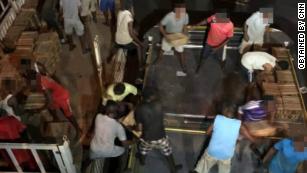
    People are seen loading crates of weapons onto an Ethiopian Airlines plane at an airport in Massawa, Eritrea. Some faces have been blurred by CNN to preserve anonymity.People are seen loading crates of weapons onto an Ethiopian Airlines plane at an airport in Massawa, Eritrea. Some faces have been blurred by CNN to preserve anonymity.

    A cargo manifest from that day, seen by CNN, confirms the flight was empty when it reached Massawa.

    A screenshot from the Ethiopian Airlines internal database taken by an employee and sent to CNN reveals a flight on November 8 to Massawa that is hidden from flight tracking sites. The weapons were then dropped in Bahir Dar, Ethiopia, before the aircraft returned to Addis Ababa on November 9.

    ‘A lot of legal repercussions’


    Several aviation experts CNN spoke to on these findings said Ethiopian Airlines appeared to be in violation of the Convention on International Civil Aviation, commonly known as the Chicago Convention, which prohibits commercial carriers from transporting “munitions of war or implements of war.”

    Pablo Mendes de Leon, professor of air and space law at The Hague, told CNN there are several indications that these flights were commercial flights — not military or state aircraft — including “that [the flights] carry a commercial flight number of Ethiopian Airlines in conjunction with the fact that an airway bill has been issued.”

    “I have now arrived at the conclusion that [these flights have] been operated by civil aircraft falling under the terms of the Chicago Convention,” Mendes de Leon said, adding that CNN’s findings “have a lot of legal repercussions and conditions, all of which may not have been met.”

    Ethiopia’s status as a regional economic powerhouse is partly dependent on Ethiopian Airlines’ dominance in cargo. The country and the airline have benefited from an American trade program that provides favorable access to the US market for countries that meet certain criteria.

    This relationship matters for both countries: in 2017, US exports to Ethiopia consisted primarily of aircraft and aircraft components from Boeing, valued at more than $857 million.

    But a clause in the US African Growth and Opportunity Act (AGOA) stipulates that eligible nations must not engage in “gross violations of internationally recognized human rights.”

    Previous CNN investigations found atrocities committed by the Ethiopian government and its allies bore the hallmarks of genocide and ethnic cleansing.

    In late August, US Trade Representative Katherine Tai warned Ethiopia’s chief trade negotiator that “the ongoing violations of internationally recognized human rights” in Tigray “could affect Ethiopia’s future [AGOA] eligibility if unaddressed.”

    On Tuesday, a spokesperson told CNN that Tai’s office would conduct its next review of eligibility for AGOA in 2022, “based upon compliance with standards that include adherence to internationally recognized workers’ rights, rule of law, and human rights.” After the review, Tai could “possibly recommend that the President add or remove certain countries from AGOA beneficiary country status.”

  • National Cement’s ‘Guru’ Narendra Raval Outsmarted In His Push To Gain Clinker Monopoly In Kenya

    National Cement’s ‘Guru’ Narendra Raval Outsmarted In His Push To Gain Clinker Monopoly In Kenya

    ‘Guru’ Narendra Raval made his name from being a business genius and in the steel industry through his company Devki Group. Through his company, Devki Group has been expanding his empire into cement business. In 2015, Mr Raval turned down Mr Aliko Dangote’s offer to acquire part of the Devki empire as a means of accessing the East African market.

    He has since been expanding rapidly and he beat rivals Rai family to the court battle to take over Athi River Mining (ARM) where Guru emerged the winner and gave him teeth into cement and fertilizer business.

    ARM deal made Guru’s National Cement Company (NCC) the second biggest cement maker in Kenya. National Cement has merged with Cemtech in West Pokot which controls huge limestone, clay deposits.

    In the five years to 2020, cement makers spent an annual average of Sh8.3 billion to import 4,439.7 tonnes of clinker from countries such as Saudi Arabia, United Arab Emirates, Egypt and Pakistan.

    This gave a lucrative space for local production of clinker which saw Devki invest heavily in putting up plants across the country with the hopes of gaining a monopoly and being the sole supplier to other cement makers.

    There was a push by some cement manufacturers for Kenya to raise import duty on clinker to 25 per cent from the current 10 per cent, but the clamour has faltered, Devki spearheaded this push in the hopes that it would discourage imports and make manufacturers stream to him for the vital ingredient.

    Competitors have often accused Raval of using his proximity to Statehouse as he’s close to the President to push for unfavorable and selfish deals like raising raising imports duties from 10% to 25% a lobby campaign that he has pushed for long and vigorously in the past few weeks and days.

    The clinker wars that favors Devki have attracted criesfrom close competitors like Savannah Cement who accused Raval of using his proximity to Statehouse to lobby for unfavorable terms to his competitors in bid to lock them out and cement his market dominance which they termed as unhealthy.

    In the last few days there have been coordinated reports on local media about Mr Raval threatening to shutdown his clinker factories, job losses with drops of arm twisting stakeholders to ease stand and increase the import duty for him to gain the supply advantage of clinker to local manufacturers something that didn’t go well with many players.

    ”‪After he bought ARM clinker plant in Kaloleni,it never produced any clinker so u cant talk of him shutting mombasa clinker plant,when it never started in first place. This gentleman killed cement industry by cheap priced cement, and unnecessary bragging that he can produce enough clinker by installing faulty ,second hand clinker plant,sasa imemulemea.‬” One of frustrated engineers in the industry told this writer.

    However, the biggest setback for Mr Raval came from The Kenya Association of Manufacturers (KAM) whom he had hoped to back up his plans.

    The association backed the recommendations that a four-year grace period be considered before any increase of import duty subjected on clinker, the key raw material used in cement production.

    The decision emanates from a report by the National Independent Verification Committee constituted by KAM in order to assess clinker production and consumption capacities in Kenya.

    According to the committee finding, 40% of clinker is imported from around the world while the balance, 60% originates from Egypt at a Zero Tariff Rate.

    “The 4-year grace period will enable the non-integrated companies and those with ongoing expansions to set up and operationalize their clinker facilities to achieve self-sufficiency for clinker production in terms of quantity and quality,” said the committee in the report.

    KAM is also calling for development of a national clinker standard by the Kenya Bureau of Standards (KEBS) to harmonize quality specifications in line with industry requirements and enable enforcement of the same to trade in clinker within the country.

    The standard should also take into account the requirements of special cements and white cement.

    KAM also wants price of locally produced clinker not to be pegged on imports.

    Industry players are also disputing claims that clinker prices are cheaper locally. “Many opt to import because it’s cheaper, if you go to Narendra for instance he’ll want to sell it to you at an exorbitant price, as a feee economy, we have options and until the ground is leveled up, we have to make profits and not at the expense of any pretender and selfish needs.” Says one of key players in the industry to this writer.

    Updated:

    A section of cement manufacturers has reacted sharply to plans by National Cement to lay off workers at its clinker production plant, claiming the firm was playing politics in a bid to get the government to increase import duty on clinker.

    National Cement, a subsidiary of Devki Group, announced on Saturday that it was laying off workers at its factory in Kajiado County, citing poor demand for the essential raw material in cement production.

    Devki Chairman Narendra Raval said the company would send home at least 860 employees working at its Emali-based clinker production plant as demand had failed to pick, with local cement firms preferring to import clinker.

    This would come after 300 employees were laid off after the firm shut its clinker facility in Mombasa.

    Mr Raval has in the past pushed for a hike of import duty on clinker to 25 per cent from the current 10 per cent, saying the country has adequate production capacity.

    However, major competitors Bamburi, Rai, Savannah and Ndovu Cement faulted the firm, saying the clinker issue was being addressed through a “collaborative initiative” that National Cement is part of.

    They said the firm was being “disingenuous” on an industry-wide issue that key stakeholders have engaged on.

    “I do not see why National Cement is playing politics with such a sensitive long-term industry issue that has taken  over a year and which involved the entire cement industry and key stakeholders, including National Cement,” said Savannah Cement Chairman Benson Ndeta in a joint statement on Monday.

    He added that Devki was attempting to strong-arm the government into imposing higher taxes on imports, a move that would “serve one player’s personal interests and expectations”.

    Local cement firms have been fighting over whether to increase import duty on clinker, with National Cement and Mombasa Cement championing a tax increase while the four others have opposed it.

    This led the industry to set up a committee, together with Kenya Association of Manufacturers and the ministries of Industrialisation, Petroleum and Mining and National Treasury, to look into clinker production and consumption.

    The committee, which gave its report mid-September, recommended that the industry be given a four-year window to increase its clinker production capacity, after which the State can increase duty on imports.

  • How State Plans To Stop Fraudsters From Using Insurance Brokers To Launder Dirty Cash

    How State Plans To Stop Fraudsters From Using Insurance Brokers To Launder Dirty Cash

    Insurance brokers and agents will be required to reveal the identity of policyholders and their sources of income in the latest drive to combat money laundering and flow of illicit money.

    A State-backed Bill is seeking to add the brokers and the agents among entities expected to report all transactions above Sh1.1 million to the government and smaller payments that are deemed suspicious.

    The move, if approved by Parliament, will see the two join sectors such as banking, stockbrokers and accountants that report large and suspicious cash transactions to the Financial Reporting Centre (FRC) — the agency established in April
    2012 to identify and combat money laundering and financing of terrorism.

    Insurance brokers and agents will be obligated to disclose the name, addresses, date of birth, ID number and occupation of buyers as well as date of transaction and amount involved, among others.

    The proposed law comes amid fears that drug dealers, those involved in corruption and fraudsters are targeting the insurance sector through agents and brokers to clean
    dirty money.

    Owners of illicit cash buy insurance, especially life cover, put extra cash in them and then seek State to demand identity, pay of insurance holders refunds after cancelling the policy prematurely.

    Although the buyers pay penalties to cash the insurance policies early, the resulting cheque or bank wire transfers appear to be legitimate investment proceeds, ultimately “washing” dirty money.

    Regulators globally are increasingly monitoring the flow of cash within the insurance industry to capture money laundering cases.

    “Provided that this applies both to insurance undertakings and to insurance intermediaries, including agents and brokers,” says the Bill introduced in Parliament by National Assembly Majority leader Amos Kimunya on entities that report to FRC.

    SH27BN POLICIES

    The proposed law targets agents and brokers who in 2019 controlled 85 percent or an equivalent of Sh164.8 billion in premiums with insurance firms collecting policies worth Sh27.1 billion through their networks.

    This illustrates the dominance of agents and brokers in Kenya’s insurance market.

    Although the law has required banks to report suspicious activity and potential money laundering for years and insurance firms from last year, brokers and agents are not covered by the regulations.

    The Association of Insurance Brokers of Kenya (AIBK) says brokers, on average, have contributed 36 percent of the combined short-term and long-term premiums, with agents contributing about 49 percent while insurers collect about 16 percent.

    The 191 licensed brokers collected premiums worth Sh63.7 billion in 2019 while agents processed policies of Sh101.1 billion.

    Now insurance firms, their brokers and agents will be required to develop a high priority list targeting rich customers, politically exposed clients, foreigners from risky countries, and those who use trusts and nominees to buy cover.

    Also targeted are businesses that operate primarily on a cash basis and unregulated companies.

    They are also required to store data on customer, nature and date of transactions, type of currency, policy and claims settlement details, statements of account and business correspondence, copies of official documents of identity such as passports, identity cards for at least seven years after the end of the business relationship.

    This information should be easy to retrieve.

    PENSION CONTRACTS

    Those labelled high-risk will be tracked if they try to change beneficiaries or make requests to pay anyone other than themselves and their families.

    They will also be probed for sudden increase of premiums or sum insured, payment by wire transfers across borders, use of anonymous accounts, lump sum top-ups on pension and life insurance contracts, unusual use of policy as collateral, early surrender of the policy or change of the duration where this causes penalties or loss of tax relief.

    The law also recommends tracking the lifestyle of employees who help money launderers to process their proceeds.

    Some of the traits insurance firms have been warned about are tracking unexpected changes among their staff, especially when they start exhibiting lavish lifestyles or refusing to take leave and holidays.

    Employees whose sales spike all of a sudden or collude with clients to use their office or home address for the dispatch of customer documentation will also attract scrutiny.

    The instruction manual will require companies to investigate the nature of business a customer is doing before accepting their premiums.

    If they apply for a policy on a business that is outside their patterns, or request insurance of an amount above their need or offer cash for businesses that should be settled with cheques, then the insurance company has to flag the transaction.

    The push for brokers and agents to report suspect transactions comes when the State is looking to add more businesses and professions to the list of entities with reporting obligations.

    Lawyers, employees of accounting firms and trusts holding assets for wealthy people will be required to report suspicious trades and transactions to the FRC once fresh changes to the law are brought to Parliament.

    Trustees have been included in the list amid suspicion that Trusts are becoming the choice vehicles for laundering proceeds of crime and corruption.

    Owners of accounting firms are covered in the current law, but the amendments will see their employees expected to report to the FRC.

    Lawyers are targeted in property transactions, bank accounts management, company acquisitions and setting up of businesses.

    They have recently emerged as a weak link in the fight against money laundering by using bank accounts for depositing client cash as a shield to reporting to the FRC.

    Kenya has been fingered for illicit money entering the country from crime, drug, corruption and shady business activities, illustrated by homes in leafy suburbs and luxury cars.

  • Ranalo Food’s K’Osewe Estate Getting Auctioned Over Sh330M Loan

    Ranalo Food’s K’Osewe Estate Getting Auctioned Over Sh330M Loan

    An auctioneer has put a prime commercial property belonging to prominent eatery owner K’Osewe on sale over a loan of Sh330 million owed to GT Bank.

    In a newspaper advertisement, Garam Investments invited interested buyers to acquire the commercial/residential apartment in Nairobi’s South C, later this month.

    The five-storeyed building belonging to William Osewe Guda, popularly known as K’Osewe, is located along Five Star Road has five shops and two-bedroom houses.

    Mr Osewe has been battling from auctioneers since 2018 over a Sh330 million loan he borrowed from Guaranty Trust Bank (GT Bank), secured using an unfinished hotel in Kisumu and the South C flats, but failed to service the loan.

    According to the auctioneer, the apartments earns monthly rent of Sh830,000 and the title to the land is on leasehold interest for 99 years since 1986.

    “Mains water, electricity and trunk sewer services are connected into the subject property. An additional water storage tank is available to supplement the mains water,” the advertisement reads.

    In February, the Court of Appeal stopped the lender from auctioning the property together with his four-star hotel in Kisumu on condition that he deposits Sh25 million in court in 45 days.

    “We have considered the application and conclude that the grounds raised by the applicants are arguable and cannot be said to be frivolous such as to be dismissed as insubstantial. Their properties are in danger of being sold and if this application is not granted they stand to suffer a colossal loss if transferred to third parties due to the value involved, and the appeal would be rendered nugatory,” said Justices Hannah Okwengu, Patrick Kiage and Jamila Mohammed.

    The stalled seven-storey hotel in high-end Milimani Estate sits on 1.3 acres was to be sold in January after Mr Osewe failed to persuade High Court judge Thripsisa Cherere to stop the bank from auctioning it.

    But he rushed to the appellate court, arguing that he has continued to service their loan despite disruptions caused by the Covid-19 pandemic.

  • Fly 748 expands wings to Nairobi-Malindi route

    Fly 748 expands wings to Nairobi-Malindi route

    Renowned aviation company, 748 Air Services on Friday launched daily flights from Nairobi’s Jomo Kenyatta International Airport to Malindi, adding more routes to Kenya’s coastal tourism circuit.

    The start of Malindi flights comes barely a month since the airline opened its Mombasa Offices to support recovery of hospitality sector that bore the biggest brunt of COVID-19 pandemic.

    748 Air Services Chairman, Ahmed Jibril said the newroute is to help more domestic travellers to experience the best of Malindi at very competitive rates.

    We will also be contributing significantly to full recovery of hotel establishments in these areas by boosting their foot traffic,” said Mr. Jibril.

    The first flight will depart JKIA in Nairobi at 12:00p.m. for Malindi and leave the coastal city for the capital at 02:00 p.m.

    Passengers will enjoy a very competitive return ticket cost starting from as low as KEs 10,700 for the route using 748’s fast and versatile Dash 8-Q400 fleet with a capacity of 78 passengers.

    From coral reefs that lie just 1,000 feet off its shore, lagoons, mangroves and the best hotels, you cannot fail to fall in love with this picturesque tourist destination at such competitive market rates,” said Mr. Jibril.

    We are so much excited with the start of Malindi route as we continue shaping local flight experience for our clients with zero flight cancellations and delays to allow you plan well ahead and have much more time to enjoy the splendour of Malindi,” said 748 Air Services Managing Director, Moses Mwangi.

    Malindi now brings the airline’s domestic routes to five, having already operations to Mombasa, Kisumu, Ukunda and Maasai Mara.

    The airline started its aggressive expansion of its domestic scheduled flights in May, with two daily flights between Nairobi and Kisumu and later on started operations in Mombasa and Diani.

    Domestic flights has seen an increase in passenger traffic with Coastal and western routes experiencing high numbers of passengers and flights. A matter that is being viewed positively by tourist practitioners who’ve had to bare the brunt of the pandemic.

  • Why Mumias manager risks imprisonment

    Why Mumias manager risks imprisonment

    The receiver-manager of the troubled Mumias Sugar Company Mr. Ponangipalli Venkata Ramana Rao risks a six month jail term or a Sh500,000 fine for trashing Senate summonses.

    Rao has failed to honour more than three summonses by the Senate Committee on Agriculture, Livestock and Fisheries over the leasing of the Kakamega based sugar company.

    The senate committee has threatened him with a looming arrest and prosecution if he fails to present himself today.

    “You failed to honour the invitations to appear before the committee on August 6 and 20, and September 20 this year. The Senate has powers to summon any individual to appear before it to give evidence or information,” a letter from the Senate read.

    He is expected to have furnished the committee with the resolutions agreed upon over the leasing process of the sugar firm and any court order stopping him from implementing the resolutions.

    Kakamega Governor Wycliffe Oparanya has however faulted the Senate for summoning Mr. Rao as he accused them of habouring fixed interests in the controversies surrounding Mumias which he says is a private entity.

    “Mumias sugar is a private company and now under receivership. The Senators have fixed interests in the issues surrounding Mumias Sugar Company,” Oparanya said.

    Oparanya also challenged the senators to familiarize themselves with the Insolvency Act of companies and stop blocking the leasing of the loss making sugar factory.

    He said that the committee is involved in time wasting events at the expense of sugarcane farmers who languishing in abject poverty.

    A report compiled  Rao dated June 4, Rao shows that Mumias Sugar Company had assets worth Sh15.7 billion and Sh30.1 billion liabilities while net assets/owners’ equity stood at negative Sh14.4 billion.

    Oparanya’s administration backed Rao who was appointed by KCB-to revive the rundown Mumias Sugar Company despite the leasing process facing a storm.

    “As the County Government of Kakamega, we rally behind the efforts of the receiver manager, on behalf of KCB Bank Kenya Limited in getting an investor to revive the factory. We trust that KCB being a reputable institution has credible processes that will deliver the most suitable investor and undertake the revival of Mumias,” said Oparanya.

    But Activist Okiya Omtatah moved to court in June this year seeking the removal of PVR Rao arguing that he has failed to protect the assets of Mumias Sugar.

    Omtatah said that  instead of breathing life into the company which is in its death bed, Mr Rao chose to mismanage ethanol operations which he shut down in March and halted all manufacturing operations at the firm.

    He also argued that Rao lacked proper planning after he cultivated about 1,673 acres of the nucleus estate but failed to plant sugarcane on some 759 acres which went to waste.

    “It is clear that the receiver manager who has been on site for some two years now has failed in his mission to protect the company’s assets and to the best extent maintain its operations. Instead, he has completely shut down the company and is en-route to hitting the last nail in the coffin of Mumias Sugar Scheme,” Omtatah told the court.


  • Multi-Billion Fuliza Deal That Split Uhuru And Ruto

    Multi-Billion Fuliza Deal That Split Uhuru And Ruto

    Reports by Citizen Weekly indicated that the differences between the Head of State and his Deputy are not political as many people perceive, but the course of their rift is economical after the two disagreed on the financial firm that was to be picked to roll out Safaricom’s multibillion Fuliza program after the 2017 general elections.

    Inside sources privy to what transpired revealed that President Kenyatta and DP Ruto suggested different banks sponsor the Fuliza deal which gives room to Mpesa users to get an overdraft even if their balance is insufficient.

    The Second in command reportedly fronted Kenya Commercial Bank (KCB) to roll out the program while President Kenyatta together with Baringo Senator Gideon Moi fronted the National Commercial Bank of Africa (NCBA) bank that eventually bagged the deal despite an earlier agreement that KCB would also be included in the Safaricom’s program.

    This raw deal saw Deputy President William Ruto lose billions of money he would have bagged as commissions if KCB was to be included in the fuliza program.

    Reports by Citizen Weekly further indicated that DP Ruto had been made to believe that he was part of the deal during the 2017 electioneering period.

    If the deal went on as planned Safaricom, Kenya Commercial Bank, and NCBA Bank would have introduced the payments interface on M-Pesa which allows customers pre-authorization of transactions for payments to be made later.

    The publication further revealed that DP Ruto spared all his energy to campaign for President Kenyatta to be re-elected with the hope of bagging the billions from the Fuliza deal the cash he was planning to use in his 2022 presidential ambitions, little did he know that he was only being used to help in Uhuru’s campaigns.

  • UK inherits Sh2bn SportPesa company’s assets

    UK inherits Sh2bn SportPesa company’s assets

    The government of the United Kingdom is set to inherit Sh2 billion worth of assets held by SPS Sportsoft Limited, a gambling software and support services company which owns SportPesa.

    SPS Sportsoft’s top client is Kenya-based Pevans East Africa Limited which shut down it’s operations in 2019 after the Kenyan government declined to renew its operating licence over tax evasion scandals.

    “The Registrar of Companies gives notice that, unless cause is shown to the contrary, the company will be struck off the register and dissolved not less than two months from the date shown above…  Upon the company’s dissolution, all property and rights vested in, or held in trust for, the company are deemed to be bona vacantia, and will belong to the Crown.” SPS stated.

    Bona vacantia translates to vacant goods or ownerless assets. In the UK such assets  including those of dissolved firms and estates of people who die without a will or blood relatives are inherited by the government.

    SPS has note disclosed the reasons why it is being liquidated but it has suffered losses Kenya where shareholders are embroiled in wrangles. Pevans was the biggest client generating upto £20.6 million (Sh3.1 billion) in 2018 and accounting for 96% of the total revenue of £21.6 million (Sh3.2 billion).

    Other clients operating SPS include SPGHL’s subsidiaries which also trades under the Sportpesa brand in Tanzania and South Africa. The firm’s dissolution means that assets worth £13.2 million (Sh2 billion) that will be surrendered to the UK government.

    SPS’s creditors also risk losing upto £8.5 million (Sh1.2 billion) that they were owed in the review period. It was required to publish its 2019 accounts by December last year but did not meet the deadline pushing the authorities to have it liquidated without the release of its updated financial statements.

    The fall of SPS is a mojor blow to Kenyan businessmen Asnath Maina and Paul Ndung’u and Asenath Maina who fell out with their Bulgarian counterparts over control and ownership of SportPesa.

    Pevans’ operating licence was revoked in July 2019 over unpaid taxes and penalties that now stand at Sh95 billion according to the Kenya Revenue Authority (KRA). It was the second largest company by revenue with close to Sh150 billion in 2018, only coming second to Safaricom.

    But the Bulgarian investors later teamed with Ronald Karauri, Pevans’ chief executive office to form Milestone Games Limited where they transferred the SportPesa trade name. Sportpesa brand was moved from Pevans to SPGHL for £100,000 (Sh15.1 million) and then to Milestone in transactions that began on June 2, 2020.

    One Kalina Karadzhova acted for SPGHL Mr Karauri signed the deed of assignment on behalf of Pevans but it later emerged that Karauri controls close 55% stake in Milestone.


  • KAA assets facing auction over Sh37bn debt

    KAA assets facing auction over Sh37bn debt

    The Kenya Airports Authority (KAA) is at the brink of having its assets seized and auctioned by contractors who are pursuing a piling Sh37 billion debt against the State agency.

    KAA owes both local and foreign contractors the billions of shillings in claims following cancellation of contracts, variation of contracts, interests on delayed payments and accrued fines. The claims are at different stages of arbitration tribunals at Court of Appeal and the High Court.

    Data shared with the National Assembly’s Public Investments Committee (PIC) shows that KAA had a contingent liability of more than Sh36.9 billion by the end of 2016/2017 financial year.

    Most of KAA’s debts is owed to Chinese firms that it hired when rehabilitating the country’s major Airports. The biggest liability being the Sh17.61 billion that Anui Construction Engineering Group and China Aero-Technology International Corporation (Catic) jointly slapped on KAA after it cancelled a Sh64 billion greenfield terminal project at Jomo Kenyatta International Airport (JKIA).

    The agency cancelled the greenfield project on grounds that it lacked adequate funds to oil the project after making an advance payment of Sh4.2 billion to the Chinese firm which moved to court to demand an additional Sh17.6 billion for the project that never took off.

    World Duty Free also instituted a case in 2013 where it is demanding Sh4.93 billion from KAA for breaching of a March 1989 agreement that granted them exclusive rights over duty-free shops at the country’s major airports.

    KAA managing director, Alex Gitari told the parliamentary committee chaired by Mvita MP Abdulswamad Nassir that they appealed against the 2012 award that directed it to pay Sh4.94 billion ($49,096557) in 2018. Sinohydro Corporation is demanding Sh1.5 billion from KAA for the construction of a Sh6.2 billion runway and refurbishing of aircraft pavement at the JKIA.

    Gitari argued that the projects were done in phases subject to availability of funds but the contractor in 2019 presented a claim of Sh1.53 billion for outstanding certificates, interests accrued on delayed payment, tax refunds, retention money, and idle resources after KAA suspended the works.

    He was categorical that no legal proceedings have been instituted against the authority but the parties are considering negotiations to break the impasse. KAA is also under immense pressure from the Kenya Revenue Authority (KRA) who is demanding a Sh4.2 billion tax claim.

    Others who have either issued demand notice or slapped KAA with hefty bills include Doch Company Ltd (Sh955 million), Mitu-Bell Welfare Society,Patrick T Kanyuira (Sh1 billion) Mission Logistics (Sh719.7 million) and Machiri Limited Sh388 million.

    Chinese firm Catic is demanding payments through three different claims of Sh939 million, Sh882 million and Sh486 million, Baseline Architects and three others Sh404 million, Queens Quay Architects International Inc. Sh335 million, China Overseas Engineering Group Sh388 million and  Moniks Agencies which is demanding Sh319 million.

  • Auctioneers find no buyer for ex-Nakumatt CEO’s home

    Auctioneers find no buyer for ex-Nakumatt CEO’s home

    Auctioneers have failed to find a suitable buyer for the home repossessed from former chief executive officer of Nakumatt Supermarket, Atul Shah over a Sh2 billion debt owed to Kenya Commercial Bank Group.

    The high-end home located in Nairobi’s Lavington was put up for sale in July, nearly three months after the High Court threw out a petition that sought to overturn the forced sale by the lender to recover their money. The auctioneers attributed the failure to general slowdown of economy in real estate.

    Mr. Atul offered his Lavington home – a four-bedroom villa with a domestic servant quarters and a semi-permanent generator room as security in  2011 to account for Sh25 million in the multibillion-shilling loans the fallen retailer acquired from KCB.

    The property known as LR No. 5/134 (IR No. 49802) but commonly identified as House number 3 is located at Elite Gardens Estate in Muthangari while it’s title is held on a leasehold interest for a term of 45 years with effect from September 1, 1989.

    Phillips International Auctioneers demanded a refundable fee of Sh1 million from interested parties to obtain a bidding number and catalogue before the auction date. The auctioneers also demanded buyers to deposit 25% of the asking price by bankers’ cheque by the close of business of the auction date.

    “The balance will thereafter be payable within 90 days to the charges, failure to which auction deposit will be forfeit,” auctioneers said.

    The mega regional retailer which grew from a small mattress shop was at its peak in 2014, Nakumatt when it was valued at a whooping Ksh. 35B and had announced plans of cross listing in all regional stock markets in a plan that was set to materialize in 3-4 years.

    But in 2017 just before celebrating its 3oth anniversary, the retailer began shutting down branches across the country orchestrating its slow and unceremonious fall from regional glory to January 7, 2020 when it was liquidated.


  • KRA set to auction personal effects at JKIA

    KRA set to auction personal effects at JKIA

    The Kenya Revenue Authority (KRA) has stepped up its efforts to wrestle tax evasion by confiscating undeclared personal effects from Kenyans returning into the country through the Jomo Kenyatta International Airport (JKIA).

    Such personal effects include wigs, human hair extension, footwear, handbags, paintings and earrings which the taxman is set to auction at the JKIA’s warehouse next month if the owners fail to clear the tax due on them.

    “Passengers should familiarize themselves to the allowable concession of $500 (Sh54,900), the specific exemptions, types of goods prohibited and those that are restricted,” KRA Commissioner for Customs and Border Control Lilian Nyawanda said.

    KRA had in 2016 set maximum duty collected on such items at Sh50,000 to fasten the clearance of passengers at international airports as it subjected the listed them to customs taxes upon arrival and departure at the terminals.

    The regulations dictate that all the taxable items attract taxes at the rate determined by the value of the money paid at a foreign country but does not rely on factors as weight, size or quality. They were introduced following complaints raised by passengers returning from Dubai and China who claimed they were being extorted through hiked rates compared to those re-entering the country from Europe or America.

    Passengers travelling out of the country are now required to fill in a Temporary Importation Form-P45 to declare items being shipped abroad for repair including the accompanying tools and show the receipt during return as a declaration. Items bought bought in Kenya and being carried for commercial purposes must also be declared during departure for purposes of taxes on return.

    And gadgets like video recorders, phones and projectors bought while on a trip to Kenya and currency exceeding Sh1 million ($10,000) must also be declared at the customs before departure while those arriving in the country must fill a passenger declaration form stating the amount paid for each item and the taxes.

    Items meant for sale or business use, including those being brought back to Kenya after commercial use must also be declared as travelers remain under strict instructions to declare newly acquired items whether they were bought, inherited or gifted and all items bought exceeding the limits of duty-free shops.

    Even donations are not exempt from taxes except in situations where a Pro 1B document which accompanies diplomatic goods or special letter from the Treasury is produced otherwise flouting of these regulations will lead to the outright seizure of the listed items by KRA.

    But Kenyans who have been living in foreign countries are allowed by law to import personal items and household goods duty-free on returning home so long as they can provide proof of living abroad for at least two years.

    The law also provides that those bringing in used personal effects or household items must have owned and used them for a period not exceeding one year to qualify for tax exemption.

  • Loss Making KQ Aims A Fresh Bailout From The Government​

    Loss Making KQ Aims A Fresh Bailout From The Government​

    Kenya Airways (KQ) is eyeing a fresh bailout from the government to steady its operations despite narrowing its half-year loss by a fifth.

    KQ chief executive Allan Kilavuka said Thursday the national carrier was in a precarious financial position and that the recovery of revenues to pre-coronavirus levels looks set to delay up to 2024, especially given that Africa lags in the vaccination against the disease.

    The airline posted a Sh11.49 billion net loss in the six months ended June— a 19.8 percent cut from the Sh14.33 billion loss it incurred in the preceding similar period, taking its accumulated losses over the years to above Sh127 billion.

    KQ says the long recovery prospects and diminishing revenue in an environment of increased costs due to tight health and safety measures mean it will require a bailout to stay afloat.“The financial situation of the company is precarious.

    We are in a negative equity position, which means we are insolvent as an organisation, obviously made worse by the pandemic,” Mr Kilavuka said.

    “Definitely the company needs financial support and this is not a secret. We still need financial support from our principals or elsewhere.”

    He did not specify the amount and the nature of support for an airline that last year tapped Sh11 billion loan from the government to fund its operations at a time the Covid-19 pandemic had grounded its operations.

    KQ’s planned request for a fresh bailout comes at a time many State-owned entities, including Kenya Power and Kenya Railways, have continued to depend on the exchequer for survival, with little being done to fix their business models.

    Kenya has about 260 State corporations and the Treasury estimates that taxpayers may spend about Sh382 billion in keeping afloat the operations of 18 of them in the next five years.

    The International Monetary Fund has pushed Kenya to clear inefficiency in these institutions, including cutting duplicate roles and trimming the headcount.

    KQ in May picked a UK consultancy firm, Steer Group, to craft a viable turnaround strategy options in the face of deepening financial losses and depressed passenger numbers.

    The airline’s key routes, including London, India, and Guangzhou, have experienced travel restrictions, leading to depressed demand.

    With about two percent of Africa’s adults vaccinated compared to 51 percent in the US and 61.6 percent in the UK, recovery looks set to delay since Africa is a key route for KQ in connecting travellers to other destinations around the world.

    “We have a tough period going forward but we are conscious of our responsibility as a national carrier and we must not just be seen as a profit generator,” KQ chairman Michael Joseph said.

    “The International Air Transport Association and ourselves don’t see a return to 2019 levels soon. Possibly, 2024 is what we are looking at.”

    KQ, as the airline is known by its international code, previously borrowed from international financiers and nearly all of the country’s leading banks, including KCB and Equity.

    The airline, however, defaulted on the local lenders who now only maintain a revolving credit facility agreed with the company earlier as part of the restructure of their combined Sh17 billion worth of unsecured loans in 2017.

    International lenders like JP Morgan and Citibank have secured their loans using the aircraft purchased by the company.

    KQ’s liabilities outstripped assets by Sh73.85 billion as at end of June compared with Sh64.16 billion in June last year, keeping it technically insolvent.

    Accumulated losses and revenue dip caused the company to breach the terms set by the global financiers, underlining the airline’s debt distress.

    The Treasury, which holds a 48.9 percent stake in the carrier, has rolled out plans to buy out the minority shareholders at a price that is yet to be disclosed.

    This came in the period revenues, mainly from cargo and passengers, fell from Sh30.21 billion to Sh27.35 billion, with the airline currently operating at 30 percent of pre-pandemic capacity.

    Mr Kilavuka said management was working “extremely hard” to try and keep the costs down and conserve cash to ensure survival and rebound.

    KQ served 0.8 million passengers in the review period, down 20 percent from the number served in six months of last year and 64 percent from half year of 2019.

    Passenger revenue dropped by 17 percent to Sh20.23 billion while cargo revenue went up 60 percent due to increased focus on freight operations, especially Covid-19-related essentials like vaccines.

    KQ chief financial officer Hellen Mathuka said the airline has Sh10 billion in its books as unrealised revenue from unused tickets, down from Sh13.9 billion last December.

    “Unused tickets is a liability in our books and this number is not expected to be zero. Passengers buy tickets and we only recognise revenue at the point of travel,” said Ms Mathuka.

    Source BD.