Category: Africa

  • Matsanga Lauds Kenya For Pulling Out Of Somalia Maritime Case

    Matsanga Lauds Kenya For Pulling Out Of Somalia Maritime Case

    The Pan African Forum has lauded the decision taken by the Kenya government to pull out of the maritime dispute with Somalia whose proceedings are set to kick off in The Hague on Monday.

    Kenya has already written to the International Court of Justice (ICJ), to confirm that it will not be part of the proceedings, according to officials in the Attorney General’s office.

    This is after the court rejected its plea to defer the matter.

    “On behalf of Pan African Forum, I want to take this opportunity to thank the Kenya Government for not honouring the letter of ICJ dates for an oral hearing on Monday,” said Dr David Matsanga, the forum’s Chairman, “This is a great move for Africa.”

    Matsanga said the case was flawed from the beginning when Somalia filed it under the pressure of Norway and Qatar.

    “It is very clear that International agencies are loaded with corruption that makes it difficult for an African country to cope with,” he said, adding that “ICJ is crowded with Judges whose countries cannot be brought to the same court.”

    “Why would an African nation surrender itself to such a theatre of absurd,” said Matsanga who had also written two letters to UN Secretary-General alerting him of the dangers of the court and the threat to Peace and Security in the Indian Ocean.

    “Biased courts don’t deliver good rulings and therefore Somalia and Kenya can arbitrate outside such obnoxious institutions like ICJ,” he said.

    Matsanga wrote to António Guterres in February, seeking his intervention to have the Kenya-Somalia maritime case at the ICJ deferred.In his letter, Matsanga said proceeding with the dispute at ICJ risks sparking fresh tensions and new conflicts in the region that is already volatile due to the shaky diplomatic relations between the two countries.

    Somalia filed the case at the ICJ, seeking its intervention in defining its boundary with Kenya in the Indian Ocean, as laid down by the UN Convention on the Law of the Sea and other international sea laws.

    “Mr Secretary-General we believe that any ruling at ICJ at any time about the maritime border dispute will spark a vicious war in a region where the conflict of Somalia still rages on,” Matsanga said in his letter to the UN boss.

    The letter followed a decision by the ICJ rejecting Kenya’s bid to have the maritime delimitation in the Indian ocean case with Somalia postponed for the fourth time.

    The matter was postponed for a third time in May due to the coronavirus pandemic.

    “There are millions of Africans in East Africa and in the horn of Africa region who are worried about the Kenya/Somalia case at ICJ,” Matsanga told the UN in his letter, that also warned that “the world cannot afford another hostile region after the Libyan Mediterranean chaos that was caused by UN Security Council Resolution 1970 that dismembered Libya.

    Matsanga said the tensions in the region were largely accelerated since President Mohamed Farmajo took over power, and has warned that the ICJ ruling if the maritime case proceeds, will worsen the situation.

    “Farmajo seems to be in a predicament due to the undue pressure by external forces, namely Turkey, UAE and Qatar, Norway and to some extent France,” he said.

    Kenya is among the countries contributing troops to Somalia under the AMISOM. “In fact, the situation is made worse when one considers that Kenya, through Amisom, is one of the reasons why Somalia has a semblance of stability,” Matsanga said.

    The parties are seeking a resolution on the ownership of a 150,000 square-kilometer area off their Indian Ocean coastline, which both countries want to explore for oil, gas and fish.

    Somalia filed the boundary delimitation dispute on August 28, 2014, staking a claim on an estimated 62,000 square miles oil-rich triangle in the Indian Ocean.

    Mogadishu’s case is premised on Article 15 of the Convention of the Law of Sea adopted in 1982, Kenya saying the disputed area was in fact under its jurisdiction before the convention was enacted.

    Somalia wants the sea border extended, a plea which if granted could limit Kenya’s access to high seas on its Indian Ocean shore technically rendering the country landlocked.

    In February last year, Somalia rejected a Kenyan claim that it had auctioned off blocks in the area and said it would not take any unilateral action there prior to an ICJ ruling.

    The disputed triangle of water is believed to hold valuable deposits of oil and gas in a part of Africa only recently found to be sitting on significant reserves.

    Kenya maintains it has had sovereignty over the contested zone since 1979. 
    Somalia took the matter to court after saying diplomatic attempts to resolve the disagreement had led nowhere.

    A final outcome will significantly impact a new source of revenue for either of the two countries but the case is set to last for several years.

  • Why Kenya Has Pulled Out From ICJ Maritime Dispute With Somalia

    Why Kenya Has Pulled Out From ICJ Maritime Dispute With Somalia

    In yet an unprecedented move, Kenya has withdrawn from the International Court of Justice [ICJ] case ahead of a hearing scheduled to kick off on Monday [tomorrow], after months of postponement as requested by authorities in Nairobi.

    In 2019, the case was postponed twice and Nairobi managed to get the third postponement in March 2020, but the court refused to issue a fourth postponement this year, arguing that the issues raised by Kenya were not “substantive”.

    And reports now indicate that Nairobi will not participate in Monday’s oral submissions, where the court had admitted hybrid presentation, which would have allowed both sides to either present evidence physically or through a virtual presentation. 

    ICJ had last week released a schedule that would run until Wednesday next week, but the last-minute withdrawal of Kenya comes with a huge shock. Neither Somalia nor Kenya have issued statements about the latest development. 

    But observers say the court will likely go ahead with the hearing. Although the schedule is now for both countries, the hearing will be shortened for the Somalia team to present their case; that is unless Kenya makes a last-minute decision to change and participate.

    Even if Kenya doesn’t participate in oral hearings, they opine, this is not unprecedented, observers believe; because there is a precedent in a case involving China and the Philippines where the oral hearing took place despite the absence of one of the two parties.

    Once the hearing is done this week as scheduled [ICJ didn’t indicate otherwise], it will take at least another 4-6 months before the court makes the final verdict, observers. This is because every judge has to have time to deliberate the case based on argument and evidence submitted

    Lawyer Patrick Lumumba questions why the two sides did not choose of court settlement, arguing that it was pointless for Kenya to pay several international lawyers millions to handle the case. AU had tried to make such requests but was not successful.

    “What is happening between Kenya and Somalia regarding the Maritime boundary is very sad. The matter can be resolved through pragmatic political goodwill. And why do we ignore foreign expertise and higher foreign Lawyers? he wondered. 

    A three-judge bench said a few months ago any move by the government to withdraw from the case will be prejudicial to the interest of the public. This is after several petitioners had moved to court, seeking an order to compel Kenya to withdraw from the case. 

    The judge’s Justices Kanyi Kimondo, Robert Limo, and Anthony Mrima said contrary to petitioners assertion that the Attorney General participation in the proceedings set to commence in June this year amounts to giving up the country’s sovereignty, they are satisfied that nonparticipation will infringe on article 156 of the 2010 constitution.

    Human rights crusader Kiriro wa Ngugi and 19 others through their lawyer Kibe Mungai had in a petition contended that Kenya’s participation in a case before the ICJ is unlawful on grounds that the delegation of sovereign powers of the people to the executive through the AG is limited and does not include engaging in actions that may alter Kenya’s territory and territorial waters without reference to the people through a referendum.

    Several reasons have been thrown as to why Kenya made the last minute move, Kenya Insights has learnt that Nairobi is uncomfortable with the membership of the court alleging it is biased and leaned towards Somalia hence unlikely they’ll give a fair judgment.

    At the center of the row is Judge Abdulqawi Ahmed Yusuf, the Somali Judge who is expected to make a ruling over the Kenya-Somalia maritime case at the ICJ is one the reason why Kenya is ready to pull out of the Maritime case and persue other means to protect its territorial waters. Somalia can’t rule against itself, Kenya believes.

    Judge Abdulqawi Ahmed Yusuf.

    Kenya requested for the Somali judge Yusuf Abdulqawi to recuse himself from the case due to conflict of interest. The Judge had previously represented Somalia government in a number of occasions; he was the Somali representative to the third united Nations conference of the Law of the Sea, Somali delegate to the Afro-Asian legal consultative committee, Somali delegation to the Organisation of the African Unity summit conferences. Despite the pertinent issues raised, Kenya’s request was denied.

    Sources familiar with the process tell Kenya Insights that, Nairobi protested hearing of the case by virtual means as the medium is unstable for hearing such a complex case. Kenya’s case is largely based on demonstrative arguments and cannot be adequately represented through video link.

    Other concerns included Zoombombing where internet trolls are known to disrupt video conference calls while in progress inserting obscene materials resulting in the shutdown of a session.

    Having appointed it’s new team in Jan. 2019, the same time COVID-19 hit in UK & US, Kenya had requested more time for its defense team to meet due to preparation difficulties as a result of COVID-19. Kenya’s defense team comprises of lawyers mostly from the UK and US and we’re unable to travel due to the restrictions. Again, this request was denied.

    Kenya’s defense team for the maritime case at the ICJ Kenya vs. Somalia consists of the best of the best. Highly acclaimed lawyers in the law of the sea and maritime delimitation disputes.

    Others like lawyer Ahmednasir Abdulahi is alluding in part that Kenya could be suffering from financial difficulties and unable to pay the team of experts representing in the case hence the pullout, “I put the Hon AG of the Republic of Kenya on NOTICE that if the reason Kenya is withdrawing from the Maritime dispute with Somalia is due financial IMPECUNITY on the part of Kenya, thus finding it difficult to pay the new set of lawyers, we are ready to do a HARAMBEE( CROWDFUND).” Tweeted Ahmednasir.

    The International Court of Justice (ICJ) will commence hearing of the Kenya-Somalia maritime border case on Monday, March 15. In a statement, ICJ said that public hearings will be conducted between Monday March 15 to Wednesday, March 24.

    In 2019, Somalia attempted to auction the oil blocks in the disputed area while the case was still in court, leading to a fall out with Kenya. A clear demonstration of bad faith. However, Kenya managed to stop the auctioning of its oil blocks.

  • Magufuli’s Ex-Chief Spy Says He’s Okay And Working

    Magufuli’s Ex-Chief Spy Says He’s Okay And Working

    NAIROBI/WINDHOEK (Reuters) – Tanzania’s President John Magufuli is in good health and working normally, one of his diplomats told a broadcaster in Namibia, countering reports that he had been flown to Kenya and then India in a critical condition with COVID-19.

    Magufuli, 61, is Africa’s most prominent coronavirus sceptic. He has not been seen in public since Feb. 27.

    Tanzanian opposition leader Tundu Lissu has cited medical and security sources saying the president was flown to the private Nairobi Hospital in neighbouring Kenya and then on to India in a coma.

    But Tanzania’s ambassador in Windhoek, Modestus Kipilimba, told the Namibian Broadcasting Corporation that was untrue.

    “For me actually, what I know is that he’s OK, he’s going on with his job,” he told NBC in an interview, without elaborating.

    Kipilimba’s comments were the first public assessment from a Tanzanian official about Magufuli’s situation since concerns surfaced at the start of this week.

    Kenya’s Nation newspaper on Wednesday cited unidentified political and diplomatic sources saying that an African leader, which it did not name, was being treated for COVID-19 on a ventilator at a private Nairobi Hospital. [L1N2L80WJ]

    The hospital has said nothing.

    Tanzanian presidency and government spokesmen have not responded to Reuters requests for comment, and there has been no word either from the governments of Kenya or India.

    ZANZIBARI NEXT IN LINE

    According to the constitution, 61-year-old Vice President Samia Suluhu Hassan would take over for the rest of the five-year term if the president were unable to carry out his duties.

    Born in Zanzibar, Suluhu has studied economics in England and worked for the United Nations’ World Food Programme as well as holding various government posts prior to becoming Tanzania’s first female vice-president in 2015 under newly elected Magufuli.

    Nicknamed “The Bulldozer”, Magufuli has frustrated the World Health Organization (WHO) during the pandemic by playing down the threat from COVID-19, saying god and remedies such as steam inhalation would protect Tanzanians.

    The former chemistry professor has mocked coronavirus tests, denounced vaccines as part of a Western conspiracy to take Africa’s wealth, and opposed mask-wearing and social distancing.

    Tanzania stopped reporting coronavirus data in May last year when it had reported 509 cases and 21 deaths, according to the WHO, which has urged the government to be more transparent and to implement COVID-19 curbs.

    Magufuli, from northwest Tanzania, was first elected president in 2015. He has faced accusations from Western countries and opposition parties of eroding democracy, which he denies.

  • South Sudan Chief Spy Akol Koor Named Peace Spoiler In US

    South Sudan Chief Spy Akol Koor Named Peace Spoiler In US

    WASHINGTON  –The United States should continue to hold individuals responsible for gross human rights violations and those thwarting the peace process accountable through the imposition of targeted sanctions, a South Sudanese activist said.

    Addressing the Senate Committee on Foreign Relations in Washington on Wednesday, Peter Biar Ajak said such individuals should include the Director-General of the country’s National Security Service (NSS), General Akol Koor Kuc and his top cronies.

    “The U.S. should also push the African Union to urgently set up the Hybrid Court on South Sudan to end the culture of impunity,” he said.

    Biar, once detained by the country’s national security service, accused President Salva Kiir and First Vice President Riek Machar of imposing themselves on the people of South Sudan for too long.

    “Despite the severe repression in the country, our people made this unequivocally clear in the recently concluded South Sudan National Dialogue, demanding that Kiir and Machar urgently find an exit route from the political scene,” he told the Committee.

    The activist urged the U.S, working together with the African Union, the United Nations, and others must demand that Kiir holds election by March 2022 since “people can no longer endure his awful rule”.

    Holding elections, the outspoken activist further explained, would require specific tasks to be completed such as the promulgation of a new constitution, the merger of various militias into a national army, the appointment of new Elections Commissioners, the conducting of the census, and the updating of the voter registry.

    “However, given Kiir’s reluctance to implement the peace deal, it is unlikely that any of these enormous tasks would be accomplished on time,” he noted.

    Meanwhile, the activist said the U.S needs to send a clear message to Kiir that his repression of South Sudan’s people will not be tolerated anymore and further delay of elections is unacceptable.

    He further urged the UN Security Council to “explicitly” reject President Kiir’s move to postpone the elections, saying any decision of the nature must comply fully with the 2018 peace agreement.

    “Failing to hold him [Kiir] accountable next week will enable Kiir to extend the tenure of his already illegitimate regime beyond what is specified in the Agreement,” stressed the activists.

    He added, “This could very well spark large-scale violence with devastating consequences for our people and the Horn of Africa”.

    Biar urged the U.S. to continue supporting civil society groups, church groups, community-based organizations, and women and youth coalitions working hard to build consensus among people.

    Find below Peter Biar’s testimony below:

    “THE STATE OF DEMOCRACY AROUND THE WORLD”

    TESTIMONY OF PETER BIAR AJAK, PHD1

    REAGAN-FASCELL DEMOCRACY FELLOW

    NATIONAL ENDOWMENT FOR DEMOCRACY

    BEFORE

    THE SENATE COMMITTEE ON FOREIGN RELATIONS

    MARCH 10, 2021


    Chairman Menendez, Ranking Member Risch, and Members of the Committee:

    I am greatly honored to testify today. This topic is close to my heart. For eighteen months, I endured a brutal, illegal detention at the notorious “Blue House” prison, operated by South Sudan’s National Security Service (NSS). My crime was criticizing President Salva Kiir and his failed leadership of South Sudan, which has turned the promise of our hard-won independence into a decade-long horror. I survived this imprisonment and Kiir’s later attempt to either kill or abduct me from Nairobi, Kenya because of the support of many defenders of human rights around the world, including several members of the U.S. Senate and the House of Representative (many of whom are seated on this Committee). I am extremely grateful to each and every one of you and the United States’ Government for speaking out for me when my voice was silenced, and for acting quickly to save my life and that of my family.

    It is only natural that I begin my testimony with the stalled democratic transition in South Sudan. We gained our independence on July 9, 2011 after our people voted overwhelmingly for separation in a referendum made possible by the Comprehensive Peace Agreement of 2005, which the United States brokered. At independence, Kiir assumed the presidency by appointment, charged with building democratic institutions that would allow for national elections to be held in 2015. But in December 2013, he and his former vice president Riek Machar (now the First Vice President) plunged our new nation into a civil war. Kiir used the conflict to defer the scheduled elections from 2015 to 2018, and again to 2021. And although the current peace agreement requires elections be held by March 2022, Kiir is already proposing 2023 and beyond.

    In the meantime, he has built a repressive security state in the form of the NSS whose powers are concentrated in the hands of his kinsman, Gen. Akol Koor Kuc, who personally oversees the planning and the commission of gross human rights violations through Special Forces headquartered in his office. A four-person task force housed inside Kuc’s office identifies targets for extrajudicial killing, enforced disappearance, and arbitrary arrest. Once the targets are approved by Kuc, the Special Forces carry out the acts. Kuc has attended many executions and personally pulled the trigger on several occasions. As we speak, there are over 1,000 detained in secret NSS detention facilities across the country. Although less widely reported. Kuc oversees and manages numerous corrupt schemes illegally extracting millions of dollars from oil, banking, gold, timber, charcoal, gum Arabic, aviation, and other public sector corruption.

    Kiir’s failed leadership of South Sudan has been costly to our people. As reported by the World Bank, the national poverty rate, which stood at about half of the population at independence is now at 82 percent;2 our country ranked dead last in the 2020 Social Progress Index3; it tied for the last place with Somalia in the 2020 Corruption Perception Index;4 and it scored only 2 out of 100 in the 2021 Freedom House’s Global Freedom Score.5 Although the oil is flowing, our people cannot tell where the money goes. Our diplomats have gone for nearly two years without salaries. Civil servants have not been paid for months. Even the country’s official army has gone for months without salaries. It’s only the brutal NSS and the Presidential Guard, who personally protect Kiir, that get salaries on a regular basis. Simultaneously, the inflation is high and the currency has loss value as the Government monetizes the deficit.

    Indeed, it’s the people of South Sudan who bear the brunt of Kiir’s mismanagement of their country. Three million people remain in refugee camps in Kenya, Uganda, Ethiopia, Sudan, the DRC, and the Central African Republic. More than seven million people are in urgent need of humanitarian assistance as the confluence of conflict, floods, and macroeconomic crises devastate the population.6 Last year, we saw one of the largest discharges of water from Lake Victoria into the Nile, resulting in most of my home state of Jonglei being submerged in water. This led to increased displacement, forcing many families to move to Mangalla where they remain in urgent need of humanitarian assistance.

    To revive the stalled democratic transition in South Sudan and restore hope to our people, the United States, which midwifed the birth of South Sudan and invested over 15 billion dollars since our independence, needs to send a clear message to Kiir that his repression of South Sudan’s people will not be tolerated anymore and that any further delay of elections is unacceptable. Kiir and his partner in crime, Riek Machar, have imposed themselves on the people of South Sudan for too long. Despite the severe repression in the country, our people made this unequivocally clear in the recently concluded South Sudan National Dialogue, demanding that Kiir and Machar urgently find an exit route from the political scene. The United States, working together with the African Union, the United Nations, and others must demand that Kiir holds election by March 2022 since our people can no longer endure his awful rule.

    Holding elections would require specific tasks to be completed such as the promulgation of a new constitution, the merger of various militias into a national army, the appointment of new Elections Commissioners, the conducting of the census, and the updating of the voter registry. However, given Kiir’s reluctance to implement the peace deal, it is unlikely that any of these enormous tasks would be accomplished on time. This means that March 2022 will likely come with elections nowhere in sight, which is Kiir’s intention since he is not interested in giving up power. If Kiir does not make progress on these vital areas, his already illegitimate regime will have expired. This would be the appropriate moment to consider Liberian model where that country’s former dictator, Charles Taylor, was forced to step down to allow a genuine transitional government to shepherd the country towards the conduct of democratic elections.

    Two urgent actions will need to be taken to make it clear to Kiir that he must organize credible elections on time. First, the U.S., which holds the pen on the Security Council’s establishment and ongoing reauthorization of the UN Mission in South Sudan (UNMISS), should secure new language in the next reauthorization resolution, which must be adopted by March 15, 2021, emphasizing that South Sudan must hold elections by March 13, 2022, as required by the Agreement, or be prepared to face actions that shall be determined by the Security Council. It should also add to the mandate of UNMISS and tasks it must undertake by all necessary means that it should support implementation of key activities required to enable elections to occur on time.

    Second, Kiir has claimed to have amended the 2018 Agreement to postpone elections until 2023 but this change has not been endorsed by the South Sudan’s Parliament, which must by two- thirds majority approve any changes. The parliament has not even been established. If the Security Council does not explicitly reject this illegal move and insist that all parties must comply fully with the 2018 Peace Agreement, then it will have acquiesced to Kiir’s bypassing the Agreement to push off elections for a year and set a dangerous precedent. Failing to hold him accountable next week will enable Kiir to extend the tenure of his already illegitimate regime beyond what is specified in the Agreement. This could very well spark large-scale violence with devastating consequences for our people and the Horn of Africa.

    Finally, the U.S. should continue to hold individuals responsible for gross human rights violations and those thwarting the peace process accountable through imposition of targeted sanctions under South Sudan sanctions program, established by Executive Order 13664 and under the Global Magnitsky Act. These individuals should include the NSS Director-General, Gen. Kuc and his top cronies. The U.S. should also push the African Union to urgently set up the Hybrid Court on South Sudan to end the culture of impunity. Meanwhile the U.S. should continue to support civil society groups, church groups, community-based organizations, and women and youth coalitions that are working hard to build consensus among our people.

    The stalled democratic transition in South Sudan highlights the challenges to democracy not only in our country, but also in the Horn, and the entire continent of Africa. Five key challenges inherent in South Sudan are omnipresent in the Horn of Africa and beyond, including:

    1 – Restriction of press freedom: The assault on journalists and press freedoms has become a global The year 2020 set the record for the number of journalists detained, while the number of those murdered in the course of their work doubled from the previous year.7The entire Horn of Africa with the exception of Kenya has consistently performed poorly in the treatment of journalists.

    While South Sudan has habitually been the absolute worst, recently, Uganda and Ethiopia have seen shocking levels of repression of press freedoms. Even before the ongoing conflict in Tigray started, Prime Minister Abiy’s record on the freedom of press was dismal. And the recent elections in Uganda have revealed to the world the extent to which President Museveni is willing to go to suppress his people in order to maintain power. Further down south, press freedoms have suffered since President Magufuli came to power in Tanzania. In Zimbabwe, the situation is worse than when Robert Mugabe was still in power with many journalists being arbitrarily detained, tortured, or killed.

    The authoritarian leaders know that information is power and if people are informed, they will not accept the awful conditions to which they are subjected to live. Hence, by restricting press freedoms, the African dictators act to keep our people in the dark – to keep them ignorant of their misery. While social media has allowed activists in some cases to evade surveillance, authoritarian leaders have learned how to create disruptions through propaganda, disinformation and shutdown of the internet among others. Recently, China and Russia, working in concert with many African dictators have made this situation worst.

    Yet, access to information is the bedrock of democratic institutions. While the U.S. invests heavily in access to information around the world, including in South Sudan, it is time to bolster these efforts. Those who impede the work of journalist must be held accountable and U.S. must increase its investment in free media. Moreover, the U.S. will also need to apply its superior technology and innovation to counter Chinese and Russian disinformation efforts.

    2 – Severe repression of political opposition, human rights defenders, and activists: Because authoritarian leaders are ruled by fear of losing power and control, they feel threatened by any hint of opposition. Lacking the ability to compete in free exchange of ideas, they resort to violence, intimidation, and harassment. My experience in South Sudan highlights this clearly, as do recent farcical elections in Through state coercive apparatus, they detain, torture, or kill perceived opposition, forcing many to flee for their lives. While the U.S. often speaks out when these tragic events occur and imposes punitive actions (including sanctions under the Global Magnitsky Act), it can bolster these efforts.

    Through Department of State, the U.S. should publicly identify and monitor the cases of bellwether human rights defenders and democracy activists and act swiftly and decisively when they face repression. If we are killed or detained with impunity, then who would be left to push for democratic reforms in our countries? Therefore, developing measures to monitor the treatment of such activists around the world will go a long way towards creating political spaces that nurtures local movements and gives them the resilience they need to prosper.

    Moreover, the U.S. should incorporate the protection of fundamental freedoms, including the treatment of political opposition, human rights defenders, and democracy activists into its broader foreign policy objectives. Instead of seeing promotion of democracy and stability as competing priorities, it can formulate a comprehensive framework that brings these two together since they are truly entwined. Such a framework can serve as the foundation of any defense, economic, or trade agreement with the United States and its allies. In addition, the U.S. should increase support to civil society and democratic forces by enhancing democratic civic education and the capacity of women and youth to contribute to policy issues in their countries.

    3 – Entrenched leaders who abuse Term Limits: Many leaders in Africa, including those who came to power on the promise of expanding democracy in their countries, have increasingly become 8 Once they consolidate power, they wish to remain there forever by removing Terms Limit. While Museveni did this long ago (removing both Terms and Age Limits), the practice has now become commonplace as we witnessed last year in Ivory Coast and Guinea. In the Horn of Africa, Kenya is the only country in which Terms Limit still means something. Since Parliament and Judiciary are often weak in many African countries, Terms Limit play a critical role in preventing power becoming concentrated in the hands of one person. The U.S. will need to bring this topic back on the top of agenda in dealing with African countries, deploying necessary inducements and disincentives to obtain the desired outcome.

    4 – Chinese promotion of authoritarianism: The Chinese Communist Party’s (CCP) promotion of authoritarianism is a great concern in the Horn, the continent of Africa, and around the The CCP uses anti-democratic tactics, financial coercion, and physical intimidation to secure support for authoritarian leaders who are usually in cahoots with them. These efforts result in increased corruption, environmental degradation, and displacement of people. The Chinese investments in South Sudan, for instance, have only created misery in the form of severe oil pollution and grand corruption, where South Sudanese oil is stolen by their leaders in coordination with Chinese oil companies.9

    In recent years, China has become emboldened in promoting its Party-State model as a viable (even desirable) alternative to liberal democracy. It has invested extensively in exchange programs, offering scholarships to students, youth-wing of political parties, and African security forces to study and adopt its model. It has built cultural exchange centers all around the world, while deploying its companies to bolster corrupt authoritarian leaders.

    The United States needs to take seriously the Chinese ambition for global dominance, aimed at remodeling the world according to its values. Rather than seeking to impose a binary choice on Africans between the United States and China, this requires intensified support to democracy efforts and democracy activists who are fighting to defend values of freedom in their own countries.

    Doing so will require augmented support to anti-corruption efforts, exchange programs such as the Reagan-Fascell Democracy Fellowship, YALI, the Peace Corps, and many others. Looking long-term, the United States will need to provide scholarships and open up its institutions of knowledge. Moreover, the United States will need to encourage American private sector to expand its investments overseas, particularly in Africa, where Chinese capital is only entrenching authoritarianism and weakening instruments of accountability.

    Notwithstanding the risk averseness of American companies, the U.S. Government can create mechanisms to make such risks manageable for companies, encouraging them to expand responsible capitalism around the abroad. Relying on humanitarian and developmental aid alone will be too little to counter the increasing Chinese influence.

    5 – Sham elections that damper faith in democracy: While we in South Sudan have never had the privilege of choosing our own leaders, many Africa countries hold elections on a regular basis. However, these important processes of democracy have recently become farcical In the

    recently concluded elections in Uganda, Museveni managed to prevent independent monitoring of elections. This was also the case for last year’s elections in Tanzania, Guinea, and Ivory Coast. In 2018, Emerson Managwagwa stole elections in Zimbabwe with impunity.

    Elections are too important to be abused in such ways. They are the instruments through which the sovereign will of the people is expressed. While the U.S. Government often releases statements condemning misconduct, no meaningful actions usually follow such words. This will need to change. Moreover, the U.S. will need to increased funding for elections monitoring throughout the world. And this funding should not only just be for the voting, but for the entire process. Elections, after all, are not events, but crucial processes through which citizens renews the bonds of contracts that knit them together.

    This year, 13 African states will hold elections, some of which have already occurred. It’s important these elections are held with integrity. In addition, ensuring that the upcoming elections in South Sudan, which must be held by March 2022, are held with integrity will be crucial. The stalled democratic transition in South Sudan and Kiir’s horrific violations of human rights with impunity has set an awful tone in the region. These abuses are now being replicated nearly everywhere in the region with the exception of Kenya and Sudan. By acting decisively to ensure that these elections are held on time and that a new political paradigm emerges in South Sudan, the United States will be sending an unequivocal message of hope to our citizens in South Sudan and the Horn that a new era has dawned. This requires important investments be made now to lay the foundation for democratic transition in South Sudan.

    Chairman Menendez, Ranking Member Risch, Members of the Committee:

    My presence before you today is a testament to the courage and the resilience of many democracy activists around the world. It also speaks to the critical importance of various mechanisms the U.S. Government already has in place to support the work of civil society, human rights defenders, and democracy activists. Indeed, while I am concerned about the growing threat of authoritarianism, I am also cognizant of the power of human desire for freedom and opportunity. And this gives me hope that with right measures and resolve, not only will dictatorship failed, but freedom will thrive. Thank you for the opportunity to speak to this distinguished audience today!

  • UK Agrees To Return To Nigeria $5.8M Stolen By Former Governor

    UK Agrees To Return To Nigeria $5.8M Stolen By Former Governor

    The UK has promised to return to Nigeria £4.2m ($5.8m) which was stolen by a former governor.

    Former Delta State Governor James Ibori was convicted of money laundering in the UK in 2012.

    Prosecutors say he stole an estimated £117m from the oil-rich state.

    This is the first time that money recovered from criminals will be returned to Nigeria since an agreement was signed in 2016, the UK authorities say.

    The UK and Nigerian governments signed an agreement on Tuesday for the £4.2m recovered by UK agencies to be sent back to Nigeria for infrastructure projects, including the Lagos to Ibadan Expressway, the Abuja to Kano road and the Second Niger Bridge.

    Who is James Ibori?

    James Ibori went from petty thief to Nigerian state governor to convicted money launderer.

    He went to the UK in the 1980s and worked as a cashier at a DIY store in London.

    Ibori was convicted in 1991 for stealing from the store but then returned to Nigeria and got involved in politics.

    When he ran for Delta State governor, he lied about his date of birth to hide his UK conviction – which would have prevented him from standing for office.

    He became governor in 1999 and soon began taking money from state coffers. Delta State is the source of much of Nigeria’s oil.

    Also Read  Pope Francis tours Iraq’s terrorist-ravaged north on day 3 of historic visit

    Why did the British authorities convict him?

    The British police began to take an interest in Ibori again in 2005 after they came across a purchase order for a private jet, made through his solicitor in London.

    He evaded capture in Nigeria after a mob of supporters attacked police, but was eventually arrested in Dubai in 2010 and extradited to the UK.

    He was convicted on 10 counts of fraud worth a total of nearly £50m in 2012.

    After his release in 2016, Ibori was placed straight into immigration detention.

    The publication of the court judgement revealed a Home Office email that had recommended keeping him in immigration detention to buy time to work out how to recover at least £57m.

    Once he was eventually released, he returned to Nigeria and sued the Home Office for unlawful detention.

    Ibori won the case but was awarded just £1 compensation.

    In 2020 prosecutors in a UK court asked a judge to make a confiscation order against Ibori of £117.7m.

    Court documents list several bank accounts owned by Ibori, as well as more than 10 properties around the world, ranging from flats on London’s famous Abbey Road to a £5m mansion in Nigeria’s capital Abuja.

    The documents also list a Bentley car and a Bombardier Challenger jet valued at just under £17m.

    The court is yet to hand down a decision.

  • Uganda’s Bobi Wine Declares Himself The Presidential Election Winner With 54pc

    Uganda’s Bobi Wine Declares Himself The Presidential Election Winner With 54pc

    The opposition National Unity Platform (NUP) president Robert Kyagulanyi Ssentamu alias Bobi Wine has declared himself the winner of the January 14 presidential election. The former presidential candidate claims he won the election by 54.19 per cent and has called on Ugandans to claim their victory which he says was robbed the Electoral Commission.

    Tabling before the media what he claimed was evidence of some 2,000 declaration of results forms (DR) which he said were rejected by the Supreme court, Kyagulanyi says Museveni only scored 34.83 per cent of the total ballots cast and not the 58.64 per cent that was given to him by the Electoral Commission chairperson Simon Byabakama.

    Kyagulanyi said he’d tried to challenge the election results in court last month but was met with bias from the justices. He highlighted the decision to deny him the chance to amend his petition with supporting affidavits and judges who have a history of working closely with President Museveni as reasons that forced him to withdraw the petition.

    Addressing Journalists in a press conference joined by the elected NUP leaders, supporters at the Kamwokya based NUP headquarters, Kyagulanyi said the displayed DR forms contain actual results contrary to what the Electoral Commission announced. The EC has come under intense scrutiny after admitting to posting “fake” DR forms whose totals did not tally – lending credence to allegations of mass vote-rigging in favour of President Museveni.

    “The rigging of the election results shows that the Byabakama commission rigged this election brainlessly, the rigging was done in such an immature way, from our tally, even with all the ballot stuffing, we beat Gen Museveni with 54.19 per cent,” said.

    He urged his supporters to come out in large numbers and stage peaceful demonstrations.

    “The Constitution of Uganda under Article 29, gives us the right to protest peacefully,” said Kyagulanyi.

    “I call upon all Ugandans to march to their respective Electoral Commission offices in your areas of residence and those elsewhere to protest peacefully in any way they see fit as long as it is peaceful.”

    He said that they are going to peacefully protest against Museveni’s victory on four grounds among which is a rigged election, demanding the immediate stop of abductions, detention of people for their conscience, and trying civilians in military courts. He said it is high time Ugandans break the chains of enslavement that they have been locked in for the 35 years under General Museveni.

    Yesterday police announced that they had intelligence reports which pointed at NUP supporters planning to hold riots across the country. Amidst heavy deployments in all roads leading to Kamwokya, a police helicopter was also seen hovering over the NUP party offices as the press conference went on.

    External SourceExternal Source.

  • Israeli-US Firm Accused Of Involvement In Human Rights Abuse In South Sudan

    Israeli-US Firm Accused Of Involvement In Human Rights Abuse In South Sudan

    The Israeli branch of U.S.-based Verint Systems Inc. provided the South Sudanese government with surveillance equipment to intercept communications devices, although the country has a long history of human rights violations, and despite the high risk that it posed to continuing those abuses, said a report published by Amnesty International on Tuesday.

    The human rights monitoring organization’s report revealed new information about South Sudan’s surveillance capabilities as well as the role of companies whose technologies can intercept communications such as citizens’ telephone lines without legal permission.

    South Sudan, which declared independence from Sudan in 2011, radically limits freedom of expression, and is considered by the United Nations to be one of the most dangerous places in the world for journalists. According to experts, the South Sudanese government exercises fear tactics, as well as harassment, arbitrary detentions, torture, kidnapping and extrajudicial executions in order to silence the regime’s opposition, human rights activists, and journalists. South Sudan’s National Security Service (NSS) is used as the government’s main operational arm.

    Amnesty’s report is based on a two-year investigation, which included interviews with 63 people, among them activists, journalists, and attorneys from South Sudan, which uncovered the country’s extensive physical and technological surveillance network that the country had created, and the extent of the systematic harassment that accompanies it in order to create an atmosphere of constant fear and sow doubt in the regime’s opponents and dissidents. The infiltrated bodies include nonprofits, news outlets, private companies, security and hotel chains, and an extensive telephone surveillance network. According to the report, many who were interviewed felt that “the surveillance, harassment and looming risk of arbitrary arrest, detention and possible death does not stop them from speaking out, but that they carefully measure and regulate what they say, where they say it and to whom., with one activist saying, ‘You cannot speak without thinking twice.’”

    As for Vernit’s activity in the country, the Amnesty report uncovered documents that prove that between March 2015 and February 2017, the South Sudanese government paid Vernit $762,000 for “providing technical services.”

    “The ex-Vivacell employee said that the South Sudanese government required all telecommunication companies operational in South Sudan to pay Verint Systems Ltd, the Israeli subsidiary of U.S. Verint Systems Inc. for this equipment and annual service provision…between the years of 2015 – 2017 despite the high risk that the equipment could contribute to human rights violations,” the report read. The fact that Verint supplied surveillance equipment to South Sudan is worrying because of the country’s long history of human rights abuses and freedom of expression. “South Sudanese authorities must rein in the NSS and put an end to the security service’s practice of operating outside the law. The intimidation, harassment, arbitrary arrest and illegal detention of government critics must end,” the report read.

    The report also quoted previous publications where Israeli companies were involved in South Sudan’s surveillance network, and in a UN report from 2016, it noted that Israeli-made communications interception equipment were believed to have aided in the identification and illegal arrest of citizens, according to an AP report from that year. “Amnesty International believes that such activity is contrary to Israel’s obligation to protect human rights,” another report read.

    “Unchecked and unlawful surveillance by the NSS is having a chilling effect on civil society and peaceful activism. The threat of surveillance is a weapon in itself – government critics and human rights activists told us they live in constant fear of being spied on,” Deprose Muchena, Amnesty International’s Director for East and Southern Africa said in the report.

    “Despite this, many courageous South Sudanese activists continue to stand up for their and others’ rights, braving surveillance, intimidation and harassment. It is time for the South Sudanese authorities to halt the unlawful practices of the NSS and enable people to exercise their freedom of expression without fear of reprisals,” he added.

    Verint Systems did not respond to a request for comment, but the Amnesty report came out a day after the company announced that it was splitting off its defense-focused activities into a separate company .

  • South Sudan Minister Infected With COVID-19 Who Bulldozed Himself Through Airport For Nairobi Got Pushed Off KQ Plane

    South Sudan Minister Infected With COVID-19 Who Bulldozed Himself Through Airport For Nairobi Got Pushed Off KQ Plane

    South Sudan’s minister of humanitarian affairs and disaster management Peter Mayen was forcefully pushed off a plane on Saturday by passengers after he forced himself through airport with a positive COVID-19 test results, one passenger and an airport staffer told Sudans Post on Saturday evening.

    According to a humanitarian affairs ministry official, the minister was heading to Kenya when he surprisingly returned to the ministry. He had an appointment with his Kenyan counterpart to discuss and sign a humanitarian response plane on Sunday, according to the official.

    “The minister was going to Nairobi, Kenya because he was set for a meeting with the minister of humanitarian affairs of Kenya to discuss and sign a humanitarian response agreement,” the ministry official said on condition of anonymity. “But we were surprised that he returned to the ministry and we didn’t know that he has COVID-19 because these things are confidential.”

    A passenger who said he was among the people who pushed him out of the plane said airport staff seems to have compromised that he get into plane with the passengers because the crew members informed them that they couldn’t do anything as security officers failed to prevent the minister from boarding the plane.

    “What happened is that the minister was positive with coronavirus, but the security officials didn’t want to prevent him from boarding the plane and the plane staff told us about the matter and because we are concerned with our own health, we pushed him out of the plane because it is against the law and out health,” the passenger said.

    Mayen is a controversial figure who has in the past been involved in a quarrel with a businessman over four vehicles that Mayen had borrowed.

    The report from South Sudan is alarming given how easily it was easy for the minister to breach the security, ignoring all the COVID-19 safety protocols and more alarming how the KQ crew appeared helpless to the situation that it had to take the passengers to handle the matter by themselves.

    Sudan-Kenya route is busy since the two countries by mutual relations sees many travel and one would only wonder and worry if in the past such incidences could’ve gone unreported thereby putting many at risk.

    In May last year, South Sudan’s First Vice President Dr Riek Machar and his wife Angelina Teny, the Minister of Defense and Veteran Affairs, were the first top government officials to publicly admit that they had contracted Covid-19.

    Days after their announcement, Information Minister Michael Makuei Lueth and former minister for National Security, Dr Majak Agoot, also confirmed they had contracted the virus.

    Weeks after his appointment, the chairman of the National Committee on Covid-19 and Fifth Vice President, Hussein Abdelbagi, confirmed that he too had also tested positive. That very week, Second Vice President James Wani Igga revealed that he had contracted the virus.

    In December last year, former South Sudan Ambassador to Russia and former Presidential Legal Advisor, Telar Ring Deng, passed on at an Aspen medical facility days after declaring on social media that he had tested positive for Covid-19.

    Earlier this week, the South Sudanese military announced the death of three generals, David Manyot Barach, Elijah Alier Ayom and Mabior Maket. Over the last two weeks, two prominent scholars at the University of Juba succumbed to Covid-19 – raising the number of deaths from the pandemic to 95.

    Most of the cabinet members have now either contracted the virus from reports or are potentially infectious as the case of Mayen who almost slipped through the wire and wouldn’t have not only infected fellow passengers and KQ crew but his Kenyan counterpart he was scheduled to meet.

    A number of South Sudanese dignitaries have also been airlifted to Nairobi hospital for coronavirus treatment in Nairobi as most hospitals in Juba are below standard to contain the virus. A number of S.S officials are expected to travel to Nairobi from next week as peace talks between warring factions have been shifted from Rome to Naivasha hence need for more vigilance in the airports and more so the airline staff must ensure not to admit any infected passenger to safeguard the health of everyone onboard.

  • South Sudan’s Peace Talks Moved From Rome To Naivasha

    South Sudan’s Peace Talks Moved From Rome To Naivasha

    Peace negotiations between the government of South Sudan and holdout opposition alliance faction, SSOMA’ led by General Paul Malong Awan and Pagan Amum will start in Naivasha Kenya on Monday, Radio Tamazuj reports quoting government and opposition officials.

    The talks between the two parties was supposed to begin last January, but Kenyan authorities did not approve at the time a request by Sant Egidio Community for venue of talks.

    The talks were then returned to Rome where they were initially started, but none of the representatives of the parties travelled there as several members of government team tested positive for coronavirus.

    However, that would only appear as a convenient excuse, the new move to transfer the talks to Kenya comes only a month after Kenya Insights, blew the whistle that some corrupt elements in Kenya’s foreign ministry in conspiracy with stooges in South Sudan’s government, were hell bent to keep the talks in Italy for the purpose of prolonging the talks while benefiting from the blood money.

    It was after this that our report caused waves in the two countries with President Uhuru giving orders for the immediate relocation of the mediating parties to Kenya. Naivasha has since been chosen as the ideal place for the talks.

    Barnaba Marial Benjamin, a spokesman and deputy chief negotiator for the government team confirmed that the talks will begin in Naivasha next week and would focus on addressing the root causes of the conflict.

    “We have the agenda for the new round of talks,” said Dr. Barnaba Marial is quoted by Radio Tamazuj as saying. “Paul Malong and Pagan Amum said we should discuss the root cause[s] of the conflict, so we will listen to them. The talks will take place from the 8th to the 12th of March.”

    Marial who is a presidential envoy said government team “will also discuss the root cause of the conflict with the other faction led by General Thomas Cirillo after our meeting with the group led by Gen. Malong and Pagan.”

    Separate, the spokeswoman for General Paul Malong’s South Sudan United Front/Army Nyamach Nyang Chuol confirmed that the talks will begin next week in the Kenyan town.

    “The talks will begin from the 8th to the 12th of March, so it will last for five days. A delegation representing the Revitalized Transitional Government of National Unity (RTGoNU) will come to Kenya,” she said.

    The government is in a hurry to move forward on the process. It wants to be able to prove itself to US President Joe Biden‘s new administration, which has been quickly restoring US relations with the new authorities in Khartoum. South Sudanese President Salva Kiir hopes that the US will lift its sanctions on the country but this decision could be conditional to the success of the talks with the SSOMA.

  • Angolan Billionaire Isabel’s Maltese Consulting Firm Hit With $230,000 Tax Bill

    Angolan Billionaire Isabel’s Maltese Consulting Firm Hit With $230,000 Tax Bill

    By

    Malta is reportedly demanding payment of more than $275,000 total in taxes and fines from a telecom consultancy firm owned by Angolan billionaire Isabel dos Santos after rejecting its call for a tax clawback.

    According to MaltaToday, the tax probe was launched after Luanda Leaks, a 2020 investigation by the International Consortium of Investigative Journalists, exposed dos Santos’ business empire and decades of insider deals that helped her become Africa’s richest woman.

    The Maltese tax agency hit Kento Holding Ltd., one of 14 Malta-based companies controlled by the eldest daughter of Angola’s former president José Eduardo dos Santos, with a fresh tax bill after finding it was not entitled to a $119,000 tax refund.

    It is “highly unlikely that the company has real intentions of conducting an economic activity despite being registered since 1 September 2018, as no turnover was reported,” the Commissioner for Revenue said, according to the Maltese news outlet.

    The firm is now fighting the tax bill, the outlet reported.

    A lawyer representing dos Santos did not respond to ICIJ’s request for comment.

    Kento is one of dos Santos’s 94 entities incorporated in low or zero-tax rate jurisdictions, according to an ICIJ analysis of confidential and public corporate records.

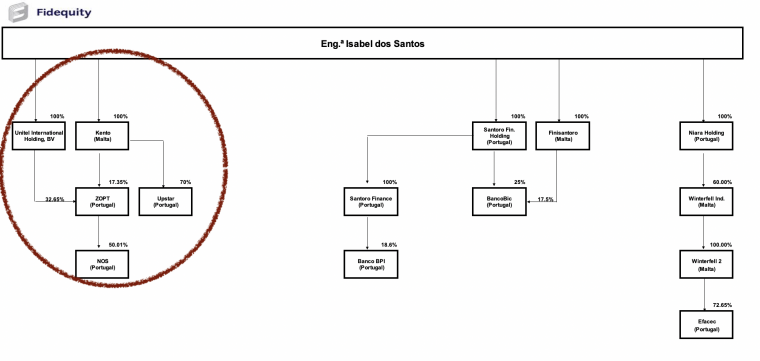
    The Maltese entity is also a shareholder of MStar, a Mozambique cell phone operator, and Upstar Comunicações de Portugal, a satellite company.

    In 2018, it reported $19.3 million in profit before taxes, according to its latest financial statements available.

    Through Kento, dos Santos also had joint control of Portuguese telecom giant NOS thanks to a joint venture with Sonaecom, a conglomerate. But in April 2020, a Lisbon court seized her NOS stake and, a few months later, her business ally announced it would drop the partnership with dos Santos.

    A 2016 chart of Isabel dos Santos’ shareholding, recorded by Fidequity, her defunct company-management firm. Image: Luanda Leaks

    The most recent records in the Maltese corporate registry show that Kento’s representative is Mário Leite da Silva, one of dos Santos’ lieutenants and the former head of Fidequity, her Lisbon-based company management firm. Last June, dos Santos closed Fidequity after Portugal’s highest court ordered the seizure of her properties and stakes in several companies.

    ICIJ couldn’t reach Silva for comment.

    Angolan officials have charged dos Santos, her late husband Sindika Dokolo and Silva of embezzlement of public funds alleging they have caused a $1 billion loss for the country. They have all denied wrongdoing.

  • France To Make New Inroads On Aid In Africa To Counter China’s Rising Influence

    France To Make New Inroads On Aid In Africa To Counter China’s Rising Influence

    Africa’s booming economies and population have created lucrative opportunities for international players, making the continent a hotbed of geopolitical competition over the past decade. The International Monetary Fund found in 2019 that Africa had become the world’s fastest-growing region, with the World Economic Forum predicting its population would double to around 2.2 billion by 2050.

    China is Africa’s biggest bilateral trading partner, having surpassed the US in 2009. Before the coronavirus crisis hit the world economy, the value of Sino-African trade reached €161 billion ($192 bn) in 2019.

    “Right now you could say that any big project in African cities that is higher than three floors or roads that are longer than three kilometres are most likely being built and engineered by the Chinese,” Dave Roggeveen, the founder of specialist publication MORE Architecture, told Forbes in 2018.

    As well as infrastructure, China has invested massively in media in Africa – with state-run Xinhua News Agency developing the continent’s biggest network of correspondents. Nairobi is at the centre of China’s African media presence, with Xinhua moving one of its headquarters from Paris to the Kenyan capital in 2006. 

    France is now also seeking to make new inroads on the African continent by tweaking its strategy towards developing nations. Paris has managed to increase its global aid budget even amid the coronavirus crisis, with development spending rising from €10.9 billion in 2019 to €12.8 billion in 2020. 

    On March 2, French MPs approved a bill increasing France’s aid budget to 0.55 percent of GDP by 2022. President Macron’s government is also stepping up efforts to ensure the aid money is effective. The draft law enshrines five key objectives – “to fight against poverty, to counter climate change, to bolster public health, to expand education services and to achieve gender equality” – focused on Sub-Saharan Africa and also Haiti.

    “International solidarity has never been more necessary than it is now,” said Louis-Nicolas Jandeaux, a spokesman for Oxfam France. “The Covid-19 pandemic shows us how so many major challenges – like fighting poverty and protecting public health – are connected. Given that France is a leader on these multilateral issues, and given that French President Emmanuel Macron has spoken so much about boosting international co-operation, France really has to set a good example on issues like aid spending.”

    The bill also seeks to give France more bang for its aid buck by merging its two development agencies. The French Development Agency – which bestows loans and grants – will be merged with France Expertise – which focuses on the nitty-gritty of development project logistics. This merger will allow French aid workers to “respond better and more directly to the needs of the countries we’re working in”, said Jérémie Pellet, director of France Expertise.

    The law includes a plan to repatriate “ill-gotten” assets the French justice system has confiscated from foreign leaders. France has made efforts to go after corrupt politicians who have stashed millions on French soil. In 2020 a Paris court sentenced Teodorin Obiang, vice president of Equatorial Guinea, to three years in prison and a €30 million fine for laundering money through French properties.

    Redirecting illicit money back to the people is also part of a diplomatic strategy to boost France’s image in Africa.

    “This aspect seems so morally sound that it’s almost impossible to be against it,” said Magali Chelpi-den Hamer, the head of the humanitarian and development programme at Paris-based think-tank IRIS (the French Institute for International and Strategic Affairs). “However, the volume of money concerned will be relatively low.”  

    Avoiding the debt trap

    France has had a long and complicated relationship with Africa. It gained control of vast swaths of the continent – mainly by seizing most of western Africa – in the competitive conquest of the continent launched by European powers from the 17th century.

    After a wave of successful independence movements in the 1950s and 1960s, France maintained close relations with many Francophone ex-colonies in a policy that came to be known as Françafrique. Advocates of this approach saw France as a guarantor of stability on the continent, but critics saw France as loath to give up its colonial-era influence and continuing to play a clientelist role.    

    The French state’s focus on Africa waned in the 1990s as it turned its attention toward European integration. But France has once again set its sights on the continent to counter China’s rising influence.

    And this time France seeks to ensure that its activities on the continent do not carry any reminiscence of neo-colonialism, with a new aid policy favouring grants over loans.

    Analysts have become increasingly concerned about China creating debt traps with its hefty loans to African countries, for which it is the biggest bilateral lender. Chinese loans to underdeveloped countries are even bigger than indicated by the official figures: around half of them are not reported to the International Monetary Fund or World Bank, a report for German think-tank the Kiel Institute for the World Economy found in 2019.

    Until now, France has not had a stellar record on loans either: in 2018, half of its development aid was in loans instead of grants, according to Oxfam. Nevertheless, while “Western countries also use debt to gain influence in African countries, unlike China they’re very keen to avoid setting debt traps,” said IRIS’s Chelpi-den Hamer.

    “We’re fighting China in a battle for influence – and a battle over what system of government countries should see as their model,” French Foreign Minister Jean-Yves Le Drian told France Inter radio last month.

    China’s increasing involvement in Africa threatens to “end up being negative over the medium to long term”, Macron warned at a press conference in Djibouti on his 2019 African tour.

    “I wouldn’t want a new generation of international investments to encroach on our historical partners’ sovereignty or weaken their economies,” he added.

    France’s aid reform bill now goes to the Senate and is expected to become law this summer.

    This article was translated from the original in French.

  • South Sudan: NilePet Clouded With Scandalous Series Of Corruption

    South Sudan: NilePet Clouded With Scandalous Series Of Corruption

    It was on 16 September 2020 when Dr. Chol D.T Abel was relieved from his duties as Managing Director of Nile Petroleum Corporation known as (NilePet) and his successor Engineer, Bol Ring Mourwel was appointed as the new MD.

    There was jubilation from mainly the employees of NilePet and other beneficiaries of NilePet anticipating rapid developments in NilePet, because they were not contended with the manner of the affairs in the corporation during Dr Chol tenure as Managing Director of Nile Petroleum Corporation.

    Many people believed that Dr. Chol was running the institution as his personal entity using iron fist to oppress his competitors and opponents respectively. Many of the employees were arbitrarily ignored, silenced or dismissed during Dr. Chol.

    With all the odds that surrounded Chol administration, he has managed to be the longest serving MD, with four years sipping on abundant NilePet fortunes indispensably.

    Good number of employees who have been questioning his methodology were either given deadly ultimatum to cease from doing asking or get sacked from the Company. People were under untold oppression and segregation.

    The company was in disguised turmoil and unrest due to divides and rule philosophy where good boys flamboyant love was in their favour, meanwhile, the group dubbed as enemies of the MD were coercively cornered.

    Alas, Dr. Chol is an angel compared to the current Managing Director  in terms of nepotism, corruption and lack of vision.

    Within his four months as Managing Director, he has employed not less than 50 people from his relatives, in-laws and clandestine services are mainly linked to Padhieu ( small clan within Adiang area of the current MD). Other category of the people who have had chances of an employment are those recommended by their spiritual leader in their village known as ( Ajiingdit) plus few individuals through elites recommendations.

    Nile petroleum has become an enrichment facility where everyone comes to implement his own agenda and Bol Ring Mourwel can’t be an exceptional about this situation. To make matter worse, Bol is being drive by his good boys instead of him driving them. Ring Charles Mayen is a pseudo MD, who is responsible for employing people, sacking people, promoting people , deploying people and donations pushing.

    Newly-appointed Managing Director of Nile Petroleum Corporation (Nilepet) Eng. Bol Ring Mourwel has officially re-launching fuel retailing all stations in Juba [Photo by Nilepet

    This is just an introduction to the detailed articles that will follow in couples of days. Stay tune about the next article that will display the nasty things being played by the three criminals around MD (Ring Charles Mayen, Deng Alfonse Anei and Mariak Martin Manyiel).

    Bol Ring and his loyalists have emptied the bank account of Nilepet. There is neither a single pound nor a single dollar in the Nilepet’s  account at the time of writing article. Bol Ring transferred all the cash to his personal account and used some money for purchasing personal assets such as a Villa in Kampala, an estate in Gurei, Juba, a furnished house or apartment in Juba etc.

    He recently bought four new brand V8s at 120, 000 dollars each, which he cashed out from the company account. He cashed out 120,000 dollars and order another V8 from Dubai. The vehicle is on the way from Dubai. Bol Ring took 12 million dollars in advance from DPOC, SPOC, and GPOC in case he is removed from the position of Managing Director.

    He also took fuel from suppliers at the amount of 35 million dollars and sold it in the black market without paying the suppliers. The country is currently facing shortage of fuel because Bol Ring has sold the fuel meant for public use, in the black market. All the fuel depots are empty. The government institutions have fun shortage of fuel and sometimes they buy fuel from the black market.

    In addition to the above, Bol Ring Muorwel is a naturally born sectionalist, tribalist and clanist. Bol Ring has hijacked the duties of Director General,  human resource manager, finance manager, procurement manager etc. In less than six months in the office, Bol succeeded in recruiting over one hundred relatives.

    The worse thing is that majority of Bol’s relatives whom he recruited into Nilepet are mere illiterate who never stepped their feet near any school compound. Bol Ring transported many of them from cattle camps in village to Juba and contracted them in high grades as well as assigning them in sensitive departments in Nilepet. I have compiled their names and I will soon publish them in the media.

    Lastly, Bol Ring is a potential criminal who should be sentenced to life imprisonment. I don’t know the kind of culture which Bol Ring and his good boys have adopted. None of the 64 cultures of South Sudan condone corruption or any malpractices. Neither the Bible nor Quran tolerate corruption.

    This means Bol Ring is a naturally born thief and that’s why he will die as a corrupt man. Bol Ring should be tried in the court of law and sentenced to life imprisonment in order to be an exemplary to the rest of corrupt individuals in South Sudan. Leaving Bol Ring and his relatives to corrupt the public resources in broad daylight, serves as an encouragement of the corruption in the country.

    Source.

  • Kenyan Tea Farmers Sue Scottish Tea Giant

    Kenyan Tea Farmers Sue Scottish Tea Giant

    By David Cowan

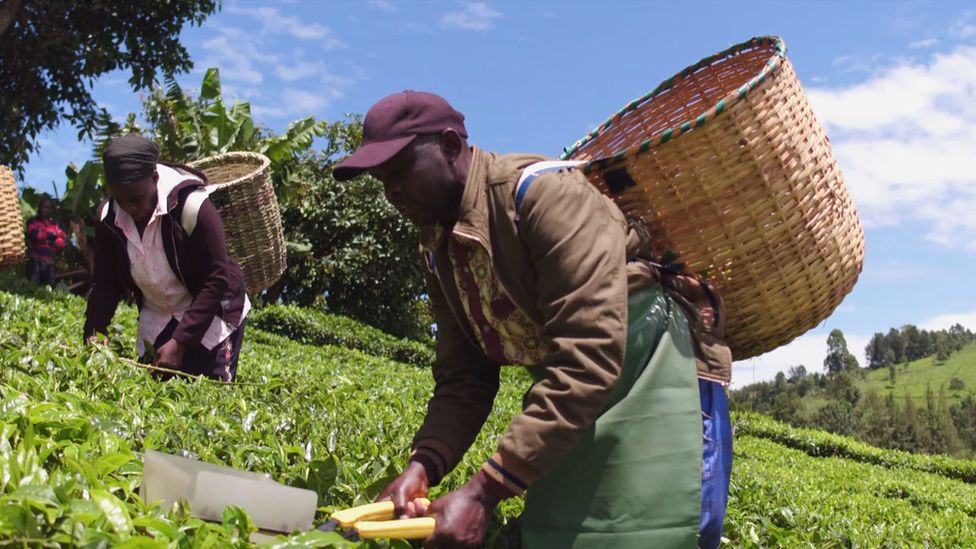
    Tea picker

    Seven farm workers from Kenya are suing one of the world’s biggest tea producers for damages in a personal injury court in Scotland.

    The tea pickers allege they have suffered severe health problems because of working conditions on farms run by James Finlay Kenya Ltd.

    It is part of a multi-national company which can trace its roots back to Glasgow in the 18th Century.

    The firm is opposing the action and has defended its health and safety record.

    Finlays began as a cotton trader in Scotland in 1750 and now has operations on five continents, with Starbucks among its customers.

    Kenyan lawyer
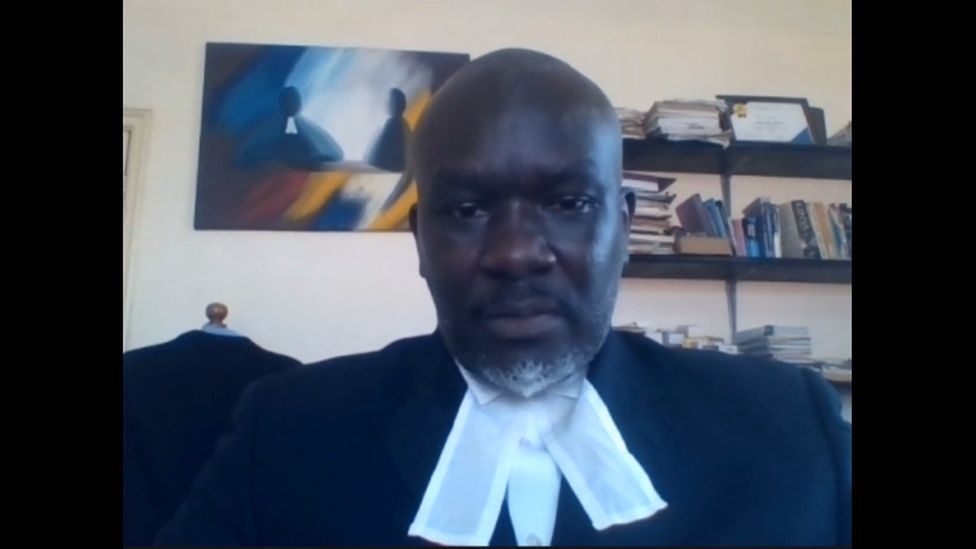
    Kenyan lawyer Isaac Okero says some of his clients have suffered spinal damage

    The scale of the business is such that it makes enough tea to fuel the annual demand from the whole of the UK.

    The company moved its headquarters from Glasgow to London 15 years ago but its registered office address is in Aberdeen, leaving it open to legal action in Scotland’s courts.

    The seven men and women are suing for damages of £15,000 each in the All Scotland Sheriff Personal Injury Court in Edinburgh.

    ‘Long-term injuries’

    Their advocate in Kenya, Isaac Okero, says they have suffered injuries including spinal damage.

    He told BBC Scotland: “The tea workers are saying that on account of the years of service that they have provided to James Finlays Kenya Ltd, and the circumstances and conditions under which they were compelled to work, they have suffered severe degenerative injuries which have severely impacted on their lives.

    “These injuries are both physical and mental.”

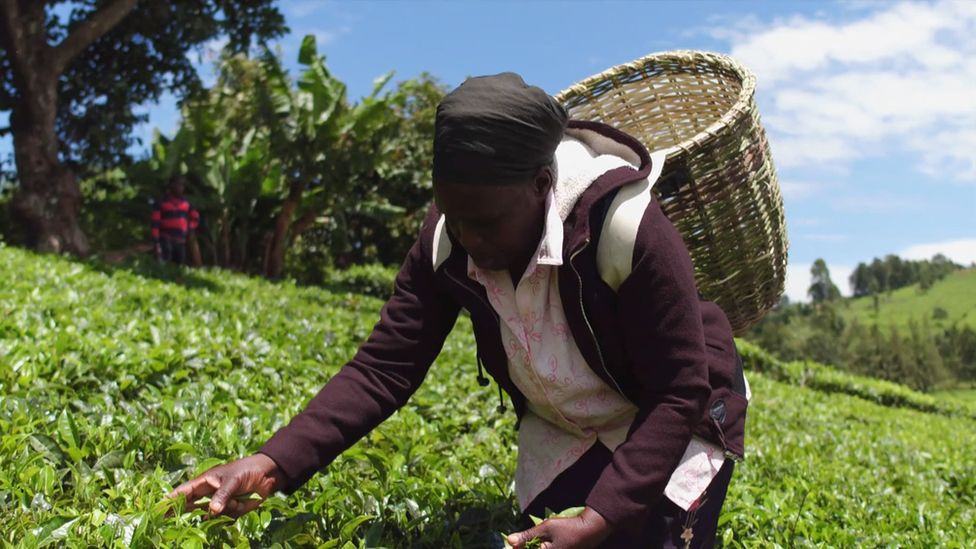
    Tea picker

    Mr Okero said a number were still working when the legal action was launched in a city 4,000 miles away but only one is now still in employment.

    The others have either been forced into retirement or unable to continue working.

    He believes the case will have wider significance.

    He said: “It will hopefully compel the company to radically change the conditions under which the workers are working, so these proceedings should result in substantial improvements in the terms and conditions of the employees still picking tea and hopefully bring to an end the prospect of more Kenyan workers suffering severe and long-term injuries in the way that these seven workers have.”

    David Short
    Edinburgh-based personal injury lawyer David Short is acting for the workers

    Personal injury specialist David Short, from Edinburgh firm Balfour and Manson, is representing the tea pickers.

    He said: “In any court action one of the first things you have to look at is, where do we have jurisdiction, which court will allow you to raise an action.

    “Here, we have a Scottish-registered company and therefore the appropriate place for action is a Scottish court.

    “We’re suing for what would be appropriate for an award in Kenya. It reflects their conditions and their economy.”

    ‘Dreadful conditions’

    Two years after the case began in 2017, a sheriff ordered Finlays to give the tea pickers’ legal team access to the farms in Kenya, allowing them to inspect their working conditions.

    Finlays mounted a challenge in the courts in Nairobi, arguing successfully that the Scottish order could not be implemented unless it had been endorsed by a Kenyan court.

    The tea pickers appealed against that decision and a judgement is expected in May.

    Mr Short said: “They’re arguing that it’s unconstitutional.

    “But even if it is, why won’t they let us go in? I suspect it’s because they don’t want us to see the dreadful conditions that these people work in.”

    Last February, the tea pickers staged a demonstration of how they work at another tea farm in Kenya, watched by members of their UK legal team.

    Gwen Morgan-Evans, from law firm Hugh James, said: “We’ve travelled to Kenya with two leading UK experts so they can observe the process of tea picking and advise the Scottish court on how these working practices are detrimental to health.

    “There’s a wider context to these cases. If the case is successful, the claimants are hoping that this will bring about a wider improvement for tea workers in Kenya.”

    The latest issue of Finlays’ company magazine 1750 focused on its Kenya operations.

    Group managing director Guy Chambers told the publication: “We accept we are not perfect and there are always areas where we need to improve.

    “But our critics often overlook the scale of the efforts that we take to contribute to the community.”

    In a statement, a spokesman said: “James Finlay (Kenya) Ltd intends to fully defend all related claims brought in either the Nairobi High Court or the All Scotland Sheriff Personal Injury Court.”

    The firm said its tea growing and processing business in the Kericho and Bomet counties employed about 8,000 people directly and further workers indirectly, delivering “significant economic benefit to the region”.

    The statement continues: “We aim to achieve the highest standards of health and safety and welfare for everybody connected with our business.

    “We have a well-established health and safety programme for all of our global business units, including our Kenyan business.”

    It concludes by noting that its Kenyan business is certified by the Rainforest Alliance, which requires regular standards audits, and has adopted the ETI (Ethical Trading Initiative) Base Code.

    In the 1980s, demonstrations were held outside Finlays’ annual general meetings in Glasgow over working conditions on its tea farms in India.

    ‘Risky business’

    One of the protestors in 1984 was Roger Jeffery, now a professor at Edinburgh University’s School of Social and Political Science.

    He said: “The chairman at the time said we’re merchant adventurers, we go wherever we can to raise a profit for our shareholders and they claimed without any justification that they were good employers and people benefited from their activities.”

    Reflecting on the current case, Prof Jeffery said: “If you’re looking at this in the round, you have to accept that growing tea is a bit of a risky business and they can’t just start paying European salaries to their workforce, but I think they can still do more than they are.”

    (BBC)

  • Whistleblowers Report Death Threats over DRC Bank Fraud Revelation

    Whistleblowers Report Death Threats over DRC Bank Fraud Revelation

    Two former employees of a bank based in the Democratic Republic of Congo could face a death sentence after blowing the whistle on the financial institution’s alleged secret networks engaged in money laundering and bypassing international sanctions.

    AfrilandTwo former bankers at Afriland risked their lives to expose wrongdoings. (Photo: PPLAAF)

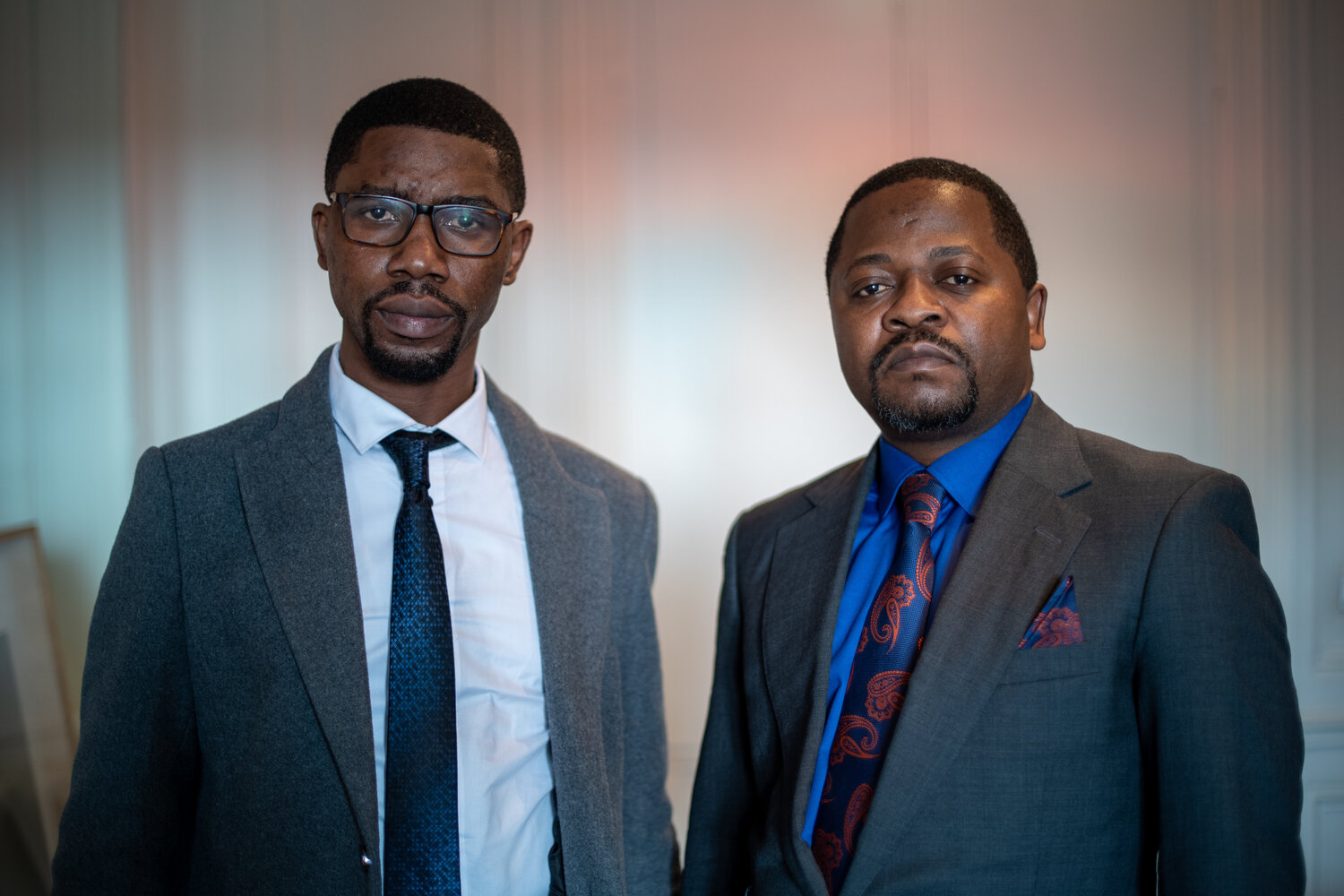
    Navy Malela and Gradi Koko came out on Friday to publicly denounce Cameroon-based Afriland First Bank. The two worked for years in the audit department of the bank’s Congolese subsidiary and first revealed their findings internally an then leaked information to NGOs and media outlets.

    The Platform to Protect Whistleblowers in Africa (PPLAAF), an NGO that provides legal assistance and secure communication channels to whistleblowers, warned that Afriland’s lawyers said the former workers had been sentenced to death by a court in Kinshasa last September. Both Malela and Koko are exiled in Europe.

    Neither PPLAAF nor journalists have been able to trace the judgement the lawyers referred to in a press conference held in Kinshasa on Thursday. However, the organization said that if the sentence is real, then it would represent a violation to Malela and Koko’s fundamental rights.

    The bank’s lawyers also accused the whistleblowers of re-launching a defamatory press campaign alongside PPLAAF and US-based NGO Global Witness, which published a report based on the employers’ revelations in July last year.

    “It would be incredible if whistleblowers are being sentenced to death without having the opportunity to defend themselves, while those who enable the Congolese people’s money to disappear are not being prosecuted,” Navy Malela said in a statement.

    Last year, both whistleblowers revealed that Israeli mining billionaire Dan Gertler allegedly crafted a money laundering web to circumvent U.S. sanctions and acquire mining assets in the DRC.

    According to Afriland’s former employees, the bank allowed Gertler’s associates to convert millions of dollars in cash into euros and later deposit the money into accounts of individuals or shell companies connected to the Israeli mogul. One of these companies reportedly received loans of tens of millions of euros from the DRC-based subsidiary.

    The revelations also showed that high-ranking Congolese politicians and political institutions reportedly had accounts at Afriland, and some of them made transactions of up to several million dollars in cash.

    The statement distributed by PPLAAF reports that millions of dollars were withdrawn from the Congolese Senate account in 2018 and 2019 during the country’s electoral process.

    “We call on the Congolese authorities to launch investigations into these acts and on President Tshisekedi to promote mechanisms to protect whistleblowers, as he recently announced,” PPLAAF spokesperson Gabriel Bourdon-Fattal said.

  • Banks Warned Against East African Crude Oil Pipeline

    Banks Warned Against East African Crude Oil Pipeline

    Days after reports emerged that the construction of East African Crude Oil Pipeline (EACOP) project was set to commence in the second week of March, a new development has surfaced.

    More than 260 organisations have urged banks not to finance the $3.5 billion project, saying the project could lead to the loss of community land and livelihoods, environmental destruction and surging carbon emissions.

    Ryan Brightwell, a researcher and editor at the finance and sustainability NGO BankTrack said that they have informed banks on the consequences of funding the mega crude oil pipeline project.

    In an open letter, organisations from 49 countries, including 122 African-based organisations, detail the immense threats that the 1,445-kilometer-long East African Crude Oil Pipeline (EACOP) would pose to local communities, water supplies, and biodiversity in Uganda, Tanzania, Democratic Republic of Congo and Kenya.

    They also warn that the pipeline – proposed by French oil company Total and the China National Offshore Oil Corporation – will fuel climate change by transporting oil that will generate over 34 million tons of carbon emissions each year.

    The letter to the three banks acting as financial advisors for the project – Standard Bank, Sumitomo Mitsui Banking Corporation, and Industrial and Commercial Bank of China – and 22 banks that have recently provided finance to Total and CNOOC, comes as speculation mounts that a Final Investment Decision (FID), which would commit Total to mobilize capital for the project, is imminent.

    Nearly a third of the pipeline will run through the basin of Africa’s largest lake, Lake Victoria – which more than 40 million people depend on for water and food production. It will also cross more than 200 rivers, run through thousands of farms and cut through vital wildlife reserves.

    The pipeline is expected to cost around $3.5 billion. Of this, about $2.5 billion will be borrowed from banks and other financiers. It is not yet clear which banks intend to participate, although the three banks acting as financial advisors are likely to join and act as lead arrangers.

    The UK’s Export Credit Agency, UK Export Finance has also confirmed that it has been approached for a project loan, although the agency is consulting on timing around a recent announcement to end finance for fossil fuel projects overseas.

    Signatories to the open letter included Friends of the Earth International, 350.org, the Catholic Agency for Overseas Development, Reclaim Finance, Sierra Club, Global Witness, the IUCN National Committee of the Netherlands, BankTrack, Africa Institute for Energy Governance (AFIEGO) and Inclusive Development International (IDI).

    Several organisations that played prominent roles in fighting North American pipelines including the Dakota Access Pipeline (DAPL) and Keystone XL also signed the letter, including Indigenous Environmental Network and Divest Invest Protect. African environmental and human rights law NGO Natural Justice, a signatory, described efforts to stop EACOP as Africa “facing its own Standing Rock moment”.

    The 263 organisations are demanding that Total provides full and fair compensation to communities already affected by the project, and are calling on banks to publicly rule out providing any funding to the construction of the pipeline and work with governments and other financiers to promote a sustainable energy future for East Africa based on clean alternatives instead of oil.

    And the letter has already started bearing fruits. Standard Bank Group Ltd. has hired an independent adviser to help assess its involvement in the project, according toBloomberg.

    “A full environmental and social due diligence report” will be issued after the advisers visit the project area, Standard Bank, which acknowledged receipt of the letter, said in an emailed response to questions.

  • British American Tobacco Fights Dirty In West Africa

    British American Tobacco Fights Dirty In West Africa

    by Aisha Kehoe Down (OCCRP), Seydou Traore (CENOZO), Gaston Sawadogo (L’Evenement), and Tom Stocks (OCCRP).

    Billions of cigarettes, most made by BAT, are smuggled north through Mali every year on their way to the gray markets of the Sahel and Northern Africa.

    Stashed inside pickup trucks and guarded by armed militias and jihadists, every year billions of illicit cigarettes wind their way through the lawless deserts of northern Mali bound for the Sahel and North Africa.

    The profits from their long journey fuel north Mali’s many armed conflicts, lining the pockets of offshoots of al-Qaida and the so-called Islamic State (IS) group, as well as local militias, and corrupt state and military officials. This violence is now spilling out across West Africa, displacing more than two million people in Burkina Faso, Chad, Mali, and Niger.

    Cigarettes made by one of the world’s largest tobacco companies, British American Tobacco (BAT) and distributed with the help of another major, Imperial Brands, through a company partially owned by the Malian state, dominate this dirty and dangerous trade.

    Now an investigation by OCCRP can show this is no accident.

    Secrets contained in leaked documents, backed up by trade data and dozens of interviews with insurgents, former BAT employees, experts, and officials, show BAT started to oversupply Mali with clean-labelled cigarettes soon after the north fell to militants, knowing that its product would be fodder for traffickers.

    For years the company partnered with Mali’s state-backed tobacco company, a subsidiary of Imperial Brands, to distribute cigarettes in regions controlled by rebel militias and throughout the country. Sources say these cigarettes, trucked north with the help of the military and police, then fall into the hands of jihadists and militias. An internal document suggests BAT used informants in West Africa to keep abreast of the workings of the illicit trade.

    Credit: Edin Pasovic/OCCRP

    The dirty business goes well beyond the desert. OCCRP’s reporting found the Malian government not only helps to distribute BAT’s cigarettes, but also apparently turns a blind eye to gross accounting irregularities at its partner Imperial and even possible trade fraud.

    And it continues today. Public trade data and expert analysis show BAT and Imperial continue to oversupply the country with billions more cigarettes than it needs. Meanwhile, BAT’s annual revenue in 2019 alone exceeded the total GDP of Mali and Burkina Faso.

    The Malian case is the latest to show the world’s leading tobacco companies are not always abiding by the terms laid out in a series of historic agreements between 2004 and 2010 with the European Union (EU), in which they agreed to prevent their cigarettes from falling into the hands of criminals by only supplying legitimate demand. The agreements were concluded in the wake of legal disputes between three companies and the EU over cigarette smuggling.

    “This is their playground,” Hana Ross, a University of Cape Town economist who researches tobacco, said of the industry.

    “They know they can get away with stuff. It’s much easier to bribe. It’s much easier to cheat the system,’’ she said. “Governments here are generally weak. This is where they do things that they don’t dare to do in Europe anymore.”

    A spokesperson said BAT was opposed to the illegal trade in tobacco, which the company called a “serious, highly organized crime.”

    “At BAT, we have established anti-illicit trade teams operating at global and local levels. We also have robust policies and procedures in place to fight this issue and fully support regulators, governments and international organizations in seeking to eliminate all forms of illicit trade.”

    Imperial said it is committed to ensuring high standards of corporate governance and “totally opposed to smuggling which benefits no-one but the criminals involved.”

    The Malian government did not respond to requests for comment for this story.

    Credit: AP Photo/Rebecca Blackwell Malian soldiers traveling in convoy across the desert arrive at the entrance to Kidal in northern Mali.

    The Tobacco People

    In the deserts of northern Mali, cigarette smugglers are called “kel tabac,” the tobacco people.

    Illicit cigarettes from the capital, Bamako, and ports in Guinea, Benin, and Togo are loaded into convoys with armed guards and driven north along thousands of kilometers of winding roads and desert tracks to Libya and Algeria, and as far east as Sudan.

    Smuggling has long been a part of life in the vast and largely empty Sahel region, where armed insurgents claim a patchwork of ever-shifting territories. Jihadist movements linked to al-Qaida and IS, Tuareg separatist forces, and local ethnic militias take turns controlling roads and checkpoints along the way.

    Moving illegal tobacco is a difficult and dangerous job, with trips taking between three and 10 days. Many truckers are killed by military or armed groups along the way. But it is well-paid: In a country where most people live on less than $1.90 per day, drivers can expect to earn between 6,000 to 10,000 euros for moving a load of contraband cigarettes.

    It is also a lucrative trade for the drug lords and corrupt local officials in Mali’s restive northern regions.

    Hama Ag Sid Ahmed, spokesman for the National Movement for the Liberation of Azawad (MNLA), an armed Tuareg independence movement that has controlled much of northern Mali on and off, said state officials and organized crime work together to profit from smuggling.

    “Certain military officers, members of the intelligence services, heads of military zones in the northern regions are approached by drug lords,” he said.

    “Large sums of money are paid for a contract related to a service rendered or to be rendered.”

    A former tobacco industry insider said various militant groups, from the Tuareg separatists who have been fighting the Malian state for decades to the more recent offshoots of IS jihadists, also take a cut along the way.

    “Product is escorted north by the Malian army or the gendarmerie [police], to protect it from so-called bandits,” said the former official, who would only speak on condition of anonymity due to safety concerns. “It would be given to the Tuareg for the trip onwards near Timbuktu, and then the Tuareg looked after paying IS in the Sahel.”

    With the continuing violence and lawlessness, Malian customs have abandoned much of the north. Samba Ousmane Touré, an ex-employee of BAT’s distributor in Mali who is now a member of the country’s tobacco control committee, said armed groups have become the gatekeepers of the smuggling routes towards Algeria, Libya, and Niger.

    “Armed groups play the role of customs,” he told OCCRP. “Yes, [BAT] knows.”

    ?Mr. Marlboro

    One of the most high-profile jihadists in northern Mali, an al-Qaida operative known as Mr. Marlboro, is thought to have financed his jihad by smuggling cigarettes.

    The one-eyed Mokhtar Belmokhtar allegedly orchestrated terror attacks, including one in Algeria in January 2013 that killed more than 35 people. He led the so-called Those Who Sign in Blood Battalion. In June 2013, U.S. authorities offered a reward of up to $5 million for information leading to Belmokhtar’s location.

    His battalion had ties to key Malian armed groups, reportedly providing crucial military assistance to the terrorist group MUJAO against the MNLA during the battles of Gao and Timbuktu. A senior U.S. official said in July 2013 that Mr. Marlboro “has shown commitment to kidnapping and murdering Western diplomats and other civilians.” One such hostage was the former U.N. Niger envoy Robert Fowler.

    Sid Ahmed, the spokesperson for the MNLA, said many terrorists like Belmokhtar started out trafficking cigarettes before moving onto harder substances, and then to violent jihad.

    “The Arab drug barons created armed militias to protect their drugs and which later developed into the terrorist organizations that are present today in the Sahel region,” he said.

    Research from The Global Initiative Against Transnational Organized Crime argues the long established smuggling networks in Mali and the Sahel evolved “first to move illicit cigarettes, later hashish and then, most profitably, cocaine.”

    A 2017 KPMG report agrees, noting that the region’s cocaine trade overlays routes originally used to smuggle cigarettes, and that illicit trade “can also intersect with the operations of terrorist groups.”Illicit trade is “an important component of the local political economies” of Mali and other countries in the Maghreb, said the report, which was sponsored by Philip Morris, though it claims the trade is fueled by illicit cigarettes from free-trade zones in the United Arab Emirates.

    Raoul Setrouk, who is pursuing a court case against BAT competitor Philip Morrisin the state of New York for intellectual property theft, said that illicit tobacco in the region has consequences that go far beyond health and tax issues.

    “I hope we don’t have to wait for a new Mr. ‘Marlboro’ like terrorist Mokhtar Belmokhtar to raise our consciousness,” he told OCCRP.

    Multiple sources, from soldiers and U.N. employees to businessmen, and armed militia members, told OCCRP that brands made by BAT and Philip Morris dominate the illicit trade.

    Most common are Dunhills, produced in BAT’s factories in South Africa, and Philip Morris’ flagship brand Marlboros, which are handed to smugglers linked to armed groups by PMI’s politically connected representative in Burkina Faso, along with American Legends.

    “Those which transit through are mainly three brands: Dunhill, American Legend and Marlboro,’’ said Hama from the MNLA. “It is the same thing also in northern Niger and not far also in the south of Algeria.”

    Mohamed Ag Alhousseini, an independent researcher in the region, said much the same: “Even in Algeria, the trafficking is encouraged by the need of Marlboro and Dunhills, because they have other brands in the country.”

    It’s hard to determine exactly how many illicit cigarettes are smuggled through Mali.

    Trade data, information from customs officials, leaked BAT documents, and industry experts indicate there may be up to 4.7 billion surplus cigarettes in Mali every year — the equivalent of around 470 shipping containers of extra cigarettes. Some of them are produced in the country, but more are imported, almost all of them from South Africa.

    It’s also tricky to determine how much profit BAT makes because the company doesn’t separate out country figures in its annual reports. A company presentation from around 2007 estimates BAT’s market value in 18 “operational markets” in West Africa at 201 million British pounds (about US$394 million), and its market share in Mali at 61 percent. Another document, from 2012, gives gross turnover for Mali of 52.06 million British pounds ($84.6 million).

    A BAT source, by contrast, estimated the company had a gross turnover of over $160 million in Mali in 2019 alone.

    Imperial said SONATAM’s sales are “commensurate with the legitimate demand of the Malian population” and the company operates a stringent sales monitoring system.

    “All cigarettes imported by SONATAM into Mali are done so legally under synallagmatic contracts with other commercial operators,” the company said in a statement.

    ?Calculating the Oversupply

    Understanding Mali’s illicit cigarette trade is a messy business — and that includes the data behind it. Because the illicit market is so opaque, many of the calculations rely on educated guesswork.

    Euromonitor International, a strategic market research company, estimated the country’s retail volume at 3 billion cigarettes in 2016, rising to nearly 3.2 billion in 2020.

    Leaked documents obtained by the University of Bath and shared with OCCRP show that in 2007, BAT estimated the country had demand for 1.9 billion cigarettes. In 2011, the company upped the estimate to 2.4 billion. Both these figures are lower than independent projections for the same years.

    After northern Mali became a war zone, however, BAT’s calculations changed, with documents from 2013, 2014, 2015, and 2017 estimating the market as significantly larger than Euromonitor’s figures, at between 3 to 3.8 billion sticks.

    The reason behind these high figures is unclear, as the same documents contain estimates of Mali’s smoking prevalence that are below the WHO’s. Experts have varying estimates for smoking rates. In 2011 BAT pegged it at 9.5 percent. The World Health Organization, by contrast, says 12 percent smoked in 2017, a rate that has remained steady over the past decade.

    Yet data shows that every year since 2016, the first year after Mali’s 2012 rebellion for which trade figures are available there may have been up to almost 8 billion cigarettes in Mali.

    Exact figures are hard to determine. A Malian customs official estimated an annual total of 4.6 billion cigarettes based on adding imports (2.6 billion in 2018 and in 2019 each year) with local production (around 2 billion in 2018 and in 2019 each year).

    U.N. Comtrade data, however, shows between an estimated 3.4 billion to 5.9 billion cigarettes were exported to Mali per year from 2016 to 2019, nearly all of them from BAT’s regional hub, South Africa. Adding in local production, that could mean as many as 7.9 billion cigarettes are available in Mali each year.

    Officials in Mali and South Africa confirmed the accuracy of the Comtrade numbers, which closely match regular reports on the value of tobacco imports released by the Malian government.

    Credit: AP Photo/Baba Ahmed Malian troops join with former rebels before a joint patrol in Gao, Mali, after deadly attacks by Islamic extremists.

    Hallmarks of an Illicit Trade

    In Gao, a city in northern Mali that has long been under the control of armed groups, a warehouse that distributes BAT’s cigarettes does a brisk trade.

    Ahmoudou Ag Attiane, a local automotive dealer, told OCCRP that 20-ton tractor-trailers stocked with cigarettes commonly arrive at the warehouse. Many of the cartons are then trucked 10 hours north to Kidal, which is controlled by al-Qaida in the Islamic Maghreb (AQIM).

    “The law is the [AQIM group] that has the most power — the terrorists, the jihadists — and they banned smoking and also alcohol. So you see, someone can’t show off too much by opening up a place where everyone knows this is where cigarettes are stored, this is where cigarettes are sold.

    “All these big traders have relations with the big boss of Kidal,” he said, “which means that they are protected.”

    Sid Ahmed, the MNLA spokesperson, added to this point, saying: “The traffickers make a large order with a merchant in Gao or Timbuktu. The traders transport [product] from Bamako to Gao and or Timbuktu. From Gao it goes to Algeria [and] Libya and from Timbuktu it goes to Mauritania and Algeria.”

    The company that runs the warehouse, SONATAM — the state tobacco company whose shareholders include Imperial and the Libyan Arab African Investment Company — has been BAT’s distributor in Mali for years. Many of the cigarettes that pass through its warehouse in Gao are Dunhills from BAT’s plant in Heidelberg, near Johannesburg, which have accounted for up to 37 percent of South Africa’s total cigarette exports in recent years.

    Unlike locally produced brands, the South African Dunhills come in packaging covered with health warnings in a major European language, French, known in the industry as a “clean label,” meaning they can be sold on the gray market.

    David Reynolds, who built Japan Tobacco International’s program on countering the illicit tobacco trade, said BAT in South Africa is “notorious” for oversupplying the region.

    “The rule is always the same: Oversupply plus lack of local controls leads to gray trade. That’s been a big part of BAT’s — and other cigarettes companies’ — business model for years,” he said.

    “If you combine a major, high-end international brand, plus oversupply in a marginal market, such as Mali, with a clean label, you have all the hallmarks of intentional diversion into the parallel [illicit] trade.”

    Documents obtained by OCCRP shed further light on how BAT’s Dunhills fall into the hands of armed groups in northern Mali.

    A document from 2013 show SONATAM distributes between 25 percent to 75 percent of the three brands of BAT’s cigarettes sold in Mali. Three of its warehouses and distribution points are in rebel-controlled areas, including Gao, as well as Timbuktu and Mopti in the north of the country.

    This map from a BAT presentation shows the company’s distribution points in Mali underneath the text: “As we know, in a dark market, the war is won on the battlefield with no pity for our competitors and a massive and well executed trade marketing and distribution to be seen and reachable everywhere.”

    One BAT presentation from 2013 calls northern Mali a “war zone,” but notes that BAT has nonetheless identified future stockists and networks in Gao, Timbuktu, and Kidal. Another from 2017 highlights the “extremist insurgency” in eight of Mali’s regions, noting that three of them “remain completely dangerous to operate within owing to terrorist activities.”

    However, an internal strategy memo from 2015 shows BAT planned to increase its business in these regions. The plan, called “Desert Storm” in an apparent reference to the U.S.-led military operation during the Gulf War, discusses how to reach “full potential” for their brands in Mali by incentivizing SONATAM to meet sales targets in areas including insurgency-run regions.

    “As we know, in a dark market, the war is won on the battlefield with no pity for our competitors,” said the memo.

    A 2007 presentation echoes the language of Europe’s colonial-era Scramble for Africa to describe the contest for the “crown jewels” of Mali and Ghana, casting West Africa as a battleground and speaking of “fighting ITG [Imperial Tobacco Group] to the death” and a “PMI [Philip Morris International] attack.”

    “Mali was such an important market that BAT undertook a two-pronged strategy,” said Andy Rowell, a University of Bath researcher working with anti-tobacco watchdog STOP.

    “The company set out to secure a ‘license to operate’ by schmoozing government officials. At the same time, the company sought to ‘delay and disrupt’ the operations of the opposition.”

    Other BAT documents lay out its strategy to increase its market share against lower-cost cigarettes in Bamako and “UPC” — jargon for “Up Country” — including detailed analysis of the competition. They also show the company’s fine-grained ability to map and track contraband in West Africa: One presentation from around 2006 lists BAT’s “informants” in Mali and Niger.

    Telita Snyckers, a lawyer who previously held senior positions at the South African Revenue Service and author of the book Dirty Tobacco: Spies, Lies and Mega-Profits, called the operation “corporate espionage stuff.”

    The slides of the 2007 presentation discuss BAT’s strategy for West Africa, including Mali, stressing the need to “Grow VFM in Freedom Markets and Mali.” Snyckers said that VFM, or “Value For Money,” is a euphemism for smuggling and illicit channels.

    In another presentation from 2009, a group of legal and security officials from BAT was told that “Mali, as the principal market which has the highest volume of illicit trade, is where we have the most to gain by increasing contestable market space.”

    A BAT spokesperson declined to comment on the documents without seeing them before the publication of this article, but added, “we are not aware of the phrases ‘dark market’ or ‘value for money brands’ relating to illicit trade.”

    Credit: OCCRP A map shown in a BAT presentation from around 2007. One slide explains: “The bulk of the contraband goes to Libya via Agadez (Niger) from the ports of Cotonou and Lomé.” Another notes a trail of contraband from Guinea to Mali.

    Extraordinary Mistakes or Barefaced Lies

    The rampant tobacco smuggling in Mali isn’t only down to the cigarette companies. OCCRP’s reporting indicates there is little state oversight of the industry.

    For one thing, the government has overlooked blatant inaccuracies in figures from BAT’s distribution partner, Imperial, which for two consecutive years stated in its public accounts that SONATAM paid 5.5 million euros in taxes more every year than its total turnover.

    West African financial analyst Oumar Ndiaye called the numbers “impossible.” Some former tobacco executives in Mali dismissed the SONATAM turnover figures as deliberate lies to fiscal authorities.

    Imperial attributed them to an error in currency conversion, with West African CFA francs mistakenly not converted into euros. The company declined to provide documentation, however, and referred reporters to the Malian government, which did not respond to several requests for comment.

    Alex Cobham, the chief executive officer of the Tax Justice Network and an expert on tax avoidance by multinationals, said Imperial’s explanation “doesn’t stand up,” and that repeating the same numbers over multiple years is “implausible.”

    “Whoever wrote these numbers down thought nobody would ever look at them,” he said. “They’re either making extraordinary mistakes, year after year, or they’re telling you barefaced lies, or both.”

    He also faulted the company’s auditor, PricewaterhouseCoopers, for apparently accepting the shoddy accounting.

    “The idea that one of the world’s leading accounting firms, that prides itself on the auditing of multinationals to ensure they’re behaving as they should do, would not have picked up any of this in their rigorous annual audit process is difficult to square with any claim that corporate tax is being paid or audited on an appropriate basis,” he said.

    It’s unclear who put together the “impossible” numbers.

    ?Imperial’s History in West Africa

    Imperial inherited much of West Africa’s tobacco business from Bolloré Group, a giant in France’s former colonies which operates a number of ports across Africa and logistics companies worldwide.

    The tobacco purchase bought Imperial a stack of elite connections. The directors of SITAB, an Imperial subsidiary in Ivory Coast, included a relative of former President Felix Houphouet-Boigny. Lassine Diawara, the chairman of the board of directors of MABUCIG, a Burkina’ cigarette manufacturer. His online biography says he is a Knight of the National Order of Merit in France. He has traveled with Blaise Compaoré, the ex-president of Burkina Faso. SONATAM was run for a number of years by Cissé Mariam Kaïdama Sidibé, who became prime minister of Mali for a short period in 2011.

    Ross Delston, a U.S.-based lawyer and anti-money laundering compliance expert who has worked in West Africa, said the Malian government could well have an incentive to overlook years of obvious errors.

    “Any governmental authority that has a monopoly over a given commodity also has a high degree of risk for corruption,’’ he said after discussing SONATAM figures with OCCRP. “It’s just too easy to skim off a bit, or more than a bit, for the people at the top.”

    Touré, the ex-employee of BAT’s agent in Mali, agreed, saying that the state shared in the responsibility for the bad accounts, adding, “I think that [in] corrupt states like ours, the tobacco industry has a lot of power over their leaders.”

    Mali’s government declined to comment.

    U.N. trade figures also indicate years of discrepancies equaling millions of dollars in the price of the country’s cigarette imports.

    Mali imported more than 3 million kilograms of cigarettes from South Africa annually in both 2016 and 2017, representing around 95 percent of the country’s cigarette imports. An ex-BAT official said that the only cigarettes Mali imports from South Africa are BAT’s Dunhill cigarettes, a point confirmed in an earlier BAT document.

    If the former employee is correct, BAT reported to the government of South Africa it sold the cigarettes for under $7 per kilogram, while SONATAM reported it bought the cigarettes for $15 per kilogram in 2016 and 2017, the years for which U.N. trade data is available for Mali. The discrepancy amounts to between $29.1 million and $32.8 million per year, and appears to have continued afterward, according to Malian government data available for 2018.

    It’s unclear exactly what is behind the difference.

    A Malian customs official dismissed the numbers as a likely lag in reporting shipments.

    Two former tobacco industry insiders told OCCRP that trade mis-invoicing, a method for moving money across borders that involves deliberate falsification of the volume or price of goods, is common practice in the company’s dealings with Mali.

    “Mis-invoicing, under- and over-invoicing, and invoicing direct to the U.K. instead of in the delivered country were all used at one time or another,” one of them said.

    Cobham, of the Tax Justice Network, said SONATAM’s overpayment is “very much consistent with the longstanding history of commodity trade price manipulation for profit-shifting purposes.”

    That’s apparently not unusual for BAT. In 2019, Cobham’s organization authored a report that found BAT used various methods to shift profits out of poorer countries, at a scale that could deprive eight countries in Asia, Africa, and South America of nearly US$700 million in tax revenue until 2030.

    “The bottom line is BAT is manipulating the price of the same commodity and the transaction in a way that can’t be justified by any possible transport costs, and any auditor worth their salt should have picked that up,” he said.

    SONATAM did not respond to requests for comment.

    Imperial did not respond to several OCCRP requests for clarification, saying only that the company “is committed to high standards of corporate governance” and “totally opposed to smuggling which benefits no one but the criminals involved.”

    A BAT spokesperson said the prices of its tobacco “are in line with what external, independent parties would charge,” which is documented in the company’s tax strategy.

    “BAT entities … comply with all applicable tax legislation and regulations in the countries where we operate,” he said.

    PricewaterhouseCoopers and its French partner Xavier Belet, who audits the SONATAM accounts, ignored several requests for comment by OCCRP.

    Credit: MINUSMA/Sylvain Liechti handout via REUTERS A solider lights a cigarette in Kidal, Mali.

    Friends on the Ground

    From warehouses in Gao, Timbuktu, and Mopti, Dunhills flow north largely unchecked by Malian regulators.

    “With the insecurity, the customs abandoned an important part of the north because of the narco-traffickers,” said Aboubacar Sidiki Kone, a Malian customs official.

    Even if customs did man Mali’s lonely desert posts in the north, it’s unclear what they would do. An internal document obtained by OCCRP shows Malian customs and police were sponsored by BAT.

    In a 2013 presentation, BAT lays out an “action plan” for a series of scheduled raids to be carried out by Malian customs and police in collaboration with company agents, tallying seizures of illicit cigarettes made by its competitors. A mission order and a protocol agreement in the presentation show BAT was supposed to pay for these raids.

    A former BAT employee described staffers in Mali feeding intelligence on contraband to customs agents, helping them to seize the brands of other manufacturers.

    Sory Coulibaly, a former sales executive for a BAT distributor in Mali, added that BAT has sweetened the deal, equipping customs agents and police with motorcycles and small patrol boats. Touré added that BAT has given customs several new cars every year.

    The cooperation between Mali’s customs and BAT was formalized further in 2019, when local media reported Malian customs’ announcement of a memorandum of understanding (MoU) with the tobacco company.

    Deals with customs agencies are a longtime tobacco industry strategy, detailed in a paper published by the BMJ’s journal Tobacco Control the same year. Eric Crobie, Stella Bialous, and Stanton A. Glantz found that there are more than 100 such MoUs around the world, that they violate the World Health Organization’s international tobacco control treaties, and are ineffective at reducing smuggling.

    Memoranda of Understanding (MOUs) were seen by transnational tobacco companies as “useful to provide access to decision makers and promote the image of [tobacco companies] as government partners,” the authors wrote.

    In Mali’s case, the details of neither its deal with BAT nor an MoU it signed with SONATAM are easy to find. Abdel Kader Sangho, director of the customs’ training center, ignored several inquiries from reporters.

    Touré, the Malian tobacco control expert, said the country’s tobacco laws are weak and there is little enforcement of them on the ground. “Our anti-smoking texts are not strong and most of our leaders are corrupt,” Touré said. “The texts exist, but it remains to apply them in the field.”

    Today, SONATAM’s statistics claim Mali’s contraband levels are at an all-time low, while BAT continues to flood the country with cigarettes far exceeding demand.

    Anecdotal evidence suggests the flows of smuggled tobacco may even be increasing. Touré said he has observed that the amount of Dunhills moving to the north, have recently been on the rise.

    “I’m sure these cigarettes are destined for other countries, Niger, Algeria and others,” he said.

    Meanwhile BAT and the Malian government are planning to make more cigarettes in the country. In 2017 they partnered up to build a new $18.2 million factory, according to local media reports. It is expected to open this year with the capacity to produce 3 billion Dunhills per annum.

    Sandrine Gagne-Acoulon contributed reporting.

  • Kenya Amongst African Countries Using Israeli Intelligence Tools To Spy On Citizens

    Kenya Amongst African Countries Using Israeli Intelligence Tools To Spy On Citizens

    As internet penetration and smartphone usage increases across Africa, digital spaces have become increasingly important in organising opposition movements. In response, several governments have at times shut down the internet or blocked social media apps. More recently, however, some regimes have turned to digital surveillance technology for more subtle ways to crush resistance.

    In a recent report titled Running in Circles, the University of Toronto’s Citizen Lab – which investigates digital espionage against civil society – details how 25 governments around the world are using tools developed by the Israeli telecoms company Circles. Its technology is sold to nation-states only. It intercepts data from 3G networks, allowing the infiltrator to read messages, emails, and listen in on phone calls as they occur. Using only a telephone number, a Circles platform can also identify the location of a phone anywhere in the world within seconds without a warrant.

    Circles is affiliated with the notorious NSO Group, whose Pegasus spyware has been widely used to spyon human rights defenders and journalists. Unlike that technology, however, Circles’ tools does not require targets to click on a malicious link. It works by exploiting flaws in Signalling System No.7 (SS7), the set of protocols that allows networks to exchange calls and text messages between each other. SS7 is predominantly used in 2G and 3G systems, which in 2019 became the leading mobile technology in sub-Saharan Africa, accounting for over 45% of all connections.

    With the faster and possibly more secure 4G networks years away from becoming the standard for mobile connectivity in Africa, Circles technology is ideal for power-hungry African leaders looking to spy on critics. Indeed, of the 25 countries identified as likely to be using Circles’ tools, seven are on the continent.

    Nigeria

    Citizen Lab detected two Circles systems being used in Nigeria. It identified one likely client as being the Nigerian Defence Intelligence Agency (DIA), while a 2016 investigation by the Premium Times found that the governors of Delta and Bayelsa states used Circles to spy on opponents.

    Nigeria has a long history of surveillance technologies being used against civil society and government critics. Femi Adeyeye, a Lagos-based political activist who has been detained several times, cites several cases – such as those of Omoyele Sowore, Abubakar Idris Dadiyataand Stephen Kefas – in which Nigerians have been swiftly traced, arrested and detained after criticising the government. The Committee to Protect Journalists (CPJ) has also reported numerous cases of the Nigerian authorities targeting journalists’ phones.

    “We are already in the worst stage of dictatorship,” says Adeyeye. “Freedom of expression, media, and political association have been further weakened by this spying technology.”

    He suggests that political analysts now self-censor, particularly since witnessing the government’s infiltration of the #EndSARS movement against police brutality in late-2020. “They have seen how people have been traced, their passports seized, bank accounts frozen and they have been forced to go into exile,” he says.

    Zimbabwe

    Three Circles platforms were detected in Zimbabwe. The use of one dates back to 2013, while another was activated in March 2018. The Zimbabwean government has long targeted its critics and opponents. Last year, investigative journalist Hopewell Chin’ono and opposition politician Jacob Ngarivhume were detained ahead of anti-government protests. Circles technology may be facilitating this repression.

    Equatorial Guinea

    In Equatorial Guinea, Circles technologies have been operating since 2013. For 40 years, President Teodoro Obiang has kept power partly by suppressing opponents by using torture, extra-judicial executions, arbitrary arrests, and the persecution of political activists and human rights defenders. Obiang has violently crushed protests and ignored demands for electoral reforms and term limits. Surveillance methods could be an important part of his toolbox.

    Morocco

    Morocco’s Ministry of the Interior has been a Circles Client since 2018. Rabat has a history of leveraging digital technology to unlawfully target human rights activists.

    Botswana

    Despite being hailed as one of Africa’s most democratic countries, Botswana’s Directorate of Intelligence and Security Services (DISS) is linked to two Circles surveillance systems dating back to 2015. The DISS is known for targeting journalists investigating political corruption.

    According to Moeti Mohwasa, spokesperson for the opposition Umbrella for Democratic Change (UDC), Israeli companies have been selling spying software to the Botswana government for years. He alleges that this equipment has been used to eavesdrop on opposition politicians and union leaders.

    Kenya

    Citizen Lab detected a Circles system being used in Kenya. This did not surprise Suhayl Omar, who researches policing, surveillance, and militarism in Nairobi.

    “In Kenya, freedom of expression and media freedoms are under constant threat. The [Uhuru] Kenyatta regime has waged a war against constitutionalism and any form of opposition in Kenya,” he says. “The Kenyan government relies heavily on surveillance of its citizens to crack down on any form of opposition.”

    Zambia

    Zambia appears to be another Circles client. Its government also has a record of using surveillance against its critics. In 2019, authorities arrested a group of bloggers who ran an opposition news site, allegedly with the aid of a cyber-surveillance unit in Zambia’s telecommunications regulator used to pinpoint the bloggers’ locations. It is not known if a Circles system was used but the technology has these capabilities.

    Should the Israeli government be held responsible?

    The ultimate responsibility for using these surveillance technologies lies with the government agencies that pay huge sums for them. However, some campaigners argue that the Israeli government shoulders some responsibility too for allowing questionable tech firms such as Circles to operate and by providing them with export licenses.

    Israeli minister Zeev Elkin has refuted this suggestion, insisting that “everyone understands that this is not about the state of Israel”. But many disagree.

    “The Israeli regime has actively enabled the authoritarianism of Uhuru Kenyatta,” says Omar. Mohwasa makes the same argument regarding the government in Botswana which he suggests is increasingly eroding civil rights. “Israel is aiding these dangerous trends,” he adds.

    In January 2020, Amnesty International filed a lawsuit in Israel calling for the Defence Ministry to ban the export of invasive spying software. In July, a court denied the request.

    According to some analysts, the sale of spying equipment is in fact an important part of Israel’s diplomatic charm offensive in Africa. Tel Aviv has been forging closer partnerships with governments on the continent in recent years in the hope of diminishingAfrican solidarity with Palestine and gaining supportive votes in the UN. Helping rulers stay in power – even at the cost of widespread popular freedoms – is one way to make friends.

    External Source


  • Italian Ambassador Killed When Rebels Attacked U.N. Convoy In Congo

    Italian Ambassador Killed When Rebels Attacked U.N. Convoy In Congo

    KINSHASA, Congo (AP) — The Italian ambassador to Congo, an Italian carabineri police officer and their Congolese driver were killed Monday when gunmen attacked a U.N. convoy going to visit a school in eastern Congo, the Italian Foreign Ministry and residents said.

    The ambush occurred as the convoy was travelling from Goma, Congo’s eastern regional capital, to visit a World Food Program school project in Rutshuru, the U.N. agency said.

    The WFP said the attack occurred on a road that had been cleared previously for travel without security escorts, and it was seeking more information from local officials on the attack. Eastern Congo is home to myriad rebel groups all vying for control of the mineral-rich Central African nation that is the size of Western Europe.

    Luca Attanasio, Italy’s ambassador to the country since 2017, carabinieri officer Vittorio Iacovacci and their driver were killed, the Foreign Minister said. Other members of the convoy were injured and taken to a hospital, WFP said.

    The attack, a few kilometers north of Goma, was just next to the Virunga National Park. North Kivu Gov. Carly Nzanzu Kasivita said the U.N. vehicles were hijacked by the attackers and taken into the bush. The Congolese army and park guards for Virunga National Park came to help those who had been attacked, he said.

    “There was an exchange of fire. The attackers fired at the bodyguard and the ambassador,” the governor said, adding that the ambassador later died from his wounds.

    Attanasio, a 43-year-old career diplomat, left behind a wife and three young children.

    The attack occurred in the same area where two Britons were kidnapped by unidentified gunmen in 2018, said Mambo Kaway, head of a local civil society group.

    “The situation is very tense,” he added.

    More than 2,000 civilians were killed last year in eastern Congo in violence by armed groups whose brutal attacks have also displaced over 5.2 million people in what the U.N. calls one of the world’s worst humanitarian crises.

    Marie Tumba Nzenza, Congo’s minister of foreign affairs, sent her condolences and promised the Italian government that the Congolese government would do all it could to find those behind the killings.

    Italian President Sergio Mattarella and Premier Mario Draghi also expressed their condolences to the victims’ families.

    “The circumstances of this brutal attack are still unclear and no effort will be spared to shed light on what happened,” Foreign Minister Luigi Di Maio said.

    Di Maio was flying from Brussels to Rome to meet with Draghi and to brief Italian lawmakers on the attack. The Rome prosecutors’ office routinely leads investigations of Italians who are victims of crime abroad.

    A special Carabinieri investigative unit was headed to Kinshasha and expected to arrive Tuesday, Italian state TV reported.

    After serving in diplomatic roles in Switzerland, Morocco and Nigeria, Attanasio was assigned to the Italian embassy in Kinshasa in September 2017.

    Last October, he was awarded the Nassiriya International Prize for Peace in a ceremony held in a church in southern Italy. Attanasio was cited for “having contributed to the realization of important humanitarian projects, distinguishing himself for altruism, dedication and the spirit of service for people in difficulty,” the La Repubblica newspaper reported.

    It quoted Attanasio as saying that “all that which we take for granted in Italy isn’t in Congo, where, unfortunately, there are so many problems to resolve.”

    Attanasio described the role of the ambassador is “above all to be close to the Italians but also to contribute to achieving peace.” Some 1,000 Italians live in Congo.

    Congo suffered through one of the worl’s most brutal colonial reigns before undergoing decades of corrupt dictatorship. Back-to-back civil wars later drew in a number of neighboring countries. In January 2019, Congo experienced its first peaceful democratic transfer of power since independence in 1960 following the election of President Felix Tshisekedi.

    The U.N. peacekeeping mission has been working toward drawing down its more than 17,000-troop presence in the country and transfer its security work to Congolese authorities.

  • Uganda Jails Soldiers Who Assaulted Journalists

    Uganda Jails Soldiers Who Assaulted Journalists

    Six Ugandan soldiers were handed prison sentences of up to three months by a military court on Thursday for taking part in the brutal beating of local journalists covering the country’s opposition leader.

    The seven injured journalists were covering an effort by opposition leader Bobi Wine to file a petition on Wednesday with the United Nations against human rights abuses, when they were set upon by security forces.

    One of the journalists remained hospitalised with a deep head wound, according to the Uganda Editors’ Guild.

    The 38-year-old former popstar Wine has alleged January’s election was rigged, and his petition to the UN detailed alleged abuses such as illegal detentions, torture, forced disappearances and continued harassment of opposition groups.

    The journalists were injured as military police chased his supporters away from the United Nations’ offices in Kampala.

    An army statement said a disciplinary committee of the court martial had “convened and deliberated on its officers and militants who misbehaved and assaulted members of the fourth estate”.

    Six soldiers were given detentions of between 60-90 days and a seventh was issued with a severe reprimand, it said.

    A first statement identified four soldiers who had been jailed, but a later statement gave the names of two more.

    Also on Thursday defence forces chief David Muhoozi called a press conference to apologise to the media, promising to pay for the medical care of the injured journalists.

    Journalists in Uganda often face rough treatment at the hands of security forces, which soared during an election marred by the worst bloodshed in years, as well as a sustained crackdown on government critics.

    Shortly before the election, when asked why police were assaulting journalists, police chief Martin Ochola said it was for their own good, and refused to apologise.

    “We are telling you there’s a danger there, but you are insisting you must go where there is danger. Yes we shall beat you for your own sake, to help you understand not to go there. Yes, we shall use reasonable force to ensure that you don’t go where there’s a risk,” he said.

    The head of the UN in Uganda, Rosa Malango, condemned Wednesday’s attack.

    “We deplore the excessive use of force by military police which contravened the arrangements made… to ensure safe delivery of this petition”.

    US Ambassador to Uganda Natalie Brown said journalists should not be attacked for doing their job: “Those who violate press freedom must be held to account.”

    The incident was also widely condemned by media and civil society institutions.

    “We note with concern that attacks against journalists which started during the campaigns for presidential elections continue to date and appear to have become an operational norm for Ugandan security personnel,” the Federation for African Journalists said.

    (AFP)

  • World Bank Makes Makhtar Diop First African to Head Private Sector’s IFC

    World Bank Makes Makhtar Diop First African to Head Private Sector’s IFC

    WASHINGTON, February 18, 2021—World Bank Group President David Malpass today announced the appointment of Makhtar Diop as Managing Director and Executive Vice President to head the International Finance Corporation (IFC), an arm of the World Bank Group that advances economic development and improves the lives of people by encouraging growth of the private sector in developing countries.

    “Makhtar Diop has deep development and finance experience and a career of energetic leadership and service to developing countries in both public and private sectors,” said Malpass. “Makhtar’s skills at IFC will help the World Bank Group continue our rapid response to the global crisis and help build a green, resilient, inclusive recovery. We need business climates and thriving businesses that attract investment, create jobs and foster the scaling up of low carbon electricity and transportation, clean water, infrastructure, digital services, and the wide range of development success that are key to our mission of poverty reduction and shared prosperity.” 

    Mr. Diop’s key responsibilities will be to deepen and energize IFC’s 3.0 strategy of proactively creating markets and mobilizing private capital at significant scale; deliver on the IFC capital package policy commitments including increased climate and gender investments and support for FCV countries facing fragility, conflict and violence. He will also strengthen the linkages between IFC, the World Bank, and MIGA, as the World Bank Group accelerates efforts aimed at boosting good development outcomes in client countries.  The IFC 3.0 strategy seeks to help countries create markets and mobilize private capital, including through broadening upstream engagement by getting involved earlier in the project development cycle to create the conditions needed for private sector solutions and investment opportunities. It also aims to expand IFC’s impact in the poorest and most fragile countries, with a goal to more than triple IFC’s annual own-account investments.

    The World Bank names longtime vice president Makhtar Diop to head the International Finance Corp., making him the first African to lead the development lender’s arm for the private sector.

    Diop, a Senegalese national and former Minister of Economy and Finance, is currently serving as the World Bank’s Vice President for Infrastructure, where he leads the Bank’s global efforts to build effective infrastructure in developing and emerging markets that supports inclusive and sustainable growth. In this role Diop oversees the Bank’s critical work across energy and transport sectors, digital development, and our efforts to bring more quality infrastructure services to communities through public-private partnerships.

    Prior to his current appointment, Diop served for six years as the World Bank’s Vice President for the Africa Region, where he oversaw a major expansion of our work in Africa and the delivery of a record-breaking $70 billion in commitments. A passionate advocate for Africa and sustainable development globally, Diop led efforts aimed at increasing access to affordable and sustainable energy and promoting an enabling environment for innovation and technology adoption.

    Diop served twice as a World Bank Country Director — for Brazil and for Kenya, Eritrea, and Somalia. He has a strong grasp of the public/private sector interface, started his career in the banking sector, and has first-hand experience in leading structural reforms in support of the private sector, including in his position as the Minister of Economy and Finance of Senegal. Diop worked as an economist in the International Monetary Fund. And he served as the World Bank Director for Finance, Private Sector & Infrastructure in the Latin America and Caribbean region.

    A recognized opinion leader in development, Makhtar has been named one of the 100 most influential Africans in the world. In 2015, he received the prestigious Regents’ Lectureship Award from the University of California, Berkeley. He holds advanced degrees in economics and finance.

    This appointment is effective March 1, 2021.