(Reuters) – Four government ministers in Burkina Faso have tested positive for the coronavirus, a government spokesman said on Saturday, as the number of reported cases rose to 64 from 40, the highest in West Africa.
The ministers of foreign affairs, mines, education, and the interior have all tested positive in recent days, the spokesman said.
“The rumour has become reality … I have just been notified that I have COVID-19,” foreign affairs minister Alpha Barry said in a tweet late on Friday, referring to media reports that had speculated about his health.
The minister of mines Oumarou Idani, minister of education Stanislas Ouaro and interior minister Simeon Sawadogo each confirmed their cases via Facebook posts.
A ministerial meeting was held on March 11, the government’s website shows, but it was not immediately clear if all the ministers attended.
The Italian ambassador to Burkina Faso Andrea Romussi has also been infected, he told Reuters, as has a high profile pastor, the health ministry said.
Burkina Faso is struggling with a jihadist insurgency that has rendered half its arid territory ungovernable and forced nearly a million people to flee their homes.
International health officials worry that the virus could spread out of control and overwhelm the threadbare healthcare system in one of the world’s poorest countries.
The government has put measures in place to stop the spread, including closing land and air borders and banning gatherings of more than 50 people.
But ahead of a suspension of religious ceremonies on Friday, Ouagadougou’s central mosque was filled with hundreds of worshippers packed together for prayers. The imam, Sourwilla Mohamadi, gave a sermon wearing a protective mask that was ripped open at the mouth.
Burkina Faso reported its first case of Covid-19 on March 9, 10 days after the first case in sub-Saharan Africa was announced in Nigeria on Feb 28.
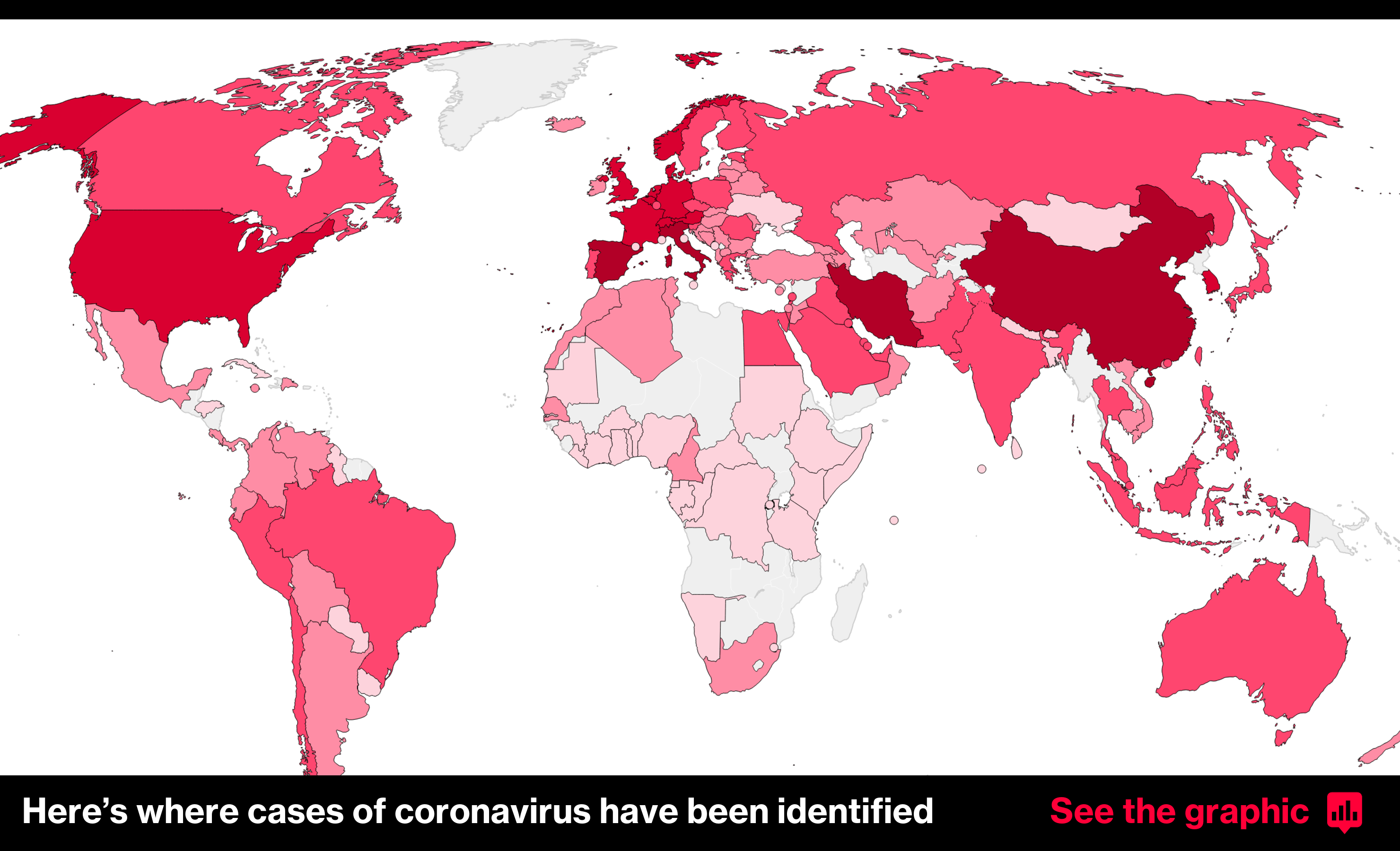
Some 40 nations across the continent have reported more than 700 cases of the coronavirus while worldwide more than 270,000 cases have been reported and more than 11,000 deaths, according to a Reuters tally.
A Kenyan student from Dallas, US has been quarantined in Kitale after showing Coronavirus-like symptoms.
Word went around in Gatua village that a student had returned from the US on Thursday and was exhibiting the symptoms; fever and incessant coughing on Friday.
Area residents then informed the chief and alerted the public health officials.
Specimen were taken from the student and sent to the influenza lab for testing. Meanwhile both the student and his family have since been put in isolation.
Kenya has put in place stringent requirements for containing the virus including a 14 day self quarantine for everyone coming from abroad and not to use public transport from the airport. It’s therefore a question for investigators to figure out how he traveled from Nairobi to Kitale to figure out his contacts should the case turn out positive.
All Kenyan COVID-19 cases have been confirmed as imported from US, Spain, UK. Many countries are now closing their borders as the contagious virus continues to ravage the continent.
Kenya has so far confirmed seven positive cases of the COVID-19 disease whose global figures stood at 276,474 as of Saturday morning.
Total number of deaths worldwide is 11,417 and recovered cases are 91,954.
(AFP) Aches and pains, sore throat, fever – although they may feel similar to those suffering from their symptoms, the novel coronavirus is not the same as the seasonal flu, experts stressed Wednesday.
COVID-19, the illness caused by coronavirus, proves deadly in around 3.5 percent of confirmed cases.
While this is not the same as its mortality rate, given many people may be infected but not realise it, it is significantly higher than seasonal flu, which typically kills 0.1 percent of patients.
“There is still considerable uncertainty around the fatality rates of COVID-19 and it likely varies depending on the quality of local healthcare,” said Francois Balloux, Professor of Computational Systems Biology at University College London.
“That said, it is around two percent on average, which is about 20 times higher than for the seasonal flu lineages currently in circulation.”
Serious cases
But the true danger of coronavirus is unlikely to be the death toll. Experts say health systems could easily become overwhelmed by the number of cases requiring hospitalisation – and, often ventilation to support breathing.
An analysis of 45,000 confirmed cases in China, where the epidemic originated, show that the vast majority of deaths were among the elderly (14.8 percent mortality among over 80s).
But another Chinese study showed that 41 percent of serious cases occurred among under 50s, compared with 27 percent among over 65s.
“It’s true that if you’re older you’re at greater risk, but serious cases can also happen in relatively young people with no prior conditions,” said French deputy health minister Jerome Salomon.
Contagiousness
Disease experts estimate that each COVID-19 sufferer infects between two to 3 others.
That’s a reproduction rate up to twice as high as seasonal flu, which typically infects 1.3 new people for each patient.
Vaccine/treatment
Salomon said that humans have lived with influenza for more than 100 years.
“We’ve studied it closely,” he said. “This new virus resembles the flu in terms of physical symptoms but there are huge differences.”
Number one is the lack of a vaccine against COVID-19, or even any treatment shown to be consistently effective.
While some trials have shown promise delivering anti-retroviral drugs to serious cases, as well as some experimental therapies, their sample sizes are too small to roll out to the general population.
Hundreds of researchers around the world are working frantically to find a COVID-19 vaccine, but the development process takes months and is likely too late for the current outbreak.
Even if a vaccine magically appeared, getting everyone access it to it is no small order. Health authorities regularly complain that not enough people receive the flu vaccine to guarantee “herd immunity”.
Similarities
But the new virus does share some characteristics with flu, notably the measures each one of us can personally take to slow the infection rate:
Avoid shaking hands, frequently wash your hands with soap and water, avoid touching your face and wear a mask if you are sick.
Such actions can limit new infections just as they can with the flu, gastro illnesses and other infectious diseases.
France’s health ministry says that only two in 10 people regularly wash their hands after using the bathroom.
“And only 42 percent of people cover their mouth with an elbow or tissue when they cough or sneeze,” it added, not encouragingly.
Covid-19 random screening for members of the public kicks off. The team is currently visiting high density areas of Nairobi CBD namely Muthurwa, Gikomba markets, Tea Room, Machakos bus stop.
Those with temperatures of 38 degrees will have history taken and if necessary referred for further assessment.
This follows the directive of the government issued by Health CS Mutahi Kagwe. The increased screening is meant to determine the exact extent of prevalence of the virus.
As of Friday updates from the government, total number of confirmed cases still stands at 7.
Of the 7 patients, six are Kenyans and a Burundian, whom the CS said are “doing well under the observation of the Ministry of Health and Kenyatta National Hospital staff.”
All the cases were imported.
He said the 7 are being re-tested to see whether they have turned negative.
Tests on 8 people at the Mbagathi Hospital’s isolation facility had turned out negative and were being processed for discharge.
The CS said the Government had traced 145 people who came into contact with positive cases to ensure they are quarantined.
“We have screed over 600,000 people who have entered our country from our entry points,” he said.
As of the time of this post, there 269,958 confirmed cases and 11,260 reported deaths of Coronavirus globally with no death nor recovery reported in Kenya yet.
Elsewhere, President Uhuru Kenyatta hosted a prayer service at State House, Nairobi to mark the National Day of Prayer on Coronavirus pandemic. The Service was led by a cross-section of religious leaders and is being broadcast live on all leading media stations.
Ten days after he was reported missing Dafton Mwitiki, a recognisable face in Nairobi’s social circles, remain unaccounted for, as family and friends hold on to hope. They believe he will soon walk back into their lives.
As the waiting continues though, other details have emerged over the other life of the man who set social media alight on one of Kenya’s darkest days when he, together with friend Steve Mbogo, appeared at the scene of a terror attack armed with an assault rifle.
Mwitiki, according to investigators led a double life. The first as a doting father and humorous friend who was always the life of the party. A man who never shied away from lending a helping hand and answering calls from friends in need.
Dark side?
The other image is a complete opposite. A darker shade of the man. Investigators who have also been looking for the man say Mwitiki is one of the key leaders of a brutal, well-organised kidnapping ring responsible for high calibre disappearances in and around the city.
He managed to keep his dark side away from the public to the extent that there is no known incident or time when he was summoned to record a statement with the police.
Yesterday, Victor Mwitiki, an elder brother of the missing man insisted that the brother was not a criminal and that he lived a simple and honest life.
“We don’t know why anyone would want to harm my brother. He lived such a simple and honest life,” said Victor.
Victor said the investigations have since been taken over by Kilimani DCI. “The search and rescue have been concluded without any results. We are, however, optimistic that Kilimani DCI will unravel the mystery,” he told Saturday Standard on phone.
Confidential sources within the security circles said Mwitiki was living on borrowed time after he was linked to two major cases of kidnap in Nairobi. In one of the incidents that involved a Chinese man, the kidnappers demanded a Sh100 million ransom.
Dafton and Mbogo when they responded to the DUSIT attack.
Four suspects among them Administration Police officers were killed by the Special Service Unit officers during a rescue mission on February 29th. The kidnapping of the man got the attention of security agencies including the DCI and NIS. The abducted man according to the DCI was kidnapped from his shop on February 27 by individuals impersonating officers from the Directorate of Criminal Investigations.
“Forensic intelligence led the investigating team to Hse no. 2199, where the victim was being held under an armed four-man-guard, who had demanded a $1million (Sh100 million) ransom from his brother to secure his release,” the DCI said via Twitter.
A police pistol and bullets were recovered from a house at Sun Track Estate in Dagoretti where the victim was being held.
Behind the scenes, the confidential sources said, the mobile phone line used to demand ransom was registered in Mwitiki’s name.
This incident is believed to have been the first that lifted the lid of the man believed to have been pulling the strings in the Chinese national kidnapping.
“The callers were using what looked like a sophisticated phone which even the DCI investigators could not trace. It is at this point that NIS came into the probe and helped unravel the behind the scenes actors,” said a senior official who spoke on condition of anonymity.
Mystery
Prior to this, Mwitiki is said to have been linked to another case of kidnapping where a university student was abducted in Nairobi and a Sh100 million ransom demand made. This matter was reported to Kilimani Police Station on January 13 but the DCI dropped the investigations after the family negotiated with the kidnappers.
Eventually, the family paid Sh4 million to have the relative freed. The sources said the same line registered in Mwitiki’s name was used to demand a ransom.
The 38-year-old father of two, a sharpshooter, and an official of the association of civilian firearm holders was reported missing at Kilimani after he failed to return home on the night of March 11.
His vehicle was traced a day later to an estate in Juja. Mwitiki was last seen near his workplace at Galana Plaza in Kilimani, Nairobi before he mysteriously disappeared.
The spread of the coronavirus (COVID-19) is the most serious global health security threat in decades.
With restrictions imposed to curb the spread of the virus, how will communities without a SAFETY net navigate these times?
Tazama World, a community focused journalism initiative led by their editor James Smart went on a mission to find out just how much COVID-19 has impacted and found out the community is being pushed to the edge. Some of the reactions are as follows;
Joyce Omondi, 42, Hotel Owner.
With a business that has 8 workers, serving 600 people in a day, she says her customers have reduced to 150. Her income has plummeted from 15K to 3K.
“We hope this ends quickly and that GOK people know what they are doing in handling this crisis.”
Joyce at her hotel.
Josphat Musyoka – 54 years, Boda Boda rider
As it so happens, riders are refusing to share helmets, Musyoka says this has introduced a new extortion scheme by police. They demand 500 per ride.
“Customers want their own helmets and to be assured that we have fumigated them.”
Josphat Musyoka.
Christopher Otieno Juma- 50 Years Carpenter.
“Before news of the Virus, I used to make 150k a month. We have the capacity to make 10 beds a week. At the moment, we only have 3 beds on order, after this, we have no new orders.”
Christopher at work.
Mary Anyango- 29. Beautician
“Since last week I have got no phone calls from my regular customers. I have tried to call them to find out especially those who I normally work for but they have gone cold.”
Mary attending to a customer.
Philemon Okello, 48, Tailor
“Usually, I would be at my customers’ offices in the morning doing fittings and receiving orders, our business relationship has been like this for years.
I don’t know how to access my customers now that they are working from home.”
Philemon armed with his hand wash soap.
Elizabeth Wanjiku – 41. Mama Mboga
“Stocks are reducing in some items like cabbages, tomatoes, and fruits. Suppliers are telling us that the routes have been affected because some of these things come out of the country.”
Elizabeth during her interview with James Smart.
Michael Owino- 47, Cobbler
“On a good day, I can make between 500 to 700 per day. My income today is 240, truth is it’s not going to keep me afloat for a long time.”
Michael at work.
Irene Otieno- 35, Omena businesswoman
“I sell Omena for Ksh. 30 there’s no way my customers are switching the mode of payment to MPESA so ill take the money and hope for the best. I have children to feed.”
Irene Otieno at her kiosk.
Winfred Kalori – 40 Hotel Owner
“My profits have plummeted to 500 per day from 3,000 shillings. If this continues I may have to let go, my two employees, since I don’t see how to keep this going for long.”
Kalori enduring the hand wash is available for her customers.
New evidence from Europe and the U.S. suggests that younger adults aren’t as impervious to the novel coronavirus that’s circulating worldwide as originally thought.
Despite initial data from China that showed elderly people and those with other health conditions were most vulnerable, young people — from twenty-somethings to those in their early forties — are falling seriously ill. Many require intensive care, according to reports from Italy and France. The risk is particularly dire for those with ailments that haven’t yet been diagnosed.
“It may have been that the millennial generation, our largest generation, our future generation that will carry us through for the next multiple decades, here may be a disproportional number of infections among that group,” Deborah Birx, the White House coronavirus response coordinator, said in a press conference on Wednesday, citing the reports.
The data bears out that concern. In Italy, the hardest hit country in Europe, almost a quarter of the nearly 28,000 coronavirus patients are between the ages of 19 and 50, according to data website Statista.
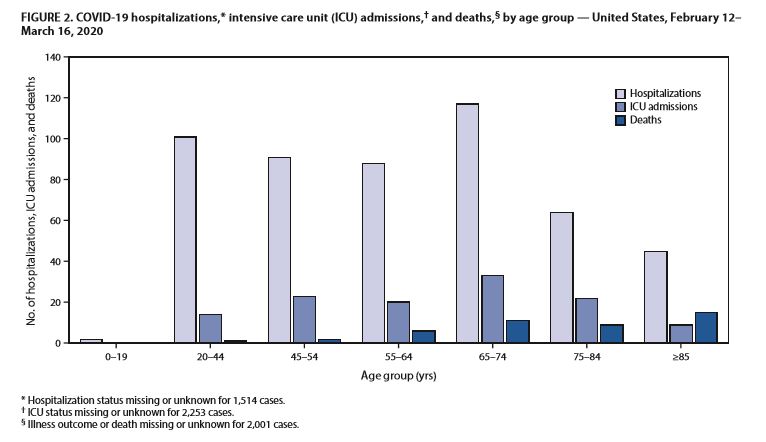
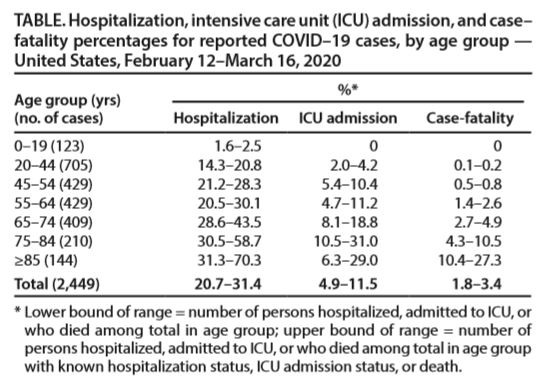
Similar trends have been seen in the U.S. Among nearly 2,500 of the first coronavirus cases in the U.S., 705 were aged 20 to 44, according to the Centers for Disease Control and Prevention. Between 15% and 20% eventually ended up in the hospital, including as many as 4% who needed intensive care. Few died.
Credit: U.S. Centers for Disease Control of Prevention
One of those younger adults is Clement Chow, an assistant professor of genetics at the University of Utah. “I’m young and not high risk, yet I am in the ICU with a very severe case,” Chow said in a March 15 tweet. “We really don’t know much about this virus.”
According to his Twitter posts, Chow had a low-grade fever for a few days and then a bad cough that led to respiratory failure. It turned out to be the coronavirus. He ended up on high flow oxygen in the ICU. When he arrived last Thursday, he was the first patient there. “Now there are many more,” he tweeted.
Chow didn’t give his age in the tweets, but his laboratory website indicates he graduated from college in 2003 and has two unruly children. He didn’t respond to an email and Bloomberg was unable to independently confirm his status as a patient.
It’s true that risk of death climbs precipitously with age. While there were only 144 patients over age 85, as many as 70% were hospitalized and 29% needed intensive care, according to the CDC report. One in four died, the agency said in the Morbidity and Mortality Weekly Report.
Yet emerging evidence suggests that infants and toddlers may also be at risk of severe complications. In a study of more than 2,000 young children with Covid-19 from China, published this week in Pediatrics, Chinese doctors found that about 11% of cases in infants were judged to be severe or critical, as were 7% of those in toddlers and preschoolers. While still a lower rate of severe disease than adults, it’s hardly insignificant.
In the White House press conference Wednesday, President Donald Trump implored younger people to stop reckless behavior, such as partying, going to the beach and hanging out at bars. Yet, as college campuses across the country close down and require students to leave, even the most conscientious young adults face a difficult choice. Finding their academic years abbreviated and graduation plans shattered, many are driving or flying home, where they risk exposing their parents and grandparents to Covid-19.
Credit: U.S. Centers for Disease Control of Prevention
The same concerns apply to young people starting out in big cities who suddenly find themselves under pressure to head back to their hometowns. Livia Calari’s father has been begging her to come home for weeks. The 25-year-old and her boyfriend live in Brooklyn, New York, and have been nervously watching the warnings from officials intensify and the city they live in shut down. But they’re staying put, for now at least.
The couple has two cats they’d have to move. If they did hunker down with Calari’s father in Washington, D.C., they would be asked to self-quarantine on a separate floor for two weeks. Plus, the thought of accidentally bringing the virus worries them.
“I have a lot of anxiety, maybe irrationally, about bringing it to him,” Calari said of her father, who’s 65. “I would feel awful.”
After days of thinking over their options, they decided to stay in New York and re-evaluate if a lockdown gets to the point where they can’t even leave their apartment to take walks.
Stay Home
Infection-fighting officials are willing to go to unusual lengths to get the word out to young people where they congregate, including on the Pardon My Take podcast from Barstool Sports – one of the most popular sports shows with younger listeners.
Anthony Fauci, the head of the National Institute on Allergy and Infectious Diseases, told the hosts how stressful the outbreak has been.
“You cannot imagine,’’ he said. “You see what happened in China, you see what’s happening in Italy. We have the virus in the United States, and we want to make sure by our efforts that we don’t have that degree of disease and suffering that we are seeing in other countries.’’
And he called on young people to embrace the effort to protect themselves and the broader population.
“No one is invulnerable, but even if you are doing very well, you have to be a very important part of our national effort to contain the outbreak,’’ Fauci said. “You are not a passive person in this. You are an important part of the active plan to contain this epidemic. We really do need you. This isn’t something that can be successful without you.”
On Friday, Alai had been summoned by the DCI to record a statement at the Headquarters in Kiambu. He would later be arrested and detained at Muthaiga Police station where he’s expected to stay over the weekend.
Head of investigations bureau at the Directorate of Criminal Investigations John Kariuki said Alai will be charged with publishing fake news in contravention of the Cybercrime Act.
“When you contradict the government and say people have died and you are not the health minister, what is that?” Kariuki posed.
Alai had reported that two Chinese nationals had died of Coronavirus related implications in Mombasa and the government was covering up the details.
“I want to appeal to members of public to desist from any form of misinformation. The social media has been awash with all sort of rumours including that we are locking down Nairobi, sending people home, that we have deployed the military …. things that have come from nowhere. These rumours must stop,” Kagwe said.
“But because I know empty appeals will not work, we will proceed and arrest a number of them to prove our point and of course since they will have something to report regarding coronavirus, we will oblige them by taking them to Mbangathi where they will report because that is where issues of coronavirus can be handled,” the CS warned.
However, in a quick rejoinder, Alai’s Twitter account sent contradicting the DCI’s charges of alleged fake news. According to the page, CS Matiang’i was behind his arrest following an article he had made.
So Alai has been detained at Muthaiga because Matiangi doesn’t like this article? https://t.co/9iUYIW9ZtI
The excuses are many. That’s the main reason. DCI Director of Investigations Kariuki being used like a condom by Matiangi.
Remember that when Bobasi MP Innocent Obiri complained about Matiangi’s quarry, he was detained and shifted from police station to police station throughout the weekend.
Matiangi you are killing school children with the quarry.
Deputy President William Ruto and ODM leader Raila Odinga meet at Jubilee Party Sec-Gen. Raphael Tuju’s home in Karen. The two leaders had gone to check up on Tuju, who is recovering following a road accident early last month.
Raila and Ruto have been at loggerheads for the longest time and often hammer each other even apart in their political cocoons.
The two last meet in November during the launch of BBI which has become a bone of contention between the two political giants. With Ruto and his cronies publicly opposing the initiative and Raila headlining the agenda.
When the two met, one could be damned to say they’re sworn enemies but only the ignorant are surprised, these politicians will hurl insults at each other at Uhuru Park them cross over to Serena Hotel on the other side of the road to sip expensive whisky while watching their supporters fight each other.
A group photo of Raila, Ruto, Tuju and his family and other politicians.
Boris Johnson has ordered cafes, pubs, bars, restaurants and gyms to close from tonight in a bid to stop the spread of coronavirus.
The prime minister also said clubs, leisure centres and theatres should also close their doors
During his daily news conference he acknowledged that people may be tempted to go out on Friday night but urged people to stay at home.
“You’re sacrifice [by social distancing and self-isolation] means we are putting the country in a better and stronger position and we will be able to save thousands of lives,” said Mr Johnson.
The Chancellor Rishi Sunak said the government would step in to pay people’s wages, with grants that will cover 80% of the salaries of retained workers – up to £2,500 a month.
He urged businesses to look at government support before laying off workers.
It comes after the total number of people who have died in the UK after contracting COVID-19 rose to 177 after England saw 39 more deaths – the biggest rise in a day.
There were 3,269 confirmed cases in the UK recorded by Thursday evening – that figure will be updated later today.
During Thursday’s press conference, Mr Johnson said the UK “can turn the tide” against coronavirus in the next 12 weeks – but subsequently admitted the government “don’t know how long” the crisis will last for.
He also revealed the government is in talks to buy “hundreds of thousands” of tests to reveal if people are immune.
Scientists have advised that social measures will need to be in place for most of a year in order to control the spread of the virus, which has infected nearly 250,000 people worldwide.
More than 10,000 people have died around the world after contracting the virus.
Love him or hate him, one thing about Museveni is his charm to deliver stiff measures on a lighter note. During his first address on the Coronavirus where he announced the country is yet to confirm any case, he cracked up many.
As a preventive measure, Museveni announced the banning of all social gatherings including entertainment joints, “The merry-making, discos, dances, bars, sports, music shows, cinemas, and concerts. These are very dangerous gathering points with the virus around. Drunkards sit close to one another. They are a danger to themselves. All these are suspended for a month.” He declared.
Museveni also closed all the schools. During his address, he suspended travels to category one countries that have already been flagged with high Coronavirus cases. However, on foreigners residing in Uganda and planning to traveling and Ugandans outside planning to travel to the country, Museveni said, “Foreignersgoing to those countries are free to go provided they are not returning. We cannot stop Ugandans from returning home but they have to go through quarantine.”
“Ugandans coming back from abroad will not be stopped, but they will be placed under quarantine at their own cost. Foreigners going out cannot be stopped from doing so either provided they are not coming back within 32 days.” He continued.
True to his words, Ugandans immigration officials are already implementing the directives that are meant to stop the passage of the virus into the country.
As seen in the video below, passengers arriving were allocated different hotels to stay according to countries of origin. More to it, they are compelled to foot all the bills including the police security whom will ensure they don’t leave the mandatory quarantine space until the 14 days lapses. Those who can’t afford are told to return back.
The Central Bank of Kenya (CBK) has today released Shs 7.4 billion to support Government efforts to contain the spread of Coronavirus in the country.
Speaking at State House, Nairobi, during President Kenyatta’s meeting with the private sector, CBK Governor Dr Patrick Njoroge said the money was gained from the mop-up of the old 1000 shillings bank notes.
“As you recall in September last year we concluded the demonetization of our currency relating to our old generation one thousand bank notes. That matter was concluded and as a result of that, Shs 7.4 billion worth of bank notes never came back to the system.
“That money would have been held by people who, for whatever reason, did not want to subject themselves to the checks that were in place. So most likely this was money that might have been illicitly acquired through the various channels that we have talked about in other forums,” the CBK Governor said.
Dr Njoroge said the bank is giving back the money to boost the government’s efforts to combat the Coronavirus pandemic.
President Kenyatta thanked CBK for the contribution and directed Treasury Cabinet Secretary Ukur Yattani to ensure the money is used to support Kenyans to overcome the current health crisis.
“That money goes to help our health facilities and our health workers,” the President said.
He added: “That again is something we appreciate and this is what I mean when I say Kenyans working together can achieve miracles.”
During the meeting, the President announced a further Shs 1 billion allocation by the Government for hiring of more health workers needed to increase the country’s capacity to deal with the Coronavirus pandemic.
He said the additional funds will ensure the government brings on board enough manpower to support those already in the field working to save lives.
The President’s meeting with the private sector representatives discussed a raft of other measures being taken to cushion the country from the effects of the Coronavirus pandemic.
Key among the interventions is an announcement by the Head of State that outstanding VAT refunds and pending bills would be settled within 30 days.
The President said VAT refunds and settlement of pending bills will help improve cash flow and keep businesses afloat.
“Critically, we all recognize that the volume of business has gone down. We need to ensure that we have cash flow to be able to keep ourselves afloat as we go through these trying times,” the President said.
He said the Government had lifted a ban on its entities from holding conferences and seminars in private hotels so as to keep the hospitality sector vibrant.
“As you are well aware we had put a ban on government officials holding meetings in hotels and said only government institutions are the ones to host various seminars by government.
“Again we have lifted that temporarily until this is over so that our hotel beds get occupancy and you in turn are able to keep your workers employed,” the President said.
Once again, the President thanked the media for its leading role in information dissemination and public health education on the Coronavirus pandemic.
He said the media had distinguished itself as a valuable partner in efforts to contain the spread of the virus.
Following yesterday’s directive, the Head of State said the Government had released 400,000 litres of ethanol, impounded by the multi-agency team on contraband goods, to oil companies for the blending of hand sanitizers to be distributed free of charge to the public.
On its part, the private sector, through the Kenya Private Sector Alliance (KEPSA) Chairman Nick Nesbitt and CEO Carole Kariuki, committed to continue protecting Kenyan employees against job losses and safeguarding SMEs from the adverse effects the current crisis by ensuring business and supply chain continuity.
The private sector further committed to prioritize the health and safety of employees, communities and health workers through increased Corporate Social Responsibility activities. The meeting was attended by several Cabinet Secretaries among other senior Government officials.
Earlier, the President held talks with representatives of the Export Processing Zones (EPZ) Apparel and Textile Sector during which he commended the sector for their efforts in minimizing job losses during this crisis period.
Could the Covid-19 pandemic be the impetus that accelerates the adoption of digital solutions? Could the global economic devastation from the worldwide outbreak be the catalyst that ultimately leads to the embrace of the Fourth Industrial Revolution?
As the Covid-19 outbreak forces the cancellation of trips, large gatherings and a slowdown in manufacturing, the economic damage is mounting across the world.
The call for social distancing has resulted in universities suspending lectures, churches halting services and many companies formulating plans on how to safeguard their employees. Schools have brought mid-term breaks forward with the intent of running catch-up classes when they resume.
The effects of Covid-19 have also left supply chains around the world disrupted. China’s industrial output contracted at the sharpest pace in 30 years, as workers were told to stay home, falling by 13.5% in January and February 2020, according to Reuters. Worldwide, a delay in the fulfilment of orders is being felt as companies like Apple reduce their revenue growth forecast.
In all this despair, digital solutions are rising to save the day. As business and schools ramp up their disaster management plans, turning to the use of smart technologies seems to be the only way to keep essential services running. The technology early adopters have been able to make a more straightforward switch as their customers are already used to online services like getting statements, paying bills and customer support. Those companies are fast opting for employees, who were in open-plan environments, to rather work from home.
The star of the show has been technologies like 3D printing, helping to support industrial supply chains that are affected by limitations on traditional production and imports. A good example is in Italy where Brescia (near one of the hardest-hit regions for Covid-19 infections), urgently needed Venturi valves for an intensive-care device which the supplier could not provide in a short time. Additive manufacturing firm, Isinnova, came to the rescue. They brought a 3D printer directly to the hospital and, in just a few hours, redesigned and then produced the missing piece.
China has been using drones to ensure medical samples and quarantine materials can travel with minimal risk to high-risk areas to reduce contact between samples and personnel and improve delivery speed.
Universities with online programmes continue with their academic year instead of entirely suspending classes. Sadly, these are few and far between in South Africa. Schools are limited in their ability to leverage technology, as not all students have devices or data. This constraint has magnified the South African digital divide.
No one knows what the total socioeconomic impact of Covid-19 will be, however, the prediction is recovery will be slow. As markets are reconfigured across the world as a result of the economic devastation, a new digital world will emerge. Digitisation will no longer be a consideration for someday in the future, but rather an imperative as organisations grapple with how to future-proof themselves.
The Covid-19 outbreak is an opportunity for South Africa to accelerate all Fourth Industrial Revolution (4IR) plans. Late adopters can no longer afford to wait-and-see lest another crisis hits. The digital divide must be addressed and technology adoption accelerated so we can readily face the next challenge.
Perhaps we will also see South African companies leading in 4IR solutions and rise to save the day. Perhaps our proudly South African drone operators will assist the government to deliver test kits to remote locations or our robotics companies will make their robots available in isolation wards to limit human contact.
The opportunities are endless.
Karabo Moloko is the CEO of unLeash Institute, a strategy execution and digital transformation consultancy.
We’re receiving so much information on the daily concerning how to tackle COVID-19 and it can become overwhelming. We’ve therefore decided to address the queries and information one piece at a time, beginning with the social-distancing phenomenon.
Social distancing is the practice of purposefully reducing close contact between people. This includes:
remaining out of congregate settings as much as possible (stay out f the clubs!),
avoiding mass gatherings (don’t go to places of worship, but rather pray in your homes),
and maintaining distance of about 6 feet from others when possible.
So actually it is physical distancing and using different means to continue social contact.
Also ReadMachakos County PSVs hike fare amidst Covid-19 outbreak.
Social distancing is crucial for preventing the spread of contagious illnesses such as COVID-19, since these viruses are spread by coughing, sneezing and close contact. By minimizing the amount of close contact we have with others, we reduce our chances of catching the virus and spreading it to our loved ones and within our community.
There are many ways you can continue to connect with friends and family: phone calls, text messages, emails and video chats are all great virtual options. Maintain these alternative ways of staying connected is a good way to take care of your emotional health and remain sane.
Social distancing is important for all of us, but those of us who are at a higher risk of serious complications caused by COVID-19 should be especially cautious about distancing. People who are at high risk of complications include adults greater than 65 years of age, and people who have serious chronic medical conditions like heart disease, diabetes and lung disease. If there are high surges in the number of COVID-19 cases all at once, health care systems and resources could potentially become overwhelmed. Efforts that help stop COVID-19 from spreading rapidly – like social distancing – help keep the number of people who are sick at one time as low as possible.
The best time to begin social distancing is before an illness like coronavirus becomes widespread throughout your community. At all places (when possible),keeping about 6 feet of distance between yourself and others is key. Simply stay at home.
The country is the fourth-largest economy by GDP in sub-Saharan Africa (SSA) after Nigeria, South Africa, and Angola.
With a GDP of $109bn, Kenya is the largest economy in eastern Africa, having overtaken Ethiopia in 2017.
The economy is larger than the combined economies of Tanzania and Uganda, its two East African Community (EAC) partners.
And Kenya is the only country in eastern Africa to have significantly reduced poverty, having graduated from low-income to middle-income level.
Yet Kenya faces an internal challenge thatpersistently undermines its development potential — the country’s ruling elites and their appetite for corruption.
A World Bank study on foreign aid shows it ends up in the pockets of ruling elites in recipient countries rather than going to those that it is meant to help
The World Bank’s study, Elite Capture of Foreign Aid: Evidence from Offshore Bank Accounts, published on February 18, came as a shock. The term “élites” is defined as ruling politicians, bureaucrats and their cronies in the private sector involved in aid-funded projects.
The main finding of the study is that aid disbursements “coincide with significant increases in deposits held in offshore financial centres known for bank secrecy.”
Put another way, ruling politicians, bureaucrats and their friends stash billions of dollars in secret offshore banks whenever foreign aid lands in their country. The research used quarterly information on aid disbursements from the World Bank in combination with Bank for International Settlements (BIS) banking statistics.
The BIS data provided the flows between aid recipients and final havens such as Switzerland and Luxembourg, where secrecy is paramount.
In the East Africa Community, the larger the economy, the more aid money the ruling elites captured and stashed into offshore foreign bank accounts.
Between 1990 and 2010, Kenyan politicians and their cronies transferred US$3bn. In Tanzania, the EAC’s second-largest economy, the elites siphoned off US$586m. Uganda came next with US$270m, followed by Rwanda on US$190m, and lastly, Burundi with US$122m.
The amount of foreign aid diverted by Kenyan ruling elites is appalling.
The US$3b stashed in offshore accounts for 20 years works out at US$150mn a year. That kind of money can build, for example, a power plant that generates electricity for an entire rural district.
Trailblazers, leaders and titans
Complete the form for your free download of The Africa Report’s 2019 list of the 100 most influential Africans. Get your free PDF by completing the following form.
Asset Recovery
The good news is that the ruling elites are finding it harder to stash cash in the West, including havens such as Switzerland.
The Stolen Asset Recovery Initiative (StAR) led by the World Bank is spearheading the global fight against corruption and recovery of corrupt assets, with good results. This effort complements institutional mechanisms launched by the EU and the US which are making it harder for ruling elites to stash cash in the West.
The EU’s anti-money laundering directive prompted by the Panama Papers requires disclosure of asset owners and beneficiaries in a publicly available register.
The Kleptocracy Asset Recovery Initiative at the US Department of Justice seizes stolen assets.
The UK’s Unexplained Wealth Orders allow courts to order “politically exposed persons” to explain why their assets are so much larger than their salaries back home.
Perhaps most surprising is the robustness of asset-recovery by the leading haven, Switzerland, which has returned millions of dollars stolen by corrupt African politicians. StAR indicates that to date, Swiss authorities have returned to Nigeria US$700m stolen by the military ruler Sani Abacha.
The Swiss and Kenyan governments are engaged in a similar exercise. In 2018, Kenya’s President Uhuru Kenyatta and his Swiss counterpart Alain Berset signed an agreement to recover assets stashed in Swiss banks.
In 2015, 12 years after the Anglo Leasing scandal which reportedly transferred US$700mn to foreign banks, was exposed, Kenya brought charges against 13 prominent Kenyans and foreign accomplices. This was the first time that powerful people in Kenya had been charged in a major financial scandal. The legal breakthrough was achieved after the unprecedented co-operation between Swiss authorities and Kenya’s Ethics and Anti-Corruption Commission.
The Kenyan case proves that fighting high-level corruption and recovering stolen assets stashed in offshore banks can only succeed if three parties are involved: aid donors, haven countries, and the states from which the thieving elites hail.
Wearing green and white uniform, displaying a badge of a local church, Margret Wangari, goes about sampling coffins at a well-known dealer’s shop in Nyahururu.
She is particular on this very order; two white coffins, fit for adults, a couple who had passed on after a short illness.
She checks the firmness of the well-finished coffins, the sponge lining is intact and fit for sending off these love birds. The golden inscription on the two brown crosses are precise and accurate.
Margret Wangari, a hearse driver, decorates the hearse in preparation of a burial of a couple she had been tasked to ferry their bodies.
She is certain that the glowing wreaths would warm the gloomy faces of the bereaved. She then takes a deep breathe, gasping for air.
She clears the consignment for a well maintained white van fully decorated with blue ribbons, packed outside the shop. After the loaders are done with their work, she jumps onto the driver’s seat, ready to execute her mission.
Wangari is a hearse driver in Nyahururu Laikipia County with her head held high bravely explains to us what pushed her to the job her peers would consider weird and cynic.
Women tend to be very emotional and jobs similar to that people thinks are meant for men who are strong hearted, but a woman comes along to prove the myth wrong presenting all women in standardizing the gender equality with the slogan – “What a man can do also a woman can do better.”
“Since my mother passed away the job of my dreams became clear on my mind. I admired how those people took care of my mother’s body, and their good heart attracted me to doing this work.
“My dreams came true when the Anglican Church of Kenya [ACK] in Nyahururu believed in my effort and employed me as their Hearse driver,” Wangari explains.
Wangari who is a mother of two adults, tells us how difficult it was for her family to accept her job which they thought was not fit for her.
“My family took time before accepting my job. Others kept asking whether they could find me a better job other than hearse driving. My answer would forever convinced them that it was the job I chose deep from my heart and no one could change that, with time they accepted and they fully supported me,” Wangari says with a bright face.
Wangari is not only a hearse driver, she also helps the mortuary attendant in packing the corpse and also sets the coffin crane at the grave before the burial.
Wangari wearing a green and white uniform together with her work mates picks a coffin for a burial ceremony.
The energetic woman says that it was not easy, at first, before she came to adept, she feared the dead bodies to the point she ended up going for rehearsals in Nyahururu Mortuary as the mortuary attendant’s aid.
She pointedly says the jobs that people do not value nowadays are well rewarding as she explains how it has impacted her life a big.
“Since I started this job I have seen a big difference compared to other jobs I have done. I have given my children the best education that every child would dream of. The job has never disappointed me as it is satisfying my requirements, be it food or clothing,” the driver said adding that it only required courage and believing in herself to maintain the job.
To eradicate doubt in us she jubilantly drives us to the mortuary to clear her other services.
Two kilometres from the shop we arrive at the mortuary, the sombre mood that hovers the surrounding hits everyone while the red flowers from hearses would depict everything.
Wangari goes for a petrol fill up to prepare her journey to Ndogino, Laikipia County and returns to collect the two corpses.
“In this journey it is not advisable to work alone I have colleagues whom I work with and one of them is Benways coffin shop.
“We help each other with referrals, for instant when I have a customer who needs a coffin I advises them to buy from Benways and Benways does refers his customers to me,” Wangari said.
Wangari continues to discourage the youths from being choosy on what jobs to take urging them to do jobs that will help them in their daily life.
Wangari is not over with the jobs, she is a versatile woman and now drives the bodies to the church for a memorial service and later leaves to set the crane before the corpse are brought for the burial.
Lamu County commissioner Irungu Macharia has confirmed that an Italian man has been quarantined at Siha Hospital, Mpeketoni after seeking treatment for fever.
The Italian, 74, is said to have fallen sick on Thursday after which he sought treatment at a private facility where he was diagnosed with high fever.
The man, who normally lives at his residential house in Mpeketoni with his Kenyan wife, was isolated immediately because of his recent travel history.
It was established that between March 3 and 4 this year, he travelled by Ethiopian Airlines from Rome, Italy, to Addis Ababa, Ethiopia.
He then travelled to Mombasa and finally to Malindi via a local flight before connecting to Mpeketoni by road.
Saudi Arabia will suspend all domestic flights, buses, taxis and trains for 14 days amid the coronavirus outbreak, an Interior Ministry official told the official Saudi Press Agency (SPA).
The new measures will go into effect on Saturday and are a part of the Kingdom’s ongoing efforts to fight the spread of the new coronavirus.
Early Friday morning, Saudi Arabia announced it would halt entry and prayers in the outer courtyards of the two holy mosques in Mecca and Medina.
Saudi Arabia has 274 coronavirus infections as of Friday but no deaths, according to the health ministry. The new coronavirus pandemic has killed nearly 10,000 globally and infected over 240,000.
The United States is looking at the use of chloroquine and another version of the treatment, hydroxychloroquine, to treat patients with COVID-19, the disease caused by the CCP virus, Food and Drug Commissioner Stephen Hahn said on Thursday.
The anti-malarial treatment has shown promise in treating patients and is already being studied as a possible COVID-19 treatment by researchers at the University of Minnesota.
The Food and Drug Administration (FDA) fast-tracked the approval process, cutting a process that would normally take a long time down to a short time period, President Donald Trump told reporters at the White House on Thursday.
He said the drug, which is also used to treat arthritis, has shown “encouraging—very, very encouraging—early results.” The president promoted chloroquine and hydroxychloroquine as being able to be used in treating COVID-19 patients.
Hahn told reporters that the drug is approved to treat malaria and arthritis but not for use in patients with the new illness.
“In the short term, we’re looking at drugs that are already approved for other indications,” he said.
“Many Americans have read studies and heard media reports about this drug chloroquine, which is an anti-malarial drug. It’s already approved, as the president said, for the treatment of malaria, as well as an arthritis condition. That’s a drug that the president has directed us to take a closer look at, as to whether an expanded use approach to that could be done to actually see if that benefits patients.”
The agency wants to look at the drug in a clinical trial, he added.
Some pharmaceuticals are prescribed by doctors even if they’re not approved for specific uses by the FDA in what’s known as off-label use.
“From the FDA perspective, once the FDA approves a drug, healthcare providers generally may prescribe the drug for an unapproved use when they judge that it is medically appropriate for their patient,” the FDA states on its website.
Off-label use includes using a drug for a disease or medical condition that it’s not approved to treat.
Trump spoke before Hahn, saying because the drug has been around “we know that if things don’t go as planned it’s not going to kill anybody.”
Americans will be able to obtain chloroquine by prescription, he said. New York Gov. Andrew Cuomo told the president late Wednesday that he wants the drug to be prescribed in New York.
President Donald Trump addressing these Press.
Trump also mentioned another drug, Gilead Sciences’s remdesivir, saying it and chloroquine are “very powerful.”
Remdesivir is close to being approved by the FDA, he added. Hahn said remdesivir is in the approval process and emphasized that the FDA is responsible for making sure drugs are safe and work.
No drugs are approved for the treatment of the new virus, which also has no vaccine at present.
Another treatment in the works, Hahn said, is using plasma from blood taken from patients who have recovered from the CCP virus.
“If you’ve been exposed to coronavirus and you’re better, you don’t have the virus in your blood. We could collect the blood now this is a possible treatment. This is not a proven treatment, I just want to emphasize that.”
Researchers would collect the blood, concentrate it, and, after verifying it’s virus-free, give it to other patients.
“The immune response could potentially provide a benefit to patients,” Hahn said.
The new virus started in China last year. The Epoch Times refers to it as the CCP virus because the Chinese Communist Party’s coverup and mismanagement allowed the virus to spread throughout China and create a global pandemic.
The World Health Organization (WHO), meanwhile, said this week that it’s launching a multicountry trial for potential CCP virus treatments.
Canada, France, Spain, and Thailand are among the countries that have already joined the effort, director-general Tedros Adhanom Ghebreyesus told reporters in Geneva.
“Multiple small trials with different methodologies may not give us the clear strong evidence we need about which treatments help to save lives,” he said.
“This trial focuses on the key priority questions for the public. Do any of these drugs reduce mortality? Do any of these drugs reduce the time a patient is in hospital and whether or not the patients receiving any of the drugs needed ventilation or intensive care units,” Ana Maria Henao-Restrepo, who leads the WHO’s research and development group, added.
The trials will examine four potential treatments: remdesivir, chloroquine, a combination of lopinavir and ritonavir, and a combination of those two plus interferon beta.
Chlorquine will be tested in some places, while hydroxychloroquine will be tested in others, Henao-Restrepo said.
Original version of this article first appeared on Epoch Times.