Author: Kenya West

  • KMPDU Secretary General Dr.Ouma Olunga Appointed As The Chief Health Officer With The Nairobi Metropolitan Services

    KMPDU Secretary General Dr.Ouma Olunga Appointed As The Chief Health Officer With The Nairobi Metropolitan Services

    In the latest shakeup, the government has deployed 37 people to the newly established Nairobi Metropolitan Servi

    Fredrick Ouma Oluga is among 37 people identified by the government for deployment to the newly established Nairobi Metropolitan Services.

    Oluga has been seconded to serve as the Chief Officer for Health at NMS.

    Before this appointment, Oluga has been serving as the secretary-general at the Kenya Medical Practitioners Pharmacists and Dentists Union. He has since resigned from the position of the Sec Gen which is effectively taken over by Dr Chibanzi Mwachonda who has been his deputy.

    Other key appointments includes that of Michael Ochieng who previously worked at the  State Department Transport and Public Works to NMS Transport and Public Works Secretary.

    Josephine Kibaru Mbae from the Ministry of Health us now the NMS Health Secretary.

    Here’s the full list

    [pdf-embedder url=”https://cms.kenyainsights.com/wp-content/uploads/2020/03/Nairobi-Metropolitan-Appointments.pdf-2.pdf” title=”Nairobi Metropolitan Appointments.pdf 2″]


  • US Luring Medical Professionals Globally To Relocate And Work In The US To Fight Coronavirus

    US Luring Medical Professionals Globally To Relocate And Work In The US To Fight Coronavirus

    The US State Department has urged medical professionals seeking to work in the US to reach out to the nearest embassy to request a visa appointment

    The statement says that “We encourage medical professionals seeking to work in the United States on a work or exchange visitor, particularly those working to treat or mitigate the effects of COVID-19, to reach out to the nearest embassy or consulate to request a visa appointment.”

    As for those foreign medical professionals already in the United States:

    “J-1 Alien Physicians (medical residents) may consult with their program sponsor, ECFMG, to extend their programs in the United States.  Generally, a J-1 program for a foreign medical resident can be extended one year at a time for up to seven years.” It says.

    The American Medical Association (AMA) had  urged the Trump Administration to take critical steps to expand the physician workforce to meet the increasing demands on the American health system during the COVID-19 pandemic.

    In a letter to Secretary of State Mike Pompeo and Acting-Secretary of Homeland Security Chad Wolf, the AMA called for opening visa processing at embassies and consulates worldwide for physicians seeking to join U.S. residency programs starting in July, and urged public confirmation that J-1 physicians are permitted to be redeployed to new rotations.

    Prior to the COVID-19 pandemic, the U.S. was already facing a serious shortage of physicians largely due to the growth and aging of the population and the impending retirement of many physicians.

    Non-U.S. citizen IMGs play a critical role in providing health care to many Americans, especially in areas of the country with higher rates of poverty and chronic disease. Nearly 21 million people live in areas of the U.S. where foreign-trained physicians account for at least half of all physicians.

    Individuals with serious chronic medical conditions, such as diabetes, are at a higher risk of experiencing serious complications from COVID-19. During this pandemic it is even more critical that our non-U.S. citizen IMGs have the support they need from the Administration to provide health care to those patients battling COVID-19.

    The US has more coronavirus cases than any other country – surpassing both China and Italy – and experts warn the worst is yet to come.

    The number of US coronavirus infections climbed above 82,000 on Thursday (Mar 26), surpassing the national tallies of China and Italy, as New York, New Orleans and other hot spots faced a surge in hospitalisations and looming shortages of supplies, staff and sick beds.

    The US death toll from COVIDー19, rose beyond 1,200.

    With about 40 per cent of Americans under lockdown orders, US President Donald Trump urged citizens to do their part by practicing social distancing.

  • Expert Opinion: Is Coronavirus As Deadly As They Say

    Expert Opinion: Is Coronavirus As Deadly As They Say

    By Wall Street Journal

    If it’s true that the novel coronavirus would kill millions without shelter-in-place orders and quarantines, then the extraordinary measures being carried out in cities and states around the country are surely justified. But there’s little evidence to confirm that premise—and projections of the death toll could plausibly be orders of magnitude too high.

    Fear of Covid-19 is based on its high estimated case fatality rate—2% to 4% of people with confirmed Covid-19 have died, according to the World Health Organization and others. So if 100 million Americans ultimately get the disease, two million to four million could die. We believe that estimate is deeply flawed. The true fatality rate is the portion of those infected who die, not the deaths from identified positive cases.

    The latter rate is misleading because of selection bias in testing. The degree of bias is uncertain because available data are limited. But it could make the difference between an epidemic that kills 20,000 and one that kills two million. If the number of actual infections is much larger than the number of cases—orders of magnitude larger—then the true fatality rate is much lower as well. That’s not only plausible but likely based on what we know so far.

    Population samples from China, Italy, Iceland and the U.S. provide relevant evidence. On or around Jan. 31, countries sent planes to evacuate citizens from Wuhan, China. When those planes landed, the passengers were tested for Covid-19 and quarantined. After 14 days, the percentage who tested positive was 0.9%. If this was the prevalence in the greater Wuhan area on Jan. 31, then, with a population of about 20 million, greater Wuhan had 178,000 infections, about 30-fold more than the number of reported cases. The fatality rate, then, would be at least 10-fold lower than estimates based on reported cases.

    Next, the northeastern Italian town of Vò, near the provincial capital of Padua. On March 6, all 3,300 people of Vò were tested, and 90 were positive, a prevalence of 2.7%. Applying that prevalence to the whole province (population 955,000), which had 198 reported cases, suggests there were actually 26,000 infections at that time. That’s more than 130-fold the number of actual reported cases. Since Italy’s case fatality rate of 8% is estimated using the confirmed cases, the real fatality rate could in fact be closer to 0.06%.

    In Iceland, deCode Genetics is working with the government to perform widespread testing. In a sample of nearly 2,000 entirely asymptomatic people, researchers estimated disease prevalence of just over 1%. Iceland’s first case was reported on Feb. 28, weeks behind the U.S. It’s plausible that the proportion of the U.S. population that has been infected is double, triple or even 10 times as high as the estimates from Iceland. That also implies a dramatically lower fatality rate.

    The best (albeit very weak) evidence in the U.S. comes from the National Basketball Association. Between March 11 and 19, a substantial number of NBA players and teams received testing. By March 19, 10 out of 450 rostered players were positive. Since not everyone was tested, that represents a lower bound on the prevalence of 2.2%. The NBA isn’t a representative population, and contact among players might have facilitated transmission. But if we extend that lower-bound assumption to cities with NBA teams (population 45 million), we get at least 990,000 infections in the U.S. The number of cases reported on March 19 in the U.S. was 13,677, more than 72-fold lower. These numbers imply a fatality rate from Covid-19 orders of magnitude smaller than it appears.

    How can we reconcile these estimates with the epidemiological models? First, the test used to identify cases doesn’t catch people who were infected and recovered. Second, testing rates were woefully low for a long time and typically reserved for the severely ill. Together, these facts imply that the confirmed cases are likely orders of magnitude less than the true number of infections. Epidemiological modelers haven’t adequately adapted their estimates to account for these factors.

    The epidemic started in China sometime in November or December. The first confirmed U.S. cases included a person who traveled from Wuhan on Jan. 15, and it is likely that the virus entered before that: Tens of thousands of people traveled from Wuhan to the U.S. in December. Existing evidence suggests that the virus is highly transmissible and that the number of infections doubles roughly every three days. An epidemic seed on Jan. 1 implies that by March 9 about six million people in the U.S. would have been infected. As of March 23, according to the Centers for Disease Control and Prevention, there were 499 Covid-19 deaths in the U.S. If our surmise of six million cases is accurate, that’s a mortality rate of 0.01%, assuming a two week lag between infection and death. This is one-tenth of the flu mortality rate of 0.1%. Such a low death rate would be cause for optimism.

    This does not make Covid-19 a nonissue. The daily reports from Italy and across the U.S. show real struggles and overwhelmed health systems. But a 20,000- or 40,000-death epidemic is a far less severe problem than one that kills two million. Given the enormous consequences of decisions around Covid-19 response, getting clear data to guide decisions now is critical. We don’t know the true infection rate in the U.S. Antibody testing of representative samples to measure disease prevalence (including the recovered) is crucial. Nearly every day a new lab gets approval for antibody testing, so population testing using this technology is now feasible.

    If we’re right about the limited scale of the epidemic, then measures focused on older populations and hospitals are sensible. Elective procedures will need to be rescheduled. Hospital resources will need to be reallocated to care for critically ill patients. Triage will need to improve. And policy makers will need to focus on reducing risks for older adults and people with underlying medical conditions.

    A universal quarantine may not be worth the costs it imposes on the economy, community and individual mental and physical health. We should undertake immediate steps to evaluate the empirical basis of the current lockdowns.

    Dr. Bendavid and Dr. Bhattacharya are professors of medicine at Stanford. Neeraj Sood contributed to this article.

  • Bill Gates Who Predicted Coronavirus In 2015 Says US Must Go On A Total Lockdown Until June

    Bill Gates Who Predicted Coronavirus In 2015 Says US Must Go On A Total Lockdown Until June

    By Daily Mail

    As co-founder and ex-CEO of Microsoft, Bill Gates is famous for being one of the world’s richest people, but he is also known for his philanthropic activities, specifically funding the work towards eradicating deadly diseases.

    As a result, he has become a leading spokesman for disease control and eradication, and has talked before at length about the risks our world faces should there be a new disease outbreak as we are seeing now with Covid-19.

    During a digital TED Talk with host Chris Anderson on 25 March, Gates was asked what he would if he were president and tasked with leading country through the worst pandemic the world has seen in over 100 years.

    Gates said that his top priority would be to keep people across America indoors to ‘flatten the curve’ of the pandemic; in other words, slowing down the rate at which the virus is spreading.


    ‘The clear message [would be] that we have no choice to maintain this isolation and that’s going to keep going for a period of time,’ Gates said. ‘In the Chinese case, it was like six weeks, so we have to prepare ourselves for that and do it very well.’

    ‘If you’re [a country] doing isolation well, within about 20 days you’ll see those numbers [of new cases] really change [go down] and that is a sign that you’re on your way.’

    Gates says that he would emphasize that to do this is not going to be easy, and ensure that such message is loud and clear for everyone to appreciate.

    In a previous TED Talk in 2015, Gates had warned of the impact a global pandemic could have on today’s globalized society where people can quite freely travel across the globe.

    Asked to reflect on this warning and whether he felt it was heeded, he said: ‘Basically no. I was hopeful that with Zika, Ebola and SARS and MERS, they all reminded us particularly in a world where people move around so much, you can get huge devastation.

    ‘The talk was to say, “We’re not ready for the next pandemic, but there’s advances in science that if we put resources against them, we can be ready.” Sadly, very little was done,’ Gates recalls.

    Bill Gates, Microsoft co-founder and ex-CEO was asked what he would do if he was president to combat the coronavirus pandemic
    Bill Gates made his billions as founder and CEO of Microsoft, but has since stepped down from his position to focus his efforts on eradicating infectious diseases

    Speaking more generally about the coronavirus, Gates said: ‘I think this is a unprecedented, really disconcerting time for everyone with things being shut down, not knowing exactly how long it’s going to last, worrying about the health of all the people we care about. It’s scary for everyone.’

    He said like many people, he is also stuck at home and getting used to working remotely all the time. ‘I’ve gone days without seeing any co-workers!’ he said.

    The actual US president Donald Trump has advocated reopening businesses by Easter Sunday to help the tanking U.S. economy but several medical experts have cautioned that could be too early to stop the spread of the coronavirus.

    On Wednesday he claimed ‘fake news’ is pushing the need for the lockdown to continue in order for him to perform badly at the upcoming US election in November.

    During the daily White House coronavirus briefing, Trump said: ‘The media would like to see me do poorly in an election.’

    When questioned by a reporter, he snapped back saying: ‘I think there are certain people who would like it not to open so quickly and they think that would be very good as far as defeating me at the polls.’

    Trump appeared to pull back on his plan to reopen businesses on Wednesday however, and said he would not make any decision without consulting Dr. Tony Fauci, the director of the National Institute of Allergy and Infectious Diseases, and Dr. Deborah Birx, who is coordinating the day-to-day response on the coronavirus.

    As world governments struggle to grapple with the rapidly spreading coronavirus, Gates warned years ago that humanity was ill-prepared for a fast-spreading, life-threatening pathogen.

    In 2015, Bill Gates predicted a global pandemic would kill many people and grind the world economy to a halt in a 2015 TED Talk.

    Gates told a TED Talk that if the wealthiest nations had prepared for a pandemic with the same urgency that they prepared for nuclear war, a global event such as the coronavirus could have been avoided.

    This was not the last time Gates made a similar warning. Last year, Gates, who since stepped away from day-to-day work at Microsoft has devoted his energies to helping eradicate disease in the developing world, also warned of a coming pandemic.

    In a 2019 Netflix documentary, Gates predicted a killer virus could originate in China’s wet markets to rapidly infect the world.

    There have been more than 68,000 cases of the coronavirus in the United States and more than 1,000 people have died.

    The number of US deaths from the coronavirus has risen to 1,035 as of 25 March

  • Coronavirus:David Ndii Dares Uhuru To Resign And Be Given Two Weeks To Save Kenya Or Be Executed In Public If He Fails

    Coronavirus:David Ndii Dares Uhuru To Resign And Be Given Two Weeks To Save Kenya Or Be Executed In Public If He Fails

    Economist Ndii had come up with a Lifeline Funds plan to cushion workers and small businesses. Ndii insists on this as the only policy instrument that can mitigate the economic shocks from this coronavirus crisis.

    However, not everyone is in the thought that Ndii’s proposals are workable as one Twitter user posed, “Solutions by Ndii are impractical. Lifeline fund?  To an economy that already can’t sustain itself?

    In a quick rejoinder, Ndii lashed, “Tell them(Uhuru’s administration) to resign or step aside. Give me one week and it will be running. If not, I’m ready to be executed in public. And that is a dare.”

    Ndii had elaborated the details of his lifeline fund plan in a letter addressed to the President. Read it below.


    Your Excellency,

    COVID-19 is here. Fatal errors have been made. People from Italy managed to travel to western Kenya when Italy was already the global epicentre of the pandemic. One of them was infected. This is unacceptable.

    Last Sunday, the government suspended international flights and imposed mandatory quarantine. Passengers did not find quarantine plans in place. They were held up for hours, and then allowed to go home and report back the following day. The following day, they were shuttled from place to place for hours. Yet, the Government had given assurance that a contingency plan for every scenario was in place. This is not true. It was the usual public relations, then shambles. Unfortunately, we are accustomed to this.

    Last week, in only your second address on the pandemic, you launched an Internet service. This was a serious error of judgment on your part, and distasteful opportunism on the part of Google. People are worried about food, and you call the nation to attention to launch balloons? Many Kenyans have accused you of being a prisoner of your privileged upbringing. Yet you continue to reinforce that perception. This was yet another one of many let them eat cake moment. It is one too many. Learn from it.

    I do not know what your analysts and advisors are telling you but here is the low-down I think you need to have.

    If the pandemic progresses to Europe level, we are sitting ducks.

    The data we are observing shows that availability of intensive care (i.e ICU) beds is the most critical survival factor. Germany has 1.5 times more infections than France, 30,000 and 20,000 respectively as I write, but France has seven times (860) the fatalities in Germany (130). But it is also the case that Germany has 29 ICU beds per 100,000 people, three times France with 11.6 beds per 100,000 people, that is a 40/100 ratio. What this means is, for 100 people needing ICU beds at the same time, Germany will save most of them, but France could lose all 60 who fail to get ICU beds. In every country, deaths have risen sharply once intensive care capacity is exhausted. The UK delayed its emergency response. With only 6650 confirmed cases, a fifth of Germany’s, they already have two and a half times the number of deaths. But the UK has only 6.6 ICU beds per 100,000 people, less than a quarter of Germany’s capacity.

    I gather that we have a total national ICU capacity of 200 beds. That works out to 0.4 beds per 100,000 people, or one bed for every 250,000 people. The global critical illness rate is at 4%. To exhaust our 200 ICU beds at this rate requires only 5000 infections. But many of these beds are already occupied; therefore the actual capacity that will be available is much less. We cannot afford 1,000 infections let alone 5,000.

    Allow me to turn to the economy. As Kenyans watch other, mostly European governments roll out economic mitigation and social protection measures, they are wondering when their government will come to the rescue.

    We could not be more ill-prepared.

    You will no doubt recall that as Finance Minister, you rolled out an Economic Stimulus Package (ESP) to aid recovery from the 2007 global financial crisis and 2007/8 post-election violence shocks. You may also recall that the budget deficit at the time was running at below 4% of GDP, which left plenty of headroom to borrow and spend without risking macroeconomic stability. You will probably also be aware of a fiscal prudence rule of thumb, a deficit “red line” if you like, of 5 – 6 percent of GDP that should not be crossed for too long. You will certainly know that your government has been running a deficit in the order of 7-8 percent of GDP for six years now.

    What this means then, is that we do not have the fiscal space for a borrow-and-spend fiscal stimulus. This year, your government has revised domestic borrowing upwards by more than Sh200b from a target of Sh300b at the start of the financial year, to the latest figure of Sh514b. The going just got infinitely tougher. Tax revenue performance which has been in decline throughout your tenure, is about to go in free fall. The deficit will rise regardless.

    Ten days ago, I expressed the opinion that fiscal or monetary economic stimulus—what we call demand management instruments in economics— are not the appropriate response and argued instead for a “lifeline fund” to protect jobs. Several countries including UK, Denmark and the Netherlands have since adopted this approach.

    What do I mean by “lifeline fund?” Let me use the simplest of examples — a hair salon or barber shop. Hair grooming is the very opposite of social distancing— and it can certainly wait. But thousands of people depend on it for their daily bread (ugali and githeri more like it). Most live day to day. How are they surviving?

    The lifeline fund is first and foremost, a safety net for workers like these whose sectors are most badly affected. This is the government’s responsibility just as it provides relief to drought and natural disaster victims. These people, particularly those in the urban informal sector, have nowhere to turn.

    Secondly, the lifeline fund aims to keep businesses, especially those that are providing essential goods and services open instead of closing because of low business. We want to avoid shortages that could encourage hoarding, heighten social stress, and drive up prices. Third, the more businesses we keep alive, the faster the recovery will be.

    For people in Nairobi’s crowded informal settlements and elsewhere, who do not know where their next meal will come from, the language of social distance and on-line working comes across as a cruel joke. We already have volatile powder keg of gross inequality and social exclusion, and as I already remarked, you personally have reputation for elitist insensitivity. If people get hungry, the soldiers you love to turn to will not help you. Let us not tempt fate.

    I have estimated in an op-ed published today on the TheElephant.info that a lifeline fund in the order of 0.5 – 1% of GDP or Sh50-100b would be sufficient to save the situation. But having already argued that it is not prudent to borrow-and-spend, I am obliged to offer suggestions on how else this might be funded. I see two options.

    The first is budget reallocation within the existing deficit by (a) drastic cutback on development projects and (b) mothballing non-essential functions thereby freeing up some non-wage recurrent budget. Certainly, monies budgeted for international travel; workshops and public events can be redeployed immediately. This will require political resolve and execution discipline, the lack of which has been the bane of your government. Time and again, austerity plans are announced, but not followed through. You do not have that luxury anymore. You can no longer kick the can and hope that we will muddle along until it becomes someone else’s problem. Mr. President, your luck has finally run out. If you do not impose financial discipline, you are looking at a financial meltdown in a few months, if not sooner. That will be your legacy.

    The second is external finance. The IMF has stated it can avail $57b quickly to low income and emerging markets. If it was shared pro-rata between low and middle countries based on GDP, our share would be in the order of Sh18b ($180m), significant but inadequate in the context of the revenue shock referred to earlier. The Prime Minister of Ethiopia has appealed to the G-20 to advance Africa $150b in emergency funds and to write off debts. I am of the view that African leaders should unite around a moratoriam on debt repayment to official creditors (i.e. multilateral and bilateral lenders). New money even if it could be made available, which I doubt, couldn’t come fast enough, and all sorts of paper work would have to be prepared. The same applies to debt write-offs.

    A debt service moratorium on the other hand is equivalent to budget support with money we already have. It is a case of a bird in hand being worth two in the bush. Moreover, on this, it is we the debtors who have the leverage because we can’t pay. Won’t pay is an option.

    Our foreign debt service budget to official creditors for the coming financial year is in the order of Sh220b. I propose you reach out to Prime Minister Abiy and work together to champion this alternative.

    The next question is how would the lifeline be delivered. The western countries are offering partial salary subsidies, up to 80 percent in UK to companies that keep workers on payroll. I think we should do it differently, for two reasons. First, I need not belabour that the government is broke. Simply put, they are rich, and we are poor. Second, and to my mind more importantly, it will be very difficult to target grants efficiently and fairly in our predominantly informal economy. If money is free, demand will overwhelm supply, and if truth be told, the corruption opportunities are beyond measure.

    For these reasons, I propose that the lifeline fund be in the form of a very soft loan with long grace period (6 – 12 months) and reasonable tenure (3 – 5 years). The amount should be a fixed sum per employee and disbursed monthly over a fixed term. Should be entirely linked to the number of employees to the loans should be made available to both workers (as check-off loans) and businesses (business loans). To illustrate, working with a figure of Sh30,000 per worker per month for four months, a restaurant with 10 workers would be entitled to borrow Sh1.2 million. If shared equally between the business and workers, and is interest-free over five years, the business would repay Sh10,000, and the workers Sh500 a month each once the crisis is over. The screening of eligible businesses and actual nitty-gritty of loan administration should be left to banks.

    In conclusion Mr. President, allow me proffer what I think are your leadership imperatives:

    1. Broaden your leadership team by establishing a National Covid-19 Response Task Force that includes the other arms of government (Judiciary, Legislature, and Council of Governors) as well as private sector, private healthcare providers, professionals and other leaders in society, with you as Chair. The task force should meet at least twice a week, daily if necessary and update the public on a weekly basis. May I propose you personally take charge of this by way of a weekly press conference.
    2. Establish an independent scientific advisory panel, along the lines of the UKs Scientific Advisory Group for Emergencies (SAGE) to advice you and the National Response Task Force. You need doers (the taskforce) and thinkers (the advisory panel). What we don’t need is provincial administration enforcers donning fatigues and issuing edicts like they have done since colonial times. If we don’t adapt, we will die.
    3. Task the health authorities to mount an aggressive testing effort of high exposed people and clusters (airline and international hotel staff, tourism centres e.g Malindi and Diani etc) to establish the extent, if any, of local transmission. This is imperative because many urban Kenyans have travelled back to rural homes, and they, as well as the Government, needs to know whether they and their families are at risk so that the appropriate response can be mounted.
    4. Task the Treasury, Central Bank and the Kenya Bankers Association to set up a Lifeline Fund along the lines proposed. Task the cabinet to craft an austerity plan within the next seven days with a target of identifying (a) development projects that will be frozen and (b) non-essential functions that can be mothballed with immediate effect.
    5. In addition to the lifeline fund, it may become necessary to provide a social safety net at the community level in the near future. In this regard, may I propose that Ward Level response teams comprising of political (MCA), county and relevant government officials (ward administrators, chiefs, social workers) and community leaders be established, and tasked the responsibility of identifying vulnerable households that may need assistance, if and when that time comes.

    Mr. President, you need to get your act together for this. This is our last big ask from you. It’s also your last scene on the big stage. God knows your performance has not lived up to its billing—and that’s being polite about it. It is your chance for public redemption. It many not matter to you, but it matters to us— to the thousands, maybe millions of lives at stake. Stop listening to your buddies, sycophants and frontmen for commercial interests. You will not get away with throwing up your hands and asking the public what they expect you to do.

    The race is not to the swift, nor the battle to the strong, neither yet bread to the wise, nor wealth to men of understanding, nor favour to men of skill; but time and chance happens to them all. For surely no man knows his time. Like fish caught in a cruel net or birds trapped in a snare, so men are ensared in an evil time than suddenly falls upon them. (Ecclesiastes 9:11-12)

    Godspeed

    Most respectfully,

    David Ndii DPhil(OXON)

    Nairobi, 25 March 2020

    David Ndii is a leading Kenyan economist and public intellectual.


  • Coronavirus: Pandemics And The Psychology Of Uncertainty

    Coronavirus: Pandemics And The Psychology Of Uncertainty

    Many of the most serious global threats today involve a high degree of uncertainty: will the next flu outbreak turn into a pandemic? By how many degrees will global temperatures increase this century? Limiting the damage of such threats hinges on human choices, like the decision to get vaccinated or cut back on energy use. But we humans are famously bad at making decisions in already uncertain conditions. How can unpredictable global threats be communicated to most effectively guide our decision-making?

    Take the threat of a pandemic virus rapidly spreading around the globe. Pandemics have killed millions in the past and it’s likely another will eventually come – we just don’t know when. In the early stages of a pandemic, people would be asked to take actions to help limit its spread, unpleasant actions like getting a vaccine or giving up travel plans. How could the director-general of the World Health Organization, health ministers and medical professionals around the world motivate people to take costly but necessary actions to help limit the spread of the disease?

    Past research suggests people are notoriously unwilling to make sacrifices for others when the benefits are uncertain. In the case of pandemics, this means people would be especially unlikely to spend time going to a clinic or cancel a vacation because it’s not guaranteed that such steps would help stop the spread of disease. Thus, the uncertainty inherent to infectious diseases provides the ideal conditions for their spread: risk-seeking decisions in social situations.

    Our work, conducted as part of the Oxford Martin Programme on Collective Responsibility for Infectious Disease, shows that when people have to make decisions that might harm others, they tend to act as if things will work out just fine.

    In some of our studies, for instance, we asked hundreds of people whether they would stay home from work when infected with the “African Flu” (a fictional disease), which would be costly for their career but would help limit the spread of disease. Sometimes, we highlighted that it was uncertain whether they would infect a co-worker if they went to work. This uncertainty made people less willing to sacrifice and stay home. Consistent with previous studies on uncertainty, people said they were willing to risk hurting someone else for their own benefit when the harm was not certain to occur.

    Luckily, it turns out there is another, more effective way to communicate uncertain threats like infectious disease. When uncertainty about human welfare is emphasized – for example, how much others might suffer from an infection – people strive to prevent the worst-case scenario.

    In our studies, when we highlighted the chance that going to work might infect either somebody young and healthy for whom the infection would be no problem or an elderly person for whom the infection could be very serious, our participants said they were more willing to sacrifice and stay home. In other words, directing people’s attention to the uncertain impact of their actions on the well-being of others made them more willing to take on costs to prevent others from potential harm.

    These findings highlight how journalists, global leaders and healthcare professionals can more effectively communicate the nature of uncertain but potentially devastating threats like pandemics. Often, when we talk about pandemics, we focus on whether or not one will occur in the near future and whether we are prepared to cope. The Economist, for example, recently remarked that “whether the world can forestall the next, unknown pandemic threat is uncertain”.

    Our research suggests this approach may be counterproductive when it comes to motivating the costly, altruistic individual choices that may ultimately prove crucial for limiting the impact of a pandemic. Humans tend to put their self-interest first when it’s uncertain if doing so will cause harm.

    But when the human costs of selfishness are made salient, people are more willing to forgo the personal and prioritize social interests, even amidst uncertainty. We think communicators should instead emphasize how selfish responses to global threats risk endangering the most vulnerable among us, such as babies, pregnant women and the elderly. Focusing uncertainty on how our actions might impact others – for example, how much they might suffer – can inoculate us against selfishness.

    This article was first published on Weforum

  • Coronavirus: We Asked The Father To Stay In Quarantine But Insisted On Coming Back- Utawala Parish

    Coronavirus: We Asked The Father To Stay In Quarantine But Insisted On Coming Back- Utawala Parish

    My dear brothers and sisters. Many of you have  been calling to ask us about the messages in the social media. We in the parish wish to make ana official statement to all our parishioners.

    RE: FR. RICHARD ODUOR AND COVID-19

    Fr. Richard Oduor came to Holy Family Catholic Church Utawala from Rome on Thursday 12th of March 2020. He passed through all the tests for Covid-19 at JKIA. After spending the night in the Parish house, he traveled on Friday the 13th of March to attend a funeral at Ugunja in Siaya County. The same Friday was when the first case of Covid-19 in Kenya was announced and it was someone who came from outside the country the previous week.

    We asked Fr. Richard to stay at his home place in Kisumu for 14 days and self-quarantine but he insisted he wanted to come back. We allowed him back on the condition that he would self-quarantine and isolate himself for 14 days. On his arrival on Monday the 16th, we immediately took him to a room at the back of the parish compound (which was formerly a store) and isolated him there. We never allowed him to say any Mass in the Parish (Holy Family) or the outstation (St. Patrick’s, Mavoko).

    On Friday, the 20th of March after some fever and vomiting, Fr. Richard was taken to Mbagathi hospital where yesterday we were informed that he tested positive for Covid-19. Unfortunately, even though we made sure that Fr. Richard was in isolation, we learned that during his period of isolation/quarantine, he had (on his own volition) visited some friends. Fr. Richard has taken responsibility for that and tried to inform those he met at this time according to the guidelines from the Ministry of Health.

    Since the information about his status became known to us, and even though we had taken all precautions and avoided contact with him throughout the week, as an extra precaution, we have decided to get ourselves tested for Covid-19 tomorrow and also to quarantine ourselves for the next 14 days. Please let us pray for each other as we continue to take the necessary precautions and protect ourselves and our loved ones.

    Frs. Bosco Kamau and Anthony-Mario Egbunonu

    Priests serving Holy Family Catholic Church, Utawala.

  • Tracing The Movements Of Catholic Priest Who Traveled From Rome To Siaya And Tested Positive For Coronavirus

    Tracing The Movements Of Catholic Priest Who Traveled From Rome To Siaya And Tested Positive For Coronavirus

    Health officers in collaboration with the security officers in Siaya county will today conduct test on Corona Virus among members of the public in Ambira Village, Sega area and Lwak convent to establish the number of people that may be infected following an interaction they made with the Catholic Priest who came from Italy and visiting his home area on 13thof this month in Ambira village.

    According to county commissioner Michael Oletialal, Father Richard Onyango Oduor is said to have landed in Kenya on 11th this month and slept in Utawala Nairobi before proceeding to Ambira on 13th this month to meet his family members, conducted a funeral mass on14th and later in the evening proceeded to Sega where he slept in one of the priest house.

    He therefore proceeded to Lwak Convent and further to Nairobi where he was tested positive with the CVID-19.

    Addressing the press, Commissioner directed that the officers should ensure they test all the family mebers that the said father interacted with, the priests in Sega, the sisters in Lwak convent and the mourners who attended  the funeral and  they be quarantine for the next 14 days.

    He therefore urged members of the public not to panic.

    On the other hand, he noted that the team will also visit Ngiya village and test one person who came from India and landed to Tanzania before coming to the country and to his home place in Ngiya.

  • Coronavirus: I Did Not Meet With The Kilifi Deputy Governor While In Mombasa Ignore The Lies-Raila

    Coronavirus: I Did Not Meet With The Kilifi Deputy Governor While In Mombasa Ignore The Lies-Raila

    By Dennis Onyango

    Hon Raila Odinga has been strictly complying with the directives issued by the Government since the first case of the Coronavirus was reported in the country on Friday, 13th March

    2020.

    He has suspended travels outside the country, public gatherings and meetings. Mr. Odinga has been operating mostly from home while transacting official business online. In addition, he has since suspended operations at his Capitol Hill offices to minimise human traffic to the office.

    Upon suspending physical operations of his Capitol Hill offices, and in order to minimise
    crowding, Mr. Odinga made a low-key visit to Mombasa mid last week for a few days of rest, where he stayed in his house.

    During the Mombasa visit, Mr. Odinga did not meet with any of the leaders of the Coastal counties or their deputies, except the Deputy Governor of Mombasa County Dr. William Kingi. He DID NOT MEET Deputy Governor of
    Kilifi County.

    Mr. Odinga appeals to the public to treat reports indicating otherwise as lies and malice. He appeals to Kenyans to treat such reports as the work of people who have failed to comprehend the magnitude of the challenge the nation is facing and instead find pleasure in abusing social media platforms to spread misinformation to cause fear and panic, a trend the State must arrest urgently.

    As the State makes frantic and commendable efforts to secure the country, Mr. Odinga appeals to Kenyans to continue obeying directives from the Government including frequently washing their hands, staying away from crowded places including places of worship, streets and bars, staying at home and relying on factual information that the Ministry of Health is providing on a daily basis.

  • Shahbal: I Met Raila A Day After He Had Met Kilifi Deputy Governor Saburi

    Shahbal: I Met Raila A Day After He Had Met Kilifi Deputy Governor Saburi

    As response team continues to follow the trails and get all the persons the DG could’ve gotten in contact with him. Already the authorities said over 300 persons had been marked for quarantine.

    Governor Kingi who had earlier confirmed getting into contact with the DG, took a test which turned out negative, he had since gone into self quarantine.

    Mombasa businessman and politician Suleiman Shahbal happens to be one of the indirect contact with with the DG. Shahbal who posted a photo recently with Raila Odinga has gone out to clarify the situation. He had made contact with Raila who had apparently made contact with the DG a day before.

    Below is the statement from Shahbal;

    I have read with concern about Kilifi’s Deputy Governor Gideon Saburi who has been diagnosed with the Corona virus. There are rumours that apparently he met with Hon. Raila the day before I met with Raila. I have been reliably informed that Hon. Raila DID NOT MEET THE DEPUTY GOVERNOR of Kilifi County! He met the Deputy Governor of Mombasa! The day after I met Hon Raila, I also bumped into Gov. Amazon Kingi at Moi international Airport, who was wearing a mask. Kingi had obviously met his Deputy. We remembered not to shake hands. I commended him for wearing a mask. Just as Gov Kingi has now taken precautions and gone into self isolation, I too will immediately go to hospital today to be checked for Corona and I will immediately enter into self isolation for the 14 days starting from Thursday when I met Gov. Kingi.

    This stresses the importance that we should all apply to taking care about infecting other people – even by accident. Had I know about Gideon Saburi and his possible infection I would have immediately gone into self isolation. While we should not panic we must all stay responsible and do the right things. I have faith that God will eventually remove this plague from us. God help us all in these difficult times.

  • Uhuru Kenyatta’s Twitter Account Is Back Again After He Deleted His Page

    Uhuru Kenyatta’s Twitter Account Is Back Again After He Deleted His Page

    In March 2019, the president’s official Twitter handle was deactivated and vanished. While many thought this would be temporary, it never became the case.

    Before the account was deleted, this what it read. “If you are corrupt we will fight you. You can be my brother or my sister or my closest political ally. I won’t be clouded by ethnicity or status in my quest to leave behind a united nation and I will continue championing for Kenya’s unity.”

    Later on, statehouse made a statement over the decision to suspend the account.

    “On account of unauthorized access to the official social media handles of H.E the President of the Republic of Kenya, Uhuru Kenyatta.All official social media handles for the President have been temporarily suspended to allow for the necessary remedial measures to be undertaken,” said  Nzioka Waita, Chief Of Staff, Office of The President.

    Uhuru Kenyatta’s Twitter account has now been taken up after being in deactivation mode for more than 30 days Twitter limit. The account which had the handle (@UKenyatta) tweeted again in March 2020 after being deactivated in May 2019.

    @Ukenyatta account which is a parody account.

    President has now lost the original handle which is now being run by a different person making it an unofficial account. Twitter allows creation of parodies of famous people as long as you indicate it.


  • Court Orders Robert Alai Not To Post Anything About Coronavirus On His Social Media Pages

    Court Orders Robert Alai Not To Post Anything About Coronavirus On His Social Media Pages

    Blogger Robbert Alai has been gagged from commenting or publishing on his Twitter and Facebook accounts on issues touching on coronavirus outbreak in Kenya pending the hearing and determination of his case.

    Mr. Alai was charged on Monday with false information relating to the coronvirus pandemic in Kenya, an action the prosecution claims was intended to create panic in the country.

    The blogger, who has been released on bail, is said to have published the false information on March 19, accusing the national government of not being forthright in its coronavirus updates.

    The controversial blogger spent the weekend in police cells following his arrest on Friday.

    Nairobi Resident Magistrate Muema Ndugi on Monday warned the blogger from publishing any content touching on Covid 19 failure to which his bond terms will be cancelled.

    Alai pleaded not guilty and asked the court to release him on lenient terms since he has another pending case before the court.

    The magistrate released him on Sh50,000 cash bail or Sh150,000 bond pending the hearing and determination of the court.

    The magistrate released him on bail, ruling that detaining him would endanger his health and life.

  • Kilifi Governor Amason Kingi Has Received His Coronavirus Test Result

    Kilifi Governor Amason Kingi Has Received His Coronavirus Test Result

    It has emerged that Kilifi Deputy Governor Gideon Saburi who recently traveled from Germany on March 1st, tested positive for Coronavirus.

    The news that has caused great fear amongst the residents and county officials has been brewing in the past few days.

    DG who refused to adhere to the 14 days self quarantine directive having traveled from Berlin and a country with high infections, was eventually forced into isolation after which tests were done and confirmed him positive.

    Governor Kingi confirmed the case saying that all the county staff who came into contact with the DG and others in the county that the DG has provided have been traced. They’re all under the mandatory isolation for 14 days after which medical follow ups shall be taken.

    The Governor also said he already took the Coronavirus test, “I also came into direct contact with the patient and as the Coronavirus protocol demands, I have placed myself on self quarantine starting Thursday 19th March. Also, I had the emergency response unit visit me at my home to collect samples for testing. I got my results and they turned NEGATIVE.” Said the Governor.

    Kingi will continue staying in self quarantine until the mandatory 14 days lapses.

    Meanwhile, the deputy governor Gideon Saburi will face prosecution after he refused to self-isolate after arriving from Germany according to the CS Kagwe. He said this while making the announcement that lo international flights shall remain suspended. Also they anyone arriving in Kenya shall be subjected to a 14 day mandatory quarantine at a government facility.

    Kenyan Coronavirus cases today went up by 8 bringing the total number of confirmed cases to 15. CS said all the cases were imported pushing the government to tighten border security and stop all international flights.

  • Kenya Suspends All International Flights And Other New Directives To Curb Coronavirus As Numbers Rises To 15

    Kenya Suspends All International Flights And Other New Directives To Curb Coronavirus As Numbers Rises To 15

    COVID-19 UPDATE BY HEALTH CS MUTAHI KAGWE.

    Mandatory quarantine for visitors at government designated place.

    All international flights suspended from Wednesday, March 25, midnight.

    Effective midnight tonight, all bars will remain closed until further notice.

    Restaurants will remain open but only for takeaway services.

    All matatus must adhere to 60% capacity rule or their saccos will lose licenses.

    Lack of compliance by churches and social gatherings. Govt suspends all churches, mosques and other social gatherings.

    Funerals restricted to immediate family members.

    We have done nothing to avoid the situation in Italy. This is like commiting suicide at the end of the day.

    We must meet the objectives of making Kenyans’ lives safe.

    This is not a joke. Stay at home if you’re doing anything in the market place. Go Home, Stay at Home.

    The 8 are tourists, they’ve been in parks and hotels. This is not business as usual and we will ensure it’s not.

  • Emirates Airline Suspends All Passenger Flights

    Emirates Airline Suspends All Passenger Flights

    Dubai, United Arab Emirates, 22 March 2020 – Since the COVID-19 outbreak began, Emirates and dnata have been adapting operations in line with regulatory directives as well as travel demand.

    The airline has aimed to maintain passenger flights for as long as feasible to help travellers return home amidst an increasing number of travel bans, restrictions, and country lockdowns across the world. It continues to maintain vital international air cargo links for economies and communities, deploying its fleet of 777 freighters for the transport of essential goods including medical supplies across the world.

    With many of its airline customers dramatically reducing flights or ceasing services altogether, dnata has also significantly reduced its operations, including temporarily shutting some offices across its international network.

    HH Sheikh Ahmed bin Saeed Al Maktoum, Chairman and Chief Executive of Emirates Group said: “The world has literally gone into quarantine due to the COVID-19 outbreak. This is an unprecedented crisis situation in terms of breadth and scale: geographically, as well as from a health, social, and economic standpoint. Until January 2020, the Emirates Group was doing well against our current financial year targets. But COVID-19 has brought all that to a sudden and painful halt over the past 6 weeks.

    “As a global network airline, we find ourselves in a situation where we cannot viably operate passenger services until countries re-open their borders, and travel confidence returns. By Wednesday 25 March, although we will still operate cargo flights which remain busy, Emirates will have temporarily suspended all its passenger operations. We continue to watch the situation closely, and as soon as things allow, we will reinstate our services.

    “Emirates Group has a strong balance sheet, and substantial cash liquidity, and we can, and will, with appropriate and timely action, survive through a prolonged period of reduced flight schedules, so that we are adequately prepared for the return to normality.”

    Cost reduction measures

    The Emirates Group has undertaken a series of measures to contain costs, as the outlook for travel demand remains weak across markets in the short to medium term. This includes:

    • Postponing or cancelling discretionary expenditure
    • A freeze on all non-essential recruitment and consultancy work
    • Working with suppliers to find cost savings and efficiency
    • Encouraging employees to take paid or unpaid leave in light of reduced flying capacity
    • A temporary reduction of basic salary for the majority of Emirates Group employees for three months, ranging from 25% to 50%. Employees will continue to be paid their other allowances during this time. Junior level employees will be exempt from basic salary reduction
    • Presidents of Emirates and dnata – Sir Tim Clark and Gary Chapman – will take a 100% basic salary cut for three months

    On the decision to reduce basic salary, Sheikh Ahmed said: “Rather than ask employees to leave the business, we chose to implement a temporary basic salary cut as we want to protect our workforce and keep our talented and skilled people, as much as possible. We want to avoid cutting jobs. When demand picks up again, we also want to be able to quickly ramp up and resume services for our customers.

    “The Emirates Group has strong liquidity, with a healthy cash position but it is prudent that it take steps to reduce costs at this time. Emirates remains committed to serving its markets and looks forward to resuming a normal flight schedule as soon as that is permitted by the relevant authorities.”

    Safeguarding customers, employees, and communities

    Emirates Group closely monitors the situation and keeps in regular contact with all relevant authorities, so that it can implement the latest guidance to keep travellers and its employees safe and healthy.

    The company has strongly discouraged its employees from non-essential travel, implemented work from home policies for all employees where operationally feasible, enhanced cleaning and disinfection protocols at its facilities, introduced temperature screening at its key office entry points, and launched internal educational campaigns on hand hygiene and health practices to reduce risk of COVID-19.

    Over the past weeks, the airline has also implemented enhanced cleaning and disinfecting measures on all of its aircraft departing Dubai as a precaution, and worked closely with airports to implement screening measures as required by the local authorities.

    Frontline employees such as crew and airport teams have also been provided with support to stay safe while on duty, including providing hand sanitizers and masks where required.

    The Emirates Group fully supports all initiatives to safeguard the health of communities in every market where it operates, including the UAE’s national COVID-19 response.

    Sheikh Ahmed said: “These are unprecedented times for the airline and travel industry, but we will get through it. Our business is taking a hit, but what matters in the long run is that we do the right thing for our customers, our employees, and the communities we serve. With the support and unity that we have seen from our employees, partners, customers, and other stakeholders, I’m confident that Emirates can tackle this challenge and come out stronger.”

  • China Billionaire Jack Ma’s Medical Supplies Donation To Kenya And Africa For Coronavirus Arrives

    China Billionaire Jack Ma’s Medical Supplies Donation To Kenya And Africa For Coronavirus Arrives

    ADDIS ABABA, Ethiopia (AP) — Africa has received a much-needed coronavirus care package from Chinese billionaire Jack Ma.

    A cargo flight containing more than 6 million medical items arrived Sunday in Ethiopia’s capital, Addis Ababa. The supplies from Ma, the founder of China’s e-commerce giant Alibaba, will be distributed to African countries in need of supplies to battle the spreading COVID-19 pandemic.

    An Ethiopian Airlines cargo flight from Guangzhou, China arrived with 5.4 million face masks, 1.08 million testing kits, 40,000 sets of protective clothing and 60,000 protective face shields, according to Ethiopian officials and the Jack Ma Foundation.

    Ethiopian Prime Minister Abiy Ahmed last week pledged to distribute the supplies to other countries in Africa. Ma has sent similar shipments of medical supplies to countries in Asia, Europe, North America and Latin America.

    The virus has been slow to reach Africa but has now spread to at least 42 of the continent’s 54 countries, with more than 1,100 cases confirmed. In response many African countries are imposing restrictions.

    Rwanda and Tunisia have announced lockdowns, ordering people to stay at home except for essential reasons.

    Kenya has banned public gatherings but has permitted normal church services to continue as long as hand sanitizing or washing facilities are provided to worshipers.

    Nigeria, Africa’s most populous country with 190 million people, just three weeks ago announced the first coronavirus case in sub-Saharan Africa. Now with 22 cases, it stopped all incoming international flights on Saturday.

    Ethiopian Airlines and South African Airways, two of Africa’s largest airlines, announced sweeping cancellations of international flights. South Africa has stopped allowing foreigners to disembark from incoming international flights.

    Although most people only experience minor flu-like symptoms from the coronavirus and recover within a few weeks, the virus is highly contagious and can be spread by those who do not show symptoms. It can cause severe illness, including pneumonia, in some patients, particularly those with underlying health problems. This poses a threat to many African health systems, which experts warn do not have sufficient resources to cope with a large influx of patients needing isolation and intensive care.

  • Kilifi Deputy Governor Gideon Saburi Forced Into A 14 Days Quarantine After Germany Trip And Accused Of Exposing Governor Kingi And Others To Coronavirus

    Kilifi Deputy Governor Gideon Saburi Forced Into A 14 Days Quarantine After Germany Trip And Accused Of Exposing Governor Kingi And Others To Coronavirus

    Fear and panic has gripped not only the Kilifi County Government offices but the residents as well. This follows the fears that the DG who had traveled to Germany and has been back in the county since 1st March, could’ve been infected with the deadly virus.

    Concerns were raised that the DG despite shaving traveled from a high rate infected country, Germany, allegedly refused to quarantine himself for the mandatory 14 days.

    Locals took to the social media to condemn the deputy governor, referring to him as a “selfish and irresponsible leader” who has put the lives of many Kilifi residents at risk.

    This was after some residents claimed they interacted with Mr Saburi, shook hands and even hugged him after his return from Germany.

    After landing from Berlin, the DG developed complications and had sought treatment in Mombasa at one of the leading private hospitals. He was admitted for three days.

    He then went about with his normal business, attending meetings and other functions including women’s international day, funeral and many others.

    Governor Kingi is said to have warned the DG against traveling to Germany at a time when the country had been flagged but the appetite for per diem couldn’t hold him back.

    On his return, the Governor again asked him to self quarantine but he defied. Fear gripped mostly executive members of the county who suspected having been infected since they interacted with him on several occasions.

    Standing his ground not to self quarantine, it took the intervention of the DCI to literally arrest him and put him in isolation with his driver. He’s believed to being held at Mbagathi Hospital. “Today, we have been forced to quarantine an individual in Kilifi County after refusing to do so, on arrival from abroad. And we will continue doing so to protect other Kenyans from the contagious virus,” Health Cabinet Secretary Mutahi Kagwe said while confirming the incident.

    Health officials fumigating the DG’s office.

    Governor Kingi in conversations seen by Kenya Insights, is a angry man over the recklessness shown by the DG and exposing not only the staff of the county but many residents that he interacted with by the chain link.

    Government is currently tracing those that the DG might have interacted with to put them in quarantine.

  • Kitui: Woman Whose Boyfriend Tested Positive For Coronavirus Turned Away From Hospital And Told To Come Back Next Day

    Kitui: Woman Whose Boyfriend Tested Positive For Coronavirus Turned Away From Hospital And Told To Come Back Next Day

    A women caused a stir at the Kitui Referral Hospital when she walked in wearing a face mask. The lady claimed she suspected to have been infected after her boyfriend tested positive.

    Staff members at the reception took off under panic after she had explained her case.

    Kitui Chief in charge of health Richard Muthoka confirmed the lady’s visit to the hospital, but allayed fears that she was infected.

    The woman who lived in Kitui got concerned when her boyfriend who left for the UK three weeks ago, informed her that he had been diagnosed with the virus.

    The lady was however turned away by the staff and told to come back the next day for her samples be taken for testing. The story is developing.

  • Coronavirus: Hello from Italy. Your future is grimmer than you think

    Coronavirus: Hello from Italy. Your future is grimmer than you think

    By Ida Garibaldi

    My family lives in the Veneto, in Northern Italy, one of the regions worst-hit by the coronavirus. We are on lockdown. It’s scary. It’s lonely. It’s uncomfortable. And did I mention scary?

    I’ll spare you the statistics and the sermons; both are already abundant. But I do want to make one thing clear: If you think that by stocking up your pantries you have absolved yourself from the responsibility of preparing for this virus, you are mistaken. This is a crisis like none before. Be sceptical of both naysayers and doomsayers; there’s no way of knowing how this will end.

    The restrictions came upon us slowly but steadily. Within two weeks, our old lives were gone.

    First the schools closed, then came social distancing. Then the Government locked down the hardest-hit areas: no more going in and out of certain provinces; limited movements within the “red zones.” Then the whole country shut down. Most stores closed their doors.

    People who could were asked to work from home; those who could not, and did not have a job related to the continuation of essential services, were placed on part-time schedules or on unpaid leave.

    When we went out, we had to carry a pass explaining our reasons for being outside to show to the law enforcement officers patrolling the streets. The priority became keeping everyone inside, at all times.

    For some people, the gradual rollout made these measures hard to accept: Sceptical observers questioned the seriousness of the disease, given that the restrictions were not draconian from the start.

    And yet without time to adjust to a progressive loss of freedom, we wouldn’t have accepted it. We might have rebelled. Instead, we rallied, coming together as one – protecting one another’s health, even as we could no longer socialise.

    Living under these conditions is difficult to describe.

    We can leave the house only out of medical necessity or to get food. We can go on short walks but not in groups.

    We can’t hug, kiss or shake hands with anyone outside of our family. We must stay at least 1.2m from everyone else at all times.

    My family tries to maintain a routine: In the mornings, I home-school our four children, who range in age from kindergarten to the eighth grade, while my husband works from home.

    My eldest son’s school was the best prepared for distance learning, and began remote lessons from the very first week of the lockdown. He gets live lessons, homework, regular interaction with his teachers – and just as importantly, regular interaction with friends, which lessens his sense of isolation.

    It’s great, really, but it also requires a dedicated laptop and bandwidth from 8.10am to 2.45pm every day, limiting what everyone else can do online. My other children’s schools, which shut down at the same time, started distance learning only this week.

    In the afternoon, my husband and I both work as best we can while the kids keep themselves busy.

    With guitars we had on hand, and a drum set they built from scratch, they’re putting together a garage band. (Literally – they have to stay in the garage, and can’t practice or perform anywhere else.)

    For the first time in my life, I’ve come to think that having four children sometimes can be less work than having one or two: They can entertain one another.

    A timeline of COVID-19 as the number of confirmed cases increases in New Zealand and around the world.

    Counterintuitively, the days somehow end incredibly quickly. We are always doing something: organising lessons, fighting with a malfunctioning printer or over our overloaded WiFi, tutoring each child one-on-one, getting the kids outside, feeding them, drinking coffee ourselves, repeat.

    When, after two or three days, we can’t take the confinement anymore, one of us makes a run to the grocery store to buy fruit and vegetables and whatever else we need. (The stores, at least, are well stocked.) We go out by bike to get some exercise. That, too, is a challenge, because we are always tired.

    Deserted streets in Italy.

    My mother and sisters, my little niece, my aunt and cousins live in Lombardy, the region worst affected by the pandemic. If my mother, who is 81 (or almost, as she would point out) catches this virus, she will most likely die.

    I speak to and text with them frequently, but I don’t know when, or if, I will be able to see them next.

    It’s bizarre: Everyone is going through the same emotions – fear, anger, exhaustion – no matter where we live or what we do. We don’t need many words to know how the other person feels. We end every call with “Forza!” We must keep going.

    Yes, most people who catch this will survive. Yes, people under 45 will probably be fine.

    But right now, doctors across Northern Italy have to choose between who gets the respirator and lives, and who does not, and dies.

    Italy’s health system, for all its shortcomings – the long waits for certain tests, some aging buildings, the sometimes crowded hospital wards – is among the best-performing in the Western world.

    A 2017 report by the World Health Organisation, for example, reported that Italian healthcare has among the lowest mortality rates in Europe, and a strong acute-care sector. And yet this virus has overwhelmed the health system of one of the richest areas of the European Union.

    Statistics change daily as the hospitals scramble to build capacity.

    On March 12, there were only 137 intensive-care beds open for new coronavirus patients in all of Lombardy; the region is home to 10 million people, and as of this writing, 16,220 people have tested positive for the disease.

    Doctors wheeling away a Coronavirus patient.

    Depending on how many coronavirus patients go in or out of the hospitals on any given day, if you have a chronic condition or a heart attack or are in a car crash, you might not be able to access care.

    You can do a lot more. You should do a lot more. Stay away from restaurants, gyms, libraries, movie theaters, bars and cafes, yes.

    But also: Don’t invite people over for dinner, don’t let your kids go on playdates, don’t take them to the playground, don’t let your teenagers out of your sight.

    They will sneak out with their friends, they will hold hands, they will share their drinks and food. If this seems too much, consider the following: We are not allowed to hold weddings nor funerals. We can’t gather to bury our dead.

    For us, it might be too late to avoid an incredible loss of life. But if you decide against taking actions because it seems inconvenient, or because you don’t want to look silly, you can’t say you weren’t warned.

    Ida Garibaldi lives in Vicenza, Italy.

    Original version of this article was first published on the Washington Post.

  • When Will It End? Experts Warns That Coronavirus Is Here To Stay With Us

    When Will It End? Experts Warns That Coronavirus Is Here To Stay With Us

    As the world braces itself for a surge in coronavirus infections and governments put countries into lockdown to slow its wrath, one expert has issued a stark warning – coronavirus is here to stay.

    Because COVID-19 is highly contagious and even those without symptoms can transmit the virus, social distancing and lockdown procedures are only a stop-gap measure and not a long-term solution.

    “There’s no way to get rid of the virus at this stage. Then the question is how long it will stay with us – 10, 30, maybe 300 years. I don’t know. It could go away, but I’d find it very, very unlikely,” Francois Balloux, director of the University College London Genetics Institute, told Al Arabiya English.

    Experts have various guesses as to how many could be killed in the UK and the US by coronavirus if mitigation is minimal.

    An Imperial College report found even with non-pharmaceutical interventions – like suppression measures currently being taken – there could still be 250,000 deaths in Great Britain and 1.1-1.2 million in the US.

    “Mitigation is unlikely to be feasible without emergency surge capacity limits of the UK and US healthcare systems being exceeded many times over,” the report read.

    In the US, the CDC has predicted between 200,000 and 1.7 million Americans could die from COVID-19 if efforts to contain the virus are minimal, the New York Times reported.

    Countries can’t afford to shut down indefinitely, as many have temporarily done to stem the spread. The economic recession caused by closing infrastructure can have significant public health repercussions, leaving authorities in a paradox where they must choose between short-term measures to control the virus’s spread or long-term economic and health concerns.

    As coronavirus continues its sweep across the globe claiming lives and infecting thousands, experts warn the peak – when most people will contract COVID-19 – is yet to arrive in America and some European countries.

    When that peak arrives depends on governments implementing precautionary measures – and populations following them strictly.

    Without social distancing, or making an active effort to avoid large crowds, coronavirus would be due to peak in the West in two weeks, Balloux said. With measures in place, the peak could be delayed by up to two months, which gives governments more time to prepare.

    Anne Marie Darling@amdar1ing

    Lots of science-y folks are posting this graph. But if there is one thing I have learned from being on the internet, it is this:

    Data/graphs: Not compelling to many.

    Kitties: Compelling to many.

    So I present: .

    View image on Twitter
    26.8K people are talking about this

    But these measures are simply a way to ensure hospitals are not inundated within the next two months, Balloux said. Without a vaccine to protect the population “we just have to accept it’s here.”

    Vaccines two years off

    For a population to see a pandemic slow down, the majority need to develop protection against the virus – either by being vaccinated, or through “herd immunity,” where enough people become exposed to the virus that they are no longer susceptible to catching it again.

    “Given that this is a new virus, everyone is susceptible since our bodies have not developed an immune response to it,” explained Dr. Kaveh Khoshnood, professor of epidemiology at Yale University’s School of Public Health.

    “The outbreak will end when there are not enough susceptible people for this virus to infect,” he added.

    However, Khoshnood said that it will likely be one to two years before a vaccine is available on the market.

    Although lab testing is underway in the US, and the World Health Organization has said that more than 20 potential vaccines are in development, none are near completion.

    This means that people will have to contract the virus naturally, rather than through a controlled vaccination process, and survive it if they are to develop immunity.

    The UK government has considered the idea of letting this process happen with the aim of reaching herd immunity. However, there are significant risks attached to the strategy, and even at low mortality rates a significant part of the population can be expected to die.

    Whether governments pursue containment or try to achieve herd immunity, more people are likely to die until a vaccine is developed and rolled out.

    Winter is coming

    Rather than being over by summer, as many hope, the coronavirus might be back in winter – more deadly than before.

    One model suggests the virus could be the most damaging this winter in the northern hemisphere, infecting 100 times more people than now.

    Balloux said he was most concerned about a coronavirus outbreak in winter as hospitals in areas with bad flu seasons are already under seasonal stress.

    “Say we face something like we do face now, but in December, there will be carnage,” Balloux said.

    He also warned that if coronavirus behaves like the 1918 influenza outbreak, which some models suggest, it could return not just in winter 2020 – but every winter from now on.

    Potential effect of climate on coronavirus

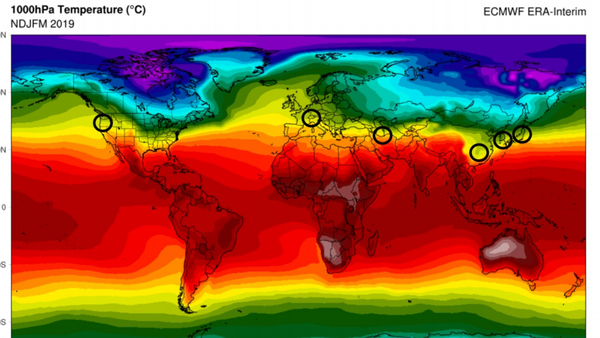
    A screenshot from the University of Maryland study shows coronavirus hotspots along the same climate band. (Screengrab)A screenshot from the University of Maryland study shows coronavirus hotspots along the same climate band. (Screengrab)
    Impossible to stop

    Social distancing measures only work if borders remain shut, and in a globalized world, that’s not possible. Had the world simultaneously shut borders during the early days of the outbreak, it may have been more effective, said Balloux.

    “Had they said ‘It’ll be costly, but let’s deal with that and get rid of that,’ that would’ve been good, but only two countries managed to keep it under control and it’s spreading everywhere,” Balloux said.

    In China and South Korea, new daily case counts are lowering – signaling that these countries have passed the peak. But now, China has seen more than 60 imported cases of the virus, and Balloux said that a second round of community transmission could work its way through China.

    “There’s no long-term plan,” Balloux said. “If everyone were completely isolated and no one had any contact, then obviously the virus would stop spreading. Now that’s not technically possible,” Balloux said.

    More than 204,000 people have been infected with coronavirus and more than 8,700 have died as of Thursday.

    “Economic death spiral”

    Over the last two and a half months, the world has watched as the virus has wreaked havoc on economies and destroyed jobs. Markets have nosedived, with the US S&P 500 ending a historic 11-year bull run last week and entering a bear market.

    Entire countries such as Italy have gone into lockdown, causing both short- and long-term economic consequences. In the US, nearly one in five American households have experienced a layoff or reduction in work because of the pandemic, according to a new NPR/PBS NewsHour/Marist poll.

    And economic downturns have effects on long-term public health.

    “Any hit to the economy means long-term loss of health and life expectancy,” Balloux said. “Look at places with high per-capita GDP, people live long healthy lives. If it’s low, people don’t live long healthy lives.”

    But with the coronavirus outbreak, governments must now assess how they can limit the impact on the most vulnerable, who are often the first to lose their jobs.

    Omar al-Ubaydli, researcher at Derasat, a think tank in Bahrain, told Al Arabiya English that coronavirus has not yet reached a stage where it’s likely to cause disruptions to international trade and global supply chain networks, but the massive social distancing efforts will cause distress for those without enough cash on hand to survive the crisis.

    “Lay-offs will affect those people most,” al-Ubaydli said. “Social security is the most important thing right now.”

    He said that now is not the time to worry about debt, and that countries must consider implementing large-scale social security programs – such as handing out cash. The US is currently considering such an option, and could begin sending checks to Americans as part of a $1 trillion stimulus package.

    “Liquidity is the biggest issue, and ensuring money circulates is key to avoid an economic death spiral,” al-Ubaydli said.

    Systems overstrained, stress high

    Other experts have warned that the coronavirus could push key economic sectors into collapse – which will have an immense knock-on effect for society.

    Societies tend to outgrow their resource base, Ugo Bardi, Professor in Physical Chemistry at the University of Florence (IT) and a theorist of societal collapse told Al Arabiya English.

    “Once a society overshoots, the mechanism of returning is not linear. It has ups and downs,” he said.

    Globally, the economic system is overstressed and overstrained because it overuses the resources it has, said Bardi.

    “It takes just one shock to send the whole thing down,” he added.

    Health systems not prepared

    The strain on infrastructure is most evident in healthcare, with hospitals struggling to cope with the influx of patients in places reaching their peak infections. Experts have called to “flatten the curve” and slow down the number of new infections to give healthcare systems a chance to cope with the crisis.

    In Italy, which has the highest death toll and death rate outside China, hospitals were poorly equipped for the outbreak. The country has an aging population, but hospitals don’t have enough ventilators, and there are simply not enough doctors, according to local media.

    The Italian College of Anesthesia, Analgesia, Resuscitation, and Intensive Care published guidelines outlining criteria doctors and nurses should follow, forcing healthcare professionals to make moral choices about who lives, and who dies. The guidelines liken these modern moral choices to wartime triage.

    They rule out a first-come, first-served policy; doctors should assess who is most likely to survive, based on criteria such as age and overall health, and allocate resources accordingly.
    Modern medicine may have advanced, but crisis medicine isn’t much different than it was in 1918, Balloux said.

    “The type of medicine we can give to patients when everything goes well, when there’s no stress, there’s no pressure, and everyone has an ICU bed and enough respirators [is different], but now the medics are essentially falling from exhaustion – I don’t think we should be complacent,” he said. “In terms of crisis, the health care we have hasn’t changed that much.”

    It is not just Italy which is underprepared.

    Yesterday, Tedros Adhanom, director-general of the WHO called for more testing to help break the trains of transmission. But globally, hospitals are under-prepared to ramp up testing. In the UAE, hospitals asked patients seeking testing to call ahead. In the US, the director of the National Institutes of Allergy and Infectious Diseases said last week there were not enough tests available for those who need them.

    Tons of medical equipment and coronavirus testing kits provided by the World Health Organization are pictured at the al-Maktum International airport in Dubai on March 2, 2020 as it is prepared to be delivered to Iran. (AFP)Tons of medical equipment and coronavirus testing kits provided by the World Health Organization are pictured at the al-Maktum International airport in Dubai on March 2, 2020 as it is prepared to be delivered to Iran. (AFP)
    “There is a global shortage of supplies when it comes to laboratories and prevention and control,” World Health Organization Emergency Preparedness Manager Dr. Dalia Samhouri told Al Arabiya English.

    Countries are now trying to ramp up their hospitals’ capacities and putting in emergency plans before the virus peaks. The ventilator industry is getting an onslaught of orders from Germany, Italy, and China. In the UK, the country’s health secretary called on manufacturers to build more ventilators. But lockdowns mean some companies are suspending operations, threatening future preparation.

    “The other problem is that all this is more difficult with a sluggish economy. Where do you get the money from? Where do you train the doctors if the universities are closed?” Balloux said.

    Life under lockdown

    In countries that are still waiting for the peak, everyday life has changed drastically – and the new measures are likely to last months, according to health experts – perhaps causing long-term changes in human behavior.

    Governments are enacting more severe social distancing measures, with some countries halting all flights, companies enacting work-from-home policies, bars and restaurants issuing new guidelines on how to serve food, and some individuals taking greater measures to avoid contact with those around them.

    But in some countries, like the US, some are yet to fully comprehend the gravity of the situation.

    In New Orleans, police cleared out the popular bar district, Bourbon Street, and can be heard over speakers saying “Your actions are jeopardizing public health.” In Spain, drones now monitor the streets.

    11.2K people are talking about this

    For many, this new reality is unprecedented. Humans in 2020 are unaccustomed to having to take such draconian measures to protect themselves from an invisible enemy.

    “This is a change because we’re not used to this way of life in this century. There are major and sudden changes, and people did not have the time to adapt to it properly,” Mario Aoun, Clinical Psychologist, Healthpoint, a UAE healthcare provider, told Al Arabiya English.

    Now, coping with the psychological impact of the lockdown orders and social distancing is the next challenge. Experts have already warned of the toll social isolation may take on individuals’ mental health.

    “This might create some kind of trauma for vulnerable individuals, not for everyone, but for certain people who are predisposed or those who are already anxious,” Aoun said. “In certain cases, it might be hard to get over.”

    However, Aoun said that human beings have great capabilities to adapt and manage.

    “We see chaos, that’s also true, but human beings have proven so far that they are of great faith and they’ll manage to get over it,” he said.

    Source.