(Reuters) – Residents of a suburban New York City county that was one of the earliest U.S. hot spots for the coronavirus sued the World Health Organization on Monday, accusing it of gross negligence in covering up and responding to the COVID-19 pandemic.
In a proposed class action, three residents of Westchester County accused the WHO of failing to quickly declare a pandemic, monitor China’s response to the original outbreak, provide treatment guidelines, advise members on how to respond including through travel restrictions, and coordinate a global response.
They also accused the WHO of conspiring with China’s government, which was not named as a defendant, to cover up COVID-19’s severity.
The WHO did not immediately respond to requests for comment.
Its director-general, Tedros Adhanom Ghebreyesus, has defended the agency’s handling of the pandemic, saying the WHO had kept the world informed about the coronavirus. He has also called for global unity to fight the pandemic.
The lawsuit by Richard Kling and Steve Rotker, both of New Rochelle, and Gennaro Purchia, of Scarsdale, was filed in the federal court in White Plains, New York.
It seeks unspecified damages for what they called WHO’s “incalculable” harm to the roughly 756,000 adult residents in Westchester County who would make up the class.
Westchester is north of New York City, and last year had about 967,506 people, of whom roughly 78% were adults, according to the U.S. Census Bureau.
Chimène Keitner, an international law professor at the University of California, Hastings College of the Law in San Francisco, said the lawsuit will likely be dismissed because U.S. law affords the WHO “functional immunity” from such cases.
She also said the complaint did not detail the alleged harm suffered by the individual plaintiffs, or show what legal duty the WHO owed to them.
Lawyers for the plaintiffs did not immediately respond to requests for comment.
China itself also faces multiple private lawsuits in the United States seeking damages related to the pandemic.
New Rochelle became a coronavirus hot spot after a lawyer who attended the Young Israel of New Rochelle synagogue was diagnosed with COVID-19 on March 2, the first person in the community to test positive.
Through April 19, a total of 247,512 people in New York state had tested positive for the coronavirus, including 24,306 in Westchester, according to the state’s health department.
The number of total hospitalizations for COVID-19 and the daily death toll have fallen in recent days, New York Governor Andrew Cuomo said on Monday.
Current studies are now suggesting that COVID-19 may linger within males’ testicles, making the virus last longer and causing severe illness in men.
Scientists are tracking the recovery of 68 patients in Mumbai and India, to determine the gender disparity of COVID-19, which have caused severe illness in men, according to a preliminary report posted on the MedRixwebsite.
Dr. Aditi Shastri, an oncologist at Montefiore Medical Center in the Bronx, and Dr. Jayanthi Shastri, a microbiologist at the Kasturba Hospital for Infectious Diseases in Mumbai, claims COVID-19 can attach itself to a specific protein that is produced in high levels in the testicles. In addition to the large amounts in the testicles, the protein, angiotensin, is also found in the lungs, the gastrointestinal tract, and the heart.
According to the study, the testicles are blocked off from the body’s immune system, which allows the virus to remain in the testicles longer than the rest of the body. Both Dr. Jyanthi and Dr. Aditi have said the recent findings may explain why women recover more quickly than men.
The average amount of time for female patients to recover from the disease is four days, while men’s recovery time on average is two days longer, according to the report posted on MedRix.
” These observations demonstrate that male subjects have delayed viral clearance,” the preliminary report said, adding that the testicles may be serving as “reservoirs” for the virus.
The study offers some insight into reports from New York, South Korea, and Italy that men are dying at a higher rate due to the virus, according to the NY Post.
Other reports suggest that men are more acceptable to contracting the virus because they are more likely to smoke, have high blood pressure, or suffer coronary artery disease.
Most surveys on Facebook are pointless. This one might end up saving lives.
Facebook has partnered with researchers at Carnegie Mellon University to build a map meant to track symptoms and potentially predict coronavirus hot spots. Mark Zuckerberg announced the effort in a Washington Post op-ed, writing “We’re hopeful that this will help governments and public health officials around the world who might not otherwise have this kind of precise data to make decisions in the weeks and months ahead.”
Here’s how it works. Facebook has been showing a survey to users within the social network. Users can take this survey if they want to — it’s entirely voluntary. They’ll answer questions about whether they’re experiencing symptoms associated with COVID-19, such as cough or fever.
That data then gets sent to the research team at Carnegie Mellon (not Facebook), which uses it to create population models of people experiencing symptoms. The idea is that symptoms are the “precursor” to hospital visits, so an uptick in symptoms in a particular area could help officials decide where to send health resources.
“The survey responses combined with other data such as medical claims and medical testing, will enable the CMU team to generate estimates of disease activity that are more reflective of reality than what is now available from positive coronavirus tests alone,” an announcement of the project from Carnegie Mellon reads.
The project has resulted in a heat map of sorts, showing the percentage of the population, broken down by county, that’s self-reporting coronavirus symptoms.
The heatmap of symptoms in the U.S. shows “hotspots.”
Researchers are encouraged by the results. After its initial survey of 1 million people, symptom reports “correlate” with testing data. The fact that the number of self-reported symptoms are proportional to official test numbers is what makes the researchers think the survey is accurate and useful.The University of Maryland is also partnering with Facebook and CMU to expand the survey, and Google is contributing some data, too, through a survey served to its users.
Facebook has already launched a coronavirus information hub, and has a “data for good” portal that gives researchers access to population data. Previously, Facebook refuted reports that it was helping the government by providing location data to assist contact tracing.
This mantle was taken up by Google and Apple, who are collaborating on Bluetooth-based contact tracing programs. With the recent scrutiny of privacy in Big Tech, these companies have to walk the line between providing useful information and not infringing on people’s privacy.
A recent study has come out suggesting that weed smokers have more sex than non weed smokers. Take that, anti-drug movement of the 80s and 90s! [Ed. note: we are not condemning anti-drug movements of the 80s and 90s]
The Skyn Condom Millennial Sex Studysurveyed a crowd of over 5,000 people, ages 18 to 34, and concluded that 14% of those who smoke pot on a daily basis actually have sex several times a day. Furthermore, these daily pot smokers have also admitted to having more “one night stands than those who have never smoked” before.
Best part yet? These pot-smoking fornicators have the confidence of a young Harrison Ford. Or an old Harrison Ford for that matter — that guy’s a rock. An astonishing 59% of of those surveyed go on to report they are “amazing” or “very good” in bed. Interesting, but it sounds like something a horned-up pothead would say. The report coincidentally did not include information on delusions of grandeur.
The only downside to all this rampant intoxicated sex? Pot smokers are less safe than boring ol’ Sober Sallies: “Only 44% of daily marijuana smokers use condoms compared to 48% of non-smokers.” What? Jesus! Where’s the class? Hey, you know what’s even easier than buying that weed? Condoms! Rubbers! Wrap it up, you goons!
(Reuters) – U.S. crude oil futures collapsed below $0 on Monday for the first time in history, amid a coronavirus-induced supply glut, ending the day at a stunning minus $37.63 a barrel as desperate traders paid to get rid of oil.
Brent crude, the international benchmark, also slumped, but that contract was nowhere near as weak because more storage is available worldwide.
While U.S. oil prices are trading in negative territory for the first time ever, it is unclear whether that will trickle down to consumers, who typically see lower oil prices translate into cheaper gasoline at the pump.
As billions of people around the globe stay home to slow the spread of the novel coronavirus, physical demand for crude has dried up, creating a global supply glut.
Traders fled from the expiring May U.S. oil futures contract in a frenzy on Monday with no place to put the crude, but the June WTI contract settled at a much higher level of $20.43 a barrel.
“Normally this would be stimulative to the economy around the world,” said John Kilduff, partner at hedge fund Again Capital LLC in New York. “It normally would be good for an extra 2% on the GDP. You’re not seeing the savings because no one is spending on the fuels.”
The May U.S. WTI contract fell $55.90, or 306%, to settle at a discount of $37.63 a barrel after touching an all-time low of -$40.32 a barrel. Brent was down $2.51, or 9%, to settle at $25.57 a barrel.
“It’s like trying to explain something that is unprecedented and seemingly unreal,” said Louise Dickson, oil markets analyst at Rystad Energy. “Pricey shut-ins or even bankruptcies could now be cheaper for some operators, instead of paying tens of dollars to get rid of what they produce.”
Refiners are processing much less crude than normal, so hundreds of millions of barrels have gushed into storage facilities worldwide. Traders have hired vessels just to anchor them and fill them with the excess oil. A record 160 million barrels is sitting in tankers around the world.
U.S. crude stockpiles at Cushing rose 9% in the week to April 17, totaling around 61 million barrels, market analysts said, citing a Monday report from Genscape.
The spread between May and June at one point widened to $60.76, the widest in history for the two nearest monthly contracts.
Investors bailed out of the May contract ahead of expiry later on Monday because of lack of demand for the actual oil. When a futures contract expires, traders must decide whether to take delivery of the oil or roll their positions into another futures contract for a later month.
Usually this process is relatively uncomplicated, but this time there are very few counterparties that will buy from investors and take delivery of the oil. Storage is filling quickly at Cushing in Oklahoma, which is where the crude is delivered. [EIA/S]
“The storage is too full for speculators to buy this contract, and the refiners are running at low levels because we haven’t lifted stay-at-home orders in most states,” said Phil Flynn, an analyst at Price Futures Group in Chicago. “There’s not a lot of hope that things are going to change in 24 hours.”
Prices have been pressured for weeks with the coronavirus outbreak hammering demand while Saudi Arabia and Russia fought a price war and pumped more. The two sides agreed more than a week ago to cut supply by 9.7 million barrels per day (bpd), but that will not quickly reduce the global glut.
Saudi Arabia is considering applying oil cuts as soon as possible, rather than starting from May, a Wall Street Journal reporter said on Twitter, citing sources.
Brent oil prices have collapsed around 60% since the start of the year, while U.S. crude futures have fallen around 130% to levels well below break-even costs necessary for many shale drillers. This has led to drilling halts and drastic spending cuts.
MORE DATA SPARKS GLOBAL ECONOMIC CONCERNS
Weak global economic data also pressured prices. The German economy is in severe recession and recovery is unlikely to be quick as coronavirus-related restrictions could stay in place for an extended period, the Bundesbank said.
Japanese exports declined the most in nearly four years in March as U.S.-bound shipments, including cars, fell at their fastest rate since 2011.
U.S. oilfield services giant Halliburton Co on Monday reported a $1 billion first-quarter loss on charges and outlined the largest budget cut yet among top energy companies.
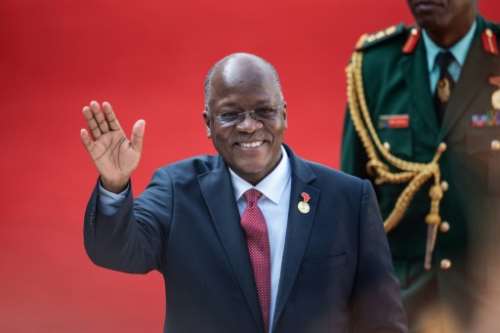
Tanzanian President John Magufuli has called on citizens to turn to God and to keep the economy turning, but as coronavirus cases creep up, calls are rising for the country to take stronger action.
While countries across Africa have imposed curfews, partial and full lockdowns, Tanzania has resisted such measures. Schools and universities have been shut but markets, bus stops and shops bustle as usual.
Magufuli, who called for three days of prayer from last Friday to fight the virus, is one of a handful of world leaders still brushing off the seriousness of the disease.
“This is time to build our faith and continue praying to God and not depending on facemasks. Don’t stop going to churches and mosques for prayers. I’m sure this is just a change of wind and it will go like others have gone,” Magufuli said at a church in Dodoma last month.
He reiterated his message on Good Friday, last week, saying God would protect Tanzanians from the virus.
Tanzania recorded its first case of coronavirus on March 16 — and in the past week numbers have leapt from 32 to 147, with five deaths.
African countries have lagged behind the global curve, and many took fast and strict measures to curb movement, however cases are rising across the continent.
“I am not happy about the lack of seriousness by the government, lack of transparency on the data of cases and deaths, and state of denial the president has on the pandemic,” an opposition MP, Zitto Kabwe, who is also the leader of the ACT Wazalendo party, told AFP.
‘Continue producing’
Kabwe has proposed a partial lockdown of Dar es Salaam, Arusha, Mwanza and the capital Dodoma, and also a total lockdown of the tourist hotspot and semi-autonomous island, Zanzibar.
However, Magufuli has encouraged Tanzanians to continue working as usual, while encouraging them to avoid “unnecessary gatherings”.
“Let us continue working hard to build our nation. Coronavirus is not and should not be a reason for us not working. Farmers should utilise the ongoing rains effectively, industrial owners should continue producing and I don’t expect any development project to stop,” he said.
“Coronavirus should not be a reason to destroy our economy at all.”
The country’s economy has already been hard hit as tourists who flock to see its wildlife and beaches, have stopped coming. Tourism is the country’s top foreign-exchange earner.
On the streets of the commercial capital Dar es Salaam, citizens say they fear the virus and are doing what they can to avoid it while continuing to make ends meet.
“What I normally do is to ensure my passenger washes their hands before getting on the motorcycle. The challenge is that I have only one helmet for passengers, who share it,” said Hemedi Masoud, a motorcycle taxi operator.
He and other so-called “boda-boda” drivers park their bikes in a crowded area thronged by petty traders and pedestrians.
“I really fear coronavirus disease and it is risky here but there is no way I can avoid coming. My family needs something to eat and this is where I earn my daily bread,” said Masoud.
The government has banned buses from taking more passengers than the number of seats they contain, but this has only created bigger crowds during rush hour.
Like many poor people across the continent — even in countries which are trying to impose lockdowns — staying at home would be a grim option for many Tanzanians.
“I don’t pray for lockdown in Tanzania because we may escape coronavirus and die from hunger at home. Life has to go on and God will protect us,” said Anna John, a food vendor in the city.
Miriam John, who sells shoes, said some of her customers did not want to wash their hands but she has “no option because I need their money.”
But opposition leaders say the country needs to take more action to avoid potential disaster.
“No lockdown because he (Magufuli) wants to save the economy and his flagship infrastructure projects. The lives of our people cannot be repaired but the economy can! Lockdown or get locked out!” the chairman of the opposition party Chadema, Freeman Mbowe, posted on Twitter on Saturday.
Some experts have questioned the approach of lockdowns in Africa, where millions of urban poor live hand to mouth, but instead call for solutions such as mass testing or government support to the vulnerable.
Neighbouring Burundi has also allowed life to proceed as normal. Both countries have presidential elections this year, Burundi in May and Tanzania in October.
London (AFP) – Prince Harry and his wife Meghan have blacklisted four major British tabloid newspapers because of their reporting, in the latest escalation of their public battle with the media.
The Duke and Duchess of Sussex accused The Sun, Daily Mirror, Daily Mail and Daily Express of publishing stories that were “distorted, false and invasive beyond reason”.
The couple, who have quit frontline royal duties and moved to North America, outlined their new policy of “no corroboration and zero engagement” in a scathing letter to editors of the titles.
The Guardian newspaper called it an “unprecedented attack on a large part of the media” while former tabloid bosses criticised the timing of the announcement, as the world grapples with the fall-out from the coronavirus pandemic.
– ‘Intrusive and unfair reports’ –
Harry and Meghan have intensified their war with the media since their high-profile wedding in 2018, hitting out at what they say have been intrusive and unfair reports about them.
The prince has brought court action over allegedly intercepted voicemails and Meghan is suing over the publication of a “private” letter to her father in August 2018.
A preliminary hearing in her case against Associated Newspapers, which publishes the Mail on Sunday and MailOnline, is due to be held at the High Court in London on Friday.
Details of communications between the couple and Thomas Markle were filed in court on Monday, revealing the pair pleaded with him in text messages not to speak to the media before their wedding.
In one text message dated May 14, 2018, Harry asks him to call back and warned him that “‘going public’ will only make the situation worse”.
– ‘Intimate thoughts and feelings’ –
Thomas Markle became the centre of a tabloid furore after allegedly staging paparazzi style photographs of himself for money.
He later dropped out of the glittering wedding ceremony at Windsor Castle on health grounds but also said he did not want to “embarrass the royal family or his daughter”.
Harry blamed the media for the furore and insisted he and his wife were not angry.
But he again cautioned: “Any speaking to the press WILL backfire, trust me Tom. Only we can help u, as we have been trying from day 1.”
Meghan’s lawyers maintain that a subsequent letter, parts of which were published in the Mail on Sunday, were “obviously private” and detailed her “intimate thoughts and feelings” about her father’s health and relationship with him at the time.
They claim the newspaper “chose to deliberately omit or suppress” parts of the letter, which “intentionally distorted or manipulated” its meaning, and gave her no warning it was due to be published.
Associated Newspapers denies the contents were private or confidential. Thomas Markle has said he felt pressured to share the letter after its contents were misrepresented in a magazine article.
– ‘Salacious gossip’ –
Harry and Meghan’s letter to the British tabloids lays bare what they feel about newspaper coverage but insisted they were not trying to put themselves above scrutiny.
“It’s not about shutting down public conversation or censoring accurate reporting,” they said.
Instead, they said they did not want to be used as “currency for an economy of clickbait and distortion” .
More broadly, they said there was a “real human cost” of “salacious gossip” purely to sell newspapers.
The pair said their new policy did not apply to all media and they would continue to work with journalists around the world.
The Society of Editors, however, said their “actions here amount to censorship” while former Mirror and News of the World editor Piers Morgan said it smacked of self-centredness.
“Imagine thinking anyone cares about their hurt little me-me-me egos as health workers around the world are dying at work?” he tweeted.
David Yelland, a former editor of The Sun, told BBC radio the move was ill-advised, calling the letter “one of the worst pieces of communication” he had ever seen.
Arsenal have announced that they have agreed a 12.5% pay cut with their first team squad, coaching staff and head coach Mikel Arteta.
Confirmation of the agreement, will offer significant clarity to Arsenal as they plan their response to the coronavirus pandemic, which has seen football postponed for over a month with a return unlikely before June at the earliest.
We understand that the overwhelming majority of the first team squad have agreed to the pay cut but not all of the squad. For those that have not the offer will remain on the table before the club undertake any individual negotiation.
A statement from Arsenal said: “We are pleased to announce that we have reached a voluntary agreement with our first-team players, head coach and core coaching staff to help support the club at this critical time.
“The move follows positive and constructive discussions. In these conversations there has been a clear appreciation of the gravity of the current situation caused by the Covid-19 pandemic and a strong desire for players and staff to show their backing for the Arsenal family.
Pablo Mari.
“Reductions of total annual earnings by 12.5% will come into effect this month, with the contractual paperwork being completed in the coming days. If we meet specific targets in the seasons ahead, primarily linked to success on the pitch, the club will repay agreed amounts. We will be able to make those repayments as hitting these targets, which the players can directly influence, will mean our financial position will be stronger.
“The agreement is based on the assumption we will finish the season 2019/20 and receive the full broadcasting revenues. The resulting savings will help cover some of the financial risks we have this season in relation to our matchday and commercial income.
“We are proud and grateful to our players and staff for pulling together to support our club, our people and our community in these unprecedented times which are some of the most challenging we have faced in our history. “
Players will be able to claw back their wage packet through European qualification. Reaching the 2020/21 Europa League will see the cut reduced to 7% whilst qualifying for the Champions League will allow Arteta’s squad to recoup the entirety of their lost earnings.
your embassy in Berlin sent me an open letter because we asked BILD whether China should pay for the gigantic economic damage that the Corona virus is currently causing worldwide.
Your message calls it “infamous” and accuses me of “fueling nationalism”.
Let me say a few things about this.
1. You rule by surveillance. You would not be president without surveillance. You can monitor everything, every one of your citizens, but you refuse to monitor the high-risk animal markets in your country. Any critical newspaper or website will shut you down, but not the stalls selling bat soup. You not only monitor your people, you also endanger them – and with it the whole world.
2. Monitoring leads to lack of freedom. Those who are not free are not creative. Those who are not innovative do not invent anything. That is why you have made your country the world champion in theft of intellectual property. China enriches itself with the inventions of others instead of inventing itself. The reason for this is that you don’t let the young people in your country think freely. The biggest Chinese export hit that nobody wanted, but that went around the world anyway, is Corona.
3. When you, your government and your scientists had to know long ago that corona is transmitted from person to person, you left the world in the dark. Your top experts did not answer the phone, did not answer an email when western researchers wanted to know what was going on in Wuhan. You were too proud a nationalist to tell the truth that you felt was a national disgrace.
4. The Washington Post reports that laboratories in Wuhan have researched corona viruses in bats without meeting the highest safety standards. Why aren’t your toxic labs as secure as your political prison? Do you want to explain this to grieving widows, daughters, sons, husbands, parents of Corona victims around the world?
5. People are already whispering about you in your country. Your power is crumbling. You have created an opaque, opaque China that once stood for an inhuman surveillance state and now stands for the spread of a deadly plague. This is your political legacy.
Your message tells me that I would not do justice to the “traditional friendship of our peoples”. I assume you consider it a great “friendship” if you now generously send masks around the world. I do not call this friendship, but smiling imperialism. They want to strengthen China through an epidemic that came from China. I don’t think you can save your power personally. I believe that sooner or later Corona will mean your political end.
China has been facing major backlash from the European countries since the outbreak of coronavirus in Europe that has taken more than 1 lakh lives.
The Express UK reported that a reputed german newspaper has prepared a 130-billion-pound invoice that Beijing owes to Berlin due to the coronavirus pandemic and damages it’s costed.
European powers like Germany, France, the UK, and the US have all slammed China for many revelations that indicate China may have covered up the numbers and magnitude of the disease.
Germany’s largest tabloid newspaper, Bild, re-iterating the same, drew an itemized invoice for Euro 149 billion (130 billion pounds).
The list comprises of euro 7.2 billion for the German film Industry, a million euros an hour for German airline Lufthansa, Euro 27 billion charges for lost tourism revenue, euro 50 billion for German small businesses.
Under the title of “What China Owes Us”, Bild has calculated that this amounts to euro 1,784 (1,550 pounds) per person if Germany’s GDP falls by 4.2 percent.
China, however, responded to the invoice saying, ” It stirs up xenophobia and nationalism”.
Responding to China’s comments, Bild Editor-in-Chief Julian Reichelt said, “We asked in our newspaper Bild whether China should pay for the massive economic damage the coronavirus is inflicting worldwide. Xi Jinping, your government and your scientists had to know long ago that coronavirus is highly infectious, but you left the world in the dark about it. Your top experts didn’t respond when Western researchers asked to know what was going on in Wuhan. You were too proud and too nationalistic, to tell the truth, which you felt was a national disgrace.”
Before this US President Donald Trump had also raised serious questions on China’s role in the spread of the outbreak across the globe. He had accused China of underplaying the numbers and keeping other countries in dark about the reality of coronavirus.
My name is Sylvia Dydda. I have been unwell since January. I have high blood pressure and a high heart pulse that has led to facial palsy and other complications that have affected my mobility. I am not able to walk properly. I am taking BP meds and neuro care for the nerves. On Saturday, my medicines ran out and my husband, Eko Dydda, father to our two amazing kids decided to go buy them. He went to a pharmacy near our neighborhood, in the late afternoon, but he couldn’t find the medication. He then decided to drive to Nairobi CBD where he found and bought the medication. On his way home, he got a puncture at around 6:30pm and by the time he had fixed it, it was about 6:50pm. He continued with the journey home and on reaching Ngong Road, near Coptic Hospital, he found a police road block at around 7:10pm. He was stopped and arrested. The police had commissioned a breakdown truck and every car that violated the curfew was being towed to Kilimani Police Station. The car owner was then put in a police vehicle and driven to the Police Station.
On reaching the Police Station, Eko was booked in the cells. My medicine was left inside the car. Early Sunday morning, my neighbor took me to the Police Station because I could not walk properly. On arrival, the officer manning the Occurrence Book asked if l had money to pay bail for my husband, following which he would be required to appear at Milimani Court on Monday. I think I asked too many questions, as l pleaded his case, because they eventually told me to get out of the Police Station and only return when I had the money. I went outside for a bit and then went back in to ask if I could pay via m-pesa. The officer replied, “toka hapa, enda leta cash” (Get out and go come with cash). I was secretly recording our conversation.
I left again to go and withdraw Ksh10,000, then returned and gave the officer the requested bail of Ksh5,000. I wasn’t aware that he had noticed I had recorded him, so he told me, “Leta pesa ndio nikuandikie receipt” (Give me the money so I can give you a receipt). I gave him the Ksh5,000 cash and he started opening drawers, so I thought he was looking for a receipt book. He took out a brown envelope, put the money inside and told me, “Enda nje” (Go outside), then he chased me out of his office.
After waiting for an hour, he brought Eko out from the cells, handed him the receipt and told him to go pay the towing charges to the breakdown vehicle operators, since it was they who had his car keys. We found the breakdown vehicle people behind the toilets. I found that weird. I told them l would only pay them if l got a receipt. They referred me to a female police officer who came, picked the Ksh5,000 cash and then took me to a shop inside the police station and gave me a receipt, after I requested it.
I asked her for the car keys and she told me that they were with the officer to whom l had paid the cash bail and who had lied to me that the breakdown vehicle guys had them. Eko went to get the keys and as I was waiting for him, I heard one of the officers saying, “Hii mama imetu record hajui tuna weza poteza hii mutu yake.” (This woman recorded us and she doesn’t know we can make her man disappear.) We got into our car and drove off.
On our way home, Eko received two phone calls asking us to go back and collect the car. Eko told the caller he’d already picked the car. Then they asked him about the receipt for the bail and Eko told them he had collected the receipt as well. That was around 9:30am. The caller’s phone number was 0721254408 and his name, according to m-pesa, is James Samira. We arrived home and Eko showered and slept. The police, however, kept calling. We ignored their calls. Eko received calls from four different numbers calling from Kilimani, one of them from a female officer. She told Eko that someone who was in the cells with him had died and he should go back to record a statement. They gave him a number (0756479296) to call when he arrived. While on the call, we overheard someone say, “Hii mtu pekee ndio umepea receipt, hii ni shida.” (You issued a receipt to one person, this is problematic).
We arrived back at the station at around 12:30pm. Eko was re-arrested and they took back the receipts they had given us but, luckily, l had taken pictures. The officer who had issued us with the bail told us to take back our money because the bail had been cancelled by the boss. Out of all the people who had been arrested that evening, we were the only ones who had insisted on being issued with a receipt.
Eko had left me outside the Police Station and when l went inside to follow up on what was going on, l was told that since I had recorded them, they were going to teach my husband a lesson. “This is Eko Dydda, the President gave artists Ksh100 million, he will vomit this money”, one officer told me. The OCS came and ordered his officers to take Eko to “that place.” I didn’t know where “that place” was but, later in the day, Eko called and informed me that he had been taken to the quarantine center at KMTC. He told me there were about 200 people there. He was given a blanket and a bed. Up until now, no tests have been taken and he was told the tests would be done on the day they were supposed to get discharged.
l went to KMTC Mbagathi, where l met the officers who had taken Eko there. They told me, “Eko paid us Ksh10,000 and insisted on a receipt. Now he will pay the government Ksh28,000.” They went on to say, “Where do you think our money will come from? It comes from the citizens. I will teach him a lesson. The police officer in Kilimani stopped about 50 motorists on Saturday night but only your husband is giving us problems. If you share the video, we will come, arrest you with your children and take you to quarantine.”
Editor’s Note: I have spoken to Eko. Here is his story what’s happening at KMTC Mbagathi. When we arrived, we were told this is prison, it’s not quarantine and we are prisoners. We weren’t tested during arrest and we shared the cell in Kilimani Police Station with other people. At the quarantine centre, people arrested all over are in the same place. The only time you get out of the room is to go pick food but people here aren’t observing rules. They’re bitter, because no tests were taken and they feel they might get infected with Coronavirus. The quarantine is like a dormitory but with individual cubicles, we are sharing toilets and bathrooms. We have been told we shall be tested after 14 days, and if one or two people are found to be positive, all of us shall be held in quarantine for another 14 days. Most of the people here, are from the ghetto, those who couldn’t afford to bribe police, and l don’t think they will afford to pay the quarantine charges. It seems the government is trying to justify spending the Coronavirus budget on forced quarantines.
FYI: Police aren’t only targeting motorists. Police are doing swoops in low-income areas and arresting people for simply walking around. My friend was extorted out of Ksh10,000 at Buru Buru Police Station, to get his younger brother and his friend released. The police arrested them while they were standing outside their house chilling. They were given an option to pay the bribe, or be taken to quarantine at their own cost. Kenya isn’t yet on lockdown but #KenyaPoliceForce and their bosses at Police Headquarters have found a way to make quick money. The threat of quarantine is forcing people to bribe. What will happen to those who can’t afford to pay quarantine fees, will they be sent to prison?
Europe reached a somber marker on Sunday, surpassing 100,000 coronavirus deaths across the continent, according to a Johns Hopkins University tally.
Italy continued to have the highest European death toll in the pandemic with more than 23,000 deaths as of Sunday, followed by Spain, France and the United Kingdom.
Despite those staggering numbers, Italy has nudged closer to easing some lockdown measures, but restrictions remain largely in place. The Italian government said it was evaluating procedures for how best to allow citizens out again.
“We are working on some proposals to soften the restrictive measures and let everyone live safely with the virus during the next months,” Prime Minister Giuseppe Conte told Italian newspaper “Il Giornale”, on Sunday morning.
The government is under pressure from its industrial northern region to reopen as soon as possible, but lockdown measures will remain in place until at least May 3, officials said.
Meanwhile in Spain, Prime Minister Pedro Sanchez said his government would begin easing measures and allowing children under 12 to play outdoors for short periods of time. The country’s lockdown will remain in place until at least May 9, he said during a televised national address on Saturday. Warning “the goals we’ve achieved so far are fragile.”
Britain is fast becoming the European epicenter of the contagion, as deaths passed 16,000 people on Sunday. Healthcare workers criticized the government over the weekend for shortages of personal protective equipment (PPE), such as gowns and face shields.
“Too many healthcare workers have already died. More doctors and their colleagues cannot be expected to put their own lives on the line in a bid to save others,” said Rob Harwood of the British Medical Association, a professional body which represents medical staff.
A spokesperson for Britain’s Ministry of Health told NBC News on Saturday there was a 24-hour helpline in place for health workers to call and report shortages in supplies.
“We are working round the clock, given the global shortage of gowns and other PPE, to secure the NHS and the social care sector the equipment they need,” the spokesperson said by email.
Prime Minister Boris Johnson continues to recuperate from COVID-19, the disease associated with coronavirus, after he left the hospital a week ago. Foreign Secretary Dominic Raab has been filling in for Johnson during his absence.
Last week in France, President Emmanuel Macron admitting failings during a televised national address. He acknowledged that his office had been insufficiently prepared and caught off guard with the coronavirus outbreak, in particular by the lack of medical equipment.
“Were we ready for this crisis? Clearly not ready enough, but we have faced up to it,” he said. “Let’s be honest: Events revealed weaknesses, deficiencies.”
Although the number of patients in France’s intensive care units was falling, he said, the epidemic was still not under control, as he extended lockdown measures until May 11.
Some European countries, however, such as Austria and the Czech Republic, have begun easing lockdown restrictions, attempting the slow return to normal life. While many continue to eye Germany as a European model, which has maintained a relatively long-term plateau of cases and rolled out extensive testing.
As the coronavirus pandemic has spread around the world, with millions infected and thousands dead, billionaire Microsoft co-founder and philanthropist Bill Gates has pledged a quarter billion dollars to combat the disease through his foundation.
Gates has been an advocate for pandemic preparedness for years, and his Bill and Melinda Gates Foundation is contributing financing to several coronavirus vaccine initiatives. He famously gave a 2015 TED talkwarning of the potential devastation caused by — and urged readiness for — a worldwide pandemic.
Bill Gates has advocated for pandemic preparedness for years and famously gave a TED talk in 2015 that warned of the potentially staggering death toll a worldwide pandemic could create.
As the coronavirus pandemic has spread around the world, Gates has pledged $250 million to fight the disease and create a vaccine.
Incredibly, it’s these two factors that provide the foundation of a new set of conspiracy theories that point to Gates as the origin of coronavirus — and those conspiracy theories have rapidly gone from fringe online conspiracy theorists to the mouths of conservative pundits.
Here’s what we know:
In 2015, Bill Gates gave a TED talk titled, “The next outbreak? We’re not ready.”
In his 2015 TED talk, Gates examined the ebola outbreak that killed thousands of people in Guinea, Liberia, and Sierra Leone. He highlighted the factors that kept the disease from spreading worldwide, and warned against the potential for a much more contagious, worldwide pandemic.
“The failure to prepare could allow the next epidemic to be dramatically more devastating than ebola,” he said. “You can have a virus where people feel well enough while they’re infectious that they get on a plane, or they go to a market.”
Indeed, that is exactly the case with the novel coronavirus — symptoms of the disease don’t necessarily manifest for up to 14 days, and potentially longer.
You can watch the full TED talk right here: Citing that talk, and the Gates Foundation’s $250 million contribution to fight the disease, some right-wing conspiracy theorists claim Gates is the mastermind that created the novel coronavirus.
The conspiracy theories connecting Gates to coronavirus started in late January, according to a recent New York Times investigation, with a “YouTube personality linked to QAnon” who claimed Gates had prior knowledge of the coronavirus pandemic.
Days later, the website Infowars — the site run by Alex Jones, a conspiracy theorist who claims the Sandy Hook shooting was a hoax — published a piece that incorrectly stated the Gates Foundation “co-hosted a pandemic exercise in late 2019 that simulated a global coronavirus outbreak.”
The Infowars piece attempted to connect the Gates Foundation’s ongoing investments in fighting global pandemics to prior knowledge of the coronavirus pandemic.
According to a FactCheck.org followup, “There was in fact an exercise (called ‘Event 201’) that took place in October that was hosted by the Johns Hopkins Center for Health Security — which the Gates Foundation participated in — that focused on emergency preparedness in the event of a ‘very severe pandemic.’ But it didn’t deal with 2019-nCoV [novel coronavirus], and it didn’t make real-life predictions about death tolls.”
That distinction, however, was ignored by conspiracy theorists.
For the next two months, conspiracies that Gates knew of the virus beforehand or was directly responsible for its creation exploded. And now it’s reached at least one Fox News host.
Two examples of coronavirus-related Bill Gates conspiracy theories online, in shareable meme form, found on Twitter in April.
Twitter
Mentions of coronavirus-related Bill Gates conspiracy theories have exploded on social media and TV: They were mentioned 1.2 million times in the last two months, according to data provided to the New York Times by the media intelligence firm Zignal Labs.
Those conspiracy theories have spread from fringe right-wing conspiracy theorists, like Alex Jones, to conservative pundits like Fox News host Laura Ingraham. “Digitally tracking Americans’ every move has been a dream of the globalists for years,” Ingraham tweeted in early April. “This health crisis is the perfect vehicle for them to push this.”
The commentary was attached to another tweet, which linked to an article about Bill Gates on a conspiracy theory website that cites an answer Gates gave during a Reddit AMA earlier this year. Gates spoke of a hypothetical “digital certificate” that would certify if people were vaccinated from coronavirus.
According to the piece, “The inevitable mass vaccination campaign to eradicate COVID-19 would be the perfect opportunity to introduce a worldwide digital ID. This system would store a wealth of information about each individual (including vaccination history) and would be used to grant access to rights and services.”
It baselessly claimed that Gates — alongside other rich and powerful people — is using the coronavirus pandemic as a means of instilling a worldwide caste system based on a digital ID.
Ingraham’s followers understood the message: “I will not take a #BillGatesVaccine,” one responded.
Former Trump staffer Roger Stone, who was sentenced to 40 months in federal prisonearlier this year, was more direct than Ingraham. “Whether Bill Gates played some role in the creation and spread of this virus is open for vigorous debate,” Stone said in a radio interview, according to a New York Post report. “I have conservative friends who say it’s ridiculous and others say absolutely.”
Why Bill Gates? Why now? Even pandemics are partisan.
bill gates
Mike Cohen/Getty Images for The New York Times
Through the Bill and Melinda Gates Foundation, the billions that Gates earned from co-founding Microsoft and turning it into an international powerhouse is being used to fight contagious disease around the world. They’ve spent millions on the prevention and treatment of HIV/AIDS, malaria, and polio.
Gates also co-founded The Giving Pledge with his friend and fellow billionaire Warren Buffet, a campaign to get billionaires to promise to give away the majority of their fortunes to philanthropic causes.
But Gates has also voiced opposition to President Trump’s federal coronavirus response.
“Halting funding for the World Health Organization during a world health crisis is as dangerous as it sounds,” he tweeted on April 15, just after President Trump announced intentions to cut funding for the World Health Organization. “Their work is slowing the spread of COVID-19 and if that work is stopped no other organization can replace them. The world needs @WHO now more than ever.”
Despite Gates not mentioning the president, responses to his tweet are notably partisan — and several challengers accuse Gates, through association with former President Bill Clinton and the late convicted pedophile Jeffrey Epstein, of being part of an Illuminati-esque cabal.
Despite being especially vocal lately, Gates hasn’t said much in response to the conspiracies. “It’s ironic,” he told GCTN in a televised interview.
Gates declined an interview with the New York Times for its report on coronavirus-related Bill Gates conspiracy theories — a rare no from a man who’s made numerous press appearances lately in an attempt to get out the message on coronavirus prevention.
“I’d say it’s ironic that you take someone who’s doing their best to get the world ready and putting, in my case, billions of dollars into these tools for infectious diseases, and really trying to solve broadly infectious diseases — including those that cause pandemics,” Gates said. “But we’re in a crazy situation, so there’s going to be crazy rumors.”
South Sudan, a nation of 11 million, has more vice presidents (five) than ventilators (four). The Central African Republic has three ventilators for its five million people. In Liberia, which is similar in size, there are six working machines — and one of them sits behind the gates of the United States Embassy.
In all, fewer than 2,000 working ventilators have to serve hundreds of millions of people in public hospitals across 41 African countries, the World Health Organization says, compared with more than 170,000 in the United States.
Ten countries in Africa have none at all.
Glaring disparities like these are just part of the reason people across Africa are steeling themselves for the coronavirus, fearful of outbreaks that could be catastrophic in countries with struggling health systems.
The gaps are so entrenched that many experts are worried about chronic shortages of much more basic supplies needed to slow the spread of the disease and treat the sick on the continent — things like masks, oxygen and, even more fundamentally, soap and water.
Clean running water and soap are in such short supply that only 15 percent of sub-Saharan Africans had access to basic hand-washing facilities in 2015, according to the United Nations. In Liberia, it is even worse — 97 percent of homes did not have clean water and soap in 2017, the U.N. says.
“The things that people need are simple things,” said Kalipso Chalkidou, the director of global health policy at the Center for Global Development, a research group. “Not high-tech things.”
Estimated number of ventilators as of Apr. 17
Country
Ventilators
Persons per ventilator
Somalia
0
–
DR Congo
5
20,356,053
Mali
3
6,517,799
Madagascar
6
4,492,623
South Sudan
4
2,640,311
Central African Republic
3
1,996,952
Burkina Faso
11
1,894,127
Nigeria
169
1,266,440
Malawi
17
1,246,861
Niger
20
1,138,618
Burundi
12
988,818
Zimbabwe
16
909,145
Mozambique
34
885,241
Senegal
20
786,818
Uganda
55
786,418
Liberia
7
724,757
Sudan
80
569,519
Sierra Leone
13
509,610
Namibia
10
263,007
Kenya
259
206,672
Ethiopia
557
194,099
Ghana
200
146,701
Libya
350
19,687
Source: New York Times reporting; International Rescue Committee; Norwegian Refugee Council; The CIA World Factbook.
Though limited testing means it is impossible to know the true scale of infections on the continent, several African countries report growing outbreaks. A snapshot of the situation on Friday showed that Guinea’s cases were doubling every six days; Ghana’s, every nine. South Africa had more than 2,600 cases; Cameroon, nearly 1,000.
Of course, there are big disparities among Africa’s 55 countries, too. Ventilators are much more plentiful in South Africa, which has a big economy and a relatively strong health infrastructure, than in Burkina Faso, one of the earliest West African countries to be hit by the coronavirus. At last count, it had 11 ventilators for 20 million people.
And not all African countries want it known how few ventilators they have. For some, this information could have “a lot of political implications,” including criticism of their management of health systems, according to Benjamin Djoudalbaye, head of health diplomacy and communication for the Africa Centers for Disease Control and Prevention.
Image
Using hand sanitizer before entering the Assemblies of God Church in Burkina Faso’s capital, Ouagadougou, in March.Credit…Finbarr O’Reilly for The New York Times
The Africa C.D.C. has been trying to amass data on how many ventilators and intensive care units each country has, so it can model what needs will arise if there is an explosion of cases. But even collecting the data is not easily “attainable and extremely expensive,” Mr. Djoudalbaye said.
The World Health Organization said last week that there were fewer than 5,000 intensive care beds across 43 of Africa’s 55 countries — amounting to about five beds per million people, compared with about 4,000 beds per million in Europe. But the numbers in Africa are so unclear — the data is a scattershot representation of the continent — that there is no way of knowing for sure, Mr. Djoudalbaye says.
Across Africa, there have been efforts to get ventilators. Ecowas, the union of West African countries, is trying to get hold of them to distribute to its member states. On April 1, Nigeria’s finance ministry appealed to Elon Musk on Twitter — before deleting its message — admitting that Africa’s most populous nation needed support and asking for at least 100. Jack Ma, the Chinese billionaire, says he is donating 500 to the continent.
Image
Though testing is limited, several African countries are reporting rapidly growing outbreaks.Credit…Jerome Delay/Associated Press
Liberia has ordered another 20, according to Eugene Nagbe, the minister of information. But global demand is so high, he said, that vendors are the ones calling the shots, and it is difficult to compete with more powerful nations.
“We keep fighting with our neighbors and the big countries. Even having a contract is not a guarantee we’re going to get a supply,” Mr. Nagbe said. One vendor, after entering a contract, turned around and hiked the price from the agreed-upon $15,000 per ventilator to $24,000, he added.
Getting more ventilators to African countries is not enough, though. Trained medical personnel are also needed to run the machines, as well as a reliable electricity supply and piped oxygen. These are things taken for granted in most European and American hospitals, but are frequently absent in health facilities across the African continent.
Image
Habtamu Kehali provides training for doctors on how to use mechanical ventilators for coronavirus patients at the American Medical Center in Addis Ababa, Ethiopia.Credit…Michael Tewelde/Agence France-Presse — Getty Images
“Only around 3 percent of patients will require ventilators,” said Kibrom Gebreselasie, a pulmonary and critical care specialist at a hospital in Mekele, Ethiopia. “But 20 percent of patients are severely ill. That means around 20 percent of patients will require oxygen. Oxygen is the most important thing.”
The hospital where Mr. Kibrom works, the Ayder Comprehensive Hospital, has two oxygen plants. One is broken.
Help has come from an unexpected quarter: Velocity Apparelz, a nearby denim factory. Under normal circumstances, garment manufacturers produce oxygen to use in the bleaching process, so the local health authority asked them to step in. Hospitals and health authorities across the continent are having to think of solutions like this.
The prospect of a devastating pandemic has led many African governments to take serious measures. Some imposed curfews and travel restrictions when only a few dozen cases in their countries had been confirmed.
And before officials knew of any confirmed cases, airports in Niger and Mali were taking passengers’ temperatures and contact information in case they needed to be traced. Every morning in Senegal, the health minister gives a live update on Facebook.
Image
Moving boxes of protective equipment at Bole International Airport in Addis Ababa.Credit…Samuel Habtab/Agence France-Presse — Getty Images
The crisis has shown that Africa needs to be self-reliant, said Amy Niang, a lecturer in international relations at South Africa’s University of the Witwatersrand.
“The brutal withdrawal of the U.S. of its contributions to the W.H.O., and the management of the crisis more globally, is a stark reminder that Africa’s faith in multilateralism has become untenable,” she said.
One positive legacy of the West African Ebola outbreak of the last decade was the founding of the Africa C.D.C., which together with the World Health Organization’s Africa branch has been widely praised for a coordinated approach to tackling the pandemic.
But leadership can go only so far.
“The main thing is how can we scale up capacity — at least for some of the basic treatment — and how can we detect earlier?” said Michel Yao, emergency operations program manager in the W.H.O.’s regional office for Africa.
In recent years, Nigeria has struggled to cope with outbreaks of Lassa fever, measles and polio. The Democratic Republic of Congo has failed to bring its current Ebola outbreak to an end. Malaria, a disease that is relatively simple to treat, kills hundreds of thousands across the continent every year.
And the state of public health systems in many African countries is bad enough that many people will not go to a hospital at all, feeling that it is a place of last resort.
“Everyone doesn’t feel like the health system is made for them to get better in,” said Adia Benton, an anthropologist at Northwestern University whose focuses include global health. Often in Sierra Leone, where she has worked extensively, people go to a hospital to die, Ms. Benton said — and this will not change with the coronavirus outbreak.
“There are a lot of people who are going to just be sick and in bed. And so what will you be doing for those folks? What kinds of palliation will be provided? Will communities be able to come together to offer painkillers, fever reducers, expectorants, decongestants — things like that?”
It wasn’t supposed to be this way. At a United Nations conference on primary health care back in 1978, the Health for All initiative was launched. One of its goals was to tackle the gross inequality in global health, particularly between developed and developing nations.
Enthusiastically welcomed by African governments, it never took off. The rise of free market capitalism in the 1980s, several experts say, changed the notion that states should be responsible for providing health care to every citizen.
This past week, in an impassioned letter to African leaders calling for health workers’ status to be enhanced and hospital infrastructure upgraded, 88 intellectuals from across the continent returned to the idea of universal health care.
“Health has to be conceived as an essential public good,” they said.
As coronavirus is rapidly spreading across the world and countries are scrambling to buy life-saving equipment, health experts have warned that the virus could devastate the regions that lack healthcare equipment and infrastructure.
During such unprecedented times, South Sudan, which has a population of 12 million people, has just four ventilators and 24 ICU beds, according to data from the International Rescue Committee (IRC). With healthcare systems grappling to contain the virus outbreak, COVID-19 cases have topped 2.3 million globally.
While South Sudan has one ventilator for every three million people, the IRC also reported that Burkina Faso has 11 ventilators, Sierra Leone 13, and Central African Republic 3. According to the data, Venezuela also has only 84 ICU beds for a population of 32 million, and 90 per cent of hospitals face shortages of medicine and critical supplies.
While speaking to an international media outlet, Elinor Raikes, who is the vice president and head of program delivery for IRC, said that the organisation has seen how the pandemic has quickly overwhelmed health systems in countries with relatively advanced health systems.
‘Economic and social devastation’
Elinor said that there is an immediate cause for concern about how it would quickly overwhelm countries with weaker health systems. According to WHO, found one in every five people who catch the virus need hospital care and one region under close watch is Africa, which has already recorded more than 12,400 cases.
The regional director for Africa at WHO, Dr Matshidiso Moeti, reportedly said that the virus has the potential not only to cause thousands of deaths but to also ‘unleash economic and social devastation’.
Last week, WHO also reported that there are fewer than 2,000 functional ventilators in 41 African countries and the total number of available intensive care unit beds in 43 countries is less than 5,000. Authorities are also concerned about the high prevalence of tuberculosis, HIV, malaria and diabetes in the region.
Moreover, healthcare workers and experts are also concerned that the virus will hit a vulnerable population that is already dealing with complex needs.
Meanwhile, coronavirus, which originated in China in December 2019, has now claimed over 160,000 lives worldwide as of April 19. According to the tally by an international news agency, the pandemic has now spread to 210 countries and territories and has infected more than 2.3 million people.
Out of the total infections, more than 600,000 have recovered but the easily spread virus is continuing to disrupt many lives. Major cities have been put under lockdown in almost all countries including Spain, and the economy is struggling.
Having been declared a pandemic, Covid19 is giving countries sleepless nights. It happens that China is the large if not the only country supplying the world with medical supplies from testing kits, PPEs and other remedial medicines for the coronavirus.
As countries rush against time to prevent catastrophic deaths, there’s yet another huddle, quality and accuracy of the Covid19 testing kits. As a curbing measure, governments are embarking on mass testing and isolation of infected to cut the spread chain.
In a most shocking development, several countries have reported that testing kits, protective equipment and medical devices sent to them to combat COVID-19 were itself found to be contaminated with Coronavirus. Meanwhile, in the US the lab authorized to make coronavirus testing kits itself was found to be contaminated with coronavirus. As secret services have launched a worldwide Intelligence War over Coronavirus related medical supplies, the widespread contamination of the coronavirus testing kits poses a serious concern.
Last week, the UK disclosed that key components of the coronavirus testing kit the UK government had ordered from China were contaminated with the coronavirus itself! On Monday, the 30th of March, 2020, laboratories across UK were warned that there would be a delay in the delivery of “probes and primers.”
It was reported that the testing kits were sent from China and were found to be contaminated with the coronavirus when they were being surveyed by a Luxembourg-based company, Eurofins Scientific.
Eurofins admitted to the contamination saying, “We are aware that contaminations of the nature you mentioned have been observed by several primers and probes manufacturers around the world after they produced SARS-COV2 positive controls. ‘Those initial problems can be easily resolved by proper cleaning and production segregation procedures.” A positive control enables assessment of new test’s ability to detect a disease.
In was in its February 2019 annual report, that Eurofin Scientific’s CEO Gilles G. Martin claimed, that the firm was already capable of handling coronavirus-stricken operations. “Eurofins food testing laboratories in China have already developed testing methods for SARS 2-CoV to help manufacturers resume their business activities.” He also spoke of how criminal cyber-attacks hit many of the Company’s laboratories in June of 2019.
Why isn’t Eurofins being ratted out for such a horrific gaffe? The Company sent testing kits contaminated with coronavirus! Why aren’t its officials being taken in custody and questioned at the highest levels for putting millions of lives in danger?
The curious case of undisclosed Contamination in US lab
In early March, 2020, a senior federal scientist in America and the country’s Food and Drug Administration (FDA) issued shocking statements disclosing that the Atlanta laboratory of the Centers for Disease Control and Prevention (CDC) authorized to make the coronavirus testing kits was itself found to be contaminated. The background to this being that although the WHO had shipped its coronavirus testing kits worldwide to 57 other countries, the U.S. had decided to make its own.
Timothy Stenzel, the Director of the CDC office of In Vitro Diagnostics and Radiological Health, was sent to the Atlanta lab on Feb 22 to help coordinate the administration’s coronavirus response. Surprisingly, the test specialist was stopped at CDC’s door and made to wait overnight, two individuals with knowledge of the episode told POLITICO. The scientist was granted permission to be on campus only after senior health department officials negotiated his access in a series of calls.
After the episode, Stenzel found evidence that the lab was contaminated with coronavirus and reported it to the U.S. Department of Health and Human Services (HHS). It is unclear which senior health officials, at which agencies, knew about the CDC contamination and when they learned of them. HHS has convened a team of scientists from outside the CDC and launched an investigation into the matter.
The Race for Medical Equipment
Governments worldwide are geared up in a massive race for medical diagnostics, testing kits, treatment and vaccination efforts. Governments are engaging in covert intelligence operations related to coronavirus at the highest levels in the race to procure protective equipment and gear, called PPE (Protective Equipment Personal) in medical parlance, which are in great shortage.
Such an evidently nightmarish situation, finding the coronavirus testing kits themselves contaminated with coronavirus in countries such as the U.S. and UK, raises many questions about not just the specific instance of sourcing, but the bigger geopolitical war-games being played out at an international level.
In June of 2009, the World Health Organization (WHO) constituted an emergency committee of undisclosed individuals and declared the H1N1 outbreak a “pandemic,” which triggered Buy clauses on vaccination products from various developed countries. These purchases turned out to be not so necessary in the countries making the initial purchases, but fell short in countries which were most affected and couldn’t purchase them in time, resulting in soaring profits for vaccine makers – all down to the machinations of certain undisclosed decision makers!
Government officials at JKIA to receive medical supplies from China.
In Canada, a similar story emanates, Thousands of kits meant to screen for COVID-19 delivered to New Brunswick from a supplier in China were contaminated and can’t be used at this point.
With endless red flags, Beijing is stepping up its oversight of exports of coronavirus test kits after several European countries complained about the accuracy of some Chinese-made tests.
Chinese exporters of coronavirus tests must now obtain a registration certificate from the National Medical Products Administration (NMPA) in order to be cleared by China’s customs, the NMPA said in a statement late on Tuesday.
Beijing had been encouraging Chinese firms to export test kits and other supplies to help battle the coronavirus pandemic, leading to a surge of companies offering kits to countries desperate to get a handle on the fast-moving and highly contagious disease.
Some Chinese test kit makers had been taking advantage of easier European Union regulations to get their products into the market before they were approved at home.
In March, Lei Chaozi, an official with the Ministry of Education, said China-made testing kits had already been supplied to 11 countries, including the UK, Italy and the Netherlands.
But the accuracy of some Chinese tests marketed overseas without Chinese approval have been questioned by European health authorities.
Bioeasy said in a statement that the inaccurate readings could be because samples were not collected and processed correctly. Bioeasy said it failed to adequately communicate with clients on how to use the test.
Separately, a spokeswoman from China’s foreign ministry said last week that Slovak government officials had questioned the reliability of rapid tests purchased from China.
The preliminary conclusion from the Chinese consulate in Slovakia was that the inaccuracies were the result of medical workers using the kit incorrectly, the spokeswoman said.
ANTIGEN TESTS
Bioeasy’s rapid tests, as well as the tests questioned by Slovak officials, are antigen tests, a method that targets the virus’ protein to detect infection and can deliver results more quickly than the alternative nucleic acid method.
But antigen tests require higher level of virus load and therefore could fail to diagnose people correctly when the samples only contain small amount of virus, Dr. Chen Guangjie, an immunology professor at Shanghai Jiaotong University, told Reuters.
New coronavirus test makers in China are entering the European market during a transition between two regulatory systems.
A stricter rule will come into force in 2022 that will require many infectious disease diagnostic product manufacturers to follow procedures that can take up to a year or more to get a CE mark that indicates approval to be legally sold in European countries.
Current regulations used by several Chinese companies allow manufacturers to obtain CE Mark after submitting a dossier of documents without compulsory verification by authorized third-parties.
Now, China’s tightened scrutiny is interrupting test manufacturers’ overseas expansion plans.
Xi’an Tianlong Science and Technology, a Chinese firm which received the CE Mark in March and has been in the process of churning out testing reagents that can supply tests for over one million people, told Reuters it now can’t meet its export orders.
“Our reagents don’t have (NMPA) certificate and cannot be exported,” the company’s marketing director Feng Zhenzhen said, adding the firm is “actively” applying for Chinese regulator’s approval.
Jam Chan, marketing general manager at Osmunda, a service firm that advises Chinese medical product firms on getting overseas approvals, said many recently developed tests in China haven’t gone through strict clinical trials, which means the self-declared accuracy rate printed on the products is not properly validated.
“Better not exporting products than offering inaccurate products that can lead to fake results,” said Chan. “The quality of products that have been through domestic review before being exported is at least guaranteed to some extent.”
The Africa Centres for Disease Control and Prevention (Africa CDC) plans to distribute one million COVID-19 test kits from next week to help countries across the continent address a testing shortfall, according to the director of the African Union body.
Official figures show that Africa has so far been hit less hard than other continents by COVID-19, the disease caused by the new coronavirus, with 911 known deaths and 3,546 registered recoveries among 17,247 confirmed cases.
But limited testing in many countries has deprived African officials of a full picture of the disease’s spread.
Nigeria, with nearly 200 million people, has conducted about 6,000 tests, while Ethiopia, with more than 100 million people, has conducted about 5,000, Kenya with 45M has conducted 10,000 tests.
Health officials in various parts of the continent are also trying to assess equipment needs.
While South Africa has about 1,500 ventilators – breathing machines that can be essential to saving patients in serious COVID-19 cases – there are 10 countries in Africa that have none at all.
The World Health Organization has said fewer than 5,000 intensive care unit beds are available across 43 of the continent’s 54 countries, noting “This is about five beds per one million people in the reported countries compared to 4,000 beds per one million people in Europe.”
Last week, African Union officials said countries on the continent are struggling to compete with wealthier states for testing kits and other equipment necessary to curb the spread of the coronavirus.
In the backdrop of these developments, a question that is not getting an answer is just how safe and accurate are the kits coming to Africa are? Could Africa get a better deal than the duped European countries or shall be served with garbage? There’s no African government that has flagged any supply yet.
“Two Companies from China sold fake COVID-19 test kit to UK for us£20m (Kshs. 2.12Billion). Recuperating PM Boris Johnson who had praised the kit is beyond embarrassed. Even Gov’ts like UK with world class scientists can be conned. Imagine miserable Africa.” Kenyan Lawyer Donald Kipkorir opined.
Widespread testing—which even the United States has so far failed to implement—may well prove impossible for many African countries. Alternate strategies, such as social distancing, where possible, or restrictions on travel between urban and rural areas, and across national borders, may ultimately prove more effective in limiting the spread of COVID-19 across the population. Even if supply bottlenecks can be overcome—which would allow many African countries to exploit the existing expertise in contact tracing that has been developed during previous Ebola outbreaks—barriers to the distribution of test kits may prove too high.
Adapting to the fatal errors of covid-19 has made me utilize my unemployed mind by articulating workable strategies that will lower the heat during forthcoming harsh economic times. Am pissed by how we approach the pandemic by copy pasting method.
Copying in an exam room didn’t do well neither will it work for Kenya, the world is sitting for this very exams and Africa is advantaged by the window period before wide spread. If you are copying, then paste everything.
They have huge statutory reserves, we have debts, stable food stability, we import food, best health system with 1:1000 ICU facility we have 1:100000, not to mention the copied joke of self quarantine in uncontrolled jobless population.
I do appreciate the shreds of tenderness and concerns by the government to its taxed citizens, but treating this article like our previous public cry for proactive approach at the airport as hullabaloo will be the gist of Kenyatta’s legacy.
Dear President Kenyatta, an experienced finance minister. You have a number of analysts and advisors on payroll but take mine 4 free, copy pasting will fail us at 1000 infections figure. If we accept the facts, then we will stand strong to the occasion in the spirit of Harambee.
We are playing myopic, putting 90 days projection to corona errors will leave us in a financial, social, economical and even spiritual quagmire (corona might overstay much longer and overwork our efforts).
1st world countries are rolling strategies to rescue economy and social welfare. Curfews and lockdown are not exceptions even animals can testify to hibernation but it will attract high eating habits, low purchasing power with low production. Appling wrong strategies is playing zero sum game with the hungry population, the outcome is left for a pamper mind to explain.
At 200 infections we have red indicators from the strategic food reserve SFR, what of the worst days to come. Solutions; short term viable option buy plenty of food before food price volatility index unfriend you, long run invest in water supply and agriculture like never before.
Financial approach
You need funds about half a trillion to manage the virus and rescue the economy for about 6-9 months. First (a) budget reallocation:cut costs and expenditure budget across the board up to counties,push for 30% salary cut in all civil servants apart from those active in corona errors (operate from non comfort resources zone).
Second go for what we are good at (borrowing), external finance. Our GDP has leverage on lenders, eg IMF and World Bank. Debt management reviewed intrusively, possibly debt restructuring and sovereign default being viable options in line with United Nations article 2(4).
Economic approach
Private sector needs help during this financial distress that is leading to high layoffs. Being victims of the fundamental risks I expect proactive risk management to avoid moral hazard because main point isn’t the economic recession heat but the businesses we retain to propel recovery process.
Giving affected sectors soft loans with reasonable tenure based on their recurrent expenditure minus salaries.
Working out leasing contracts across the board with the landlords based on their latest tax file. e.g landlords reduce rents by 20%, collecting 50% from tenants then 30% will be claimed in tax relief after the period of distress.
Take the entire employees and small scale business liabilities by approving 60% of their incomes as monthly soft loans based on their tax file. This will trigger multiplier effect and cash flow. With support of your fiscal policy, we have longtime immune the economy opposed to buying maize to feed people or issuing money, the government just can’t feed people for 6months it has small window for borrow and spend fiscal stimulus. During payments of the loans great capital will be realized.
Is the strategy corrupt free?
Yes, The process is corruption free as the bank and Kenya Revenue Authority are purely accountable. Huduma number could have worked well but let me not go there but use options at hand, have mention KRA PIN everywhere. KRA pin being main collateral becomes the new work permit in Kenya. The loan will follow the KRA pin at the convenience of the borrower getting another income.
Loan risk management
The Kenya Revenue Authority and bank being accountable will manage the lending process and risks. 10% interest can be realized to manage long term risks.
NOTE: Based on Keynes theories approach, I have airtime to further discuss the known unknown, holistic thinking for the interest of the social welfare. Do Kenyans trust and have hope in the government?
Ever wondered how much the government is spending on treating coronavirus patients in the set care centers? Wonder no more, it’s emerging that on each patient, upto Sh.1M is used for their treatment and care.
Dr. Samuel Njenga, an infectious disease expert at KNH, in an interview with the Nation, said it cost about Ksh.800,000 to keep Brenda Ivy Cherotich at Kenyatta Hospital for three weeks and Ksh.490,000 for Brian Orinda.
Brenda and Brian were Kenya’s first and third COVID-19 patients and were pronounced fully recovered on April 2.
With 16 new confirmed cases as of Saturday, Kenya’s cases now stands at 262 as ministry of health rolls out mass testing in targeted areas.
According to Health ministry, Personal Protective Equipment(PPE) used by healthcare workers handling the patients swallows most of the share.
Being a highly contagious virus, the PPEs are single used with one session taking about Sh20,000 and could go upto Sh140,000 on a day for a single patient. Most patients stay for not less than 14 days.
Because these patients are out in isolation, the ward costs per night vary with days spent. Standard cost per night is Sh4,000. Beside, there’s the cost of food, medicine and other miscellaneous stuff.
The new development of the total costs involved has also raised eyebrows amongst Kenyans whore ever suspicious of the government given the endless cases of corruption. “Red alert someone is preparing to steal and has sent this information kutupima akili.” One wrote.
Steve: During this pandemic some people will become extremely rich, some will become extremely poor till they die of hunger, lack of medical treatments for other chronic or mild ailments (not covid-19). That’s the system that came about with capitalism
Ken Japala: We haven’t had one single patient in Mbagathi dump on a ventilator. Lemon and paracetamol for 10 days in 1000 bob plus 300 bob per day is 3000 bob…..less than 5,000/=.
Dee: It also take Ksh. 10,000 to buy a jerrican, Ksh. 109,320 for one wheelbarrow and Ksh. 435 for a pen. Nothing is too expensive for Kenya let them continue with the good job.
Willy Obina: My kingsmen in kenya..who bewitched our leaders Kenyans are we this stupid?.last time I checked we only treat symptoms..ie with antibiotics..painkillers..not all patients use ventilators,ppl in quarantine is at their cost. Soon a revolution might come.
Susuu: One person I know who apparently tested positive told me hajapewa hata panadol. She pays for accommodation and food obviously. I’m wondering where her 1 million is.
Mister Drey: In depth study may even increase the amount trust me. You need not to be bitter at every info that sounds like scam.
China in early February announced that local government funds would cover the out-of-pocket part of the treatment costs for patients with novel coronavirus infections.
Drugs and services included in the national treatment plan, such as the use of extracorporeal membrane oxygenation machines, which cost 60,000-100,000 yuan per day once activated, are all covered by the budget no matter whether they were in the medical security coverage or not before the epidemic, according to Xiong. Netizens heatedly discussed the expenditure. Some said that the average bill is low as most of China’s COVID-19 patients had mild symptoms. Some others noted that the usage of traditional Chinese medicines is also part of the reasons as these medicines are cheaper than imported medicines.
The medical bill for a US citizen infected with the novel coronavirus varied case by case, depending on whether the patient was insured and how serious the patient’s symptoms were, according to a Wall Street Journal report on March 22.
For people in employer-based health insurance plans, the total cost for treating pneumonia with major complications exceeded $20,000 on average, and out-of-pocket costs for the patient was about $1,300 on average. Without any complications or comorbidities, the average cost was $9,763, with an average charge to the patient of $1,464, read the Wall Street Journal report.
People enrolled in Medicare do not need to pay for the nucleic acid tests for COVID-19, but once they are confirmed with the disease, they will have to spend roughly the same amount of out-of-pocket money as employer-based plan enrollees for treatment. People under Medicaid have few out-of-pocket costs.
Nearly half of US people are covered by employer-based medical insurance. About 20 percent had Medicaid, while 14 percent had Medicare. About 9 percent of its population, or 27 million US citizens, are not insured, according to US media reports.
In the case of Kenya, it’s unclear if the government foots all the bills or insurance cover subsidizes.
A police constable based at Namelok Police station, Kajiado South has become a heroine in the area after issuing more than 500 masks to residents of Oloitokitok town.
Constable Rahab Kung’u said she went to a garment shop in Loitokitok town and bought clothing materials that she took to her tailor and produced hundreds of masks which she now takes around, giving to those who cannot afford.
The masks are re-usable, thus one does not have to buy a new one, added Kung’u.
The police officer urged her colleagues and other leaders from the area to step in and help those who cannot protect themselves against the global pandemic.
She said she was driven by empathy to help the less fortunate members of the society and street children, after she found them while on routine patrol without masks thereby flouting a government directive as gazetted by the Health Cabinet Secretary, Mutahi Kagwe.
Kung’u said while patrolling the streets of Oloitokitok she met many residents walking in public without the protective gears and that’s when she took it upon herself to provide them with masks using her own resources.
“Majority of the residents can hardly afford the masks. I decided to assist them so that they can protect themselves from Coronavirus” she said.
“I want others out there to be mindful of their neighbours’ welfare. We cannot all wait for the government to assist us. Whatever little you have can be of great help to others,” said Kung’u.
A resident of the area, Anne Namunyak a resident lauded the officer for the kind gesture saying it was exemplary and should be emulated by others.
“The action has truly indicated that some of our police officers are true servants of the people,” said Namunyak, a trader at Oloitokitok market.
Meanwhile, a trader at the same market, Mercy Kamau has called upon the leaders from the area to come forth and assist in giving out masks to the general population so as to avert Covid-19 infection.
“Most of our customers come from the rural areas where they don’t have the leisure of getting masks in their locality, therefore the leaders should chip in, so that locals are not denied access into the market or town,” she said.
In a gazette notice published in the local dailies on Friday April 10, the government made it mandatory for one to wear a face mask in public.
According to the gazette notice, users of public or private transport and PSV operators are also required to wear a proper mask that must cover the mouth and nose.
Failure to wear a mask will attract a fine of Sh.20, 000 or face imprisonment for a period not exceeding six months or both.
However, many Kenyans have complained about the high prices of masks urging the government to step in and supply masks for free.
The High Court has ordered that the Siaya county government be enjoined as a respondent in a petition seeking to exhume the body of a victim of Covid 19.
The Siaya High Court Judge, Roseline Aburili also adjourned the hearing of the petition to April 24, 2020 to allow the lawyer for the family to amend the petition and enjoin the County Executive Committee Member for Health and Sanitation on behalf of the Siaya county government, as one of the respondents.
Justice Aburili, in her ruling delivered in a Siaya Court on Friday, noted that since public health was a devolved function, it would only be fair to have the county government brought in.
The ruling followed an application by Deputy Chief State Counsel, Janet Lang’at on behalf of the Attorney General, who told the court that she required more time to respond to the petition by the family of the late James Oyugi Onyango who sought for exhumation and autopsy of the late Kenya Ports Authority employee.
The family, through lawyer Otieno Ambala, has sued the Ukwala location chief, the Cabinet Secretary for Health and Attorney General, among others and wants the court to order the respondents to bear the cost of both the exercise and the petition.
Lawyer Lang’at had told the court that the Attorney General was only served on Wednesday at night and that the office did not have time to contact the county government of Siaya for details and support documents, given that health was a devolved function.
“It was not possible to get witness statements and relevant material to draft response within eight hours,” she told the court.
The family lawyer, Ambala together with the Law Society of Kenya advocate, Sam Onyango pleaded with the court to take cognisance of the fact that the matter was urgent and required to be disposed of expeditiously.
Ambala said that delays in determining the matter may affect the results of the autopsy and biopsy that the family was praying for.
He further prayed to the court to allow him amend the petition and include the county executive committee member for health as the fourth respondent.
Justice Aburili ordered that the family lawyer amends the petition and serves it to the Attorney General and other respondents within the next three days.
“The petitioner is granted leave to amend the petition to enjoin the CEC health and serve the respondents within three days, weekend included,” she ruled.