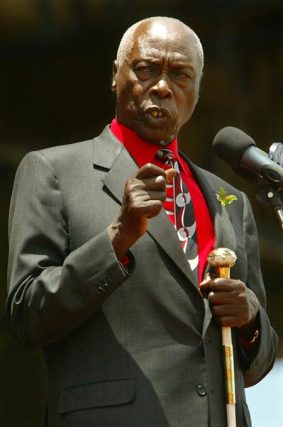
Sean Andrew, the grandson of late President Mwai Kibaki, expressed his thoughts regarding the recent police raid at the home of John Jomo Kenyatta, the son of retired President Uhuru Kenyatta.
Speaking at the grand opening of Chateau 254 Cellar Gastro Club, owned by Akothee’s daughter Vesha Okello, Sean Andrew lamented that Jomo had been unfairly targeted by the government.
He firmly insisted that Jomo is innocent and should not be subjected to such accusations.
“I know Jomo personally, and I believe he was unfairly targeted. I’m not taking any political sides, but I genuinely think he is innocent, as is Mama Ngina. The government should avoid involving unrelated individuals in their disagreements,” Sean Andrew emphasized.
Furthermore, Sean Andrew asserted that he had no intention of venturing into politics, deeming it a “dirty” business. He firmly believed that one can serve the public without being a politician and was determined to contribute to society in his own private way.
The statements from Kibaki’s grandson emerged shortly after retired President Uhuru accused the government of scheming to plant drugs and guns in his son’s Karen residence.
On July 24, 2022, Uhuru revealed that his two sons legally owned six licensed guns between them. He asserted that the raid on Jomo’s home was an attempt to divert attention from other issues in the country.
In response to the situation, the High Court issued an order on July 26, 2023, preventing the government from revoking Jomo Kenyatta’s firearm license.
Justice Jairus Ngaah of the High Court Judicial Review Division also restrained the Firearms Licensing Board from forcing Jomo to surrender his firearm without following the due process outlined in the Firearms Act.
The judge permitted Jomo to officially lodge a substantive suit against the Chief Licensing Officer, the Firearms Licensing Board, and the Attorney General regarding the alleged illegal revocation of his firearms license.
These actions were taken after Jomo urgently filed an application to halt the state’s plans to withdraw his firearm unlawfully.
Deputy President William Ruto offered ODM leader Raila Odinga and his ODM associates half of all senior government positions in return for helping the DP topple President Kenyatta soon after the 2017 elections, a key confidante of Mr Odinga, Junet Mohammed has revealed.
In a headline interview on Nation, Junet who was close during the impeachment talks and largely the emissary for the former PM, has come out to spill out the secrets of the details that would’ve seen the President toppled in a scheme he now says was hatched by the DP.
Junet says that the plot began immediately the President was re-elected in 2017, he attributes it to a meeting convened by the president in Statehouse immediately after the victory where he told the jubilee MPs he didn’t anyone playing second fiddle and he was going to take charge of the government fully.
Ruto in recent days, has told his supporters that in his second term, the president indeed asked him to let him rule fully.
According to Junet, it’s this development in the early stages that Ruto felt betrayed and started the impeachment scheme.
“The President hosted a Jubilee parliamentary group meeting at State House soon after he was declared the winner. In that meeting, it became clear that the honeymoon with his deputy was over. Mr Kenyatta told his party’s rank and file that he would not share power with anyone. The remarks alarmed his deputy as it meant it would not be business as usual,” Mr Mohamed is quoted by the newspaper.
Meetings at Tycoon Home
Junet admits that, indeed, had been talks to impeach the President, and that a prominent Rift Valley businessman who had lost out on lucrative government tenders—which he blamed on some people in the President’s inner circle —facilitated the meetings, which took place in a private residence in the Karen neighbourhood of Nairobi.
He says the first meeting to plot the impeachment took place on January 12, 2018, about a week after the President announced partial Cabinet appointments. It took place at the Karen home of the tycoon from Rift Valley.
According to the plan placed on the table, Mr Odinga’s ODM was charged with mobilising at least 100 lawmakers in the Senate and National Assembly to boost the numbers the DP would contribute from Jubilee and other fringe parties to make 234, the constitutional threshold to kick out President Kenyatta.
For the scheme to appear as an opposition agenda, Mr Mohamed says, their party was to move the impeachment motion in Parliament, and that MPs would have been bribed between Sh300,000 and Sh500,000 to vote in favour of the motion.
“We did not commit to the plan immediately, but retreated to interrogate the proposal first,” Mr Mohamed told the newspaper.
He admits that the deal was enticing but that Raila after reviewing the plan was not for it as he deemed that it would drag the nation back to the chaos.
President Uhuru Kenyatta looks on as Deputy President William Ruto and ODM leader Raila Odinga shake hands during a past meeting at the DP’s residence. Photo | Pool Photo credit: Pool
By then, the intelligence agencies had gotten wind of the secret talks, he claims.
“A senior and powerful minister from Nyanza called me with a stern warning. He asked why we wanted to take the country down the hill, why we wanted to destroy the country. It got us thinking, because with the government already in the picture, we needed to be careful on our moves. That’s when Raila chose to tell Uhuru the full extent of the plan,” Mr Mohamed says.
Handshake
Junet says the pronouncement by Jubilee Party vice-chairman David Murathe that Uhuru in his second was going to be a benevolent dictator didn’t go well with the DP camp. Political insiders say that in the first term the DP was allowed to do things the way he wanted, when Uhuru gave him half of the cabinet to fill in for instance, most of his appointees were from his community.
The President in several occasions has blamed massive corruption in the first term as a major derailment of his agenda. He has bragged that he accomplished more in his second term without his deputy.
Junet says that warning from statehouse honchos meant the DP would no longer run business as usual. He’s said to have amassed much of his wealth in that first term.
On DP’s talks with Raila, Junet says it was meant to stop the new, ruthless Kenyatta in his tracks, especially on his plans to rule by fiat in his second and last term in office. To the Ruto camp, this was a co-presidency, and the President needed to treat it as such.
Article 145 of the Constitution stipulates that a sitting Head of State can be kicked out on the grounds of gross violation of the supreme laws, or where he or she is suspected to have engaged in criminal activities, among others.
In this instance, Mr Mohamed said, the plan was to cite Mr Kenyatta for disobeying court of orders, and in other instances, he was accused to have been in violation of the Constitution.
Kenya’s bicameral Parliament needs at least two-thirds of its membership to support such a motion to sail through. Within seven days after receiving notice of a resolution from the Speaker of the National Assembly, the Speaker of the Senate needs to call a meeting of the Senate to hear the charges, and if at least two-thirds of all the members of the Senate vote to uphold any impeachment charge, the President ceases to hold office.
Under such circumstances, the Deputy President would assume office as President for the remainder of the term of the President.
Next
The latest revelations will definitely spark a fresh debate a topic in political rallies.
Meanwhile, there seem to be a serious power play behind the curtains as some of the wealthiest men in Kenya are hanging up to finance the men they had previously fell out with.
Jimi Wanjigi, a tycoon who bankrolled Raila Odinga’s campaigns in last election, is a man in a revenge mission that after he failed to outrun him in ODM, he bought Safina, hinted at working with Ruto and has vowed to block Raila from statehouse.
David Langat, Rift Valley tycoon fell out with Ruto in the first term of jubilee over tenders. Having bankrolled the party in 2013 elections, Langat expected to be rewarded. He was however kicked out of the laptop and SGR tenders. Langat has now made up with Ruto and said to be bankrolling his campaigns and of many others from the region.
President Uhuru Kenyatta has directed the National Treasury to effect a moratorium of listing in CRBs, for loans less than Ksh 5 million for a period of 12 months to end September 2022.
This is according to a directive by President Uhuru Kenyatta who was speaking during the Mashujaa Day celebrations held in Kirinyaga County.
In his directive the president said borrowers with loans below Ksh. 5 million listed with CRBs from October 2020 to date will not have that listing incorporated in their credit reports for the next 12 months, ending September 2022.
“In addition to foregoing measures and to accelerate our economic recovery, I urge all banks and financial institutions to accommodate customers who seek to restructure their banking facilities,” urged President Kenyatta.
Digital financial services
In recognition of the importance of digital financial services, especially to the small scale traders and the household at large the president directed the Treasury to engage all digital payment providers with an aim of deepening and expanding the use of digital payment channels.
Nairobi Metropolitan Services (NMS) Health Directorate will be awarded tomorrow (October 21st) by the Fast Track Cities Institute jointly with The Joint United Nations Programme on HIV/AIDS (UNAIDS) for exemplary performance in HIV/AIDS care especially in the areas of providing access to testing, enrolling those tested on treatment and ensuring full vital suppression for those on treatment.
Dr. José M. Zuniga the President of Fast-Track Cities says that since joining the network in 2014, Nairobi City-County, in partnership with local, national, and international stakeholders, has made steady progress towards the aim of ending its HIV epidemic by 2030.
“Through its “Nairobi City-County HIV & AIDS Strategic Plan,” and innovative programming, Nairobi City-County has been successfully closing the gaps between HIV diagnoses and treatment initiation with antiretroviral therapy, as well as creating enabling environments for viral suppression. Equally impressive are efforts advanced in partnership with civil society to reach vulnerable population, through programming that attempts to address persistent HIV and intersectional stigma.” Dr. Jose said.
The award is the first of its kind to an African City with Nairobi taking lead.
Dr. Ouma Oluga, Director, Health Services, NMS will be presented with the ‘Circle of Excellence Award’ for Nairobi by the network’s President Dr. Jose before addressing the world in a ceremony that will take place in Lisbon, Portugal.
President Uhuru Kenyatta has vowed to protect and preserve Kenya’s territory by all means.
Responding to Tuesday ruling by the International Court of Justice (ICJ) that largely favours Somalia in its dispute with Kenya, President Kenyatta tore into the judgment firmly stating that Kenya rejects it in totality and would not recognise the court’s findings.
“While Kenya is not surprised at the decision, it is profoundly concerned by the import of the decision and its implications for the Horn of Africa region, and international law generally…The decision embodies a perpetuation of the ICJ’s jurisdictional overreach and raises a fundamental question on the respect of the sovereignty and consent of States to international judicial processes. International tribunals have jurisdiction ONLY to the extent of CONSENT by a State” he said in a strongly-worded statement issued from the US moments after addressing a United Nations Security Council meeting.
He assured as the commander in chief, he was committed to solving the issue amicably while urging for calm stating that the government was seized of the matter.
“I do not intend to abrogate my solemn oath; and, I will do everything possible as President and Commander-in-Chief, to preserve the territory of this our great Republic and bequeath the same, intact and unencumbered, to the next President when my term expires in less than a year’s time” he said.
He noted that the judgement would obviously strain the relations between the two countries.
“Kenya and Somalia are neighbouring States, with a common border, and communities with shared social, cultural and religious practices. This decision is, in the circumstances, a zero-sum game, which will strain the relations between the two countries. It will also reverse the social, political and economic gains; and potentially aggravate the peace and security situation in the fragile Horn of Africa Region” he pointed out.
He called on the international community to respect Kenya’s sovereignty and her inherent right to protects its territory by all means.
“Kenya, like other independent Countries, possesses a determined geographical territory. As a devoted member of the United Nations, the United Nations Security Council as well as the African Union’s Peace and Security Council, we beseech the rest of the family of Nations to appreciate and respect our inherent right to protect, by all available means, our territory” said the head of state.
He said Kenya will pursue the matter through the institutions of the African Union such as the African Union Border Programme and its Peace and Security, architecture, in addition to other bilateral arrangements.
“Nonetheless, Kenya is committed to a diplomatic solution of the current impasse. In this regard, Kenya, as a key proponent of respect for the principle of subsidiarity as a catalyst for African Solutions for African Problems, will resolve this matter through the institutions of the African Union such as the African Union Border Programme and its Peace and Security, architecture, in addition to other bilateral arrangements”
Joe Biden will welcome Kenyan President Uhuru Kenyatta on Thursday, in the first visit by an African leader to the White House during his presidency.
The summit will be part of “Biden’s commitment to the US partnership with Africa based on principles of mutual respect and equality,” a White House statement said Tuesday.
It said Biden and Kenyatta would discuss “the need to bring transparency and accountability to domestic and international financial systems,” amid a push by the Biden administration to fight both corruption and inequities overseas.
The two will also “discuss efforts to defend democracy and human rights, advance peace and security, accelerate economic growth and tackle climate change,” the White House said.
Biden has vowed to promote democracy overseas. Once-stable Kenya saw deadly political violence after 2017 elections, but Kenyatta has since made up with his former rival Raila Odinga.
Biden took office vowing a new commitment to Africa after the disinterest of his predecessor Donald Trump, who was the first president in decades not to visit sub-Saharan Africa.
But Biden has only gone on one international trip and has trimmed the number of visitors at the White House amid continued precautions against Covid-19.
Much of the Biden administration’s attention in Africa has turned to Ethiopia, a longtime US ally that has disappointed Washington with a nearly year-old offensive in the Tigray region.
Ethiopia launched the operation late last year in response to attacks on an army camp by the then ruling party in Tigray, where UN officials say that hundreds of thousands are facing severe hunger.
Kenyatta, speaking Tuesday after a UN Security Council meeting on Ethiopia, called for “an immediate cessation of hostilities by both sides.”
“We do not believe that there is a military solution, and we need to urgently have all parties coming across the table in order for us to be able to ensure that all humanitarian corridors are actually opened,” he told reporters.
“We will continue to push — not just as Kenya, as a neighbor and a member of the Security Council but also through the African Union.”-AFP.
ODM Party Leader Raila Odinga says there is nothing wrong with operating accounts in foreign Countries as long as they aren’t used to hide proceeds of corruption.
Raila defended President Uhuru Kenyatta over the leaked Pandora papers linking his family to 13 offshore companies holding billions of shillings.
He called for calm saying the President was clear that he would address the matter comprehensively on his return from a State Visit to the US.
Raila further revealed that he doesn’t operate accounts outside the Country saying everything is in Kenya.
He encouraged other Kenyans running accounts outside the Country to come out saying he knows there are some hiding money looted from Government coffers.
“I have been in government and temptations are many, At times people who have won tenders will approach you and promise you things saying they will even hide it for you. I have been approached but I refused,” He said.
Raila says corruption remains the greatest enemy to development in the Country arguing it thrives through harambees.
“We must ask questions, where do they get this money from, Everywhere they go they are just dishing out cash to youths, women groups, giving donations to churches, Schools etc. It’s not normal for a person to have such amounts of money,” He said.
He maintains that the funds donated in harambees are likely to have been stolen from Government.
President Uhuru Kenyatta in a quick rejoinder reply to the International Consortium of Investigative Journalism leak that linked his family to Sh3.3B stashed in offshore accounts, has welcomed the report saying such “will go a long way in enhancing financial transparency”.
The President who’s currently in Ethiopia for the inauguration of the Prime Minister en route the United States, say that he will be giving a comprehensive reply to the report that ties his family to billions in offshore firms.
In a brief to the media, Kanze Dena. statehouse spokesperson, Uhuru said, “These reports will go a long way in enhancing the financial transparency and openness that we require in Kenya and around the globe.”
“The movement of illicit funds, proceeds of crime, and corruption thrive in an environment of secrecy and darkness.”
Uhuru also said the Pandora Papers and subsequent follow-up audits will lift the veil of secrecy and darkness for those who can not explain their assets or wealth.
This comes at a time when Kenyatta’s critics predominantly those allied to his deputy who’s a friend turn foe, have been celebrating the expose which I’m they view as the final fall and an eye opener.
When you preach water and drink wine! This guy lectured us day in & day out on corruption yet it’s the only thing he leads from the front on! Thank God for intentional media as he has managed to muzzle local media. Appears his 40 days are up! #PandoraPapers#Client13173pic.twitter.com/6sQTzM30Ww
As I was telling you… “Uhuru Kenyatta’s presidency has injected fresh energy into his family’s commercial empire expected to consolidate its position as one of the largest business dynasties in Kenya.” BD 11 Nov 2013 #PandoraPapers
The report said Uhuru and six members of his family secretly owned a network of offshore companies. According to Finance Uncovered, the Kenyatta family has used other offshore companies to buy two more properties in the UK.
According to the ICIJ, Mrs Kenyatta and her daughters were advised by experienced international wealth experts from the Swiss bank Union Bancaire Privée (UBP), which recruited Alcogal, a Panamanian law firm specialising in setting up and administering offshore companies.
The consortium says invoices from Alcogal to the bank show that the Swiss advisers referred to the Kenyattas with the code “client 13173”.
Alcogal provided a registered office for Milrun on the largest of the BVI islands, Tortola, and supplied staff members to act as the company’s official directors.
The result was an entirely anonymous company that could not be traced back to the Kenyatta family.
This company was used by Mrs Kenyatta and her daughters to buy an apartment in central London, which it still owns, according to filings at the UK Land Registry seen by Finance Uncovered.
The prime property, which was until recently rented by British Labour MP Emma Ann Hardy, is now estimated to be worth close to $1.3m.
UBP private-wealth advisers also helped Mr Kenyatta’s brother, Muhoho, set up a Panamanian entity called Criselle Foundation in 2003.
The foundation was registered to the offices of Alcogal in Panama City, and was nominally run by board members from the Panamanian law firm.
It was set up for the benefit of Muhoho Kenyatta, with his son Jomo Kamau Muhoho, as successor.
Another BVI company which Mr Muhoho owned had a $30m valuation in stocks and bonds as of November 2016.
A search of public records in BVI and Panama found that most of the companies linked to the Kenyattas are now dormant, some of them as a result of non-payment of regulatory fees.
It’s not illegal to run secret companies, but some have been used as a front to divert money, avoid taxes and for money laundering.
The Pandora Papers, however, show no evidence that the Kenyatta family stole or hid state assets in their offshore companies, BBC says.
In 2018, Mr Kenyatta told the BBC Hardtalk programme that his family’s wealth was known to the public, and as president he had declared his assets as required by law.
“As I have always stated, what we own – what we have – is open to the public. As a public servant I’m supposed to make my wealth known and we declare every year,” Mr Kenyatta said.
“If there’s an instance where somebody can say that what we have done or obtained has not been legitimate, say so – we are ready to face any court,” he added.
Coming at an election time and when Kenya has started voters registration, it was expected for the matter to take a political turn with William Ruto who has long been linked to endless numerous corruption scandals and baptized the alliance’s senior thief, to turn his guns on the president perceived to be the clean one.
As it seems, the battle will hit the ground should the investigative agencies decide so and if the President lives to his words, then everyone will have to explain their wealth, question is, who has a clean hand? The game goes on.
As Uhuru Kenyatta mounted a political comeback by campaigning against corruption, his family’s secret fortune was growing offshore, a massive new leak shows.
The secret deals and hidden assets of some of the world’s richest and most powerful people have been revealed in the biggest trove of leaked offshore data in history.
Branded the Pandora papers, the cache includes 11.9m files from companies hired by wealthy clients to create offshore structures and trusts in tax havens such as Panama, Dubai, Monaco, Switzerland and the Cayman Islands.
They expose the secret offshore affairs of 35 world leaders, including current and former presidents, prime ministers and heads of state. They also shine a light on the secret finances of more than 300 other public officials such as government ministers, judges, mayors and military generals in more than 90 countries.
The files include disclosures about major donors to the Conservative party, raising difficult questions for Boris Johnson as his party meets for its annual conference.
More than 100 billionaires feature in the leaked data, as well as celebrities, rock stars and business leaders. Many use shell companies to hold luxury items such as property and yachts, as well as incognito bank accounts. There is even art ranging from looted Cambodian antiquities to paintings by Picasso and murals by Banksy.
The Pandora papers reveal the inner workings of what is a shadow financial world, providing a rare window into the hidden operations of a global offshore economy that enables some of the world’s richest people to hide their wealth and in some cases pay little or no tax.
At his annual State of the Nation address last fall, President Uhuru Kenyatta mounted the podium at Kenya’s Parliament to acknowledge that too many Kenyans live in poverty and too many officials loot the country’s public resources.
The son of Kenya’s first president and leader of one of Africa’s largest economies, the 59-year-old Kenyatta urged lawmakers to join him in fighting corruption and yet again declared “the centrality of transparency, accountability and good governance as the anchors of sustainable development.”
But a massive cache of newly leaked documents show that Kenyatta’s family has for years been secretly accumulating a personal fortune behind offshore corporate veils.
Kenyatta, along with his mother, sisters and brother, have for decades shielded wealth from public scrutiny through foundations and companies in tax havens, including Panama, with assets worth more than $30 million, according to records obtained by the International Consortium of Investigative Journalists and shared with more than 600 reporters and media organizations around the world.
The records – from the Panamanian law firm Aleman, Cordero, Galindo & Lee (Alcogal) –show that the family owned at least seven such entities, two registered anonymously in Panama and five in the British Virgin Islands. One BVI company owned a home in central London, according to the records, and two other companies held investment portfolios worth tens of millions of dollars. The Kenyattas’ offshore wealth, revealed here for the first time, represents part of an estimated half-billion-dollar family fortune amassed in a country where the average annual salary is less than $8,000 a year.
The family began to accumulate much of its offshore wealth while Uhuru Kenyatta was a rising political star. Two offshore companies were created during an investigation into alleged looting of the public treasury during the watch of President Daniel arap Moi, Kenyatta’s former political patron.
Under Kenyan law, the president must provide a list of financial interests to the Ministry of Finance each year. Kenyatta and his family members did not respond to requests for comment, including whether he declared any offshore interests or was required to do so.
Details of the Kenyatta family’s offshore wealth have been brought to light by the Pandora Papers, a collection of more than 11.9 million records from 14 law firms and other service providers based in the United Arab Emirates, the Seychelles, Panama, Singapore and other tax havens.
The investigation has revealed assets of 35 current or former world leaders, including the king of Jordan, the prime minister of the Czech Republic, and Kenyatta’s fellow African leaders Ali Bongo Ondimba of Gabon and Denis Sassou-Nguesso of the Republic of Congo.
The discovery that Kenyatta and his family owned Panamanian foundations and a string of shell companies provides a jarring contrast to Kenyatta’s projected image as a transparency advocate. Documents show that the expansion of the Kenyattas’ offshore holdings coincided with Uhuru Kenyatta’s political rise, with increasing the layers of secrecy to shield the family’s wealth from scrutiny even as Uhuru solidified his role as a man of the people.
The ‘burning spear’
The story of the Kenyatta family fortune, with its various companies and foundations in tax havens, begins with an ambitious tribal scion who would become one of post-colonial Africa’s most iconic leaders: Jomo Kenyatta.
Uhuru Kenyatta’s father was born Kamau Ngengi circa 1894 in the fertile Central Highlands of what was then known as British East Africa. Kamau’s father was a village chief in the powerful Kikuyu tribe, in a country where tribal affiliation often determines the outcome of elections. Educated at a Christian mission school, the young Kamau signaled his ambitions by taking the name Jomo Kenyatta, a local word for “burning spear.”
At the start of the 20th century, a British colonial government tightened its grip on the region’s non-white population. A “hut tax” was imposed on people with little or no money, many of whom depended on their crops and livestock for survival. Some were driven to prostitution or consigned to forced labor.
Like many of his contemporaries, Jomo Kenyatta rebelled.
“Nothing is more important than a correct grasp of the question of land tenure,” Kenyatta wrote in 1938, while attending university in London. “For it is the key to the people’s life.”
Jomo Kenyatta returned home to lead a pro-independence party and was quickly imprisoned by the British on unfounded and politically motivated charges that he led the nationwide rebellion then underway. When he left prison nearly nine years later, Jomo took charge of independence negotiations, and, in 1963, Kenya gained independence, with Kenyatta as prime minister. In 1964, he became the country’s first president, and he presided over an economic boom that burnished the country’s reputation as a post-colonial model.
But instead of building democracy, Kenyatta turned the fledgling nation into a one-party state marked by arbitrary detention, torture and political assassination. Promised land reform became a land grab: Kenyans found that property had simply changed hands from European elites to Kenyatta cronies.
A United Nations-backed commission would later find that in two years, one-sixth of all properties previously held by Europeans, including “vast farms” and valuable coastal real estate, were “cheaply sold” to Kenyatta, his family and his allies. According to the final 2013 report of Kenya’s Truth, Justice and Reconciliation Commission, beneficiaries included Kenyatta’s fourth and most influential wife, Ngina, their children, including Uhuru, and Moi, Kenya’s vice president at the time.
“Throughout the years of his administration, both land grabbing and irregular land allocations were perpetrated by and for the benefit of the president himself, members of his immediate family, his relatives and friends,” the report declared.
Following Jomo Kenyatta’s death in 1978, in his 80s (his date of birth is unknown), Moi took over as president, as a result of complex negotiations designed to head off tribal feuds.
Former Kenyan president, Daniel arap Moi. Image: Pedro Ugarte/AFP via Getty Images
After an attempted 1982 military coup, Moi plunged Kenya deeper into authoritarianism, and over more than two decades, he looted more than $2 billion, a government-commissioned investigation would find.
Protected by their ties to Moi and by Jomo Kenyatta’s aura as father of the nation, the Kenyattas thrived.
Uhuru’s mother, Ngina, popularly known as “Mama Ngina,” was given 264 acres over decades, according to a later government probe, which recommended that the landholdings be revoked.
With vast landholdings and backing from international investors, the family built a business empire, acquiring large stakes in well-known Kenyan enterprises, including a media conglomerate,a major bank and upscale hotels.
In 1993, the family founded Brookside Dairy, which expanded across East Africa and is now Kenya’s largest milk producer. One of Jomo and Ngina’s daughters, Kristina Wambui-Pratt, became a shareholder in a company that builds housing from polystyrene panels. Another, Anna Nyokabi Muthama Kenyatta, married a gem-mining magnate and managed the Kenyatta family’s beachfront hotel. A discreet and camera-shy son, Muhoho, now controls the family’s finances, according to local media reports.
But none of Jomo and Ngina Kenyatta’s children rose faster or farther than Uhuru.
Named after the Swahili word for freedom, Uhuru played rugby (and socialized with Moi’s eldest son, Gideon) at a Nairobi private school. He graduated from Amherst College, an elite U.S. liberal arts institution, in 1985 and returned home to launch an agricultural business and enter politics. He became the chairman of a local political party in 1997, and Moi named him to lead the country’s tourist board.
Uhuru burnished his everyman bona fides by dancing in public, while managing to indulge an equally public taste for expensive watches.
In 2001, Moi appointed Uhuru Kenyatta to a vacant seat in Parliament and, a month later, to the cabinet. Under increasing internal and international pressure to retire at the end of his second term, as required by the Kenyan constitution, Moi tapped Kenyatta to run as his successor in the 2002 election, betting on the Kenyatta name and tribal connections. But a coalition of reformist opposition parties crushed the Moi-Kenyatta alliance, relegating the 41-year-old Kenyatta and his party to the opposition .
The new president, Mwai Kibaki, ordered a probe of the Moi administration and the insiders who had helped spirit money out of East Africa. He appointed Kroll Inc. – the private investigation firm that had unearthed the financial secrets of Iraq’s Saddam Hussein and Haiti’s Jean-Claude “Baby Doc” Duvalier, among others – to lead the inquiry.
Kenyatta was on the front lines of those who rallied to Moi’s defense.”The government should stop digging into the past,” Kenyatta told a rally of Moi supporters in western Kenya’s verdant Rift Valley near Lake Victoria.
But within a year, a leaked version of the Kroll report spilled into the headlines with blockbuster allegations: Moi and his inner circle had embezzled as much as $2 billion – more than twice what Kenya was receiving in foreign aid in a year — and stashed hundreds of millions of dollars in bank accounts overseas. The report alleged that Moi and his associates “laundered” and “parked” perhaps $400 million in accounts at Geneva’s Union Bancaire Privée and elsewhere. Kenyatta was not named in the report.
According to the report, the looting peaked in late 2003 after the new government took power. “A marked flurry of activity has been reported among ex-President Moi’s family and their close associates to pre-empt any possibility of losing their wealth to the government,” Kroll reported.
Moi denied wrongdoing and officials quickly announced that he would face no charges in exchange for a smooth transition of power. But the Kroll investigation’s linking ill-gotten wealth to Switzerland and Panama devastated his political legacy, and it raised questions about who else may have benefited from the regime’s looting.
Client 13173
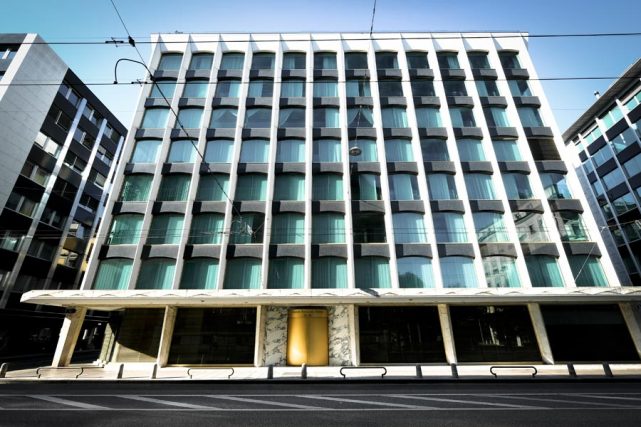
One of the largest private banks in Switzerland, Union Bancaire Privée advises some of the world’s wealthiest people on how to manage their money. Its eight-story glass headquarters overlooks Lake Geneva and the nearby Prada, Versace and Mont Blanc storefronts.
Union Bancaire Privée offices in Geneva, Switzerland. Image: Raymond PIAT/Gamma-Rapho via Getty Images
Like other private banks, Union Bancaire Privée often works with law firms in the British Virgin Islands, the Seychelles and other secrecy jurisdictions to create, register and maintain shell companies – which are without real operations and which list paid stand-ins as corporate officers on official paperwork – and similar entities that help clients conceal their ownership and wealth.
Some “offshore” clients are private citizens seeking to avoid taxes in the country where they live or acquire their wealth. Other clients are politicians and public officials, who are called “politically exposed persons” in the trade, because their wealth is deemed more likely to stem from bribery or other forms of corruption.
In July 2003, the same month that Kenyatta defended Moi in public, records show that a Union Bancaire Privée lawyer, Othmane Naïm, asked Panama offshore specialists to help register a new foundation, to be known as the Varies Foundation. The foundation, like a trust, was designed to manage and shelter wealth for its beneficiaries.
Draft bylaws, also from July 2003, name the foundation’s beneficiaries: Uhuru Kenyatta and his mother. Later, records show, Union Bancaire Privée helped manage a foundation for Uhuru’s brother, Muhoho.
Invoices from Alcogal in Panama to the bank show that the Swiss advisers referred to the Kenyattas with a code: “client 13173.”
As with trusts and foundations offered elsewhere, including Belize (also South Dakota and Nevada), Panama foundations can be designed to allow families to transfer wealth from one generation to another, tax free. Typically, an individual, or “founder,” transfers assets, such as a bank account or real estate, to the foundation, which becomes the assets’ legal owner.
Panamanian foundations are prized, like trusts, because those who create them, the true owners of the assets, are not required to register their names with the Panamanian government. That secret remains with their lawyers. Any breach of confidentiality laws carries a jail sentence of up to six months, the same sentence imposed in Panama for certain categories of child abuse.
According to a World Bank study, foundations are a common tool to mask dirty money. Ferdinand Marcos, autocratic president of the Philippines, is alleged to have stolen billions of dollars while he ruled the country from 1966 to 1986, funneling millions through a Panamanian foundation.
Alcogal said that it complies with requirements where it operates and “performs enhanced due diligence on a client who is determined to be a high-risk customer.” It told ICIJ’s media partner, Finance Uncovered, that it has not provided services to the Kenyattas’ foundations since 2014.The foundations were eligible for suspension under Panamanian law for failing to pay annual taxes, Algocal said.
Naim told ICIJ that he could not respond to specific questions, but said “we always complied with all applicable legislations and regulations.”
The Pandora Papers reveal the Kenyattas also secretly owned offshore shell companies.
Muhoho Kenyatta owned three registered in the BVI, according to records: One had a bank account that held an investment portfolio worth $31.6 million in 2016; another had unspecified investments at a bank in London.
From 1999 to 2004, Ngina Kenyatta and her two daughters held shares in a BVI company, Milrun International Ltd. The sisters used the company to buy a London apartment in the upscale Westminster neighborhood, according to records.
Similar apartments in the modern brick building now sell for more than $1 million. The apartment was rented until July by an English member of parliament, Emma Hardy, according to public records. Hardy’s attorney said that she signed an ordinary rental agreement and had never heard of the company involved.
Return to power
Following elections in 2007, a sharply divided Kenya was under another coalition government, and, with part of the family fortune secreted offshore, Uhuru Kenyatta mounted a comeback, assuming a new political persona. The populist had become an anti-corruption reformer.
In public, Kenyatta vigorously espoused transparency, and anti-corruption activists praised him for his fight against graft.
When he ran for president a second time, in 2013, he toured the country, repeating seven “key pledges,” including food, water and electricity for all. He also promised security on the nation’s restive border with Somalia and stringent anti-corruption measures, including new laws and agencies to probe and punish wrongdoers.
“It is time to get tough on those who seek to use their positions of power for their own personal gain,” a coalition of four political parties, including Kenyatta’s, declared in their coalition manifesto.
That year, at the age of 51 and after decades of grooming, Uhuru Kenyatta was elected president.
In his first State of the Nation address, Kenyatta promised honest government and offered to forgo 20% of his salary.
Meanwhile, Forbes magazine, in 2011, ranked Kenyatta as Kenya’s richest person and the 26th wealthiest in Africa, estimating the family fortune at about half a billion dollars. And Kenyatta, as president, fought to keep some things secret.
Two months after Uhuru Kenyatta won the 2013 election, the same commission that examined corruption as far back as his father’s presidency reported testimony that Jomo Kenyatta had acquired vast tracts of land through illegal means. The commission also found that the elder Kenyatta had “interfered in the investigation” of the assassination of a political rival.
A furious Uhuru Kenyatta demanded a retraction, albeit only about land deals that cast suspicion on the origins of the family’s empire. After a heated debate, in which several commissioners refused to comply with Kenyatta’s demand, the majority retracted references to the deals and issued a revised report.
“Protecting the wealth and economic power of the family today seemed more important to the Kenyatta family than the implication than their father was involved in the cover-up of a murder,” Ronald Slye, one of the dissenting commissioners, recalled in an interview with ICIJ.
As Kenyatta approaches his constitutional two-term limit next year, He increasingly has staked his legacy on transparency.
“What we own, what we have, is open to the public,” Kenyatta told the BBC in 2018, referring to his family’s wealth. “If there is an instance where somebody can say that what we have done has not been legitimate – say so.”
He continued: “Every public servant’s assets must be declared publicly so that people can question and ask, what is legitimate? If you can’t explain yourself, including myself, then I have a case to answer. If you want to continue serving, you must make it public. Period.”
There is nothing unlawful about using secrecy structures or making overseas investments. Many wealthy families choose to spread their investments overseas, particularly when their home country faces political or economic turmoil. This is known as capital flight.
However, capital flight — whether lawful and illicit — often drains local investment and increases inequality.
The Pandora Papers show no evidence that state assets have been stolen or hidden in offshore entities controlled by the Kenyattas.
With major constitutional changes suspended for now, and swirling new alliances taking shape, Kenya’s political scene is shrouded in uncertainty as the country eyes crucial elections due a year from now.
Here is a look at how Kenya got here and what lies ahead when East Africa’s powerhouse elects a new president and parliament next August.
– What happened to constitutional change? –
On Friday, Kenya’s Court of Appeal rejected President Uhuru Kenyatta’s bid to change the constitution, arguing that he had no right to do so. The decision marked the latest twist in a debate that has gripped the country since 2018.
According to Kenyatta, the so-called Building Bridges Initiative (BBI) would expand the executive and overturn the winner-takes-all electoral system that has been blamed for frequent explosions of poll-related violence in the East African nation.
But his detractors saw it as little more than a naked grab for power by a two-term president who cannot run a third time, with the BBI potentially allowing him to assume the new position of prime minister.
In addition to creating new posts, the sweeping changes would also increase the number of parliamentarians from 290 to 360, prompting fresh alliances with a view to dividing the spoils come election time.
Friday’s judgement has put paid to those hopes.
Even if Kenyatta approaches the Supreme Court, the verdict will come too late to let his planned transformation take shape before the August 9 vote, throwing the field wide open.
– Is ‘the handshake’ pact over? –
The BBI came on the heels of a shock rapprochement between Kenyatta and his long-time foe Raila Odinga, who declared a truce with a headline-grabbing handshake in March 2018, following deadly post-election clashes in 2017.
The pact stoked speculation that Odinga would succeed Kenyatta, who would in turn become prime minister, with other politicians persuaded to fall in line in exchange for new posts.
It left Deputy President William Ruto, whom Kenyatta had initially anointed as his 2022 successor, out in the cold.
The pair’s frosty relationship became evident this week when the president challenged his deputy to resign “if he is not happy”.
Yet doubts have now emerged about how long the Kenyatta-Odinga coalition will last, with the BBI on its last legs.
“The big question will be: will the alliance that is being built with Odinga be able to hold in the absence of the BBI?” said Nic Cheeseman, professor at Britain’s University of Birmingham.
“What positions will have to be offered to people so that they sacrifice their presidential ambitions and line up behind Odinga?”
For his part, Ruto, who has branded himself as a candidate for the common man, cheered the decision, calling it a victory for “the Hustlers” trying to survive in a country ruled by political dynasts such as Kenyatta and Odinga.
– What about ethnic issues? –
The 2022 election may spring yet more surprises, with experts saying that ethnic issues, which have traditionally played an important role in Kenyan politics, may no longer carry the weight they once did in a country with 44 tribes.
Ethnic affiliations will still matter at the ballot box, but they will not be “the main discussion” topic, said Kenyan political analyst Nerima Wako-Ojiwa.
“Young people do not necessarily identify with the tribal language used in the past,” she told AFP, pointing out that Kenya will add six million more potential voters in 2022 compared to 2017 as youngsters come of age.
The battle for the youth vote will play a big part in determining the winner of next year’s race, she said, along with shared concerns such as reviving the Covid-battered economy and improving healthcare.
That could spell good news for Ruto, who belongs to the Kalenjin ethnic group but has tried to run a campaign that crosses tribal lines in a bid to attract the support of all Kenyans who feel economically marginalised.
“If it is (successful)… it’s a really big challenge to the established way of doing politics in Kenya,” Cheeseman told AFP.
– Will a runoff happen? –
Kenyan presidential elections have always boiled down to a two-horse race — but that may now change.
At the moment, it “is very plausible in this election… that we actually have three or four viable candidates”, said Cheeseman.
Such a scenario would generate more debate about likely contenders in the run-up to the election.
It would also make it difficult for any candidate to score the 50 percent plus one vote required to win, he added, raising the likelihood of a historic second presidential round.-AFP.
Governor and his co-accused faced 19 charges of corruption, abuse of office and irregular payments that saw the county lose Sh357 million.
Count 1: Sonko, alongside Fredrick Odhiambo alias Fred Oyugi T/A Yiro Enterprises, Web Tribe Limited, Danson Muchemi Njunji, Robert Muriithi Muna, Zablon Onyango Ochomo, ROG Security Limited and Antony Otieno Ombok alias Jamal are accused of conspiring to embezzle Sh24.1m between July 1, 2018 and January 31, 2019.
Count 2: The governor is accused of conflict of interest. Sonko is accused of knowingly receiving Sh1 million from Web Tribe Limited, the parent company of JamboPay, through ROG Security Limited. The money is said to have been received on or about January 19 through Equity Bank Limited, Nyali branch.
Count 3: The governor is accused of knowingly receiving another Sh1 million from Web Tribe through ROG, through Equity Bank, Kenyatta Avenue branch.
Count 4: Sonko is accused of knowingly receiving Sh1 million from Web Tribe through ROG on January 19, through Equity Bank’s Gigiri branch.
Count 5: The county boss is accused of knowingly receiving Sh1 million from Fredrick Odhiambo alias Fred Oyugi of Yiro Enterprises through ROG on December 27, 2018. The cash was received through Equity Bank’s Four Ways branch. According to the charge sheet, the county hired unspecified “heavy equipment” from Yiro.
Count 6: The county boss is accused of receiving Sh1 million from Yiro through ROG on December 27, 2018. The cash was deposited into his account at Equity’s Nyali branch.
Count 7: Sonko is accused of knowingly receiving Sh1 million from Mr Odhiambo through ROG on December 28, 2018. The prosecution says the cash was received through Equity Bank’s Kwale branch.
Count 8: Sonko is accused of receiving Sh1 million from Yiro through Equity’s Nyali branch on December 28, 2018. The alleged irregular payments were a facility by ROG.
Count 9: The governor allegedly received Sh1 million from Mr Odhiambo through ROG on December 27, 2018. The money was deposited into his account at Equity’s Kenyatta Avenue branch.
Count 10: Sonko is accused of unlawfully receiving Sh400,000 from Mr Odhiambo on December 28, 2018 through Equity’s Kenyatta Avenue branch. The payments were facilitated by ROG.
Count 11: The governor is accused of pocketing Sh1 million from Mr Odhiambo and Yiro through ROG on December 28, 2018. The illegal payments were done through Equity’s Kenyatta Avenue branch.
Count 12: Sonko is accused of receiving Sh8.4 million in proceeds of crime, contrary to Section 4 of Proceeds of Crime and Anti-Money laundering Act. He is accused of receiving the cash from Mr Odhiambo between December 27 and 28, 2018 at Equity Bank.
Count 13: The governor is accused of receiving proceeds of crime – Sh3 million – from Web Tribe – on or about January 19 at Equity Bank.
Sonko denied all these charges and secured his release after paying a cash bail of Sh15 million. The High Court in Nairobi had granted him a Sh15 million cash bail or an alternative bond of Sh30 million with a surety of a similar amount. Court also barred Sonko from accessing his office and commenting on the case on social media as were the directorates of public prosecutions and criminal investigations and the Ethics and Anti-Corruption Commission. And being that he had no Deputy, the Magistrate ruled that if need be, he can be escorted by the investigating officer or any other authorised officer.
Recalling back on 8th Nov, 2017 when President Uhuru Kenyatta in his Harambee House chaired a meeting aimed at ‘Regeneration of Nairobi.’
President Uhuru Kenyatta charing a meeting aimed at Regeneration of Nairobi County. 8/11/2017. Photo|PSCU
“The programme is between the national government and the County Government of Nairobi, and will cost billions of shillings, focuses on key economic and social sectors. It is expected to significantly improve the livelihoods of Nairobi residents.” Said PSCU on a statement . The Nairobi team was led by Governor Mike Mbuvi Sonko, former Deputy Governor Polycarp Igathe and the then nominee for County Secretary Peter Kariuki.
The meeting agreed that in the next four weeks all relevant state departments and city county departments realign their procurement plans to ensure relevant allocations are available for the implementation of the programme and what turned out to be 2 years for the implementation to come to pass evidently at a time when the Governor is facing Corruption charges, barred from office and facing impeachment motion in the County assembly. Your assumption is as good as mine. If he had no graft cases, he would have not handed over and he would have had a deputy Governor by now. The deep state power ready to save him from his ouster by advising him to do the handing over.
Moving on — Deputy Governor Polycarp Igathe and Tourism Cabinet Secretary Najib Balala co-chaired the technical committee of the special task force on Nairobi. “The programme focuses on Housing and Settlement, Infrastructure and Transport, Energy, Water Resources, Environment and Solid Waste, Youth, Women and Persons with Disability. Other sectors are Land, Information and Communication Technology.” PSCU on a statement. The meeting was attended by Cabinet Secretaries Henry Rotich (Treasury), James Macharia (Transport and Infrastructure), Eugene Wamalwa (Water and Irrigation), Cleopa Mailu (Health) and Jacob Kaimenyi (Lands, Housing and Urban Development) among others.
Governor Mike Sonko (right) and CS Eugene Wamalwa (left) signing the transition documents in presence of President Uhuru Kenyatta(standing left) and Senate Speaker Kenneth Lusaka(standing right) at State House. 25/2/2020. Photo|PSCU.
Yesterday Tuesday 25 Feb, 2020 In a historic but not a surprise to me, land mark agreement signed at State House where Governor Mike Mbuvi Sonko and Devolution Cabinet Secretary Eugene Wamalwa in concurrence with H.E President Uhuru Kenyatta, signed an agreement, officially handing over functions of the Nairobi County Government to the National Government, pursuant to Article 187 of the Constitution.
The signing of the agreement was also witnessed by the Speaker of the Senate, Hon. Kenneth Lusaka and the Attorney General Paul Kihara.
The National Government therefore, will take over the following functions of the Nairobi County Government:
i)County Health services
ii)County Transport services
iii) County Public Works, Utilities and Ancillary services
iv)County Government Planning and Development
“This will ensure Nairobi residents receive services efficiently. The move comes as a breakthrough in the running of county services that had ground to a halt.” State House spokesperson Kanze Dena-Mararo.
A move that has been gazetted.
Take a look at J.B Kenya™ (@JohnBosco_Juma): https://twitter.com/JohnBosco_Juma?s=09
Did Uhuru’s administration pay Ksh6.9 Million for the three minutes display of the Kenyan flag in commemoration of Jamhuri Day, a celebration of 56 years of independence on world’s tallest building the Dubai’s Burj Khalifa?
The cost to place a promotional advert or message on the façade of the Burj Khalifa starts from Ksh 6.9 million for a single three-minute display, according to the marketing agency which manages the lighting displays.
Brand Kenya, however, refuted the claims that Kenya had to pay for the display.
“Well that’s the power of a good brand and Kenya is indeed a good brand. Chema chajiuza… Thank you,” Brand Kenya said through Make it Kenya.
You perhaps should also note that prices for displaying the flag on the Giant Burj Khalifa vary depending on the day of the week, time of day and duration that an advertiser seeks.
It costs Ksh 6.9 million on a weekday from 8 pm to 10 pm. On the weekends, the cost rises to Ksh. 9.6 million within the same timeframe.
For two three minute impressions any night between 8 pm and 10 pm the price is Ksh 13 million and for Ksh 27 million you can get five three minute impressions any night between 7 pm and midnight.
The displays are managed by Dubai-based marketing agency Mullen Lowe MENA.
While ganja one is busy globe-trotting and number two roaming in the country confused to the toe, a new report released by corruption tracker reveals that Kenya has lost Ksh8.08 Trillion since 2013.
Here is the full report compelled by the corruption tracker.
These are the digital duo y’all believed—funny enough, some still believe— are the next phase of Kenya’s success. Well, the joke remains to us the 47 million fools that keep their baseless,visionless and plain political agendas a float.
Last week, President Uhuru Kenyatta inaugurated the Nairobi – Naivasha second phase of the Standard Gauge Railway, which honestly goes to nowhere, forget Jubilee’s promises. And not just that, but also, the Chinese government has since cut funds for the SGR project after the government failured to prove project viability.
In a bizarre report that appeared in the Sunday Standard last week revealed the racism, blatant abuse, bad treatment, wildlife deaths, and lack of skills transfer that characterizes the SGR trains. This happens under the nose of Jubilee government that choke out Sh1 billion monthly from taxpayers to repay the SGR.
“Beneath this shiny veneer is a tale of pain, anguish and broken dreams for a multitude of Kenyans who feel trapped on the train that ably fits the moniker Orient Express, because on it, Chinese nationals have created a small kingdom in which they run roughshod over Kenyan workers who say they are experiencing neo-colonialism, racism and blatant discrimination as the taxpayer foots the Sh. 30 million a day bill for the train, which losely translates to Sh. 1 billion at the end of every month.” Reads part of the Standard report.
The investigation report by the Standard revealed that Chinese workers were running a racist little kingdom at the trains and they had systematically excluded Kenyan workers from the core duties such as trotting the trains.
“Our investigation has revealed that Kenyan drivers have taken charge of the 472 kilometre ride just once, on the project launch with President Uhuru Kenyatta as a passenger, when two female drivers, Alice Gitau and Concilia Owire made the trip. When the cameras and VIPs exited the scene, the Chinese drivers took back control. They have never again been allowed to navigate the passengers from either end of the train track. Those who were trained two years ago in anticipation, have remained assistant shunting drivers, since the launch of Madaraka express, and only sit and watch as the Chinese drivers cruise to the coast and back,” the Standard reported.
The investigation also revealed that Kenyan workers at the SGR were not allowed to travel in the same vehicles with the Chinese, even if it’s carrying one Chinese or eat at the same tables with them.
“More excesses are allowed on the freight trains where there is little visibility. Chinese staff are allowed excesses such as smoking while in the locomotive and use of mobile phones, crimes that will get their Kenyan counterparts fired,” the report said.
The government response, however, points the blame finger on Kenyans, including those facing maltreatment. The States spokesman said that Kenyans should comprehend the work the Chinese are doing rather than focussing on the racial insults they are receiving from the Chinese. Aren’t we re-colonised already!?
The Chinese developer and operator of the SGR, China Road and Bridge Corporation, stands accused of discriminating Kenyan workers, who according to the government are expected to take over the running of the rail service in 10 years.
Baseless firing leading to unemployment, racial assignments, impoverished salaries, racial sitting arrangement, catering and personal hygiene services among others injustices the government wants Kenyans to ‘enjoy and celebrate.’
According to the government, they have set up a “systems” to resolve issues surrounding the operations of Madaraka Express passenger service and the cargo train. Efforts to get to understand the said systems always turn futile as there is nor recorded or existing system!
The State through Colonel Cyrus Oguna, the official government spokesman, keep on blaming Kenyans for not seeing the ‘good sides of the’ white elephant project.
One thing Kenyans have to honestly know is that SGR is an expensive irrelevant project. Kenya pays China 1 Billion monthly, which roughly transilates to over Sh33 Million daily.
In short, for SGR to be fully proffitable for both the contractor and Kenya, the successor of the white elephant after a whole damn decade, the Trains are supposed to ferry more than 35,000 Kenyans to and fro Mombasa daily, that leaves freight trains as side profits. Now, you get the joke Jubilee bluffed the whole Nation with.
And Today, Senior Council Ahmednasir Abdullahi has responded saying the speech is not only stuffy but also drab, dull and dark and even stale leave alone being stuffy.
On his defense, Donald Kipkorir commented with an ancient Roman saying, “Every painter runs own workshop and each thought is the greatest”
In Ancient Rome, each Painter ran own workshops & each thought he was the greater artist …. History was kind to all but determined who was greatest of All … And in modern age, we all have equal opportunity to express our thoughts …. When we are gone, History will Judge.
A detailed report from the Building Bridges Initiative (BBI) members that have since officially sought an appointment with President Uhuru Kenyatta and AU Representative for Infrastructure and development Raila Odinga to hand in the official final report before 20th of October.
According to sources close to the team, other than proposing a shift to the parliamentary system of government, the BBI team suggests that some counties be merged in what may attract resistance like what has befallen the Punguza Mizigo by Ekuru Aukot’s Thirdway Alliance that has seen at least 14 county assemblies thwack it on the grounds it seeks to reduce the number of elected representatives.
Mr Yusuf Haji, the BBI task force chairman, said they were working to complete the task ahead of the October 23 deadline and are now waiting for the president’s word on when to submit the report.
“The secretariat completed all the editorial work on Friday and we are good to go. The team is proud of what it has accomplished and we hope that the report will help the President and the former Prime Minister (Raila Odinga) achieve the vision they have for the country,” said Mr Haji.
Harambee House, where the March 9, 2018 handshake was affixed is the preferred venue for the handover ceremony as BBI team remains hopeful that both President Kenyatta and Mr Odinga will be present to receive it.
However, the Chair had this to say about the handover ceremony that is yet to be dated. “Announcing the venue would expose us to infiltration,” Mr Haji said.
The team was mandated to tackle nine agenda, including how to end ethnic antagonism, lack of a national ethos, how to foster inclusivity, strengthening devolution and curing divisive elections. The report has also highlighted on enhancing safety and security, eradicating the runaway corruption in government, enabling shared prosperity and entrenching rights and responsibilities.
Last week, High Court Judge Weldon Korir dismissed a petition filed by Moraa Gesicho on the basis that she had not demonstrated how she would suffer prejudice were the report to be submitted to the President. The petitioner contended that the team was not constitutionally established.
Mr Paul Mwangi, one of the BBI co-secretaries, said the final document is a product of extensive public participation and consultations that saw them go to all the 47 counties, 210 constituencies and 1,500 civic wards in town-hall meetings.
“We engaged with a total of 82 national institutions and persons, including Speakers of the bicameral Parliament, the Chief Justice, all constitutional commissions and independent offices. This is a rich document that captures the views and aspirations of the people on what ails the country with the remedial measures,” Mr Mwangi said.
While both Mr Haji and Mr Mwangi avoided talking about the contents of the document, there have been reliable leaks from within the team that they chose not to recommend a referendum as a way of changing the Constitution to re-introduce the position of a powerful prime minister, among other landmark changes to a New Constitution that was promulgated in August 2010.
Raila Odinga, Uhuru’s close buddy right now has previously stated that the country would likely have a referendum to alter the executive structure to eliminate ethnicisation of state power while Deputy President William Ruto remains the main opposer to a referendum citing that its a plan to create more seats for greedy wealthy individuals and has no intention of helping Kenyans.
After a year and a half, it will be a total waste of time if indeed the report that will soon be tabled to have the very same contents of the leaks we have seen so far. It will be a waste of public funds too to spend cash for a year plus on things that can be settled by a simple task team in a few weeks. I might be wrong or right, but this remains my opinion. BBI was a political initiative that is already biased from the start, though unreleased, the report has to be, rather is already partisan or let’s say, supposed to be pro handshake.
Raila Odinga was planning to host four head of States in his handshake project on the planned opening Event of the refurbished Kisumu Port that was yesterday abruptly cancelled with barely a day to the launch set date.
According to the events schedule, President Uhuru Kenyatta expected to lead five other East African presidents in launching the operationalisation of the port, which has been under renovation for the past eight months at a cost of Sh3 billion but, a press conference called by the port launch committee chaired by Governor Anyang’ Nyong’o failed to take place.
State House said it had received communication from the committee on the postponement, but could not provide reasons for the decision.
“The event was being organised by the port launch committee and they informed us that the event had been postponed. It was not a State House event. It could be because the President has been out of the country and they wanted to give him time to plan his diary,” said State House spokesperson Kanze Dena.
The launch team comprises representatives from the national and county governments, Kenya Airports Authority, Kenya Ports Authority, Kenya Railways Corporation, Kenya Rural Roads Authority, Kenya Urban Roads Authority, city management, as well as security organs.
Sources speaking to the media have stated that the biggest event, was supposed to be Raila’s political boost was postponed due to delays in completing works at the port. The confusion was heightened by social media users who claimed there were plans to disrupt today’s event due to the ongoing demolitions of nearly 3,000 small and medium businesses.
Committee Secretary Aloice Ager told local press that members needed to consult further before a final statement was issued to the press. Mr Ager, however, declined to comment on allegations that the event had been postponed.
“I am not the one to talk about that. Let the team consult and we will call you back to give you clear information about the event.” Ager said
The Regional Commissioner James Kianda, who was also part of the organising committee, was available on phone to comment.
“We will update at the appropriate time,” Mr Kianda responded to a text message following an enquiry about the event.
The event was cancelled even as details from a committee meeting held on Tuesday showed that plans for the launch were complete.
The Event’s venue had already been identified and arrangements made for heightened security. Tight security was also expected within and around the airport, with access to the airside area restricted.
With the main event scheduled for the port premises, the public was to follow the event from Jomo Kenyatta Sports Ground where a big screen was to be installed for spectators to follow the function. The meeting proposed a public rally to be addressed by the guests at Mamboleo showground after the function.
Other Heads of State who were expected at the event include Yoweri Museveni (Uganda), John Magufuli (Tanzania), Felix Tshisekedi (Democratic Republic of Congo), Paul Kagame (Rwanda), Salva Kiir (South Sudan) and Pierre Nkurunziza (Burundi).
Mr Nzioka Waita, the Chief of Staff in the Office of the President did not give reasons for the postponement.
“Please engage the Transport ministry on this matter,” Mr Waita said.
“What we have gathered is that most works had been completed but the fixed diaries of other EAC presidents may have occasioned the postponement because the President and his ‘brother’ really need them to attend the event,” the source told local media.
According to other officials who attended a series of meetings led by Mr Kianda stated that a few areas had not been finalised, which occasioned the postponement.
“For instance, the fencing of the port area has not been done, which is a requirement … there is also a need for clearance of the port area. Portland must be reclaimed and fenced off. As we speak, NYS are in overdrive, working 24 hours a day. The outer perimeter fencing is being done and the Kenya Railways must also complete the preparation of the lines within the port area and the line leading to the Kenya Pipeline Company,” the source confided to local media said.
Other verifiable information states that the PDU will be conducting a final inspection tour today at around 9 am.
DP Ruto’s Team Tang tanga have stepped up their opposition to a referendum this time around arguing that the proposal for a single seven-year presidential term limit was insupportable. Tanga tanga MPs Benjamin Washiali and Margaret Kamar criticized the seven-year term proposal while backing the current two five-year presidential terms.
They were responding to the Thirdway Alliance Party leader Ekuru Aukot’s Punguza Mizigo (Constitution of Kenya Amendment) Bill which proposes the introduction of a single seven-year term presidency.
High Representative for Infrastructure Development in AfricaRaila Odinga is among the groups that have backed the seven-year non-renewable presidential term and an executive Prime Minister in their submissions to the Building Bridges Initiative (BBI).
In February, during an address at Chatham House, London, Ruto dismissed calls for a referendum aimed at creating positions for what he termed as ‘selfish leaders’. DP Ruto and his allied legislators have sworn to oppose any constitutional changes that aim at either expanding or cutting the powers of the Executive.
Ruto while addressing two separate church gatherings in Narok County, he welcomed Punguza Mizigo and Building Bridges Initiative calls to change the Constitution but questioned the brains behind the bill which he says is not ‘people-centered’ and whose objectives doesn’t seem, according to Ruto, truthful.
“The talk around the referendum should be carried out in an objective manner, devoid of deceit and done for the interest of all Kenyans, not for selfish interests,” DP Ruto said.
While ODM party which is deep into the handshake arrangement supports the seven-year non-renewable term saying that that will take focus away from the presidency which has a matter of life and death for ethnic leaders. A leaked BBI preliminary report also supported the proposal.
The National Assembly chief whip Benjamin Ashiali stated that if passed, the single seven-year term for president proposed in Ekuru Aukot’s Punguza Mizigo Bill would lead to two different elections-one for MPs and governors and another for president.
“I had the intention of supporting Punguza Mizigo, but there is one proposal that I do not agree with. Kenya will be holding many separate elections. This will not reduce our wage bill at all,” said Washiali.
“According to the Punguza Mizigo initiative, when the term of the president comes to an end, Kenyans would be subjected to another round of elections for only one person, when the rest of the leaders have settled down,” Washiali added.
“What if one day we elect a leader who turns out to be a dictatorial President? We only want five-year term limits for Kenyan presidents,” Uasin-Gishu Senator Margaret Kamar said while opposing the bill and a leaked BBI memo.
on their defense, The Third Way Alliance has defended their proposal to have a single seven-year presidential term stating that it will end violent competition for the presidency, and stop looting by incumbent fighting to finance reelection campaign.
“The proposed one seven-year term limit will end the “do or die” culture of re-election. There is an established violence trend in all our electoral cycles when the incumbent seeks re-election. There is accelerated theft of public money in the last two years of a first-term presidency because of the need to finance re-election. One term will also stop the cyclical economic meltdown witnessed during 1992, 1997, 2007, and 2017 elections,” the Bill argues.
Over the weekend Tanga tanga camp kept up its opposition to the Raila-Uhuru endorsed Building Bridges Initiative, which winded up their public hearings and will be retreating to compile its report that will be submitted to President Uhuru Kenyatta and Raila, who set up the team following their March 9, 2018 handshake.
Caleb Kositany, Ruto’s diehard fan, and Soy MP inculpated the BBI team of pursuing selfish interests stating that it was suspicious that people who supported the 2010 Constitution had changed tune and started calling for changes in the same law.
“The Constitution should be changed based on the views of Kenyans and not because of individual interests. Some of us had suggested we amend the 2010 Constitution and others now calling for changes insisted that we pass it without amendments,” Kositany said.
Uasin-Gishu Woman Representative Gladys Shollei who is also a tanga tanga member rubbished off BBI team seriousness sitting that the team of ‘busybodies’ was wasting time in five-star hotels instead of collecting views and serious questions raised in the set up of the 2010 constitution from ordinary Kenyans and their leaders.
Uasin-Gishu Governor Jackson Mandago, who previously said he longer puts politics and political game in his heart, called out the BBI team for not taking views from leaders in his county. Mandago also has hinted that the council of governors was plotting to introduce another referendum campaign that would be dubbed Ugatuzi (devolution) to push for more resources to devolved units.
“As county governments, we are not on BBI and Punguza Mizigo groups. We are now bringing forth our referendum called Ugatuzi because we have been frustrated by Parliament. Ours will increase resources to counties,” governor Mandago said.
National Assembly Majority Leader Aden Duale, who, most probably because of what is seen as a targeted political war on corruption directed to Ruto’s camp, has disappeared from the Tanga tanga movement activities is of contrary opinion and has stated that he will support a parliamentary system of government to avoid violence that is incontrovertible every election year.
“I am going to convince the President and Deputy President and members of Jubilee Party to support the parliamentary system,” Aden Duale stated.
Amani National Congress Party leader and former Deputy Prime Minister Musalia Mudavadi opposed the Punguza Mizigo’s recommendation to reduce the number of constituencies to lower the wage bill stating that the real burden for Kenyans was theft from public coffers and not the number of constituencies.
Oscar Sudi, the Kapsiret MP and self proclaimed Ruto’s spokesperson has now claimed that Uhuru and Ruto’s political friendship is a bluff.
According to the vocal DP ally, currently President Kenyatta is unable, rather unfit, to lead the country.
“Apparently, the relationship between the President and his deputy is like of a man and a woman who are married, but sleeping in different houses an indication that the union is over. Kenyans should not be cheated to believe they are still in good terms,” Sudi said.
Sudi said Ruto’s claims that President Uhuru and him enjoy a cordial bond are fake and a blatant lie to any sobber being.
“It is obvious there is no bromance still existing in the Presidency as it was before. All this has been fueled by succession politics and the fight pitting dynasties and hustlers. President Kenyatta should hand over power to someone else,” Sudi said.
According to Sudi, DP Ruto knows that he no longer has the Jubilee’s administration respect nor President’s ear.
“If you see Senators and Governors on the streets demonstrating over an issue that would have otherwise be solved then there is a big problem,” Sudi said.
On Sudi’s opinion, things are not good anymore and the centre cannot hold anymore.
According to Sudi, Uhuru’s close relationship with DP Ruto has ended, rather vanished, and the duo are now engaging in a fake political union.
Well, on my opinion, Sudi might be right. Everyone can clearly see that Jubilee is no longer a united front like they initially were in the last two Presidential campaigns.
According to Sudi, Ruto should accept what has befell him and urged him to stop pretending over his relationship with the President because no one can believe it anymore.
Sudi alleged that President Uhuru has now started turning against his own friends and supporters in Jubilee and is using state entities to sacrifice them in the name of fighting corruption.
Sudi said, In a press conference held at his home in Eldoret, that he would make a better interim President that’s if Uhuru would step down for him.
“Within three months, I can do better. I will get a deputy like Moses Kuria and we will perform better.” Sudi said.
Oscar Sudi alleged that Uhuru is now engaging in sideshows in the name of ‘war on graft’ to bluff the country because his Big Four agenda have failed.
According to Sudi, President Uhuru’s family wealth is not only unrealistic but also ill-gotten to an extent that the head of state has to offer “innocent sacrificial lambs” to the Nation for him to prove that he’s in charge.
According to Sudi, President Uhuru is corrupt and, is instead, terming others as corrupt.
Sudi stated that Kikuyus and Kalenjins were paying a heavy price for backing Uhuru and Ruto’s political journey.
According to Sudi, the Arror and Kimwarer dams scandal is a political gimmick by Uhuru and state entities.
“They wanted the two projects to collapse and I can now assure our people that Arror and Kimwarer are dead projects.” Sudi said.
“I have asked the President to forgive Kalenjins if we offended him but now I have to speak the truth.” Sudi added.
Sudi urged the President, if he won’t step aside for him, to bring his house together and solve their own problems with Ruto privately without involving the entire nation.
Siaya County Senator James Orengo has alleged that Uhuru’s Cabinet Secretaries are fighting each other.
On an interview, Senate minority leader offered a free advise to President Uhuru Kenyatta to make changes before things go south on him and his agenda.
According to Orengo, Uhuru has a divided Cabinet that includes a Deputy President working at cross-purposes with his boss.
According to the Senator, DP Ruto’s early 2022 campaigns are a plot that has been planned by Ruto to derail Uhuru’s development agenda and the fight against corruption because the DP has nothing to lose.
“In writing history, they will talk about Uhuru Kenyatta’s tenure. Ruto will not feature,” Orengo told a local media.
According to James Orengo, Uhuru’s administration has been fractured by in-house conflicts between individuals in Power and The State.
“The Government has become dysfunctional. It is at cross-purposes,” Orengo said.
“The DP has made his ambitions of 2022 presidency clear, which is making it hard for him to serve the President,” Orengo added.
According to Senator Orengo, DP Ruto has not only been lying to the President but also to the Public at large.
“Ruto should not be speaking from the sidelines because he is in Government. If I were Ruto, I would do the honourable thing by resigning.”
Orengo said Ruto should follow the footsteps gave of former US Secretary of State Hillary Clinton, who resigned after developing interest for the Presidency.
On his defense, DP Ruto and his allies are on record saying that Ruto is roaming in the country to monitor Government projects.
“Cabinet is dysfunctional. They are throwing stones at each other. The current one cannot work together to achieve Government’s agenda,” Senator Orengo alleged.
“To bring sense in the management of Government, the President should dismiss and reconstitute the Cabinet,” said Orengo.
State House spokesperson Kanze Dena however dismissed Orengo’s claims terming them as mere speculations.
According to Senator Orengo, corruption has flooded various, if not all, sectors in the current Jubilee administration.
It has become hard for Uhuru since most of those unwilling to support the fight against corruption are trading blames and counter-accusations at both the government and State entities.
“I agree with what was once said by the Auditor General that corruption is actually budgeted from the Treasury. The Treasury is the nerve centre of every activity in any nation,” Senator Orengo said.
“Asset recovery could be more effective tool because you can get immediate results. Prosecution may take a long time,” Orengo suggested.
According to the senior counsel Orengo, the under-funding of the Judiciary is limiting its operations and contributing to dysfunctional state of Government.
Senator Orengo also highlighted that the Judiciary was struggling with a backlog of cases because they are still using old methods of handling cases.
“Courts need a better environment, better recording tools like Parliament, where we have the Hansard. Technology is not up to par to deal with issues,” Orengo said.
“A witness can speak for long hours, days or even weeks, and recording accurately is not easy,” Orengo stated on an interview.
According to Senator Orengo, the ongoing graft cases can be moved much faster if modern technology is in place.
“Punguza Mizigo Bill cannot be amended and was not subjected to conversation, unlike what Building Bridges Initiative is doing. No one has even seen the Bill itself,” Orengo laughed off Auko’s proposals.
Punguza Mizigo Bill has now started being received in the county assemblies after IEBC verified their signatures.
According to the Constitution of Kenya, the County Assemblies have three months to pass or reject the Bill.