Tag: Rwanda

  • Rwanda Bans Banknotes Bouquet During Valentines

    Rwanda Bans Banknotes Bouquet During Valentines

    Rwanda has banned the folding, glueing, taping, pinning, clipping, and affixing of its Franc banknotes using adhesives and fastening materials as part of gifts for social events and ceremonies.

    In a statement, the National Bank of Rwanda (NBR) said such practices compromise the integrity of the banknotes, rendering them unsuitable for use in cash-handling and processing equipment, including cash counting machines and automated teller machines (ATMs), which are critical components of the national cash distribution system.

    “This damage results in the premature withdrawal and replacement of banknotes, leading to avoidable costs,” the statement signed by Nick Barigye, the Deputy Governor and Acting Governor, says.

    NBR is the sole authority mandated to manage the Rwandan currency.

    In the statement, NBR explained that banknotes and coins are produced using durable materials and enhanced security features to ensure longevity, maintain public trust in the national currency, and support economic stability.

    However, the continued use of banknotes and coins in floral arrangements, bouquets, and similar decorative creations by florists, traders, event decorators, designers, gifting stylists, and their clients, where they are folded, glued, taped, pinned, clipped, or otherwise affixed using adhesives and fastening materials as part of gifts for social events and ceremonies, leads to their getting damaged.

    “NBR reminds the public that anyone who willfully defaces, mutilates, or otherwise impairs the Rwandan currency note commits an offence punishable by Law. NBR remains committed to safeguarding the integrity of the national currency in circulation and will continue to undertake public sensitisation and stakeholder engagement to protect the quality, usability, and public confidence in Rwandan Franc banknotes,” the statement adds.

    On Monday, the Central Bank of Kenya (CBK) issued a similar ban, saying the actions constitute misuse of currency banknotes.

  • “We Will Not Be Bullied” – Rwanda Suspends Dev’t Cooperation With Belgium

    “We Will Not Be Bullied” – Rwanda Suspends Dev’t Cooperation With Belgium

    Rwanda has suspended its development cooperation with Belgium, calling out the European country for leading an aggressive campaign, together with DR Congo, to sabotage its access to “development finance, including in multilateral institutions.”

    Announcing the development on Tuesday, February 18, the Ministry of Foreign Affairs and Cooperation, said Belgium had decided to choose a political side in the eastern DR Congo conflict at a time when the international community is being called upon to support the mediation process mandated by the African Union and the Joint EAC-SADC Summit.

    “Belgium has made a political decision to choose a side in this conflict, which is its right, but politicizing development is plainly wrong. No country in the region should have its development finance jeopardized as a tool of leverage,” a statement published by the foreign affairs ministry read.

    “Punitive, one-sided measures can only be construed as unwarranted external interference that undermines the African-led mediation process and thereby risks delaying the peaceful resolution of the conflict. Indeed, such measures have repeatedly failed to provide a solution in the past, only adding to the problems and deferring them to the future.”

    Such efforts by Belgium, demonstrate that there is no longer a sound basis for development cooperation with Belgium, Rwanda said, noting that it is accordingly suspending the remainder of the 2024-2029 bilateral aid program with the European country.

    It is understood that the total value of the programme was €95 million, of which €80 million remained.

    “Rwanda will not be bullied or blackmailed into compromising national security. Our only aim is a secure border, and an irreversible end to the politics of violent ethnic extremism in our region,” the statement read.

    “Rwanda needs peace and a durable solution, and no one should continue to tolerate the cycles of conflict which continually recur because of the failure of the DRC Government and the international community, decade after decade, to fulfil their commitments to dismantle the UN-sanctioned genocidal FDLR militia, and protect minority rights,” it went on.

    Last week, President Paul Kagame’s Press Secretary, Stéphanie Nyombayire called out Belgium’s “hypocrisy” in accusing Rwanda of mineral exploitation in DR Congo, despite the European country’s colonial exploitation of DR Congo and building its wealth from the conflict-ridden country.

    Belgium’s accusation, Nyombayire said, should be “a reminder that fake outrage does not erase the facts of history” given that the European country has a fair share of blame in creating the conflicts in DR Congo.

    “A country now leading the charge against Rwanda, with accusations of exploiting the very resources on which Belgium’s entire wealth is built. The irony is unmatched.”

    “If anyone is to carry part of the blame, it is the nation that was an integral part of creating and fueling ethnic divisions, that continues to harbor and give legitimacy to Genocide perpetrators while Antwerp Diamond District continues to thrive off of DR Congo diamonds,” she added.

  • DRC Conflict: Why Are M23 Rebels Fighting?

    DRC Conflict: Why Are M23 Rebels Fighting?

    Democratic Republic of Congo’s M23 rebels are moving south towards Bukavu, the capital of South Kivu province, in what appears to be an attempt to expand their area of control in the country’s east after capturing the city of Goma.

    The latest advances are part of a major escalation of a decades-old conflict over power, identity and resources that has killed hundreds of thousands of people and displaced more than 1 million since its recent resurgence.

    What is happening in Goma?

    After entering Goma on Monday night, the rebels faced pockets of resistance, particularly around strategic areas including the airport. They took control of the airport by Tuesday evening, and hundreds of government troops and allied militia laid down their weapons.

    By Wednesday morning, the rebels were in control of the devastated city, where some corpses could still be seen in the streets. Corneille Nangaa, leader of the Congo River Alliance (AFC), which includes Democratic Republic of Congo’s M23 rebels, told Reuters on Tuesday that they plan to govern Goma.

    M23 forces were later advancing south from the town of Minova, along the western side of Lake Kivu, towards Bukavu, five diplomatic and security sources said.

    Who are M23?

    M23, which refers to the March 23, 2009, accord that ended a previous Tutsi-led revolt in eastern Congo, is the latest group of ethnic Tutsi-led insurgents to take up arms against Congolese forces. It launched the current rebellion in 2022.

    The group has accused the government of Congo of not living up to the peace deal and fully integrating Congolese Tutsis into the army and administration.

    It also vows to defend Tutsi interests, particularly against ethnic Hutu militias such as the Democratic Forces for the Liberation of Rwanda (FDLR), founded by Hutus who fled Rwanda after participating in the 1994 genocide of close to 1 million Tutsis and moderate Hutus.

    Since the start of 2025, the rebels have seized new territory and reached Goma, the capital of North Kivu province, prompting hundreds of thousands more people to flee their homes.

    For more than a year, M23 has controlled Congo’s coltan-mining region of Rubaya, generating an estimated $800,000 per month through a production tax, according to the U.N. Coltan is used in the production of smartphones and other equipment.

    The group’s spread into new territories in recent weeks gives it scope to acquire more mining revenue, analysts say.

    Why is Rwanda involved?

    The government of Congo, U.N. officials and Western powers including the United States have accused Congo’s neighbour Rwanda of fuelling the conflict by deploying thousands of its own troops and heavy weapons on Congolese soil in support of M23.

    The accusations are based on a 2022 report by a U.N. Group of Experts that said it had “solid evidence” that Rwandan troops had been fighting alongside the M23 rebels.

    Rwanda, which denies backing the rebels, says it has taken what it calls defensive measures and accuses Congo of fighting alongside the FDLR, which has attacked Tutsis in both countries.

    Rwanda has a long history of military intervention inside Congo. It and Uganda invaded in 1996 and 1998, claiming they were defending themselves against local militia groups and going after the perpetrators of the 1994 Rwandan genocide.

    What are UN peacekeepers and other forces doing?

    U.N. peacekeepers had been supporting the Congolese army’s efforts to curb the M23 as part of the United Nations Organization Stabilization Mission in the Democratic Republic of the Congo’s (MONUSCO) years-old mandate to counter the many rebel groups active in eastern Congo.

    An agreed withdrawal of the mission from Congo has been paused because of the deteriorating security situation. As of December, there were nearly 11,000 peacekeepers on the ground, mostly in the east.

    Since the fall of Goma, the mission has evacuated some of its staff and families. Its base has received a large number of people seeking refuge, including government and army officials and various elements including the pro-government Wazalendo militia fighters who have surrendered their arms.

    Private military contractors who were hired by the Congolese government to help in the fight against M23 and to train troops have also surrendered.

    Rwanda’s defence force said 280 of them had surrendered to M23. Reuters reporters saw dozens of Romanian mercenaries who had been hired by Congo crossing into Rwanda — the start of their journey home, one said

    The 16-member Southern African Development Community (SADC), which extended its military mission in Congo late last year to help the Congolese army fight the rebels, remains in place.

    Both forces have suffered losses since the start of 2025.

    (Reuters)

  • ‪Chaos in Congo: M23 Rebels Capture Goma, A Strategic City In Eastern DRC‬

    ‪Chaos in Congo: M23 Rebels Capture Goma, A Strategic City In Eastern DRC‬

    In a dramatic escalation of one of Africa’s longest-running conflicts, M23 rebels claimed control of Goma, the largest city in eastern Congo, early Monday.

    “We urge all residents of Goma to remain calm. The liberation of the city has been successfully carried out, and the situation is under control,” said the group in their Monday’s communique.

    The capture of this strategic hub has sent shockwaves through the region, with the United Nations reporting “mass panic” among its 2 million residents and Congo’s government declaring the rebel advance a “declaration of war.”

    The Fall of Goma

    The M23 rebels announced their capture of Goma just minutes before a 48-hour ultimatum for the Congolese army to surrender expired. In a statement, the group urged residents to remain calm and called on Congolese soldiers to assemble at the city’s central stadium. This bold move marks a significant shift in the ongoing conflict, which has already displaced over a third of the population in North Kivu province, where Goma is located.

    The city’s fall threatens to exacerbate an already dire humanitarian crisis. According to UN reports, the region is home to millions of displaced civilians, many of whom are now fleeing once again as the rebels advance. Late Sunday night, UN peacekeepers began processing surrendering Congolese soldiers on the outskirts of the city, while the Uruguayan army, part of the UN mission, reported that over a hundred soldiers had laid down their weapons.

    A Region in Turmoil

    The M23’s recent territorial gains along Congo’s border with Rwanda have reignited tensions in the mineral-rich region. Despite Rwanda’s denials, Congo, the United States, and UN experts accuse Rwanda of backing the rebels, who are primarily ethnic Tutsis that broke away from the Congolese army over a decade ago. Rwanda has acknowledged deploying troops to eastern Congo for security reasons but denies direct support for M23.

    Congo’s government has responded by severing diplomatic ties with Rwanda, pulling all diplomatic staff from the country. Rwandan Foreign Minister Olivier Nduhungirehe called the move unilateral, stating that Rwanda had evacuated its remaining diplomat from Kinshasa due to safety concerns.

    Humanitarian Crisis Deepens

    The capture of Goma has left the city’s residents in a state of fear and uncertainty. Heavy gunfire echoed across the city on Sunday, prompting scores of civilians to flee. Many sought refuge in Rwanda, while others expressed despair over the lack of safe havens. “I heard that there are bombs in Goma, too, so now we don’t know where to go,” said Adèle Shimiye, a displaced resident.

    The UN has warned that the situation could deteriorate further if hostilities spill into Goma, a densely populated urban center. UN deputy humanitarian chief Joyce Msuya emphasized the potential for devastating civilian casualties, urging immediate action to de-escalate the conflict.

    International Response

    The United Nations Security Council held an emergency meeting late Sunday, where UN special representative Bintou Keita described the dire situation. She reported that M23 fighters were advancing into Goma’s outskirts, using residents as human shields and causing mass panic. Keita also noted that the rebels had declared the airspace over Goma closed, effectively trapping UN personnel and civilians.

    The United States and France have called for an immediate ceasefire and urged Rwanda to withdraw its support for M23. Acting US Ambassador Dorothy Shea warned that the US would “consider all the tools at its disposal” to hold those responsible for the conflict accountable.

    A History of Conflict

    This is not the first time Goma has fallen to M23. The rebels captured the city in 2012 but withdrew under international pressure. Since then, Congo’s government, supported by UN peacekeepers and regional forces, has managed to keep the rebels at bay. However, the recent surge in violence, which has claimed the lives of at least 13 peacekeepers in the past week, underscores the fragility of the region’s security.

    What’s Next?

    As the conflict intensifies, the international community faces mounting pressure to intervene. The capture of Goma represents a significant setback for peace efforts in the region and highlights the urgent need for a coordinated response to address the root causes of the conflict.

    For now, the people of Goma remain caught in the crossfire, their lives upended by a war that shows no signs of abating. As one resident, Bahati Jackson, put it: “If we’re going to die, it’s better to die here.”

  • Rwanda Police Bust ‘Porn Distribution Ring’ Operating On Secret WhatsApp Group, Involving Socialites

    Rwanda Police Bust ‘Porn Distribution Ring’ Operating On Secret WhatsApp Group, Involving Socialites

    Rwandan authorities have busted a ring of young men and women who have been filming themselves engaged in sexual acts and distributing it to willing buyers.

    The Rwanda Investigations Bureau (RIB) this week arrested seven individuals involved in these acts, five women and two men aged between 20 and 28 years.

    The group includes Ishimwe Patrick, Uwineza Nelly Sany, Gihozo Pascaline, Kwizera Emelyne, Uwase Sariha, Uwase Belyse, Shakira Uwase, Rucyahana David, and Banza Julien.

    Emelyne has been trending on social media in recent days after an alleged explicit video of her went viral.

    Seven have been arrested, while two are being investigated without detention.

    They had allegedly created a WhatsApp group of nine people called the “Rich Gang,” where they coordinated their activities and distributed the pornographic videos.

    The investigation also uncovered that some individuals, including both men and women, encourage others to share explicit content in exchange for large sums of money.

    Some even offer phone numbers and invite others to DM them for such content, which constitutes premeditated criminal activity and is punishable by law.

    The suspects were held Gikondo, Kacyiru, Kicukiro, Remera and Kimironko RIB stations awaiting arraignment.

    Police said some were found to have used narcotic drugs, including cannabis.

    “Some individuals have been found to be creating WhatsApp groups from which they spread explicit videos. We urge those involved to stop because such acts contravene the law and are punishable by law. All social media platforms are considered public spaces,” said RIB spokesperson Thierry Murangira.

    “This practice must stop, because no one can claim their private photos were leaked, as it involves accomplices.”

    The arrests followed the circulation of an explicit video on social media suspected to involve one of the arrested girls.

    The case in a largely conservative Rwandan society has evoked a collective angst among the public and authorities.

    But some critics took to social media to condemn the arrests, saying the arrested people were victims and the police should instead arrest those who circulate the videos.

    In his recent prayer breakfast speech, President Paul Kagame castigated young people who share nude photos and videos of themselves online.

    “I follow some of these scandals on social media,” the President said. “You find young people posing nude in public spaces; what are they exhibiting that other people don’t have?”

    “There are no religious or family values centred around appearing naked, the nakedness of such people starts in the mind. Others are abusing drugs, which is the starting point of many of these other ills that even end up splitting families.”

    President Kagame challenged families to instil values and raise their children well to strengthen the Rwandan family unit.

    “What is our role, as leaders in government, religions or parents in addressing these problems? We can’t look the other way. What would our responsibilities be then?” the head of State said.

    Police say investigations have revealed that some people have become matchmakers, or brokers facilitating the spread of explicit content.

    Distributing pornographic material via computers or other digital networks is punishable by imprisonment for three to five years, along with a fine between Rwf1 million ($712) and Rwf3 million.

    Convictions for drug use or pharmaceutical abuse may lead to one to two years of imprisonment or community service.

    Eavesdropping, recording, or broadcasting private conversations could lead to imprisonment for six months to one year.

    Meanwhile, distributing obscene content via technological means may result in imprisonment for six months to two years.

    Kwizera Emelyne among seven arrested for allegedly recording and sharing explicit videos.
    Gihozo Pascaline is one of the seven individuals arrested after appearing in explicit videos that have been circulating widely on social media.
    Uwineza Nelly Sany was also arrested inn connectionn with circulated explicit videos
    Uwase Belyse is also among those arrested after circulating explicit videos of themselves.
    Uwase Shakira has been also arrested in connection with appearance in explicit videos.
    Uwase Salha has been also arrested.
    Ishimwe Patrick alias Bezos created the ‘Rich Gang’ Whatsapp group.

    (The East African & IGIHE)

  • Rwanda Considers Strict Laws On NGOs Spendings

    Rwanda Considers Strict Laws On NGOs Spendings

    Rwanda has proposed a new draft law that is aimed at regulating non-governmental organizations (NGOs) in the country.

    The bill passed the crucial stage of first reading in parliament on Thursday.

    The draft law is already causing jitters among the opposition and civil societies who think it is aimed at stifling their operations.

    Details of the draft law

    The bill by the Minister in the Office of the President, Judith Uwizeye, has requested NGOs in Rwanda not to spend more than 20 per cent of their budget on operational costs.

    An operating cost is an expense from the daily operations, materials, and other necessary components an organisation uses regularly. Operating costs may include necessary expenses like rent, utilities, payroll, and supplies among others.

    Activists, however, argue that the drafters of the law may not fully understand how NGOs operate, as NGOs typically allocate their budgets based on the demands of their funders.

    The draft law states: “Organisation has an obligation not to exceed 20 per cent of its operating budget in activity programmes that are not in the interest of their beneficiaries.”

    The proposal also aims to avoid scams by some NGOs in the country according to drafters.

    One of the most common forms of NGO scams is misappropriation of funds.

    Fraudulent NGOs often collect donations under the guise of supporting a noble cause but misuse the funds for personal expenses.

    According to the draft law, non-governmental organisations have also been obliged to keep, for at least 10 years, the documents regarding the use of property in the country.

    Once the draft law is approved, the organisations’ action plans and financial reports will be approved by districts and line ministries.

    “An organisation has obligations to submit to the board its activity and financial report for the previous year and the plan of action for the coming year, approved where applicable by the district administration, the line ministry, or any other state organ having responsibilities related to the field of activity of the organisation, within the first three months of the following fiscal year,” reads part of the draft law.

    Germaine Mukabalisa, one of the Rwandan MPs said the new draft law should assure the country of eliminating NGO scammers.

    “We want to hear measures in the draft law against so-called charity organisations which pretend to give money and jobs to needy people but end up disappearing within a few days,” she said.

    On whether the the requirement for NGOs to submit plans and reports to line ministries and districts would eliminate their independence and make them like government organs.

    The minister responded that the obligation is aimed at ensuring NGOs implement their objectives and eliminate NGO scammers.

    “What NGOs are doing to benefit the welfare of people should not be done in disorder. That is why what they do must be in line with what we wish on our list as government, as districts. They must be regulated. That is why the NGOs must submit action plans and sources of finance, and reports which must be monitored and approved. This will help eliminate scammers with empty promises,” she explained.

    The draft law has put NGOs in categories that include NGOs aimed to benefit community development, general public interest, members’ interest based on their particularities, profession-based organisations, sports, games and sport-based entertainment organisations, umbrellas, and forum of umbrellas. Umbrella organisations carrying out related activities may form a forum of umbrella organisations.

    According to the draft law, national non-governmental organisations carrying out related activities may form an umbrella organisation. However, for an umbrella to be accepted, it must be composed of at least 10 organizations.

    Activists worries

    Joseph Ryarasa Nkurunziza, the head of Rwanda Civil Society Platform (RCSP), emphasised the significance of soliciting more inputs from non-state actors.

    “We read that districts and ministries have to approve NGOs’ action plans and budget they spent, to monitor if NGOs accomplished what they pledged. We look forward to hearing more explanation as the committee analyses the draft law to have a common understanding,” he said.

    He said that the budget spending criteria also need further civil society consultations.

    “Administration activities need a budget so that activities reach beneficiaries. Saying we must not exceed 20 per cent of the budget on administration activities might not be possible. For instance, research organisations and others need more than that,” he said.

    According to the law, an organisation intending to spend more than 20 per cent of its operating budget on activity programmes that are not in the interest of its beneficiaries must provide prior justification in writing to the board.

    LandNet Rwanda, a network of local Rwandan organisations and international NGOs which deals with land issues, also wrote to parliament on April 17, asking to reflect the views of NGOs.

    “We observe that there is no policy that guides this draft law which opens room for challenges during its implementation. We recommend putting on hold parliamentary discussions on this law so that relevant authorities develop the policy first,” reads part of the letter.

    The organisation also recommended the establishment of an NGO forum or council that brings together all NGOs registered in Rwanda.

    The bill received 45 votes in a parliament and will now go to a parliamentary committee for further scrutiny.

    Additional reporting by The New Times

  • MasterCard and I&M Bank Sued for Sh 20 Billion by Customers in Rwanda

    MasterCard and I&M Bank Sued for Sh 20 Billion by Customers in Rwanda

    Users of a Multicurrency Card issued by I&M (Rwanda) on behalf of MasterCard move to East Africa Court of Justice seeking compensation.

    Global payment company MasterCard and a regional bank I&M are being sued, alongside the Rwanda government, for USD 139 million (KES 20.1 billion) by 150 Rwandese cardholders who claim they were arrested and detained without trial and their cash and personal property confiscated following “false accusations” of bank fraud, money laundering and false enrichment.

    The applicants have filed the suit before the East Africa Court of Justice (EACJ) based in Arusha, Tanzania seeking a declaration that their arrest and detention by Rwanda Investigation Bureau infringed on their constitutional rights.

    In the suit filed by Ssemakula Ali Abaas and Nyinawumuntu Leatitia on behalf of the 150 other users of the Prepaid Mastercard Multicurrency Card issued by I&M Bank (Rwanda).

    The applicants are represented by Joseph McDonald of McDonald and Company Advocates of Nairobi, Kenya.

    “The dispute at hand centres on a group of Rwandan Citizens/Residents who entered into a Bank/Customer relationship with I&M Bank Rwanda PLC when the bank issued them with a Mastercard Multi-Currency card,” said McDonald, a Kenyan advocate.

    The Card could hold up to 17 different currencies and one of the benefits as advertised in the bank’s website was that a card holder could shift one currency to another within the card’s sub-wallets.
    Said McDonald.

    “A comparison between the rates offered by the bank and those on the MasterCard platform revealed that the latter offered favourable rates. The group would then develop the practice of shifting currencies within the card’s sub-wallets i.e. from AED to EURO and back to AED, resulting in a 10% profit. This activity essentially leveraged price differences across markets, a practice known as arbitrage. As a matter of fact, I&M had run a commercial advertisement that gave customers 10% discount on the usage of their multicurrency card.”

    On or around January 2023, the Rwanda Investigation Bureau arrested the over 150 individuals on allegations of bank fraud, money laundering and illicit enrichment.

    The applicants according to documents seen by Kenya Insights claim that they were detained without trial for more than three months, were denied bail, were extorted/ forced to transfer money to escrow accounts, their properties confiscated and their family members and friends were also detained and tortured to give information.

    Below are some of the suit’s documents:

    [pdf-embedder url=”https://cms.kenyainsights.com/wp-content/uploads/2024/02/IandMsue.pdf”] [pdf-embedder url=”https://cms.kenyainsights.com/wp-content/uploads/2024/02/Statement-of-Reference.pdf” title=”Statement of Reference”] [pdf-embedder url=”https://cms.kenyainsights.com/wp-content/uploads/2024/02/List-of-documents.pdf” title=”List of documents”] [pdf-embedder url=”https://cms.kenyainsights.com/wp-content/uploads/2024/02/1st-Applicant-Abassa-Affidavit.pdf” title=”1st Applicant-Abassa-Affidavit”]

  • Drugs From Kenyan Pharmaceutical Firm, Universal Corporation Limited Recalled Over Poor Quality

    Drugs From Kenyan Pharmaceutical Firm, Universal Corporation Limited Recalled Over Poor Quality

    The Rwanda Food Drug Authority (RFDA) has recalled a Kenyan Pharmaceutical from its stores and this is not the first time the same action is being taken against drugs from the same Kenyan company.

    According to RFDA, four bulk batches of pink Fluconazole 200mg tablets imported into the country had a white discoloration.

    “Reference is also made to the letter with ref. No UCL/PD/pp/2023/05/043 by Universal Corporation Ltd notifying the recall of Fluconazole 200mg due to discoloration of tablets. Further reference is made to the investigation performed by Rwanda FDA which confirmed that some incriminated batches were imported into Rwanda.” Reads part of the notice seen by Kenya Insights.

    “It is with this background that Rwanda FDA recalls from the Rwandan market the following batches of Fluconazole 200mg tablets.” It adds.

    “Rwanda FDA instructs all importers, central medical stores, wholesalers, RMS branches, retailers, Public and Private Health Facilities to stop the distribution of the above mentioned batches of fluconazole 200mg tablets and return them to their suppliers for proper management,” read the statement

    All the importers and suppliers are supposed to report to RFDA within 10 days from today and as well issue the Health Ministry with quantities returned and final stocks on hand.

    It remains unclear if Kenya where the drug is in circulation will also follow suit and recall as well as other countries wit could’ve been possibly supplied to. It’s also unclear whether the company will be subjected to standard checks in the wake of the Rwanda incident.

    The firm prides themselves for having produced the first commercial ARVs made in Kenya.

    However, in November 2022, the Pharmacy and Poisons Board (PBP) recalled all Tenofovir/Lamivudine/Dolutegravir 300/300/500 mg (TLD) tablets, ARV drugs manufactured by Universal Corporation Limited believed to have compromised safety standards.

    The said ARV drugs were packed in a white bottle stamped with the writings on the side.

    “The drugs are in a white bottle with black writings on the side and the wordings ‘Universal Corporation Ltd’ (in blue). The recipients are being requested to return the drugs to the facilities.” Pharmacy and Poisons Board (PPB) boss Dr. Fred Siyoi said.

    The quality of the ARV drugs was questioned due to discoloration of the induction seal and the tablets changing colour as well as the bottle covers.

    The ARV drugs were ordered by the Kenya Medical Supplies Authority (KEMSA) through the Universal Corporation Limited that is prequalified by the World Health Organisation (WHO) and paid by the global fund.

    Universal Corporation Limited, the company behind the recalled drug is a Kenyan Pharmaceutical Manufacturing Company based in Kikuyu Township, Kiambu County.

  • Rwanda Sets July Election Daye For Presidential Poll As Kagame Seeks 4th Term In Office

    Rwanda Sets July Election Daye For Presidential Poll As Kagame Seeks 4th Term In Office

    Rwanda will hold presidential and parliamentary elections in July next year, when President Paul Kagame will seek to extend his roughly three decades in control of the East African country.

    A presidential order in the official gazette said voting for president and 53 deputies in the lower house of parliament would happen across the country on July 15, and the remaining 27 deputies would be elected on July 16.

    Kagame has been president since 2000 but effectively in control since his rebel force marched into Kigali in 1994 to end a genocide.

    In September he told the Jeune Afrique magazine he would seek re-election, adding he was happy with Rwandans’ confidence in him.

    He is eligible to continue in office for another decade, after a constitutional amendment in 2015 changed term limits.

    A proposal by Kagame to allow the presidential and parliamentary elections to be held together was approved by the cabinet in March.

    Kagame has won international acclaim for presiding over peace and economic growth since the end of the 1994 genocide, in which an estimated 800,000 ethnic Tutsis and moderate Hutus were killed.

    But he has faced mounting criticism for what human rights groups say are the suppression of political opposition and the muzzling of independent media.

    Kagame rejects those accusations.

    The United States in 2015 criticised the constitutional change, saying Kagame should step down when his term ended and allow a new generation of leaders to come through.

    In the interview with Jeune Afrique, Kagame said he was not bothered by criticism from Western countries.

  • Rwanda Arrests Bloggers And Opposition Members For ‘Spreading Rumours’ To Undermine The Govt

    Rwanda Arrests Bloggers And Opposition Members For ‘Spreading Rumours’ To Undermine The Govt

    Rwandan police on Thursday announced the arrest of six people including the owner of a popular YouTube channel and three opposition party members for “spreading rumours” intended to undermine the government.

    The arrests came two weeks after a court sentenced a prominent YouTube commentator and genocide survivor to 15 years in prison for “inciting violence” following her criticism of President Paul Kagame.

    In the latest round-up Wednesday, police took six people into custody including Nsengimana Theoneste, the owner of Umubavu TV — a YouTube channel with over 16 million views, which has previously urged Rwandans to denounce human rights abuses allegedly instigated by the government against citizens.

    “They are an organised group with the intention to spread rumours intended to cause uprising or unrest among the population using different social media platforms,” Thierry Murangira, spokesman for the Rwanda Investigation Bureau (RIB), told AFP Thursday.

    In a statement Wednesday, RIB urged Rwandans to be wary of social media commentators seeking to “undermine national security” and the government.

    “Anyone arrested will be prosecuted in accordance with the law,” it added.

    – ‘Intimidation’ –

    Three of those arrested belong to the unregistered Dalfa Umurunzi (Development and Liberty for All) opposition party, said leader and founder Victoire Ingabire.

    “I take this as intimidation,” she told AFP.

    “I don’t know what the rumours they are arrested for are about.”

    Ingabire returned from exile in 2010 to run against Kagame, but was arrested and jailed for eight years on terrorism charges, a term later extended to 15 years. She was released by presidential pardon in 2018.

    Several people have fallen foul of Rwandan authorities after turning to YouTube to publish content critical of the Kagame government, raising concern among international rights groups.

    Last month Yvonne Idamage, a 42-year-old mother of four, was convicted of six charges, sentenced to 15 years behind bars and fined the equivalent of $2,000 after she accused Kagame and his government of dictatorship.

    Rwanda, ruled by Kagame since the end of the 1994 genocide which left some 800,000 mainly ethnic Tutsi dead, has often come under fire for rights abuses and a crackdown on freedom of speech, critics and the opposition.

    In March, Human Rights Watch voiced alarm over Kigali’s crackdown on people using YouTube or blogs to speak out about sometimes controversial issues in Rwanda.

    HRW said then that at least eight people reporting or commenting on current affairs — notably the impact of strict anti-Covid measures which have hit the poor hard — have been threatened, arrested or prosecuted in the past year.

  • At Rwanda’s Favorite Bars, Forget the Beer: Milk Is What’s on Tap

    At Rwanda’s Favorite Bars, Forget the Beer: Milk Is What’s on Tap

    Milk is a favorite drink in Rwanda, and milk bars serve it up in abundance, fresh or fermented, hot or cold. “When you drink milk, you always have your head straight and your ideas right.”

    New York Times.

    As the sun scorched the hilly Rwandan capital on a recent afternoon, a motorcycle taxi driver, two women in matching headscarves and a teenager wearing headphones all separately sauntered into a small roadside kiosk to drink the only thing on tap: milk.

    “I love milk,” said Jean Bosco Nshimyemukiza, the motorcycle taxi driver, as he sipped from a large glass of fresh milk that left a residual white line on his upper lip. “Milk makes you calm,” he said, smiling. “It reduces stress. It heals you.”

    Nshimyemukiza and the others were all seated at a milk bar, one of the hundreds found everywhere in the capital, Kigali, and scattered all across this small nation of 12 million people in central Africa. In Rwanda, milk is a beloved drink and the milk bars are a favorite place to indulge, combining the pleasures of the beverage with a communal atmosphere.

    Men and women, young and old, sit on benches and plastic chairs throughout the day, glass mugs before them, gulping liters upon liters of fresh milk or fermented, yogurt-like milk, locally known as ikivuguto.
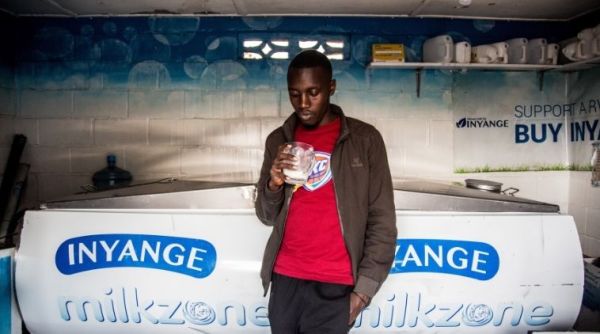
    “When you drink milk, you always have your head straight and your ideas right.” (Jacques Nkinzingabo/The New York Times)

    Some patrons drink it hot, others like it cold. Some — respecting an old custom of finishing your cup at once — chug it down quickly, while others sip it slowly while eating snacks like cakes, chapatis and bananas.

    However they take their glass, everyone comes to socialize and unwind. But first and foremost, they drink milk. Lots of it.

    “I come here when I want to relax, but also when I want to think about my future,” said Nshimyemukiza, who added that he drinks at least three liters of milk daily. “When you drink milk, you always have your head straight and your ideas right.”

    While milk bars have popped up everywhere over the last decade, the drink they sell has long been intrinsic to the country’s culture and history, as well as its modern identity and economy.

    Over the centuries, cows were a source of wealth and status — the most valuable gift to confer on a friend or a new family. Even royalty craved easy access to milk. During the Kingdom of Rwanda, which lasted for hundreds of years until the last king was deposed in 1961, cows’ milk was kept in wooden bottles with conical woven lids right behind the king’s thatched palace.

    Cows were considered so valuable they ended up in children’s names — Munganyinka (valuable as a cow) or Inyamibwa (beautiful cow) — as well as in traditional dances, where women raised their hands to emulate the giant-horned Ankole cows.

    In 1994, Rwanda was the scene of a genocide, during which an estimated 800,000 people were slaughtered within 100 days. The majority of those killed were ethnic Tutsis, historically herdsmen and rich in cattle.

    Cattle-keeping families, and their cows, were targeted by extremists from the Hutu ethnic group who were mostly farmers, said Dr. Maurice Mugabowagahunde, a history and anthropology researcher at the Rwanda Cultural Heritage Academy.

    As the country recovered from the genocide, Rwanda’s government looked to cows again as a way to expand the economy and fight malnutrition.

    In 2006, President Paul Kagame introduced the Girinka program, which aims to give every poor family one cow. The program has so far distributed over 380,000 cows nationwide, according to the Ministry of Agriculture and Animal Resources — with contributions coming from private companies, aid agencies and foreign leaders including Prime Minister Narendra Modi of India.

    The program (Girinka means “may you have a cow” in a local language) is one of the development projects that have garnered Kagame support nationwide even as he brooks no dissent and cracks down on rivals.

    As milk production increased in this landlocked nation, so did the number of people who moved to urban areas for education and employment. And so were born the milk bars, which allowed farmers to sell their surplus milk and let customers drink copious amounts of it to be reminded of home. Most milk bars are in Kigali, the country’s most-populous city, with 1.2 million people.

    Steven Muvunyi grew up with nine siblings in the Rubavu district in the country’s west. After moving to Kigali to attend university, he said he missed being in the countryside, milking cows and drinking milk without limits.

    “I come to the milk bars and I am overcome with nostalgia from my childhood,” he said one evening in late September, as he drank from a big mug of hot, fresh milk in downtown Kigali.

    As he sat at the bar, Muvunyi, 29, who works in Rwanda’s budding technology sector, showed photos of his 2-year-old son looking at him while he drank a glass of milk at his parents’ farm. He worried, he said, that children growing up in cities would not be as connected to the country’s dairy culture, given the easy access now to pasteurized milk at supermarkets.

    “I want to teach my children early the value of milk and cows,” he said.

    For all their appeal, the milk bars, and the dairy sector in general, have faced growing challenges in recent years.

    The coronavirus pandemic severely affected the industry, particularly as Rwanda instituted one of the most stringent lockdowns in Africa. As authorities mandated a night curfew, closed markets and banned movement between cities and districts, the economy took a hit, and Rwanda slumped into recession.
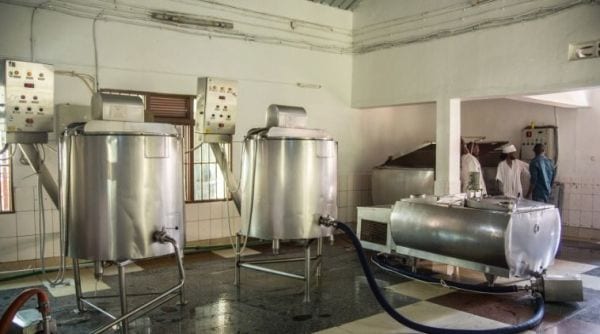
    Milk processing equipment at Zirakamwa Meza Dairy in Nyanza, Rwanda, Sept. 21, 2021. (Jacques Nkinzingabo/The New York Times)

    More than half of Rwanda’s small- and medium-size dairy businesses closed during the lockdown, according to the government. Three of the country’s five biggest milk processors were operating from 21% to 46% of their capacity.

    The restrictions were particularly hard on small, independent milk bars. In recent years, many smaller bars had closed as corporate chains consolidated their grip on the market.

    Climate change has also presented challenges. In recent years, recurring droughts have left thousands of people without food and cows lacking feed and water. Shortages of milk have surfaced nationwide.

    Adverse weather conditions over the past four months have also meant a rise in milk prices. On average, a liter of milk at the shops in Kigali has increased from 500 Rwandan francs (50 cents) to 700 francs (70 cents).

    For Illuminee Kayitesi, who owns a milk bar in the Nyamirambo neighborhood in Kigali, the lockdowns of the past year affected her ability not only to pay rent, but also to pay her employees and stay profitable enough for her to take care of her family. The recent milk shortages also meant she couldn’t keep the bar’s milk cooler full most days.

    While business has slowly picked up as more people get vaccinated and the country reopens, “it’s still not easy,” she said.

    But no matter the circumstances, Rwandans say the milk bar is here to stay.

    During the pandemic last year, Ngabo Alexis Karegeya started sharing images and videos on Twitter about the Rwandan attachment to cows and milk — drawing national attention. Karegeya graduated from university this year with a degree in business administration, but still fondly remembers his days tending cows as a boy. He tweeted a photo of himself in his graduation gown with the caption “certified cow-boy y’all.”

    “Rwandans love cows and they love milk,” said Karegeya, who owns five cows in the lush hills of his family’s home in western Rwanda and drinks three liters a day.

    “The milk bar brings us together,” he said. “And we will keep coming to the milk bar to drink more milk.”

  • Equity Group and Atlas Mara To Review Terms In Sh13.6 Billion Deal

    Equity Group and Atlas Mara To Review Terms In Sh13.6 Billion Deal

    Kenya-based Equity Group and Rwanda’s Atlas Mara will review the terms of their deal in which the Equity was to acquire from the London-listed firm four banks in Rwanda, Zambia, Tanzania and Mozambique.

    Acording to the initial plans, Atlas Mara was to be paid in the form of Equity shares amounting to a 6.72 percent stake with a current market value of Sh13.6 billion.

    However, yesterday’s announcement indicated that they had not signed a binding agreement for undisclosed reasons. The parties also disclosed that their continued negotiations will likely result in a change of the deal terms.

    “While there is no assurance that the potential transaction will be concluded on the terms previously announced, the parties continue to be engaged in discussions,” Atlas Mara said in a statement.

    The parties didn’t disclose the hurdle that has blocked them from reaching an agreemen in the transaction that was announced in April last year and since then Equity’s prospects have brightened with the recent removal of lending rate controls.

    Its share price has gained 32.5 percent since the deal was announcement to Sh54.2. The Atlas Mara banks, on the other hand, are making losses in aggregate.

    According to parties with the knowledge about the deal, handing out the same number of shares would have seen Equity pay more in the deal that was initially priced at Sh10.6 billion.

    For Atlas Mara, receiving Equity’s stock valued at the same Sh10.6 billion would have seen it take fewer shares because of a three-month market run-up.

    According to disclosure by the multinationals, these banking units have a return on equity (RoE) of approximately two percent. Atlas Mara in previous discussions agreed to reduce the value of the four subsidiaries by Sh13 billion to reflect their weaker earnings.

    Atlas Mara has also invested in Phone making industry and have since rolled out their first batch of the Rwanda made smartphones

  • Eight Kenyans Arrested In Rwanda Over Attempted Theft On Equity Bank

    Rwanda Investigation Bureau has nabbed an organized gang of eight Kenyans, Three Rwandese and one Ugandan over a cyber fraud attempt on Equity bank in Rwanda.

    RIB said that the gang was nabbed while in the process of hacking into the bank system to drain money from clients’ accounts.

    In September, Kenya insights published a series of well-informed and researched articles from the Chief editor of Kenya Insights highlighting back to back in-depth details of how and what 3 Kenyans are going through in Rwanda, the Rwandese Department of Justice has finally done the much-anticipated worry of  jailing the Kenyan entrepreneur and investor Charle Kinuthia two years in the prison over an alleged training scam in Rwanda.

    In Our recent articles that highlighted when internationally renowned motivational speaker and business strategist Dr. Charles Kinuthia aka Coach Ck touched down in Rwanda with his team for a Wealth Fitness Conference, he thought it was going to be an exceptional event like one of the many other successful events he’s held across the world, in twenty-seven countries.

    However, things would take an unexpected turn quickly, as it has. He and two of his employees, all Kenyans are still currently being held in inhumane conditions in Mageragere Prison, 30 km outside of Kigali, Rwanda. It has been verified that when Coach Ck first arrived at the prison, he was stripped of his clothes, beaten and forced to crawl in trenches full of sewer water and still continues to be mistreated while in custody.

    Kenyans are losing it and the fraudulent nature of a few crooks in the foreign nations has since seen innocent and law-abiding Kenyans in Rwanda and other States face equal treatment as the criminal minds. Also, foreign States are judging all Kenyans like cartels and fraudsters since almost if not all of our institutions and leadership structures are scandal-ridden and led by known fraudsters.

  • Rwanda Opens The First African Smartphone Manufacturing Factory

    Rwanda Opens The First African Smartphone Manufacturing Factory

    While Kenyans are seriously hoping that our government gets back to it’s sense and help  common mwanachi and make Kenyans proud again, Paul Kagame, even though an open dictator and killer of his opponents, he has launched the first of its kind African smartphone manufacturing plant in Kigali.

    Pan-African conglomerate Mara Group, has opened its first factory in Rwanda as the company hopes to pioneer a brand of African-made smartphones with their official first product, Mara Phone.

    Located in Kigali’s special economic zone, the factory employees over 200 people to manufacture high-tech smartphones for the local market and further afield. Right now, Paul Kagame has issued an order that the company employs 90% Rwandese and the rest of Africans can share the remaining percentage of the employment opportunities.

    With two models on sale for Sh15, 900 and Sh22, 900, the Mara Android phones are hoping to compete with Asian manufacturers like Tecno and Samsung who currently dominate Africa’s markets and not forgetting Apples iPhone that is also huge for prominent Africans.

    “We realised a few years ago that to create positive social impact on our continent and in emerging markets we need to have high quality and affordable smartphones. That’s when we came up with Mara Phones.” CEO Ashish Thakkar, said during it’s launch

    Smartphone penetration in Africa currently stands at around 66% which beats the global set bar of 60%. Africa is indeed the next face of smartphone world and market.

    At a considerably higher price, critics are skeptical the Mara Phone will make a dent in the local market.

    Yet thanks to partnerships with local banks and telecommunications firms, the Mara Group have created a finance model which allows users to pay for their phones over a period of two years. Yes, this is a genius move to say the least that every Kenyan would wish to have.

    Rwandan President Paul Kagame commended the drive towards affordable smartphones and underlined the need to boost the adoption of high-tech products in his country.

    “The smartphone is no longer a luxury item, it is rapidly becoming a requirement of everyday life,” he said.

    “That trend is bound to increase in the years to come as more and more services migrate to digital platforms. We want to enable many more Rwandans to use smartphones. The cost and quality is very important and the introduction of Mara Phones will put smartphone ownership within reach of more Rwandans.” Kagame added.

    The Mara Group has a long history in Rwanda as they enjoy a 20% stake in the pan-African banking group Atlas Mara, which was co-founded in 2013 by Thakkar and the former CEO of Barclays Bob Diamond.

    In 2015, the group acquired a majority share in the Banque Populaire du Rwanda. Atlas Mara is now scaling back its pan-African ambitions through a share swap with the rapidly expanding Kenyan lender, Equity Bank.

    Equity, the Nairobi-based  bank acquired 100% of Atlas Mara’s operations in Zambia, Mozambique and Tanzania along with 62% of the Banque Populaire du Rwanda.

    Thakkar described his new factory as “historic” due to its position as the first smartphone manufacturing plant on the continent.

    “In Africa, we don’t manufacture anything. We assemble in a few countries, but we don’t manufacture anything. We are the consumers but not the producers. When we first told people about Mara Phone they told us we were crazy and that it wasn’t possible. Our true belief in Africa, particularly Rwanda, is a dream come true. This is a historic moment which will help shift the narrative for Rwanda, Africa and the rest of the world.” said Thakkar.

    The Mara Group are set to launch their next Mara Phone factory in South Africa on the 17thof October.

    Where is Kenya? Where is our damn government? JKUAT tried launching laptops that flopped before even hitting the market. Kids laptops deals has also flopped on our nose. I mean my fellow Kenyans, is this what you people call a digital government?!

  • Injustice In Rwanda: A Kenyan, Dr. Charles Kinuthia Illegally Tried And Jailed For Two Years

    Injustice In Rwanda: A Kenyan, Dr. Charles Kinuthia Illegally Tried And Jailed For Two Years

    After a series of well-informed and researched articles from the Chief editor of Kenya Insights highlighting back to back in-depth details of how and what 3 Kenyans are going through in Rwanda, the Rwandese Department of Justice has finally done the much-anticipated worry of  jailing the Kenyan entrepreneur and investor Charle Kinuthia two years in the prison over an alleged training scam in Rwanda.

    In Our recent articles that highlighted when internationally renowned motivational speaker and business strategist Dr. Charles Kinuthia aka Coach Ck touched down in Rwanda with his team for a Wealth Fitness Conference, he thought it was going to be an exceptional event like one of the many other successful events he’s held across the world, in twenty-seven countries.

    However, things would take an unexpected turn quickly, as it has. He and two of his employees, all Kenyans are still currently being held in inhumane conditions in Mageragere Prison, 30 km outside of Kigali, Rwanda. It has been verified that when Coach Ck first arrived at the prison, he was stripped of his clothes, beaten and forced to crawl in trenches full of sewer water and still continues to be mistreated while in custody.

    In yet another article by Kenya Insights, It is probably why the Rwandan controlled media” took to our local media to publish disparaging articles and supposedly hired bloggers to discrediCoach CK with unsubstantiated gossip and baseless “con artist” accusationAll which now appears to have been a smokescreen to conceal or distractfrom the real story of what is really taking place. A move that their courts have used to crucify the innocent Kenyan who was judged without a legal team to defend himself or whatever transpired in the foreign land. 

    “A court in Kigali Rwanda has given two years of prison to a Kenyan citizen, Charles Kinuthia, for conning thousands of youth in a fake training in Kigali,” posted BBC journalist, Roncliffe Odit, on Twitter.

    According to Rwandese government, Kinuthia was found culpable after thousands of Rwandans lost at least Ksh500 each that they had paid to attend the wealth conference which was purportedly set for June 25. Crowds thronged the advertised venue for the ‘conference’ only to be met with the loudest rejection message that it was a well-orchestrated con game. The botched event, dubbed Money Wealth and Business Conference, was to be held at the Radisson Blu Hotel in the same country.


    Image result for DR CHARLES KINUTHIA

    The advert of the conference

    Kinuthia was, billed to be the main speaker, was reported to have arrived at the event shell-shocked like the rest. Attendants who bought tickets for the event claimed that they were promised over Ksh20,000 each after the contest.

    “I sold my harvest and borrowed some from my neighbours, promising them I will come back rich. What am I going to tell them?” Mimi Uwahiyamana questioned.” One of the witnesses told the Court. 

    Image result for DR CHARLES KINUTHIA

    According to BBC, the venue was full of hopeful participants but the organizers never showed up. It took the intervention of Rwanda’s Youth Minister, Rose Mary Mbabazi, to calm the angry youths.

    But Kenya Insights had written about what exactly happened that day and what transpired to what looks like a State orchestrated sabotage that has landed innocent Kenyans in not only brutally mind torturing Rwandese police cells but also as from now, face and serve a two year jail term for a mistake they didn’t rather actually never happened as the Rwandese authorities say.

    Dr. Kinuthia is a high-flying businessman handling tax, accounting and wealth generation matters. He goes by the stage name Coach CK. CK also owns several companies across the world and has been featured in local newspapers and on TV as an entrepreneur.