Russian officials say 48 people were killed when an Angara Airlines plane went down in a dense forest in the far-eastern Amur region.
The Antonov An-24 plane, carrying 42 passengers and six crew, had left Blagoveshchensk close to the Chinese border and vanished from radar screens as it approached Tynda airport, officials said.
A Russian civil aviation helicopter then spotted burning fuselage from the plane on a remote hillside about 16km (10 miles) from Tynda.
Amur’s regional governor Vasily Orlov said five children were among those on board and declared three days of mourning.
The remote, swampy nature of the area meant that rescuers took about an hour to reach the scene.
Preliminary inquiries are looking at either pilot error in poor weather conditions or technical malfunction, according to emergency officials.
The An-24 plane had been on the final leg of a route from Khabarovsk in the far south-east of Russia.
There was low cloud at the time of the crash, and the plane had already made a failed attempt to land at the airport, emergency services said. Radar contact was lost while the crew was preparing for a second approach, they added.
Angara Airlines is based in the Irkutsk region of Siberia and the crew all came from the Irkutsk region. A number of the passengers were working for Russian Railways in the far east.
The Antonov 24 plane was almost 50 years old and originally designed in Kyiv during the Soviet era, although this model has not been used in Ukraine for several years.
Officials said the plane had passed a recent technical inspection, but the civil aviation authority told news agencies it had been involved in four incidents since 2018.
Seven years ago its left wing had been damaged when the plane overran a runway and hit a lightning mast, Tass news agency said.
Other An-24 planes have been involved in fatal crashes, too.
An An-24RV veered off the runway as it landed at Nizhneangarsk Airport in July 2019. Two members of the flight crew were killed.
In 2011, another Angara An-24 crashed into the Ob river in Siberia, killing seven passengers.
After the 2011 crash, then-president Dmitry Medvedev said An-24 planes that were still in service in Russia should be grounded.
Kwale mother’s desperate plea for international intervention as she battles for custody of her one-year-old daughter left behind in Moscow
Faith Jerop sits in her modest home in Diani, Kwale County, staring at photos on her phone of her one-year-old daughter Maya Andevna Sinitsa.
The images are all she has left of the child who remains thousands of miles away in Russia, allegedly held by her Russian ex-partner Andrey Sinista against the mother’s will.
The 23-year-old woman’s ordeal began as what she thought would be a family reunion but has become an international custody nightmare that has drawn attention from human rights advocates and diplomatic circles.
A Journey Built on Deception
Jerop’s relationship with the 41-year-old Russian national began in 2023 when they met at a supermarket in Diani, where she worked.
What started as a whirlwind romance quickly turned complicated when she became pregnant within three months of dating.
“My partner wanted me to terminate the pregnancy, but my mother strongly opposed that idea,” Jerop recalled during an interview at her home.
“‘This is your child and your responsibility, no matter what the man does,’ she told me. Those words gave me strength.”
The Russian man, Andrey Sinista, initially left for Argentina alone when passport processing delays prevented Jerop from traveling.
He returned after Maya’s birth and stayed for six months, during which he helped obtain the child’s birth certificate and applied for passports for both mother and daughter.
However, his secretive behavior about his occupation and long stay raised suspicions among Jerop’s family members, who found his insistence on working online jobs unconvincing.
The Moscow Trap
In April 2025, when Maya turned one, her father proposed a trip to Moscow, claiming his ailing father wanted to meet their daughter and leave her an inheritance before his death.
Despite her mother’s warnings and her own misgivings, Jerop agreed to the two-month visit.
“He told me that his father was on his deathbed and wanted to give our daughter his inheritance. This made the trip feel urgent, and he insisted that if we delayed, the old man might die before meeting her,” Jerop explained.
The reality in Moscow was starkly different from what had been promised.
Instead of meeting family members, they went directly to a small apartment where Jerop was relegated to the living room while her partner occupied the bedroom.
“I thought we were going to his parents’ house, but we went to an apartment instead. He told me to sleep in the living room while he took the bedroom. That’s when I began to feel that something was very wrong,” she said.
Custody Battle Begins
The situation deteriorated rapidly when her partner left with Maya for a weekend, claiming to visit his mother.
Upon his return, he became cold and violent, ultimately returning with a lawyer who declared Jerop mentally unstable and a threat to the child’s safety.
“I couldn’t speak Russian. I felt helpless and trapped. I didn’t have access to my baby. I was afraid to tell my mother that her worst fears were coming true,” Jerop recalled, her voice breaking.
Unable to communicate effectively in Russian and with limited legal options, Jerop turned to social media for help.
Using WhatsApp and later TikTok through a VPN, she began broadcasting live daily at 7 PM, pleading for assistance from her followers.
Her social media campaign caught the attention of Kenyans living in Russia and eventually reached the Kenyan Embassy in Moscow.
The Russian Embassy in Kenya has confirmed that Jerop visited its Consular Section on June 5 and June 10, 2025, seeking legal assistance concerning her daughter.
When embassy officials contacted her partner about Jerop’s situation, he allegedly told them she had tuberculosis, prompting them to arrange for her evacuation to Kenya.
Three days later, she was placed in a safe house and eventually flown back to Kenya, leaving Maya behind with her father.
Legal and Financial Challenges
Now back in Kenya, Jerop faces the daunting task of pursuing custody through Russian courts.
She estimates the legal process could cost up to Sh2 million and has begun raising funds online for the battle ahead.
Recent reports indicate she may need up to Sh10 million to successfully navigate the complex international custody case.
“Every day, I feel like something is missing inside me. If Maya were dead, I would mourn her. But she is alive and I have no idea how she is,” Jerop said, fighting back tears.
International Law Complexities
Under Russian law, both parents have joint custody unless a domestic court decides otherwise. Russian courts have the authority to handle child custody issues for foreign nationals if certain conditions are met, such as the defendant parent having a residency permit in Russia.
The case highlights the challenges faced by Kenyan nationals in international custody disputes, particularly when children are involved.
Kenya and Russia maintain diplomatic relations, but complex legal frameworks governing child custody across borders often leave parents in vulnerable positions.
Family’s Desperate Plea
Jerop’s mother, Jennifer Ekitela, who runs a small shop in the Mvindeni area of Diani, says she regrets allowing her daughter to travel but supports her fight for custody.
“I warned her because I knew something wasn’t right. Now, all I want is to see my granddaughter again,” she said.
The family is calling on Kenya’s Ministry of Foreign Affairs and international human rights organizations to intervene in the case.
They argue that the circumstances under which Maya was separated from her mother constitute a form of international child abduction.
This case sheds light on the vulnerability of young Kenyan women in international relationships and the complex legal terrain of cross-border custody disputes.
It also raises questions about the support systems available to Kenyan nationals facing legal challenges abroad.
Legal experts note that cases like Jerop’s are becoming increasingly common as globalization leads to more international relationships, but the legal frameworks for resolving such disputes remain inadequate.
Current Status
Jerop continues to seek shared custody of her daughter through legal channels, while also facing what she describes as ongoing intimidation from her former partner.
“I’ve healed; I’m strong. I’m ready to fight for my daughter. She is the only thing that matters to me now,” she declared.
As the case develops, it serves as a stark reminder of the need for stronger international cooperation on child custody matters and better protection for parents caught in cross-border legal disputes.
The Ministry of Foreign Affairs has not yet issued a public statement on the case, but diplomatic sources indicate that discussions with Russian authorities are ongoing.
For now, Faith Jerop waits, armed with determination and the support of a growing online community, as she fights to bring her daughter home from thousands of miles away.
If you would like to support Faith Jerop’s legal battle to reunite with her daughter, fundraising efforts are ongoing through various online platforms. Those with information about similar cases or legal expertise in international child custody are encouraged to reach out through established legal channels.
US President Donald Trump has said he is “not happy” with his Russian counterpart Vladimir Putin, following Moscow’s largest aerial attack yet on Ukraine.
In a rare rebuke, Trump said: “What the hell happened to him? He’s killing a lot of people.” He later called Putin “absolutely crazy”.
Ukrainian President Volodymyr Zelensky earlier said Washington’s “silence” over recent Russian attacks was encouraging Putin, urging “strong pressure” – including tougher sanctions – on Moscow.
Air sirens warning of incoming drones and missiles sounded again in many regions of Ukraine early on Monday.
At least three people, including a child, were injured in the north-eastern city of Kharkiv, Mayor Ihor Terekhov said.
Speaking to reporters in New Jersey late on Sunday, Trump said of Putin: “I’ve known him a long time, always gotten along with him, but he’s sending rockets into cities and killing people, and I don’t like it at all.”
Asked about whether he was considering increasing US sanctions on Russia, Trump replied: “Absolutely.” The US president has repeatedly threatened to do this before – but is yet to implement any restrictions against Moscow.
Shortly afterwards, Trump wrote in a post on Truth Social that Putin “has gone absolutely crazy”.
“I’ve always said that he wants all of Ukraine, not just a piece of it, and maybe that’s proving to be right, but if he does, it will lead to the downfall of Russia!”
But the US president also had strong words for Zelensky, saying that he “is doing his country no favours by talking the way he does”.
“Everything out of his mouth causes problems, I don’t like it, and it better stop,” Trump wrote of Zelensky.
Emergency crews work at the site where private houses were destroyed in a Russian strike in the Kyiv region, Ukraine. Photo: 25 May 2025
Despite Kyiv’s European allies preparing further sanctions for Russia, the US has said it will either continue trying to broker these peace talks, or “walk away” if progress does not follow.
Last week, Trump and Putin had a two-hour phone call to discuss a US-proposed ceasefire deal to halt the fighting.
The US president said he believed the call had gone “very well”, adding that Russia and Ukraine would “immediately start” negotiations toward a ceasefire and “an end to the war”.
Ukraine has publicly agreed to a 30-day ceasefire.
Putin has only said Russia will work with Ukraine to craft a “memorandum” on a “possible future peace” – a move described by Kyiv and its European allies as delaying tactics.
The first direct Ukrainian-Russian talks since 2022 were held on 16 May in Istanbul, Turkey.
Aside from a major prisoner of war swap last week, there was little or no progress on bringing a pausing in fighting closer.
Russia currently controls about 20% of Ukrainian territory. This includes Crimea – Ukraine’s southern peninsula annexed by Moscow in 2014.
Russia was responsible for the downing of the Malaysia Airlines flight, MH17, over eastern Ukraine in July 2014, the United Nations aviation agency has ruled.
All 298 people on board the passenger plane were killed when it was shot down by a Russian-made missile.
The Kremlin has always denied any responsibility for the air disaster.
On Monday, the UN’s Council of the International Civil Aviation Organization (ICAO) voted that the Russian Federation failed to uphold its obligations under international air law, which requires states to “refrain from resorting to the use of weapons against civil aircraft in flight”.
Malaysia Airlines flight MH17 was travelling from Amsterdam to Kuala Lumpur when it was struck down over the Donbas region of Ukraine, during a conflict between pro-Russian rebels and Ukrainian forces.
The majority of passengers and crew, 196 people, were from the Netherlands.
There were also 38 people from Australia, 10 British citizens, as well as Belgian and Malaysian nationals on board.
The case to the UN was brought in 2022 by the Australian and Dutch governments, who have both welcomed the ICAO’s ruling.
“We call upon Russia to finally face up to its responsibility for this horrific act of violence and make reparations for its egregious conduct”, said Australia’s foreign minister Penny Wong in a statement.
The Dutch foreign minister, Caspar Veldkamp, said it marked an “important step towards establishing the truth and achieving justice and accountability”.
It sends a clear messaged to the international community, he added: “states cannot violate international law with impunity” .
In 2022, a Dutch court ruled that a Russian-controlled group had downed the plane and two Russians and a pro-Moscow Ukrainian national were convicted of murder in absentia.
The trio were all sentenced to life in prison however, as they were not extradited, they have not served time in jail.
The government of Russia has announced that Kenyans can now visit the country with a single electronic visa.
In a statement, the Russian Embassy in Kenya said Kenya, Eswatini and Zimbabwe have joined the list of countries that can use single electronic visas to visit Moscow.
“The government of Russia has expanded the list of countries whose citizens can visit the Russian Federation with a single electronic visa,” the Russian Embassy said in a statement on X.
“The list now includes the following African countries: Kenya, Eswatini and Zimbabwe.”
The single electronic visa gives the right to a single entry to Russia and stay on a guest or business visit as a tourist.
It also grants the privilege to travellers visiting to participate in scientific, cultural socio-political, economic and sporting events and to carry out relevant connections and contacts.
The validity period of a single electronic visa is 60 days from the date of its registration with the permitted period of stay of a foreign citizen in the Russian Federation no more than 16 days from the date of entry into the territory.
”An e-Visa is limited to 16 days only and is valid for a single entry to Russia for private, business or tourist purposes, as well as for scientific, cultural, socio-political, economic, sporting events and to establish relevant relations and contacts. An issued e-Visa can be used for entry within 60 days, but the duration of stay shall still not exceed 16 days from the day of arrival to Russia.” Reads the information on the embassy’s website.
Unified electronic visas are valid for entry and exit from the Russian Federation by air, road, rail and water transport.
It also grants entry and exit without the use of vehicles, only through checkpoints across the state border of the Russian Federation, the list of which was approved by order of the Government of the Russian Federation.
An electronic visa is issued on the basis of an application from a foreign citizen, filled out electronically on the specialised website of the Russian Ministry of Foreign Affairs at https://electronic-visa.kdmid.ru or through a mobile application posted for download on the specified website
A single electronic visa is paid for and done on the specialised website of the Russian Ministry of Foreign Affairs.
The application for a single electronic visa must be submitted not later than four calendar days before the expected date of entry into the Russian Federation.
A digital photograph of the person and a scan of the page with the data of the foreign citizen’s machine-readable passport is attached to the application.
No other documents are required to obtain a single e-visa.
BBC—On Thursday, the Ukrainian city of Dnipro was hit by a Russian air strike which eyewitnesses described as unusual, triggering explosions that went on for three hours.
The attack included a strike by a missile so powerful that in the aftermath Ukrainian officials said it bore the characteristics of an intercontinental ballistic missile (ICBM).
Western officials were quick to deny this, saying that such a strike would have triggered a nuclear alert in the US.
Hours after the strike, Russian President Vladimir Putin, in a TV address, said that Russia had launched a “new conventional intermediate-range” missile with the codename Oreshnik, meaning hazel tree in Russian.
Putin said that the weapon travelled at a speed of Mach 10, or 2.5-3km per second (10 times the speed of sound), adding that “there are currently no ways of counteracting this weapon”.
He said that a major military-industrial site in Dnipro, used to manufacture missiles and other armaments, had been hit. He described the attack as a test which was “successful” because the “target was reached”.
Speaking a day later to senior defence officials, he said tests of the missile would continue, “including in combat conditions”.
Putin’s description of the weapon notwithstanding, there seems to be no clear consensus about what it actually is.
Ukrainian military intelligence maintains that the missile is a new type of ICBM known as Kedr (cedar). They say it was travelling at Mach 11 and took 15 minutes to arrive from the launch site, more than 1,000km (621,370 miles) away in the Astrakhan region of Russia.
They said the missile was equipped with six warheads, each with six sub-munitions.
This assumption is backed up by BBC Verify’s examination of video footage of the strike. Most of it is blurry or of poor quality, but it clearly shows six flashes against the night sky, each comprised of a cluster of six individual projectiles.
The location that was hit is an industrial area to the southwest of Dnipro city.
Damage caused by Thursday’s attack on Dnipro, carried out by the Oreshnik in combination with other missiles
Why is speed important?
If Putin’s description is correct, the missile is at the upper edge of the definition of hypersonic, and few things can achieve this.
Speed is important because the faster a missile travels, the quicker it gets to target. The quicker it gets to target, the less time a defending military has to react.
A ballistic missile generally gets to target by following an arcing path up into the atmosphere and a similar one down towards its destination.
But as it descends, it picks up speed and gains kinetic energy, and more kinetic energy gives it more options. This allows it to manoeuvre down towards the target – by performing some kind of defending wriggle – that makes interception by surface-to-air missile systems (such as Ukraine’s US-built Patriot defence missile system) particularly difficult.
This is not new for militaries that have to defend against such threats of course, but the greater the speed, the harder it becomes.
That is why Putin has likely placed emphasis on its speed in announcing this new type of missile.
Some 80% of the missiles fired by Russia have been intercepted by Ukraine, an extraordinary figure. But these faster speeds of ballistic missiles are intended to try to bring that percentage down.
What is the new missile’s range?
Russian military expert Ilya Kramnik told the newspaper Izvestiya it is likely that the new missile, whose development has been classified until now, is at the upper end of medium-range missiles.
‘It is likely that we are dealing with a new generation of Russian intermediate-range missiles [with a range of] 2,500-3,000km [1,550-1,860 miles] and potentially extending to 5,000km [3,100 miles], but not intercontinental,” he says.
This could put almost the whole of Europe within range, but not the US.
“It is obviously equipped with a separating warhead with individual guidance units,” Kramnik added.
He suggested that it could be a reduced version of the Yars-M missile complex, which is an ICBM.
Russia was reported to have started production of a new version of this missile complex last year which included much more mobile independent warheads.
Another expert, Dmitry Kornev, told the paper the Oreshnik could have been created on the basis of the shorter-range Iskander missiles – already commonly used on Ukraine – but with a new-generation engine.
An Iskander with an enlarged engine was used at the Kapustin Yar test site in southern Russia last spring, he said, adding that this may well have been the Oreshnik. Thursday’s missile was fired into Ukraine from the same site.
How effective could it be?
Military analyst Vladislav Shurygin told Izvestiya that the Oreshnik was capable of overcoming any existing modern missile defence systems.
It could also destroy well-protected bunkers at great depths without using a nuclear warhead, he said, although there is no evidence of underground facilities being destroyed at the Dnipro plant.
Another Russian analyst, Igor Korotchenko, told Tass news agency the missile had multiple independently guided warheads, adding that the “practically simultaneous arrival of the warheads at the target” was extremely effective.
Justin Crump, CEO and founder of the risk advisory company Sibylline, told BBC Verify that the missile had the capacity to seriously challenge Ukraine’s air defences.
“Russia’s short range ballistic missiles have been one of the more potent threats to Ukraine in this conflict,” he said. “Faster, more advanced systems would increase that an order of magnitude.”
(Reuters) – The U.S. embassy in Kyiv has received information of a potential significant air attack on Wednesday and will be closed, the U.S. Department of State Consular Affairs said in a statement.
“Out of an abundance of caution, the embassy will be closed, and embassy employees are being instructed to shelter in place,” the department said in a statement published on the website of the U.S. embassy in Kyiv.
“The U.S. Embassy recommends U.S. citizens be prepared to immediately shelter in the event an air alert is announced.”
The warning comes a day after Ukraine used U.S. ATACMS missiles to strike Russian territory, taking advantage of newly granted permission from the outgoing administration of U.S. President Joe Biden on the war’s 1,000th day.
Russia had been warning the West for months that if Washington allowed Ukraine to fire U.S., British and French missiles deep into Russia, Moscow would consider those NATO members to be directly involved in the war in Ukraine.
Russian President Vladimir Putin said in October that Moscow will respond to Ukraine’s strikes with U.S.-made weapons deep into Russia.
On Tuesday, Putin lowered the threshold for a nuclear strike in response to a broader range of conventional attacks, with nuclear risks rising amid the highest tensions between Russia and West in more than half a century.
Russian military personnel have entered an air base in Niger that is hosting U.S. troops, following a decision by Niger’s junta to expel U.S. forces from the country, Reuters reports.
The military officers ruling the West African nation have told the U.S. to withdraw its nearly 1,000 military personnel from the country, which until a coup last year had been a key partner for Washington’s fight against insurgents who have killed thousands of people and displaced millions more.
According to Reuters, a senior U.S. defense official said Russian forces were not mingling with U.S. troops but were using a separate hanger at Airbase 101, next to Diori Hamani International Airport in Niamey, Niger’s capital.
The move by Russia’s military puts U.S. and Russian troops in close proximity at a time when the nations’ military and diplomatic rivalry is increasingly acrimonious over the conflict in Ukraine.
It also raises questions about the fate of U.S. installations in the country following a withdrawal. The situation is not great but in the short-term manageable, the official said.
The U.S. and its allies have been forced to move troops out of a number of African countries following coups that brought to power groups eager to distance themselves from Western governments.
In addition to the impending departure from Niger, U.S. troops have also left Chad in recent days, while French forces have been kicked out of Mali and Burkina Faso.
Russia is seeking to strengthen relations with African nations, pitching Moscow as a friendly country with no colonial baggage in the continent.
Russian President Vladimir Putin pledged on Tuesday “to reach” those who “ordered” the March 22 terrorist attack at the concert hall in Moscow region.
Speaking at a meeting with the Interior Ministry Board in Moscow, Putin emphasized the importance of establishment of “all the links in the chain,” including “the ultimate criminal beneficiaries of this atrocity.”
“There is no doubt we will reach them,” he stressed.
According to the Russian president, the organizers and perpetrators of the terrorist attack pursued the goal of dividing the Russian society, “sewing discord and panic, strife and hatred.” “We must not let them do that,” he stressed.
Putin said actions of all services and commercial organizations responsible for the Crocus City Hall’s security will be analyzed and assessed.
“We paid a very high price. And the whole analysis of the situation should be extremely objective and professional,” he said.
At least 144 people were killed and more than 550 others injured when gunmen opened fire at the Crocus City Hall in Krasnogorsk, Moscow Oblast. Russia has charged four people for being directly involved in the attack.
Russian President Vladimir Putin said a change of president in the US will not change the attitude of their elites toward his country.
“You asked me just now: will another leader come and change something? It’s not about the leader’s personality—it’s about the mood of the elites,” Putin said during an interview with former Fox News host Tucker Carlson in Moscow that aired late Thursday,
Stressing that defeating Russia on the battlefield is “impossible,” Putin said he has nothing to talk about with US President Joe Biden due to Washington’s supply of weapons to Ukraine and that the last time he spoke with Biden was prior to the start of the Russia-Ukraine war.
“By the way, I told him then — I won’t go into details, I never do this — but I told him then: I believe that you are making a huge mistake of historical proportions supporting everything that is happening there in Ukraine, pushing Russia away,” he said.
Putin said that Russia is ready to resolve the issue surrounding the detention of Wall Street Journal reporter Evan Gershkovich but there are “certain conditions” being discussed through “partner channels between the intelligence services.”
“It seems to me that this can be agreed upon,” he said.
He also said that what Gershkovich did while in Russia was “espionage” because he was found to have “received secret information on a secret basis” and that he was caught “red-handed.”
Gershkovich, a US citizen who worked as a reporter at the Journal’s Moscow bureau, was arrested by the Russian Federal Security Service in the city of Yekaterinburg in March last year on espionage charges.
Russia, Ukraine will come to an agreement ‘sooner or later’
Putin also commented on the situation in Ukraine, saying that Moscow and Kyiv will come to an agreement “sooner or later,” reiterating that Russia “has never refused negotiations.”
“Sooner or later, we will come to an agreement anyway. And you know what? It may even sound strange in today’s situation, but relations between the peoples will be restored anyway. It will take a lot of time, but they will be restored,” he said.
Saying that what is happening on the front lines between Russian and Ukrainian forces is, to some extent, an “element of civil war,” Putin noted that everyone in the West thinks the fighting in Ukraine has forever pulled one part of the Russian people apart from another, but “reunification will happen.”
Putin also defined Ukraine as a “satellite” of the US and an “artificial state” created by the Soviet Union, saying Ukraine’s leadership refused to negotiate with Russia based on “instructions from Washington” and that Ukrainian President Volodymyr Zelenskyy legally prohibited himself from talking with Russia.
“He signed a decree prohibiting everyone from negotiating with Russia. But how will we negotiate if he forbade himself and forbade everyone?” he said.
Putin went on to say that the US needs to stop the supply of weapons to Ukraine if it wants to stop the conflict, adding that this will “end everything within a few weeks.”
He stressed that Moscow has no territorial claims to Poland, Latvia or any other country while not ruling out a reaction to a possible attack launched by Warsaw.
Bloomberg: Russia’s Wagner Group has played a central role in a campaign of killings, torture and rape in the Central African Republic and has driven civilians away from areas where its affiliated companies have been awarded mining rights, US nonprofit the Sentry said in a report.
Wagner, which had close ties to the Kremlin until last weekend’s short-lived rebellion led by the group’s founder Yevgeny Prigozhin, was hired by CAR President Faustin-Archange Touadéra in 2018 to help fend off rebels, according to the Sentry. It’s one of several African countries where Wagner has established a presence in recent years, offering its services often in return for mineral resources, as a way to indirectly bolster the Kremlin’s geopolitical reach, according to the Sentry and the US Treasury.
The Treasury has described Wagner’s operations in Africa as “an interplay between Russia’s paramilitary operations, support for preserving authoritarian regimes and exploitation of natural resources.”
Wagner’s activities have drawn increased scrutiny since the Russian invasion of Ukraine, with the US accusing it of exacerbating instability in some African nations and using them to run weapons to the war. It remains unclear what Wagner’s game plan in Africa will be following Prigozhin’s insurrection that ended abruptly with a murky deal that allowed the Wagner leader and his troops to leave seemingly without consequences.
‘Killing, Torture’
“Wagner, Touadéra, and his inner circle have perpetrated widespread, systematic, and well-planned campaigns of mass killing, torture, and rape,” the Sentry, which was set up in 2016 to probe the links between conflict and money in Africa, said in the report published on Tuesday.
Wagner did not respond to requests for comment. Touadéra’s senior adviser, Fidele Gouandjika, confirmed Wagner’s presence in CAR but told Bloomberg it was not involved in any military offensives or torture.
The Sentry cited interviews with more than 45 people including 11 members of CAR’s armed forces, militiamen, documents and satellite images.
“In CAR, Wagner has perfected a blueprint for state capture, supporting a criminalized state hijacked by the Central African president and his inner circle, amassing military power, securing access to and plundering precious minerals,” the Sentry said.
The Sentry was co-founded in 2016 by the actor George Clooney and John Prendergast, a human rights activist who has worked for the US government. Its funders include the Carnegie Foundation of New York, The Ford Foundation and a fund sponsored by the Rockefeller Philanthropy Advisors Inc.
Russia “built a monster for geostrategic expansion but also for economic gain,” said Nathalia Dukhan, a senior investigator for the Sentry, in an interview. “It’s very likely that this monster will evolve and will survive.”
The report documented a number of massacres including the killing of ethnic Fulani in a series of attacks in the village of Boyo between Dec. 6 and 13, 2021, which the United Nations Office of the High Commissioner for Human Rights said were perpetrated as punishment for local Muslims assumed to support the rebels. Participants in the attack told the Sentry that it was orchestrated by Wagner and they were told to kill all the men.
The Boyo attacks were replicated elsewhere at diamond and gold mining sites where Wagner-affiliated companies operated, according to the Sentry.
Wagner fighters took part in the attacks and gave the orders, people interviewed by the Sentry said. They also trained the CAR military and affiliated militia on how to cut and strangle rebels and “burn people alive.”
Gouandjika denied that government forces and Wagner had carried out the attacks in Boyo, blaming it instead on rebel groups fighting each other.
‘No Prisoners’
“The Russian soldiers that are called Wagner in our country are never on the offensive. They don’t attack,” he said.
Gouandjika also denied that the armed forces use torture or had been trained in such techniques, but confirmed the army’s policy was to take “no prisoners” in its fight against what he described as “bandits and terrorists.”
He confirmed that Russia is supplying his country with weapons, specifically tanks.
“We have a defense agreement with one of the biggest nuclear powers in the world,” he said.
According to a report by BBC, the Russian Parliament has passed new legislation for electronics that run apps to have pre-installed Russian software.
According to new the bill, electronics such as smartphones, computers, and smart TVs must be sold with locally-made Russian software pre-installed. This means apart from the first-party software, the devices should have Russian alternatives pre-installed in order to qualify for their sale to avoid being banned in the country.
The new law will be effective from July 2020. This might lead to a ban on not only Apple iPhones but also other products with foreign software. Inside the Russian parliament Photo|Al Jazeera
The European Union has a similar law which has made Android OEMs to let users select their choice of apps while setting up the device. In this case, Apple, Samsung, and other major electronics manufacturers may choose not to sell their devices in the Russian Federation instead of having to install varied software.
As the Kremlin prepares to roll out the list of every gadget that will need to be updated, it is not physically possible to install Russian-made software on all devices. A move the Federal Government says will attract manufacturers from the Russian market.
“When we buy complex electronic devices, they already have individual applications, mostly Western ones, pre-installed on them. Naturally, when a person sees them… they might think that there are no domestic alternatives available. And if alongside pre-installed applications, we will also offer the Russian ones to users, then they will have a right to choose.” Oleg Nikolayev, one of the co-authors of the legislation said.
According to the Association of Trading Companies and Manufacturers of Electrical Household and Computer Equipment (RATEK), it is not possible for many worldwide companies to install Russian-made software which means they will be forced to exit the market.
Apple’s iOS operating system is a closed system, it isn’t likely that the iPhone would be offered with unknown Russian software pre-loaded. Russia has slapped the smartphone giants off their markets.
Statcounter data report released early last month indicates that Samsung has the largest smartphone market share in Russia with 22.04 percent. China’s Huawei has a 15.99 percent market dominance then Apple’s iPhone with a market share of 15.83 percent.
This is coming at a time when the Kremlin had passed another controversial law. Two weeks ago, they legislated an Internet Law which enabled officials with the power to restrict internet traffic creating an internet firewall like the one in China.
President Kenyatta has been away for almost a week on official duties and according to local media, the head of state hired a Dubai-based Airbus A318-112 (CJ) Elite A6-CAS as his air transport.
According to Information in the CAS website, the private and customized jet is suited with three presidential spacious cabins with sliding partition doors for total privacy. The jet also has a VIP lounge, private office, luxurious VIP lavatory, and high-speed internet.
According to Sunday Nation report, the luxurious private jet hired for President Kenyatta during his recent foreign tour to Japan and Russia was charging Sh1.5Million per hour, meaning that taxpayers were coughing out Sh36M per day.
The government has not released details of the actual amount the head of State and his delegation splashed to hire the plane and the Presidential accomodation for their 5 days long trip.
President Uhuru and his delegation first flew to Japan from Mombasa on Sunday. The President had been scheduled to attended the Enthronement of Emperor Naruhito, who formally commemorated his ascension to the throne in a decorated ceremony that included a series of traditional rituals inside the imperial palace in Tokyo.
Sunday Nation reported that the Private Jet was still parked at the Presidential pavilion at Jomo Kenyatta International Airport (JKIA) on Saturday, a day after it jetted in the President. The President and his delegation returned to the country on Friday at 8:59 pm.
From its website, CAS ststes that a normal Airbus A318-112 carries up to 200 passengers but the customized version, like the one the president hired, only accommodate 19 passengers.
Here are the interior picsof the jet courtesy of flikr and RMS.
Russian President Vladimir Putin has today held a conference with all African leaders in what is dubbed as Russia-Africa summit. Putin and AU’s Chair, Egypt President Abdel Fattah el-Sisi are the brains behind the event held in the coastal resort city of Sochi, Russia.
“This is the first event of this level in the history of Russian-African relations, with the heads of all states of the African continent invited, as well as leaders of major sub-regional associations and organizations”, the statement said.
Kenyan President Uhuru Kenyatta is also in Russia for the same meeting as according to the State House, He will have a bilateral talk with Russian President Putin.
Putin led Moscow government is implementing the debt-for-development initiative, which is said to ease Africa’s liability burden. Moreover, Russia has written off well over Sh2 Trillion debt post the Soviet Union.
Speaking before the Russia-Africa Forum that all African leaders have attended in Sochi, Putin elucidated that it is fundamental that Russia- Africa co-operations start on a clean page.
“Let me point out that in the post-Soviet period, Russia canceled $20 billion of African countries’ debts to the Soviet Union. This was both an act of generosity and a pragmatic step because many of the African states were struggling to service those debts,” Putin said.
The debts write-offs is linked to Russia’s arms deals with African Countries. For instance, all the debt written-off relates closely to Moscow’s plan to expand Russian Military tech co-operation.
https://youtu.be/0VrMmfaxd6U
Ethiopia, Madagascar, South Africa, Tanzania, Egypt, Nigeria are said to have already signed and benefited from Russian Kremlin arms deal and military technology.
Picture courtesy.
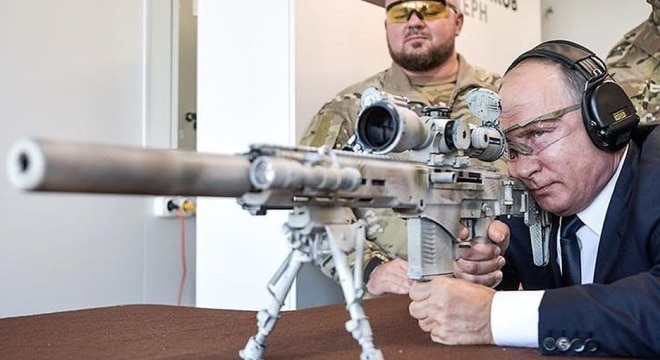
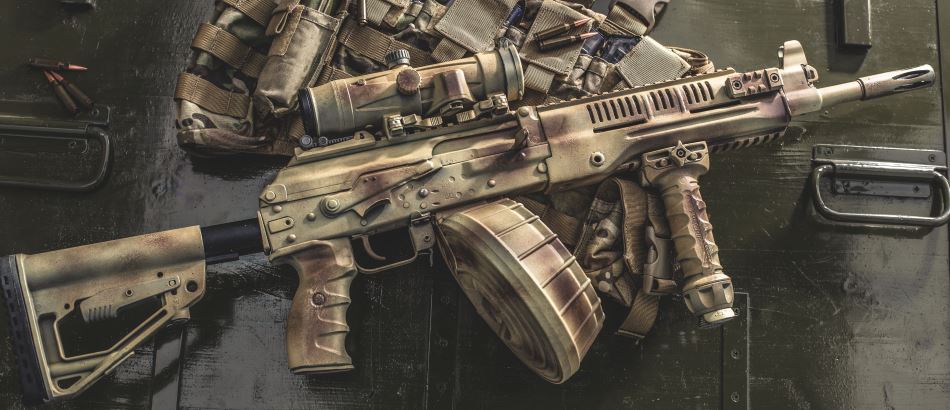
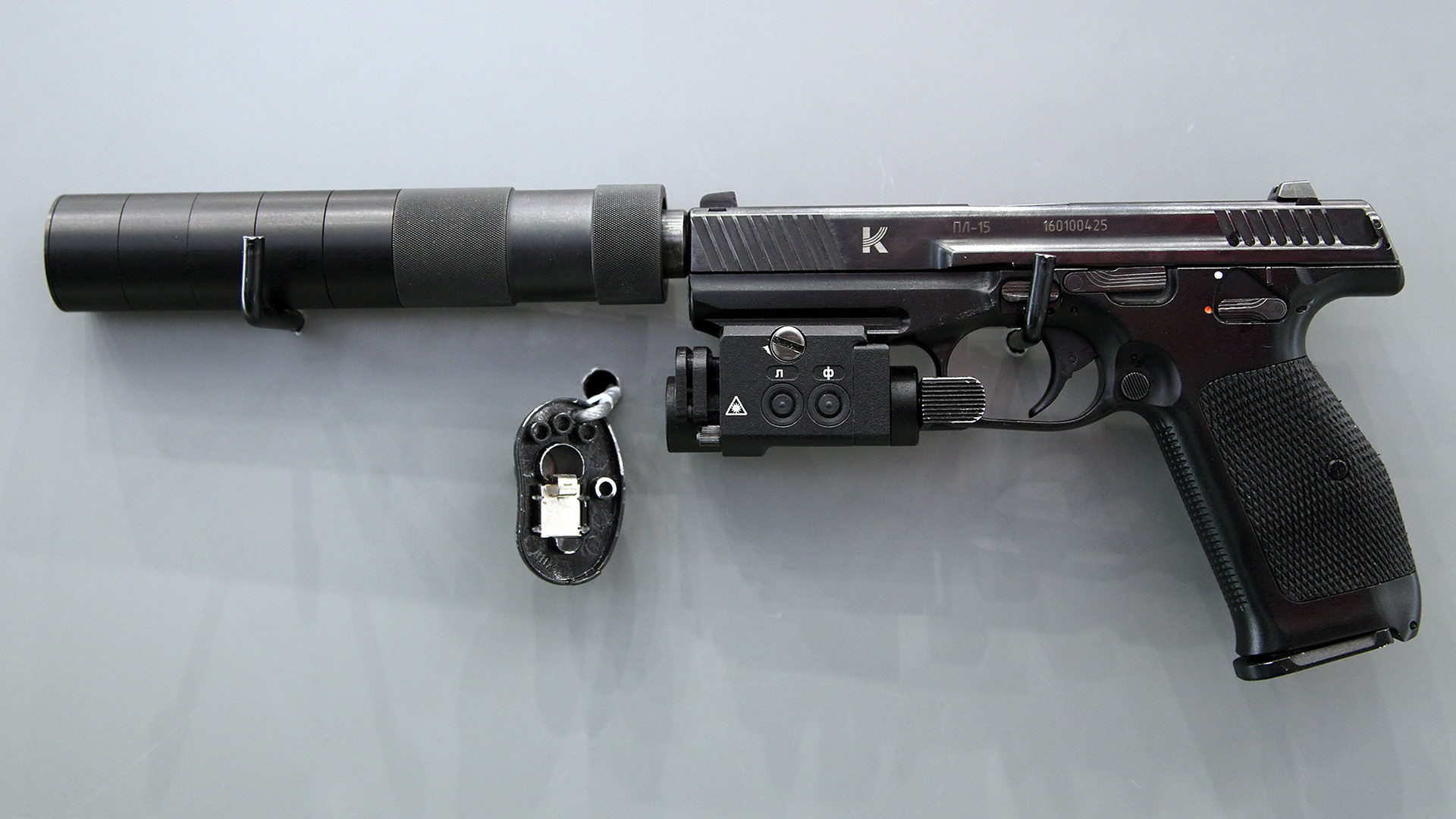
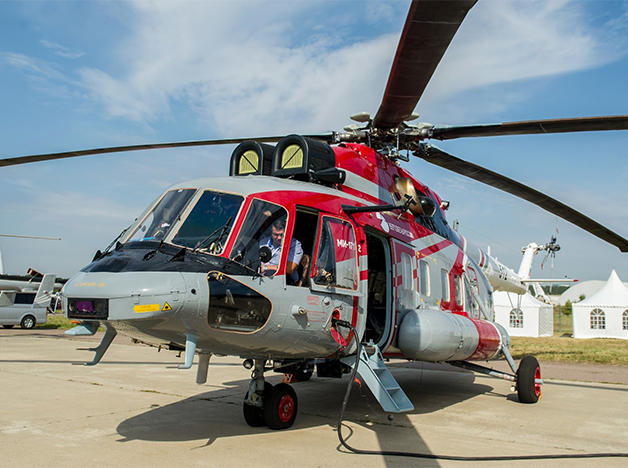
Here are sampled courtesy of Tass pictures of the types of arms and military tech power African countries are said to benefit from.