Tag: Kenya Kwanza administration

  • Kenya Kwanza: Debt Payments to Exceed Sh7 Trillion Over the Next Five Years

    Kenya Kwanza: Debt Payments to Exceed Sh7 Trillion Over the Next Five Years

    Kenya Kwanza administration has allocated a budget of Sh7 trillion to pay off debt during its first term, starting from July 1. This highlights the significant debt burden inherited from previous administrations.

    According to revised estimates from the Treasury, the cumulative cost of debt payments will amount to Sh7.071 trillion from the fiscal year 2023/24 to 2026/27. This indicates the impact of the heavy debt load.

    Spending on interest payments is projected to reach Sh3.42 trillion, while redemptions, which will likely be refinanced through new debt, are estimated at Sh3.65 trillion over the four-year fiscal cycle.

    Changes made in the second supplementary budget have increased the cumulative debt service costs, including the fiscal year ending on June 30, by a substantial Sh131.09 billion.

    Kenya Kwanza
    President William Ruto

    This reflects the impact of rising interest payments on external debt and redemptions over the medium term.

    Total debt service costs are expected to reach a record high of Sh1.802 trillion in the fiscal year ending June 2024, compared to the current amount of Sh1.385 trillion. This increase is primarily due to the redemption of a Sh279.7 billion ($2 billion) debut Eurobond, which matures on June 24, 2024.

    However, the debt service costs will gradually decrease thereafter, reaching Sh1.669 trillion in the 2024/25 fiscal year and Sh1.748 trillion in the financial year ending June 2026.

    Debt service costs in the 2026/27 financial year will amount to Sh1.768 trillion. Interest expenses will be Sh891.8 billion, and redemptions will be Sh876.5 billion.

    The majority of debt service costs are for repayments related to infrastructure projects carried out by the previous administration. The outstanding arrears for the Mombasa-Nairobi standard gauge railway project, for example, are Sh223.8 billion ($1.6 billion) as of June 30, 2022.

    These payments also include the redemption of a Sh125.9 billion ($900 million) Eurobond maturing on June 22, 2027. Additional debt service costs are due to persistent budget deficits, which require financing beyond domestic revenue.

    These upcoming interest payments are expected to put pressure on government revenues, consuming a significant portion of them.

    In contrast, the large redemptions will necessitate additional borrowing by the government to offset the arrears through refinancing.

    Kenya Kwanza
    National Treasury and Economic Planning Cabinet Secretary Njuguna Ndung’u.

    The Treasury plans to issue a new Eurobond to refinance the June 2024 maturity, and the process to settle the maturity has already begun.

    The Kenya Kwanza administration will seek financing to cover new deficits in subsequent budgets, starting with Sh718 billion in the new fiscal year.

    However, relying more on domestic funding in the fiscal cycle may affect the growth of private sector credit, as the government will be competing with businesses and households for bank loans.

    Net domestic borrowing is projected to be Sh586.5 billion in the 2023/24 financial year, with net foreign financing at Sh131.5 billion, representing an 18:82 mix compared to the improved mix of 48:52 at the end of June 2023.

    Despite the increasing debt service costs and persistent fiscal deficits, the government assures its ability to meet all maturities and interest payments. It aims to implement a fiscal consolidation policy primarily focused on expanding the tax base to generate higher tax revenues.

  • Raila Urges Government and Mungiki Militia to Seek Common Ground

    Raila Urges Government and Mungiki Militia to Seek Common Ground

    Opposition leader Raila Odinga believes that the government should engage in negotiations with members of the Mungiki sect rather than resorting to violent means.

    Raila asserts that the Kenya Kwanza administration is leveling accusations without presenting concrete evidence to support their claims.

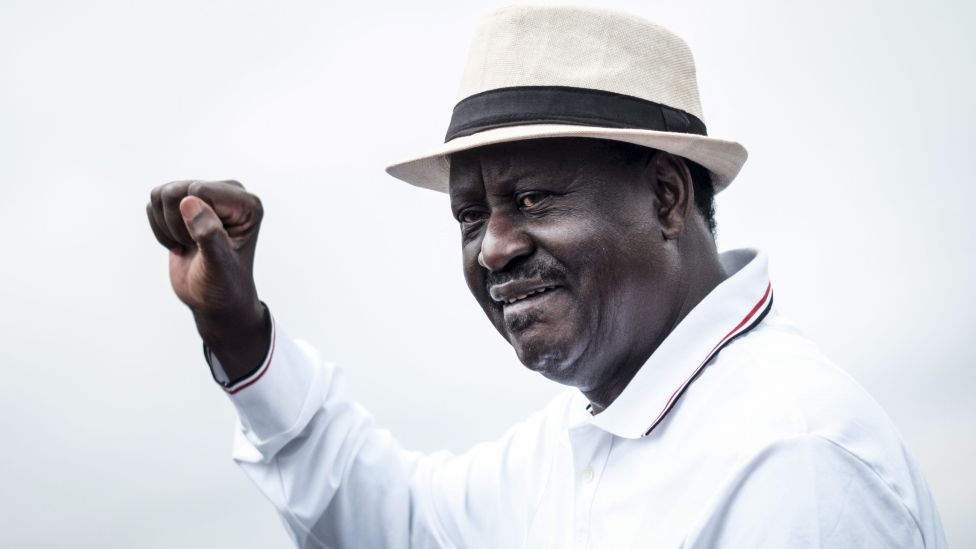
    Raila Odinga
    Raila Odinga. Image / BBC News

    Kenya has a long history of political tensions and conflicts that have often exacerbated the divide between the government and various opposition groups. One such group is the Mungiki sect, a secretive and controversial movement that has been involved in criminal activities and sporadic violence.

    However, in a surprising turn of events, Kenya’s opposition parties are now urging the government to engage in dialogue with the Mungiki militia, seeking a peaceful resolution to long-standing grievances.

    This article explores the significance of this unprecedented move and its potential implications for Kenya’s political landscape.

    Understanding The Mungiki Sect

    The Mungiki sect emerged in the 1980s as a religious and political movement among the Kikuyu people, Kenya’s largest ethnic group.

    Initially, the group aimed to promote traditional Kikuyu values, address social and economic inequalities, and challenge political elites.

    However, over time, the Mungiki sect transformed into a notorious criminal organization, engaging in activities such as extortion, drug trafficking, and even acts of violence.

    Government Crackdown and Raila’s Perspective

    Due to their criminal activities, the Mungiki sect has been subjected to a series of government crackdowns.

    Security forces have carried out operations to dismantle the group, leading to arrests, prosecutions, and occasional violent confrontations.

    Critics argue that the heavy-handed approach by the government has often resulted in human rights abuses and further radicalization of Mungiki members.

    In a surprising move, Kenya’s opposition parties, recognizing the need for a peaceful and inclusive society, have called for dialogue between the government and the members of Mungiki sect.

    They argue that sustained engagement and understanding of the underlying causes of the Mungiki movement are essential for finding lasting solutions.

    Raila Odinga’s standpoint is based on the belief that addressing the root socio-economic issues that drive individuals to join the Mungiki sect is paramount to fostering reconciliation and societal cohesion.

    https://www.youtube.com/watch?v=lUOgvVpMLZ0&ab_channel=Baringotvke

    Reasons for Raila’s Engagement

    1. Addressing Socio-Economic Inequalities: Kenya is grappling with significant socio-economic disparities, including unequal access to resources, land, and opportunities. The opposition argues that by addressing these disparities and ensuring inclusive development, the government can effectively curb the recruitment of disenchanted individuals into the Mungiki militia.
    2. Promoting Restorative Justice: The opposition’s approach emphasizes the need to shift from punitive measures to restorative justice, focusing on reconciliation, rehabilitation, and reintegration. By adopting this approach, the government can help Mungiki members to renounce violence and contribute positively to society.
    3. Building Trust and Reconciliation: Meaningful dialogue between the government and the Mungiki sect can help build trust and understanding. By creating platforms for open discussions and listening to the concerns of Mungiki members, the government can potentially deescalate tensions and foster a sense of belonging among marginalized communities.

    Challenges and Potential Implications

    Engaging with the Mungiki sect poses several challenges and risks. The militia has been involved in serious crimes, and any negotiations must be conducted carefully to ensure accountability and justice for victims.

    There is a delicate balance between addressing the root causes of the movement and avoiding the legitimization of criminal behavior.

    However, if successful, the engagement between the government and the Mungiki sect could have profound implications.

    It could potentially contribute to the rehabilitation and reintegration of former militia members into mainstream society.

    Moreover, by addressing the socio-economic grievances of marginalized communities, Kenya may witness a reduction in radicalization and a more inclusive political landscape.

    https://www.youtube.com/watch?v=8PZN-n2Ur_4&ab_channel=DailyNews

    Conclusion

    The opposition’s call for the government to engage in dialogue with the Mungiki sect marks a significant shift in Kenya’s political dynamics.

    By focusing on the root causes of the Mungiki movement and advocating for restorative justice, the opposition parties aim to bring about reconciliation, trust-building, and lasting peace.

    However, it is crucial for any negotiations to prioritize accountability and ensure that justice is served for victims of the Mungiki militia.

    Ultimately, the success of this dialogue will depend on the willingness of all stakeholders to engage in genuine and inclusive discussions, keeping the best interests of the nation at the forefront.

  • How Kikuyus Dominate Appointments In Top State Departments

    How Kikuyus Dominate Appointments In Top State Departments

    The head of Public Service Mr. Felix Koskei has been challenged to ensure equitable distribution of jobs across all government ministries and parastatals among all the 42 tribes in Kenya to reflect the true face of country.

    This comes after revelations that Members of Mount Kenya mainly from the Kikuyu community, dominate most of the lucrative State jobs as they occupy plum positions in the departments of accounts, procurement and human resources.

    The other 41 tribes are left to grapple and occupy lesser positions in the key departments that make up 21 ministries in the administration of President William  Ruto.

    Data from the ministries reveal that in accounts department, 55% of those holding key positions in the ministries are from the Kikuyu community, while in procurement and human resources departments, the same favored community holds 34% and 57% as its heads in government ministries.

    The deputy CEO at the Public Service Commission, Jane Chege, is the one who assisting civil servants from her community to ascend to the top positions in the key departments in the government. Most of these senior officers who benefited from Chege’s ‘generosity’ have been accused of bullying a section of junior officers under them.

    Some of the said senior officers even threaten their juniors with transfer, demotion or sack if they do not heed to their sexual demands or instructions to aide corrupt activities.

    Chege influences the posting of her kinsmen to the most lucrative positions in government ministries and departments where most of them overstay and loot from public coffers while non-Kikuyu officers are transferred frequently.

    Below is a list of some of the HR directors in some ministries in the government from the Kikuyu community who call shots.

    1. Foreign Affairs – Mr Gitu
    2. Treasury -Susan Mucheru
    3. Interior- Mr Giuthua
    4. Infrastructure- Joyce Gichomo
    5. Environment – Rosemary Wamoto
    6. Immigration -Christine Nyambura
    7. Labour – Owen Mwaniki
    8. CBC- Rosebell Wainaina
    9. Asal-Ann Kareithi
    10. Youth- Zipporah Mutahi
    11. Housing and Urban Development -Susan Wangare
    12. Shipping and Maritime – Rosemary Gichoi
    13. Correctional Services – Mary Mugure
    14. Broadcasting and Telecommunications- Miriam Gitau
    15. Devolution -Leonard Ngotho
    16. Maritime Academy-Francis Muraya (on contract)
    17. KNBS- Ann Mburu 19. Petroleum-Alice Maina
    18. Water-Carol Mugwe 21. East Africa -Macharia Kibe
    19. ICT and Digital Economy -James Muriuki
    20. Training and Development-David Njoroge
    21. Mining-Agnes Njer

    Kenya Insights has also learnt that most of these officers were teachers before they were appointed by PSC to boost capacity in ministries and state departments in the civil service to enhance training and development (HRD) between 2005 and 2012.

    The same is the case across other cadres (technical), whereby it is only one community that dominates the most lucrative ministries and departments. Most members of kikuyu community are posted to key ministries and departments as an avenue of corruption.