The official X account of the Kenya Broadcasting Corporation (KBC), known by its handle @kbcchannel1, has been hacked. Reports emerging late on January 31, 2025, Eastern African Time (EAT), indicate that the account has been taken over by hackers promoting what appears to be a cryptocurrency scam.
Active X users quickly noticed unusual activity when the KBC account began posting content unrelated to its usual news broadcasts. Instead, the account started sharing information about a cryptocurrency scheme, raising concerns among followers.
The scammers swiftly changed the handle to DeepseekOnSoI. DeepSeek is the name of a free AI-powered chatbot, which looks, feels and works very much like ChatGPT.
Numerous posts from Kenyan users on X expressed surprise and alarm over the sudden shift in the account’s behavior. Many speculated that the hackers were using KBC’s platform to lure unsuspecting individuals into investing in a potentially fraudulent cryptocurrency venture.
This incident is part of a growing global trend where high-profile social media accounts, including those on YouTube, X, and other platforms, are hijacked for similar fraudulent activities. Cybersecurity experts have long warned about the increasing sophistication of such scams, where attackers often rebrand accounts to impersonate well-known entities or celebrities to gain trust and credibility.
Scammers would also hold the accounts until they’re paid. Ransomware is common especially with big corporates that are targeted by hackers and part with millions.
How Scammers Hack X Accounts
According to cybersecurity trends, the attack method often involves phishing emails or malware designed to steal session cookies. This allows hackers to bypass even two-factor authentication measures. Once they gain control, the account is used to broadcast live streams or posts promising high returns on cryptocurrency investments. However, the funds ultimately disappear into the hands of the scammers.
As of the time of publication, KBC has yet to release an official statement regarding the hack. However, the Communications Authority of Kenya and the ICT Ministry have been tagged in several posts on X, with users calling for swift action to mitigate further damage and investigate the breach.
The account remains compromised, but sources indicate that KBC’s technical team is working to regain control.
KBC is Kenya’s official national broadcaster and a trusted source of news for millions of Kenyans. This incident underscores the importance of robust cybersecurity measures to protect digital assets and maintain public trust.
US President Donald Trump has been criticised for launching a meme-coin while saying he “doesn’t know much” about the cryptocurrency.
The digital coin called TRUMP appeared on his social media accounts ahead of his inauguration on Monday and quickly became one of the most valuable crypto coins. The value of a single coin shot up to $75 within a day, but since has fallen to $39.
But the launch of the so-called meme-coin – a cryptocurrency with no utility other than for fun or speculation – has been widely criticised by industry insiders.
“Trump’s comments about not knowing much about the coin back up my opinion that he is making a mockery of the industry. It’s a stunt,” says Danny Scott, CEO of CoinCorner.
The latest dip in value came after Trump told reporters: “I don’t know much about it other than I launched it, other than it was very successful.”
When he was told his coin raised several billion dollars for him, he played it down saying “several billion – that’s peanuts for these guys” pointing to tech billionaires assembled for a press conference about AI.
Meme-coins are often used by speculators to make money or to allow fans to show support to a celebrity or moment in internet culture.
It’s not the first time Trump has sold crypto products. He made millions from launching a series of NFTs of him in various superhero poses in 2022.
Some industry analysts say the president having his own meme coin is a sign that others should follow.
“TRUMP token just signaled to every company, municipality, university & individual brand that crypto can now be used as a capital formation and customer bootstrapping mechanism,” Jeff Dorman from investing firm Arca posted online.
However, the overall sentiment seems to be negative towards the president’s meme coin.
Many in the crypto world are waiting for Trump to back up campaign promises to help boost the industry in the US. People like Danny Scott hope to see focused plans, particularly around Bitcoin, from the administration.
On Thursday the president took a first step towards fulfilling those promises by signing an Executive Order to set up a working group to explore changes to crypto regulation and potentially create a national crypto stockpile.
Last year Trump promised Bitcoin fans he would make the US the “crypto capital of the planet”. A few days into his term, the president has not issued executive orders involving cryptocurrency, nor has he mentioned it in his speeches.
TRUMP coin is now the 25th most valuable crypto coin with a value of around $8 billion, according to the website CoinMarketCap.
Trump and the team behind it own 80% of the coins so, in theory, they would make billions of dollars if they sold their shares and the price remained the same.
This set-up has been described by crypto researchers at K33 as outdated for similar tokens.
“There’s no sugar-coating this – these tokenomics are horrendous for a meme-coin,” said David Zimmerman, a K33 analyst.
However, K33 analysts acknowledge that the remaining 80% of coins can’t be dumped on the open market so investors are partially shielded from price shocks.
Melania Trump.
There are thousands of cryptocurrency coins and anyone can create one.
First Lady Melania Trump launched her own meme-coin on the eve of the inauguration, which now has a value of $700m since slumping from $13 a coin to $2.70.
But many meme-coins have led to big losses for people investing in them.
Dan Hughes, from crypto firm Radix, thinks the president and his wife launching their meme-coins undermines the positives of the industry.
“This pattern of celebrity-driven token launches, particularly from political figures, potentially marks a concerning trend in crypto markets where influence and liquidity manipulation could overshadow fundamental value creation,” he said.
Others in the cryptocurrency world think that launching meme-coins to make money is degrading.
“The introduction of these coins during the presidential inauguration raises concerns about potential conflicts of interest and may undermine the dignity of the president and the first lady,” said Grzegorz Drozdz, market analyst at investment firm Conotoxia.
The price of Bitcoin soared by 2.5% on Friday after US President Donald Trump signed an executive order on cryptocurrency markets.
The current price of Bitcoin is at around $104,736 as of 0645GMT, and its market cap increased to $2.07 trillion.
Bitcoin’s transaction volume in the last 24-hour period was around $100.44 billion.
This month, the price of Bitcoin saw the highest-ever value of around $109,000 due to Trump’s inauguration.
Ethereum prices also rose by 4% to $3,381 over the same period.
These hikes came after Trump’s new executive order which includes establishing regulations and technologies related to cryptocurrency and its advancement in the US.
Establishing a working group, named Working Group on Digital Asset Markets, to examine a national digital asset stockpile was also included in the order.
Disclaimers on the websites of both the $Trump and $Melania coins said they were “not intended to be, or the subject of” an investment opportunity or a security.
According to the CoinMarketCap website, $Trump has a total market valuation of about $12bn (£9.8bn), while $Melania’s stands at around $1.7bn.
Trump had previously called crypto a “scam” but during the 2024 election campaign became the first presidential candidate to accept digital assets as donations.
On the campaign trail, Trump also said he would create a strategic bitcoin stockpile and appoint financial regulators that take a more positive stance towards digital assets.
That spurred expectations that he would strip back regulations on the crypto industry.
In the wake of Trump’s victory, bitcoin jumped to a record high is currently trading at $140,000, according to crypto trading platform Coinbase.
On Friday, the incoming artificial intelligence (AI) and crypto tsar David Sacks held a “Crypto Ball” in Washington, DC.
Other cryptocurrencies, including dogecoin – which has been promoted by high-profile Trump supporter Elon Musk – have also risen sharply this year.
Under President Joe Biden, regulators cited concerns about fraud and money laundering as they cracked down on crypto companies by suing exchanges.
NAIROBI – In a significant policy shift, Kenya is drafting legislation to legalize cryptocurrencies, announced by Treasury Cabinet Secretary John Mbadi on Friday. This move acknowledges the widespread, albeit underground, use of digital currencies despite previous bans.
Mbadi highlighted Kenya’s role as a financial innovation leader in Africa, pointing out, “Kenya’s financial sector is a beacon of innovation and growth.” He emphasized the dual role of Virtual Assets (VAs) and Virtual Asset Service Providers (VASPs) in presenting both opportunities and challenges to the financial landscape.
The new policy aims to tackle issues like money laundering, terrorism financing, and fraud, which are risks associated with cryptocurrencies. “We are committed to creating a regulatory framework that leverages the potential benefits while managing these risks,” Mbadi explained.
The draft policy seeks to ensure a “fair, competitive, and stable market” for VAs and VASPs, encouraging innovation and enhancing financial literacy among Kenyan citizens.
This legislative approach follows a global trend where countries like Morocco, the United States, and Russia are also regulating cryptocurrencies to harness their potential while addressing inherent risks.
Mbadi drew parallels with Kenya’s past financial innovations, notably the launch of M-Pesa by Safaricom in 2007, which revolutionized mobile money. “From mobile money to a robust financial system, Kenya has consistently pushed the boundaries of financial inclusion through technology,” he noted.
The policy also reflects on the challenges posed by the anonymous and cross-border nature of VAs, which have been detailed in Kenya’s Virtual Assets/VASPs Money Laundering/Terrorism Financing National Risk Assessment Report finalized in September 2023.
The overarching goal is to position Kenya as a significant player in the global digital finance ecosystem, with the policy providing a flexible framework for domestic and international cooperation, compliance, consumer protection, and risk management.
Virtual assets, driven by technologies like blockchain since Bitcoin’s inception in 2009, have transformed financial transactions but also introduced regulatory challenges. The policy addresses these by aiming for a balanced approach between fostering innovation and ensuring security and regulatory compliance.
The recent global financial crises and the subsequent trust deficit in traditional banking systems have further propelled the interest in cryptocurrencies, not just in Kenya but worldwide.
The Kenyan populace, especially the younger demographic, is increasingly engaging with VAs, attracted by their speed, cost-effectiveness, and anonymity. However, this adoption comes with its set of risks, highlighted by the Kenyan NRA, including capital flight, cybercrime, and consumer protection concerns in an unregulated market.
Mbadi concluded, “This policy draft is a step towards establishing a sound legal and regulatory framework to harness the benefits of VAs while addressing the risks.”
This development marks a pivotal moment for Kenya’s financial sector, promising to integrate it further into the global digital economy while safeguarding against the perils of unregulated digital finance.
The Kenya Revenue Authority (KRA) is gearing up to introduce a new tax system that will allow real-time tracking of cryptocurrency transactions. This move aims to identify tax evaders and monitor potential criminal activities in Kenya’s growing crypto space—an area that has previously flown under the radar.
Cryptocurrency refers to digital money secured through cryptographic techniques, running on decentralized blockchain networks. This structure makes it highly resistant to counterfeiting or double-spending. Bitcoin, launched in 2009, is the pioneering cryptocurrency and remains the largest by market cap.
Unlike traditional currencies, cryptos are typically not issued by central banks, making them immune to direct government control. While digital currencies are not yet as mainstream in Kenya as other financial technologies like mobile money, KRA sees significant potential in the market, which, according to UNCTAD, involves around four million users.
KRA estimates that the Kenyan crypto market processed transactions worth about Ksh.2.4 trillion between 2021 and 2022—almost 20% of the country’s gross domestic product (GDP).
“Even though the sector is unregulated by entities like the Central Bank of Kenya and the Capital Markets Authority, income from crypto trading is still subject to taxation under Section 3 of the Income Tax Act. The absence of a robust system for collecting taxes on crypto transactions has led to substantial revenue loss for the government,” the authority explained.
The proposed system aims to connect with crypto exchanges and marketplaces, enabling KRA to track and record transaction details, such as the date, time, type, and value of each transaction.
Cryptocurrencies are often used in Kenya for savings, international payments, and remittances. Unlike traditional banking systems and credit cards, crypto allows for direct, peer-to-peer transactions across borders, without the need for intermediaries. This means users don’t have to purchase foreign currencies or pay fees for services like Western Union.
However, the decentralized nature of digital currencies has made them attractive for illegal activities like fraud, theft, and money laundering. Additionally, the extreme price volatility of these digital assets means that investors must keep a close eye on market trends. For example, Bitcoin’s price skyrocketed to nearly $65,000 in November 2021 before plunging below $20,000 at the beginning of 2023. It has since rebounded to over $60,000 (about Ksh.7.8 million).
In a bid to tighten oversight of the sector, a new bill was introduced in the Kenyan Parliament last year, aimed at taxing crypto transactions and digital wallets. The Capital Markets (Amendment) Bill, 2023, proposed by Mosop MP Abraham Kirwa, seeks to amend the Capital Markets Act, Cap. 485A, to include digital currencies within the definition of securities. If approved, this would empower KRA to collect capital gains tax on crypto exchanges and levy excise duty on transactions. The bill has received approval from the National Assembly finance committee and is currently under review in Parliament.
FTX’s founder and former CEO Samuel Bankman-Fried on Thursday was sentenced to 25 years in prison in fraud and conspiracy case that saw the collapse of his cryptocurrency exchange platform and a related hedge fund.
“I was the CEO of FTX and I was responsible,” Bankman-Fried told at Manhattan federal court in New York, adding: “It haunts me every day,” according to media reports.
Bankman-Fried, 32, faced multiple charges involving the implosion of FTX, which was once the world’s third-largest crypto trading platform by daily volume, and its relation to hedge fund Alameda Research’s trading accounts.
The charges included wire fraud, conspiracy to commit wire fraud against FTX customers and against lenders to Alameda Research, conspiracy to commit securities fraud, conspiracy to commit commodities fraud against FTX investors, and conspiracy to commit money laundering.
Although Bankman-Fried argued that there was “no loss” at FTX, Judge Lewis Kaplan revealed Thursday that he found total loss of the fraud more than $550 million.
Judge Kaplan also ordered a forfeiture of $11.2 billion.
After its implosion in late 2022, FTX recovered $7.3 billion in cash and assets, according to the company’s attorney in April 2023.
Bankman-Fried was convicted on seven counts in November by jury who held him responsible for approximately $10 billion of customer deposits that went missing in 2022.
Nadeem Anjarwalla, Binance director for West & East Africa and one of the firm’s two executives detained in Nigeria over tax evasion charges has escaped custody.
According to reports from Nigerian media, the 38-year-old Briton, who also holds Kenyan citizenship, disappeared on Friday, March 22nd. Anjarwalla was allegedly allowed to leave the Abuja guest house, where he and a colleague were being held, for Ramadan prayers. Authorities believe he used this opportunity to escape.
Guards on duty reportedly escorted Anjarwalla to a nearby mosque, adhering to religious customs during the holy month. However, the executive vanished during this brief outing.
An Immigration source claims Anjarwalla used a Kenyan passport to flee the country on a Middle Eastern airline. Authorities are currently investigating how he obtained this passport, as he reportedly had only a British passport upon his arrest.
This escape raises questions about security protocols at the detention facility and the potential involvement of the guards. The Nigerian government is likely to face heightened scrutiny as they work to recapture Anjarwalla and determine how he managed to escape.
Why the Binance executives got arrested
Tigran Gambaryan, a U.S. citizen and Binance’s head of financial crime compliance, and Anjarwalla, a British-Kenyan, flew to Nigeria following the country’s decision to ban several cryptocurrency trading websites and were detained on arrival on Feb. 26.
The two were caught up in a crackdown following a period during which several cryptocurrency websites emerged as platforms of choice for trading the Nigerian currency, as the country battles chronic dollar shortages.
A criminal charge was filed against the two executives before a Magistrate Court in Abuja. On 28 February 2024, the court granted the Economic and Financial Crimes Commission (EFCC) an order to remand the duo for 14 days. The court also ordered Binance to provide the Nigerian government with the data/information of Nigerians trading on its platform.
Following Binance’s refusal to comply with the order, the court extended the remand of the officials for an additional 14 days to prevent them from tampering with evidence. The court then adjourned the case till 4 April 2024.
Also on 22 March, the Nigerian government approached the Federal High Court in Abuja and slammed another four-count charge on Binance Holdings Limited, Mr Anjarwalla and Mr Gambaryan, accusing them of offering services to subscribers on their platform while failing to register with the Federal Inland Revenue Service to pay all relevant taxes administered by the Service and in so doing, committed an offence, contrary to and punishable under Section 8 of the Value Added Tax Act of 1993 (as Amended).
The defendants were also accused of offering taxable services to subscribers on their trading platform while failing to issue invoices to those subscribers to determine and pay their value-added taxes and, in so doing, committed an offence contrary to and punishable under S.29 of the Value Added Tax Act of 1993 (as amended).
Count Three of the charges accused the three defendants of offering services to subscribers on their Binance trading platform for the buying and selling of cryptocurrencies and the remittance and transfer of those assets while failing to deduct the necessary Value Added Taxes arising from their operations and thereby committing an offence contrary to and punishable under Section 40 of the Federal Inland Revenue Service Establishment Act 2007 (as amended).
The last count of the charges wants the defendants punished for allegedly aiding and abetting subscribers on their Binance trading platform to unlawfully refuse to pay taxes or neglect to pay those taxes and, in so doing, committing an offence contrary to and punishable under the provisions of S.94 of the Companies Income Tax Act (as amended).
The company announced early this month that it was stopping all transactions and trading in Nigeria’s naira currency after March 8.
When two executives from Binance arrived in Abuja, Nigeria’s capital city, to meet with the government over the role of the world’s largest cryptocurrency exchange in the country’s foreign exchange crisis, they were carrying only hand luggage, expecting to stay a few days.
The first meeting on Feb. 26 started off neutral, the second took a hostile turn. The executives were escorted to their hotel, made to pack up their belongings and moved to a guesthouse, where their passports were taken.
Against the backdrop of their detention, Nigeria is currently grappling with one of its most severe economic downturns in years, sparked by a sharp rise in inflation. The surge in prices is largely attributed to monetary strategies that have significantly devalued the currency. The naira has reached a historic low against the dollar. As a consequence, widespread discontent and demonstrations have erupted throughout the nation.
In the midst of economic uncertainty, a growing number of Nigerians have embraced cryptocurrency as an alternative financial option. Recent statistics from Chainalysisreveal that Nigeria ranks second globally in crypto adoption, trailing only behind India.
The exchange rate on Binance and other platforms, which reflect a parallel black market rate, continued to deviate from the official rate, which has been gradually depreciated.
Nigeria has accused Binance of crashing the nation’s currency through rate manipulation for profit. The country is seeking a US$10 billion penalty from the company for processing $26 billion of untraceable funds in the country, according to reports.
The two Binance executives who came to meet Nigerian officials remain detained, without being charged with any crimes.
Both U.S. and U.K. authorities have been alerted of the detainment. Tigran Gambaryan, who lives in the U.S., is Head of Finance Crime Compliance for the Binance Security and Investigations Team. He also worked as a special agent for the Internal Revenue Service for over a decade until September 2021.
The other executive, Nadeem Anjarwalla, Regional Manager of Africa, is a dual British-Kenyan citizen.
On Feb. 28, the executive’s lawyers were told they would be held for two weeks while investigations took place. Both were taken to a medical center on March 4, and Anjarwalla was reportedly feeling unwell, according to family members. He refused to have tests without a foreign representative, fearing the results would be manipulated.
Anjarwalla and Gambaryan’s next hearing — which was postponed until March 13 — failed to secure their release. While it didn’t explicitly extend the order allowing their detainment, they will remain in jail until an additional hearing on March 20, which gives Nigerian authorities more time to respond to the arguments of the Binance executives’ lawyers.
Their families anxiously await their return. “I’ve been trying very hard to keep up the hope and stay optimistic,” Elahe Anjarwalla, Nadeem’s wife said while speaking to the media from Nairobi. “But it’s now day 18, it definitely does seem like it’s getting harder.”
Binance has given few details publicly. “While it is inappropriate for us to comment on the substance of the claims at this time, we can say that we are working collaboratively with Nigerian authorities to bring Nadeem and Tigran back home safely to their families,” a Binance spokesperson told Consortium of journalists in statement. “We trust there will be a swift resolution to this matter.”
But the Nigerian government doesn’t seem to be backing down. They are now asking Binance for information regarding its top 100 users in the country and transaction history spanning the last six months, according to reports.
Anjarwalla said she has been chasing the British authorities, and that Wednesday was the first day they had called her “unprompted.”
For now, Anjarwalla can only wait, and hope that her husband returns home in time for her son’s first birthday next week. “I’m anxiously hoping and praying that Nadeem will make it back in time for that,” she said.
The Blockchain Association of Kenya (BAK) has deferred plans to table a draft bill seeking to arrest rising cases of cryptocurrency fraud in the country.
In a statement on Monday, February 19, the digital asset industry lobby group attributed the decision to postpone the submission of the Virtual Asset Service Provider (VASP) bill to the National Assembly to the need to create room for more engagement with other stakeholders and interested parties.
BAK was tasked by the Finance and National Planning Committee with drafting a framework to govern the cryptocurrency industry due to the lack of such regualtions, which has led to the mushrooming of dubious cryptocurrency scams defrauding Kenyans their hard-earned money.
The bill was set to be handed over to the committee on February 14, 2023.
However, BAK stated that the growing interest from new stakeholders, such as government agencies and others affected by elements of the bill, led the association to extend the feedback period.
“The association held a stakeholder breakfast at the Sankara hotel on the [February] 16th where the Executive Board announced that it will extend the feedback period to a later date in future,” BAK stated.
The lobby group is now urging stakeholders to review and give input on the bill before its submission to the August House.
“The Blockchain Association of Kenya hopes to submit the bill to parliament as soon as it is ready in order to help protect Kenyans and attract legitimate cryptocurrency businesses into the country. In the meantime, the lobby group invites its community, interested stakeholders such as government agencies, international development organizations and private sector to participate in its upcoming forums and workshops for education and awareness on the impact of the bill,” BAK stated.
Speaking at the breakfast meeting, the Chairman of the Board Michael Kimani said, “The Virtual Asset Service Provider bill is a significant milestone towards curbing the rampant cryptocurrency-related scams that thrive and continue to defraud Kenyans of millions of shillings because of the lack of frameworks to protect the public.”
Cases of Kenyans losing their hard-earned cash to unscrupulous crypto operators have been on the rise in recent years.
Last week, the Directorate of Criminal Investigations (DCI) stated that detectives were investigating numerous cases of Kenyans being lured into joining online cryptocurrency investment platforms, only to end up losing their investments to fraudsters.
The agency called on Kenyans to exercise caution while dealing with suspicious investment schemes.
The Directorate of Criminal Investigations (DCI) has noted an alarming increase in reports of Kenyans falling victim to scammers operating through online cryptocurrency investment platforms.
According to DCI, the fraudsters employ “deceptive tactics, enticing individuals to invest their hard-earned money with promises of lucrative returns, only for victims to end up losing substantial sums”.
The DCI is investigating multiple cases where investors, swayed by enticing messages like “Make Money Sitting At Home” received via short messages (SMS), have found themselves ensnared in fraudulent schemes. These schemes, instead of delivering promised profits, result in significant financial losses for the unsuspecting victims.
The DCI in a warning statement on Wednesday, urged Kenyans to exercise vigilance and caution against falling prey to this deceptive scheme. The public has been advised to verify the legitimacy of any online investment platform through recognized regulatory bodies such as the Capital Markets Authority (CMA) and the Communication Authority (CA) before committing their funds.
The DCI stressed the necessity for heightened awareness and improved verification processes to shield citizens from falling victim to these sophisticated scams.
Kenya, alongside Nigeria and South Africa, was identified among the top countries where scammers generated the highest revenue per user last year, according to a report by the blockchain analysis firm Chainalysis.
Chainalysis, a blockchain data platform, noted in its 2023 Crypto Crime Report, the value received by illicit cryptocurrency totaled $24.2 billion. This was a decrease compared to 2022 attributed to increased awareness and efforts to combat such illicit activities.
Stablecoins have emerged as the preferred cryptocurrency for cybercriminals, surpassing Bitcoin in illicit transaction volume. However, the overall share of cryptocurrency volume related to illicit activity is decreasing. Crypto scamming and hacking revenue have also seen declines in 2023, indicating progress in curbing such criminal activities.
Despite these positive trends, criminals remain innovative, employing techniques to finance and conceal illicit activities on the blockchain.
Investigations often involve tracing funds across multiple tokens or chains, with the goal of presenting fully auditable data that can stand up in court.
Detectives at DCI pledged to intensify efforts to combat cryptocurrency-related fraud, urging the general public to remain vigilant and informed to protect themselves from falling victim to evolving online scams.
Various cases of financial exploitation in the rapidly changing landscape of digital investments are ongoing at various courts in the country.
(AFP)-Hackers stole cryptocurrency worth over $600 million from a digital ledger used by players of the popular online game Axie Infinity, in a major digital cash heist revealed Tuesday.
Interest in cryptocurrency has boomed, along with its values, but the money has also become an attractive target for tech savvy thieves.
Ronin Network said the attack targeting its blockchain netted 173,600 ether and $25.5 million worth of stablecoin, a digital asset pegged to the US dollar.
The haul was valued at $545 million when it was stolen on March 23, but was worth about $615 million based on prices Tuesday, making it one of largest thefts ever in the crypto world.
“Most of the hacked funds are still in the hacker’s wallet,” Ronin said in a post revealing the theft.
Unable to withdraw
The team at Sky Mavis, maker of battle and trading game Axie Infinity, discovered the security breach on Tuesday after a user was unable to withdraw ether, according to the company.
Ronin was still investigating the hack, but said that hackers got hold of private “keys” to withdraw digital funds.
“We know trust needs to be earned and are using every resource at our disposal to deploy the most sophisticated security measures and processes to prevent future attacks,” Ronin said.
“We are working with law enforcement officials, forensic cryptographers, and our investors to make sure there is no loss of user funds.”
In Axie Infinity, players participate in battles using colourful blob-like Axies, and are mainly rewarded “Smooth Love Potion” (SLPs) that can be exchanged for cryptocurrency or cash — or invested back into the game’s virtual world Lunacia.
Users from Philippines
About 35 per cent of Axie Infinity traffic — and the biggest share of its 2.5 million daily active users — comes from the Philippines, where high proficiency in English, strong gaming culture and widespread smartphone usage have fuelled its popularity, according to Sky Mavis.
To play the game, players first have to purchase at least three Axies.
An Axie is an NFT — a unique, non-fungible token, with a particular set of abilities and characteristics. Like NFT pieces of art, they are stored on the blockchain — a digital ledger that cannot be changed.
Axies can be bought, sold or rented to other players. Owners can also breed them to create new Axies that provide more value.
It’s feeling darker for the Belgian National Marc Freddy H De Mesel a supposed cryptocurrency guru who for the past months has been on the spotlight for alleged money laundering. He’s now been profiled By Kenyan security agencies as a money launderer.
In reported instances, De Mesel has relentlessly been trying bring his funds to Kenya through different women whom he say to be his lovers.
In yet another attempt, this time a man, has been thwarted.
In a case filed under certificate of urgency Assets recovery Agency (ARA) wants the USD 390,038.72 equivalent to Sh. 44,425,410.21 belonging to businessman Timothy Waigwa Maina held at Stanbic Bank, frozen pending the filing of a petition of forfeiture.
“There are reasonable grounds and evidence demonstrating that the funds held by Waigwa in the specified bank account are direct or indirect benefits, profits or proceeds of crime obtained from a complex money laundering scheme and are liable to be forfeited to the State under the Proceeds of Crime and Anti-Money Laundering Act,” added the agency.
According to court documents, Waigwa is suspected to be part of a syndicate involved in a complex money laundering scheme involving a Belgian National Marc Freddy H De Mesel.
He first received Euros 370,990 in one transaction on April 6, 2021 in his closed bank account at Standard Chartered Bank account drawn from various jurisdictions including Belgium on the pretense that the fund is a “gifts made in favour of the Waigwa”.
ARA argue that there is imminent danger Waigwa might dispose, transfer and dissipate the money unless the court issues preservation orders.
“It is in the interest of justice that preservation orders do issue prohibiting Waigwa or his agents or representatives from dealing in any manner with the aforementioned assets,” said ARA.
The Agency received information into a suspected case of money laundering schemes, and proceeds of crime involving multiple money transactions from foreign jurisdiction whose source could not legitimately be established.
The agency argues that preliminary investigations have established that Waigwa executed a complex scheme of money laundering designed to conceal, disguise the nature, source, disposition and movement of the illicit funds, suspected to constitute proceeds of crime and which are the subject matter of the application.
‘Girlfriend’
Felesta Nyamathira Njoroge, a college student used by De Mesel as his ‘girlfriend’ to wire hundreds of millions, is at risk of losing Sh109 million after Asset Recovery Agency filed a formal application to have her forfeit the money for being proceeds of crime.
According to the agency, she is part of an international ring of fraudsters engaged in money laundering.
“We have discovered that she is part of a syndicate involving complex money laundering schemes with individuals from various countries including Belgium from where she received the money on the pretext that it was a gift from her boyfriend,” said ARA through lawyer Stephen Githinji.
The agency wants Njoroge’s USD914,967 (Sh104,205,591) held at Co-operative Bank and Sh5 million held at Stanbic Bank to be forfeited to the State over allegations that she was being used by her foreign partners as a conduit for the illicit funds.
ARA had in November last year obtained an order freezing Njoroge’s accounts for 90 days to complete investigations into the allegations of money laundering.
Githinji told the court that after completing investigations, they have established that the 21-year-old student at Nairobi Technical Training Institute executed a complex scheme of money laundering designed to conceal and disguise the nature and sources of her funds.
“There are reasonable grounds and evidence demonstrating that the funds are direct and indirect benefits of proceeds of crime obtained from an international money laundering scheme and are liable for forfeiture to the government,” said Githinji.
The agency’s investigator Fredrick Musyoki said they discovered that Njoroge opened the dollar account at Co-operative Bank on August 2, 2021 with nil balance but within four days, the account had been credited with USD914,967 (Sh104,205,591) in four transactions.
“Our investigations established that she opened the accounts for the sole purpose of receiving the said funds which she declared the source to be from her boyfriend for her to invest in land projects and traveling,” said Musyoki.
The investigator stated that when they summoned Njoroge for questioning over her source of funds, she escaped to Tanzania by crossing the Namanga border as a pedestrian on October 2, 2021.
Musyoki added that De Mesel, who was in the country at the time, also escaped using the same route to Tanzania. According to the investigator, De Mesel transferred a total of Sh650 million to five different individuals between February 2020 and August 2021 without disclosing the source of the funds.
Another ‘girlfriend’
In another familiar incident, De Mesel sent Tebby Wambuku Kago, a friend of Felista Njoroge Sh102.8m ($909,900) in what is loosely modeled pattern of fraud that any intelligence agency can knit, anti-corruption court ordered that the money held up at Kago’s account be frozen last year in December.
Justice Esther Maina was told that Kago received the Sh108 on August 10, 2021, and an additional Sh37m in early November 2021.
However, when ARA accessed Kago’s account, it was discovered that out of the total Sh139.8m, her Equity account had only Sh102.8m.
Records indicate that the money was wired into Kago’s account by Felista Njoroge’s Belgian boyfriend, Marc De Mesel.
Unlike Felista, who was introduced in court as a 21-year-old student of Nairobi Technical Training Institute (NTTI), Kago’s age or occupation wasn’t given.
The only hint at her occupation was “self-employed businesswoman” as per court documents.
Leading Japanese cryptocurrency exchange Liquid has been hit by hackers, with almost $100m (£73m) estimated to have been stolen.
The company announced that some of its digital currency wallets have been “compromised.”
It is the second major theft of cryptocurrencies to take place in recent days.
Last week, digital token platform Poly Network was at the centre of a $600m heist.
“We are sorry to announce that #LiquidGlobal warm wallets were compromised, we are moving assets into the cold wallet,” the company said on Twitter.
So-called ‘warm’ or ‘hot’ digital wallets are usually based online and designed to allow users to access their cryptocurrencies more easily, while ‘cold’ wallets are offline and harder to access and therefore usually more secure.
Blockchain analytics firm Elliptic said its analysis showed that around $97m in cryptocurrencies had been taken, with Bitcoin and Ethereum tokens amongst the haul.
Liquid has said that it was tracing the movement of the stolen cryptocurrencies and working with other exchanges to freeze and recover the assets.
Founded in 2014, Liquid operates in over 100 countries and serves millions of customers around the world.
It is one of the world’s top 20 biggest cryptocurrency exchanges by daily trading volumes, according to CoinMarketCap data.
Last week, $600m was stolen from blockchain site Poly Network after a hacker exploited a vulnerability in its system.
“The amount of money you have hacked is one of the biggest in defi [decentralised finance] history,” Poly Network said.
Since then the hacker, who goes under the name of Mr White Hat, has returned around $427m of the assets.
Liquid is not the only Japanese cryptocurrency platform to be hit by a major heist.
In 2014, Tokyo-based exchange MtGox collapsed after almost half a billion dollars of bitcoin went missing, while Coincheck was hacked in a $530m heist in 2018.
The hacker behind one of the largest cryptocurrency heists to date has returned almost half of the $600m (£433m) stolen assets.
On Tuesday, the firm affected, Poly Network wrote a letter on Twitter, asking the individual to get in touch “to work out a solution”.
The hacker then posted messages pledging to return funds, claiming to be “not very interested in money”.
On Wednesday, Poly Network said it had received $260m back.
The company, a blockchain platform which lets users swap different types of digital tokens, posted on Twitter that it had been sent back three cryptocurrencies, including $3.3m worth of Ethereum, $256m worth of Binance Smart Chain (BSC) and $1m worth of Polygon.
A total of $269m in Ethereum tokens and $84m in Polygon tokens has yet to be recovered.
A blockchain is a ledger, or log, of every single transaction made of a cryptocurrency, such as Bitcoin.
The ledger is distributed to all the users in the network to verify all new transactions when they occur, instead of being held by any one single authority.
Software flaws
The hacker published a three-page-long Q&A session on one of the blockchains essentially in the form of a self-interview, according to Tom Robinson, co-founder of Elliptic, a London-based blockchain analytics and compliance firm.
The hacker claimed to have always planned to return the tokens and said the heist was carried out to highlight vulnerabilities in Poly Network software.
“I know it hurts when people are attacked, but shouldn’t they learn something from those hacks?” the hacker wrote in the notes embedded on the Ethereum blockchain.
Getty Images
The technology underpining all crypto-currencies is blockchain – a distributed log of every single transaction made of a digital currency, that is sent to all users on the network
The hacker claimed to have spent all night looking for a vulnerability to exploit. They said they were worried that Poly Network would patch the security flaw quietly without telling anyone, so they decided to take millions of dollars in cryptocurrency tokens to make a point.
But they stressed that they did not want to cause a “real panic [in] the crypto-world”, so they only took “important coins”, leaving behind Dogecoin, the cryptocurrency that started off as a joke.
“Either they just intended to commit theft and steal the assets, or they were acting like a white hat hacker to expose a bug, to help Poly Network make themselves more strong and secure,” Mr Robinson, who routinely advises governments and law enforcement agencies about crypto-related crimes, told the BBC.
He added that the nature of blockchain technology makes it hard for cyber-criminals to profit from stealing digital currencies, because everyone can see the money being moved across the network into the hackers’ wallets.
“I wonder whether this hacker stole the funds, realised how much publicity and attention they were getting, realised wherever they moved the funds they would be watched, and decided to give it back,” said Mr Robinson.
“The blockchain itself has operated here flawlessly, but the problem is on blockchains like Ethereum, you can write your own smart contracts. Various services have started offering this, including Poly Network.
“So whenever a human being writes code, there’s a chance they will make a mistake.”
How it works
Getty Images
Despite the volatility in prices and frequent news of crypto-currency heists, more and more young people are buying and selling crypto-currencies online
Poly Network’s platform works by facilitating movement between several blockchains when people trade one cryptocurrency for another, such as trading BSC for Ethereum.
“The Poly Network is the thing that facilitates the movement between these chains – ultimately, it’s software, it’s code, and code always has imperfections and defects in it,” James Chappell, co-founder of London-based cyber-security firm Digital Shadows, told the BBC.
“And that’s true of banks, or any financial system. Unfortunately, what seems to have happened here is a party has spotted a weakness in the implementation and exploited it to fool the network into transferring these tokens incorrectly.”
Similar attacks have happened to several other services in the last 12 months. These include:
Yearn Finance, which had $11m stolen by hackers in February;
Alpha Finance, which had $37m stolen in the same month;
and Meerkat Finance, which was drained of $32m by hackers in March.
After a rollercoaster 24 hours for the crypto community, it seems the hacker intends to return all or most of the stolen money.
As the criminal posted online: “The pain suffered is temporary, but memorable.”
The claim that it was all an elaborate way to force Poly Network to fix security failings is being treated with scepticism.
Why the taunting and boasting online if the motive was honourable?
There’s some suggestion that the net may have been closing in, as one cyber-security company says it was close to working out the identity of a suspect.
It might have been the case that the hacker bit off way more than they could chew and got scared, so returned the money.
Regardless, the authorities will still no doubt be working hard to find them.
But what this story mostly points to is just how powerful hackers can be and how powerless the unregulated, decentralised cryptocurrency world is when someone swipes a large fortune from under its nose.
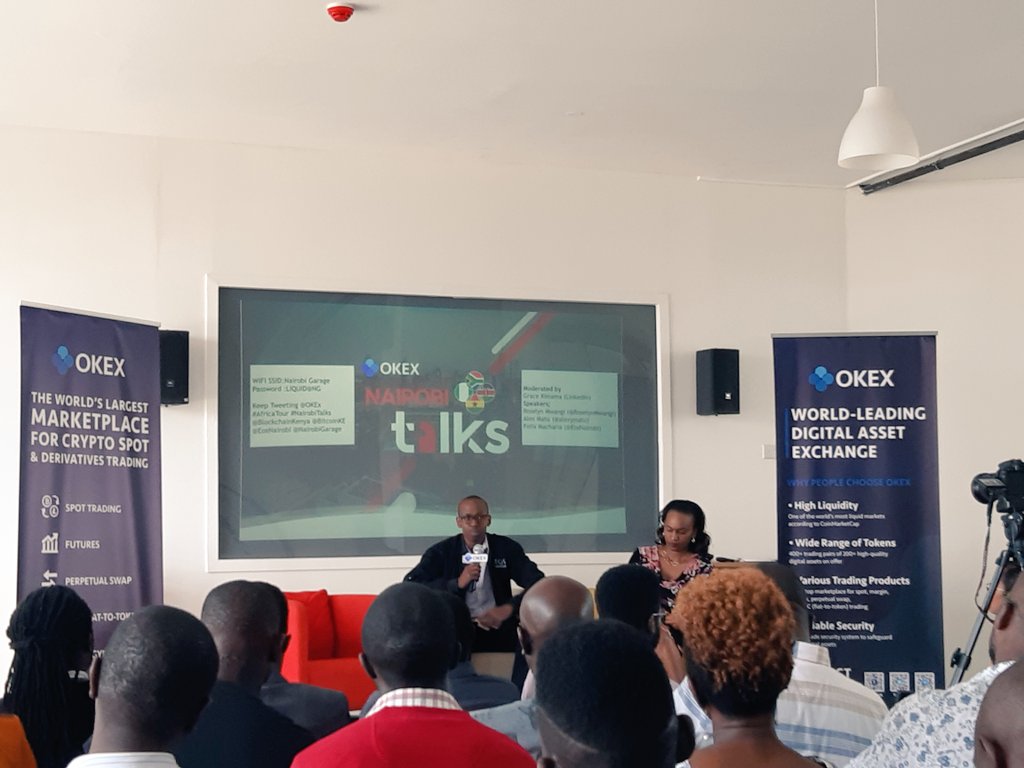
A week after another, especially on weekends, you will find cryptocurrency and blockchain meetups and events hosted at various places in Nairobi. A quick lookup at Meetup and Eventbrite generates several searches about meetups and events aligned to crypto and blockchain interests, as well as trading tutorials, past and those that are yet to be hosted, with a motive of discussing opportunities in cryptocurrencies and blockchain space. They are about a technology and digital money that is poised to take over the world after fiat (national currencies) — and cryptocurrency is nicknamed the “next generation” money.
Photo courtesy of Roselyn Mwangi
During these events, speaker and guest after another will praise this “newly found‘ solution for all things money, finance, and economy in general. Meet the new young and old crypto enthusiasts, traders, investors, leaders, experts, trainers, and CEOs of young companies in this space. And Kenya, like the rest of the world, is preparing to host not just the few local and international groups, experts, companies, and startups that are already positioning themselves ready to the take mantle in the cryptocurrency digital space especially in developing nations but also see “traditional” companies converted to cryptocurrency business with a rebrand.
All have a promise for a digital revolution, making businesses easier and cost-effective by way of reducing middlemen, introducing instant payment for businesses, revolutionizing the way we manage information in almost every sector of our economies, and the possibility for providing new job and business/investment opportunities such as through trading exchanges and crypto careers.
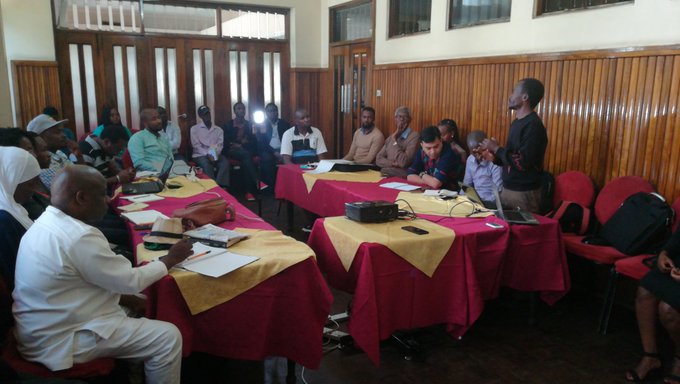
But what exactly is the role and future of cryptocurrencies and blockchain solutions in developing nations like Kenya? Is it a promise we can bank on and in the long run? One of such events was hosted last weekend by Cryptocurrency Academy, an education solution for all things crypto and blockchain, for both the young and old.
Blockchain gaining more acceptance and crypto adoption is real in the country
Unlike five or three years ago, now blockchain technology needs no further introduction within government and private sector circles. In Kenya alone, like the rest of the developed and developing world, blockchain, coupled with Artificial Intelligence and other tech could become the new normal for how we do private and public government business a few years to come if the recommendations by the Kenya Blockchain & Artificial Intelligence (AI) Taskforce andBlockchain Association of Kenya are anything to go by.
These technologies, going by the “hype”, could propel a whole generation, wipe out poverty and unemployment in no time, simply by re-looking at data and information management and information movement, information security and revolutionizing payments platforms. Without hype, implementation of blockchain could help reduce corruption, improve the efficiency of private and public sector processes, reduce the cost of doing business and unlock trillion dollars informational economies in entirely any sector of any economy. But much is to be done to achieve that goal.
According to the Kenya Blockchain & Artificial Intelligence (AI) Taskforce report released earlier this year, Kenya requires to adopt the technology to not only deal with rampant corruption but in order to improve business and government processes. The report is full of recommendations that include the necessity of the country launching a central bank controlled digital currency and which can be traded globally. If there would be anything to pick about blockchain and digital assets from the report, the country is about to further cement the important role blockchain and digital currency can play in bettering financial inclusion, reducing transaction costs within business and non-commercial operations, helping with delivery of affordable housing, improving health and drug safety and medical supply traceability, improving land titling and many other things.
Cryptocurrencies aside, if the report can inform the government’s approach towards blockchain, the findings of the report could help encourage further expansion of the blockchain space in the country for instance by encouraging private and public ventures in the space and creating necessary conditions for their thriving.
More Kenya-born and grown startups
On the ground, although local blockchain and cryptocurrency ventures are hardly mentioned outside of the crypto circles and beyond crypto media channels such as BitcoinKe or even cryptomorrow.com, you will be encouraged to meet startups born and grown in Kenya. And the number is increasing. Ubrica (Ustawi Biomedical Research Innovation and Industrial Centers of Africa) for instance, a crypto project specializing in life science and health production, is using Ubricoin to incentivize biomedical research and facilitate quality healthcare in the country.
During the cryptocurrency education campaign event or class held last weekend at the Ambassador hotel and organized by yet another crypto education-oriented Kenyan-based Cryptocurrency Academy, Ubrica project and Ubricoin President Dr. Macharia Waruingi said that cryptocurrency has potential to bring the required changes in health and other sectors of the economy and that digital assets are the future for the country. That indeed, crypto and blockchain can help end poverty and diseases.
The company aims at solving low-quality health in Kenya, lack of access to health service and the high cost of healthcare services.
“Cryptocurrency is the money of the future and that is precisely where we want to be,” Said Waruinge. “If you don’t have cryptocurrencies in 5 years, you are out of money. The good thing about cryptocurrency is easy to handle. It’s like what we call “Whatsapp.’ It’s on the phone..everybody’s phone.”
The company uses Ethereum blockchain and crypto to facilitate a market (Sokojanja) for and global movement of local produce and healthcare goods and services.
“And because it is money, we create enough money to support healthcare development in our own nation,” He said. The coin is listed on CoinMarketCap.
Still, there will be many international cryptocurrency projects with local presence in Kenya and developing worlds of Africa, among them DIVI Project and DagCoin just to mention a few,
Locally-inspired crypto and blockchain development initiatives
There are a host of limitations and conditions to adhere to when it comes to the utilization and integration of global cryptocurrency payment gateways and fiat payment gateways for platforms and organizations in the local scene. Many are denied linkages at local scenes because local payment methods may be seen and regarded not as competitive enough at the global scene, security-wise.
Thus the presence of a strong local developer community comes in handy. And Kenya’s crypto developer community is becoming larger by day. Represented at the event was KeshoLabs, a Kenyan-based blockchain innovation, and development hub/center, represented by their Chief Marketing Office Roselyne Wanjiru. Like the EOS Nairobi community, KeshoLabs community of blockchain developers and innovators develop in-house solutions as well as nature local and Africa-born blockchain solutions that can be banked on.
Some of their notable innovations include mobile-based Pesabase, a payment, and a remittance solution that allows people to send money and pay for goods and services across East Africa.
They are also into offering training and education, with Cryptocurrency Academy being at the forefront of equipping everyone including cryptocurrency traders, crypto investors, blockchain innovators, and even young generations with practical knowledge about cryptocurrencies and blockchain. They are considering incentivized cryptocurrency education with beginner and detailed training modules targeted at starters and advanced traders and investors in the space. CEO of CCA Joyce Shiphra said blockchain and crypto training offered by the startup would help people to learn the opportunities including job opportunities in the crypto and blockchain space. She said the introductory tutorial was meant to introduce the basics of blockchain and digital money but more was on the way. CCA also offers more: ICO reviews and cryptocurrency project analysis for its audience and is coming back in the space after a few years of dormancy.
Outta scams and into adequate knowledge and information
Brian Adams Kuria, the COO of Cryptocurrency Academy was among the earliest guys to get into crypto in the country when very few hands could get a hold. He said he was motivated by profits and “money” to get into this space, but he later came to realize the potential of the entire space if people would be empowered through knowledge to participate. Himself has earned lots of money trading on crypto exchanges such as OKEx and Binance and investing in ICOs especially in 2017 and 2018 but has fallen to different scams that were popular in 2017 and 2018 in the country when cryptocurrency buzz grew to surmountable levels in the country, especially during the meteoric rise of Bitcoin prices so much that everyone wanted in which made unsuspecting people fall easily to scams from local and global scams that have since vanished with their money.
During the Bitcoin’s meteoric rise in 2017, I was already busy at Crypromorrow writing and advising people regarding trading and discussing all things crypto and blockchain and how to avoid scams and identify genuine crypto projects. Guests at the event agreed that scams are a major impediment to the success of genuine crypto and blockchain projects in the country. Even to new entrants. Our journalist for the event, who is also a motivational speaker, Keith Muoki, himself said had been scammed by a cryptocurrency exchange known as change high and $3000 bit the dust the first month he got into crypto this year. The exchange claims to facilitate quick and easier PayPal crypto purchases. Even in local peer to peer exchanges like Paxful and local bitcoin, stories are live about charge-back based scams. It makes sense for everyone to be equipped with enough knowledge and information about digital currency.
“What we learned when I came into the cryptocurrency space in 2017, even before OKEx, is that there are many scams in cryptocurrency in Kenya.” David Kariuki, Community Manager for OKEx, a global cryptocurrency exchange said. “That is why OKEx is partnering with Cryptocurrency Academy to provide people who want to trade and invest in cryptocurrency with the right knowledge and information on genuine platforms they can use and how to do it.”
Echoing the statement that blockchain and crypto are the future of economic, financial and business systems of the world given their potential to cut down lengthy and costly processes and eliminate middlemen, he said the partners are trying to raise a serious debate around crypto and blockchain topics to help people discover the many opportunities abound in this industry and each to find their place in it.
“Each has a place in the crypto world including the middlemen,” he said.
OKEx is partnering with local trainers in order to host local events and training month after another, about crypto trading and investing and all matters cryptocurrency, to equip people interested in trading and investing and the blockchain space in general. Kariuki said given scams in the space, people needed exchanges and platforms to assure them the security of their money when trading and investing whenever they deposit, to ensure the money doesn’t just disappear.
Nevertheless, cryptocurrency, like in any field, success won’t come by giving up or burying your head into the sand and stopping once you are scammed. It is not a field for the faint-hearted and will require persistence and trying out new things.
“Whenever I got scammed, I came across something new that got my attention, so I wanted to dig more and find more information about what is this what is this blockchain, what is this Ethereum what is this whole thing Cryptocurrency Academy?” Said Adams. “And each and every day you find that the whole market cap was rising in terms of value so that really kept me going, but what I really wanted most is to learn and you find that this industry keeps evolving at a very fast rate. Every time you find something new. We had ICOs Initial Coin Offerings now we have other things like staking, lending and mining and all that. And you find they are very nice ways of positioning yourself for the future.”
Still, even as cryptocurrency offers such as margin trading on OKEx, Binance and other cryptocurrency exchanges get too tempting, buyers and sellers willing to earn profits from trading and investing need to be more careful. Comes back to the need to gain more information about crypto trading and investing.
“I would really advise for anyone before you get into margin trading, please understand how to trade because margin trading is basically borrowing money,” Said Adams. “Let’s say you have $1000 and you can borrow 2 times what you are holding, but it means whenever you are making losses the OKEx platform never incurs any losses so if you borrow $2000 it means you are making a 2% loss. You have incurred a 2% loss of $2000 on your $1000. So you really need to understand how to trade. You really need to understand how to mitigate risks. How to control emotions and that’s the psychology part of it.”
It’s what they will be teaching to those willing to look at this investing and trading opportunity. Himself started trading in 2017, said it took a couple of years to learn the art and has tried margin trading at OKEx and other platforms. He said people need to be careful with such things as fear of missing out because price decrease when one has taken leverage or margins can mean a huge loss.
George Mwakisha Africa’s Business and Investment Manager for KubitX said cryptocurrency trading and investing is very lucrative right now but advised traders and investors to first gain adequate information, start by learning to trade and invest in crypto before they can get in. They should do own research for any cryptocurrency they want to invest in, check the legitimacy of the project, start small according to their estimation, consult where possible.
How to identify genuine and scammy project? check background thoroughly, take time to dig details of owners and rely on informed analysis.
The entry of global exchanges and companies will boost space
Remitano, Bitpesa, Belfrics, Localbitcoins, and Paxful are all popular names among local Kenyan crypto traders, being cryptocurrency exchanges and crypto purchase platforms that are based and developed out of the country or have good coverage if not developed in the country (for the likes of localbitcoins and paxful). They facilitate the direct exchange of local currency (fiat such as Kenya Shillings) with cryptocurrencies such as Bitcoin. The bad side is that they are not only too expensive but also they do not support as much crypto pairs beyond bitcoin or Ethereum. Not much.
Right now, there isn’t as much demand for local crypto-to-crypto exchanging services which is what most global exchanges with a physical local presence are both offering currently with possibilities of extending local fiat linkages. But as the cryptocurrency space expands, and as more dApps keep developing on top of popular platforms such as Ethereum and Tron, more demand for crypto-crypto exchanging on OKEx and other exchanges is going to arise.
That would create more demand for tokens other than Bitcoin. Branding has never been so important like now at such a time when many people are looking for not just heavyweight but genuine non-scam exchanges to call home. Its time to get things right.
Pan-African exchange KubitX is working on supporting local currency (fiat) purchases of cryptocurrency and is developing the solution through Interswitch banking gateway in order to allow customers to buy crypto with money in their bank accounts; said George Mwakisha Africa’s Business and Investment Manager for KubitX. For now, many will need to be comfortable with buying Bitcoin and crypto from the local peer to peer exchanges and depositing that into exchanges that do not offer fiat linkages or solutions (buying and selling cryptocurrencies with local currency) except likes of OKEx where a customer to customer transaction is set to be enabled.
When it comes to direct payment gateways where an exchange integrates fiat or local currency payment method to allow customers buy directly from cryptocurrency exchange through methods such as MPESA, PayPal and banks, regulation and politics around crypto could take a tighter grip to protect fiat methods unless where innovations such as Customer to customer (c2c) payments can be used where a customer would send local currency directly to another customer say to their bank, PayPal accounts, or mobile phone when using mobile payment methods. But those have their challenges as well when it comes to implementation.
Nevertheless, Mwakisha said local exchanges are short of options such as margin trading offered at OKEx, which is set to hold another event on November 30 to train people on cryptocurrency margin trading. He said OKEx is now focusing on Africa and is starting to offer such new services in Africa which local exchanges are missing on.
OKEx offers other services such as mining, staking, and piggybank where customers can deposit cryptocurrency and earn from their spare tokens and Bitcoin. It offers more than 100 token pairs for trading and different customers who love buying into ICOs and IEOs to hold (hodl) coins hoping to sell them at high prices later have reported profits. Still, although buying at local exchanges is more costly, one can deposit Bitcoin to trade margins, hold, save, or to swing/day trade on this and other exchange.
David is the Community Manager for OKEx in Kenya. Telegram: @DavidKariukiN
Join us on Telegram @okexofficial_ky for more as well as for local events