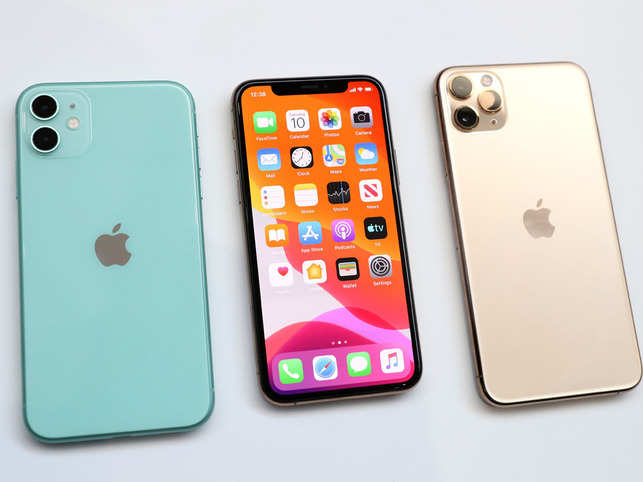
Apple unveiled its iPhone 17 lineup on Tuesday, featuring its thinnest smartphone ever, as the tech giant works to prove it can keep pace in the generative AI race.
The Silicon Valley powerhouse held its annual iPhone release event amid mounting pressures: the White House is pushing the company to reduce its dependence on Chinese manufacturing, while investors question whether Apple is truly ready for the AI age.
Adding to these challenges, the company faces headwinds from President Donald Trump’s high tariff policies. Apple shares have dropped more than three per cent since the Republican took office in January.
Against this backdrop, Apple is betting on a product that it hopes will spark a super-cycle of iPhone purchases and reverse the trend of customers holding onto their devices longer before upgrading.
To reinvigorate its brand, Apple introduced the iPhone 17 Air, which CEO Tim Cook called “a total game changer.”
At just 5.6mm thick, the $999 device features Apple’s new A19 Pro processor — its most powerful iPhone chip to date — and promises all-day battery life with up to 40 hours of video playback.
The Air joins Apple’s standard lineup, including the premium iPhone Pro 17, the company’s most expensive and highest-performing model.
While all new devices incorporate generative AI technology, Apple made no major announcements about expanding its AI capabilities beyond updates to existing features in its “Apple Intelligence” suite.
The company’s AI push has struggled to gain traction since it launched “Apple Intelligence” late last year. Users have been particularly disappointed with improvements to Siri, which remains surprisingly basic despite years of promises.
Apple reportedly plans to integrate AI into online search next year and overhaul Siri, though the company hasn’t confirmed these reports.
The tech giant is also said to be partnering with Google to tap into its search and AI expertise.
Pivot to Air
Industry analysts see the iPhone Air as a strategic pivot, with Apple positioning ultra-thin design — rather than larger screens — as its new premium selling point.
The super-slim profile could also pave the way for Apple’s long-rumoured foldable iPhone, expected as early as next year. Samsung and China’s Huawei already offer foldable smartphones.
However, engineering such thin devices presents challenges: higher production costs and reduced battery space, though Apple claims 24-hour battery life for the iPhone 17 Air when fully charged.
Despite tariffs that increase production costs, Apple kept iPhone prices unchanged from last year’s equivalent models — a move that may squeeze profit margins.
Cook revealed in July that Trump’s tariffs cost Apple $800 million last quarter, with an estimated $1.1 billion impact expected this quarter.
Apple shares fell 1.35 per cent shortly after pricing details were announced, reflecting investor concerns about the company’s ability to maintain its profit margins.
Apple also introduced the AirPods Pro 3, featuring enhanced noise cancellation and real-time translation capabilities, along with the Apple Watch Series 11, which includes 5G connectivity, extended battery life, and heart health monitoring features pending regulatory approval.
U.S. President Donald Trump threatened once again on Friday to ramp up his trade war, recommending a 50% tariff on European Union goods starting June 1 and warning Apple he may impose a 25% tariff on any iPhones manufactured outside the U.S.
The twin threats, delivered via social media, roiled global markets after weeks of de-escalation had provided some reprieve. The S&P 500 fell 0.9% in early trading, the Nasdaq fell 1.5%, and European shares fell 1.1%.
Trump’s latest broadside against the EU stemmed from his frustration at the lack of progress in trade talks with the bloc. U.S. Treasury Secretary Scott Bessent told Fox News on Friday that the 50% threat will hopefully “light a fire under the EU,” adding that other countries have been negotiating with Washington in good faith.
“The European Union, which was formed for the primary purpose of taking advantage of the United States on TRADE, has been very difficult to deal with,” Trump wrote on his Truth Social site. “Our discussions with them are going nowhere!”
The European Commission on Friday declined to comment on the new threat, saying it would wait for a phone call between EU trade chief Maros Sefcovic and his U.S. counterpart Jamieson Greer scheduled for Friday.
Envoys from the 27 EU countries are also due to meet on trade in Brussels later in the day.
Trump’s stop-and-start global trade war has rattled markets, sapped U.S. consumer and business confidence and raised investor fears of inflationary pressures and a global economic downturn.
In response to falling markets, the White House paused most of the punishing tariffs that Trump announced in early April against nearly every country in the world, leaving in place a 10% baseline tax on most imports. He also cut a massive 145% tax on Chinese goods to 30%.
“What is somewhat of a surprise is the fact that the EU will now face a considerably higher tariff rate than China, an almost unthinkable scenario just a matter of weeks ago,” said Lindsay James, investment strategist at Quilter.
“It is highlighting that much of this policy is designed to be punitive, rather than having any economic credibility to it.”
A 50% levy on EU imports could raise consumer prices on everything from German cars to Italian olive oil.
EU’s total exports to the United States last year totaled about 500 billion euros, led by Germany (161 billion euros), Ireland (72 billion euros) and Italy (65 billion euros). Pharmaceuticals, cars and auto parts, chemicals and aircraft were among the largest exports, according to EU data.
The White House has been in trade negotiations with numerous countries, but progress has been unsteady. Finance leaders from the Group of Seven industrialized democracies tried to downplay disputes over the tariffs earlier in the week at a forum in the Canadian Rocky Mountains.
“The EU is one of Trump’s least favorite regions, and he does not seem to have good relations with its leaders, which increases the chance of a prolonged trade war between the two,” said Kathleen Brooks, research director at XTB.
Shares in Germany’s carmakers and luxury companies, some of the most exposed to tariffs, fell. Porsche, Mercedes and BMW were down between 2% and 4.5% at 1320 GMT. Sunglasses company EssilorLuxottica was 5.5% lower.
Volvo Cars CEO Hakan Samuelsson told Reuters on Friday that customers would have to pay a large part of tariff-related cost increases, and that it could become impossible to import the smallest cars in the company’s lineup to the United States.
But he remained hopeful that Europe and the United States will soon come to an agreement.
“I believe there will be a deal soon. It could not be in the interest of Europe or the U.S. to shut down trade between them,” Samuelsson said.
TARGETING APPLE
“I have long ago informed Tim Cook of Apple that I expect their iPhones that will be sold in the United States of America will be manufactured and built in the United States, not India, or anyplace else,” Trump said in a post on Truth Social on Friday, referring to the Apple CEO.
“If that is not the case, a Tariff of at least 25% must be paid by Apple to the U.S.”
Trump did not give a timeframe for any Apple tariffs.
Shares of Apple fell 2.3% in early trading. More than 60 million phones are sold in the United States annually, but the country has no smartphone manufacturing.
Any effort to impose a tariff on Apple alone could face legal hurdles, according to experts.
“There’s no clear legal authority that permits company specific tariffs, but the Trump administration may try to shoehorn it under its emergency power authorities,” said Sally Stewart Liang, a partner at Akin Gump in Washington.
There are other ways to put company-specific tariffs in place, but they’re all subject to long investigations, such as those on anti-dumping, according to Liang.
Apple declined to comment on Trump’s threat.
In response to market upheaval, the White House had granted exclusions from steep tariffs on smartphones and some other electronics imported largely from China, a break for Apple and other tech firms that rely on imported products.
Apple is speeding up plans to make most of its iPhones sold in the United States at factories in India by the end of 2026 to navigate potentially higher tariffs in China, its main manufacturing base, a source told Reuters.
But Trump and others, including Commerce Secretary Howard Lutnick, have suggested Apple could make iPhones in the United States. In February, Apple said it will spend $500 billion over four years to expand hiring and facilities in nine American states, but it did not say the investment would go towards bringing iPhone manufacturing to the U.S.
“It is hard to imagine that Apple can be fully compliant with this request from the president in the next 3-5 years,” D.A. Davidson & Co analyst Gil Luria said.
(Reuters)—Your favorite iPhone could soon become much pricier, thanks to tariffs.
U.S. President Donald Trump imposed a series of sweeping tariffs on countries around the world that could drastically alter the landscape of global trade, and consumer goods like iPhones could be among the hardest hit, analysts said on Thursday, with increases of 30% to 40% if the company were to pass on the cost to consumers.
Most iPhones are still made in China, which was hit with a 54% tariff. If those levies persist, Apple (AAPL.O) has a tough choice: absorb the extra expense or pass it on to customers.
Shares of the company closed down 9.3% on Thursday, hitting their worst day since March 2020.
Apple sells more than 220 million iPhones a year; its biggest markets include the United States, China and Europe.
The cheapest iPhone 16 model was launched in the U.S. with a sticker price of $799, but could cost as much as $1,142, per calculations based on projections from analysts at Rosenblatt Securities, who say the cost could rise by 43% – if Apple is able to pass that on to consumers.
A more expensive iPhone 16 Pro Max, with a 6.9-inch display and 1 terabyte of storage, which currently retails at $1599, could cost nearly $2300 if a 43% increase were to pass to consumers.
Rosenblatt Securities says Apple needs to hike iPhone price by 43% to cover for tariffs.
Trump imposed tariffs on a wide range of Chinese imports in his first term as president to pressure U.S. companies to bring manufacturing either back to the United States or to nearby countries such as Mexico, but Apple secured exemptions or waivers for several products. This time, he has not yet granted any exemptions.
“This whole China tariff thing is playing out right now completely contrary to our expectation that American icon Apple would be kid-gloved, like last time,” Barton Crockett, analyst at Rosenblatt Securities, said in a note.
The iPhone 16e, launched in February as a cheaper entry point for Apple’s suite of artificial-intelligence features, costs $599. A 43% price hike could push that cost to $856. Prices of other Apple devices could jump as well.
Apple did not immediately respond to a request for comment. Many customers pay for their phones over a period of two or three years through contracts with their cellular providers.
However, other analysts noted that iPhone sales have been floundering in the company’s major markets, as Apple Intelligence, a suite of features that helps summarize notifications, rewrite emails and give users access to ChatGPT, has failed to enthuse buyers.
Expert reviews have suggested that the features, while innovative, do not provide enough of a compelling reason to justify upgrading to newer models.
The stagnation in demand could put additional pressure on Apple’s bottom line, especially if costs rise due to tariffs.
Angelo Zino, equity analyst at CFRA Research, said the company will have a tough time passing on more than 5% to 10% of the cost to consumers.
“We expect Apple to hold off on any major increases on phones until this fall when its iPhone 17 is set to launch, as it is typically how it handles planned price hikes.”
Even with some production moving to Vietnam and India, most iPhones are still made in China, and those countries were not spared from tariffs either, with Vietnam getting a 46% levy and India’s coming in at 26%.
Apple would need to raise its prices by at least 30% on average to offset import duties, according to Counterpoint Research co-founder Neil Shah.
A potentially sharp price hike could dampen demand for the smartphone and give South Korea’s Samsung Electronics (005930.KS) an edge, as the Asian country faces lower tariffs than China, where all iPhones sold in the U.S. are made.
This map shows the percentage of reciprocal tariffs imposed by the U.S. administration on each economy.
“Our quick math on Trump’s tariff Liberation Day suggests this could blow up Apple, potentially costing the company up to $40 billion,” Rosenblatt Securities’ Crockett noted, adding that negotiations between Apple, China and the White House are likely.
“It’s hard for us to imagine Trump blowing up an American icon…but this looks pretty tough.”
Apple has announced a new iPhone which brings artificial intelligence (AI) features at a lower cost than its flagship handsets.
The iPhone 16e has the same processor as the larger iPhone 16, Apple said, with similar storage options, though a lower spec elsewhere, including fewer cameras.
Apple has been struggling to find a new product that excites consumers – sales of iPhones dropped at the end of last year.
It will be hoping that bringing enhanced AI functionality to a less expensive phone will address that – however analysts have been cautious about the sales boost such tools bring.
Its name is clearly a nod to its iPhone SE series, which were released from 2016 to 2022, and similarly priced significantly lower.
Apple said the iPhone 16e will be available for pre-order from February 21 in 59 countries.
It will launch in the UK for £599, which is £200 less than the iPhone 16 – but more than double what the original iPhone SE went for when it launched in 2016.
“This now becomes one of the most affordable powerful iPhones now on the market,” industry analyst Paolo Pescatore told BBC News.
“The move should help accelerate adoption and especially its foray into AI with Apple Intelligence.
“Apple’s trust and credibility is critical – this alone will help drive sales and lure users from rival devices and platforms.”
Apple Intelligence
Much of the conversation around the new handset will likely centre around its power, with Apple electing to use the same A18 chip behind its more expensive devices.
This means the 16e will be capable of playing the same games and running the same apps as other iPhones – though AI is likely at the heart of this decision.
Apple boss Tim Cook said in the announcement the new model featured “the performance, intelligence and privacy” Apple fans “expect” from the firm.
And he said the Apple Intelligence features on the device would “help you save time, quickly get more things done, and express yourself in new ways”.
The firm introduced its spin on the tech – Apple Intelligence – with this series of devices, which includes new tools for writing and incorporating OpenAI’s chatbot ChatGPT into Siri.
It hasn’t always gone well, with the firm at one point suspending its AI-generated news alerts after they created false headlines attributed to news organisations including the BBC.
It now presents the summaries in italics.
Apple said its new phone is “built for Apple Intelligence”, and pointed to certain features of the tech, like an easy way to clean up photos or search your image library.
Other phone manufacturers have similar features on their devices – though the iPhone 16e will be by far the cheapest way to access AI on an Apple handset.
“The iPhone 16e generates a new revenue stream for Apple, and this will be particularly noticeable in key markets like India, where iPhones are out of reach for most people,” said Forrester principal analyst Dipanjan Chatterjee.
“There is also a second-order effect of cheaper devices like the iPhone 16e, bringing new customers into the Apple ecosystem.
“We’ve seen a limited appetite among many of the installed base to upgrade from previous versions, but the new phone reduces the cost hurdle of joining the Apple Intelligence bandwagon.”
Apple’s current offerings are also underwhelming in light of the company’s prolific investments in research and development. Cory Johnson, Epistrophy Capital Research chief market strategist, said Apple has spent $189bn on R&D over the last decade alone.
“All we have to show for that is the HomePod and $3,500 ski goggles,” Johnson said. “AI should be right in Apple’s wheelhouse. But Apple fanboys, fangirls, and investors are right to be disappointed so far.”
On Monday, Apple launched several exciting new products, including the iPhone 16. This latest model features impressive upgrades designed to entice customers who have held onto older devices.
Since the iPhone 12 launched in 2020, Apple has offered few compelling reasons for users to upgrade.
The iPhone 12 introduced 5G connectivity, but many users find their current phone cameras meet their everyday needs without major changes.
About 300 million iPhones worldwide haven’t been upgraded in over four years, according to analyst Dan Ives from Wedbush.
This stagnation has led to sluggish iPhone sales, which account for half of Apple’s revenue.
Similarly, the Apple Watch and AirPods have seen only incremental upgrades, failing to motivate customers to invest in new devices.
iPhone 16
Apple’s new iPhone 16 is designed specifically for generative artificial intelligence (AI). This allows users to create text and images using natural language prompts. Customers can pre-order the iPhone 16 and iPhone 16 Pro starting Friday, with the official launch on September 20.
Camera Control Button: A new camera control feature enables users to access “visual intelligence” via a side button. Users can point the camera at a restaurant to pull up information such as reviews, menus, and reservation options. The feature can also identify dog breeds, landmarks, and help users add events to their calendars.
Siri Enhancements: Siri now pulls from users’ text messages to remind them of TV shows and music recommendations. For example, you can say, “Send Erica the photos from Saturday’s barbecue,” and Siri will automatically send the right photos to the correct person.
New Colors and Sizes: The iPhone 16 comes in white, black, teal, ultramarine, and pink. It offers two sizes: 6.1 inches for the iPhone 16 and 6.7 inches for the iPhone 16 Plus. The new models include a customizable Action Button and a camera control slider for easy access to various camera features.
Faster Processor: The iPhone 16 features 17% more system memory bandwidth, a glass-ceramic screen that’s 50% tougher, and a 40% faster GPU than previous models.
Pricing: The iPhone 16 starts at $799, while the iPhone 16 Plus starts at $899.
iPhone 16 Pro
The iPhone 16 Pro offers even more advanced AI features.
Larger Screens: The iPhone 16 Pro features a 6.3-inch entry-level Pro model and a 6.9-inch Pro Max, providing a larger display with thinner borders.
Longer Battery Life: This model boasts the longest battery life among iPhones, available in four colors: white titanium, darker titanium, natural titanium, and brown desert titanium.
4K Video Capability: The iPhone 16 Pro allows users to shoot 4K video at 120 frames per second. It can create slow-motion effects after recording, rather than during filming. Additionally, it features spatial audio for improved sound quality during video recordings.
Pricing: The iPhone 16 Pro starts at $999, and the iPhone 16 Pro Max starts at $1,199.
AirPods 4
Apple introduced the AirPods 4, claiming they are the most comfortable earbuds yet. The new design includes better fitting features, more control options for music and calls, and a USB-C charging case.
Active Noise Cancellation: The AirPods 4 offer features typically found in higher-end models, such as active noise cancellation and transparency mode, which allows users to hear ambient sounds.
Pricing: The AirPods 4 retail for $129, while those with active noise cancellation are priced at $179.
Hearing Aid Feature: The new AirPods Pro model includes a clinical-grade hearing aid feature, pending regulatory approval. Users can access a clinical hearing test on their iPhones.
Apple Watch 10
The new Apple Watch 10 is the thinnest smartwatch Apple has ever made, featuring the largest display—30% bigger than previous models.
New Look: The watch is available in a polished titanium finish in jet black, rose gold, and silver.
Sleep Apnea Detection: The latest watch can detect sleep apnea, a serious condition that can interrupt breathing during sleep. This feature is awaiting clearance from the FDA and will be available in over 150 countries soon.
Faster Charging: The Apple Watch 10 charges quickly, reaching 80% in just 30 minutes and offering up to 18 hours of battery life.
New Features: The watch is waterproof up to 20 feet and includes a water temperature sensor and a depth gauge, making it ideal for snorkeling.
Pricing and Availability: The Apple Watch 10 starts at $399 and is available for pre-order now, with a launch date of September 20.
Wrapping Up
Apple’s latest offerings—the iPhone 16, AirPods 4, and Apple Watch 10—are packed with features designed to attract customers back to their ecosystem. With advancements in AI, camera technology, and health tracking, these products aim to stimulate a new sales cycle for the tech giant.
Apple sent out threat notifications to users in 92 countries on Wednesday, informing them that they may have been the target of “mercenary spyware attacks,” a warning that comes as several countries are preparing to hold critical elections.
What you need to know
Apple updated the security notice on its website Wednesday, which states that threat notifications are “designed to inform and assist users who may have been individually targeted by mercenary spyware attacks.”
According to several Indian news outlets, including the Economic Times and the Indian Express, some iPhone users in the country received notifications from Apple alerting them of an attack “that is trying to remotely compromise the iPhone associated with your Apple ID.”
The notification informed the user they were likely being targeted specifically “because of who you are or what you do,” and urged them to take it “seriously.”
The reports do not name any individuals in India who received the notifications, but it comes just a week before the start of the country’s six-week general elections—the world’s largest democratic exercise.
Apple doesn’t include specific steps for users who have received the notifications, other than urging them to enlist help from cybersecurity experts.
BIG NUMBER
150. That’s the number of countries in which iPhone users have received threat notifications since 2021, the company said.
KEY BACKGROUND
In October, Apple sent out similar notifications to several prominent political leaders in India who represented opposition parties. Rahul Gandhi, the top leader of Congress—India’s main opposition party—told reporters he and several members of his and other opposition parties had received notifications that their iPhones were being targeted by “state-sponsored attackers.” At the time, Gandhi called out Prime Minister Narendra Modi’s government and accused them of carrying out the attack. Prominent activists and journalists who are critical of the Modi government also received the notification at the time. Apple confirmed it had sent out the notifications but said it had not attributed it to a “specific state-sponsored attacker.” In late December, Amnesty International said it had conducted a forensic investigation to confirm Apple’s findings and said NSO Group’s Pegasus spyware was used to carry out the attacks. Indian authorities publicly denied carrying out the attacks but, according to the Washington Post, they reportedly pressured Apple to “come up with alternative explanations for the warnings to users,” to ease the political fallout.
Cupertino-based tech giant Apple is in talks with Google to bring Gemini artificial intelligence (AI) engine to iPhones, a Bloomberg report said on Monday.
According to the report, the iPhone maker recently also had discussions with OpenAI, the developer of the immensely popular ChatGPT, for a possible licensing of their AI model.
If a deal on Gemini is reached, the two companies’ long-running partnership will deepen even though they will continue to rival each other in the smartphone realm with their Android and iOS operating systems.
Despite being direct competitors there, Google and Apple have had a mutualistic relationship as the former pays the latter billions of dollars every year to keep Google Search as the default in iPhones’ Safari browsers.
Being a secretive company, Apple has not so far talked about its own work on AI engines but has clearly fallen behind in the AI race despite massively popularizing it with the release of the iPhone 4S, which came packed with AI-based virtual assistant Siri in late 2011.
After 13 years, the capabilities of Siri have seen only an incremental increase while Google Assistant has proven to be invaluable for Android users.
A report by 9To5Mac news website claimed that the Siri code “is now a mess” beyond salvage due to the fact that Apple has kept its original code and only made additions to it after acquiring the namesake app – rather than “actually working on a new version of it.”
“The result is that the Siri code is now a mess, and what many sources say is that no one at Apple really wants to be the one to change it,” 9To5Mac’s Filipo Esposito said in the report.
US tech company Apple unveiled Monday new product models that include MacBook Pro, M1 chip, AirPods, HomePod, and software.
The new MacBook Pro is powered by the all-new M1 Pro and M1 Max – the first pro chips designed for the Mac, California-based firm said in a statement.
Available in 14- and 16-inch models, MacBook Pro has Liquid Retina XDR display, a 1080p FaceTime HD camera, while Apple argued it has the best audio system in a notebook.
Designed for developers, photographers, filmmakers, 3D artists, scientists, and music producers, the new models will start from $1,999 and will be available on Oct. 26.
The company has also updated its Final Cut Pro software for professional video editors and its professional music creation software Logic Pro that allows users to mix and export songs in Dolby Atmos.
Apple said in another statement that the new M1 Pro and M1 Max chips are the most powerful the Silicon Valley firm has ever built.
M1 Pro and M1 Max delivers up to 70% faster CPU performance than the traditional M1 chip, while the GPU in M1 Pro is up to two times faster than M1, and M1 Max is up to four times faster than M1, it added.
The 3rd generation of AirPods comes with a new design and feature extended battery life that has up to six hours of listening time, and up to 30 hours with its charging case. New AirPods will be in stores as of Oct. 26 for a price tag of $179.
“Users can enjoy spatial audio featuring Dolby Atmos in Apple Music, movies, and tv shows, along with dynamic head tracking, across Apple devices. The new AirPods are resistant to sweat and water, and feature a force sensor for easy and intuitive control of music and phone calls,” another statement said.
Apple’s smart speaker HomePod mini now has three more colors – yellow, orange and blue along with existing colors of white and space gray – and it has smart home capabilities, built-in privacy and security features, and Siri intelligence.
HomePod mini’s new colors will hit the shelves for $99 next month, and it will have seamless integration across its products and services.
Apple Music Voice Plan, a new subscription for Apple Music and designed around Siri, will cost $4.99 per month, giving access to a catalog of 90 million songs, personalized mixes, genre stations, and Apple Music Radio.
US tech firm Apple introduced Tuesday four new iPhone13 models at a virtual event held at its headquarters in Cupertino, California.
The new models include iPhone 13 mini, iPhone 13 with Super Retina XDR display with A15 bionic chip, which Apple dubbed as the fastest CPU in any smartphone with up to 50% faster than its nearest competitor.
Both supporting 5G, they have ceramic shield at front screen with water resistance, including dual-camera, coming with five new colors — pink, blue, midnight, starlight, and (PRODUCT)RED.
The dual-camera gathers 47% more light for less noise and brighter results in photos and videos, said Apple. The two models have a cinematic mode to enable users to capture cinema-like moments in their videos, which are shoot in Dolby Vision HDR.
While 5.4-inch iPhone 13 mini has 1.5 hours longer battery life than its predecessor, this is up to 2.5 longer for the 6.1-inch iPhone 13. They start at $699 and $799, respectively.
The higher models, iPhone 13 Pro and iPhone 13 Pro Max, have three ultra-wide cameras with six times optical zoom range. Their specifications mostly speak to film makers.
They come in four colors — graphite, gold, silver and blue. Their GPU provides 50% faster graphics performance than competitors, which Apple said is the leader in the sector.
Their Super Retina XDR display comes in 6.1 inches and 6.7 inches. As for battery life, iPhone 13 Pro and iPhone 13 Pro Max last 1.5 and 2.5 longer, respectively, compared to their predecessors. They start at $999 and $1,099.
For fitness users, Apple Watch Series 7 has nearly 20% larger screen area and 40% thinner edges than the previous model, and over 50% more screen area than Series 3. It will support Fitness+.
Dubbed as the most durable Apple Watch ever built, Series 7 has resistance against cracks, dust and water. Powered with WatchOS 8 that senses cycling activity, it has an 18-hour battery life, while it charges 33% faster than its predecessor. It starts at $399.
As for tablets, the new iPad carries A13 bionic chip with 20% faster CPU, GPU and neural engine than the previous one, which Apple said it is 3 times faster than Google’s Chromebook, and 6 times faster than the top-selling Android tablet. The new tablet supports the first-generation Apple Pencil. It is powered by iPadOS 15.
The new iPad Mini, which comes in four different colors with 5G, has a liquid retina display with a screen size raised to 8.3 inches. It has a 40% jump in CPU performance compared to its previous model. It has a 12 MP rear camera and ability to record in 4K, while it also supports Apple Pencil.
Both iPad models are built with a 100% recycled aluminum enclosure, according to Apple.
Apple’s iPhone smartphones by far continue to be the largest revenue generator for the company with $39.57 billion net sales in the third fiscal quarter, up 49.8% from the same period of last year.
Net sales of iPhone climbed to $153.1 billion for the nine months ending June — up 37.5% year-on-year, according to the company’s latest financial figures released on July 27.
Apple unveiled plans to scan U.S. iPhones for images of child sexual abuse, drawing applause from child protection groups but raising concern among some security researchers that the system could be misused by governments looking to surveil their citizens.
Apple said its messaging app will use on-device machine learning to warn about sensitive content without making private communications readable by the company. The tool Apple calls “neuralMatch” will detect known images of child sexual abuse without decrypting people’s messages. If it finds a match, the image will be reviewed by a human who can notify law enforcement if necessary.
But researchers say the tool could be put to other purposes such as government surveillance of dissidents or protesters.
Matthew Green of Johns Hopkins, a top cryptography researcher, was concerned that it could be used to frame innocent people by sending them harmless but malicious images designed designed to appear as matches for child porn, fooling Apple’s algorithm and alerting law enforcement — essentially framing people. “Researchers have been able to do this pretty easily,” he said.
Tech companies including Microsoft, Google, Facebook and others have for years been sharing “hash lists” of known images of child sexual abuse. Apple has also been scanning user files stored in its iCloud service, which is not as securely encrypted as its messages, for such images.
Some say this technology could leave the company vulnerable to political pressure in authoritarian states such as China. “What happens when the Chinese government says, ‘Here is a list of files that we want you to scan for,’” Green said. “Does Apple say no? I hope they say no, but their technology won’t say no.”
The company has been under pressure from governments and law enforcement to allow for surveillance of encrypted data. Coming up with the security measures required Apple to perform a delicate balancing act between cracking down on the exploitation of children while keeping its high-profile commitment to protecting the privacy of its users.
Apple believes it pulled off that feat with technology that it developed in consultation with several prominent cryptographers, including Stanford University professor Dan Boneh, whose work in the field has won a Turing Award, often called technology’s version of the Nobel Prize.
The computer scientist who more than a decade ago invented PhotoDNA, the technology used by law enforcement to identify child pornography online, acknowledged the potential for abuse of Apple’s system but said it was far outweighed by the imperative of battling child sexual abuse.
“It possible? Of course. But is it something that I’m concerned about? No,” said Hany Farid, a researcher at the University of California at Berkeley, who argues that plenty of other programs designed to secure devices from various threats haven’t seen “this type of mission creep.” For example, WhatsApp provides users with end-to-end encryption to protect their privacy, but employs a system for detecting malware and warning users not to click on harmful links.
Apple was one of the first major companies to embrace “end-to-end” encryption, in which messages are scrambled so that only their senders and recipients can read them. Law enforcement, however, has long pressured for access to that information in order to investigate crimes such as terrorism or child sexual exploitation.
“Apple’s expanded protection for children is a game changer,” John Clark, the president and CEO of the National Center for Missing and Exploited Children, said in a statement. “With so many people using Apple products, these new safety measures have lifesaving potential for children who are being enticed online and whose horrific images are being circulated in child sexual abuse material.”
Julia Cordua, the CEO of Thorn, said that Apple’s technology balances “the need for privacy with digital safety for children.” Thorn, a nonprofit founded by Demi Moore and Ashton Kutcher, uses technology to help protect children from sexual abuse by identifying victims and working with tech platforms.
New evidence uncovered by Amnesty International and Forbidden Stories has revealed a massive wave of attacks by cyber surveillance company NSO Group’s customers on iPhones, potentially affecting thousands of Apple users worldwide.
Our forensic analysis has uncovered irrefutable evidence that through iMessage zero-click attacks, NSO’s spyware has successfully infected iPhone 11 and iPhone 12 models. Thousands of iPhones have potentially been compromised.
Deputy Director of Amnesty Tech Danna Ingleton said:
“Apple prides itself on its security and privacy features, but NSO Group has ripped these apart. Our forensic analysis has uncovered irrefutable evidence that through iMessage zero-click attacks, NSO’s spyware has successfully infected iPhone 11 and iPhone 12 models. Thousands of iPhones have potentially been compromised.
“These attacks have exposed activists, journalists and politicians all over the world to the risk of having their whereabouts monitored, and their personal information and used against them.
“This is a global concern – anyone and everyone is at risk, and even technology giants like Apple are ill-equipped to deal with the massive scale of surveillance at hand.
“NSO Group can no longer hide behind the claim that its spyware is only used to fight crime. There is overwhelming evidence that NSO spyware is being systematically used for repression and other human rights violations. NSO Group must immediately stop selling its equipment to governments with a track record of abusing human rights.
“These findings show that the surveillance industry is out of control. States must immediately implement a global moratorium on the export, sale and use of surveillance equipment until a human rights-compliant regulatory framework is in place.”
Background
NSO Group’s spyware has been used to facilitate human rights violations around the world on a massive scale, according to a major investigation into the leak of 50,000 phone numbers of potential surveillance targets. These include heads of state, activists and journalists, including Jamal Khashoggi’s family.
The Pegasus Project is a ground-breaking collaboration by more than 80 journalists from 17 media organizations in 10 countries coordinated by Forbidden Stories, a Paris-based media non-profit, with the technical support of Amnesty International, who conducted cutting- edge forensic tests on mobile phones to identify traces of the spyware.
The investigation today revealed that Pegasus zero-click attacks have been used to install spyware on iPhones.
Amnesty International was able to confirm that thousands of iPhones were listed as potential targets for Pegasus spyware, though it was not possible to confirm how many were successfully hacked.
Thousands of Google Android phones were also selected for targeting, but unlike iPhones their operating systems do not keep accessible logs useful for detecting Pegasus spyware infection. Among the Apple products successfully infected were iPhone 11 and iPhone 12 models, equipped with the latest updates which were believed to have high levels of security.
Israeli surveillance company NSO Group has been bankrolled by major private equity firms Novalpina Capital and Francisco Partners, with numerous investors behind them. Pension firms in the UK and US also have a stake in the rights abusing company.
The Pegasus Project
NSO Group’s spyware has been used to facilitate human rights violations around the world on a massive scale, according to a major investigation into the leak of 50,000 phone numbers of potential surveillance targets. These include heads of state, activists and journalists, including Jamal Khashoggi’s family.
The Pegasus Project lays bare how NSO’s spyware is a weapon of choice for repressive governments seeking to silence journalists, attack activists and crush dissent, placing countless lives in peril.
The Pegasus Project is a ground-breaking collaboration by more than 80 journalists from 17 media organizations in 10 countries coordinated by Forbidden Stories, a Paris-based media non-profit, with the technical support of Amnesty International, who conducted cutting- edge forensic testson mobile phones to identify traces of the spyware.
“The Pegasus Project lays bare how NSO’s spyware is a weapon of choice for repressive governments seeking to silence journalists, attack activists and crush dissent, placing countless lives in peril,” said Agnès Callamard, Secretary General of Amnesty International.
“These revelations blow apart any claims by NSO that such attacks are rare and down to rogue use of their technology. While the company claims its spyware is only used for legitimate criminal and terror investigations, it’s clear its technology facilitates systemic abuse. They paint a picture of legitimacy, while profiting from widespread human rights violations.”
“Clearly, their actions pose larger questions about the wholesale lack of regulation that has created a wild west of rampant abusive targeting of activists and journalists. Until this company and the industry as a whole can show it is capable of respecting human rights, there must be an immediate moratorium on the export, sale, transfer and use of surveillance technology.”
In a written response to Forbidden Stories and its media partners, NSO Group said it “firmly denies… false claims” in the report. It wrote that the consortium’s reporting was based on “wrong assumptions” and “uncorroborated theories” and reiterated that the company was on a “life-saving mission”. A fuller summary of NSO Group’s response is available here.
The Investigation
At the centre of this investigation is NSO Group’s Pegasus spyware which, when surreptitiously installed on victims’ phones, allows an attacker complete access to the device’s messages, emails, media, microphone, camera, calls and contacts.
Over the next week, media partners of The Pegasus Project – including The Guardian, Le Monde, Süddeutsche Zeitung and The Washington Post – will run a series of stories exposing details of how world leaders, politicians, human rights activists, and journalists have been selected as potential targets of this spyware.
From the leaked data and their investigations, Forbidden Stories and its media partners identified potential NSO clients in 11 countries: Azerbaijan, Bahrain, Hungary, India, Kazakhstan, Mexico, Morocco, Rwanda, Saudi Arabia, Togo, and the United Arab Emirates (UAE).
NSO Group has not taken adequate action to stop the use of its tools for unlawful targeted surveillance of activists and journalists, despite the fact that it either knew, or arguably ought to have known, that this was taking place.
The Pegasus Project revelations must act as a catalyst for change. The surveillance industry must no longer be afforded a laissez-faire approach from governments with a vested interest in using this technology to commit human rights violations.
“As a first step, NSO Group must immediately shut down clients’ systems where there is credible evidence of misuse. The Pegasus Project provides this in abundance,” said Agnès Callamard.
Khashoggi family targeted
During the investigation, evidence has also emerged that family members of Saudi journalist Jamal Khashoggi were targeted with Pegasus software before and after his murder in Istanbul on 2 October 2018 by Saudi operatives, despite repeated denials from NSO Group.
Amnesty International’s Security Lab established that Pegasus spyware was successfully installed on the phone of Khashoggi’s fiancée Hatice Cengiz just four days after his murder.
His wife, Hanan Elatr was also repeatedly targeted with the spyware between September 2017 and April 2018 as well as his son, Abdullah, who was also selected as a target along with other family members in Saudi Arabia and the UAE.
In a statement, the NSO Group responded to the Pegasus Project allegations saying that its “technology was not associated in any way with the heinous murder of Jamal Khashoggi”. The company said that it “previously investigated this claim, immediately after the heinous murder, which again, is being made without validation”.
Journalists under attack
The investigation has so far identified at least 180 journalists in 20 countries who were selected for potential targeting with NSO spyware between 2016 to June 2021, including in Azerbaijan, Hungary, India and Morocco, countries where crackdowns against independent media have intensified.
The revelations show the real-world harm caused by unlawful surveillance:
In Mexico, journalist Cecilio Pineda’s phone was selected for targeting just weeks before his killing in 2017. The Pegasus Project identified at least 25 Mexican journalists were selected for targeting over a two-year period. NSO has denied that even if Pineda’s phone had been targeted, data collected from his phone contributed to his death.
Pegasus has been used in Azerbaijan, a country where only a few independent media outlets remain. More than 40 Azerbaijani journalists were selected as potential targets according to the investigation. Amnesty International’s Security Lab found the phone of Sevinc Vaqifqizi, a freelance journalist for independent media outlet Meydan TV, was infected over a two-year period until May 2021.
In India, at least 40 journalists from nearly every major media outlet in the country were selected as potential targets between 2017-2021. Forensic tests revealed the phones of Siddharth Varadarajan and MK Venu, co-founders of independent online outlet The Wire, were infected with Pegasus spyware as recently as June 2021.
The investigation also identified journalists working for major international media including the Associated Press, CNN, The New York Times and Reuters as potential targets. One of the highest profile journalists was Roula Khalaf, the editor of the Financial Times.
“The number of journalists identified as targets vividly illustrates how Pegasus is used as a tool to intimidate critical media. It is about controlling public narrative, resisting scrutiny, and suppressing any dissenting voice,” said Agnès Callamard.
“These revelations must act as a catalyst for change. The surveillance industry must no longer be afforded a laissez-faire approach from governments with a vested interest in using this technology to commit human rights violations.”
Exposing Pegasus infrastructure
Amnesty International is today releasing the full technical details of its Security Lab’s in-depth forensic investigations as part of the Pegasus Project.
The Lab’s methodology report documents the evolution of Pegasus spyware attacks since 2018, with details on the spyware’s infrastructure, including more than 700 Pegasus-related domains.
“NSO claims its spyware is undetectable and only used for legitimate criminal investigations. We have now provided irrefutable evidence of this ludicrous falsehood,” said Etienne Maynier, a technologist at Amnesty International’s Security Lab.
There is nothing to suggest that NSO’s customers did not also use Pegasus in terrorism and crime investigations, and the Forbidden Stories consortium also found numbers in the data belonging to suspected criminals.
“The widespread violations Pegasus facilitates must stop. Our hope is the damning evidence published over the next week will lead governments to overhaul a surveillance industry that is out of control,” said Etienne Maynier.
In response to a request for comment by media organizations involved in the Pegasus Project, NSO Group said it “firmly denies” the claims and stated that “many of them are uncorroborated theories which raise serious doubts about the reliability of your sources, as well as the basis of your story.” NSO Group did not confirm or deny which governments are NSO Group’s customers, although it said that the Pegasus Project had made “incorrect assumptions” in this regard. Notwithstanding its general denial of the claims, NSO Group said it “will continue to investigate all credible claims of misuse and take appropriate action based on the results of these investigations”.
The iPhone maker Apple Inc has been sued by a New York University cardiologist who alleges that the Tech Giant firm’s Apple Watch uses his patented heartbeat-monitoring invention and he wants compensation.
Yesterday, Dr Joseph Wiesel, who teaches at New York University School of Medicine filed the lawsuit in federal court in Brooklyn. According to Wiesel, Apple Watch violates his patent for a method to detect an irregular heartbeat.
The case is Wiesel v. Apple Inc., 19-7261, U.S. District Court for the Eastern District of New York (Brooklyn)
Apple wearables segment generated more than $24 billion in sales profits last year. The segment which entails Apple Watch, Apple TV and Beats headphones, generated more profits after Apple marketed a feature in the watch that can measure the wearer’s heart rate and provide notifications of an irregular pulse.
According to Wiesel, his invention covered “pioneering steps in atrial fibrillation detection by monitoring irregular pulse rhythms from a succession of time intervals.”
He wants the court to order Apple to pay him royalties and block the company from using his invention without permission. Wiesel said Apple refused to negotiate in good faith to avoid this lawsuit when he first contacted Apple in September 2017 giving the California-based company detailed information about the patent.
According to a report by BBC, the Russian Parliament has passed new legislation for electronics that run apps to have pre-installed Russian software.
According to new the bill, electronics such as smartphones, computers, and smart TVs must be sold with locally-made Russian software pre-installed. This means apart from the first-party software, the devices should have Russian alternatives pre-installed in order to qualify for their sale to avoid being banned in the country.
The new law will be effective from July 2020. This might lead to a ban on not only Apple iPhones but also other products with foreign software. Inside the Russian parliament Photo|Al Jazeera
The European Union has a similar law which has made Android OEMs to let users select their choice of apps while setting up the device. In this case, Apple, Samsung, and other major electronics manufacturers may choose not to sell their devices in the Russian Federation instead of having to install varied software.
As the Kremlin prepares to roll out the list of every gadget that will need to be updated, it is not physically possible to install Russian-made software on all devices. A move the Federal Government says will attract manufacturers from the Russian market.
“When we buy complex electronic devices, they already have individual applications, mostly Western ones, pre-installed on them. Naturally, when a person sees them… they might think that there are no domestic alternatives available. And if alongside pre-installed applications, we will also offer the Russian ones to users, then they will have a right to choose.” Oleg Nikolayev, one of the co-authors of the legislation said.
According to the Association of Trading Companies and Manufacturers of Electrical Household and Computer Equipment (RATEK), it is not possible for many worldwide companies to install Russian-made software which means they will be forced to exit the market.
Apple’s iOS operating system is a closed system, it isn’t likely that the iPhone would be offered with unknown Russian software pre-loaded. Russia has slapped the smartphone giants off their markets.
Statcounter data report released early last month indicates that Samsung has the largest smartphone market share in Russia with 22.04 percent. China’s Huawei has a 15.99 percent market dominance then Apple’s iPhone with a market share of 15.83 percent.
This is coming at a time when the Kremlin had passed another controversial law. Two weeks ago, they legislated an Internet Law which enabled officials with the power to restrict internet traffic creating an internet firewall like the one in China.
India has slashed off taxes impossed on manufacturing and production in a move to attract global phone manufacturers like Apple to move production of their devices to the country.
India introduced new tax legislation which lower taxes in its manufacturing sector. The move aims at making the country more appealing to both local and international manufacturers.
“We have redone the entire architecture of taxation law as far as manufacturing is concerned. As of now, this corporate tax cut in itself is massive. Mobile phones already are a success story.” Prasad told The Economic Times
India’s Communication Minister believes that the tax cuts will attract players like Apple, Foxconn, and Flextronics planning to scale production in India.
“We are already the second biggest manufacturer of mobile phones in the world. Now, even Apple is coming in a big way, Foxconn 2 and 3 will launch base.” Prasad said.
Indian minister has said that they are setting up the country as main replacement of China as the ideal manufacturing destination for electronics.
“Apple reportedly is going to open its biggest state-of-the-art shop in Mumbai, and Samsung is withdrawing from China,” Prasad went on.
While Microsoft is heavily investing in Africa, India might likely win the deal owing to the previous production of low-cost iPhone models as well as the new tax cuts.
Apple has been very is open to the idea of shifting manufacturing from China to reduce its dependence. Moreover, RT reveals that Apple asked its suppliers to shift up to 30% of its production away from China.
Apple Inc, an American multinational technology company headquartered that designs, develops, and sells consumer electronics, computer software, and online services has already started making its fanatics to admire the next series of its unreleased products. iPhone 11 Pro was released just a few weeks ago!
According to an exciting new patent application from Apple, the company is looking to replicate the familiar feeling of typing on a keyboard to touchscreens. The patent, uncovered by Patently Apple, explains how haptic motors and electrostatic charges would make the virtual keys feel more like physical ones.
“Electrostatics may use an electrical field to attract and/or repel conductive objects, such as a user’s finger. Changing the normal force between a surface and a conductive object directly affects the friction between the two, and the resulting forces may be perceived as texture when the object moves,” the patent reads.
Basically, what Apple is saying is that this is something that looks like a keyboard on-screen that ‘feels’ like keys thanks to the imagined ‘texture’ and it should feel just like you’re typing on a regular keyboard. I don’t know if the theory FEELs from your end, me thinks this looks like a modernized past, and yes, I mean this feels good from my side. Or you are waiting to see it to believe it!
Still, it’s a fascinating idea and could prove a viable alternative for iPad keyboard cases and the like for people who only occasionally use their tablets for long-form writing.
But as ever, patents should come with a health warning: very few of them actually get made into products you can buy, especially with Apple which has over 80,000 of them. Whether we’ll see this particular one in a product likely depends on how well it works in practice.
Samsung, a South Korean multinational coalescence and mobile marker headquartered in Samsung Town, Seoul has invigorated its partnership with Microsoft Inc through a new series of apps and features such as OneDrive storage for photos and better syncing between the phone and computer in a move to take on the massive market dominance that Apple, the iPhone maker has since enjoyed for decades.
During the Unpacking event of the new rather, redesigned Galaxy Note 10 and Note 10 Plus, Microsoft CEO Satya Nadella said the new features will also help Samsung to better take on the Apple’s iPhone that launched their iPhone XR mid this year.
Samsung and Microsoft have been working together to offer features that have now made the Galaxy Note 10 phones work more easily with PCs. The phones will include Microsoft’sYour Phone appby default, allowing text messages to sync between a phone and a Windows-powered PC.
According to Samsung, their mobile users will be able to make and receive calls on the PC later this year too when finer detailed and upgraded features will be finalized.
Samsung’s phones can also use Microsoft’s OneDrive service to store photos. And Microsoft’s popular Outlook email program, as well as its Office productivity suite of Word, Excel, and PowerPoint will be included with each Galaxy Note 10.
“From calls and text messages to emails and photos, we’re making these everyday experiences great and the interactions between all the devices seamless,” Microsoft CEO Satya Nadella said this at Samsung’s Unpacked launch event that was held in New York yesterday.
This partnership, which expands on Microsoft’s previous work with Samsung, isn’t just a marriage of convenience, Nadella said. “The combination of Microsoft intelligent experiences and Samsung’s powerful, innovative new devices, like the Galaxy Note 10 and Galaxy Book S, make this possible.”
Tech is a field for the best innovators and makers. The battle between Apple and Samsung seems to have taken a different route, as it has been, Apple the iPhone maker has always had an upper hand with its sleek software updates and upgrades. iPhone’s handoff technology lets you start an email on an iPad and finish it on the Mac.
Apple’s iWork productivity suite, including its Pages word processor, Numbers spreadsheet app and Keynote presentation software, is free to every Mac and iPhone user. According to genius tech minds, Apple’s iCloud Photo Library service is considered to be the best competitor to Google Photos.
The features merger between Microsoft and Samsung can begin to bridge that gap and sooner or later, HiOS makers, which are the biggest global mobile distributors, can seat at the table and comfortably talk Tech with iOS markers.
“The ability to take that magic between an iPhone and Mac and bring that to Samsung is big. The tie-up makes even more sense when you consider that most people tend to use whatever comes with their phone. So using Outlook email by default will give Microsoft a boost,” said Creative Strategies analyst Carolina Milanesi.
“Microsoft has always struggled to do well in mobile and to have a strong mobile partner. Microsoft may also benefit from offering access to Microsoft services in a way that’s not just through an app, but rather directly integrated into the phone. It makes the Note a real productivity device,” said Anshel Sag, an analyst at Moor Insights & Strategy.
Personally, I think that Microsoft will even, if not sooner, start selling Samsung’s Galaxy Note 10 in its stores if everything goes as planned, which will be a genius step for the almost being irrelevant corporation that develops, manufactures, licenses, supports and sells computer software, consumer electronics, personal computers, and related services.