Tag: Africa

  • What Trump Second Term Presidency Mean For Kenya And Africa

    What Trump Second Term Presidency Mean For Kenya And Africa

    The inauguration of Donald Trump on Monday, January 20, 2025, for his second presidential term, has sent ripples across global markets and policymaking circles. While Kenya or any African country was directly addressed in his inauguration speech, the potential implications of these moves are profound.

    Executive Order on Aid:
    -Upon taking office for his second term, President Donald Trump issued an executive order pausing U.S. foreign development aid for 90 days to evaluate its alignment with his administration’s policies. This directive affects all departments and agencies responsible for such aid, although the exact scope and affected entities remain unclear.

    Implications for Kenya:
    – This decision comes at a pivotal time for Kenya, which had recently secured several aid-dependent agreements with the previous U.S. administration under President Joe Biden. During a state visit in May 2024, Kenyan President William Ruto and Biden signed deals focusing on:
    Climate and Clean Energy: The U.S.-Kenya Climate and Clean Energy Industrial Partnership aimed at promoting clean energy manufacturing, backed by a $60 million grant from the Millennium Challenge Corporation for climate-friendly public transportation in Kenya.

    Kenya and the US struck a deal and launched a pact known as US-Kenya Climate and Clean Energy Industrial Partnership, targeted at lobbying and engaging international financial institutions and multilateral trust funds to identify mechanisms for mobilising investment for clean energy manufacturing and services.

    As part of the climate deal between Dr Ruto and Mr Biden, it was agreed that a $60 million (Sh7,764,025,078.66) grant from the Millennium Challenge Corporation– is a bilateral United States foreign aid agency established by the US Congress in 2004—would fund a four-year programme focusing on transportation needs of underserved groups in Kenya, safer options for women and pedestrians, and climate-friendly public transportation.

    Security: Kenya was designated a Major non-NATO Ally (MNNA), the first in sub-Saharan Africa, enhancing defense trade and cooperation. This includes a $7 million initiative to modernize Kenya’s National Police Service and commitments to support anti-terrorism efforts in Somalia and peace in Sudan.

    MNNA status is a designation under American law that provides foreign partners with certain benefits in the areas of defense trade and security cooperation.

    Currently, 19 countries are designated as MNNAs by the US including; Argentina, Australia, Bahrain, Brazil, Colombia, Egypt, Israel, Japan, Jordan, and Kenya. Others are Kuwait, Morocco, New Zealand, Pakistan, the Philippines, Qatar, South Korea, Thailand, and Tunisia.
    Education: Biden’s administration committed $3.3 million to fund scholarships for Kenyan students to study STEM in the U.S. and an additional $500,000 to foster academic collaborations between Kenyan and American universities.

    These developments now face uncertainty due to the aid freeze, potentially disrupting planned projects and partnerships in Kenya.

    Broader Impact on Africa:
    – Trump’s regime may prove catastrophic for Africa, as experts predict cuts to U.S. aid, which currently amounts to about $8 billion annually, leaving millions—especially women and children—vulnerable to food insecurity, water scarcity, and the growing influence of authoritarian regimes, as well as Russia’s and China’s imperialist expansion.

    Trade:
    – Trump’s policies will also have broader geopolitical implications. His administration’s “America First” approach emphasizes U.S. interests over international cooperation, which could lead to a reconfiguration of trade and diplomatic relationships. The spotlight is on whether the Trump administration will extend the African Growth and Opportunity Act (AGOA) beyond its 2025 deadline, as AGOA has been instrumental in fostering trade and economic development between Africa and the United States by providing African countries access to U.S. markets and allowing them to diversify their economies beyond raw materials.

    Africa, which has increasingly become a focus of Chinese, Russian, and European influence, may navigate a more complicated geopolitical landscape, particularly in trade agreements, development aid, and investment. Trump’s focus on domestic interests could also impact U.S. foreign aid to Africa, further complicating the economic development of many African nations that depend on these resources.

    The shifting sands of U.S. foreign policy under Trump’s leadership present an urgent challenge for African governments. For Kenya, the immediate concern is managing the economic fallout from potentially lower oil prices, but the broader challenge will be balancing energy policies and climate action in a rapidly changing global order. African countries must explore alternative economic models, emphasizing diversification away from fossil fuels and focusing on sustainability to prepare for the long-term effects of climate change and global energy market shifts.

    Authoritarians, such as Uganda’s Museveni and Rwanda’s Kagame, are likely to seek closer ties, while democracies like South Africa could face strained relations due to their opposition to Israeli war crimes. People facing atrocities in expanding conflicts in the Horn of Africa and elsewhere are unlikely to see much support from the U.S. over the next few years.

    Health:
    – Trump’s presidency could also spell trouble for global health agencies.

    Trump has previously stated that he would cut funding to the World Health Organization (WHO) and the United Nations – agencies that collaborate with UNAIDS by leveraging support for the Global Fund.

    In his speech, the former president, who is making a return to the White House, said that WHO had failed in its basic duty and must be held accountable, holding that during the Covid-19 pandemic, the global agency promoted China’s disinformation about the virus, which led to the spread of the respiratory viral disease across the globe.

    Trump’s comments attracted a reaction from WHO chief Dr. Tedros Adhanom Ghebreyesus, who said it was “time for all of us to be united in our common struggle against a common threat.”

    WHO works worldwide to promote health, keep the world safe, and serve the vulnerable, by ensuring that a billion more people have universal health coverage, protecting a billion more people from health emergencies, and providing a further billion people with better health and well-being.

    Trump’s presidency is likely to have severe harm on reproductive health and women’s rights across Africa, putting millions of women and girls in danger. Compared with women in Europe, African women are more than 100 times more likely to die from abortion. Access to safe abortion is urgently needed to save their lives. Trump’s previous term emboldened regressive anti-women’s rights forces globally, weaponizing Christian right values against minorities. Trump’s Geneva Consensus Declaration, which denies an international right to abortion, now has 39 country signatories and spurs restrictive abortion laws.

    An estimated 4.2 million African women resort to unsafe abortions each year, and 30,000 die as a result, according to the World Health Organization. At least 10% of the global total of abortions occur in Africa, the continent accounts for almost half of the world’s deaths from abortions, with one in 12 women dying from the procedure. For every death, 20 to 30 women have permanent damage to their uterus, cervix, fallopian tubes, intestine, or bladder. The United Nations Fund for Population Activities says that about 530,000 women die in pregnancy or childbirth every year, nearly half of them, 247,000, in sub-Saharan Africa.

    Project 2025, a conservative blueprint, proposes re-imposing the global gag rule and limiting abortion access, which threatens African women’s health services that depend on U.S. funding. This may lead to increased injuries and deaths from unsafe abortions as resources for these services are cut. For advocates and feminists, Trump’s re-election makes their work harder, but they pledge to strategize, uphold hard-won rights, and stand in solidarity to combat harmful policies and protect women globally.

    HIV/AIDS:
    – Programs like PEPFAR (the U.S. President’s Emergency Plan for AIDS Relief) and other health initiatives, vital to Africa, may also face cuts. There are 25.6 million people living with HIV in the African region. In 2022, about 380,000 people died from AIDS-related illness. HIV infection is often diagnosed through rapid diagnostic tests (RDTs), which detect the presence or absence of HIV antibodies. Without aid to vital programs, the number of deaths can be expected to rise.

    Thanks to the support of the United States’ Global Fund and PEPFAR, millions of Kenyans have been able to access HIV/AIDS services. These programs have been a game-changer in the fight against one of the three killer diseases across Kenya and largely Africa. Under the HIV program, the donor supplies commodities, including testing kits and Antiretroviral (ARV) treatment. Through this support, at least 1.3 million people living with HIV in Kenya have been put on ARVs, according to data from the National Syndemic Disease Control Council (NSDCC).

    With Trump’s return to the presidency, there are genuine concerns about a highly unpredictable funding environment.

    “Trump’s presidency will impact not just PEPFAR, but also UNAIDS, the UN agency for HIV/AIDS, and the Global Fund to fight AIDS, TB, and Malaria. Trump’s ‘America First’ policy prioritizes domestic interests, which means funding for these global initiatives is likely to decline.” The Director of the National Empowerment Network of People Living with HIV/AIDS in Kenya (NEPHAK), Nelson Otwoma, said in an interview with local press.

    He adds, “Trump does not appear likely to sustain the funding levels for PEPFAR and the Global Fund at current levels. This will directly impact Kenya.”

    “His approach to funding, coupled with Kenya’s issues of corruption and procurement irregularities, puts us in a precarious position. Trump is a businessman who pays attention to such issues, and I do not believe Kenya is in his good books,” he continues.

    “When they say ‘America First’, ‘Make America Great Again’ – they also prioritize American pharmaceutical companies. This could mean higher costs for ARVs since Kenya imports most of its ARVs from India, but Trump’s policies might push for the use of American pharmaceuticals, which could be more expensive,” says the representative of people living with HIV/AIDS.

    The Global Fund is among the highest funders of Kenya’s health system. Kenya’s total commodity allocation for HIV services is Sh28.7 billion, of which Sh5.3 billion comes from the Global Fund and Sh3.3 billion from the Kenyan Government. Out of the Sh28.7 billion, the Global Fund allocates Sh4.6 billion for ARVs, while the Kenyan Government allocates Sh2.2 billion. However, there is a total shortage of Sh2.4 billion worth of ARVs.

    PEPFAR funding for HIV commodities has been dwindling over the years, from Sh17 billion, Sh11 billion, Sh9 billion, to the current Sh7.3 billion.

    Climate:
    – Trump’s decision to retreat from the Paris Agreement signals a retreat from multilateral efforts to combat climate change. This move could be catastrophic for African countries, given that climate-related risks such as droughts, floods, and food insecurity are becoming more frequent and severe in the region. While Africa contributes little to global emissions, it remains one of the most vulnerable continents to climate change. A rollback in global climate commitments would hinder progress in addressing these issues, leaving African countries to bear the brunt of environmental degradation without the support needed from global powers to mitigate its effects.

    Trump’s climate policies also pose risks; Africa, disproportionately affected by climate crises, may suffer more if U.S. support wanes. Trump’s climate change denial is particularly worrying for Africa, which heavily relies on climate funds to tackle issues like water scarcity and food insecurity.

    Energy:
    – Donald Trump’s pledge to unlock more of Kenya’s vast stores of energy will likely lower consumer price growth, according to Central Bank of Kenya Governor Kamau Thugge.

    Kenya will analyze the impact of Trump’s promise to “‘drill, baby, drill,’” Governor Thugge told reporters while commenting on the domestic price-growth outlook. “If it results in lower fuel prices, then it’s also possible that that will contribute to lower inflation in the U.S. and also lower global inflation. And that could actually be a positive for us.”

    The newly minted U.S. president signaled a push for domestic oil and gas production that may boost the nation’s output and ultimately lower prices. Brent crude slipped below $80 a barrel in London.

    While Kenya announced an oil discovery in 2012, progress toward commercial production has stagnated, and the nation imports all the 5.5 million cubic meters of petroleum products it consumes. Kenya’s inflation is susceptible to the vagaries of weather at home and volatility of commodity prices abroad. The rate of price growth has declined and last year touched a 14-year low of 2.7%. It could climb to about 3.3% by March, according to the central bank.

    Thugge said the monetary policy committee would gauge the effect of Trump’s new policies on inflation and in turn the Federal Reserve’s response.

    Despite the dangers posed to Africa by the return of the Trump regime, a transactional, investment-focused relationship with Africa, prioritizing trade, direct economic partnerships, and reduced reliance on aid would likely be beneficial in the long term, if Africa can manage to diminish its consistent spiral towards kleptocracy and authoritarian rule. This approach contrasts with Biden’s focus on mutual cooperation, potentially allowing African countries more autonomy in democratic reforms and fostering economic self-reliance.

  • US Secretary Of State Blinken To Start His First Africa Visit In Kenya

    US Secretary Of State Blinken To Start His First Africa Visit In Kenya

    Secretary of State Antony J. Blinken will visit Kenya, Nigeria, and Senegal from November 15-20, underscoring the depth and breadth of our relationships with African partners.  During the visit, the Secretary will advance U.S.-Africa collaboration on shared global priorities, including ending the COVID-19 pandemic and building back to a more inclusive global economy, combatting the climate crisis, revitalizing our democracies, and advancing peace and security.

    Secretary Blinken will begin his trip in Nairobi, where he will meet with Kenyan President Uhuru Kenyatta and Cabinet Secretary for Foreign Affairs Ambassador Raychelle Omamo, affirming our strategic partnership with Kenya.  The Secretary and representatives of the Kenyan government will discuss our shared interests as members of the UN Security Council, including addressing regional security issues such as Ethiopia, Somalia, and Sudan.  The Secretary will advance U.S.-Kenyan cooperation on ending COVID-19, improving clean energy access, and protecting the environment.  The Secretary will underscore U.S. support for a peaceful and inclusive Kenyan election in 2022.

    Secretary Blinken will then travel to Abuja, where he will meet with President Muhammadu Buhari, Vice President Yemi Osinbajo, and Foreign Minister Geoffrey Onyeama and discuss furthering cooperation on global health security, expanding energy access and economic growth, and revitalizing democracy.  The Secretary will deliver a speech on U.S.-Africa policy in the capital of Africa’s largest democracy.  Additionally, the Secretary will engage with Nigerian entrepreneurs in the digital sector.

    The Secretary will conclude his trip in Dakar, where he will meet with President Macky Sall and Foreign Minister Aïssata Tall Sall to reaffirm the close partnership between our two countries.  Given President Sall’s upcoming African Union chairmanship, Secretary Blinken looks forward to discussing regional issues and shared values.  The Secretary will engage in events that highlight America’s strong commercial relationship with Senegal, amplify the role of female Senegalese entrepreneurs, and showcase the U.S. partnership to combat the COVID-19 pandemic.

  • #PandoraPapers: Inside The Kenyatta’s Family Secret Companies

    #PandoraPapers: Inside The Kenyatta’s Family Secret Companies

    As Uhuru Kenyatta mounted a political comeback by campaigning against corruption, his family’s secret fortune was growing offshore, a massive new leak shows.

    The secret deals and hidden assets of some of the world’s richest and most powerful people have been revealed in the biggest trove of leaked offshore data in history.

    Branded the Pandora papers, the cache includes 11.9m files from companies hired by wealthy clients to create offshore structures and trusts in tax havens such as Panama, Dubai, Monaco, Switzerland and the Cayman Islands.

    They expose the secret offshore affairs of 35 world leaders, including current and former presidents, prime ministers and heads of state. They also shine a light on the secret finances of more than 300 other public officials such as government ministers, judges, mayors and military generals in more than 90 countries.

    The files include disclosures about major donors to the Conservative party, raising difficult questions for Boris Johnson as his party meets for its annual conference.

    More than 100 billionaires feature in the leaked data, as well as celebrities, rock stars and business leaders. Many use shell companies to hold luxury items such as property and yachts, as well as incognito bank accounts. There is even art ranging from looted Cambodian antiquities to paintings by Picasso and murals by Banksy.

    The Pandora papers reveal the inner workings of what is a shadow financial world, providing a rare window into the hidden operations of a global offshore economy that enables some of the world’s richest people to hide their wealth and in some cases pay little or no tax.

    At his annual State of the Nation address last fall, President Uhuru Kenyatta mounted the podium at Kenya’s Parliament to acknowledge that too many Kenyans live in poverty and too many officials loot the country’s public resources.

    The son of Kenya’s first president and leader of one of Africa’s largest economies, the 59-year-old Kenyatta urged lawmakers to join him in fighting corruption and yet again declared “the centrality of transparency, accountability and good governance as the anchors of sustainable development.”

    But a massive cache of newly leaked documents show that Kenyatta’s family has for years been secretly accumulating a personal fortune behind offshore corporate veils.

    Kenyatta, along with his mother, sisters and brother, have for decades shielded wealth from public scrutiny through foundations and companies in tax havens, including Panama, with assets worth more than $30 million, according to records obtained by the International Consortium of Investigative Journalists and shared with more than 600 reporters and media organizations around the world.

    The records from the Panamanian law firm Aleman, Cordero, Galindo & Lee (Alcogal) show that the family  owned at least seven such entities, two registered anonymously in Panama and five in the British Virgin Islands. One BVI company owned a home in central London, according to the records, and two other companies held investment portfolios worth tens of millions of dollars. The Kenyattas’ offshore wealth, revealed here for the first time, represents part of an estimated half-billion-dollar family fortune amassed in a country where the average annual salary is less than $8,000 a year.

    The family began to accumulate much of its offshore wealth while Uhuru Kenyatta was a rising political star. Two offshore companies were created during an investigation into alleged looting of the public treasury during the watch of President Daniel arap Moi, Kenyatta’s former political patron.

    Under Kenyan law, the president must provide a list of financial interests to the Ministry of Finance each year. Kenyatta and his family members did not respond to requests for comment, including whether he declared any offshore interests or was required to do so.

    Details of the Kenyatta family’s offshore wealth have been brought to light by the Pandora Papers, a collection of more than 11.9 million records from 14 law firms and other service providers based in the United Arab Emirates, the Seychelles, Panama, Singapore and other tax havens.

    The investigation has revealed assets of 35 current or former world leaders, including the king of Jordan, the prime minister of the Czech Republic, and Kenyatta’s fellow African leaders Ali Bongo Ondimba of Gabon and Denis Sassou-Nguesso of the Republic of Congo.

    The discovery that Kenyatta and his family owned Panamanian foundations and a string of shell companies provides a jarring contrast to Kenyatta’s projected image as a transparency advocate. Documents show that the expansion of the Kenyattas’ offshore holdings coincided with Uhuru Kenyatta’s political rise, with increasing the layers of secrecy to shield the family’s wealth from scrutiny even as Uhuru solidified his role as a man of the people.

    The ‘burning spear’

    The story of the Kenyatta family fortune, with its various companies and foundations in tax havens, begins with an ambitious tribal scion who would become one of post-colonial Africa’s most iconic leaders: Jomo Kenyatta.

    Uhuru Kenyatta’s father was born Kamau Ngengi circa 1894 in the fertile Central Highlands of what was then known as British East Africa. Kamau’s father was a village chief in the powerful Kikuyu tribe, in a country where tribal affiliation often determines the outcome of elections. Educated at a Christian mission school, the young Kamau signaled his ambitions by taking the name Jomo Kenyatta, a local word for  “burning spear.”

    At the start of the 20th century, a British colonial government tightened its grip on the region’s non-white population. A “hut tax” was imposed on people with little or no money, many of whom depended on their crops and livestock for survival. Some were driven to prostitution or consigned to forced labor.

    Like many of his contemporaries, Jomo Kenyatta rebelled.

    “Nothing is more important than a correct grasp of the question of land tenure,” Kenyatta wrote in 1938, while attending university in London.  “For it is the key to the people’s life.”

    Jomo Kenyatta returned home to lead a pro-independence party and was quickly imprisoned by the British on unfounded and politically motivated charges that he led the nationwide rebellion then underway. When he left prison nearly nine years later, Jomo took charge of independence negotiations, and, in 1963, Kenya gained independence, with Kenyatta as prime minister. In 1964, he became the country’s first president, and he presided over an economic boom that burnished the country’s reputation as a post-colonial model.

    But instead of building democracy, Kenyatta turned the fledgling nation into a one-party state marked by arbitrary detention, torture and political assassination. Promised land reform became a land grab: Kenyans found that property had simply changed hands from European elites to Kenyatta cronies.

    A United Nations-backed commission would later find that in two years, one-sixth of all properties previously held by Europeans, including “vast farms” and valuable coastal real estate, were “cheaply sold” to Kenyatta, his family and his allies. According to the final 2013 report of Kenya’s Truth, Justice and Reconciliation Commission, beneficiaries included Kenyatta’s fourth and most influential wife, Ngina, their children, including Uhuru, and Moi, Kenya’s vice president at the time.

    “Throughout the years of his administration, both land grabbing and irregular land allocations were perpetrated by and for the benefit of the president himself, members of his immediate family, his relatives and friends,” the report  declared.

    Following Jomo Kenyatta’s death in 1978, in his 80s (his date of birth is unknown), Moi took over as president, as a result of complex negotiations designed to head off tribal feuds.

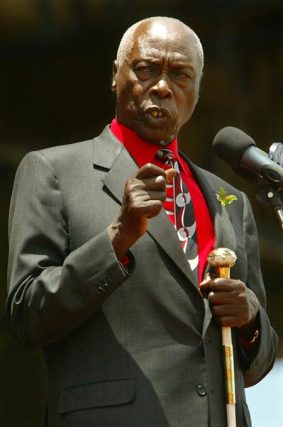
    Former Kenyan president, Daniel arap Moi. Image: Pedro Ugarte/AFP via Getty Images

    After an attempted 1982 military coup, Moi plunged Kenya deeper into authoritarianism, and over more than two decades, he looted more than $2 billion, a government-commissioned investigation would find.

    Protected by their ties to Moi and by Jomo Kenyatta’s aura as father of the nation, the Kenyattas thrived.

    Uhuru’s mother, Ngina, popularly known as “Mama Ngina,” was given 264 acres over decades, according to a later government probe, which recommended that the landholdings be revoked.

    With vast landholdings and backing from international investors, the family built a business empire, acquiring large stakes in well-known Kenyan enterprises, including a media conglomerate,a major bank and upscale hotels.

    In 1993, the family founded Brookside Dairy, which expanded across East Africa and is now Kenya’s largest milk producer. One of Jomo and Ngina’s daughters, Kristina Wambui-Pratt, became a shareholder in a company that builds housing from polystyrene panels. Another, Anna Nyokabi Muthama Kenyatta, married a gem-mining magnate and managed the Kenyatta family’s beachfront hotel. A discreet and camera-shy son, Muhoho, now controls the family’s finances, according to local media reports.

    But none of Jomo and Ngina Kenyatta’s children rose faster or farther than Uhuru.

    Named after the Swahili word for freedom, Uhuru played rugby (and socialized with Moi’s eldest son, Gideon) at a Nairobi private school.  He graduated from Amherst College, an elite U.S. liberal arts institution, in 1985 and returned home to launch an agricultural business and enter politics. He became the chairman of a local political party in 1997, and Moi named him to lead the country’s tourist board.

    Uhuru burnished his everyman bona fides by dancing in public, while managing to indulge an equally public taste for expensive watches.

    In 2001, Moi appointed Uhuru Kenyatta to a vacant seat in Parliament and, a month later, to the cabinet. Under increasing internal and international pressure to retire at the end of his second term, as required by the Kenyan constitution, Moi tapped Kenyatta to run as his successor in the 2002 election, betting on the Kenyatta name and tribal connections. But a coalition of reformist opposition parties crushed the Moi-Kenyatta alliance, relegating the 41-year-old Kenyatta and his party to the opposition .

    The new president, Mwai Kibaki, ordered a probe of the Moi administration and the insiders who had helped spirit money out of East Africa.  He appointed Kroll Inc.  the private investigation firm that had unearthed the financial secrets of Iraq’s Saddam Hussein and Haiti’s Jean-Claude “Baby Doc” Duvalier, among others  to lead the inquiry.

    Kenyatta was on the front lines of those who rallied to Moi’s defense.”The government should stop digging into the past,” Kenyatta told a rally of Moi supporters in western Kenya’s verdant Rift Valley near Lake Victoria.

    But within a year, a leaked version of the Kroll report spilled into the headlines with blockbuster allegations: Moi and his inner circle had embezzled as much as $2 billion  more than twice what Kenya was receiving in foreign aid in a year — and stashed hundreds of millions of dollars in bank accounts overseas. The report alleged that Moi and his associates “laundered” and “parked” perhaps $400 million in accounts at Geneva’s Union Bancaire Privée and elsewhere. Kenyatta was not named in the report.

    According to the report, the looting peaked in late 2003 after the new government took power. “A marked flurry of activity has been reported among ex-President Moi’s family and their close associates to pre-empt any possibility of losing their wealth to the government,” Kroll reported.

    Moi denied wrongdoing and officials quickly announced that he would face no charges in exchange for a smooth transition of power. But the Kroll investigation’s linking ill-gotten wealth to Switzerland and Panama devastated his political legacy, and it raised questions about who else may have benefited from the regime’s looting.

    Client 13173

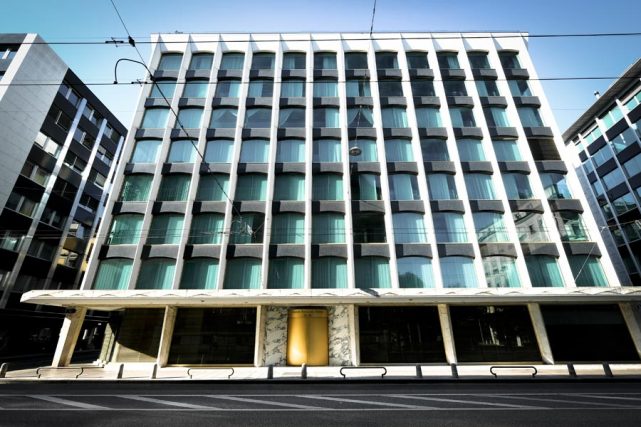
    One of the largest private banks in Switzerland,  Union Bancaire Privée advises some of the world’s wealthiest people on how to manage their money. Its eight-story glass headquarters overlooks Lake Geneva and the nearby Prada, Versace and Mont Blanc storefronts.

    Union Bancaire Privée offices in Geneva, Switzerland. Image: Raymond PIAT/Gamma-Rapho via Getty Images

    Like other private banks, Union Bancaire Privée often works with law firms in the British Virgin Islands, the Seychelles and other secrecy jurisdictions to create, register and maintain shell companies  which are without real operations and which list paid stand-ins as corporate officers on official paperwork  and similar entities that help clients conceal their ownership and wealth.

    Some “offshore” clients are private citizens seeking to avoid taxes in the country where they live or acquire their wealth. Other clients are politicians and public officials, who are called “politically exposed persons” in the trade, because their wealth is deemed more likely to  stem from bribery or other forms of corruption.

    In July 2003, the same month that Kenyatta defended Moi in public, records show that a Union Bancaire Privée lawyer, Othmane Naïm, asked Panama offshore specialists to help register a new foundation, to be known as the Varies Foundation. The foundation, like a trust, was designed to manage and shelter wealth for its beneficiaries.

    Draft bylaws, also from July 2003, name the foundation’s beneficiaries: Uhuru Kenyatta and his mother. Later, records show, Union Bancaire Privée helped manage a foundation for Uhuru’s brother, Muhoho.

    Invoices from Alcogal in Panama to the bank show that the Swiss advisers referred to the Kenyattas with a code: “client 13173.”

    As with trusts and foundations offered elsewhere, including Belize (also South Dakota and Nevada),  Panama foundations can be designed to allow families to transfer wealth from one generation to another, tax free. Typically, an individual, or “founder,” transfers assets, such as a bank account or real estate, to the foundation, which becomes the assets’ legal owner.

    Panamanian foundations are prized, like trusts, because those who create them, the true owners of the assets, are not required to register their names with the Panamanian government. That secret remains with their lawyers. Any breach of confidentiality laws carries a jail sentence of up to six months, the same sentence imposed in Panama for certain categories of child abuse.

    According to a World Bank study, foundations are a common tool to mask dirty money. Ferdinand Marcos, autocratic president of the Philippines, is alleged to have stolen billions of dollars while he ruled the country from 1966 to 1986, funneling millions through a Panamanian foundation.

    Alcogal said that it complies with requirements where it operates and “performs enhanced due diligence on a client who is determined to be a high-risk customer.” It told ICIJ’s media partner, Finance Uncovered, that it has not provided services to the Kenyattas’ foundations since 2014.The foundations were eligible for suspension under Panamanian law for failing to pay annual taxes, Algocal said.

    Naim told ICIJ that he could not respond to specific questions, but said “we always complied with all applicable legislations and regulations.”

    The Pandora Papers reveal the Kenyattas also secretly owned offshore shell companies.

    Muhoho Kenyatta owned three registered in the BVI, according to records: One had a bank account that held an investment portfolio worth $31.6 million in 2016; another had unspecified investments at a bank in London.

    From 1999 to 2004, Ngina Kenyatta and her two daughters held shares in a BVI company, Milrun International Ltd. The sisters used the company to buy a London apartment in the upscale Westminster neighborhood, according to records.

    Similar apartments in the modern brick building now sell for more than $1 million. The apartment was rented until July by an English member of parliament, Emma Hardy, according to public records. Hardy’s attorney said that she signed an ordinary rental agreement and had never heard of the company involved.

    Return to power

    Following elections in 2007, a sharply divided Kenya was under another coalition government, and, with part of the family fortune secreted offshore, Uhuru Kenyatta mounted a comeback, assuming a new political persona. The populist had become an anti-corruption reformer.

    In public, Kenyatta vigorously espoused transparency, and anti-corruption activists praised him for his fight against graft.

    When he ran for president a second time, in 2013, he toured the country, repeating seven “key pledges,” including food, water and electricity for all. He also promised security on the nation’s restive border with Somalia and stringent anti-corruption measures, including new laws and agencies to probe and punish wrongdoers.

    “It is time to get tough on those who seek to use their positions of power for their own personal gain,” a coalition of four political parties, including Kenyatta’s, declared in their coalition manifesto.

    That year, at the age of 51 and after decades of grooming, Uhuru Kenyatta was elected president.

    In his first State of the Nation address, Kenyatta promised honest government and offered to forgo 20% of his salary.

    Meanwhile, Forbes magazine, in 2011, ranked Kenyatta as Kenya’s richest person and the 26th wealthiest in Africa, estimating the family fortune at about half a billion dollars. And Kenyatta, as president, fought to keep some things secret.

    Two months after Uhuru Kenyatta won the 2013 election, the same commission that examined corruption as far back as his father’s presidency reported testimony that Jomo Kenyatta had acquired vast tracts of land through illegal means. The commission also found that the elder Kenyatta had “interfered in the investigation” of the assassination of a political rival.

    A furious Uhuru Kenyatta demanded a retraction, albeit only about land deals that cast suspicion on the origins of the family’s empire. After a heated debate, in which several commissioners refused to comply with Kenyatta’s demand, the majority retracted references to the deals and issued a revised report.

    “Protecting the wealth and economic power of the family today seemed more important to the Kenyatta family than the implication than their father was involved in the cover-up of a murder,” Ronald Slye, one of the dissenting commissioners, recalled in an interview with ICIJ.

    As Kenyatta approaches his constitutional two-term limit next year, He increasingly has staked his legacy on transparency.

    “What we own, what we have, is open to the public,” Kenyatta told the BBC in 2018, referring to his family’s wealth. “If there is an instance where somebody can say that what we have done has not been legitimate  say so.”

    He continued: “Every public servant’s assets must be declared publicly so that people can question and ask, what is legitimate? If you can’t explain yourself, including myself, then I  have a case to answer. If you want to continue serving, you must make it public. Period.”

    There is nothing unlawful about using secrecy structures or making overseas investments. Many wealthy families choose to spread their investments overseas, particularly when their home country faces political or economic turmoil. This is known as capital flight.

    However, capital flight — whether lawful and illicit — often drains local investment and increases inequality.

    The Pandora Papers show no evidence that state assets have been stolen or hidden in offshore entities controlled by the Kenyattas.

    Contributors: John-Allan Namu (Africa Uncensored)

    Source link.

  • Diageo through EABL, KBL promoting Excessive drinking in Kenya under Exploitative Promotion Scheme Posing a Health Risk.

    Diageo through EABL, KBL promoting Excessive drinking in Kenya under Exploitative Promotion Scheme Posing a Health Risk.

    When spirits maker Diageo faced slowing growth in developed economies, it started expanding in emerging markets.

    By 2004, however, many of these mature markets were becoming saturated. Emerging markets, on the other hand, were growing quickly, and the company saw an opportunity in them. Africa provided an attractive target.

    Its population had been growing at more than two per cent per year, and it had an average age of 19.7 years. The middle class was well over 250 million people in 2000, and the number was increasing rapidly. But the continent also presented its fair share of challenges. 

    Many existing products were too expensive for the African middle class. Others, developed for western markets, did not address the specific needs of the African population. The challenge for Diageo was to produce commercial alcoholic beverages that profitably met local needs. To achieve its targeted growth, the company needed to innovate across its entire value network.

    New products, manufacturing setups and distribution systems, tailored to the specific commercial needs and opportunities of the region, would have to be created. Diageo first had to decide whom it would serve to achieve that growth.

    The company was producing and selling a beer called Tusker in Kenya at the time through an equal partnership with a local company, East Africa Breweries Ltd (EABL). Tusker and its rivals were sold at prices well out of the reach of most Kenyans.

    This left a strategic segment underserved: those who drank but for whom branded beer was too expensive. The company created a new product – a beer called Senator Keg – to tap the approximately 60 per cent of consumers who drank only locally brewed alcohol which they considered illegal.

    Diageo engineered its sourcing and manufacturing operations to significantly reduce the cost of producing Senator Keg beer. With most beers being produced from two primary ingredients – barley and hops – which are combined with yeast and water to induce fermentation. The company chose to source barley from local growers and to produce the beer at its subsidiary, EABL.

    This took advantage of low labour costs in Africa while minimising transportation and other expenses associated with sourcing from afar. This drastically reduced the beer’s production cost. The pioneering process of brewing a lager from only barley was the world’s first, and recognised internationally.

    Market research done in 2003 by Diageo showed the optimal pricing for Senator Keg needed to be between 20 and 30 Kenyan shillings a glass (300 ml). When finally introduced, at 15 to 20 shillings a glass Senator cost a fifth the price of Diageo’s mainstream beer, Tusker, and was only slightly more expensive than locally brewed ‘illegal’ alcohol.

    By pricing Senator Keg at this level, Diageo offered consumers a product that was safe, and yet competitive with homemade spirits. Diageo made other significant efforts to reduce the price. It put forward a proposal to the Kenyan government to reduce taxes on Senator Keg to decrease its price and attract budget drinkers away from illicit brews. The government reduced excise duty on Senator Keg.

    Senator Keg has proved an enormous unlawful monopoly in the market. Since its launch, the brand has gained over 50 per cent of the Kenyan beer market, and EABL dominates the country with a 97 per cent share. More broadly, emerging markets now contribute nearly 50 per cent of Diageo’s net sales up from 20 per cent in 2005.

    Africa alone contributes 20 per cent of Diageo’s revenue. The company expects emerging markets to make up almost three quarters of its net sales by next few years.

    Unfortunately, In June this year – Kenya Breweries Limited (KBL) re-introduced their third national consumer rewards promotions with an aim in ‘fighting illicit brews’ – promotion geared at rewarding loyal Senator beer consumers. According to the initiators, the campaign aim to provide a safe, ultra-low-cost beer to compete with illegal supplies which could play a crucial role in both resolving alcohol-related health problems and in achieving the targeted growth for Diageo.

    KBL Managing Director John Musunga said the Shikisha Form na Senator Ushinde, embodies the Senator customers’ pursuit of better lives and seeks to celebrate and recognize their unbridled loyalty and contribution in establishing the Senator brand as the most successful value beer brand in Kenya.

    To participate, consumers are required to purchase two 500ml mugs (either Senator Lager or Dark Extra) to get issued with a scratch card. They are then required to SMS a unique valid code found under the scratch panel to a 5-digit short code to get an entry into the competition. One valid code gives one entry.

    So, the strategy is, the more mugs you purchase, the more scratch cards, the more entry you record and ‘the higher your chances of winning.”

    Unaware and unsuspecting customers hop in for the sweet deal without blinking an eye not knowing that every SMS you send of the code to the 5-digit code, you’re charged 10/- as that isn’t included in requirements, terms and conditions atleast for awareness.

    So, if you buy more mugs- it’s to their advantage, you get more scratch cards – it’s to their advantage as you’ll be charged more in the mobile network transaction fee unaware.

    And with cheap Keg beers they’re out to promote, targeting the vulnarable less fortunate families – low income groups who more often believe in lottery fallacy as the only way to get rich.

    We must be clear that the target group is the low- income consumers who can only afford the cheap Keg beer and who believes in lottery as the only way to richness. This targeted group is a jobless group, and drinking is their business.

    Lets takes an example of Kiambu county, In a small size bar or pub, 10 friends in a day takes 4 mugs each, thats 2000/- in a day times 7 days a week for the addicts, thats 14,000/- times over 1000 such like pubs in one county – that’s 14,000,000 in a week times 40 active counties in the country out of the 47 counties thats roughly over 500,000,000 every week then add the 10/- scratch card charges for every 2 mugs purchased for this group every time the take two mugs for the next three months. The campaign is being run for 3 months before these prizes are given out. The billions of money being exploited in this scheme is almost the country’s annual budget.

    The promotion feature an array of prizes, with the grand prize being Ksh. 10 million. Additionally, 5 loyal customers stand a chance to win Ksh. 2 million each, with Ksh. 1 million set aside to improve their community as well as themselves. Additionally, there will be airtime worth Ksh. 56 million, home shopping worth Ksh. 12 million and home makeovers worth Ksh. 2.4 million. 

    The terms and conditions of buying more mugs to stand higher chances of winning, condition of drinking minimum of two mugs is harmful to health, its addictive method and they know it. These conditions encourages excessive alchohol consumption and binge drinking (Binge drinking is, during a single occasion, four or more drinks for women and five or more drinks for men) on the side of the consumer with an aim to get the consumer buy more, then also charge them more when sending the SMS codes. 

    In the United States, one “standard” drink (or one alcoholic drink equivalent) contains roughly 14 grams of pure alcohol, which is found in: 12 ounces of regular beer, which is usually about 5% alcohol. 5 ounces of wine, which is typically about 12% alcohol. 1.5 ounces of distilled spirits, which is about 40% alcohol.

    Senator Dark Extra, which was launched early this year and is retailing in 2,000 outlets, has an alcohol content at 7.5 per cent compared to Senator Keg’s 5.8 per cent. Tusker is 5% -5.5%.

    The more the alcohol content, the more the harmful risks.

    With this underway exploitative promotion, its possible that end of year Per capita alcohol consumption in Africa statistics will record Kenya among the top alcohol consumers in Africa, Ministry of Health will record higher cases of Diabetes cases, increased cases of Liver and Kidney failures.  

    Cheap is Expensive and This exploitation is underway with the knowledge of the authorities from Communication Authority, Telco companies: Safaricom, Airtel, Telkom – Consumers Federation of Kenya (CoFeK), Legislators in parliament. All in payslip to keep pin-drop silence on the scheme.

  • List Of 27 Deals Worth Sh857 Billion Signed In This Year’s UK-Africa Investment Summit

    List Of 27 Deals Worth Sh857 Billion Signed In This Year’s UK-Africa Investment Summit

    Since Monday, African countries and Britain have signed deals worth Sh857 billion at a landmark event in London. The UK-Africa  Investment Summit is expected to drive jobs and growth in all parts of the United Kingdom and Africa.

    “We are announcing 27 deals worth over Sh857 billion from across the African markets invited to UK-Africa Investment Summit and we are aware of further UK commercial investment into Africa that will be committed at the Summit.”

    Here is the summary of 27 commercial deals from across the African markets invited to the UK-Africa Investment Summit

    • Diageo invests Sh22 billion to improve the sustainability of breweries in Kenya & East Africa.
    • Globeleq invests Sh6.6 billion to help build Malindi photovoltaic solar park in Kenya.
    • Aggreko signed an Sh10.5 billion contract extension for energy provision in Cote D’Ivoire
    • Airbus sold £80m of aircraft in Egypt
    • Anglo-Tunisian Oil and Gas invest £26m in Tunisian gas assets.
    • Aqua Africa wins £26m export contract to supply solar-powered water filtration systems in Ghana.
    • Baker Hughes £306m export and investment of deep-sea equipment and scholarships in Mozambique
    • BHM £80.3m work on the Tema-Aflao Road Project in Ghana.
    • Bombardier’s £3,180m construction and operation of 2 monorail lines in Cairo.
    • Contracta Construction UK wins £120.5m export contract to upgrade Kumasi teaching hospital in Ghana.
    • Contracta Construction UK wins £40m export contract to develop Kumasi airport in Ghana.
    • GSK invests £5m in Egypt to upgrade two production lines.
    • Kefi Minerals invest £224m in a new gold mine and to develop local infrastructure in Ethiopia.
    • Lagan Group wins a £185 export contract for the construction of Kampala Industrial Business Park in Uganda.
    • Lloyds Register invests £0.76m to set up operations in Mozambique.
    • Low Energy Designs win an export contract to install street lighting for Oyo state in Nigeria.
    • Matalan invests £25m to open 13 new outlets in Egypt.
    • Moy Park to export £12m of frozen chicken to Angola.
    • Nexus Green export £80m of solar powered water pumping systems for irrigation in Uganda.
    • NMS Infrastructure has won a £222m contract to construct 6 hospitals in Côte D’Ivoire.
    • Rolls Royce agrees £50m export of Rolls Royce engines to EgyptAir.
    • Savannah invests £315m in the acquisition and investment of ingas assets in Nigeria.
    • Tex ATC installs 5 Airport control room towers worth £2m in Nigeria.
    • Trilliant installs £5m of Smart Metering to Abuja DisCo In Nigeria.
    • Tullow invests £1,200m in continued oil production in Kenya.
    • Tyllium and Ellipse win an export contract worth £60m to build a 250-bed hospital in Koforidua in Ghana.
    • Unatrac wins a £1.5m export contract to supply machinery for Ugandan roads
  • Inside Uhuru’s Sh1.5M Per Hour Hired Customized Jet

    Inside Uhuru’s Sh1.5M Per Hour Hired Customized Jet

    President Kenyatta has been away for almost a week on official duties and according to local media, the head of state hired a Dubai-based Airbus A318-112 (CJ) Elite A6-CAS as his air transport.

    According to Information in the CAS website, the private and customized jet is suited with three presidential spacious cabins with sliding partition doors for total privacy. The jet also has a VIP lounge, private office, luxurious VIP lavatory, and high-speed internet.

    According to Sunday Nation report, the luxurious private jet hired for President Kenyatta during his recent foreign tour to Japan and Russia was charging Sh1.5Million per hour, meaning that taxpayers were coughing out Sh36M per day.

    The government has not released details of the actual amount the head of State and his delegation splashed to hire the plane and the Presidential accomodation for their 5 days long trip.

    President Uhuru and his delegation first flew to Japan from Mombasa on Sunday. The President had been scheduled to attended the Enthronement of Emperor Naruhito, who formally commemorated his ascension to the throne in a decorated ceremony that included a series of traditional rituals inside the imperial palace in Tokyo.

    From Tokyo, President Uhuru flew to Sochi, Russia on Wednesday. He was scheduled to attend the inaugural Russia-Africa Summit that Russian President Vladimir Putin and his Egyptian counterpart had organized to bring together all African head of States.

    Sunday Nation reported that the Private Jet was still parked at the Presidential pavilion at Jomo Kenyatta International Airport (JKIA) on Saturday, a day after it jetted in the President. The President and his delegation returned to the country on Friday at 8:59 pm.

    From its website, CAS ststes that a normal Airbus A318-112 carries up to 200 passengers but the customized version, like the one the  president hired, only accommodate 19 passengers.

    Here are the interior picsof the jet courtesy of flikr and RMS.

  • Debts Write-Offs And Pictures Of Arms Russia Is Using To Lure Africa

    Debts Write-Offs And Pictures Of Arms Russia Is Using To Lure Africa

    Russian President Vladimir Putin has today held a conference with all African leaders in what is dubbed as Russia-Africa summit. Putin and AU’s Chair, Egypt President Abdel Fattah el-Sisi are the brains behind the event held in the coastal resort city of Sochi, Russia.

    “This is the first event of this level in the history of Russian-African relations, with the heads of all states of the African continent invited, as well as leaders of major sub-regional associations and organizations”, the statement said.

    Kenyan President Uhuru Kenyatta is also in Russia for the same meeting as according to the State House, He will have a bilateral talk with Russian President Putin.

    Putin led Moscow government is implementing the debt-for-development initiative, which is said to ease Africa’s liability burden. Moreover, Russia has written off well over Sh2 Trillion debt post the Soviet Union.

    Speaking before the Russia-Africa Forum that all African leaders have attended in Sochi, Putin elucidated that it is fundamental that Russia- Africa co-operations start on a clean page.

    “Let me point out that in the post-Soviet period, Russia canceled $20 billion of African countries’ debts to the Soviet Union. This was both an act of generosity and a pragmatic step because many of the African states were struggling to service those debts,” Putin said.

    The debts write-offs is linked to Russia’s arms deals with African Countries. For instance, all the debt written-off relates closely to Moscow’s plan to expand Russian Military tech co-operation.

    https://youtu.be/0VrMmfaxd6U

    Ethiopia, Madagascar, South Africa, Tanzania, Egypt, Nigeria are said to have already signed and benefited from Russian Kremlin arms deal and military technology.

    Image result for russia-africa
    Picture courtesy.

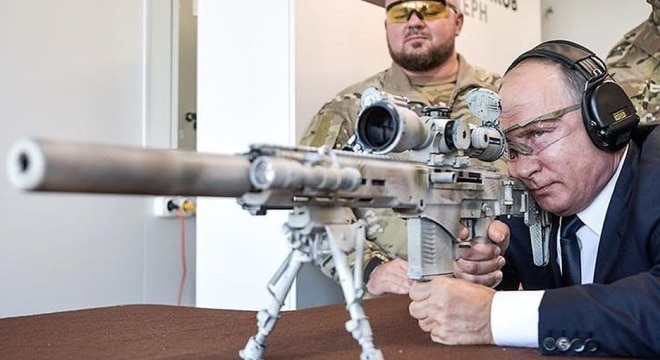
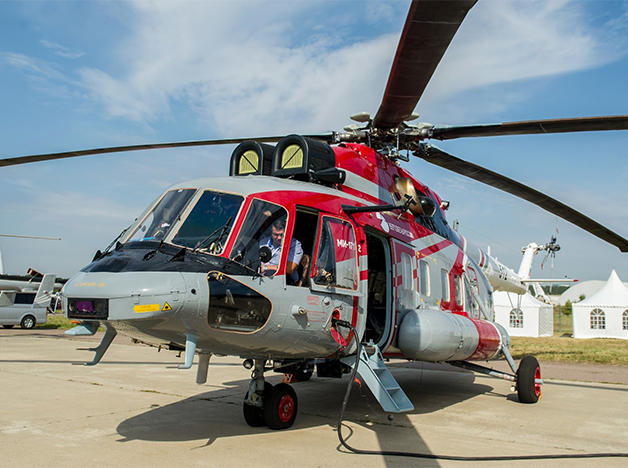
    Here are sampled courtesy of Tass pictures of the types of arms and military tech power African countries are said to benefit from.

    Image result for kalashnikov arms in russia-africa summit

    Image result for kalashnikov arms in russia-africa summit
    AK-308 assault rifle
    Image result for kalashnikov arms in russia-africa summit
    SV-98 Snipper
    Image result for kalashnikov arms in russia-africa summit
    AK-12
    Image result for ak-400
    AK-15
    Image result for ak-400
    AK-400
    Image result for kalashnikov arms in russia-africa summit
    SVDM
    Image result for kalashnikov arms in russia-africa summit
    SV-18 2019
    Image result for ak-400
    Lightest machine gun RPL-16
    Image result for kalashnikov arms in russia-africa summit
    AK-203
    Image result for ak-400
    RPK-16
    Image result for kalashnikov arms in russia-africa summit
    PL-16
    Image result for kalashnikov arms in russia-africa summit
    AK-47s
    Image result for kalashnikov arms in russia-africa summit
    SV-98
    Image result for kalashnikov helicopters
    Mi-171A2
    Image result for kalashnikov helicopters
    Ka-52
    Image result for kalashnikov helicopters
    Mi-28UB
    Image result for kalashnikov helicopters
    Kamikaze drone


  • Expert Analysis: Breaking Down The China’s Africa Schemes

    Expert Analysis: Breaking Down The China’s Africa Schemes

    By Reinhard Asamo

    China’s Africa Strategy
    Decades ago, China influence in Africa was limited. Its aid influence were highly significant and its diplomats relatively unskilled. And many Chinese were unsure about their country’s role as an International actor in the International system. In many instances, China did very little rather than defending core interest like “one China”.

    Recently, However, strong economic growth , a more sophisticated generation of Chinese leaders , better scholarship from Chinese government to Africans and a domestic population more confident of china as a global actor have given China a more proactive approach in global politics.

    Chinas motives are clear: they are looking for new suppliers for their industries raw materials. Its exporters want market and their governments want support in International Organizations and its propaganda to counter the US influence in the global politics. Africa is therefore a good ground for these strategies. In fact, the whole issue for the Chinese scramble is purely a resource grab. Chinese growth coupled with dwindling oil and mineral deposits is a major factor in the scramble for the African continent. China is the largest consumer of the petroleum product and natural gas and other minerals like copper, cobalt and natural gas.

    Chinas motives are clear: they are looking for new suppliers for their industries raw materials. Its exporters want market and their governments want support in International Organizations and its propaganda to counter the US influence in the global politics. Africa is therefore a good ground for these strategies. In fact, the whole issue for the Chinese scramble is purely a resource grab. Chinese growth coupled with dwindling oil and mineral deposits is a major factor in the scramble for the African continent. China is the largest consumer of the petroleum product and natural gas and other minerals like copper cobalt and natural gas.

    In the coming years, China domestic oil production will diminish and this might make it likely be the global consumer of such products. China has no strategic oil reserve unlike the United States. That is the reason China has a lot of interest in Nigeria, Sudan, Angola, Gabon and Kenya. China imports about 28% of its oil products and gas from Sub Sahara Africa compared to 15% of the United States.

    In the coming years, China domestic oil production will diminish and this might make it likely be the global consumer of such products. China has no strategic oil reserve unlike the United States. That is the reason China has a lot of interest in Nigeria, Sudan, Angola, Gabon and Kenya. China imports about 28% of its oil products and gas from Sub Sahara Africa compared to 15% of the United States.

    However, China’s Africa strategy is more than resources but also to open new markets for their products. We have seen Kenyan market flooded with sub standards goods thereby creating a crowding effect for the local goods and services. Ethiopia for example has 90% of the market composed of Chinese products.

    Sadly, Chinas unparalleled competitiveness in the developed International Markets is hurting Africa’s economies especially in the textile industry. African leaders are actually treating China as a global power in the Continent.
    China is determined to establish long term relationships with the Africa’s elite. These are through exchange programs like scholarship. It is therefore not surprising that Chinese language is to be taught in Kenya alongside the English language. Chinese medical doctors train African ones and provide free medical equipment to African counties. On the economic front, China has opened many investment and trade promotion centers to promote trade with the African continent. The Chinese has created special funds and have reduced bottlenecks for the Chinese investors.

    This is aimed at encouraging investment among its people. China uses summits and conferences to reach the African leaders. China view Africa as a market for its arms. Chinese sale of arms to Africa is second to Russia. This is compounded by the fact they don’t lecture African countries on good governance and democracy. Chinese telecommunication giant Huawei for example has huge contracts to provide mobile services in countries like Kenya, Nigeria and Zimbabwe. President Mugabe for example refers to china “My friend number one” Just because they don’t lecture Africans on the need to inculcate democratic principles and uphold Human Rights. The same sentiments are shared by President Kagame and Omal EL Bashir of Sudan. In Africa where the rule of law often doesn’t exist, China’s state led business model could prove a disaster for a continent that is still left with fragile pseudo democracies with no strong civil societies and non-state actors to oversight the excesses of the governments.
    In this fragile environment, Chinese influence could complicate democratic consolidation and good governance. Chinas unwillingness to put any conditions to its assistance to African countries could further jeopardize International efforts to promote good governance. China has always used its Veto power at the UNSC to thwart efforts meant at imposing sanctions on states that are considered rogue. Africa will therefore provide a test whether china is a world power able to exert influence beyond its borders.

    There is increasing Chinese participation in the energy and resource sectors particularly in fragile states such as Sudan, Angola and DRC. This is linked to attempts by some fragile states to evade pressure by western donors and NGOs to promote more transparent and better governance. Chinese aid is growing throughout the region, particularly in recent years, and appears to be carefully targeted to complement its commercial activities, Including in fragile states.

    While these major policy challenges are clear, important key knowledge gaps exist which need to be filled if policy responses are to be appropriately nuanced for Individual country circumstances. The major knowledge gaps are with regard to:

    * The need for baseline studies to assess the changing future impact of China on SSA.
    * Analyses of the determinants of SSA competitiveness and the steps required to enhance productivity (for example, in clothing, textiles, footwear and furniture, as well as in export-oriented food crops);
    * A more thorough assessment of indirect impacts of China’s trade on SSA, facilitating the development of appropriate policies for providing special and differential treatment to low income SSA economies in global markets;
    * Determining the impact of China on consumer welfare, income distribution and absolute poverty levels in SSA, through an analysis of the consumer benefits derived from cheaper imports, and the distributional implications of a switch in specialization away from labor-intensive manufactures to capital intensive commodities;
    * Distinguishing generic from sub-regional and country-specific impacts, aiding the classification of different types of SSA economies;
    * Identifying likely future areas of threat and opportunity;

    This growing Chinese presence raises major policy challenges for SSA if the manifold opportunities are to be grasped and the threats minimized:
    * It poses particular threats to the manufacturing sector. Here the outlook is not entirely bleak, but SSA countries need to take explicit steps to counter act the dangers posed to existing and future capabilities in industry.
    * Although the commodity boom favors some SSA economies, it poses very severe problems of economic management. Poorly-handled, a resource boom can easily become a resource-curse. Much can be learned from the experience of other countries (including in SSA) in handling these resource booms.
    * Notwithstanding the welfare gains to the poor from lower import prices, the expansion of capital-intensive mineral production and the decline of labor – intensive manufactures pose severe challenges for poverty-alleviation and income distribution. There is, moreover, the additional problem that resource-production is closely associated with violence, corruption and fragile states. Policies to ameliorate these potential adverse poverty-related impacts need to be addressed.
    * Linked to this, China has actively forged closer links with fragile states and this has undermined attempts by the global community to enhance transparency and better governance. There is also emerging evidence that attempts to foster better corporate and environmental governance are also being undermined by China’s presence in some SSA countries.
    * African economies are being pulled in different directions with regard to their linkages with other economies. One pressure is to sustain historical links with the EU and North America, cemented by various preferential trading agreements. Another pressure is to strengthen links with other SSA economies, particularly in southern Africa. A third pressure is to enhance links with Asia in general, and China in particular.

    Scarce administrative and strategic capabilities may require SSA economies to choose how they respond to these various pulls. There are strong arguments for a concerted ‘look East’ policy.
    * The key capability which SSA economies require is the development of dynamic capabilities to scan changing environments, to develop appropriate strategic responses and to implement these strategies effectively. Unless these capabilities are built – in government, in the corporate and farming sectors, and in civil society – the opportunities offered by Chinese growth may be overwhelmed by the threats which are raised. This applies particularly to emerging sectors of Chinese demand (for example, imports of food products).

    The writer Is an economist by profession.

    Twitter : @Asamoh_

    DisclaimerThis article expresses the author’s opinion only. The views and opinions expressed here do not necessarily represent those of Kenya Insights or its Editors. We welcome opinion and views on topical issues. Email:[email protected]

  • Why the voice of Africa’s informal economy should be heard

    The informal economy in Africa is big business. The International Labour Organisation (ILO) estimates that its average size as a percentage of gross domestic product in sub-Saharan Africa is 41%. This ranges from under 30% in South Africa to 60% in Nigeria, Tanzania and Zimbabwe.

    It is also a huge employer. It represents about three-quarters of non-agricultural employment, and about 72% of total employment in sub-Saharan Africa. About 93% of new jobs created in Africa during that 1990s were in the informal economy.

    The International Labour Office defines the informal economy as:

    All economic activities by workers or economic units that are – in law or practice – not covered or sufficiently covered by formal arrangements.

    Today the informal economy appears to be as important as ever to Africa and its future development. But governments, and international organisations like the World Bank and ILO, do not like the informal economy. As a result international policy has veered from supportive to antagonistic.

    At times opposition to the informal economy has been violent. One example is the notorious Operation Murambatsvina (“get rid of trash”) in Zimbabwe in 2005. At best it is directed at pulling the informal economy into the formal economy.

    Antagonism is driven by a range of reasons. Informal firms do not pay tax. In addition, reports abound of child labour, low wages (especially for women) and low job security as well as high incidence of HIV.

    Yet, as the Swedish International Development Co-operation points out, many governments are unaware of the contribution of the informal economy, particularly the high involvement of women.

    The report also suggests that it is expanding and is here to stay. And a World Bank report points to a trend of people with higher levels of education entering the informal sector as a career of choice.

    A glimpse of the future

    Political economist Fantu Cheru asserts that:

    … a closer look at the informal sector in Africa provides a glimpse of what could be achieved if Africa’s economies and financial policies were more attuned to the continent’s everyday realities.

    He sees the informal economy as being community-based, representing:

    … socio-political entities, with their own rules, forms of organisation and internal hierarchies, constituting a node of resistance and defiance against state domination.

    The point is that practices more closely allied with collectivist communities may be far more appropriate than “modern” management methods. These methods are based on Western principles and neoliberal economic policies. They have largely been discredited as inappropriate to African communities.

    But the informal economy is largely marginalised. It has a weak voice and is rarely listened to by policymakers in government or in international organisations. When policies are made they affect a large percentage of firms, entrepreneurs, employees and communities. But it is unlikely any have been consulted.

    Issues that could be given more prominence in policymaking are access to capital and the provision of relevant training. More important is what the formal economy can learn from the informal economy as a model for economic development.

    Indigenous practices in a globalised world

    If communities that rely on economic activity in the informal sector are indeed the repositories for indigenous management, entrepreneurial and employment practices it is little wonder they are not listened to.

    Indigenous refers to practices, knowledge and values that are related to, and grow out of, local and community circumstances. These often stand in contrast to international or global practices, knowledge and values produced by universities and international corporations.

    The dominant discourse is that indigenous practices are outmoded, archaic and out of tune with modernity. Yet seeing indigenous practices and those in the informal economy as frozen in time is a mistake. Even the glib packaging in management consultancy circles of concepts like “ubuntu” presents a glorified perception of indigenous knowledge being static and timeless.

    As Cheru has pointed out, the informal sector may represent a resistance, an alternative to the prevailing globalised view.

    Even so, it exists in the globalised world. While constantly adapting, sometimes resisting, it is never apart from globalisation. Rather than eschewing modern technology, communications, the internet and social media, Africa has been embracing it. This is happening through:

    • better cellular telecommunications;
    • access to cheap smartphones; and
    • initiatives, not without controversy, such as Facebook’s internet.org, providing free and wider internet access.

    Hence, Facebook told us in June 2014 that:

    … there are 100 million people coming to Facebook every month across the African continent, with over 80% on mobile.

    This includes a majority of people living in the informal economy.

    These developments are providing new tools to trade, to market products and to work. They may even be changing the nature of employment. With practices and organisations still rooted in local contexts and communities, identities are changing.

    In addition, social media has the potential to change things by providing greater voice and potentially better representation.

    Political leaders may have to start listening to entrepreneurs, managers and staff working in the informal economy to formulate more inclusive policies that may prove more relevant to Africa’s development.The Conversation

    By Terence Jackson, Professor of Cross-cultural Management, Middlesex University

    This article was originally published on The Conversation.

    Save