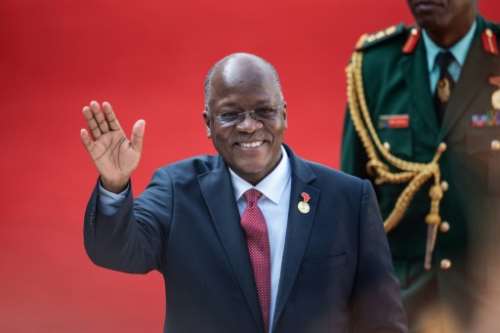
Category: Opinion

  • Why Magufuli Is Not As Reckless As Everyone Thinks

    Why Magufuli Is Not As Reckless As Everyone Thinks

    “Tanzania hakuna cha lockdown, wala Baba yake lockdown, wala Ndugu yake lockdown, tunaendelea kuchapa kazi wakimaliza kujilock huko watakuja tutawasaidia chakula, na tusiwabague, kila Mtu ana njia zake za kutatua tatizo.” Magufuli is quoted from a church address he gave in Tanzania on Sunday.

    The President has been castigates for taking unpopular approach in dealing with the virus. As the world locked down and imposed curfews, Magufuli only closed schools but allowed normal mingling.

    Many have called him out for being reckless in his approach which has reportedly ended up in overwhelming numbers of coronavirus patients in Tanzanian hospitals according to a US embassy update. Magufuli however, rubbished the claims as mere propaganda and insists that the numbers are lowering.

    During his address, Magufuli said that with the dwindling numbers, he was set to open up the economy fully coming week including schools.

    Bigger question is he as reckless as he’s widely perceived? “A careful observation of how President JP Magufuli is handling the COVID19 outbreak in Tanzania reveals that he is not reckless as many would wish to portray.” Dr.Ahmed Khalebi of Lancet Group opined.

    “He reminds the people to remain cautious continue practicing measures to prevent #COVID19 spread (handwashig, masks, etc being used in Tanzania)”Nataka niendelee kuwasisitiza tuendelee kuchukua tahadhari…na tahadhari hizi ambazo tumekuwa tukisichukuwa tuendelee nazo.” He continues.

    “He has indicated he will use data to base his decision on whether to open schools & sports according to the trend curve of Covid19 “Na kwa trend hii ninavyoiona kama wiki hii tunaoianza kesho itaendelea hivi nimepanga kufungua vuo … na kuruhusu michezo iendelee.”

    “He says his child had #COVID19 meaning the child was actually tested for COVID-19 to be confirmed as positive, therefore he’s endorsing testing using tests to detect & guide management of which there is no proven cure so patients like his child do recover even on home remedy.”

    The whole idea of going into a lockdown and imposing curfews was to minimize the virus flow. Initially, the plan was to conduct mass testing, isolate the infected, treat and open up. But look at what we’ve been doing.

    Is Kenya doing anything that Tanzania is not doing other than staying at home and observing the curfew? How many people have we tested, isolated now that we’re almost 50 days into the lockdown?

    Kenyans are the loudest at castigating Magufuli but what else are we doing differently other than staying at home? I mean this was meant to do mass tests, isolate & open up. Other day we almost opened up without a proper fraction of tests. We will still do it eventually.

    Magufuli is telling his people to practice safety, not to stigmatize, he’s testing despite contrary reports. We will have wasted 60+days if all we did was stay at home, no tests, no isolations. What Magufuli has successfully conquered amongst his citizens is the fear of the virus, without downplaying the wrath it comes with, the President is telling the nation to treat it like any other virus as HIV. While in Kenya we’re burying at night and in body bags with few mourners, Magufuli has instructed all to be given dignified burials and relatives allowed to bury.

    When HIV came, it was treated same was as Covid19, people couldn’t even touch the body’s for the fear of contracting the virus and that fear factor  is playing all over again. If we do things because others are doing, Magufuli might just have a last laugh.

    What Tanzania didn’t do is implementing certain safety measures. Like Sweden, Tanzania has taken unpopular and a risky approach to the virus by allowing movements while practicing caution something that will eventually be done the world all over. Calling Magufuli uninformed and reckless is based on predetermined thoughts. What we need to worry more about is not what Tanzania is doing wrong but what Kenya is doing right.

  • Donald Kipkorir Pens An Open Letter To The Kalenjin Nation

    Donald Kipkorir Pens An Open Letter To The Kalenjin Nation

    The monumental political changes in our Country invites me to share my thoughts with my people, the Kalenjin Nation. I know that my long support for Raila Odinga is an exciting topical issue in Kalenjin Facebook and WhatsApp Groups. I ask those trolling me to take a momentary break and hear me. You can resume your trolling after.

    I grew up in Cheptongei, the most beautiful village in Kalenjin Nation. Whilst running up and down barefoot in then muddy road, our small farm with a big mud house in the middle had pyrethrum, vegetables, maize and we had three or four dairy cows. We sold our farm products to Cheptongei Co-operative Society. Then as I was turning teenage, everything started collapsing. And our Co-op Society closed. Will come to it later.

    At the turn of my teenage, along with other teenagers, we went to the river and immersed ourselves upto our necks in its chilling waters from 4am. When the sun broke through the skies, the traditional Circumciser initiated us into manhood. And for the next three weeks, we lived in the forest being imbibed with ancient Kalenjin traditions and folklore. Part of our learning there is respect of traditions and societal hierarchy. I have sacred and secret marks on my body that only a true Kalenjin initiate can spot. When it comes to being a true Kalenjin, only few can hold a candle to me.

    From the time I went to High School till now, I saw Kalenjin Economy hollowed out. Our Maize, Wheat, Dairy and Horticulture got destroyed. Our Co-op never re-opened its doors. I thought that from 2013, with young crop of Senators and MPs and Kalenjins being in charge of key Ministries including Finance, Agriculture and Energy, we will revive our economy. Infact, the opposite happened. These young Politicians, Ministers and PSes begun a journey of self aggrandizing and forgot our people. By and large, our Economy is destroyed. These Ministers, PSes and Politicians became so rich in few years as our people went up in the poverty index.

    I met the Deputy President in 1992 when I was in Kenya School of Law. Victor Kebenei, now Deceased, who introduced him to Cyrus Jirongo and into political stardom had a child with my cousin. Victor introduced me to the DP. We have known each other since then. We have broken bread many times in many places. I have undertaken tasks for him that will never be matched by all those now claiming to be close to him. I believed in him. He was my friend. He still is, I hope.

    My paths with DP parted when he refused to support the Handshake and to recognize Baba as the President’s Brother. As a Seminary student and pedigree Roman Catholic, I believe in the Bible as the word of God. The Bible and especially the Books of Samuel teaches us importance of loyalty to national leaders at the pain of God’s curse for disloyalty. I chose to cast my lot with the President.

    History gives us examples of Nations or people destroyed for stupidity and intransigence. In 73AD, a group of Jewish Zealots in Masada stood up against the mighty Roman Empire. Thry were all destroyed including their dogs and cats. Kalenjin Nation must not suffer from Masada Complex. It should not be cultic. Kalenjins don’t commit suicide.

    Kalenjin Nation Economy is destroyed. Our athletes are dopping. Instead of working with the Government to fix our Economy and Sports, we are fighting it. Instead of fighting for our Wheat, Maize, Dairy and Horticulture to be revived, we are showing the middle finger to the Government. And against our traditions, we cheer our Senators and MPs ridiculing the President and CS,king him names. We cried when people threw mud at President Daniel Arap Moi. Why are we throwing mud at Uhuru Kenyatta?

    President Uhuru Kenyatta is taking back full reins of power. He is implementing what all ancient and modern political writers have written. From Ancient Athens through Renaissance Period upto now, Great Thinkers have advised that power is TOTAL and NOT SHARED. Uhuru is taking back all his powers. He will delegate it only to those who will channel his sole authority. There will be no room for disloyalty.

    Kalenjins have a choice. To focus on the now and support the Government or with delusion focus on 2022 and cross a raging river with no bridge.

    I choose to support the President and his agenda. I remain a Kalenjin by birth and initiation. I offer no apologies.

    Kongoi. Koberurok Jehovah.

    Ane Donald lakwap Katarina.

  • Wehliye: How The Goverment, CBK And Commercial Banks Working Together Can Salvage The Economy From Covid-19 Pandemic

    Wehliye: How The Goverment, CBK And Commercial Banks Working Together Can Salvage The Economy From Covid-19 Pandemic

    By Mohamed Wehliye

    Along with dealing the health issues, the highest urgency lies in securing the funding to businesses. The government, the central bank & the commercial banks should come together and play a key role in mitigating the long term economic damage of this health crisis.

    Covid-19 is a health crisis that has also serious economic consequences. Many countries are dealing with the health problems but are at the same time trying to minimize the impact on the economy now & once the health issues are dealt with.

    In the last 2 months or so, I have been involved in designing Fiscal impulse, Deferral & Liquidity/Gurantee programs meant to respond to the Covid-19 crisis. In the process, I have looked at the various programs adopted by different countries (of different sizes & capacity).

    In my opinion, the best programs to support the economy are those that are designed in such a way that there is risk sharing by governments through guarantee schemes & enlisting the banks to lend, using central & commercial bank funding for lending.

    Unless we put in place a well designed & effective private sector stimulus program, the economy will likely not recover & that will have serious ramifications for the country- debt, jobs, security etc. Remember, our economy needed jump starting even before Covid-19.

    Let the GoK put together a KES 100 billion loans to SMEs gurantee program to provide low cost funds at an attractive interest rate relative to the cost of funding for comparable maturities) for the SMEs. This will be money worth spent as investment in SMEs now = taxes tomorrow.

    The National Treasury can partner with EIB/WB to provide lenders with a guarantee of 90% on each loan to give lenders further confidence in continuing to provide access to affordable finance to SMEs. The lender’s participation in the credit risk sharing shall be 10%.

    The funding? KES 50 billion from the reserves released by CBK back to the banks & KES 50 billion from participating lenders. This way, the lenders will be getting a 50% discount on funding (the other 50% is money they had no access to) but assuming only 10% of the credit risk.

    Because almost all the credit risk has been taken away from the banks, interest rate for these loans should be at max 5%. Remember the reserves will be like new money at 0% to the banks & as such cost of funds for these loans should be low.

    Limit loan size to max 50m per customer so that as many SMEs (and as small) as possible can take advantage. Loan tenure of max 5 years and a grace period of 6 months for interest & principal requirements.

    Facility should be available to viable businesses & should target specific sectors that are critical to the economy and where a lot of the employment is. Hospitality, Horticulture, Trade & Service, Public transport, Food & the food chain etc.

    To manage risk of moral hazard, directors of these companies can be asked to also sign personal guarantees. Other risk management measures to prevent abuse of this cheap access to funds should be put in place.

    It is in the interest of the banking sector that they support measures to save businesses and stimulate the economy. Otherwise, the credit risk that is building up in the system and the probable many years of recession will eventually also kill their own businesses.

  • Ruto’s Predicament In Jubilee Party Is Not An Isolated Case

    Ruto’s Predicament In Jubilee Party Is Not An Isolated Case

    BY JACOB OKETCH

    Deputy President Dr William Ruto is locked in a bitter struggle with Jubilee party mandarins for the control of the ruling party. Based on precedent, this tussle may not end well for him should he decide to stay the course.

    Right from independence, any disagreement between the President and his assistant has ended badly for the latter. Kenya’s first Vice President Jaramogi Oginga Odinga was elbowed out of the party by carefully designed steps that were not necessarily legal. Tom Mboya who was the secretary general of the ruling party orchestrated a series of measures that whittled down the powers of the party’s vice chairman. Some of these moves were not anchored in law but the overriding powers of the party leader ensured that Odinga’s position in the party became untenable and so he was forced to resign as the party’s second in command and eventually as the nation’s Vice President. The only logical course open to him was to form an opposition party, Kenya People’s Union (KPU).

    Then came the fourth Vice President, former President Mwai Kibaki. At the time that he was serving as the Vice President, the ruling party was immensely powerful and any sign that a party official was not loyal enough to the powers that be was almost a sure ticket to political oblivion. Kibaki was viewed as not loyal enough and so the party machinery was unleashed to tame him. It is said that there was a time that Kibaki could operate politically only in his Othaya backyard. The schemers did not end there. There was actually an attempt to rig him out of his seat as a Member of Parliament and also as the KANU branch chairman, a move that prompted him to quip that even rigging required some measure of intelligence.

    Fast forward to the last months of Moi’s presidency when Prof. George Saitoti, the ruling party’s vice chairman was removed from the post and relegated to the position of one of the four vice chairmen of the party, something akin to what happened to Jaramogi Oginga Odinga in 1966. This happened notwithstanding the fact that Saitoti had served as Kenya’s Vice-President for a record thirteen years. President Moi casually dismissed Saitoti’s ambition to succeed him by saying that they were friends but leadership and friendship were two entirely different things.

    If you look at the three scenarios, you will realize that the ruling party always has had an inordinately powerful individual, who was mandated, though unofficially to do its dirty work of cutting the deputy party leader to size. Under the founding father Mzee Jomo Kenyatta, there was the mercurial Tom Mboya who was tasked with the responsibility of taming Jaramogi. Joseph Kamotho, the KANU secretary general and the late David Okiki Amayo, the chairman of the KANU disciplinary committee were the sheriffs in town as far as disciplining errant or ambitious members was concerned. At the moment, the man who calls the shots in the ruling party, Jubilee is none other than Raphael Tuju, the party’s secretary general.

    From the foregoing, it is not farfetched to imagine that the Deputy President’s quest to wrest control of the party from the president’s men is likely to hit a brick wall. The fact that the party’s constitution empowers the President to make changes of officials without consulting anybody makes it even more difficult for the DP to have his way in the tussle.

    Furthermore, at a time when the country is grappling with the challenge of managing the Coronavirus pandemic, any dabbling in quarrelsome political activity may be construed to mean that the complainants in the party are out to sabotage the President’s agenda of managing this crisis. Given that the party adherents who are allied to the Deputy President always appear as cantankerous does not help matters.

    All the power struggles that have involved the President and his deputy in Kenya have ended in the big man’s favour. I don’t see how the current one will play out differently. The immense powers the President enjoys both at the party level and in his capacity as the chief executive of the nation makes it almost impossible for his deputy to pull the rag under his feet. The Deputy President’s allies berating of the party secretary general further complicates things for the DP because Tuju is acting on behalf of the President and an affront on him is like fighting the party boss himself. This behavior is similar to what the DP’s allies were doing to the opposition chief Raila Odinga where vilifying him over the handshake, which he did with President Kenyatta, was actually a direct affront to the Head of State.

    Be that as it may, the Deputy President can still change tack and quit the party altogether and create a new political outfit ahead of the 2022 General Election. This route though, is fraught with a myriad of challenges. Most importantly, is the fact that the DP would lose the government’s goodwill, going forward. This is not something desirable to the DP given that he worked so hard to put the party in power. Again, unlike the previous deputies, he was actually elected alongside his boss and so throwing in the towel effectively amounts to abdication of his responsibilities as the second in command in favour of his plans to succeed his boss when the time comes.

    And this may force the DP to go back to the drawing board. The timing for this tiff is not good at all. The notion that the DP is fighting his boss does not augur well at this point in time. It is said that even a single day is a long time in politics and so the DP may be racing against time to sort out the mess in the ruling party but Covid 19 pandemic is not an ordinary crisis given that it is global. Perhaps, the DP ought to slow down a bit until such a time that the country will have returned to normal.
    Just my take!

  • OPINION: Nobody Is Dying Of Covid-19

    OPINION: Nobody Is Dying Of Covid-19

    By Kodi Barth

    This is going to light up people. Nobody is dying of Covid-19. People are dying with Covid-19. And there’s a difference. A big one.

    This claim was made last week in a Kenyan WhatsApp group chat by mostly communication academics.

    If it’s right, The Standard would be wrong in its April 13 front-page story titled, “More than 800-000 Kenyans could die of Covid-19 — Study.” So would Capital News in its April 18 story, “2 Kenyans succumb to Covid-19 in the UK as death toll at home hits 12.” And innumerable media outlets around the world saying Covid-19 is killing people.

    The post by one Dr Sam [last name withheld] warned against looming disastrous consequences if with the new coronavirus the world goes down the same path it did with HIV-Aids in the early 90s.

    The world has not quite recovered from the stigma associated HIV infections.

    “Being Covid-19 positive does not mean death and is not a reason to get stigmatized [much less get clobbered by misguided Kenyan police officers enforcing quarantine],” he said. “Many people will die with Covid-19 and not due to Covid-19.”

    This is the good part. And The Standard in its April 14 story, “Covid-19: Five Kenyans died in the US over last month,” would be right by clarifying that the Kenyans “died of Covid-19 related complications.”

    What’s really going to light up people are three other maverick opinions by the doctor with a Kenyan last name.

    One, that after looking at trends in different countries and studying our own [Kenyan] trends, any medical personnel would tell you that Covid-19 is “a mild infection that most people will recover from without anything to talk about.”

    Mild? The body bags in New York and Italy and narratives by survivors who describe “horrible” experiences suggest otherwise.

    On the other hand, a model which uses data from the US Center for Disease Control (CDC) now shows that “Covid-19 is more widespread, less severe,” according to an April 14 report by WebMD, an online publisher of health information.

    Two, that the obsession with testing and continuous data updates, amplified daily in the media, may result in undesirable consequences: stigmatising people who contract the virus.

    That conclusion is open to debate. But the premise is not. You need data to know what you don’t know, to deal with it.

    Three, that without downplaying the significance of Covid-19 to some groups of people, healthcare workers should “refuse to let this highly infectious but mild disease take us where HIV did. We lost our mind and followed donors, not medicine.”

    This last point ends like a conspiracy theory. But the meat of the entire post is worth debating.

    Dr Sam, who said he is now a surgeon, said that as a young doctor in the early 90s he “followed the book” and regrets everyone back then giving up on the sick the instant an HIV diagnosis triumphantly shot up in the air.

    He wrote: “The moment HIV was diagnosed, we were to ‘do the necessary,’ meaning the barest minimum to maintain the patient’s comfort as the patient wasted away to a stigmatised and lonely death. We called it palliative care. But it was more of supervised death.”

    True, back then few patients diagnosed with HIV lived more than a few weeks. How could they after healthcare workers, friends, relatives and the system gave up on them!

    “It took me a while before I realized that many of these patients died with HIV, not of HIV,” said Dr Sam. “The HIV just stigmatized and jeopardized their treatment.”

    Here we are today with another pandemic.

    The self-described “now wiser” medic worries that patients who are critically ill are increasingly getting tested for Covid-19. And if found positive, the treatment is going the old HIV way: isolation, quarantine, stigma.

    The recent undignified handling of a corpse in Siaya County, which was reportedly buried hurriedly with no coffin and no traditional prayers in a shallow grave in the dead of night, paints a perfect picture of stigma.

    On the other hand, the rule of thumb on infectious diseases is that isolation saves the living. And gives science time to cure the sick.

    The problem: How do you isolate and not stigmatize?

    The key argument: That once mass testing becomes the norm, Covid-19 and not underlying conditions will be wrongly blamed for cause of deaths.

    This is debatable.

    Summary: Do not spread panic; do not justify draconian measures for quarantine; do not stigmatise; do not scare healthcare workers into psychologically giving up on the sick; preach the practice of good hygiene to stem spread of infectious deceases.

    These points are valid.

  • Kenya: Restaurants Re-Opening, Good For The Economy, Disastrous For The Health

    Kenya: Restaurants Re-Opening, Good For The Economy, Disastrous For The Health

    Government of Kenya has opened up the space for restaurants to keep running and here’s a bait for disaster. With community transmissions ongoing, I think this is a disastrous way to deal with the virus. We’re basically courting the worst. Here’s a comparison of two countries in Europe that could make sense. I’ll brake it down.

    Sweden and Denmark both had relatively mild flu seasons this winter, with fewer people dying compared to recent years. Then COVID-19 struck, and the neighbouring countries adopted very different strategies.

    While the Danes were among the first in Europe to go into lockdown, Sweden opted for the herd immunity approach, making it one of the few advanced economies in the world to do so. There was no strict lockdown, and social distancing was recommended but not dictated.

    A visiting ban at care homes was introduced at the beginning of April to protect the elderly, gatherings of more than 50 people were prohibited, and universities and colleges were recommended to offer remote learning.

    But otherwise, life carries on essentially unchanged: Most schools, restaurants, bars, clubs, and gyms are open, and people are practising social distancing.

    A lot has been said and written about Sweden’s strategy. Its outlier status has been met with horror by some, curiosity by most, and applause by those pressing their own governments to lift restrictions that are having a destructive effect on economies and societies. With the leaders of the UK, the US, and other countries under increasing pressure to scale back their lockdowns, the question of whether Sweden’s approach is working is of international concern.

    UK, initially, admitted to adopting the herd immunity approach, even though they withdrew stand, things on the ground tell a different story.

    Kenya, officially, has minimal cases and while the economically fragile country just like rest continue to juggle and do a lot of guesswork, some measures seem to go off the rail. As we speak, Kenya has been under a lengthened curfew and restricted movements. It seem to be going well given the reported numbers of Covid-19 scenarios but caution is being sidelined.

    Given the partial lockdown, bars and restaurants including many businesses have remained closed, the suffocated system is now easing and opening up for a smooth flow. The government has decided to reopen restaurants, in their defense, the state says that this will provide Kenyans who work there a chance to earn a living and allow for Kenyans to get a meal.

    This makes a logical sense. Africa unlike the western, can’t sustain a citizen’s welfare stimulus plan. We’re too poor for this. Lockdown can’t work for us. But now with the virus, which is the right way to go?

    Now the government is saying all the restaurants will have to adhere to the set requirements of testing the staff and screening of all customers. This is a realistically impossible decision to stop further spread and here’s why.

    Restaurant staffs will actively mingle with both customers and others outside the premises even after the tests. They’ll receive all type of customers all through, the temperature screening has been proven not to be 100% effective as some infected person can manage up slip through, mostly the asymptotic.

    Not unless the Kenyan government is silently embracing the herd immunity approach whereby basing hopes on under 4% mortality, many will develop antibodies and survive the virus. This will however come at the expense of losing many lives. This again is not the official position or insinuation but rather an opinion.

    Model that has been effective in other countries who’ve managed to contain the virus is testing and isolating. The nature of the virus is just that, cut contacts.

    Still on Sweden that has allowed citizens to mingle with loosened rules, it has recorded its deadliest week this century after 2,505 people died in a seven-day period earlier this month.

    Kenya is faced with yet another problem, dancing with the devil, the country ceased movements outside flagged counties but allowed trucks to move. Now over 80% of cases that have been tested positive in Uganda are of truck drivers from Kenya and Tanzania.

    Kenya has since started mass testing of the drivers at the border in Malaba and here’s where the trouble brews. There has been a reported traffic snarl up that has got drivers waiting for testing and clearance for upto 3 days. During this time and with a traffic that extends to almost 40KMs touching Bungoma, the drivers have actively been in contact with the locals.

    Lack of proper coordination would see possible transmissions with the locals. There should be zero contacts between the drivers and locals but that’s logistically impossible with drivers stuck on the road for three days. This why I say, dancing with the devil.

    Kenya and Africa even if we get billions in donations, the healthcare systems are so poor to stand, in fact, Covid19 has disapproved and overwhelmed even the best of the best systems like Italy.

    Kenya with a population of approximately 48M has not done even enough tests to tell a tough estimate of virus spread but were helpless. No wonder some are saying it’s now between us and God.

  • China Will Continue To Increase It’s Influence In Africa As A Result Of Coronavirus Pandemic- DW

    China Will Continue To Increase It’s Influence In Africa As A Result Of Coronavirus Pandemic- DW

    By Martina Schwikowski


    Despite the racist hostilities against Africans, China’s influence in Africa is expanding as Beijing races to help the continent from the impact of the COVID-19 pandemic.

    African nations are currently arming themselves against the coronavirus – and almost everywhere they are receiving support from China.

    In Ethiopia and Burkina Faso,as an example, Chinese doctors have been working as advisers in the fight against the global pandemic.

    DW correspondents across the continent have reported the arrival of containers from China, packed with masks, ventilators, and protective suits.

    Chinese billionaire Jack Ma and his foundation are making a name for themselves with large donations flowing to Rwanda, Cameroon and many other countries on the continent.

    What is behind ‘mask diplomacy’?

    For Stephen Chan, Professor of Politics and International Relations at the London School of Oriental and African Studies (SOAS), China’s relief efforts are urgently needed. “They supply masks, ventilators and testing equipment — all of which Africa lacks,” Chan says, adding that the Chinese government is doing this to cement its diplomatic relations with Africa.

    It’s nothing new, he says, because China has been active in Africa for many years with infrastructure projects and aid programs.

    The support amid the pandemic can, therefore, be seen as a continuation of this partnership and as a sign of goodwill, says Chan. “Especially given the recent problems that have arisen in China regarding Africans living there.”

    Africans living in China’s city of Guangzhou have been subjected to compulsory coronavirus testing and a mandatory 14-day quarantine.

    Racism in China

    Foreigners are often seen as potential carriers of the coronavirus, which is why Africans have been denied access to supermarkets or even had their rental contracts terminated.

    Get the latest in African news delivered straight to your inbox

    So far, the Chinese government has denied the racism accusations, but behind the scenes, says Chan, they have taken some measures. The authorities in Guangzhou have embarked on anti-racism campaigns to tackle the issue.

    But outraged op-eds in the African media show China’s image has been damaged on the continent.

    Cobus van Staden, an expert at the South African Institute for International Affairs (SAIIA) in Johannesburg, agrees. “There were many angry reactions after the hostilities against Africans in Guangzhou,” he told DW. “We are now seeing pressure from African civil society [groups] demanding answers from their governments.”

    ‘We are all in the same boat’

    But African governments do not have many options, says van Staden. The crisis has forced the continent to cooperate even more closely with China than before. “The global economic crisis forces Africa to renegotiate its financial debt with China.”

    Stephen Chan also does not expect a change of course in Africa. “I do not believe that these incidents will damage the political relations between the two continents,” the expert said, adding that “there are very few ructions at the official level.”

    According to Chan, it is clear that China will continue to increase its influence in Africa as a result of the crisis. The current aid measures convey a clear image of China as an understanding and helpful partner on the continent, he believes. Also, because the Chinese economy has suffered a setback due to the coronavirus crisis, the Chinese message to Africa is clear: “We’re all in the same boat.”

  • Covid-19 Has Left Private Hospitals In Kenya Broke

    Covid-19 Has Left Private Hospitals In Kenya Broke

    By Abdi Mohammed

    Since March 13, 2020 when the first of Covid-19 case was confirmed in Kenya, the number of cases have risen to more than 350.

    A number of initiatives have been put in place to slow the spread of the virus. Schools, community gathering spaces like bars, gyms and golf clubs are all closed and workers advised to work from home.

    Public vehicles have reduced the number of people they can carry per trip. Kenyans have been ordered to put on masks whenever they leave their houses. In addition, five counties which so far bear the burden of the disease have been put under a partial lockdown.

    The government has put its focus in preventing the spread of the virus and building the capacity of the healthcare system to handle those who are or will get infected. In that regard, we applaud the president for taking the virus with the seriousness it deserves and protecting the lives of citizens.

    The Covid-19 pandemic has triggered unprecedented global health and economic crises. All over the world, different countries have come up with different economic measures to help their citizens overcome the economic burden if they survive the virus.

    Our government has also introduced a number of measures to cushion the economy. However, in doing so, it forgot one important sector; private healthcare providers who account for more than 50 per cent of health service provision.

    Policymakers at the Ministry of Health and medical associations have advised providers and doctors to halt non-essential procedures in order to preserve vital supplies for fighting Covid-19. That advisory has had a negative impact on businesses. Elective procedures are the lifeblood of many hospitals and specialty clinics, but the scaling back has led some facilities to almost have no patients.

    Many owners of health facilities and doctors are now struggling to meet payroll and other expenses. The prices of medical consumables have in some cases increased by 1,000 per cent due to shortages and global demand.

    This means a direct increase on cost of doing business for hospitals. Although the government did the right thing to issue the advisory as we all take Covid-19 seriously, it is unfortunate that we don’t know how prevalent Covid-19 is and how long we should maintain the current status.

    Mental health

    The current preparedness and response is mainly geared towards Covid-19 and the health system preparedness. Non-communicable diseases, which include cardiovascular, diabetes, cancer and chronic lung diseases are forgotten and not part of the response.

    This can lead to an acute exacerbation or a life-threatening deterioration in the health of people with NCDs. Mental health needs are at the peak for both the healthcare workers and the general public.

    If the current status goes on for a few months without identifying specific facilities as Covid-19 centres and allowing the rest to continue with treatment and prevention of other diseases, we will have another crisis shortly.

    Before the Covid-19 outbreak in Kenya, many hospitals across the nation were already facing financial challenges. There has been a delay in payment by NHIF and other insurances which have forced most hospitals to operate from hand to mouth.

    The lull in patients and lost revenue from canceling elective surgeries may bankrupt most hospitals or force them to close. The same is happening in public hospitals, but luckily they are unlikely to close.

    The alternative is hospitals and doctors in the private sector laying off their medical staff at a time when we need them most. Most of these health providers face tough choices on whether to keep or send home their employees who will be badly needed when the pandemic reaches its peak.

    There are many other suppliers and companies that also depend on hospitals. These are pharmaceutical, food, transport, among others. Most hospitals in the private sector have less than 15 days cash on hand.

    As a hospital association, we appeal to the government to enforce pending bills settlement by NHIF and other insurances, which will improve hospitals’ financial status and allow them not lay off healthcare workers during this crisis.

    We are also appealing to be given grants as part of the economic stimulus and health system preparedness.

    We appeal for the easing of movement and resumption of elective and non-emergency clinics. This will not only avert another crisis of non-communicable diseases post Covid-19, but will give providers a lifeline to continue with their operations and be ready when the need arises.

    Dr Abdi is the chairman, Kenya Association of Private Hospitals

  • Dr. Misango: Lockdown In African Countries In This Coronavirus Pandemic Is A Stupid Idea

    Dr. Misango: Lockdown In African Countries In This Coronavirus Pandemic Is A Stupid Idea

    By Dr. Sam Misango

    I want to dispel this myth about containment of a disease in the developing world, specifically Sub-Saharan African States.
    This applies to matters pandemic and Covid-19, because this is where we are.

    In very simple language, the management of pandemics goes through different stages, facilitated and generously financed by the World Health Organisation (WHO)

    1. The existence of a national pandemic disaster management plan
    2. Pandemic Disease Onset Surveillance System
    3. Activation of Containment mechanisms for infected and suspected persons/animals
    4. Prevention of infection among the well members of the population
    5. Treatment and disease mitigation for the infected and affected persons
    6. Post pandemic assessment and lessons learnt
    7. Preparation for the next surge or next pandemic

    Most African countries that are WHO affiliated have a national pandemic disaster management plan (on paper) which can be tweaked to handle any sub type of disaster.

    The disaster management plan is activated by an efficient surveillance system that should pick the earliest occurrence of an infection in the community. Operative term here is efficient surveillance system (eg in Cuba primary health care system)

    The containment restricts the initial infection to the focus point of origin, or to multiple foci points of origin, to prevent its spread and enable the management system to study the characteristics of the new disease, and prepare or tweak the system to deal with the anticipated increasing numbers of the infection.

    The containment is usually not sustainable beyond 2 months since the social economic side effects of the containment measures have to be weighed against the benefits of preventing the spread of the disease which eventuallly reaches its peak of new infections then decline.

    New cases will continue erupting inspite of strict containment measures because they are as a combined result of multiple origin foci and spread by previously infected persons. The system characterizes new cases by aggressive screening and categorizing them into mild, moderate or severe and critical illnesses.

    When the system is efficient and can pick out new cases as they arise, it can show how new cases are increasing even in containment and eventually peak then drop off as a graph, with or without treatment/mitigating measures.

    That is why containment helps in flattening the curve…of new cases.

    When the system reacts after the virus has been in circulation for an unknown period of time, containment is a stupid reaction because what is being picked out by screening are new and existing cases in a pandemic that has most likely blown itself away.

    This has already happened in Africa. The pandemic has blown over and we did not even notice it. Our reaction to the pandemic is however what will be remembered..How we hysterically closed and locked the stable doors after the horses had already bolted.

    THERE IS NO CURVE TO FLATTEN!

    This is the reason why I repeat..lockdown in African countries in this pandemic is a stupid idea.

    Containment measures will only become useful once we have efficient surveillance systems to pick out new cases that signify the beginning of a pandemic.

    What we should be doing now is concentrate at point 6 and 7.

    We cannot pretend to be at any curve of increasing new cases. We will continue picking existing cases as we test more people.This pandemic blew over already. The lockdowns and preparedness of facilities for Covid-19 patients are a waste of our time and just a justification to spend money.

    They already recovered or died of other diseases.

    We should be doing extensive community testing to find out just how much the virus is part of our system, the impact it has had on our demographics, whether we have sufficient herd immunity or not and prepare ourselves for the next pandemic, not the same one but a different one. We cannot pretend to prepare for the next surge of this pandemic when we did not even notice the primary one ?

    We went over the curve many weeks, probably many months ago.

    Those still waiting for people to drop dead with Coronaviruses in Africa will have to find other ways of killing us then get a post mortem diagnosis of Covid-19.

    The virus is with us and we will live with it. In perpetuity. Do not stigmatize people living with it after testing positive.

    Open up the country because we are not achieving anything more with curfews, lockdowns and social distancing at this phase of the pandemic. Creating a mountain out of a mole hill for a crisis that isn’t there.

    Those politicians, self proclaimed political analysts and alarmists advising the president not to open schools and the country are misleading the president. We have other more important issues that are affecting our people that need to be attended to. He should lead like Magufuli and Nana Akufo-Addo.

    Don’t talk to me about China, Italy, Spain, Germany, USA etc….

    Talk to me about Africa, and this pandemic in Africa.

    The cure or attempt at cure should not be worse than the disease.

    Stay healthy. Observe good basic hygiene to stop the spread of infectious diseases.

    The Writer is a senior surgeon and urologist.

  • Covid-19: The Shackled Wanjiku

    Covid-19: The Shackled Wanjiku

    By Jobless Mjamaa George.

    The hovering tension and fear in the atmosphere pushes me to shout out from my hibernating shell, not about only the do’s and don’ts of the government, but welcoming and accommodating the massive numbers joining the jobless world. Perturbed by what the future holds, staring down the barrel months without pay with no one to address makes me wonder if are we in a people centered government or a government of self aggrandized individuals.

    With respect to the greatest pandemic of the century, we have future outcomes at hand based on how we respond to the economic aftermath. I do pray for the president during his sleepless nights as apart from it taking lifes and disruptingmarkets, it’s a measure of competence in the governments relative success to combat virus and its economic effects. This isthe nitty gritty of his legacy.

    I take a visit to the future and one thing that is crystal clear is that business is not as usual, the daily tenet of mankind will be completely different and the consequences we can only begin to imagine today.

    A pot of corona, inadequate planning and incompetent leadership has placed Wanjiku on a new and worrisome path doubting thevalues and virtues of the harambee philosophy and the subsequent philosophies put forth by former President Kibaki and of course the moribund Big Four Agenda of the current regime.

    The barbaric approach to social welfare could be the last straw that breaks the camel’s back, end game to too much public relation.

    From an economic perspective, it’s win or lose:

    Holistic thinking, what we need is a different economic mindset. Cushioning Kenya via a collective approach, being able to marshal the resources to protect the core functions of economy and society. Prioritizing the protection of life and wellbeing will reduce the atmosphere of hopelessness and fear surrounding Wanjiku. Protecting parts of the economy that are essential to life: the production of food, energy and shelter for instance, so that the basic provisions of life are no longer subject to the whims of the market. A shift from the principle that people have to work in order to earn a living, to a move towards the idea that people deserve to be able to live even if they are unable to work. These will eventually lead to a more humane system that leaves us more resilient in the face of future pandemics and other impending crises.

    The losing part is descending into barbarism, afact scenario we don’t want to here. We have ushered a bigger number to the joblessbench, the markets are affected and Wanjiku is left with two beasts, corona and hunger, an outcome situation that we have not yet seen. Barbarism is ultimately an unstable state that ends in ruin after a period of social devastation. The affected sectors layoff workers, businesses fail and workers starve because there are no mechanisms in place to protect them from the harsh realities of the market. Not to mention the overwhelmed hospitals, is Wanjiku guaranteed of proper health service?

    The pandemic is peaking and the worst to come won’t be an accident but ignorance, the desperate Wanjiku is a catalyst to the widespread virus a factor that needs to be addressed. When we get to the face of widespread illness, support might be offered to businesses and households, but if this isn’t enough to prevent market collapse, chaos would ensue. Hospitals might be sent extra funds, but overwhelmed, those who need treatment will be turned away in large numbers and left to die. The subsequent failure of the economy and society would trigger political instability and unrest leading to a failed state and the collapse of both state and community welfare systems.

  • Will COVID-19 Be the End of Africans in Guangzhou? I Think So, and This Is Why

    Will COVID-19 Be the End of Africans in Guangzhou? I Think So, and This Is Why

    Migration to China will never be the same after COVID-19. The health crisis and its consequences will severely impact on local, translocal, and transnational forms of migration. Once COVID-19 ceases to be a threat, foreigners in China will face a new regime of mobility characterized by artificial intelligence-based surveillance technologies.

    In a post-pandemic China, there will be little or no room for the irregular forms of migration, mobility, and abode that have made possible the existence of thriving African communities in the Pearl River Delta region.

    Is this the end of African migration to China as we know it?

    Will COVID-19 fundamentally change the ways in which we think about migration and mobility in the PRC, and in the world at large?

    I think so.

    As it is now well known, over the last fortnight, an ongoing number of incidents have emerged through social media where black people have been mistreated, persecuted, evicted from their houses and hotel rooms (without prior notice which has effectively left many of them homeless and denied entrance into commercial venues (such as restaurants) in the southern Chinese city of Guangzhou, capital of Guangdong province.

    These incidents were triggered by Guangzhou’s local government decision to implement a strict surveillance and testing program and impose a 14-day quarantine on all African nationals, regardless of travel history or testing results.

    These measures were supposed to prevent a potential outbreak in this foreign community. However, they got out of control.

    The deluge of evidence shared through social media prompted a strong, and unprecedented response in Africa, where many governments summoned Chinese ambassadors to answer for the incidents.

    A great deal of the indignation on the African side was compounded by the fact that many in the continent saw Africa’s role in the early days of the pandemic as strongly supportive of China.

    So, the images of black people sleeping under bridges, families with children being evicted from their legally rented places of abode, as well as entrance and service denial to blacks, were seen by many not only as a form of Chinese racism but, perhaps more importantly, as a Chinese betrayal of African solidarity in these difficult times.

    Africa’s strong diplomatic response forced China’s Ministry of Foreign Affairs to address the issue.

    Unsurprisingly, China’s response was to deflect and spin the narrative as yet another situation distorted by Western media and fake news, and to point out that China does not discriminate against any foreigners.

    A crucial element in the attempt to spin the narrative has been to emphasize a couple of COVID-19 related incidents: the first around a Nigerian patient who after testing positive for the virus attempted to escape confinement and violently attacked medical personnel.

    The second incident relates to a group of Nigerians who, while infected, were roaming around the city and patronizing restaurants and shopping centers.

    These cases have effectively been used to shift the blame onto the African population for not abiding by the rules.

    COVID-19 may well mark the entrance to a new stage in the process of the construction of a global architecture of control and surveillance. African overstayers and the thriving commercial sectors in which they insert themselves may be among the first ‘victims’ of the new normal in China.

    For the last two decades, Guangzhou has been at the forefront of the African presence in China. Due to the overwhelming presence of foreigners, the city’s foreign population management capabilities have been put to a test. This has often resulted in tensions between foreign communities (mostly West African who often report harassment and discrimination) and local police; and between local, provincial, and national policymakers (while Beijing grants thousands of entry permits to African nationals for diverse political reasons, Guangdong’s authorities feel that they are the ones who have to deal with the urban impacts of Beijing’s policies in relation to African nationals).

    The practical implication of this governance disjuncture is that, throughout the last decade, the city of Guangzhou has seen a sharp rise in the numbers of foreigners that overstay their visas.

    In 2014, in the context of the Ebola outbreak in West Africa, and to allay fears of a potential spread in China, Guangzhou’s government reported that some 16,000 Africans were legally residing in the city. Last week, in the midst of the controversy, local authorities reported that the whole African population, consisting of some 4,500 individuals, had been tested. A sharp decline in the population in only six years. However, these figures describe the legal residents, not the overstayers. It is well known that visa overstayers (mostly West Africans) account for a significant portion of the African population in the city.

    A great deal of the intense commercial activity that takes place between Guangzhou and places like Addis Ababa, Mombasa or Lagos is organized by them. As in many other parts of the world, one of the paths that these overstayers take is that of hiding (or ‘losing’) their passports. By doing so, they ‘voluntarily’ become undocumented, and effectively set themselves down a highly precarious path where the main aim is to be untraceable if caught overstaying.

    Untraceability, however, does not bode well in a pandemics scenario where asymptomatic individuals shed the virus, and where one of the main strategies is to ‘test and trace’ in order to mitigate.

    Accordingly, Guangzhou’s longstanding overstayer population is cast in a new light under COVID-19. Local authorities not only fear an outbreak among the city’s foreign communities (especially amongst a group of foreigners without clear, stable and documented identities) but also a central government crackdown/purge on them (the local authorities) were Guangzhou’s foreign community to become a virus hotbed. The impossibility of fully managing and/or controlling the overstayer population exacerbates these pandemic-related fears and anxieties.

    [Technology, surveillance and foreign mobility in post-pandemic China] COVID-19 is proving to be a landmark in terms of the relation between technology, mass surveillance and mobility control in the country. From the use of robots and drones to facial recognition and multiple apps, one of the most widely reported aspects of the Chinese response to the outbreak has been the country’s reliance on technology and artificial intelligence.

    At this point, it is impossible to ascertain for just how long we will live with COVID-19. It is not unthinkable that special mobility measures could remain in place even after COVID-19 ceases to be a threat. In a post-pandemics China, undocumented individuals will have a hard time trying to circumvent these new technological hurdles.

    For example, without a legal abode, it is impossible for foreigners to apply for Alipay Health Code, a system that assigns a color code to users indicating their health status, and determining their access to public spaces such as malls, subways, and airports. This is having a significant impact on the forms of mobility that are allowed, and the ones that are disallowed, in the country.

    In the past, foreign migration in the country was driven by the traditional logics of trade (e.g. commercial migrants) and, for those with illegal status, a cat-mouse circumvention game. In the near future, the new regime of foreign mobility in China will be a post-pandemic one driven by rationales of crisis and emergency.

    Fear and anxiety will be the logic of this regime, which will be compounded by surveillance through technology. Indeed, it will be almost impossible to be an undocumented or sans papiers individual in this context. The invisibility and untraceability often associated with undocumented individuals will be regarded by authorities as ‘high-risk’ in the new massive surveillance program in place in China.

    COVID-19 may well mark the entrance to a new stage in the process of the construction of a global architecture of control and surveillance. African overstayers and the thriving commercial sectors in which they insert themselves may be among the first ‘victims’ of the new normal in China.

    Indeed, this may well be the end of traditional forms of irregular abode, at least in China. COVID-19 may, or may not, be the end of migration as we understood it since the early 20c, but it may well be the last nail in the coffin of an already declining African population in GZ.

  • Dr. Misango: Covid-19 Is Not A Deadly Disease, It Has Been Made Deadly For A Reason

    Dr. Misango: Covid-19 Is Not A Deadly Disease, It Has Been Made Deadly For A Reason

    By Dr. Samson Misango

    Kenyans, let me remind you of my youth, a long way back, when I was a newly qualified doctor who would do everything according to how I was taught. We called it working according to the book.

    The persons who wrote that book went by the names of Hutchinson, Bailey, Love, Anderson, Apleys, Schwartz, Moore, Ganong, Greenwood, Blackwood, Whitewood and all other wood colours you can imagine….

    I think you get my drift..(if you don’t, maybe this post is not for you….????)

    We were supposed to read the many westernised compilations these people wrote…and quote them as authorities on medical matters….and quote them we did, like the Bible.

    We needed to, all the way from early medical school.

    We had to satisfy some local and international examiners who believed in these same teachings for the senate to recommend us to continue to the next level of study, and ultimately recommend that we were deserving of being given powers to read and do all that appertains towards the award of our medical degrees

    We received those medical degrees with a lot of pomp, glamour and glitz…relatives came to join us from the village in all manner of dressing and vehicles, carrying banana leaves, Christmas decorations, bibles and all other things our simple people celebrate achievements with.

    Most of us went on to read as asked, but we forgot to do all that appertains towards that degree as empowered.

    There was a certain pandemic disease at the time called HIV (they called it novel then). It was a scourge in the 90s, some people still consider it as such. (Poor misguided souls).

    One of my most distressing moments as a young doctor in a ward round at the time was coming across a patient labeled as HIV positive. The patient would be neglected. Abandoned by relatives, friends and health care workers..let me explain….

    We would dutifully and enthusiastically be treating a patient for TB or diarrhoea or severe pneumonia or meningitis or Malaria etc…until someone (usually an intern doctor at the instigation of the consultant) triumphantly displayed some positive HIV test results…then the mood would change…

    The consultant would declare…”Wow, this disease is serious, it is finishing our people….we have to avoid it at all costs. You can see how it comes up everywhere and has frustrated all our treatments…Now, please do the necessary.”…

    Which meant we do the barest minimum to maintain the patient comfort as the patient wasted away to a stigmatized and lonely death….we called it palliative care..but it was more of supervised neglect.

    Many sincere doctors will relate to this dangerous situation where a patient is given a terminal illness and their condition then becomes terminal.

    Patients diagnosed to be HIV positive rarely survived beyond 1 week after this ominous diagnosis (how could they, after health care workers, friends, relatives and the system gives up on them….?)

    We would come across similar situations in mortality meetings where we discuss patients’ deaths and how they could be avoided. A patient being HIV positive was not considered a good patient for discussion because the death was a foregone conclusion…! A post mortem (after death) diagnosis of HIV for a complicated case resulted in many doctors having flash bulb moments..”oh…so that was it…”

    It took me a while before I realized that many of these patients died with HIV, not of HIV. The HIV just stigmatized and jeopardised their treatment.

    Health care workers are human beings…they are trained to deal with cases without feelings but feelings sometimes get in the way….feelings introduced by people who decide to introduce these feelings.

    Fast track to later life ..I became a surgeon, many many years later. But my pathway there is a story for a another day. Let me not digress.

    In ward rounds and medical interactions, I now discourage medical students, junior doctors or any other colleagues from informing me the HIV status of patients who are undergoing treatment for whatever condition. This is so even despite some donors making it mandatory for all hospitalised patients to be tested…they are collecting data for some joint government and donor funded research….one day we will be given the results…

    Here we are now, with another pandemic called Covid-19 Coronavirus, that some people want us to believe is so deadly and that it is causing the death of many infected people.

    Senior medical and non medical officials are all over telling all and sundry just how we have to avoid contracting this disease at all costs, going to the extent of deploying police to enforce public health measures to protect the public from contracting and transmitting the disease.

    Any medical personnel, after looking at trends in different countries and studying our own trends, will tell you that this is a mild infection that most people will recover from without anything to talk about. We have however reacted to it with all manner of prescriptions aimed at stigmatising the infection….not for our own benefit but for the sake of fulfilling some donor requirements or prescription…(why else would we be reacting this way?)

    Patients who are critically ill in hospitals or dying in ICU are being tested for Covid-19….if found positive, their treatment is going the old HIV way…stigma, isolation, quarantine etc…

    Without downplaying the significance of Covid-19 to some groups of people, I have refused to let this highly infectious but mild disease take us where HIV took us…we lost our minds and followed the donors.

    I was young then. I am now older, more self actualised and wiser.

    There are many people.. scratch that…there are very many people who are Covid 19 positive. It is here with us and it will not go away. Widespread community antibody testing will soon show that….it is a simple, cheap and quick fingerprick blood test that picks out people who have previously been infected and recovered or are recovering, NOT NECESSARILY SICK.

    It is not a test to diagnose Covid-19 positive patients who are actively sick to isolate, quarantine or treat….but some people will start doing that (little knowledge is very dangerous)

    Being Covid 19 positive does not mean death and is not a reason to get stigmatized. Many people will die with Covid-19 and not due to Covid 19.

    Some donor (Belinda Gates) has loudly broadcast that the true extent of the infection will be known after we do mass testing….they are concerned that we are not yet dropping like flies as predicted in their models.

    The reason we are not dropping like flies is because so far, many deaths cannot be attributed to the virus since we are not doing mass testing…. otherwise…many deaths would be wrongly attributed to the infection.

    Remember, we have many other diseases that kill us… daily. We have never stopped our country for them. Once mass testing starts, someone will want you to believe that Covid 19 is the cause of these deaths. Do not board. RESIST!

    We have stopped our country for this unknown disease that has been overhyped by the press and used to fight a superpower economic war with China.

    Do not allow it to convert you into headless chickens running around the country waiting for directions from more headless chickens.. following a script from some imperialists.

    Think…..Read…..Get informed.

    Covid 19 is not a deadly disease…..it has been made deadly for a reason.

    Do not spread panic about it…Do not justify draconian state measures towards containing a minor infection…we have more deadly infections to worry about.

    Practice good basic hygiene to prevent the spread of infectious diseases.

    Dr. Misango is a General Surgeon and Urologist with the Government of Kenya.

  • God, Not Masks: Magufuli’s Tanzania Is An Outlier On Covid-19 Response

    God, Not Masks: Magufuli’s Tanzania Is An Outlier On Covid-19 Response

    Tanzanian President John Magufuli has called on citizens to turn to God and to keep the economy turning, but as coronavirus cases creep up, calls are rising for the country to take stronger action.

    While countries across Africa have imposed curfews, partial and full lockdowns, Tanzania has resisted such measures. Schools and universities have been shut but markets, bus stops and shops bustle as usual.

    Magufuli, who called for three days of prayer from last Friday to fight the virus, is one of a handful of world leaders still brushing off the seriousness of the disease.

    “This is time to build our faith and continue praying to God and not depending on facemasks. Don’t stop going to churches and mosques for prayers. I’m sure this is just a change of wind and it will go like others have gone,” Magufuli said at a church in Dodoma last month.

    He reiterated his message on Good Friday, last week, saying God would protect Tanzanians from the virus.

    /images/content/afp_magufuli_says_the_coronavirus_pandemic_will_go_like_others_h.jpg

    Tanzania recorded its first case of coronavirus on March 16 — and in the past week numbers have leapt from 32 to 147, with five deaths.

    African countries have lagged behind the global curve, and many took fast and strict measures to curb movement, however cases are rising across the continent.

    “I am not happy about the lack of seriousness by the government, lack of transparency on the data of cases and deaths, and state of denial the president has on the pandemic,” an opposition MP, Zitto Kabwe, who is also the leader of the ACT Wazalendo party, told AFP.

    ‘Continue producing’

    Kabwe has proposed a partial lockdown of Dar es Salaam, Arusha, Mwanza and the capital Dodoma, and also a total lockdown of the tourist hotspot and semi-autonomous island, Zanzibar.

    However, Magufuli has encouraged Tanzanians to continue working as usual, while encouraging them to avoid “unnecessary gatherings”.

    “Let us continue working hard to build our nation. Coronavirus is not and should not be a reason for us not working. Farmers should utilise the ongoing rains effectively, industrial owners should continue producing and I don’t expect any development project to stop,” he said.

    “Coronavirus should not be a reason to destroy our economy at all.”

    The country’s economy has already been hard hit as tourists who flock to see its wildlife and beaches, have stopped coming. Tourism is the country’s top foreign-exchange earner.

    On the streets of the commercial capital Dar es Salaam, citizens say they fear the virus and are doing what they can to avoid it while continuing to make ends meet.

    “What I normally do is to ensure my passenger washes their hands before getting on the motorcycle. The challenge is that I have only one helmet for passengers, who share it,” said Hemedi Masoud, a motorcycle taxi operator.

    He and other so-called “boda-boda” drivers park their bikes in a crowded area thronged by petty traders and pedestrians.

    “I really fear coronavirus disease and it is risky here but there is no way I can avoid coming. My family needs something to eat and this is where I earn my daily bread,” said Masoud.

    The government has banned buses from taking more passengers than the number of seats they contain, but this has only created bigger crowds during rush hour.

    Like many poor people across the continent — even in countries which are trying to impose lockdowns — staying at home would be a grim option for many Tanzanians.

    “I don’t pray for lockdown in Tanzania because we may escape coronavirus and die from hunger at home. Life has to go on and God will protect us,” said Anna John, a food vendor in the city.

    Miriam John, who sells shoes, said some of her customers did not want to wash their hands but she has “no option because I need their money.”

    But opposition leaders say the country needs to take more action to avoid potential disaster.

    “No lockdown because he (Magufuli) wants to save the economy and his flagship infrastructure projects. The lives of our people cannot be repaired but the economy can! Lockdown or get locked out!” the chairman of the opposition party Chadema, Freeman Mbowe, posted on Twitter on Saturday.

    Some experts have questioned the approach of lockdowns in Africa, where millions of urban poor live hand to mouth, but instead call for solutions such as mass testing or government support to the vulnerable.

    Neighbouring Burundi has also allowed life to proceed as normal. Both countries have presidential elections this year, Burundi in May and Tanzania in October.

  • From Calm To Confusion: How Kenya’s Covid-19 Frontman Lost His Sheen

    From Calm To Confusion: How Kenya’s Covid-19 Frontman Lost His Sheen

    By Issac Otidi Amuke

    The last few weeks have been a real baptism of fire for Mutahi Kagwe. Kenya’snewly-appointed Cabinet Secretary for Health took office two weeks before the country’s first confirmed coronaviruscase. But, as he revealed during his vetting, he anticipated what awaited him. For Kagwe, the question was when not if COVID-19 would affect Kenya. And so, when it did, the 62-year-old politician hit the ground running, taking charge of government communications in its pandemic response.

    Kagwe’s initial media briefing was on 13 March. Results from the National Influenza Centre laboratories indicated that COVID-19 had found its way into Kenya. Two days later, and with two more cases confirmed, Kagwe was joined by President Uhuru Kenyatta who addressed the nation for the first time regarding the virus. However, as infection numbers increased, Kagwe became the default face of government, steering the National Emergency Response Committee.

    Throughout his pressers, Kagwe spoke with the authoritativeness of a trusted broadcaster, giving little in terms of emotion. He quickly established camaraderie with the press, presenting himself as firm yet accessible. Many Kenyans came to associate Kagwe’s steady baritone with a sense of national reassurance, such that Kenyatta’s absences went unnoticed.

    A response unravels

    When the president did make an occasional appearance, it tended to either elicit ridicule or a lukewarm response. The goodwill for government that Kagwe had accrued started chipping away. The health secretary could talk the talk, but as the situation became more serious the government was struggling to walk the walk.

    As the public awaited the announcement of substantive measures to contain the outbreak on 23 March, for instance, Kenyatta instead used his address to reveal that the government was working with telecoms companies to provide free internet. On 26 March, when the president announced a nationwide dusk-to-dawn curfew, his seeming lack of clarity on its implementation left room for mischief. The police took his order to mean they could be a law unto themselves, going by how much violencethey meted out on workers who weren’t home by 7pm. The president later apologised for what he described as “some excesses that were conducted”.

    On 5 April, he gave an even more puzzling address. Announcing that he was stopping all traffic into or out of Nairobi, the president’s message was instead widely (mis)understood to mean he was halting all movement within the city. It took the intervention of his chief-of-staff Nzioka Waita later that day to set the record straight. As if wanting to dig himself deeper, Kenyatta followed his obtuse speech with an exclusive interview to a number of Kikuyu FM stations, as if to say he only needed to reach his home base at such a time of national reckoning. It again prompted a commotion on social media.

    On 9 April, Kenya’s deputy president William Ruto – whose relationship with the centre of power has gone frosty and who hadn’t made a single public appearance since COVID-19 hit Kenya – also got involved. He gave what has been considered an unnecessary press conference at his Nairobi residence, simply regurgitating what Kagwe and Kenyatta had already said.

    It was up to Kagwe to steady the ship, but he too started running into headwinds. Frustrated by a lack of adherence to government directives, he read the riot act to Kenyans for their alleged indiscipline. Critics complained against the state for not doing enough while expecting the earth from its citizens. Another time, Kagwe said responsibility for tackling COVID-19 lay at the feet of Kenya’s youth. This too drew anger from many who questioned what the government has done for the youth for it to now call on them.

    A few more missteps later, including complaints of the government’s poorly coordinated mandatory quarantine programme, Kagwe started declining to take questions from the press after his updates. It was burdensome to carry the weight of an entire government on one’s shoulders.

    Reassuring words, troubling actions

    Before Kagwe’s appointment, Kenyatta’s blue-eyed boy was Interior Minister Fred Matiangi, a man known for his forthrightness rather than amiability. The president’s other fixer was George Magoha, a former University of Nairobi vice-chancellor with a similar by-all-means-necessary demeanour.

    It seems that public figures like these had set the bar for government public relations so low that when Kagwe showed up and did the bare minimum, the country took notice. Their tendency towards seeming heavy-handedness perhaps also made the softer approach of Kagwe come across as affable and competent by comparison; for the early praise he garnered, he didn’t really do anything more than keep his cool and communicate clearly.

    As the coronavirus has continued to spread, however, this has counted for less and less. With cases increasing – with 216 infections, 41 recoveries, 9 deaths and an estimated 6,000 tested according to the latest figures – it has become sadly apparent how little Kagwe’s reassuring mannerisms matter.

    Especially in exceptional, uncertain and challenging times such as these, trust in the government is earned through actions not words. And unless the governments puts urgent measures in place – especially to support low-income earners and provide the health sector with the life-saving equipment and facilities they need – neither Kagwe’s nor any other minister’s star quality will mean much at all. The health secretary may have projected an aura of competence, but it is actual policy that counts.

    Isaac Otidi Amuke is a Kenyan writer and journalist.

    Original version of this article was first published on African Arguments.

  • Is Coronavirus A Decoy For The New World Order?

    Is Coronavirus A Decoy For The New World Order?

    By David Kedode

    Praise God, you who is reading this article, I know it’s long but this should be an eye opening for us. But before we read, let’s pray: “Our Father in Heaven we thank you for this season, thank you for bringing us into this season to see the fulfilment of your word, as my readers read this article, let it inspire and open their eyes. I bless you, for it’s in Jesus name I pray, Amen.

    Today, our world is faced with an unprecedented crisis. What started out as fear over the Coronavirus has turned into a power grab by the world’s nations and organizations. In order to understand the dilemma we face, we must understand how we arrived at this point in world history.

    Before we proceed, I want to make this clear that Coronavirus is a real virus that has killed people and it’s still killing though it’s kill rate for those infected by it is 2% and that’s why we have referred to this as a manufactured crisis. It should also be noted that this is not about one nation making a power play over another, this is about globalization.

    As we begin this critical discussion, I want you to understand everything I will outline documents and explains coordinated global efforts. I guarantee you, as a result of the Coronavirus pandemic, our nation and world will forever change. In the very least, we will see further erosion of our freedoms and rights. In order to understand this, we must understand historical events to make sense of today.

    While the League of Nations was formed after the World War 1, it was not until the mid-1940s that globalism truly began to rear its ugly head. The League of Nations gave rise to the United Nations, and just months before, a new financial system was established, known as the Bretton Woods Agreement and Systems. This new system was designed to“promote international trade and development” and brought us the International Monetary Fund and World Bank. While Bretton Woods was dissolved, the system it established lived on.

    This is important to understand, a world crisis gave rise to a completely new global financial order that forever changed the world. Of course, these new global entities were funded by the nations of the world, with the United States providing 30% of their annual budgets.

    We should note, since the founding of these and other global organizations, there has never been another World War. Further, the main conflicts we have witnessed have been against nations that have not complied with the new financial order that was established back in the mid-1940s.

    Summary: History has proven, people will accept just about anything for a perceived peace. They will accept new financial systems and much more if they perceive the alternative will negatively affect them.

    On this date, 09/11/2001 the nation and world forever changed. That morning, terrorists hijacked airliners and crashed them into the Twin Towers in New York, or so the official story explained. This event became the catalyst for the “War on Terrorism” and the massive expansion of the U.S. Government which diminished the rights of the people.

    Americans easily conceded to new sweeping regulations all in the name of peace and safety. The other nations of the world quickly followed suit, and also eroded the rights of their own citizens as the nations quickly launched the surveillance state. This led to the infamous wiretapping program that we all came to know about, but shamefully cared little for. Why? We were told it was a necessary evil to protect our freedoms from the terrorists. Unfortunately, we willingly gave up our freedoms in the name of peace and safety, something Benjamin Franklin warned us of…They who can give up essential liberty to obtain a little temporary safety, deserve neither liberty nor safety.

    After the attacks on 9/11, the U.S. Government launched an invasion on Afghanistan rallying a nation. Shortly after, Saddam Hussein of Iraq was deemed an enemy of America and was attacked and removed from power.

    You see, Iraq and Afghanistan were not a part of the global financial order established in the 1940s. Therefore, the globalists were consolidating power around the globe and using the most awesome world power that has ever existed. American’s were being fooled while being blanketed in Patriotism of the Red, White and Blue banner.

    The War on Terror transformed into a humanitarian war, when a manufactured civil war broke out in Syria. The roots of humanitarian intervention come from globalist George Soros, and the U.S. essentially spearheaded the project. Over the years reports surfaced the U.S. was funding the “rebels” in Syria, other reports would explain there were no “rebels” in Syria, only terrorists seeking to remove Syria’s President Basher Assad from power.

    Around the same time, Libya suddenly had their own problems and Muamar Gaddafi was killed by “rebel” terrorists. Interestingly enough, Gaddafi was seeking to establish a new currency for a good portion of Africa based on gold. He was attempting to buck the globalist trend. Yes, you guessed it. Libya and Syria were not playing with the global powers established in the mid-1940s, and they had to be dealt with.

    While Syria’s Assad still clings to power, his nation is in utter chaos. Chaos that led to millions of refugees finding a new home in Europe, forever changing the continent by mixing Christians and Muslims in a massive culture clash.

    Summary: The goal all along was to remove leaders from power in nations who were not apart of the globalist agenda. In the end, these wars would simply be a stepping stone to Iran, better said, it would define Which Path to Persia

    That now brings us to the present, the current global financial crisis that has been thrust upon the world over the Coronavirus. A virus that has only killed 21,191 people globally as of this writing. To put that in perspective, every year globally 61,000 people die from seasonal flu according to the Center for Disease Control. I hope you are scratching your head, you should be. The response we are seeing from governments and organizations across the world is not proportionate to the Coronavirus threat. Despite these simple facts, less than two weeks ago the World Health Organization (founded: 1948) categorized the Coronavirus is a world Pandemic. Global financial markets instantly began to collapse. From there the mainstream media along with the nations of the world created even more panic, as if our leaders were replaced with children, (Isaiah 3:4).

    No efforts have been made to calm the public, only scare them and explain they should wash their hands to avoid being infected with the Coronavirus. The same advice Mom has been giving us since we were born.

    We have all read the headlines. Italy, France, Spain, Britain, Canada, India, Rwanda, Uganda, Senegal, SouthAfrica and now Britain have locked down their nations removing the rights of their people. All in the name of peace and safety to protect us from this “hidden enemy”.

    This has caused global financial markets to fall further. Central Banks around the world stepped in by pumping trillions of dollars into the financial system. The Coronavirus has simply been the catalyst used to move a collapse further.

    As the days grew on, so did the level of panic world governments caused. The U.S Government and world drilled phrases into our mind like “social distancing”, a line and scenario they stole from the movie “Contagion”. Globally, schools, restaurants and other businesses have been shuttered, as if it was a designed chain reaction. The U.S. Government has already passed a bailout package to save Americans from the mass panic they have created, with more bailouts on the way. In Kenya, the President yesterday gave a raft of points to secure the economy and the vulnerable. President of Kenya Address, Canada yesterday did the same thing: Canada Prime Minister.  This script is being used worldwide was it planned? More troubling.

    Summary: Yes, the Coronavirus is real, yet its 2% kill rate does not warrant locking down the world.

    There can be no doubt, we have arrived at a pivotal moment in world history, one that will forever change the course of the world.

    We could very well be experiencing a carefully choreographed soft collapse of the global financial system. This could not come at a more opportune time, like a good designed plan. The nations of the world, corporations, and people are in record debt. It would appear, everyone is being set up for a great fall, a fall that could be so great the world will need an economic reset…

    The precedent for what we now face was set in 2008, when the whole world was bailed out. Yet, Central Bankers said, there would be little they could do to save us from a future crisis, a crisis that is now unfolding.

    As we have explained, with every world catastrophe, the powers that be have presented the people with a way out. A way to save them from their troubles and misery, but it always comes with a price. The resignation of some of our rights. Yet, through history, the people have gladly accepted the solutions placed before them, as the alternative that was carefully crafted against them was much worse.

    It is only reasonable to consider, the master planners have decided the global financial system initiated 75 years ago has run its course, and they are ready for a new financial system they will have more control over. A financial system that will more closely unify the globe. We just may have an agenda unfolding against the people of the world. An agenda brought forward by Satan’s Children at the highest levels, which trickle down, and are executed by our foolish leaders.

    A word of encouragement, do not panic but prepare. This thing is yet to end. For those who want to get quick lessons on preparedness, simple living, survival, kindly visit www.trayerwilderness.com. Very helpful tips for such a time.

    So what should we Christians do in such a time: solution number one and the only one is to pray and repent of our sins. This Pandemic will only end through God’s intervention. Going back to Calvary.

    Yesterday, just going through Facebook, I saw a video prophecy and it confirmed what the spirit had put in my heart. Kindly take time and watch: VERY IMPORTANT PROPHETIC MESSAGE: WHAT IS THE LORD SAYING TO KENYA ON 24TH MARCH 2020

    My friends, please continue to reach out to God and ask Him to comfort, provide, and protect you and your family, (Philippians 1:6). Some of you may not be Christian. It is not too late to turn to God, accept Him, and He will accept you, (Romans 10:9). Be strong for your family and friends, and be prepared to answer their Biblical questions, (1 Peter 3:15). Find answers if you do not have them, we will help you through God’s Grace. Whatever it is that we face, we certainly will need God’s spiritual guidance to protect us through the storm ahead.

    Shalom and God Bless!

    David Kedode is currently working at TNR Trust as the Administrator and a part time Virtual Assistant at TrayerWilderness.com as a Virtual Assistant and also as a contributing author.

  • Lawyer Cliff Ombeta’s Verdict On The Video Suggesting That Singer Ruth Matete Killed Her Husband

    Lawyer Cliff Ombeta’s Verdict On The Video Suggesting That Singer Ruth Matete Killed Her Husband

    Gospel artiste Ruth Matete recently lost her husband John Apewajoye, while receiving treatment in ICU.

    According to initial reports as per the wife, Apewejawoye succumbed to burns he sustained in a gas explosion at their home, barely five months after their grand wedding.

    In the back of all this, John’s manager who’s currently in Nigeria, emerged with a video recording and he sensationally suggests that the late was brutally murdered by his wife and the burns are just but a coverup.

    Even though he doesn’t give solid proof to his allegations, he bases them on a hear-say third party. Ruth is already being prosecuted in the public court and has been trending for a better part of Tuesday.

    John Apewajoye.

    Distinguished criminal lawyer Cliff Ombeta who’s known for solving the most complex cases has chipped in to the rescue of Matete. Below is his observation in the case;

    Cliff Ombeta:


    I have listened to the clip. It is only full of lamentations. All his info is from unverified sources. John is seen in hospital. Therefore was not abandoned. He was taken to hospital. Ruth rushed for help.

    The narrator is having beef for unpaid services for work done. He also has beef because ruth never wanted John to go back to nigeria to his other family.

    How did she stab him almost to death, yet he beats her and throws her out of the house and the narrator rescues her? Did he take John to hospital? How did he survive then?
    All those instances were before the actual incident leading to his death? Were they reported or documented or are they just from a bitter friend?
    Nothing said in that clip is relevant unless it directly led to the death. Unless the postmoterm proves otherwise and investigations.
    We need to leave Ruth alone to mourn. Those hearsay stories will not do any good.
    Wait for investigations and then say what you can.
  • The Conversation: Debunking Nine Popular Myths About Coronavirus In Africa

    The Conversation: Debunking Nine Popular Myths About Coronavirus In Africa

    In the second week of March the World Health Organisation (WHO) declared COVID-19 a pandemic. By mid-March the disease had spread rapidly in many countries around the world.

    Governments are taking drastic steps, including the complete lockdown of cities, as well as extensive health interventions to try and stem the disease which is caused by a new coronavirus called SARS-CoV-2.

    There is still a great deal that’s not known about SARS-CoV-2. This limited scientific information has contributed to a slew of myths and misconceptions. Some claims being made are harmless. Others can be potentially dangerous.

    We have identified nine misconceptions doing the rounds on social media in Africa and set out to counter them. The purpose of debunking these myths is to provide people with trusted information. And to provide people with valid scientifically backed answers which they can share on social media to counter the misinformation and disinformation out there.

    Myth 1: SARS-CoV-2 does not affect Africans

    Across the continent rumours have been rife that the virus does not affect black people. This was fuelled partly by the fact that a Cameroonian student in China, who was among the first people to contract the disease, responded well to treatment.

    But there is no proof that melanin protects black people from the coronavirus. There is also no scientific evidence that African blood composition prevents Africans from contracting the coronavirus.

    This misinformation persisted even after the deaths of high-profile black Africans, such as legendary Cameroonian musician Manu Dibango, and Zimbabwean media personality Zororo Makamba.

    This myth is not limited to Africa. Twitter has recently been abuzz with claims of African-Americans being immune to coronavirus

    Myth 2: SARS-CoV-2 cannot survive in Africa’s warm climate

    This myth arose after research, which hadn’t been peer reviewed, pointed to temperature having a role in the survival of the virus. One of the most widely quoted sources was John Nicholls, a pathology professor at Hong Kong university who said that “in cold environments, there is longer virus survival than warm ones”.

    This claim, however, was not based on verified research. It was nevertheless seized on as proof that the virus cannot thrive in Africa’s warm climate.

    According to the WHO, the virus can be transmitted to all areas, event hot and humid countries.

    The only continent that has no cases of COVID-19 is Antarctica. This could change.

    Myth 3: Spray alcohol and chlorine all over your body

    Using hand sanitisers that contain 60% or more of alcohol has been found to kill the coronavirus. But, there has been a myth that spraying alcohol and chlorine will kill the virus.

    Alcohol and chlorine will not kill the virusif it has entered the body already.

    Spraying alcohol all over your body can be harmful, particularly to your eyes and mouth. Importantly, the alcohol in the sanitiser is not the same as the alcohol that people drink. The latter ranges up to 40% while hand sanitisers need to be 60% and above.

    Myth 4: Drink black tea first thing in the morning

    The media in Kenya have been reporting on false claims that drinking black tea first thing in the morning is effective against the COVID-19 disease.

    This is untrue. There is no evidence to suggest that tea can protect a person from the virus. These claims can result in a sense of false security and can be dangerous.

    Coronavirus can be prevented by maintaining a safe social distance and washing your hands with soap and water for 20 seconds.

    Myth 5: Pepper soup with lime or lemon flushes out the virus

    The pepper soup myth has been circulating mostly in Nigeria.

    Pepper has anti-oxidant, detoxification and antimicrobial properties. But, there is no evidence that it prevents or kills SARS-CoV-2. It is also a rich source of vitamin C, which helps maintain a good immune system.

    Likewise, lemon and lime also contain high amounts of vitamin C. But there is no evidence to support the claim that they flush the virus out of an infected person’s system.

    Myth 6: Steam your face with and inhale neem tree leaves

    There have been claims, mostly in Ghana, that steam therapy with neem can prevent COVID-19. What we know is that according to ayurvedic medicine experts, neem can assist in strengthening the immune system and prevent viral infections.

    Neem is known to exhibit immunomodulatory, anti-inflammatory, antihyperglycaemic, anti-oxidant and anticarcinogenic properties. But, the Centres for Disease Control and Prevention has emphasised that there is no clinical evidence to suggest that steaming and inhaling with neem will prevent coronavirus.

    Myth 7: Vitamin C tablets prevent COVID-19

    Vitamin C is a known anti-oxidant. It prevents damage to tissue in the body by neutralising free radicals, which are charged particles that cause damage to cells and tissues and result in inflammation. Vitamin C is also known to protect against pathogens.

    But there is no proof that vitamin C can prevent one from contracting COVID-19 though there are trials being undertaken on the use of vitamin C among COVID-19 patient. None has provided conclusive proof.

    Myth 8: Having had malaria makes one immune

    There have been several social media posts that suggest that malarial endemic countries have a decreased risk of acquiring new coronavirus cases.

    There is no evidence to support this.

    Malaria – which is caused by a parasite and is transmitted from the bite of an infected Anopheles mosquito to humans – used to be treated with the drugs chloroquine and hydroxychloroquine. These have been used, respectively, as an anti-malarial and as an auto-immune disease drug for inflammation.

    The over-hyping of chloroquine has led to worldwide shortages and resulted in people self-medicating. Experts have warned that high doses of the drug are toxic.

    Myth 9: The flu injection will protect you

    The fact that health practitioners encourage people to vaccinate themselves against the flu, might have led to the mistaken view that the flu shot protects against the new coronavirus.

    No, it does not. The flu vaccine is only effective against the influenza virus – and even then against only some flu viruses.

    Humans have been known to be affected by six coronaviruses, four causing the common cold. The other two were the severe acute respiratory syndrome coronavirus (SARS-CoV) and Middle East respiratory syndrome coronavirus (MERS-CoV) in 2002 and 2012, respectively.

    Now there is a seventh coronavirus, the SARS-CoV-2.

    There is no scientific evidence that a flu shot can protect people against coronaviruses.

    Original version of this article was first published on The Conversation

  • Equip The Rural Health Workers With PPEs Or Wait For The Bomb To Go Off

    Equip The Rural Health Workers With PPEs Or Wait For The Bomb To Go Off

    When Mr. Oyugi the 59 year old man from Mombasa who died for Covid19 started developing the symptoms of the virus, there was only one thing in mind, rushing him to the hospital.

    When he traveled from Mombasa where he worked at the port as a KPA employee and got in an injury less accident in Awasi Kisumu, he didn’t anticipate ending up in the village hospital which would later turn to be the case.

    Rural healthcare centers forms the most basic and vital base of the system. Mr. Opiyo was taken to at a private rural hospital in Ukwala, this is the forefront hospital in the area that many go to in the area. He was attended to by a long chain of people from those who took him to the hospital to all the healthcare workers who responded to his situation.

    Given the Covid19 crisis, this incident in Siaya opened a big can of worms as to the preparedness of the disaster more so in the rural areas.

    His death could’ve passed as a normal pneumonia were it not for the Covid19 tests that were done from the samples from his body in Kisumu by CDC.

    So given the many people exposed in this line, the big question that poses a great concern is just how prepared and equipped is the rural healthcare system?

    Are rural healthcare workers who’re the first to go to in the village trained for Covid19? Do the facilities in the village have the PPEs to shield the HWCs and consequently shield the population from infections?

    While it’s not yet known, let’s assume the health center where the Covid19 victim had gone for treatment didn’t have the necessary PPEs to protect them from the virus then how many people were exposed and potentially infected in this chain? The numbers are unilateral.

    The government has given assurances that all healthcare centers are equipped and trained but this can’t be backed up by facts in the ground.

    Dr. Lishanga Makamu, Chairman Rural Private Hospitals Association of Kenya, is equally concerned raising serious questions on this matter. “How many rural health facilities have received a piece of the PPE donations? How many counties have public-private heath sector coordinating teams? How many counties have a proper public morgue? How do you get a body bag in rural Kenya?” He posed.

    He continues, “We need to move preparedness beyond Nairobi. If we need irrefutable evidence that Rural Kenya is not ready for COVID19. That evidence is “The burial in Siaya County.” Did you know that the Siaya patient (RIP) sought care and died at a rural private hospital? How many rural Health workers have received ANY CoViD19 training?”

    The victim was hurriedly buried on Sunday at 2am after confirmation of the results that found him positive of Covid19.

    Going forward, the focus as noted above shouldn’t be concentrated in the urban center while leaving the vulnerable population in the village exposed. This is a ticking bomb that any miscalculation will be catastrophic.

    Kenyans were told not to travel to the rural where the vulnerable population lives but seemingly they’ve defied orders and continue to travel and transporting the virus despite partial lockdown.

    Government must therefore take the Siaya incident as a lesson and immediately dispatch the PPEs to these hospitals and adequately trained the healthcare workers that is of its not happening already. By social settings, and bedded cultural atmosphere, social distancing is nearly impossible in the rural areas that’s why quick and drastic measures must be taken by authorities including intense health sensitization in the village.

    Shield the healthcare workers and this will in effect shield the communities from secondary  transmissions. If this is not done, like yesterday then we’re sitting on a bomb.

  • How Coronavirus Is Likely To Change The Kenyan Political Landscape

    How Coronavirus Is Likely To Change The Kenyan Political Landscape

    The coronavirus pandemic will not only leave Kenyans much poorer, but also change the political landscape profoundly, according to the latest thinking. One likely casualty will be the constitutional changes advocated by the new alliance between President Uhuru Kenyatta and erstwhile opposition leader Raila Odinga.

    As of 31 March, the country had reported just one fatality and 59 confirmed cases, most traceable to returning Kenyans or tourists. The figures are expected to rise for two reasons: a very large segment of economic transactions are conducted in the informal sector face to face, making it all but impossible to enforce the isolation the government is recommending. Also, city-dwellers infected but undiagnosed are fleeing to their rural homes, where they will spread the infection further.  

    Secondly, Kenya does not have the necessary medical preventive and surveillance capacity, let alone the curative facilities and support. Many poor Kenyans are prepared – or obliged – to take the risk anyway, trading in the open and riding in overcrowded matatu minibuses despite the warnings. 

    On 25 March, President Kenyatta finally made a long-awaited television address on the crisis, promising a raft of economic reforms to keep the economy afloat and to provide financial relief to the most distressed Kenyans. Two days before, he had given a speech on the completion of 4G data coverage across Kenya, a misplacement of priorities which Kenyans took badly. In his address, he put the country under a dusk-to-dawn curfew and demanded social distancing in public places. Schools have been closed and public rallies banned. Kenyatta may be uninspiring himself, but the recently appointed health minister Mutahi Kagwe is popular and well-regarded.  

    Meanwhile, the economy slides. Tourism, international remittances, horticultural exports to Europe, hospitality, transport and trade have been severely hit.  The Treasury had predicted a 6.1% GDP growth rate this year but most informed Kenyan economists expect lower than 3%.  

    At Building Bridges Initiative (BBI) rallies, intended to widen the executive arm of government to accommodate the opposition, Odinga’s followers habitually sang Lucky Dube‘s ‘Nobody Can Stop Reggae’. Reggae being the BBI. Now their rivals, mostly allied to Deputy President William Ruto are chanting ‘Covid-19 Can Stop Reggae’. There is humour even in these morbid times.

  • Expert Opinion: Should You Wear Masks Against Coronavirus Or Not

    Expert Opinion: Should You Wear Masks Against Coronavirus Or Not

    Since the outbreak of the Coronavirus (COVID-19), there has been a lot of contradicting remarks and medical advice over whether wearing face masks was effective or not.

    Since the start of the outbreak, the official advice from the World Health Organization (WHO) has been clear. Only two types of people should wear masks: those who are sick and show symptoms, and those who are caring for people who are suspected to have the coronavirus. The WHO has not revised the advice given the organization already revised that the disease is airborne.

    WHO says wearing masks just breeds a false sense of security against the disease and could lead to people not taking the necessary precautions like washing hands which is way more effective.

    In some countries like Asia and China, wearing masks is now a norm, citizens argue that ubiquitous mask-wearing, as a very visual reminder of the dangers of the virus, could actually act as a “behavioral nudge” to you and others for overall better personal hygiene. Other countries like Czech have made wearing masks in public mandatory.

    While countries that are wearing masks report fewer numbers of infections, experts say the countries have a better level of obedience to mandates and masks are not the reason for the less cases.

    When it comes down to it, masks do offer a significant prevention chance, the main reason the WHO and experts are asking people not to buy them is just because of supply and demand. Since masks can’t be re-worn, the demand for them would mean they run out exposing doctors who can’t work without them.

    Masks for healthcare workers is the first priority, however, the governments should work to ensure they supply to mask everyone else in order to reduce the risk for asymptomatic transmission.

    Masks can also help in the ‘Don’t touch your face’ directive. Let’s flatten the curve.