Category: Africa

  • Russia In Africa:…….Until Africa Comes To It’s Senses

    Russia In Africa:…….Until Africa Comes To It’s Senses

    Africa is in intense heat to receive once again one of the countries with the largest economy and influence in the world, Russia. The difference that exists now is that it has not infiltrated Africa to influence its Socialist policies as it was in the early 60s and 70s, but to trade and increase the sphere of influence through the umbrella of Defense and Security.

    In recent years, the security situation in the African continent, especially in the Sahel region and Central Africa, has continued to be unsatisfactory due to frequent attacks by terrorist groups, especially in the countries of Burkina Faso, Chad, Mali, Mauritania, and Niger.

    These attacks led the people in these countries to demand their governments to increase their efforts to counter these groups, so the governments were forced to ask for help from various countries, especially France, which greatly influences these countries. France sent approximately 4,500 soldiers to protect peace in the “G5 Sahel” region through “Operation Barkhane”, which was also unsuccessful as terrorist groups continued to attack those countries.

    The security situation worsened, and resistance started inside and outside the government on how the government deals with countering these groups, thus the situation led to the Overthrow of President Bah N’daw of Mali on 24 May 2021 by his army led by his Vice, Colonel Assimi Goita. The revolution spring spread in Burkina Faso too. The people put their trust in these new military governments in the fight against terrorism.

    What Happened After the Military Governments took over?

    Going back in 2018, a group of mercenary soldiers working in parallel with the Russian government of Wagner sent its troops to Central African Republic (CAR) with the aim of “protecting the leaders and the government” of President Faustin-Archange Touadera which was under threats of violence and revolution from the former president Francois Bozize’ militia. Wagner managed to carry out the tasks failed by the United Nations Mission in CAR(MINUSCA) along with the French army for more than 9 years.

    In 2021, the Government of Mali under Colonel Assimi Goita invited military “trainers” from Russia whom the French government claimed were mercenary soldiers from the Wagner group. This action brought friction between these two countries to the extent that it led to the expulsion of the French ambassador from the country. In February 2022, the French government announced the withdrawal of its forces from Mali, and the people of Mali received the move with joy as they cheered while carrying the Russian flag. This was a sign of the reception of Russia as an alternative to France in the defense sector and the fight against terrorism. This wave arrived in Burkina Faso where its citizens received Russia the same as it was in Mali.

    This tradition offended many Western countries to the extent that the United States announced that Burkina Faso would be removed as a beneficiary from the US-Africa Trade Pact (AGOA) citing a lack of progress towards protecting the rule of law and political pluralism.

    Russia in Africa! What is the goal?

    Focusing on the Defense and Security sector seems to be the card that will give Russia a veto to stay in Africa for a long time, given that conflicts in the African continent seem to be inevitable.

    The Carnegie Endowment for International Peace reported that Chad, Sudan, and Libya have also been collaborating with Russia on security issues. Thus, Success in penetrating to be part of the decisions of these governments of the Sahel region creates a way to influence the entire region of West African countries that have also been affected by the lack of peace in the Sahel.

    In Libya, the warlord, General Khalifa Haftar, has been a close ally of the Russian government as it provides him with experts, drones, and aircraft. This cooperation threats the USA and its NATO allies as Tripoli (Libya) lies 600 miles from the city of Rome-Italy, so if Russia holds Libya, it may inhibit NATO operations in Africa through the Libyan-Italian Corridor as Russia will be at its door too. Therefore, if Russia succeeds in Libya, it will give a veto vote on the discussion of the security of the European continent, especially the Western countries, an issue that seems to be the direction of the way to weaken NATO.

    This infiltration of Russia in Africa is seen as another way to create, mold, and protect leaders who can protect and serve their interests, especially considering its ability to “secure” leaders as in the CAR. It should also be remembered that Russia was accused by the United States of participating and “putting” President Donald Trump in the oval office, If so, they managed to play the US Election system, what about these systems and elections in African countries?

    In July 2023, African leaders will be gathered at St. Petersburg-Russia during the Russia- Africa Economic and Humanitarian Forum to discuss economic cooperation and humanitarian aid. This meeting is expected to add more areas of collaboration, fastening and widening the areas agreed upon in the first meeting of October 2019. This phase is expected to have a greater achievement from Russia’s perspective considering the success of the country in Africa in the defense, security, trade, and investment sectors achieved for more than 4 years.

    Africa’s Perspective on Russia

    As most African governments economic and social development are not among the areas they wish to serve rather than ensuring their survival in the presidency. Since Russia has already demonstrated that it can manage to ensure the realization of their need, it is clear that many leaders in Africa can be “customers of this service” provided by Russia.
    It is worth noting that European countries and the United States entered Africa through the same routes as Russia, especially through elections or revolutions; protected those leaders by using security agencies, civil society organizations, development propaganda, weak opposition parties, the media, loans, and unworkable development plans.

    What these global muscular economic nations are fighting for now, is not for the prosperity of Africa but the power of ownership of those nations in today’s world. Africa is used as a trump card. For them, Africa is just like dice in a game. So suffice it to say that Africa will continue to be played until it comes to its senses.

    About an Author

    Ezra Nnko is a Pan-Africanist, Geopolitical, and International Policy Analyst based in Dar es Salaam, Tanzania. He is available through [email protected] and through
    Phone Number: +255 765 571917 (Call + WhatsApp) +255 784 527018 (Call)

  • Tedd Josiah Urges Blogger Nyakundi To Push For African Social Media Platform

    Tedd Josiah Urges Blogger Nyakundi To Push For African Social Media Platform

    Kenyan music producer and fashion designer Tedd Josiah is urging Africans to build their own social media platforms, citing unnecessary censorship on popular platforms like Twitter.

    Josiah believes that having an African-owned social media platform would give Africans more control over the content they produce and consume, while also providing a platform for the continent’s unique cultures and perspectives.

    In recent years, social media platforms like Twitter and Facebook have come under fire for their sometimes heavy-handed approach to content moderation.

    Critics have argued that these platforms are not transparent enough in their decision-making processes and that they often remove content or ban users without clear justification.

    This has led some users to look for alternative platforms that offer more freedom of expression.

    Josiah argues that Africa needs its own social media platforms because it can’t rely on platforms like Twitter to be fair and unbiased.

    He points out that Twitter has been accused of censorship in the past, particularly when it comes to political speech.

    For example, in October 2020, Twitter suspended the account of Nigerian politician Adamu Garba after he tweeted in support of police brutality against protesters in his country.

    Josiah also believes that African-owned social media platforms would help promote African culture and creativity.

    He notes that many African artists and musicians struggle to get their work seen and heard on global platforms dominated by Western content.

    By creating their own platforms, Africans could ensure that their voices are heard and their stories are told.

    Of course, building a new social media platform from scratch is no small feat. It would require significant investment and technical expertise.

    However, Josiah believes that it is achievable with the right support and resources.

    He suggests that governments and private investors should collaborate to fund African-led social media projects, with an emphasis on transparency and accountability.

    As Josiah puts it, “Africa needs to tell its own stories, in its own way, and on its own terms. We can’t just rely on others to do it for us.

    Building our own social media platforms is one way to take control of our narrative and showcase our unique perspectives to the world.”


    In conclusion, Tedd Josiah’s call for Africans to build their own social media platforms is an important one.

    While it may not be easy, it is a necessary step towards promoting African creativity and ensuring that African voices are heard in the global conversation.

    With the right support and investment, African-led social media could be a powerful tool for change and progress on the continent.

    Tedd Josiah, the ‘Unbwogable’ hitmaker, is actively promoting his new brand of bags, Jokajok. He is primarily using social media to market and sell his products both in Africa and around the world.

    Through his social media presence, Tedd Josiah is effectively showcasing the unique features and benefits of his bags to potential customers.

    He is also engaging with his followers, answering their questions, and providing excellent customer service.

    By leveraging the power of social media marketing, Tedd Josiah has successfully generated a buzz around his brand and attracted a growing number of customers.

    His innovative approach to selling bags has allowed him to reach a wider audience and establish himself as a prominent player in the industry.

    Josiah has asked Cyprian Nyakundi to lead the charge in creating an African social media platform. Nyakundi is a well-known blogger with a large following throughout East Africa.

    Nyakundi has been actively working towards his goal of creating a social media platform for Africans. He has been urging other bloggers to join him in this venture, emphasizing the importance of having a platform that is not controlled by Western powers.

    Nyakundi believes that an African-run social media platform would allow for a more authentic representation of African perspectives and narratives.

    He sees this as an opportunity to challenge the dominant Western narrative and empower people from across the continent to tell their own stories.

    By mobilizing fellow bloggers, Nyakundi hopes to bring together a community of like-minded individuals who are committed to creating a platform that represents the diversity and richness of Africa’s cultures and traditions.


  • How A convicted South African Murderer Thabo Bester & rapist with Celebrity wife Was arrested in Tanzania Enroute to Kenya Under Stolen Identities.

    How A convicted South African Murderer Thabo Bester & rapist with Celebrity wife Was arrested in Tanzania Enroute to Kenya Under Stolen Identities.

    Thabo Bester story is like a netflix crime series.

    Baited beautiful women- models online, raped & robbed them, killed the unfortunate.

    He got life imprisonment, then faked his death and escaped prison like Michael Scofield in the Prison Break netflix series only that he escaped alone.

    In jail he was nicknamed ‘El Chapo’ an inspiration he drew from drug lord Joaquín “El Chapo” Guzmán who also escaped prison.

    El chapo Guzman handcuffed after being extradited to US to serve his Jail term.

    Bester escape shocked; authorities believed Bester to have died after setting himself on fire in a privately-run prison in Bloemfontein in May last year 2022.

    The state had declared him dead untill after running DNA tests confirmed that the body found in his cell was not that of the convicted murderer and rapist.

    He had managed to trick the system, killed and planted a body. An incident that had seen G4S , security firm that was contracted in manning the prison contract terminated.


    The Wife

    Following unfolding series of events, it turns out that the father in law of Thabo Bester, Dr. Nandipha’s father was the Mastermind of the Thabo Bester escape from prison together with a former G4S employee set to be arraigned in court according to SAPS team.


    Dr. Nandipha’s father
    Dr. Nandipha’s father


    Frauds.

    Here is the catch, prior to his escape -Thabo Bester ran a lucrative scam, he appeared at a glamorous Johannesburg event on 13 June 2018 via video conference, while he was in prison pretending to be in New York , because while in prison he was running multi-million rand scam business Bester posed as the “chairman” of 21st Century Media.

    At the time of the event, Bester was serving a life sentence at Mangaung Correctional Center, a private maximum security prison operated by multinational company G4S as earlier stated.

    Video of the conference?

    FullSizeRender

    So, for 9 months after faking his death, Bester ‘Facebook Rapist’, & his wife Dr Nandipha lived in a posh hideout in Johannesburg until someone snitched & they escaped this month. It’s speculated the house help sold them out so they allegedly killed & buried her in the compound.

    From Johannesburg they were trailed & with help of Tanzania authorities they were caught while on their way to Kenya after getting wind that they were being

    Bester was apparently spotted at a supermarket in Sandton shopping, just two months after he supposedly burnt to death in his prison cell.

    Weeks before fugitive Thabo Bester’s scam in which he “burnt to death” in his prison cell, his lover Nandipha Magudumana allegedly stole three unidentified bodies from Free State mortuaries.

    Thabo Bester has used aliases throughout his criminal career. While running 21st Century Media, he was known as “Tom Motsepe” and claimed to be related to businessman Patrice Motsepe.

    Recruits of 21st Century Media were led to believe they would be working with an industry-leading company. “Tom” introduced himself to them as an executive of 21st Century Fox and Sky Digital.

    A Twitter account for “Tom Motsepe” contains photos of Bester’s face edited onto other people’s bodies. In one picture, his face is edited onto American actor Michael B. Jordan’

    Thabo Bester served two years of a three-year sentence for fraud under the name Thabo Magagulu in Johannesburg but was released on parole in 2011.

    In July, shortly after his release, he broke parole and had been taunting police ever since.

    Police believed Thabo Bester Facebook Rapist was stealing two to three laptops daily, in addition to running other scams where he asked women to pay him for auditions and setting up elaborate photo shoots and making off with staff and models’ belongings.

    Soon after being released from jail in July 2011, Bester, using the alias Tom Kelly, was flown to Cape Town with some models using a Joburg charter company. Of course, they were never paid, because the proof of payment he issued POP was fake.

    Thabo Bester also rented two buses and a photographic crew for a photoshoot with 13 models. He arranged lunch for the models and the crew. As they ate, he fled with the photographic equipment which was left in the buses.

    He also charged the models a fee to be part of the shoot and ended up stealing their cellphones after he fooled them, telling them the phones had to be scanned for security purposes.

    Bester while caught, he was travelling under the name, Tommy William Kelly, an American citizen, while Magudumana assumed the name Martha Patience Mmerika Nitshini.

    Some of the other pseudonyms that Bester was reportedly travelling under:

    •Thabo Bester

    •Mzali Jabuiabu

    •Thomas Magagula

    •Katlego Nkwana

    •Tom Rufus Reddy

    •Piet Timothy

    •Kelly Johnstone

    •Thomas Bester

    •Tk

    •Rufus Mahopo

    •Tom Bester

    •Thomas Kell Young

    •Thabo Magagula

    •William Kelly

    •Tom Motsepe

    •Thabo Tom Bester

    •Kelly Young

    •Tom Kelly

    •Thomas Kelly Bester

  • Zimbabwe To Launch Investigations On The Gold Smuggling Rings After Al Jazeera Expose

    Zimbabwe To Launch Investigations On The Gold Smuggling Rings After Al Jazeera Expose

    The government of Zimbabwe says it will launch investigations into several people involved in gold smuggling and money laundering following the release of an undercover Al Jazeera investigation showing high-ranking officials involved in the illicit gold trade.

    Gold Mafia, a four-part series by the Al Jazeera Investigative Unit (I-Unit), shows among others one of Zimbabwe’s highest-ranking diplomats offering to launder large amounts of money through illegal gold smuggling.

    Only two parts have been released so far – with parts three and four releasing on April 6 and April 13, respectively – but the investigation has led to shocked responses in Zimbabwe.

    “Government takes the allegations raised in the documentary seriously, and has directed relevant organs to institute investigations into the issues raised therein,” the statement released on Tuesday read.

    “Any person found to have engaged in acts of corruption, fraud or any form of crime, will face the full wrath of the law.”

    The statement added that the government was dedicated to upholding national and international law, and that “boastful behaviour and name-dropping by some personalities featured in the documentary, seeking personal gain and glory, should never be taken as an enunciation of Government Policy”.

    Ambassador-at-large

    One of the gold smugglers shown in the investigation is Uebert Angel, Zimbabwe’s ambassador-at-large for Europe and the Americas and a self-proclaimed prophet who runs a church.

    Week in the Middle East

    In the film, Angel and his number two Rikki Doolan, also a pastor in Angel’s church, offered to launder the dirty money of Al Jazeera’s undercover reporters posing as Chinese criminals, using the ambassador’s diplomatic status. Angel and Doolan also claimed that Zimbabwe’s President Emmerson Mnangagwa was aware of their scheme.

    The money would be flown into Zimbabwe on private planes and would then be used to buy gold, which would be flown out of Zimbabwe again.

    “You want gold, gold we can do it right now, we can make the call right now, and it’s done,” Angel told Al Jazeera’s reporters. “It will land in Zimbabwe — Zimbabwe can’t touch it too until I get to my house. So, there can be a diplomatic plan.”

    “So, it is a very, very easy thing,” he said.

    Pattni and Macmillan

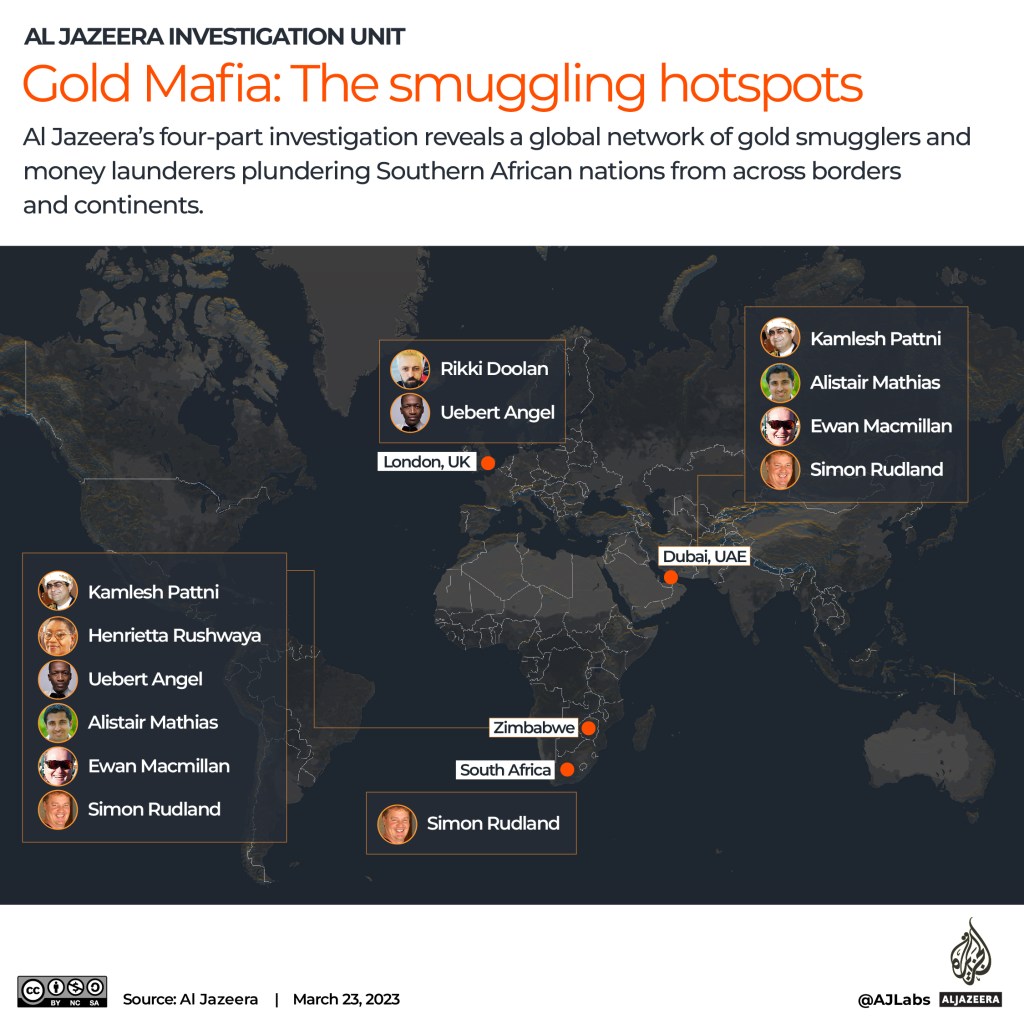
    The investigation shows multiple different gangs using gold as their preferred method for laundering money, with three of them operating mainly from Zimbabwe.

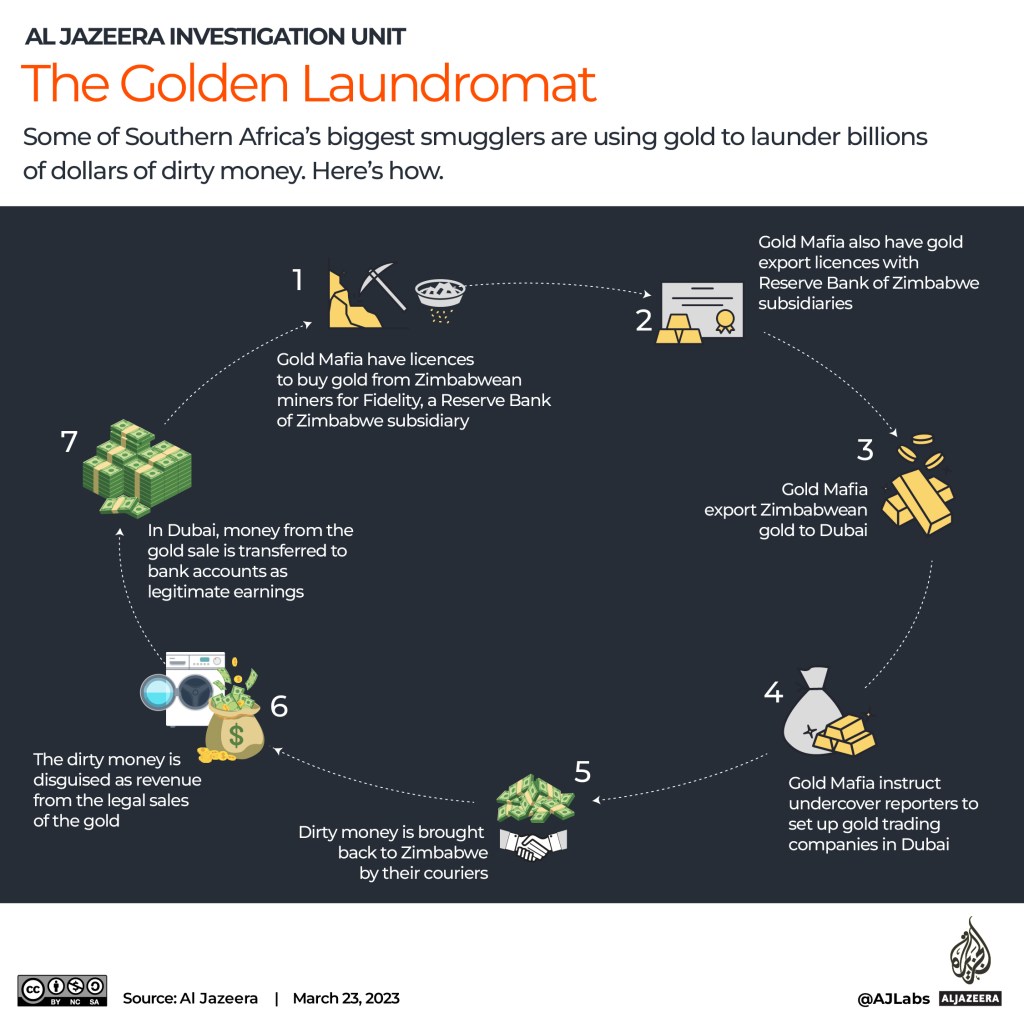
    The process is as simple as it is cunning: Criminals from around the world with large volumes of unaccounted cash can give that money to the Zimbabwean government, directly or through smugglers.

    Zimbabwe needs dollars because the country’s currency has lost its value in international trade due to hyperinflation. A commodity like gold is a good way to earn dollars, but international sanctions imposed on the country make it difficult for the government to export gold because of the additional scrutiny on officials in power.

    One of the rival gangs is run by Kamlesh Pattni, a businessman who in the 1990s was accused of pocketing hundreds of millions of dollars belonging to the Kenyan exchequer through a gold smuggling scheme. Pattni was charged but never convicted, and Al Jazeera’s undercover operation shows that he is now involved in a similar scam in Zimbabwe.

    Pattni’s operation works by exporting Zimbabwean gold to Dubai and then laundering the money and the precious metal.

    Pattni’s biggest competitor is a gold smuggler named Ewan Macmillan, who also offered to help launder money for Al Jazeera’s reporters. Like Pattni, Macmillan uses a group of couriers to transport quintals of gold per week from Zimbabwe to Dubai.

    When the gold arrives in Dubai, it is sold to refineries, and the proceeds are banked for the money launderers. The refining process removes traces of the gold’s origin. Central to Macmillan’s operations is his business partner Alistair Mathias, who advises clients on how to cleanse their dirty cash.

    When asked about the findings of Al Jazeera’s investigations, Pattni said no allegation of criminal wrongdoing had been upheld against him in Kenya. He denied involvement in any kind of money laundering, as well as employing anyone to smuggle cash or offering to deal with funds he knew originated from illegal sources. He said when he met the Al Jazeera undercover team, he thought he was meeting an investor who wanted to sell a stake in hotel businesses and “to divest of a portfolio in China into gold buying and mining in Zimbabwe”.

    Pattni said he is not involved in the day-to-day operation of most of the companies he identified to Al Jazeera’s team and that he believed them all to be engaged in a legitimate business.

    Alistair Mathias denied that he designed mechanisms to launder money and said he had never laundered money or traded illegal gold. He told us he never had any working relationship with Ewan Macmillan.

    The Reserve Bank of Zimbabwe told Al Jazeera that it takes the issues of money laundering and illicit trade very seriously and will not participate, directly or indirectly, in such activities.

    Rikki Doolan did not respond to Al Jazeera directly, but denied being involved in gold smuggling and money laundering in a videoposted on Twitter. Angel, Mnangagwa and Macmillan have not responded to Al Jazeera’s inquiries.

    SOURCE: AL JAZEERA

  • Lavrov: US Is Trying To Sabotage The Planned Russia-Africa Summit

    Lavrov: US Is Trying To Sabotage The Planned Russia-Africa Summit

    The US is trying to wreck Russia’s planned summit with African countries as part of efforts to isolate Moscow, Foreign Minister Sergei Lavrov claimed in an interview published on Tuesday.

    Lavrov told the news site Argumenty i Fakty that Moscow is different from Western countries in its relations with Africa in that “we never tell our foreign partners how they are supposed to live. We have no secret agenda”.

    Moscow is preparing for its second summit with African countries, scheduled for the end of July in St. Petersburg, including work on infrastructure, technology and energy projects.

    International isolation

    “It is true that the United States and its vassals are doing everything possible to achieve Russia’s international isolation,” Lavrov told the website.

    “In particular, they are trying to torpedo the planned second Russia-Africa summit … to persuade our African friends not to take part.”

    In any case, Lavrov said, the chances of damaging the conference were diminishing as “fewer and fewer people are now willing to pull out all the stops for former colonial powers.

    “Attempts to interfere in our cooperation with countries for the global South and East will therefore continue, but success is far from guaranteed.”

    Focus on Asia, Africa

    Shunned by most Western countries since its invasion of Ukraine just over a year ago, Moscow has turned its efforts to countries in Asia and Africa.

    Lavrov has been particularly eager to nurture ties with Africa, visiting the continent twice this year as well as making a tour in mid-2022.

    South Africa this year held 10 days of military exercises with the Russian and Chinese militaries.

    And the Wagner Group of Russian mercenaries, active in what Moscow described as its “special military operation” in Ukraine, has been deployed against insurgents in Mali and the Central African Republic.

    US President Joe Biden hosted a US-Africa leaders’ summit in 2022 in Washington, seeking to bolster alliances amid the growing Russian and Chinese presence on the continent.

  • AfCFTA: A Lesson To Learn From ASEAN FTA

    AfCFTA: A Lesson To Learn From ASEAN FTA

    In November 1992, 6 countries (Brunei, Singapore, Indonesia, Malaysia, the Philippines, and Thailand) at that time as members of the Association of South East Asian Nations (ASEAN) met in Singapore and set a resolution for the establishment of a free trade area commonly known as ASEAN Free Trade Agreement (AFTA). It should be noted that the Association (ASEAN) was founded in 1967 where its main goal was political and economic cooperation, but due to the instability of the political and security situation in many of the member states, the cooperation resolution failed to be fulfilled in time concerned and remained as a political community that had little impact on the economy. The countries of Laos, Cambodia, Vietnam, and Myanmar joined later.

    The agreement (AFTA) aimed to facilitate production and trade in Small and Medium-sized Enterprises (SMEs), it was expected that it will bring a boost from the grassroots level (farmers, traders, and factory owners) thus the intended economic growth would reflect these communities directly. To begin with, the Common Effective Preferential Tariff (CEPT) Scheme was established to reduce tariffs on products in phases for member countries to 0-5% till the year 2003. The issue of eliminating tariffs stepwise was done purposely to not affect the economy of these countries, considering the economic contribution of products (that should be duty tax-free) to the economy of those countries. For example, Cambodia should have reached a 0-5% tariff charge in 2010, Laos, and Myanmar in 2008.

    In 2010, CEPT was improved and a new advanced agreement was signed that would speed up the performance of this economic integration as well as provide an open room for the inclusion of other countries as peripheral commercial partners. This agreement was ASEAN Trade in Goods Agreement (ATiGA).

    What can AfFCTA learn?

    The publication Taking Advantage of ASEAN’s Free Trade Agreements: A guide for Small and Medium-Sized Enterprises, has explained in detail that 90% of all businesses in the ASEAN region are categorized into small and medium enterprises (SMEs) and that hitting the target of USD 10 Trillion by 2030 and making it the fourth largest economic zone in the world, the SMEs must be emphasized.


    The implementation guide of ATiGA led to the establishment of Industrial Cooperation between the ASEAN partner countries (ASEAN Industrial Cooperation Scheme) where the member countries, they would be allowed to join and invest as Joint Ventures projects in industries, and their products will be qualified to be charged 0-5% tariff rate but importantly the raw materials must originate from among the AFTA member states. This step led to the existence of 98 factories built by Joint Ventures projects and it had led to more than 150 factories applications by July 2002 and led to the growth of industries, especially in the sector of Technology and communication, electricity and agriculture mostly in food crops.

    AFTA has also developed a mechanism to involve other countries from outside the geography of South East Asia in investment and trade. For example, in July 2005, an Agreement was signed between the Chinese Government and AFTA, where 90% of the products involved in the bilateral market will be reduced or exempted from customs duties. This exercise will occur after the analysis of “Important Products” and “Not Very Important Products”. Thus, the important ones will be given priority for tax exemption. This process has been seen to benefit both parties considering the size of the market in China and China’s production capacity.

    This step has made it possible to select products that AFTA member countries may not be able to produce on time while the demand for the product is high in their countries, so getting the product without customs duty helps to reduce the cost of importing the product at high costs. This cooperation process with countries outside of AFTA has also involved countries such as Japan (ASEA-Japan Comprehensive Economic Partnership (AJCEP), South Korea (AKFTA), Australia and New Zealand Together (AANZFTA), and India (AIFTA).

    The global economic recession of 2008, significantly affected the ASEAN countries by weakening commercial cooperation and investment. The crisis made AFTA members state along with China, South Korea, and Japan (ASEAN+3) sign an agreement known as the Chiang Mai Initiative (CMI) in 2000 which was an improvement of the previous agreement known as the ASEAN Swap Agreement (ASA) which aimed to facilitate member states going during the recession. ASEAN+3 came up with a program that enabled the registration of bonds that will be used to improve access and market infrastructure. The plan was known as the Asia Bond Market Initiative (ABMI) and it was signed in 2003.

    This step enables these countries to be sure of the improvement and expansion of markets according to needs, especially in the area of production and markets whenever there will be a recession or price fluctuation of the products.


    It is estimated that the implementation of these strategies will enable 65% of AFTA member states of population approximately 600 million to be categorized as a middle-class economy. The boost will arise from the stimulation of science and technology from China and Japan, while Singapore is in finance and Vietnam, Indonesia, and Malaysia are in the industrial sector.

    According to Kenya’s policy guide on the AfCFTA agreement, The Kenya AfCFTA Implementation Strategy 2022-2027, it has been explained in detail that the production of goods that will be sent to AfCFTA, should have a prior market inside the country, so AfCFTA member countries should also consider it that on the development of the market because that step will be the catalyst of the economic chain that will affect all groups, especially in the area of SMEs.


    About Author

    Ezra Nnko is a Geopolitical and International Policy Analyst based in Dar es salaam, Tanzania. He is available through [email protected] and through Phone Number:

    +255 765 571917 (Call + WhatsApp)

    +255 784 527018  (Call)

  • Museveni: Homosexuality Is A Big Threat And Danger To The Procreation Of Human Race

    Museveni: Homosexuality Is A Big Threat And Danger To The Procreation Of Human Race

    President Yoweri Museveni has called on African nations to lead in rejecting the promotion of homosexuality, describing the vice as a big threat and danger to the procreation of human race.

    “Africa should provide the lead to save the world from this degeneration and decadence which is really very dangerous for humanity. If people of opposite sex stop appreciating one another then how will the human race be propagated?” he asked.


    President Museveni made these observations while interfacing with a delegation of Members of Parliament from over 22 African countries and the United Kingdom who had converged in Entebbe for a 2-day First ever Inter-Parliamentary Conference on Family Values and Sovereignty that ran under the theme ‘Protecting African Culture and Family Values’.

    The delegation was led to State House Entebbe by Hon. Sarah Opendi, the Tororo Woman MP and Chairperson of the Conference and also the Chairperson of the Parliamentary Forum on Family.


    They called on President Museveni to thank him for his firm stand against homosexuality and to bring to his attention some of the African-Caribbean and Pacific – ACP/EU agreements that pose a threat and danger to the sovereignty of the Member States of the ACP.

    The Conference was also attended by experts who enlightened participants on the causes of homosexuality and possible remedies to the vice.

    President Museveni noted that initially the practice that was thought to be a deviation from the normal is more dangerous than drugs.

    He therefore sought the identification of the focal point of homosexuality as it is neither genetic nor hormonal.


    Dr. Wahome Ngare, a Senior Consultant and Chairman- Kenya Catholic Doctors’ Association clarified on the root causes of homosexuality.

    “So, broken families create homosexuals, they are children who are broken. They are not genetic or hormonal but psychological,” Dr. Wahome explained.

    Dr. Wahome further in his submission pointed out that this lifestyle is naturally sterile; it leads to increased demand in medical services, and it is not scientific.

    He further observed that homosexuality is not natural, it is not consistent with nature and culture as well as faith.

    “In fact, same sex unions and same sexual acts are anti-life, anti-family and anti-humanity. It should be banned in total,” he stressed.

    One of the researchers on the subject, Sharon Slatter- the President of the Watch International and the Chairperson of United Nations Family Caucus also cited some of the root causes of the practice as an abusive father who at times is never at home for the child, overprotective mothers, pornography addiction, sexual abuse or children who were bullied and felt marginalized.

    She added that most of the children in these categories develop same sex attraction.

    President Museveni was glad to learn from Slatter that victims could be provided with some therapy and be rehabilitated like one victim who was deeply involved in homosexuality but was reformed and helped over 1000 other victims as well in their rehabilitation.

    “That means Homosexuality is reversible and curable. But it should not be preserved or propagated it should be confined” he said.

    The President who praised the Ugandan Parliament for passing the bill vowed never to allow the promotion and publicisation of homosexuality in Uganda, stressing that it will never be tolerated.

    “If I kissed Janet in public, I will not win elections in Uganda. It shouldn’t even be done in the sitting room because children are there. Now here you are, declaring, “I am a homosexual”, what are you trying to show?” He wondered.

    Slatter however warned of some actors from the UN who are busy moving around the world advocating against the establishment of rehabilitation centers for the victims of homosexuality.

    “They go around the world saying the right of Conversion Therapy should be preserved and should be declared illegal,” she warned.

    President Museveni at the same interface with African MPs thanked Hon. Asheme Songwe, MP and leader of the Malawi delegation to the ACP/EU in Brussels for bringing to his attention articles contained in the ACP/EU new draft agreement that pose a lot of challenges and are a threat to the sovereignty of the Member States and also to the Values of Family, Religious and Traditional Cultures.

    “We appeal to you to be the Ambassador in Chief across Africa, to sensitize each and every Head of State of the dangers of the post Cotonou agreement. For example Article 88, in the new agreement creates a super council of Ministers from ACP/EU who have powers to come up with the binding decisions which will override the various original agreements in our respective groupings like the ECOWAS, SADC and the EAC. Article 46.3 and 40 are advancing issues dealing with sexual gender orientation identity a matter that has been well explained by Dr. Wahome. Yes, we are poor but warn fellow Excellencies not to sign. By signing we are putting the future of our children at a great risk. We are excited with what is happening in Uganda,” he said.

    “Now I am immunized. I thank the MP from Malawi for alerting me not to sign the ACP/EU agreement. Now I am immunized against the ACP/EU agreement,” the President said.

    President Museveni however appealed to friends from the Western Political circles whom he assured of not having any enmity with them, to stop giving lectures to Africans and wasting their time because they will not succeed as colonialism was defeated from the onset of Organization of African Union (OAU) in Addis Ababa in 1963.

    President Museveni further assured Slatter that there will be no comprehensive sexuality education in Uganda, citing the Biblical phrase in the book of Ecclesiastics that points out that ‘there is time for everything’.

    “Now children are children. They need to grow as children. How can you invade their childhood and start teaching them about adulthood? he asked, calling Dr. Wahome to shed more light on the issue.

    “The part of the brain that makes them reason and make good decisions does not mature until 20 years of age. Therefore, if you come out to teach a child to make good sexual decisions, It is not possible. That is why we have the age of 18 as a cut off for what children can be allowed to do without parental guidance. Therefore, the child doesn’t have to be exposed to sexual matters until the inclination starts naturally,” Dr. Wahome explained.

    President Museveni also told his guests that the moment he receives the bill he will convene a meeting with the Ugandan MPs to harmonize on it and see how best to protect the children from homosexuality.

    Kaluma Peter, MP from Kenya praised President Museveni and the Parliament of Uganda for doing what they did as it is now an inspiration to other Houses on the continent to follow suit, adding that Africa is faced with a bigger problem than slavery or colonialism.

    “A person proposing that there should be same sex marriages or same sex relationships is a person seeking to wipe out the entire humanity out of the face of this earth. So, we are very- very happy to see you being firm on this. You give value to our sovereignty as Independent States in Africa. You have stood in the gap for Africa. We came to express our gratitude, respect, and salutations to you Your Excellency. So many African States are now coming up with similar Laws-Kenya is drafting the family protection Law, Ghana and Malawi and many others,” he disclosed.

    Sarah Opendi the leader of the delegation assured President Museveni that the bill recently passed by Parliament has some clauses that propose the establishment of rehabilitation centers for the victims of homosexuality.

    “Children could have been lured into this act innocently,” she added.

  • President Suluhu Goes After Officials Who Inflated Air Tanzania Boeing Cargo Craft By $49M

    President Suluhu Goes After Officials Who Inflated Air Tanzania Boeing Cargo Craft By $49M

    Air Tanzania’s invoice for its freighter was inflated by nearly $50 million. Tanzania’s president Samia Suluhu Hassan has called for the resignation of all individuals involved in the fraud.

    Air Tanzania was supposed to receive its first Boeing 767 freighter by the end of Q1 2023, but it is now expected to be delivered this month. According to the 2021/2022 Controller and Auditor General (CAG) report, the last installment for the plane’s manufacture was $37 million; however, an $86 million invoice was presented to the government.

    Freighter price inflation

    The Citizen reports that President Hassan read the CAG report on March 29th. The audit revealed that an $86 million invoice, over twice the original figure, was submitted to the government in an attempt to defraud the state.

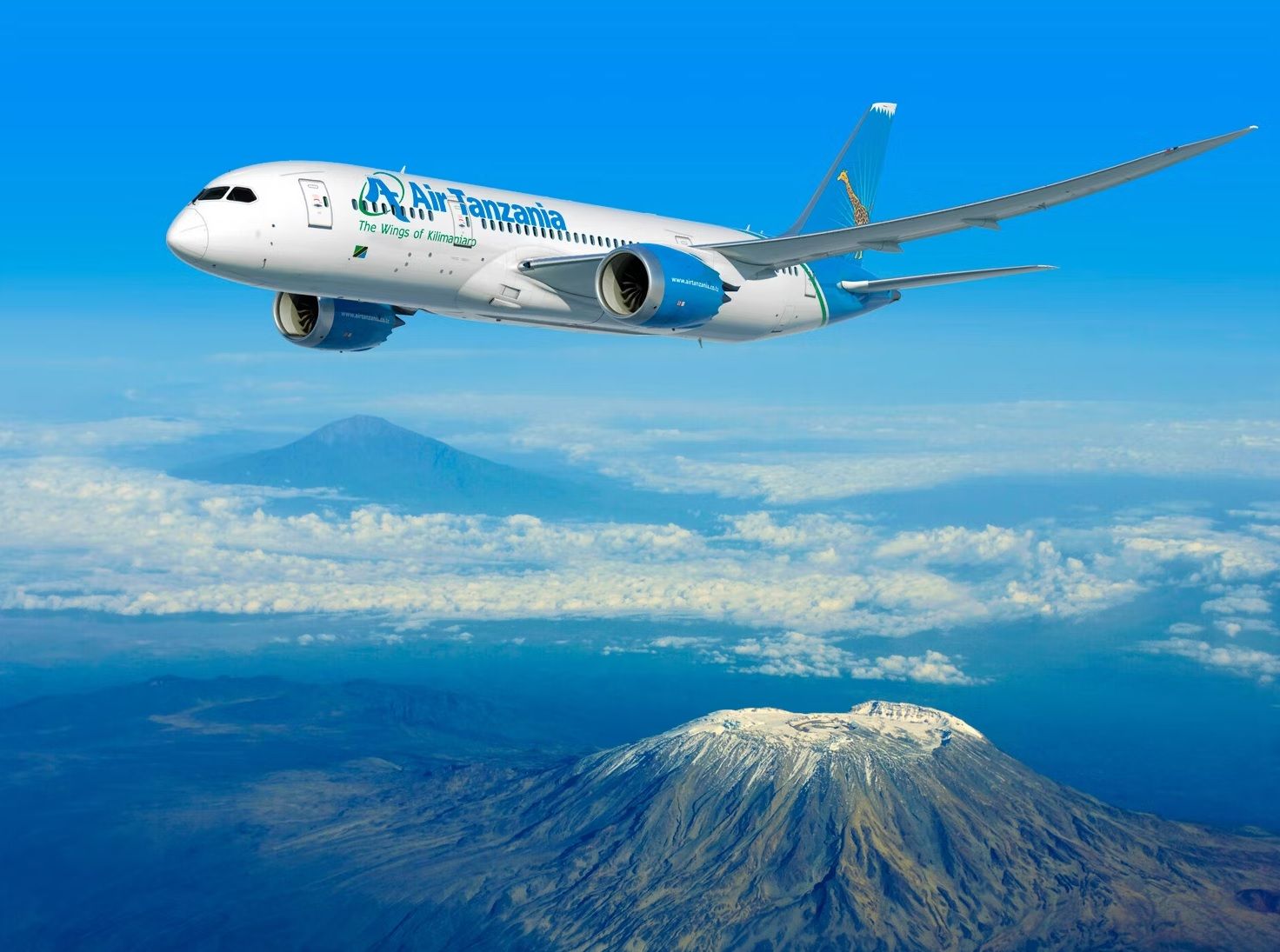
    Air Tanzania Boeing 787

    Photo: Air Tanzania

    Air Tanzania is wholly owned by the government. The new aircraft was sold to Tanzania Government Flight (TGF), which is expected to boost its cargo operations. President Hassan recognized that the price hike for the aircraft originated within the government, and she lashed out to all those involved. She said;

    “Where did this invoice come from? What did the contract say? And when you received the invoice, you still presented it to the government for payment. Stupid, what step did you take after you received the invoice? When you look at it critically, you will notice that the price hike is something that started internally.”

    The president will not tolerate such conduct, as she added that the nation could not be run that way. Although she did not state the individuals who were involved in the fraud, she ordered all of them to step down from their positions.

    Air Tanzania losses

    The 2021/2022 Controller and Auditor General report also indicates that Air Tanzania Company Limited (ATCL) incurred losses of $1.5 billion. The Citizen reported that about 25% of the losses were attributed to flight delays.

    CAG Charles Kichere stated the above while handing over the report to President Hassan. ATCL’s strategy was to reach a 92% level, but an analysis shows a quarter of the losses resulted from flight delays.

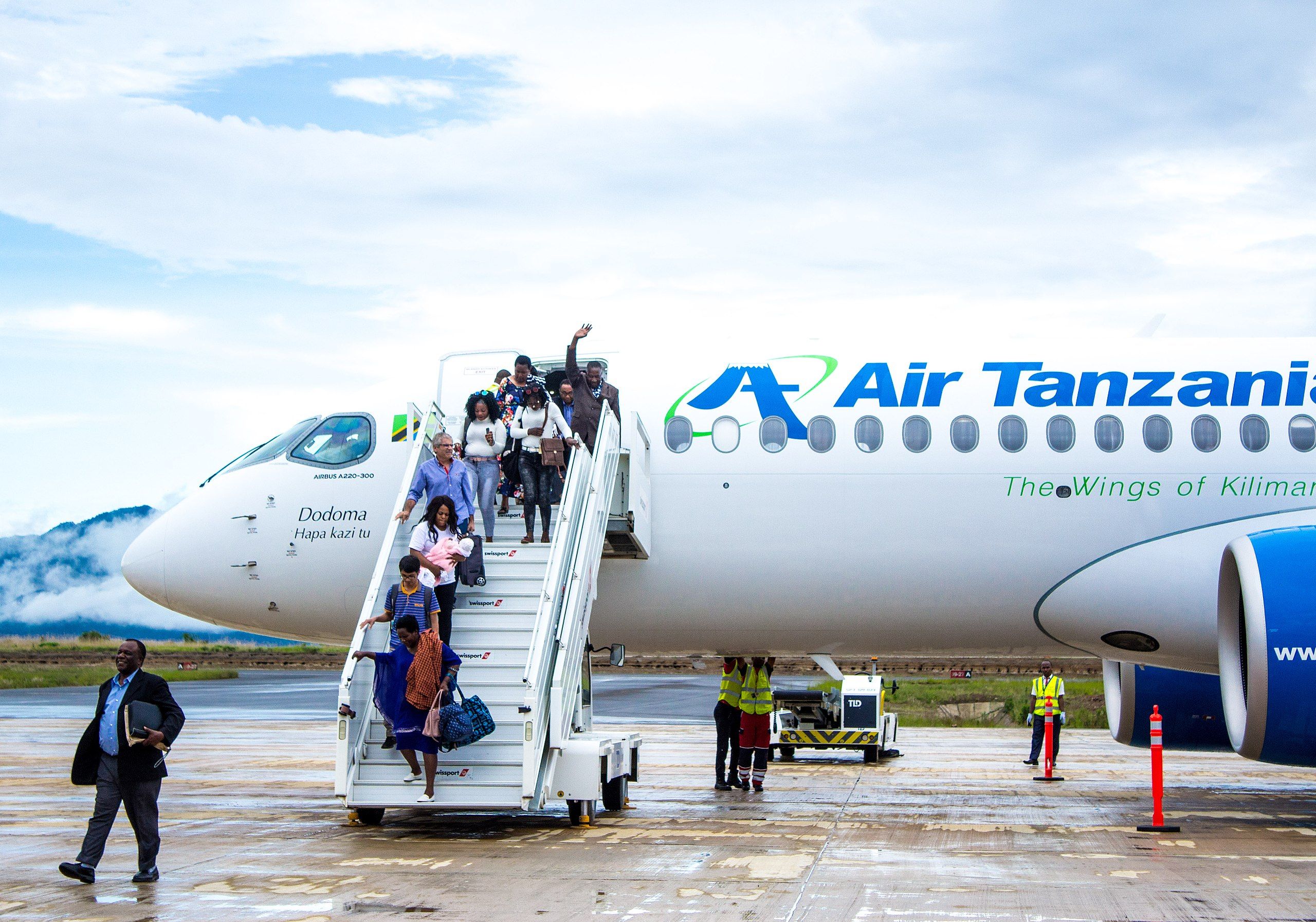
    Air Tanzania airbus a220
    Photo:  Kelvin Mwanasoko via Wikimedia Commons

    CAG Kichere recommended stakeholders focus on improving efficiency and revenue collection. Air Tanzania was one of 42 government entities that recorded losses. This reveals that the airline is among the corporations that cannot pay debts quickly.

    The delivery of the freighter

    Air Tanzania is ready to take delivery of its first freighter, which will become Africa’s first production B767-300F. Last month, plane spotters were excited when they saw the aircraft conducting test flights at the Boeing Factory at Paine Field.

    The cargo aircraft was expected to be delivered by March 31st, but the flag carrier might have to wait until later this month. According to Airspace Africa, the delivery of the aircraft was delayed because of supplier issues. Boeing acknowledged that “quality issues” had forced the company to rework the 767Fs before delivery.

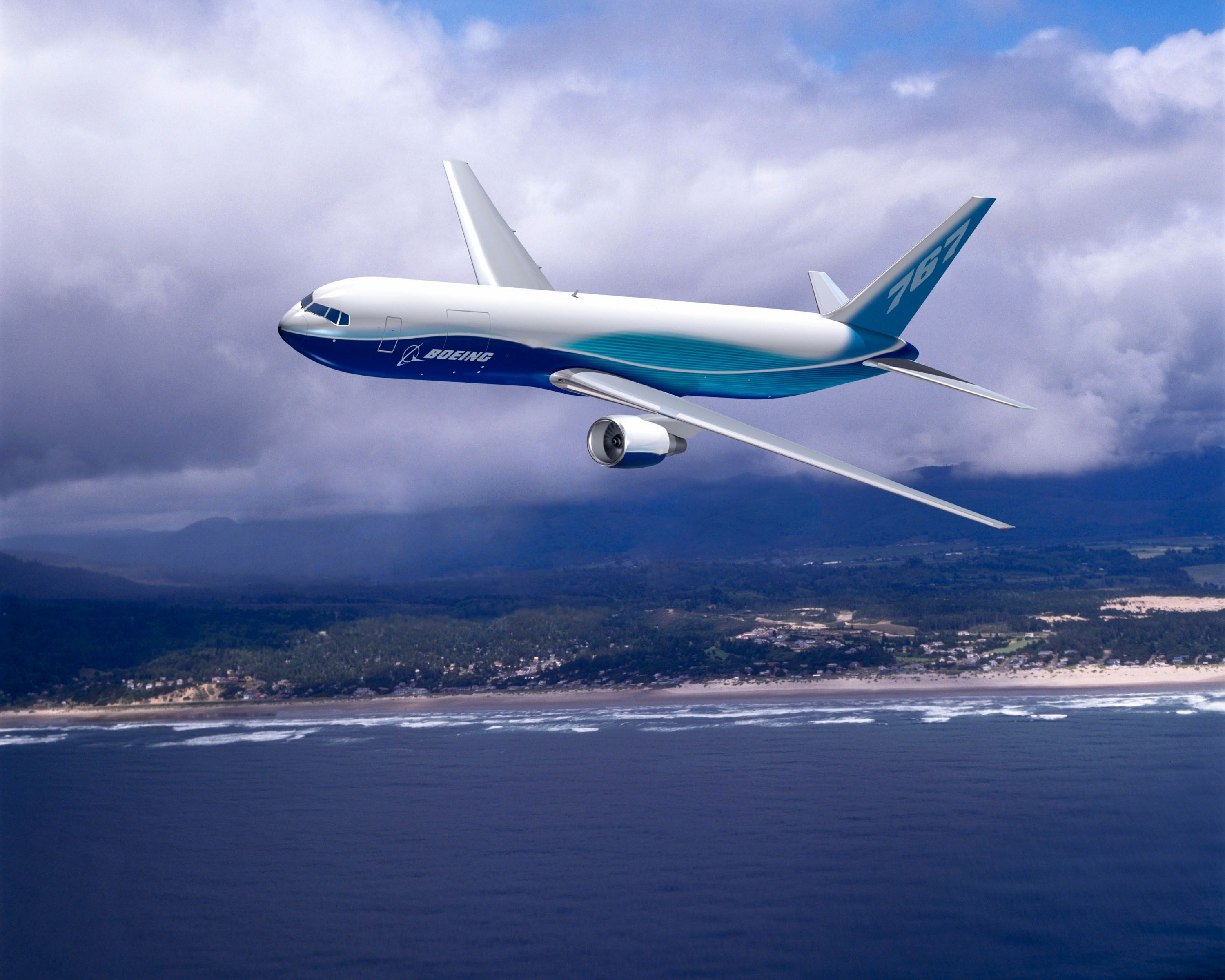
    Boeing 767 Freighter

    Photo: Boeing

    The new freighter will be based at Kilimanjaro Airport, which will become a strategic hub for cargo operations. This will allow Air Tanzania to increase its cargo operations and boost trade with other states.

  • Gold Smugglers Using South African Banks, Bribes To Launder Money

    Gold Smugglers Using South African Banks, Bribes To Launder Money

    Several key officials at three major South African banks are helping a gold smuggling gang launder millions of dollars of dirty cash in exchange for regular bribes, an Al Jazeera investigation has found.

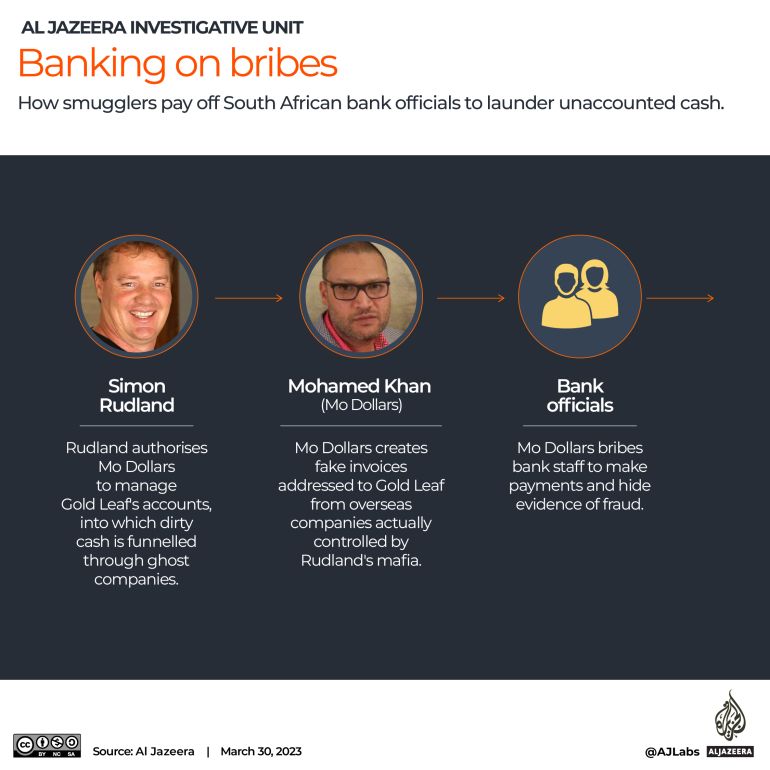
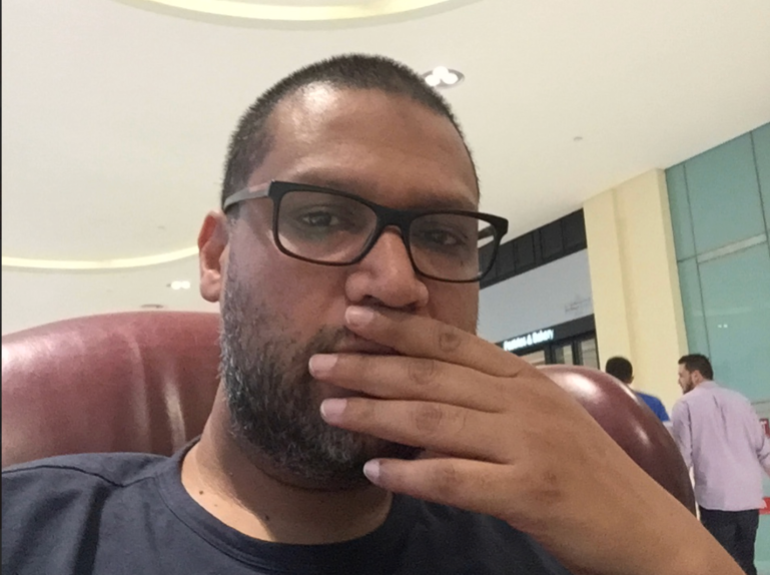
    The officers at Standard Bank, ABSA Bank and Sasfin Bank have been on the payroll of Mohamed Khan, a money launderer working for cigarette magnate and smuggler Simon Rudland, thousands of documents and interviews with Khan’s former colleagues reveal.

    These officers would enable dubious money transfers from Khan’s companies and remove evidence from the computer systems, all while getting monthly payments from Khan.

    The revelation is part of Gold Mafia, a four-part investigation by Al Jazeera’s Investigative Unit (I-Unit), which shows how multiple gangs smuggle gold from Zimbabwe and use it to launder vast amounts of money.

    The documents obtained by the I-Unit include ledgers, contracts and emails showing the process Khan and Rudland used. The I-Unit also interviewed Dawood Khan, Mohamed Khan’s brother who helped forge documents; another of Khan’s former partners who we are calling Jimmy to protect his identity; and Khan’s ex-wife Wardah Latief.

    Infographic showing how Simon Rudland bribes bank officers.

    Fake identities, fraud invoices

    Khan, who goes by the nickname Mo Dollars, heads PKSA and Salt Asset Management, South Africa-based financial services firms. Among their biggest clients is Zimbabwean millionaire Simon Rudland, owner of Gold Leaf Tobacco, one of Southern Africa’s largest cigarette brands.

    South African revenue authorities have accused Rudland of evading taxes by selling cigarettes on the black market. “The illicit cigarette trade earns rand cash. So he gets a ginormous amount of rand cash,” fellow Zimbabwean gold smuggler Ewan Macmillan told Al Jazeera’s undercover reporters, who were posing as Chinese criminals looking to launder unaccounted cash. “He has the same problem in legitimising his money as you have.”

    Mo Dollars does this for Rudland; cleansing his dirty money using a complicated web of front companies, fake invoices, bribery and gold.

    At the centre of this scheme is a set of companies with bank accounts in different parts of the world – Aulion in Dubai, Vantage Leaf in Mauritius, Velmont Valley in Switzerland and Liberty Gold in the United States.

    Using fake invoices and identities, Mo Dollars transfer millions of unaccounted dollars in each transaction to these companies, which are run by Rudland’s partners, the investigation shows.

    PKSA and Salt Asset Management, which send the money, claim to be doing so in lieu of imports of tobacco, clothes and gold – imports that never actually enter South Africa. “It’s Simon laundering that money,” said Dawood Khan, referring to Rudland. “Money that was not reported through the legitimate streams, and needed to be moved.”

    To “move” that money, he said, his brother Mo Dollars bribes influential officers at several South African banks so no red flags are raised during the transactions.

    The bribes range from monthly payments to paid holidays and house renovations, according to Latief, Mo Dollars’s ex-wife, and documents accessed by Al Jazeera.

    Mohamed Khan's ex-wife Wardah Latief
    Mohamed Khan’s ex-wife Wardah Latief saw his money laundering first-hand [Al Jazeera]

    ‘The most valuable jewel’

    Sasfin Bank, which caters to small businesses is one of the institutions that Mo Dollars infiltrated.

    Hussain Choonara, who was in charge of the bank’s foreign exchange payments, was listed as receiving $1,600 per month, ledgers maintained by Mo Dollars and his aides show. “Mohamed and Hussain had a magnificent relationship,” Dawood Khan told Al Jazeera. “He would basically ensure that his staff is pushing through this work unquestioned.

    “He was like the most valuable jewel or component, if I can put it that way, in Sasfin, to ensure the success of the money being laundered.”

    Choonara would also tell Mo Dollars who else he needed to bribe at Sasfin, Dawood Khan claimed. Among them was Lulama Kene, an IT technician who ensured fraudulent transactions were wiped from the bank’s digital system. Choonara left Sasfin in 2019.

    Others on Mo Dollars’s payroll included Cheryl Simons, who worked in the compliance office, and Brandon Marshall, the head of onboarding new business customers, the ledgers suggest. Kene and Simons were each paid $800 a month, while Marshall received $3,200 every month. Marshall and Kene have left Sasfin, and the bank suspended Simons after allegations about her role in helping Rudland launder his money first emerged.

    “Friday afternoons after lunch they get their money,” Latief recalled. But it wasn’t just money, she said. “He also used to give them holidays overseas. And he used to renovate their houses for them.”

    Mohamed Khan
    Mohamed Khan, also known as Mo Dollars, was authorised to launder cigarette mogul Simon Rudland’s money [Al Jazeera]

    Banking on bribery at the biggies

    Mo Dollars also targeted two of South Africa’s three biggest financial institutions with a similar strategy: Standard Bank and ABSA Bank.

    Videsh Seeripat, a relationship manager at ABSA, is listed in the ledgers as receiving $800 a month. His job was to open bank accounts in the name of people who were not present to apply themselves, a mechanism that allowed Mo Dollars to start accounts using fake identities.

    “He would get the compliance people to sign it off, have another representative sign the document, and claim that all the necessary compliance boxes were ticked,” Dawood Khan said.

    At Standard Bank, Africa’s largest bank, Vivian Naicker, a senior manager in the compliance division, made sure Khan’s companies received the documentation needed to evade the scrutiny of South Africa’s central bank, Dawood said. Naicker communicated with Khan using a pseudonym, Vic Grimes, according to emails between the two.

    “We would then provide him with the necessary documentation. He would then, by himself, set up and complete the application,” Dawood said. “He would then submit it to the Reserve Bank, get approval, which would allow us to facilitate payments without any scrutiny, through any bank.”

    Asked for a response to Al Jazeera’s investigation, Simon Rudland told Al Jazeera that the allegations against him formed part of a smear campaign by an unidentified third party. He described himself as “a strong businessman…competing against the greedy and the envious”. He denied any involvement in the sale of illicit cigarettes, in gold or other smuggling and in sanctions busting.

    He accepted that he had had dealings with Mohamed Khan, who he agreed “appeared” to be a money launderer, and that Gold Leaf and another of his companies had authorised Khan’s SALT Asset Management to act as their agent, but denied that any form of money laundering had been undertaken for him or any of his businesses. Payments made to Vantage Leaf, Liberty Gold and Velmont Valley had nothing to do with Rudland or his companies, he said.

    Gold Leaf said that it emphatically denied any involvement, past or present, in money laundering, the trade in illegal gold or related matters. The company said that no “untaxed” or “illegal” cigarettes could be “attributed” to Gold Leaf, though the proceeds of the illicit sale of its products by others did appear to have been moved between jurisdictions and thereby laundered.

    Gold Leaf said its limited transactions with Khan and SALT had always been lawful and proper. Gold Leaf had never made any payment to Aulion, it claimed.

    Mohamed Khan told Al Jazeera that all allegations against him were false and were based on speculation, conjecture and manufactured and doctored evidence. He confirmed that he was the owner of the PKSA Group and of SALT and that Gold Leaf was a client of SALT but he denied involvement in money laundering or other criminal activity. He denied bribing anyone who worked in the South African banking sector.

    Liberty Gold denied all knowledge of the matters and individuals we featured, while Vantage Leaf denied any knowing involvement in money laundering or false invoicing.

    Sasfin Bank told Al Jazeera it was taking vigorous action against suspended and former employees and clients of its foreign exchange unit and said that it no longer had a relationship with any of the businesses identified in this investigation, including SALT.

    ABSA said it had passed Al Jazeera’s findings to its Forensic Investigative Unit, while Standard Bank told Al Jazeera it has a zero-tolerance stance relating to fraud and criminality and would report and assist in any legal investigation. Vivian Naicker denied involvement in a money-laundering syndicate.

    (Al Jazeera)

  • Gold Mafia: Kamlesh Pattni Is Back, Now In Zimbabwe Dirty Cash Laundering

    Gold Mafia: Kamlesh Pattni Is Back, Now In Zimbabwe Dirty Cash Laundering

    An investigation by Al Jazeera has revealed some of Southern Africa’s largest gold-smuggling operations, exposing how these gangs help criminals around the world launder millions of dollars of money while helping governments circumvent international sanctions.

    Gold Mafia, a four-part series by Al Jazeera’s Investigative Unit (I-Unit) based on dozens of undercover operations spanning three continents, and thousands of documents, also shows
    how government officials and businesspeople are profiting from the illegal movement of gold across borders.

    The investigation reveals how millions of dollars worth of gold is smuggled every month from Zimbabwe to Dubai, allowing criminals to whitewash dirty money through a web of shell companies, fake invoices and paid-off officials.

    The investigation also shows how Zimbabwe President Emmerson Mnangagwa’s government is systematically using gold smugglers to get around the chokehold of Western sanctions imposed on the country. The money laundering and gold-smuggling schemes involve one of Zimbabwe’s most influential diplomats, and go all the way up to the president and his circle.

    The smugglers include millionaires, one of whom was accused of almost bankrupting Kenya through a similar, corrupt scheme also involving gold.

    Gold smuggling, money laundering

    Posing as criminals from China looking to launder more than $100m, Al Jazeera’s undercover reporters managed to gain access to these smugglers and gangs.

    Zimbabwe is a key player in these operations. Gold accounts for almost half – at least $2bn – of the country’s exports. But the nation faces a strict international sanctions regime, and even though its gold trade is not in itself banned by the West, the broader strictures against Zimbabwe make it harder to export the precious metal through official channels.

    However, using a web of companies and patronage from some of Zimbabwe’s most powerful individuals, smugglers have turned those constraints on trade into an opportunity to launder millions of dollars and help the government in Harare get around some of the consequences of sanctions.

    The process is as simple as it is cunning: Criminals from around the world with large volumes of unaccounted cash can give that money to the Zimbabwe government, directly or through smugglers. The Zimbabwe government desperately needs US dollars since the county’s own currency has little international value following years of hyperinflation.

    In exchange, launderers get clean, legitimate cash — from the sale of Zimbabwean gold — transferred to their bank accounts.

    ‘Good washing machine’

    One of the smuggling operations the I-Unit encountered was led by Uebert Angel, Zimbabwe’s ambassador-at-large to Europe and the Americas. Angel was appointed personally by President Emmerson Mnangagwa with the responsibility of securing global investments for Zimbabwe, and is one of the country’s most influential diplomats.

    Angel, who is also a prominent pastor, works with his deputy, Rikki Doolan. The duo made an offer to Al Jazeera’s undercover reporters that Angel could use his diplomatic cover to smuggle dirty money into Zimbabwe. That cash would then be used to buy Zimbabwean gold with the help of Henrietta Rushwaya, president of the country’s mining association and a niece of Mnangagwa.

    “It’s a good washing machine, right?” Doolan said, a smile on his face, while speaking with Al Jazeera reporters.

    Angel and Doolan, who met the reporters in London, repeatedly claimed that the country’s president was on board with their plans. Angel had another laundering idea, too: He proposed using the unaccounted money to build a hotel near Victoria Falls, a popular tourist attraction in Zimbabwe.

    ‘It’s very clean that way’

    If access to power is the currency that Angel and Doolan peddled, gold is the calling card of a string of — at times rival — smuggling operations.

    One of the gangs is run by Kamlesh Pattni, a businessman who in the 1990s was accused of pocketing hundreds of millions of dollars belonging to the Kenyan exchequer through a gold smuggling scheme. He was charged but never convicted. Al Jazeera’s undercover operation shows that Pattni is now involved in a similar scam in Zimbabwe, exporting gold to Dubai and then laundering both the money and the precious metal.

    Pattni’s biggest competitor, a gold smuggler named Ewan Macmillan, also offered to help launder money for Al Jazeera’s reporters. Like Pattni, Macmillan uses a group of couriers to transport hundreds of kilos of gold per week from Zimbabwe to Dubai, where it is then laundered through a web of companies and false invoices. Central to Macmillan’s operations is his business partner Alistair Mathias, who advises clients on how to cleanse their dirty cash.

    Finally, Al Jazeera obtained details of how Simon Rudland, one of Zimbabwe’s richest men, launders money through both Zimbabwean and South African companies. Rudland is the owner of Gold Leaf Tobacco, one of Southern Africa’s biggest cigarette brands, especially on South Africa’s black market.

    These smuggling gangs have official licences from Zimbabwe’s central bank that allow them to sell the country’s gold in Dubai, documents accessed by Al Jazeera show. They are expected to return the proceeds from those sales to the central bank.

    Instead, Pattni, Macmillan and Matthias have a well-oiled money laundering mechanism in place. They told Al Jazeera’s undercover reporters to set up shell companies in Dubai that would serve as a front for the gold trade. The legitimate money earned from the sale of Zimbabwean gold in the emirate would be transferred to the bank accounts of these shell firms. And the smugglers would instead carry the dirty cash back with them to Harare, where they would deposit it with the central bank.

    “So, it’s very clean that way,” said Mathias, Macmillan’s partner.

    Kamlesh Pattni

    A gold smuggler involved in a scandal that robbed Kenya of 10 percent of its GDP in the 1990s moved his smuggling operation to Zimbabwe and Dubai.

    Kamlesh Pattni was involved in the so-called Goldenberg scandal, a gold smuggling operation that robbed Kenya of 10 percent of its GDP and led to charges of corruption against many members of then President Daniel Arap Moi’s government. After years of prosecution, Pattni was acquitted.

    Pattni, who later became a self-proclaimed pastor and sometimes goes by the name Brother Paul, is now running a similar scheme in Zimbabwe from his base of operations in Dubai.

    Undercover Al Jazeera reporters pretending to be Chinese criminals were offered several options by Pattni to launder more than $100m.

    He would do this by effectively turning the dirty money into gold that is exported from Zimbabwe to Dubai, where Pattni owns several gold-trading companies.

    Pattni exports gold bars and jewellery from Zimbabwe through his company Suzan General Trading, which gets paid an incentive by the government to sell gold overseas.

    The plan Pattni suggested would mean the dirty money, in US dollars, would be flown to Harare, where it would be declared as the proceeds of the gold exported by Suzan General Trading.
    That money is then used to buy gold in Zimbabwe, which would then be exported to one of Pattni’s Dubai based companies.
    Owning both the exporter in Zimbabwe and the importer in Dubai gives Pattni the opportunity to launder the money, which would then be paid into a Dubai bank account and would appear to come from legitimate gold trade.

    Pattni himself would take a 10 percent commission.

    ‘Always have the king with you’

    During the secretly recorded conversations with Al Jazeera reporters, Pattni claimed that the country’s president, Emmerson Mnangagwa, was aware of his gold-smuggling and money laundering operations.

    When asked about Mnangagwa’s involvement, Pattni said: “He knows of course, yes. But he can’t, he will not talk too openly.”

    “When you work you must always have the King with you, the president.”

    Pattni showed several WhatsApp conversations he allegedly had with Mnangagwa, adding that “he has to be informed.”

    The scheme helps Zimbabwe secure large amounts of US dollars, a hard currency the country can then use on its internal and international markets at a time when its own currency has lost much of its global standing because of hyperinflation.

    Kamlesh Pattni once smuggled gold out of Kenya, now he is doing the same in Zimbabwe [Al Jazeera]

    Goldenberg scandal

    Since the 1990s, Pattni has cultivated close ties with several leaders all over Africa, and was quick to boast of that proximity while speaking with Al Jazeera’s reporters. He showed them photos of himself with former Libyan President Muhammar Gadaffi, former Zimbabwean President Robert Mugabe and ex-Kenyan presidents Daniel Arap Moi and Mwai Kibaki.

    His rise to power started in his home country Kenya — at a tailor’s shop in Nairobi. At a time when Western sanctions were strangling the country’s economy, Pattni told our reporters that he bumped into the East African nation’s head of intelligence while looking for a suit. He offered to bring in revenue in exchange for gold. Pattni claimed the intelligence officer took him to meet President Arap Moi.

    Pattni’s company, Goldenberg International, was granted an exclusive licence to export Kenyan gold, but instead, he smuggled gold from what is now the Democratic Republic of Congo.

    That gold was then sold abroad, while Pattni’s company charged the government a 35 percent commission. He said he was an “adviser” to Arap Moi, who was under growing domestic and international scrutiny over his refusal to allow multi-party elections.

    “In 1992, there was a lot of fights, riots in the street and they wanted [a] multi-party [system],” Pattni said. “We advised just make it multi-party because ‘the money is with you, you will still win [the election].’”

    “I help[ed] the president to survive.”

    After Arap Moi eventually left office in 2002, Pattni was charged with several counts of fraud in a court case that would drag on for more than a decade. Arap Moi and many members of his government were also implicated in the scandal, accused of receiving bribes from Pattni and his aides. But Pattni was eventually acquitted — and no one has been convicted in the scandal.

    When asked to explain the revelations emerging from Al Jazeera’s investigation, Pattni denied any criminal wrongdoing in Kenya and emphasised that he had never been convicted in relation to his activities in that country. He denied involvement in any kind of money laundering or sanctions busting, as well as employing anyone to smuggle cash or offering to deal with funds he knew originated from illegal sources. He said that when he met with Al Jazeera’s undercover team, he thought he was meeting with an investor who wanted to buy a stake in hotel businesses and “to divest of a portfolio in China into gold buying and mining in Zimbabwe”.

    (Al Jazeera IU).

  • Al Jazeera Investigations: The Gold Mafia; The Laundry Service

    Al Jazeera Investigations: The Gold Mafia; The Laundry Service

    An investigation by Al Jazeera’s Investigative Unit infiltrates rival gangs that control Africa’s gold. Criminal networks turn dirty cash into gold, which is sold around the world. The investigation leads to the highest offices of state in southern Africa.

    GOLD MAFIA is a four-part series by the I-Unit to be released on March 23rd 2023. The series looks at how society’s obsession with gold through the ages underwrites a global shadow economy. It exposes the complicity of global financial institutions, regulators and governments in the criminality.

    Through thousands of confidential documents and exclusive interviews with whistleblowers from within the criminal underworld, investigators obtain the blueprints of billion-dollar money laundering operations that service the political elite.

    Undercover reporters pose as criminals with over a billion dollars of black money that needs to be cleaned. The team is led by a fictitious Mr Stanley, a Chinese gangster with links to the Triads. His undercover reporters befriend members of rival gold mafia gangs.

    In Episode 1: The Laundry Service

    The founder of the UK-based Good News Church, which has 15 branches around the world, offers to launder 1.2 billion dollars of dirty cash from China.

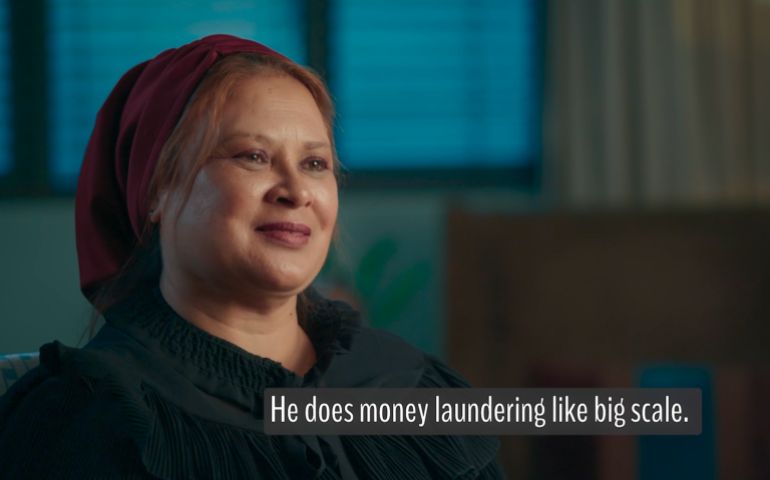
    “I am the 2nd largest diplomat in the country,” Uebert Angel tells undercover reporters.

    Angel is also presidential envoy and Zimbabwe’s ambassador-at-large to 85 countries. He offers to use his diplomatic cover to fly Mr Stanlev’s dirty cash into Zimbabwe where it can be laundered through gold and other investments.

    “Right now I can have a bag like this with 1.2 billion and put red tape written diplomat. Nobody can touch it”, Angel says. “It is a very, very easy thing.”

    Mr Stanley and his team get invited to closed door meetings with Kamlesh Pattni, notorious for devising a gold export scam that siphoned $600 million from Kenya in the nineties. They also sit down with Pattni’s competitor and convicted gold smuggler, Ewan Macmillan.

    “There is an opportunity, a hell of a big opportunity to wash money here,” Macmillan says.

    Both men are licensed gold traders in Zimbabwe and Dubai. They offer our undercover team lucrative deals to launder over $100 million through government gold export schemes. The rival crime bosses reveal that at the centre of it their operations is southern Africa’s biggest laundromat, the Reserve Bank of Zimbabwe.

    The investigation reveals that the Gold Mafia are employed by Zimbabwe’s Fuling elite to export gold on the government’s behalf. It is a scheme to bust international sanctions placed on political leaders and government entities.

    Mr Stanley speaks to Henrietta Rushwaya, president of Zimbabwe Miners Federation and niece of President Emmerson Mangagwa. Within minutes, she offers them a laundry service that can clean $10 million of dirty cash a week through the reserve bank and gold producers she knows.

  • Civil Society Groups Warn Against Sanctions Relief for Mining Tycoon Dan Gertler

    Civil Society Groups Warn Against Sanctions Relief for Mining Tycoon Dan Gertler

    Twenty four Congolese and international civil society organizations have written in an open letter to Secretary of State Antony Blinken and Secretary of the Treasury Janet Yellen, urging them not to provide sanctions relief to the international mining tycoon Dan Gertler. The organizations argue none of the grounds for providing sanctions relief have been met, and the US must resist urging from the government and presidency of the Democratic Republic of Congo to grant Gertler sanctions relief.

    The Honorable Antony Blinken
    Secretary of State
    Washington, D.C. 20520 

    The Honorable Janet Yellen
    Secretary of the Treasury
    Washington, D.C. 20220 

    March 8, 2023 

    Re: Potential Sanctions Relief for Mr. Dan Gertler 

    Dear Mr. Secretary, 

    Dear Madam Secretary, 

    We, the undersigned members of Congolese and international civil society organizations, write to you once again to express our growing concern about potential sanctions relief for businessman Dan Gertler. We believe that the statutory grounds for lifting sanctions are not fulfilled and that doing so would harm US interests in fighting corruption, promoting prosperity in the Democratic Republic of Congo (DRC), and keeping sanctions tools like the Global Magnitsky program credible and effective.

    The Department of the Treasury sanctioned Mr. Gertler and his companies for high-level corruption related to the DRC in December 2017. According to the Treasury’s press release, “the DRC reportedly lost over $1.36 billion” as a result of his “opaque and corrupt mining and oil deals.” (Mr. Gertler has consistently denied any wrongdoing.)

    After persistent lobbying by Mr. Gertler’s attorneys, the previous administration granted him a last-minute license in January 2021, one so broad that it effectively annulled the sanctions. Many of the undersigned organizations requestedthat the incoming administration urgently reconsider the license. Under your leadership, the license was swiftly revoked in March 2021 and characterized as “inconsistent with America’s strong foreign policy interests in combating corruption around the world.”

    Despite calls for an investigation, there has been hardly any information yet as to how and why the January 2021 license was granted. Following a Freedom of Information Act lawsuit filed by Citizens for Responsibility and Ethics in Washington (CREW), the public came to learn that the previous administration had granted another earlier and narrower license to Mr. Gertler ostensibly for “charitable purposes.”

    The lack of accountability and transparency for both of the licenses is especially concerning given our understanding that the government and presidency of the DRC is now urging the US government to once again grant Mr. Gertler sanctions relief. The DRC is doing so following the settlement agreement (the “Settlement”) it signed with Mr. Gertler’s company Ventora in February 2022. The deal was only partially published after much pressure from the International Monetary Fund and civil society organizations.

    According to the Global Magnitsky Human Rights Accountability Act, sanctions imposed under this program may only be terminated if (1) credible information exists that the person did not engage in the activity for which sanctions were imposed; (2) the person has been prosecuted for said activity; (3) the person has demonstrated a significant change in behavior, paid an appropriate consequence, and credibly committed not to engage in similar behavior; or (4) it would be in the national security interests of the United States.

    As discussed below, we believe none of these four grounds are fulfilled.

    Firstly, as you know, multiple government agencies and courts have found credible the allegations that Mr. Gertler was involved in acts that could be sanctionable. For instance, in October 2016, the Department of Justice reached a settlement with a subsidiary of New York hedge fund Och-Ziff for corruption in the DRC. Och-Ziff recognized that their “DRC partner,” who has been widely identified as Dan Gertler (including in court documents), paid multiple bribes. According to the statement of facts, the “DRC Partner, together with others, paid more than one-hundred million U.S. dollars in bribes to DRC officials to obtain special access to and preferential prices for opportunities in the government-controlled mining sector in the DRC.” Although Mr. Gertler was not directly charged in this case, a US judge sentenced a subsidiary of Och-Ziff on the basis of this information.

    Secondly, Mr. Gertler has never been prosecuted for his alleged role in these past corrupt practices. Despite the evidence gathered in the Och-Ziff investigation, Mr. Gertler himself was not prosecuted for his part in this alleged bribery scheme. The UK and US criminal investigationsinto Glencore, another company that worked closely with Mr. Gertler, mainly focused on other countries and events. Investigations in the Netherlands and Switzerland into Glencore’s alleged corrupt practices in DRC, potentially involving Mr. Gertler, have yet to come to a conclusion. The UK’s investigation into Mr. Gertler’s third business partner, Eurasian Natural Resources Corp, is also still ongoing.

    The Settlement provides no further prospect of accountability. On the contrary, it explicitly shields Gertler-affiliated companies from prosecution in the DRC, the country he has harmed. Instead of receiving restitution for the billions it lost, the DRC will make a net payment of 189 million eurosto Mr. Gertler’s company to buy back oil blocks and mining permits that Mr. Gertler failed to sell well before he was sanctioned. One of the bases for the sanctions, according to the press release announcing them, was Mr. Gertler acting as a middleman for opaque and corrupt mining and oil deals that reportedly resulted in a loss of $1.36 billion to the state between 2010 and 2012 alone. This amounts to nearly half of the country’s health budget over those three years, which falls far below both the regional average and the per capita spending a World Health Organization-supported study identified as the minimum to provide adequate health care in DRC.  It is hard to fathom why the DRC would have to pay Mr. Gertler anything when the scale and nature of the corruption he facilitated likely had a significant impact on the human rights of many Congolese.

    Thirdly, Mr. Gertler has apparently failed to demonstrate a significant change in behavior. Evidence published by the Platform to Protect Whistleblowers in Africa (PPLAAF) and Global Witness based on information provided by whistleblowers demonstrated the continued opaque nature of Mr. Gertler’s revenue flows. Following their revelations, both whistleblowers were sentenced to death in the DRC and remain so to this day.

    Far from paying an appropriate consequence for his actions, Mr. Gertler will keep collecting an average of $200,000 a day in royalties from three highly lucrative mining projects for at least another decade. The Settlement confirms the validity of those deals despite the questionable manner in which Mr. Gertler concluded them in the first place. While Mr. Gertler is entitled to challenge allegations made against him, his seemingly complete lack of contrition or introspection makes it difficult to say that he has “credibly committed” not to engage in similar practices in the future.

    Finally, we believe that sanctions relief is contrary to the US national security interest. The ongoing involvement of Mr. Gertler taints a significant portion of the cobalt supply chain and limits the possibility of US companies sourcing from or investing in the DRC, particularly in the three projects from which he still collects royalties. If sanctions relief is granted on the basis of the lopsided Settlement, it would set a precedent of rewarding actors who have not shown a significant change in behavior while continuing to harm the people that the sanctions were intended to help. Any agreement that would allow Mr. Gertler to continue to profit from the corrupt activity for which he was sanctioned in the first place would undermine the credibility and integrity of the Global Magnitsky sanctions program and US sanctions efforts more generally. It would also further expose US companies and the US financial system to the risk of foreign corruption.

    Simply put, the Settlement was negotiated in secret, and the result is bad for the DRC and its people. As such, no sanctions relief should be granted to Mr. Gertler on the basis of this deal. Any sanctions relief for Mr. Gertler and affiliated entities should only be based on a deal that follows the following principles:

    • The immediate suspension of any further payments to Mr. Gertler, given the allegedly illegal process through which the right to collect those payments was acquired
    • Transparent negotiations involving the DRC government, the DRC Parliament, and civil society before finalizing the deal
    • A full declaration of all current business holdings Mr. Gertler and his affiliated companies and proxies still hold in the DRC, and their relinquishment free of charge to the DRC
    • The conclusion of all state investigations into corruption in the DRC in which Mr. Gertler’s business dealings are under scrutiny
    • An independent analysis of all past losses incurred by the DRC to define appropriate compensation
    • Full cooperation from DRC accomplices with investigations by the DRC judiciary
    • The lifting of death sentences against the two Congolese whistleblowers

    Furthermore, given the unfortunate circumstances that some have called an “abuse of the process” surrounding the license granted to Mr. Gertler in the waning days of the prior administration, it is essential for the ongoing legitimacy of the Global Magnitsky sanctions program, and US sanctions more generally, that the US government institute an open and transparent process if it intends to consider any form of sanctions relief for Mr. Gertler. Such a process should include consultations with civil society, most importantly Congolese groups, and Congress.

    The power of US sanctions has given you leverage over the current negotiations and a responsibility to ensure that the outcome does not compound past injustices. We urge you to use your voice and influence in support of the Congolese people.

    Thank you in advance for your attention. 

    We remain at your disposal if you have any questions or require any further information. 

    Sincerely yours, 

    AFREWATCH

    Cadre de Concertation de la société civile del’Ituri (CdC/RN)

    Centre congolais pour le Droit du développement durable (CODED)

    Citizens for Responsibility and Ethics in Washington

    Congo n’est pas à Vendre (Congo is not for sale)

    CONGO NOUVEAU

    FACT Coalition

    FILIMBI

    Freedom House

    Human Rights First

    Human Rights Watch

    Initiative pour la Bonne Gouvernance et les Droits Humains (IBGDH)

    Les Congolais Debout

    LUCHA

    Mouvement Justice en Action

    Mouvement National des Consommateurs Lésés

    Never Again Coalition

    Open Society Foundations

    Platform to Protect Whistleblowers in Africa (PPLAAF)

    Publish What You Pay

    Resource Matters

    Rights and Accountability in Development (RAID)

    The Sentry

    Transparency International-US

    UNIS

  • Masterminding Somalia’s Misrule

    Masterminding Somalia’s Misrule

    By Prof Abdiwahab Abdisamad


    US meddling in Somalia has gone on for decades. It has included the disastrous “Black Hawk Down” operation of 1993, the US-backed Ethiopian invasion from 2006 to 2009, the current presence of US troops, and the drone bombing campaign that began under Obama in 2011. In 2021, with the help of Minnesota Congresswoman and Somali American Ilhan Omar, it engineered the defeat of President Mohammed Abdullahi Mohammed, aka Farmaajo., who had been trying to re-establish the nation’s sovereignty and control of its own security forces. Farmaajo was replaced by Hassan Sheikh Mohamud, who has done the opposite, as Dr. Abdiwahab Sheikh Abdisamad writes here.

    Dr. Abdiwahab is a Somali Kenyan and Kenyan citizen. He is the Executive Director of the Institute for Horn of Africa Studies and a specialist in political science, conflict resolution, and rural development. On September 8, 2021, he was abducted by Kenyan police working as mercenaries for Somali elites. Upon his release 12 days later, they warned him to stay out of Somali and Ethiopian affairs, to stop supporting former Somali president Mohamed Abdullahi Mohamed, aka Farmaajo, to stop opposing former Somali prime minister Mohamed Hussein Roble, and to warn his colleagues to do the same. His 12-day captivity shocked the nation.

    On January 11, Nairobi Law Monthly published this essay but then removed it several days later without explanation.  — BAR Contributing Editor Ann Garrison

    Somalia’s President Hassan Sheikh Mohamud is at the center of a spiraling disaster, and the country is mired in a protracted self-inflicted crisis. The army is disintegrating, the economy is in disarray, and public trust in the government is eroding.

    Mohamud came to power by running one of the most unconventional campaigns, rife with hate and a threat to violence. He tweeted a few weeks before the election, “If those who lead our country refuse to listen and accommodate the voices of reason, soon they will deal with those of unreasonable voices equipped with violence.”

    It’s fair to say Mohamud came to power through threats of violence and was ready to risk it all to return the country to the ugly events of 1991, the year Somalia lost the central government, followed by a bloody civil war. At some point, he could not conceal his desire for violence.

    “The time-proven democratic principle of the ballot rather than the bullet is what our people are eagerly waiting for now. History teaches us stability and prosperity are conditioned on VOICE OF REASON to lead the processes,” said Mohamud in another tweet.

    In any case, Mohamud prevailed in the election with many factors, including direct cash support from foreign entities, and is currently in the seventh month of his term as president, half of which he has spent outside the country on foreign trips that have cost the country millions of dollars to accommodate his large entourage, primarily comprised of cabinet members – mostly members of his clan.

    On a rampage

    Immediately after his election, the president went on the rampage, destroying legitimate institutions, empowering clan militias, and going against anything that was in favor of the state-building process. As a result, the national army is demoralized, and the arming of the militia and the availability of government weapons to clan militia who may use them against other clans has hampered the government’s efforts to have a UN arms embargo lifted.

    Abdi Ismail Samatar, a Somali senator, has warned the president against arming clan militia and dividing the army along clan lines. Samatar says, “To call for tribal groups to arm themselves and fight al-Shabaab without a national civic pact and credible national leadership repeats the mistakes of the 1980s and 1990s, and may yet usher in decades of internal conflict after al-Shabaab is defeated.”

    The cabinet, which the president handpicked, reveals a lot about the sort of government that now exists. A glaring unfairness is that it does not reflect on the regional and clan balance; worse, this government has rewarded a man who led a group that killed tens of thousands of Somali civilians with a ministerial position. Mukhtar Robow the minister of religious affairs, is one of the founders of al-Shabaab. Until recently he was in prison but was rewarded with a ministerial office. As a result, al-Shabaab is more confident than they have been in the past, and they have every reason to be optimistic that they can survive four years of misrule.

    To evade accountability, Mohamud undid three state institutions—the anti-corruption agency, the economic advisory body, and the judicial services commission—in less than six months.

    Failed uprising, insecurity in the capital

    A month into his rule, a popular revolt against al-Shabaab occurred in the Hiiraan Region, in central Somalia. Mohamud used the uprising as a means to arm specific militias that he created himself, with the result of pitting clans against one another. He soon abandoned the militias which have fallen prey to al-Shabaab. The popular revolt is now on the edge of collapsing, and al-Shabaab is regaining regions.

    One of Mohamud’s biggest failures is his appointment of Mahad Salad as the head of the intelligence agency NISA even though he had no experience in security matters. Mogadishu is currently in a state of disarray as a result.

    Salad, who has also embarked on a mission to demolish the intelligence agency, began by punishing NISA workers close to the previous administration. He then began targeting individuals he thought were favorable to the former leader of NISA, Fahad Yasin, some of whom were valuable to the agency and the country’s security. Critics saw Yasin as someone with a lot of power in the government and a threat to the winners of the election.

    The mismanagement and mistrust at NISA resulted in a vacuum and confusion inside the body, which just a few months before was acknowledged as being on the verge of becoming a sophisticated intelligence body.

    In his first interview, Fahad Yasin, the former head of NISA, claimed that the current leader of the spy agency, Mahad Salad, has a close relationship with al-Shabaab and helped facilitate some of the group’s attacks on government officials. Salad is yet to respond to the allegation that he works with al-Shabaab.

    By the time I began writing this piece, the first batch of 5,000 Somali soldiers trained in Eritrea returned – in late December – to join the country’s ongoing offensive against al-Shabaab. President Mohamud says he is happy to receive Eritrean military help despite being one of the fiercest critics of his predecessor’s military cooperation with the government of President Isaias Afwerki. Mohamud’s flip-flopping on important national security is unbecoming of a president.

    Unfavorable deals

    The Coastline Exploration oil and gas company claims that it has revived a defunct oil production-sharing deal with Somalia’s government. While Coastline Exploration celebrated the deal and claimed to have paid $7 million as a signing bonus, the president hasn’t publicly acknowledged it.

    Coastline Exploration, however, reported that it has “received final authorization for it to proceed with its exploration program from the competent authorities within the Federal Government of Somalia (FGS).”

    “Today marks a major step forward for Somalia, as we look to develop our energy industry which should deliver material benefits for all Somalis. Energy independence, new tax revenues, and further foreign investment in Somalia now beckon,” its statement read.

    The US company, which was established in 2018, paid $7 million for at least 12 oil blocks. Mohamud’s government signed the agreement despite the opposition of the Financial Governance Committee, a group of experts comprised of the Somali finance minister, parliamentarians, and World Bank members, which warned against signing any oil deals because the country lacked a legal framework to protect its own interests.

    Insecurity and foreign naval operations in Somali waters

    Some Somali legislators have called for an end to foreign naval operations off the Somali coast and called for building a Somali coast guard and national navy capable of guaranteeing the country’s maritime security. The EU has its own naval force, EU NAVFOR Somalia , in Somali waters, and it has begun training Somali maritime police, but this is unlikely to have any impact on a country dealing with insecurity and external interference, including the EU’s.

    The piracy threat in Somalia began when Somali fishermen found it difficult to fish in their own waters and claimed to have seen vessels from other countries fishing unchecked. EU NAVFOR claims to operate in Somali waters for the purpose of deterring, preventing, and repressing piracy.

    Last week the European Union extended its operation in Somali waters for another two years even though piracy has been in decline.

    “Capitalizing on the successes of suppressing piracy off the coast of the Horn of Africa and Somalia, the overall mandate of Operation Atalanta was consolidated. With this mandate, Operation Atalanta is now in a better position to contribute to the implementation of the UN arms embargo on Somalia, reduce drug traffic, support the ongoing fight against al-Shabaab and its funding stream, and the progress of the government of Somalia,” the European Council said in a statement.

    President Mohamud agreed to a two-year extension for the European Union to operate in Somali waters. This counteracts the previous president’s efforts to develop its own naval force to protect its own territory from illegal fishing and armed smuggling.

    The EU shipping fleet is the “number-one harvester” of the depleted supply of yellowfin tuna in the Indian Ocean. These industrial boats take three different kinds of tropical tuna simultaneously, in addition to bigeye tuna and skipjack, whose catch limit has been disregarded for the last three years despite being overfished.

    President Mohamud is not a disaster waiting to happen; he is a disaster that has already happened to Somalia. He is accused of swindling Somalia’s fortune during his first term (2012-2017), when he suddenly became one of the wealthiest men in Africa, in a country where more than half of the population rely on aid agencies for food, water, and medicine. It is difficult to predict what kind of chaos and destruction he will leave behind by the time he finishes his term in office. However, judging from what he has done so far in seven short months, the nation currently known as Somalia may no longer exist.

  • Tanzanian Miner Becomes Overnight Dollar Millionaire

    Tanzanian Miner Becomes Overnight Dollar Millionaire

    A small-scale miner in the East African country of Tanzania, Anselim Kawishe, stumbled upon two giant Tanzanite gemstones worth 2.2 billion Tanzanian shillings, or nearly a million dollars ($978,260), officials announced Saturday.

    Adolf Ndunguru, permanent secretary in Tanzania’s Mining Ministry, said the government would buy the tanzanite stones, which weigh 3.74 and 1.48 kilograms (8.24 and 3.26 pounds), respectively.

    “We congratulate him on his luck, the government will pay him accordingly,” said Ndunguru.

    Tanzanite, found in northern Tanzania, is used to make luxury goods.

    It is one of the rarest gemstones on Earth, and some geologists believe its supply may be entirely depleted within the next 20 years.

    The precious stone’s appeal lies in its variety of hues, including green, red, purple, and blue.

    Its value is determined by rarity – the finer the color or clarity, the higher the price.

  • South Sudanese Diplomat Accused of Raping Neighbor In New York ‘Vanishes’ and Evades Arrest on Diplomatic Immunity

    South Sudanese Diplomat Accused of Raping Neighbor In New York ‘Vanishes’ and Evades Arrest on Diplomatic Immunity

    A Sudanese diplomat who was arrested for raping his 24-year-old neighbor twice has “vanished” after his diplomatic immunity helped him evade the rape charges. Charles Dickens Imene Oliha, a father of four kids, is a career diplomat for the Ministry of Foreign Affairs and International Cooperation in South Sudan.

    The diplomat, who works at the Permanent Mission of the Republic of South Sudan to the United Nations, allegedly raped the victim at her Washington Heights apartment building.

    Charles Dickens Imene Oliha seen passed out on a pavement.

    Oliha Followed the Woman into Her Apartment

    The New York Post reported that the victim was out walking a dog in the Upper Manhattan when the Sudanese diplomat made a pass at her. After she rejected his advances, Oliha followed her to their apartment building after which he forced himself inside her apartment. The assault took place in the same building where the 46-year-old accused also lives with his wife and four kids.

    As per the police report, after following the victim into the lift, Oliha told her that he was coming to her apartment. Even though she said, “No, you’re not,” the Sudanese diplomat forced his way into her apartment. He then went on to pin the victim against the wall and proceeded to rape her twice, once with condom and later without. The alleged assault took place in the afternoon, while the victim, who claimed to be in shock after the incident, called the police in the night after her friend convinced her to report.

    As per NYPD since Oliha was entitled to the diplomatic immunity they were forced to let him go without any charges. The outlet further reported that after he was released Oliha has not been seen and no sound came from his apartment.

    Oliha is Known as a Drunk

    In a communique to the outlet, the State Department while declining to comment on the location of the Sudanese diplomat said that they do not comment on the specifics of ongoing investigations. “We are aware of the incident referenced involving a diplomat accredited to the United Nations. We take these allegations seriously, and we are working closely with the New York Police Department and the Mayor’s Office of International Affairs, as we do in all legal and criminal cases involving foreign diplomats assigned to Permanent Missions and Observer Offices at the UN,” the representative said in the e-mail.

    The Daily Mail reported that a video showing a drunk Oliha passed out on the street has surfaced. The outlet further reported that the Sudanese diplomat is often seen passed outside his building. He usually spent his days drinking Coors Light while standing outside his building. Speaking to the outlet one of the neighbors said that Oliha is known as a drunk here. “Everyone knows him around here as a drunk, he drinks every night on that front step. He’s not a diplomat. In the morning he’s a gentleman in his suit. In the evening, he’s drunk. He sits on those steps every day drunk and drinking.”

    Claiming that no one believed when Oliha said that he was a diplomat. “He used to tell everyone he worked for the UN but no one believed him because he was always drunk. It wasn’t until this happened that we all were like wow he wasn’t lying,” said another neighbor.

    Fled

    South Sudan has confirmed that diplomat Charles Dickens Imene Oliha is back in his home country despite an ongoing NYPD and Manhattan DA investigation against him.

    “The leadership of the Ministry of Foreign Affairs and International Cooperation took the decision to immediately recall the diplomat in question, pending a full investigation from a specialized committee. The diplomat is now back in South Sudan and has been suspended.”


  • Lucky Escape: Ethiopian Airlines Plane Misses Landing After Both Pilots Fall Asleep

    Lucky Escape: Ethiopian Airlines Plane Misses Landing After Both Pilots Fall Asleep

    Two Ethiopian Airlines Boeing 737-800 pilots are said to have fallen asleep mid-flight on their way to Addis Ababa, Bole International airport from Khartoum, Sudan.

    According to Aviation Herald, the plane missed its descent after numberous attempts by the Air Traffic Control (ATC) to contact the crew. The flight was cruising at 37,000 feet. After overflying the runway, the autopilot immediatley went off and the alarm went on, in the process waking up the pilots. They managed to land the plane 25 minutes later

    “The aircraft continued past the top of descent maintaining FL370 and continued along the FMC route set up for an approach to runway 25L without descending however. ATC tried to contact the crew numerous times without success. After overflying runway 25L at FL370 the autopilot disconnected, the disconnect wailer woke the crew up who then maneouver the aircraft for a safe landing on runway 25L about 25 minutes after overflying the runway at FL370,” the Aviation Herald reported.

    The aircraft, however, remained on the ground for about two-and-a-half hours before departing for its next flight.

    Concerning incident

    Aviation analyst Alex Macheras posted on his on Twitter page: “Deeply concerning incident at Africa’s largest airline — Ethiopian Airlines Boeing 737 #ET343 was still at cruising altitude of 37,000ft by the time it reached destination Addis Ababa. Why hadn’t it started to descend for landing? Both pilots were asleep.”

    He referred to ‘pilot fatigue’, which he described as ‘nothing new’.

    In 2019, a Boeing 737 Max 8 Ethiopian Airlines plane crashed with 149 passengers. Among those who perished were 32 Kenyans. The plane plane crashed shortly after taking off from Bole.

  • Rwanda Lady Faces Two Years In Jail For ‘Shameful’ Dressing In Public

    Rwanda Lady Faces Two Years In Jail For ‘Shameful’ Dressing In Public

    A 24-year-old woman who was arrested in Rwanda for wearing “shameful” clothing faces up to two years in jail for “public indecency”, prosecutors said Thursday.

    Liliane Mugabekazi was arrested on August 7 after she attended a concert by popular French musician Tayc eight days earlier, wearing a sheer dress.

    “She attended the concert while wearing clothes that reveal her private parts… clothes that we call shameful,” prosecutors said, accusing her of committing a “serious crime”.

    “It is on these serious grounds that we ask the court to remand Mugabekazi for 30 days.”

    “She is suspected to have committed public indecency,” the spokesman for the prosecution, Faustin Nkusi, told AFP, adding that the court would announce on Tuesday whether she would receive bail.

    News of the arrest sparked outrage among some Rwandans, but government officials including former justice minister Johnston Busingye backed the move.

    “The current issue of our young men and women who drink and drug themselves unconscious, appear in public literally naked is objectionable,” tweeted Busingye, who is now Rwanda’s ambassador to Britain.

    “I support the efforts… to address it.”

    In a TV interview last week police spokesman John Bosco Kabera rebuked what he called “immorality and indecency among young people.”

    “This problem is escalating… you find an individual wearing only a shirt only… without pants or shorts,” he said.

    “These people then go to public places dressed like that, with clothes that look like nets.”

    When the programme host asked him if “such people did not have a right to dress as they please,” he responded: “The first right is to dress well, not dressing indecently.”

    In recent years many Rwandans have fallen foul of the country’s strict indecency laws.

    In March, police arrested a 20-year-old woman for “public drunkenness and indecent assault” after a video of her lying on the ground in an alcoholic stupor circulated on social media.

    The East African nation’s rights record has been sharply criticised by campaigners, who accuse President Paul Kagame’s government of crushing any dissent.

  • Secret Dubai Port (DP) World and Kenyan Government  Deal That Went Sour. Kenya Now Disowns.

    Secret Dubai Port (DP) World and Kenyan Government Deal That Went Sour. Kenya Now Disowns.

    Kenya had agreed to offer preference to DP World, owned by the government of Dubai and one of the world’s largest port operators, in a deal inked between the two States.

    DP World said the Kenyan government had promised to issue a request for a commercial proposal for the port deals before the August 9 General Election. Under the deal, DP World was to deploy its money to build three berths at the Mombasa port, develop cold storage supply chains in Kisumu and Naivasha and to build a special economic zone in Lamu.

    The Dubai firm was to submit a commercial proposal to equip and operate the three completed berths in Lamu.

    Kenya has however disowned promises of the tender made to Dubai Port (DP) World that would have allowed the UAE-based firm to offer a bid for development, operation and management of the country’s four ports.The Treasury has disowned the existence of such a deal and denied ever mentioning plans to issue a tender by July.

    It was a ‘government-to-government’ agreement signed proposing to DP world to take part in the process. It was an agreement to explore how DP World can provide gateways into the country and the hinterland. Kenya Treasury CS Ukur Yatani has denied the deal.

    When requested comments on whether the request for proposal (RFP) will be issued this month, Treasury Cabinet Secretary Ukur Yatani replied “No,” via text without offering any explanations. 

    Typically once an RFP is issued bidders are given weeks to fill and submit bids outlining the amount of investment required, financing options and a feasibility study which could take months.

    DP World first entered the fray in Kenya in 2014 when the government floated an international competitive tender to concession the second container terminal in Mombasa. Port operators from China, Japan, Singapore, Netherlands and several other countries participated in the tender.

    The Chinese group, PSA International, which had partnered with a local firm, Multiple Hauliers, had the highest marks, with DP World emerging second but was to secure the tender through backdoor like it had done in other countries before.

    The process was then cancelled amid political undercurrents. The Treasury Cabinet Secretary previously confirmed that DP World were among many port operators being explored by the government as potential private partners to run the new Lamu Port. 

    DP World has a controversial record. In February 2006, an announcement by DP World that it was taking over management of six US ports in a $3.7 billion (Sh436 billion) deal kicked up a controversy in Congress, mainly on security considerations. Under pressure and public scrutiny, DP World dropped the deal.

    In 2012, Djibouti filed an arbitration case in London against DP World, claiming that the firm bribed an official to secure concession to run Dolareh – the largest container terminal in Africa. Though Djibouti lost, the case revealed insights into dealings between corrupt elites and global concession operators.

    How Dubai Firm DP World Plotted To Fraudulently Secure Control Of Walvis Bay Port


    The 2019 Fishrot scandal was a moment of epiphany for many Namibians; a coming to terms with the unpleasant reality that Namibia’s public service has been a hotbed for corruption for many years. And the recently hatched Walvis Bay Port syndicate indicates that, that unfortunate reality remains the status quo.

    In 2019, DP World, the Dubai-owned port operator, under the aegis of Sultan Bin Sulayem, with support from the former Transport Executive Director, Willem Goeimann orchestrated a plan to gain control of the newly constructed N$4.2 billion Walvis Bay container terminal through a direct agreement for a period of 50 years.

    DP World’s strategy included extending unwarranted generosity to several Namibian decision makers, some of whom were completely oblivious of their true intent; to avoid a competitive process that would most probably undercut their chances of controlling this strategic asset.

    To bypass Namibia’s procurement laws and justify a direct agreement, DP World’s agents pushed for a largely farcical Government-to-Government agreement between UAE and Namibia, which was a mere smokescreen, hiding DP World’s real motive.

    This deception was clearly manifested when they signed an MOU with Nara Namib to develop a Free Economic Zone in Walvis Bay.

    Notwithstanding their well-orchestrated scheme, in a real show of patriotism, a number of government officials and members of the Board of Directors of Namport turned down DP World’s direct agreement proposal as was the case in Kenya. It was considered dangerous and inimical to the interest of Namibia.

    Following the rejection of DP World’s direct agreement proposal, the expectation from all stakeholders, both local and international, was that the Government of Namibia would revert to the due process by instituting a fair and transparent tender process to award the concession of the strategic Walvis Bay Container Terminal, in the interest of the Namibian people.

    Alas, doing something as noble as that would have been completely out of character for the current Namibian government. Instead, it was Sultan bin Sulayem, the senior management of DP World and their local associates that quickly adapted to the new situation and came up with a new plan to achieve their unscrupulous agenda.

    Under the pretext of a transparent process facilitated by the Namibia Investment Promotion and Development Board (NIPDB) run by the capable CEO (some would say pawn) Nangula Uaandja, invitations for the Expressions of Interest (EOI) were sent out to a large number of potential operators, selected by NIPDB.

    However, this was just a ruse to give the impression that the country’s procurement laws are being complied with. Several sources disclosed that DP World managed to influence and manipulate the evaluation criteria in such a manner that it will disqualify all other offers save theirs and those of sister companies.

    They simply managed to get NIPDB to combine three different components (container terminal, free zone and a custom’s single window), which in reality requires completely different skills and criteria, under the fancy marketing name of “Walvis Bay Industrial Development Initiative (WIDI”).

    Combining these components would have most likely proved detrimental to the country, but it seems no one made the effort to analyse it in detail.

    The process was structured in such a way that only the Government of Dubai, which owns DP World, Jebel Ali Free Zone and the Dubai customs, could comply with the selection and evaluation criteria.

    All the other companies were only invited to legitimise the process and make it look transparent and credible. With that pseudo legitimacy, NIPDB, which has ultimate control over the process, will be able to evaluate the proposals against the selected criteria, eliminate the rest of the companies and enter into direct negotiations with DP World.


  • KTN Apologizes To President Kiir Over ‘Drunk’ Remark Made On Air

    KTN Apologizes To President Kiir Over ‘Drunk’ Remark Made On Air

    KTN news channel has apologized to President Salva Kiir Mayardit after exiled activists and economist Peter Biar Ajak made remarks in one of its programs accusing Kiir of being ‘drunk’ while in Kenya.

    During the program, Dr. Biar alleged that President Salva Kiir could not address mourners in Kenya last week due to a “hangover”.

    Kiir traveled to Nairobi on April 28 where he joined others to mourn former Kenyan President Mwai Kibaki’s funeral prayers.

    But he was unable to address the gathering due to a throat issue and he delegated his Cabinet Minister Dr. Martin Ellia Lomoro to speak on his behalf.

    The statements sparked outrage in South Sudan with the Kenyan ambassador to South Sudan being summoned and a letter of protest being handed over to the Kenyan ministry of foreign affairs.

    In a statement, the KTN apologized to Kiir and the government and proposed an air-time for him on the same program where the remarks where broadcasted.

    “Sir, on behalf of the Standard Group PLC management and employees, I take this early opportunity to sincerely apologize to you personally for the agony and anguish our mistake has caused you, the government and the people of South Sudan,” the apology letter signed by KTN editor-in-chief, Ochieng Rapuro party reads.

    “We proposed to offer an official retraction to you on air this Wednesday morning when the weekly programme in which the mistake was made will run. Further, we are taking substantive internal measures to ensure such as incident doesn’t happen again,” it added.

    Kiir who has been mentioned by American based war crimes investigative agency The Sentry as a profiteer of the endless war in South Sudan is not a visitor in Nairobi as his family is said to be residing in the city.

    Manyani East Road – Kiir family residence – about a quarter mile after the entrance to a gated community within Lavington—one of Nairobi’s most upscale neighborhoods—is a well-guarded compound, lined with a 10-to-12-foot cinderblock fence topped with two additional feet of taut, high-voltage wiring.

  • 23-Year-Old Went To Zanzibar For A Vacation Then Hell Broke Loose

    23-Year-Old Went To Zanzibar For A Vacation Then Hell Broke Loose

    For Zainab Oladehinde April marks her birthday and in 2021, she decided to travel to Zanzibar a island in Tanzania to celebrate her 23rd birthday miles away from her home in Nigeria.

    She embarked on a journey she envisioned would be adventurous with no one by herself, an introvert by nature, she wanted a time for herself.

    In a horrific story that has taken the internet by storm, it took Zainab a whole year to gather courage to come out and tell her story. She narrates how her holiday in Zanzibar turned horrific as she was sexually assaulted in her hotel and how the local authorities didn’t make anything better when she sought for help and if anything, tried to coverup for alleged perpetrators. According to her story, one would conclude this not an isolated case abs from the the authorities’ reactions, they’re accustomed.

    ”This incident happened a year ago in April of 2021 but I haven’t been able to talk about it cause I’ve been in therapy for a year to heal from the psychological trauma as this experience has been the most painful and traumatic experience I’ve ever faced in my entire life. Infact! I’m glad I’m still alive today to share my story.” She opens up.

    The incident she says happened in Warere Beach Hotel in Nungwi Zanzibar. She left Lagos, Nigeria on 15th April 2021 having fully made reservations for her stay in the foreign country. Arrived on the hotel on 16th having booked for 6 days accommodation.

    The reception was welcoming and she interacted with other guests including a Russian couple who would later in her story played a key role.

    Having received calls from friends and families wishing her birthday, she resorted to bed with plans of exploring the hotel’s environs the next to celebrate her big day.

    Unknown to her, things were about to take the worst turn, like a dream she narrates, an intruder was in her room and with lights switched off, she was getting touched, “At around 12am, a few friends and family called to wish me a happy birthday and then I went back to my room to sleep. Few hours into my sleep, I started to feel a strange hand touching my breast. Now, this was me sleeping naked on my bed in my hotel room with my doors locked so this was definitely a dream. I told myself and went back to sleep. Some few minutes afterwards, I started to feel my hands stroking someone’s penis. At this moment, I opened my eyes to confirm if It was actually a dream or I was in real danger.” She narrates.

    “Low and behold, it wasn’t a dream. There was a naked man lying on my bed and touching me at 2am in my hotel room! He started calling me “baby” and then I became scared cause the room was dark as I had switched off the lights before I went to bed. Now, I was extremely scared I asked the man “who are you?” But all he kept saying was “baby, baby” . I asked in a louder tone this time around cause I was getting angry and then he quickly stuffed his hands over my mouth in an attempt to stop me from shouting.” She continues.

    The intruder realizing he wasn’t going to get his way, threatened her with violence, survival instincts had to kick in with the reality of either being raped or worse killed kicking in.

    “In this moment, I became very scared as I didn’t know who this was and why this person was in my room. A lot of things were going through my head at the same time. Who is this ? Does he have a weapon? Will I get raped and killed on my birthday in a strange land?” She pondered.

    At this moment, a lot was going through her mind like whether the man was armed, how the man got into her room that was initially locked and only her opened after interacting with other guests, subdued, she asked herself wether to allow him have his way, Rape her to save her life or scream.

    ”While all these was going through my head, this man tried to climb on top of me in an attempt to force his penis inside of me.” She says.

    “At this point, I became scared cause he was stinking so badly and that was the only thing I could smell. I couldn’t see his face so I started touching his body so I’d get some clarity on how to identify him if I ever get out of my room alive.”

    With a language barrier as the intruder didn’t speak English but in Swahili the local dialect, she quickly thought of a way out, something that would scare the smelly animal to get off her and escape being raped.

    ”I was crying profusely now and needed to find a quick way to distract him so I started begging him not to rape me but he didn’t understand English as he kept on speaking Swahili to me. I then lied to him that I have HIV and he’d need to get a condom before sleeping with me.” She narrates.

    “He didn’t understand a word I said but immediately he heard HIV, he paused for a while. I quickly wanted to use the opportunity to run but then he started strangling my neck. I became very scared for my life as I saw my life flash right before me in an instant.”

    “So I continued begging him and telling him I’d allow him have sex with me but he’d need to go get a condom so as not to get HIV. I saw that he reacted to the word “HIV” so I kept on saying HIV whilst crying profusely at this point.” She continues.

    “His belt fell off the bed so I got an instant feeling that this man came to my room fully clothed before removing his clothes right on my bed. He wore his shoes and came back to press my neck against the bed.”

    ”As I struggled to not let him strangle me, he left the room and told me he’d be back with a condom.
    Immediately he left, I switched on the light, tried to call hotel reception but to my surprise, there was no intercom or phone lines to reach the hotel reception through the room.”

    After he left, she locked herself in and rushed to the bathroom where she frantically called the reception to ring the alarm but alas! Calls went unanswered, for a hotel that brags of being a 4.5 star, this was disturbing. The shaken lady was at this point left on her own. She had seconds to make up her mind whether to flee or wait for her rapist to come back after getting the condom.

    “I couldn’t stay back in the room and wait for the rapist to come back. Hell! Who knows what would happen to me this time around when he comes back to my room. Should I leave my room? I don’t know who or what is outside my hotel room either.”

    Meanwhile, she reached out to the hotel’s owner a Mr Shauna whom she had been in touch prior to her travel and informed him of what had transpired. This was at around 4am.

    WhatsApp communication with the hotel’s owner.

    Zainab says she was forced to make the unthinkable, she wasn’t going to wait for the worst to happen in her room and instead decided to flee not knowing what was awaiting her outside, it was a better decision for her than waiting for her rapist to come back.

    “On getting outside the room, I wanted to make my way to the reception but then I saw two men who happened to be security men standing outside by the pool side having a conversation. I wanted to go meet them to tell them I had just just been attacked by a stranger in my room but I thought to myself “what if this was the person (s) who actually attacked me? ”Then I became extremely scared cause I’d have to find a way to get to the reception without those men seeing me.”

    “Then I started to crawl on my knees chest around the leaves so no one could see me. When I got to hotel reception, I knocked on every door but no one answered me. I was crying profusely at this point cause I thought I wouldn’t survive this night. How could it be that there was no one in all these rooms at the reception?” She wondered.

    In what sounds like a movie script, Zainab had to make quick and swift decision to escape, “ the only issue was that the security men were directly opposite their room and I may get noticed if I go there. At this point, I put my phone on silence and started crawling on my chest till I got to their room.”

    Luckily for her, the doors were open and the couple allowed her to stay for the night after narrating to then what had just happened.

    https://twitter.com/zainabdehinde/status/1515330925793583104?s=21&t=3C4CQ6k1iZu-32L-O5I2Ug

    As sky opened up, she went to the reception where she was attended to by one Mussa the hotels manager, went to her room only to discover that $1,100 was stolen from her purse, she was not only sexually assaulted but robbed from too.

    The first suspects in her mind were the security guards from the previous night, they were all summoned, “they all came out. I couldn’t recognize any of them but I could smell the man that that was in my room that midnight.“

    In the company of her taxi driver, they left for Nungwi police station where the incident was reported but she says the authorities were hostile insisting on speaking to her in Swahili while knowing she wasn’t conversant.

    https://twitter.com/zainabdehinde/status/1515310487726080001?s=21&t=3C4CQ6k1iZu-32L-O5I2Ug

    https://twitter.com/zainabdehinde/status/1515312628947685379?s=21&t=3C4CQ6k1iZu-32L-O5I2Ug

    https://twitter.com/zainabdehinde/status/1515318224581181442?s=21&t=3C4CQ6k1iZu-32L-O5I2Ug

    Contrary to what she had planned, Zainab’s holiday in Zanzibar turned out to be hell.

    “This was 3pm already. This day was my BIRTHDAY. My friends and family back in Lagos didn’t know all that was happening to me in Zanzibar. I was so frustrated, sad and scared. How could the police do this to me? How could the hotel do this to me?” She ask herself.

    The hotel in response has gone cold on the matter.

    https://twitter.com/zainabdehinde/status/1515338173949300736?s=21&t=3C4CQ6k1iZu-32L-O5I2Ug

    In a statement, the country’s commission of tourism released a statement on Sunday saying they’ve opened an investigation into the matter.

    Statement.

    Zanzibar has sold itself as ideal tourism destination, the latest outburst has led to others coming out telling about their past ordeals.

    https://twitter.com/xilgoris/status/1515380116666298370?s=21&t=3C4CQ6k1iZu-32L-O5I2Ug

    https://twitter.com/mariastsehai/status/1515380383780589578?s=21&t=3C4CQ6k1iZu-32L-O5I2Ug

    https://twitter.com/miidpsych/status/1515367797748076545?s=21&t=3C4CQ6k1iZu-32L-O5I2Ug