Author: Kenya Insights Team

  • Comedian Kevin Hart Involved In A Crash Suffers Major Back Injuries

    Comedian Kevin Hart Involved In A Crash Suffers Major Back Injuries

    Actor and comedian Kevin Hart and two others were involved in a grizzly car crash in Calabasas, California just around his house early Sunday, according to a California Highway Patrol incident report.

    The report states Jared Black was driving Hart’s 1970 Plymouth Barracuda, when he lost control of the vehicle. went off the road and rolled down an embankment

    Hart and the driver, Jared Black, sustained “major back injuries” and were transported to nearby hospitals for treatment, the report states.

    After the crash Hart who was able to get out of the car rushed home to get help.

    Patrol officers determined that Black was not driving under the influence of alcohol at the time of the accident. The third occupant did not suffer any major injuries.

    Hart bought himself the classic Barracuda back in July as a present to himself for his 40th birthday. “I added some more muscle to the family for my 40th….welcome home ‘Menace,’” he wrote


  • Sarah Cohen The Wife Of Missing Dutch Billionaire Comes Out Clean

    Sarah Cohen The Wife Of Missing Dutch Billionaire Comes Out Clean

    In a new twist of events. Sarah Cohen the wife of the missing dutch billionaire Tob Cohen on July 20th, 2019 has finally broken the silence surrounding the businessman’s disappearance  in an apparent bid to set the record straight, clear her name and present the facts as they are. She adds that she thinks the husband is behind the narrative to taint her as a villain.

    Tob Cohen, was in an unstable state of the mind before his disappearance, Sarah states in an article published on her website, Sarah says that She has been worried for his mental health for a while now.

    “Tob Cohen is known around club circles across the country as a rowdy and controversial individual. Our friends and acquaintances have, over the years, witnessed dozens of incidents where Tob gets intoxicated, and thereafter becomes violent.” The blog reads. Sarah says this behaviour saw him end up in disciplinary panels in many of the clubs he was part of.

    In one incident in 2006 following violent conduct at Windsor Golf & Country Club, the disciplinary panel opted to expel him from the club.

    In 2013, in a similar play of events, this time at Muthaiga Golf Club. Tob was accused of violence, disrespectful and threatening behaviour. This incident led to his suspension from the club for 6 months


    Tob’s sister Gabrie  has said there was nothing wrong with her brother and that she suspects Sarah to be complicit in the death of her brother (seen in this video). Released screenshots of conversations between Sarah, Gabrie and Bernard Cohen show otherwise. The screenshots show that Sarah has been talking about Tob’s mental health issues with them for a while.

    In the well documented blog, Sarah adds that her husband started to show his erratic behaviour towards close family members in December 2018, at her daughter’s traditional wedding, held at their house in Nairobi. Tob would drink himself to stupor before going rowdy on anybody who was around him. “Tob had been drinking heavily that day, and by around 4 pm was quite intoxicated. It’s important for me to state that Tob is a frequent and heavy drinker and smoker (cigarettes, cigars and reportedly, weed). As the evening progressed, he got more and more rowdy, and was soon causing quite a scene with our guests,” Sarah states.

    During the event Sarah in an audio file claims the man was at his worst during the wedding days evening. She claims the man was all over soliciting for sex from guests, her daughters female friends and male friends infront of all the guests. Sarah claims there are multiple reports from the incident because offended guests went ahead to report the incident at Spring Valley Police station. At the party, which was on December 22, 2018, it is said that he would tell everybody that he was going to divorce the wife and chase out the daughter.

    In the subsequent days Mr Cohen would then refuse to accompany his wife and the guests on a safari, stating that he was in a ‘war mood’,  break into the family safe and take all the family documents and on many times threatening Sarah of divorcing her marking the genesis of a bitter separation that led to his disappearance.

    Mr Cohen went missing on July 20, after leaving his house in a white car that had been waiting for him outside the gate. A day before he went missing, a letter addressed to the Dutch Embassy in Nairobi and signed by Sarah indicated that Tob was battling depression and often picked fights with those around him.

    Investigations are still ongoing.


  • ‪The Relationship Between Drug Lords Akasha Brothers And Politician Stanley Livondo As Explained By Partner Goswami‬

    ‪The Relationship Between Drug Lords Akasha Brothers And Politician Stanley Livondo As Explained By Partner Goswami‬

    The Akasha brothers drug cartel and the gangs brutal and murderous methods have been laid bare in a court in New York. In a document released by Geoffrey S. Berman United States Attorney for the Southern District of New York that also sucked in flamboyant politician Stanley Livondo, businessman Ali Punjani among other notable names, Key witness Vicky Goswami  pulled down the veil on the ugly drug cartel.

    The story of the drug empire that expanded and thrived by paying out law enforcement agencies, politicians, judicial officers, prosecutors and influential families. A tale of torture and murder by two brothers Baktash Akasha Abdalla and Ibrahim Akasha Abdalla who took over the drug business from their father who was killed in 2000.

    For decades before their capture in 2017, the Akashas run an international drug business, distributing large quantities of Mandrax, cocaine, hashish, heroin, and ephedrine, among other substances, to locations all over the world.

    The brothers who had grown an enormous sophisticated international drug trafficking network are said to have been purchasing kilogram quantities of cocaine from Tanzania and making a profit of about Sh6 million ($60,000) to Sh7 million ($70,000) per kilo by distributing it to street users in Kenya.

    Using proceeds from their mandrax precursor business, the defendants paid hundreds of thousands of dollars in bribes to local officials, including prosecutors, judges, politicians, and law enforcement

    Goswami regularly visited their operational base which was Baktash’s home in Mombasa and also hang around the brothers through some of the many acts of violences the brothers committed.

    In one case the brothers went toe to toe with their drug trafficking ally David Armstrong after a business row. Goswami and the brothers helped David Armstrong bribe Kenyan Immigration officials over $200,000 and in return David would give half a million mandrax tablets to Goswami in South Africa and 25 percent share of David’s  mandrax tablets manufacture in Congo to the brothers.

    David who was protected by flamboyant politician Stanley Livondo would then fail to honour the deal and attempt to elude. The brothers in a series of anger then hunted him down kidnapped him and beat him senseless in an attempt to make sure no one would ever cross them again. Goswami further states Baktash threatened to kill Armstrong with his handgun

    “He was beating him and he was very angry, and he was
    saying: You are playing games with us, you don’t pay our
    money. And he kept on beating him.

     Next he moved his gun from his handbag and points at him
    and say: I will kill you also.

    In the days that followed that incident at Baktash’s home where he pointed a gun at Armstrong, Goswami testifies to have heard a conversations between Livondo and Baktash during which Livondo threatened to come down to Mombasa and confront the brothers.

    “Livondo was telling Baktash: Why did you need beat David
    Armstrong? I’m coming to Mombasa and I’m going to beat s**t
    out of you when I came to Mombasa. He was threatening Baktash.” Goswami states.

    Goswami names Livondo as an Armstrong associate brave enough to confront Baktash at a shopping mall in Mombasa called City Mall.  Livondo he says, approached the brothers in the mall three days after he issued the threats over the phone ensuing a huge brawl in public which saw Ibrahim whip out his gun and threaten to shoot Livondo

    While they were fighting Baktash fell down on the floor and
    Ibrahim pulls out his gun and points it at Livondo to stop it,
    stop it, otherwise I’m going to kill you.“Goswami states

    The sight of Ibrahim’s gun caused panic in the shopping mall, and so Baktash, Ibrahim, Goswami, and a bodyguard quickly fled then later headed to the police station to bribe the officers ensuring that there was no fallout from the incident

    Akashas armed confrontation with politician Stanley Livondo saw tensions escalate in the weeks after Armstrong’s kidnapping. The altercation with Livondo only fueled the dispute with Armstrong.  Pinky,  Armstrong’s right hand man based in South Africa was the first to feel the wrath of the brothers after they hired Goswami’s brother in law to kill him. He was pumped with 32 bullets while in his car and a party held at Baktash’s home to celebrate his death.

    The document states that in 2014, as part of a sting operation by the Drug Enforcement Administration, the Akashas were given the opportunity to import mass quantities of heroin and methamphetamine into the United States. “They jumped at the chance. Ultimately, the Akashas supplied confidential sources working at the direction of the DEA with 99 kilograms of heroin and 2 kilograms of methamphetamine,” it reads.

    Baktash and Ibrahim were arrested in Mombasa by Kenyan and US detectives before they were extradited to the US to face the charges

    The self-confessed international drug trafficker Baktash Akasha was sentenced to 25 years in a US jail and fined $100,000 (Sh10.3 million) for conspiring to import and importing heroin and methamphetamine, conspiring to use and carry machine guns and destructive devices in connection with their drug-trafficking crimes while Ibrahim Akasha, his younger brother who faced similar offenses, will be sentenced in November 8th later this year.

    Time will only tell what the Kenyan government plans to do about those bribed and named prominent people aiding and abetting the criminal enterprise. Unfortunately as expected, the brothers narcotics smuggling cartels, cocaine and heroin godfathers or godmothers have already taken over the turf and filled the vacuum left open by the family of the extradited drug cartel in Kenya.

  • Consolidated Bank Sued For Using Customer’s Information To Open Illegal Account And Transacting Without His Consent

    Consolidated Bank Sued For Using Customer’s Information To Open Illegal Account And Transacting Without His Consent

    A contractor has moved to court looking to have damages paid after Consolidated Bank colluded with other persons to rob him.

    Sketchers LTD, a general contractor has sued the bank for opening an account in his name in collision with other persons without his knowledge.

    The contractor claims he came to know of the fraud when he phoned the Kenya Rural Roads Authority (KERRA) for his delayed payment but was informed the money had been deposited in his account, which did not check out.

    After investigating the payment the contactor was waiting for from KERRA did not actually make it to his account but was instead deposited into the cloned account. In the court papers he claims the proceeds which were about sh 4,307,098 were then authorized for withdrawal by a Mr. David Ndirangu.

    Through A.I Onyango and Co. advocates the contractor accuses the bank of failing to practice due diligence before opening the account and colluding with third parties letting a person not known to him open an account in his name and transact fraudulence business.

    He further accuses the bank of negligence for not veryfing whether documents used while opening the account were genuine.

    He also states he was approached and asked to drop the suit and in return get his money but cannot in an attempt to clear his name and regain his credibility which was lost when the government agencies thought he was attempting to defraud them by asking for pay twice.

    He claims KERRA has since blacklisted him for the fraud and the Kenya Revenue Authority sent him notice of withheld income tax and VAT over the same.

    He wants the court to compell Consolidated bank to pay him back the money withdrawn, compensation for general and punitive damages and for the bank to issue an apology to KERRA clearing his name.

    The case will be heard September 10th.

  • Revealed: How Musalia Mudavadi’s Kibra Candidate Stole ODM’s Campaign Money In 2013

    Revealed: How Musalia Mudavadi’s Kibra Candidate Stole ODM’s Campaign Money In 2013

    By Phillip Nyamai


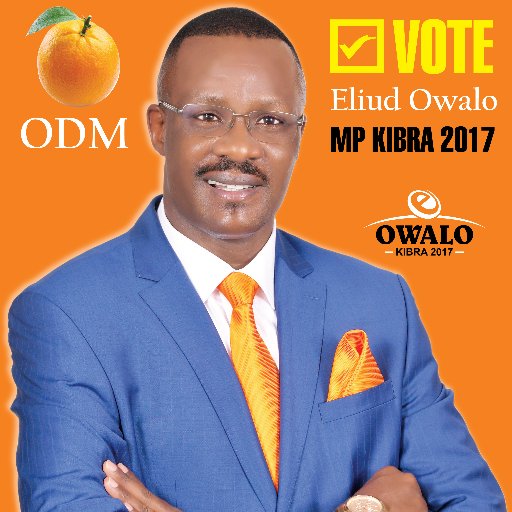
    Owalo believes Kibra has not been growing for the past 53yrs. In his mind, Kibra people are still using flying toilets, no sanitation at all, no any good housing, no recreational facilities, and everyone living there earns as low as Sh150 a day. In his myopic reasoning, he would change Kibra from being slum immediately after winning and also stop the rich from getting richer. You’ll agree with me that there are wealthier people living in Kibra compared to this guy who stole CORD’s campaign resources in 2013.

    Related image

    According to Owalo, Kibra is wallowing in abject poverty and diseases with the residents living in despicable conditions of abject poverty due to corruption that goes up to 1trillion. This figure too is wrong. He needs to research well. That aside, if Owalo was saying this statement while vying on a wiper ticket I would say, well and good. Owalo cannot talk about corruption yet he is vying on an ANC ticket and we all know where Musalia Mudavadi’s resources came from or you think Golden Berg was pocket change?

    He is talking about corruption and CORD’s 2013 agents are yet to be paid to date, where did he take their monies? Owalo has been a sellout since his days in campus, ask his schoolmates.

    To Owalo what the people of Kibra need is a welfare bus to transport dead bodies home, and other buses to take fans of Gor Kogalo to wherever Gor will be playing that day. Is he vying to be Gor Mahia chairman? Kibra constituency gets Sh120+ million every financial year as NG-CDF but what Owalo is prioritizing on is four buses at the expense of what the NG-CDF amendment Act 2016 requires. To him the people of Kibra only needs to die and their bodies ferried home or be Gor Mahia fans and taken to the stadium to go watch football.

    This mentality of thinking what the people need before engaging them is what will ruin the Owalos of this world. Voters no longer need defenders, they need what will put food on their tables, have their young ones study or acquire relevant skills and generally improve everyone’s life by empowering them. There is a working system in Kibra that has elaborate plan on Sanitation, housing, lighting, security, education, empowering people, infrastructure, and plans for other social amenities, all one needs to do is to identify with that system and advanced it.

    Disclaimer: Opinions expressed are writer’s own and doesn’t represent Kenya Insights’.

  • How KQ Lost Sh100B When Titus Naikuni Was In-Charge

    How KQ Lost Sh100B When Titus Naikuni Was In-Charge

    The flag carrier airline of Kenya is on the spot yet again this time over  Sh100 billion lost between 2003 and 2014, the nine years when Titus Naikuni was in charge.

    The Director of Criminal Investigations has begun investigating the airways staff deploying forensic experts to go through through the company records and contracts with suppliers immediately. An audit report prepared by the audit firm Deloitte four years ago triggered the probe.

    The investigation will look to verify whether the KQ staff were complicit in a global money-laundering ring in a conspiracy to bring down the airline. Police also suspected the money was used to fund terrorism in the region.

    According to the Deloitte dossier, KQ used the black market to repatriate cash from Sudan, South Sudan and Ethiopia back to Nairobi. The airline via transactions pre-approved by then KQ chief executive officer Titus Naikuni and the finance director Alex Mbugua used an agent identified as Khalid Mohammed Ali who charged an exorbitant fee way above the market rate estimated be about Sh5.4 billion.

    In KQ’s internal audit the team had asked why the airline contracted the agent when rival airlines complied with the rules in Ethiopia and Sudan to use the formal banking system.

    Also under investigation is how Titus Naikuni and co.  purchased a second-hand plane from KQ’s Dutch shareholder KLM for Sh2 billion and sold off the same aircraft at Sh200 million after only five years making a substancial loss of Sh1.8 billion.

    Kinoti’s team is also investigating suspicious transactions ranging from ticketing. The airline lost Sh77 billion in undervalued tickets and the huge discounts allocated to travel agents who in turn charge travelers a premium. In one case,  travel agents charged two officials from the Ministry of Transport and Infrastructure members of the KQ board almost thrice the initial fare, but only remitted the actual price back to KQ further bagging home commission from the same tickets sale.

    The auditors also accuse the KQ management of allowing its staff to void, refund and reissue tickets, causing a revenue loss of $12 million.

    According to reports the airline was also huddled with theft of parts in aircraft maintenance in one case the reports say an employee hacked into the OASES inventory management system at the airline, created an account “rk’ and made away with Sh60 million spare parts in one year.

    The dubious transactions spread over to jet fuel procurement. In the procurement KQ still bought overpriced fuel on account of their hedging policy. after investigations the airline had lost Sh3.3 billion.

    Auditors say KQ also wound up a profitable cargo subsidiary, gave its business to a rival company and paid Sh400 million to the company, instead of expanding its cargo capacity.

    The corporate greed explains why the airline has been making losses despite the rise in revenues and passenger numbers. Kenya Airways doubled its loss from last year by recording an 8.56 billion loss for the half year ending June 30th. The airline recorded a loss of 4 billion for the same period last year.

  • Sh1,000 Old Notes Will Be Shredded And Burned Into Ashes In Kariobangi

    Sh1,000 Old Notes Will Be Shredded And Burned Into Ashes In Kariobangi

    The old Sh1,000 banknotes that are being withdrawn by the Central Bank of Kenya from the market will be shredded and burned into ashes in Nairobi’s Kariobangi area.

    The old notes will be immediately transported in trucks to the CBK headquarters when they are received, here verification will take place, the notes will then be stored in a deoxygenated room under strict supervision of trustees and senior police officers attached to the bank.

    The collected notes will then be cut into finer shreds and packed in sacks before being transported to Kariobangi North, near the market on a date set by top officials where they will all be burnt in the open under the watch of armed police officers.

    The percentage of Sh1,000 notes exchanged will be announced on the last day.

    Members of the public who wish to change the old notes can visit CBK’s head office on Nairobi’s Haile Selassie Avenue or any of its branches in Mombasa, Kisumu, Eldoret, Meru, Nakuru and Nyeri.

    President Uhuru Kenyatta launched the new currencies during the 56th Madaraka Day celebrations in Narok on June 1 this year. Kenya is withdrawing the old Sh1,000 note with a new note in an exercise expected to be completed by end of September.

    The currency change comes as required by the new constitution. “Notes and coins issued by the Central bank of Kenya may bear the images that depict or symbolise Kenya or an aspect of Kenya, but shall not bear the image of an individual,” Article 231(4) of the Constitution reads.

    Activist Okiya Omtata has filed a petition in court challenging the inclusion of the founding President in one of the notes saying it violates the Constitution. He argues that putting a picture of Mzee Kenyatta’s full statue, which is erected in front of KICC on every note, CBK acted mischievously to sneak the portrait of the late President.

    Central Bank Governor Patrick Njoroge has insisted the deadline for the withdrawal of the old Sh1,000 notes will not be extended. “Kenyans love extensions, but if we have an extension to this process it defeats the purpose of the demonetisation. So, come midnight of the last day of September, that’s it,” Dr Njoroge said.

  • Twitter Founder and CEO Jack Dorsey’s Account Hacked

    Twitter Founder and CEO Jack Dorsey’s Account Hacked

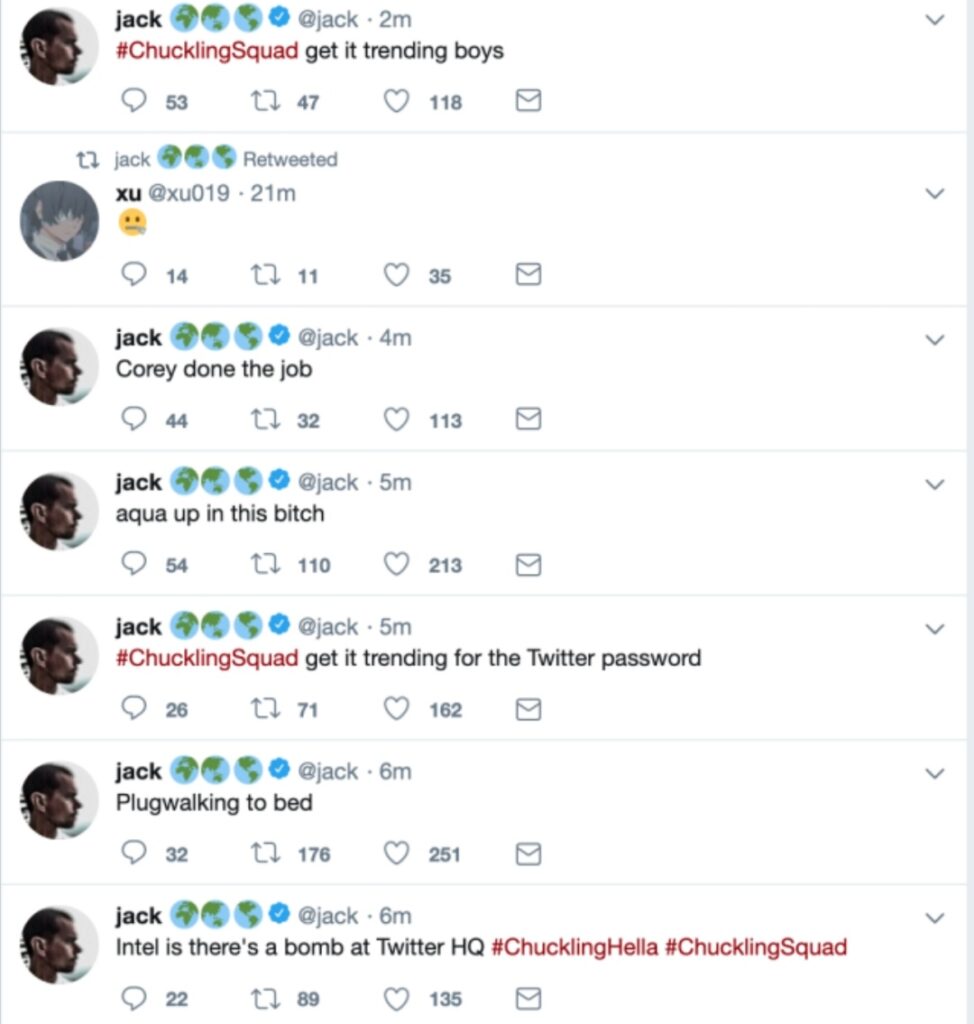
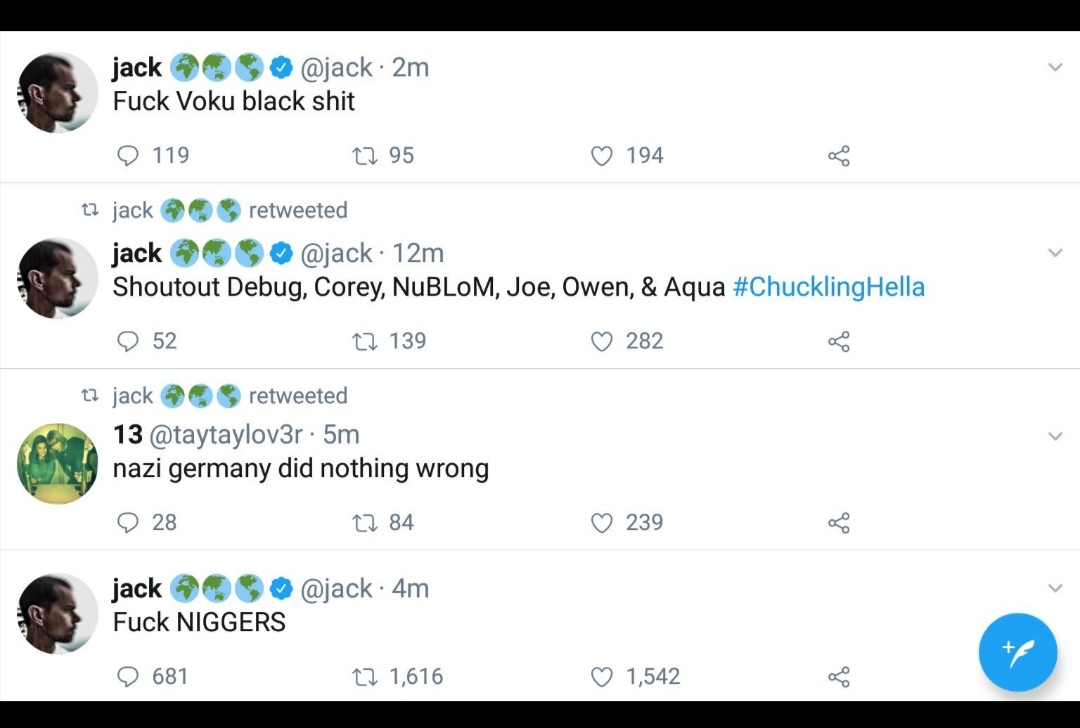
    Yesterday afternoon Twitter CEO Jack Dorsey’s Twitter account was hacked by a group that calls itself the Chuckle Squad.

    Chuckle Squad Used Jack’s account to tweet racial slurs, antisemitic messages and at least one catastrophic denial from Dorsey’s account.

    Some offensive tweets were up for about 10 minutes, though not long after the hack began, those tweets were already being deleted, and they’re all gone now. Here are some screenshots of those tweets

    Roughly an hour and a half after the hack, Twitter tweeted that the account is now secure, and there is no indication that Twitter’s systems have been compromised.

    https://twitter.com/TwitterComms/status/1167528672523210752?s=19

    Later, Twitter pointed the blame at Dorsey’s cell carrier, saying that the phone number associated with the account was compromised due to security oversight by the mobile provider, which apparently allowed the hackers to send the tweets using text messages.

    https://twitter.com/TwitterComms/status/1167591003143847936?s=19

    The phone number associated with the account was compromised due to a security oversight by the mobile provider. This allowed an unauthorized person to compose and send tweets via text message from the phone number. That issue is now resolved.

    Twitter however said that they have settled the issue and all other accounts are safe and were not affected .

    https://twitter.com/TwitterComms/status/1167548246618587137?s=19


    https://twitter.com/Hooray/status/1167525255600058371?s=19


    View image on TwitterView image on TwitterView image on Twitter
    Today’s hack appears to be from the same group that attacked a number of YouTube celebrities last week on Twitter, including Gay beauty vlogger James Charles, Shane Dawson, and comedian King Bach. The hackers also allegedly gained access to the late Desmond “Etika” Amofah’s Gmail account, as seen by screenshots collected in their Discord server.
  • KAA’s Chief Executive Officer Jonny Anderson Resigns

    KAA’s Chief Executive Officer Jonny Anderson Resigns

    Jonny Anderson the Kenya Airports Authority (KAA) chief executive has announced that he will resign from his position at the parastatal on September 30 that is two months before the expiry of his term which was supposed to end in November this year.

    Mr. Anderson’s reign at the authority began in July 2016  and the much rather highly unexpected shock resignation brings to an end his tumultuous reign at the authority.

    Mr. Anderson told KAA workers in a memo seen by Kenya insights on Friday that he would quit his position in the next one month, because of personal reasons.

    “I would like to take this opportunity to inform you that I have taken the decision not to pursue the decision of renewing my contract with KAA. This is after deep reflection and consolation with my family. I will be proceeding on leave on September 30, with my tenure ending on November 21, 2019. I will take fond memories of the authority, colleagues, and the incredible journey with me in my heart,” Mr. Anderson said.

    KAA chairman Isaack Awuondo confirmed the exit in a separate memo to staff. He credited Anderson for strengthening airports operations for the period he has been at the helm of the organization.

    “Over the three years that Jonny has been at the helm of the authority he has strengthened airport operations and overseen a period of growth in passenger numbers and the number of airlines flying to Kenya,” said Mr Awuondo.

    Anderson joined the authority in July 2016 from Avinor AS in Norway where he was the national airports’ director. He replaced acting managing director Yatich Kangugo. Jonny Anderson’s appointment brought to an end a protracted recruitment process that was characterized by claims of political interference.

    Mr. Anderson was picked after trouncing five other candidates, including Mr. Kangugo. Interview score sheets show that Mr. Andersen scored 88 percent while Mr. Kangugo, who served as airport manager at Eldoret’s Moi International Airport, scored 63 points.

    He has had a rough path for the period he has been with the authority, for instance, last July, MPS gave him the last chance to provide documents justifying the cancellation of the Sh64.5 billion Greenfield terminal project at Jomo Kenyatta International Airport.

    National Assembly’s Public Investments Committee (PIC) warned the KAA management lead by Mr. Anderson that it would declare them hostile witnesses if all documents surrounding the procurement of a Chinese contractor were not tabled in Parliament on time.

    PIC chairman Abdulswamad Nassir said Parliament would have no other option than to direct investigative agencies, including the Directorate of Criminal Investigations, to seize the documents from KAA.

  • DCI Probes Dubious Cash Transactions In The New Sh1,000 Notes Change

    DCI Probes Dubious Cash Transactions In The New Sh1,000 Notes Change

    The ongoing demonetization of the old a thousand notes has attracted the attention of the Crime busters at the Directorate of Criminal Investigations who have now focused their keen eye and investigating cases of fishy cash transactions that have been flagged by banks.

    Central Bank Governor Patrick Njoroge says some of those cases are of people who wanted to change over Sh5 million to new currency notes.

    “We have shared the information we have gathered so far with the DCI for further investigations. Our role as the regulator is to work the investigating agencies to ensure that we achieve our goal,” Dr. Njoroge said.

    CBK Chair stated that the banks have collected more than 100 million pieces of old Sh1,000 notes out 217 million pieces that were in circulation when the demonetization started and the investigations on people holding illicit money would continue even after the old notes are phased out from September 30.

    “We expect to collect more notes as the deadline nears because most people like doing things the last minute,” CBK Chair said while on a media interview.

    Dr. Njoroge, however, ruled out 100 percent success of the demonetization, saying some have of the cartels have laundered the illicit proceeds in properties in the country and abroad.

    CBK caught the country by surprise on Madaraka Day when it announced that it was withdrawing the Sh1,000 notes in a bid to counter counterfeits, corruption and money laundering.

    • Shilling strengthens after CBK sells dollars

    During demonetization, individuals exchanging less than Sh1 million of the old notes and non-account holders were instructed to exchange them through the currency centers, CBK branches, and commercial banks. Bank customers and non-account holders having an excess of Sh5 million are required to get Central Bank’s approval.

    The old generation Sh1,000 banknotes will be worthless papers from October 1, 2019. CBK has said it is working with forex bureaus, payment service providers, money remittance providers, investigative agencies and other financial service providers to ensure all due procedures are followed.

    Kenya is not the only State that has changed their currency, India scrapped 500 and 1000-rupee banknotes in 2016 to flush out tax evaders a move that flopped as it did not achieve the desired goal as 99 percent of the money still got back into the system.

    Africa’s self declared most debt-ridden country,  Nigeria,  introduced a new currency and banned the old notes in 1984, under the Muhammadu Buhari government. But this caused chaos and was blamed for the inflation that followed and crashed the economy.

    Ghana also attempted a similar move in 1982 when it ditched its 50 cedis note to deal with rampant tax evasion and empty excess liquidity. It had the downside of fuelling a currency black market.

    North Korea tried this in 2010 but ended up leaving citizens with no food and shelter after Kim-Jong ll knocked off two zeros from the face value of the old currency in order to kick out the black market.

    There have been at least five success stories where the exercise worked for the economy and resulted in the intended outcomes.

    These include Pakistan (2016), the UK (2002), Australia (1996), and the EU (2002). Zimbabwe attempted in 2015 and succeeded having gone for the US dollar.

  • Safaricom’s Market Value Thwacks All NSE Listed Firms

    Safaricom’s Market Value Thwacks All NSE Listed Firms

    According to NSE records, Safaricom’s dominance domestically has strengthened even more after the telecommunication firm’s market valuation exceeded 50 percent of the Sh2.22 trillion stock exchange market.

    At Close of Thursday, Safaricom’s valuation of Sh1.13 trillion which is now 50.7 percent of total investors’ wealth at the Nairobi Securities Exchange (NSE) is a factor that is largely attributable a sharp drop in the market capitalization of other listed firms.

    According to the NSE records, Safaricom Crossing the 50 percent threshold means that its market worth is now more than the combined valuation of all the other 62 listed companies.

    In March this year, Safaricom achieved its highest-ever market capitalization of Sh1.27 trillion but the company has avoided the deep erosion of value that other companies have suffered, pulling down the benchmark NSE 20-Share Index to a 10-year low.

    Safaricom’s share price has gone up by 25 percent or Sh5.70 this year to hit Sh28.25, adding more than Sh228.4 billion to its market valuation at a time when many other companies, including other blue-chip counters, are stuck in a price slump.

    NSE Investors who track the indices are therefore presented with a situation where overall market wealth has gone up by Sh120 billion, but the benchmark index is touching multi-year lows. The divergence in the direction of the two indices is due to the huge influence the Safaricom stock has on the All-Share Index, which is market cap weighted.

    On the price-weighted NSE 20-Share Index, other blue chips such as East African Breweries Limited , BAT , Standard Chartered  and Bamburi  that carry a higher nominal share price have a greater weight.

    As it has been before, Capital Markets Authority (CMA) regularly flags the influence the top firms have in terms of traded activity and investor wealth as a market risk such that should the companies encounter a shock or fall into difficulties, the effect on the stock market would be far pronounced.

    “During the second quarter of the year, the top five companies by market capitalisation accounted for 70.8 percent, the highest in the last four quarters, confirming their dominance in the Kenyan securities market,” said CMA in its quarter two market soundness report released earlier this month.

    Safaricom’s valuation gain has been helped by its high profitability that has in turn driven up shareholder dividends and lack of large listings at the NSE in the past decade, which has coincided with the growth of the Safaricom share price by more than 700 percent in the period.

    In March this year, Safaricom reported a 14.7 percent growth in net profit to Sh63.4 billion on the back of strong M-Pesa and mobile data performance, marking a seventh straight year of a rising bottom-line.

    Safaricom is paying shareholders a dividend of Sh1.25 per share, totaling Sh50.08 billion, and on top of that, a special dividend of Sh0.62 a share totaling Sh24.84 billion while other NSE firms are struggling to remain profitable in a tough economy.

    Since June 2018, a total of 16 listed firms across different market segments have issued profit warnings, with their earnings collectively plunging by more than Sh14 billion. Nine out of the 13 segments of the market have recorded a drop in market capitalization, the worst hit in relative terms being the commercial and services sectors whose collective valuation has fallen by 55 percent or Sh43.5 billion this year to Sh35.2 billion.

    The manufacturing segment has seen a marginal decline of 1.4 percent in capitalization from Sh219.2 billion to Sh216 billion, while construction has gone down by 15.7 percent from Sh61 billion to Sh51 billion.

    Insurance firms have also declined in value, by 18.6 percent or Sh15.7 billion to Sh68.8 billion, while the energy segment’s collective market capitalization has come down by 15.8 percent or Sh12 billion to Sh63.7 billion.

    On the Banking sector, which is the second-largest at the NSE after the single-stock telecommunications segment, has eked out a 0.3 percent gain in market capitalization to stand at Sh626.5 billion. Bank stocks have recorded a mixed performance in the market despite the sector remaining one of the most profitable at the NSE, with five out of the 12 listed lenders seeing their share prices fall this year.

    Central Bank of Kenya data shows that in the six months to June, banks in the country recorded a 12.6 percent increase in gross profits to Sh85.8 billion.

    Safaricom controls approximately 64.2 percent of the Kenyan market as at December 2018. Safaricomhad a subscriber base estimated at approximately 31.8 million.

  • UAE Freezes Funds To Expand World’s Largest Airport

    UAE Freezes Funds To Expand World’s Largest Airport

    Plans to expand Dubai’s Al Maktoum airport, the Emirate owned and designed to be the world’s biggest and busiest Airport has hit a dead-end after funds running the project were frozen indefinitely.

    According to sources speaking to the media, The expanded Al Maktoum was to have an annual capacity of more than 250 million passengers. Insiders state that the move to expand the airport was put on hold as Gulf Arab economies oscillate.

    People involved in the project spoke to the media on anonymity stating that the set-aside and budgeted construction activity has been halted and finances for expansion frozen until further notice.

    The completion date for the first phase of the airport envisaged as a $36 billion super-hub allowing locally based airline Emirates to consolidate its position as the world’s No. 1 long-haul carrier, had already been pushed back five years to 2030 in October.

    In a statement to the media, Dubai Airports said it’s reviewing the long-term master plan stating that the exact timelines and details of next steps are not as yet finalized. The statement further said that it aims to ensure development takes full advantage of emerging technologies, responds to consumer trends and preferences, and optimizes investment.

    According to Forbes records, Dubai’s economy slowly grew since 2010, and last year as the Gulf’s chief commercial center grappled with fallout from geopolitical tensions and a low oil price.

    Even though the Emirates remains based at the original Dubai International hub as it mulls how best to develop its strategy of carrying passengers between all corners of the globe, tourism has been stagnant since 2017 because the company is finding it tougher to add profitable new routes, and it is reworking its fleet plans with the cancellation of the Airbus SE A380 super-jumbo.

    The Capacity of Al Maktoum was to increase to 130 million passengers on completion of its first phase of expansion, according to the October update. The design ultimately calls for the hub to handle 260 million, based on prior statements, more than twice the customer total at the world’s busiest airports today.

  • Sourcing From China: How Chinese Firms Are Benefiting From Kenyan Contracts

    Sourcing From China: How Chinese Firms Are Benefiting From Kenyan Contracts

    Chinese companies in Kenya are increasingly hiring more locals, a new report has shown.

    The Kenya China Economic and Trade Association (KCETA) said last year alone, its affiliate member enterprises created more than 50,000 jobs for locals, up from 42,000 in 2016.

    The report indicates that there are 106 Chinese companies operating in Kenya, with nearly 95 percent of their workforce being Kenyan. “Having chosen to take root in Kenya, many Chinese enterprises are continuing with their localisation drive…”read the report.

    Chinese companies, both private and State-owned, have been increasingly eyeing Africa for investment opportunities.

    Most of the jobs created by Chinese firms are in the manufacturing and service sectors, which account for 62 percent of the total number of these firms in Kenya.

    The report does not indicate whether the workers were casual labourers or contract workers. Almost all positions with no special skill requirement were filled with locally recruited employees. The presence of Chinese companies in Kenya has been proven to test labour laws over concerns over Chinese labour practices often viewed as unfair.

    Foreign Affairs Chief Administrative Secretary (CAS) Ababu Namwamba commended the firms and urged them to take advantage of the conducive environment to grow even as he challenged the same to observe ethical business practices.

    Some of the Chinese firms come with racist attitudes and slavery work ethic. Just recently in a video that went viral, Liu Jiaqi, a Chinese national, was deported by the Kenyan immigration for racial slurs against his Kenyan colleagues.

    Cheap labour on the continent is fueled by the high rate of unemployment. Cheap labour is nothing new in Chinese work environments. When this is brought to African countries where Africans are overworked and paid peanuts, the government must step up and do something about it.

    Apart from taking loans from the Chinese,  The Kenyan government and labour union have more work to do about how their people are treated under employment by the Chinese firms.

  • Ruaraka Land Tycoon Sues State For Sh36B

    Ruaraka Land Tycoon Sues State For Sh36B

    Afrison Import and Export Limited Managing Director Francis Mburu is now demanding over Sh36 billion from the government for failing to protect him from illegal encroachers and for forcibly taking over his land in Ruaraka.

    In a suit filed at the High Court, the businessman claims the current value of his land is Sh23 billion with a further Sh13 billion arising from loss of rental income and accrued interest. In the case, Mburu, through his companies Afrison Export Import Limited and Huelands Limited, has sued the Nairobi City County, National Land Commission (NLC) and the Attorney General.

    The businessman accuses the County government of Nairobi and National Land Commision of using him as a scapegoat and cover-up for illegalities and unconstitutional actions. “..Whereas the respondents have the accurate records of the suit property, they have actively been publishing untrue and misleading information that affects my integrity,” says Mburu.

    Mburu accuses the Attorney General of failing to protect him in the alleged illegal acquisition of his property.

    The multimillionare further accuses the government of illegally taking over his property and unlawfully allocating it to rich private developers who have erected high-rise commercial and residential buildings, with the state connecting and supplying them with water, electricity sewerage and other amenities.

    “NCC saw in my properties an opportunity to receive premiums, rents and rates not withstanding that it had not compulsorily acquired the same and paid compensation to me, NCC is actively disposing off and illegally offering the suit property to private developers which greatly prejudices me.  The County has been assuming not only ownership but has also demanded rates and land rents over the property which they have been in occupation from inception,” says Mburu.

    The Ruaraka land saga has not just began, In June, Justices Elijah Obaga, Benard Eboso and Kossy Bor castigated NLC for sanctioning the payment of Sh1.5 billion made by the Ministry of Education to the businessman, saying it was irregular, as the land in which two public schools stand, belongs to the government. Mr Mburu has since appealed against the decision and in the fresh case says the Ksh.1.5 billion that was declared illegal should be reclaimed from the Ksh.36 billion he is now demanding, should he lose the appeal.

    In May Lands Court judge John Mutungi ruled that Gospel Evangelistic Church (GEC) should remain on a 1.8 acres, part of the 96-acre parcel of land. The businessman lost the Sh21 million parcel of land in Ruaraka following a seven-year court battle.

  • Chinese Company Bribed LBDA Board To Win A Sh 2Bn Kisumu Mall Tender

    Chinese Company Bribed LBDA Board To Win A Sh 2Bn Kisumu Mall Tender

    EACC has uncovered yet another scandal at Lake Basin Development Authority (LBDA) after records indicated that Chinese-owned Erdemann Properties Ltd bribed board members with cash and houses to secure a Sh 2 billion Kisumu Mall contract.

    Related image

    According to the Ethics and Anti-Corruption Commission, the bribery racket at LBDA has been uncovered. The anti-graft detectives have said as they are prepared to arrest the real-estate firm’s officers in relation to the scandal which saw Erdemann Properties inflate the construction costs for the Lake Basin Mall to cater for kickbacks in return for the lucrative contract.

    EACC has now put George Nicodemus and Innocent Obiri both former LBDA board members under their most wanted radar because the records at the anti-graft watchdog indicate that they are the beneficiaries of the bribe from China-owned Edermann.

    The Erdemann directors Zeyun Yang and Zhang Jing revealed the info in court when they were seeking anticipatory bail as EACC had gone full-blown after them for colluding with LBDA officials to violate procurement laws at the taxpayers’ expense.

    High Court Judge James Onyiego dismissed Erdemann’s application and ruled that arresting the two Chinese nationals will not violate their rights. Judge Onyiengo added that Kenya’s laws have remedies for individuals who feel they have been unlawfully arrested without adequate evidence.

    According to EACC, Erdemann paid one Mr. Nichodemus Sh12.4 million in two installments on May 2 and December 11, 2013, and Mr. Obiri received Sh2.3 million from Erdemann on May 2, 2013. The EACC had earlier revealed Mr. Obiri’s alleged benefit in a lawsuit the Bobasi MP filed to stop his arrest.

    The same case also touched Kisumu County Assembly Speaker Onyango Oloo, who had earlier been accused of receiving a house in Athi River as a kickback to the same Kisumu mall tender.

    According to Government valuers, the mall is worth Sh3 billion, which clearly means that the cost of the mall had been inflated by Sh1.2 billion.

    On July 4, more than 20 EACC sleuths raided the houses occupied by Erdemann’s directors and collected what could constitute evidence in the event that the Chinese nationals are arraigned.

    “The contractual sum was unlawfully inflated, with Mr. Yang’s and Mr. Zhang’s company failing in crucial stages but was, nevertheless, awarded the contract after unduly influencing the board members. Contrary to the applicants’ averments that the project was passed by the Attorney-General, the Attorney-General’s legal opinion dated December 5, 2016, revealed several irregularities in the award and execution of the tender,” EACC told the court.

    “The cost of construction was inflated to take care of the gifts given to the board members by Erdermann inter alia; houses and money which induced the board to disregard necessary procurement procedures,” EACC added.

    The Chinese nationals have since petitioned their government claiming that their staffs have been harassed in Kenya since 2015 in the name of investigations even though they had earlier recorded statements in relation to the mall.

    However, Justice Onyiego has maintained that this is just a mere fear of arrest and is no reason to grant anticipatory bail.

    In my opinion, Why is this Chinese company forcing deals to benefit their inner circle without bothering if the correct rather constitutional procurement procedure is followed? Who are these politicians that have made the Erdemann ltd confident enough to just work the way they want? Why is it that Chinese businessmen threaten our Judiciary using their own own government?

  • Britania Drops MD Robert Kagundah As Corruption Claims Clouds The Company

    Britania Drops MD Robert Kagundah As Corruption Claims Clouds The Company

    Britania Foods limited have sacked  CEO Robert Kagundah in a letter addressed to all Britania staff dated the 28th August 2019 as seen by Kenya Insights. Kenya Insights had previously covered the rot at the private sector and an exclusive on Robert Kagundah.

    Ina move dubbed to enhance the governance environment and management capability Ahsan Manji will take over as the interim Executive Director with overall management responsibility for the affairs and operations of the company  wile Julius Kiptoo will be the new acting General manager.

    Under Kagundah Britania Foods Ltd had become the epitome of corruption in the FMCG sector.

    Robert Kagundah had been involved in corruption scandals where he reportedly awarded contracts to those close to him. In one instance Kagundah awarded a catering and cake supply contract to CIVA cakes, owned by his “girlfriend” who is a married woman.

    Britania Foods Limited staff had over many occasions  accused the top management of irregularly running the company that was in 2017 acquired by Nairobi-based private equity firm Catalyst Principal Partners.


  • Health Cartels: Local Agents Paid Sh500,000 For Every Patient Referred To India

    Health Cartels: Local Agents Paid Sh500,000 For Every Patient Referred To India

    Two Indian men were on Monday deported after getting charged with two counts of illegal medical practice and being in Kenya illegally.

    The two were a part of a fraudulent scheme involving the recruitment and referral of Kenyan patients to India in exchange for money,

    They were on Monday morning arraigned in a Nairobi court before they were taken to the Jomo Kenyatta International Airport for the flight to Delhi.

    Atul Arora and Shyam Singh were arrested in Nairobi’s Parklands area following a two-year investigation into an illicit scheme that was said to be running with the backing of senior Health sector officials. The two have recruited more than 100 Kenyans over the two years and are known to run the same operations in many countries, including Uganda, Tanzania, United Arab Emirates and Pakistan.

    Local agents make about Sh500,000 for every patient sent to India, with bigger profits if their “client” requires kidney or bone marrow transplant and if they stayed longer in hospital during treatment. the money is then included in medical bills accruing abroad, leaving patients with a huge financial burden.

    At the time of their arrest at Nairobi’s Cloud and Suit Hotel’s ninth floor room, they had recruited 14 agents and were to interview 24 others to participate in the scheme. The duo was charged with promoting medical services for patients’ referrals to India without a work permit.

    The two claimed to have links with 40 facilities in India including; Apollo, Medanta, Max, Fortis, Artemis, Kailash, Japyee, BLK, Asian, Metro, Moolchand and IBS hospitals.

    They were fined  Sh20,000 and immediately deported to their home country.

  • Former TLB Chair Hassan Ole Kamwaro succumbs To Throat Cancer

    Former TLB Chair Hassan Ole Kamwaro succumbs To Throat Cancer

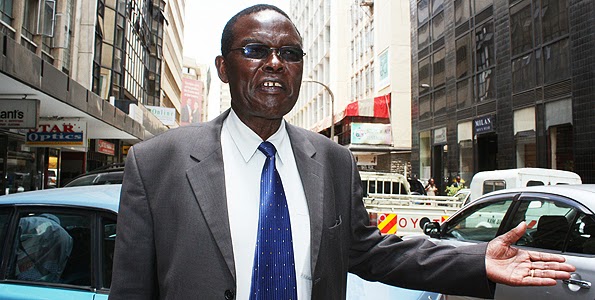
    Former Transport and Licensing Board Chairman Hassan Ole Kamwaro has died. Kamwaro succumbed to cancer while receiving treatment in the US.

    Former Transport and Licensing Board (TLB) Chairman Dr Hassan ole Kamwaro

    The late Kamwaro was battling throat cancer – Lymphoma (cancer of the lymph nodes) and had traveled to America for treatment, his daughter Jedida Kamwaro confirmed on Wednesday.

    Image result for kamwaro

    In 2010 then-President Mwai Kibaki revoked the appointment of Wilfred Lengei and named Kamwaro the new TLB boss. President Kibaki appointed Eng Joseph Kamau Thuo in 2012 to be the new chairman of the Transport Licensing Board (TLB) replacing Kamwaro.

    More to follow…

  • New X-Tigi Technology Limited Director Gao Fei Charged With Sh194M Tax Evasion

    New X-Tigi Technology Limited Director Gao Fei Charged With Sh194M Tax Evasion

    A Chinese investor has been charged before a Nairobi court with tax evasion amounting to Sh194 million.

    The accused, new X-Tigi Technology Limited director Gao Fei, who has been on the run, appeared before Milimani Resident Magistrate Muthoni Nzibe where he was charged with failure to declare and remit taxes for a period of eight months that was commensurate to the company’s sales. He denied the charges.

    Mr Fei was accused that on diverse dates between January 2015 and June 2016, in Nairobi being the director of New X-Tigi, he failed to pay VAT amounting to Sh194,357,743 for the year starting January 2015 to July 2016.

    Prosecution accused Fei that on June 30, 2016 in Nairobi, being a registered taxpayer PIN No. P051576009G, had failed to submit tax returns for the year 2016 as of due date June 30, 2016 to KRA.

    It was further alleged that on June 30, 2015 in Nairobi, being director of New X-Tigi Technology Limited, Mr Fei failed to submit tax returns for the year 2015.

    The prosecution opposed the release of the accused on bail, stating that the accused person was a flight risk. He was however released on a cash bail of Ksh150,000 with a bond of sh1 million and ordered to deposit his passport in court pending hearing which is scheduled for September 26, 2019.


  • ODM Clears DJ Kriss Darlin For Kibra MP Race

    ODM Clears DJ Kriss Darlin For Kibra MP Race

    Raila’s ODM Party has forwarded over eleven (11) names of aspirants for the Kibra MP by-elections. The names submitted to the election body were selected out of 20 aspiring candidates with nine failing to meet the requirements set out by their party.

    Related image

    A total of 23 people had picked application forms for the nomination exercise slated for August 31. Board chairperson Judith Pareno on Monday told cleared aspirants to pay Sh200,000 fees by midday Tuesday or be locked out of the nomination.

    Amongst those cleared include Christone Odhiambo, popularly known as ‘the kneeling’ DJ Kris Darlin, Peter Ochieng, Tony Ogola Sira, Reuben Ojijo, and Stephen Okello.

    Bernard Otieno, Eric Ochieng, Brian Owino, John Otieno, Benson Musungu and Patrick Lumumba Owade have also been cleared and set for Party nominations.

    Musalia Mudavadi and Eliud Owalo

    Elsewhere, Jubilee will field a candidate for the race. And Musalia Mudavadi’s ANC Party will also be fielding the Raila’s alter-ego and Uhuru’s strategist Eliud Owalo.

    The Kibra seat fell vacant after the death of Ken Okoth on July 26 after a battle with cancer. The MP’s by-election is scheduled for  November 7.